Community Solidarity Fund - Manitoba Government Matching Grant Program 2019 2020 - Manitoba Council ...
←
→
Page content transcription
If your browser does not render page correctly, please read the page content below
Guide for Funding Applications
                   to the
Manitoba Government Matching Grant Program
 Community Solidarity Fund
      2019 - 2020

              302 - 280 Smith St.
             Winnipeg, MB R3C 1K2

             (204) 987-6420 (Phone)
               (204) 956-0031 (Fax)

               mgmgp@mcic.ca
                www.mcic.ca
Table of Contents Table of Contents ............................................................................................................................ 2 Glossary ........................................................................................................................................... 3 Explanation of MCIC Terms............................................................................................................. 3 Section I: Introduction ................................................................................................................... 4 Section II: The Community Solidarity Fund .................................................................................... 4 Section III: Information on MCIC.................................................................................................... 6 MCIC’s Mission Statement .......................................................................................................... 6 Sustainable Development Goals: ................................................................................................ 9 Section IV: Public Engagement .................................................................................................... 10 Section V: Eligibility for Funding .................................................................................................. 11 Use of Sponsoring Organizations .............................................................................................. 11 Levies......................................................................................................................................... 11 Submission Deadlines ............................................................................................................... 12 Matching Funds......................................................................................................................... 12 Section VI: Selection Process ....................................................................................................... 12 Section VII: Monitoring and Evaluation ....................................................................................... 13 Monitoring ................................................................................................................................ 13 Evaluation ................................................................................................................................. 13 Section VIII: Reporting Requirements .......................................................................................... 14 Final Report ............................................................................................................................... 14 Final Report Templates ............................................................................................................. 14 Appendix 1: Public Engagement: Impacting Manitobans on Development Issues ..................... 16 2019 - 2020 CSF Funding Guide Last updated 05/2019 Page 2 of 17
Glossary
Acronyms

CRA          Canada Revenue Agency
CSF          Community Solidarity Fund
MCIC         Manitoba Council for International Cooperation
MGMGP        Manitoba Government Matching Grant Program
NGO          Non-Governmental Organization

Explanation of MCIC Terms
Outcomes or Results
Results are the same as outcomes. An outcome is a describable or measurable change that is
derived from an initiative's outputs or lower-level outcomes. Outcomes are qualified as
immediate, intermediate, or ultimate; outputs contribute to immediate outcomes; immediate
outcomes contribute to intermediate outcomes; and intermediate outcomes contribute to
ultimate outcomes. Outcomes are not entirely within the control of a single organization, policy,
program or project; instead, they are within the organization's area of influence1.

Baseline (Data)
Baseline data provides a specific value for an indicator at the outset of a project or program.
Baseline data is collected at one point in time, and is used as a point of reference against which
progress on the achievement of outcomes will be measured or assessed.2

Activities
Activities are the direct actions taken or work performed by project implementers. 3

Outputs
Direct products or services stemming from the activities of an organization, policy, program or
project.4

Indicator
A qualitative or quantitative means of measuring an output or outcome, with the intention of
gauging the performance of an organization, program, policy or initiative respecting expected
results.5

1, 2, 3, 4
      https://www.international.gc.ca/world-monde/assets/pdfs/funding-
financement/results_based_management-gestion_axee_resultats-guide-en.pdf
5
  https://www.canada.ca/en/treasury-board-secretariat/services/audit-evaluation/centre-excellence-
evaluation/results-based-management-lexicon.html

2019 - 2020 CSF Funding Guide               Last updated 05/2019                                     Page 3 of 17
Section I: Introduction
This guide has been designed to help your organization prepare a Community Solidarity Fund
application to MCIC. If you have any questions or comments about the application, please
contact the MCIC MGMGP Coordinator at mgmgp@mcic.ca or phone us at 204-987-6420.
Electronic copies of the Funding Guide can be e-mailed to organizations, and the Guide will also
be available in pdf format on MCIC’s web site at www.mcic.ca. Hard copies of the Guide are
available by request from mgmgp@mcic.ca.
Please note:
Project applications must be in the format described in this guide and must address all
areas/questions. Applications that are not in the prescribed format or which do not
respond to all questions will be returned to the organization.
Project applications may not exceed 15 pages in length, including any supporting
documentation. If project applications are longer than 15 pages in length they will be
returned to the organization.
You are encouraged to submit applications through email in a PDF or Word format to the
the following email; mgmgp@mcic.ca.
When your project submission is received by MCIC you will be contacted within 5
business days to confirm receipt and assigned a project number. PLEASE use that
number in any future correspondence about the project.
Section II: The Community Solidarity Fund
The Community Solidarity Fund (CSF) is a portion of the Manitoba Government Matching Grant
Program (MGMGP). The Government of Manitoba has generously supported international
development through this program since 1975.
The fund is designed to make small grants available to Manitoba not-for-profit community-
based organizations involved in development projects overseas. Organizations can apply for up
to $6,000 per project if it is for a first time applicant. An organization applying for subsequent
proposals may apply for $6,000, and up to $8,000 (upon providing $2,000 as a match), more
details below.
MCIC defines development as a long term process promoting community involvement in
designing strategies to address and improve chronic and structural problems in all areas of
individual and community life. The fund is available to organizations that are affiliate or non-
members of MCIC and provides another way to help Manitobans work together with partners
around the world. The total Community Solidarity Fund budget available for 2019-20 is $80,000.
2019 - 2020 CSF Funding Guide Last updated 05/2019 Page 4 of 17Here are some very important MCIC Guidelines to remember if you are making an application to
the CSF:
Applicant groups must use this Community Solidarity Fund Application Guide for 2019-
2020. While applications can be brief (up to 15 pages), all areas must be addressed.
A representative of the group making the application must attend one of the Information
Sessions about grant application and reporting process (please see dates listed below).
MCIC can only fund organizations that are registered charities. Please see Section IV:
Eligibility for Funding for more details.
We encourage groups to show their commitment and sustainability by contributing to the
cost of any project.
Groups cannot apply to the CSF two years in a row; subsequent applications are possible,
but NOT in consecutive years.
Returning applicants must have a history of successful completion of a CSF project(s) and
satisfactory reports submitted to MCIC.
The process of approval for all project applications is by peer review, by MCIC’s
Community Solidarity Fund Review Committee and ultimately by MCIC’s Board of
Directors.
MCIC must receive a proof of receipt of the wire transfer overseas or other proof that the
money was used overseas.
MCIC is unable to fund projects which include an objective of spreading a particular
religious’ faith or political point of view.
To see successful projects from previous years, go to www.mcic.ca and click International
Projects.
Important Dates for CSF 2019 - 2020
Monday, April 1, 2019 MCIC Fiscal Year begins
Thursday, May 16, 2019 10:00 – 11:30 am CSF Spring Orientation Session
Thursday, May 16, 2019 5:30 – 7:00 pm CSF Spring Orientation Session
Monday, June 10, 2019 5:00 PM CSF Spring Deadline for 2019 - 2020
Thursday, October 10, 2019 10:00 – 11:30 am CSF Fall Orientation Session
Thursday, October 10, 2019 5:30 – 7:00 pm CSF Fall Orientation Session
Friday, November 15, 2019 5:00 PM CSF Fall Deadline for 2019 - 2020
Please note that the start date of all Community Solidarity Projects must be no earlier than
April 1, 2019 and no later than March 31, 2020.
2019 - 2020 CSF Funding Guide Last updated 05/2019 Page 5 of 17Section III: Information on MCIC
MCIC’s Mission Statement
Our vision: A JUST WORLD
MCIC is a coalition of organizations involved in international development who are committed
to:
Respect, empowerment and self-determination for all peoples;
Development that protects the world’s environment; and
Global understanding, co-operation and social justice.
Our mission: MCIC supports, connects and amplifies the work of our members and partners. We
directly engage and collaborate with Manitobans for global sustainability.MCIC’s Guiding
Principles
MCIC has adopted a set of guiding principles as a framework for approaching development work.
These principles are based on the Istanbul Principles, which were developed and agreed to by
Civil Society Organizations (CSOs) from all over the world. The three pillars of sustainable
development (social, economic and environmental) are also an integral part of our development
practice. We believe none of these areas can work in isolation from one another and each must
be considered and integrated into the work of active CSOs in the Global South.
MCIC believes that sustainable development implies positive change. We encourage our
members and partners to move beyond a “charity model” of helping to meet only basic needs,
to a justice model that incorporates a rights-based approach, respectful partnership and long
term sustainable solutions. MCIC seeks to support projects that follow these guiding principles
and will not fund projects that do not seek to change causes and models of oppression. All
members and partners must address MCIC’s guiding principles in any applications to the
Manitoba Government Matching Grant Program (MGMGP).
Please note that the italicized portions below represent the wording of the Istanbul Principles,
while the regular text is additional notes that distill and clarify MCIC’s own development
philosophy.
MCIC’s Guiding Principles:
1. Respect and promote human rights and justice
CSOs are effective as development actors when they…develop and implement strategies,
activities and practices that promote individual and collective human rights, including
2019 - 2020 CSF Funding Guide Last updated 05/2019 Page 6 of 17the right to development, with dignity, decent work, social justice and equity for all
people.
MCIC works from a rights-based approach that includes rights for all, with particular
consideration of inclusion of persons with disabilities. MCIC, in relation to its support
for the overseas project activities of its member agencies, understands that disability
can lead to exclusion from social and economic opportunities. All proposals to the
MGMGP must respond to the questions that address inclusion of people with
disabilities.
2. Embody gender equality and equity while promoting women and girls’ rights
CSOs are effective as development actors when they…promote and practice
development cooperation embodying gender equity, reflecting women’s concerns and
experience, while supporting women’s efforts to realize their individual and collective
rights, participating as fully empowered actors in the development process.
MCIC supports proposals that involve women, girls, men and boys as planners and
managers, ensure they have access to education, training and resources, and ensure
their participation in the democratic political process. MCIC will not support projects
that perpetuate current models of gender oppression.
3. Focus on people’s empowerment, democratic ownership and participation
CSOs are effective as development actors when they…support the empowerment and
inclusive participation of people to expand their democratic ownership over policies and
development initiatives that affect their lives, with an emphasis on the poor and
marginalized.
We view popular participation in decision-making and planning in all communities as a
cornerstone of development. Proposals must identify how and to what extent
community members are involved in planning, implementation, evaluation and follow-
up to proposed projects.
MCIC supports initiatives that strengthen the ability of policy makers, either in the
Global South or in Canada, to improve social or economic conditions or further human
rights.
4. Promote environmental sustainability
CSOs are effective as development actors when they…develop and implement priorities
and approaches that promote environmental sustainability for present and future
generations, including urgent responses to climate crisis, with specific attention to the
socio-economic, cultural and indigenous conditions for ecological integrity and justice.
2019 - 2020 CSF Funding Guide Last updated 05/2019 Page 7 of 17MCIC values the wise use of natural resources including the protection and
management of the air, water and soil. MCIC also recognizes that environmental
sustainability is not isolated from other development principles of social and economic
sustainability, and that through environmental stewardship we can foster justice and
equality, help to alleviate poverty and preserve cultural integrity.
5. Practice transparency and accountability
CSOs are effective as development actors when they… demonstrate a sustained
organizational commitment to transparency, multiple accountability, and integrity in
their internal operations.
We expect that our partners in Canada abide by ethical and legal rules, follow Canada
Revenue Agency guidelines and provide proper monitoring and reporting information to
all involved parties. MCIC also considers the same standards of accountability (being
honest and truthful in our applications and reporting) throughout our own organization
as we expect from our members and partners.
6. Pursue equitable partnerships and solidarity
CSOs are effective as development actors when they…commit to transparent
relationships with CSOs and other development actors, freely and as equals, based on
shared development goals and values, mutual respect, trust, organizational autonomy,
long-term accompaniment, solidarity and global citizenship.
MCIC supports partnership between member organizations and southern CSOs, local
governments (municipal/regional/national) and local/Southern private sector partners.
MCIC expects partnerships that promote local control and self-reliance. In all cases,
Canadian organizations should have demonstrated links to their local partners and the
social groups they represent.
7. Create and share knowledge and commit to mutual learning
CSOs are effective as development actors when they…enhance the ways they learn from
their experience, from other CSOs and development actors, integrating evidence from
development practice and results, including the knowledge and wisdom of local and
indigenous communities, strengthening innovation and their vision for the future they
would like to see.
MCIC is responsible for fostering communication and partnership amongst its members.
We commit to sharing appropriate information in a transparent and helpful way in order
to work within the community towards development effectiveness. We strive to create
safe spaces for organizations to share their successes and challenges. We recognize
development is a process that includes on-going learning and growing, often learning as
much from our mistakes as from our successes.
MCIC members are encouraged to create and execute a plan that allows them to share the
2019 - 2020 CSF Funding Guide Last updated 05/2019 Page 8 of 17lessons learned from their overseas project work within their constituency. The work of public
engagement leads to better understanding by our supporters of global concerns and global
solutions. When we commit to sharing the knowledge and learning we gain from our overseas
experience with Canadians we are all contributing to creating a more sustainable model of
development.
8. Commit to realizing positive sustainable change
CSOs are effective as development actors when they…collaborate to realize sustainable
outcomes and impacts of their development actions, focusing on results and conditions
for lasting change for people, with special emphasis on poor and marginalized
populations, ensuring an enduring legacy for present and future generations.
MCIC welcomes project applicants who are undertaking practical, positive action
through programs that support sustainable development in the Global South. Within
the area of economic improvement, we have traditionally supported projects which use
a model of gaining self-reliance and financial sustainability through revenue generating
activities such as micro-enterprise development, co-operative development,
entrepreneurship and other forms of financial participation by the project community.
While MCIC understands that in the delivery of some projects CSOs must respond to
immediate need, overall we favor a long-term approach to development, which
supports sustainable solutions that results in positive social, environmental and
economic change in our world.
Sustainable Development Goals:
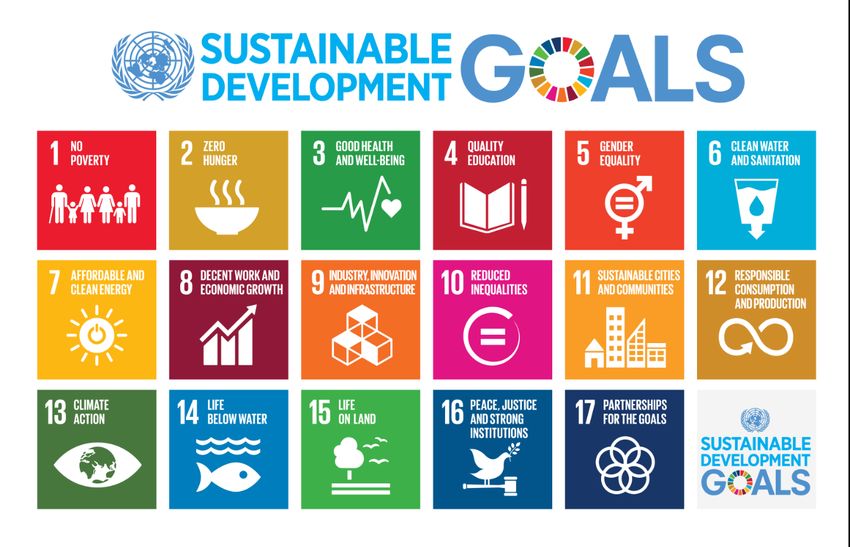
On 1 January 2016, the 17 Sustainable Development Goals (SDGs) of the 2030 Agenda for
Sustainable Development – adopted by world leaders in September 2015 at an historic UN
Summit – officially came into force. Over the next fifteen years, with these new Goals that
universally apply to all, countries will mobilize efforts to end all forms of poverty, fight
inequalities and tackle climate change, while ensuring that no one is left behind.
The SDGs build on the success of the Millennium Development Goals (MDGs) and aim to go
further to end all forms of poverty. The new Goals are unique in that they call for action by all
countries to promote prosperity while protecting the planet. They recognize that ending poverty
must go hand-in-hand with strategies that build economic growth and addresses a range of social
needs including education, health, social protection, and job opportunities, while tackling climate
change and environmental protection.
MCIC would like to track how our MGMGP funded projects are working toward transforming our
world and the 2030 Agenda for Sustainable Development. This year we ask you to mark which
Goal you would consider a main goal your project is going to address and what other SDGs that
2019 - 2020 CSF Funding Guide Last updated 05/2019 Page 9 of 17you consider your project is contributing to, among the 17 goals, as presented in the picture
below.
Section IV: Public Engagement
MCIC values public engagement and would like you to engage Manitobans through the work of
your project. Whether it is making people aware of your work in the Global South, showing them
how their actions matter or encouraging them to take action, you will have played a great role to
help Manitobans engage in the global issues and show the meaning of being a global citizen. The
following list provides a few examples of the how you can engage people:
Social media/online engagment (Facebook, Twitter, Instagram, websites, blogs, etc.)
Newsletters (mail or digital), flyers, bulletin inserts, emails etc.
Fundraiser events that include an awareness building component such as auctions,
dinners, social, tournaments, raffles, bake sales, marathons, etc.
Displays at a local community centre, business, faith group, shopping mall, festival, etc.
Appendix 1 provides information on public engagement, what it means at MCIC and how it can
be done as part of your project activities. This brief introduction about public engagemement at
MCIC can also be downloaded from our website mcic.ca in .pdf format, under ‘International
Projects’.
2019 - 2020 CSF Funding Guide Last updated 05/2019 Page 10 of 17Section V: Eligibility for Funding
In order to be eligible for the CSF:
Applicants to the CSF must be Canada Revenue Agency (CRA) registered charities or have
special status under CRA to received funding.
CSF grants are only available to registered charitable organizations, and not to individuals.
Projects must be consistent with MCIC’s development philosophy, as outlined in our
Guiding Principles.
All CSF budget must be expended overseas and cannot fund project activities in Canada.
MCIC’s contribution to the CSF budget may not be used to cover items such as
international travel expenses, academic research, or pre-travel preparations
(immunizations, passport fees, etc.).
CSF budget must be used within one year of receipt.
Use of Sponsoring Organizations
In the case of an organization that is not a CRA registered charity or does not have special status
under CRA to receive funding, the organization may partner with an eligible charitable
organization, what we call the Sponsoring Organization. Certain requirements must be met for
MCIC to accept a proposal using a sponsoring organization:
1. The sponsoring organization CANNOT be a current MCIC regular member.
2. The applicant organization and the sponsoring organization must have a formalized
commitment to the project.
3. The governing board of the sponsoring organization must pass a motion agreeing to
support the project and fulfill any necessary CRA obligations.
4. The applicant organization must include a letter from the sponsoring organization
with their application indicating their formal support of the project.
Please be aware that in the case of sponsorship, a sponsoring organization becomes the
primary applicant and would be unable to apply to the MCIC Community Solidarity Fund the
current year or the next year. We require that the sponsor and applicant write and sign a
Memorandum of Understanding (MOU) so that each party understands its obligations to MCIC
and the Canada Revenue Agency. Establishing an MOU between the Applicant and Sponsor with
the Southern Partner is recommended but not mandatory.
Levies
For every project funded by MCIC, the successful organization must submit a cheque to MCIC for
an amount equivalent to 10% of the funds they receive. This amount must come from the
organization’s own fundraising and not from the requested project funds. It should not appear in
the project budget. For CSF, this levy must be received before funds are presented to the
2019 - 2020 CSF Funding Guide Last updated 05/2019 Page 11 of 17applicant. As all of the money received from the Government of Manitoba is used overseas for
development projects, this levy allows MCIC to cover its own costs related to administering our
granting programs.
Submission Deadlines
The deadline for this year’s CSF: Monday, June 10 at 5:00 PM and Friday, November 15, 2019 5:00 PM.
When your project submission is received by MCIC, it will be assigned a project number.
Please use that number in any correspondence with us related to the project.
Matching Funds
First time applicants can apply for up to $6,000 and there is no requirement to provide matching
funds for the project. However, we encourage applicant groups to show their commitment and
sustainability by making a financial contribution to the project.
Returning Applicants
Once an organization has successfully completed a CSF project and provided a satisfactory report,
the next time they apply to CSF they may be eligible to apply for additional funds, if they are able
to provide a match. They can apply for the base amount of $6,000, and for every $1 an
organization provides, MCIC will match it up to a maximum of $2,000. This allows an organization
to submit proposals up to the value of $10,000 ($6,000 base funding + $2,000 match raised by
applicant organization + $2,000 MCIC’s top up).
Section VI: Selection Process
1. Preliminary assessment – Upon receipt of the application, MCIC staff will review it to
determine if it meets the basic eligibility requirements and if all sections of the application
have been completed. Incomplete applications or applications not presented in the
proper format will not be considered and will be returned to the applicant. Prior to the
deadline, MCIC staff will be available to the applicant for consultation on the necessary
changes.
2. Decision making levels – All projects are reviewed by the Community Solidarity Fund
Review Committee, which is composed of MCIC staff, Board Members and
staff/volunteers from organizations who have previously received CSF funding. This
committee will recommend projects for funding to the MCIC Board that makes all final
funding decisions.
2019 - 2020 CSF Funding Guide Last updated 05/2019 Page 12 of 173. Types of Decisions
a. Approved – No futher information required
b. Approved with Conditions or Recommendations – Applicants must work with
MCIC to provide additional information or adjust the application before final
approval is granted
c. Not Approved – MCIC receives many applications for the CSF and often cannot
fund all of them. MCIC may also not grant an applicant the amount requested.
Other issues may stand in the way of funding. If the applicant wants to re-apply
for the next intake, we encourage them to first consult with MCIC staff to
determine why their application was not funded. Some reasons for projects not
receiving approval include: there are more applications than funds available, the
project does not meet MCIC criteria, or the application is not filled out correctly.
Section VII: Monitoring and Evaluation
Monitoring
MCIC defines monitoring as systematically observing, recording and analyzing your project
activities in order to assess whether proper implementation is taking place and planned results
are being achieved. Monitoring the project allows you to make changes when necessary to
improve project activities and results.
MCIC favors participatory approaches to planning and implementation of projects so that all
participants will have the opportunity to be involved in all stages of the process. To measure the
results of the project, information on activities and achievements is collected and compared to
indicators of success. You can determine an “indicator of success” by asking: What does this
project need to do or accomplish in order to meet its goals?
If you find that your project requires or undergoes changes to your original project proposal or
budget plan in order to be more effective, please share the details with MCIC so that we can offer
advice on project management and continued funding.
Evaluation
The evaluation process should examine the level of success your project has achieved in relation
to its stated goals and objectives. Evaluation uses the information collected during monitoring
to make judgments on your project’s effectiveness.
MCIC requires a Final Report that evaluates the work done during the project period. Your
project proposal must address how you will undertake the evaluation process, and who will be
responsible for it. Evaluation is a tool that helps you learn from your efforts and improve your
programs for the future.
2019 - 2020 CSF Funding Guide Last updated 05/2019 Page 13 of 17MCIC encourages you to monitor and evaluate the progress of your project using the template
below to help meet reporting requirements:
Targeted Activities as How do you know the What is existing Progress on
Results/outcomes listed in project is successful? Or situation Output
proposal how you will measure (baseline data)
success? (indicators)
Add lines as
necessary
Section VIII: Reporting Requirements
Final Report
MCIC expects you to submit your final report within three months after your CSF project ends.
Your Final Report should describe what has been accomplished during the funded period. As
well, we would like to hear about changes you have made from your original application, in both
program and budget. Please tell us the reasons for those changes.
Using the final report template (provided in a separate document) – MCIC would like to know
what activities you carried out and what results were obtained from these activities. Please let
us know how your project was different, in activities and results, from what you originally said
that you would do (and what caused the project to change). Also, in your budget, let us know
how you spent your money, and how that is different from original estimates, as well. What were
the variances and what are the reasons for those variances?
Final Report Templates
Narrative/technical Report: Please use the separate reporting template provided for actual
reporting. This is just a sample.
Outputs Indicators Planned Actual Variance, if
any,
explanation
1
2
3
N
2019 - 2020 CSF Funding Guide Last updated 05/2019 Page 14 of 17Financial report/Budget: Please use the separate Excel file provided for actual reporting. This is
just a sample.
Budget Planned budget Actual Variance
category expenditure
Budget item Budget Expenditure Variance Reasons for
amount amount amount variance
(CA$) (CA$) (CA$)
1
2
3
N
It is not necessary to submit receipts with the report, however it is expected that receipts will be
available if requested.
MCIC staff are available to answer questions you may have about the final reporting process.
2019 - 2020 CSF Funding Guide Last updated 05/2019 Page 15 of 17Appendix 1: Public Engagement: Impacting Manitobans on
Development Issues
What is public engagement?
Public engagement is the process of moving people through a continuum from basic awareness, to
understanding, to personal involvement and informed action on a certain issue. This movement from
awareness to action doesn’t always follow a straight path – it’s important to reach out to people
wherever they are on the public engagement continuum. In this way, you are supporting the
engagement process and increasing action on international development and global issues.6
Basic Personal
Understanding
Awareness Involvement
MCIC defines public engagement as the practice of inspiring, supporting, and challenging people and
groups in dynamic cycles of learning, reflection, and action on global issues. It is a transformative
process that works towards more equitable social, economic, environmental and political structures.7
What should public engagement activities do?
Raise Enable
Raise awareness of international development and global issues. Awareness Change
Enable change through helping people understand that their actions matter
and impact the world.
Encourage action by providing people with tools and resources to take action. Encourage
Action
What does MCIC expect for public engagement?
MCIC expects you to engage Manitobans through the work of your project or other outreach efforts.
Whether it’s helping to increase awareness and understanding of the issues, showing people how their
actions matter or encouraging them to take action, you play a big role!
A few examples of public engagement activities
Social media / online engagement via platforms such as Facebook, Twitter, Instagram, Snapchat,
websites or blogs
Newsletters (mail or digital), flyers, bulletin inserts, or emails
Presentations with faith groups, community meetings, movie screenings, local clubs, theatre,
meetings with your local MP/MLA or other elected officials
Workshops, lunch & learns, coffee hours or information sessions
Fundraiser events that include an awareness building component, such as auctions, dinners,
socials, tournaments, raffles, bake sales or marathons
Newspaper articles and stories about the project in local media
In-person conversations or other direct outreach to your networks
6
Effectively Engaging Canadians as Global Citizens: Public Engagement Position Paper, ICN, December 2009.
7
Global Hive Glossary: Public Engagement
2019 - 2020 CSF Funding Guide Last updated 05/2019 Page 16 of 17 Activities or local events such as an Ethical Fashion Show, dessert nights, dinners or fall suppers
Displays at a local community centre, business, faith group, shopping mall, festival or other
public location
Public engagement tips
Provide a range of things people can do to get involved (including one right at your event) i.e.: donate,
write a letter, bring a friend to an event, share a newsletter or post, read a flyer, sign a petition, and so
on.
Count the number of people who attend your event or separate out Manitoban numbers from your
activities for reporting.
Expand your audience! Reach out in new ways and ask your constituents to share with their friends and
family. Be sure to give them something easy to share – a video, story or post!
Send MCIC public engagement information on your project
Tell us about your public engagement plans and activities in your project proposals and scheduled
reports to the International Program Coordinator at program@mcic.ca. Please include a description of
your event, the number of Manitobans you reached and how it relates to your project. The chart below
offers some guidelines:
Activity description: What How did this activity raise How many Manitobans
did you do? Where? Who awareness, enable change participated?
was your audience? or encourage action? # Women
# Men
# Other
# Total
You can also share success stories from your project! Send stories and photos (with project name) to
our Public Relations Coordinator at pr@mcic.ca. Your story might be featured on our website, annual
report or social media! We can also help publicize your event to our followers through our e-newsletter
or social media. Contact us today!
Want to learn more about Public Engagement?
Take Global Hive’s free online course on public engagement or check out some of their
other resources at globalhive.ca.
Contact Info
Questions about public engagement? pe@mcic.ca
Questions about sharing stories, events or photos? pr@mcic.ca
Questions about projects, funding or reporting? program@mcic.ca
2019 - 2020 CSF Funding Guide Last updated 05/2019 Page 17 of 17You can also read


