2019 YOSHINOYA HOLDINGS CO., LTD.
←
→
Page content transcription
If your browser does not render page correctly, please read the page content below
YOSHINOYA HOLDINGS CO., LTD.

                                                                             CORPORATE REPORT

                                                                             2019

h t t ps: // w w w.yoshinoya-hol dings.c om
Yoshinoya Holdings Philosophy Message from the President
Companies only exist to serve the needs of society
and to contribute to the greater happiness of mankind.
The Yoshinoya Holdings Group is an enterprise that
spans national and regional borders, treating people
Business Philosophy from every nation as its customers. Our customers
and employees share the same human spirit and come
FOR THE PEOPLE Focusing on securing profit throughout
from every part of society.
We serve people, we value people, and we want to be
a valued part of people’s lives.
We strive to provide our customers with products that
deliver excellent value for the money.
the Group so as to channel achievements
For the People
in the “experimental” phase into the
We endeavor to foster a spirit of enthusiasm and
fulfillment in our employees.
We aspire to operate in harmony with society and to
protect the global environment.
Our slogan “For the People” sums up these
“expansion” phase
6
aspirations of the Yoshinoya Holdings Group.
For the people…
Our Core Values
Greater number of customers Postponing transition to the second phase, Yoshinoya will convert 80 existing stores to a new format in
Tasty, low-price, and quick Originality
The number of customers is a scale focusing on revamping performance a bid to increase the number of customers. Hanamaru will
for measuring customer satisfaction. We will continue to focus on a
Tasty signifies high quality,
low-price signifies relative value
We will continue to strive to provide distinguished presence with regard We are implementing a long-term vision, “NEW BEGINNINGS emphasize education and training to enhance productivity and
satisfaction to as many customers to products, services, store
and efficiency, and quick signifies
promptness and delivery.
as possible through efforts to development, employees, corporate 2025 (NB2025),” which aims to incorporate a new business efficiency of store operation so as to improve profitability.
increase the frequency of use and culture and other matters, and
We will continue to adhere to these
values and enhance these elements
establish new stores and provide a level of satisfaction to our model for the future. NB2025 divides the 10 years until 2025 into Arcmeal will implement prompt restructuring measures to
businesses to ensure that our customers that only our group is
even further.
products and services are used by a able to provide. the three stages of “experimental,” “expansion,” and restore the brand power. While maintaining its store opening
greater number of customers.
“harvesting,” and we intend to achieve our goals step by step by plan and policy, Kyotaru will refine its employee education to
implementing a medium-term management plan for each stage. achieve differentiation from competitors. Overseas, while
In the first stage, the “experimental” phase corresponding to strengthening performance monitoring of business development
Integrity Importance of human resources
We will cultivate a highly
Challenges and innovation the past three years that concluded with the fiscal year ended in China so as to optimize allocation of investment, we will
We believe that human resources
transparent, free, and candid February 28, 2019, we moved forward with a process of trial apply the “Japanese kitchen” format, which has already proved
are the most important assets of We will continue to be a group that
corporate culture through exchanges
any company. We will continue to is never satisfied with the status
of true feelings and thoughts based and error while verifying the results, in our quest for seeds for successful in the United States, more widely in the U.S. In
strive to be a group of individuals quo, is always attentive to market
on principles.
who are appreciated by society changes, boldly challenges new
In addition, we will never permit the creation of new value. Although our efforts enabled us to ASEAN, our aim is to make the Malaysian and Singaporean
through maintaining aspirations, things, and is capable of producing
acts that violate social ethics and
continuing to learn, and improving innovations.
compliance, and will continue to obtain numerous seeds, results fell below our projections by a operations profitable by shifting to direct operations.
our personalities and capabilities.
maintain integrity.
substantial margin. Consequently, we have decided to postpone
our transition from the “experimental” phase to the Identify the direction of “harvesting” and
“expansion” phase by one year, and focus on revamping our
develop a system for the next stage
performance in the fiscal year ending February 29, 2020. We will devote our efforts in the current fiscal year to
The Group Charter of Corporate Behavior
performing maintenance on the Group’s management to ensure
In the spirit of the Group management policy “For the People,” the Group aims to become an irreplaceable corporation
Recovery of profitability is the precondition for sustained growth and profitability. We will then expand on our
that contributes not just to people in the country and region but across the world through its business practices. We aim
transitioning from the “experimental” phase to achievements made in the first stage, identify the direction in
to become a corporation trusted by society, fulfilling responsibilities by ensuring that the actions of the Group employees
the “expansion” phase which to focus our “harvesting,” and steadily proceed with the
comply with laws and regulations in the spirit of this policy. The CEO of each Group company strives to thoroughly
familiarize employees with corporate ethics, and to lead efforts by example in achieving the Group management We are resolved to recover profitability in the fiscal year ending development of our system.
principles in the spirit of this policy. Furthermore, if a situation such as a breach of this policy were to occur, the managers February 29, 2020, which is the precondition for transitioning We would like to extend our most sincere appreciation for
of each Group company will announce the approach to solving the problem internally and externally, and work to
from the “experimental” phase to the “expansion” phase. Our your attention to the changes in the Group as we move forward,
determine the cause and prevent its recurrence. After disclosing accountability and information quickly and accurately to
the public as well as clarifying authority and responsibility, the managers will take strict disciplinary action on their own.
consolidated performance targets are net sales of 208.0 billion and your continued support.
yen, operating income of 1.0 billion yen, ordinary income of 1.5
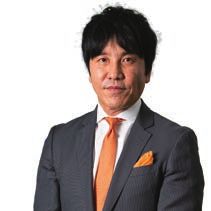
billion yen, and net income attributable to owners of the parent Yasutaka Kawamura
of 0.1 billion yen. President
01 02Group Companies
Yoshinoya Hanamaru
Iconic Beef Bowl Chain Brand with 120 Years of History Delivering “delicious surprises” of authentic Sanuki-style udon nationwide
Founded in 1899, Yoshinoya is a pioneer of fast food in Japan. traditional beef bowl but also in developing healthy menus Sanuki-style udon originates in Kagawa Prefecture. Hanamaru opened stores in China, Malaysia, and Indonesia and is
Yoshinoya, a chain of beef bowl restaurants with a notable employing foods with Functional Claims labeling, ahead of transformed this attractive local specialty renowned by its maintaining the pace of its growth over the long term.
brand power, is loved by all generations. industry peers. springy and firm texture and rich flavor of iriko-dashi stock Since 2013 Hanamaru has adopted Hanamaru’s dietary fiber
Yoshinoya’s unique value is embodied in its tasty dishes Yoshinoya recently started introducing cash & carry stores. made from dried young sardines into a casual dining experience noodles containing as much dietary fiber as a whole lettuce for
achieved through the quest for the very best ingredients and Pursuing a shift away from the conventional full-service stores that customers throughout Japan can enjoy in a “self-service” all the udon dishes offered by the chain. Hanamaru is
flavor, including the sauce based on a secret recipe handed with U-shaped counters, Yoshinoya is taking up the challenge format, the same style as in Sanuki, the home of Sanuki-style conducting research into food and nutrition to develop products
down from generation to generation. In the course of 120 years, of creating value by offering “comfort” in addition to “tasty, udon. that contribute to customer health.
Yoshinoya has established a business model that emphasizes affordable and fast” goods and services. Since its foundation in 2000, Hanamaru has expanded as a Delivering “delicious surprises” to everyone is the concept
consistent quality at all stores nationwide and the offering restaurant chain offering delicious authentic Sanuki-style udon Hanamaru cherishes. This is the practical expression of
dishes at low cost with thorough safety control and great nationwide, gaining popularity among women and families too. Hanamaru’s aspiration since its foundation, namely, to deliver
hospitality. Yoshinoya is active not only as the guardian of the With the number of stores in Japan exceeding 500, Hanamaru happy and joyful surprises to its customers.
First Yoshinoya store opened in Tsukiji in 1926 Conventional U-shaped counter. The service counter Cash & carry store for which experiments and verification First store opened in 2001 in Takamatsu City, Kagawa Udon salad Adopted “Hanamaru’s dietary fiber noodles” containing
integrated with a table for fast serving. have been conducted since 2015. Store layout with Prefecture, the home of Sanuki-style udon. dietary fiber
greater flexibility introduced to enable customers to enjoy
the dining experience in a leisurely manner in comfort
1,036 290
1,010 270
972
Composition of Net sales and 50 Composition of Net sales and 238
net sales segment profit 38 net sales segment profit
50.7 % Net sales (billion yen)
35
14.2% Net sales (billion yen)
9
12
Segment profit (billion yen) Segment profit (billion yen) 6
Fiscal 2016 Fiscal 2017 Fiscal 2018 Fiscal 2016 Fiscal 2017 Fiscal 2018
03 04Group Companies
Arcmeal Kyotaru
Operator of three meat specialty restaurant chains Take-out or eat-in fresh sushi for casual dining
Arcmeal operates restaurant chains specialized in meat dishes: techniques available at specialty restaurants create a Kyotaru operates the take-out business for Kamigata sushi, each location. Rooted in the community, Kyotaru’s take-out
“Steak-no-Don” and “Volks” steakhouses with a history of over pleasurable dining experience. The salad bar, which “Volks” which is pressed sushi originating in the Kansai region, and the shops offer seasonal fresh ingredients at reasonable prices and
40 years and “Don-tei” Japanese restaurants serving was the first in Japan to introduce, and the bread bar offering eat-in business for Edomae sushi mainly offered at conveyor are popular among a wide range of customers.
shabushabu and sukiyaki. freshly baked bread in house are also popular. belt sushi shops. Since its foundation in 1932 as a traditional In the eat-in business centering on the “Kaisen Misakiko”
The concept of “Steak-no-Don” is a family steak restaurant “Don-tei” is a chain of shabushabu and sukiyaki restaurants Japanese restaurant in Kyoto, Kyotaru has expanded its brand, urban-style conveyor belt sushi shops located adjacent
where customers with children can relax and enjoy themselves. with Japanese décor. Suitable for diverse occasions— business, handing down the traditional techniques of Japanese to train stations have an open welcoming atmosphere that
With its menu characterized by ample servings and originality, everything from dining with colleagues or business connections cuisine from generation to generation for over 80 years. appeals to women dining alone. Eat-in sushi shops are also
“Steak-no-Don” restaurants are rooted in the community and to parties and family gatherings, as well as smaller, more In the take-out business centering on the “Kyotaru” brand, found at commercial complexes and there are sushi shops
have numerous fans. intimate dining experiences involving a few people—“Don-tei” various shops—tenants in department stores, supermarket suitable for families too. Customers can casually enjoy fresh
What makes “Volks” so attractive is the hotel-style classy offers customers a wonderful time spent together with friends, stores, shopping malls, station buildings, shopping arcades, fish prepared by sushi chefs on site.
atmosphere. Sophisticated service and superior culinary family and acquaintances. etc.—are operated in a style attuned to the characteristics of
Steak-no-Don Volks Don-tei Founded in 1932 as a Japanese restaurant. Traditional Kamigata sushi means beautifully presented boxed sushi Edomae sushi means Edo style sushi, which is a
techniques of Japanese cuisine are handed down from and rolled sushi made in the Kansai region since the combination of prepared fish and cooked rice seasoned
generation to generation. Heian period (8-12th century). with vinegar, shaped by hand, developed in the Kanto
region during the Edo period (17-19th century).
229 224 256 266 273
202
Composition of Net sales and Composition of Net sales and
net sales segment profit net sales segment profit
9.9% Net sales (billion yen) 13.4% Net sales (billion yen)
3
Segment profit (billion yen) 1 2 Segment profit (billion yen) 1
0.7
△8
Fiscal 2016 Fiscal 2017 Fiscal 2018 Fiscal 2016 Fiscal 2017 Fiscal 2018
05 06Group Companies
Others
®
Overseas
Establishing a robust global system to achieve 1,000 stores overseas Setagaya With Link Co., Ltd
The history of the Yoshinoya Group’s overseas business Malaysia. Ramen noodles beloved by people around the world Spreading Japanese culture to the world through
as a popular dish Japanese national food
development started in 1975 when the Group opened Yoshinoya Since the opening in Shanghai of the first overseas store in
stores in the U.S. Subsequently, Yoshinoya opened stores in 2011, the number of Hanamaru Udon stores operated in China, Since the opening of “Setagaya” specialized in ramen in With Link Co., Ltd. operates 87 ramen restaurants worldwide.
Taiwan, mainland China and elsewhere in Asia, with the Malaysia, and Indonesia has grown to over 40. Having seafood-based soy sauce broth in Tokyo in 2000, Setagaya has After opening the first overseas store in Singapore in 2013,
number of stores overseas increasing steadily. Since the turn of established regional headquarters, the business model is being expanded to include five brands of different types of tasty the company has entered the markets of Malaysia, Indonesia,
the century, Yoshinoya has gained widespread recognition in adjusted to introduce a menu, a service style, and a store ramen noodles. Setagaya joined the Yoshinoya Group in 2016 Hong Kong, Macau, the Philippines, Australia, Taiwan, and
countries and regions where Yoshinoya stores have been format attuned to each country and region while promoting with the aim of further business expansion. China in the last 6 years.
opened. localization of management. Aspiring to promote ramen as a dish that is beloved by We aim to expand our business development with a partner
At present, Yoshinoya operates about 900 stores in the U.S., Based on accumulated knowhow on store opening, the Group people around the world, Setagaya is pursuing the ultimate that can appreciate and agree with our management
mainland China, Taiwan, and countries in ASEAN, including will establish a more robust global structure with the aim of bowl of ramen while cherishing relationships with customers philosophy, utilizing the unique services we have cultivated up
Singapore, the Philippines, Indonesia, Thailand, Cambodia, and having 1,000 stores overseas. and the commitment of ramen chefs. until now and genuine Japanese-style ramen using creamy pork
bone soup.
Number of Yoshinoya Group stores overseas
U.S.*1 China*2 ASEAN*3
(Stores)
591
516
453
140 163
103 117 101 101
2016 2017 2018
First Yoshinoya store in Chongqing The first Hanamaru Udon store opened in Shanghai in *1 Number of Yoshinoya stores The Setagaya New York store was selected as a Best of
2011. *2 Total of Yoshinoya and Hanamaru stores (excluding Taiwan) New York in the restaurant section by the New York Magazine
*3 Total of Yoshinoya and Hanamaru stores in 2008 and was the forerunner of the global ramen boom.
211 41
197
35
Composition of Net sales and 166
12
Composition of Net sales and 30
net sales segment profit net sales segment profit
10.3% Net sales (billion yen)
9 8
1.5% Net sales (billion yen)
Segment profit (billion yen) Segment profit (billion yen)
△0.5 △0 △0.5
Fiscal 2016 Fiscal 2017 Fiscal 2018 Fiscal 2016 Fiscal 2017 Fiscal 2018
07 08Our Journey toward Realization of Our Business Philosophy
120 years since the foundation of Yoshinoya.
Shown here is Yoshinoya’s history of progress over Strength 3
1
time and with increasing geographical reach
1899 “Yoshinoya” founded in Nihonbashi Strength through initiatives offering value for the realization
Localization
Yoshinoya
of the Group’s business philosophy.
1926 Yoshinoya moves to Tsukiji to coincide
With an eye to the future of the restaurant industry,
with the relocation of the fish market
from Nihonbashi to Tsukiji the Yoshinoya Holdings Group will further evolve
Group synergy and continue to advance.
For a restaurant operator originating in Japan to offer tasty
dishes to customers around the world, localization through
country- and region-specific marketing is essential so as to
The Yoshinoya Holdings Group is dedicated to offering value respond to the differences in society, culture, and customs.
embodied in “tasty dishes” via diverse business formats and We aim to offer great food loved by people worldwide.
brands centering on our origin, the beef bowl.
1926
2
Operation of diverse restaurant businesses creates
1958 Establishment of YOSHINOYA CO., LTD. Group synergy encompassing everything from procurement
1968
(currently Yoshinoya Holdings)
Shop opening in Shinbashi, aiming to become a
of raw materials and store opening plans to product Strength
domestic chain development and marketing.
Tasty Japanese dishes 1975 Opening of first Yoshinoya in Denver
Overseas
Yoshinoya
1980 YOSHINOYA CO., LTD. files for corporate
1979 Opening of first Yoshinoya in Los Angeles
reorganization, and begins
corporate reorganization
proceedings always readily available 1988
1991
Opening of first Yoshinoya in Taiwan
Start of development of the
1987 Completion of corporate
reorganization proceedings and convenient Yoshinoya franchise in Asia (Opening
of first Yoshinoya in Hong Kong)
1990 Approval of stock for 2002 Opening of first Yoshinoya in Shanghai
The Yoshinoya Holdings Group takes pride in offering tasty dishes
over-the-counter trading 2004 Opening of first Yoshinoya in Shenzhen
1968 rooted in traditional Japanese cuisine to many customers at
2008 Opening of first Yoshinoya in Fujian
1991 Launch of “Tokumori”
beef bowl (Extra-large beef bowl) attractive prices. 2010 Participation in Expo Shanghai 2010
1996 Establishment of 500th store We will continue to offer tasty Japanese dishes that are 2014 Opening of first Yoshinoya in Qingdao;
2000 Opening of first Hanamaru in Takamatsu opening of first Yoshinoya in Wuhan
Hanamaru
always readily available and convenient far
2000 Listing on the First Section of the Tokyo Stock
2015 Opening of first Yoshinoya in Malaysia
Exchange 2004 Operation of largest domestic plant in Shizuoka into the future.
2017 Subsidiary in Malaysia acquires
2004 Prohibition of beef imports from the U.S.;
2006 Hanamaru joins the Group JAKIM Halal certification
cancellation of beef bowl sales Opening of first Yoshinoya in Qinghai;
2006 Ban on beef imports lifted; subsequent return of 2013 Introduction of Hanamaru’s dietary fiber noodles opening of first Yoshinoya in Sichuan
beef bowl sales into all shops 2018 Opening of first Yoshinoya in
Chongqing, Jiangxi, and Henan
2007 1932 Started as a Japanese
Kyotaru
Establishment of
YOSHINOYA HOLDINGS CO., LTD.
2016 Reform and automation of the noodle production
cuisine restaurant in Kyoto
line of the Chiba plant
2011 1951 2010 Participation in Expo Shanghai 2010
Hanamaru
Establishment of the Group Product Division Invention of “chakinzushi,”
sushi wrapped in thin 2014 Opening of first Hanamaru Udon in Wuhan
2013 Sale of beef sukiyaki set omelette
2015 Opening of first Hanamaru Udon in Malaysia
2015 Sale of barley rice set with grated yam and beef 1970 Participation in Osaka 2018 Opening of first Hanamaru Udon in Shenzhen;
Expo ’70
2016 Establishment of the Group Administration 1951 opening of first Hanamaru Udon in Indonesia
Division
Establishment of the Group Finance and
1984 Listing on the First
Section of the Tokyo Stock Exchange 2011 Opening of first Volks in Taiwan
2016
Arcmeal
Accounting Division
1997 KYOTARU CO., LTD. files for corporate reorganization proceedings 2015 Opening of first Don-tei in Taiwan
2017 Release of “Salacia beef,” the first food with Noodle production line of the Chiba plant
Opening of conveyor belt sushi shop “Kaisen Misakiko” in Meguro
Functional Claims labeling by a restaurant chain 1970 Opening of first Volks
Arcmeal
2000 Kyotaru joins the Group
2018 The number of Yoshinoya stores worldwide
1976 Opening of first Steak-no-Don
reaches 2,000 2001 Opening of standing sushi shop “Sushi Misakimaru” in Koiwa 2015 Exhibition at the Expo 2015 Milan
Kyotaru
1990 Opening of first 2002 Completion of corporate
shabu-shabu reorganization proceedings
Don-tei
2005 Listing on JASDAQ
2008 Arcmeal 2011 Delisting
joins the
Group 2016 Expansion of the
rice-cooking line at the
2018 1970 Funabashi plant 2016 2015
Yoshinoya “Corowa Koshien Store” First Volks
09 10Data on Stores in Japan and Overseas
Flavors and services from Japan
spreading around the world
Our stores are being opened all over the world, from Japan to America, East Asia, and South-East Asia, and we are continuing to grow in scale.
We strive to deliver the taste of Japan and its services to more and more people through promoting market strategies that meet local needs.
Number of stores in Japan and overseas, by brand
Yoshinoya 2,090 stores Company-operated stores 1,432 stores Qinghai Inner Mongolia Heilongjiang and Jilin
(year-on-year +107) Franchised stores 658 stores Overseas total
Yoshinoya 2 stores Yoshinoya 14 stores Yoshinoya 24 stores
(year-on-year +1) (year-on-year +2) (year-on-year +6)
Hanamaru 556 stores Company-operated stores
456 stores Yoshinoya 879 stores
(year-on-year +39) Franchised stores 100 stores (year-on-year +96)
Wuhan Beijing Liaoning
Hanamaru 44 stores
Arcmeal 171 stores Company-operated stores
168 stores Yoshinoya 22 stores
(year-on-year +5)
Yoshinoya 236 stores
(year-on-year +17)
Yoshinoya 89 stores
(year-on-year +8)
(year-on-year +6)
(year-on-year -7) Franchised stores 3 stores
Hanamaru 2 stores Kyotaru 1 store Arcmeal 3 stores
(year-on-year ±0)
Kyotaru 333 stores Company-operated stores 333 stores (year-on-year ±0) Qingdao (year-on-year +1)
Kyotaru
(year-on-year +3) Franchised stores 0 stores 1 store
Sichuan Yoshinoya 19 stores Chongqing (year-on-year +1)
(year-on-year +3)
Others 253 stores Company-operated stores
78 stores Yoshinoya 4 stores Hanamaru 3 stores Yoshinoya 4 stores Others 31 stores
(year-on-year +82) Franchised stores 175 stores (year-on-year +3) (year-on-year ±0) (year-on-year +4) (year-on-year +27)
Shenzhen Shanghai Henan
All brand total Japan
Yoshinoya 50 stores Yoshinoya 10 stores Yoshinoya 2 stores
(year-on-year +13) (year-on-year +1) (year-on-year +2)
Yoshinoya 1,211 stores
Company-operated stores
2,467 stores Hanamaru 2 stores
(year-on-year +2)
Hanamaru 24 stores
(year-on-year +1)
(year-on-year +11)
Franchised stores
936 stores Fujian Jiangxi
Hanamaru 512 stores
(year-on-year +33) America
Total 3,403
(year-on-year +224)
stores
Yoshinoya 17 stores
(year-on-year +2)
Hanamaru 4 stores
Yoshinoya 1 store
(year-on-year +1)
Arcmeal
Kyotaru
168 stores
(year-on-year -7)
332 stores
Yoshinoya 101 stores
Setagaya
(year-on-year ±0)
3 stores
(year-on-year +3) (year-on-year +2) (year-on-year ±0)
(As of the end of February 2019)
Others 222 stores
(year-on-year +55)
Thailand Hong Kong Taiwan
Yoshinoya 20 stores Yoshinoya 62 stores Yoshinoya 68 stores
(year-on-year +5) (year-on-year +1) (year-on-year +4)
Arcmeal 3 stores
Cambodia Indonesia (year-on-year ±0)
Yoshinoya 2 stores Yoshinoya 94 stores The Philippines
(year-on-year -1) (year-on-year +21)
Hanamaru 2 stores Yoshinoya 12 stores
Malaysia (year-on-year +2) (year-on-year +1)
Yoshinoya 10 stores Singapore
(year-on-year -2)
Hanamaru 7 stores Yoshinoya 16 stores Company-operated stores
(year-on-year -2) (year-on-year -1) Franchised stores
11 12At a Glance Company Profile/Stock Information (as of February 28, 2019)
Consolidated Financial Data
Net sales 202,385 million yen Operating income 104 million yen Company Profile Major Consolidated Subsidiaries
Company Name YOSHINOYA HOLDINGS CO., LTD. YOSHINOYA CO., LTD.
(Millions of yen) (Millions of yen)
198,503 202,385 Established December 27, 1958 Hanamaru, Inc.
180,032 185,738 188,623
4,019 Arcmeal Co., Ltd.
3,515 Paid-in Capital 10,265 million yen
KYOTARU CO., LTD.
Head Office 18F Daiwa Rivergate, 36-2
Nihonbashihakozakicho, Chuo-ku, Tokyo, YOSHINOYA AMERICA, INC.
1,865
1,613 103-0015, Japan YOSHINOYA China Holdings Co., Ltd.
President Yasutaka Kawamura ASIA YOSHINOYA INTERNATIONAL SDN. BHD.
104
Stock Listing Tokyo Stock Exchange First Section
FY2014 FY2015 FY2016 FY2017 FY2018 FY2014 FY2015 FY2016 FY2017 FY2018
Stock Overview
Securities Code 9861
In Japan, net sales of major segments increased with the exception of While net sales of major segments in Japan and overseas net sales fell Total number of shares authorized to be issued: 160,000,000
Arcmeal. Strong sales in the U.S. and Taiwan contributed to an increase short of the targets, operating income decreased greatly owing to Number of Employees 4,392 (on a consolidated basis)
in net sales of the overseas segment. Consolidated net sales exceeded increases in costs, including raw materials prices as well as personnel Total number of shares issued and outstanding: 65,129,558
200.0 billion yen for the first time, an increase of 2.0% year-on-year. expenses and logistics costs.
Number of Employees Number of shareholders: 339,890
Ordinary income 349 million yen Net income (loss) attributable
to owners of the parent 6,000 million yen)
(
Yoshinoya
10,002 [ Male: 5,167, Female: 4,835 ]
Major Shareholders (10 largest shareholders)
(Millions of yen) (Millions of yen) Hanamaru Number of Number of
2,342 [ Male: 961, Female: 1,381 ] Shareholder name shares owned shares owned
1,491
4,604 (100 shares) (%)
1,248 Arcmeal
3,993 Japan Trustee Services Bank, Ltd. 60,674 9.32
941 2,206 [ Male: 973, Female: 1,233 ]
837
2,750 Kyotaru The Master Trust Bank of Japan, Ltd. 29,728 4.56
2,345
2,909 [ Male: 1,241, Female: 1,668 ]
Kisshokai 8,544 1.31
Overseas
349 3,455 [ Male: 1,607, Female: 1,848 ] Trust & Custody Services Bank, Ltd. 7,138 1.10
(6,000)
FY2014 FY2015 FY2016 FY2017 FY2018 FY2014 FY2015 FY2016 FY2017 FY2018 Other Mitsui Life Insurance Company Limited 5,500 0.84
390 [ Male: 250, Female: 140 ]
Ordinary income decreased greatly, mainly because of a decrease in Net loss attributable to owners of the parent was recorded as a result J.P. MORGAN BANK LUXEMBOURG S.A. 1300000 4,482 0.69
Corporate
operating income as well as a decrease in share of profit of entities of recording of an impairment loss amounting to 5,107 million yen due
accounted for using equity method. to closing of stores and other factors in addition to a decrease in 621 [ Male: 359, Female: 262 ] Hannan Corporation 3,268 0.50
ordinary income. Group total
Suntory Liquors Limited 2,957 0.45
21,925 [ Male: 10,558, Female: 11,367 ]
Number of Group stores
(in Japan and overseas) 3,403 stores Annual dividend per share 20 yen Directors and Corporate Auditors
*Including part-time workers Kewpie Corporation
SSBTC CLIENT OMNIBUS ACCOUNT
2,700
2,556
0.41
0.39
(No. of stores) Japan Overseas (Total of overseas stores of Yoshinoya and Hanamaru) (Yen)
20 20 20 20 20
President Yasutaka Kawamura * The Company holds 552,288 shares of treasury stock but is excluded from the above list
3,403 of major shareholders.
3,237 3,179
2,923 3,074 Managing Director Toshiyuki Matsuo
854 923
733 821
675 Director Tetsuya Naruse Composition of Shareholders by Type
Director Eizou Uchikura*
Financial institutions 16.84%
Other corporations 4.93%
2,248 2,341 2,383 2,358 2,480 Director Machiko Miyai*
Corporate Auditor Yoji Kanaya Foreign corporations 4.04%
FY2014 FY2015 FY2016 FY2017 FY2018 FY2014 FY2015 FY2016 FY2017 FY2018 Corporate Auditor Ryusuke Tanaka Treasury stock 0.85%
Corporate Auditor Kensuke Masuoka*
The net increase in the number of stores of major segments in Japan was 40,
the net increase in the number of stores of the other segment was 82 thanks
In accordance with the shareholder return policy that is based on the
principle of steady and consistent shareholder return, the Company paid
Individuals and others 72.80%
Corporate Auditor Osamu Ohashi*
to share purchases, and the net increase in the number of stores overseas annual dividends of 20 yen per share consisting of an interim dividend
was 102. In total, the net increase in the number of stores was 224. and a year-end dividend of 10 yen per share each. * Outside Directors/Outside Corporate Auditors Financial Instruments and Exchange Companies 0.54%
13 14You can also read


