2020/2021 Future Students Viewbook - UNIVERSITY OF NORTHERN BRITISH COLUMBIA
←
→
Page content transcription
If your browser does not render page correctly, please read the page content below

2020/2021 Future Students Viewbook

2
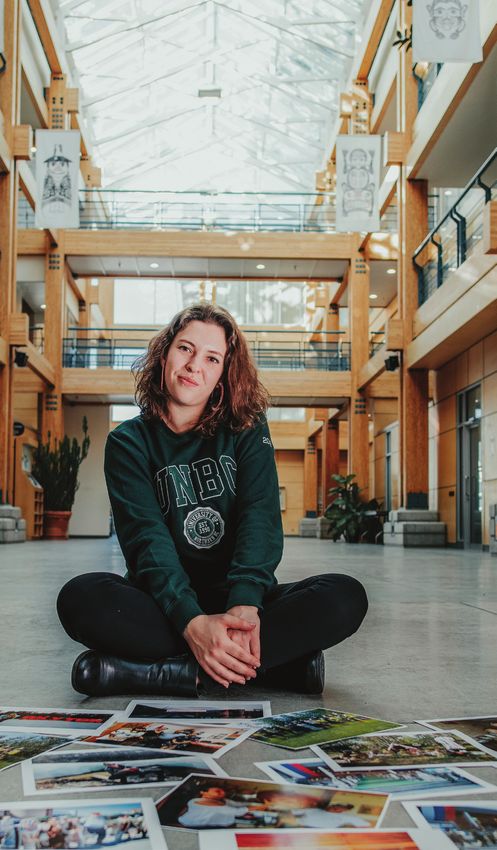
Located in the spectacular landscape of Northern
  British Columbia, UNBC is one of Canada’s best
small universities as ranked by Maclean’s magazine.

UNBC acknowledges the many Traditional Territories
    upon which our Prince George, Fort St. John,
  Quesnel, and Terrace campuses are located. We
 are honoured to serve all First Nations, Métis, and
Inuit peoples with whom we have created respectful
               space and community.
For 11 Years            UNBC
                            Top 5% Worldwide

                              ranked in the top

     Degree Programs
     60 Bachelors
                            250
                            young universities

      27 Masters / 3 PhDs
                            worldwide
                            1 OF ONLY 3 FROM CANADA
                            by Times Higher Education

    11% International       60
                            student clubs
                                                 +
    17% Indigenous

4
299

CANADA IS AMONG THE
TOP 10 SAFEST
COUNTRIES WORLDWIDE
Not to mention, B.C. is one of Canada’s
most welcoming and green provinces.

                                STUDENTS

                                  60%
                                   female

                                  40%
                                   male

                                            5
6

We honour our environment with our
                            campus architecture, teaching and
                            research, and initiatives led by our students,
                            faculty and staff.

                            unbc.ca/green

                                Our Bioenergy Plant
                                uses local
                                sawmill residue,
                                reducing our
                                fossil fuel consumption
                                to heat the university

                                by 85%.

   The Wood Pellet Plant
saves 140 tonnes of CO² per year.

The Green Fund provides
                                    $1.125 million
grants for innovative               worth of projects
projects to create a more
sustainable campus.                 funded
                                                                             7
Whitehorse

                                                                         Yellowknife

                                                                  Cana
                                                                         da
       Prince            Gitwinksihlkw
       Rupert                                Fort St. John
                        Terrace

                 Prince George
                    UNBC Main Campus

                               Quesnel
                                              1hr 30min
    1hr 40min
                       1hr                                   Edmonton

                                                                                            6hr 20min

                                 Vancouver
         Victoria                                            Calgary

                             Seattle
                                                                                  Regina

                                                                                           Winnipeg

                      Portland

                                             Unite
                                                          d Sta
                                                                tes     of Am
                                                                              erica

         San Francisco

8       *Not all flight paths are direct.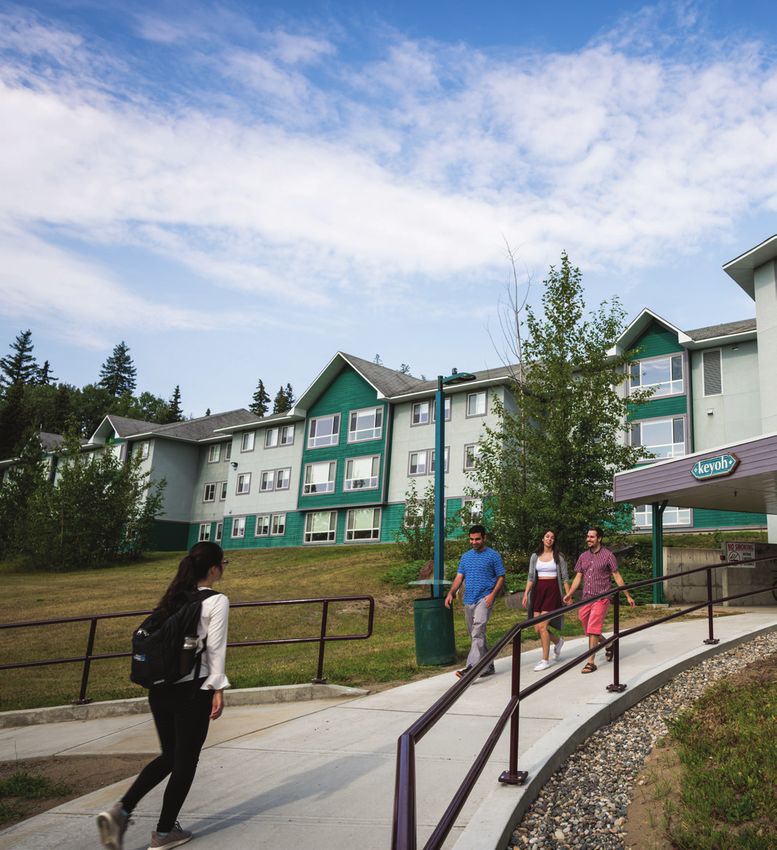
Campuses
                                           Main Campus
                                           Prince George
                                           Northwest
                                           Terrace & Prince Rupert
                                           South-Central
                                           Quesnel
                                           Peace River-Liard
                                           Fort St. John
                                           Wilp Wilxo’oskwhl Nisga’a Institute
                                           Gitwinksihlkw

                                          Other Destinations
                             Iqaluit
                                               Flight Times
                                               Canadian Major Cities
                                               US Major Cities

                                                                     St. John’s

6hr 30min

                                                               Charlottetown
                          Montréal      Fredericton
                      Quebec City
                                                           Halifax

                 Ottawa

                   Toronto

                             New York
       Chicago

                                                                                  9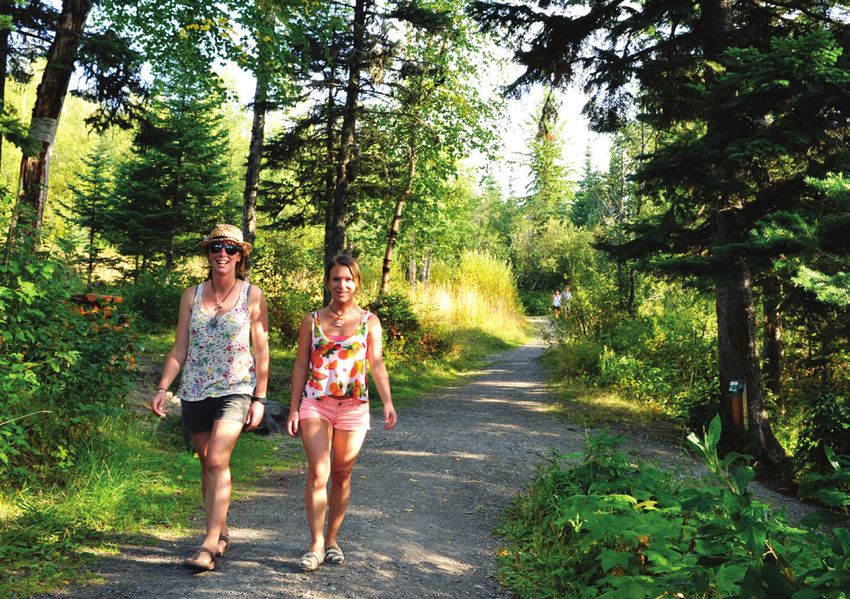
UNBC has campuses located throughout
                                 Northern B.C., and students have access
                                 to incredible recreation and natural
                                 wilderness, minutes from each campus
                                 community.

                                 Prince George is home to an amazing
                                 variety of culture, entertainment venues
                                 and unique restaurants. Paddle on
                                 countless rivers and lakes with your canoe
                                 or kayak. Hike gorgeous scenic trails. Shift
                                 gears and tackle challenging mountain
                                 bike trails. Strap on your skis and glide
                                 along the best cross-country ski trails in
                                 Northern B.C. at the Otway Nordic Centre.
                                 Those who want to challenge themselves
                                 visit the downhill ski resorts just minutes
                                 away.

                                 kilometres of trails
                                 within city limits
              the size of all
              parks in
              Victoria, B.C.

               the size of
               Central Park in
               New York City

              the size of
              Stanley Park in
              Vancouver, B.C.

     tourismpg.com

         @travelnorthernbc
         @travelnbc
         @tourismpg
         @moveuppg

10
11
Spruceland Centre

                                                                             Parkwood Place

                                               Rotary Soccer Fields

                                                                                Masich Place
                             Aquatic Centre          Exhibition Park            Soccer Field

                                                  CN Centre

                                                 Ginter’s Meadow

                                                          Pine Centre Mall
  UNBC Main Campus                                                                  Mr. PG
 On-campus Residence
 Northern Sport Centre
                                                                               Golf & Curling Club
                                                                               and Rock Climbing Gym
     Forests for the World

                                                                                 Box Store Shopping

                     STUDENT ID                  U-Pass/Student ID
                                                 Access to:
                                                 • Northern Sport Centre (Gym)
                                                 • 2 City Pools
                                                 • City Buses

12
UNBC Facilities
Shopping + Restaurants
Entertainment + Attractions
Recreation
Parks + Hiking
Cottonwood Island
Nature Park
Downtown: Local Eats + Boutiques
Wood Innovation & Design Centre
Wood Innovation Research Lab
Public Library
Connaught Hill Park
Lheidli T’enneh Memorial Park
International Airport (YXS)
Climate
Winter Spring Summer Fall
Average Daytime Average Daytime Average Daytime Average Daytime
Temperature: Temperature: Temperature: Temperature:
-8 ºC +16 ºC +25 ºC +8 ºC 1314
A convenient, safe
                                                                  and supportive
                                                                  community.
                                                                  Student housing is home to 540 students,
                                                                  fully furnished apartment-style living. Each
                                                                  student has a private bedroom (including a
                                                                  bed and a desk), and suites are equipped
                                                                  with a full kitchen, a large furnished living
                                                                  room, and a shared bathroom. Each building
                                                                  offers Wi-Fi, complete laundry facilities on
                                                                  each floor, and a large student common area
                                                                  for events, socials, study halls, and games.

                                                                  Safety in Student Housing includes 24-
                                                                  hour support and security, with Resident
                                                                  Assistants who provide education and social
                                                                  programming to students.

                                                                  unbc.ca/housing

       Living Room

                                                  Bedroom 1   Bedroom 2                 Bedroom 3
                                                                                                              Bedroom 4
                                                   Closet      Closet                     Closet

                                                                                                       Closet

          Kitchen                                   Closet                  Bathroom

                                                                                                             * Sample suite layout.
                                                                                                               Not all suites feature the
                                                                                                               same configuration.

Affordable Housing
Students at UNBC have access to safe and affordable housing options on-campus and off-campus
as compared to metropolitan areas in Canada.

On-campus Housing                                             Off-campus Housing
Rental cost per academic year                                 Average rental cost for 1-bedroom per academic year

                    $5,005
 UNBC               $5,005                                    Prince George            $7,560

                      $6,080
   SFU                       $6,672                                     Burnaby             $10,240

                              $6,686
   UVic                        $8,694
                                                                        Victoria                   $11,120

                       $6,247
UBC-O                                   $10,671
                                                                     Kelowna                         $12,560

               $3,796
   UBC                                      $15,729
                                                                  Vancouver                                        $17,600

 Minimum / Maximum
 unbc.ca/housing/fees

                                                                                                                                            15
Tons of
The 7-Day Meal Plan is an all-you-care-
to-eat option at the Agora Dining Hall with
unlimited access to a variety of healthy and
nutritious food options. The Agora Dining
Hall has a fully stocked pantry and kitchen
food options facility where students can prepare meals
exactly to their liking or dietary preferences.
on campus! Students can enjoy coffee, tea, and cold
drinks at Degrees, a student-run coffee shop
with two locations, and at the on-campus
Tim Hortons.
Visit the Agora Dining
Hall, student-run pub, unbc.ca/food-services
snack outlets, and
“grab-and-go” cafes.
Which UNBC Meal Plan applies to
students who live on campus
You:
Have less than Have more than
Are an Are a graduate
60 hours of course 60 hours of course
exchange student student
credits credits
You are automatically
placed on the 7-Day Eat regularly on campus
Meal Plan with
$150 Dining Dollars
Yes No
OPTIONS: OPTIONS:
• 7-Day Meal Plan with $150 • 10 Meal Deal
Dining Dollars • 20 Meal Deal
• 5-Day Meal Plan with $250 • Commuter Meal Deal
Dining Dollars
• 50 Meal Deal
Vegan, vegetarian and gluten-free options available!
Learn more about the 7-Day Meal Plan and Dining Dollars:
unbc.ca/food-services
food@unbc.ca
1617
18
A Sport Centre                                            #RunAsOne with
for the North                                             the Timberwolves
The Charles Jago Northern Sport Centre                    The UNBC Timberwolves basketball and
has an elevated track surrounding the                     soccer teams compete against the top
facility and FIFA-approved turf in our field              teams in Canada as part of the Canada
house, which makes it one of the most                     West conference of U Sports.
impressive sport facilities in B.C. You do
not have to be a varsity athlete to play                  Our varsity athletes are exceptional
sports at UNBC; the intramural league is                  students and leaders in the community.
vibrant, offering many different sports.
                                                          unbc.ca/timberwolves
unbc.ca/nsc

Outdoor Sports
Year Round
For outdoor recreation, Prince George is full of parks and nature trails. In fact, more than 50
kilometres of trails surround campus, and offer some of the best mountain biking and trail running
in the city. Winter sport options are plentiful; Nordic skiing is nearby and two ski hills are within 45
minutes of campus.

                                                                                                           19
Learning
Opportunities
• Small Class Sizes
• Undergrad Research
• Study Abroad
• Academic Supports
• Academic Success
Centre
Career Support
• Co-op
• Research
• Internships
• Field Schools
• Career Centre
• Employer Networking
Connection
to Nature
• Provincial Parks
• City Trails
• Nearby Lakes
• Hiking
• Biking
• Skiing
• Snowshoeing
- Maclean’s Magazine
20Safe Campus
Social Life • Safe-Walk Program
• UNBC Safety App
• On-Campus Cafes • On-Campus 24-hr
• Student Clubs Security
• On-Campus Pub
• Student Societies
• Intramural Sports
Community
Support
• Women’s Centre
• Pride Centre
• Counsellors
• First Nations Centre
• Wellness Centre
Tsatia Adzich
UNBC Research Ambassador
Master of Arts in Interdisciplinary Studies
(Geography, Political Science & Gender Studies)22
We have a structure
                                and learning
                                environment that
                                will work for you.

                                Co-op
                                The UNBC Co-operative Education
                                (Co-op) program offers students the
                                ability to gain practical, paid work
                                experience while completing an
                                undergraduate degree. UNBC Co-op
                                students benefit from our welcoming
                                and supportive environment through
                                job readiness training and access to
                                unique work experience opportunities,
                                and can look forward to connecting
                                with employers who are instrumental
                                in helping UNBC Co-op students
                                become agile, dynamic, and resilient
                                professionals.

                                Field Schools
                                Imagine travelling to Guatemala
                                and working with local Indigenous
                                communities or building a robot in your
                                class? How about engaging in a class
                                simulation about the impacts of climate
                                change? Across the University, classes
                                are specifically designed for you to apply
                                your knowledge and reflect on your
                                learning through experiences inside and
                                outside the classroom.

                                Past field schools include:

                                Babine Lake, Canada
                                Death Valley, USA
                                Douglas, Isle of Man, British Isles
                                Dublin, Ireland
                                Likely, Canada
                                Prince George, Canada
                                Various locations, Guatemala
                                Various locations, Peru
unbc.ca/experiential-learning   Various locations, South Africa

                                                                             23
24
Study Abroad
                                       Explore the world while you study! Experience new
                                       independence with UNBC Study Abroad opportunities and
                                       grow your self-reliance and confidence. Become immersed
                                       in a new culture and broaden your personal and educational
                                       perspectives. See the world and make every day an
                                       adventure.

                                       Research
                                       UNBC provides exceptional undergraduate and graduate
                                       learning and research opportunities.

                                               1 of only 6
                                                research intensive
                                                Universities in B.C.

                                         Raliat Abioye
                                         BSc. Biochemistry & Molecular Biology
                                         UNBC Research Ambassador and UNBC's 2019
                                         Valedictorian for the College of Science & Management

Meet Raliat!
A UNBC Research Ambassador                           Becoming involved in undergrad research
                                                     provided me with real-life applications of
“UNBC is an excellent university for applied         what I was learning in lectures and teaching
research, something I strongly suggest that          laboratories. It gave me context beyond a
every student, regardless of their program,          textbook and showed me how to think critically.
should consider.
                                                     Research to me is a field that is bursting with
With many primary investigators available, it is     different types of opportunities and alternate
almost guaranteed that you will find a project       paths following undergraduate studies. As a
that piques your interest and a supervisor willing   biochemistry student, research has broadened
to welcome the individual into their lab. The        what I can do with my degree.”
supervisors are approachable and interested
in student success, which is motivating and
encouraging.

                                                                                                       25
Bachelor’s Degrees
Arts (BA) Science (BSc)
Anthropology * Biology *
Economics Biochemistry and Molecular Biology *
English • Chemistry *
Environmental and Sustainability Computer Science *
Studies Conservation Science and Practice **
First Nations Studies ••• - Wildland Conservation
General Arts •• and Recreation *
- Landscape Conservation
Geography and Management *
Global and International Studies Environmental Science *
History * Forest Ecology and Management *
Nature-Based Tourism Management * Geography
Northern Studies Integrated Science •
Political Science Mathematics and Statistics *
Public Administration and Physics *
Community Development Psychology *
Women’s and Gender Studies Wildlife and Fisheries *
Commerce (BComm) Applied Science (BASc)
Accounting * Civil Engineering
Finance * Environmental Engineering
General Business * A UBC/UNBC joint degree is also available
Human Resources Management *
International Business * Nursing (BScN)
Marketing * Northern Baccalaureate Nursing •
NBN offered only at Peace River-Liard Campus
Northern Collaborative
Education (BEd)
Baccalaureate Nursing ••
Elementary (K-7)
Post-Diploma Baccalaureate Nursing
Secondary (8-12)
Planning (BPI)
Health Sciences (BHSc)
First Nations Planning
Biomedical Studies *
Natural Resources Planning
Community and Population Health:
Northern and Rural Community
Aboriginal and Rural Health *
Planning
Community and Population Health:
Environmental Health *
Social Work (BSW) •••
Child Welfare Specialization
First Nations Specialization
Identifies programs historically available at a UNBC Regional Campus.
• Peace River-Liard • Northwest • South-Central • WWNI • Online
* Honours Offered
** Program offering is subject to Ministry of Advanced Education, Skills and Training approval.Master’s Degrees Doctorate Degrees
(PhD)
Applied Science (MASc)
Engineering ** Health Sciences
Natural Resources and Environmental Studies
Arts (MA) Psychology
Development Economics
Disability Management •
English
First Nations Studies •
Northern Medical
Gender Studies Program (MD)
History
Interdisciplinary Studies A UBC degree delivered in partnership
International Studies with UNBC.
Natural Resources and Environmental Studies
- Environmental Studies
- Geography
- Outdoor Recreation and Tourism
Graduate Certificates
Management
Political Science Aboriginal Child and Youth Mental Health
Leading for Learning
Education (MEd) Special Education
Counselling ••
Multidisciplinary Leadership ••
Special Education •
Certificates
Engineering (MEng)
Integrated Wood Design First Nations Certificate Programs
Aboriginal Community Resource Planning
Business Administration (MBA) Aboriginal/Indigenous Health and Healing
First Nations Language •••
Science (MSc) First Nations Public Administration
Business Administration General First Nations Studies •
Health Sciences Métis Studies
Interdisciplinary Studies Nisga’a Studies •
Mathematical, Computer, Physical, Traditional Ecological Knowledge
and Molecular Sciences Public Administration •
- Biochemistry First Nations Studies •
- Chemistry Economic Development Certificate (FN) •
- Computer Science
- Mathematics Nursing Certificate Program
- Physics Rural Nursing •
Natural Resources and Environmental Studies
- Biology Social Work Certificate Programs
- Environmental Science Aboriginal Child and Youth Mental Health
- Forestry Child Welfare
- Geography
- Outdoor Recreation, Conservation,
and Tourism
Psychology
Diplomas
Natural Resources and First Nations Diploma Programs
Environmental Studies (MNRES) Aboriginal/Indigenous Health and Healing
First Nations Language and Culture •
Nursing (MScN) (MScN: FNP)
Post-Baccalaureate Diplomas
Social Work (MSW) • Curriculum and Instructional Studies
unbc.ca/programs
27Admission Requirements
Non-Competitive Entry
Deadline: March 1 - whichever is highest). Upon application, students will be applying with “self-
The deadline for non-competitive entry programs is based on awards declared” grades as final Grade 12 grades are not yet available. Self-declared
deadlines and course registration dates. Late applications to grades will be used for awards consideration if awards application deadlines
non-competitive programs are generally accepted but will not be guaranteed are met. Students will be given a 5% margin in awards consideration (e.g.
registration into a full first-year course schedule, nor will they be eligible for award recipients declaring an 85% average will still receive their award if their
full awards and bursaries. For the most up-to-date list of program deadlines, final average is 80%).
please visit: unbc.ca/apply/undergraduate/undergraduate-application-
deadlines. For a full list of Approved Academic Grade 12 courses, please refer Students can be admitted to their program without the courses listed under
to the lists on the bottom right. “High School courses required for degree completion” but will be required
to take adjusted first-year schedules to account for missing prerequisites.
In the event that UNBC does not offer a course equivalent to the required
Minimum Average Required: 65% pre-requisite, students are responsible for seeking and completing outside
The admission average is calculated using English 12 (or BC First Peoples coursework to continue their UNBC studies.
12), and the next three highest academic Grade 12 courses with an additional
Grade 12 class (which can be an elective or an additional academic Grade 12
High School courses required
Program Admission Requirements Major
for degree completion
Anthropology ---
Economics Pre-Calculus 12*
English
Environmental and Sustainability Studies
First Nations Studies
English 12 General Arts
3 Approved Academic Geography
Grade 12 courses
Arts Global and International Studies
One Additional Grade ---
History
12 course (Academic or
Elective) Nature-Based Tourism Management
Northern Studies
Political Science
Public Administration and Community
Development
Women's Studies
Accounting
English 12
Finance
3 Approved Academic
Grade 12 courses General Business
Commerce Pre-Calculus 12*
Human Resources Management
One Additional Grade 12
course International Business
(Academic or Elective)
Marketing
Biochemistry and Molecular Biology
Biology Life Sciences 11 or Anatomy & Physiology 12, Pre-Calculus 12*,
Physics 12*
Chemistry
Computer Science Pre-Calculus 12*
Conservation Science and Practice Life Sciences 11 or Anatomy & Physiology 12, Pre-Calculus 12*
English 12
Environmental Science Life Sciences 11 or Anatomy & Physiology 12, Pre-Calculus 12*,
3 Approved Academic Physics 12*
Grade 12 courses
Science Forestry Ecology and Management Life Sciences 11 or Anatomy & Physiology 12, Pre-Calculus 12*
One Additional Grade 12
course Geography Life Sciences 11 or Anatomy & Physiology 12, Pre-Calculus 12*,
(Academic or Elective) Physics 12*
Integrated Science
Mathematics Pre-Calculus 12*
Physics Physics 12*, Pre-Calculus 12*
Psychology ---
Wildlife and Fisheries Life Sciences 11 or Anatomy & Physiology 12, Pre-Calculus 12*
English 12, 3 Approved First Nations Planning
Academic Grade 12
Natural Resources Planning ---
Planning courses, One Additional
Grade 12 course Northern and Rural Community Planning
(Academic or Elective)
*An alternative UNBC pre-requisite is offered - please contact us to learn more.
Approved Academic Grade 12 Courses
BC/Yukon High School
American Sign Language, Anatomy and Physiology, Applications of Mathematics, Asian Studies, BC First Nations Studies, BC First Peoples, Biology, Business/
Hospitality Management, Calculus, Chemistry, Comparative Civilizations, Comparative Cultures, Comparative World Religions, Composition, Computer Science,
Contemporary Indigenous Studies, Core French, Creative Writing, Economic Theory, Economics, English Literature, Environmental Science, Foundations
of Math, Français Langue et Culture, Français Langue Seconde-Immersion, French, German, Geography, Geology, Geometry, Human Geography, History,
Italian, Genocide Studies, Japanese, Korean, Latin, Law, Law Studies, Literary Studies, Mandarin, Middle Earth 12, Philosophy, Physical Geography, Physics,
Pre-Calculus, Principles of Mathematics, Punjabi, Social Justice, Spanish, Spoken Language, Statistics, Sustainable Resources, Technical and Professional
28
Communications, Twentieth Century World History, Writing.Competitive Entry
Meeting the minimum average and course requirements for a competitive entry program does not guarantee admission, as space is limited in each program. A
competitive average is established yearly based on that year’s applicant pool. Students are admitted on a rolling basis as students accept or decline their seat.
Deadlines may be extended based on capactity. For the most up-to-date deadline extensions, please see
unbc.ca/apply/undergraduate/undergraduate-application-deadlines
Admission Requirements High School Minimum
in addition to 1 additional courses required for Average
Program Major Deadline
Grade 12 course recommended first Percentage
(academic or elective) year schedule Requirement
Physics 12*
Chemistry 12
Civil Engineering (recommended due
to related first year
English 12,
course content)
Pre-Calculus 12,
Applied
two Academic Science 12 Physics 12* 75% March 1
Sciences courses, Chemistry 12
Chemistry 11** (recommended due
Environmental Engineering
to related first year
course content)
English 12 (min. 70%), Biomedical Studies Pre-Calculus 12*
Anatomy & Physiology 12
(min. 70%), two other Community and Population Health: February 1
Health Academic Grade 12 ---
Aboriginal and Rural Health 70%
Sciences courses, Chemistry 11
(min. 70%),
Pre-Calculus 11 Community and Population Health:
---
(min. 70%) Environmental Health
English 12 (min. 70%),
Nursing*** Anatomy & Physiology 12
(min. 73%, completed with-
(Direct in 5 years of acceptance),
Entry two other Academic Grade Nursing --- 70% March 31
from high 12 courses, Chemistry 11
school (min. 70%), Pre-Calculus
route) 11 or Foundations of Math
11 (min. 70%)
*An alternative UNBC prerequisite is offered **not used in admission average calculation
***Direct-Entry Nursing: To apply, please contact our partner institutions:
Prince George and Quesnel: College of New Caledonia - cnc.bc.ca, Terrace: Coast Mountain College - coastmountaincollege.ca
Post-Secondary Required
University credit for the following programs must be from an accredited institution. All transfer credit and GPA calculations will be assessed upon
application to the University.
Additional Minimum UNBC
Program Admission Requirements Specialization Deadline
Information GPA Requirement
90 credit hours of Must provide
Elementary
University coursework. references
and additional
4-year or 3-year Bachelor’s non-academic 2.33 GPA
Education degree with a teachable January 15
supplementary (“C+” Average)
major plus 30 additional Secondary application.
credit hours of university- Please visit
transferable coursework. unbc.ca/education
60 credit hours of
Child Welfare Specialization Must provide
university-transferable
references, statement
coursework including:
of intent and other
Social FNST 100 2.67 GPA
supplementary February 1
Work WMST 100 (“B-” Average)
materials.
SOCW 200 First Nations Specialization Please visit
SOCW 201
unbc.ca/social-work
or equivalent.
60 credits of university- Must provide Rural/
Nursing transferable coursework Remote Suitability
including 24 credits of Index, resume,
Northern Baccalaureate 3.00 GPA
(Northeast required prerequisites statement of intent, January 15
Nursing Program (“B” Average)
Transfer and at least 24 credits and two references.
Option) transferable to UNBC at Please visit
200-level or above. unbc.ca/nursing
Alberta/Northwest Territories/Nunavut
Aboriginal Studies 30, Biology 30, Blackfoot Language and Culture 30, Chemistry 30, Chinese Language and Culture 30, Cree 30, Cree Language and Culture 30,
English 35, Experiential Science 30, Français 30-1 or 30-2, French 30, French 31A/B/C, French Language Arts 30-1 or 30-2, German 30/30S, German 31, German
Language and Culture 30, German Language Arts 30, Gonawo K’e 35, Inuktitut 35, Inuktitut Studies 35, Italian Language and Culture 30, Japanese Language and
Culture 30, Latin 30, Mathematics 30-1, Mathematics 30-2, Mathematics 31, Physics 30, Pure Mathematics 30, Science 30, Social Studies 30-1 or 30-2, South Slavey
35, Spanish Language and Culture 30, Ukrainian Language and Culture 30/30S, Ukrainian Language Arts 30.
Ontario
4U/4M courses, with no more than one course from the “Arts” category. Each course used as prerequisites for UNBC courses must be from
the “University” designation. 29Canadian Secondary School
Provincial High School Equivalents
Please note, all percentage grades will be converted to the B.C. high school grading scale.
Anatomy & Life
English Pre-Calculus Chemistry Chemistry Physics
Physiology Sciences
12 12 12 11 12
12 11
Alberta &
Biology Chemistry Chemistry Physics
Northwest ELA 30-1 Math 30-1 Biology 30
20 30 20 30
Territories
English A30 Pre-Calculus Biology Chemistry Chemistry Physics
Saskatchewan Biology 30
and English B30 30 20 30 20 30
English 40S
(Comprehensive/ Pre-Calculus Biology Biology Chemistry Chemistry Physics
Manitoba
Literary/Transac- 40S 40S 30S 40S 30S 40S
tional Focus)
Ontario ENG4U MHF4U SBI4U SBI3U SCH4U SCH3U SPH4U
Quebec Grade 12 Please contact us at futurestudents@unbc.ca or 250-960-6306
Quebec CEGEP Please contact us at futurestudents@unbc.ca or 250-960-6306
English 12 Advanced Anatomy &
Biology Chemistry Chemistry Physics
Nova Scotia or English 12 Math 12 Physiology
11 12 11 12
African Heritage or Math 12 12
Pre-Calculus
Anatomy & Physics
English 121 or A 120 and Biology Chemistry Chemistry
New Brunswick Physiology 121
122 Pre-Calculus 112 122 112
122 or 122
B 120
Chemistry Chemistry
Prince Edward English 611 or Biology Physics
Math 621B Biology 621 611 (A) 511 (A)
Island 621 521 621
or 621 (A) or 521 (A)
Newfoundland & Math 3204 Biology Biology Chemistry Chemistry Physics
English 3201
Labrador or 3205 3201 2201 3202 2202 3204
Biology Chemistry Chemistry Physics
Nunavut ELA 30-1 Math 30-1 Biology 30
20 30 20 30
Other Admission Categories
Students who take the College Board Advanced Placement courses in
high school may be awarded transfer credit upon receipt of the official
exam results from the College Board. Courses completed with a grade
Advanced of four or above will be awarded transfer credit. Students who have
Placement completed AP courses with a grade of three may be considered for Ad-
vanced Standing in a first-year course. A listing of acceptable AP cours-
es for transfer credit is available in the B.C. Transfer Guide found at Approved AP and IB
bctransferguide.ca (all standard level and
higher level) courses
Students who are awarded an International Baccalaureate Diploma may can be used in place of
be awarded up to 30 credit hours of transfer credit upon receipt of the any approved Grade 12
official transcript from the IB headquarters. Students who are awarded Canadian high school
the diploma must have an overall standing of four, with no course below course.
International a three.
Baccalaureate
Students who are awarded the IB Certificate must have a grade of four
in each Higher level subject to be eligible for individual course transfer
credit. A list of acceptable IB courses is
available in the B.C. Transfer Guide found at bctransferguide.ca
• International student applicants are reviewed on their own merits and must be able to
demonstrate an acceptable level of English language proficiency.
International • Completed, appropriate secondary qualifications will be considered for high school admissions
Applicants and study at a recognized university and/or college will be considered for transfer admission.
• English language proficiency requirements found at:
unbc.ca/calendar/undergraduate/international-admissions
For admission from a GCE system (or equivalent) a minimum of two Advanced (A) level subjects
and three Ordinary (O) level subjects, must be completed with an overall grade point average of C
GCE or higher in order to be considered for admission. All A level subjects presented for admission must
have a grade of at least C. Students may substitute two Advanced-Subsidiary (AS) level subjects for
one A-level.
• Min. of 15 credit hours of acceptable transfer course work, be in good academic standing
and have a cumulative GPA of at least 2.0 (C average).
Transfer • Official transcripts are required from all post-secondary institutions attended, including distance
education schools.
• Acceptable courses for transfer credit within B.C./Yukon found at bctransferguide.ca
Visit unbc.ca/futurestudents to view other admissions categories such as Audit Only and Interest Only studies.
30English Language
Requirements
Applicants whose first language is not English, regardless of citizenship or country of origin, must
submit evidence of English language proficiency prior to admission. Students who completed
five consecutive years of instruction and examination entirely in the English language immediately
before admission (i.e. within two years of application) are exempt from this requirement. Students
who have completed secondary education taught entirely in the English language at a recognized
institution may be exempt from this requirement by providing proof. An up to date list of countries
where students are exempt from the English Language Proficiency requirements can be found on the
Admissions page of the UNBC website.
Acceptable evidence of English language proficiency may be
any one of the following:
• IELTS (International English Language Testing System) Academic score of at least 6.5 overall, with
no less than 6.0 in any of the four modules.
• CAEL (Canadian Academic English Language) or the CAEL CE Assessment score of at least 70,
with no subtest below 60.
• TOEFL (Test of English as a Foreign Language) score of 90 or higher in the internet-based test,
with no less than 20 in each of the Reading, Listening, Writing or Speaking components. Score
of at least 230 in the computer-based test or at least 570 in the paper-based test. UNBC’s
institutional TOEFL code is 0320.
• A final grade of 2.00 (C) or better in an articulated BCCAT EAP 4 program.
• A final grade of 70% or better in English 12 from the British Columbia secondary system.
• A final grade of 75% (B) or better in a University Transferable English course.
• Completion of two full years of full time degree level studies or equivalent at a recognized
institution where English is the language of instruction.
• A final grade of 2 or better in Advanced Placement (AP) English Language and Composition or AP
English Literature and Composition.
• A final grade of 3 or better in International Baccalaureate (IB) English A1 or A2
(higher or subsidiary level).
• MELAB score of 80, with a minimum of 3 on the Speaking Rating Scale.
• CELPIP Academic Test score of 4H or higher in each of the Reading, Listening, Writing, and
Speaking components.
• A grade of B or better on Cambridge English: Advanced (CAE).
• PTE (Pearson Test of English - Academic): 65 overall score, with 60 reading, 60 writing, 60
listening, and 60 speaking.
In order to be considered valid, results must be sent directly from the testing
agency/institution to the Office of the Registrar. Scores are valid for a period
of two years.
31Finances
Application Deadlines for Awards
unbc.ca/financial-aid
Value Deadline
Early Entrance Scholarships $2,500 and $5,500 CAD December 15
Leadership Awards $3,000 CAD December 15
President’s Silver Anniversary $6,000 CAD (renewable at
Awards for Excellence in $5,500 for up to three additional December 15
Leadership consecutive years)
General Scholarships,
Varies, up to $25,000 CAD March 1
Bursaries, and Awards
Approximate Costs per Academic Year
(30 credit hours, 10 courses)
unbc.ca/fees
Undergraduate Graduate
Tuition* $21,590 CAD $6,000 - $8,500** CAD
Student Fees* $1,450 CAD $695 CAD
Books* $960 CAD $1,600 CAD
Cost of Living per Academic Year
unbc.ca/housing
On-campus living expense
$5,005 CAD
($250 damage deposit not included)
On-campus 7-day meal plan $5,020 CAD
Off-campus housing (approximate) $7,560 CAD
* Tuition, fees and books are subject to change and vary among programs. All prices are listed in Canadian Dollar (CAD).
**For MBA and Master of Engineering in Integrated Wood Design please visit unbc.ca/fees
32Domestic International
tuition costs tuition costs
1 academic year/30 credits 1 academic year/30 credits
$5,320 $21,590
UNBC $6,510
UNBC $25,910
$5,760 $28,250
SFU $7,680
SFU $33,375
$5,700 $42,160
UVic $7,770
UVic $53,730
$5,400 $38,055
UBC-O $8,640
UBC-O $39,635
$5,400 $39,200
UBC $8,640
UBC $49,240
Minimum / Maximum
We’ve compared our annual tuition costs with other BC Research Universities. Minimum and Maximum tuition costs depend on factors
such as total credit count per year and any program fee differentials applied.
unbc.ca/fees
Your fees include
many benefits:
Extended Health &
Dental Coverage
If students do not have extended
medical and dental coverage, student
fees include a plan to ensure access to
these services during study.
Gym Membership
Students have access to the world-
class, on-campus Northern Sport
Visit unbc.ca/financial-aid/awards-guide Centre during their studies.
to view the hundreds of available scholarships,
bursaries, and awards. Current high school students Intramural Athletics Registration
are encouraged to apply to UNBC by December Students can join any, or all, intramural
15 to be automatically eligible for Early Entrance sports leagues.
Awards and to apply for Leadership Awards.
UPASS
Through the UPASS, UNBC students
gain access to the following:
• Two municipal swimming
pools, including the Prince
George Aquatic Centre.
given each year. • Prince George’s Transit
System, which takes students
to and from campus seven
days a week.
• Third party benefits and
perks for university students
such as food and shopping
discounts, internet and
television, and more!
33w
futurestudents@unbc.ca | unbc.ca/futurestudents | unbc.ca/apply
1. Explore
Begin by exploring our program information, admission requirements,
and fees and awards deadlines. Then check out our online budget
calculator, find out more about our student life, see our beautiful campus,
and join the UNBC community on social media.
2. Sign up
unbc.ca/futurestudents
Create an account for emails tailored to your programs of interest, insider
tips and hints, faculty information, student life, and so much more!
3. Apply
unbc.ca/apply
Apply for admission through unbc.ca/apply. Applications are submitted
through EducationPlannerBC.
Apply for housing and scholarships through myUNBC.
4. Submit
After applying, send your transcripts and any additional documentation
(e.g. English language proficiency tests) to admissions@unbc.ca.
Admissions will contact you if other documents are needed.
5. Accept
Wait for an email notifying you of your acceptance to UNBC.
Congratulations! To accept your place at UNBC, you will need to pay a
$7,500 tuition deposit. Once the deposit is paid, we will email you your
Letter of Acceptance along with registration tips, orientation information,
and schedules for upcoming activities and events.
6. Apply for your study permit
Once you have your Letter of Acceptance, tuition deposit receipt and
other official documents, you are required to apply for a Temporary
Resident Visa and Study Permit to come to Canada. Visit www.canada.ca
for more info.
3435
36
The UNBC experience is unparalleled and              opportunities, interdisciplinary learning, and
prepares students for successful careers.            interaction with small cohorts creates a
Alumni become leaders across the globe               community of support that leads to their
and make the world a better place. Each of           success.
our graduates’ stories of success builds the
reputation and promise of a UNBC degree.             Our graduates tell us that UNBC helped them
We invite them to stay connected with us and         become better critical thinkers, improved
proudly share the highlights of their journeys.      their ability to acquire skills and knowledge,
                                                     provided them with a comprehensive
What makes UNBC unique? When our                     knowledge of their chosen subject area, and
graduates reflect on their experience, they          enhanced their problem-solving skills.
tell us that the access to professors, research

    93%
    are satisfied
                                                                                       80%
                                                                                 are recommending
   with their UNBC                                                                UNBC to others.
     experience.

                                         85%
                                           are satisfied
                                          with their job.

                       Contact us at alumni@unbc.ca if you’d like
                         to connect with a graduate of UNBC.

                                                                                       65.3%

                                                        65.3%                                   62.0 %
                                                        Employment                                       61.6%

                                                        Rate (2017)
                                                        The ratio of the employed to   PRINCE    B.C.    CANADA
                                                        the working population.        GEORGE

                                                                                                                  37
38
University Lingo
Alumni         Students who have graduated from a school, college, or university.

Bachelor's     Also called an undergraduate degree, this credential generally requires four years of study,
Degree         longer if the student studies at a part-time pace.
               In addition to a bachelor degree's major requirements and elective credit requirements,
               UNBC degrees also require that students gain some breadth of knowledge outside of their
Breadth        chosen discipline. Between their degree and elective requirements, students must take a
Requirement    course from each of the Arts & Humanities, Physical Sciences, Natural Sciences, and Social
               Sciences. Some Majors have incorporated academic breadth into their requirements, and no
               extra coursework is needed to complete Breadth.
               Financial aid given to students in order to further their studies. Bursaries are often needs-
Bursary        based.
               This credential generally requires one year of study. Certificates can often "ladder" into
Certificate    further education, such as diplomas or degrees.
               Often referred to as "Co-op," Cooperative Education involves students engaging in
Cooperative    semester-long work terms during programs. These work terms can add time spent on
Education      completing a degree, but completing enough Co-op work terms earns Co-op distinction on
               the graduating student's degree.
               Usually corresponds with the amount of "contact hours" in class, per week. Most UNBC
Credit Hour    courses are three credit hours each. Tuition is also charged on a per-credit-hour basis.
               This credential generally requires two years of study. Diplomas can often "ladder" into
Diploma        further education, such as a degree.
Doctoral       The most common type being a PhD (Doctor of Philosophy), this credential is the highest
Degree         level of academic degree, generally attempted after the completion of a graduate degree.
               A student pursuing a double major is attempting to complete two majors' degree
Double         requirements while at school. Sometimes, this requires taking more courses than needed to
Major          complete one major, extending the duration of study, however there are numerous double
               majors that can be completed within a typical, four-year timeline.
               A course that is not listed as "required" for a major or minor, but is taken to meet the credit
Elective       hour requirement for a particular credential.
Faculty        The teaching staff of the University.

Full Time      At UNBC, full time studies consists of taking at least nine credit hours (3 courses) per
Studies        semester.
               The abbreviation for Grade Point Average, your GPA is a calculation of your final course
               grade’s quality points divided by the number of credits the course is worth. UNBC uses a
GPA            4.33 GPA scale, therefore an A+ earns 4.33 quality points per credit hour, and it descends
               from there.
               A path of study or program that combines courses from two disciplines of study in such
Joint Major    a way that less courses are taken for each major separately while still completing enough
               courses to earn a combined major from each discipline.
Laboratory     Smaller, more individual course component.

Lecture        Classroom-based instruction. May be the largest type of class.

Major          A subject or field of study chosen by students to represent their principal interest.

Master's       Also called a graduate degree, this credential is generally taken after a student completes an
Degree         undergraduate degree.
               A secondary academic interest or discipline chosen by students during their undergraduate
Minor          studies. Minors have their own set of required courses, and result in less electives taken by
               a student.
Part Time      At UNBC, part time studies consists of taking no more than 8 credit hours (2 courses) per
Studies        semester.

Prerequisite   A course that must be completed before taking another course. Prerequisite courses can be
Course         high school courses or university-level courses.

Professor      In university, teachers are usually known as professors.

Required
               A course that must be completed to complete a major or minor's degree requirements.
Course
Scholarship    Financial aid given to a student, often based on high academic achievement.
               Divisions of an academic year. Courses are taken over a semester. At UNBC, a semester is
Semester       four months long.
               A detailed guide or outline for a course provided by a professor. A syllabus generally
Syllabus       includes information such as required texts and readings, a schedule of assignments and
               tests, and University rules and regulations.
               Course meant to supplement certain lectures. These are generally smaller than lectures, and
Tutorial       provide students even more opportunity to ask questions and discuss course concepts/
               readings.
Tuition        A fee or payment for instruction at UNBC.

                                                                                                                 39
Some travel costs will be reimbursed
if you are admitted to UNBC and
attend. Reimbursement amounts can
total up to $500 for those who reside
in British Columbia and up to $1,000
for those who reside outside of
British Columbia.
40Student Recruitment UNBC International
& Advising Centre Education
Phone: (1) 250-960-6306 Phone: (1) 250-960-5858
Email: futurestudents@unbc.ca Fax: (1) 250-960-5120
Web: unbc.ca/futurestudents Email: ie@unbc.ca
Web: unbc.ca/international
Prince George (Main Campus)
3333 University Way
Prince George, B.C. V2N 4Z9
Phone: (1) 250-960-5555
Toll Free: 1-800-627-9931
Email: futurestudents@unbc.ca
Web: unbc.ca
UNBC Regional Campuses
South-Central Northwest
S100-100 Campus Way 4837 Keith Avenue
Quesnel, B.C. V2J 7K1 Terrace, B.C. V8G 1K7
Phone: (1) 250-991-7540 Phone: (1) 250-615-5578
Toll Free: 1-800-627-9931 Toll Free: 1-800-697-7388
Email: south-central@unbc.ca Email: northwest@unbc.ca
Web: unbc.ca/south-central Web: unbc.ca/northwest
Peace River-Liard Wilp Wilxo’oskwhl Nisga’a Institute
Box 1000, 9820-120th Ave PO Box 70
Fort St. John, B.C. V1J 6K1 3001 Ts’oohl Ts’ap Avenue
Phone: (1) 250-787-6220 Gitwinksihlkw, B.C. V0J 3T0
Toll Free: 1-800-935-2270 Phone: (1) 250-633-2292
Email: northeast@unbc.ca Toll Free: 1-800-980-8838
Web: unbc.ca/peace-river-liard Web: wwni.bc.ca
41#ThisIsUNBC
You can also read


