5th NFDI Neuroscience Community Workshop | July 2021
←
→
Page content transcription
If your browser does not render page correctly, please read the page content below

Co-funded by the
 European Union

       5th NFDI Neuroscience Community Workshop | July 2021
                                                                                  by
                                                                            Lyuba Zehl
            Jülich Research Center | Institute of Neuroscience and Medicine - Structural & functional organisation of the brain (INM-1) | Big data analytics
                                              Co-lead of the EBRAINS Curation Service | Lead developer of openMINDS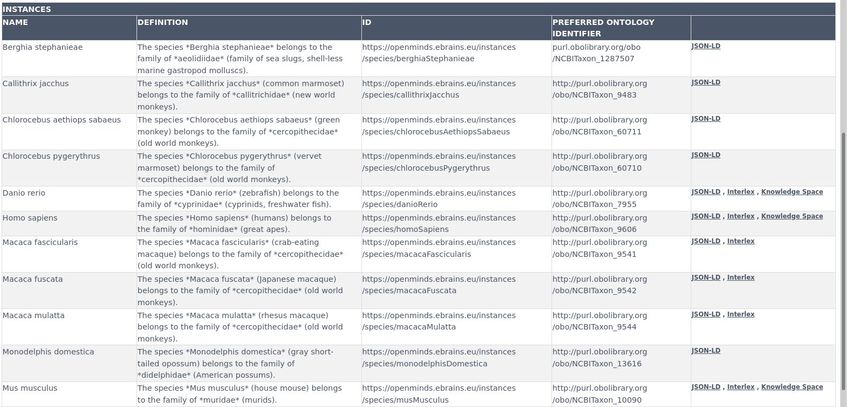
open Metadata Initiative for Neuroscience Data Structures
openMINDS is the overall umbrella of interlinked
metadata models for neuroscience graph databases.
Each metadata model captures a certain description level
and consists of modular connectable metadata schemas
with defined property-value pairs.

                             openMINDS by Lyuba Zehl, Dr. rer nat. | Co-lead EBRAINS Curation Service | Lead developer of openMINDS | July 2021   2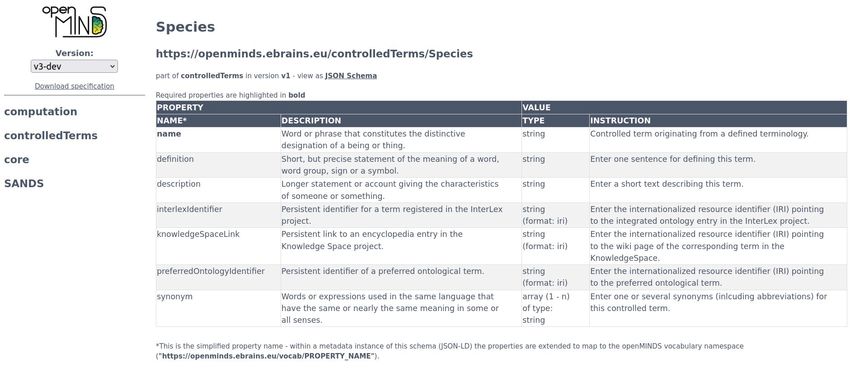
open Metadata Initiative for Neuroscience Data Structures
openMINDS is the overall umbrella of interlinked
metadata models for neuroscience graph databases.
Each metadata model captures a certain description level
and consists of modular connectable metadata schemas
with defined property-value pairs.

                [1]

[1] https://github.com/HumanBrainProject/openMINDS_core
➔ general origin, resource location, and content of research products

                               openMINDS by Lyuba Zehl, Dr. rer nat. | Co-lead EBRAINS Curation Service | Lead developer of openMINDS | July 2021   3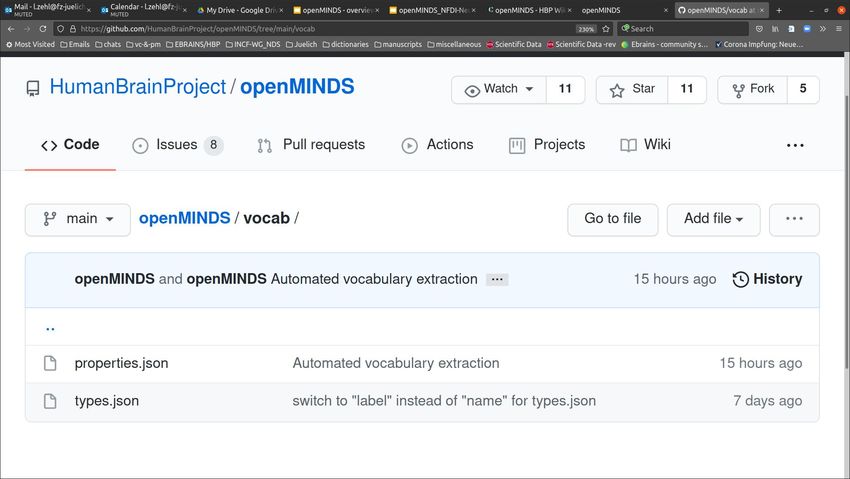
open Metadata Initiative for Neuroscience Data Structures
openMINDS is the overall umbrella of interlinked
metadata models for neuroscience graph databases.
Each metadata model captures a certain description level
and consists of modular connectable metadata schemas
with defined property-value pairs.

                 [1]                       [2]

[1] https://github.com/HumanBrainProject/openMINDS_core
➔ general origin, resource location, and content of research products
[2] https://github.com/HumanBrainProject/openMINDS_SANDS
➔ anatomical location of neuroscience data
➔ identification of reference brain atlases and coordinate spaces

                                openMINDS by Lyuba Zehl, Dr. rer nat. | Co-lead EBRAINS Curation Service | Lead developer of openMINDS | July 2021   4
open Metadata Initiative for Neuroscience Data Structures
openMINDS is the overall umbrella of interlinked
metadata models for neuroscience graph databases.
Each metadata model captures a certain description level
and consists of modular connectable metadata schemas
with defined property-value pairs.

                 [1]                       [2]                          [3]

[1] https://github.com/HumanBrainProject/openMINDS_core
➔ general origin, resource location, and content of research products
[2] https://github.com/HumanBrainProject/openMINDS_SANDS
➔ anatomical location of neuroscience data
➔ identification of reference brain atlases and coordinate spaces
[3] https://github.com/HumanBrainProject/openMINDS_controlledTerms
➔ terminology that should be reused across research products

                                openMINDS by Lyuba Zehl, Dr. rer nat. | Co-lead EBRAINS Curation Service | Lead developer of openMINDS | July 2021   5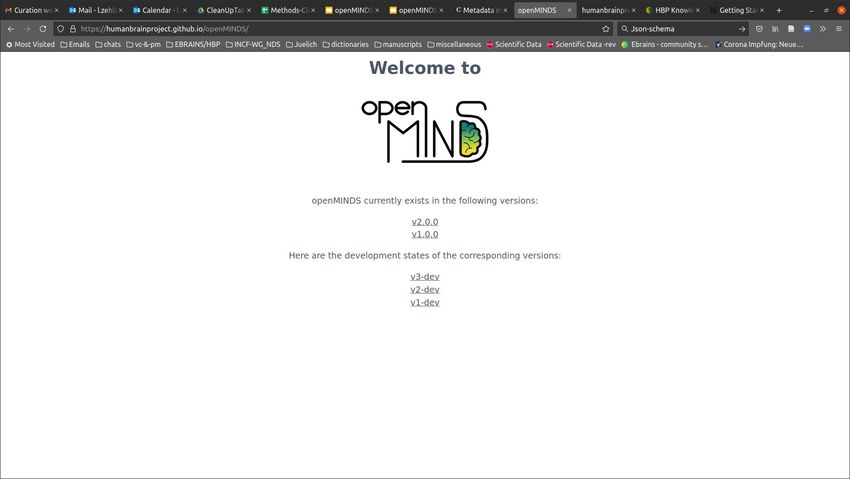
open Metadata Initiative for Neuroscience Data Structures
openMINDS is the overall umbrella of interlinked
metadata models for neuroscience graph databases.
Each metadata model captures a certain description level
and consists of modular connectable metadata schemas
with defined property-value pairs.

                 [1]                       [2]                          [3]                     [4]

[1] https://github.com/HumanBrainProject/openMINDS_core                        [4] https://github.com/HumanBrainProject/openMINDS_computation
➔ general origin, resource location, and content of research products          ➔ [in dev.] provenance of simulations, data analysis and visualizations
[2] https://github.com/HumanBrainProject/openMINDS_SANDS
➔ anatomical location of neuroscience data
➔ identification of reference brain atlases and coordinate spaces
[3] https://github.com/HumanBrainProject/openMINDS_controlledTerms
➔ terminology that should be reused across research products

                                openMINDS by Lyuba Zehl, Dr. rer nat. | Co-lead EBRAINS Curation Service | Lead developer of openMINDS | July 2021       6
open Metadata Initiative for Neuroscience Data Structures
openMINDS is the overall umbrella of interlinked
metadata models for neuroscience graph databases.
Each metadata model captures a certain description level
and consists of modular connectable metadata schemas
with defined property-value pairs.

                 [1]                       [2]                          [3]                     [4]                       [5]

[1] https://github.com/HumanBrainProject/openMINDS_core                        [4] https://github.com/HumanBrainProject/openMINDS_computation
➔ general origin, resource location, and content of research products          ➔ [in dev.] provenance of simulations, data analysis and visualizations
[2] https://github.com/HumanBrainProject/openMINDS_SANDS
                                                                               [5] https://github.com/HumanBrainProject/openMINDS_ephys
➔ anatomical location of neuroscience data
                                                                               ➔ [in dev.] provenance of electrophysiological experiments
➔ identification of reference brain atlases and coordinate spaces
[3] https://github.com/HumanBrainProject/openMINDS_controlledTerms
➔ terminology that should be reused across research products

                                openMINDS by Lyuba Zehl, Dr. rer nat. | Co-lead EBRAINS Curation Service | Lead developer of openMINDS | July 2021       7
open Metadata Initiative for Neuroscience Data Structures
openMINDS is the overall umbrella of interlinked
metadata models for neuroscience graph databases.
Each metadata model captures a certain description level
and consists of modular connectable metadata schemas
with defined property-value pairs.

                 [1]                       [2]                          [3]                     [4]                       [5]                        [6]

                                                                                                                                     ???
[1] https://github.com/HumanBrainProject/openMINDS_core                        [4] https://github.com/HumanBrainProject/openMINDS_computation
➔ general origin, resource location, and content of research products          ➔ [in dev.] provenance of simulations, data analysis and visualizations
[2] https://github.com/HumanBrainProject/openMINDS_SANDS
                                                                               [5] https://github.com/HumanBrainProject/openMINDS_ephys
➔ anatomical location of neuroscience data
                                                                               ➔ [in dev.] provenance of electrophysiological experiments
➔ identification of reference brain atlases and coordinate spaces
[3] https://github.com/HumanBrainProject/openMINDS_controlledTerms             [6] https://github.com/HumanBrainProject/openMINDS_???
➔ terminology that should be reused across research products                   ➔ potential new extensions (metadata models) to openMINDS

                                openMINDS by Lyuba Zehl, Dr. rer nat. | Co-lead EBRAINS Curation Service | Lead developer of openMINDS | July 2021         8
open Metadata Initiative for Neuroscience Data Structures
                                                                                         https://github.com/HumanBrainProject/openMINDS
openMINDS is the overall umbrella of interlinked
                                                                                        ➔ central integration & access point for all metadata models
metadata models for neuroscience graph databases.
                                                                                        ➔ central maintenance point for the openMINDS vocabulary
Each metadata model captures a certain description level                                ➔ provision of all schemas in formal, well-known formats
and consists of modular connectable metadata schemas
                                                                                         https://github.com/HumanBrainProject/openMINDS_generator
with defined property-value pairs.
                                                                                        ➔ integration pipeline building the central openMINDS repo.

                 [1]                       [2]                          [3]                     [4]                       [5]                        [6]

                                                                                                                                     ???
[1] https://github.com/HumanBrainProject/openMINDS_core                        [4] https://github.com/HumanBrainProject/openMINDS_computation
➔ general origin, resource location, and content of research products          ➔ [in dev.] provenance of simulations, data analysis and visualizations
[2] https://github.com/HumanBrainProject/openMINDS_SANDS
                                                                               [5] https://github.com/HumanBrainProject/openMINDS_ephys
➔ anatomical location of neuroscience data
                                                                               ➔ [in dev.] provenance of electrophysiological experiments
➔ identification of reference brain atlases and coordinate spaces
[3] https://github.com/HumanBrainProject/openMINDS_controlledTerms             [6] https://github.com/HumanBrainProject/openMINDS_???
➔ terminology that should be reused across research products                   ➔ potential new extensions (metadata models) to openMINDS

                                openMINDS by Lyuba Zehl, Dr. rer nat. | Co-lead EBRAINS Curation Service | Lead developer of openMINDS | July 2021         9
open Metadata Initiative for Neuroscience Data Structures
                                                                                         https://github.com/HumanBrainProject/openMINDS
openMINDS is the overall umbrella of interlinked
                                                                                        ➔ central integration & access point for all metadata models
metadata models for neuroscience graph databases.
                                                                                        ➔ central maintenance point for the openMINDS vocabulary
Each metadata model captures a certain description level                                ➔ provision of all schemas in formal, well-known formats
and consists of modular connectable metadata schemas
                                                                                         https://github.com/HumanBrainProject/openMINDS_generator
with defined property-value pairs.
                                                                                        ➔ integration pipeline building the central openMINDS repo.
openMINDS provides also respective APIs & GUIs.                                         ➔ openMINDS Python API

                 [1]                       [2]                          [3]                     [4]                       [5]                        [6]

                                                                                                                                     ???
[1] https://github.com/HumanBrainProject/openMINDS_core                        [4] https://github.com/HumanBrainProject/openMINDS_computation
➔ general origin, resource location, and content of research products          ➔ [in dev.] provenance of simulations, data analysis and visualizations
[2] https://github.com/HumanBrainProject/openMINDS_SANDS
                                                                               [5] https://github.com/HumanBrainProject/openMINDS_ephys
➔ anatomical location of neuroscience data
                                                                               ➔ [in dev.] provenance of electrophysiological experiments
➔ identification of reference brain atlases and coordinate spaces
[3] https://github.com/HumanBrainProject/openMINDS_controlledTerms             [6] https://github.com/HumanBrainProject/openMINDS_???
➔ terminology that should be reused across research products                   ➔ potential new extensions (metadata models) to openMINDS

                                openMINDS by Lyuba Zehl, Dr. rer nat. | Co-lead EBRAINS Curation Service | Lead developer of openMINDS | July 2021         10
Metadata instances vs. metadata schemas
Structured metadata instances
➔ property-value pairs typically stored as associative array {“givenName”: “Lyuba”,
“familyName”: “Zehl”}
➔ synonyms for property: key, attribute, name, or field
➔ synonym for associative array: dictionary {“email”: “l.zehl@fz-juelich.de”}
openMINDS by Lyuba Zehl, Dr. rer nat. | Co-lead EBRAINS Curation Service | Lead developer of openMINDS | July 2021 11Metadata instances vs. metadata schemas
Structured metadata instances
➔ property-value pairs typically stored as associative array {“givenName”: “Lyuba”,
“familyName”: “Zehl”}
➔ synonyms for property: key, attribute, name, or field
➔ synonym for associative array: dictionary {“email”: “l.zehl@fz-juelich.de”}
Metadata schema
➔ content specification of a particular metadata instance {“_type”: “https://openminds.ebrains.eu/core/Person”,
“required”: [“givenName”]
➔ schema type _type
defines what properties & values to expect “properties”: {
“givenName”: {
➔ value specifications can cover data type, format & quantity: “type”: “string”},
“familyName”: {
- data types: string, number, integer, array, object (linked OR embedded) “type”: “string”}}}
- string specs: format, pattern (ECMA 262 dialect), OR character length
- number/integer specs: minimum, maximum, AND/OR multiple of
- array specs: items data type, minimum, maximum, AND/OR unique items {“_type”: “https://openminds.ebrains.eu/core/ContactInformation”,
“required”: [“email”]
➔ also typically stored as (nested) associative array “properties”: {
“email”: {
[Note: examples are written in openMINDS syntax] “type”: “string”,
“_formats”: [“email”]}}}
openMINDS by Lyuba Zehl, Dr. rer nat. | Co-lead EBRAINS Curation Service | Lead developer of openMINDS | July 2021 12openMINDS v3 schemas for core, SANDS & controlledTerms
core
ACTORS DATA MISCELLANEOUS PRODUCTS RESEARCH
Ogz FiRe Fu Prj PrEx
Organization FileRepository Funding Project ProtocolExecution
Pe FiBu QVR DS Prt
Person FileBundle QuantitativeValueRange Dataset Protocol
Cnt Fi QV DSV BeTa
Contribution File QuantitativeValue DatasetVersion BehavioralTask
Af CoTy * MDM PSet
Affiliation ContentType DIGITAL-IDENTIFIER MetaDataModel ParameterSet
CoIn Ha URL MDMV NPar
ContactInformation Hash URL MetaDataModelVersion NumericalParameter
Li Mo SPar
License Model StringParameter
Co
Ogz Pe Cnt Af
In
CopyRight CpRi
Fu QVR QV * URL
ModelVersion MoV
SubjectGroupSG
So SGSt
Software SubjectGroupState
Fi Fi Co Cp
Fi Ha Li
Re Bu Ty Ri SoV Sub
SoftwareVersion Subject
SubSt
SubjectState
MDM
Prj DS DSV MDM
SANDS V
TissueSampleCollection TSC
ATLAS NON-ATLAS MISCELLANEOUS TSCSt
TissueSampleCollectionState
Mo MoV So SoV
BA CuAE CPo
BrainAtlas CustomAnatomicalEntity CoordinatePoint TS
TissueSample
BAV CuAn QlRA
BrainAtlasVersion CustomAnnotation QualitativeRelationAssessment TSSt
TissueSampleState
PTe CuCS QnRA
ParcellationTerminology CustomCoordinateSpace QuantitativeRelationAssessment
Pr Be P N
Prt
ParcellationTerminologyVersion PTeV
Cu Cu Cu
CPo
Ql Qn controlledTerms Ex Ta Set Par
PE
AE An CS RA RA
ParcellationEntity **
S SG Sub
SG Sub
PEV Par St St
ParcellationEntityVersion
AtlasAnnotation AtAn
** TSC TS
BA BAV PTe PTeV PE
TSC TS
St St
CmCS
CommonCoordinateSpace
At Co Co * various persistent digital identifiers (e.g. DOI, ORCID, GRIDID, etc.)
CmCSV PEV
CommonCoordinateSpaceVersion An CS CSV
** various controlled terminologies (e.g. CellType, ModelScope, Species, SoftwareFeature, Technique, etc.)
openMINDS by Lyuba Zehl, Dr. rer nat. | Co-lead EBRAINS Curation Service | Lead developer of openMINDS | July 2021 13Metadata model vs. validatable linked instances
Metadata model
➔ specification of linkages between available schema types {“_type”: “https://openminds.ebrains.eu/core/Person”,
“required”: [“givenName”]
➔ defines the constraints of a graph database “properties”: {
“givenName”: {“type”: “string”},
➔ typical reasons for defining separate schemas: “familyName”: {“type”: “string”},
“contactInformation”: {
- respective metadata instances can be linked multiple ways “_linkedTypes”: [
- respective metadata instances have different protection requirements “https://openminds.ebrains.eu/core/ContactInformation”]}}}
[Note: examples are written in openMINDS syntax]
openMINDS by Lyuba Zehl, Dr. rer nat. | Co-lead EBRAINS Curation Service | Lead developer of openMINDS | July 2021 14Metadata model vs. validatable linked instances
Metadata model
➔ specification of linkages between available schema types {“_type”: “https://openminds.ebrains.eu/core/Person”,
“required”: [“givenName”]
➔ defines the constraints of a graph database “properties”: {
“givenName”: {“type”: “string”},
➔ typical reasons for defining separate schemas: “familyName”: {“type”: “string”},
“contactInformation”: {
- respective metadata instances can be linked multiple ways “_linkedTypes”: [
- respective metadata instances have different protection requirements “https://openminds.ebrains.eu/core/ContactInformation”]}}}
[Note: examples are written in openMINDS syntax]
{"@context": {
Validatable, linked metadata instances "@vocab": "https://openminds.ebrains.eu/vocab/"},
"@type": "https://openminds.ebrains.eu/core/ContactInformation",
➔ structured metadata instances state … "@id": "d72ba653-ac9a-428d-ba65-84c137ce5ad6",
"email": "l.zehl@fz-juelich.de"}
- respective schema type for validation
- unique identifier (UUID) for enabling linkages between instances
{"@context": {
➔ provider-specific metadata content of a graph database, conform "@vocab": "https://openminds.ebrains.eu/vocab/"},
with the underlying metadata model "@type": "https://openminds.ebrains.eu/core/Person",
"@id": "5bc17d5c-f5a2-4350-be30-8515da2e4e37",
➔ typically stored as JSON-LDs “givenName”: “Lyuba”,
“familyName”: “Zehl”,
[Note: examples are valid JSON-LDs of the EBRAINS Knowledge Graph; for "contactInformation": {
simplification the @id-prefix “https://kg.ebrains.eu/api/instances/” was left out] "@id": "d72ba653-ac9a-428d-ba65-84c137ce5ad6"}}
openMINDS by Lyuba Zehl, Dr. rer nat. | Co-lead EBRAINS Curation Service | Lead developer of openMINDS | July 2021 15openMINDS_core - ‘minimal’ metadata model for datasets
Sub SG TS TSC URL
OR DOI
ORC digitalID contactInfo Co
[0-N] [1] AND/OR
ID In
studied file
fullDocu. isPartOf Fi isPartOf
Pe Specimen [1]
Repository Fi [0-N] [1]
OR
[1] Bu
[0-1]
affiliation
custodian [0-N] custodian repository Fi
DS [0-N] [0-N]
DSV [0-1] Re
technique
AND/OR Af AND/OR [1-N]
author author license
[1] Li
[1-N] orgnaization [1-N]
[1] type
[1-N]
digitalID digitalID
DOI Ogz [1]
DOI
[0-1] GRID
exp.
ID Approach
parent digitalID [1-N]
AND/OR
homepage [0-N] [0-N] funding
[0-1]
URL [0-N] Fu
ROR
ID access.
[1]
behavioral
hasVersion Be
Task
[1-N]
[0-N] Ta
ethics
Assessment
ISBN [1]
related
AND/OR Publication
[0-N]
DOI
[status: July 13, 2021; openMINDS v3 dev branch] [Note: for simplification, not the full metadata model is displayed]
openMINDS by Lyuba Zehl, Dr. rer nat. | Co-lead EBRAINS Curation Service | Lead developer of openMINDS | July 2021 16openMINDS syntax vs. JSON-Schema
openMINDS syntax JSON-Schema
{“_type”: “https://openminds.ebrains.eu/core/Person”, {“$schema”: “http://json-schema.org/draft-07/schema#”,
“required”: [ “$id”: “https://openminds.ebrains.eu/core/Person”,
“givenName”] “type”: “object”,
“properties”: { “title”: “Person”,
“familyName”: { “description”: “Structured information on a person.”,
“type”: “string”, “required”: [
“_instruction”: “Enter the family name of this person.”}, “@id”,
“givenName”: { “@type”,
“type”: “string” “https://openminds.ebrains.eu/vocab/givenName”]
“_instruction”: “Enter the given name of this person.”}}} “properties”: {
"@id”: {
“type”: “string”,
“description": "Metadata node identifier.”},
➔ common technical attributes “@type”: {
“type”: “string”,
& vocabulary definitions are “const”: “https://openminds.ebrains.eu/core/Person”},
“https://openminds.ebrains.eu/vocab/familyName”: {
outsourced “type”: “string",
“title”: “familyName”,
“description”: “Name borne in common by members of a family.”,
“_instruction”: “Enter the family name of this person.”},
“https://openminds.ebrains.eu/vocab/givenName”: {
“type”: “string”,
“title”: “givenName”,
“description”: “Name given to a person (without family name).”,
“_instruction”: “Enter the given name of this person.”}}}
[Example: Definition of the Person schema (snippet) written in openMINDS syntax and its translation to JSON-Schema through the openMINDS integration pipeline.]
openMINDS by Lyuba Zehl, Dr. rer nat. | Co-lead EBRAINS Curation Service | Lead developer of openMINDS | July 2021 17openMINDS syntax vs. JSON-Schema
openMINDS syntax JSON-Schema
{“_type”: “https://openminds.ebrains.eu/core/Person”, {“$schema”: “http://json-schema.org/draft-07/schema#”,
“required”: [ “$id”: “https://openminds.ebrains.eu/core/Person”,
“givenName”] “type”: “object”,
“properties”: { “title”: “Person”,
“familyName”: { “description”: “Structured information on a person.”,
“type”: “string”, “required”: [
“_instruction”: “Enter the family name of this person.”}, “@id”,
“givenName”: { “@type”,
“type”: “string” “https://openminds.ebrains.eu/vocab/givenName”]
“_instruction”: “Enter the given name of this person.”}}} “properties”: {
"@id”: {
“type”: “string”,
“description": "Metadata node identifier.”},
➔ common technical attributes “@type”: {
“type”: “string”,
& vocabulary definitions are “const”: “https://openminds.ebrains.eu/core/Person”},
“https://openminds.ebrains.eu/vocab/familyName”: {
outsourced “type”: “string",
“title”: “familyName”,
➔ allows to define & maintain “description”: “Name borne in common by members of a family.”,
vocabulary centrally “_instruction”: “Enter the family name of this person.”},
“https://openminds.ebrains.eu/vocab/givenName”: {
➔ introduction of additional “type”: “string”,
“title”: “givenName”,
attributes unknown to “description”: “Name given to a person (without family name).”,
“_instruction”: “Enter the given name of this person.”}}}
formal schema formats ./vocab
[Example: Definition of the Person schema (snippet) written in openMINDS syntax and its translation to JSON-Schema through the openMINDS integration pipeline.]
openMINDS by Lyuba Zehl, Dr. rer nat. | Co-lead EBRAINS Curation Service | Lead developer of openMINDS | July 2021 18openMINDS vocabulary
openMINDS: ./main/vocab/types.json
{...,
“https://openminds.ebrains.eu/core/Person”: {
“description”: “Structured information on a person.”,
“label”: “Person”,
“schemas”: [
“core/v0/actors/person”,
“core/v3/actors/person”],
“translatableTo”: [
“https://schema.org/Person”]},
...}
openMINDS: ./main/vocab/properties.json
{...,
“https://openminds.ebrains.eu/vocab/contributor”: {
➔ centrally defined & maintained across metadata model, “description”: “Legal person that gave or supplied something.”,
“label”: “Contributor”,
schema & version “labelForReverseLink”: “Is contributor of”,
“linkedTypes”: [
➔ automatically build with each commit on the openMINDS “https://openminds.ebrains.eu/core/Organization”,
“https://openminds.ebrains.eu/core/Person”],
metadata models, but can be manually enriched over time “name”: “contributor”,
“sameAs”: [
➔ provides general descriptions, human-readable labels, “https://schema.org/contributor”],
overview of where/when the type or property is /was used “schemas": [
“core/v0/actors/contribution”,
➔ enables references to matching schema types or “core/v3/actors/contribution”]},
...}
properties of other metadata initiatives
openMINDS by Lyuba Zehl, Dr. rer nat. | Co-lead EBRAINS Curation Service | Lead developer of openMINDS | July 2021 19openMINDS HTML views deployed as GitHub pages
https://humanbrainproject.github.io/openMINDS/
➔ HTML view of all openMINDS versions
(stable or development)
openMINDS by Lyuba Zehl, Dr. rer nat. | Co-lead EBRAINS Curation Service | Lead developer of openMINDS | July 2021 20openMINDS HTML views deployed as GitHub pages
https://humanbrainproject.github.io/openMINDS/
➔ HTML view of all openMINDS versions
(stable or development)
➔ download option for all specification formats
(currently: HTML, JSON-Schema, UML)
openMINDS by Lyuba Zehl, Dr. rer nat. | Co-lead EBRAINS Curation Service | Lead developer of openMINDS | July 2021 21openMINDS HTML views deployed as GitHub pages
https://humanbrainproject.github.io/openMINDS/
➔ HTML view of all openMINDS versions
(stable or development)
➔ download option for all specification formats
(currently: HTML, JSON-Schema, UML)
➔ overview of available controlled instances
openMINDS by Lyuba Zehl, Dr. rer nat. | Co-lead EBRAINS Curation Service | Lead developer of openMINDS | July 2021 22openMINDS on the EBRAINS Collaboratory
https://wiki.ebrains.eu/bin/view/Collabs/openminds/
What you can find here:
➔ Documentation of …
- metadata models & schemas (incl. HTML views + instances)
- application details
- technical details
➔ How to contribute …
- code of conduct
- report & ask questions
- direct contributions
➔ Tutorials …
- presentations (in preparation)
- examples (in preparation)
➔ FAQs
Note: we are always happy to receive feedback to improve the collab :)
openMINDS by Lyuba Zehl, Dr. rer nat. | Co-lead EBRAINS Curation Service | Lead developer of openMINDS | July 2021 23Some final information …
Who is behind openMINDS ? Who is doing what?
openMINDS is powered by HBP & EBRAINS, but looking for external Lyuba Zehl 1, 3 » product owner, lead developer, general organization
contributions throughout the neuroscience community. Oliver Schmid 2 » Knowledge Graph integration, integration pipeline manag.
Andrew Davison 1 » in-depth & model schemas lead developer
The openMINDS development team unites knowledge from the: Benjamin Weyers 1 » software schemas lead developer
Ulrike Schlegel 1 » core and SAND schemas developer
- EBRAINS Curation Service 1 Stefan Köhnen 1, 3 » SANDS schemas developer, Python API
- EBRAINS Knowledge Graph 2 Heidi Kleven 1 » SANDS ontology integration
- EBRAINS Atlas Service 3 Peyman Najafi 1 » computation & ephys schemas developer
Jan Gründling 1 » software schemas developer
- INCF Knowledge Space 4
Tom Gillespie 5, 4 » ontology / InterLex integration
- InterLex project 5 Mathew Abrams 4 » Knowledge Space integration
Here is our support email: openminds@ebrains.eu (not active yet) Visakh Muraleedharan 4 » Knowledge Space integration
Who adopted openMINDS?
Within EBRAINS, the openMINDS metadata models are adopted by the EBRAINS Knowledge Graph, the EBRAINS Atlas Service, and The Virtual Brain (TVB).
In addition, openMINDS is currently in the process of being adopted by the Japan Brain/MINDS project.
For integrating and maintaining community-wide accepted neuroscience ontologies, we are closely collaborating with the InterLex project, a core component of the
SciCrunch infrastructure of the FAIR Data Informatics Lab (FDI Lab), formerly known as the Neuroscience Information Framework (NIF).
Acknowledgements:
The metadata model specification and corresponding open source code was developed in part or in whole in the Human Brain Project, funded from the European Union’s Horizon 2020 Framework Programme for
Research and Innovation under Specific Grant Agreements No. 720270, No. 785907, and No. 945539 (Human Brain Project SGA1, SGA2, and SGA3).
openMINDS by Lyuba Zehl, Dr. rer nat. | Co-lead EBRAINS Curation Service | Lead developer of openMINDS | July 2021 24You can also read


