A Key to Common Vermont Aquatic Plant Species - Lakes and Ponds Management and Protection Program
←
→
Page content transcription
If your browser does not render page correctly, please read the page content below
A Key to Common Vermont Aquatic Plant Species

      Lakes and Ponds Management and Protection Program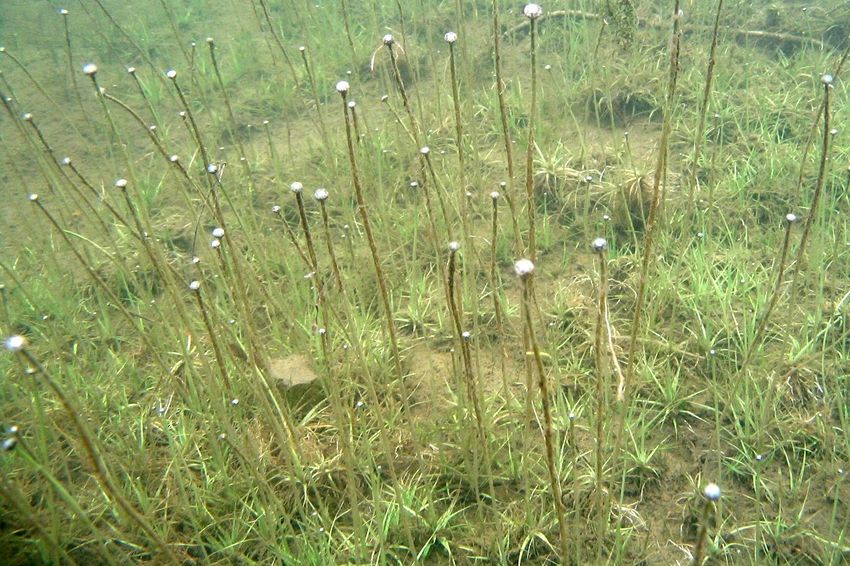
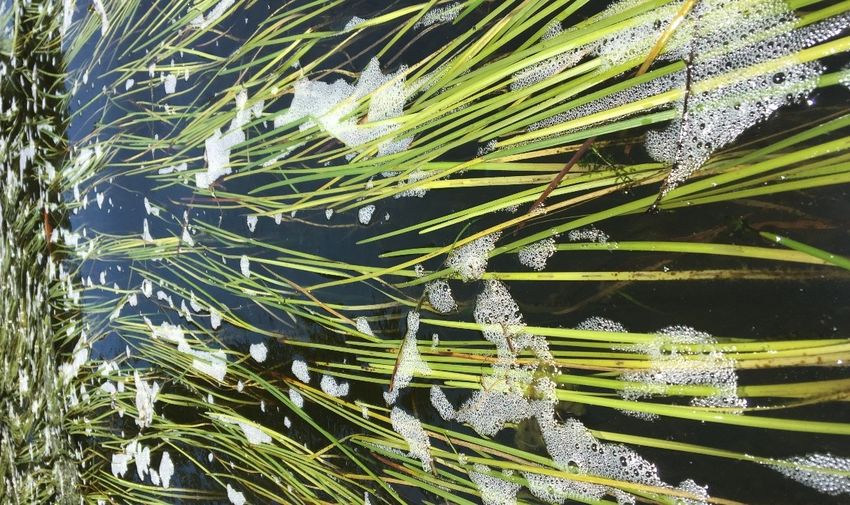
Table of Contents                                                                                                                                                                                                                       Page 3
  Introduction ........................................................................................................................................................................................................................4
  How To Use This Guide .......................................................................................................................................................................................................5
  Field Notes ..........................................................................................................................................................................................................................6
  Plant Key .............................................................................................................................................................................................................................7
        Submersed Plants ...................................................................................................................................................................................... 8-20
                Pipewort Eriocaulon aquaticum ......................................................................................................................................................................9
                Wild Celery Vallisneria americana ...................................................................................................................................................................9
                Water Buttercup Ranunculus sp. ...................................................................................................................................................................11
                Common Bladderwort Utricularia macrorhiza...............................................................................................................................................11
                Water Stargrass Heteranthera dubia .............................................................................................................................................................12
                Curly-leaf Pondweed Potamogeton crispus ☼ ...............................................................................................................................................12
                Clasping-leaf Pondweed Potamogeton perfoliatus .......................................................................................................................................12
                White-stem Pondweed Potamogeton praelongus.........................................................................................................................................12
                Carolina Fanwort Cabomba caroliniana ☼.....................................................................................................................................................13
                Flat-stem Pondweed Potamogeton zosteriformis..........................................................................................................................................13
                Fern-leaf Pondweed Potamogeton robbinsii .................................................................................................................................................13
                Brazilian Waterweed Egeria densa ☼ ............................................................................................................................................................15
                Common Waterweed Elodea canadensis ......................................................................................................................................................15
                Slender Waterweed Elodea nuttallii ..............................................................................................................................................................15
                Hydrilla Hydrilla verticillata ☼........................................................................................................................................................................15
                Water Marigold Bidens beckii ........................................................................................................................................................................16
                Coontail Ceratophyllum demersum ...............................................................................................................................................................16
                Slender Naiad Najas flexilis............................................................................................................................................................................17
                Common Naiad Najas guadalupensis ............................................................................................................................................................17
                Brittle Naiad Najas minor ☼ ...........................................................................................................................................................................17
                Muskgrass Chara sp. and Nitella sp. ..............................................................................................................................................................18
                Starry Stonewort Nitellopsis obtusa ☼...........................................................................................................................................................18
                Variable-leaf Watermilfoil Myriophyllum heterophyllum ☼...........................................................................................................................19
                Northern Watermilfoil Myriophyllum sibiricum .............................................................................................................................................19
                Whorl-leaved Watermilfoil Myriophyllum verticillatum ................................................................................................................................19
                Parrot Feather Myriophyllum aquaticum☼....................................................................................................................................................20
                Eurasian Watermilfoil Myriophyllum spicatum ☼ ..........................................................................................................................................20
        Floating Leaf Plants ................................................................................................................................................................................. 21-26
                Small Duckweed Lemna minor.......................................................................................................................................................................21
                Big Duckweed Spirodela polyrhiza .................................................................................................................................................................21
                Bur-reed Sparganium sp. ...............................................................................................................................................................................22
                Water Smartweed Polygonum amphibium ....................................................................................................................................................23
                Water Chestnut Trapa natans ☼ ...................................................................................................................................................................23
                Cow Lily Nuphar variegata ............................................................................................................................................................................24
                White Water Lily Nymphaea odorata ............................................................................................................................................................24
                European Frogbit Hydrocharis morsus-ranae ☼ ............................................................................................................................................25
                Little Floating Heart Nymphoides cordata .....................................................................................................................................................25
                Yellow Floating Heart Nymphoides peltata ☼ ................................................................................................................................................26
                Watershield Brasenia schreberi .....................................................................................................................................................................26
        Submersed and Floating Leaf Plants.............................................................................................................................................................. 27
                Big-leaf Pondweed Potamogeton amplifolius ................................................................................................................................................27
                Ribbon-leaf Pondweed Potamogeton epihydrus ...........................................................................................................................................27
                Variable-leaf Pondweed Potamogeton gramineus ........................................................................................................................................27
        Emergent ................................................................................................................................................................................................ 28-32
                Purple Loosestrife Lythrum salicaria ☼ ..........................................................................................................................................................29
                Pickerel Weed Pontederia cordata ................................................................................................................................................................29
                Arrowhead Sagittaria sp. ...............................................................................................................................................................................29
                Sedge Cyperaceae Family ..............................................................................................................................................................................30
                Horsetail Equisetum sp. ................................................................................................................................................................................30
                Water Lobelia Lobelia dortmanna .................................................................................................................................................................30
                Flowering Rush Butomus umbellatus ☼ .........................................................................................................................................................31
                Reed Grass Phragmites australis ☼ ...............................................................................................................................................................31
                Cattail Typha sp. ...........................................................................................................................................................................................31
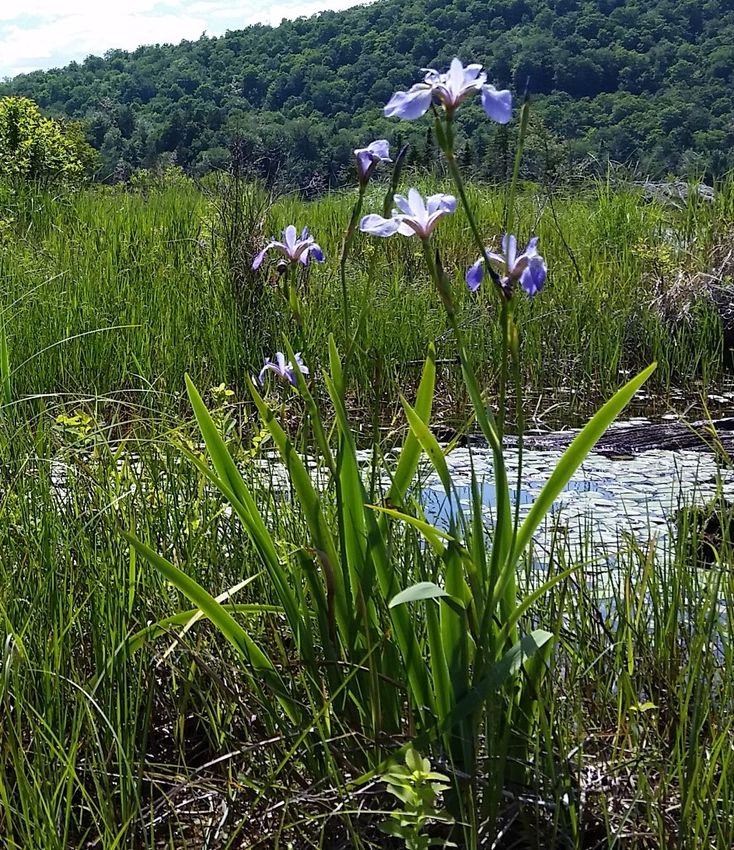
                Yellow Iris Iris pseudacorus ☼ ........................................................................................................................................................................32
                Blue Flag Iris Iris versicolor.............................................................................................................................................................................32
  Glossary ............................................................................................................................................................................................................................33
  Additional References .......................................................................................................................................................................................................34
  Index .................................................................................................................................................................................................................................35
  Sample Submission Form ..................................................................................................................................................................................................37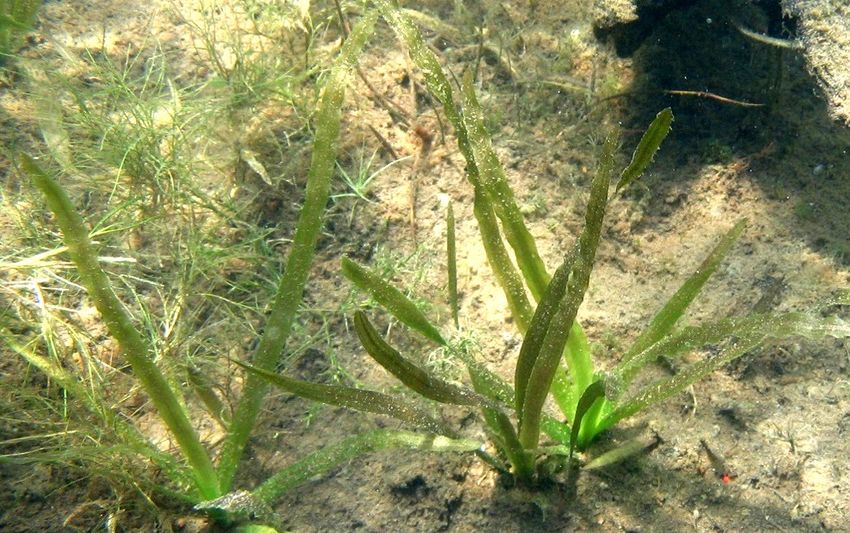
Introduction                                                                                            Page 4

The underwater world of aquatic plants is diverse and unique. With the advent of aquatic invasive species
taking hold of the aquatic plant discussion, the unfortunate consequence has resulted in a negative
philosophy that all aquatic plants are “weeds” and must be managed, controlled, or eradicated. This
philosophy is far from the truth as the benefits for native aquatic plants are many. Preferred by wildlife for
food and habitat, a stabilizer of lake bed soils, nutrient reduction and oxygen provider, native aquatic plants
are truly an essential component of the living landscape.

The Key to Common Vermont Aquatic Plant Species is a brief introduction into some of the more prevalent
native aquatic plant species, and with it the invasive aquatic plants that many natives are mis-identified for.
As this is a brief introduction into identifying plants and using a key to do so, we hope to encourage the
enthusiasm in the budding naturalist to learn more, and take advantage of the field guides with more formal
keys that are outlined in the resources page.

We like to thank the aquatic botanists who came before us who developed the original key and provided the
illustrations including Susan Warren and Ann Bove. Thank you to those who provided permissions for
photographs and for VTDEC staff who have provided photographs. Sincere thanks to Kate Wettergreen for
compiling the new information and revising this copy and editors Laurie Callahan and Kimberly Jensen.

                            Vermont Department of Environmental Conservation
                           Lakes and Ponds Management and Protection Program
                                               May, 2021

                           Additional copies of the key are available upon request.
                                  Please do not copy without proper credit.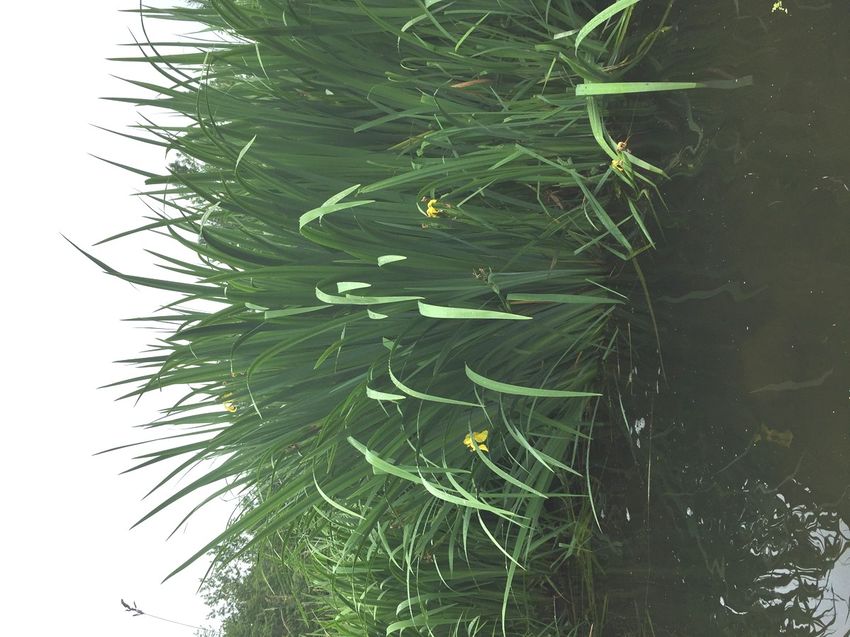
How To Use This Guide                                                                                    Page 5

Over 120 native aquatic plant species are known to be found in Vermont. In this key, 37 common native
aquatic plants and 12 aquatic invasive plants that are identified here. In addition there are 4 aquatic invasive
plants of concern that have not yet been confirmed in Vermont and are ones to look out for. The invasive
plants covered in this key are outlined in red and labeled so with a “☼”. If you believe you have identified an
aquatic invasive plant in a new location, take a photo, collect a sample, and notify the Lakes and Ponds
Program as soon as possible at 802-828-1115.

To identify a plant using the key, you are asked to make a series of choices between descriptions of different
plants. By observing specific characteristics of the plant you are trying to identify and making these choices,
you will (hopefully) arrive at an identification of the plant.

The first step is to go to page 7 where you are asked to decide whether the plant has a submersed, floating-
leaved, a combination, or emergent growth habit. The key then directs you to a section and page number,
where you will again make a series of choices. In many cases you will need to look closely at the plant in
order to be able to decide which description the characteristics best fit. There is a glossary on page 33 should
you need help with terminology.

If you have questions or would like the identity of a plant confirmed, you are encouraged to send a plant
sample to the Vermont Department of Environmental Conservation. Use the instructions and Aquatic Plant
Sample Submission Form on page 37.

There are a number of aquatic invasive species currently not found in Vermont but of concern if or when
they are introduced to water bodies in Vermont. Aquatic invasive plants not yet confirmed in Vermont and
listed in this key are Fanwort (Cabomba caroliniana), Brazilian Elodea (Egeria densa), Hydrilla (Hydrilla
verticillata), and Parrot Feather (Myriophyllum aquaticum). If you suspect you have discovered any of these
plants, please contact the Lakes and Ponds Program as soon as possible at 802-828-1115.
Field Notes Page 6
Plant Key Outline                                                                                    Page 7
1. Where are the leaves of the plant in relation to the surface of the water?
   1A. Submersed – Plants are growing almost entirely beneath the water’s surface…see part 2 on page 8.

   1B. Floating-leaved – Plants have many leaves floating on the water’s surface, and the surface of floating
       leaves shed water…see part 13 on page 21.

   1C. Combination of Submersed and Floating-leaved – Plants have some leaves that that are growing
       underwater, but have some on or above the surface of the water...see part 22 on page 27.

                                                                   Edward G. Voss

   1D. Emergent – Plants are rooted on the pond bottom and extend upright above the water’s surface…
       see part 23 on page 28.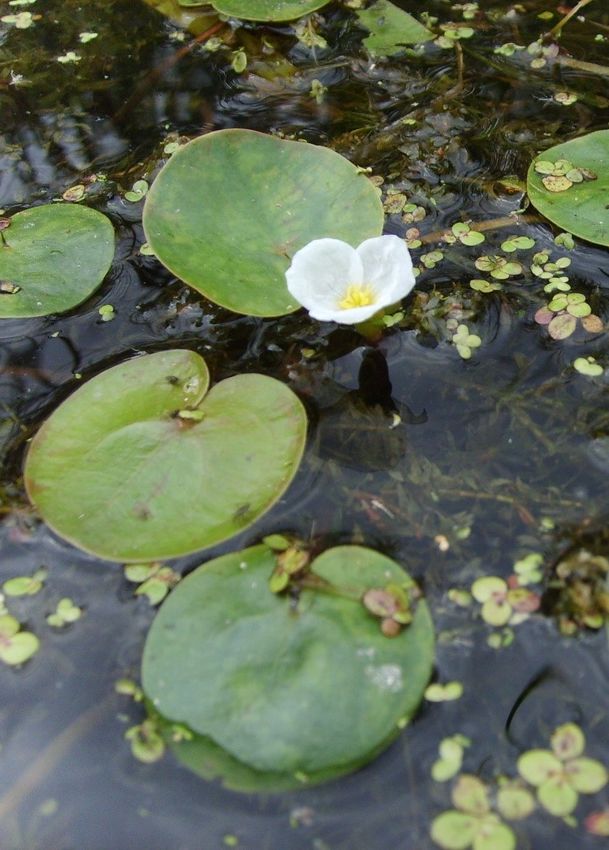
Submersed Plants                                                                                  Page 8
2. Are submersed leaves connected along the stem, or are all leaves basal?
    2A. Leaves on the stem – leaves are positioned along the stem…see part 4 on page 10.

   2B. Basal Leaves – all leaves emerge from a single point near the pond bottom…see part 3 on page 9.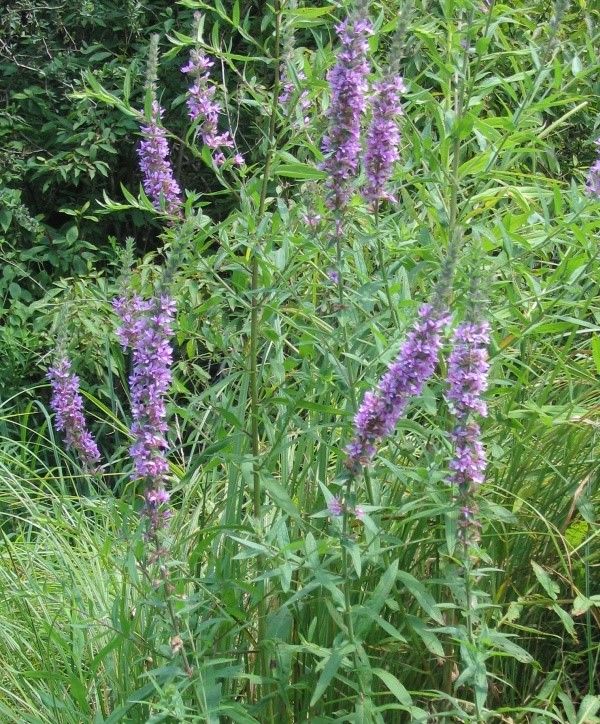
Submersed Plants                                                                                     Page 9
3. Submersed plants with only basal leaves.

      Pipewort (Eriocaulon aquaticum)

                                        In shallow water, Pipewort will grow an emergent “flower”
                                        which resembles a button. The leaf is widest at the base, ⅛ to
                                        ⅙ inch wide and ¾ to 3¾ inches long, and tapers to a point.

      Wild Celery (Vallisneria americana)

       Alternate name is Eel Grass. Leaves are somewhat
       stiff, ½ - 1 inch wide and 4 inches to 6 feet long
       depending on the water depth. Leaves are
       rounded or slightly pointed at the ends. The
       female plants have a coiling stem which
       resembles a corkscrew.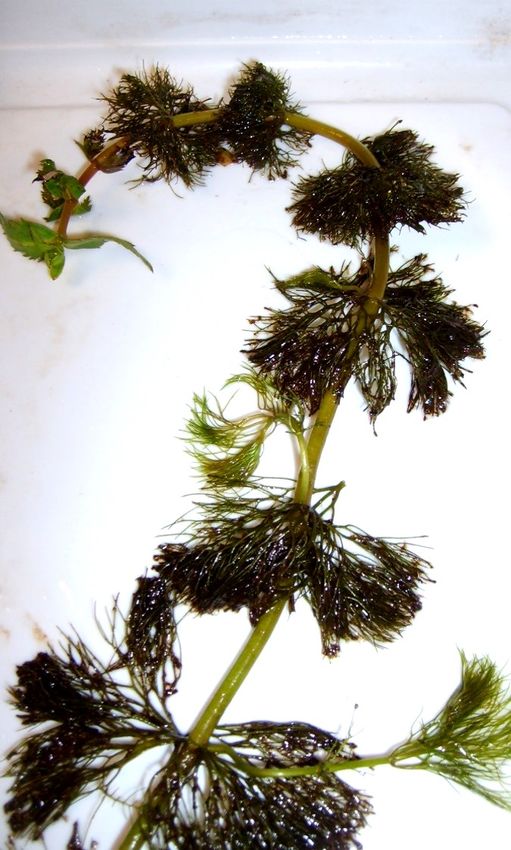
Submersed Plants                                                                                     Page 10
4. Are the leaves alternate, opposite, or in whorls around the stem?
    4A. Leaves are alternate - leaves are not located across from one another along the stem...see part 5 on
        page 11.

   4B. Leaves are opposite - leaves are symmetrical in groups of two along the stem...see part 8 on page 13.

                    Donald Cameron

   4C. Leaves are in whorls - leaves are grouped in whorls with 3 or more leaves around the stem… see part
       9 on page 14.
Submersed Plants Page 11
5. Are the alternate leaves entire or divided?
5A. Leaves are entire and may have smooth or toothed edges…see part 7 on page 12.
Gerald Carr
5B. Leaves are divided…see part 6 below.
6. Submersed plant with alternate, divided leaves on the stem.
Common Bladderwort (Utricularia macrorhiza) Water Buttercup (Ranunculus sp.)
Leaves are branched
divided along the stem
and have numerous
small “bladders”
attached along them.
Bladders are light green
to black. This plant is
not rooted to the pond
bottom.
Alternate name is
Water Crowfoot.
This plant is usually
a few feet long,
often trailing just
below the water
surface. No bladders
are present. A small
yellow or white
flower is produced. John Hilty
There are eight species of bladderworts in VermontSubmersed Plants Page 12
7. Do the alternate, entire leaves have a mid-vein?
7A. Alternate leaves with no mid-vein present.
Water Stargrass (Heteranthera dubia)
Long, linear leaves
have no leaf stalk
and no dominant
midvein, and are
arranged alternately
along the stem.
Plants can reach up
to 3 feet in height. Donald Cameron
7B. Alternate leaves with mid-vein present.
Curly-leaf Pondweed (Potamogeton crispus) White-stem Pondweed
☼ This is an invasive plant (Potamogeton praelongus)
Gerald Carr Gerald Carr
Donald Cameron
Leaves have a distinct wavy appearance and
are 3 inches long and ¾ inch wide. This is the
only Pondweed with toothed edges, and it Round stem has a zig-zag shape and is pale
can grow 4-5 feet tall. The leaves are often green or white in color. Leaves have a boat-
thought to resemble lasagna noodles. shaped tip. Stipules are translucent.
Clasping-leaf Pondweed (Potamogeton perfoliatus)
The base of the leaves clasp all
the way around the stem.
Leaves are oval to lance
shaped and are small,
generally ¼ - 2 inches in
length. The stem is round,
long, and branching.
Donald Cameron Donald CameronSubmersed Plants Page 13
8. Submersed plants with opposite branching.
Fern-leaf Pondweed (Potamogeton robbinsii)
Long, pointed
leaves are
dark green to
brown, closely
spaced along
the stem, with
a prominent
midvein.
Flat-stem Pondweed (Potamogeton zosteriformis)
Leaves are slender and
submersed, 4-7 inches
long, and have one
strong mid-vein per
leaf. The stem has a
distinct zig-zag ap-
pearance similar to
the White-stem pond-
weed, however this
stem is noticeably flat.
Carolina Fanwort (Cabomba caroliniana)
Finely divided fan
☼ This is an invasive plant not found in Vermont shaped leaves are
opposite and branched
along the stem. Small
floating leaves, if
present, are elliptical or
linear with smooth
margins. Small white
flowers may be present
at or above the water.Submersed Plants Page 14
9. Are the whorled leaves rounded, slender, or feathered?
9A. Leaves are entire and rounded...see part 10 on page 15.
9B. Leaves are slender and look more like branches...see part 11 on page 16.
9C. Leaves are feathered...see part 12 on page 19.Submersed Plants Page 15
10. Submersed, whorled leaves are entire and rounded.
Common Waterweed (Elodea canadensis) Slender Waterweed (Elodea nuttallii)
Usually found with 3
leaves per whorl
Leaves are usually ½ - 1 inch (although occasionally 4
long, with 3 leaves per whorl may occur). These leaves
(although occasionally 4 are thinner than Common
may occur). Plants can vary Waterweed, usually with
from less than 1 foot high to a 3:1, length to width
up to 6 feet high. ratio. Leaf margins are
entire.
Brazilian Waterweed (Egeria densa) Hydrilla (Hydrilla verticillata)
☼ This is an invasive plant not found in Vermont ☼ This is an invasive plant not found in Vermont
Typically has 4 leaves
per whorl, but can Hydrilla typically has 5-8
range from 3-8. The leaves per whorl. Each strap
leaves have an entire, -like leaf is visibly serrated
linear shape, typically and pointed at the tip of the
under 1 inch long. leaf.Submersed Plants Page 16
11. Submersed, whorled, branching plants:
Water Marigold (Bidens beckii)
Each of the
branched leaves
are divided
repeatedly and
are growing in
whorls around the
stem. The plant
can have a small,
emergent yellow
flower.
Coontail (Ceratophyllum demersum)
Leaves are branch
divided in whorls along
the stem and clustered
at the ends of the
branches, giving the
plant the appearance of
a raccoon’s tail. There
are two species of
Coontail n VT.
Continued next page...Submersed Plants Page 17
11. Submersed, whorled, branching plants:
Slender Naiad (Najas flexilis)
Alternate names are
Slender Waternymph
and Nodding
Waternymph.
Slender leaves are
0.2-1mm wide, and
up to 1 inch long.
Leaves are somewhat
stiff, finely toothed,
and tend to bend
backwards as they
mature.
There are five species of Naiads in Vermont
Brittle Naiad (Najas minor)
☼ This is an invasive plant
John Hilty
Leaves are 0.3-0.5mm wide, and not
always aligned. Leaf margins have
visible serrations and feel like a stiff
Brillo pad.
Common Naiad (Najas guadalupensis)
Donald Cameron
Alternate names are Southern
Waternymph and Guppy Grass. Leaves
are 1-2mm wide, up to 1 inch long,
and flexible. Leaves are either
opposite or will occur in whorls of
three along the stem. Robert Mohlenbrock
Continued next page...Submersed Plants Page 18
11. Submersed, whorled, branching plants.
Muskgrass (Chara sp. or Nitella sp.)
Muskgrasses are actu-
ally large upright forms
of algae. Muskgrass
branchlets “leaves” are
linear. These plants
usually grow in tangled
masses along the pond
bottom.
Starry Stonewort (Nitellopsis obtusa)
☼ This is an invasive plant
Starry Stonewort is a
macro algae that can
grow up to 6 feet tall.
There are 5-8
branchlets per whorl
that have visible
serrated edges. There
may be white, star-
shaped bulbils 1-2
mm long.Submersed Plants Page 19
12. Watermilfoils: There are eight species of Watermilfoil in Vermont
Northern Watermilfoil (Myriophyllum sibiricum)
Donald Cameron
Typically 4 leaves per whorl with 4-
12 leaflets on each side of the stout
white or tan mid-stem.
Variable-leaf Watermilfoil (Myriophyllum heterophyllum)
☼ This is an invasive plant
4-6 leaves per whorl
with each leaf feather
divided with 6-14
leaflets on each side of
the mid-stem. Plant
has an emergent flower
spike that has 4-6
leaves per whorl. Each
of these leaves is ½
inch long, entire, and
minutely serrated.
Whorl-leaved Watermilfoil (Myriophyllum verticillatum)
Each whorl has 4-5 leaves that
are finely divided with 5-14
leaflets per leaf. Stem is green
or brown.
Continued next page...Submersed Plants Page 20
12. Watermilfoils:
Eurasian Watermilfoil (Myriophyllum spicatum)
☼ This is an invasive plant
Usually 4 leaves per
whorl with 12-20
leaflets on each side of
midstem. Tips of
leaves often have
redish color.
Parrot Feather (Myriophyllum aquaticum)
☼ This is an invasive plant not found in Vermont
Parrot feather has not yet been observed in
Vermont. It has 4-6 leaves per whorl with each
leaf feather divided with 10-18 leaflets per side
of the med-stem. Plant can emerge to stand 1
foot above the surface of the water.Floating-leaved Plants Page 21
13. Is the plant rooted to the bottom?
13A. Plants are rooted to the bottom…see part 15 on page 22.
13B. Plants are not rooted to the bottom…see part 14 below.
14. Floating-leaved plants are not rooted to the bottom.
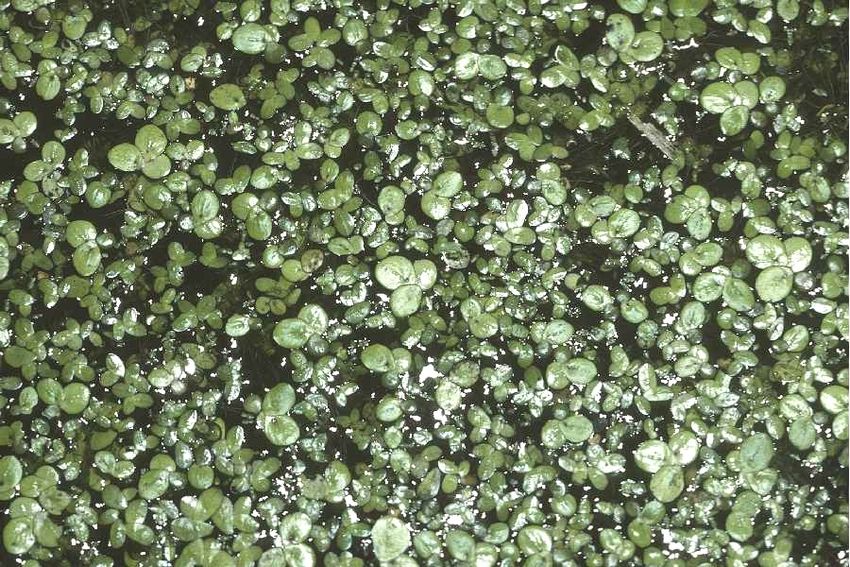
Duckweed (Lemna minor) Big Duckweed (Spirodela polyrhiza)
Robert Mohlenbrock Robert Mohlenbrock
John Hilty Small, free-floating leaves have 5-15 veins, are
3-8 mm long, and often green on the top and
slightly purple on the bottom. There are
Small, free- usually multiple roots per frond. Multiple
floating leaves are fronds often form a floating cluster.
less than 5 mm
long with a single
root and a smooth
top. Often found
in clusters forming
a mat on the sur-
face of the water.
Robert MohlenbrockFloating-leaved Plants Page 22
15. Are the leaves broad or thin and grass-like?
15A. Leaves broad…see part 17 on page 23.
15B. Leaves are thin and grass-like…see part 16 below.
16. Floating-leaved, Rooted, Grass-like.
Bur-reed (Sparganium sp.)
Leaves reach the surface and
float horizontally along it .There
are 3 species of bur-reed with
floating leaves in Vermont in
addition to species with sturdy,
emergent leaves.Floating-leaved Plants Page 23
17. Are the broad leaves rounded or pointy at the tips?
17A. Broad rounded leaves…see part 19 on page 24.
17B. Broad pointy leaves…see part 18 below.
18. Floating-leaved, Rooted, Broad, Pointy Leaves.
Water Chestnut (Trapa natans) Water Smartweed (Polygonum amphibium)
☼ This is an invasive plant
Leaves are toothed,
triangular and
radiate off of the
stem to form a
circular, floating
rosette. Nuts are
green to black with
4 sharp spines.
Leaves are entire
and are alternately
arranged along the
stem. The stem is
tipped with a
cluster of small
pink flowers. This
is the only aquatic
smartweed in
Vermont. Ray SchulenbergFloating-leaved Plants Page 24
19. Are the broad, rounded leaves on the stem or basal?
19A. Leaves are on the stem…see part 21 on page 25.
19B. Leaves are basal or only one leaf per stem…see part 20 below.
20. Floating-leaved, Rooted, Broad, Rounded, Basal Leaves:
Cow Lily (Nuphar variegata) White Water Lily (Nymphaea odorata)
Large round floating
leaves with pointed
lobes and white
flowers. There are 2
other species of
white water lily in
Vermont.
Large round
floating leaves
have round
lobes and
yellow flowers.
There are 2
other species of
cow lily in
Vermont.Floating-leaved Plants Page 25
21. Floating-leaved, Rooted, Broad, Rounded Leaves on the Stem:
European Frogbit (Hydrocharis morsus-ranae)
☼ This is an invasive plant
Leaves are ½ - 2 ½
inches wide and
rounded to heart-
shaped. Plant produc-
es small white flowers
with three petals and
yellow center.
Little Floating Heart (Nymphoides cordata)
Leaves are
small, 1-3
inches, and
are rounded
to heart
shaped. The
leaf bottoms
are purple-
red in color,
leaf tops are
light to dark
green. Flow-
ers have five
petals, and
are white
with a yel-
low center.
Marilee Lovit
Continued next page...Floating-leaved Plants Page 26
21. Floating-leaved, Rooted, Broad, Rounded Leaves on the Stem.
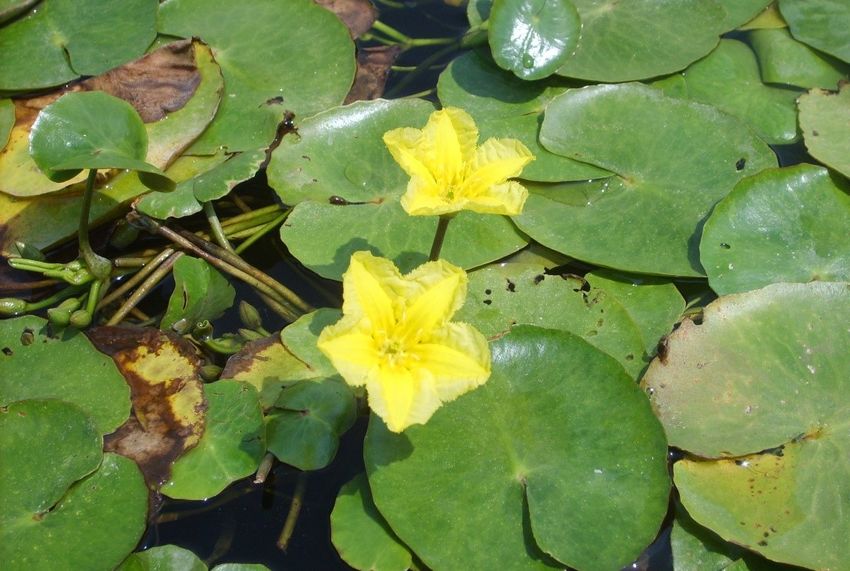
Yellow Floating Heart (Nymphoides peltata)
☼ This is an invasive plant
Light to dark green leaves are 2-6 inches wide and long,
with an wavy but entire leaf margin. Plant produces
yellow, five petaled flowers.
Watershield (Brasenia schreberi)
Elliptical shaped leaves
with the stem attached to
the middle of the leaf.
Leaves are usually 2-3
inches long. The stem and
underside of the leaf are
often covered with a clear
jelly-like material.Combination Plants Page 27
22. Combination of floating and submersed leaves. There are 29 species of Pondweed in Vermont.
Ribbon-leaf Pondweed (Potamogeton epihydrus)
Submersed leaves are slender
with a strong midvein and up
to 7 inches long. Often
numerous floating leaves are
elliptical with a long petiole
and 11-41 veins. The stem is
slender, branched, and
somewhat flattened, growing
up to 6 feet high.
Big-leaf Pondweed (Potamogeton amplifolius)
Large
arched
leaves with
wavy edges
are often
brown, 3-7
inches long,
and up to 2
inches wide.
This plant
can grow 6-
7 feet high.
Variable-leaf Pondweed (Potamogeton gramineus)
Often heavily
branched, submersed
leaves have smooth
margins and 3-7
veins. Floating leaves
may be small and
clustered. Stipules are
1-3 cm and keeled.Emergent Plants Page 28
23. Are the leaves broad or long and narrow?
23A. Leaves are broad…see part 25 on page 29.
23B. Leaves are long and narrow…see part 24 below.
24. Are the narrow leaves smaller than one foot or larger?
24A. Leaves are smaller…see part 26 on page 30.
24B. Leaves are larger…see part 27 on page 31.Emergent Plants Page 29
25. Emergent, Broad Leaves.
Purple Loosestrife (Lythrum salicaria)
☼ This is an invasive plant
Leaves are opposite along the
stem with a dense spike of purple
flowers at the top
Pickerel Weed (Pontederia cordata)
Smooth
leaves have
rounded or
pointed
lobes. Small
purple
flowers
form in a
cluster.
Plants are
usually 1-2
feet tall.
John Hilty John Hilty
Arrowhead (Sagittaria sp.)
There are 4 species of arrowhead in Vermont. Leaf
shapes and sizes are variable.Emergent Plants Page 30
26. Emergent, Narrow, Smaller Leaves:
Water Lobelia (Lobelia dortmanna)
Basal leaves
range from
light to dark
green, are
stiff, curl back,
and have a
blunt tip. The
hollow flower
stalks have
pale blue or
white flowers.
Donald Cameron Donald Cameron
Sedge (Cyperaceae Family)
Jennifer Anderson Robert Mohlenbrock
There are many species of sedges in Vermont. Different species stems
can vary between sharply 3 sided to nearly round. They can vary in
height from a few inches to several feet high.
Horsetail (Equisetum sp.)
Plant consists of round, hollow
stalks often 1-2 feet high; rough
in texture. There are 3 species of
aquatic horsetail in Vermont.
Donald Cameron John Hilty John HiltyEmergent Plants Page 31
27. Emergent, Narrow, Larger Leaves:
Cattail (Typha sp.)
There are
two species
of cattail in
Vermont.
Leaves are
up to 5 feet
tall. Dark
brown
“catkins”
are 5-6 inch-
es long.
Reed Grass (Phragmites australis)
☼ This is an invasive plant
Plants are over
6 feet tall with
a large plume
at the top.
Usually grows
in dense stands
in water or
damp soil.
Robert Mohlenbrock
Flowering Rush (Butomus umbellatus)
Leaves are sword
☼ This is an invasive plant
shaped and
triangular in cross
section. There are
numerous rose
colored flowers in an
umbel. Commonly
found along muddy
shores growing 1-4
feet high.
Continued next page...Emergent Plants Page 32
27. Emergent, Narrow, Larger Leaves:
Yellow Iris (Iris pseudacorus)
☼ This is an invasive plant
Leaves are
sword shaped
and between
20-40 inches
long with a
raised
midvein.
Flowers are
yellow and 3-4
inches. In
Vermont this
plant can be
confused with
the native
blue iris which
has a blueish
purple flower,
see below.
Blue Flag Iris (Iris versicolor) This plant reaches 2-3 feet tall. The leaves are
sword shaped, 1 inch wide and up to 2 feet long.
Flowers are blue to purple with yellow at the
center of the petals.
Jennifer AndersonGlossary Page 33
alternate – leaves situated singly from a point along the stem
axil – the junction between a stem and a leaf or branch
bulbil– a small bulblike structure, especially in the axil of a leaf or
at the base of a stem, that may form a new plant.
divided leaf – a leaf which is cut into small divisions
branched divided – a leaf that divides repeatedly
feather divided – a leaf with leaflets lining a mid-
stem which resembles a feather
forked divided – a leaf that divides two to three
times into divisions of more or less equal size
entire – leaves with a continuous unbroken margin
lobe – a partial division of a leaf
marl – an encrustation of lime on the surface of a plant, resulting
in a plant which is rough to the touch
midvein – the main or central vein of a leaf; not all plants have leaves
with midveins
opposite – leaves situated across from each other from the same
point along the stem
petiole – small stalk attaching a leaf blade to the stem
stipule – a small leaf-like structure borne in the axil of leaves in some
species
toothed – serrations along the leaf margin
whorl – a circle of three or more leaves arising from the same point on
a stemAdditional References and Credits Page 34
Aquatic Plant Species Keys:
Fassett, Norman C. A Manual of Aquatic Plants. University of Wisconsin Press. Madison, 1957.
A key to aquatic plants. A good reference for getting beyond the beginner level. It is somewhat out of date
and is no longer highly accurate down to the species level, but excellent for identifying family and genus.
Hellquist, C.B., and G.E. Crow. Aquatic Vascular Plants of New England – Parts 1-8. New Hampshire Agricultural
Experiment Station. University of New Hampshire, 1980-1985.
Technical key to New England’s aquatic plants. To use these keys, you must already know the family to which
the plant belongs.
Hotchkiss, Neil. Common Marsh, Underwater and Floating-leaved Plants of the United States and Canada. Dover
Publications, Inc. New York, 1972.
Magee, Denis W. Freshwater Wetlands – A Guide to Common Indicator Plants of the Northeast. University of
Massachusetts Press. Amherst, 1981.
Covers marsh and swamp plants primarily, with some pond plants also. Contains a key and many pages of
good illustrations.
Skawinski, M. Paul. 2018. Aquatic Plants of the Upper Midwest. 3rd ed. Wisconsin, USA., 2018.
A simple key for beginners, but includes an advanced dichotomous key for plant family groups. An excellent
guide with helpful hints and photographs.
Aquatic Plant Species Guides:
Borman, Susan, and Robert Korth, and Jo Temte. Through the Looking Glass: A Field Guide to Aquatic Plants. 2nd ed.
Wisconsin Lakes Partnership. University of Wisconsin-Extension Lakes, College of Natural Resources, Stevens Point,
Wisconsin. Reindl Printing Inc., Merrill, WI, 2014.
Maine Volunteer Lake Monitoring Program. Maine Field Guide to Invasive Aquatic Plants and Their Common Native
Look Alikes. Maine Center for Invasive Aquatic Plants, Auburn, Maine. J.S. McCarthy Printers, Augusta Maine, 2007.
Credits:
Photos throughout this guide were taken by Vermont Department of Environmental Conservation staff. Additional
photos and permissions were provided by Jennifer Anderson (hosted by the USDA-NRCS PLANTS Database), Donald
Cameron (hosted by GoBotany), Joe F Duft (hosted by the USDA-NRCS PLANTS Database), John Hilty (Illinois
Wildflowers), Marilee Lovit (hosted by GoBotany), Robert H. Mohlenbrock (hosted by the USDA-NRCS PLANTS
Database), Ray Schulenberg (hosted by the USDA-NRCS PLANTS Database), Edward G. Voss (hosted by the USDA-NRCS
PLANTS Database), and the IFAS Center for Aquatic Plants at the University of Florida. Drawings and illustrations were
created by Susan Warren with additional illustrations provided by the IFAS Center for Aquatic Plants at the University
of Florida, and Britton, N.L., and A. Brown. 1913. An illustrated flora of the northern United States, Canada and the
British Possessions, hosted by the USDA-NRCS PLANTS Database.Index Page 35
Scientific Name Common Name
Bidens beckii ....................................... 16 Arrowhead ......................................... 29
Brasenia schreberi .............................. 26 Big Duckweed .................................... 21
Butomus umbellatus .......................... 31 Big-leaf Pondweed ............................. 27
Cabomba caroliniana .......................... 13 Blue Flag Iris ....................................... 32
Ceratophyllum demersum.................. 16 Brazilian Waterweed.......................... 15
Chara sp. and Nitella sp. ..................... 18 Brittle Naiad ....................................... 17
Cyperaceae Family.............................. 30 Bur-reed ............................................. 22
Egeria densa ....................................... 15 Carolina Fanwort................................ 13
Elodea canadensis .............................. 15 Cattail ................................................. 31
Elodea nuttallii .................................... 15 Clasping-leaf Pondweed .................... 12
Equisetum sp. ..................................... 30 Common Bladderwort ....................... 11
Eriocaulon aquaticum........................... 9 Common Naiad .................................. 17
Heteranthera dubia ............................ 12 Common Waterweed......................... 15
Hydrilla verticillata.............................. 15 Coontail .............................................. 16
Hydrocharis morsus-ranae ................. 25 Cow Lily .............................................. 24
Iris pseudacorus ................................. 32 Curly-leaf Pondweed............................ 9
Iris versicolor ...................................... 32 Eurasian Watermilfoil ........................ 12
Lemna minor ...................................... 21 European Frogbit ............................... 25
Lobelia dortmanna ............................. 30 Fern-leaf Pondweed........................... 13
Lythrum salicaria ................................ 29 Flat-stem Pondweed .......................... 13
Myriophyllum aquaticum ................... 20 Flowering Rush .................................. 31
Myriophyllum heterophyllum ............ 19 Horsetail............................................. 30
Myriophyllum sibiricum ..................... 19 Hydrilla ............................................... 15
Myriophyllum spicatum ..................... 20 Little Floating Heart ........................... 25
Myriophyllum verticillatum ................ 19 Muskgrass .......................................... 18
Najas flexilis ........................................ 17 Northern Watermilfoil ....................... 19
Najas guadalupensis ........................... 17 Parrot Feather.................................... 20
Najas minor ........................................ 17 Pickerel Weed .................................... 29
Nitellopsis obtusa ............................... 18 Pipewort .............................................. 9
Nuphar variegate ................................ 24 Purple Loosestrife .............................. 29
Nymphaea odorata............................. 24 Reed Grass ......................................... 31
Nymphoides cordata .......................... 25 Ribbon-leaf Pondweed ...................... 27
Nymphoides peltata ........................... 26 Sedge ................................................. 30
Phragmites australis ........................... 31 Slender Naiad ..................................... 17
Polygonum amphibium ...................... 23 Slender Waterweed ........................... 15
Pontederia cordata ............................. 29 Small Duckweed ................................. 21
Potamogeton amplifolius ................... 27 Starry Stonewort ................................ 18
Potamogeton crispus.......................... 12 Variable-leaf Pondweed..................... 27
Potamogeton epihydrus ..................... 27 Variable-leaf Watermilfoil ................. 19
Potamogeton gramineus .................... 27 Water Buttercup ................................ 11
Potamogeton perfoliatus ................... 12 Water Chestnut.................................. 23
Potamogeton praelongus ................... 12 Water Lobelia..................................... 30
Potamogeton robbinsii ....................... 13 Water Marigold.................................. 16
Potamogeton zosteriformis ................ 13 Water Smartweed .............................. 23
Ranunculus sp..................................... 11 Water Stargrass ................................. 12
Sagittaria sp. ....................................... 29 Watershield........................................ 26
Sparganium sp. ................................... 22 White Water Lily ................................ 24
Spirodela polyrhiza ............................. 21 White-stem Pondweed ...................... 12
Trapa natans ....................................... 23 Whorl-leaved Watermilfoil ................ 19
Typha sp. ............................................ 31 Wild Celery ........................................... 9
Utricularia macrorhiza ........................ 11 Yellow Floating Heart ......................... 26
Vallisneria americana ........................... 9 Yellow Iris ........................................... 32Sample Submission Form Page 37
Aquatic Specimen Submission Form
Keep the sample in a cool place until it is mailed, then follow the directions below to mail this completed
form with the sample (Monday – Wednesday only) at the address below. Questions? Call (802) 828-1115.
ATTN: Plant Sample, VTDEC – Watershed Management Division
1 National Life Drive, Davis 3, Montpelier, VT 05620-3522.
Name: _________________________________________________ Phone: ________________________
Email Address: _____________________________________________________________
Are you a: VIP Greeter Other Waterbody: _____________________ Town: _________________
If a Greeter, was this sample collected during a boat inspection? Yes No
If yes, name of previously visited water body: _________________________________________________
If no, description of the location of collection: _________________________________________________
Suspected Species ID: ____________________________________ Date Collected: ________________
Have you contacted VTDEC? Yes No If yes, with whom did you speak:
Sample Packaging Directions:
• Please wrap a representative piece (collect 8 – 12 inches of a plant specimen, including any flowers or
fruit, if possible) in a wet paper towel and place it into a sealable plastic bag.
• If there is more than one species obtained per waterbody, individually wrap them.
• If there are samples from more than one water body, divide the samples into separate plastic bags and
clearly mark the different locations on the bags.
• Place the plastic bags in a manila envelope and mail the sample to the address above or use the mail-
ing label below.
---------------------------------------------------------------------------------------------------------------------------------------------
____________________________
____________________________
____________________________
ATTN: Aquatic Specimen
VTDEC – Watershed Management Division
1 National Life Drive, Davis 3
Montpelier, VT 05620-3522
Are you a: VIP Greeter OtherAquatic Invasive Species Management
Lakes and Ponds Management and Protection Section
Department of Environmental Conservation
Watershed Management Division
1 National Life Drive, Davis 3, Montpelier, VT 05620-3522
Phone: (802) 828-1115
dec.vermont.gov/watershed/lakes-ponds
The Vermont Department of Environmental Conservation is an equal opportunity agency and offers all persons the
benefits of participation in each of its programs and competing in all areas of employment regardless of race, color,
religion, sex, national origin, age, disability, sexual preference, or other non-merit factors.
This document is available upon request in large print, Braille, or audio cassette.
VT Relay Service for the Hearing Impaired 1-800-253-0191 TDD>Voice – 1-800-253-0195 Voice>TDDYou can also read


