AAP 2018 Red Book Tuberculosis: IGRAs and Treatment of TB Infection - Jeffrey R. Starke, M.D. Professor of Pediatrics Baylor College of Medicine ...
←
→
Page content transcription
If your browser does not render page correctly, please read the page content below
AAP 2018 Red Book
Tuberculosis: IGRAs and
Treatment of TB Infection

    Jeffrey R. Starke, M.D.
   Professor of Pediatrics
  Baylor College of Medicine
Disclosures

Dr. Starke is a member of the
Data Safety Monitoring Board
of Otsuka Pharmaceuticals for
the pediatric studies of
delamanid, a new drug for
MDR-TB.
Objective To review important changes in the 2018 American Academy of Pediatrics Report of the Committee on Infectious Diseases [the “Red Book”] about childhood tuberculosis Use of IGRAs Treatment regimens for tuberculosis infection Rifampin dosing
A Case
12 yr. old girl from Mexico with IBD needs infliximab
TST is 0 mm; she is started on infliximab
She is lost to follow up, but shows up about a year
later with worsening IBD
The GI folks want to put her back on infliximab
A TST is done and there are 3 notes in the chart
about the results:
1. Nurse #1: “Negative”
2. Nurse #2: “Some induration, likely positive”
3. Pedi Resident: “Only redness, negative result”
Infliximab is started; 2 months later she presents with
fever, cough and cavitary tuberculosis
Number of positive TSTs previously seen by the
resident = 0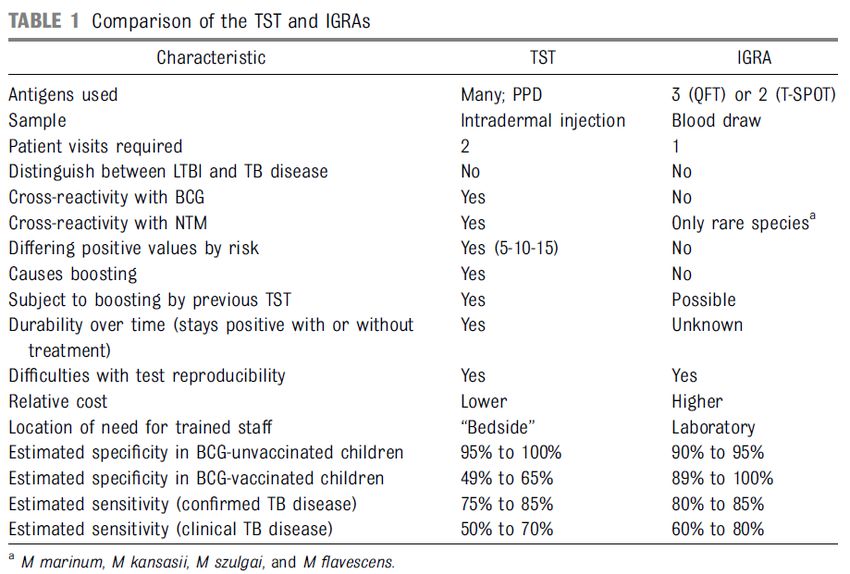
TB Epidemiology Studies
Consortium Research Update
  on Latent Tuberculosis
         Infection
     Christine S. Ho, M.D., M.P.H.
     CDC TBESC Project Officer
             ACET Meeting
         December 12, 2016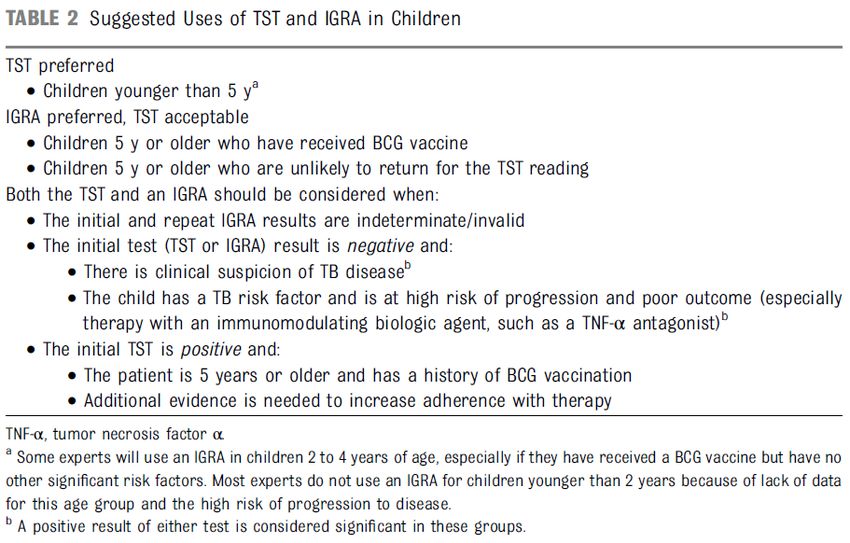
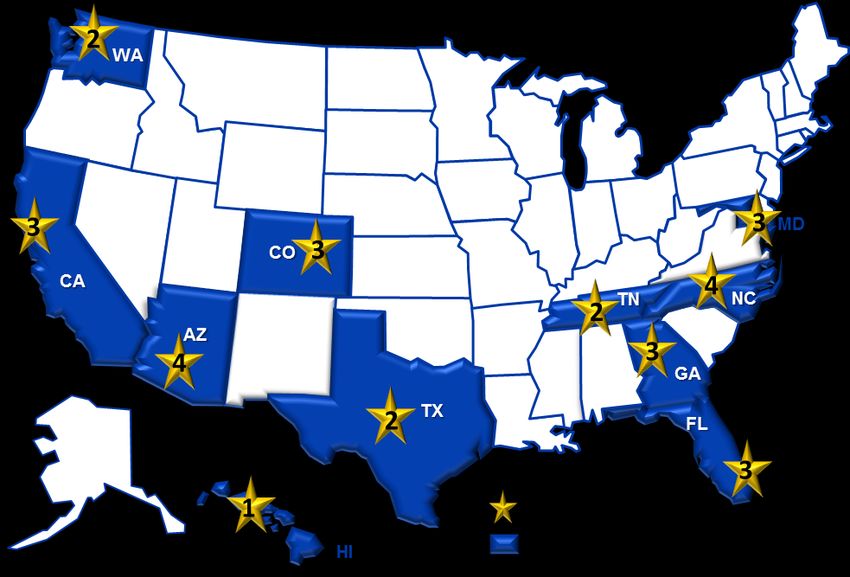
TBESC-II Collaborators

CDC-funded
collaboration
with health
departments,
academic
institutions,
and CDC

      1. California Department of Public   6. Seattle-King County Health
      Health                               Department
      2. Denver Health and Hospitals       7. Maricopa County Health
      Authority                            Department
      3. Duke University, North Carolina   8. Maryland Department of Health
      4. Emory University, Atlanta         9. University of Florida
      5. Hawaii Department of Health       10. University of North Texas Health
                                           Science Center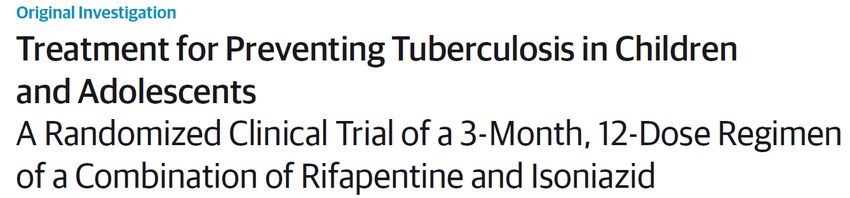
Research Questions
Which tests or test combinations can
best identify LTBI in specific high-risk
populations in the U.S.?
Can test characteristics be improved
By changing cutoff values?
By testing sequentially?
Which test best predicts progression to
TB?Study Design
Prospective cohort study
Enrolled from populations at high
risk of LTBI
Each enrollee tested for LTBI with
3 FDA-approved tests:
QuantiFERON (QFT) blood test
T-SPOT.TB (T-SPOT) blood test
Tuberculin skin test (TST)Study Eligibility Criteria
Close contact of a person with pulmonary TB
Foreign-born from a high incidence country
Foreign-born from a medium incidence country
who moved to the U.S. within the past 5 years
Spent ≥ 30 days in a high incidence country
within the last 5 years
Belongs to a population with a local LTBI
prevalence ≥25% (e.g., homeless)Analytic Approach
ExamineLTBI prevalence in our high risk
groups using single and combination test
results
Uselatent class analysis (LCA) to
estimate the “true” prevalence of LTBI in
our study population, as well as test
sensitivities and specificities
Analysis
on clean data from July 2012-
September 2014 datasetCut Points for Positive Tests
TST :
5mm for HIV-infected persons, close
contacts
10 mm for recent immigrants,Characteristics of 11,962 TBESC Participants
July 2012-September 2014
N %
Male 6,284 53
Foreign-born 9,643 81
BCG vaccination 6,332 53
HIV infection 1,460 12
Children < 5 years old 516 4.3
Median age (years, IQR) 31 (19, 46)Single Test Prevalence for Foreign-Born, HIV-negative Persons,
by Age Group
50 TST QFT
45 T-SPOT (Int) T-SPOT (US)
40
35
30
Percent positive
25
20
15
10
5
0
< 5 years Age group 5+ yearsTest Characteristics by LCA
for Foreign-Born Participants >5 years (n=8,018)
LTBI prevalence 37.9% (32.6-42.9)
Sensitivity PPV
TST 74.8% (67.2-82.4) TST 60.0% (56.4-62.7)
QFT 71.6% (63.3-79.9) QFT 97.6% (94.0-99.6)
T-SPOT* 70.3% (61.4-79.1) T-SPOT* 98.6% (95.8-99.8)
Specificity NPV
TST 69.6% (67.7-71.4) TST 81.8% (78.5-91.1)
QFT 98.9% (97.8-99.9) QFT 85.0% (73.8-89.3)
T-SPOT* 99.4% (98.6-100) T-SPOT* 84.5% (77.8-91.0)
PPV = positive predictive value, true positive /true positive + false positive;
* For LCA we used ≥5 spots as a positive T-SPOT result
NPV= negative predictive value, true negative/true negative + false negativeWhat This Means for the Clinician:
Population ≥5 Years at High Risk for LTBI
Hypothetical cohort of 1000 foreign-born patients ≥5 years (38% LTBI prevalence)
• Sensitivity of 75%
LTBI No LTBI
• Specificity of 70%
TST + 285 186 471 Of 1000 people—
• 39% (186/471) with TST+
TST - 95 434 529
don’t have LTBI
380 620 1000 • Positive predictive value (PPV)
is 61%
• 25% (95/380) of LTBI missed
LTBI No LTBI • Sensitivity of 71%
• Specificity of 99%
IGRA+ 270 6 276
Of 1000 people—
IGRA- 110 614 724 • 2% (6/276) with IGRA+ don’t
have LTBI
380 620 1000
• PPV is 98%
• 29% (110/380) of LTBI missedLTBI Test Characteristics by LCA
for Foreign-Born ChildrenLTBI Test Characteristics by LCA
in Foreign-Born ChildrenWhat This Means for the Clinician:
Population < 5 Years at High Risk for LTBI
Hypothetical cohort of 1000 foreign-born children < 5 yrs (4% LTBI prevalence)
LTBI No LTBI
• Sensitivity of 74.8%
• Specificity of 74.0%
TST+ 30 284 314 Of 1000 people—
TST- 10 676 686 • 90% (284/314) with TST+ don’t have LTBI
• Positive predictive value (PPV) is ~10%
40 960 1000
(30/314)
• 25% (10/40) LTBI missed
QFT T-SPOT
• Sensitivity of 70.4% • Sensitivity of 58.9%
• Specificity of 98.9% • Specificity of 99.0%
Of 1000 people— Of 1000 people—
• 26% (10/38) with positive QFT • 29% (10/34) with positive T-SPOT don’t
don’t have LTBI have LTBI
• PPV is 74% (28/38) • PPV is 71% (24/34)
• 30% (12/40) LTBI missed • 40% (16/40) LTBI missedSummary Foreign-born persons ≥5 years TST was little better than a coin flip in predicting who had LTBI Both the QFT and TSPOT had high positive predictive values of 97.6 and 98.6 Foreign-born persons
T-Spot.TB Data From Oxford Imm.
Anna Mandalakas and Heather Highsmith
Anonymous data from ~ 44,000 T-Spot.TB results
No epidemiologic data available – cannot validate sensitivity,
specificity, PPV or NPV
Most invalid results from high nil response – higher in spring!
1.3% could not perform due to low lymphocyte countsQuestion If the IGRAs had come first, and we were now considering whether and how to use the TST, what would we say?
IGRAs AND THE 2018
AAP “RED BOOK”
Can use IGRAs in immunocompetent children > 2
years of age [previously > 5 years of age] in all
situations when a TST would be used; some
experts down to 1 year of age
Particularly useful/preferred for children who
have received a BCG vaccination
Same recommendations as TST for risk factors
and frequency of testing
Use with caution in immunocompromised
children
Neither IGRAs nor the TST are perfect; always
need clinical judgment!Change 5 y to 2 y in this table
IGRAs IN CHILDREN – SOME
CLINICAL ISSUES
BCG-vaccinated child
Strategy 1: TST: if negative, no more
testing; if positive, follow with an IGRA
Strategy 2: Do only the IGRA
Note: If TB exposure, child should be
considered infected if either test is
positive
Child about to be immune compromised
No TB risk factor: do either a TST or an
IGRA
TB risk factor: do both a TST and an
IGRA and evaluate and treat if either test
result is positive [RISK and BENEFIT]Treatment of Tuberculosis Infection
in Children: 2015 Red Book
9H the preferred regimen
4R to be used only when there is
isoniazid resistance or intolerance;
“some experts would chose to treat
children younger than 12 years with 6R.”
3HP “should not be used routinely for
children younger than 12 years of age
but can be considered when the
likelihood of completing another
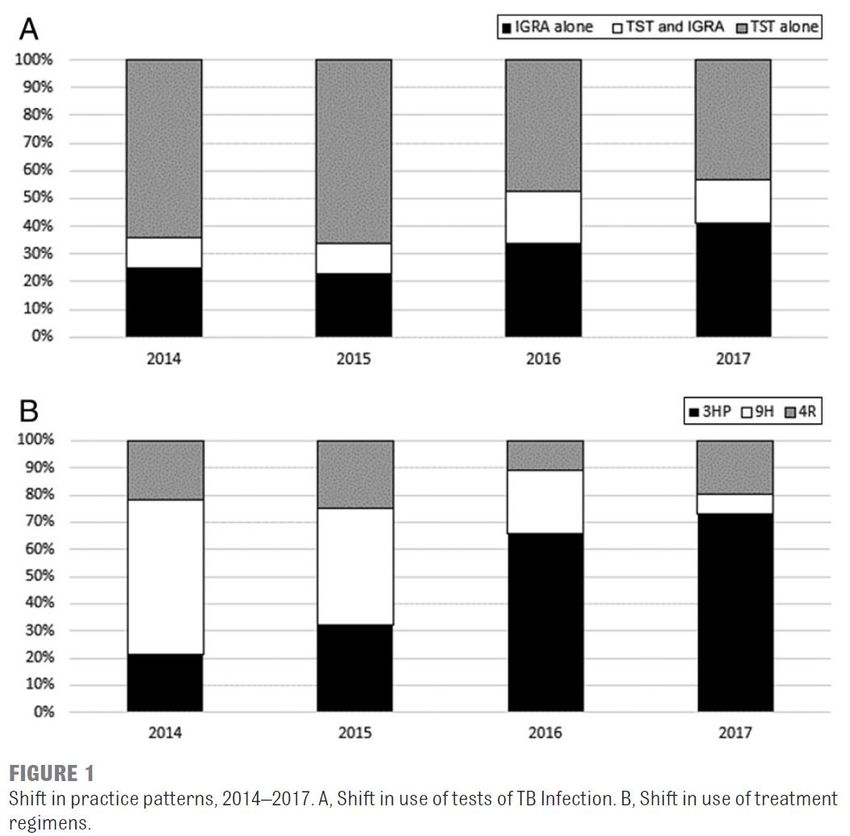
regimen is low.”Villarino et al. JAMA Pediatr 2015; doi:10:1001/jamapediatrics.2014.3158 • Part of a larger trial of ~7,800 patients • Included children ages 2 to 17 years • 905 children evaluable for effectiveness • 12 weekly doses of 3HP vs. 9 months daily doses of INH • Completion rates: 3HP – 88% 9INH – 91% • Development of TB: 3HP – 0/471 9INH – 3/434 • No child experienced hepatotoxicity, Grade 4 adverse event • Grade 3 Adverse Effect: 3HP – 3 of 539 9INH – 1 of 493 Conclusion: 3HP was at least as effective, safe and had a higher completion rate than 9 months of INH
Cruz and Starke. Completion rate and safety of tuberculosis infection
treatment with shorter regimens. Pediatrics 2018; 141: e20172838
Retrospective review of actual practice: N = 667
3HP: 283 4R: 132 9H: 252
Completion rates: 3HP: 97% 4R: 88%
9H completion: SAT: 53% ESAT: 76% DOPT: 89%
Multivariate analysis: completion associated with
DOPT, increasing age, absence of any AE
AEs were more common with 9H, including 2 children
with significant hepatotoxicity [none with 3HP or 4R]
One case of TB disease: 16 year old developed
culture confirmed pulmonary TB 7 months after
completing 3HP; great concern that she “cheeked”
and spit out the medications after the HCW left the
houseGaensbauer et al. Pediatr Infect Dis J 2018; 37:224
• 4R [N=395] vs. 9H [N=779] from 2016 to 2015 in children
• Retrospective, nonrandomized observational study
• Drug toxicity [all dermatologic]: 4R – 1.5%, 9H-0.7% [NS]
• No known treatment failures
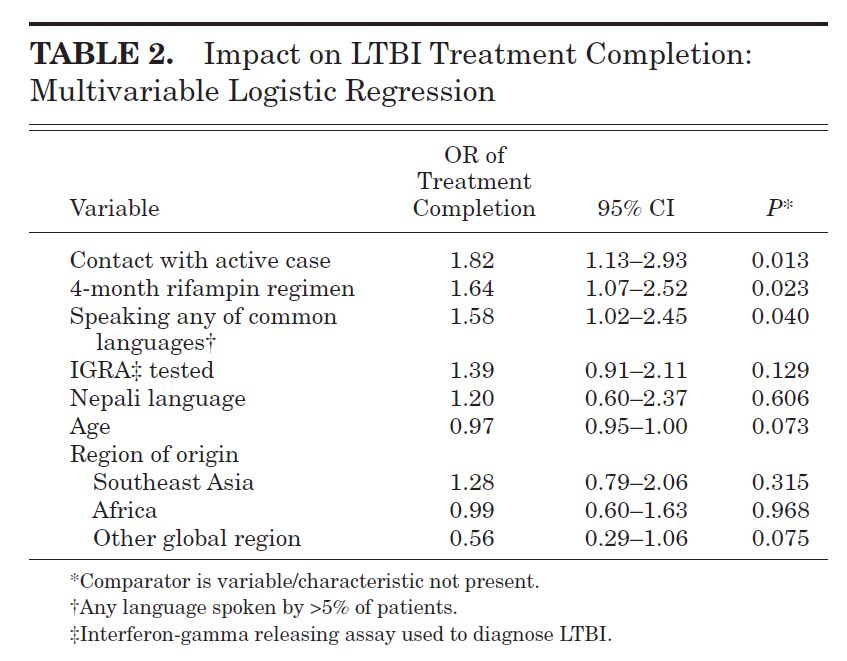
• Completion rates were higher when IGRA was used and when
known contact with a TB case was presentGaensbauer et al. Pediatr Infect Dis J 2018; 37:224
4R Data from Dick Menzies’
Study
The AAP Red Book Committee was
shown the data but I am not allowed
to show it to you as it is, as yet,
unpublished and remains blinded
~ 400 children in 4R and 9H groups
4R well tolerated and higher
completion rates than 9HTreatment of Tuberculosis Infection
in Children: 2018 Red Book
Order in the book and in the Table will
be 3HP, 4R, and 9H
Only limitation stated is that 3HP
cannot be used in children under 2
years of age because of lack of pK data
for rifapentine
Will not state a specific preference but
will say that “some experts” think that
3HP is the preferred regimenRifampin Dosing
Target serum concentration of 8μg/ml
CSF to serum ratio: 0.04-0.11
Schaaf et al, BMC Med, 2009: only 9% of children
achieved this level at 2 hrs post dose [South Africa]
Verhagen et al, Trop Med Int Health, 2012: only
23% of children achieved this level [Venezuela]
Savic et al, Clin Pharm Ther, 2015: study of pK of
rifampin and levofloxacin in adults and children with
TBM [Indonesia]
* Takes at least an oral dose of 30 mg/kg and
an IV dose of 15 mg/kg of rifampin to reach the target
AUC of 92 mg*h/L; even higher doses required to
ensure that every child reaches this exposurePullen et al: Pharmacokinetics of intravenous rifampin in
neonates. Ther Drug Monit 2006; 5:654
21 neonates treated for Staphylococcus aureus infectionsPullen et al: Pharmacokinetics of intravenous rifampin in
neonates. Ther Drug Monit 2006; 5:654
21 neonates treated for Staphylococcus aureus infections
Start of therapy Two WeeksTreatment of Tuberculosis
Infection in Children: 2018 Red
Book: Rifampin Dosing
Standard Treatment
2015: 10-20 mg/kg/day
2018: 15-20 mg/kg/day
Infants, Toddlers and TBM [any age]
2015: 10-20 mg/kg/day
2018: 20-30 mg/kg/daySummary
1. IGRAs routinely age 2 years and above;
some experts down to 1 year
2. 3HP [age 2 years and above], 4R and 9H
all acceptable regimens for treatment of
tuberculosis infection in children
3. Increases in recommended rifampin
doses: Routine: 15-20 mg/kg/d
Young Children: 20-30 mg/kg/d
TB Meningitis: 20-30 mg/kg/dYou can also read


