ACTIVATING CHINA 2020 - South Australian Tourism Commission
←
→
Page content transcription
If your browser does not render page correctly, please read the page content below
South Australian Tourism Commission
ACTIVATING CHINA - 2020

                                 SATC Activating China - 2020   1
Table of
CONTENTS
Message from the Premier, Jay Weatherill                                                   3

Message from Minister Leon Bignell                                                        4

Executive Summary	 5

The Chinese Traveller

The Emergence of China 		                                                                 6

The Current China Market 		                                                               13

The Future Chinese Traveller 	                                                           24

SA Consumer Positioning 	                                                                26

Summary of Strategic Insights 	                                                          29

The Six Strategic Focus Areas

1.   Communicate to the Most Profitable Consumer for SA 	                                32

2. Make it Easy to Research and Book SA 	                                                34

3. Make it Easy to Get to SA 	                                                           36

4. Deliver Quality SA Experiences 	                                                      39

5. Deliver Quality SA Infrastructure 	                                                   40

6. Leverage Partnership Opportunities 	                                                   41

Required Capabilities and Resources 	                                                    44

Chinese Tourism in South Australia - The Way Forward to 2020 	                           45

                                                                 SATC Activating China - 2020   2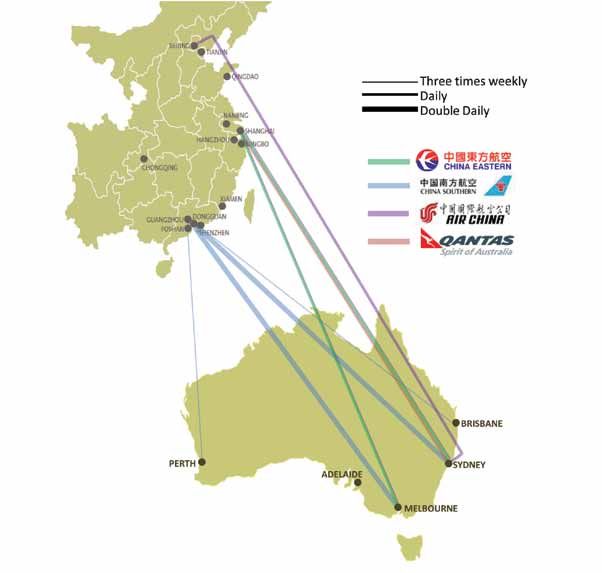
Message from the
PREMIER, Jay Weatherill
                                     China has experienced phenomenal economic growth over the past three decades and has now
                                     emerged as an economic superpower.

                                     It is important that South Australia continues to increase trade and investment links with China. The
                                     South Australian Government has adopted a whole-of-government approach to the market and is
                                     actively supporting key industries in our quest to develop Chinese markets.

                                     The rapid growth in China, along with the loosening of travel restrictions, has seen the emergence
                                     of the Chinese leisure traveller.

                                     China is among the largest and fastest growing of all inbound tourism markets and represents a
                                     huge opportunity for us to increase visitor numbers and expenditure in South Australia.

From the Barossa Valley to iconic Kangaroo Island, our stunning beaches and award-winning wine, events and festivals, South Australia
truly offers a diverse Australian travel experience for Chinese visitors.

Activating China – 2020 outlines the tourism response required from South Australia to boost the economic contribution of this
emerging inbound market.

The South Australian Tourism Commission has undertaken an extensive examination of the market and identified six strategic focus
areas outlined in this document that will guide business development and marketing initiatives forward to 2020.

We will work with our tourism partners to ensure that South Australia secures substantial market share and harnesses the potential of
the China market.

We have set an ambitious agenda for China and we are confident that with the support of the State Government, the industry and their
commercial partners, we will achieve great success.

Jay Weatherill, Premier

                                                                                                         SATC Activating China - 2020        3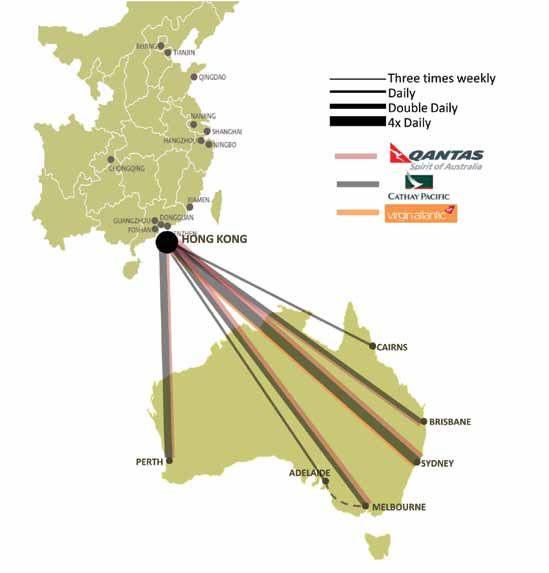
Message from
MINISTER Leon Bignell
                                     South Australia has been welcoming Chinese people since the 1850’s, when many came to our
                                     shores to search for gold.

                                     Now Chinese visitors arrive looking to explore the jewels of our tourism industry.

                                     China is an increasingly important market for the South Australian tourism industry and in the past
                                     decade it has been the fastest growing of our major international markets.

                                     Australia became the first Western nation to receive China’s Approved Destination Status (ADS) in
                                     1999, and the number of visitors has increased with China’s growing prosperity. South Australia is
                                     now welcoming 18,000 Chinese visitors each year, generating $110 million in tourism expenditure in
                                     the state.

Our Chinese visitors tell us that a key part of the attraction of South Australia, along with our pristine natural environments and world
class food and wine, is that they feel safe and welcomed.

Our aim is to triple the number of Chinese visitors to 57,000 by 2020, boosting related expenditure in the state to $450 million. This
Activating China - 2020 tourism strategy sets out a path to our goal. We know Chinese people like to travel, and with more than 100
million Chinese projected to travel outside of China by 2014, we want to ensure as many as possible put South Australia on their
itinerary.

Our strategy will focus on improving access between mainland China and Adelaide, developing tourism experiences tailored to the
Chinese market and improving our sales and promotions through Chinese travel agents and Inbound Tour Operators.

This is an ongoing journey, with several vibrant new tourism products already emerging, and many more in development. It is clear we
need to continue to increase the number of China-friendly experiences. South Australia has a clear competitive advantage thanks to our
experience-focussed tourism opportunities, wine, natural beauty and food, which are all highly appealing to the Chinese market.

Activating China - 2020 will guide government and industry to work together to attract more Chinese visitors through to 2020.

This is an exciting time for South Australia as we work to significantly grow our tourism industry and adapt to the growing Chinese
market.

Leon Bignell, Minister for Tourism

                                                                                                           SATC Activating China - 2020     4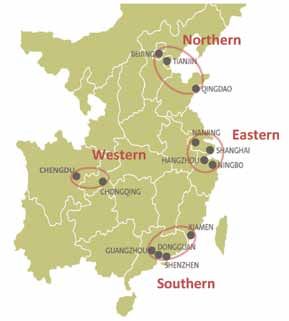
Executive
SUMMARY
Chinese visitation to Australia has been growing strongly over          To ensure that the Chinese opportunity is fully realised, South
the last ten years and in 2012 exceeded half a million inbound          Australia must concentrate on the six identified Key Focus
visitors. This figure is tipped to near one million visitors by 2020,   Areas. We must:
and as such is the largest and fastest growing of all inbound
markets. 18,000 of these Chinese visitors included South                • Communicate to the most profitable consumer for SA
Australia in their itinerary, spending $110 million, making it our        by growing awareness, consideration and intention for SA
most valuable market, although this is partially due to large             though traditional and digital media in China.
numbers of long staying education purpose visitors.
                                                                        • Make it easy to research and book SA by working with
We know that as markets mature, their dispersal throughout                Chinese travel agents, Inbound Tour Operators (ITOs) and
Australia increases, as shown by the established European                 online sources to ensure the best of SA is sold in China.
and North American markets, and more recently by Hong
Kong and Taiwan. Projections show that this rising tide of              • Make it easy to get to SA by working with airlines to develop
Chinese travellers to Australia will almost double Chinese                direct air services between Adelaide and key Chinese hub
visitation to South Australia, from the current 18,000 visitors           cities.
to 34,000 visitors by 2020. However, if South Australia takes
full advantage of the opportunity presented, then this potential        • Deliver quality SA experiences by working with commercial
rises to 57,000 with expenditure in South Australia of $450               partners to develop compelling tourism offerings.
million.
                                                                        • Deliver quality SA infrastructure by working with
To achieve this potential it is essential that we understand the          accommodation providers to better cater to the distinctive
current Chinese traveller, as well as the likely changes in travel        needs of their Chinese guests.
patterns that are to occur through to 2020. At the moment,
Chinese holiday itineraries are most commonly of around eight           • Leverage partnership opportunities, especially with Tourism
nights and include three destinations. Competition for this               Australia, South Australian consumer brands and relevant
market is fierce. So far, these markets have been dominated by            South Australian government agencies.
New South Wales, Queensland and Victoria, with other states
struggling to lure Chinese visitors away from these well trodden
east coast itineraries.

By 2020, the most profitable of these travellers will be couples
aged between 35 and 54 with a household income of greater
than RMB120,000 in the affluent middle class in core cities
who have prior experience of Australia, travelling independently
or in quality customised small group tours. South Australia will
offer them distinctive experiences centred on our identified
strengths; Wine, Naturalness and Food.

                                                                                                         SATC Activating China - 2020     5
The Emergence
OF CHINA
China’s rapid expansion is well documented, with phenomenal
economic growth over the last three decades. Sustained Gross                                  International Travel Expenditure
Domestic Product (GDP growth of 10 per cent and more has                                          (2011, billion
                                                                                               International     USexpenditure
                                                                                                              travel dollars)
often been achieved in China over the last 10 years, although                                         (2011, billion US dollars)
this has recently slowed to around eight per cent. This strong,                     Germany
sustained growth means that the Chinese economy is now five                               USA
                                                                                        China
times larger than it was in 1999.                                                           UK
                                                                                       France
                                                                                     Canada
This rapid growth, along with the loosening of travel                                  Russia
                                                                                          Italy
restrictions, has seen the emergence of the Chinese leisure                             Japan
traveller. From less than 10 million outbound border crossings                      Australia
                                                                                 Netherlands
in 1999 to an estimated 80 million in 2012 and a projected 100                   Saudi Arabia
million in 2014, China has become a significant growth engine                                     0    20         40          60   80      100
for the global tourism industry.

                                                                               Source: China Outbound Tourism Research Institute (COTRI):
                                                                               www.china-outbound.com

            Chinese GDP and Outbound Tourism
            Chinese GDP and Outbound Tourism                                   In 1999, Australia was the first Western destination that
  50,000                                                                80     received Approved Destination Status (ADS) from China and
                                                                        70     inbound visitation has since grown strongly, starting from less
  40,000
                                                                        60
                                                                               than 100,000 to 527,000 today. China is now Australia’s most
  30,000                                                                50
                                                                        40     valuable inbound market, worth an estimated $2.7b in 2011, and
  20,000                                                                30     the third largest by visitor numbers, behind New Zealand (1.1m)
                                                                        20     and the UK (570,000). Strong growth is projected through to
  10,000
                                                                        10
        0                                                               0      2020, with visitation approaching 1 million and expenditure of
                                                                               $7 to 9 billion. South Australia, from a considerably lower base,
                                                                               has seen similar growth, up from only 2,000 arrivals in 1999 to
             Chinese GDP                       Chinese Outbound Tourism
             (Rmb billion at current prices)   (in million border crossings)   18,000 Chinese arrivals in the 12 months to September 2012.

                                                                               The Tourism Forecasting Committee (TFC) projects that arrivals
Source: GDP: Compilation of China’s National Bureau of                         will almost double by 2020, which would mean a minimum of
Statistics reports by http://www.chinability.com/GDP.htm
                                                                               35,000 arrivals to South Australia, assuming the current market
Outbound Tourism: China Outbound Tourism Research Institute
(COTRI): www.china-outbound.com                                                share is maintained.

China is now the third most valuable global source market, with
an estimated outbound spend of over US$70b, behind Germany
and the US and substantially ahead of the UK. China is the
only one of these large source markets that will experience
substantial growth in the medium term.

                                                                                                                  SATC Activating China - 2020     6
The Emergence
OF CHINA
                       China, All Purpose Travel                                                 Chinese Proportion of Overall Visitation
                     China, All Purpose Travel                                                        Chinese Proportion of Overall Vistation
             1,000                                           60                      14%
 Thousands

                                                                  Thousands
                        Australia                                                                         Australia
              900
                        Australia Projected                                          12%                  Australia Projected
                                                             50
              800
                        South Australia                                                                   South Australia
              700                                                                    10%
                        SA Projected (min)                   40                                           SA Projected
              600                                                                          8%
              500                                            30
                                                                                           6%
              400
                                                             20
              300                                                                          4%
              200
                                                             10                            2%
              100
                -                                            -                             0%

Source: International Visitor Survey (IVS) and Tourism                        Source: International Visitor Survey (TRA), Tourism Forecasting
Forecasting Committee (TFC) projections                                       Committee (TFC) and SATC internal projections

China represents a substantial source of visitor arrivals for                 Leisure purpose travel is the primary concern of this strategy,
Australia, and yet Australia represents less than one per cent of             and this sector is projected to grow strongly, from 11,000
all Chinese trips, the majority of which are currently being taken            arrivals to SA today to 17,000 by 2020.
in Hong Kong and other nearby Asian destinations. The potential
upside to Chinese visitation is substantial.

                                                                                                                China, Leisure Travel
This strong growth in Chinese arrivals to Australia, far above
the growth from any other inbound market, has resulted in
                                                                                                           China, Leisure Travel
                                                                                            1000                                                          60
Chinese visitors representing an increasing proportion of overall
                                                                               Thousands

                                                                                                                                                               Thousands

                                                                                                               Australia
                                                                                                900
visitation, rising to ten per cent of visitors in 2012 and projected                                           Australia Projected                        50
                                                                                                800
to approach 12 per cent by 2015. South Australia lags behind                                                   South Australia
                                                                                                700
the national proportion as China currently represents six per
                                                                                                               SA Projected (min)                         40
                                                                                                600
cent of all visitors to the state.
                                                                                                500                                                       30
                                                                                                400
                                                                                                                                                          20
                                                                                                300
                                                                                                200
                                                                                                                                                          10
                                                                                                100
                                                                                                  0                                                       0

                                                                              Source: International Visitor Survey (TRA) and Tourism
                                                                              Forecasting Committee (TFC) projections

                                                                                                                                     SATC Activating China - 2020          7
The Emergence
OF CHINA
The upside opportunity                                                           China, All Purpose Travel to SA
The projection for South Australia, as shown previously, is
a conservative estimate that assumes we hold steady in
                                                                      China, All Purpose Travel to SA
                                                                                                                            60

                                                                                                                                 Thousands
market share of inbound arrivals to Australia. Two comparable                    South Australia
markets to mainland China are Hong Kong and Taiwan which,                        SA Projected (min)                         50
as more mature markets, have shown a considerable increase                       SA Projected (max)
in dispersal from the eastern states to the smaller states in                                                               40
the last five years. A similar increase in dispersal from China
is anticipated, meaning stronger growth and market share for                                                                30
China than that shown previously.
                                                                                                                            20

                                                                                                                            10

                                                                                                                            -
         Visitors to Non East-Coast Destinations
          Visitors to (SA/WA/TAS/NT)
                      Non East-Coast Destinations
                          (SA/WA/TAS/NT)
   30%

   25%
                                                      Hong Kong
                                                                  Chinese visitors currently spend $110m while in South Australia,
   20%
                                                      Taiwan      3.6 per cent of the $3.0b spent nationwide. Projecting this to
   15%
                                                                  2020 can be done using Tourism Australia’s forecast of 95-137
   10%                                                            per cent nominal expenditure growth and assuming that the
                                                      China
    5%                                                            share of expenditure rises to five per cent, the current Hong
    0%                                                            Kong figure. This results in a potential of $370-$450m in
                                                                  expenditure.

                                                                  Tourism is a labour-intensive industry and this increase in
                                                                  expenditure will have a substantial impact on employment in

The minimum projection by 2020 of 36,000 total Chinese            South Australia. The latest available tourism employment data

visitors of which 17,000 are leisure purpose assumes a constant   for South Australia is the Tourism Satellite Account (2010-11),

market share of 3.2 per cent of inbound Chinese. However,         which reports 33,000 direct jobs in the sector. From this we

South Australia currently receives six per cent market share      know that $151,000 in tourism expenditure supports one job

of Hong Kong visitors to Australia. As this is China’s most       in the industry. Should the full $450m potential of the industry

comparable market, we can assume a maximum upside                 be reached by 2020, this will support a further 1,700 jobs in the

opportunity of matching this market share by 2020. This would     tourism sector across South Australia. This figure is adjusted for

result in a total of 58,000 overall visitors, of which 38,000     inflation, and includes both full time and part time positions.

would be for leisure purpose.

                                                                                                      SATC Activating China - 2020           8
The Emergence
OF CHINA
As previously stated, as at September 2012 Chinese leisure
travel to South Australia was 11,000 visitors. Using the same
assumptions as for overall travel, the leisure opportunity for SA
                                                                           Insight:
                                                                           The Chinese leisure tourism market is large
is projected to be between 18,000 and 38,000 visitors by 2020.
                                                                           and growing. Both Australia and South Aus-
                                                                           tralia are experiencing strong growth, and are
                                                                           projected to grow robustly for the foreseeable
                                                                           future.
                China, Leisure Travel to SA
           China, Leisure Travel to SA
                                                          60
                                                               Thousands

                South Australia

                SA Projected (min)                        50
                SA Projected (max)
                                                          40

                                                          30

                                                          20

                                                          10

                                                          0

Achieving Chinese visitation to SA above the minimum
projected figures requires substantial and effective actions
across all aspects of the tourism experience, from marketing
and distribution systems in China, air access to South Australia,
the development of quality infrastructure and experiences and
the development of meaningful partnerships to enable these
actions.

                                                                                                  SATC Activating China - 2020   9
The Emergence
OF CHINA
                                                                 As of 2013, China is currently directly accessible to all our key
air connections between
                                                                 competitive destinations in Australia; China Southern services
australia and china                                              Guangzhou to four Australian cities; both China Eastern and
Direct flights from mainland China to Australia have been
                                                                 Qantas service Shanghai to Sydney and Melbourne; and Air
increasing, with the recent addition of Guangzhou-Perth by
                                                                 China services Beijing to Sydney. There are also services
China Southern, and increased frequency of many flights to the
                                                                 operated by Jetstar via Singapore and Hainan Airlines services
Eastern states.
                                                                 Sydney.

                                    Current Direct Air Access between Australia and China

     Source: CAPA, derived from Innovata data.

                                                                                                  SATC Activating China - 2020       10
The Emergence
OF CHINA
The most important and most direct route to access South Domestic connections within Australia are also possible using
Australia is with Cathay Pacific via Hong Kong, although Australian carriers. This indirect access represents both a cost
connections are also possible through Singapore with and time disincentive for Chinese to visit South Australia for
Singapore Airlines and Silk Air, as well as Kuala Lumpur with leisure.
Malaysian Airlines.
Current Direct Air Access between Australia and Hong Kong
Source: CAPA, derived from Innovata data.
SATC Activating China - 2020 11The Emergence
OF CHINA
As Adelaide is currently directly connected to Hong Kong, this Sydney and Melbourne International airports currently handle
means it is a one stop flight from anywhere in mainland China, the vast majority of Chinese leisure passengers, with 70 per
and from six major cities using Silk Air / Singapore Airlines via cent exclusively using a combination of these two airports to
Singapore. arrive and depart Australia. A further 20 per cent use these
airports for just one of the international legs of their journeys,
It is worth considering that less than half of the leisure leaving only 10 per cent who do not use these airports at all,
visitors to New South Wales live in the three Chinese cities primarily being travellers flying in and out of Perth, Brisbane or,
that have direct connections to Sydney. Even those from to a lesser extent, Adelaide.
directly connected cities are not guaranteed to have arrived
directly. Direct air access is not an all or none issue, but rather Queensland international airports are used by only half of all
a continuum: from none to Hobart, limited to Perth, fair to Chinese leisure visitors to that state, indicating Queensland is
Melbourne and good to Sydney. It should also be remembered often in the middle of a three or more stop itinerary.
that achieving a direct flight will only enable direct service from
one of three key cities.
Insight:
South Australia currently has no direct air access to mainland China, while key domestic competitors all have varying degrees
of direct access to China’s three main hubs.
Cathay Pacific’s Hong Kong-Adelaide route is currently the most direct access to Adelaide.
Indirect access also comes via interstate Australian ports with additional domestic legs. This adds time and cost to travel and
decreases South Australia’s competitiveness in China.
SATC Activating China - 2020 12The Current
CHINA MARKET
There are four key types of visitors from China; Holiday, Visiting
Friends and Relatives (VFR), Business and Education. Each China Market Share by Purpose of Trip
type of visitor displays different characteristics, so it is worth 12 months to September 2012
China market share by purpose of trip
considering each separately. 12 months to September 2012
8%
7% SA average
international
6% market share:
5.3%
5% 5.9%
4.6%
Chinese Visitor Composition
4% 3.6% SA China
Chinese Visitor Composition market share:
12 months to March 2012 3%
3.2%
80% 2% 1.5%
70% South Australia
1%
60% Australia
0%
50% Holiday/ Visiting friends Business Education
40% pleasure and relatives
30%
20%
10%
0%
Leisure (Hol Holiday/ Visiting Business Education
+ VFR) pleasure friends and
relatives
Visiting Friends and Relatives (VFR) Purpose Visits
Avg
Visitation SA Market Avg Length of
Stopovers
to SA Share Stay in Aus
in Aus
6,000 4.6% 50 nights 2.2
Holiday Purpose Visits
Avg
Visitation SA Market Avg Length of Long stays with few stopovers characterise an average Chinese
Stopovers
to SA Share Stay in Aus
in Aus VFR trip to Australia. South Australia performs better with this
group, with 4.6 per cent market share. However, this still lags
5,000 1.5% 8 nights 2.8
behind the seven per cent of South Australia’s average market
share for VFR.
The proportion of Holiday purpose visits to SA are relatively low.
Recently released Australian census data shows that out of the
Despite that fact that 60 per cent of Chinese visits to Australia
320,000 Chinese born Australians, 16,000 (5 per cent) reside in
are for holiday purpose, only 25 per cent of Chinese visits to
South Australia, double the 8,000 recorded in 2006. Victoria and
South Australia are for holiday purpose, meaning holiday market
New South Wales have substantially larger populations, with
share to SA is only 1.5 per cent, far below the market share of
94,000 and 156,000 Chinese born residents respectively. This
the other categories. Attracting a larger share of this market
represents a large pool of influencers whose impact on itinerary
is essential to the success of South Australia’s China tourism
planning should not be underestimated.
strategy.
This sector should be supported where possible.
SATC Activating China - 2020 13The Current
CHINA MARKET
Business Purpose Visits Education Purpose Visits
Avg Avg
Visitation SA Market Avg Length of Visitation SA Market Avg Length of
Stopovers Stopovers
to SA Share Stay in Aus to SA Share Stay in Aus
in Aus in Aus
3,000 3.6% 17 nights 2.0 5,000 5.3% 160 nights 2.1
South Australia receives a relatively small number of The IVS reports the arrival of 5,000 Chinese students in the
government and business travellers which, although higher year to March 2012, while Education Adelaide reports 12,786
yield, are not the core focus of the SATC. However, it should Chinese enrolments in Adelaide in 2011. This discrepancy is
be noted that Chinese business travellers display a stronger attributable to individual students enrolling in several courses
propensity toward leisure activities than business travellers and some enrolments not resulting in a commencement of
from Europe, North America, or even Hong Kong. Although study. Although not a focus of Activating China - 2020, a strong
the top three activities for a business traveller from most education market will support the growth of leisure travel by
markets are eating out, shopping and sightseeing, Chinese increasing awareness and word of mouth promotion of South
business travellers show a stronger likelihood to participate Australia, as well as providing a spur to VFR visitation. Recent
in most leisure activities while on a business trip, especially IVS data shows that around one in five Chinese students were
shopping for pleasure, going to the beach and visiting a casino. visited by a family member while studying in South Australia.
Conversely, they were substantially less likely to visit a ‘pub, This sector should be supported where possible.
club or disco’ while on their trip.
Education purpose visits are substantially longer than all
This market has a potential to support leisure travel and should other types, and as such contribute the vast majority of both
be encouraged through appropriate mechanisms. expenditure and nights spent in South Australia. However,
the nights and expenditure are not generally attributable to
traditional tourism areas of transport, accommodation and
activities.
Insight:
Chinese visitation to SA is currently strong for VFR, business and education purpose visitors, with a lower market share of
the holiday market. This is a strong growth opportunity.
SATC Activating China - 2020 14The Current
CHINA MARKET
This is the shortest average trip length and the least amount of
TRIP LENGTH AND STOPOVERS
time per destination of any nationality. By comparison, Asians
Chinese holiday purpose visitation to Australia is currently
generally visit three places over 12 nights, while Europeans
characterised by short, fast paced trips. The average duration of
tend to visit eight places over 30 nights.
a trip is eight nights with 2.8 places visited, meaning not quite
three nights are available per stop.
Holiday Trip Style in Australia by Country of Origin
40
Long Other Europe
Trip35 France
Netherlands
Germany
Canada
30 Korea Switzerland
Italy
United Kingdom Scandinavia
Average Length of Stay
25
20 Taiwan
Other Countries
15 Other Asia
Thailand USA
Hong Kong India
Indonesia
Japan
10 New Zealand
Malaysia
Singapore
China
5
Short
Trip 0
0 Few 2 4 6 8
Many 10
Stopovers Average number of stopovers
Stopovers
N.B. Holiday only has been examined here, as VFR trips are of very long duration with few stopovers
Insight:
Chinese holiday visitors travel the fastest of any traveller. Travel patterns focus on the East Coast and visit three destinations
over eight nights.
SATC Activating China - 2020 15The Current
CHINA MARKET
The vast majority of itineraries involve Sydney plus two
PLACES VISITED
other destinations, usually Melbourne, Gold Coast, Brisbane
Looking at the broader leisure category (Holiday + VFR), the
or Cairns. Total tour costs, including airfares, range from
package tour market dominates, with 63 per cent of Chinese
RMB11,000-18,000 (A$1,700-$2,700). These margins allow little
leisure visitors to Australia arriving on a package tour, compared
room for anything outside basic land content while in Australia.
to only 25 per cent for the average international visitor. These
Adelaide is not included in most of these itineraries as it adds
tours are primarily concentrated in the eastern states where
complexity and cannot be provided at a competitive cost due
70 per cent of visitors are package tourists, while in the lower
to smaller economies of scale and the lack of a shopping
volume states only 10 per cent of leisure visitation is by
commission structure. It is the opinion of the SATC that we
package tour.
should not compete directly to capture this low yield mass
market.
This mass package tour market focuses on volume out of
China and is dominated by low immersion, low yield trips.
A Reality Check: Annual Leisure Only Visitation of Chinese to Australian States
NT:
4,000
Qld:
221,000
Updated
WA:
SA: NSW: for
11,000 Septembe
14,000 271,000 2012 data
ACT:
13,000
Package Tour
Vic:
Non-Package Tour 215,000 Tas:
9,000
Icon overall area reflects visitation figures, 12 months to September 2012
SATC Activating China - 2020 16The Current
CHINA MARKET
When visiting South Australia, itineraries are far more
independent and generally lengthen to four stops, rather than
the average three-stop itinerary. For 90 per cent of SA visitors,
Adelaide is the only stopover in South Australia, the other three
generally being in the eastern states. SA also achieves a larger
proportion of younger Chinese travellers, who are more likely to
do more stopovers while in Australia.
Chinese leisure: No. of stopovers in Aus
Chinese Leisure: Number of stopovers in Aus
7
6
5
4
3
2
1
0
N.B. Stopover is defined by the number of tourism regions in
which a traveller stayed overnight during their entire journey in
Australia
Insight:
The lower holiday market share is largely the result of not getting a share of the large east coast package market. South
Australia struggles to be included in the most common Australian itineraries which are three-stop, high-volume, low-price east
coast destinations. As such, trips to SA tend to include four or more stops in Australia.
SATC Activating China - 2020 17The Current
CHINA MARKET
In South Australia the 40-60 group is still the strongest, but we
Current leisure visitor
host a much larger proportion of 20-29 year old travellers, likely
demographic profile due to the low proportion of package tours and strong VFR
Age market.
Over half of all Chinese leisure visitors to Australia are between
the ages of 40 and 60, peaking at 45-49. This is considerably
different to the average international traveller, where visitation
Spend
peaks at 25-29.
Current spend by Chinese leisure visitors in Australia is $1,900
per trip. This figure includes only 30 per cent of the cost of
the international airfare. Removing the international airfare
component, the average eight night trip spend is around $200
Australia: China Leisure Age Profile
Australia: China Leisure Age profile per day, inclusive of domestic transport costs, accommodation
18% and shopping. This makes for a very tight and competitive
16%
market for the in-destination operators and a fiercely price
14%
12% sensitive market.
10%
8%
6%
South Australia yields somewhat higher than the Australian
4% average, mainly due to being off the low yield package tour
2% routes, and a higher proportion of long staying VFR purpose
0%
travellers.
Australia - All Australia - China
SA: China Leisure Age Profile
Australia: China Leisure Age profile
18%
16%
14%
12%
10%
8%
6%
4%
2%
0%
Australia - All Australia - China
SATC Activating China - 2020 18The Current
CHINA MARKET
Origin in China Holiday purpose visitors are more likely to come from these
Of the 10,000 Chinese leisure visitors to SA last year, 47 per cities, representing 55 per cent of current SA holiday visitation.
cent appear to originate in Shanghai, Guangdong or Beijing, as Australia overall had a more widely distributed visitation, with
shown by the map below. 41 per cent of leisure visitors coming from these three most
highly developed cities.
Origin of Current Chinese Leisure Visitation to South Australia
All other provinces
SATC Activating China - 2020 19The Current
CHINA MARKET
Prior Australian Travel Experience For Queensland, their proportion of first time visitors is over
Currently, nine out of ten Chinese visitors to South Australia 70 per cent, but mainly as their second destination in Australia,
have already experienced some part of Australia prior to arriving reflective of the group tour itineraries being sold in China.
in Adelaide, either on a previous trip to Australia (red coloured
bars below) or during the earlier stages of their Australian trip Direct consumer research in China shows that awareness
(pale blue colours below). This is not the case for the eastern of SA regions is 10 per cent or lower for those who have not
states, for whom more than 50 per cent of their visitors are on previously visited Australia, but over 30 per cent for all regions
their first visit to Australia. for those who have previously visited Australia.
Australian Experience of Current Chinese Visitors to South Australia
First Visit Return Visit
South
South Australia 9%
Australia
1st s/o 2nd s/o 3rd s/o 4th s/o 1st s/o 2nd s/o 3rd s/o 4th s/o
0% 10% 20% 30% 40% 50% 60% 70% 80% 90% 100%
First visit - 1st S/O First visit - 2nd s/o First visit - 3rd s/o First visit - 4th s/o + Return visit - 1st S/O Return visit - 2nd s/o Return visit - 3rd s/o Return visit - 4th s/o +
Note: s/o = South Australia’s position in stopover order
s/o = stopover
SUMMARY of Insights:
The current Chinese inbound leisure market:
• is in their 20’s or is 40-60
• is primarily from Tier 1 Chinese cities
• has experienced Australia prior to arriving in Adelaide; and
• spends $19,00 on average while in Australia
SATC Activating China - 2020 20The Current
CHINA MARKET
This is in contrast to the average international visitor who
Chinese dispersal into
disperses far more into regions, with 33 per cent spending a
regional areas night outside of the capital cities, the Gold Coast or Cairns. The
Chinese visitors currently do not have a strong propensity to
main drivers for these trip behaviours are the aforementioned
disperse to regional Australia, as demonstrated by the chart
tight itineraries for holiday purpose trips, generally being three
below. The Chinese market overwhelmingly concentrates their
stops over eight nights. VFR trips, although longer, tend to have
overnight visitation to capital cities, as well as the Gold Coast
fewer stopovers as they are focussed on the region in which
and Cairns with only seven per cent of Chinese leisure visitors
the friend or relative resides, which is usually a capital city.
spending a night outside these regions. In South Australia
less than six per cent spend a night outside of the Adelaide
tourism region, with similar proportional figures for Sydney and
Melbourne.
Leisure Dispersal:
Proportion of overnight visitation to regional areas of Australian States
Average International Visitor Chinese Visitor
Average dispersal to regions within each state, expressed as a proportion of overall leisure visitors to SA
SATC Activating China - 2020 21The Current
CHINA MARKET
Leisure Dispersal:
Proportion of overnight visitation to regional areas of Australian States
Average International Visitor Chinese Visitor
Average dispersal to regions within each state, expressed as a proportion of overall leisure visitors to SA
For most inbound markets to South Australia regional dispersal All other regions were less than 1%. The immediate focus
is usually high, with 42 per cent of our international leisure of South Australia’s China strategy must be Adelaide and
visitors spending a night outside of the Adelaide region. This expectations of overnight regional dispersal should be kept low.
figure is highest among western hemisphere visitors at 49 per A recent internal review by SATC identifies a small number of
cent, much lower in Asia at 21 per cent and lowest for Chinese partially ‘China Ready’ operators in South Australia, primarily
visitors at six per cent. From this very small pool of Chinese located in the Adelaide Tourism Region, with a small number in
tourists who overnight anywhere other than Adelaide, the most the Barossa, the Adelaide Hills and on Kangaroo Island. This is
popular overnight regions were Kangaroo Island, the Limestone broadly reflective of the current hotspots identified above.
Coast, the Barossa and the Fleurieu Peninsula.
Insight:
Even in the more developed inbound markets in the eastern states, Chinese visitors overwhelmingly confine their overnight
stays to capital cities with day trips to nearby regions.
SATC Activating China - 2020 22The Current
CHINA MARKET
CONSUMER AWARENESS Iconic Sights
Awareness of South Australia as a destination and its tourism Chinese leisure visitors to Sydney are quite concentrated
products is low, even among our target market of experienced in the attractions that they visit, with 73 per cent visiting
international travellers in core Chinese cities. Less than six Darling Harbour (shown in red below, Sydney’s top attraction).
per cent of these Chinese travellers who have not previously In Melbourne, the concentration is less, with 46 per cent
visited Australia are aware of our three key tourism regions of of Chinese leisure visitors going to their top attraction of
Kangaroo Island, the Barossa and the Eyre Peninsula. Federation Square. Adelaide is yet less concentrated, with our
Awareness jumps considerably for those who have visited top attraction of the Adelaide Hills drawing 39% and the Central
Australia before, especially awareness of Kangaroo Island, Market drawing 35 per cent. Although these figures should only
reinforcing the opportunity to attract return visitors to South be considered indicative as the attraction list for each state is
Australia. arbitrary, it does show that the other Australian cities have a
stronger list of core attractions than Adelaide.
However, having a concentrated group of key attractions to visit
Awareness of Tourism Products in Regions
Awareness of Tourism Products in Regions does not necessarily drive large tourism numbers. Canberra,
Sydney with a comparable number of Chinese leisure visitors to
Gold Coast
Tropical North Queensland
Adelaide, has the most concentrated Chinese visitation around
Uluru
Never been to Australia a single site, with 91 per cent visiting Parliament House.
Kakadu Been to Australia before
Margaret River
Tasmania
Kangaroo Island
Eyre Peninsula
Barossa Valley
Chinese Visitation to Key Attractions
0% 10% 20% 30% 40% 50% 60% 70% 80% 90% 100% Expressed as % of leisure vistors to applicable
state, selected
Chinese Visitationattractions only.
to Key Attractions
Expressed as a % of leisure visitors to applicable state, selected attractions only.
Darling Harbour
Source: BDA China Product Testing, Beijing & Guangzhou, Federation Square
Adelaide Hills /Mt Lofty Summit/Hahndorf
international travellers and those considering international Adelaide Central Markets
travel in the future. Percentages reflect respondents who have Glenelg
SA Wineries / Cellar door
High or Very High Awareness of the tourism product in each Victor Harbor/Goolwa
region Kangaroo Island
SA National parks/bushland
Barossa
River Murray
McLaren Vale wine region
0% 10% 20% 30% 40% 50% 60% 70% 80% 90% 100%
Insight:
First time Chinese travellers have low awareness
Figures are expressed as % of leisure visitors to applicable
of South Australian tourism regions, but this state, selected attractions only.
increases substantially for repeat visitors,
Some sites, such as the ‘North Terrace Precinct’ have not been
especially for Kangaroo Island. consistently included in the survey, so are not reported here.
Regional attractions are likely to have been visited as part of a
day-trip, rather than an overnight stay, as previously discussed.
Insight:
South Australia lacks distinctive landmarks to
compete with the likes of Opera House and
Harbour Bridge. Rather than create an icon, SA
should leverage its close regional assets.
SATC Activating China - 2020 23The Future
CHINESE TRAVELLER
SATC is mainly active in the core cities due to their higher
Geographical Target Market
travel maturity and travel propensity. That being said, SATC also
SATC’s geographic focus in China is aligned with Tourism
supports agent marketing activity in secondary cities that are
Australia’s and was derived after extensive research into
in close proximity to the core cities, given that agents from the
economic factors, travel propensity, visa risk profile, aviation
core cities effectively become wholesalers for the agents in the
access as well as travel maturity. There are over 200 cities in
surrounding secondary cities.
China, and the SATC prioritised five as core cities (including
Beijing, Shanghai, Guangzhou, Shenzhen, Nanjing and
Broadly, a dual speed travel market exists between core cities
Hangzhou) and a further seven into secondary cities.
and then secondary cities. But even in the core cities there are
considerable differences.
SATC’s Core Markets of Activity
Cluster City Trade Promotion Consumer Promotion
Northern Beijing Core Core
Tianjin Secondary Limited
Qingdao Secondary Secondary
Shanghai Core Core
Hangzhou Core Core
Eastern
Nanjing Secondary Limited
Ningbo Secondary Limited
Guanzhou Core Core
Shenzhen Core Core
Southern
Dongguan Limited Limited
Xiamen Limited Limited
Chengdu Secondary Limited
Western
Chongqing Limited Limited
Other Other cities as targeted by Tourism Australia
Core: Core market of activity, with strong focus on consumer marketing, trade engagement, and cooperative marketing campaigns
Secondary: Peripheral market of activity, with targeted trade training and consumer promotions
Limited: Tertiary market with less SATC activity other than supporting trade initiatives
SATC Activating China - 2020 24The Future
CHINESE TRAVELLER
…in core cities: Our target market has its highest instance
in 14 cities, being the Chinese hub cities of Beijing, Shanghai
Geographic Target Market
and Guangzhou, five further cities adjacent to these hubs and
646m four other areas as identified by Tourism Australia. SATC will
Core Cities
initially focus on these cities which represent the strongest
160 Beijing Hangzhou
Shanghai Shenzen opportunities.
140 Guangzhou
Secondary Cities
120 110m Tianjin Dongguan
Nanjing Foshan …who have prior experience of Australia: As previously
100 Quingdao Chengdu
Ningbo shown, Chinese who have visited Australia before have a
80 65m Other Cities
Xiamen Chongqing much higher awareness of South Australian product, and are
60
therefore more likely to visit South Australia.
40
20
35m 11m
6.5m …travelling independently: As markets mature, they move
0 11m 3.5m 1.1m
Urban Chinese Population of targetTarget
cities market within target cities away from structured group travel. Although independent travel
Urban Chinese Population of Target market
target cities within target cities is currently an emerging trend for Chinese visitation, this will
grow and as such it is the focus for the medium to long term.
…or in quality customised small group tours: Group tours
Target Market Definition are an essential part of the Chinese travel patterns, and should
Using this geographic definition, the primary target market for not be ignored. However, focus should remain on providing
South Australia can be expressed as: quality product, rather than competing directly with the Eastern
states for subsidised shopping-based tours.
“Couples aged between 35 and 54 with a household income
of greater than RMB120,000 in the affluent middle class, in The Chinese leisure market should be the primary focus,
core cities who have prior experience of Australia, travelling although the sizeable VFR, education and business markets are
independently or in quality customised small group tours.” also important. SATC should facilitate growth in these areas,
but not actively target this non-holiday visitor in marketing
Each component of this definition should be considered: messaging or infrastructure development.
Couples aged between 35 and 54: As previously shown, this
is the key age demographic for Chinese visitors to Australia,
representing 39 per cent of all inbound visitors. Although South SA TARGET MARKET:
Australia currently receives a large number of visitors in their Couples aged between 35 and 54 in the affluent
20s, these are predominantly driven by education purpose. middle class with a household income of greater
than RMB120,000 in core cities who have prior
…with a household income of greater than RMB120,000 in experience of Australia, travelling independently or
the affluent middle class: This is a bare minimum household in quality customised small group tours.
income to allow for a sufficient budget for a South Australia
holiday. In reality, most Chinese visitors to SA will have a
substantially higher household income.
SATC Activating China - 2020 25SA Consumer
POSITIONING
Research conducted by Tourism Australia late in 2011 confirmed
that Australia has strong consumer appeal as a ‘must visit’ long SA Regional Appeal
SA Regional Appeal
haul holiday destination. Despite a high level of awareness,
Kangaroo Island 40 ‘Naturalness’ and wildlife
consumer knowledge of Australia is mainly limited to the Barossa Valley 31 Wine and ‘naturalness’
icons of Sydney Opera House, kangaroos and koalas, followed Eyre Peninsula 31 Seafood and ‘naturalness’
River Murray 28
by Sydney, Great Barrier Reef and beaches. Australia is seen Limestone Coast 17
to offer nature experiences, is easy going, and has unique Adelaide & Adelaide Hills 16
Flinders Ranges 12
wildlife in a developed country. Recent research by the SATC
shows that natural scenery, including blue skies and beaches,
is desired by 78 per cent, while food and wine are gaining Source: BDA China Product Testing, Phase 1, % who selected
traction. Most Chinese tourists enjoy dining out, sightseeing region as #1 place to visit in SA
and visiting the beach when they are in Australia.
Within these regions, research shows that the highly preferred
experiences include Australian animals, SA food, Island
experiences, SA wine and coastline. These findings are in broad
Most Important Considerations when
alignment with Tourism Australia’s research.
MostBooking
importantaconsiderations
Holiday Outside of China
when booking a holiday
outside of China
Natural environment/scenery 78 Although the Eyre Peninsula rated highly in this consumer
Experiencing different places & cultures 64 research, it should be noted that current Chinese leisure
Range of experiences and activities available 43 dispersal patterns are not favourable to increasing tourism
Quality of accommodation 39
to this region in the short term, although it is certainly an
Quality of food and beverages 32
opportunity in the future.
A desirable climate 23
Availability of Chinese speaking hosts 14
Interaction with local wildlife 7
Therefore, the South Australia tourism position for China
revolves around three key aspects, being Wine, Naturalness
and Food. This aligns well with the State Government’s key
Source: BDA China Product Testing, Phase 1, % who selected strategic priorities, of Premium Food and Wine from Our Clean
aspect in top three. Environment.
This consumer research demonstrated that the nature of
Kangaroo Island and wine of the Barossa are strong offerings
with high appeal for the China market. Kangaroo Island was
the most favoured region followed by the Barossa and the Eyre
Peninsula.
SATC Activating China - 2020 26SA Consumer
POSITIONING
Wine ‘Naturalness’
Knowledge and appeal of wine is growing rapidly in China, as The Chinese consumer seeks ‘Naturalness’, a much broader
wine represents western luxury and sophistication, driving a category than simply ‘nature’ or ‘wildlife’. Naturalness
strong desire for Chinese visitors to learn more. This appeal encompasses aspects of daily life such as open areas of parks
for South Australian wine is likely to grow in 2013 due to and gardens, blue, unpolluted skies, and the accessibility of
the screening of the Chinese drama Jiang Ai, of which four freshly harvested high quality organic produce. The appeal of
episodes were set and filmed in South Australia, and are these urban lifestyle experiences of naturalness should not be
focussed on the romantic appeal of wine. underestimated.
In the last three years, 42 per cent of Chinese leisure visitors Regionally, both Kangaroo Island and the Eyre Peninsula were
to SA visited a winery during their trip, a very high proportion rated highly due to the appeal of their nature and wildlife
and behind only Canada and the UK and on par with several offerings. However, both destinations have some cost and
European countries. There are several reasons for this: time barriers to travel to visit on the Chinese visitor’s short
itineraries. In the immediate term (one to five years) it is
• The growing Chinese interest in wine and its place as a unrealistic to expect large volumes of Chinese tourists will
status symbol, especially in light of strong exports of SA wine travel to these regions, with the possible exception of day trip
brands to China. itineraries to Kangaroo Island. However, as the market matures
and regional dispersal becomes more widespread, both regions
• Wineries provide a good logistical fit for the established ‘Day represent a significant opportunity.
trip from Adelaide’ itineraries. There is also very little cost
involved for the tour operator. In the immediate term the focus should be delivering
‘naturalness’ experiences in Adelaide itself, or within a day trip
• Chinese visitors are generally older, with a peak in the 40-60 distance from Adelaide.
year old group.
Wine is a strong driver of Chinese visitation and can be Food
effectively delivered in a day trip from the Adelaide Tourism This is an essential part of the experience for Chinese visitors.
Region. As such, wine should be a strong focus in the Quality food-based experiences that showcases fresh South
immediate term (one to five years), while trip patterns remain Australia produce, particularly fresh seafood, should be an initial
short and centred on capital cities. priority for experience development in the Adelaide region.
The concept of catch and eat, freshly shucked oysters or
fresh abalone and lobster are especially appealing to Southern
Chinese. The tailoring of Central Market tours for the Chinese
market which offers a culinary experience that showcases SA
produce is a good example and has considerable potential to
expand.
SATC Activating China - 2020 27SA Consumer
POSITIONING
Putting it all together
Each experience offered in South Australia should endeavour
to include as many of these themes as possible as part of the
Graphic as current appears in doc
tourism offering to the Chinese audience.
(20th Aug)
Penfolds
Penfolds Magill
Barossa Estate
Wine Jacob’s Adelaide
Food
Creek Central
Visitor Market
Centre Tours
Seppeltsfield
Barrel Room
Beerenberg
Strawberry
Mt Lofty Farm
Summit
Natural- Jurlique
Farm Tour
ness Seal Bay
Experiences listed
Cleland are examples
Wildlife Park only and do not
represent all
Adelaide
Zoo available
experience
Gorge
offerings in SA
Wildlife Park
SATC Activating China - 2020 28Summary of
STRATEGIC INSIGHTS
Chinese Visitation to Australia
Australia South Australia
Visitors from China
1999 2012 2020 1999 2012 2020
35,000 to
Visitation 87,000 573,000 958,000 2,000 18,000
57,000
$5.3 - $6.5b $370 - $450m
ExpenditureGuangzhou
Dec-99
Mar-00
(Australia, 1999)
• Food
• Wine
Jun-00
Aug-00
Dec-00
• Naturalness
Mar-01
Jun-01
(ADS) for residents of Beijing, Shanghai and
Sep-01
Australia receives Approved Destination Status
Dec-01
Mar-02
Jun-02
Summary of
Sep-02
Key Events in the China Tourism Market
Dec-02
SARS oubreak
Mar-03
(Global, Nov-02)
Jun-03
Sep-03
Dec-03
Mar-04
Jun-04 ADS Scheme widened to 6 more regions (total of 9)
(Australia, Jul-04)
Sep-04
Dec-04
Mar-05
(Hong Kong, Apr-04)
Jun-05
Key Event
Sep-05
SATC opens Hong Kong Office
Dec-05
Mar-06
Jun-06
ADS Scheme open to all of China
Sep-06 (Australia, Aug-06)
South Australian Target Market:
Chinese arrivals to Australia
Dec-06
Mar-07
Jun-07
Sep-07
Dec-07
Mar-08 Swine Flu Pandemic
(Global, Apr-08)
South Australian consumer positioning:
Jun-08
Sep-08 Bankruptcy of Lehman Brothers; start of the GFC
Key Events in the China Tourism Market
(Global, Sep-08)
Dec-08
Mar-09
Jun-09
Sep-09
SATC opens Shanghai Office
Dec-09 (Shanghai, Jan-10)
1st Chinese Charter Flight from Guangzhou
Mar-10 (South Australia, Feb-10)
Jun-10
Sep-10 China Southern introduce Brisbane-Guangzhou and increase
Sydney & Melbourne flights
Dec-10 (Nov-10) 2nd Chinese Charter Flight from Guangzhou
Mar-11 (South Australia, Jan-11)
STRATEGIC INSIGHTS
Jun-11
cities who have prior experience of Australia, travelling independently or in quality customised small group tours.
Sep-11 Direct Flights from Guangzhou to Perth begin
(Western Australia, Oct-11)
Dec-11
Mar-12
0
Couples aged between 35 and 54 in the affluent middle class with a household income of greater than RMB120,000 in core
100,000
200,000
300,000
400,000
500,000
600,000
SATC Activating China - 2020
30The Six Strategic
FOCUS AREAS
1. Communicate to the Most Profitable
Consumer for SA
2. Make it Easy to
Research and Book SA
3. Make it Easy to
Get to SA
4. Deliver Quality
SA Experiences
5. Deliver Quality
SA Infrastructure
6. Leverage Partnership
Opportunities
SATC Activating China - 2020 31Communicate to the Most Profitable
CONSUMER for SA
STRATEGIC FOCUS AREAS
Grow awareness, consideration and intention for SA from travellers in our Chinese target market through:
• Leveraging traditional media exposure and advocacy
• Increasing SA content on key digital communications platforms
Growing awareness, Traditional Media Exposure
consideration and intention and advocacy
Consumer awareness of South Australia is a prerequisite to The media landscape in China is huge and fragmented with
grow an increasing share of this market. The average Chinese over 3,000 television stations, 900 daily newspapers and
consumer is only familiar with a few key Australian icons, such periodicals and over 600 radio stations. Traditional media
as the Opera House, Sydney Harbour Bridge, Sydney, Gold is important, and SATC generally targets the higher end
Coast, Great Barrier Reef and kangaroos/koalas. magazines in primary cities as the key influences for mid to
high end consumers. It must be noted that consumers in
SA needs to be ‘known’ for something in China, and build its Southern China (Guangdong province) often watch and are
image among targeted consumers. The ‘Jiang Ai’ TV drama influenced by Hong Kong TV and trends, and therefore have a
series represents a significant short term opportunity for different mentality to other parts of China.
2013, and should be leveraged to the fullest extent possible
to build on the existing strength of South Australia as a wine TV Exposure - ‘Jiang Ai’ TV Drama
destination. The other positioning pillars, Naturalness and Food, During February 2012 a large Chinese television crew filmed at
should be integrated into this where possible. various locations in South Australia. This project was initiated
by the SATC and supported by Tourism Australia and Wine
Compared to western markets, Chinese are far more likely to Australia. A total of four episodes of the famous drama series
be influenced by traditional travel information sources such as were shot in the Barossa, Adelaide, Adelaide Hills and Fleurieu
social media, films, TV and radio, and print media and as such Peninsula. The resulting drama will be aired in China in early
SATC conducts regular media familiarisations to gain destination 2013, with an expected audience of well over 100 million
and product exposure through these mediums. Chinese also people and considerable exposure for South Australia in large
highly value information from friends and relatives in China, as scale media and internet campaigns promoting the series.
well as social media. Above all, the influence of travel agents in This project is the result of many months of preparation and is
the provision of itineraries should not be underestimated. expected to considerably raise awareness of SA as an appealing
tourism destination with Chinese consumers, and will be used
as the key promotional platform for SA in 2013.
SATC Activating China - 2020 32Communicate to the Most Profitable
CONSUMER for SA
Affinity Marketing with SATC’s Microblog Sites
Non-traditional Partners
Site Icon URL
There is also potential to identify and develop new marketing
partners outside of traditional travel agencies to directly target Sina Weibo http://weibo.com/southaustralia
higher end consumers, such as automobile clubs, golf clubs
and wine associations in addition to credit card and financial Tencent Weibo http://t.qq.com/southaustralia
institutions.
Digital Marketing Previous content has included an Adelaide city guide,
competitions, suggested itineraries, surveys of web users on
Digital Marketing is the key critical element in the successful
their knowledge of SA, images and competitions, and tries to
promotion of South Australia as many other forms of
engage consumers in ongoing communication about South
advertising, such as on billboards and in print, are cost
Australia. This strategy of digital engagement shall continue to
prohibitive. The number of Chinese who use social networking
be a priority for the SATC to raise awareness of, consideration
sites is enormous - about half of all internet users - and they
for and intention to visit South Australia.
are an important platform for Chinese consumers to access
information on all types of topics. Therefore it is particularly
important to gain advocacy for the state in social media and
deliver content directly to consumers.
There are over 500 million Chinese internet users, a figure that
is growing steadily in volume and influence. Users tend to be
young and urban, with over 80 per cent penetration for those
under the age of 45 years old and almost universal usage among
SATC’s target market. There are over 350 million mobile internet
users in China, as the penetration rate of smart phones in major
cities is around 60 per cent. Most sites are accessed through
mobiles rather than computers and consequently over 80 per
cent of the top internet sites in China have a mobile version.
Western platforms such as Youtube, Facebook, Twitter and
TripAdvisor are banned in China. However there are local
equivalents of such platforms such as Youku and Daodao,
of which one of the most important is Sina Weibo, with 300
million users and the micro-blogging platform of choice for
affluent, educated, connected consumers.
In addition to the SATC’s Chinese website in traditional and
simplified characters, SATC has created and continues to
manage two micro blogs on different digital platforms.
SATC Activating China - 2020 33You can also read


