Annual Review 2020/2021 - Improving Lives - Greater Manchester Mental ...
←
→
Page content transcription
If your browser does not render page correctly, please read the page content below
Annual Review
2020/2021
Greater Manchester Mental Health
NHS Foundation Trust

               Improving Lives
Contents
                      Message from the Chair and Chief Executive     06
                      Greater Manchester Mental Health at a glance   08
                      Our approach                                   10
                      Our Five Year Strategy                         12
                      Highlights for the year                        14

     20/21
                      Looking into the future                        28
                      Recovery Plan Workstreams                      30
                      Get involved                                   32

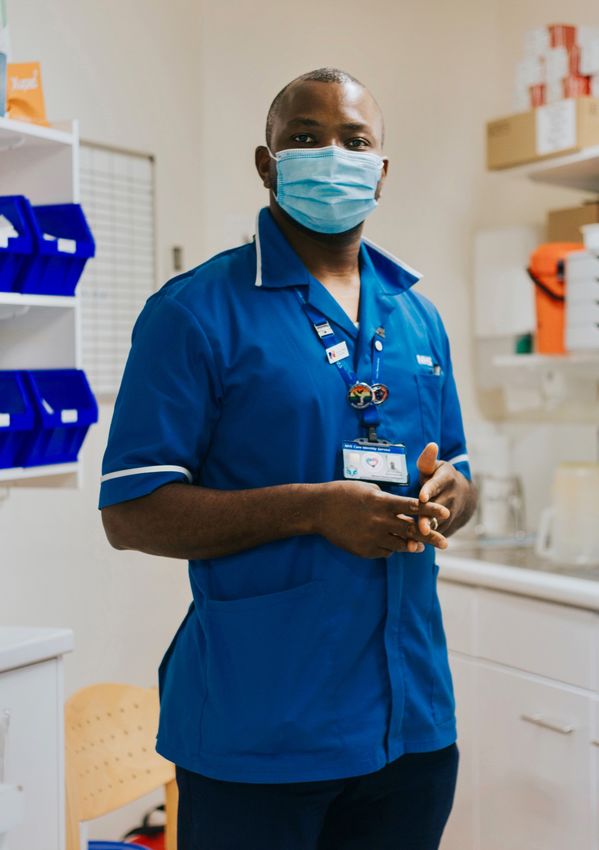
Simon Ayela-Uwangue
Staff Nurse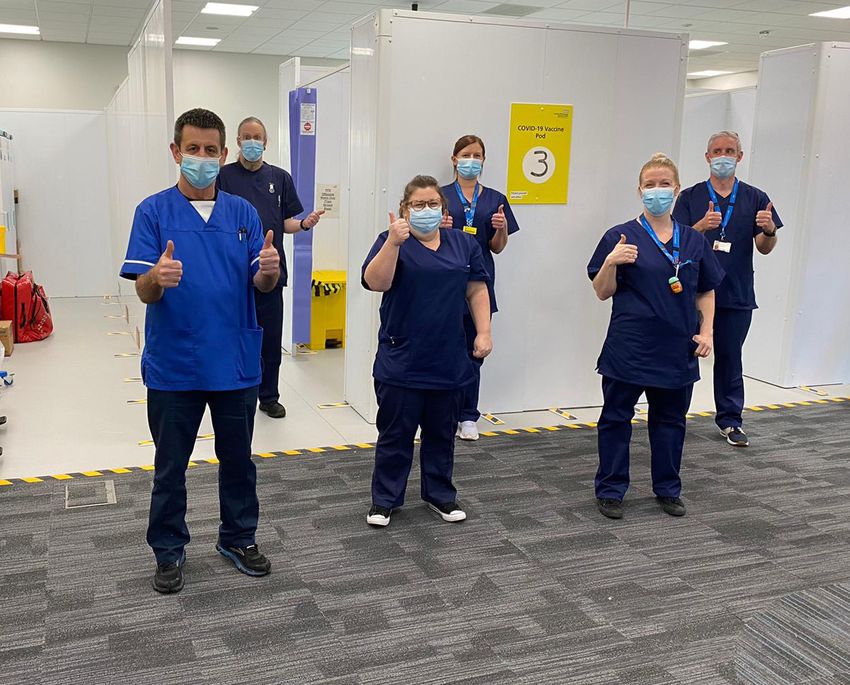
Annual Review 2020/21       5

                 Welcome to the Trust’s Annual Review for 2020/21 and
                 our look to the future. A more detailed look back can
                 be found in our Annual Report and Accounts 2020/21.
                 2020/21 was a year we will all never              All staff have played a part in finding and
                 forget. The NHS had to deal with the              implementing solutions whilst at all times
                 biggest health emergency in its history.          ensuring that safety, compassion and care
                 Working through this, whilst continuing           remained at the forefront of everything we
                 to deliver safe and effective services, and       do.
                 remaining safely staffed has been a huge
                 achievement. We are immensely proud
                 of the Trust’s response to the COVID-19
                 pandemic with staff across all our services
                 adapting quickly, decisively, and selflessly in
                 the face of the challenges.

Vaccine Centre
The Curve
6     Greater Manchester Mental Health NHS Foundation Trust                                                                                                Annual Review 2020/21          7

Our year of achievements and response
to the COVID-19 pandemic
In last year’s Annual Review, we reported     In March 2020, we activated Gold                   In July 2020 we were pleased to announce      impact of COVID-19. GMMH’s participation
on the Trust’s response to the COVID-19       Command to lead our emergency                     that responsibility for the future provision   was a huge success, with a total of 620
pandemic and how immensely proud              planning and response and this continued          of mental health services in the Wigan         participants recruited, finishing 8th overall
we are of the workforce’s response            throughout 2020/21 and continues to be in         Borough would transfer from North West         in the league table of 107 Trusts. The team
to the crisis. During the year we have        place today.                                      Boroughs Healthcare NHS Foundation Trust       also began delivering a telephone survey
worked together as one team to find and                                                         (NWBH) to the Trust on 1 April 2021. By        to see how service users were coping
implement solutions at a relentless pace,     We also introduced a COVID-19 Recovery            welcoming Wigan Borough services, we           during the pandemic, which also allowed
taking decisions (big and small) that would   Planning Group in May 2020 to co-ordinate         will benefit from the sharing of expertise,    us to inform people of the symptoms
previously have seemed inconceivable.         the Trust’s COVID-19 recovery plan and lead       experience and local knowledge and the         of COVID-19 at a time when awareness
Our frontline clinical teams and corporate    the Trust’s reconstruction and progression        opportunity to offer more integrated           raising was crucial and identify and signpost
support services adapted quickly, going the   to ‘new normal’ working conditions.               care pathways and achieve economies            people who were struggling with their
extra mile to ensure that we continued to     Recovery continues to remain our primary          of scale. Our new colleagues and service       mental health.
safely meet service users’ needs.             focus ensuring we are enhancing the               users would be joining a high-performing
                                              support and wellbeing offer for our service       specialist trust with a key voice in shaping   Our thanks to colleagues across the
                                              users. Linking into the command structures        and improving mental health services across    organisation for their efforts during
 Ella Manfredi                                in each of our four localities and at a           Greater Manchester.                            2020/21 to improve the lives and support
 Staff Nurse                                  Greater Manchester level has been vital and                                                      optimistic futures for our service users, their
                                              continued to participate in regional and          The Trust’s Research and Innovation team       families and their carers.
                                              national arrangements and discussions.            provided vital support to essential services
                                                                                                during the pandemic. Many colleagues
                                              Throughout the year, we continued to put          were redeployed to frontline services that
                                              our staff at the heart of our efforts; to offer   needed extra support. This included putting
                                              them as much support as possible during           some of our nurses back onto inpatient         Neil Thwaite
                                              this unprecedented time. This included            wards, helping in the catering department,     Chief Executive
                                              supporting frontline staff to access the          taking blood in community clinics, and
                                              appropriate PPE, antibody testing, lateral        delivering PPE across the Trust.
                                              flow testing, health and wellbeing advice         The team rose to the challenge
                                              and support and also supporting over              of continuing to provide research              Rupert Nichols
                                              1,200 staff to work effectively from home.        opportunities during lockdown through          Chair
                                              We also supported managers to identify            innovative ways of working; and in doing
                                              suitable redeployment opportunities for           so, supporting vital research into COVID-19.
                                              staff who were unable to continue in              This included contributing towards a
                                              their substantive roles because of the risks      global study looking into the psychological
                                              present by the virus. We also undertook
                                              additional recruitment to ensure that the
                                              workforce was in place to support our
                                              services and included campaigns to recruit
                                              aspirant nurses and NHS returners.
                                                                                                Copies of our full Annual Report and Accounts 2020/21 and Quality Account
                                                                                                2020/21 are available to access on our website at www.gmmh.nhs.uk/publications.
8      Greater Manchester Mental Health NHS Foundation Trust

                                                                                                                                     160
Greater Manchester Mental Health                                                                                65,000
at a glance                                                                               6,400                                      sites
                                                                                         staff (wte)            service users
We are one of the largest specialist mental
health providers in the country, supporting
more than 65,000 service users across our
local, specialist, substance misuse and prison
populations. We employ over 6,400 whole
                                                                                                                  £373.8m
                                                                                                                  Total annual
time equivalent (WTE) staff and provide
services from over 160 locations across the                                                                       income
North West of England, as well as working
with people in their homes and local
communities.

We offer:                                                                                                       Living Wage
•       Local mental health services to the people                                        £14.7m                Foundation
        of Bolton, Manchester, Salford and Trafford                                      2020/21 Capital
        and Wigan, a combined population of                                               Expenditure             Employer          10 specialist
•
        around 1.3 million people
        Substance misuse services to people in
                                                                                                                                      research
        Bolton, Salford, Trafford, Bury and Cumbria                                                                                     units
•       Services to over 8,000 people in prisons
        and secure accommodation in the North
        West of England                                                                                       Over 7,000
•       Highly specialised mental health services
        for the region and wider NHS in England
                                                                                                           Recovery Academy
                                                                                                               Students
Our Scope
        Bolton, Salford and Trafford
        Mental Health and Addiction Services
        Manchester                                                                          Over                                         224
        Mental Health Services
        Bury
                                                                                         11,000                   ‘Good’              Apprentices
                                                                                         Members                CQC Rating
        Addiction Services
        Cumbria                                                                                                                          200
        Addiction Services                                                                                                             volunteers
        Wigan
        Mental Health Services
                                                                                                               Elected seats on our
As a Foundation Trust, we are accountable to our local communities through our Council
of Governors and are regulated by NHS England and NHS Improvement (NHSE and I) and                  24         Council of Governors
the Care Quality Commission (CQC).
*Wigan Services from 1 April 2021    *Cumbria Services until 1 October 2021                                                      Figures correct as of August 2021
10    Greater Manchester Mental Health NHS Foundation Trust

Our approach
The Trust’s five-year Strategy 2019 - 2024    significant and often above average mental
-‘Delivering Excellent Care and Supporting    health needs of our local populations.
Wellbeing’ sets out the Trust’s strategic     During 2020/21 the Trust’s planning
vision - ‘Working Together to Improve         processes were suspended in order to
Lives and Support Optimistic Futures’ - and   respond to the COVID-19 pandemic.
future direction of travel. It guides how     The Trust however continued to progress
the Trust leads and enhances services in      delivery of its strategic objectives as part of
collaboration with users, carers, staff and   the measures put in place to support service
partners.                                     users and staff during the pandemic.

Our Strategy is aligned with the NHS Long     To deliver our vision we are focused on
Term Plan, Greater Manchester Health and      achieving five key strategic aims and
Wellbeing Strategy, commissioner strategies   objectives:
and locality plans and responds to the

       Work with service users and carers to achieve their goals by
  1
       delivering high quality care

       Create an outstanding place to work, ensuring staff feel valued and
  2
       are supported to reach their potential

       Continuously improve services for users through research,
  3
       innovation and digital innovation

       Work in partnership with others to improve wellbeing and
  4
       improve stigma

       Be a sustainable, well-led organisation that delivers social value
  5

Our five core values underpin how our staff and volunteers work together to care for our
service users and deliver our vision.
12                     Greater Manchester Mental Health NHS Foundation Trust                                                                        Annual Review 2020/21   13

Our Five Year Strategy
Our Vision                                   Working together to improve lives and                  Our Strategy            Delivering excellent care and supporting
                                             support optimistic futures                                                     wellbeing

                                               Objective One                   Objective Two        Objective Three         Objective Four               Objective Five
Strategic Objectives

                                             Work with service            Create an outstanding     Continuously           Work in partnership         Be a sustainable, well-
                                             users and carers to          place to work, ensuring   improve services       with others to improve      led organisation that
                                             achieve their goals by       staff feel valued and     for users through      wellbeing and               delivers social value
                                             delivering high quality      are supported to reach    Research, innovation   challenge stigma
                                             care                         their potential
                                                                                                    and digital
                                                                                                    technology

                                             Quality Improvement          Supply, recruitment       Research and           Service users,              Financially sustainable
                                              • To improve                and retention             Innovation             Communities and             and well governed
Programmes of Work

                                                outcomes                                                                   Voluntary, Community
                                                                          Outstanding place to      Digital                                            Safe, effective
                                                                                                                           and Social Enterprise
                                              •   To deliver safest       work                                                                         and supportive
                                                                                                                           sector (VCSE)
                                                  care                                                                                                 environments
                                                                          Transforming our
                                                                                                                           Integrated care
                                              •   To integrate care       workforce                                                                    Productivity
                                                  around the person                                                        Public sector
                                                                          Outstanding leadership                                                       Delivering Social Value
                                                                          and management                                   Trusted partnerships
                                                                          development

                                             Best care, every day          Compassionate,           Best outcomes          Individualised,              Sustainable services,
Aims

                                                                           supported, motivated                            seamless care                adding value
                                                                           staff

                                             We inspire hope               We work together         We are caring and      We value and respect         We are open and
Values

                                                                                                    compassionate                                       honest
14    Greater Manchester Mental Health NHS Foundation Trust                                                                                             Annual Review 2020/21          15

Highlights for the year                                                                       Improving Supervision

Quality improvement                                                                           The supervision project started in January   Innovation teams are looking at change
                                                                                              2020 with an overall aim to increase the     ideas focusing on the quality of clinical/
Quality improvement (QI) is an integral element and a key strand of our five Year Strategy.
                                                                                              compliance rate for supervision to 85%       professional and managerial supervision,
Our QI strategy was launched in May 2019 and has been delivered throughout 2020/21.
                                                                                              by 31 December 2020.                         safeguarding supervision and patient
The strategy incorporates three key enablers and three core Quality Improvement Priorities
                                                                                                                                           safety considerations, culture around the
(QIPs), which have driven our approach to continuous improvement, supported the delivery
                                                                                              The project achieved 80% of supervision      importance and benefits of supervision
of our QI activities, and our wider vision for QI. Our QIPs for 2020/21 comprised:
                                                                                              compliance at the end of 2020 and has        and appropriate documentation.
1. To improve outcomes                                                                        now moved to Phase Two.
2. To deliver the safest care
                                                                                              The Improving Access and Quality of
3. To integrate care around the person
                                                                                              Supervision project is delivered as a
                                                                                              Breakthrough Series Collaborative and
We have made significant progress against these 2020/21 priorities for
                                                                                              has a twofold aim;
improvement. Summaries of our key achievements are detailed below. Each
achievement reflects the immense commitment of our staff, services users, and                 1. Improving quality of supervision based
carers to continually improving quality. Quality highlights for the year include:                on an appropriate set of standards as
                                                                                                 developed by the innovation teams
                                                                                              2. Achieving 85% compliance of
                                                                                                 supervision by 31 December 2021
Quality Improvement Priority One: To Improve Outcomes

 Red2Green Days                                                                               Building an Improvement Culture
                                                                                              (Adult Forensic service and North Manchester community services)
 The Red2Green Days Project was first         discharges noted in April 2020 to March
 introduced during the Multi-Disciplinary     2021 compared to the previous year.             This programme includes six wards            Change ideas include promoting civility,
 Team (MDT) Board Round following the         Progressively discharges have caught up         based at our Adult Forensic Services         the introduction of daily huddles, star
 development of Red2Green Operational         and then exceeded admissions in the             working alongside three community            of the week, a re-design of clinical team
 Guidelines.                                  last financial year supporting inpatient        teams in North Manchester as part of a       meetings processes, promoting health
                                              flow and reducing OAPs (24% reduction           Breakthrough Series Collaborative. The       and well-being, increasing the uptake
 Each patient has an identified discharge     from previous financial year). During the       aim of this programme is to build an         of staff taking a break, mood jars,
 date following an initial MDT review and     last financial year 136 Bolton patients         improvement culture within the teams.        incorporating health and well-being into
 all barriers are discussed each day with     were admitted to other divisions and                                                         staff huddles, improving communication
 a focus to resolve these before this date,   211 patients from other divisions within        An initial questionnaire has been            between SLT and team, improving zoning
 where clinically appropriate, for a safe     the Trust were admitted to Bolton. This         developed in order to provide a baseline     meetings and creating a ‘new starters’
 and effective discharge. All actions are     demonstrates that Bolton resources were         assessing the culture within the teams.      group.
 allocated the same day with an expected      utilised more to support overall bed            Two Learning Sessions have taken place
 resolution to maintain green days.           pressure within the Trust.                      and teams are working collaboratively        This is a longer-term project, which will
                                                                                              to identify and share change ideas and       continue across 2021/22.
 This project has seen a number of positive   The Red2Green Days QI Project is now            testing using PDSA cycles.
 outcomes and productivity gains. This        complete and the project team is currently
 has included a 31% increase on yearly        looking at sustainability of improvement.
16    Greater Manchester Mental Health NHS Foundation Trust                                                                                             Annual Review 2020/21           17

Quality Improvement Priority Two:
To Deliver the Safest Care

 Reducing Restrictive Practice                                                              Falls Reduction

 The project aim for this collaborative is to   2020, innovation wards have progressed      Following a temporary pause, owing to          So far, innovation wards are focusing on
 decrease use of restraint by 20% by 30         with their change ideas and participated    COVID-19, plans to re-start the Reducing       change ideas relating to observations,
 November 2021 across innovation wards.         in two Learning Sessions. Following this,   Falls QI project were initiated in November    updating the falls management and
                                                future plans will involve more wards        2020.                                          prevention training pack, and increased
 The importance of this project and its         participating in a Breakthrough Series                                                     mobility protocols.
 aims lie within the context of the Mental      Collaborative which will run for a year     Phase Two of this programme will be
 Health Units (Use of Force) Act 2018           each. This is expected to be an ongoing     delivered using the Breakthrough Series        In addition, the GMMH Trust’s Falls
 which have a goal of reducing the use          project.                                    Collaborative approach.                        Group is working on reviewing the Falls
 of restrictive interventions and delivering                                                                                               Policy and establishing an Oversight Falls
                                                                                            Innovation wards participating in the          Protocol. The first Learning Session is
 care which has a trauma-informed                                                           Breakthrough Series are all later life wards
 approach and a focus on human rights.                                                                                                     scheduled for April 2021.
                                                                                            across the Trust as well as our Chapman
                                                                                            Barker Unit (CBU).
 The key areas this Quality Improvement
 Project is focused on are:                                                                 The aim is to reduce the number of
                                                                                            inpatient falls by 15% and associated
 •   Robust monitoring systems and                                                          harm across innovation wards by 31
     processes                                                                              December 2021.
 •   Implementation of the evidenced-
     based Safewards intervention
 •   Increasing PMVA training compliance
     to ensure sufficient numbers of
     substantive staff are trained
 •   Continuous improvement of the
     PMVA training package with a focus
     on prevention

 The Phase Two Reducing Restrictive
 Practice project is being delivered as a
 Breakthrough Series Collaborative with
 seven wards across the Trust (Blake,
 Phoenix, Holly, Oak, Buttermere, Juniper,
 and Irwell wards).
 Since the start of Phase Two in October
18    Greater Manchester Mental Health NHS Foundation Trust                                                                                             Annual Review 2020/21      19

Quality Improvement Priority Three:
To Integrate Care Around the Person

 Trauma Informed Care                                                                       Mental Health Optimal Staffing Tool (MHOST)

 The Trauma Informed Care (TIC) QI             •   Development and delivery of one          MHOST is a data collection tool which          The aim of these meetings was to ensure
 Project group was formed in June 2020.            day TIC training for clinical teams in   is designed to calculate the level of          robust, reliable data collection which is
 The group has involvement and input               Bolton, recovery academy training        dependency of patients over a 20-day           consistent between wards.
 from across the MDT and lived experience          and TIC adopted as standard into         period in order to make assessments            Data collection for this project was
 experts, linking into the positive and safe       PMVA training.                           about the requirements for staffing.           completed in October 2020 and a report
 agenda, and supervision projects.             •   TIC is now incorporated into GMMH                                                       was produced.
                                                   self-harm policy and toolkit and         It also takes into consideration the quality
 The project is now guided by standards            posters are ready for distribution to    of patient care over this period, so in        Key recommendations from this first
 produced from national examples of                inpatient areas.                         addition to the dependency level, metrics      phase included a review of bed occupancy
 good practice and key drivers for change.                                                  such as incident numbers, staff wellbeing      for PICU wards taking into consideration
 Key areas of focus include:                   Phase Two of the project will be delivered   and activities on the ward are also            flow across services, appropriate use
                                               as a Breakthrough Series Collaborative       collected.                                     of observations and a review of the
 •   Contributing to the positive and safe
                                               with some ongoing recruitment in order                                                      budgeted establishment for PICU wards.
     agenda
                                               to ensure a blended approach; teams          The five PICU wards at GMMH have been
 •   Understanding the prevalence and                                                       involved in meetings supported by the QI
                                               that have already been testing ideas
     impact of trauma on service users and                                                  team following the structure of a Clinical
                                               (have experience) and those that are new
     staff                                                                                  Microsystem approach.
                                               to testing but represent different areas/
 •   Developing an understanding of TIC        services of the Trust.
     for the whole workforce
 •   Compassionate Leadership                  The overall aim of the project is to
                                               demonstrate adherence to seven
 Robust monitoring systems and processes       standards of TIC by 2024 across GMMH.
 of these priorities are in place using QI
 methodology and audit.

 Phase One work has been ongoing across
 the Trust and we have achieved some
 positive results, including:
 •   Development of ‘know each other’
     workbooks for inpatient and
     community areas.
 •   Development of compassionate
     leadership training.
20 Greater Manchester Mental Health NHS Foundation Trust Annual Review 2020/21 21
Additional Quality Improvement activities • So far, the project team has developed change ideas focusing on removal of
requirement for face-to-face gatekeeping, benchmarking referrals against referral
In addition to our core, formal Quality Improvement Programmes, Quality Improvement principles, reducing the threshold for referrals to HBT, crisis plans included on referrals,
support has also been directed at a number of additional actives including: escalation of concerns to team managers, interface meetings, supportive supervision
with staff to improve referrals for teams and weekly audit reviews by operational
Substance Misuse Services (SMS) Medical Review Project managers to consider trends.
• Representatives from community SMS Teams participated in a Process Mapping Increasing Feedback and Patient Experience data
Workshop focusing on the process and content of Medical Reviews. The project team
identified some key areas for improvement and are currently working on constructing a • The GMMH Customer Care Team, service users and service user feedback
driver diagram and change ideas to take forward. representatives from across the Trust participated in a number of process and value
stream mapping workshops focusing on patient feedback systems across the Trust.
Sexual Safety National Collaborative • The project team worked on a ‘Feedback Cause and Effect Diagram’ looking at current
systems and documentation, service users and staff.
• Chaucer ward and Blake ward are participating in the Sexual Safety National
• Next steps include the development of a driver diagram and identification of change
Collaborative which re-started in September 2020. National collaborative meetings and
ideas to drive improvement forward.
workshops are continuing, and the wards also receive support from a designated QI
Coach from the Royal College of Psychiatry.
Mental Health Act (MHA) Documentation
• The collaborative is due to end in September 2021 and during the last three months
the wards will work on developing a ‘change package’. • The Mental Health Act team in collaboration with the QI Team and Innovation
Manager have participated in process mapping activities, focusing on MHA assessment
Redwood Ward: AIMS Standards Implementation paperwork.
• The purpose was to identify challenges and areas for improvement whilst considering a
• The GMMH Inpatient Recovery Workstream-Demand and Capacity group has reviewed
business case for introducing an electronic system to replace current documentation.
the standards from the Accreditation for Working Age Inpatient Mental Health Services
(AIMS-WA) document and selected 11 standards to be implemented at Redwood
Ward.
James Noel Susan Murphy
• Following a QI approach and utilising relevant tools the project is aiming at improving Audit Facilitator Activity Co-ordinator
patient flow and reducing length of stay. The project started in October 2020 with an
aim to reduce length of stay or time of reaching DTOC by 30% by end of March 2021.
• The project team has tested change ideas relating to the aim of admission and barriers
to discharge but work has been on pause the last two months due to COVID-19
related pressures.
Community Mental Health Team (CMHT) to Home Based Treatment (HBT) Referral
Pathway
• Bolton Early Intervention Team and North East Manchester CMHT are working
collaboratively to support patients earlier in their crisis and reduce the likelihood of
inpatient admission by increasing referrals to HBT.
• Key drivers for this project include direct referral and acceptance on the assessment
pathway, overview of cases and effective use of crisis beds.22 Greater Manchester Mental Health NHS Foundation Trust
Care Quality Commission (CQC)
We continue to respond to the improvement opportunities identified by
the Care Quality Commission (CQC) in 2019/20, including through the
implementation of a more robust system for ensuring supervision compliance
and by progressing our plans to build the new Park House development on the
North Manchester General Hospital Site.
Positive performance
key national performance requirements, however achievement of national targets was
suspended during the COVID-19 response and recovery in 2020/21 which also saw
20/2
We remain a well performing organisation with a track record of delivering quality,
operational and financial performance. The NHS Oversight Framework sets out the
the suspension of CQUIN targets applicable for mental health trusts. The Trust’s key
performance indicators and reports reflect this as appropriate during the period. In line
with the national guidance, we reported our performance against the framework were
appropriate for assurance purposes.
Financial performance
We delivered a positive financial position at the end of 2020/21 and maintained low levels
of financial risk throughout the year, whilst also achieving the cost efficiencies required
for future sustainability and making significant capital investment. The overall income
and expenditure position shows delivery of a net retained surplus of £3.854 million. The
operating surplus for the year was £5.206 million.
We continue to recognise the need to sustain the improvements delivered this year,
whilst also strengthening our productivity in other areas in 2021/22. We will apply our
Operational performance standardised quality improvement framework to deliver efficiencies in our acute care
pathway, workforce, digital approaches, pharmacy and corporate services.
Our Improving access to Psychological Therapies (IAPT) services demonstrated ongoing
improvements and we achieved both the 6-week and 18-week referral to treatment Equality of service delivery
targets at Trust wide level.
We have continued to develop systems and initiatives to support the delivery of its Equality
The target for Early Intervention Referral in 2 weeks was not met in March 2020, however Diversity and Inclusion Strategy and meet the statutory requirements of Public Sector
we demonstrated good performance overall for the year achieving above target at 63.4%. Bodies under the Equality Act (2010). The Trust has been guided by the NHS Equality
This is positive performance given the impact of COVID-19 due to the reduction in face-to- Delivery System (EDS2), which is a framework to improve outcomes across key domains
face assessments to reflect social distancing requirements. of equality and improve the Trust’s contribution to reducing health inequalities in the
communities it serves.
In terms of Reportable Out of Area Placements (OAPs), we saw an increase during 2020/21
which reflected the system wide pressures caused by the management of the COVID-19
pandemic. It remains the Trust’s aspiration to minimise OAPs as much as possible and
Practitioner
Organisational Development
Deepthi Nambiar
support people as close to home as possible.
Staff sickness absence rates were above the locally set target for the rolling 12-month
period however showed improvement from the position in 2019/20 and includes the
impact of COVID-19 pandemic related sickness. This improvement reflects our approach to
promote employee health and wellbeing and improved sickness absence management.
We are looking forward to working toward achievement of the 2021/22 key performance
indicators as we move from the COVID-19 pandemic response and embed the new ways
of working to improve services for service users and carers.Annual Review 2020/21 25
For all staff, we continued to offer Lateral Flow Testing kits, antibody testing, and towards
the end of 2020, we began our COVID-19 vaccination programme for all staff.
For staff who worked from home during the pandemic, we knew it was crucial to stay
in contact, so they remained feeling part of the Trust, even if they saw very little of their
teams and colleagues in person. We completed a survey for the 1,200 members of staff
who had been working from home since the start of lockdown in March 2020. We
received an amazing 87% response rate which meant we could accurately gauge how
staff felt about their work/life balance. We also learned that many people would like a
50/50 split between homeworking and being site-based, and this provided a valuable basis
to begin work on a Homeworking Deal.
Staff recognition and reward was as important as ever during 2020/21 and even though
Asia Sam many trusts made the decision to postpone their annual awards ceremony, we went ahead
Support Worker with a virtual event hosted by Neil Thwaite, Chief Executive, Chair Rupert Nichols and the
Executive Team. We also included highlights from our GMMH Superstars and celebrated
our teams across the footprint of the Trust for their hard work over the year. Award
winners and highly commended teams or individuals were sent a sweet treats hamper the
week after the awards ceremony.
We were pleased to receive the results of the 2020 NHS Staff Survey in early March 2021.
Alan Hudson The results identified several themes, which showed positive improvements across many
Fire Safety Advisor areas. As our main tool to measure culture, we are always delighted to see improvements,
but recognising that staff completed this survey amid the COVID-19 pandemic we were
happy to see these improvements continued even whilst staff were experiencing new and
Supporting our staff different working environments, whether this be at home or in different wards or teams,
alongside balancing this with the pressures of the pandemic on their home life too.
During 2020/21 supporting our staff during the pandemic was one of our main priorities.
Our HR team provided as many resources as possible including resilience training, Our vibrant staff networks grew from strength to strength during the year. The networks
supporting staff who were juggling working with home-schooling, bereavement and are independent bodies set up by volunteers from GMMH staff to work for the interests of
trauma counselling, as well as signposting to the wide variety of help on offer such as the their members and the wider community they reflect.
Greater Manchester Resilience Hub and the NHS People website.
• Black Asian Minority Ethnic (BAME)
Protecting those staff who were more vulnerable was vital - as we learned more about • Lesbian Gay Bisexual and Trans (LGBT+)
COVID-19 during 2020 and 2021, the disparities of risk and outcome of COVID-19 • Disability network
were so much higher for people of Black and Asian ethnic groups compared to white
British ethnicity. As a Trust we supported colleagues from these backgrounds by carrying As independent bodies, the networks are self-governing, and meet regularly to provide
out thorough risk assessments and adjustments were made to keep our staff as safe as peer support and agree strategies to support the Trust in how we ensure our diverse
possible. communities feel supported.
Under the lockdown guidance, workers who were identified as clinically extremely During 2020/21, Tony Bell, Non-Executive Director, was appointed the role of Wellbeing
vulnerable were supported to work from home by Gold Command to ensure they Guardian for the Trust. As the Wellbeing Guardian, Tony works inclusively to encourage
remained as safe as possible. a model of wellbeing leadership, to increase advocacy and ownership of the mental and
physical wellbeing of all our staff.26 Greater Manchester Mental Health NHS Foundation Trust Annual Review 2020/21 27
Becoming digitally enabled Research and development
As our reliance on technology grew in 2020/21, our IM&T team worked relentlessly The Trust’s vision for research and innovation is to become a leading mental health
to quickly and efficiently provide digital solutions which allowed for vital support and research institution. The Trust’s aim is to improve its understanding, treatment and
therapy to continue via video consultations, as well as staff to continue to meet safely outcomes of mental health problems and wellbeing for its service users, carers and staff
via Microsoft Teams and coordinate our response to the pandemic. The Digital Strategy by ensuring equitable access to opportunities for development and participation in high
2019 – 2022 was already a strong foundation from which we were delivering our digital quality research. The Trust is committed to co-production of research, ensuring that the
aspirations, however COVID-19 led to some of the objectives being accelerated. Thanks to involvement of people with lived experience of mental health difficulties is prioritised. In
their incredible work, over 1000 members of staff continued to work remotely to ensure order to achieve this, the Trust has developed six strategic priority areas for Research &
compliance with lock down, and members of the IM&T supported front line workers in Innovation for the next three years:
ensuring they could keep themselves and their patients safe. Digital technology played
a huge part in enabling patients to stay in touch with family and friends while visits were 1. Make sure our research matters - Ensure our research and innovation activity is
suspended and IM&T provided a vital lifeline to the outside world. relevant to the priorities of communities of the Trust serves, the Trust itself and the
wider NHS
All this happened whilst IM&T maintained and enhanced our clinical record system, clinical
2. Access for everyone - Maximise the opportunities for the communities served to
tools, and prescribing technologies.
engage with research and innovation activity
They strengthened our ORCHA library of tried and tested health and wellbeing apps to 3. Improve outcomes - Inform and improve clinical services by innovation adoption,
include those which could support anyone struggling during the pandemic. Our talented research involvement, dissemination and translation
developers also designed a bespoke GMMH app for staff to record their lateral flow test 4. Sustainable research infrastructure - Maximise financial opportunities and income
results. GMMH was one of the first trusts to do this and we were asked may times to from research and innovation ensuring value for money and sustainability of research
share this by neighbouring organisations. infrastructure
5. Mental health research leader - Assist the Trust in achieving its aim of being a
All our staff worked incredibly hard throughout 2020/21, but special thanks must go to leading organisation for mental health research and innovation
the IM&T team whose remarkable efforts ensured we could continue to offer care and 6. Use research and innovation to close the inequalities gap - Ensure the Trust’s
support in the most unprecedented time the NHS has ever experienced. It is no wonder research includes an emphasis on prevention, wellbeing, inclusion and reduction of
IM&T won Team of the Year in the Annual Staff Awards ceremony in December 2020. stigma, discrimination and inequalities alongside developing treatments for established
mental health problems
Improving our environment
In January 2021, the Trust received Research and innovation successes in 2020/22 included:
planning permission for the
transformation of our adult inpatient • The creation of three new Research Units
unit in North Manchester. This is a £105 • Delivering a number of successful grant applications
million investment to rebuild our adult • Adapting our dementia study portfolio to ensure continued, safe
mental health unit (Park House) on the involvement
North Manchester General Hospital • Successfully delivering the EXPO trial in our substance misuse services
site. Under the plans, our patients and • The launch of the consent to approach the database to further enhance
carers will benefit from a new, purpose- research recruitment opportunities for staff; and the implementation of
built inpatient unit which will greatly Otsuka Health Solutions’ Management and Supervision Tool (MaST) within
improve the quality of specialist care for GMMH to support the evaluation of risk of crisis and complexity to a
adults and older people severely affected sophisticated degree
by mental health problems including • We also launched our new Mental Health Nurse Research Unit (MHNRU)
schizophrenia, psychosis, depression, which supports the development of research skills and knowledge amongst
and dementia. mental health nurses22
28 Greater Manchester Mental Health NHS Foundation Trust
Looking into the future Lead Provider Collaborative
GMMH is proud to be the Lead Provider
GMMH is proud to be transforming the way we deliver for Adult Secure Services for the Greater
Manchester Provider Collaborative
mental health and social care across our communities. Programme from 1 October 2021.
This is in line with NHS England’s self-harm and coexisting substance use. NHS-led Provider Collaboratives offer the
commitment, and national work which This new, exciting phase of mental health opportunity for providers to work together
is ongoing to support new models of care and wellbeing will be codesigned with each other and with service users,
community mental health care. A new and coproduced with staff, service users, patients, commissioners, partners, and
community-based offer will include access carers, key stakeholders and our vibrant local stakeholders. With an identified lead
to psychological therapies, improved Voluntary, Community and Social Enterprise provider who takes on the clinical and
physical healthcare, employment support, colleagues. financial responsibilities, we will all work
personalised and trauma-informed care, together to design and deliver services
medicines management and support for which respond to the needs of the Greater
Manchester population, creatively and
imaginatively.
The Curve
GMMH Trust HQ When it comes to secure services, as
the lead provider, we will work with our
partners Pennine Care NHS Foundation
Trust, Cygnet Healthcare and Elysium As lead provider, GMMH will have greater
Healthcare to improve access and ensure oversight of the whole care pathway and
a smooth transition through the care our improved relationships with providers
pathway. will mean we can set consistent standards
and ensure they are met.
Judy Moser
Physical Health Team Leader In turn this will lead to consistent recovery
outcomes and present opportunities to
embed quality improvement which we
will draw from the expertise from all the
providers within the collaborative.
This collaboration will tackle specific health
inequalities in terms of access and outcomes
and will actively invite, and act on expert by
experience feedback.
GMMH is also a provider partner within two
other provider collaboratives – Child and
Adolescent Mental Health Services led by
Pennine Care NHS FT and the North West
Eating Disorder collaborative led by Cheshire
and Wirral Partnerships NHS FT.30 Greater Manchester Mental Health NHS Foundation Trust Annual Review 2020/21 31
Recovery Plan Workstreams
Service Users and Carers - Gill Green, Director of Nursing and Governance
• Appointed Head of Service User/Carer Engagement and Experience. • Recovery Academy now offering a full programme, both virtual and face to face.
• Dedicated service user lead appointed in addition to carer lead. • A subscription based business plan is being developed to further increase the offer.
• Relaunch of service user and carer feedback process that now provides real time data at both Trust,
Network and individual team level.
Workforce Service Offer - Task and Finish Groups Physical Healthcare/ IPC
Andrew Maloney, Director Deborah Partington, Director of Operations and Gill Green, Director of Nursing and
of HR and Deputy CEO Alice Seabourne, Medical Director Governance
Implementation of the Implement GM Crisis pathways Community Transformation Healthier Patient Pathways • The Physical health Strategy is under
GMMH People Plan review including face to face listening
• Implemented mental health urgent care • New community mental health offer for • Implementation of weeklong ‘Perfect week’
focused on four key events and online surveys for clinical staff
areas, co-located with acute hospital people with SMI – a local core (Living Well) events across all GMMH localities including
committments: feedback.
partners. MRI and Wythenshawe are the mental health team and specialist teams. system partners).
only areas outstanding. Bolton, Salford, • Evaluating new roles such as a dedicated
1. We are safe, physically • Closing the gap between primary care and • Deliver a test of change in Trafford for
North Manchester and Wigan complete. wound care nurse and resuscitation
and mentally healthy and CMHT care – building on the experience of Reason 2 Reside (R2R) guidance across
officer to enhance the service delivery.
safe. • Development of suitable crisis alternatives, the Living Well pilots and the personality GMMH (used in GM acute settings with
i.e. crisis cafes, listening lounges in all disorder workstream. positive outcomes). • Continue to roll out the vaccine
2. We are open, inclusive
GMMH localities and in partnership with programme to both staff and service
and staff have a voice. • Joining up interventions – especially • Agree and Implement Admission,
the VCSE sector. users.
3. New ways of working psychology. Treatment & Discharge Standards.
• Working in partnership with the VCSE • To roll out the flu and covid booster
and delivering care. • Adding capacity from the voluntary and • Consider and implement the findings from
sector, increased the provision of crisis campaign in line with the Joint
4. Recruiting and retaining third sector in terms of both staffing and the ongoing PICU review.
beds with gatekeeping completed by HBT Committee on vaccination and
our staff. interventions available. • Increase the spread and scale of the Safe
enabling 24/7 access. immunisation guidance.
• A system that includes the perspectives of wards programme on all the AOWA wards.
• Strengthening of the 24/7 helpline and • Delivering an enhanced offer of IPC via
both staff and service users. • Use clinically approved and validated
links with NHS 111. Through positive education and training in addition to the
• A reduction in bureaucratic processes – a measurement tools to review ward acuity management of outbreaks.
communications the service is now
new approach to assessment, formulation, and undertake a review of all in-patient
receiving over 25,000 per year. • Responsive to national IPC changes to
care planning and risk assessment and services.
• Engaging digitally with acute partners guidance.
management. • Consider LoS variation between teams/
through the national ‘urgent care by
wards and take local and individual actions.
appointment’ scheme. Pharmacy
• Benchmark A&E practice with similar trusts
and consider any learning. • Ongoing development of EPMA for
• Scoping and planned implementation of a Community Services to support remote
‘future state’ patient flow system. clinics.
• Review the GMMH approach to DTOC • Business case for implementation of
and MOATS, including escalation and electronic prescribing completed and
assurance. supported through national funding.
Team established to deliver programme.
Business Support - Suzanne Robinson, Director of Finance and Liz Calder, Director of Performance and Strategic Development
• Ongoing engagement with the GM system for capacity planning. vaccination programme.
• Improved efficiency gains through digital automation and implementation of Robotic Process Automation (RPA). • New financial governance and reporting systems established.
• Ongoing work with the data warehouse to incorporate data sources. • Finance systems and processes have returned to business as usual.
• Expansion of information available via Tableau including support with capacity planning and the delivery of the32 Greater Manchester Mental Health NHS Foundation Trust Annual Review 2020/21 33
Get involved
Become a member Volunteering
If you have used our services in the We recognise the value volunteering
last five years, or are a member of the adds to the experiences of our service
public who is interested in having a users and their families and carers, and
greater say in how we develop our to volunteers themselves. If you are
services, become a member of GMMH. interested in becoming a volunteer,
please visit our webpage:
Email: membership@gmmh.nhs.uk www.gmmh.nhs.uk/volunteering
Call: 0161 358 1607
Work for us
Our staff are passionate, patient-
focused and committed to working
together to help people to live well.
We employ a diverse workforce that
reflects the communities we work
with and welcome applications from
people who are newly qualified or
more experienced. To find out more
about working for us, and to view our
current vacancies, visit the NHS Jobs
website (www.jobs.nhs.uk) or email
us at recruitment@gmmh.nhs.uk
Mel Russ
Community Team Leader Elizabeth Hampson
Staff NurseGreater Manchester Mental Health NHS Foundation Trust Bury New Road, Prestwich, Manchester M25 3BL Telephone: 0161 773 9121 Website: www.gmmh.nhs.uk This information can be provided in different languages, Braille, large print, interpretations, text only, and audio formats on request, please telephone 0161 358 1644. © Greater Manchester Mental Health NHS Foundation Trust
You can also read


