ASCO 2021: Advances in Waldenström macroglobulinemia
←
→
Page content transcription
If your browser does not render page correctly, please read the page content below

7/7/2021

                                ASCO 2021:
                          Advances in Waldenström
                             macroglobulinemia

                                                 Sheeba K. Thomas, MD

                                               Professor of Medicine
                                      Department of Lymphoma & Myeloma
                                 University of Texas M. D. Anderson Cancer Center

1

                                                  Disclosures
    • Ascentage:
          •   Research Funding, Advisory Board
    • Beigene
          •   Advisory Board

    • BMS
          •   Research Funding
    •
        Genentech
          •   Research Funding
    •
        Pharmacyclics
          •   Advisory Board
    •
        X4 Pharma
          •   Research Funding
    •
        Xencor
          •   Research Funding

2

                                                                                          1
7/7/2021

                                  Presentations to Review
    Perera et al.      Prognostic impact of depth of response in Waldenström macroglobulinemia patients treated with
                       fixed duration chemoimmunotherapy.
    Castillo et al.    Cost‐effectiveness of zanubrutinib versus ibrutinib in adult patients with Waldenström
                       macroglobulinemia in the United States
    Castillo et al.    Efficacy and safety of zanubrutinib versus rituximab‐based chemoimmunotherapy in
                       Waldenström macroglobulinemia (WM): Matching‐adjusted indirect comparisons
    Shadman et al.     Preliminary results of the phase 2 study of zanubrutinib in patients with previously treated B‐cell
                       malignancies intolerant to ibrutinib and/or acalabrutinib

    Cheah et al.       Updated results of the selective Bruton tyrosine kinase (BTK) inhibitor TG‐1701, as monotherapy
                       and in combination with ublituximab and umbralisib (U2) in patients (pts) with B‐cell
                       malignancies.
    Ailawadhi et al.   First‐in‐human study of lisaftoclax (APG‐2575), a novel BCL‐2 inhibitor (BCL‐2i), in patients (pts)
                       with relapsed/refractory (R/R) CLL and other hematologic malignancies (HMs).
    Ailawadhi et al.   Treatment Free Remission (TFR) and Overall Response Rate (ORR) Results in Patients with
                       Relapsed/Refractory Waldenstrom’s Macroglobulinemia (WM) Treated with CLR 131
    Yang et al.        Real‐world treatment patterns, adherence, costs, and healthcare resource utilization associated
                       with Waldenström macroglobulinemia in the United States.
3

                                 Presentations for Review
    Perera et al.      Prognostic impact of depth of response in Waldenström macroglobulinemia patients treated with
                       fixed duration chemoimmunotherapy.
    Castillo et al.    Cost‐effectiveness of zanubrutinib versus ibrutinib in adult patients with Waldenström
                       macroglobulinemia in the United States
    Castillo et al.    Efficacy and safety of zanubrutinib versus rituximab‐based chemoimmunotherapy in
                       Waldenström macroglobulinemia (WM): Matching‐adjusted indirect comparisons
    Shadman et al.     Preliminary results of the phase 2 study of zanubrutinib in patients with previously treated B‐cell
                       malignancies intolerant to ibrutinib and/or acalabrutinib

    Cheah et al.       Updated results of the selective Bruton tyrosine kinase (BTK) inhibitor TG‐1701, as monotherapy
                       and in combination with ublituximab and umbralisib (U2) in patients (pts) with B‐cell
                       malignancies.
    Ailawadhi et al.   First‐in‐human study of lisaftoclax (APG‐2575), a novel BCL‐2 inhibitor (BCL‐2i), in patients (pts)
                       with relapsed/refractory (R/R) CLL and other hematologic malignancies (HMs).
    Ailawadhi et al.   Treatment Free Remission (TFR) and Overall Response Rate (ORR) Results in Patients with
                       Relapsed/Refractory Waldenstrom’s Macroglobulinemia (WM) Treated with CLR 131
    Yang et al.        Real‐world treatment patterns, adherence, costs, and healthcare resource utilization associated
                       with Waldenström macroglobulinemia in the United States.
4

                                                                                                                                   2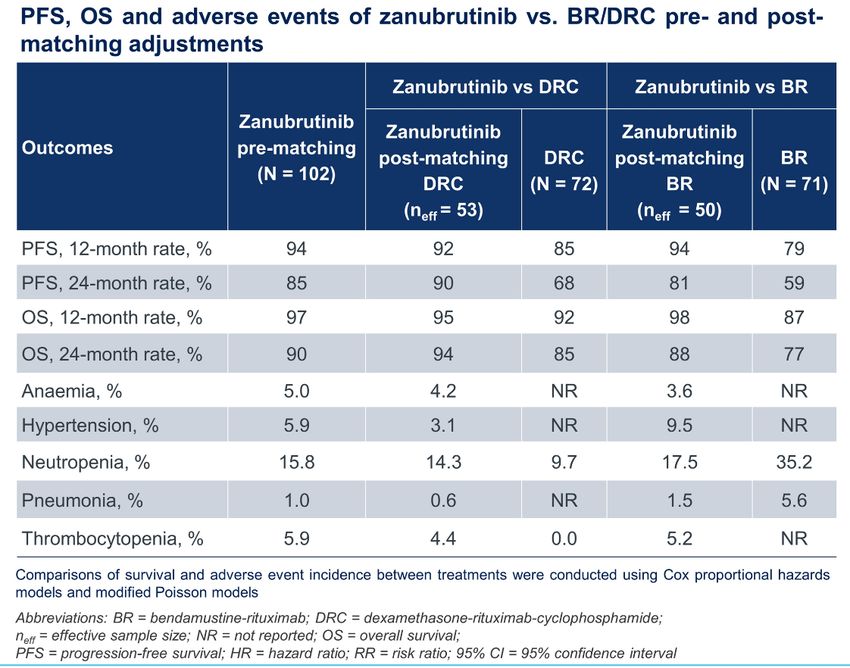
7/7/2021

                      Framework for Context

5

    Indefinite Duration Therapy                      Fixed Duration Therapy
    Ibrutinib   +/‐   Rituximab              Rituximab +/‐Dexamethasone

                                                                   Bortezomib
                                  Cyclophosphamide
                                                                       Carfilzomib

                                   Bendamustine
                                                                         Ixazomib

                                                           Rituximab

                                                     Fludarabine       Cladribine

6

                                                                                           3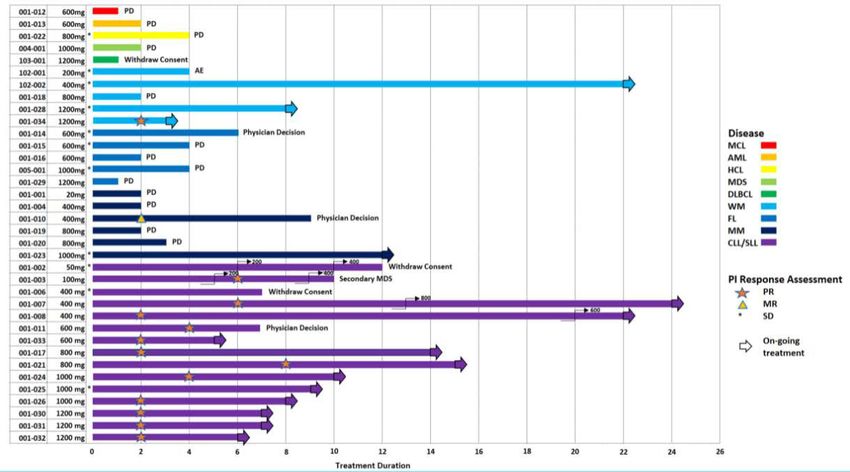
7/7/2021

    Prognostic impact of depth of response in Waldenström
    macroglobulinemia patients treated with fixed duration
                   chemoimmunotherapy.

          Nirosha D. Perera, Jithma P. Abeykoon, Jorge J. Castillo, Joshua
         Gustine, Marzia Varettoni, Alessandra Tedeschi, Chiara Cavalloni,
        Anna Maria Frustaci, Matthew J. Maurer, Prashant Kapoor, Thomas
         Matthew Habermann, Thomas E. Witzig, Robert A. Kyle, Morie A.
             Gertz, Steven P. Treon, Stephen M. Ansell, Jonas Paludo

7

         Indefinite Duration Therapy                       Fixed Duration Therapy
        Ibrutinib   +/‐   Rituximab                Rituximab +/‐Dexamethasone

                                                                         Bortezomib
                                        Cyclophosphamide
                                                                             Carfilzomib

                                          Bendamustine
                                                                               Ixazomib

                                                                 Rituximab

                                                           Fludarabine       Cladribine

8

                                                                                                 4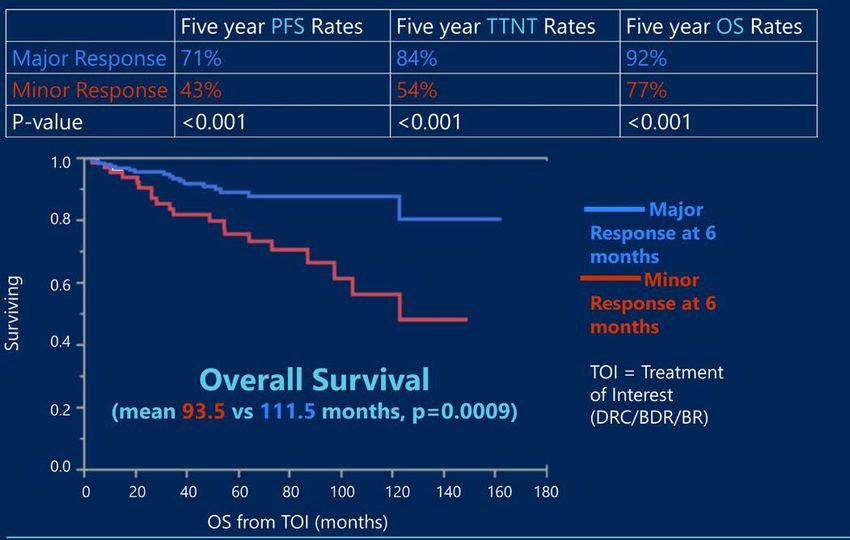
7/7/2021

                                           Chemoimmunotherapy
        Regimen                            Major Response Rate           PFS       Considerations
                                                                         (mos)
        R‐Bendamustine                     90‐96%                        65‐69     Rapid response
        R‐Cy‐Dex                           74‐87%                        34‐35     Well tolerated. Med time to response 4.1 mos.

                                            Considerations
                                            • Risk of 2ndary MDS/leukemia
                                            • Cytopenias
                                            • Activity appears unaffected by MYD88 mutation status
                                                • R‐Benda and R‐Cy‐Dex
        Regimen                             Major Response Rate            PFS      Considerations
                                                                           (mos)
        R‐Bortezomib‐Dex                    68%                            42       PN > than Car or Ixa, better sc and wkly

                                             Considerations
                                             • No 2nd malignancy risk                                         Laribi et al. 2019 Br J Haem 186(1): 146‐9.
                                             • No Stem cell toxicity                                          Rummel et al. Blood (2019) 134 (Suppl_1): 343.
                                                                                                              Kastritis et al. 2015 Blood 126 (11) 1392‐4.
                                             • BDR – median time to response 4-8 weeks                        Dimopoulos et al. Blood 2013
                                                                                                              Paludo et al. 2017 Br J Haem 179(1): 98‐105

9

    Prognostic impact of depth of response in Waldenström macroglobulinemia patients
                    treated with fixed duration chemoimmunotherapy
                   Data Source                                                                            Results

      Analyzed 1st line data from patients treated at 4 cancer centers
      in 2 countries:
      • Dexamethasone Rituximab‐Cyclophosphamide (41%)
      • Bendamustine‐Rituximab (32%)
      • Bortezomib‐Rituximab‐Dexamethasone (27%)

               Question Posed
    Does quality of response at 6 months from start of chemo impact:
    • progression‐free survival (PFS)
    • time to next therapy (TTNT)
    • overall survival (OS)

      N = 256 patients

      % patients with a major response = 74%

                                                                                   Perera et al. J Clin Oncol 39, 2021 (suppl 15; abstr 8049)
10

                                                                                                                                                                     5
7/7/2021

                            Cost‐effectiveness of
                        zanubrutinib versus ibrutinib
                    in adult patients with Waldenström
                   macroglobulinemia in the United States

            Jorge J. Castillo, Keri Yang, Rongzhe Liu, Yu Wang, Aileen Cohen, Todd M.
              Zimmerman, Qian Zhao, Gijs van de Wetering, Xin Gao, Boxiong Tang

11

                  Indefinite Duration Therapy                      Fixed Duration Therapy
              Ibrutinib      +/‐   Rituximab               Rituximab +/‐Dexamethasone

                                                                                 Bortezomib
                                                Cyclophosphamide
                         Acalabrutinib                                               Carfilzomib
     BTK
                         Zanubrutinib
     inhibitors          Pirtobrutinib           Bendamustine
                         MK 1026                                                       Ixazomib
                         TG 1701
                                                                         Rituximab

                                                                   Fludarabine       Cladribine

12

                                                                                                         6
7/7/2021

       Cost‐effectiveness of zanubrutinib versus ibrutinib in adult patients
           with Waldenström macroglobulinemia in the United States
                    Indefinite Duration Therapy

                  Ibrutinib        +/‐   Rituximab

                                                                                                Phase 3 ASPEN Study:
                                                                                              Ibrutinib vs. Zanubrutinib
                           Acalabrutinib                                         (Enrolled previously treated and untreated patients)
       BTK
                           Zanubrutinib
       inhibitors          Pirtobrutinib
                           MK 1026
                           TG 1701

                                                                                 Castillo et al. J Clin Oncol 39, 2021 (suppl 15; abstr e18856)

13

     Phase 3 ASPEN Study: Zanubrutinib vs. Ibrutinib
           Regimen           No.          Major      ≥ VGPR      PFS at 18 mos         Median       AEs leading to           AEs leading to
        (28 day cycles)   Evaluable      Response   (p = 0.09)                       DOR and PFS    dose reduction             treatment
     All MYD88 mutated                     Rate                                                                             discontinuation
          (cohort 1)
     Zanubrutinib bid         102         77%         28%            85%                 NR              14%                      4%

     Ibrutinib daily          99          78%         19%            84%                 NR              23%                      9%

                                                                                                    Tam C et al. J Clin Oncol 38: 2020 (suppl; abstr 8007)

14

                                                                                                                                                                   7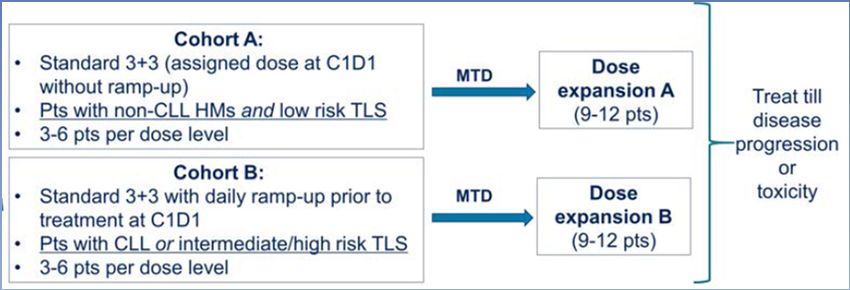
7/7/2021

              Cost‐effectiveness of zanubrutinib versus ibrutinib in adult patients
                  with Waldenström macroglobulinemia in the United States
                                                              Input                                                                Analysis
   •    Quality of life was assessed at study entry, every 3 cycles (cycles 1‐12), then every 6 cycles:
          –    Mobility
                                                                                                                    •   Life Years (LY)
          –    Self‐care                                                                                                 –    Length of Life
          –    Usual activities                                                                                     •   Quality Associated Life Year (QALY)
          –    Pain/discomfort                                                                                           –    Length + Quality of Life
          –    Anxiety/depression                                                                                        –    1 QALY = 1 year of perfect health
                                                                                                                         –    Scores range from 1 (perfect health) to 0
   •    Drug costs were assessed for US payers based on 2020 pricing                                                          (dead)

   •    Costs of side effect management, routine care, and end of life care were also considered

                                                                                                           Output

 Authors conclusions:
• Increased cost of Zanu is primarily due to patients staying on therapy
                                                                            Life Year
   longer due to longer time to treatment failure                           Quality Associated Life Year
• Zanu had lower routine care (‐$2,935) and terminal care (‐$2,964) costs
  compared with Ibrutinib.

                                                                                        Castillo et al. J Clin Oncol 39, 2021 (suppl 15; abstr e18856)

15

                          Efficacy and safety of
       zanubrutinib versus rituximab‐based chemoimmunotherapy
               in Waldenström macroglobulinemia (WM):
                 Matching‐adjusted indirect comparisons

                          Jorge J. Castillo, Keri Yang, Rongzhe Liu, Yu Wang, Aileen Cohen, Todd M.
                            Zimmerman, Qian Zhao, Gijs van de Wetering, Xin Gao, Boxiong Tang

16

                                                                                                                                                                                8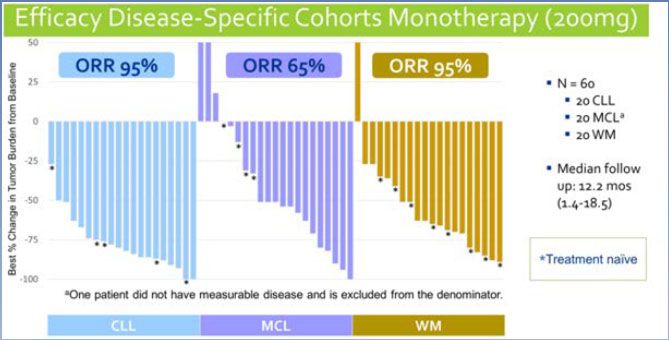
7/7/2021

             Efficacy and safety of zanubrutinib versus rituximab‐based chemoimmunotherapy in
              Waldenström macroglobulinemia (WM): Matching‐adjusted indirect comparisons
                             Indefinite Duration Therapy
                                                                                                                                       Fixed Duration Therapy
                           Ibrutinib           +/‐     Rituximab                                                               Rituximab +/‐Dexamethasone

                                                                                                            Cyclophosphamide
                                         Acalabrutinib
           BTK                           Zanubrutinib                       vs.
           inhibitors                    Pirtobrutinib                                                         Bendamustine
                                         MK 1026
                                         TG 1701

17

                                                       Chemoimmunotherapy
              Regimen                                     Major Response                   PFS             When to use?
                                                          Rate                             (mos)
              R‐Bendamustine                              90‐96%                           65‐69         Rapid response needed; Pts with LAD/organomegaly
              R‐Cy‐Dex                                    74‐87%                           34‐35         Well tolerated. Med time to response 4.1 mos.

                                                          Considerations
                                                          • Risk of 2ndary MDS/leukemia
                                                          • Cytopenias
                                                          • Activity appears unaffected by MYD88 mutation status
                                                              • R‐Benda and R‐Cy‐Dex

Laribi et al. 2019 Br J Haem 186(1): 146‐9.   Rummel et al. Blood (2019) 134 (Supplement_1): 343.   Kastritis et al. 2015 Blood 126 (11) 1392‐4.   Paludo et al. 2017 Br J Haem 179(1): 98‐105

18

                                                                                                                                                                                                       9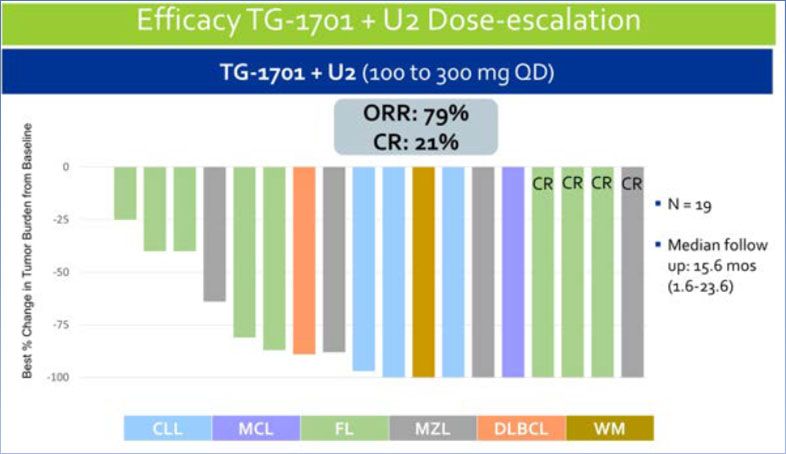
7/7/2021

           Efficacy and safety of zanubrutinib versus rituximab‐based chemoimmunotherapy in
            Waldenström macroglobulinemia (WM): Matching‐adjusted indirect comparisons

                  Objective
 Compare efficacy between zanubrutinib and BR or DRC

                Data Sources
 Used data from 3 clinical trials (retrospective):

 •   Zanubrutinib (102 patients)

 •   Bendamustine‐Rituximab (71 patients)
       •   Age
       •   Prior lines of therapy
       •   IgM concentration
       •   International Prognostic Scoring System for WM score
       •   Extramedullary disease (EMD)

 •   Dexa‐Rituximab‐Cyclophosphamide (72 patients)
       •   Age
       •   Platelet count
       •   Hemoglobin
       •   EMD

19

                           Preliminary results of the
                         Phase 2 study of zanubrutinib
            in patients with previously treated B‐cell malignancies
                  intolerant to ibrutinib and/or acalabrutinib

                    Mazyar Shadman, Jeff Porter Sharman, Moshe Y. Levy, Ryan Porter, Syed
                        Farhan Zafar, John M. Burke, Arvind Chaudhry, Benjamin Bruce
                    Freeman, Jamal Ghazi Misleh, Habte Aragaw Yimer, Jennifer L. Cultrera,
                     Troy H. Guthrie, Ed Kingsley, Subramanya S. Rao, Dih‐Yih Chen, Aileen
                                  Cohen, Shibao Feng, Jane Huang, Ian Flinn

20

                                                                                                   10
7/7/2021
Preliminary results of the phase 2 study of zanubrutinib in patients with previously treated
B‐cell malignancies intolerant to ibrutinib and/or acalabrutinib
Indefinite Duration Therapy
Gave zanubrutinib:
Ibrutinib +/‐ Rituximab 160 mg twice daily or 320 mg once daily
Question Posed
Acalabrutinib
• Recurrence of side effects seen with
Other Zanubrutinib
ibrutinib or acalabrutinib?
BTK Pirtobrutinib
• Any new side effects?
inhibitors MK 1026
TG 1701
Castillo et al. J Clin Oncol 39, 2021 (suppl 15; abstr e18856)
21
Preliminary results of the phase 2 study of zanubrutinib in patients with previously
treated B‐cell malignancies intolerant to ibrutinib and/or acalabrutinib
Diagnosis # of Patients
(Total = 44)
CLL 34
WM 6
MCL 2
MZL 2
Side Effects Incidence rate • Dose interruptions: 6 patients
Prior BTKi # of Patients Muscle Aches 21% • Dose reductions: 2 patients
Ibrutinib 39 Bruising 18% • No side effects caused Zanu to be stopped
• No patients have died
Ibrutinib + 4 Dizziness 16%
Acalabrutinib Fatigue 16% Of 26 evaluable patients:
Acalabrutinib 1 Cough 11% • 10 (38.5%) have maintained response
• 16 (61.5%) had deepening of response
Median follow up = 4.2 months
Shadman et al. J Clin Oncol 39, 2021 (suppl 15; abstr e19506)
22
117/7/2021
Updated results of the selective Bruton tyrosine kinase
(BTK) inhibitor
TG‐1701, as monotherapy, and in combination with
ublituximab and umbralisib (U2)
in patients (pts) with B‐cell malignancies
Chan Cheah, Wojciech Jurczak, Masa Lasica, Nicholas W. Wickham, Tomasz
Wrobel, Costas K. Yannakou, Stanley Cheung, Katharine L. Lewis, Monika
Długosz‐Danecka, Krzysztof Giannopoulos, Hari P. Miskin, Jian‐Ping Tang,
Emmanuel Normant, Owen A. O'Connor, Alejandro Daniel Ricart, Constantine
Si Lun Tam, Jan Andrzej Walewski
23
Updated results of the selective Bruton tyrosine kinase (BTK) inhibitor TG‐1701, as
monotherapy and in combination with ublituximab and umbralisib (U2) in patients (pts) with
B‐cell malignancies
Indefinite Duration Therapy
Ibrutinib +/‐ Rituximab
Acalabrutinib
Zanubrutinib
BTK
Pirtobrutinib
inhibitors
MK 1026
TG 1701
Castillo et al. J Clin Oncol 39, 2021 (suppl 15; abstr e18856)
24
127/7/2021
Updated results of the selective Bruton tyrosine kinase (BTK) inhibitor TG‐1701, as
monotherapy and in combination with ublituximab and umbralisib (U2) in patients (pts) with
B‐cell malignancies
Anti‐CD20
BTK
monoclonal PI3Kδ‐CK1ε
inhibitors
antibody
TG‐1701 Ublituximab Umbralisib
100mg
200mg
300mg
400 mg
All pts were treated until disease progression
Cheah et al. J Clin Oncol 39, 2021 (suppl 15; abstr 7525)
25
Updated results of the selective Bruton tyrosine kinase (BTK) inhibitor TG‐1701, as
monotherapy and in combination with ublituximab and umbralisib (U2) in patients (pts) with
B‐cell malignancies
• 20 WM patients
• 1st line therapy: 8 patients
• No prior BTK inhibitor: 20/20 patients
Side Effects All Grades Grade ≥ 3
(123 patients)
Atrial Fibrillation 4% 1 patient
Hypertension 2%
Bleeding events 19% (all grades 1‐2)
• Side effects leading to dose reduction: 6.5%
• Side effects leading to stopping drug: 1.6% (Afib, COVID)
Cheah et al. J Clin Oncol 39, 2021 (suppl 15; abstr 7525)
26
137/7/2021
Updated results of the selective Bruton tyrosine kinase (BTK) inhibitor TG‐1701, as
monotherapy and in combination with ublituximab and umbralisib (U2) in patients
(pts) with B‐cell malignancies
27
First‐in‐human study of lisaftoclax (APG‐2575), a novel BCL‐2
inhibitor (BCL‐2i), in patients (pts) with relapsed/refractory
(R/R) CLL and other hematologic malignancies (HMs).
Sikander Ailawadhi, Asher Alban Akmal Chanan‐Khan, Zi Chen, Bo
Huang, Marina Konopleva, Danielle M. Brander, David Rizzieri, Masa
Lasica, Constantine Si Lun Tam, Costas K. Yannakou, H. Miles Prince,
Matthew Steven Davids, Zhicong He, Ming Lu, Mohammad Ahmad,
Mingyu Li, Zhiyan Liang, Boyd Mudenda, Dajun Yang, Yifan Zhai
28
147/7/2021
First‐in‐human study of lisaftoclax (APG‐2575), a novel BCL‐2 inhibitor (BCL‐2i),
in patients (pts) with relapsed/refractory (R/R) CLL and other hematologic malignancies (HMs).
Indefinite Duration Therapy
Ibrutinib +/‐ Rituximab
Acalabrutinib
Zanubrutinib
BTK
Pirtobrutinib
inhibitors
MK 1026
TG 1701
BCL‐2 Venetoclax
inhibitors Lisaftoclax
29
BCL 2 inhibitor:
Phase II study of venetoclax in previously treated WM
• BCL2 is highly expressed in WM cells, particularly in pts with MYD88 mutations
• Venetoclax triggered apoptosis of WM cells
• including primary WM cells from ibrutinib‐naïve and ibrutinib‐treated patients.
Author Regimen No. Gene mutations Median Number of Major 2 year
Enrolled Prior Rx Response Rate Progression Free
(range) Survival
Castillo et Venetoclax x 2 years 31 100% MYD88mut 2 (1‐10) 81% 76%
al. 2019 200 mg daily days 1‐7 55% CXCR4mut
400 mg daily days 8‐14 52% had prior BTKi
Thereafter, 800mg/day
Median time to response 1.9 months (slower TTR in pts with prior BTKi (p7/7/2021
First‐in‐human study of lisaftoclax (APG‐2575), a novel BCL‐2 inhibitor (BCL‐2i),
in patients (pts) with relapsed/refractory (R/R) CLL and other hematologic malignancies (HMs).
• Preliminary data suggests that lisaftoclax may have a better side effect profile than venetoclax
– tumor lysis syndrome, thrombocytopenia, neutropenia
Treatment related All Grade
side effects grades >3
Fatigue 29% 3%
Neutropenia 23% 14%
Anemia 17%
Diarrhea 17% 3%
Nausea 11% 3%
Low platelets 3%
• Oral drug
• Administered once daily
Ailawadhi et al. J Clin Oncol 39, 2021 (suppl 15; abstr 7502)
31
First‐in‐human study of lisaftoclax (APG‐2575), a novel BCL‐2 inhibitor (BCL‐2i),
in patients (pts) with relapsed/refractory (R/R) CLL and other hematologic malignancies (HMs).
32
167/7/2021
Phase I/II Trial of Lisaftoclax in WM
Previously R/R WM R/R WM
Untreated Prior BTKi No prior BTKi
lisaftoclax + ibrutinib lisaftoclax lisaftoclax + rituximab x 8 doses
Continue treatment until PD or unacceptable toxicity
Multi‐center trial
N= 96 pts
33
Treatment Free Remission (TFR) and Overall
Response Rate (ORR) Results in Patients with
Relapsed/Refractory Waldenstrom’s
Macroglobulinemia (WM) Treated with CLR 131
S Ailawadhi, A Chanan‐Khan, J Peterson, J Longcor, K Oliver,
M Brown, J Friend, DJ Green
34
177/7/2021
Treatment Free Remission (TFR) and Overall Response Rate (ORR) Results in
Patients with Relapsed/Refractory Waldenstrom’s Macroglobulinemia (WM)
Treated with CLR 131
Indefinite Duration Therapy Fixed Duration Therapy
Ibrutinib +/‐ Rituximab Rituximab +/‐Dexamethasone
Bortezomib
Cyclophosphamide
Acalabrutinib Carfilzomib
Zanubrutinib
BTK
Pirtobrutinib
inhibitors Bendamustine
Ixazomib
MK 1026
TG 1701
Rituximab
BCL‐2 Venetoclax
inhibitors Lisaftoclax
Fludarabine Cladribine
Radioimmuno‐conjugate CLR‐131
35
CLR 131 Phospholipid Drug Conjugate (PDC)
Validated Delivery Platform
• Tumor cells utilize lipids at significantly greater quantities than PET and SPECT Scans
normal tissue post IV dosing
‒ Energy source (b-oxidation)
‒ Cell membrane production Crossing the BBB
‒ Signaling molecules Metastatic
Ependymoma
• CLR-131 exploits cancer cells’ needs for lipids to provide targeted
delivery
‒ Bind to specialized regions on tumor cell surface and internalized
‒ Delivers 20-40% of infused drug to tumor
SPECT scan
NSCLC
• CLR 131: targeted delivery of I-131 (validated therapeutic isotope)
‒ Kills tumor cells by creating double stranded breaks in the DNA
4 June 2021 | ASCO 2021 | Slide 9
36
187/7/2021
CLR 131 WM Global Pivotal Study
Open Label, Single Arm Registration Clinical Study
Screening Period Treatment and Evaluation Period
• Sample size = 50 WM pts Futility, Safety
Assessments
• Includes MYD88WT pts Primary Endpoint
Enroll WM
and Bing-Neel patients patients who
N=10 Assessment
(Major Response
• Only 4 (~20min) infusions received at least
CLR 131 15 mCi/m2 per dose N=50
Rate) Safety
2 prior lines of Follow‐up
4 doses over 2 cycles
therapy, including Secondary 3 years
Days 1, 15, & 57, 71
having failed or Endpoint
had a suboptimal Assessments
response to BTKi (DOR, TFR, ORR)
4 June 2021 | ASCO 2021 | Slide 19
37
CLR 131 Phase 2 WM Patient Baseline Characteristics
Majority Were High Risk and Multi-drug Refractory
Characteristic All Patients with WM
No. of Patients 6
• Highly refractory patient population
‒ 83.3% of patients were refractory to rituximab
Median Age (range) 69 (54 – 81)
combinations
Sex (%) ‒ 100% of patients were either refractory or had
Male 2 (33.3) a suboptimal response to ibrutinib
Female 4 (66.6)
IPSSWM Score (%) • Only 1 patient had responded to the immediately
Low 1 (16.7) prior therapy (salvage third line)
Medium 1 (16.7)
High 4 (66.6) • All patients met inclusion/exclusion criteria
Median Serum IgM, mg/dL (range) 3978 (1110 – 6267) including requirement for treatment according to
Median Bone Marrow Involvement (range) 65 (14 ‐72)
the consensus guidelines
Extramedullary Disease (cm) 10,479
Median Prior Lines of Therapy (range) 2 (1 – 5)
4 June 2021 | ASCO 2021 | Slide 11
38
197/7/2021
CLR 131 Phase 2 WM Best Response by Patient
Demonstrates Activity in All Patients Subtypes
SD MR PR VGPR CR
MYD88Mut/CXCR4Unk
MYD88WT/CXCR4WT
MYD88Mut/CXCR4Mut
MYD88Unk/CXCR4Unk
MYD88WT/CXCR4WT
MYD88WT/CXCR4Unk
0 10 20 30 40 50 60 70 80 90 100
Patient Single Best IgM Reduction (%)
• CLR 131 Responses
‒ 100% Overall Response Rate (ORR) ‒ 100% MRR in MYD88WT patients
‒ 83.3% Major Response Rate (MRR) ‒ 16.7% Complete Response Rate (CR)
4 June 2021 | ASCO 2021 | Slide 12
39
CLR 131 Phase 2 WM Duration of Response
Over 13 Months of Ongoing Treatment Free Remission Exhibited
• Median time to initial
Duration of Response response 22 days of first cycle
Complete response
Partial response • Median time to major
Minimal response
response 44 days
Start of response
End of response
• Mean Treatment free
remission 1.1 years; ongoing
• Median duration of response
(DOR) not reached
• 100% of MYD88WT patients
0 5 10 15 20 25 30 35 40
exceed 8.5 months of DOR
Months ‒ Mean DOR = 18.1 months
Mutational Status MYD88Mut/CXCR4Mut MYD88Mut/CXCR4Unk MYD88WT/CXCR4WT MYD88WT/CXCR4Unk MYD88Unk/CXCR4Unk
4 June 2021 | ASCO 2021 | Slide 15
40
207/7/2021
CLR 131 Safety: Treatment Emergent Adverse Events
Well Tolerated Safety Profile in WM, MM and Other NHLs
Treatment Emergent Adverse Events • Most frequent TEAEs are
(≥25% of All Patients) cytopenias; highly
ALL DOSES predictable & manageable
Total n = 88 – Nadir occurs ~34 days
Phase 1 & 2 Pts post initial dose; recovery
Preferred Term
Overall ≥ Grade 3 occurs within ~21 days
n (%) n (%)
post nadir
Thrombocytopenia 73 (83) 64 (73)
• No treatment related
Lymphocyte count decreased 40 (45) 35 (40)
deaths, cardiotoxicities,
Decreased White Blood Cell Count 52 (59) 41 (47)
liver, renal or neurologic
Anemia 60 (68) 15 (17)
toxicities, keratopathy, etc.
Neutropenia 49 (56) 45 (51)
Fatigue 51 (60) 12 (14)
Nausea 29 (33) 0
4 June 2021 | ASCO 2021 | Slide 16
41
Novel Approaches to Treatment of WM
BTK inhibitors Monoclonal Antibodies IRAK4 inhibitor
• Acalabrutinib CA‐4948
• Daratumumab (anti‐CD38 monoclonal Ab)
• Zanubrutinib
• Daratumumab + ibrutinib
• Pirtobrutinib
• Obinutuzumab (anti‐CD20 monoclonal Ab)
• MK‐1026
• TG‐1701
• Ibrutinib + ixazomib
BCL‐2 inhibitors Bi‐specific Antibody CXCR4 antagonists
• Venetoclax • ulocuplumab
• Plamotamab (XmAb 13676)
• Lisaftoclax • mavorixafor
Radioimmuno‐conjugate
CLR‐131
42
217/7/2021
Real‐world treatment patterns, adherence, costs, and
healthcare resource utilization
associated with Waldenström macroglobulinemia in the
United States
Keri Yang, Jorge J. Castillo, Anna Ratiu, Rachel Delinger, Todd Zimmerman, Boxiong Tang
43
Real‐world treatment patterns, adherence, costs, and healthcare resource utilization
associated with Waldenström macroglobulinemia in the United States
Methods
Looked at commercial and Medicare claims between 2014‐2019.
Sum of inpatient, outpatient, and pharmacy costs per‐patient‐per‐month (PPPM).
Treatment regimens, costs, and hospitalizations were examined overall and by line of therapy.
Results
1st line chemo 2nd line chemo 3rd line chemo
(452 patients) (143 patients) (24 patients)
Costs PPPM $ 18,682 $ 19,171 $ 36,878
Yang et al. J Clin Oncol 39, 2021 (suppl 15; abstr e18766)
44
227/7/2021
Financial Assistance Resources
45
Financial Assistance Resources
• https://iwmf.com/financial‐assistance/
• The Leukemia & Lymphoma Society (LLS) Co‐Pay Assistance Program
• The Leukemia & Lymphoma Society (LLS) Patient Travel Assistance Program
• Patient Access Network (PAN) Foundation WM Assistance Program
• HealthWell Foundation https://www.healthwellfoundation.org/
• National Comprehensive Cancer Network (NCCN – https://www.nccn.org/reimbursement_resource_room/#cancer
• Cancer Financial Assistance Coalition https://www.cancerfac.org
• Needy Meds (http://www.needymeds.org/
• Gooddays (https://www.mygooddays.org/(link is external)
• Family Reach (http://familyreach.org)
• Miracle Flights: (www.miracleflights.org)
• Lazarex Care Patient Assistance Program
• Cancer Support Community/Airbnb
• CancerCare– Pet Assistance & Wellness (PAW) Program
• Johnson & Johnson Patient Assistance Foundation at 800‐652‐6227 or visit its website at www.jjpaf.org (ibrutinib)
• ThisIsLivingWithCancer (https://www.thisislivingwithcancer.com
• Partnership for Prescription Assistance (PPA – https://www.pparx.org
• Teva Pharmaceuticals‐ CORE program (bendamustine, rituximab‐abbs)
46
237/7/2021
WhiMSICAL: WM Study in CART‐wheel
• WhiMSICAL: the only global WM registry of patient‐derived data, capturing clinical and patient‐
reported outcome data.
A scientific and ethically‐approved portal for patients’ voices globally.
• With 520 participants WhiMSICAL is now generating big data, capturing insights into real‐world
treatment outcomes & QoL, complementing trial data
• Participants please update your data by mid‐July for an ASH Abstract.
• If not already participating, join WhiMSICAL Registry at www.cart‐wheel.org
• For information: https://wmozzies.com.au/index.php/whimsical/ or email: whimsical@iwmf.com
47
Thank you for your attention
Melody Becnel Greg Kaufman Hans Lee Elisabet Manasanch
Robert Orlowski Krina Patel Sheeba Thomas Donna Weber
Email: sthomas@mdanderson.org
48
24You can also read


