Asset Management Plan 2021 Summary
←
→
Page content transcription
If your browser does not render page correctly, please read the page content below
Attachment 1
Asset Management Plan 2021
Summary
Contents

       Auckland’s transport infrastructure                            3
       Role of the Asset Management Plan                              5
       Enabling Auckland’s growth                                     8
       Building the business case for asset management               10
       Asset management problem statements                           11
         Asset deterioration                                         11
         Road safety                                                 12
         Growth and intensification                                  13
         Resilience                                                  14
       Our Climate Impact Statement                                  16
         Mitigation: How we contribute to reducing emissions         16
         Adaptation: How we adapt to the impacts of climate change   16
       Our plan and targets                                          18
       Our investment plan                                           22
         Asset operations and maintenance                            22
         Asset renewals                                              24
       Asset Management Improvements                                 25
       Acknowledgements                                              26

2 Asset Management Plan Summary 2021
Auckland’s transport infrastructure
The Auckland Council group is responsible for managing Auckland’s public infrastructure,
including the roads, water networks and community facilities that we use every day.
Auckland Transport (AT) is part of the group and is responsible for roads, footpaths and          AT is the regional guardian of
public transport links.

                                                                                                  $
                                                                                                      22 billion
This Transport Asset Management Plan 2021 sets out how AT intends to manage its
transport assets over the next 10 years, from 2021 to 2031. It describes the assets we
manage, the activities we carry out, and what it all costs. It also looks at other factors that
affect how we manage the assets, such as government strategy, growth and demand, and                                                      of publicly-
risks and constraints on investment, in particular the impacts of the Covid-19 pandemic.                                                  owned assets

                                                                                                                                   Asset Management Plan Summary 2021 3
Strategic objectives                    STRATEGIC OBJECTIVES OF THE 2021 REGIONAL LAND TRANSPORT PLAN
                                               and asset management responses:
       The Regional Land Transport Plan
       is prepared every 3 years by            Make the transport system safe by             Enabling Auckland’s growth through a
       Auckland Transport with our             eliminating harm to people                    focus on intensification in brownfield
       investment partners. It must be         The latest road safety data shows a           areas, with some managed expansion
       consistent with the Government          reduction in road trauma, but there is no     into emerging greenfield areas
       Policy Statement on Land                room for complacency as we work with our      –Auckland’s growth is a sign of success
       Transport contribute to a safe,         Vision Zero partners towards a transport       - people want to live and do business
       effective, efficient transport system   network free of death and serious injury.      here. But growth does add to the cost of
       in the public interest, in line with                                                   managing transport assets, to keep up with   ASSET RELATED OBJECTIVE:
       the purpose of the Land Transport       Accelerate better travel
                                                                                              an expanding transport network and move
       Management Act. It represents           choices for Aucklanders
                                                                                              more people and freight on existing assets   sound asset management in
       Auckland region’s 10-year               Auckland’s agreed strategy to improve                                                       the face of increasing rates
                                                                                              and services.
       investment programme undertaken         urban transport is to move more people
                                                                                                                                           of asset deterioration,
       by AT, Waka Kotahi New Zealand          and goods within the footprint of existing    Improving environmental resilience
                                               roads. Over time, this strategy requires AT   and sustainability of the transport           increasing costs and an
       Transport Agency (Waka Kotahi),
                                               to transform the existing road network,       system, and significantly reducing the         expanding asset base in
       and KiwiRail to improve
       Auckland’s transport system to          from one where typically 80 per cent          greenhouse emissions it generates             response to growth,
                                               of road space is devoted to cars, to a        We will prioritise actions that build         and the increased risks of
       deliver on the agreed objectives.
                                               multi-modal network which is safe for all     resilience to current and future natural
                                                                                                                                           climate change .
                                               pedestrians and cyclists, gives priority to   hazards, and that contribute to Auckland’s
                                               buses, and creates great public spaces        emissions reduction and environmental
       This Asset Management Plan
                                               while still providing for vehicle access.     sustainability goals.
       supports the Regional Land
       Transport Plan by optimising the        Better connecting people,                     INVESTMENT OBJECTIVE:
       contribution of existing assets to      places, goods and services
       these strategic objectives.             We put our customers first by                  Ensuring value for money across
                                               implementing our Future Connect               Auckland’s transport system through
                                               plans for road, freight, public transport,    well-targeted investment choices
                                               walking and cycling so customers
                                               experience an effective, reliable,
                                               connected transport network.

4 Asset Management Plan Summary 2021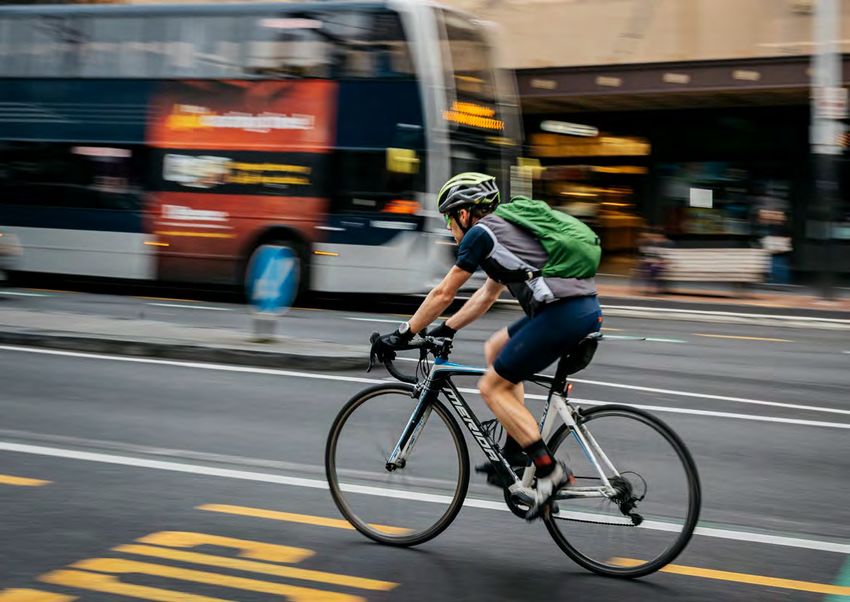
Role of the Asset Management Plan

THE ASSET MANAGEMENT PLAN DEMONSTRATES HOW
AT SUSTAINABLY MANAGES OUR COMPLEX TRANSPORT
NETWORKS IN THE INTERESTS OF THE PUBLIC
It is one of a set of plans that guide how transport in the city is managed.

                        Auckland Transport
                                                                                                                                        Auckland Plan
                        Alignment Project
                                                                                                                                            2050
                             (ATAP)

                                      Roads and Streets
                                                                                                                         Network
                                         Framework                             Future Connect
                                                                                                                       Operating Plan
                                           (RASF)

                                                     Regional Public            Asset
                                                                                                          Other policies
                                                       Transport           Management Plan
                                                                                                            and plans
                                                          Plan                (this plan)

       Government
                                                                               Regional Land
    Policy Statement                                                                                                                                         Auckland
                                                                               Transport Plan
    on Land Transport                                                                                                                                      Long Term Plan
                                                                                   (RLTP)
          (GPS)

      National Land
                                                                         Business Case, Design
        Transport
                                                                          (via Transport Design Manual)
       Programme
                                                                          and Delivery Process                                                          AT led
         (NLTP)
                                                                                                                                                        Partner led

FIGURE 1: KEY TRANSPORT PLANNING DOCUMENTS

                                                                                                                                                                            Asset Management Plan Summary 2021 5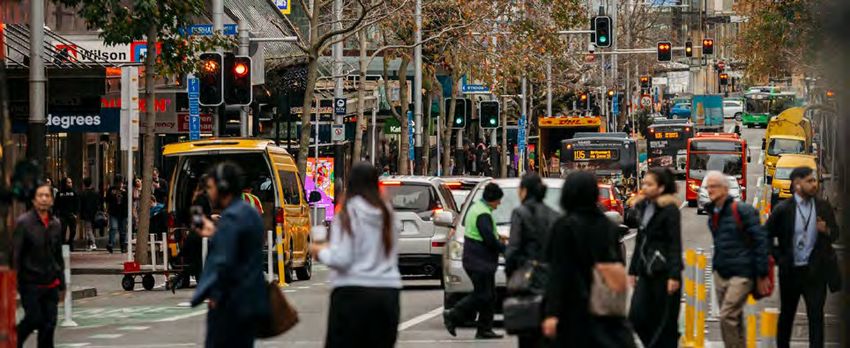
What we manage

                                                         FOOTPATHS                STREET LIGHTS,
                                                         & CYCLEWAYS   TRAFFIC SIGNS & MARKINGS

           ROAD PAVEMENTS                                STORMWATER                    PARKING

          BUS, RAIL AND FERRY          ELECTRIC TRAINS
          STATIONS

                                                                                BRIDGES, WALLS
                                                                                 & STRUCTURES

6 Asset Management Plan Summary 2021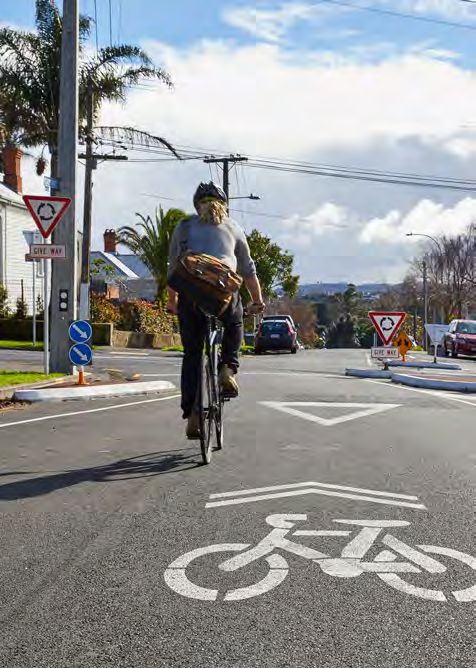
Snapshot of our transport network

                                                                                                                               AT manages
   Road pavements
     assets worth
                                      Stormwater
                                      assets worth
                                                                     Bridges, walls
                                                                     and structures
                                                                                                  Footpaths and
                                                                                                    cycleways
                                                                                                                                $
                                                                                                                                    22
     $9.6 billion                      $2.9 billion                   assets worth                 assets worth                 billion
       7,661 km of roads         13,542 km stormwater channel         $1.9 billion                  $1.5 billion              of transport assets,
    6,843 km is sealed and             89,141 catchpits                 1,248 bridges              7,460 km of footpaths    including infrastructure
      818 km is unsealed                                                                                                   assets with a replacement
                                                                    4,461 retaining walls           350 km of protected             value of
                                                                  307 km railings and fences
                                                                                                                               18.6 billion
                                                                                                        cycleways
                                                                                                                           $

                                                                                                                                Our assets are
                                                                                                                             depreciating with time
                                                                                                                              and use at a rate of

    Street lighting                Traffic systems,                     Parking                   Public transport
                                                                                                                                   $
                                                                                                                                       338
    assets worth 0               signs and markings                   assets worth                  assets worth               million
                                                                                                                                    per year or
     $0.3 billion                    assets worth                      $0.5 billion                 $1.7 billion
                                     $0.2 billion                 250 off-street parking areas,       7 bus stations,
      122,347 street lights
                                  857 controlled intersections       11 parking buildings,          1,482 bus shelters,
                                                                                                                               $
                                                                                                                                   1.1 million
                                                                                                                                       per day
                                        163,004 signs              969 parking payment units          40 rail stations,
                                                                                                     72 electric trains
Asset inventory as at 30 March 2021.                                                                 23 ferry wharves
Total asset value of $22 billion includes land, corporate and IT assets.

                                                                                                                                Asset Management Plan Summary 2021 7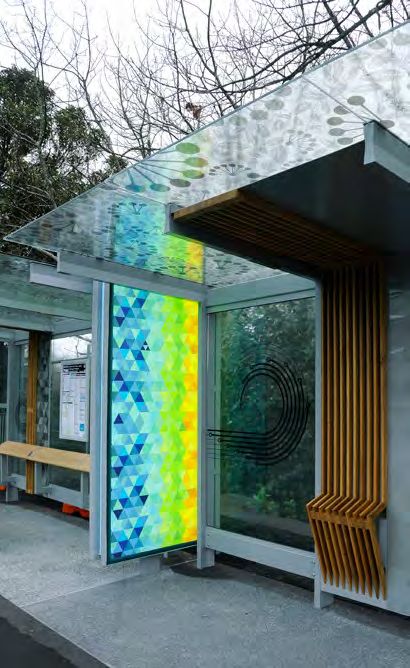
Enabling Auckland’s growth
       Auckland Council has recently revised its growth forecasts to take into account data up
       to August 2020, including the impacts of Covid-19. The new forecasts anticipate that
                                                                                                                   2.0
       Auckland will grow by around 26,000 people (10,000 households) each year from 2021
       to 2031. Compared with its 2018 forecasts, Auckland Council’s new growth forecasts
                                                                                                                   1.5
       project similar population and household numbers, but are more optimistic about the

                                                                                                 $ Millions
       economy, with employment growth revised upwards to over 10,500 new full-time jobs
                                                                                                                   1.0
       each year between 2021 and 2031.
       To support this growth, AT is investing in new transport assets, and private developers                     0.5
       also construct new roads in new growth areas.
                                                                                                                    0
       AT forecasts that the transport asset base will grow over the coming ten years by:
                                                                                                                         2018 2019 2020 2021 2022 2023 2024 2025 2026 2027 2028 2029 2030 2031

                                                                                                                                               Population     Households    Employment

                                                                                                          FIGURE 2: AUCKLAND COUNCIL GROWTH PROJECTIONS

              74km new sealed                 104km new                  15 new signalised                         10
               roads each year            footpaths per year           intersections per year
                 (1.1 per cent              (1.4 per cent)                 (2.3 per cent).                          8
              growth per year)

                                                                                                 Thousands of km
                                                                                                                    6
            additional stormwater        10km new protected
            drainage, street lights       cycleways per year                                                        4
             and road structures             (2.9 per cent)
           in proportion to sealed                                                                                  2
                 road growth
                (1.1 per cent)                                                                                      0
                                                                                                                         2018 2019 2020 2021 2022 2023 2024 2025 2026 2027 2028 2029 2030 2031

       These additional assets will have flow-on effects for future maintenance,
                                                                                                                                               Sealed roads     Footpaths    Cycleways
       operations and renewals requirements and budgets.
                                                                                                          FIGURE 3: AT PROJECTIONS OF TRANSPORT ASSET GROWTH

8 Asset Management Plan Summary 2021
Services we provide

EACH YEAR, THE AT
TRANSPORT NETWORK CARRIES:                                                 AND...

     17%                                              60%                    4,272 people            We maintain
     of all vehicle                                   of all public          walk into the           17% of all
     travel in NZ                                     transport              city centre             cycleways
     (8 billion km                                    trips in NZ            each morning            in NZ
     of vehicle travel)                               (100 million trips     peak                    (345 km of protected
                                                      in 2018/2019)          (8% of all trips into   cycleway and 211 km
                                                                             the city centre)        of on-road cycleway)

WE ARE GUARDIANS OF INFRASTRUCTURE THAT ENABLES AUCKLAND TO GENERATE 38% OF NZ’S GDP.

Source: Waka Kotahi NZ Transport Agency, AT surveys

                                                                                                             Asset Management Plan Summary 2021 9
Building the business case for asset management
        AT follows national and international best
        practice to develop a business case for
        investment in transport asset management       ASSET DETERIORATION
        activities. Preparing a business case helps
                                                       If AT does not address asset deterioration adequately, by
        ensure that AT is delivering maintenance
                                                       maintaining and renewing assets in a timely and efficient
        and renewals activities in the right place,
                                                       way, then safety will be compromised, customer journeys
        at the right time, to achieve a level of
                                                       will be affected, and significant problems will be created
        service that aligns with the outcomes the
                                                       for the region and for future generations.
        community requires.
        A key step in any business case is to define
        the problems (or root causes) that create      ROAD SAFETY
        the need for change. We have identified
        four key problems that this plan needs         Deaths and serious injuries on Auckland’s roads are
        to address if we are to play our part in       high by national and international standards, especially
        delivering the agreed strategic objectives.    pedestrians, cyclists and motorcyclists. Our Vision Zero
                                                       goal is to eliminate harm to all road users.

                                                       GROWTH AND INTENSIFICATION
                                                       The network requirements to address the impacts of growth
                                                       and intensification will be significant, and if not met, will
                                                       accelerate asset deterioration and escalate costs.

                                                       RESILIENCE
                                                       The transport network lacks resilience in the face of future
                                                       challenges, including climate change, increasing the            Unlike a business case for building a new
                                                       potential for significant disruption.                           asset, there is no ‘do nothing’ option in this
                                                                                                                       AMP. Our role as kaitiaki or guardians of
                                                                                                                       the transport network means we must
                                                                                                                       look after the public assets that have
                                                                                                                       been entrusted to us and we must plan
                                                                                                                       ahead to ensure that transport networks
                                                                                                                       are managed and maintained to face the
                                                                                                                       challenges of the future.

10 Asset Management Plan Summary 2021
Asset management problem statements
FIGURE 4: ASSET CONDITION AND REPLACEMENT VALUE
$– $5 $10 $15 $20
ASSET DETERIORATION
Condition
Assets worth $8.1 billion
$ BILLIONS
Our central task as asset managers is to look after the infrastructure that the community are in very good condition
relies on every day. To achieve this we need to understand the condition and performance Assets worth $5.6 billion
are in good condition
of our assets. Assets that are in very poor condition will need to be renewed so they can
again provide a fit for purpose level of service. Assets worth $3.2 billion
are in moderate condition
Currently AT has $0.5 billion of assets in very poor condition, and this ten year plan
Assets worth $1.2 billion
provides for these assets to be renewed so that the network continues to perform well are in poor condition
and the level of risk is managed within AT’s risk appetite.
Assets worth $0.5 billion
This plan also provides for AT to keep up with the inevitable deterioration of assets are in very poor condition
over the coming ten years, so the transport network as a whole continues to meet
community needs. FIGURE 5: ASSET CONDITION AND CRITICALITY
Asset Condition
Criticality Very good Good Moderate Poor Very poor
Level 1 – Vital $
1.3 $
1.1 $
0.4 $
0.1 $
0.0
Asset deterioration is a problem for all assets, but is especially significant for
critical assets because of the consequences if these assets fail. Level 2 – Major 0.6
$ $
0.5 $
0.3 $
0.1 $
0.0
Asset
AT has classified all of its assets, from Vital (Level 1) to Minor (Level 5) based on the criticality
Level 3 – Significant $
1.2 $
0.8 $
0.5 $
0.2 $
0.1
number of customers using the asset and strategic networks including freight routes Level 4 – Local $
1.3 $
0.9 $
0.6 $
0.3 $
0.1
and lifeline routes.
Level 5 – Minor $
3.7 $
2.4 $
1.5 $
0.5 $
0.3
AT’s Risk Management Framework specifies that we have a low appetite for events
which may adversely affect our critical assets. Vital and Major assets in poor condition Total $
8.1 $5.6 $3.2 $
1.2 $
0.5
represent 1% of our assets by value and are the highest priority for renewals.
Infrastructure asset replacement value ($billions) $
18.6
Asset Management Plan Summary 2021 11ROAD SAFETY
AT’s Vision Zero approach requires us As asset managers we contribute to a safe
to be proactive about all opportunities urban network by keeping footpaths and
to prevent crashes and to mitigate their cycleways in good condition, maintaining
impacts, including when other factors the road surface so it is free of hazards like
such as speed and road user behaviour potholes, and keeping our urban roads
are also contributing factors. This leads well lit.
to different actions being required for
On rural roads we need to provide
urban and rural roads.
pavements with good skid resistance
On urban roads the priority is to make the and ensure that hazards are either
road network safer for pedestrians, cyclists eliminated or, where this is not possible,
and motorcyclists, recognising that people are clearly visible and well signposted.
are vulnerable and will make mistakes.
800
700
600
500 Urban
pedestrians, cyclists
and motorcyclists
400
Rural pedestrians, cyclists
and motorcyclists
300
Urban
drivers and
200 vehicle passengers
Rural
drivers and
100 vehicle passengers
0 Total deaths and serious injuries
2006 2007 2008 2009 2010 2011 2012 2013 2014 2015 2016 2017 2018 2019
FIGURE 6: DEATHS AND SERIOUS INJURIES ON AUCKLAND LOCAL ROADS
12 Asset Management Plan Summary 2021GROWTH AND INTENSIFICATION
Auckland is experiencing a construction boom, with around 10,000 new homes built
each year, in addition to commercial development. To support this growth, 74 km of
roads, 104 km footpaths and 10 km of cycleways are added to the network each year,
as well as more drainage assets, street lights and traffic signals.
Although construction dipped in 2020 due to Covid-19, recovery has been swift. In
September 2020, the value of building consents issued in Auckland in a single month
exceeded $1 billion for the first time.
Growth affects the maintenance and renewal of transport assets in four main ways:
• More assets are added to the transport network, creating consequential maintenance,
operations and renewals costs.
• More people and goods are travelling on the existing network.
• The sheer weight of material being transported by road in order to construct new
homes and buildings has a physical impact on road pavements.
• The unit costs for aggregate, labour and other items that AT purchases are increasing,
because demand is high and supply is limited.
1,200
1,000
Monthly value, $ millions
800
600
400
200
0
2006 2007 2008 2009 2010 2011 2012 2013 2014 2015 2016 2017 2018 2019 2020
FIGURE 7: VALUE OF BUILDING CONSENTS ISSUED IN AUCKLAND
Asset Management Plan Summary 2021 13±
RESILIENCE FIGURE 8: CRITICALITY OF LOCAL ROADS IN THE CITY CENTRE
Some parts of Auckland’s transport network can lack resilience, especially at peak times.
Small incidents can cause significant disruption to customer journeys, because the road
network is close to capacity and there
0131454are few alternative routes. 67ÿ9 ÿÿ9 ÿ9 ÿÿ ÿ
'()*+,-.ÿ01,-23415ÿ672*ÿ,-.ÿ6827+78-)89ÿ672*ÿ54ÿ14,.ÿ-85:41*
We have a low tolerance for risks that could impact on our critical assets, because of the
consequences for the whole transport network if these assets fail.
;8+8)5ÿ,5817,+ >,5817,+
Combined likelihood 1 – Vital
Road Criticality Level - Phase 2
2 – Major
Level 1
3 – Significant
Level 2 4 – Local
Hazard ?45ÿ@(++Aÿ)4-@7B(18.
Consequence ?45ÿ@(++Aÿ)4-@7B(18.
Level 3 5 – Minor
Vulnerability Risk
exposure (criticality) Level 4
Level 5 FIGURE 9: CITY CENTRE LOCAL ROADS EXPOSED TO FLOODING RISK
Train Stations (IVU)
Natural hazards that our networks are exposed to include hazards that are forecast
Train
to become more frequent and severe with climate change: Storms and wind, flooding,
Eastern Line
sea level rise, coastal inundation and wildfires. Other natural hazards including
Western Line
earthquakes, tsunami and volcanic eruption C4,25are
,+ÿD-(also
-.,574-
aÿEFGHGI
concern. C4,25,+ÿD-(-.,574-ÿEFKGGI
>,5817,+
AT cannot control extreme events, but we can make our assets less vulnerable
>,5817,+
Onehunga Line
Southern Line
to being damaged. Resilience improvements in this AMP include:
Pukekohe Connection
• Seismic strengthening of gantries and bridges Land Information New Zealand, Eagle Technology , Data is owned by Auckland Transport.
• Slope stabilisation on slip-prone roads This m ap/ plan is illust rat ive only and all informat ion
should be independent ly veri fied on site before t aking
any act ion. Copyright Auckland Transport . Land P arcel
Boundary inform ation from LINZ (Crown Copyright Reserved).
0 0.2 5 0.5 1
km
Whilst due care has been t aken, A uckland Transport gi ves
no warrant y as t o the accuracy and complet eness of any criticality Scale 1:1 8,0 56 @ A3
• Resilience improvements on roads prone to flooding, including on Tamaki Drive
informat ion on this map/ pl an and accepts no liabili ty f or
any error, omissi on or use of t he inf ormat ion.
Hei ght dat um: A uckland 1946.
Da te: 3/ 16/ 20 21
?45ÿ@(++Aÿhazards
• Including climate change impacts and natural ?45ÿ@(++Aÿ)4-@7B(18.
)4-@7B(18.in AT’s infrastructure Very low risk
planning process. Low risk
Moderate risk
Not exposed
14 Asset Management Plan Summary 2021 OPQRS
LD?MNÿ;Asset Management Plan Summary 2021 15
Our Climate Impact Statement

            Mitigation:                                                                                   Adaptation:
            How we contribute to reducing emissions                                                       How we adapt to the impacts of climate change
            Auckland Transport is committed to tackling climate change under Auckland                     AT’s approach to planning for climate change is to look first at the current likelihood of
            Councils Climate plan and welcomes the challenge of contributing to halving                   natural hazards, and then to adjust that likelihood over time based on the latest climate
            Auckland’s greenhouse gas emissions by 2030 – within the ten years of this AMP.               change science.
            But we do not underestimate the scale of the change required.
                                                                                                          Some natural hazards, including high winds, flooding and coastal storm surges, are
            Most of Auckland’s transport emissions are from private vehicle travel, although              forecast to become more common and more severe due to climate change.
            trucks and buses also contribute. We can reduce transport emissions by:
                                                                                                          We use the latest Auckland-specific climate change projections to identify where critical
            • Travelling less (reducing vehicle km travelled)                                             assets are at risk and what can be done to reduce the vulnerability of these assets.
            • Travelling in more fuel efficient vehicles and/or using electricity and other
              sustainable fuels

                Vehicle kilometres travelled (VKT)   Average CO2 emissions per km   Total CO2 emissions

            Over the past ten years, vehicle use in Auckland has grown by 20%, or roughly the
            same rate as population. Because of better fuel efficiency, emissions grew at less
            than half that rate, by 9%. Looking forward, we hope to influence vehicle use by
            encouraging public transport, walking and cycling, and we expect further gains
            in fuel efficiency and more electric vehicles, but we also expect that population
            will continue to grow. Our own modelling suggests that total emissions will
            increase over the ten years of this plan unless fundamental shifts are made that
            are out of AT’s control.
            This AMP makes a small but important contribution to reducing emissions, by:
            • Supporting a shift to more walking, cycling and public transport by
              maintaining these assets at a high level of service
            • Maintaining Auckland’s fleet of electric trains and supporting the
              implementation of the Low Emission Bus Roadmap
            • Looking after the assets we already have, recognising that building                         FIGURE 10: AT HAS RAISED THE HEIGHT OF THE
              new transport assets is a very energy-intensive activity.
                                                                                                          TAMAKI DRIVE SEAWALL TO IMPROVE RESILIENCE
            More needs to be done to understand the whole of life climate impacts of asset                TO SEA LEVEL RISE
            management decisions. This is a priority in our improvement plan.
16 Asset Management Plan Summary 2021
FIGURE 11: AUCKLAND ROADS AT RISK OF COASTAL INUNDATION
Current sea level
In 2050 (1 metre sea level rise)
In 2100 (2 metres sea level rise)
0 50 100 150 200 250 300
km of road at risk in a 1 in a 100-year storm surge event
North Central Hauraki Gulf Islands West South
Asset Management Plan Summary 2021 17Our plan and targets
OUR ASSET OPERATIONS, MAINTENANCE
92
AND RENEWALS ACTIVITIES WILL CONTINUE
TO SUPPORT CUSTOMER JOURNEYS AND
WILL CONTRIBUTE TO NATIONALLY AND % of strategic freight routes
operate reliably in the
REGIONALLY AGREED BENEFITS. inter-peak
Current performance
100% 100%
80% 80%
60% 60%
Investment benefits
Impact on system reliability 40% 40%
20% 20%
0% 0%
2016/ 2017/ 2018/ 2019/ 2020/ 2021/ 2022/ 2023/ 2016/ 2017/ 2018/ 2019/ 2020/ 2021/ 2022/ 2023/
2017 2018 2019 2020 2021 2022 2023 2024 2017 2018 2019 2020 2021 2022 2023 2024
Performance or
service measure Percentage of freight network operating at half the posted speed limit Percentage of public transport trips that are punctual Target range
The road and public or better during the inter-peak Target range
transport networks offer
a reliable level of service FIGURE 12: FREIGHT NETWORK RELIABILITY FIGURE 13: PUBLIC TRANSPORT PUNCTUALITY
18 Asset Management Plan Summary 2021Investment benefits
Impact on social cost
and incidents of crashes
Performance or
service measure
Deaths and serious injuries
on Auckland local roads reduce
Current performance Current performance
100%
80% 800
60% 600
Investment benefits 40% 400
Impact on system reliability
20% 200
0% 0
2016/ 2017/ 2018/ 2019/ 2020/ 2021/ 2022/ 2023/ 2016 2017 2018 2019 2020 2021 2022 2023
2017 2018 2019 2020 2021 2022 2023 2024
Performance or Percentage of road assets in acceptable condition Target range Deaths and serious injuries Target range
service measure
Assets are in a fit-for- FIGURE 15: DEATHS AND SERIOUS INJURIES ON
purpose condition FIGURE 14: ROAD ASSETS IN ACCEPTABLE CONDITION AUCKLAND LOCAL ROADS
Asset Management Plan Summary 2021 1985
%
of AT
streetlights
are energy
efficient LEDs
Investment benefits Investment benefits
Impact on mode choice Impact on resource efficiency
Performance or service measure Performance or
Active and sustainable mode share service measure
at schools and workplaces where Percentage of AT street lights
Travelwise programme is implemented that are energy efficient LED
Current performance Current performance
100% 100%
80% 80%
60% 60%
40% 40%
Target range
20% 20%
0% 0%
2016/ 2017/ 2018/ 2019/ 2020/ 2021/ 2022/ 2023/ 2016/ 2017/ 2018/ 2019/ 2020/ 2021/ 2022/ 2023/
2017 2018 2019 2020 2021 2022 2023 2024 2017 2018 2019 2020 2021 2022 2023 2024
Active mode share at schools where Travelwise programme is implemented Percentage of AT streetlights that are energy efficient LED Target
Active mode share for morning peak commuters where a Travelwise Choices
programme is implemented
FIGURE 16: ACTIVE AND SUSTAINABLE TRAVEL CHOICES FIGURE 17: ENERGY EFFICIENT (LED) STREETLIGHTS
20 Asset Management Plan Summary 2021Current performance
FIGURE 18: CUSTOMER SATISFACTION – FIGURE 19: CUSTOMER SATISFACTION –
SURFACE OF SEALED ROADS PUBLIC TRANSPORT ASSETS
100% 100%
80% 80%
65 %
60% 60%
40% 40%
20% 20%
of residents are satisfied 0% 0%
2016/ 2017/ 2018/ 2019/ 2020/ 2021/ 2022/ 2023/ 2016/ 2017/ 2018/ 2019/ 2020/ 2021/ 2022/ 2023/
with the surface of sealed roads 2017 2018 2019 2020 2021 2022 2023 2024 2017 2018 2019 2020 2021 2022 2023 2024
in the Auckland region Percentage of residents satisfied with the surface of sealed roads Percentage of public transport customers that are happy
in the Auckand region Target range with their stop/station/wharf Target range
Current performance
FIGURE 20: RIDE QUALITY FIGURE 21: RIDE QUALITY
(SMOOTH TRAVEL EXPOSURE) – URBAN (SMOOTH TRAVEL EXPOSURE) – RURAL
100% 100%
80% 80%
Investment benefits
Impact on user experience of
60% 60%
the transport system
40% 40%
20% 20%
0% 0%
Performance or service measure 2016/ 2017/ 2018/ 2019/ 2020/ 2021/ 2022/ 2023/ 2016/ 2017/ 2018/ 2019/ 2020/ 2021/ 2022/ 2023/
Road roughness, as measured 2017 2018 2019 2020 2021 2022 2023 2024 2017 2018 2019 2020 2021 2022 2023 2024
by smooth travel exposure Road roughness (ride quality) as measured by smooth travel exposure Road roughness (ride quality) as measured by smooth travel exposure
for urban and rural roads for urban roads Target range for rural roads Target range
Asset Management Plan Summary 2021 21Our investment plan
THE ASSET MANAGEMENT INVESTMENT PLAN SET
OUT IN THIS AMP COMPRISES TWO PARTS:
• an asset operations and maintenance investment plan
• an asset renewals investment plan.
Asset operations and The costs of maintaining and operating Auckland’s transport network
will increase steadily as Auckland grows and new assets are added to
maintenance the network. These costs, including inflation, are forecast to be $228.2
Asset operations and maintenance are million in 2021/2022, increasing to $290.8 million in 2030/2031. Most
AT’s second largest item of operational of this increase is the consequential costs of maintaining and operating
expenditure (the largest is the cost of new assets built or vested in AT over the 10-year period.
operating public transport services).
Effective operations and timely
maintenance is especially important when
funding is short, as neglecting these issues 350
can exacerbate safety risks and accelerate
long term asset damage. 300
Major items covered by operations and
maintenance budgets include: 250
$ millions
• maintaining the road pavement surface,
200
for example by filling cracks and
Provision for inflation
patching potholes
150
Public transport Consequential
• maintaining road markings and
replacing damaged road signs 100 Public transport Base
• operating street lights and optimising Roads and footpaths Consequential
traffic signals to improve 50
Roads and footpaths Base
network performance
0 Parking (offset by revenue)
• operating and maintaining rail and bus 2021/22 2022/23 2023/24 2024/25 2025/26 2026/27 2027/28 2028/29 2029/30 2030/31
stations, ferry wharves and bus shelters.
FIGURE 22: ASSET OPERATIONS AND MAINTENANCE INVESTMENT REQUIREMENTS
22 Asset Management Plan Summary 2021Investment benefits
The maintenance and operations programme to be funded by this
investment will help address the problems identified in our business case:
• Asset deterioration will be addressed by providing adequate
maintenance budgets so AT can find and fix small problems early.
The programme is expected to significantly reduce long-term costs.
• Road safety can be partly be addressed through maintenance
budgets. This is especially the case on rural roads, where clear signs
and markings, skid resistant pavements and well-maintained road
shoulders and sightlines can save lives. For urban roads, this plan
provides for maintenance of new urban safety assets including
midblock crossings and protected cycleways.
• Impacts of growth are the main reason for increased operational
costs. There will be more roads and related assets, and existing
road assets will be used more intensively. The public transport
network needs to grow even faster than the road network, as
the only way to increase the capacity of certain key roads in the
network is by moving more people in fewer vehicles.
Operational costs related to the City Rail Link, which is due for completion
in late 2024, are not included in the above recommendation.
Asset Management Plan Summary 2021 23Our investment plan cont.
Investment benefits
Asset renewals In future years, renewals expenditure will
The constrained renewals investment plan will help address the problems identified
need to increase to improve our ability
The asset renewals investment plan has respond promptly when road pavements in our business case:
been developed in two stages: are damaged, including in new growth
areas and intensification areas. From • Asset deterioration: This plan will:
• an asset renewal needs investment plan
– this plan sets out our recommended 2024/2025, recommended budgets – restrict the impacts on levels of service to less critical assets
optimal renewals programme: it include additional funding to ensure – ensure that assets are safe and serviceable
balances cost, risk and levels of service, that renewals complement other works; – avoid additional costs caused by unexpected asset failure.
before constraints on funding are taken for example by arranging for kerb and
channel, footpath and cycleway assets • Resilience: will be improved through:
into account.
to be improved as part of road pavement – Considering climate change at the planning stage of all
• a constrained renewals investment plan rehabilitation projects, and to deliver infrastructure projects, including renewals
– this second plan has been developed priority asset renewal needs that have – seismic retrofitting for bridges and gantries
with input from AT executives. It has been identified by local boards. – slip repairs for retaining walls.
lower costs and, as a result, a higher
level of managed risk and some
targeted changes to levels of service.
Transport investment needs have 600
outstripped available funding for many
years, and the Auckland Transport
500
Alignment Project (which AT is part of)
Annual renewals budget, $ millions
has been searching for more sustainable
funding sources since 2018. Covid-19 has 400
reduced available funding even further,
but without having any great effect on 300
our costs.
Provision for inflation
Taking into account funding constraints, 200
Public transport renewals
AT is recommending the constrained
renewals investment plan. In this plan, Roads and footpaths renewals
100
total investment (inflated) in renewals
Parking renewals
over 10 years is $3.93 billion, detailed in
Figure 23. The constrained renewals 0 Asset renewal needs
investment plan is less than the asset 2021/22 2022/23 2023/24 2024/25 2025/26 2026/27 2027/28 2028/29 2029/30 2030/31
renewal needs.
FIGURE 23: ASSET RENEWALS INVESTMENT REQUIREMENTS
24 Asset Management Plan Summary 2021Asset Management Improvements
WE WILL CONTINUE TO IMPROVE OUR MANAGEMENT
OF AUCKLAND’S TRANSPORT ASSETS BY:
1 23 456
Putting
safety first
in everything
we do
•W
e will ensure that
renewed assets meet
the latest safety
standards
• We will seek
opportunities to
integrate renewals with
safety improvements
• We will keep staff,
contractors and the
Quantifying what
our decisions mean
for Climate
Change
• We will improve our
understanding of the
whole of life climate
impacts of asset
management choices.
This includes
investigating lower
carbon construction
targets.
Enhancing our
understanding
of the costs
of growth
•W
e will get better
at forecasting future
demand on transport
assets.
•W
e will develop better
tools to track growth
in traffic, especially
heavy trucks
•W
e will improve our
systems for tracking
Comprehensive
assessments of
critical assets,
risk and resilience
• We now know where
our critical assets are,
and where natural
hazards could put them
at risk
• We need to develop and
cost the actions that will
make our assets less
vulnerable to damage
• We need to prepare
Continuing to
improve our data
on asset condition
and performance
• We will continue to
collect data, and will do
more to put the data
to good use in making
decisions
• We will use new
technologies to better
understand and manage
our assets.
Systems,
processes
and relationships
• We aim to be
recognised as leaders in
asset management
• We will build trusting
relationships within
AT and with our
consultants and
contractors
• We put our customers
at the centre of our
public safe. the impacts of growth for the impacts of approach.
on existing assets. climate change on
transport assets.
Asset Management Plan Summary 2021 25Acknowledgements
The 2021 Asset Management Plan was developed at the
requirement of Mark Lambert, Executive General Manager
of Integrated Networks by the Asset Management team
of Auckland Transport, comprising:
S.B. (Siri) Rangamuwa
May Oo
Anna Percy
Sanchit Shukla
Carmela Tamayo
This document produced by the in-house AT Design Studio.
26 Asset Management Plan Summary 2021Asset Management Plan Summary 2021 27
J006683_26.03.21
You can also read


