ATTENTION - South Australia Manual of Air Traffic Services Supplementary Procedures - Airservices Australia
←
→
Page content transcription
If your browser does not render page correctly, please read the page content below
South Australia Manual of Air Traffic Services
Supplementary Procedures
Procedure

ATS-PROC-0003

Version 37

Effective 20 February 2020

Authorised:                    Director Operations Airspace Services Melbourne
                               Director Operations Terminal Services Melbourne
                               Airservices Australia

                               ATC Stand 1 Headquarters 44 Wing

                                               ATTENTION
                                Temporary amendments may apply

                                             Ensure document is current before use
© Airservices Australia 2011                                                         1 of 40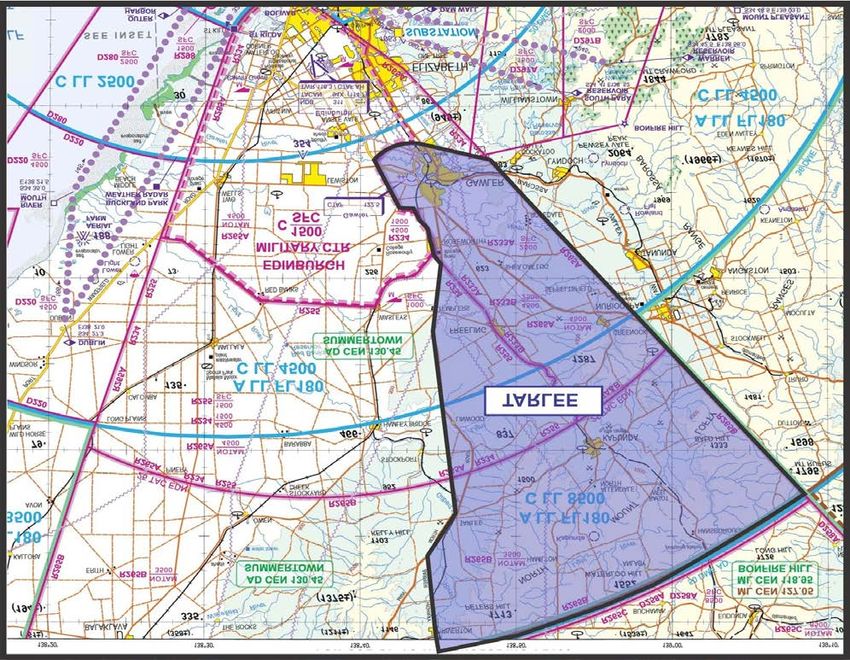
South Australia Manual of Air Traffic Services Supplementary Procedures

Change summary
          South Australia Manual of Air Traffic Services Supplementary Procedures
                           Version 37: Effective 20 February 2020
Location of        Change description                                                                  NRFC
change

1.2 Terms and      Updated definition of Edinburgh Circuit Area to incorporate 500ft inside R234
Definitions        to facilitate introduction of PC21 operations

2.1.3 PRD          JACC now manages changes to Defence-administered PRDs, in place of
Administration     FLTCDR 453SQN EDN FLT

2.3.1.1 Arbiter    Nomenclature change for arbiter and airspace administrator at Woomera. This
                   change flows through to further paragraphs in 2.3.1, 3.5.2.1 and 3.7.

2.3.15 R281        RCMF now responsible for NOTAM requests for R281 in place of the Army
Lake Hart

2.4.1.4 Rhynie     Remove reference to championship events and note about reduced military
and Owen           activity

3.2.1 EDN TWR Delete requirement for EDN TWR to retain control of ECA at all times. Change
              to Standard Airspace Release to align with changes to ECA definition

3.2.2 Adelaide     Entire section rewritten
TCU Services

3.5.0 Adelaide     Paragraph deleted
TCU
responsibilities

3.8.0 Confirm      Paragraph deleted
separation                                                                                             41233
responsibility

3.6.2              Incorporate TLI_18_0282
Coordination
between EDN
TWR, AD TCU
and PF TWR

3.6.3.3 AAN      Delete requirement to use H020 until clear
Responsibilities

3.11.5.0           Paragraph deleted
Adelaide TCU
responsibilities

3.6.5.1.1 Pilot    Now applies only to local aircraft (i.e. departures from YPED)
intentions

3.6.6 Parafield    Additional requirement to align with LoA_3107
arrivals

4.2.4 Hung         Reworded and added procedure for 92WG aircraft
Store Route

5 Contact          Various amendments to phone numbers and email addresses
Numbers
This document was created using Air Traffic Services (ATS) Operational Document Template (C-TEMP0256) Version 3.

                          View change summaries for the previous six months

2 of 40                                   Version 37: Effective 20 February 2020                    ATS-PROC-0003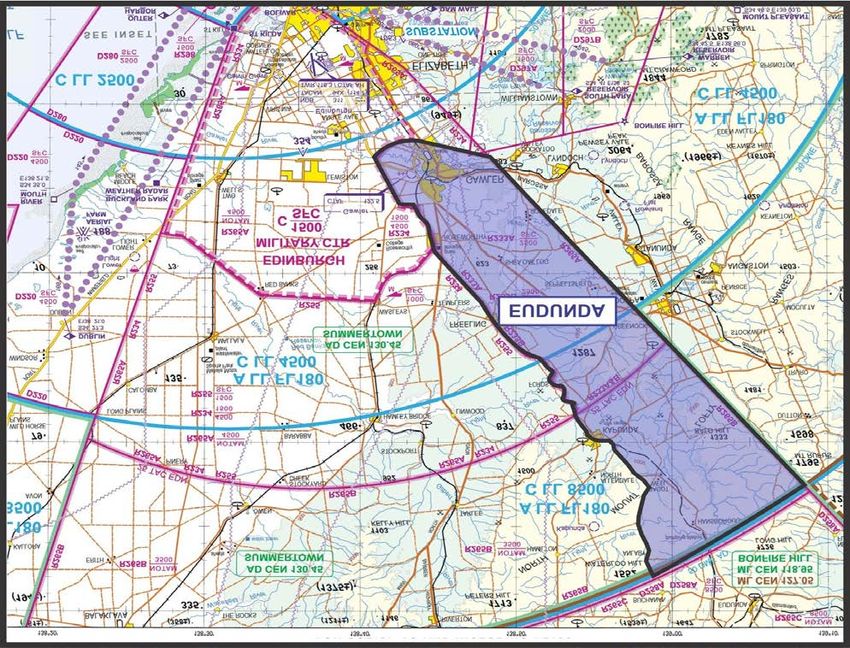
South Australia Manual of Air Traffic Services Supplementary Procedures

Table of contents
1               Definitions .................................................................................................................................. 5
1.1             Abbreviations and acronyms ....................................................................................................... 5
1.2             Terms and definitions .................................................................................................................. 6
2               Operational context .................................................................................................................. 7
2.1             Airspace administration ............................................................................................................... 7
2.2             Area of responsibility ................................................................................................................... 8
2.3             Airspace management and release responsibilities ................................................................... 9
2.4             EDTA and Adelaide Soaring Club (ASC) areas ........................................................................ 20
3               Normal operations .................................................................................................................. 25
3.1             Ancillary information .................................................................................................................. 25
3.2             Airspace management .............................................................................................................. 25
3.3             Requesting and recalling the ASC areas .................................................................................. 28
3.4             Separation responsibilities ........................................................................................................ 29
3.5             Restricted Areas activation and deactivation ............................................................................ 29
3.6             Coordination and control practices - EDN................................................................................. 30
3.7             Coordination and control practices - Woomera ........................................................................ 33
3.8             Coordination and control practices - Cultana Training Areas ................................................... 36
4               Business continuity ................................................................................................................ 37
4.1             ATS system management ......................................................................................................... 37
4.2             Aircraft emergency operations .................................................................................................. 38
5               Contact numbers..................................................................................................................... 39

ATS-PROC-0003                                       Version 37: Effective 20 February 2020                                                             3 of 40
South Australia Manual of Air Traffic Services Supplementary Procedures

                         This page is intentionally blank

4 of 40                   Version 37: Effective 20 February 2020                    ATS-PROC-0003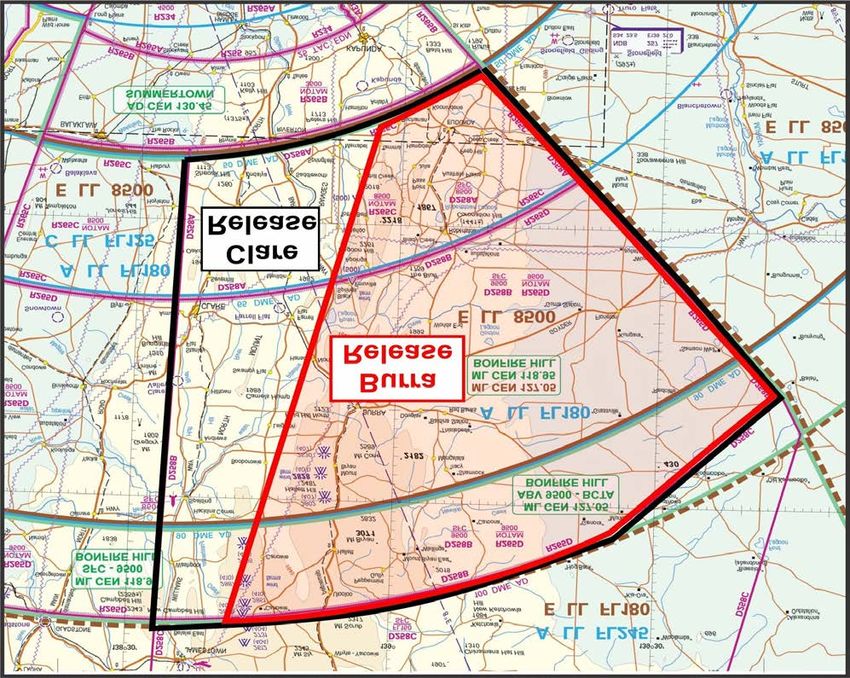
South Australia Manual of Air Traffic Services Supplementary Procedures

1          Definitions

1.1        Abbreviations and acronyms
            Abbreviation                 Definition

            Airservices

            AAE                          AD Approach East

            AAW                          AD Approach West

            AAN                          AD Approach North

            AFL                          AD Flow/Planner

            SM                           Shift Manager

            SM 3                         Shift Manager, Aisle Three

            SS                           System Supervisor

            AD TCU SM                    Adelaide TCU Shift Manager

            RAAF

            453SQN EDN FLT               453 Squadron Edinburgh Flight

            Navy

            FHQ                          Fleet Headquarters (Department of Defence)

            Army

            OCS                          Officer Conducting Serial

            Other

            AOSG                         Aerospace Operations Support Group

            ARDU                         Aircraft Research and Development Unit

            ASC                          Adelaide Soaring Club

            DSCW                         Defence Support Centre Woomera

            DSTG                         Defence Science and Technology Group

            ECA                          Edinburgh Circuit Area

            OCA                          Operational Command Authority

            RCMF                         Range Control Management Flight

            WR                           Woomera

           Note: See also Manual of Air Traffic Services (MATS) (NOS-SAF-2000) Part 1
                    Definitions.

ATS-PROC-0003                          Version 37: Effective 20 February 2020                    5 of 40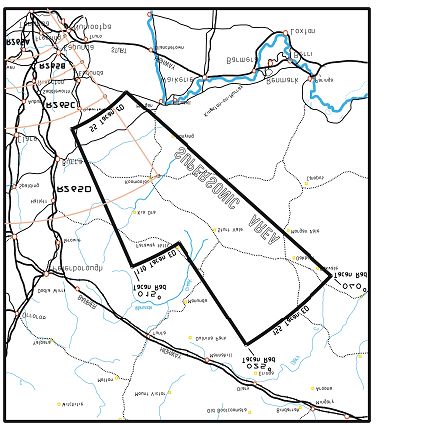
South Australia Manual of Air Traffic Services Supplementary Procedures

1.2       Terms and definitions
          Term                               Definition

          CUTA                               Cultana Training Area

          Edinburgh Circuit Area (ECA)       Vertical Dimensions: SFC – 2000 FT
                                             Lateral Dimensions: That portion of the EDN CTR bounded
                                             by the Gawler River to the north and the power line running
                                             from the Gawler River (1.5 NM south of the Gawler
                                             Township) to the south eastern boundary of the EDN CTR.
                                             Note: ECA encompasses the lateral portions described
                                                      above plus the overlaying portion of R234 from
                                                      1500 FT to 2000 FT

          Edinburgh Northern Area            That portion of the EDTA beyond 50 NM AD.
          (EDNA)

          Edinburgh Southern Area            That portion of the EDTA within 50 NM AD.
          (EDSA)

          Edinburgh Training Area            The combination of:
          (EDTA)                             1) EDN CTR north of the lateral limits of the ECA;
                                             2) R234 north of the lateral limits of the ECA;
                                             3) R265A north of the lateral limits of the ECA;
                                             4) R265B-D;
                                             5) R233A-B (when active); and
                                             6) R255 (when active).
                                             Excluding airspace subject to NOTAM activation for glider
                                             operations.

          Initial RWY 18                     4 NM north, displaced east of the extended centreline of
                                             the runway.

          Initial RWY 36                     2 NM south, displaced east of the extended centreline of
                                             the runway.

          Note:
          1) Military pilots operating in the ECA, EDSA, EDNA and EDTA will apply the
             appropriate navigation tolerances to contain the aircraft within the designated
             area(s).
          2) Military pilots tracking via initial RWY 36 will apply the appropriate navigation
             tolerances to contain the aircraft within the lateral confines of the ECA.

6 of 40                              Version 37: Effective 20 February 2020                    ATS-PROC-0003
South Australia Manual of Air Traffic Services Supplementary Procedures
2 Operational context
2.1 Airspace administration
2.1.1 Purpose
This document:
a) describes airspace management procedures (including operating procedures and
services provided to participating and non-participating aircraft);
b) describes the role of the airspace administrator; and
c) nominates the airspace arbiter and Controlling Authority.
2.1.2 References
The primary references for airspace and air route information is the Designated
Airspace Handbook.
2.1.3 Prohibited, Restricted and Danger area (PRD) administration
All Defence administered airspace and PRD area change proposals are centrally
managed through the Joint Airspace Control Cell (JACC). The Control Authority, as per
the Designated Airspace Handbook (e.g. FLTCDR 453SQN EDN FLT), is responsible
for coordinating any changes to airspace for which they are responsible with the JACC.
Requests for the establishment of temporary Defence PRD areas are to be directed to
the JACC. The JACC can be contacted via email adf.airspace@defence.gov.au.
Direct requests for temporary civil airspace to the OAR.
2.1.4 Primary User
The 'Primary User' is the airspace administrator and will establish a priority for the use
of the airspace.
The Primary User must only provide access to other users if the administrator's
commitments allow. This may mean the total exclusion of other airspace users.
Note:
1) Due to the restrictive nature of this function, the role of Primary User is seldom
applied by airspace administrators.
2) As an airspace administrator, Airservices normally performs the role of 'airspace
coordinator'.
ATS-PROC-0003 Version 37: Effective 20 February 2020 7 of 40South Australia Manual of Air Traffic Services Supplementary Procedures
2.1.5 Airspace coordinator
As airspace coordinator, the airspace administrator will:
a) designate airspace for its own use;
b) coordinate access to other airspace users in a manner which minimises overall
inconvenience and, as far as practical, evenly spread the inconvenience among all
users;
c) make every effort to accommodate activities, and adjust procedures and facilities
to achieve this; and
d) consider the effect of airspace decisions on general and military aviation activities
for which airspace is not specifically designated and provide for such activities
within the airspace as far as practical. Alternatively, minimise airspace activation to
reduce its effect on other airspace users.
2.1.6 Arbiter
The Arbiter is responsible for providing services and the daily management of the
airspace, and operates in accordance with the MATS Supplementary Procedures.
The various airspace administrators must agree on the management of the designated
airspace and operations within it.
The Arbiter does not need to be a direct employee of the airspace administrator.
2.2 Area of responsibility
2.2.1 Dimensions
The area of responsibility for airspace and airspace management covered by these
procedures is:
45 00 00S 129 00 00E, 26 00 00S 129 00 00E, 26 00 00S 141 00 00E, 45 00 00S
141 00 00E, 45 00 00S 129 00 00E.
8 of 40 Version 37: Effective 20 February 2020 ATS-PROC-0003South Australia Manual of Air Traffic Services Supplementary Procedures
2.2.2 Diagram
2.3 Airspace management and release responsibilities
2.3.1 Woomera Restricted Area management
Arbiter
The Commander - Air Warfare Centre (AWC) is the airspace administrator and
Approving Authority for Woomera (WR) Restricted Areas R222 A-J, R237, R246 A-C,
R273, R275, R281 and R287.
Range Control Management Flight – Range Control (RCMF) on behalf of Air Force
Test Ranges Squadron – Woomera Test Range) (AFTRSQN-WTR) as the 'Arbiter' is
responsible for the daily management of WR Restricted Airspace (WRX).
ATS-PROC-0003 Version 37: Effective 20 February 2020 9 of 40South Australia Manual of Air Traffic Services Supplementary Procedures
Airspace and NOTAM requests
Refer all requests for activation, review or cancellation of the Woomera areas to
RCMF.
RCMF must forward any requests for areas that are not wholly contained within the
Restricted Areas to FLTCDR 453SQN EDN FLT.
The airspace user must provide RCMF with sufficient notice of:
a) the required airspace;
b) times; and
c) activity heights.
RCMF must compile and forward NOTAM requests to EDN TWR for processing.
Airspace release and NOTAM content
Review or cancel the NOTAM if the activity:
a) ceases for longer than four hours; or
b) has finished more than one hour before the NOTAM end time.
NOTAM activation
EDN TWR must:
a) publish the NOTAM at least eight hours prior to activation;
b) publish any amendments required by the originator; and
c) send a confirmation email to RCMF and ML SS/SM 3 when the NOTAM is
published.
2.3.1.4.1 Email content and confirmation
Include the following details in the email:
a) The controlling authority for the airspace activation;
b) A prioritised list of contact numbers for the 'Arbiter' if different to this document; and
c) Detail if the activity is flying or non-flying
Note: The 'Arbiter' for WR airspace is normally a delegate from RCMF.
ML SS/SM 3 must contact EDN TWR/FLTCDR 453SQN EDN FLT if an email is not
received within 2-3 hours of the NOTAM being published.
Airspace user responsibilities when activating
When activating Woomera airspace, the airspace user must:
a) check the accuracy of the published NOTAM; and
b) contact RCMF 30 minutes prior to activity time.
RCMF must advise the airspace user:
a) of any restrictions to activity commencement; and
b) when the airspace can be used.
10 of 40 Version 37: Effective 20 February 2020 ATS-PROC-0003South Australia Manual of Air Traffic Services Supplementary Procedures
Flight planning
Flight Plan in accordance with the ERSA and FLIP EN ROUTE procedures for
operations at WR.
Annotate the landing/access approval number obtained from No. 20 Squadron Airbase
Command Post (20SQN ABCP) in Field 18 of the flight plan.
Note: ML Centre requires proof of approval for entry.
Relay flight plans to WR TWR
EDN TWR must relay flight plan details of WR flights to WR TWR.
Note: AFTN/CADAS facilities are not available at WR TWR.
Unsafe occurrence
Contact RCMF immediately when you:
a) become aware of an unsafe occurrence or that the range may be fouled; or
b) require activities to cease.
2.3.2 R222 A-J - Woomera - Military flying/non-flying - Projectile Test Area
Item Details
Controlling Authority and NOTAM FLTCDR 453SQN EDN FLT (Airspace
responsibility Coordinator)
Activation NOTAM
2.3.3 R231 Adelaide - Military flying
Item Details
Controlling Authority and NOTAM FLTCDR 453SQN EDN FLT (Primary User)
responsibility
Activation JO HJ or as amended by NOTAM
Service provider Adelaide TCU
Services Provided FIS , Alerting
FIS is provided to all Defence aircraft in
accordance with MATS Part 2 Chapter 2.4 for both
IFR and VFR
Separation is not provided between Defence
aircraft in R231. Separation is provided between
Defence and civil aircraft.
ATS-PROC-0003 Version 37: Effective 20 February 2020 11 of 40South Australia Manual of Air Traffic Services Supplementary Procedures
2.3.4 R233 A/B Edinburgh - Military flying
Item Details
Controlling Authority and FLTCDR 453SQN EDN FLT (Primary User)
NOTAM responsibility Coordinate Defence requirements with other user airspace
requests.
Activation NOTAM
Issue NOTAM on a weekly basis.
Service provider Adelaide TCU
Resumption of airspace If Defence need to recall the airspace, EDN TWR must:
1) release or amend NOTAM;
2) notify ASC by telephone; and
3) inform Adelaide TCU.
Adelaide TCU must make appropriate broadcasts on 130.45.
Services Provided Approach, Area, FIS, Alerting
2.3.5 R234 Edinburgh/R265 A/B/C/D Edinburgh CTR - Military flying
Item Details
Controlling Authority and NOTAM FLTCDR 453SQN EDN FLT (Primary User)
responsibility
Activation NOTAM
Service provider EDN CTR EDN TWR
Service provider R234, R265 A/B/C/D Adelaide TCU
Airspace release - no military AAN may release to AUG:
operations a) R265 A and B from FL250 and above; and
b) R265 C and D.
Services Provided Approach, Area, FIS, Alerting
2.3.6 R237 Woomera - Military flying
Item Details
Controlling Authority and NOTAM FLTCDR 453SQN EDN FLT (Airspace
responsibility Coordinator)
Activation NOTAM
2.3.7 R246 A/B/C Woomera - Military flying
Item Details
Controlling Authority and NOTAM FLTCDR 453SQN EDN FLT (Airspace
responsibility Coordinator)
Activation NOTAM
12 of 40 Version 37: Effective 20 February 2020 ATS-PROC-0003South Australia Manual of Air Traffic Services Supplementary Procedures
2.3.8 R254 North-East Rock - Military flying
Item Details
Controlling Authority and NOTAM FLTCDR 453SQN EDN FLT (Primary User)
responsibility
Activation NOTAM
2.3.9 R255 Edinburgh - Military flying
Item Details
Controlling Authority and NOTAM FLTCDR 453SQN EDN FLT (Primary User)
responsibility
Activation NOTAM
Service provider Adelaide TCU
Services Provided Approach, Area, FIS, Alerting
2.3.10 R259 A/B Middleback - Military flying/non-flying (firing)
Item Details
Controlling Authority and NOTAM ARMY RCO, CULTANA (Primary User)
responsibility The Army must send the NOTAM request to
453SQN EDN FLT at least one clear working day
prior to activation. 453SQN EDN FLT is
responsible for publishing the NOTAM on the
Army's behalf.
Activation NOTAM
2.3.11 R260 A/B Whyalla - Military flying/non-flying (firing)
Item Details
Controlling Authority and NOTAM ARMY RCO, CULTANA (Primary User)
responsibility The Army must send the NOTAM request to
453SQN EDN FLT at least one clear working day
prior to activation. 453SQN EDN FLT is
responsible for publishing the NOTAM on the
Army's behalf.
Activation NOTAM
2.3.12 R273 Woomera - Military flying (Projectile Testing Area)
Item Details
Controlling Authority and NOTAM FLTCDR 453SQN EDN FLT (Airspace
responsibility Coordinator)
Activation NOTAM
ATS-PROC-0003 Version 37: Effective 20 February 2020 13 of 40South Australia Manual of Air Traffic Services Supplementary Procedures
2.3.13 R275 Woomera - Military non-flying (Explosives Demolition)
Item Details
Controlling Authority and NOTAM Woomera Test Range (Controlling Authority in
responsibility DAH)
FLTCDR 453SQN EDN FLT (Primary User)
Activation NOTAM
2.3.14 R279 Edinburgh - Military flying/non-flying (firing)
Item Details
Controlling Authority and NOTAM FLTCDR 453SQN EDN FLT (Primary User)
responsibility
Activation NOTAM
Include details of military flying and/or non-flying
activities.
Confirm activation with Adelaide TCU.
Airspace release/resumption When activated for non-flying, R279 is released to
Adelaide TCU until resumed by OCS.
The OCS/FHQ must contact Adelaide TCU to:
a) resume the airspace at least 30 minutes
before commencement of activities; and
b) release the airspace back to Adelaide TCU on
completion of activities.
Service provider - Military activity AAW must provide ATS.
Note: R279 may be used for supersonic flights.
Service provider - Non military activity AAW may release the airspace:
a) beyond 36 NM AD to AUG; and
b) between 20 NM and 36 NM, A045 and below,
to AAR.
AUG may transfer responsibility for the released
airspace within KSC and TBD to the respective
controller.
Flight plans Flight plan will include 'OPS APPROVED IN
R279'.
Services Provided FIS, Alerting
FIS is provided to all Defence aircraft in
accordance with MATS Part 2 Chapter 2.4 for both
IFR and VFR
Separation is not provided between Defence
aircraft in R279. Separation is provided between
Defence and civil aircraft.
14 of 40 Version 37: Effective 20 February 2020 ATS-PROC-0003South Australia Manual of Air Traffic Services Supplementary Procedures
2.3.15 R281 Lake Hart - Military non-flying (Explosives Demolition)
Item Details
Controlling Authority and NOTAM FLTCDR 453SQN EDN FLT (Airspace
responsibility Coordinator)
Activation NOTAM
RCMF must send the NOTAM request to 453SQN
EDN FLT at least one full working day prior to
activation. 453SQN EDN FLT is responsible for
publishing the NOTAM on behalf of RCMF.
2.3.16 R282 Adelaide - Military flying/non-flying (firing)
Item Details
Controlling Authority and NOTAM FLTCDR 453SQN EDN FLT (airspace coordinator)
responsibility
Activation NOTAM
Include details of military flying and/or non-flying
activities.
Confirm activation with ML Centre.
Airspace release/resumption When activated for military non-flying, R282 is
released to ML Centre until resumed by OCS.
The OCS/FHQ must contact ML Centre to:
a) resume the airspace at least 30 minutes
before commencement of activities; and
b) release the airspace back to ML Centre on
completion of activities.
Service provider - Military activity KSC must provide ATS.
Note: R282 may be used for supersonic flights.
Service provider - No military activity KSC must provide ATS and:
a) coordinate responsibility status with
TBD/MLE/FOR/MUN; and
b) may release airspace within TBD/FOR to the
respective controller.
Flight plans Flight plan will include 'OPS APPROVED IN
R282'.
Services Provided FIS, Alerting
FIS is provided to all Defence aircraft in
accordance with MATS Part 2 Chapter 2.4 for both
IFR and VFR
Separation is not provided between Defence
aircraft in R282. Separation is provided between
Defence and civil aircraft.
ATS-PROC-0003 Version 37: Effective 20 February 2020 15 of 40South Australia Manual of Air Traffic Services Supplementary Procedures
2.3.17 R286 Pine Lea - Explosives storage
Item Details
Controlling Authority Safework SA Govt (Primary User)
Activation H24
2.3.18 R287 A/B/C Woomera - Military flying/Projectile Testing Area
Item Details
Controlling Authority and NOTAM FLTCDR 453SQN EDN FLT (Airspace
responsibility Coordinator)
Activation NOTAM
2.3.19 R289 A/B Murray Bridge - Military flying/non-flying (firing)
Item Details
Controlling Authority and NOTAM Army RCO Murray Bridge (Primary User)
responsibility
Activation R289A – D 2130–1330 EXPH (1HR EARLIER
HDS) or as amended by NOTAM
R289B - NOTAM
The Army must send the NOTAM request to
453SQN EDN FLT at least one clear working day
prior to activation. 453SQN EDN FLT is
responsible for publishing the NOTAM on the
Army's behalf.
16 of 40 Version 37: Effective 20 February 2020 ATS-PROC-0003South Australia Manual of Air Traffic Services Supplementary Procedures
2.3.20 R292 A/B/C/D/E/F Port Wakefield - Military flying/non-flying (firing)
Item Details
Controlling Authority and NOTAM Army RCO Wakefield (Primary User)
responsibility
R292A airspace classification R292A is:
a) 'FLYING/NON-FLYING' from SFC - A030; and
b) 'NON-FLYING' from A030 - A085.
Activation 292A - H24
292 B/C/D/E/F - NOTAM
The Army must send the NOTAM request to
453SQN EDN FLT at least one clear working day
prior to activation. 453SQN EDN FLT is
responsible for publishing the NOTAM on the
Army's behalf.
Activity containment Firing activity within R292A/B (including
appropriate buffers) must be kept west of a line
joining S34 15 57 E138 13 27 and S34 23 44
E138 16 09.
Note: This facilitates Airservices separation
between aircraft on or east of the AD 336R
and firing activity within R292 A/B.
Transit requests Pass requests to transit or operate within R292 to
the Officer Commanding P&EE Port Wakefield.
Note: Clearance may be available in unusual
circumstances such as MEDEVAC aircraft
or weather deviations.
Services Provided FIS, Alerting
FIS is provided to all Defence aircraft in
accordance with MATS Part 2 Chapter 2.4 for both
IFR and VFR
Separation is not provided between Defence
aircraft in R292. Separation is provided between
Defence and civil aircraft.
2.3.21 R302A/B Cultana Training Area (CUTA) - Military flying/non-flying (firing)
Item Details
Controlling Authority and NOTAM ARMY RCO, CULTANA (Primary User)
responsibility The Army must send the NOTAM request to
453SQN EDN FLT at least one clear working day
prior to activation. 453SQN EDN FLT is
responsible for publishing the NOTAM on the
Army's behalf.
Activation NOTAM
ATS-PROC-0003 Version 37: Effective 20 February 2020 17 of 40South Australia Manual of Air Traffic Services Supplementary Procedures
2.3.22 R303A/B Alamein - Military flying/non-flying (firing)
Item Details
Controlling Authority and NOTAM ARMY RCO, CULTANA (Primary User)
responsibility The Army must send the NOTAM request to
453SQN EDN FLT at least one clear working day
prior to activation. 453SQN EDN FLT will publish
the NOTAM on the Army's behalf.
Activation NOTAM
When access is requested When a release is required to allow MEDEVAC
transits or an aircraft has or will infringe the area,
the SM/SS/ORM must contact the CUTA RCO to
negotiate a release.
Provide the commencement and cessation times
of the release in UTC.
2.3.23 R304A/B Tank Hill - Military flying/non-flying (firing)
Item Details
Controlling Authority and NOTAM ARMY RCO, CULTANA (Primary User)
responsibility The Army must send the NOTAM request to
453SQN EDN FLT at least one clear working day
prior to activation. 453SQN EDN FLT will publish
the NOTAM on the Army's behalf.
Activation NOTAM
2.3.24 Edinburgh Supersonic Area
Dimensions
Lateral EDN TACAN between the 015R and 040R, from 55 to 110 NM, and
dimensions between the 025R and 040R, from 110 to 155 NM
Vertical limit FL245 to FL700 inclusive
Airspace coordinator
Airservices is the airspace coordinator for the Edinburgh Supersonic Area.
Airspace operations
2.3.24.3.1 Level used
Aircraft will operate between FL275 and FL670 to ensure vertical separation with
adjoining airspace users.
2.3.24.3.2 No priority
Military aircraft do not have any higher priority for operations within the supersonic area
than other airspace users.
Note: See also priorities for R265D where supersonic flights may operate.
18 of 40 Version 37: Effective 20 February 2020 ATS-PROC-0003South Australia Manual of Air Traffic Services Supplementary Procedures 2.3.25 Diagram ATS-PROC-0003 Version 37: Effective 20 February 2020 19 of 40
South Australia Manual of Air Traffic Services Supplementary Procedures

2.4         EDTA and Adelaide Soaring Club (ASC) areas

2.4.1       Subdivisions within EDTA - ASC areas
            EDTA is subdivided into the following areas to facilitate use of the airspace by the ASC
            and other civil aircraft when not required by the RAAF.

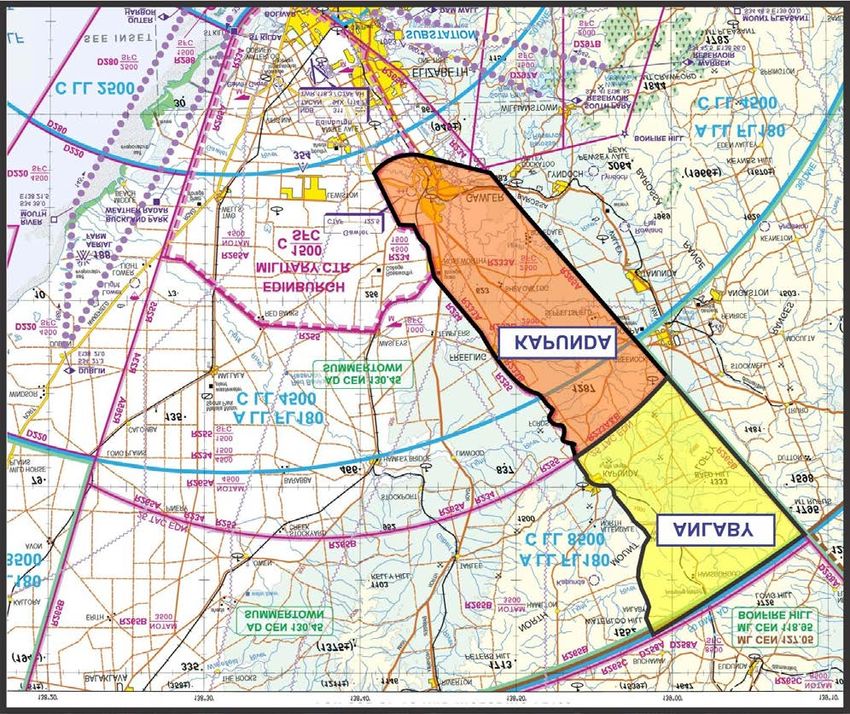
            Kapunda and Anlaby

            Subdivision         Description

            Kapunda             The portion of R265A within the lateral confines of R233A.

            Anlaby              The portion of R265B east of the Gawler to Kapunda Road, east of the
                                Kapunda to Eudunda Road to the commencement of Anlaby Road and
                                then east of Anlaby Road.

2.4.1.1.1   Kapunda and Anlaby diagram

20 of 40                               Version 37: Effective 20 February 2020                    ATS-PROC-0003
South Australia Manual of Air Traffic Services Supplementary Procedures
Eudunda
Subdivision Description
Eudunda The portion of R265A within the lateral confines of R233A plus the
portion of R265B east of the Gawler to Kapunda Road, east of the
Kapunda to Eudunda Road to the commencement of Anlaby Road and
then east of Anlaby Road.
2.4.1.2.1 Eudunda diagram
ATS-PROC-0003 Version 37: Effective 20 February 2020 21 of 40South Australia Manual of Air Traffic Services Supplementary Procedures
Tarlee
Subdivision Description
Tarlee The portion of R265A within the lateral confines of R233A plus the
portion of R265A and B east of the Roseworthy - Templers Road, and
a straight line joining Templers and Tarlee, then the Tarlee to Broken
Hill Highway.
2.4.1.3.1 Tarlee diagram
22 of 40 Version 37: Effective 20 February 2020 ATS-PROC-0003South Australia Manual of Air Traffic Services Supplementary Procedures
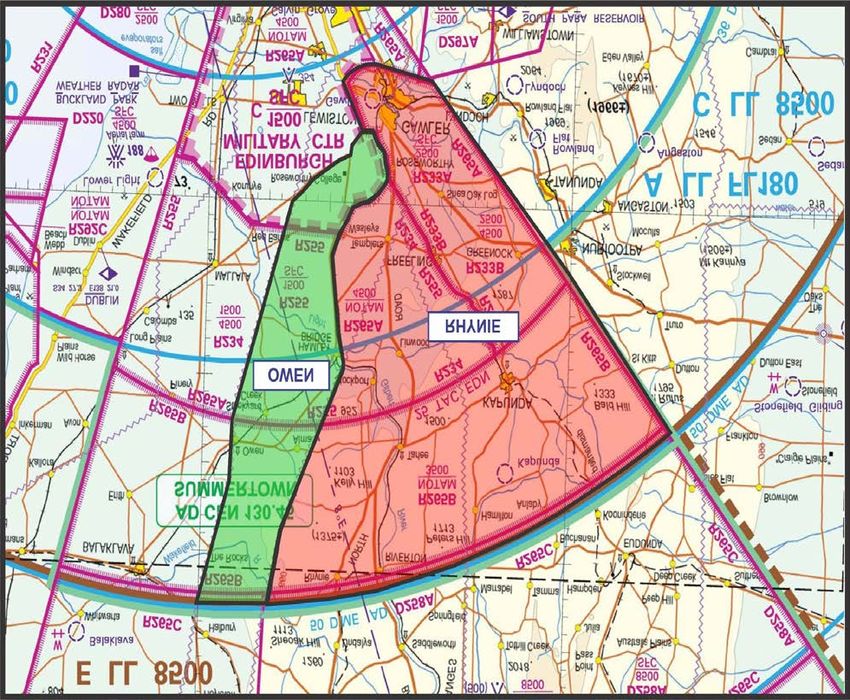
Rhynie and Owen
Subdivision Description
Rhynie The portion of R265A within the lateral confines of R233A plus the
lateral portion of R265A and B east of the railway line from Roseworthy
township to Hamley Bridge, and then the main power line to the
northern boundary of R265B.
Provide at least two weeks written notice of requests for use of this
area to RAAF Edinburgh
Owen The portion of R265 A and B east of the Gawler to Redbanks Road to
the intersection of the power line that runs from the Sub Station through
Owen northward, then east of this power line and west of the Rhynie
Area.
Vertical limits: SFC to A100.
Provide at least two weeks written notice of requests for use of this
area to RAAF Edinburgh.
2.4.1.4.1 Rhynie and Owen diagram
ATS-PROC-0003 Version 37: Effective 20 February 2020 23 of 40South Australia Manual of Air Traffic Services Supplementary Procedures
Burra and Clare
Subdivision Description
Burra The portion of R265C and D east of a line from, S34 12.6 E138 58.5
and S33 17.0, E138 41.0
Clare The portion of R265C and D east of a line from, S34 06.9 E138 35.4
and S33 16.7 E138 32.0
Vertical limits: SFC to FL140
2.4.1.5.1 Burra and Clare diagram
2.4.2 Services provided within the subdivisions
Class G services are provided by:
a) Adelaide TCU in Kapunda, Anlaby, Eudunda, Tarlee, Rhyna and Owen areas on
130.45; and
b) Barossa in Clare and Burra areas on 118.95.
Note: ASC aircraft will maintain a listening watch on the ASC club frequencies.
24 of 40 Version 37: Effective 20 February 2020 ATS-PROC-0003South Australia Manual of Air Traffic Services Supplementary Procedures
3 Normal operations
3.1 Ancillary information
3.1.1 Using communications lines
All Adelaide TCU units except AAN must identify themselves before speaking on L782.
3.1.2 Airspace display
Use text area and Eurocat maps to depict who is providing services within the
Restricted Areas.
3.2 Airspace management
3.2.1 EDN TWR
When open, EDN TWR may:
a) release the portion of the EDN CTR and R234 outside of the ECA to AAN. When
coordinating, describe this area using the phrase 'STANDARD AIRSPACE
RELEASE'; or
b) negotiate higher levels within the lateral confines of the ECA/CTR on a case by
case basis.
ATS-PROC-0003 Version 37: Effective 20 February 2020 25 of 40South Australia Manual of Air Traffic Services Supplementary Procedures
3.2.2 Adelaide TCU Services
Adelaide TCU must provide an approach control service to YPED.
Dedicated AAN services will be provided between 0800-2100 local time (2230 UTC to
1130 UTC adjusted for daylight savings) Mon to Thu and 0800-1700 local time
(2230 UTC to 0730 UTC adjusted for daylight savings) Fri.
Services will be provided to aircraft in active Restricted Areas as described in
Section 2.
If during the above hours Adelaide TCU is unable to provide a dedicated AAN service:
1) Adelaide TCU shall advise EDN Tower as soon as possible.
2) Operations will not be serviced on the discrete frequency
3) Approach/Area Services will be provided to a total of three aircraft at any one time
as per the following configuration:
i) One aircraft operating in EDSA and EDNA (maximum 1 military aircraft in each
restricted area) and
ii) One aircraft conducting practice instrument approaches. Approach/Area
services are not provided to military traffic in R231 or R279.
4) Arrivals and departures to/from EDN are not included when calculating the
restrictions in point 3 above, however these aircraft may experience delays when
transiting to or from restricted areas due normal AIP priorities and controller
workload.
5) Services may be further limited by ATC to ensure operational safety.
6) EDN Tower will assist with deconfliction of departing aircraft from other aircraft
which are already operating in restricted areas prior to issuing an airways
clearance.
3.2.3 AAN
AAN must apply a 1000 FT vertical buffer to EDN TWR airspace.
26 of 40 Version 37: Effective 20 February 2020 ATS-PROC-0003South Australia Manual of Air Traffic Services Supplementary Procedures
3.2.4 Priorities for use of Restricted Areas
General Airspace Priorities
ATC will regulate operations to minimise the possibility of conflict and, provided that
safety is in no way jeopardised, will apply priorities in accordance with AIP ENR 1.4
Regulation of Flight - Assessment of priorities except that the exceptions to “first come,
first served” under normal circumstances will be:
a) priorities at AIP ENR 1.4 10.1 firstly and then in the following order:
i) Defence Test Schedule;
ii) with equal status:
• Defence aircraft (other than training flights)1
• aircraft engaged in the personal transport of:
• State Governors or the Administrator of the Northern Territory; and
• State Premiers or Chief Ministers of Territories
• Medical Aircraft (HOSP) operations;
iii) Defence training flights2
iv) with equal status
• scheduled commercial air transport operations into and out of Adelaide
aerodrome
• non-scheduled commercial air transport operations into and Adelaide
aerodrome
v) all other non-scheduled commercial air transport operations proceeding to and
from Adelaide and Parafield aerodromes not covered in subpara (i) to (iv)
above, excluding balloons
vi) with equal status
• Aero agriculture operations into and out of Calvin Grove airfield
• general aviation aircraft proceeding to or from Adelaide and Parafield
aerodromes
• civil training flights
• other operations (including balloons)
b) Training flights priority will be given in the following order:
i) Defence flights operating in the traffic pattern in general use will be given
priority over Defence and civil flights desiring to operate in conflicting patterns
for training purposes; and
ii) when a Defence training instrument approach is approved, priority will be
given to that aircraft from the time it commences its final approach until the
approach is completed
R279/R282
When R279 or R282 is active, prioritise aircraft operations as follows:
1) Traffic priorities listed in AIP ENR 1.4 10.1;
2) Military operations for which the airspace was activated;
3) As per General Airspace Priorities above.
ATS-PROC-0003 Version 37: Effective 20 February 2020 27 of 40South Australia Manual of Air Traffic Services Supplementary Procedures
3.3 Requesting and recalling the ASC areas
3.3.1 When Restricted Areas are active
When the RAAF are able to approve ASC airspace requests, EDN TWR must:
a) advise Adelaide TCU; and
b) issue a NOTAM for the affected airspace.
3.3.2 When Restricted Areas are released
If the affected Restricted Areas are subsequently released by EDN TWR,
Adelaide TCU must issue a NOTAM for the affected airspace.
3.3.3 Areas affecting Barossa
When the areas affect Barossa, Adelaide TCU will advise the relevant sector of the
area(s) available for glider activities and to what altitude.
Barossa must then:
a) display the level(s) using the TXA function; and
b) request the SM activate the relevant RMAP(s).
3.3.4 Recalling the ASC areas
EDN TWR must advise ASC and Adelaide TCU when the ASC areas must be recalled.
Adelaide TCU must:
a) advise Barossa if affected;
b) broadcast the recall on 130.45; and
c) instruct known aircraft in the airspace to report clear.
When Clare and Burra areas are recalled, Barossa must:
a) broadcast the recall on 118.95; and
b) instruct known aircraft in the airspace to report clear.
Note: Aircraft must vacate the recalled area as soon as practical and in any case
within 30 minutes.
28 of 40 Version 37: Effective 20 February 2020 ATS-PROC-0003South Australia Manual of Air Traffic Services Supplementary Procedures
3.4 Separation responsibilities
3.4.1 EDN TWR
EDN TWR must separate aircraft operating within EDN TWR airspace and all
coordinated traffic.
When the ATIS advises 'Expect Visual Approach', EDN TWR must provide visual
separation within 5 NM of EDN between:
a) aircraft departing YPED and entering Adelaide TCU's airspace; and
b) coordinated arriving aircraft where tracks or headings:
i) do not cross; and
ii) vary by more than 35 degrees.
EDN TWR must advise Adelaide TCU when visual separation can not be provided.
Note: An aircraft conducting a missed approach or go-around from an instrument
approach is considered to be a departure from that runway once passed the
MAPT.
Ensure the inbound aircraft are on the tower frequency when applying separation.
3.5 Restricted Areas activation and deactivation
3.5.1 Activation procedures - Edinburgh Supersonic Area
Prior to operations within Required action
Edinburgh Supersonic Area
AAN Advise AUG of intended use:
a) At taxi, negotiate service provision with AUG; and
b) Advise any variation to activity times.
AUG Check with TBD, MUN, MLE, WRA and OPL sectors
for restrictions.
3.5.2 Activation/deactivation procedures - Woomera
Woomera airspace
Before Woomera Airspace is Required action
activated
WR ATC Contact ML Centre to advise activation time and
receive details of transiting/inbound traffic.
RCMF Advise ML Centre of anticipated release time or
cessation if expected different to NOTAM times.
ATS-PROC-0003 Version 37: Effective 20 February 2020 29 of 40South Australia Manual of Air Traffic Services Supplementary Procedures
Woomera TWR
When Woomera TWR is Required action
activated
WR ATC Advise ML SM 3
ML Centre SS/SM 3 Advise WR ATC the appropriate phone number for
coordination.
When Woomera TWR is Required action
deactivated
WR ATC Advise ML SM 3
3.6 Coordination and control practices - EDN
3.6.1 Runway change
EDN TWR must advise AAN when an imminent runway change will affect a
coordinated sequence.
3.6.2 Coordination between EDN TWR, Adelaide TCU and Parafield Tower
EDN TWR must coordinate: With:
a) Activation times or changes to EDN Restricted Areas; AD TCU SM
b) Change of Duty Runway
c) Change in approach requirements; and
d) Opening and closing EDN TWR.
a) Airspace negotiations within the lateral confines of the EDN CTR; AAN
b) All airspace requirements and restrictions within EDN CTR;
c) Changes to flight plan requirements when coord with AFL position is
inappropriate; and
d) NEXT call (for departure instructions).
a) Clearance, type of departure and code/advice of taxiing aircraft and AFL
runway if departing from a non duty runway; and
b) When an IFR or SVFR aircraft will be operating exclusively in EDN
TWR airspace when Parafield Tower is closed.
a) Opening and closing EDN TWR; and PF COORD
b) When an IFR or SVFR aircraft will be operating exclusively in EDN
TWR airspace when Parafield Tower is open.
After receiving coordination from Adelaide TCU, any restrictions for Adelaide TCU
Parafield arrivals and departures.
30 of 40 Version 37: Effective 20 February 2020 ATS-PROC-0003South Australia Manual of Air Traffic Services Supplementary Procedures
EDN TWR must coordinate: With:
For aircraft transiting from EDN airspace to PF airspace: Parafield Tower
a) Callsign
b) flight category
c) estimate for Edinburgh (or abeam if not tracking overhead)
d) cleared level
Coordination should be carried out 3 minutes prior to the estimate.
Aircraft should be cleared either at A015 or on climb to A015 wherever
possible.
Parafield Tower must coordinate: With:
a) Opening and closing Parafield Tower; EDN SMC
b) When VMC does not exist in the Parafield CTR;
c) When an IFR aircraft is taxiing for a RWY 03 SID (RADAR) to check
the availability of Circuit East Procedure (any expected delay);
Note: This is not a request for the procedure but a check of the
availability. Normal TCU/EDN TWR Circuit East Procedure
apply.
d) When an IFR or SVFR (due visibility) aircraft will be arriving or
departing via Class G airspace or operating exclusively in Parafield
Tower airspace (outside the circuit) when EDN TWR is active.
Adelaide TCU must coordinate: With:
The possibility of a missed approach at EDN during CTAF operation by Parafield Tower
Category C or above aircraft
Arrivals and departures to PF that affect EDN TWR EDN TWR
Note: This coordination is also done on behalf of Parafield Tower.
3.6.3 PF Circuit East procedures - Parafield operations and the ECA
Circuit East procedure
When an IFR aircraft requires departure from Parafield on the RWY 03 SID (RADAR),
AAN may request the Circuit East procedure.
EDN TWR responsibilities
EDN TWR must consider priorities of MIL users within the ECA. If approving the Circuit
East procedure, restrict VFR traffic in the ECA on or west of the RWY 18/36 centreline.
AAN responsibilities
When the Circuit East Procedure is approved, AAN is responsible for separation of
YPED IFR arrivals and departures with Parafield Circuit East procedure operations.
Note: The tracking tolerance of aircraft departing Parafield on this SID infringes the
ECA. These procedures ensure traffic in the ECA is separated from aircraft
departing Parafield on the RWY 03 SID (RADAR).
ATS-PROC-0003 Version 37: Effective 20 February 2020 31 of 40South Australia Manual of Air Traffic Services Supplementary Procedures
3.6.4 Departures from YPED
EDN TWR responsibilities
Issue a SID (RADAR) to all IFR departures unless an alternative is requested by the
pilot.
Assign 'MAINTAIN A040' or the requested level if lower at clearance delivery.
3.6.5 Arrivals to YPED
AAN responsibilities
3.6.5.1.1 Pilot intentions
Obtain the pilot's intentions for aircraft that have departed YPED and advise EDN TWR
as part of the inbound coordination.
3.6.5.1.2 Transfer aircraft
Transfer aircraft to EDN TWR on:
1) an IAL when leaving the lowest holding altitude; or
2) a VSA when established within the ED CTR or 10 NM, whichever is later.
3.6.5.1.3 Sequence/spacing
Provide at least three track miles between the leading aircraft as it crosses the landing
threshold of the duty runway and the following aircraft.
3.6.5.1.4 Leading aircraft on a VSA
When the lead aircraft is conducting a VSA, and provided EDN TWR accepts
responsibility for separation, the following aircraft must be:
a) vertically separated with no restrictions; and
b) transferred to EDN TWR not below A025.
Note: This is not required when both aircraft are conducting a straight-in VSA on
RWY 18.
3.6.5.1.5 Leading aircraft on an IAL
Assure separation when the lead aircraft is conducting an IAL, until it has:
a) landed; or
b) been issued with an alternative clearance by EDN TWR and they accept
responsibility for separation and sequencing.
You must also consider the possible missed approach path.
EDN TWR responsibilities
3.6.5.2.1 Restrictions
Advise AAN of any restrictions on YPED arrivals.
Note: Restrictions may include pending departures.
32 of 40 Version 37: Effective 20 February 2020 ATS-PROC-0003South Australia Manual of Air Traffic Services Supplementary Procedures
3.6.5.2.2 Sequence/spacing
Once a sequenced aircraft enters EDN TWR airspace, you may adjust the sequence
(e.g. expedite a leading aircraft or delay a following aircraft) provided it will not impact
on any other coordinated traffic.
3.6.5.2.3 Leading aircraft on a VSA
In the event of a go-around, restrict the lead aircraft conducting a VSA to not above
A015 until another form of separation can be established with following traffic.
3.6.6 Parafield arrivals
When EDN TWR is open and an aircraft is transferred from Class C airspace to
Parafield Tower, the PF ADC must issue instructions that will track:
a) an IFR/SVFR aircraft direct to Parafield until within the PF CTR and entering the
circuit (unless otherwise coordinated);
b) a VFR aircraft direct to Parafield until within the PF CTR;
c) an aircraft from overhead ED, or between ED and the Main North Road, direct to
final RWY 21 while remaining west of Main North Road; or
d) an aircraft from overhead ED direct to mid-downwind RWY 03L to be established in
the circuit by mid-downwind.
Note: Back coordination for levels below those assigned by Adelaide TCU or
EDN TWR is not required.
3.7 Coordination and control practices - Woomera
3.7.1 SAR responsibility in Woomera Restricted Areas
SAR responsibility within the Restricted Areas or for aircraft landing at WR airfield is
held:
a) from the nominated transfer time by WR TWR when open; or
b) by ML Centre.
3.7.2 Coordination
Complete procedural coordination in accordance with MATS between WR TWR and
ML Centre.
ML Centre must also provide WR TWR with:
a) an estimate for the Restricted Area boundary;
b) SSR codes for departing aircraft; and
c) details of arriving flights that are unable to quote a valid approval number.
ATS-PROC-0003 Version 37: Effective 20 February 2020 33 of 40South Australia Manual of Air Traffic Services Supplementary Procedures
3.7.3 Emergency access
ML Centre responsibilities
If emergency access to WR airspace or airfield is required, Central must advise SM 3.
Provide the ETA and other relevant details.
The SS/SM 3 must relay details to RCMF to obtain landing approval.
Note: Diversions due to aircraft emergencies will be accommodated. All other
diversions will be considered for approval based on reasons for diversion and
priority.
RCMF responsibilities
When advised that emergency access is required, RCMF must contact trial/activity
managers and instruct them to cease activity, then:
a) contact ML Centre to advise them of activity cessation and receive details of
transiting/inbound aircraft; or
b) release airspace to ML Centre and advise them of activity details to facilitate
expeditious entry of emergency aircraft.
3.7.4 Woomera area release to ML Centre
RCMF/WR TWR responsibilities
When open, WR TWR must obtain approval from RCMF before releasing any
Restricted Areas.
Note: Other activities may be occurring within the areas.
RCMF/WR TWR may release Woomera Restricted Airspace to ML Centre:
a) during prolonged periods of inactivity; and
b) if activities cease prior to the NOTAM end time for daily activities.
RCMF must ensure that all activity that may affect aviation has ceased and advise the
following items to ML Centre:
a) time of release;
b) useable levels;
c) transiting aircraft; and
d) time when airspace will be resumed.
Note: Normally the minimum period for release of airspace to ML Centre will be two
hours duration.
3.7.4.1.1 Details of release
When arranging the release, provide ML SM with:
a) a definite transfer and acceptance of affected airspace; and
b) specifically state each Restricted Area.
ML Centre responsibilities
ML Centre will provide services within the released areas in accordance with the extant
airspace structure.
34 of 40 Version 37: Effective 20 February 2020 ATS-PROC-0003South Australia Manual of Air Traffic Services Supplementary Procedures
Phraseology example
RCMF/WR TWR R222F, R222G (as applicable) released to ML Centre from …
(time) to … (time), all aircraft to be established outside of
released airspace by … (time).
ML Centre Accept R222F, R222G (as applicable) released to ML Centre
from … (time) to … (time), all aircraft to be established outside
of released airspace by … (time).
3.7.5 Resuming airspace from ML Centre
ML Centre must ensure all aircraft are established out of the restricted area by the
stated time.
Complete a handover of the airspace between ML Centre and RCMF/WR TWR before
resuming activities within the areas.
30 minutes before resuming the Required action
airspace
Airspace user Contact RCMF
RCMF Advise the airspace user of restrictions to
activities and the time airspace can be
resumed.
Before resuming the airspace Required action
WR ATC Contact ML Centre to advise of airspace
resumption and receive details of transiting
aircraft.
When WR ATC are not operating, RCMF Contact ML Centre to advise of airspace
resumption and confirm there are no transiting
aircraft.
Advise ML Centre of anticipated release time or
cessation if expected different to NOTAM.
ATS-PROC-0003 Version 37: Effective 20 February 2020 35 of 40South Australia Manual of Air Traffic Services Supplementary Procedures
3.8 Coordination and control practices - Cultana Training
Areas
3.8.1 JACC approval
Forward all CUTA airspace requests to the JACC for de-confliction purposes. Once
JACC approves, they will forward the NOTAM request to EDN for action.
3.8.2 Woomera and CUTA activation
If Woomera (R222A-G, R246A-C, R273, R287C) and CUTA areas must both be active
simultaneously above FL180, Adelaide TCU may tactically manage aircraft in R265 to
facilitate AD arrivals on H135.
36 of 40 Version 37: Effective 20 February 2020 ATS-PROC-0003South Australia Manual of Air Traffic Services Supplementary Procedures
4 Business continuity
4.1 ATS system management
4.1.1 Equipment failure
When EDN navigation aids fail during EDN CTAF hours, TCU OCA must:
a) advise FLTCDR 453SQN EDN of the failure; and
b) issue a NOTAM detailing the failure.
FLTCDR 453SQN EDN FLT is responsible for callout notification.
4.1.2 ATS civil contingency
When an ATS contingency affects Airservices administered airspace, the ORM or
Contingency Response Manager will forward a checklist appropriate to the contingency
to the relevant Defence unit(s) by fax or email. Defence will use the checklist to
respond to the ATS contingency.
Note: See MATS for the checklist template.
4.1.3 ATS EDN TWR contingency
When EDN TWR requires evacuation, or communications facilities fail, EDN TWR ATS
must:
a) advise Adelaide TCU and provide a contact number prior to evacuation or as soon
as practical;
b) release the circuit area; and
c) provide a traffic statement to AAN.
On receipt of advice, Adelaide TCU must:
a) deactivate the EDN CTR;
b) implement CTAF procedures; and
c) broadcast a Hazard alert.
EDN TSPR and Adelaide TCU OCA will negotiate the resumption of tower services or
deactivation of airspace.
ATS-PROC-0003 Version 37: Effective 20 February 2020 37 of 40South Australia Manual of Air Traffic Services Supplementary Procedures
4.2 Aircraft emergency operations
4.2.1 AEP during ED CTAF hours
Adelaide TCU OCA must contact EDN Fire Tower when an aerodrome emergency
occurs during ED CTAF hours.
4.2.2 Stores/fuel tank Jettison
Jettison stores/fuel tanks in the following areas, in order of preference, when required:
1) Port Wakefield Restricted Areas;
2) Gulf of St. Vincent, on a westerly heading;
3) RWY 04/22 at EDN, heading northeast and beyond taxiway Delta; and
4) The remainder of EDN airfield avoiding personnel and fixed installations.
4.2.3 Premeditated ejection
When a premeditated ejection is required consider the following parameters:
Parameter Details
Height 3000 to 5000 FT
Heading Seawards at right angles to the coast
Position The general area around, but inland from the mouth of Light River
(295EDN015) and no further south than the Gawler River
Note: Edinburgh is adjacent to built up areas and aircraft captains are to ensure that
the local populace is exposed to the least possible danger from abandoned
aircraft, compatible with the survival of the crew abandoning the aircraft.
4.2.4 Hung Store Route
The Hung Store Route is:
Position TACAN bearing/distance
River Mouth 292/14.5
River 1 311/12.2
River 2 351/18.2
ILS Base 357/18.3
Intercept ILS 002/16.7
Note:
1) A Hung Store Route facilitates the safe tracking of a military aircraft with 'Hung
Stores' to Edinburgh. This route ensures the aircraft tracks over low populated
areas before intercepting the RWY 18 ILS final.
2) 92WG aircraft will request the RIKAB [number] ECHO STAR in place of the Hung
Store Route. Other military aircraft may request vectors to EDN via the Hung Store
Route.
38 of 40 Version 37: Effective 20 February 2020 ATS-PROC-0003South Australia Manual of Air Traffic Services Supplementary Procedures
5 Contact numbers
Contact Phone number/email
Airservices
Adelaide TCU 03 9235 2012
ML Centre 03 9235 7420 or
03 9235 7579
ML Centre SM 3 03 9235 7492
ml.sm3@airservicesaustralia.com
Melbourne Centre SS melbourne.ss@airservicesaustalia.com
RAAF
EDN TWR 08 7383 2114
453SQNEDN.TOWER@defence.gov.au
EDN Fire Tower 08 7383 2333
EDNFIRE-DUTYSTNOFFICERS@defence.gov.au
FLTCDR 453SQN EDN 08 7383 2110 453EDN.FLTCDR@defence.gov.au
Woomera Control Tower (RAAF) 08 8674 3232
0429 036 140
44WGHQ.TACOPS@defence.gov.au
Woomera - in order of priority
1) Arbiter (RCMF); 08 8674 3370, divert to duty mobile
ednawcaftrsqn-
rcmfrangecontrol@dpe.protected.mil.au
2) Woomera Safety Controller 08 8674 4265
(WSC)
ednawcaftrsqn-
rcmfrangecontrol@dpe.protected.mil.au
3) Senior Range Operations 08 7383 2627
Manager (SROM)
ednawcaftrsqn.opscell@defence.gov.au
4) RCMF Fax 08 8674 3308
Army
CUTA RCO - in order of priority Phone 08 8642 2377
Mobile #1 0408 834 094
Mobile #2 0417 388 234
Officer Commanding Proof and 0439 403 886 (H24)
Experimental Establishment Port 08 8867 0270
Wakefield S.A.
ATS-PROC-0003 Version 37: Effective 20 February 2020 39 of 40South Australia Manual of Air Traffic Services Supplementary Procedures
This page is intentionally blank
40 of 40 Version 37: Effective 20 February 2020 ATS-PROC-0003You can also read


