Australian Unity Property Income Fund - Product Disclosure Statement 30 September 2019 - IOOF
←
→
Page content transcription
If your browser does not render page correctly, please read the page content below

Australian Unity
Property Income Fund

Product Disclosure Statement
30 September 2019

Issued by: Australian Unity Property Limited ABN 58 079 538 499 AFS Licence No. 234455
Important information
The wholesale class of securities (‘Wholesale Securities’ or                This PDS has been prepared to comply with the requirements of the
‘Wholesale Security’) in the Australian Unity Property Income Fund          laws of Australia. No units are being offered to any person whose
ARSN 094 220 498, APIR YOCO 100AU (referred to as Property                  registered address is outside of Australia unless AUPL is satisfied
Income Fund or the Fund) offered under this Product Disclosure              that it would be lawful to make such an offer. The distribution of this
Statement (PDS) are issued by Australian Unity Property Limited             PDS in jurisdictions outside of Australia may be restricted by law and
(AUPL) ABN 58 079 538 499, AFS Licence No. 234455 in its capacity           persons who come into possession of this PDS should seek their own
as Responsible Entity.                                                      advice on and observe any such restrictions. Any failure to comply with
                                                                            such restrictions may constitute a violation of applicable securities
AUPL is a wholly-owned subsidiary of Australian Unity Limited
                                                                            laws. This PDS does not constitute an offer or invitation in any place in
ABN 23 087 648 888 and is a member of the Australian Unity Group
                                                                            which, or to any person to whom, it would not be lawful to make such
of companies, undertaking investment activities at Australian Unity,
                                                                            an offer or invitation.
generally known as Australian Unity Wealth & Capital Markets.
                                                                            Currency
In this PDS, the description we, us or our refers to AUPL and
                                                                            All dollar amounts referred to in this PDS are in reference to the
business day refers to a Melbourne business day on which
                                                                            Australian currency.
Australian banks are open for business. In Melbourne banks are
closed Saturday and Sunday.                                                 Seeking financial advice
                                                                            This PDS contains important information but does not take into
Applications
                                                                            account individual investment objectives, financial situation or
An investment in the Fund, including through the units offered
                                                                            particular needs. Before making any decision based upon information
under this PDS, is not guaranteed or otherwise supported by AUPL,
                                                                            contained in this PDS, investors should read it carefully in its entirety
Australian Unity Limited, or any member of the Australian Unity Group.
                                                                            and consider consulting with a financial adviser or tax adviser.
Investors should consider this when assessing the suitability of the
investment and particular aspects of risk.                                  Fees and charges set out in this PDS, unless otherwise stated, are
                                                                            inclusive of Goods and Services Tax (GST) less input tax credits
Applications for investment in the Fund can only be made using the
                                                                            (including approximate reduced input tax credits) that the Fund is
Application Form which forms part of this PDS or otherwise provided
                                                                            entitled to claim.
by AUPL.
                                                                            A list of defined terms used within this PDS can be found in the
This PDS is available in electronic format via
                                                                            glossary section on page 32.
australianunity.com.au/wealth. If a copy has been received via email,
please ensure that the entire PDS and Application Form have been
received. If unsure whether the electronic document is complete, please
call 13 29 39. A paper copy of this PDS is available free of charge by
contacting your financial adviser or Australian Unity’s Investor Services
Team on 13 29 39.
This PDS can only be used by investors receiving it (electronically or
otherwise) in Australia. No investments will be accepted on the basis
of this document once it is replaced with a later PDS.
AUPL has authorised the use of this PDS for investors considering
placing an investment through a master trust, wrap or similar platform
product (which are collectively known and referred to as Investor
Directed Portfolio Service or IDPS). In this PDS, the operator of that
IDPS product will be referred to as IDPS operator. Information for
IDPS investors can be found on page 18.
Contents
A snapshot of the Fund                                                          2                                  Related party transactions                                                      16
Disclosure principles and benchmarks                                            4                                  Making investments and withdrawals                                              18
Managing your investment                                                        5                                  Unit prices and distribution payments                                          20
The team managing the Fund                                                      6                                  Risks of managed investment schemes                                             21
About the Fund                                                                  8                                  Fees and other costs                                                           23
How the Fund works                                                              9                                  Other information                                                              29
Direct property portfolio details                                               11                                 Glossary                                                                       33
Property development                                                           16                                  Application form                                                               33
Valuation policy                                                               16

     Obtaining other information before making a decision
Visit australianunity.com.au/wealth for further information about this Fund, including:
•    Unit prices and performance
•    Fund updates
•    Continuous disclosure notices and
•    Announcements.
It’s recommended that investors obtain and review such information before investing in a fund. Alternatively,
investors can call the Investor Services Team on 13 29 39 who will send the requested information free of charge.

Benefits of the Fund

              Income paid quarterly                                      The potential for capital growth                                  Access to property investments
                                                                          over the medium to long term                                     without the obligations of direct
                                                                                                                                                 property ownership

       Daily liquidity offering greater                               Opportunity to invest in properties                                               Potential for tax
    flexibility compared to many direct                                 which may not otherwise be                                                      deferred income
         property investment funds                                         available to individuals

There are risks associated with every investment and it is important that investors consider the risks of investing and take into account their own personal investment goals and financial situation.
Risks of managed investment schemes are explained on page 21.
                                                                                                                                                                                                         1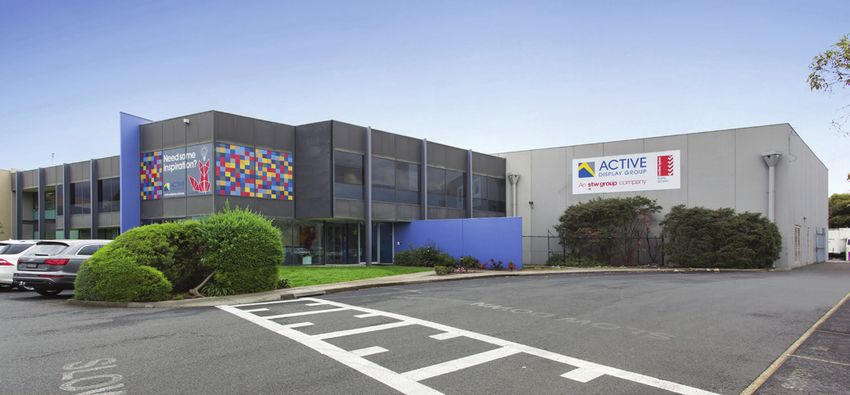
Property Income Fund Wholesale Units – Product Disclosure Statement

A snapshot of the Fund

    Key features                 Description                                                                                      Further information

    Responsible Entity           Australian Unity Property Limited (AUPL), ABN 58 079 538 499, AFS Licence No. 234455

    Investment Manager           AUPL is the investment manager of the Fund.

    Unit class offered           Wholesale Units are offered under this PDS.

    APIR code                    YOC0 100AU

    Benefits of the Fund         • Income paid quarterly                                                                                    Page 1
                                 • The potential for capital growth over the medium to long term
                                 • Access to a diversified property portfolio without all the obligations of direct property
                                    ownership.

    Key risks                    • Tenant default                                                                                           Page 21
                                 • Reduction in property values and Australian REIT prices
                                 • Withdrawals may be limited, or investors may not receive the full amount requested,
                                    within investors’ investment timeframe.

    Fund features

    Property portfolio           The Fund holds direct property assets, unlisted property funds and listed Australian Real                  Page 11
    diversification              Estate Investment Trusts (Australian REITs) with diversification across property sectors,
                                 geographic locations, tenants and lease terms.

    Gearing ratio                As the Fund does not have borrowings there is no applicable gearing ratio. The Fund’s                      Page 10
                                 underlying investments may borrow.

    Interest cover ratio         As the Fund does not have borrowings there is no applicable interest cover ratio. The                      Page 10
                                 Fund’s underlying investments may borrow.

    Withdrawals                  The Fund is currently open for daily withdrawals, which will normally be paid within                       Page 19
                                 five business days. The written request must be received by 3pm at AUPL’s Melbourne
                                 office on a business day to receive the withdrawal price effective for that day. In times of
                                 abnormal operating or market conditions, or periods of excessive withdrawals, the Fund
                                 may take up to 180 days to pay withdrawals. Should the Fund cease to be liquid, as defined
                                 in the Corporations Act (which investors will be notified of as soon as is practicable), daily
                                 withdrawals will cease. In that case, withdrawals from the Fund will only be available in
                                 response to a withdrawal offer made to all investors from time to time, in accordance with
                                 the Corporations Act.

    Distribution payments        The Fund expects to pay distributions via Funds from Operations (FFO). FFO is the main                    Page 20
                                 method used for calculating and deciding on the level of distribution to pay investors. To
                                 do this AUPL reconciles net profit to FFO and the Fund’s distribution. If required AUPL may
                                 make adjustments to the net profit (for instance if economic performance is weak or there’s a
                                 decline in the value of the stock market) to ensure distribution is covered by the FFO.

2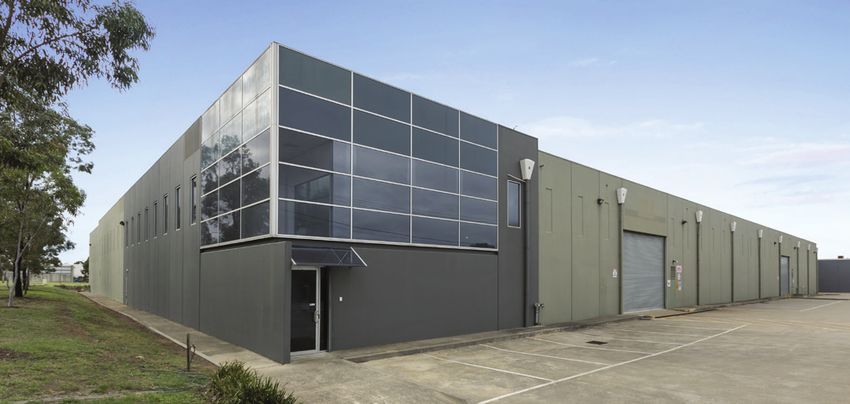
Key features                     Description                                                                                                             Further information

  Other Fund information

  Borrowings                       Nil.                                                                                                                                  Page 10

  Property valuations              Generally conducted annually by qualified independent valuers.                                                                        Page 15

  Related party                    All transactions, including those with related parties, are conducted on commercial terms                                             Page 16
  information                      and on an arm’s length basis.

  Minimum investment amounts1

  Initial investment               $5,000

  Additional investment            $1,000 (or $100 per month for Regular Savings Plan)
  amount
                                                                                                                                                                         Page 18
  Minimum withdrawal               $1,000
  amount

  Minimum balance                  $5,000

  Fees and costs of the Fund

  Base management fee              0.94% p.a. (exclusive of GST) of the net asset value of the Fund.

  Recoverable expenses             In addition to the base management fee the Fund is entitled to recover all expenses
                                                                                                                                                                 Further information
                                   properly incurred in the performance of duties to 0.05% p.a. of the average net asset value
                                                                                                                                                                is outlined in page 24
                                   of the Wholesale Units for the 12 months to 30 June 2019.
                                                                                                                                                                      of the PDS.
  Indirect Costs                   Estimated to be 0.44% of the average net asset value of the Fund for the 12 months to
                                   30 June 2019.

  Buy/Sell spread                  Buy spread: 0.80%
                                                                                                                                                                         Page 27
                                   Sell spread: 0.20%

1. AUPL reserves the right to vary minimum investment amounts and to accept or reject any investment (in whole or in part) at the Fund’s discretion without explanation. If investing through a
   master trust or investor directed portfolio service (IDPS), the minimums detailed above may not apply. Refer to the master trust or IDPS operator’s offer document. See page 18
   ‘Making investments and withdrawals’ for more information.

                                                                                                                                                                                                  3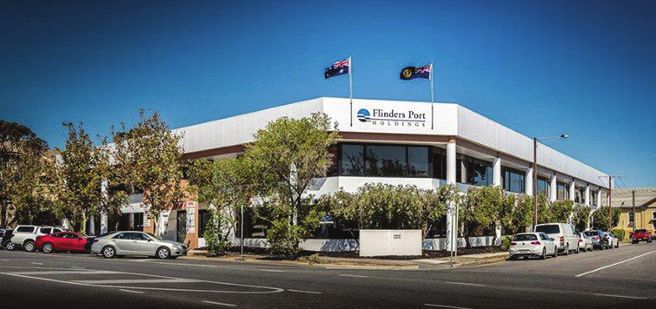
Disclosure principles and benchmarks

The Australian Securities and Investments Commission (ASIC) requires responsible entities
of unlisted property schemes in which non-professional investors invest, to provide a statement
addressing six benchmarks and eight disclosure principles.

These benchmarks and principles have been addressed in this                      The Property Council of Australia and the Property Funds Association
PDS. The benchmarks and disclosure principles are contained in                   have issued their supplement to this Regulatory Guide 46 in the form
ASIC Regulatory Guide 46: Unlisted property schemes – Improving                  of their RG46 Voluntary Practice Note.
Disclosure for Retail Investors.
                                                                                 The information in this PDS should be read in conjunction with the Fund’s
                                                                                 latest Annual Report which is available at australianunity.com.au/wealth or
                                                                                 by calling 13 29 39.

    Benchmarks                     Does the Fund satisfy the benchmark?                                                            Further information

    1 Gearing policy               The Fund doesn’t have borrowings therefore there is no applicable gearing ratio                 Page 10

    2 Interest cover policy        The Fund doesn’t have borrowings therefore there is no applicable interest cover ratio          Page 10

    3 Interest capitalisation      The Fund doesn’t have borrowings therefore there is no applicable interest capitalisation       Page 10

    4 Valuation policy             Yes                                                                                             Page 16

    5 Related party transactions   Yes                                                                                             Page 16

    6 Distribution practices       Yes                                                                                             Page 20

    Disclosure principles          Does the Fund satisfy the Disclosure principles?                                                Further information

    1 Gearing ratio                The Fund doesn’t have borrowings therefore there is no applicable gearing ratio                 Page 10

    2 Interest cover ratio         The Fund doesn’t have borrowings therefore there is no applicable interest cover ratio          Page 10

    3 Scheme borrowing             Yes                                                                                             Page 10

    4 Portfolio diversification    Yes                                                                                             Page 9

    5 Related party transitions    Yes                                                                                             Page 16

    6 Distribution practices       Yes                                                                                             Page 20

    7 Withdrawal arrangements      Yes                                                                                             Page 19

    8 Net tangible assets          Yes                                                                                             Page 17

4
Managing your investment

Australian Unity’s ambition is to serve and enhance the wellbeing of members, customers
and community.

Australian Unity’s Wealth and Capital Markets platform brings together      Properties purchased are carefully selected after assessing the value,
the Investments, Property, Life & Superannuation, Financial Planning and    considering inherent risks, and the ability to mitigate those risks.
Trustee Services arms of the Australian Unity Group. The fundamental        The selection process also takes into account:
purpose of Australian Unity Wealth and Capital Markets is to link
                                                                            • Location attributes such as demographic profile, road and services
valuable efforts in helping Australians secure their financial wellbeing
                                                                               infrastructure and the level of competition; and
with the social, capital and infrastructure needs of our communities.
                                                                            • Property specific criteria such as the quality of buildings, tenant and
                                                                               lease profile, opportunities to enhance or redevelop the property to
Investment philosophy                                                          protect and/or grow future income potential and capital value.
It’s AUPL’s philosophy that the market price for properties doesn’t         To optimise investor’s return the portfolio and property assets are
always reflect the underlying value. This may present an opportunity        actively managed.
to generate value by buying and selling properties at the most optimal
time. Value can also be achieved and investment risk mitigated by skilful
property and tenant management carried out by Australian Unity.

                                                                  To optimise investor’s return the portfolio
                                                                  and property assets are actively managed.

                                                                                                                                                        5
The team managing the Fund

The property investment managers within AUPL are among the most experienced in Australia.
They have a successful track record in managing diversified property funds.

                        David Bryant, FAICD, F Fin, FIML                                              Mark Pratt
                        Chief Executive Officer – Wealth & Capital Markets                            Executive General Manager – Property
                        Chief Investment Officer, Australian Unity Group                              Australian Unity

David joined Australian Unity in 2004. He is Chief Executive Officer for      Mark joined Australian Unity in 2004. As Executive General Manager
Wealth & Capital Markets and is also Chief Investment Officer for the         – Property, he is responsible for the commercial management and
Australian Unity Group. He is responsible for Australian Unity’s financial    growth of Australian Unity’s real estate investment management and
services and investment activities spanning investment management,            development businesses.
advice, trustee services, life and superannuation, as well as the Group’s
                                                                              Australian Unity actively manages more than $3.5 billion in commercial
property, development and capital management activities. He is a board
                                                                              property assets; including the listed Australian Unity Office Fund,
member of many of its operating entities and joint venture subsidiaries.
                                                                              unlisted funds in healthcare and commercial property, as well as
David is a Director of the Financial Services Council, Co-Deputy              commercial and development debt funding. Australian Unity is also
Chairman of its Board and Co-Chair of its Advice Board Committee.             the Master Developer of the $1.1 billion redevelopment of the Herston
                                                                              Quarter healthcare precinct in Brisbane. This project is set to provide
Prior to joining Australian Unity in 2004, David was Chief Operating
                                                                              Queenslanders with access to state-of-the-art health, hospital and aged
Officer at Perpetual Personal Financial Services, and has held senior roles
                                                                              care services, as well as creating international standard research and
in financial services, asset consulting, and banking, for both Australian
                                                                              educational facilities.
and international organisations. His various roles have encompassed
responsibilities for business across the Asia Pacific region.                 Prior to his current role, Mark was Chief Operating Officer for Australian
                                                                              Unity Wealth & Capital Markets. Mark is on the Committee of the
                                                                              Property Funds Association, and the Melbourne Racing Club and a
                                                                              former member of the Victorian Division Council of the Property Council
                                                                              of Australia. He holds a Bachelor of Commerce – Accounting from the
                                                                              University of NSW.

More than anything else, Australian Unity
exists to help people thrive.

6
Mark Lumby                                                                  Peter Lambden
                        Head of Commercial Property                                                 Head of Advisory and Valuations
                        Australian Unity                                                            Australian Unity

Mark joined Australian Unity in 2011 and is responsible for Australian      Peter is responsible for tactical and strategic property advice,
Unity’s commercial property funds.                                          management of our valuation function and risk review within our
                                                                            mortgage and property portfolios.
Mark has over 20 years’ experience in the property and funds
management industry. Mark has also held roles with Investa Property         Peter has 47 years’ experience inproperty portfolio and management,
Group, Stockland and Trafalgar Corporate.                                   spending the majority of his early career in senior roles with National
                                                                            Mutual (now AXA/AMP) and Local Government.
Mark holds a Bachelor of Business (Accounting) from the University of
Technology, Sydney. He is also an Associate of the Institute of Chartered   Peter has a Diploma in Agricultural Science and a Diploma in Business
Accountants in Australia and is Chairman of the Property Council of         Studies – Valuations from RMIT. He has held a number of senior positions
Australia’s Wholesale and Retail Fund Managers Forum.                       with industry bodies, including president of the Australian Property
                                                                            Institute and executive member of the Property Council of Australia.
                                                                            He is a fellow of the Australian Property Institute and a member of the
                                                                            Property Council of Australia.

                        Damian Diamantopoulos                                                       Tim Kemp-Bishop
                        Portfolio Manager & Head of Research Property                               Property Portfolio Manager
                        Australian Unity                                                            Australian Unity

Damian joined Australian Unity in 2016 as Portfolio Manager and Head        Tim joined Australian Unity in 2008, and is responsible for the
of Research Property. He has over 17 years’ experience in investment        day-to-day direct property management of the Fund.
management and research of both listed and unlisted property securities
                                                                            Prior to joining Australian Unity, Tim was employed in a variety
as well as direct property. Prior to joining Australian Unity, Damian
                                                                            of property and asset management roles with ANZ and AMP
managed various property securities funds during his time at Karara
                                                                            Capital Investors.
Capital and 360 Capital Group. Damian also has experience in managing
several A-REIT and direct property funds having concluded an extensive      Tim holds a Bachelor of Communications from Canberra University and
12-year career at APN Property Group. Damian graduated with a               Diplomas in Commercial Property Asset Management and Property
Bachelor’s Degree in Commerce from Monash University, has completed         Investment Finance from the Property Council of Australia. Tim is a
the FINSIA Graduate Diploma in Applied Finance and Investment and           licenced real estate agent and is the Officer in Effective Control of
holds a Diploma in Property Investment and Finance from the Property        Australian Unity Property Management Pty Ltd.
Council of Australia.

                                                                                                                                                      7
About the Fund

The Fund focuses on delivering sustainable and consistent income to investors across a range
of property asset types.

This includes investing in direct property assets, units in unlisted
property investments and listed Australian REITs. These investment
structures have varying performance, risk and liquidity characteristics
providing portfolio diversification.                                                  Who should invest in the Fund?
                                                                           This Fund is typically suited to investors who:
Through investing in a range of different property assets and cash,
the Fund aims to maintain a sound level of liquidity, generally enabling
                                                                           • Seek regular stable income payments
investors to request withdrawals when they choose.                         • Want some direct property exposure, but may need to
                                                                               access all or part of their investment at relatively short notice
The Fund has been operating since December 1998.                           •   Want to invest in a diversified property portfolio
                                                                           •   Have at least a five-year investment outlook
                                                                           •   Want daily unit pricing.
                                                                           •   Want a property investment with no direct gearing.

      Australian Unity has a track record of helping
      Australians to thrive by building wealth
      through quality investments.

8
How the Fund works
Investors’ applications are pooled together to purchase direct property assets, units in unlisted property funds and
listed Australian REITs. By investing in (or holding) A-REITs and cash, the Fund generally has sufficient liquidity to
meet day-to-day operating expenses, to make asset purchases and to provide liquidity (withdrawals) for investors.
Rent from the Fund’s properties, interest earned on cash holdings and The Fund primarily invests in the following types
distributions from the Fund’s unlisted and listed assets generate income of investments:
for the Fund. This income is used to meet management fees, property-
related expenses and ongoing Fund expenses. Once these costs and
Direct Property assets and Unlisted
provisions are met, the remaining income is distributed to investors.
property funds
The capital growth (or loss) on investment is attributed to the value of
40–70% of the Fund’s assets are invested in direct
the Fund’s properties and changes in the valuation of other assets held
property and unlisted property funds.
by the Fund, such as unlisted property funds and listed Australian REITs.
Unlisted property funds predominantly invests
Investment process in direct property and are not listed on the
stock exchange.
The Fund uses a top-down investment approach, which incorporates an
The properties held include (but are not limited to):
analysis of the broad economic trends impacting the various property
markets in which the Fund operates. A bottom-up view is used to identify Commercial (e.g. office buildings)
undervalued investment opportunities across various property sectors, Retail (e.g. shopping centres)
investment structures and geographic locations. Using this approach, and Healthcare (e.g. hospitals or medical centres)
separate yield analysis, a preferred allocation between direct property, Industrial (e.g. warehouses)
unlisted property funds and the listed Australian REIT sector is achieved. The Fund’s property portfolio is diversified by
The Fund uses the above information in assessing and investing in direct geographic locations and sectors, which helps to
property assets and unlisted property funds. reduce specific property risk.
Listed Australian REITs
These are trusts listed on the Australian Securities
Exchange and the Fund invests 20–50% in the
listed Australian REITs sector.
Cash
The balance of the Fund is held in cash and similar
investments.
Direct property
The direct property portfolio is diversified by sector (commercial, retail
and industrial), tenant profile and geographic location. The Australian
Unity Property team builds strong relationships with tenants and
where appropriate they develop suitable long-term expansion
and/or improvement strategies for the Fund’s direct properties to
maximise growth. As part of managing these properties the team
seeks to put in place carefully structured leases, with the aim of achieving
predictable, annual and growing rental income and capital growth over
the medium to long term.
9Unlisted property Gearing ratio, interest cover ratio and interest capitalisation
The Fund invests in a number of unlisted property funds including those The gearing ratio/policy, interest cover ratio/policy and interest
managed by Australian Unity. These investments provide potential capitalisation does not apply to this Fund, as the Fund has no direct
exposure to a more diversified portfolio of real estate assets than would borrowings, nor does it currently intend to do so in the future.
be possible by solely investing directly with the objective to enhance the
overall portfolio diversification. Portfolio
Listed Australian REITs The financial information provided below is extracted from the Fund’s
accounting and property management records as of 30 June 2019 and
The Fund invests in the Australian Unity A-REIT Fund to gain exposure is based upon audited financial records unless stated otherwise.
to the listed Australian REIT sector. The Australian Unity A-REIT Fund
at the date of this PDS is managed by the Australian Unity Real Estate Asset allocation at 30 June 2019
Investment Trust team, led by Damian Diamantopoulos. The Fund
may invest in ASX listed property stocks directly and currently holds Asset class ($million) (%)
an investment in the Australian Unity Office Fund. Exposure to listed
Australian REITs provides a different return profile than other property Direct property 69.15 29.00
investments, as well as providing enhanced liquidity.
Listed Australian REITs 92.78 38.90
Cash
Unlisted property 46.66 19.57
A component of the Fund is held in cash and similar investments primarily
for liquidity purposes. Cash and cash equivalents 29.90 12.54
Derivatives Total 238.49 100.00
The Fund’s current policy is not to use derivatives for gearing or
speculative purposes. The investment manager is permitted to use
Exposure to listed Australian REITs ($million)
derivatives for asset allocation purposes and to manage risks within the
portfolio. The Fund does not typically use gearing; however, from time to Australian Unity A-REIT Fund 85.04
time some underlying investments may themselves use gearing.
Australian Unity Office Fund 7.74
Borrowings
Total 92.78
Under the Fund’s Constitution, AUPL has the power to:
• Borrow and raise money for the purposes of the Fund and to grant
security over the Fund’s assets, and Unlisted property portfolio ($million)
• Incur all types of obligations and liabilities.
Australian Unity Diversified Property Fund 11.65
Although the Fund has no direct borrowings and does not currently intend
to borrow in the future, the Fund has exposure to investments that may Australian Unity Retail Property Fund 11.09
themselves borrow.
Australian Unity Healthcare Property Trust 9.99
Planum Footscray Fund 9.93
Waverley Gardens Syndicate Fund 4.00
Total 46.66
Value can also be achieved and investment risk
mitigated by skilful property and tenant management.
10Direct property portfolio details
The information below provides details as of 30 June 2019 on the current diversification of the Fund. The Fund’s
portfolio and diversity will change over time as assets are acquired or disposed and tenancies are re-let.
Direct property details1 Direct property details1
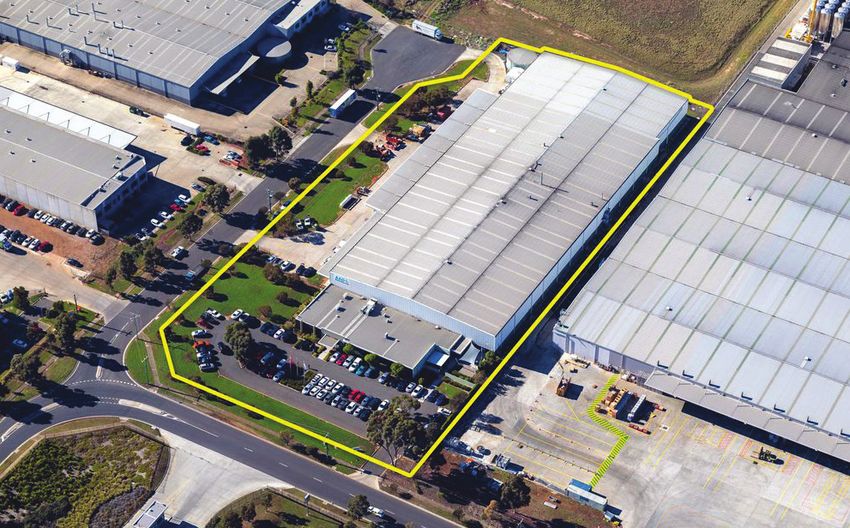
23 Fiveways Boulevard, Keysborough VIC 40 Allara Street, Canberra ACT
Lettable area (m2) 4,638 Lettable area (m2) 5,830
Major tenants(s) Active Display Group Major tenants(s) Australian Government Department
Number of tenants 1 Number of tenants 6
Occupancy rate (% by income) 100 Occupancy rate (% by income) 76.61
WALE (years by income)2 0.92 WALE (years by income)2 0.72
Valuation details3 Valuation details3
Current valuation ($m) 6.90 Current valuation ($m) 18.50
Income valuation date February 2019 Income valuation date December 2018
Capitalisation rate (%)4 6.50 Capitalisation rate (%)4 8.25
Book value ($m) 6.94 Book value ($m) 18.75
Market commentary Market commentary
The property is an industrial warehouse that is located in Keysborough, This property was exchanged on 19 July 2019 to Meriton for $23.00 million
Victoria approximately 30 kilometres south-west of the Melbourne CBD. (against the external valuation of $18.50 million). Settlement is expected to
occur on or about 30 June 2020.
11Direct property details1 Direct property details1
296 St. Vincent Street, Port Adelaide SA 10 International Square, Tullamarine VIC
Lettable area (m2) 3,537 Lettable area (m2) 4,305
Major tenants(s) Flinders Ports Major tenants(s) Synergy Packaging
Number of tenants 3 Number of tenants 1
Occupancy rate (% by income) 95.32 Occupancy rate (% by income) 100
WALE (years by income)2 7.02 WALE (years by income)2 2.00
Valuation details3 Valuation details3
Current valuation ($m) 9.00 Current valuation ($m) 4.85
Income valuation date December 2018 Income valuation date March 2019
Capitalisation rate (%)4 7.25 Capitalisation rate (%)4 7.00
Book value ($m) 11.05 Book value ($m) 4.85
Market commentary Market commentary
The property is a two-level, commercial office building located in a prime The property is an industrial warehouse in Tullamarine, Victoria and is
commercial precinct of Port Adelaide, South Australia. ideally located in close proximity to Melbourne Airport, with direct access
via Melrose Drive.
At Australian Unity, we understand that generating
value out of today’s financial market comes down
to buying and selling well.
12Direct property details1 Direct property details1
65 Beverage Drive, Tullamarine VIC 2-10 Bliss Court, Derrimut VIC
Lettable area (m2) 6,250 Lettable area (m2) 9,715
Major tenants(s) Synergy Packaging Major tenants(s) Specialist Wholesalers
Number of tenants 1 Number of tenants 1
Occupancy rate (% by income) 100 Occupancy rate (% by income) 100
WALE (years by income)2 2.09 WALE (years by income)2 3.89
Valuation details3 Valuation details3
Current valuation ($m) 6.50 Current valuation ($m) 11.35
Income valuation date July 2018 Income valuation date October 2018
Capitalisation rate (%)4 7.25 Capitalisation rate (%)4 6.25
Book value ($m) 6.51 Book value ($m) 12.24
Market commentary Market commentary
The property is an industrial warehouse that is located close to the airport The property benefits from a high profile corner site and is situated in
at Tullamarine, Victoria. This location makes it ideal as a transport and Gilbertson Estate. It has strong connectivity to surrounding road network,
logistics facility. including Western Ring Road, Western Freeway, West Gate Freeway, Princes
Freeway and Deer Park Bypass.
Application Form 13Direct property details1 Direct property details1
6/133 South Pine Road, Brendale QLD 11/133 South Pine Road, Brendale QLD
Lettable area (m2) 3,796 Land area (m2) Circa 4,040 square metres
Major tenants(s) Pazstone Major tenants(s) -
Number of tenants 1 Number of tenants -
Occupancy rate (% by income) 100 Occupancy rate (% by income) -
WALE (years by income)2 9.46 WALE (years by income)2 -
Valuation details3 Valuation details3
Current valuation ($m) 7.03 Current valuation ($m) 1.12
Income valuation date May 2019 Income valuation date May 2019
Capitalisation rate (%)4
6.50 Capitalisation rate (%)4
-
Book value ($m) 7.59 Book value ($m) 1.22
Market commentary Market commentary
The property is a brand new free standing warehouse facility in a general Lot 11 comprises of vacant parcel of land of 4,040 square metres. The
industry allotment. It benefits from a 10 year lease which started in land has a development approval to construct industrial improvements of
November 2018. approximately 2,200 square metres.
1. The direct property information on this table is current as at 30 June 2019. Please refer to the Fund’s announcements page available from our website australianunity.com.au/wealth for full details on any
changes to the Fund’s direct property portfolio post this date.
2. Weighted Average Lease Expiry by base rental income including net market rent for vacancies.
3. Valuation Policy – Regular valuation of underlying property assets is an important aspect of managing the Fund. Valuations are conducted by qualified independent valuers in accordance with industry
standards. We have a policy of generally obtaining independent valuations on Fund direct properties each year. Additionally, as part of our active management approach, we may test asset values on market.
At times we may enter arrangements at arm’s length with third parties which may impact the value of assets within the portfolio including, but not limited to, put and call options in respect of all or part of an
asset within the portfolio. If the value of an asset is impacted in this way, the value may replace the last independent valuation obtained. The direct property information in this table is current as at 30 June
2019. Please refer to the Fund’s announcements page available from our website australianunity.com.au/wealth for full details on any changes to the Fund’s direct property portfolio post this date.
4. A market capitalisation rate is the rate, expressed as a percentage that reflects the likely yield a property will generate over the medium term. It has regard to a property’s unique characteristics
and is a measure of the property’s risk/return profile with higher rates reflecting higher risk and its function is to convert a property’s income into value. The market capitalisation rate is assessed by the
independent valuer by dividing the average net property income of the property or a portfolio of properties by the assessed valuation of the property or portfolio, excluding costs of acquisitions and fees.
14Total (T)/ Weighted Average (A)
Number of tenants 14 (T)
Occupancy rate (% by income) 89.54 (A)
WALE (years by income)1 2.98 (A)
Current valuation ($m) 65.25 (T)
Capitalisation rate (%)2 7.06 (A)
Book value ($m) 69.15 (T)
1. Weighted Average Lease Expiry by base rental income including net market rent for vacancies.
2. A market capitalisation rate is the rate, expressed as a percentage that reflects the likely yield a property will generate over the medium term. It has regard to a property’s unique characteristics
and is a measure of the property’s risk/return profile with higher rates reflecting higher risk and its function is to convert a property’s income into value. The market capitalisation rate is assessed
by the independent valuer by dividing the average net property income of the property or a portfolio of properties by the assessed valuation of the property or portfolio, excluding costs of
acquisitions and fees.
Key direct property portfolio statistics data at 30 June 2019
Geographic allocation (by value) Property sector (by value) Top 5 tenants (by income)
15.97% 44.17% 56.91% 43.09% 24.99% 23.87%
10.70% 14.89%
27.12%
12.67% 12.88%
12.74%
VIC (4 Asset) QLD (2 Asset) Industrial (2 Assets) Australian Government Dept.
ACT (1 Asset) SA (1 Asset) Office (6 Assets) Synergy Packaging Specialist Wholesalers
Flinders Ports Active Display Group
Others (excluding vacancy)
Direct property lease expiry profile by income as at 30 June 2019
% of gross passing rental income
50%
40%
30%
20%
10%
0%
Vacant 2020 2021 2022 2023 2024 2025 2026 2027 2028 2029 2030+
Year of lease expiry
15Property development
AUPL believes the Fund can enhance its existing properties and add further value to investors through selective
exposure to property development. Property development means the construction of a new building, significant
increases to the lettable area of a building or significant changes to the nature or use of the property.
In managing the Fund’s property portfolio, AUPL may refurbish or Under the Related Party Policy, by written agreement and on an arm’s
redevelop properties from time to time, as required. Material property length basis, the Fund appointed Australian Unity Property Management
developments will only be undertaken where, substantial pre- (AUPM), ABN 76 073 590 600 to provide the following services:
commitments to lease are in place and development risk is appropriately
• Strategic advice on and arranging the sale and acquisitions
mitigated. There are no development projects for the Fund as of the date
of property
of this PDS.
• Facility management
Valuation policy • Debt arranging, structure advice, facility negotiation and management
(if applicable)
AUPL holds a valuation policy with which this Fund complies. The policy
outlines the commitment to engaging with an independent registered • Valuation services
or licensed valuer who operates within the same state or territory as • Leasing services
the property.
• Property management
The policy also ensures that:
• Project supervision
• All new properties purchased are valued no more than three months
before the exchange of contracts • Development management services
• All existing properties are valued at least once in a financial year Fees payable to entities within the Australian Unity Group to provide
property management services are in line with the related party
• Valuations to be staggered throughout the year, and transaction policy. From 1 July 2018 to 30 June 2019 AUPL paid $27,714 to
• The contracted sale price of the property may be used instead of the Australian Unity Property Management, for these services.
independent external valuation. Related party transactions carry a risk and could be assessed and
AUPL takes an active managed approach and may test the asset value reviewed less rigorously than transactions with other parties. AUPL may
of the properties in the portfolio by entering into arrangements at engage with service providers outside the Australian Unity Group to
arm’s length with third parties. These arrangements could impact the provide property management services. For updates on service providers
value of the assets. If this is the case the value may replace the last visit australianunity.com.au/wealth.
independent valuation. AUPL provides ongoing updates of material service engagements and
To obtain a copy of AUPL’s valuation policy please call 13 29 39. financial benefits that are paid to related parties through the Fund Update
and Continuous Disclosure Notice. The value of related party payments
is reported yearly as part of the Fund’s Annual Report. For further
Related party transactions information about the Related Party Policy or for the latest Fund Updates,
Continuous Disclosure Notices, and Annual Report call 13 29 39 or visit
AUPL maintains a written policy regarding the management of conflicts
australianunitycom.au/wealth.
and related party transactions.
Both AUPL and AUPM are wholly-owned subsidiaries of Australian Unity
All related party transactions pertaining to the Fund must comply with
Limited, ABN 23 087 648 888.
this policy.
All decisions made in relation to conflicts of interest and related party
transactions are appropriately documented.
All related party transactions are carried out on an arm’s length basis and
are reviewed, approved and monitored by senior management within the
Australian Unity Group and are in line with the governance policy.
16Related party investments As of 30 June 2019 the Fund held investments in related parties of
$153.33 million (69.92% of the Fund’s net assets).
Details of relevant related party transactions in respect of the Fund
are set out in the Fund’s annual report. % of the underlying
Name of related entity $ Value
On 30 June 2019 the Fund’s related parties held interest in the Fund Trust’s net assets
to the value of $23.974 million (10.11% of the Fund’s net assets). The table
Australian Unity A-REIT Fund 85,041,584 91.80%
below outlines the related parties and their level of interest.
% of the Trust’s Australian Unity Wholesale Cash 27,818,619 5.20%
Name of related entity $ Value Fund
net assets
Lifeplan Australia Friendly 14,490,636 6.11% Australian Unity Diversified 11,652,956 5.50%
Society Limited Property Fund
Pro-D Balanced Fund 3,635,396 1.53% Australian Unity Retail Property 11,089,937 5.79%
Fund
Pro-D Growth Fund 2,554,513 1.08%
Australian Unity Healthcare 9,987,733 0.75%
Property Trust
Australian Unity Balanced 2,377,835 1.00%
Growth Portfolio
Australian Unity Office Fund 7,737,063 1.62%
Pro-D High Growth Fund 914,147 0.39%
Investor approval is not required for the related party transaction
Australian Unity Health Limited 1,005 0.00% between AUPL, AUPM and Australian Unity Group subsidiaries outlined
in this PDS, as they are made on a commercial basis and on an arm’s
length basis. Updates to related party transactions and financial benefits
will be posted via Fund Update’s and Continuous Disclosure notices.
For further information about the Australian Unity Group policies relating
to related party transactions, Fund updates and Annual Reports visit
australianunity.com.au/wealth or contact 13 29 39.
Net tangible assets
The Fund is an open-ended property scheme and as such the net
tangible assets disclosure is not applicable. However, the current Unit
price for the Fund is available on australianunity.com.au/wealth.
When it comes to creating a quality portfolio of
investments, we’ve got lots of pieces that can help
you solve your personal investment puzzle.
17Making investments and withdrawals
Investing
The table below explains how to make an investment in the Fund. The Application Form can be found at the end of this PDS.
What investors
Minimum1 Cut off times Important information
need to send
Initial investment A completed Application Form $5,000 The Application Form (and cheque Review the application before
and a cheque or completed if applicable) must be received by signing it. Incomplete applications
direct debit details. 3:00pm at AUPL’s Melbourne office may not be accepted.
on a business day, to receive the We may in our absolute discretion
Additional A completed Application Form $1,000 application unit price for that day. If wholly or partially accept or
investment(s) and a cheque or completed the application is received over the reject or otherwise cancel any
direct debit details. weekend the unit price for the next Application Form without giving
business day will be used. any reason for doing so.
Regular investments A completed Application Form $100 per month The Application Form must be received Ensure Section 5 of the
through a Regular including Section 5, nominating $300 per quarter five business days before the start of Application Form is completed.
Savings Plan the amount you will regularly your regular investments. Changes can be made to your
invest and direct debit details. $600 per half year
Regular investments will be drawn from regular investments, provided you
your bank account on the 15th of each give five business days to action
$1,200 per year month unless the 15th is a weekend the request. Your Regular Savings
or public holiday, then it will be on the Plan will automatically cease if
next business day. two consecutive payments are
dishonoured.
Transferring your A Transfer Form completed by $1,000 The Transfer Form and Application If only part of the investment is
investment both parties and a completed Form must be received by 3:00pm on transferred a minimum of $5,000
Application Form for the Fund a business day for the transfer to be must be kept in the account.
completed by the transferee. completed that day. Otherwise, the
transfer will be completed the next
business day.
1. AUPL reserves the right to vary minimum investment amounts at the Fund’s discretion without explanation. If investing through a master trust or investor directed portfolio service (IDPS), the minimums
detailed above may not apply. Refer to the master trust or IDPS operator’s offer document.
Handling of applications Suspension of further applications
Pending the issue of units to an investor, the application amount will In exceptional circumstances, where it is considered to be in the best
be held in a trust account that complies with the requirements of the interest of investors, the processing of all applications may be suspended.
Corporations Act. If this occurs, application request will be processed using the next
available unit price.
If for any reason an application is returned, no interest will be paid to
the investor. Any interest earned during this time will be retained by
the Fund and form part of the income for the benefits of all investors.
AUPL reserves the right at any time to reject whole or in part any
application, without reason.
18Withdrawals
The table below explains what is required to make a withdrawal.
What investors
Minimum1 Cut off times Important information
need to send
Withdrawals A completed Withdrawal $1,000 Written request must be received Withdrawal proceeds will only be paid to a nominated
Form or letter requesting by 3:00pm at AUPL’s Melbourne Australian financial institution account. Cheque and
a withdrawal signed by office on a business day to receive third party payments are not available. Incomplete
the account holders or the the withdrawal price effective for withdrawal requests may not be accepted.
authorised signatories and that day. Otherwise, investors will AUPL will generally pay withdrawals within five
Australian financial institution receive the next business day’s business days, although the Fund’s Constitution allows
account details. price. for a longer period to make withdrawals. Please refer
below for further details.
1. We may vary minimum withdrawal amounts at our discretion. If you are withdrawing from a master trust or investor directed portfolio service (IDPS), the minimums detailed above may not apply.
Investors should refer to your master trust or IDPS operator’s offer document.
Additional information about withdrawals The master trust or IDPS can exercise (or decline to exercise) those rights
in accordance with the arrangements governing the operation of the master
Withdrawals are funded using cash reserves held by the Fund, which are
trust or IDPS.
primarily accumulated from applications and retained earnings.
Some provisions of the Fund’s Constitution will not be directly relevant to
AUPL endeavours to meet withdrawal requests within five business
investors investing via a master trust or IDPS. For example, attendance
days. Where cash reserves are insufficient to fulfil this, the Corporations
at meetings or withdraw investments directly. Reports will come from the
Act together with the Fund’s Constitution permits up to 180 days for
master trust or IDPS, not the Fund and enquiries about the Fund should be
withdrawals to be met. This allows time for assets to be sold to meet the
directed to the master trust or IDPS.
outstanding requests.
If investing through the IDPS structure ensure full details of these
differences have been received so a fully informed decision can be made.
Withdrawal offer
Should the Fund cease to be liquid, as defined in the Corporations Act,
Changing your mind
investors will be notified of as soon as is practicable and daily withdrawals
will cease. Withdrawals from the Fund will only be available in response to A 14-day cooling-off period is available to investors to decide whether to
a withdrawal offer made to all investors from time to time in accordance proceed with the application. The 14-day period starts on either:
with the Corporations Act. • The date you receive your initial investment transaction statement or
• Five business days after units are issued,
Minimum balance
whichever is the earliest.
If withdrawal requests result in the account value falling below the
minimum balance of $5,000 the Fund may treat the request as a request If the decision is made by the investor to cancel the investment it is
to withdraw in full and close the account. The Fund reserves the right to important AUPL receives written instructions before the expiration of this
vary the minimum amounts at any time. period.
The amount repaid is adjusted to reflect any increase/decrease in the value
Investing or withdrawing through a master trust or IDPS of the investment due to market movement. The Fund deducts any taxes or
If investing into or withdrawing from the Fund through a master trust or duties payable and transaction costs. This could result the amount retuned
IDPS certain features of the Fund may not apply. Examples are: minimums being less than the amount of the original investment.
for investments and withdrawals, processing times, and importantly, the The cooling-off period is not applicable to sophisticated, professional
cooling-off rights (refer to Changing your mind). If investing in the Fund investors or wholesale clients (as defined in the Corporations Act 2001).
through a master trust or IDPS investors (in most cases) do not become an
If investing through a through a master trust or IDPS, the operator should
investor in the Fund. Instead, the master trust of IDPS acquires the rights of
be consulted in relation to cooling-off rights that may apply.
an investor. The master trust or IDPS arrangements with their client will set
out their client’s rights. The Fund does not keep personal information about
indirect investors. 19Unit prices and distribution payments
Unit prices
Actual ($)
How the unit prices are calculated
Net profit 22.24
Unit prices are generally calculated daily. In exceptional circumstances,
where it is considered to be in the best interests of investors, unit prices
Valuation changes* 2.07
may be calculated less frequently.
The unit price is calculated by taking the value of the Fund’s assets and Other 2.34
deducting the liabilities. The resulting value is then divided by the total
number of units issued by the Fund. Funds from operations 26.65
If there are multiple classes of units in the Fund, the unit price for each
Distributions declared 26.25
class of unit within the Fund is calculated by taking into consideration
the net asset value and the number of units on issue for that class at * Valuation changes include direct property revaluations, listed/unlisted property trusts unrealised/
the relevant time. Where fees or costs relate to more than one class, the realised valuation changes and rental straight-line adjustments.
deduction is made for fees relevant to the respective class of unit.
The distribution policy outlined in this PDS is aligned to the Fund’s
Both the application and the withdrawal price are calculated taking ongoing capacity and the FFO will be in the position to meet distribution
into account any applicable buy/sell spread. The buy/sell spread is a commitments over the next 12 months.
percentage amount applied to the unit price. It ensures that there is a fair
application of the costs of buying and selling assets to investors entering Distribution payments
and exiting the Fund. Refer to page 27 for more information on the buy/
sell spread of the Fund. Distributions are paid within 21 days of the end of each calendar quarter
(March, June, September and December).
Under the Fund’s Constitution and the Unit Pricing Policy AUPL can
apply its judgement to unit pricing. A copy of the policy can be viewed Investors can chose from two available payment options:
during business hours at the Melbourne office, or by calling 13 29 39. 1. Reinvestment of distribution
For daily unit price updates please visit australianunity.com.au/wealth
or call 13 29 39. The amount of distribution reinvestment price is the unit price at the
end of each calendar quarter, minus the buy spread (the cost associated
with the transaction) and less the amount of the distribution per unit
Distribution practices purchased. Reinvestment of distributions can only be done by completing
The Fund does not meet the distribution practice of paying distributions Section 6 of the Application Form.
from cash generated from operations. The Fund expects to pay
2. Distribution payments made directly into an Australian financial
distributions via Funds from Operations (FFO). However, if AUPL
institution (bank) account.
considers it’s in the investor’s best interest (i.e. if rental income is suddenly
reduced) to make distribution payments via other avenues (i.e. working To choose this option, the investor must fill out Section 6 of the
capital) then it is permitted to do so. Application Form with their bank account details. If the details of an
Australian financial institution are not provided then the distributions
FFO is the main method used for calculating and deciding on the level
will be reinvested.
of distribution to pay investors. To do this AUPL reconciles net profit
to FFO and the Fund’s distribution. If investments were made through a master trust or IPDS, they may pay
income at times different to those indicated above and not offer a choice
The table to the right outlines the reconciliation of the net profit with the
of payment options.
FFO to meet the distribution commitment for the 2018/19 financial year
and highlights that the distributions declared did not exceed the FFO. For further information about the Fund’s withdrawal arrangements see
page 19.
20Risks of managed investment schemes
What is risk? These risks can arise from various circumstances, including:
Risk refers to the variability and volatility of an investment return and the • Changes to government policies relating to tax or economics that may
likelihood of incurring a loss on your investment. have adverse impacts on investment markets or the tax treatment of
investment returns (regulatory risk) and
All investments come with a degree of risk. It is the investor’s
responsibility to decide on the level of investment risk they are • Changes to social, economic (e.g. inflation and interest rates), political,
comfortable with. The main risks of investing include a decrease in the commercial and technological environments, or to market sentiment,
investment value, a fluctuation or a decrease in the amount of income that may make certain investments less attractive (market risk).
generated from the investment, or a lower than expected rate of return. The below chart outlines the five main types of investments and their
relationship to risk and return.
Cash Fixed Interest / Mortgages Property Equities
Lower risk, but normally a lower Higher risk but normally a higher
return over a longer term return over a longer term
If investment security is the highest concern when selecting investments, How Investors can manage risk
investment with lower risk profile might be the most suitable option.
These types of investments may deliver a lower return in the long term.
• Seek advice from an independent financial adviser to understand
how current financial situation and investment objectives affect the
If the focus is towards achieving higher returns, then an investment option
selection of investments
with higher risk maybe suitable. However, fluctuations in the investment
value could occur, which could result in the initial investment value going • Consider investment timeframe, investment objectives and tolerance
down, as well as up. to risk
• Diversification of investments to help reduce risk and the volatility
How the Fund manages risk? of investment returns.
AUPL is unable to eliminate all investment risks. AUPL does analyse,
manage and aim to reduce the impact of risks through the use of carefully
considered investment guidelines.
AUPL also spreads the Fund’s investment across a diverse range of assets
which reduces the reliance upon the performance of any single asset.
This means if one asset is performing poorly, another may perform well.
Diversification of assets will generally smooth out the overall return on the
portfolio, and may reduce short-term volatility.
21Property Income Fund Wholesale Units – Product Disclosure Statement
Risks relevant to the Fund
Liquidity risk Derivatives risk
The Fund holds an amount of cash and other liquid assets which enables A derivative is a financial transaction which derives its value from another
investors to access their investment at short notice. However, the Fund source, such as a share or bond. The main types of derivatives are
also invests in real property assets, unlisted property trusts, listed futures, options and swaps. Derivatives can expose a fund to other risks
Australian REITs and cash. Real property assets tend to be less liquid which are particular to derivatives, such as pricing risk.
than other forms of investment and, as a result, there is a risk Derivatives are also subject to market risk where there is movement in
that it could take longer to withdraw money if many investors decide the underlying security, index or financial obligation.
to withdraw money at the same time. If this happens and if the level
of withdrawals exceeds the available level of liquid assets there is a risk It is not AUPL’s current policy to use derivatives for gearing purposes or
that the Fund may have insufficient cash to meet withdrawal obligations for speculative activities for the Fund. However, AUPL is permitted to use
in a timely manner. This could result in it taking longer for investors derivatives for asset allocation purposes and to manage risks within the
to withdraw money or the Fund losing value from selling assets at portfolio.
an inopportune time.
Force majeure risk
Refer to Withdrawl Risk for more about withdrawals from this fund.
There are certain events including natural phenomena, terrorist attacks
Withdrawal Risk or force majeure events which could affect the properties and funds the
Fund invests in. If the Fund is affected by any such events for which it has
In times of abnormal operating or market conditions, or periods of no insurance cover for, it could result in a loss of capital that could impact
excessive withdrawals, as stipulated under the Fund’s Constitution, the the unit prices and investor returns.
Fund may take up to 180 days to satisfy withdrawal requests. During
these times we may seek to offer alternative withdrawal solutions if these Property risk
solutions are deemed to reduce the 180 day withdrawal payment period The value of direct and unlisted property assets is closely linked to rental
and deemed to be in the best interest of investors. income, occupancy levels, tenant quality, lease terms, location, supply and
Should the Fund cease to be liquid as defined in the Corporations Act demand factors and environmental risks (such as land contamination or
(which investors will be notified of as soon as practicable), daily the cost of removing potentially hazardous materials). Changes to any of
withdrawals will cease. In that case, withdrawal from the fund may only be these elements will affect the value of the underlying property and
available in response to a withdrawal offer made to all investors from time ultimately the value of investments.
to time, in accordance with the Corporations Act 2001.
The business conditions for tenants may change adversely, which may
Concentration risk result in tenants seeking rental assistance, defaulting on rental payments,
Concentration risk refers to the potential for a loss in value of the Fund or abandoning leases, or not renewing leases on expiry. A reduction in rental
a change in liquidity or withdrawal availability which may arise when a income received by the Fund may impact the level of distributions it can
significant investor or group of investors divest their investment at the make and may reduce the value of assets.
same time or within a short time period.
In the day-to-day operations of the Fund, allowances are made for known
capital works and maintenance of the properties. However, unforeseen
Market risk
repairs or capital works may be required, which could reduce the amount
In addition to the above risks, listed Australian REITs are impacted by
of income available for distribution.
broader market factors (such as interest rate changes and share market
sentiment), similar to equity investments and as they are traded on the
The long-term strategy for the Fund is to provide consistent income with
stock market, listed Australian REITs could be subject to higher volatility.
capital growth. AUPL grows the portfolio through acquisition of
A-REITs are not highly correlated to direct property.
additional direct, unlisted and listed assets and the enhancement of
existing properties. These activities may depend on raising additional
Borrowing risk
equity from new or existing investors. If the Fund is not able to raise
The Fund has no direct borrowings and does not currently intend to
sufficient capital the Fund may not be able to grow according to the
borrow in the future. Underlying investments of the Fund may borrow.
strategy.
AUPL considers the borrowings of underlying investments as part of its
investment decisions.
22You can also read


