BIG ROLES, LITTLE POWERS - The reality of women in agriculture in ECOWAS region - FAO
←
→
Page content transcription
If your browser does not render page correctly, please read the page content below
BIG ROLES, LITTLE POWERS

    The reality of women in
 agriculture in ECOWAS region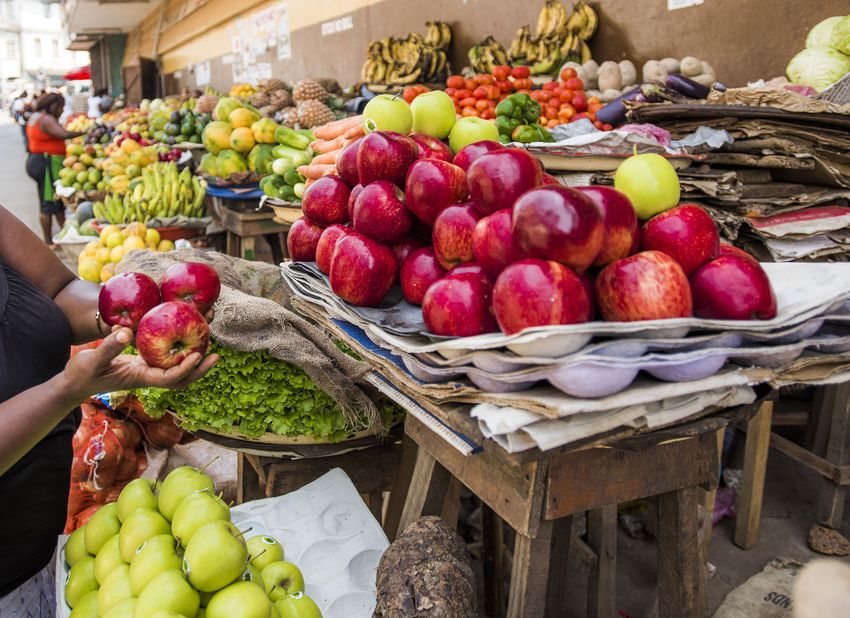
Big roles, little powers

Contents
PAGES 3-4
Introduction

PAGES 5-6
Despite some progress, ECOWAS member countries
remain slow in the race for gender equality and
women’s empowerment
PAGES 7-8
Where is the money for women in agriculture?

PAGES 9-10
National and Regional Agricultural Investment Plans
should leave no rural woman behind

PAGES 11-12
Women’s empowerment is paramount for achieving
the Zero Hunger and Sustainable Development Goals

PAGES 13-14
ECOWAS member countries will produce more and
import less if they provide more incentives to women
in agribusiness

PAGES 15-16
Conclusion and recommendations

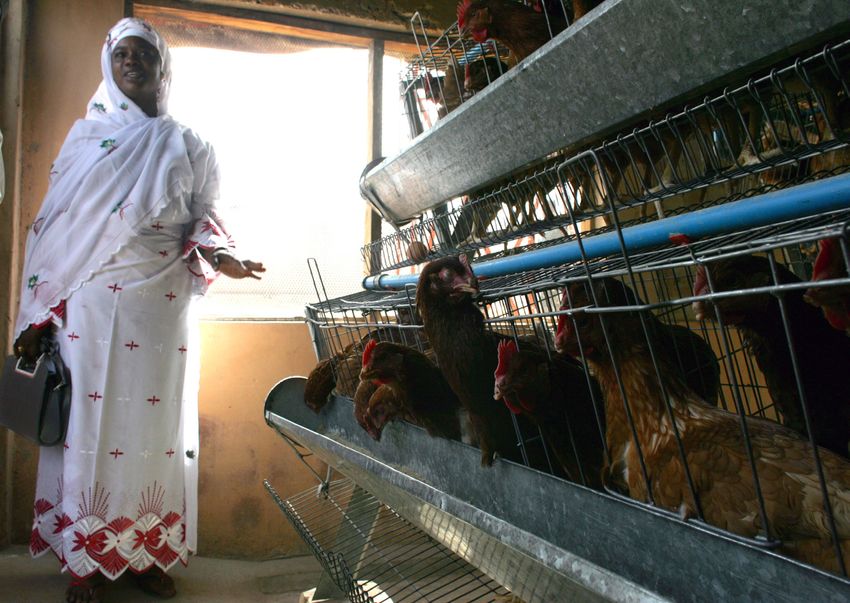
Cover Page Photograph
©FAO/G. Bizzarri

                                 1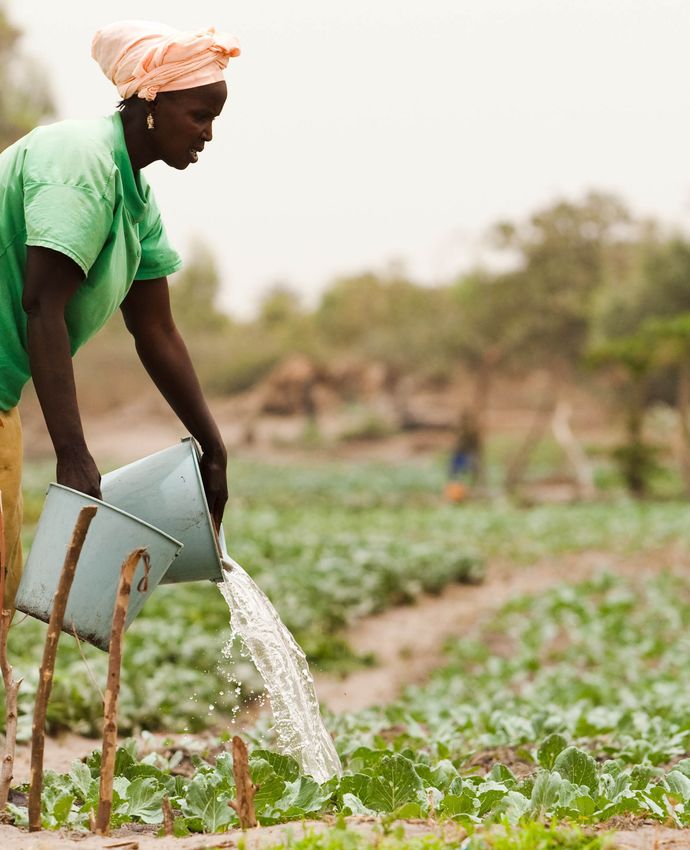
Key messages
                           The success of ECOWAS member countries in fully
                           achieving food and nutrition goals, import substitution and
                           competitiveness of their agricultural products depends on key
                           pillars of change such as:
                           • Their capacity to harness the full productive potential
                             of women, men and youth along agricultural value
                             chains and in agro-industries.
                           • The effective fulfillment of women’s rights to food,
                             land and decent employment as a pre-requisite for
                             inclusive agricultural and economic growth.
                           • The extent to which the management of agricultural and
                             food systems, and natural resources in the context of
                             climate change takes cognizance of women and men’s
                             different roles, constraints, priorities and incentives
                             they may respond to.

                           The following key messages are proposed to guide policies,
                           programmes and investments in the agricultural and rural
                           sectors:

                           • Investing in women along agricultural value chains
                             is the right and smart thing to do for thriving agricultural
                             and food systems in the ECOWAS region. For every
                             dollar invested in women, the dividends are enormous
                             in overcoming hunger, malnutrition and poverty, and
                             creating wealth for rural communities.
                           • When women have full access to resources, assets,
                             services and opportunities, they become so that it
                             becomes key driving force against rural poverty,
                             hunger and malnutrition. It is urgent to address
                             women’s right to land, finance and technology for a
                             real agricultural growth and transformation in ECOWAS
                             member countries.
                           • Women’s health, nutrition and education are key to
                             achieving zero hunger in the ECOWAS region. Evidence
                             shows that healthy, educated and well-nourished women
                             are more productive, they save more, invest more and
                             have healthier children who perform better at school.
                           • We should create the conditions for women to exert
                             greater decision-making in agricultural and food
                             systems and in the management of natural
                             resources, in the context of climate change.
                           • There is a consensus on the urgency to empower
                             women in agricultural production and value chains.
                             It is now time to “walk the talk” through national and
                             regional agricultural investment plans that adequately
©FAO/Olivier Asselin
                             respond to women’s needs and priorities.
                       2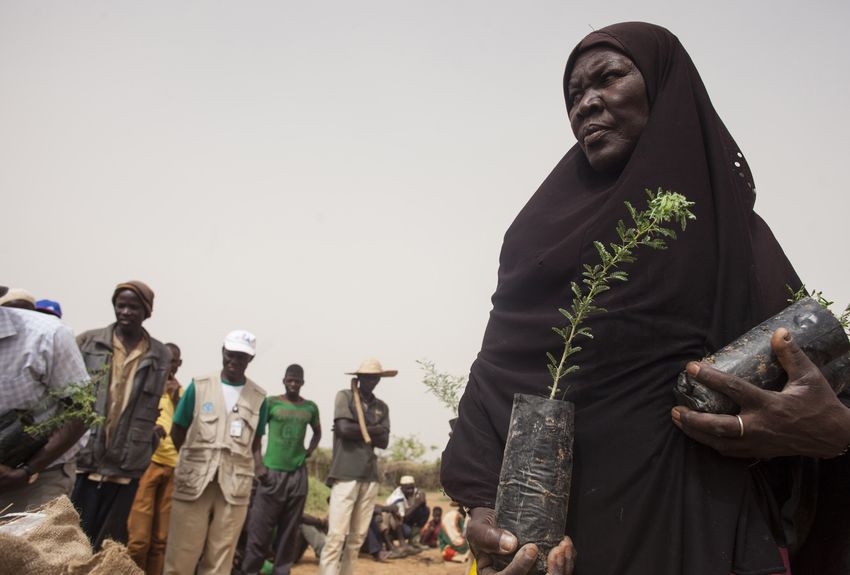
Big roles, little powers

Introduction
                      The ECOWAS region is rich with        The political momentum
                      policy frameworks to empower          for empowering women in
                      women in the agricultural and         agriculture is higher than ever
                      rural sectors.                        in Africa! It is now time to
                                                            step up the actions
                      •    Article 63 of the Revised
                           ECOWAS Treaty calls on           •   The Malabo Declaration
                           Member States “to formulate,         on “Accelerated Agricultural
                           harmonize, coordinate and            Growth and Transformation
                           implement the appropriate            for Shared Prosperity and
                           policies and mechanisms              Improved Livelihoods”
                           to improve the economic,             adopted in June 2014 by the
                           social and cultural                  African Union Summit called
                           conditions of women”.                for deliberate and targeted
                                                                public support to women
                      •    ECOWAS Vision 2020                   to participate and directly
                           adopted in June 2010 strives         benefit from the growth and
                           for “an inclusive society            transformation opportunities
                           achieved through human               to improve their lives and
                           capital development and              livelihoods.
                           empowerment offering
                           a peaceful and healthy           •   The “Declaration on
                           environment where                    2015 Year of women’s
                           women, children and youth            empowerment and
                           thrive and have equal                development towards
                           opportunities to excel and           Africa’s Agenda 2063”
                           have equitable access to             invites governments to
                           resources for human and              increase mechanization,
                           social development”.                 technological innovation,
                                                                education and skills
WOMEN IN              •    The Regional Partnership Pact        development for women.
                           for the Implementation of            It also calls upon financial
THE VILLAGES               the ECOWAP/CAADP 2025                institutions to have a
SHOULD FEEL                adopted in 2015 during the
                           international conference on
                                                                minimum quota of 50% to
                                                                finance women to grow from
THE DIRECT                 “ECOWAP+10 and Prospects             micro to macro businesses.
                           for 2025” made further
IMPACT OF                  commitments to improve the       •   The declaration of 2016 on
POLICIES AND               governance of agricultural           “Africa Year of Human
                           policy by strengthening              Rights, in particular,
LEGISLATIONS               compliance with the principles       with focus on the Rights
ON GENDER                  of gender equality and equity,
                           and accountability.
                                                                of Women” specifically
                                                                emphasizes the rights of poor
EQUALITY
                                              3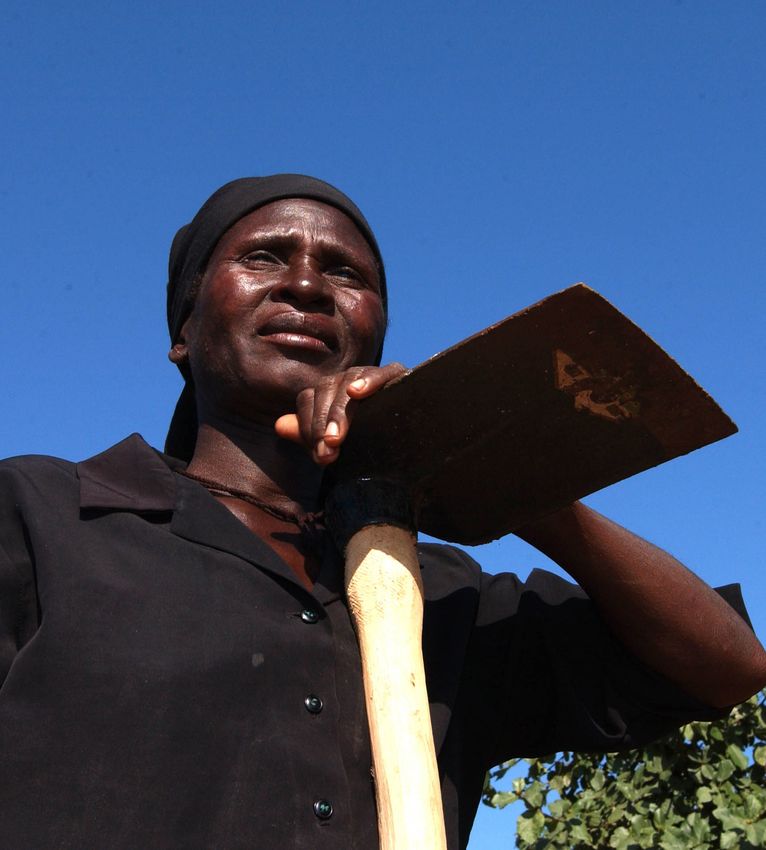
GENDER
                                                                              EQUALITY AND
                                                                              WOMEN’S
                                                                              EMPOWERMENT
                                                                              ARE CENTRAL
                                                                              TO THE
                                                                              SUSTAINABLE
                                                                              DEVELOPMENT
                                                                              GOALS

Women starting to plant seedlings FAO project GCP/INT/157/EC ©FAO/Giulio Napolitano

    women to food, land and               through markets and                  •      Their economic
    social protection as part             opportunities for value                     empowerment with lower
    and parcel of their human             addition and non-farm                       access to productive assets,
    rights.                               employment.                                 services, markets and decent
                                                                                      employment.
                                      However women face important
•   The 2030 Agenda
                                      challenges to fully benefit from
    for Sustainable                                                            •      Their political
                                      the agricultural growth and
    Development addresses                                                             empowerment with low
                                      transformation in the region
    issues facing women                                                               levels of representation in
                                      with regards to:
    in agriculture and calls                                                          governance at all levels,
    upon States to: fulfill                                                           and therefore their lower
                                      •   Their social empowerment
    women’s equal rights                                                              participation in shaping laws,
                                          with low levels of literacy,
    to economic resources,                                                            policies, programmes and
                                          lack of child care services and
    basic services, technology                                                        investments.
                                          infrastructure in rural areas
    and financial services,               and prevailing social and
    land and other forms                  cultural norms that deprive
    of property and natural               women from their mobility.
                                                                                   WE MUST LOOK AT
    resources; and double                 In the majority of ECOWAS                GENDER INEQUALITIES
    by 2030 the agricultural              member countries, illiteracy is          IN THE AGRICULTURAL
    productivity and incomes              much higher among women                  SECTOR AS A KEY
    of women small-scale                  than men, especially in rural            CAPABILITY ISSUE WHICH
    food producers including              areas.
                                                                                   UNDERMINES THE FULL
                                                                                   GROWTH POTENTIAL OF
                                                       4
                                                                                   THE SECTOR
Big roles, little powers

Despite some progress, ECOWAS member
countries remain slow in the race for gender
equality and women’s empowerment

The agricultural sector is one      •   In Ghana: women hold           Women have smaller
of the main contributors                smaller farms compared to      livestock holding than
to economic growth and                  men. Men hold 3.2 times        men
sustainable development in              more of the total farms
ECOWAS member countries.                than women do, and 8.1         Women usually keep fewer
Women are driving forces                times more of the medium       livestock, typically of smaller
for agricultural development,           and large-sized farms of 5     breeds, and earn less from the
food security and nutrition in          acres or more (FAO, 2012).     livestock they do own. In the
the region. They represent an                                          Gambia, 52% of sheep owners
                                    •   In Mali: men own 86% of        and 67% of goat owners are
important percentage of the
                                        agricultural plots compared    women (FAO, 2009).
agricultural labour force. They
                                        to 14% for women.
are the frontline nutrition care                                       For instance in Ghana and
                                        The average size of men
givers in the family, producing,                                       Nigeria, male holdings are
                                        owned plots is 1.7 hectares
storing, cleaning and cooking                                          more than three times larger
                                        compared to 0.6 hectares
the food. They are also labour                                         than those of female-headed
                                        for women (Enquête
providers in agro-industries.                                          households (FAO, 2011). Men
                                        Agricole de Conjoncture
However, they still face major                                         are responsible for keeping
                                        2014-2015).
challenges.                                                            and marketing large animals,
                                    •   In Niger: men control
Land rights continue                                                   such as cattle, horses and
                                        86.7 % of agricultural land
to discriminate against                                                camels. These animals are
                                        compared to 13.3% for
women                                                                  more prestigious, have a higher
                                        women (General agriculture     monetary value and can be
Land is the primary productive          and livestock census,          used for transport and animal
asset in most rural areas and           2005/2007). A recent study     labour.
probably the most important             shows that the gender gap
livelihood asset for many               in productivity per hectare    Important gender gaps
rural households. It is also            reaches 66% in Niger when      persist in extension
an important collateral for             comparing women and            service delivery
accessing credit from formal            men with similar sized plots
                                        in a similar context due to    Women have lower access
banking institutions. Women’s
                                        women’s lower access to        to technical knowledge
rights to own, inherit, buy,
                                        productive resources (World    on agriculture due to the
lease, use or transfer land often
                                        Bank, 2014).                   following:
depend on complex social,
cultural and legal frameworks.
                                    •   In Nigeria: persisting         •   High levels of illiteracy
Even where legislation has
                                        gender inequalities exist in       among rural women.
removed gender barriers to land
                                        land ownership with men
ownership, men and women do
                                        owning 93% of the land         •   The share of women among
not have equal access to land.
                                        against 7% for women               extension workers is low.
                                        (Gender Audit, Federal             For instance in Nigeria, the
For instance:
                                        Ministry of Agriculture and        share of women among
                                        Rural Development, 2013).          extension workers is 6%
                                                      5
A commercial chicken farmer, Sherifat Sheriff, showing her 5 000 chickens. She has successfully protected her flock from bird
flu through good hygiene and good farming practices. FAO Project - TCP/RAF/3016 © FAO/Scott Nelson/WPN

    compared to 94% for men.                  The technology                                Both women and men face
    Due to cultural and gender                challenge: most women                         challenges in accessing
    barriers, women farmers                                                                 technologies, however the
                                              still have to grater
    may have more difficulties                                                              constraints for women are
    accessing services provided by            cassava and beat the rice                     greater due their lower access
    male extension workers.                   with their bare hands                         to finance and economic
                                                                                            opportunities.
•   Male-dominated
    communication channels                    Technologies and innovations
                                              matter for unleashing the full                Existing technologies for rural
    that control the flow of                                                                women tend to perpetuate
    information resulting in the              productive potential of women
                                              to contribute and benefit fully               the gender stereotypes.
    failure to reach and mobilize                                                           For instance in Togo, mills
    women farmers.                            from agricultural growth and
                                              transformation. The African                   mostly operated by men are
                                              Union “Campaign to confine                    the most common equipment
•   Women’s lower self-
                                              the hand held hoe to the                      found in 81% of villages
    confidence in areas and roles
                                              museum” launched in 2015                      (national agricultural census,
    outside socially stereotyped
                                              is a strong reminder of the                   2013), while government
    gender roles.
                                              challenges women face in                      provision of tractors generally
•   Women’s limited access to                 accessing modern technology                   favors men.
    means of transportation as                for agricultural production,
    they often depend on male                 food processing and value
    members of the family.                    addition.
                                                                6
Big roles, little powers

  Where is the money for women in
  agriculture?

                         Financial Inclusion of                              Governments can play a key
                         women in agriculture                                role in strengthening links
                         remains problematic                                 between the formal banks
                                                                             and intermediary lending
                         Important gender disparities                        organizations providing credit to
                         exist with regards to access                        women in agriculture, including
                         to finance hence there is                           through legislative support and
                         the need for credit schemes                         mobilizing capital for those
                         with no collateral and low                          institutions to increase the
                         interest rates, guarantee                           availability of credit.
                         funds, savings and insurance
                         services.

                             Table 1: Gender disparities in access to finance in Nigeria

 IT IS ESSENTIAL
         TO BUILD
  SYSTEMS AND
   INSTITUTIONS
        THAT CAN
     DELIVER THE         Source: Gender Audit Report of the Federal Ministry of Agriculture and Rural Development, Nigeria,
        RANGE OF         2013

       FINANCIAL
         SERVICES
   WOMEN NEED
 TO GROW THEIR
AGRIBUSINESSES

                                                     7
The same trends are observed in Mali as shown below. Not only do women have less access to credit
in general, but the amounts they can borrow are much smaller compared to men.
Table 2: Loan recipients by amount and sex in Mali

  Source : CPS/SDR -2010, Dimension genre du secteur agricole au Mali
Women need inclusive             technology, finance, services,    of female employees is 90%
business models in value         value addition and linkage of     for French beans and 60% for
chain, agro-industries and smallholder producers to input          cherry tomatoes in Senegal.
markets                          suppliers and markets. ECOWAS     However, in the cherries tomato
                                 member countries should put       sector in Senegal, only 2% of
The modernization of agriculture special emphasis on de-risking    female workers and 28% of
in the ECOWAS region requires    lending to women in agribusiness. male workers have permanent
addressing the agriculture-                                        contracts (FAO, IFAD and World
                                 Women are important labour
trade-industry linkages through                                    Bank, 2009).
                                 providers in agriculture value
inclusive business models that   chains and agro-industries.
equally benefit women, men                                         Men are often concentrated
                                 According to a review of          in higher status and more
and youth. This involves skills, sample value chains, the share    remunerative contract farming,
                                                                   while women are predominant in
                                                                   unskilled and lower paid labour
                                                                   without social safety nets.

                                                                   The review also shows that
                                                                   Women workers in agricultural
                                                                   value chains are less likely to
                                                                   join labor unions than their
                                                                   male counterparts. This deprives
                                                                   them of a bargaining power to
                                                                   better negotiate better working
                                                                   conditions.
                                    ©FAO/Giulio Napolitano

                                                8
Big roles, little powers
National and Regional Agricultural
Investment Plans should leave no rural
woman behind
Financing is the missing ECOWAS Commission and FAO
link between policy has identified the following gaps
commitment for in the first generation of such
gender equality and plans:
implementation
• Lack of proper gender
The ECOWAS Commission has assessment to inform the
strengthened its institutional NAIP formulation, either
and human capacities for because of non-availability of
gender mainstreaming and for sex disaggregated data and
agricultural development and gender sensitive indicators
food security in the region, in most countries, or failure
while engaging its member to analyse and use such data
states and diverse actors from when available. This has led
farmers’ networks, the ECOWAP to the lack of gender-specific
Gender Group, civil society targets such as percentage
organizations, think tanks and reduction in feminized
technical and financial partners. poverty or reduction in
However, the international proportion of women among
conference on “ECOWAP+10 the food insecure.
and Prospects for 2025” held
in Dakar for the ten-year review • Limited inclusion of gender-
of ECOWAP highlighted weak focused activities is a missed
consideration of gender in the opportunity to apply gender
first generation of National and responsive budgeting in
Regional Agricultural Investment all the components of the
Plans (NAIPs and RAIP). This NAIPs.
must be rectified in the second
generation of such plans • Most NAIPs failed to consider children’s nutrition which
currently under preparation. women as important actors often depends on the
in agricultural value chains. income and food availability
The second generation
Women are often associated for women. Most NAIPs
of National Agriculture
with small scale production did not adequately address
Investment Plans should
and commercialization of women’s diverse roles in
aim at reducing existing
agricultural products towards food production, processing
gender disparities in
national and household food and marketing.
agricultural and food
security.
systems • The NAIPs did not challenge
• Support to women is evident critical issues for gender
mostly in food assistance equality in the agricultural
The recent gender assessment of to the poor, vulnerable sector: for instance, only
NAIPs jointly conducted by the women such as pregnant two countries explicitly
and lactating mother and addressed the need to
9Over the last decades,
the ECOWAS region
has made great strides
in implementing
the Comprehensive
Africa Agriculture
Development
Programme, CAADP
with: the Regional
Agricultural Policy,
ECOWAP; its various
sectoral policies
including the
Environmental Policy
and the Water Resource
Policy; Regional and
National Agricultural
Investment Plans; and
several regional and
national programmes
and projects
© FAO/Sebastian Liste/NOOR
secure women’s land rights; inequality, because they focus no country included crop
no country addressed on modernizing female- insurance either for men or
women’s unpaid work dominated sub-sectors women smallholder farmers;
and provision of child with higher technologies only one country referred to
care services for women of production to formalize social protection against loss
workers, especially in the activity, without any of income and natural disaster
rural areas; and only three specific measure to secure the specific to women; and only
countries specifically position of women in these two countries specifically
indicated plans to target sub-sectors. mentioned women farmers in
women farmers for rural the promotion of sustainable
• With regards to the
financial inclusion. and climate-resilient agriculture
resilience of agricultural
• Some NAIP programme through special training in the
systems in the context of
components are likely to farmer field schools.
climate change, important
result in further gender
gaps were also identified:
10Big roles, little powers
Women’s empowerment is
paramount for achieving the
Zero Hunger and Sustainable
Development Goals
Zero Hunger is high on Significant progress has in Burkina Faso, Cote d’Ivoire,
the agenda of ECOWAS been made in reducing Guinea Bissau, Guinea Conakry,
member countries hunger, but children and Mali, Nigeria and Togo. Ghana
women’s malnutrition has a medium prevalence (20
The achievement of Zero Hunger remain high. to 29.9%) while Gambia and
is a high priority for ECOWAS Senegal have a prevalence rate
member countries. The West ECOWAS member countries
inferior to 20% (Global nutrition
Africa Zero Hunger Initiative have been praised for having
report, estimate for 2014).
implemented with FAO’s support reduced the number of
aims to eliminate hunger by undernourished people by Women’s low status has
2025. It provides Governments, almost 13 million between a detrimental impact on
regional bodies, farmers’ 1990-92 and 2014-16, despite child nutrition
networks, development partners a significant population growth
and civil society organizations and recurrent droughts in
with a common framework Sahel countries. However, The educational level of mothers
for allocating resources, such progress is insufficient to is an important determinant
monitoring progress and reach the World Food Summit of children’s nutritional status.
ensuring accountability towards target of halving the number of The risk of chronic and severe
zero hunger. It also focuses on undernourished people by 2015. malnutrition, underweight and
nutrition sensitive agriculture anemia among infants and
and social protection, with the For instance, the adequate children decreases significantly
ultimate aim to graduate the nutritional status of mothers with a higher educational level
beneficiaries of cash transfer during pre and post-delivery of mothers.
and other programmes into the guarantees the nutritional
productive workforce. well-being of their infants
in particular during the first In 2012, the UN Secretary
Gender and nutrition are critical 1,000-days of live, General, Ban Ki Mon
inseparable parts of the vicious from conception to 2-years of launched the Zero Hunger
cycle of poverty, especially in age. Iron deficiency anemia at Challenge that proclaimed
rural areas. Gender relations childbirth is still a major cause that “hunger can be
affect the equitable distribution of high maternal mortality in
eliminated in our lifetimes”.
of nutritious food to household ECOWAS member countries,
as the prevalence of anemia This requires comprehensive
members, and it is commonly
in reproductive women is very efforts to ensure that:
said that in some communities,
women and girls eat last and alarming: it is superior to 40 • Every man, woman and
least after men and boys. % for all ECOWAS member
child enjoy their Right to
Gender inequality can be a countries. In some communities,
food taboos still deprive women
Adequate Food
cause as well as an effect of • Women are empowered
hunger and malnutrition. Higher from access to nutritious food.
Stunting in children under five • Priority is given to family
levels of gender inequality are
associated with higher levels is also very high: the prevalence farming
of under nutrition, especially is superior to 40% for Benin, • Food systems everywhere
among children and infants. Liberia, Niger and Sierra Leone, are sustainable
and it is between 30 to 39.9%
11Farmers working in a green beans plot in the vast area of Koer Abundoy, where several vegetable gardens are
farmed to provide to the community and to the local market. ©FAO/Marco Longari
Table 3: Effect of education level of mothers on children’s nutritional status in Togo
Source: Data from the Demographic and Health Survey in Togo, EDST-III, 2014
Data from Niger show that women headed household are at a greater risk of food insecurity.
Table 4: Distribution of population in percentage according to the sex of head of household and
levels of food insecurity in Niger
Source : INS-Niger «Enquête Conjointe sur la Vulnérabilité des Ménages à l’Insécurité Alimentaire au Niger (décembre 2014-janvier
2015)», Niamey.
12Big roles, little powers
ECOWAS member countries will produce
more and import less if they provide more
incentives to women in agribusiness
Gender inequalities are a key capability issue
which undermines the full growth potential
of the agricultural sector in ECOWAS member
countries. Empowering more women and
youth and their cooperatives with secure land
rights, inputs, services, finance, technologies,
and value chain development is critical to the
success of the agricultural transformation
agenda in the ECOWAS region. For instance,
in Gambia, women represent 90% of rice
producers and field managers (DoA, NASS
Report, 2013). Therefore, the success of the
Rice Offensive in the country will depend on
how it takes cognizance and supports the
important contribution of women in rice
production, processing and value chain.
Figure 1: Addressing gender in the
narrative of agricultural growth and
transformation in the ECOWAS region
ECOWAS
MEMBER
COUNTRIES
CAN
SIGNIFICANTLY
REDUCE THEIR
NET FOOD
IMPORT IF
THEY HARNESS
THE FULL
PRODUCTIVE
POTENTIAL OF
WOMEN, MEN
AND YOUTH IN Source: Adapted from the Gender Audit Report of the
Federal Ministry of Agriculture and Rural Development
AGRIBUSINESS of the Federal Republic of Nigeria (FMARD), 2013
13©FAO/Isaac Kasamani
14Big roles, little powers
Conclusion and recommendations
The Country Gender Assessments is still low and mainly tied ©FAO/Sebastian Liste/NOOR
of the Agricultural and Rural to small scale and short
Sectors and NAIPs conducted in term projects funded by
all ECOWAS member countries development partners.
have evidenced the following:
There is need to leverage
There are still important gaps public funding and
between legislation and institutional capacities
implementation of gender for empowering women
equality commitments in agriculture and value
chains.
• Gender inequalities remain
socially accepted and • The policy commitment
tolerated due to patriarchy, to mainstream gender in
gender stereotypes and NAIPs does not match
socio-cultural norms and the policy conception,
practices. Mass education levels of activities planned,
and awareness raising are financing mechanisms,
needed to engage men in institutional capacities
the communities to promote
change towards women’s
empowerment in rural areas.
• The inadequate levels
of infrastructure and
technology in rural
households have a direct
MORE EFFORTS and monitoring and
evaluation frameworks
impact on women’s unpaid ARE NEEDED
workload, because domestic • The NAIPs did not always
and reproductive activities are FOR EFFECTIVE fundamentally address
linked with female gender FULFILLMENT the factors fueling
roles. Rural women invest gender inequalities such
significant time in food OF WOMEN’S as women’s land rights,
preparation, cleaning, child
care and other domestic
EQUAL RIGHTS their low levels of literacy,
and the lack of child care
activities, thus reducing their TO FOOD, services and labour saving
economic and educational
opportunities. Lack of LAND, FINANCE, technologies in rural areas.
technologies also compounds EDUCATION • The NAIPs lack a proper
gender assessment of
their participation in value
chains. AND DECENT women, men and youth
contribution in agricultural
• Financing for gender equality
EMPLOYMENT production and value
15Recommendations on the and innovations for food
way forward production and agro-
processing, and meeting
The following recommendations their needs for extension,
are made to ECOWAS member financial, information
countries to support their and marketing services.
efforts to expand women’s This includes capacity
opportunities in inclusive development in certification,
agricultural growth and labeling and packaging
transformation: and linkage to markets,
including opportunities
• Fully integrate gender in public procurement;
considerations in national while engaging the
budgets, NAIPs, green private sector to promote
climate funds and public- inclusive business models
private partnerships through in agribusinesses and agro-
gender responsive budgeting. industries.
• Strengthen capacities of • Improve financial inclusion
Governments and rural of women in agribusiness
institutions in gender- through encouraging
responsive and inclusive banking and financial
policy and programme institutions to use credit
design, financing, and savings methodologies
implementation and that are effective in reaching
monitoring in the agricultural women in agriculture,
and rural sectors. This simplify banking practices,
chains based on reliable includes improving the reduce transaction costs, and
data, as well as proper availability and use of sex de-risk financing for women
baselines and targets for disaggregated data and in agribusiness. This involves
gender equality. gender sensitive indicators opening special windows for
• An over focus on to inform policies and lending to women without a
modernizing female- programmes. land title.
dominated sub-sectors
of agriculture without • Incentivise women and • Provide the space to
strengthening their their cooperatives and ensure women’s adequate
capacities to take full organizations to grow participation in agricultural
benefits from the new their agribusinesses policy making, local
opportunities would through enforcing their governance and rural
further jeopardize women’s land tenure and decent institutions.
positions in these sub- employment rights,
sectors. ensuring their access to
and uptake of technologies
16Big roles, little powers
©FAO/Sebas
This policy brief was prepared
with the framework of the
ECOWAS-FAO technical
cooperation project on
“Gender Responsive Regional
and National Agricultural
Investment Plans for meeting
the Zero Hunger Challenge
in the ECOWAS region”.
The overarching goal of
this project is to ensure that
agricultural transformation
and inclusive agricultural
growth fully benefit and
empower women and youth
farmers in ECOWAS Member
countries.
It fully contributes to
the implementation of
the ECOWAS Common
Agricultural Policy, ECOWAP/
CAADP 2025, the ECOWAS
Zero Hunger Initiative, and the
ECOWAS Regional Agricultural
Investment Plan. The project is
fully aligned with the Malabo
Declaration on “Accelerated
Agricultural Growth and
Transformation for Shared
Prosperity and Improved
Livelihoods”.
17stian Liste/NOOR
©FAO/Seyllou Diallo
19©FAO/Sebastian Liste/NOOR
BIG ROLES, LITTLE POWERS
The reality of women in
agriculture in ECOWAS
region
For more information, contact:
Dr Bolanle Adetoun Ms Tacko Ndiaye
Principal Program Officer for Gender Senior Gender and Rural Development Officer
badetoun@ecowas.int Tacko.Ndiaye@fao.org
Department of Social Affairs and Gender Regional Office for Africa
ECOWAS Commission Food and Agriculture Organization
of the United Nations (FAO)
I7005EN/1/03.17
©FAO, 2017You can also read


