Careers in the ambulance service - Caring, compassionate, committed Make a difference with a career in health - NHS Health Careers
←
→
Page content transcription
If your browser does not render page correctly, please read the page content below
Careers in the
 ambulance service
Caring, compassionate, committed
Make a difference with a career in health
Welcome

A career for you                                    NHS values and the 6Cs
                                                    of compassionate care
There are more than 350 roles in health, and        To apply for any job or apprenticeship in the
many of them are part of a wider team which         NHS or in an organisation that provides NHS
works alongside other health professionals          services, or for a course with clinical
for the benefit of patients and the public.         placements in the NHS, you’ll need to show
As well as the NHS itself, many large and           how you think the values of the NHS
smaller organisations provide healthcare            Constitution would apply in your
and work to prevent ill health in the UK.           everyday work.
These include public and private sector
organisations, community interest companies,        The NHS Constitution values are:
social enterprises and charities, and you could
work for the NHS or any one of these other              Working together for patients
organisations in a health role.                         Respect and dignity
                                                        Commitment to quality of care
Some roles give you direct contact with                 Compassion
patients, while in others you are part of a vast        Improving lives
support network vital to delivering healthcare          Everyone counts
and preventing ill health, and good team-
working is essential. Some jobs are in hospitals,   These values may also be promoted
others are based in the community: increasingly,    as the 6Cs of compassionate care, as
health and social care services are integrated      part of Leading Change, Adding Value.
or co-ordinated in order to provide a seamless      The 6Cs are:
service for people with a range of needs.
                                                        Care
We actively recruit people of all ages,                 Compassion
backgrounds and levels of experience,                   Competence
including people who have worked in other               Communication
sectors or who bring life experience from               Courage
outside the world of work. This helps us to             Commitment
understand the different needs of patients,
families and carers, and to provide the best
possible service every day.
                                                       Find out more about the NHS Constitution
                                                       and the 6Cs
                                                               xCs at:
                                                                   at

                                                           www.healthcareers.nhs.uk/
                                                           nhsconstitution

                                                           www.healthcareers.nhs.uk/xCs
                                                           www.healthcareers.nhs.uk/6Cs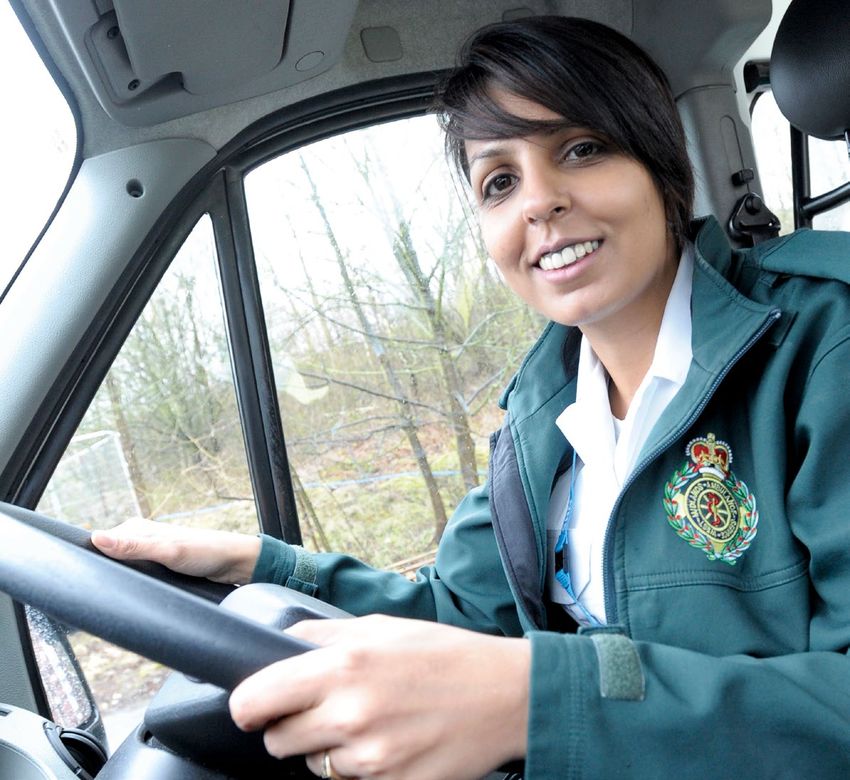
Contents
  Your career in the ambulance service .................................... 4

  Frequently asked questions (FAQs) ....................................... 5

  Which role is right for you? ................................................... 6

  Ambulance service roles at a glance ..................................... 8

         i        Ambulance care assistant/Patient Transport Service driver .....                           8
         ii       Call handler/control assistant ................................................           9
         iii      Clinical assessment service roles.............................................            9
         iv       Emergency care assistant ......................................................           9
         v        Emergency medical dispatcher ..............................................              10
         vi       Emergency medical technician ..............................................              10
         vii      Paramedic ............................................................................   10
         viii     Patient Transport Service controller .......................................             11
         ix       Roles for experienced paramedics..........................................               11
         x        Other roles in the ambulance service .....................................               12

  Real-life stories ........................................................................ 14

  Getting started in the ambulance service ............................. 20

  Next steps and progressing your career ............................... 24

  Benefits of working in the NHS ............................................. 27

  Example career routes ............................................................ 29

                                                                                      Careers in the ambulance service   3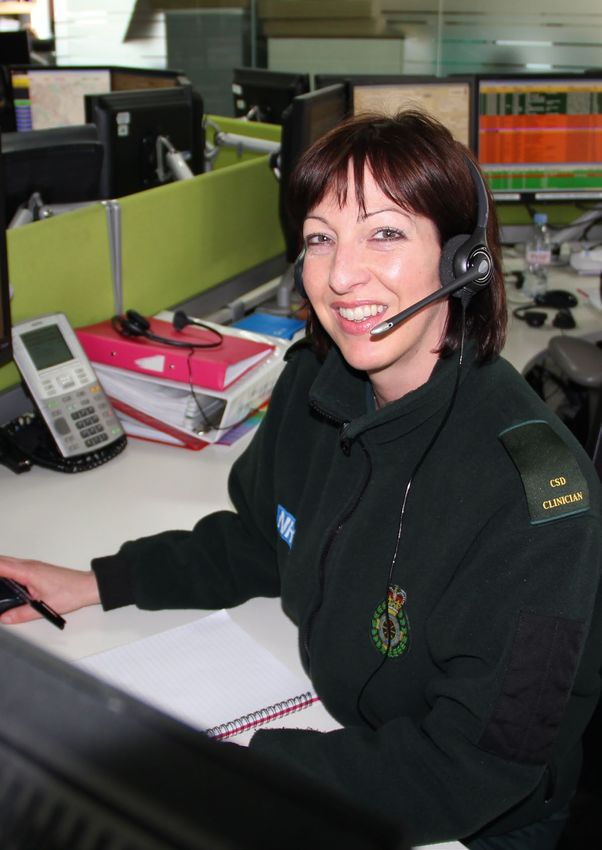
Your career in
the ambulance service
In this booklet you’ll learn about the exciting range of opportunities that today’s NHS
ambulance services have to offer. Healthcare is changing rapidly in response to modern
needs, and urgent and emergency care is now one of the key developing areas. This is
set to continue, bringing with it new roles.

            The ambulance service is not just about           ambulance service is right for you. It offers
            responding to a 999 call with an emergency        a flexible working environment, excellent
            ambulance crew. A range of clinical roles         benefits and a wealth of opportunities to
            and specialties are available that provide        develop your career.
            urgent and emergency care to patients over
            the phone as well as in community settings.
            There are teams of people who coordinate                  For more information about
            calls received and ensure the right response is           working in the ambulance
            provided. In addition, you could work in the              service, visit
            non-emergency Patient Transport Service that              www.healthcareers.nhs.uk/
            is very much valued by communities, or the                ambulance
            NHS 111 service for urgent medical concerns.
                                                                      If you have any questions,
            Whatever your academic background,                        you can call our helpline on
            preferences and interests, if you would                   0345 60 60 655 or email
            like to help others in a role where the job               advice@healthcareers.nhs.uk
            satisfaction doesn’t get much higher, the

4   Careers in the ambulance service
FAQs
Who works in the ambulance                               Where can I train as an emergency
service team?                                            care assistant or for a role in the
                                                         Patient Transport Service?
Ambulance service team roles include:
• a mbulance care assistant/                            You will usually be trained while you are working
  Patient Transport Service (PTS) driver                 in the ambulance service – you would not normally
• e mergency medical technician                         do a course before applying for a job, but you
• emergency care assistant                               should always check the person specification for
• emergency medical dispatcher/call handler              the vacancy you’re applying for. You can search for
• PTS call handler                                       vacancies on the NHS Jobs website.
• paramedic, including roles for more experienced
   paramedics (see page 11)                              I want a role maintaining ambulance
                                                         vehicles. Which one is this?
How do I train to be a paramedic?
                                                         The NHS employs motor vehicle mechanics and
There are two ways to train as a paramedic – an          technicians to check and maintain its fleet of vehicles.
approved full-time university course in paramedic        Staff are also employed to check that vehicles are
science at degree or diploma of higher education         stocked with necessary equipment and medical
level, or training that combines working as a student    supplies. Occasionally, there are apprenticeships in
paramedic with an ambulance trust and study at           motor vehicle maintenance with ambulance service
university (some ambulance service trusts offer this     trusts. Visit www.jobs.nhs.uk and www.gov.uk/
route through a degree apprenticeship). Visit our        apply-apprenticeship for vacancies
paramedic web page or ask your local ambulance
NHS trust for details. You can also search for           Do all ambulance service staff deal
approved university courses using our course finder      with emergencies?
at www.healthcareers.nhs.uk/courses.
                                                         No, ambulance service staff may work for the
Other routes to becoming a paramedic may be              emergency 999 service, the non-emergency Patient
available, depending on local ambulance service          Transport Service (PTS) or the NHS 111 urgent
recruitment policies, so it’s important to check out     healthcare (but not emergency) service.
what your local ambulance service requirements
are. Visit the main NHS website to get their
contact details: www.nhs.uk/

Is there financial help to support me
while I’m training to be a paramedic?

You will not usually receive financial support from
the NHS but you should check with the university
you’re applying to. Those training through the
student paramedic route will usually be salaried while
studying on a part-time basis. Use our course finder
to search for courses in paramedic science:
www.healthcareers.nhs.uk/courses.

                                                                             Careers in the ambulance service   5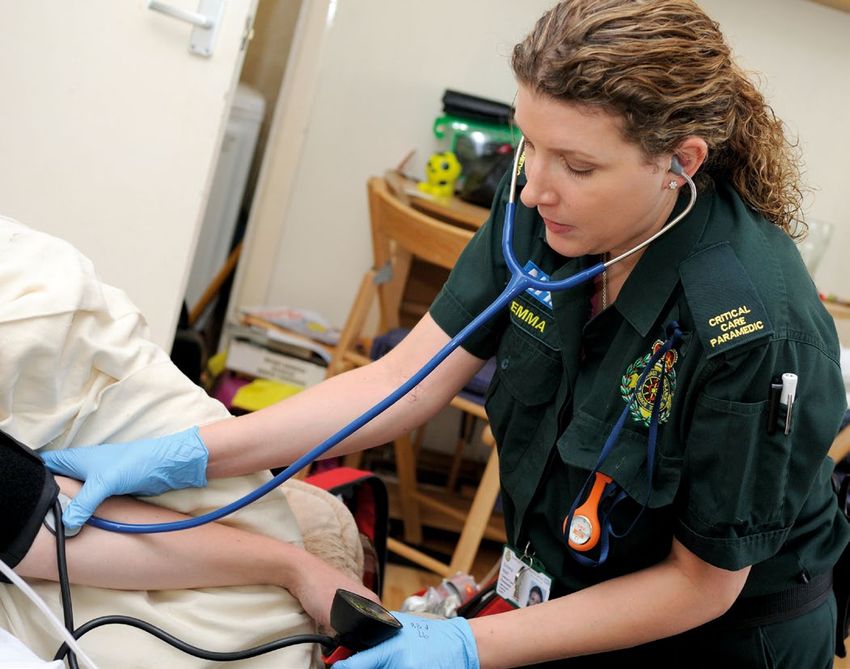
Which role is right for you?
NHS ambulance services play a crucial frontline role in delivering urgent and emergency
healthcare. The priority is no longer getting patients to hospital as fast as possible;
ambulance clinicians deliver mobile treatment services to provide care in home or
community settings, or give advice over the phone. They work alongside other
professionals to provide integrated health and social care.

            When a 999 call is received, trained call              Is the ambulance service right
            handlers use triage software to decide rapidly         for you?
            what the problem seems to be and emergency
            medical dispatchers decide the right response.         Later on in this booklet you can read about
            Not all patients need an ambulance with blue           the entry routes available for a career in the
            lights and sirens, in fact only a small proportion     NHS ambulance service, whether you are
            of calls need the fastest response.                    starting out fresh from school, as a graduate
                                                                   or perhaps looking to move to the NHS from
            Other callers may need advice over the phone           another career.
            from a specialist clinician in a clinical assessment
            ‘hub’, or they might need a paramedic or               As well as any formal requirements, there are
            double-crewed ambulance for assessment and             some other qualities you may need to be a
            treatment before the patient is taken to hospital      successful member of the ambulance team.
            or an urgent care centre. Many patients can            Some you will learn as your career develops;
            be assessed and treated in their own home by           others are personal qualities. These include:
            advanced paramedics.
                                                                   •    willingness to work as part of a team
            If the situation is critical, one of the call          •    good communication skills
            handlers might have to talk a distressed caller        •    good level of fitness and manual-handling
            through a life-saving procedure or collect                  skills for some roles
            more essential information as an ambulance             •    excellent driving skills for some roles
            or rapid response vehicle travels to the scene.        •    using your initiative, where appropriate
                                                                   •    ability to make decisions under pressure
            Non-emergency ambulance transport is                   •    remaining calm when faced with
            absolutely vital to patients too. Day after                 aggressive or frightened people
            day, patient transport services, as they are
            known, carry disabled, elderly and vulnerable          In the next section, you can learn more about
            people to and from outpatient appointments,            the key roles in the ambulance service and
            hospital admissions, day centres and clinics.          where you might fit in.
            Without them, many people would be unable
            to carry on leading independent lives in the
            community.                                                 For more information about the roles
                                                                       and qualifications needed to work in the
                                                                       ambulance service, visit:
                                                                       www.healthcareers.nhs.uk/ambulance

6   Careers in the ambulance service
Careers in the ambulance service 7

Ambulance service
roles at a glance
You can find more detailed information about all the
                                                                                      See real-life stories
ambulance roles listed below on the Health Careers
                                                                                      of people working in
website at www.healthcareers.nhs.uk/ambulance                                         some of the ambulance
                                                                                      service roles at the end
There are also short videos about some of the                                         of this section.
ambulance service roles on our YouTube channel:
www.youtube.com/Healthcareers

                   1

            Ambulance care assistant/Patient                      people on each journey. Alternatively, you
            Transport Service (PTS) driver                        might work on your own, driving a standard
                                                                  car to transport one or two able-bodied
            In this role you will drive disabled, elderly, sick   people at a time.
            or vulnerable people to and from outpatient
            clinics, day care centres and routine hospital        You will make sure that patients are safe and
            admissions. You’ll be responsible for looking         comfortable during the journey and that they
            after them on the journey and while they are          arrive on time for their appointment. You will
            transferred to and from the vehicle. Because          also be trained in resuscitation in case a
            many of the passengers will be in poor health,        patient is taken ill while in your care.
            ambulance care assistants also need life-saving
            skills in case there is a medical emergency.          Call handler/control assistant

            You will often see the same people on                 Call handlers, like emergency medical
            a regular basis, getting to know them.                dispatchers, have a vital role on the front line
            Some of your passengers will be anxious               of the emergency ambulance service. Based in
            about their hospital visit and others will            a control room as part of a team with a
            lead isolated lives. They will value your             supervisor, you will answer the 999 telephone
            reassuring manner and the chance to chat.             calls to the ambulance service from the public
                                                                  and GPs.
            Based at an ambulance station or sometimes
            a hospital, you’ll cover a particular local area      Working quickly and calmly, you’ll take the
            and might work shifts.                                essential details about the patient’s condition
                                                                  and location, logging them on to the
            You might be part of a two-person team                computer system. This information is then
            using a specially designed ambulance with a           passed on to an emergency medical
            tail-lift for wheelchairs, carrying several           dispatcher to make important decisions about
                                                                  how best to handle the situation.
8   Careers in the ambulance service
Thinking fast, multi-tasking and using           You’ll be specially trained to assess, diagnose,
your initiative, you will often work under       advise over the phone and refer to other
great pressure.                                  clinicians when necessary. You’ll also provide
                                                 specialist advice to ambulance clinicians
You might be dealing with a life-or-death        treating patients out in the community.
emergency, such as a major incident, a heart     In addition to the 999 service, there are
attack or a drug overdose. You might be faced    clinical assessment opportunities in the
with a non-life-threatening situation that       NHS 111 service.
nevertheless needs a response, such as a child
with a suspected broken leg. In extreme cases,   Emergency care assistant
you might have to talk a member of the public
through an emergency procedure, such as          As an emergency care assistant, you are a
clearing an obstruction from someone’s airway.   member of the emergency ambulance crew
                                                 attending 999 calls. You will work alongside a
Equally, you might need to persuade              paramedic, helping them to provide patients
someone that they should visit their GP or       with potentially life-saving care and, where
emergency department rather than calling         needed, getting patients to hospital.
out an ambulance.
                                                 You’ll attend every kind of accident and
Some ambulance services combine the roles of     emergency, sometimes covering considerable
call handler and emergency medical dispatcher.   distances, using your expert emergency
There are also opportunities to work as a call   driving skills to get to the scene with the
handler with the NHS 111 service.                greatest speed possible.

     2
                                                 Under the direct supervision of the
                                                 paramedic, you’ll carry out essential
                                                 emergency care, such as controlling severe
Clinical assessment service roles                bleeding, treating wounds and fractures
                                                 and looking after patients with possible
Ambulance services provide clinical advice       spinal injuries. You will use a defibrillator
over the phone. Clinical assessment teams can    to resuscitate patients with heart failure
include a range of professions:                  and will be trained to give a range of
                                                 different drugs.
•   paramedics
•   nurses                                       As well as your contact with patients, you
•   mental health nurses                         will also have to deal with relatives and
•   pharmacists                                  members of the public. In larger or more
•   palliative care nurses                       serious incidents, you will work alongside
•   GPs                                          the police and fire service.
•   dentists and others

                                                               Careers in the ambulance service     9
3                                                4

             Emergency medical dispatcher                      Paramedic

             As an emergency medical dispatcher, you will      Paramedics have a highly responsible role,
             receive details of 999 calls via the exchange     often being the senior ambulance service
             operator for someone requesting an ambulance.     healthcare professional in a range of
             Using your training, you will ask a series of     emergency and non-emergency situations.
             questions to ensure the most appropriate          You will be one of the first healthcare
             help is dispatched and use a triage system to     professionals to arrive at the scene. You will
             assess the type of emergency and determine        probably be the senior member of a two-
             the response needed. Staff and vehicles are       person ambulance crew, with an emergency
             dispatched automatically or manually, and         care assistant or technician to support you.
             additional resources such as a rapid-response     However, you might work on your own, using
             car, motorcycle or air ambulance may be sent to   a motorbike, emergency-response car or even
             the location as appropriate.                      a bicycle to reach your patients.

             Your speed and accuracy could make the            You will assess the patient’s condition
             difference between life and death. While          and make potentially life-saving decisions
             the clinicians are on their way, you will         about whether the patient can be treated
             probably still be passing them further            at the scene or transferred to hospital. In
             essential details so they can go straight         non-life-threatening situations, you’ll also
             into action when they reach the scene.            have to use your professional judgement
                                                               to make key clinical decisions. Most
             Some situations are complicated and the           patients treated by paramedics do not
             information you receive might be unclear          have life-threatening injuries.
             and need careful checking. The pace can be
             furious: you could be dispatching 15 vehicles     In an emergency, you will use high-tech
             an hour as well as dealing with queries from      equipment, such as defibrillators (which
             the crews. You will work shifts, including        restore the heart’s rhythm), spinal and traction
             some evenings and weekends.                       splints and intravenous drips, as well as
                                                               administering oxygen and drugs.
             Some ambulance services combine the
             emergency medical dispatcher role with            You will be trained to drive what is in effect
             that of call handler.                             a mobile emergency clinic and to resuscitate
                                                               and/or stabilise patients using sophisticated
             Emergency medical technician                      techniques, equipment and drugs. You might
                                                               be called out to someone who has fallen from
             You will work primarily as part of a              scaffolding, for example, or an elderly person
             double‑crewed ambulance with a paramedic but      with a suspected stroke.
             may also work with a range of healthcare staff.
                                                               Based at a local ambulance station, you will
             You will have a broad range of emergency          work shifts, including evenings and weekends,
             care skills such as assessment, triage and        going out in all weathers at all hours of the
             intermediate life support.                        night or day. You will work closely with other
10 Careers in the ambulance service
healthcare teams in the community, such as of health, and plan the trips to make the
GPs, occupational therapists, mental health most efficient use of the vehicles and
teams or diabetes specialists, and doctors and the drivers.
nurses in hospital emergency departments.
You will brief them as you hand your patient You will work under pressure a lot of the time,
over to their care. thinking fast and multi-tasking, and keeping a
running check on the service and location of
As well as contact with your patients, you will all vehicles in your charge.
also deal with patients’ relatives and members
of the public, some of whom might be highly You may work shifts involving some early
distressed or aggressive. You will also often work mornings and evenings.
alongside the police and fire and rescue services.
5
With further training and experience, you could
work in an increasingly wide range of roles.
Roles for experienced paramedics
To work as a paramedic in the NHS, you need
to be registered with the Health and Care Once you are an experienced paramedic there
Professions Council. are many opportunities to develop into further
roles, such as a Hazardous Area Response
Patient Transport Service Team (HART) paramedic, a specialist paramedic,
(PTS) controller advanced paramedic or consultant paramedic.
As a Patient Transport Service (PTS) controller, You will be a paramedic with additional
also known as a non-emergency call handler, skills and qualifications that allow you to
you will have a key role in ensuring that carry out more treatments and take on
patients who are frail or vulnerable or have no more responsibility.
other means of transport get to their health
appointments safely and on time. Based in You’ll do shift work, including evenings and
a central office, you will book the vehicles weekends, and also on-call work. As part
that take patients to and from local clinics, of a team, working with other healthcare
daycare centres and non-emergency hospital professionals, you’ll have your own area of
admissions. responsibility and be able to provide care
independently.
Handling requests for transport from patients
and their relatives and also from healthcare Working from a response car, GP surgery or
professionals such as nurses, you will have urgent care centre, you will assess patients
to record patients’ details accurately, usually with symptoms and conditions such as
using a computer. suspected fractures or chest pain. You might
also see patients in nursing or residential
You will then have to decide which type homes, schools or prisons. You will take a
of vehicle is appropriate for each patient, patient’s medical history, examine them and
depending on their mobility and state order tests and scans where necessary.
Careers in the ambulance service 11There are also opportunities for experienced
paramedics with extended qualifications to
move into executive director posts, research
and teaching roles.
Other roles in the ambulance
service
To support front-line ambulance service
staff, there are numerous other opportunities
in human resources, finance, administration,
health informatics, estates and motor
vehicle maintenance. Visit our main website
for details of these and other careers:
www.healthcareers.nhs.uk
For more information about roles in
the ambulance service, visit www.
healthcareers.nhs.uk/ambulance
For information about management roles
in the health sector, see our Careers in
management booklet or visit www.
healthcareers.nhs.uk/explore-roles
To search for current jobs, visit
www.jobs.nhs.uk
12 Careers in the ambulance serviceCareers in the ambulance service 13
Real-life
               stories
14 Careers in the ambulance service
1
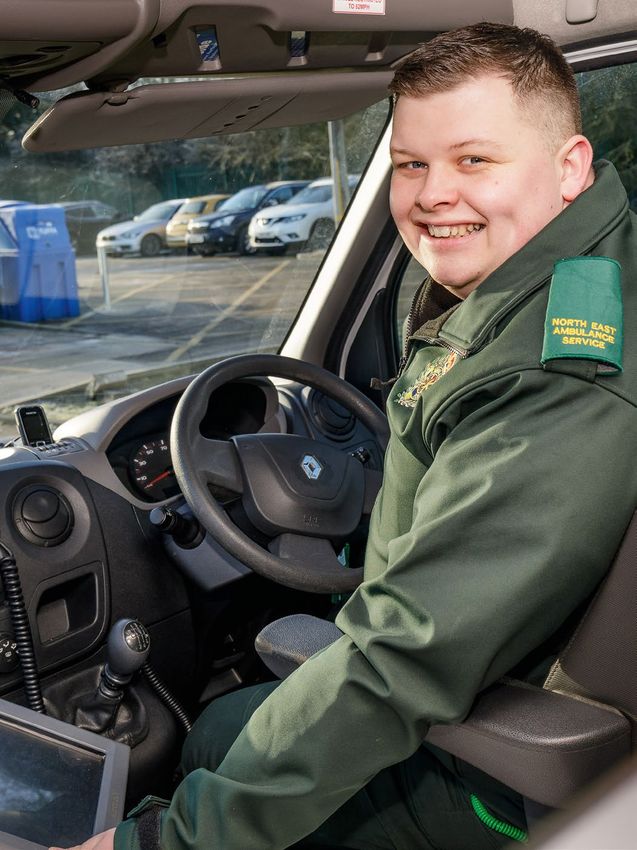
Patient Transport Service
Name
Adam Randall
Job title
Ambulance care assistant, North East
Ambulance NHS Foundation Trust
Entry route “I aspire to be a team
Ambulance service apprenticeship manager.”
How I got into the role The best bits
I started working in a restaurant at the age of 15 I love that every day is different; I meet lots of
and this led to an apprenticeship as a chef. Working people who are usually in poor health and get a
in a restaurant was fun but the long hours and split lot of enjoyment from being able to have a positive
shifts took it out of me. We had a few customers impact on what can be a daunting experience for
who were paramedics and I enjoyed talking to them many of them.
about their jobs.
The patients can be quite poorly, so it’s sometimes
At 19 I started to think about a long-term career upsetting. But we have a very good team and we’re
and decided to go to a career adviser. We spoke able to talk any about issues we may have.
about the ambulance service and she told me about
an apprenticeship scheme they run. I was successful After my apprenticeship, I gained a level two
with my application and started a couple of months qualification in customer care, which enabled me
after that. to understand the role more. In the ambulance
service we have professional development in the
After completing the one-year apprenticeship, I was form of e-learning and annual training which
successful in gaining a full-time position. I’ve been refreshes our knowledge and keeps us up to date
here three years now and love it! with changes in policy.
What I do When I was an apprentice, I was put forward by
my team manager for apprentice of the year with
My role is to safely transport patients to and from Health Education England and came runner up,
care settings such as hospitals and day centres. I which I’m very proud of. The following year, I won
work with a wide range of people of different ages apprentice of the year award at Gateshead College.
backgrounds which is very interesting.
I aspire to be a team manager and have done from
the outset. I am currently working towards an NVQ
3 in management which I am enjoying very much.
Careers in the ambulance service 152
Clinical assessment
Name
Ed Green
Job title
Regional clinical coordinator and
“Gaining the paramedic
paramedic, East of England Ambulance registration was my greatest
Service NHS Trust
career achievement.”
Entry route
Healthcare assistant
How I got into the role What I do
I started work in the NHS at the age of 17 as a I have a very challenging and highly demanding job.
healthcare assistant at Bedford Hospital. I worked I am based in one of the trust’s three control rooms
there in various patient care roles before deciding to but manage regionally, focusing mainly on ensuring
move to the ambulance service. the patients without an ambulance allocated are
kept safe.
I started my technician course 14 years ago and
worked up to paramedic whilst at Luton Ambulance I also manage our team of paramedics and nurses
Station. who perform telephone triage on those patients
with low priority symptoms. And I cover a clinical
I took on several managerial roles before moving advice line for staff attending difficult incidents and
into ambulance control as a clinical manager. needing support on how to proceed with their care.
Although it meant moving away from a patient-
facing role which I’ve always loved, I felt that I could The best bits
have a greater effect on how we use our resources
and ensure we treat more patients appropriately. The best bits of the job are being able to reassure
patients who are waiting for a response, triaging
I have developed in many areas through the them so they get the most appropriate care, and
years. I’ve completed courses in mentorship and managing and supporting the team.
leadership, as well as keeping my paramedic
registration up to date. I don’t class myself as In my healthcare assistant role in different specialties
an academic at all, so gaining the paramedic I learnt how to communicate with staff, patients
registration was my greatest career achievement. and relatives. Being able to communicate is key. You
can be straight out of university with the highest
marks, but if you don’t know how to talk to or
relate to those you are trying to treat and care for,
you won’t gain their trust and providing care will
become more of a challenge.
16 Careers in the ambulance service3
Emergency medical
dispatcher
Name
Claudette McNaughton
Job title
Emergency medical dispatcher,
London Ambulance Service NHS Trust “It is a big responsibility
Entry route but I enjoy the challenge.”
Call handling training course
How I got into the role When you answer a call you never know what type
of incident you are going to be dealing with.
When you join the service as an emergency
I am also responsible for making sure that
medical dispatcher, you complete a call handling
ambulance crews have as much information as
training course. Once you finish your training and
possible before they arrive at a scene, so the crew
after approximately six months of call handling,
can give the patient the best treatment.
you go back to the training centre to learn how to
dispatch ambulances.
The best bits
At the end of your first year in the service as
an emergency medical dispatcher, you are able Call handling can be stressful and it is a busy
to answer emergency calls and also dispatch job, but it is also very rewarding. Often I am the
ambulances to incidents. first person someone talks to when they are in
an emergency situation and need help. It is a big
What I do responsibility but I enjoy the challenge.
As an emergency medical dispatcher you get a lot
I joined the London Ambulance Service as a call
of job satisfaction – knowing that you have helped
handler in 1991 after working in the control room
to save a person’s life or helped deliver a baby over
for the Royal Society for the Prevention of Cruelty
the phone is a great feeling.
to Animals (RSPCA). I work 12-hour shifts as an
emergency medical dispatcher.
I mainly work in the call handling section of the
control room answering emergency calls from people
including members of public, the police, London
Underground staff, GPs and the London Fire Brigade.
Careers in the ambulance service 174
Paramedic
Name
Tyiba Pervaz
Job title
Paramedic, West Midlands
Ambulance Service University NHS “The best bit is job satisfaction
Foundation Trust
when I actually treat
Entry route
patients’ conditions.”
Access to higher education course
How I got into the role What I do
I have a certificate in health from Manchester There is no such thing as a typical day as every
Metropolitan University (an access to higher day is so different and varied. The paramedic role
education qualification) and have worked in care itself is becoming more of a social healthcare role
since age 16. I had a lot of experience in different as opposed to emergency care, although I prefer
care settings, but decided I wanted to specialise dealing with more life-threatening emergencies.
in emergency medicine. I started working for the
ambulance service in 2011 with a mindset that I will The biggest myth about my role is that every job
progress to paramedic level. you go to is a life-threatening case. This is not true,
although some of the cases we deal with have the
In 2012, I started working as a driver for the non- potential of becoming life threatening if they are not
emergency Patient Transport Service. In 2014, I dealt with and treated promptly.
moved to the emergency operations centre taking
999 calls and in 2015, I was recruited onto the The best bits
trust’s student paramedic programme. During the
programme I completed the technician training and The best bit is job satisfaction when I actually treat
later went to university to undertake a degree in patients’ conditions, especially when I can start their
paramedic science. treatment and make them feel better before they
arrive at hospital. I have recently started a Master’s
I’ve been practising as a qualified paramedic degree in emergency resilience, planning and
since December 2017 and have since completed response at the University of Wolverhampton. I am
a mentor course which enables me to support constantly looking at ways to develop my role as a
other students. I have previous leadership and clinician as well as within leadership.
management qualifications as well as other care-
related qualifications.
18 Careers in the ambulance service5
Critical care paramedic
Name
Emma Relf
Job title
Critical care paramedic,
South East Coast Ambulance Service NHS
Foundation Trust
“I love the fact that every
Entry route
day is different.”
Trainee ambulance technician
How I got into the role What I do
I started my career in the NHS as a call operator As well as carrying out the full range of usual
in the control room at my local ambulance service ambulance duties and responsibilities, I also respond
headquarters, but as soon as I was 21 and eligible, to life-threatening calls. My specialist role allows
I started to pursue my career on the frontline. me to assess and diagnose injuries, and use more
powerful drugs and equipment on the scene that,
For the last ten years I’ve worked in a range of until recently were only used in hospital.
roles. I trained as an ambulance technician before
becoming a qualified paramedic. I’ve also worked I also work closely with our air ambulance service,
as a clinical team leader, providing support to other medical director and local hospital departments,
clinical staff and managing a team. I was keen to such as theatres, A&E and intensive care units, to
widen my skills and wanted further responsibilities maintain my skills when I’m not working in the
and my trust had just developed a new critical normal ambulance environment.
care paramedic role, which specialises in managing
acutely ill and critically injured patients affected The best bits
by a wide range of conditions, such as trauma. I
successfully applied for the post, and after seven I have always enjoyed the buzz of being a
months of training, I gained my postgraduate paramedic but I wanted to develop my skills, so
qualification. I am now studying for my Master’s I jumped at the chance to train as a critical care
degree in Paramedic Science. paramedic. I work 12-hour shifts which are long and
tough but I love the fact that every day is different.
Knowing I have made a positive difference to a
person’s life also makes the job worthwhile. I work
within a supportive team with a great sense of
humour which sees me through the difficult days.
Careers in the ambulance service 19Getting started in the
ambulance service
Whatever your age, education and qualifications, you can join the ambulance service at
a level that’s right for you. You’ll be given every support to develop your career if this is
what you want. Below are some of the options and entry routes available to enter the
ambulance service team.
As well as meeting minimum academic The number and type of work placements
standards, ambulance trusts are keen to view or volunteering opportunities available vary,
evidence of a range of skills – see the list on depending on where you are in the country.
page 6. Experience doesn’t always need to be gained in
the NHS either, so think about the independent
Ambulance services sometimes vary in the way health sector, charities and other organisations
they provide training and the job titles they use, where you could provide care for people as a
so it’s important to find out what your local way of gaining experience.
service offers.
For more information about opportunities
Work placements and volunteering in your area, talk to your local trust or
healthcare provider and voluntary
Doing volunteer work or arranging a work organisations. You can also find more
placement is the best way to find out if a information on gaining experience at
health profession is right for you. It will give you www.healthcareers.nhs.uk/experience
experience of the working environment, show
you the kind of work you would be doing and
the people you would be helping, and let you
talk with people who are already doing the job.
20 Careers in the ambulance serviceRemember that if you’re applying for a role either directly in the NHS or in
an organisation that provides NHS services, you may be asked to show how
you think the values of the NHS Constitution apply in your everyday work.
Find out more at www.healthcareers.nhs.uk/nhsconstitution and
www.healthcareers.nhs.uk/6Cs
Apprenticeships
Apprenticeships are often available in elsewhere in administration, business, reception
ambulance services which can provide and vehicle maintenance could all be really
invaluable experience of the workplace. Some useful if you’re considering a non-patient facing
apprenticeship roles may work directly with role in the ambulance service.
patients and service users, such as Patient
Transport Service driver or care assistant. The Experience gained through an apprenticeship
associate ambulance practitioner role being can boost your confidence and help you to
offered by some ambulance service trusts can secure a role in the ambulance service or other
be entered through a 12 month apprenticeship. healthcare setting.
A degree apprenticeship standard for
paramedics has been approved and is one Apprenticeship vacancies in health can
route into the profession. be found on the NHS Jobs website at:
www.jobs.nhs.uk and the
Other apprenticeships may be based in Government Apprenticeships website at:
administration or involved in maintaining the www.gov.uk/apply-apprenticeship
fleet of ambulance vehicles.
Other organisations that provide healthcare
have apprenticeship opportunities that could
provide great experience of working directly
with patients or the wider public. Similarly, roles
Careers in the ambulance service 21Entry level/assistant roles
The ambulance service has an excellent record To drive an ambulance, whether emergency
in staff development. Many people in senior or non-emergency, you will need a full,
roles – whether in clinical or management (usually) clean, manual driving licence with
jobs – came in at junior levels with fewer the appropriate classifications as set out by
qualifications. Local ambulance trusts differ individual ambulance service trusts.
in their entry requirements. However, some
ask for GCSEs or equivalent vocational Graduate opportunities/approved
qualifications, while others will also recruit courses
people with a good general education and/or
work experience. To practise as a paramedic, you must
be registered with the Health and Care
Some ambulance service trusts recruit Professions Council (HCPC). To register, you
apprentices into support roles, such as must successfully complete a course approved
associate ambulance practitioner, by the HCPC. Courses are currently offered at
within patient transport services (see the diploma of higher education and degree level
Apprenticeships information on page 21). but moving to degree-only level in the future.
When you join, you will be given full training. Some courses are open on a full-time basis
Much of your learning will be practical and to direct entrants applying through the
on the job, but some will take place in a Universities and Colleges Admissions Service
classroom. Once you have had your initial (UCAS), and part-time to those already
training, you will spend time working working in appropriate ambulance service
under supervision. roles. Some ambulance trusts offer student
paramedic posts, where you will be recruited
If you come in as an emergency care assistant, specifically to train as a paramedic while
after experience and further training, you will working. This may be through a degree
have the chance to apply for any available apprenticeship. Courses last from two to five
student paramedic positions. You will have years, depending on whether you study full-
to pass entrance exams and fulfil additional time or part-time.
selection criteria, competing against other
(including some external) applicants, before It’s important to check entrance requirements
being accepted into a student paramedic with the university concerned and with the
position. Alternatively, you could leave your partner ambulance trust/s in the areas where
employing organisation and apply for a full- you want to work.
time university course in paramedic science.
22 Careers in the ambulance serviceAs a qualified paramedic, you will be
eligible for one of the growing numbers
of part-time and full-time degree and
postgraduate courses in the developing
area of emergency care. They are run by a
number of higher education institutions,
equipping students with the specialist
knowledge and skills to contribute to the
development and effective delivery of care
in an emergency setting. These qualifications
can lead to a post as a specialist paramedic.
Funding
Funding arrangements vary from trust to
trust. For on-the-job training, you will be paid
a salary while you learn. Some employers, but
not all, will support you if you need the extra
driving qualification.
Read more about studying to be a
paramedic at www.healthcareers.nhs.
uk/studyingtobeaparamedic
Speak to your careers adviser,
call us on 0345 60 60 655 or email
advice@healthcareers.nhs.uk to find
out more about approved courses in
paramedic science.
Careers in the ambulance service 23Next steps and progressing
your career
If you want to work in health, it’s important to find out as much information
as you can about the qualifications you need and the opportunities that
are available.
If you have decided that you want to join the • Are there any particular skills or experience
ambulance service, your next step depends that will improve your chances of getting
on your starting point. Health Careers can into your chosen career?
provide further information on routes in and
general entry requirements. You can also • Have you enquired about opportunities to
consult your local careers adviser. volunteer or do relevant work experience?
If you need a degree, you usually need to • Have you investigated further
apply through UCAS which provides details of qualifications you might need for
the universities offering courses. You can also your chosen role?
use the course finder on the Health Careers
website to get an approved list of approved • Have you searched the NHS Jobs website
university courses in paramedic science: or spoken to your local trust to get an
www.healthcareers.nhs.uk/courses. idea of the type of vacancies available?
Each university will be able to tell you what
they look for in applicants.
Whatever position you’re in now, the
If you are already working but are thinking Health Careers service can help.
about a change of career, consider volunteering Call us on 0345 60 60 655, email
in your spare time. This is a great way to find advice@healthcareers.nhs.uk
out if you like the work, and can sometimes or visit our website at
lead to a more permanent position. www.healthcareers.nhs.uk
Here is a checklist of things you should To search for jobs and apprenticeships,
be doing, whether you’re still at school, go to
studying for your degree or looking for a www.jobs.nhs.uk
change of career:
For apprenticeship vacancies, visit
• Have you explored routes into your www.gov.uk/apply-apprenticeship
chosen career? Will you need a degree
or other qualification before you join, For job vacancies with other health
or will an employer train you on the job organisations, visit
(there may also be the opportunity to www.gov.uk/jobsearch
start as an administrator)?
24 Careers in the ambulance serviceHere are some other things you can be doing, depending on where
you are right now:
Where are What should you do now? Who can help?
you now?
Studying for Visit www.stepintothenhs.nhs.uk Subject teachers
your GCSEs Check what your likely exam grades/results will be. Your careers adviser
Explore routes into your chosen career – will you National Careers
need a degree or other qualification before you Service
join, or will the NHS train you on the job? Professional bodies
Can you start as an assistant? Health Careers
Are there any particular skills or experience that
will improve your chances of getting into your
chosen career?
Enquire about volunteering or work experience.
Find out if you need any specific A-levels, or
equivalent qualifications.
Studying for As GCSEs, plus: Subject teachers
A-levels or If you need to study a particular higher education Your careers adviser
another course course, investigate which universities offer it. National Careers
at your school or Investigate any further qualifications you might Service
a local college need for your chosen role. UCAS
Search the NHS Jobs website at www.jobs.nhs.uk Health Careers
and speak to your local ambulance trust to get an Professional bodies
idea of current vacancies. NHS Jobs
Consider the option of an apprenticeship. Local ambulance trust
At university As A-levels University careers
service
Health Careers
Professional bodies
NHS Jobs
Local ambulance trust
Looking for As A-levels, plus: National Careers
a new career Find out if you will need to retrain before you Service
apply for new roles or if the NHS will train you Access to Higher
Education
while you are working.
Health Careers
If you left school some time ago, visit the
Jobcentre Plus
Access to Higher Education website at
Professional bodies
www.accesstohe.ac.uk or contact the
NHS Jobs
National Careers Service for course details.
UCAS
Local ambulance trust
Careers in the ambulance service 25Fulfil your potential
The NHS is committed to offering development The example career routes on p.30-31 make it
and learning opportunities for all full-time and easy to see at a glance how you can progress
part-time staff. If you work for the NHS, no within your chosen career.
matter where you start, you’ll have access to
extra training and be given every chance to Other organisations that provide healthcare
progress within the organisation. You’ll receive and work to prevent ill health will offer similar
an annual personal review and development development opportunities and the chance to
plan to support your career progression. review your work. It’s a good idea to discuss
career development with any employer you
You will also be encouraged to extend your are considering.
range of skills and knowledge and take on
new responsibilities through the Knowledge
and Skills Framework (KSF). The KSF is available
on the NHS Employers website:
www.nhsemployers.org/SimplifiedKSF
26 Careers in the ambulance serviceBenefits of working in the NHS
As a member of the ambulance service team in the NHS, you will enjoy one of
the most competitive and flexible benefits packages offered by any employer in
the UK and a wealth of opportunities to develop your career. You will join one
of the country’s most respected organisations and one which has the values of
compassionate care and staff wellbeing at its very heart.
If you work in the private or voluntary sectors or another public sector
organisation, your pay and benefits will vary depending on your employer.
Your pay in the NHS ambulance service
Most jobs are covered by NHS terms and band 6 after two years. Specialist paramedics
conditions of service (Agenda for Change) are employed at band 6. Your earnings in
pay bands, except doctors, dentists and very frontline operational roles are often enhanced
senior managers. The NHS job evaluation with unsocial hours payments of up to 25
system determines a points score, which per cent of basic salary, which reflects the
is used to match jobs to pay bands and 24-hour nature of the service. There are
determine levels of basic salary. Each pay promotion opportunities, for example to
band has a number of pay points. Staff will service area managers at band 7, with further
normally progress to the next pay point managerial roles attracting higher bandings.
annually until they reach the top of
the pay band.
Your career in the NHS ambulance service
could start as an ambulance call handler For more information on pay bands and
or control assistant at AfC band 2, or in a the most up-to-date salary information
patient transport service role at bands 2, 3 in your chosen career, visit
and 4. Paramedics start at band 5 as part of www.healthcareers.nhs.uk/pay
their learning programme and progress to
Careers in the ambulance service 27One of the UK’s best pension schemes Health and wellbeing at work and
your work-life balance
The NHS Pension Scheme is one of the most
generous in the UK. Every new employee The NHS is committed to helping staff to
automatically becomes a member, unless you stay well, including serving healthier food,
choose to opt out. promoting physical activity, reducing stress,
and providing health checks covering mental
Other employment benefits for NHS staff health and musculoskeletal problems.
Everyone employed under the NHS Agenda
The NHS will help you combine
for Change pay system is entitled to:
your work with commitments
in your everyday life and at
• a standard working week of 37.5 hours
different stages of your career –
• holiday entitlements of 27 days per year, whether you’re studying for a new
plus eight general and public holidays, qualification, raising a family or
rising to 33 days after ten years’ service have other responsibilities.
• pay enhancements to reward out-of-
hours, shift and overtime working
• career and pay progression based on the The size and diversity of the NHS means we
application of knowledge and skills can offer you a range of flexible working and
• annual personal development review to retirement opportunities. Part-time roles and
support career aspirations job-share opportunities are often available, as
• occupational health services well as term-time only, evening and weekend
• study leave for sponsored courses positions. Many people take an extended
break to look after young children or other
Many of these benefits apply across dependants who need special care, or to
the whole of the NHS, although local study full-time.
organisations may offer additional benefits
such as cycle to work schemes and nurseries. As well as advice and support for people
Many local shops, restaurants and services looking after sick or elderly relatives, the NHS
offer discounts to health staff too, including provides a range of childcare services for
most gyms and leisure centres. Health Service employees, including:
Discounts is an employee benefit provider for
many NHS organisations and offers discounts • nursery care
and deals for NHS staff on shopping, holidays • after-school and breakfast clubs
and financial services from well-known • holiday play schemes
brands: www.healthservicediscounts.com • emergency care
You can find more information on health
and well-being at work at www.
nhsemployers.org/healthyworkplaces
Get more information about the benefits
and opportunities offered by the NHS at
www.healthcareers.nhs.uk/payandbenefits
28 Careers in the ambulance serviceExample career routes
The diagram on pages 30 and 31 has been designed to provide examples of how staff
can progress throughout their career in health.
It gives an illustration of a range of health careers The real-life story on page 16 describes how Ed
and how someone could progress through different Green has progressed within the ambulance service.
levels. It is not exhaustive; details on other careers You can follow his career path in the white boxes
can be found in the relevant Health Careers on the diagram, alongside other potential paths in
booklets and on the Health Careers website. the different areas of health.
Careers in the ambulance service 29Senior healthcare Assistant practitioners/ Senior practitioners/ Advanced Consultant
Initial entry level jobs Support workers Practitioners More senior staff
assistants/technicians Associate practitioners specialist practitioners practitioners practitioners
Therapy clinical support Occupational therapy Assistant practitioner in Occupational therapist Senior occupational Advanced occupational Consultant
Allied health
professions
worker rehabilitation assistant occupational therapy therapist therapist (team leader) occupational therapist
Patient Transport Ambulance care Ambulance technician Paramedic Specialist paramedic Advanced paramedic Consultant paramedic Clinical director of
service team
Ambualance
Service driver assistant service
Dental nurse Student dental Assistant dental technician Dental technician Senior dental
Dental care
technician technologist
team
Health records assistant Support desk assistant Medical records clerk Helpdesk adviser Web developer Special projects Head of Access, booking and Director of
informatics
manager communications choice manager information
Health
management and
technology
Phlebotomist Newborn hearing Critical care technologist Cardiac physiologist Senior biomedical Specialist respiratory Consultant clinical Director of regional
Healthcare
screener scientist physiologist scientist (medical genetics services
science
physics)
General office manager Payroll manager Clinical manager, Regional clinical Maxillofacial laboratory Director of human
Management
ambulance control coordinator manager resources
Healthcare assistant Maternity support Midwife Community midwife Head of midwifery Consultant midwife Director of maternity
Midwifery
(maternity) worker services
Nurse cadet Healthcare assistant Senior healthcare Community care assistant Staff nurse Senior staff nurse Clinical charge nurse Nurse consultant in Director of nursing
Nursing
(nursing) assistant stroke
Pharmacy porter Medicines counter Senior pharmacy Pharmacy technician Pre-registration Pharmacist Lead pharmacist for Director of clinical
Pharmacy
assistant assistant pharmacist admissions support services
Healthcare assistant Mental health support Trainee psychological Trainee clinical High intensity therapist Consultant clinical Assistant director -
Psychological
therapies
(mental health) worker wellbeing practitioner psychologist psychologist clinical professional
practice
Young Health Health champion Health trainer Stop smoking adviser Health improvement Senior health Specialty registrar in Public health Director of public
Public health
champion practitioner improvement public health consultant health
practitioner
Porter Maintenance assistant Security officer Medical secretary Catering manager Chaplain Head of estates
healthcare
Wider
team
30 Careers in the ambulance service Careers in the ambulance service 31For further copies of this
booklet please contact:
Email: advice@healthcareers.nhs.uk
www.healthcareers.nhs.uk
NHSCB05 February 2019
@HealthCareersUK
/healthcareersuk
Healthcareers
Health Careers
healthcareers
32 Careers in the ambulance serviceYou can also read


