Caring for Kids with Asthma: A Guide for Massachusetts Child Care Programs - RELEASED AUGUST 2013
←
→
Page content transcription
If your browser does not render page correctly, please read the page content below

Caring for
Kids with Asthma:
A Guide for
Massachusetts
Child Care Programs
RELEASED AUGUST 2013

Caring for
 Kids with Asthma:
     A Guide for
  Massachusetts
Child Care Programs
      RELEASED AUGUST 2013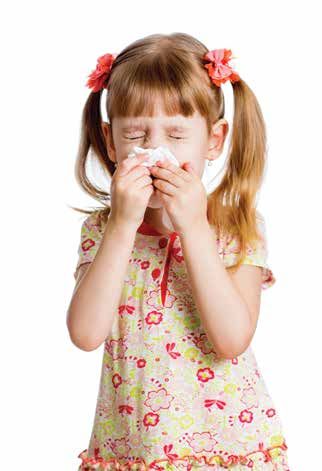
TABLE OF CONTENTS
INTRODUCTION                                5
   About this Guide                         5
   What is Asthma?                          5

Asthma Management                           6
Monitoring                                  7
   Symptoms of Asthma                       7
   Tools for Asthma Management              7
   Asthma Action Plan                       8
   How to Use the Asthma Action Plan        9
      Early Symptoms of an Asthma Attack    9
      Symptoms of an Asthma Emergency       9
   Individual Health Care Plan             10
Providing Medication                       11
   Types of Medication                     11
   Medication and Equipment                11
Removing Asthma Triggers                   13
   Causes of Asthma                        13
   Managing Asthma Triggers                14
Dust and Dust Mites                           15
  Pests                                         16
  Fumes, Odors, and Strong Smells               17
  Cleaning Products                             18
  Tobacco Smoke                                 19
  Furry and Feathered Animals                   20
  Mold and Mildew                               21
  Exercise                                      22
  Viral Infections                              23
  Outdoor Air Pollution                         24
  Pollen                                        25
  Food Allergies                                26
Educating                                       27
  Communication: Working with the Asthma Team   27
  Communication: Having a Plan                  28

Glossary                                        29

Resources                                       31
Introduction

About This Guide                                        people to develop asthma. However, it is
                                                        believed to run in families and result from

T    his guide is for childcare educators who
     work in Massachusetts – whether you work
in center-based or home-based settings. One
                                                        environmental exposures.
                                                     ■■ This disease causes airways in the lungs to
                                                        tighten, swell and fill with mucus, making it
out of eight children in this state has asthma.         hard to breathe.
Here you can find information about how to           ■■ Asthma symptoms include wheezing, coughing,
help care for these children.                           chest tightness and trouble breathing.
                                                     ■■ An asthma attack is serious. A person having an
This guide includes information about                   asthma attack may need emergency treatment,
recognizing asthma symptoms, partnering with            and may even die if they are not treated.
parents in caring for asthma, and removing           ■■ The good news is that asthma is very
things that can trigger asthma. Also, there are         treatable. With proper care, children and
tips about how you can work with parents to             adults with asthma can lead active and
manage a child’s asthma.                                healthy lives.

YOU can play an important role in ensuring
children with asthma lead a normal, active life.
This guide can help you.

What is Asthma?

■■ Asthma  is a chronic (long lasting) disease of
   the lungs.
■■ Researchers don’t know what causes

                                                                                                          Introduction | 5
Asthma Management

                                       G    ood asthma management helps children
                                            live full healthy lives and stay out of the
                                        emergency room.

                                        There are four parts to successful asthma
                                        management:

                                        1. Monitoring the child’s symptoms (such as
                                           breathlessness) so treatment can be provided
                                           before an asthma attack occurs.
                                        2. Providing medication as prescribed by the
                                           child’s doctor.
                                        3. Removing asthma triggers from the
                                           childcare environment.
                                        4. Educating everyone who cares for the child
                                           so they understand how to manage the child’s
                                           asthma – including recognizing asthma
                                           symptoms, identifying and removing triggers,
                                           and providing the correct treatment.

                                        We’ll discuss each of these on the following
                                        pages, which have tabs for easy reference.

6 | Caring for Kids with Asthma: A Guide for Massachusetts Child Care Programs
monitoring
Asthma Management :   Monitoring

Asthma Management :           Monitoring

Symptoms of Asthma                               Tools for Asthma Management                       Asthma in Young Children
                                                                                                   Some young children may
The four main symptoms of asthma are:            There are many tools that can help you            have asthma symptoms and
                                                 remember how to take care of a child with         use asthma medications,
■■ Coughing                                      asthma whether you are monitoring typical         even though they have not
■■ Chest tightness                               asthma triggers or responding to an emergency:    been diagnosed with asthma.
                                                                                                   Doctors don’t always
■■ Wheezing
                                                                                                   diagnose asthma at a young
■■ Trouble breathing                             ■■ You   should have both an Individual Health    age because the lungs are
                                                    Care Plan and an Asthma Action Plan on         still developing. It is still a
It is important to pay attention to asthma          file for children with asthma.                 good idea for them to have
symptoms so you can understand if an             ■■ You and your staff should have training on     an Individual Health Care
asthma attack is starting and needs treatment.      how to give asthma medication.                 Plan or an Asthma Action
                                                                                                   Plan if they are at risk of
Monitoring asthma symptoms also helps make       ■■ You should keep this guide nearby to look up
                                                                                                   asthma-like attacks or may
sure the asthma treatment plan is working.          information as needed.                         require asthma medication.

                                                                                                          Asthma Management | 7
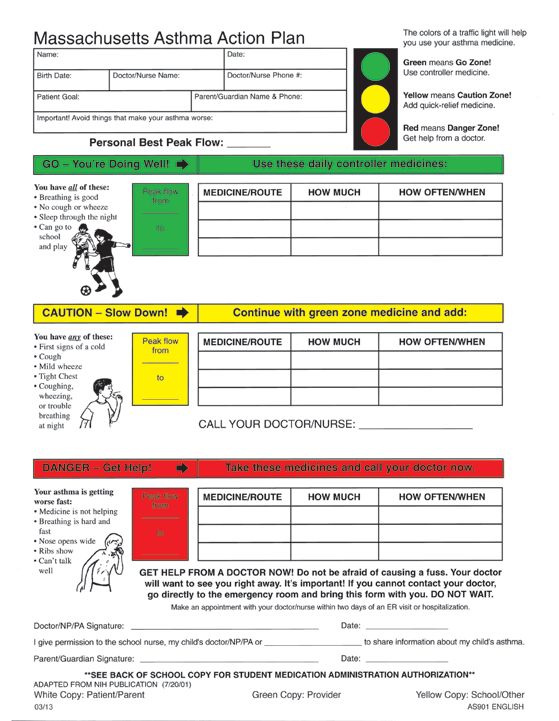
Asthma Action Plan
An Asthma Action Plan (AAP) is an important
tool that can help you prevent and treat asthma
attacks. An AAP shows you how to:
■■ Recognize well-controlled asthma (green
zone).
■■ Recognize which symptoms indicate you
should pay extra attention and add or
increase medications according to the plan
(yellow zone).
■■ Recognize the symptoms of an asthma
emergency (red zone) in which you should
provide rescue medication and call 911.
Each child with asthma has different symptoms
and medications, so each child needs to have his
or her own AAP.
■■ Ask parents for an AAP that has been
created by the child’s doctor.
■■ Blank AAP forms can be ordered free
online (in multiple languages) from the MA
Clearinghouse: www.maclearinghouse.com
8 | Caring for Kids with Asthma: A Guide for Massachusetts Child Care ProgramsHow to Use the Asthma Action Plan If the child has any of these yellow zone
symptoms, give the child medicine according to
Asthma symptoms can come on slowly or the instructions on the Asthma Action Plan or
rapidly. An attack may be mild for some time Individual Health Care Plan. If the child is over
before getting worse, or it may come on fast age 5 and has a peak flow meter, you can use it
and get worse quickly. Sneezing, runny nose, to check the child’s breathing and compare it to
scratchy throat and itchy eyes are common the peak flow numbers on the plan.
allergy reactions that can lead to lung problems
for people with asthma. Red Zone :
Symptoms of an Asthma Emergency
Yellow Zone : Symptoms in the red zone on an Asthma Action
Early Symptoms of an Asthma Attack Plan are serious. If a child has any of these
Symptoms in the yellow zone on an Asthma symptoms the asthma is getting worse quickly.
Action Plan indicate that the asthma is no longer
completely controlled and the child needs more ■■ Severe wheezing that you can hear
or different treatment. The following symptoms ■■ Heavy coughing
are in the yellow zone: ■■ Crying but not making noise
■■ Blue lips
■■ First signs of a cold. ■■ Chest and neck pulled in, ribs showing
■■ Wheezing, noisy breathing, or whistling ■■ Nose opens wide
sounds coming from the chest, especially if ■■ Breathing really fast (can’t speak in complete
there are four wheezing episodes in one month. sentences)
■■ Tight chest: Children may say their chest
‘hurts’ or feels ‘heavy’ and toddlers may press Call 911 or go to the emergency room if you
on their chest or throat. see any of these symptoms. Provide medication
■■ Coughing that continues over hours or days, according to the Asthma Action Plan.
coughing that gets stronger or more frequent,
or coughing during sleep.
■■ Difficulty sleeping due to asthma, either
during naps or at night.
Asthma Management | 9Individual Health Care Plan
Massachusetts has regulations that require every
child with asthma to have an individual health
care plan (IHCP) on file at the childcare site.
■■ A parent, teacher and health care provider
together create an IHCP for the child.
■■ The IHCP includes information about
symptoms, treatments, and side effects.
■■ You should ask the parent to include
information about a child’s asthma triggers,
and to show you how to give their child’s
medications.
■■ Look at the “Communication: Working
with the Asthma Team” section of this guide
(page 27) for more information on filling out
this plan.
10 | Caring for Kids with Asthma: A Guide for Massachusetts Child Care Programsmedication Asthma Management : Providing Medication
Asthma Management :              Providing Medication

Types of Medication                                  Medication and Equipment

Asthma medications are an important part of          Controller Medications
caring for asthma. These medications make            Controller medications help control swelling
breathing easier by decreasing mucus and             and build up of mucus in the lungs. They are
swelling and by relaxing the muscles that            taken daily to prevent moderate to severe asthma
tighten up the airways. Childcare educators          symptoms. They should be taken even if the child
must be trained by a health care provider or         is well. These controller medications do not give
parent about how to give asthma medication           quick relief during an attack. Examples include:
(refer to the Resource section at end of this
document for information on training).               ■■ Singulair (also called Montelukast)
                                                     ■■ Inhaled steroids: Budesonide (also called
There are two types of asthma medications:              Pulmicort), Fluticasone (also called Flovent),
1. Long-term control medications control                Beclomethasone (also called Qvar)
   daily symptoms and are taken even if the
   child appears to be healthy.                      Rescue Medications
2. Rescue (quick-relief ) medications should be      Rescue or quick relief medications relax muscle
   taken to relieve immediate symptoms. If rescue    spasms in the lungs and give quick relief during
   medications are being taken daily, encourage      an attack. They also help prevent muscle spasms
   parents to talk to their child’s doctor about     during exercise when taken 15-20 min before
   finding a better way to control the asthma.       exercise. Examples include:

If a child’s asthma is triggered by allergies, the   ■■ Albuterol   (also called Ventolin, Proventil,
child may need to take allergy medications              ProAir)
along with asthma medications to help control        ■■ Levalbuterol (also called Xopenex)
symptoms.                                            ■■ Pirbuterol (also called MaxAir)

                                                                                                         Asthma Management | 11
What should I do if the Since children may need medication during
child’s rescue medication childcare, ask parents if the child’s doctor can
is not nearby? prescribe an extra inhaler to keep at the child
ALWAYS have an asthmatic care site.
child’s rescue (quick relief)
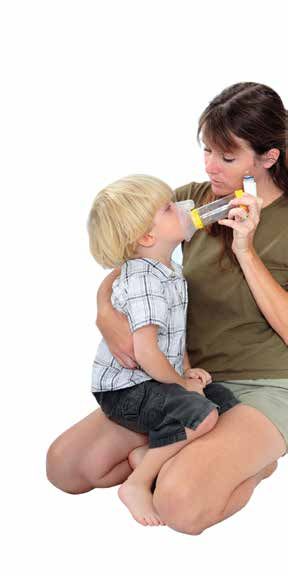
medication with you at all There are several different pieces of equipment
times. This can save a life. used in giving asthma medication. Here are
If symptoms are severe and pictures of the most common devices used.
the inhaler or medication Look in this guide’s “Glossary” (page 29) for
is not quickly available, definitions of each.
call 911. While waiting
for the medicine or rescue
personnel:
■■ Stay with the child, remain
calm and help the child
remain calm.
■■ Encourage the child to
inhale and exhale slowly.
■■ Try having the child sit in a
Inhaler Spacer Nebulizer Mask
hunched position leaning
on his or her elbows.
■■ If the item that triggered
You can find step-by-step picture instructions
the attack can be taken
away from the child (e.g.
on how to give medication here: www.nhp.
a feather comforter) or org/pages/providers_clinicalresources_
the child taken away from asthmatoolsdownload.aspx
the trigger (e.g. pollen)
get the child away from
the item that triggered
the attack. For example,
remove the feather
comforter from the child
or move the child indoors
on bad pollen days.
12 | Caring for Kids with Asthma: A Guide for Massachusetts Child Care ProgramsAsthma Management : Removing Asthma Triggers
triggersAsthma Management : Removing Asthma Triggers
Causes of Asthma
■■ Asthma symptoms can be caused by exposure
to triggers. Each child may have a different
set of things that triggers his or her asthma.
■■ Triggers are things in both the indoor and
outdoor environments that may not bother
a person without asthma – but do bother
children and adults with asthma because they
have sensitive lungs.
■■ Important triggers include dust and dust
mites, tobacco smoke, mold and mildew, pests,
strong smells, and pets among other things.
■■ Removing asthma triggers from your child
care setting is an important way to help
children with asthma.
Asthma Management | 13Managing Asthma Triggers
The triggers below can make asthma worse.
There are many easy and low cost things that
childcare staff can do to reduce or get rid of
asthma triggers in the childcare setting. By
managing triggers, you can play a big role in
preventing asthma attacks at your childcare site.
Dust and Dust Mites Mold and Mildew
Pests Exercise
Perfumes, Odors and
Viral Infections
Strong Smells
Outdoor Air Pollution
Cleaning Products
and Weather
Tobacco Smoke Pollen
Furry or Feathered Animals Food Allergies
14 | Caring for Kids with Asthma: A Guide for Massachusetts Child Care ProgramsDust and Dust Mites
Dust and dust mites are the most common Center-based
asthma triggers.
What Can You Do? Childcare
■■ Use special allergy covers on mattresses
Dust mites are tiny bugs that are impossible to for children napping in beds or cribs. (Family childcare should
see but live in every home. They can be found in: Wipe the covers off with a damp cloth or also apply this tip when
possible): When making
vacuum fabric covers once a month.
large purchases or doing
■■ Bedding ■■ Wash stuffed animals, sheets, blankets and
renovations, consider
■■ Stuffed toys other bedding in hot water weekly. You buying furniture that is
■■ Carpeting could also put these items in the dryer smooth and wipe-able, and
■■ Mattress using the hot cycle for at least 30 minutes. choose smooth, non-porous
■■ Pillows ■■ Vacuum floors, rugs, and all upholstered flooring rather than carpet.
■■ Other common household items surfaces (chairs with cushions, rugs,
curtains, etc.) with a HEPA vacuum.
Breathing in dust and dust mite droppings can HEPA vacuums are available for a low
trigger an asthma attack and could also cause cost at big box or home supply stores.
asthma in children who did not have asthma ■■ Reduce clutter in the building wherever
already. The good news is there are many easy possible. Store things in plastic bins or
things you can do to reduce household dust, closed cabinets to avoid collecting dust.
which reduces dust mites. ■■ Use a damp mop to clean hard surface
floors.
■■ Clean or change heating and air
conditioning filters regularly.
Asthma Management | 15Pests
Center-based Pests and pest droppings can trigger asthma
Childcare or make asthma worse. Some chemicals used
What Can You Do?
to kill pests can also trigger asthma and can be The best way to reduce pests, pest droppings
IPM is required for all very dangerous for young children. Pests get and pesticide use is to use Integrated Pest
childcare centers! Go to into buildings through tiny cracks and openings Management (IPM). IPM reduces pests by
http://massnrc.org/ipm to
and are attracted to crumbs, dirty dishes, spills preventing them from entering the home
create your IPM plan.
and water. and removing any sources of food and water.
Pesticides are used only as a last resort. The
Family Cockroaches and mice are the worst pests for following are components of IPM:
Childcare asthma. Exposure to cockroaches may cause
asthma in otherwise healthy children. ■■ Don’t feed pests: Remove sources of food
Start IPM in your childcare! and water for pests, clean dirty dishes
If you need help talking to and spills quickly, store food (including
your landlord or need info pet food) in sealed airtight containers, fix
on pest contractors go to dripping faucets, and keep a tight lid on
http://massnrc.org/ipm.
the garbage.
First, try to use a pest ■■ Keep pests out: Repair any cracks in
contractor who follows the walls and close openings to the
IPM practices. If all other outdoors. Clean up any clutter like paper,
steps have failed and
you absolutely must use
newspapers and cardboard.
pesticides, make sure ■■ Trap existing pests: If possible, use bait
pesticides are kept away traps (outside the reach of children) or
from children. Use this sticky traps instead of spraying pesticides.
guide to understand how ■■ Your IPM contractor should only use
to use pesticides safely:
pesticides as a last resort: If all other
www.epa.gov/oppfead1/
Publications/Cit_Guide/ steps have failed, your IPM contractor
citguide.pdf may apply pesticides very carefully.
16 | Caring for Kids with Asthma: A Guide for Massachusetts Child Care ProgramsFumes, Odors and Strong Smells
Strong smells from common household items can
trigger asthma attacks. These products include:
What Can You Do?
■■ Avoid chemical air fresheners or sprays. Use
■■ Cleaning supplies exhaust fans to air out rooms after cleaning.
■■ Perfumes ■■ Avoid wearing hairspray or perfume
■■ AirFresheners near children and consider creating a
■■ Gas/smoke from stoves, heaters fragrance-free policy for the childcare site.
■■ Close windows if there are exhaust fumes
Sprays of any kind are put tiny particles into outside, such as from buses.
the air and irritate the lungs. Even things that ■■ Use low or no-VOC paints. These are easy
have a nice smell, such as electric plug-in air to find at hardware stores.
fresheners, can trigger asthma. The safest option ■■ Use non-toxic fragrance-free cleaners and
is always to buy less toxic, “fragrance-free” clean when children are away (see next
products and avoid all strong smells. section on “Cleaning Products”).
Asthma Management | 17Cleaning Products
Preparing Bleach: more Cleaning, sanitizing and disinfecting are very
is NOT better! important in childcare settings, but they can be vinegar or other acids.
For food areas, mouthed dangerous if not done correctly. You only need ■■ The safest bleach alternative is hydrogen
toys and pacifiers (such as to use a sanitizer or disinfectant on surfaces peroxide-based disinfectants (e.g. Oxivir).
refrigerators, freezers, plastic required by MA Department of Early Education ■■ Read the labels on all cleaning products.
cutting boards, stainless and Care regulations. For other areas, like floors There are some cleaners and disinfectants
cutlery/utensils, dishes,
glassware, countertops, pots
and windows, you can use soap and water. that are branded as “green,” but only select
and pans, toys that have those that are third party certified.
been mouthed, high chair Bleach is the most common sanitizer and ■■ If disinfecting or sanitizing, first clean
trays), add 2 teaspoons of disinfectant. It can trigger asthma attacks and surfaces well with soap and water or other
bleach to 1 gallon of water. may cause new cases of asthma. It is important less-toxic cleaners. Second, rinse with
For toilet and diapering to reduce or eliminate children’s contact with water using a cloth. Third, use disinfectant
areas (such as bathroom bleach. Use bleach only when required and in by wiping the solution on the surface.
surfaces, sinks, changing the right amount. If possible, use bleach when ■■ If using spray bottle, spray solution onto
tables, potty chairs, diaper children are not present. cloth instead of directly onto surface.
pails, and doorknobs), add ■■ If you must use bleach, be careful to
¼ cup of bleach to 1 gallon
of water, or 1 tablespoon of measure correctly and do not spill when
bleach to 1 quart of water. preparing the solution. Always put water
into the container first, then add the
Throw away any leftover
bleach.
bleach solution, or make
■■ Mix bleach with cool, not hot water and
sure it is clearly marked and
stored safely. don’t use more than the recommended
What Can You Do?
amount of bleach.
Look for less toxic certified ■■ Use
cleaning products with
less-toxic, certified cleaning products ■■ Let the bleach dry for two minutes before
these logos: when possible. Two common certifications touching or using the object.
to look for are Green Seal and EcoLogo. ■■ Open windows or turn on an exhaust fan
■■ Never mix different types of cleaning for good ventilation when using bleach
products. Don’t mix bleach with ammonia, and other cleaning products.
18 | Caring for Kids with Asthma: A Guide for Massachusetts Child Care ProgramsTobaco Smoke
Being around tobacco smoke is dangerous, Center-based
especially for children. Secondhand smoke is an
What Can You Do? Childcare
asthma trigger. Being exposed to secondhand ■■ Try to help parents and staff (and for family
smoke even makes it more likely that kids who childcare, family members) quit smoking. Create a smoke-free policy.
Do not allow smoking
don’t have asthma, will develop it. ■■ There is help for people who want
anywhere on your center’s
to quit smoking. They can call property, even outside.
Kids are the most at risk because they are still 1-800-QUIT-NOW or visit www.
growing, and they breathe more times per minute makesmokinghistory.org for help.
than adults. This means they breathe in more of ■■ Ask staff who smoke to change their Family
the chemicals found in cigarette smoke than do clothes after they have a cigarette. Childcare
adults. Children can still breathe in chemicals
from smoke even after someone has finished the If staff can’t change their clothes, ask them Ask family and friends to
cigarette because they stay in the air. to wear a special jacket that they only wear smoke outside, even if
childcare is not in session.
when smoking. They can take off this jacket
when they come inside. Can you smell smoke in
your apartment? If people
in another apartment in
your building smoke, the
smoke can come into your
apartment. Talk with your
landlord if you rent, or your
condo association, if you
own, about including a no
smoking indoors policy for
your building. It’s legal and
could save money in repair
costs! Check it out: http://
makesmokinghistory.
org/secondhandsmoke/
housing.html
Asthma Management | 19Furry or Feathered Animals
Animals with fur or feathers carry allergens in
their saliva and on their skin, fur, or feathers.
What Can You Do?
■■ Have pets such as fish or hermit crabs, or
Pet dander may get on the clothes, blankets, and raise and release butterflies.
stuffed toys of children and staff. It can also float ■■ If you have a furry or feathered pet, keep
in the air and settle on children, furniture or toys. it outside of the childcare rooms and
play areas, and especially off furniture
and carpets.
■■ Tell parents before they enroll a child if
you have a furry or feathery pet.
20 | Caring for Kids with Asthma: A Guide for Massachusetts Child Care ProgramsMold and Mildew
Mold and mildew produce tiny spores that are
carried in the air. The spores can be harmful
What Can You Do?
to people with allergies and asthma and ■■ Clean up mold and find its source (more
could cause asthma in a child who is healthy. information on this can be found in the
Mold grows where it is damp. You can find “Resources” section). Mold will come back
mold under carpets, under sinks, on window unless you find the source of the problem.
frames and sills, and on wet appliances like air Fix all sources of water leaks.
conditioners, humidifiers, and refrigerators. ■■ To clean up mold, if it is a small problem
you can wipe it up, but large mold problems
require a mold remediation professional.
■■ Use exhaust fans or open windows to
reduce moisture.
■■ Avoid using humidifiers or vaporizers
(unless a doctor says to) – they promote
mold and spread it throughout the room.
■■ Keep drip pans in refrigerators and air
conditioners clean and dry. Clean air
conditioner filters regularly.
Asthma Management | 21Exercise
Asthmatic children should be able to exercise
if their asthma is under good control. Exercise
What Can You Do?
can help children with asthma feel better so they ■■ Watch the child closely during exercise
can stay active just like everyone else. Children and have rescue medication nearby.
with asthma should be able to run around ■■ Have the child warm up with about 5 to
and play on a playground like other children, 10 minutes of stretching and light activity
without struggling to breathe. However, for some before starting to exercise, and cool down
children, exercise can trigger an asthma attack. afterwards.
■■ Make sure the child drinks plenty of water.
The symptoms of exercise-induced asthma ■■ When it’s cold, have the child wear a
generally begin within 5 to 20 minutes after the mask or scarf to cover his or her nose,
start of exercise, or 5 to 10 minutes after brief since cold air tightens the airways quickly.
exercise has stopped. ■■ Avoid outdoor exercise on days that have
a high pollen count or high pollution
Some children may need to use rescue or levels (see pages 23-24).
quick-relief medication before exercise. Other ■■ Restrict the child’s exercise when he or
children need controller medication every day she has a viral infection (see page 22).
to keep their asthma symptoms under control.
This information should be in the Individual
Health Care Plan or Asthma Action Plan.
22 | Caring for Kids with Asthma: A Guide for Massachusetts Child Care ProgramsCold, Flu, and Other Illnesses
Colds, flu, bronchitis and other similar illnesses
can trigger an asthma attack. This type of
What Can You Do?
sickness is the most common asthma trigger for ■■ Remind children and staff to wash their
young children. hands often to avoid spreading infections.
Look in the “Resources” section for good
handwashing practices.
■■ Keep children with asthma away from
people who have a cold or flu.
■■ Children (and staff ) should remain
at home when they have the flu, and,
whenever possible, when they have a cold.
■■ Encourage parents to have their children
as young as six months old get flu shots.
Children with asthma should get the flu
shot, not the nasal spray.
Asthma Management | 23Outdoor Air Pollution
Outdoor air that is polluted can cause asthma
attacks. Air pollution is very irritating to the
What Can You Do?
lungs and airways, causing them to tighten. ■■ Try to keep children inside if the weather
Exposure to air pollution may cause asthma in is very hot or very cold.
otherwise healthy children. ■■ To get an air quality forecast, go to:
www.enviroflash.info/signup.cfm or
www.mass.gov/eea/agencies/massdep/
air/quality.
■■ Air quality is presented using a color coded
system. Green zone means it is okay to play
outside. Yellow, Orange and other colored
zones mean children with asthma should
limit outdoor recreational activities.
■■ Keep windows closed and use an air
conditioner on high pollution days. Clean
air conditioner filters regularly.
24 | Caring for Kids with Asthma: A Guide for Massachusetts Child Care ProgramsPollen and Weather
Pollen comes from trees, flowers, grass and
weeds and can trigger asthma. Pollen floats
What Can You Do?
in the air and can collect on any surface, even ■■ Enter your zip code at www.aaaai.org/
indoors. High pollen counts in the spring and global/nab-pollen-counts.aspx to check
fall seasons are known to be asthma triggers for local pollen amounts.
some children. In addition, very cold or very hot ■■ On days with high pollen, keep windows
weather can cause asthma attacks. closed and use air conditioners, if possible.
Clean air conditioner filters regularly.
■■ Clean indoor surfaces, curtains and rugs
often. Keep outdoor areas clear of fallen
leaves, compost piles and cut grass.
■■ Try to keep children inside if the weather
is very hot or very cold.
Asthma Management | 25Food Allergies
Allergies to foods like peanuts, tree nuts, milk,
wheat, soy beans, eggs, fish, and shellfish can
What Can You Do?
cause asthma symptoms. Sometimes these foods ■■ Get training to recognize food allergy
can cause a life-threatening allergic reaction reactions, and how to treat them (including
making it difficult for a child to breathe. This providing emergency medication, such as
situation can be even more dangerous for an epipen).
children with asthma and food allergies. ■■ Have parents list all of their child’s food
allergies in their Individual Health Care
Plan, as well as the types of food products
that may contain these foods. Check
labels of all food products.
■■ Post a list of children’s food allergies (with
the child’s photo) in the kitchen and
eating areas where all staff can see it.
■■ Wash hands after eating or wiping
surfaces to avoid accidental exposure.
■■ Keep the child’s emergency medication
within your reach at all times.
■■ For more information, visit
www.asthmaandallergies.org.
26 | Caring for Kids with Asthma: A Guide for Massachusetts Child Care ProgramsAsthma Management : Educating
educatingAsthma Management : Educating
Communication: Working With the ■■ Create a daily communication form (download What is the key to
Asthma Team one at: www.mass.gov/dph/asthma) to share being on any team?
with parents. This can include any changes in COMMUNICATION! It is
important for all individuals
Managing asthma is a team effort! Parents, symptoms, medications, or triggers.
to have open and regular
childcare educators, and health care providers ■■ Work with parents to update the Individual
communication about a
all have an important role to play in helping Health Care Plan and Asthma Action Plan child’s asthma management.
a child control their asthma so they can live regularly. Think about scheduling an annual Share the information in
active, healthy lives. health update meeting. this guide with parents!
■■ Take training on asthma management.
Here are some important communication tips: Schedule an asthma-awareness meeting with
all childcare staff to discuss asthma in your
■■ Support parents in helping to manage their childcare center. Ask if any local asthma
child’s asthma by sharing resources with them coalitions offer trainings for childcare staff.
(like this guide!) and asking them to talk to
their child’s doctor or nurse.
■■ Remind parents they should ask their child’s
doctor to create an Asthma Action Plan. The
doctor could also help parents complete the
Individual Health Care Plan for the child. If
your program has a health consultant, he or
she may be able to help as well.
■■ If you notice a child is having a lot of
symptoms and cannot participate in activities
like other children, their asthma may not
be well-controlled. You should talk with the
child’s parents.
Asthma Management | 27Some parents may be Communication: Having a Plan day at home to help control his asthma.
unfamiliar with the IHCP. Try If John has trouble breathing, he takes
filling out the IHCP together The Individual Health Care Plan (IHCP) is
if a parent is unsure of how
his Albuterol with his inahaler and uses
a helpful resource for parents and childcare
to complete it on their own.
educators. The plan provides information so a
a spacer with a mask.
Remember, you can help
parents too! childcare educator can successfully care for a ■■ Any potential side-effects of treatment.
child with asthma. Children with asthma should
have both an IHCP and Asthma Action Plan.
Sometimes John gets very grumpy after
taking his Singulair. When John takes
Here is an example of how an asthma team his Albuterol, he often gets a little
could complete the plan for a child with hyper afterwards.
asthma. An IHCP should include all of the
following information: ■■ Any potential consequences if treatment is
not given.
■■ A description of the child’s asthma. If John does not take his Albuterol he is
John’s asthma is triggered by dust and more likely to become very sick. When
pet dander. He developed asthma at age he has an asthma attack his lungs close
four and it is fairly well controlled. up and make it hard to breathe. If he’s
IHCP and Allergies
■■ A description of the symptoms. having a serious attack (as described in
An IHCP should list all
allergies and instructions John’s early warning asthma symptoms the red zone of his asthma action plan),
on the steps that need to be are a mild cough and his throat gets he MUST have his rescue medication
taken to avoid that allergen.
For example, a parent might itchy. When he’s having a bad asthma and be brought to the emergency room.
write on an IHCP to only attack he wheezes when he breathes and
feed the child food supplied Ask parents to work with their child’s doctor to
from home. If a childcare has extreme difficulty breathing. create an Asthma Action Plan!
provides pre-packaged
food, make sure to read the ■■ A list of any medical treatment that may be
ingredient label every time necessary.
a food is used.
John takes Singulair and Flovent once a
28 | Caring for Kids with Asthma: A Guide for Massachusetts Child Care ProgramsGLOSSARY
Allergen: A substance that causes an allergic Controller Medication: Helps control swelling
reaction, like coughing or sneezing. For and overproduction of mucus in the lungs’
example, dust, pollen, and mold. airways. They are taken daily (even when the
child is well) to prevent moderate to severe
Asthma: A chronic (lifelong) disease of the asthma symptoms.
lungs that causes the airways to tighten, swell
and fill with mucus. Asthma can be made worse Dander: Small particles of skin, hair, or
by exposure to allergens or irritants. Asthma feathers. Dander often falls out when an animal
symptoms can range from mild to severe, even sheds or molts and can be an allergen.
in the same child, and can get worse quickly.
Disinfectant: A product that kills nearly 100%
Asthma Action Plan: A document created of germs. To be used on non-living objects only.
by a healthcare practitioner that outlines the
patient’s specific symptoms and what to do H.E.P.A. Filter: “High Efficiency Particulate
depending on how well the patient is doing. Air.” An air filter that traps extremely small
particles that normal vacuums or filters would
Asthma Attack: An attack happens when the spit back out.
lung’s airways get smaller and less air can go
through the lungs. Symptoms include coughing, Inhaler: A device that allows for the breathing
wheezing, and difficulty breathing. in of medication.
Chronic Condition: An illness or ailment that Integrated Pest Management: A lasting and
requires long term monitoring or management environmentally-friendly approach to managing
because it is not curable in the short term. For pests by a combination of approaches.
example, diabetes and asthma. There is no cure
for asthma.
Glossary | 29Irritant: A physical, biological, or chemical Triggers: Anything (including activities and
agent that makes the body react in some way. substances) that causes asthma to worsen. An
For example, bleach is a chemical irritant that asthma trigger is something that can cause an
can trigger asthma attacks. asthma attack.
Mask: Usually used with a nebulizer or spacer Wheezing: Breathing with difficulty that
and goes over the face to help children inhale produces a whistling sound caused by mucus,
medication. airway constriction, and inflammation.
Nebulizer: A machine that changes liquid
medication into a fine mist that can be inhaled.
It is used to deliver medicine deep into the lungs.
Rescue Medication: Relaxes muscle spasms in
the lungs’ airways and gives quick relief during an
attack. It also helps prevent muscle spasms during
exercise when taken 15-20 min before exercise.
Respiratory System: The parts of your body
used for breathing. This includes the lungs, nose,
and throat.
Sanitizer: A product that kills 99.9% of germs.
It is different from disinfectant and should not
be used to replace disinfectants. It can be used
on people (such as hand sanitizer) and objects.
Spacer: A device that attaches to an inhaler to
help improve delivery of the medication into
the lungs and be used by all people with asthma,
and are especially helpful to children.
30 | Caring for Kids with Asthma: A Guide for Massachusetts Child Care ProgramsResources
Asthma Information
■■ Asthma Prevention and Control Program at the Massachusetts
Department of Public Health
For information about asthma in Massachusetts.
www.mass.gov/dph/asthma
■■ Massachusetts Early Childhood Comprehensive Systems Project at
the Massachusetts Department of Public Health
For more information.
Phone: (617) 624-5919
■■ Asthma and Allergy Foundation of America, New England Chapter
For information on Managing Allergies in Childcare.
www.asthmaandallergies.org
Phone: (781) 444-7778
■■ American Lung Association of the Northeast
For information on asthma.
www.lung.org/associations/charters/northeast
Phone: 1 (800) 488-LUNG
Resources | 31■■ Massachusetts Asthma Advocacy Partnership
For information on asthma and what is being done in Massachusetts.
www.maasthma.org
■■ Massachusetts Health Promotion Clearinghouse
To order asthma action plan forms in eight languages and posters in
English and Spanish.
www.maclearinghouse.com
Safe Cleaning & Chemicals
■■ Policy Statement: Sanitizing and Disinfecting from Massachusetts
Department of Early Education and Care
www.eec.state.ma.us/docs1/regs_policies/group_schoolage_policies/
sanitize_disinfect.pdf
■■ Sanitize Safely and Effectively: Bleach and Alternatives in Childcare
Programs from California Childcare Health Program
www.ci.berkeley.ca.us/uploadedFiles/Health_Human_Services/
Level_3_-_Public_Health/9. SanitizeSafely_9.09.pdf
■■ Eco-Healthy Childcare: Household Cleaning Products
www.oeconline.org/resources/publications/factsheetarchive/Household
chemicals.pdf
■■ Informed Green Solutions: Information on purchasing
environmentally preferable products:
www.informedgreensolutions.org
32 | Caring for Kids with Asthma: A Guide for Massachusetts Child Care ProgramsInformation on Triggers
General Information
■■ Environmental Protection Agency’s “Breathing Freely: Controlling
Asthma Triggers” video:
www.epa.gov/asthma/triggers.html
■■ Bureau of Environmental Health’s Asthma and Your Environment
brochure:
www.mass.gov/dph/asthma
Integrated Pest Management
■■ MA School & Daycare IPM Program
For information on IPM and state regulations.
http://massnrc.org/ipm
■■ EPA Integrated Pest Management in Childcare Centers
To download pamphlets and other information on IPM.
www.epa.gov/pesticides/controlling/childcare-ipm.htm
■■ IPM in Childcare Centers, EPA
This is a training presentation in PowerPoint.
http://epa.gov/childcare/IPM_CCC.pdf
Mold
■■ Environmental Protection Agency
www.epa.gov/mold/mold_remediation.html
Resources | 33Tobacco Cessation
■■ MA Tobacco Cessation and Prevention Program
For information on quitting and on smoke-free housing.
Phone: 1 (800) QUIT-NOW
www.makesmokinghistory.org
Viral Infections
■■ Proper handwashing
www.mass.gov/eohhs/gov/departments/dph/programs/id/
epidemiology/handwashing.html
Air Quality
■■ To sign up to receive emails about your daily air quality forecast:
www.enviroflash.info/signup.cfm
■■ To look online for the daily air quality forecast:
www.mass.gov/eea/agencies/massdep/air/quality
■■ Child Care Weather Watch:
www.idph.state.ia.us/hcci/common/pdf/weatherwatch.pdf
Pollen Levels
■■ To look online for the daily pollen count:
www.aaaai.org/global/nab-pollen-counts.aspx
Giving Medications
■■ Neighborhood Health Plan
For easy illustrated instructions in several languages on using various
asthma medications and equipment.
34 | Caring for Kids with Asthma: A Guide for Massachusetts Child Care Programswww.nhp.org/pages/providers_clinicalresources_asthmatoolsdownload.
aspx
■■ The Early Intervention Regional Consultation Programs (RCPs)
Provide support to Early Childhood Programs on medication
administration, including asthma medicine. Each RCP has a part-time
nurse on staff whose role is to provide on-site training and coaching to
educators on a limited basis. Please contact your local RCP for more
information and training availability:
Boston Regional Consultation Program
Thom Boston Metro Early Intervention
555 Amory Street Jamaica Plain, MA 02130
Maria Cardiello, RN
Phone: (617) 383-6522 x110
mcardiello@thomchild.org
Northeast Regional Consultation Program
Professional Center for Child Development
32 Osgood Street Andover, MA 01810
Laura Eberth, RN
Phone: (978) 475-3806 x 205
leberth@theprofessionalcenter.org
Southeast Regional Consultation Program
Schwartz Center for Children
One Posa Place Dartmouth, MA 03747
Lauren Meatty, Coordinator
Phone: (508) 996-3391 ext. 246
lmeatty@schwartzcenter.org
Resources | 35Western Regional Consultation Program
Thom Springfield Infant Toddler Services
1506A Allen Street, Bicentennial Plaza
Springfield, MA 01118
Sheila Rucki, PhD, PCNS, BC
Phone: (413) 783-5500
srucki@thomchild.org
Central Regional Consultation Program
Criterion Child Enrichment
31 Lake Street
Gardner, MA 01440
Erin Grady, RN
egrady@criterionchild.com
MetroWest Regional Consultation Program
South Shore Mental Health
500 Victory Road
Quincy, MA 02169
Anne Batcheller, RN
Phone: (617) 774-6056
abatchel@ssmh.org
Healthy Homes and Schools
■■ Boston Healthy Homes and Schools Collaborative
www.bhhsc.org
■■ Greater Brockton Asthma Coalition
Phone: (508) 588-4049
36 | Caring for Kids with Asthma: A Guide for Massachusetts Child Care Programs■■ Pioneer Valley Asthma Coalition
http://pvasthmacoalition.org
■■ National Center for Healthy Homes
www.nchh.org
■■ Healthy Schools Network
www.healthyschools.org
Resources | 37ACKNOWLEDGEMENTS
The Massachusetts Department of Public Health would like to
acknowledge the following people and organizations for their work in
creating this guidance document: Elizabeth Tanefis, Shari Sprong, and
Katherine Connolly of Health Resource in Action for leading the research
and preparation of this guide. Also, Sharon Schumack of the Asthma and
Allergy Foundation of America – New England Chapter, Dr. Barbara
Moore of Harvard Vanguard Medical Associates, Phil Baimas and Gail
Perry from the MA Department of Early Education and Care, Tolle
Graham from the Massachusetts Coalition for Occupational Safety
and Health; as well as Eve Wilder, Kate Roper, Elise Pechter, and other
colleagues at the Massachusetts Department of Public Health.
This publication was support by the Cooperative Agreement #5U59EH000502-04 from the Centers
for Disease Control and Prevention. Its contents are solely the responsibility of the authors and do not
necessarily represent the official views of the Centers for Disease Control and Prevention.
38 | Caring for Kids with Asthma: A Guide for Massachusetts Child Care ProgramsYou can also read


