Community Pharmacies in Poland-The Journey from a Deregulated to a Strictly Regulated Market - MDPI
←
→
Page content transcription
If your browser does not render page correctly, please read the page content below
International Journal of
           Environmental Research
           and Public Health

Review
Community Pharmacies in Poland—The Journey
from a Deregulated to a Strictly Regulated Market
Marcin Wiśniewski 1 , Urszula Religioni 2 and Piotr Merks 3,4,5, *
 1    Association of Pharmacists of Employers of Polish Pharmacies, 01-711 Warsaw, Poland;
      kontakt@aptekarze.org.pl
 2    Collegium of Business Administration, Warsaw School of Economics, 02-513 Warsaw, Poland;
      urszula.religioni@gmail.com
 3    Cardinal Stefan Wyszyński University in Warsaw Faculty of Medicine, Collegium Medicum,
      01-938 Warsaw, Poland
 4    Department of Pharmaceutical Technology, Faculty of Pharmacy, Collegium Medicum in Bydgoszcz,
      85-067 Bydgoszcz, Poland
 5    Employed Pharmacist in Europe (EPhEU) Verband Angestellter Apotheker Österreichs (VAAÖ) Berufliche
      Interessenvertretung Spitalgasse 31/4, Vienna 1090, Austria
 *    Correspondence: p.merks@uksw.edu.pl

 Received: 29 October 2020; Accepted: 21 November 2020; Published: 25 November 2020

 Abstract: Community pharmacies are the primary entities providing drugs to individual patients
 in Poland. The pharmacy market has been changing for many years due to significant changes in
 market regulations. These changes significantly affect the profitability of pharmacies, which may
 impact the quality of pharmacotherapy. The small number of pharmacies, which resulted from
 changes in the law in 2017, can influence the level of patient care. The article presents the community
 pharmacies market in Poland. Particular attention is paid to the legal regulations affecting community
 pharmacies and the impact of these regulations on the overall shape of the market. The Polish
 system’s specificity, including the pharmacy market indicators, has been compared with data from
 other European Union countries.

 Keywords: community pharmacy; pharmacy market; pharmacist; pharmacy regulations

1. Introduction
     Drug policy is an integral part of health policy being a combination of medical and economic areas.
Providing patients with effective and safe therapy seems to be one of the essential drug policy elements.
Thus, appropriate drug policy is one of the most important aspects of public health [1]. In the area of
drug policy, actions of governments of all countries should be directed at improving the population
health and achieving better health outcomes [2], which is impossible without a rational drug policy.
     In that context, the enormous role of a community pharmacist in the healthcare system should
be emphasised. The pharmacist is a patient’s advisor in the field of medications. Patients’ access to
pharmaceutical care is a guarantee of drug safety and achieving the expected effects of therapy [3,4].
The role of the pharmacist seems to be particularly important in the time of the COVID-19 pandemic.
Many emergency cases have resulted in a significant inefficiency of health care systems, which is
also visible in Poland. Importantly, in April 2020, legal changes allowed pharmacists to prescribe the
reimbursed fully paid drug pro auctore and pro familiae and fully paid drug for patients in health
emergency up to a maximum of 180 days of therapy. This change was of particular importance during
the pandemic when patients had significant difficulties in accessing doctors. Before that, pharmacists
could prescribe a drug only in the situation of a sudden threat to the patient’s health or life, and the
patient could only receive the smallest possible packaging of the drug.

Int. J. Environ. Res. Public Health 2020, 17, 8751; doi:10.3390/ijerph17238751   www.mdpi.com/journal/ijerph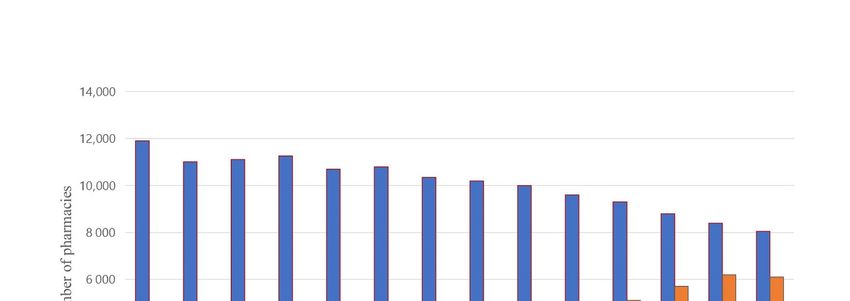
Int. J. Environ. Res. Public Health 2020, 17, 8751                                                  2 of 11

     In the Polish health care system, the central place of drug dispensing to patients is the
community pharmacy. However, some products can also be purchased at limited-service pharmacies
or non-pharmacy outlets. On the Polish community pharmacy market, a significant increase in the
number of pharmacies and pharmacy chains has been observed for many years [5]. This situation was
a stimulus for changes in legal regulations. In 2012, the so-called “Pharmacy for the Pharmacist” Act
was introduced aimed at tightening regulation of the pharmaceutical market [6].
     This article characterises the market of community pharmacies in Poland and the possible
consequences of the market regulations for public health. The article presents the situation of the
community pharmacy market before and after the introduction of the “Pharmacy for the Pharmacist”
Act. The impact of legal changes for pharmacy owners in Poland was highlighted, referring to
demographic and economic measures.

2. Community Pharmacies Market Regulations in Poland
      Community pharmacies play a crucial role in the drug distribution system in Poland. The primary
legal acts regulating the functioning of community pharmacies in Poland are the Pharmaceutical Law
Act [7] and the Reimbursement Act [8]. Many detailed regulations also restrict the market.
      The Pharmaceutical Law Act [7] indicates that the pharmacy is a public health protection institution
in which authorized persons provide pharmaceutical services, such as dispensing medicinal products
and medical devices, preparing prescription drugs, providing information on medicinal products and
medical devices. Currently, running a pharmacy is a regulated activity. The necessary condition for
running a pharmacy in Poland is obtaining an appropriate permit. The State Provincial Pharmaceutical
Inspector issues permissions to operate pharmacies.
      Retail trade in medicinal products is also carried out in limited-service pharmacies and
non-pharmacy outlets, including grocery stores. Non-pharmacy outlets may only offer OTC drugs.
It should be emphasized that trade in drugs in this segment is subject to few regulations or controls.
In turn, community pharmacies are controlled by 16 Provincial Pharmaceutical Inspectors subordinate
to the provincial governors and, substantially, to the Main Pharmaceutical Inspector. The lack of
a single supervisor leads to a dilution of responsibility for the state of the market. Therefore, an
important guideline for the future is to improve the inspection by verticalisation. Pharmaceutical
Inspectors’ tasks include control of pharmacy activities, quality control of prescription drugs, issuing
permits to operate pharmacies, monitoring deficiencies, and reasons for unavailability of retail drugs.
Audits carried out by the Supreme Chamber of Control in Poland indicate, however, that the current
number of inspectors is not sufficient for the adequate performance of their mandated activities [9].
      Pharmaceutical law adopted in 2001 [7] stated that the concession to operate a community
pharmacy may be obtained only by a pharmacist and that one pharmacist could have only one
concession. A year later, the regulations were liberalized, allowing any person or company to open
a pharmacy. It was possible to run many pharmacies, but a maximum of 10% of pharmacies in
Poland. This situation has led to the formation of many so-called chain pharmacies that were not
owned by pharmacists. Ten percent limit ownership was the first anti-concentration limit in the Polish
pharmaceutical law. In 2004, with Poland’s accession to the European Union, the anti-concentration
limit was changed from 10% pharmacies in the country up to 1% pharmacies in the province.
      In 2017, an amendment to the Pharmaceutical Law (the so-called “Pharmacy for the Pharmacist”)
was adopted. This act allows new pharmacies to be opened only by pharmacists, limits the number
of pharmacies, and sets geographical and demographic limits. Thus, currently, it is prohibited in
Poland to create a pharmacy chain. One pharmacist (or a partnership of pharmacists) may run a
maximum of four pharmacies. The pharmacy chains existing until 25 June 2017 can still operate in
the market, but they cannot expand [10]. Existing pharmacies can only be resold to pharmacists or
pharmacists’ partnerships.
      The drug reimbursement system, together with the definition of rigid margins and prices, is also
strictly regulated in Poland [11]. According to the law, drugs with no over-the-counter (OTC) equivalent
Int. J. Environ. Res. Public Health 2020, 17, 8751 3 of 11
or drugs having an over-the-counter equivalent which must be used for 30 days, may be reimbursed.
Prices of reimbursed drugs are the same throughout the country; the Reimbursement Act introduced
fixed prices and fixed margins in the pharmacy channel. The reimbursement decision determines
the official price and wholesale margins. Prices for full-price drugs, OTC drugs and the rest of the
pharmacy assortment remain unregulated.
In Europe, there are two legal models for pharmacy markets: strictly regulated (laws regarding
the establishment of pharmacies, ownership, distribution, density, etc.) and deregulated—with a small
degree of market regulation.
In most European countries, as in Poland, the pharmaceutical market is heavily regulated [12],
and the pharmacy can only be run by a pharmacist (this applies to over 70% of pharmacies throughout
the EU). Demographic limits set by law or decision of an office in a specific location apply in 19
European countries. There are no demographic limits in eight EU countries, namely Bulgaria, the Czech
Republic, Slovakia, the Netherlands, Germany, Sweden, Lithuania, and Ireland [13].
In turn, countries adopting the deregulated model aimed to increase the availability of drugs.
In fact, deregulation has led to the opening of new pharmacies, primarily in urban areas. Deregulation
of the pharmacy market usually leads to uneven distribution of pharmacies throughout the country,
the dominant position of some market participants, the emergence of economic pressure to increase
pharmacy turnover by selling over-the-counter and non-drug products [13,14].
The rapid development of the pharmacy chains led to a situation in which pharmacies mainly
deal with sales, excluding health promotion. Due to the ban on advertising of pharmacies,
promotions, competitions and loyalty programs have been organized to maximize profits in pharmacies.
The significant increase in advertising expenditure on OTC drugs and dietary supplements (about 15%
per year) is also worrying [15]. These activities could have significantly contributed to the situation
where the consumption of OTC drugs and dietary supplements (self-medication) in Poland is one of the
highest in the EU per capita. The reason may also be the virtually unlimited availability of these drugs.
Almost half of the sales of ibuprofen and paracetamol-containing drugs are in the non-pharmacy
channel [13].
The growing number of pharmacies has resulted in a systematic drop in profitability. Profit-oriented
entrepreneurs began to look for other sources of income besides their retail margin. This resulted in the
creation of an inverted distribution chain that causes problems leading to a lack of availability of many
drugs for Polish patients. “Reverse distribution chain” is the sale of drugs in a direction contrary to the
supply chain assumptions, i.e., not to patients, but rather to entities that export them abroad for higher
profits. Reacting to the illegal export of drugs, manufacturers then limit the amount of supplies or limit
them to selected, preferred recipients, which increases the problems with purchasing drugs. Drugs are
exported and sold abroad due to the difference in prices between Poland and other European Union
countries because drug prices in Poland are among the lowest in Europe [15–17]. The announcement
of the Minister of Health indicated that the list of drugs at risk of availability in June 2020 included
298 drugs (according to EAN codes).
3. The Market of Community Pharmacies in Poland and EU Countries
According to data from the Central Statistical Office, at the end of 2017, there were 13,300 community
pharmacies and 1300 thousand pharmacy outlets (thus approximately 14,600 thousand in total) in
Poland. After the implementation of the “Pharmacy for the Pharmacist” Act in June 2017, the number of
pharmacies increased sharply (due to the implementation of applications for authorization submitted
before the act entered), reaching 15,000, and then began to fall to 12,900 thousand at the end of
2018 [13,18]. The number of pharmacies per 100,000 population in Poland is one of the highest among
OECD countries (Figure 1).Int. J. Environ. Res. Public Health 2020, 17, x 4 of 11
Int. J. Environ. Res. Public Health 2020, 17, 8751 4 of 11
Int. J. Environ. Res. Public Health 2020, 17, x 4 of 11
Figure 1. Number of pharmacies per 100,000 population in Poland and other OECD countries.
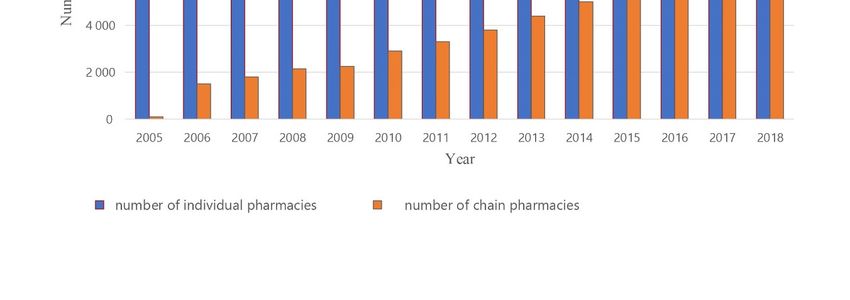
The pharmacy market is divided between individual and chain pharmacies (defined as five or
Figure 1. Number of pharmacies per 100,000 population in Poland and other OECD countries.
more pharmacies). Thereofare
Figure 1. Number approximately
pharmacies 8,200
per 100,000 individual
population pharmacies
in Poland (57%
and other of the
OECD market) and
countries.
6,200The
chain pharmacies
pharmacy (43%isofdivided
market the market) [13] individual
between (Figure 2). and chain pharmacies (defined as five or
The pharmacy market is divided between individual and chain pharmacies (defined as five or
more pharmacies). There are approximately 8,200 individual pharmacies (57% of the market) and
more pharmacies). There are approximately 8200 individual pharmacies (57% of the market) and
6,200 chain pharmacies (43% of the market) [13] (Figure 2).
6200 chain pharmacies (43% of the market) [13] (Figure 2).
Figure 2. Changes in the number of individual and chain pharmacies in the years 2000–2015.
According to the Central Statistical Office data, in 2017, there was one pharmacy for every
2628 people in 2.Poland.
Figure ChangesByinthe
the end of 2018,
number this number
of individual had pharmacies
and chain increased toin 2716 people
the years [18]. This is an
2000–2015.
incomparably smaller number compared to the European average (4320 inhabitants per pharmacy).
In countries withtoa the
According GDP per capita
Central similarOffice
Statistical to Poland,
data,the
in number of people
2017, there perpharmacy
was one pharmacyforis much
everyhigher.
2,628
Figure 2. Changes in the number of individual and chain pharmacies in the years 2000–2015.
For example,
people in Slovakia,
in Poland. By thethere are2018,
end of approximately
this number3600had
people, in the to
increased Czech
2,716Republic—approximately
people [18]. This is an
According to the Central Statistical Office data, in 2017, there was one pharmacy for every 2,628
people in Poland. By the end of 2018, this number had increased to 2,716 people [18]. This is anInt. J. Environ. Res. Public Health 2020, 17, 8751 5 of 11
3700 people, in Croatia—approximately 4000 people and in Hungary—approximately 4300 people per
pharmacy. In eight other European countries, the number of inhabitants per pharmacy is twice or even
three times higher than in Poland [13].
At the end of 2018, 67,100 people worked in community pharmacies, hospital pharmacies, and
limited-service pharmacies, including 26,700 pharmacy masters (a decrease of 1.3% per year) and
33,700 pharmaceutical technicians (an increase by 1.0% compared to the previous year) [18].
The profitability of a pharmacy depends on three parameters: the number of patients per pharmacy,
the amount of expenditures on drugs per patient, as well as the pharmacy’s margins. The latter is
partly regulated (via drug reimbursements) by law. The pharmacy’s income is also affected by other
factors, such as the location, factual and friendly staff, epidemiology, etc. The average turnover of a
typical pharmacy in Poland is very low compared to other EU countries. This is mainly due to two
reasons: the average drug expenditure per inhabitant of Poland is among the lowest in Europe, and the
number of inhabitants per pharmacy is relatively small. In 2018, pharmacies achieved a total turnover
of PLN 34.5 billion. Individual pharmacies generated a total turnover of approx. PLN 14.2 billion
(41.1% of the market value), i.e., on average approximately 144,000 PLN per month per pharmacy.
At the same time, chain pharmacies generated a turnover of approximately PLN 20.3 billion (58.9% of
the market value), an average of 273,500 PLN per month per pharmacy [13].
Pharmacy margins in Poland are at the average European level, although the low margins on
reimbursed drugs mean that trading in this group of drugs is at a loss. Pharmacy margins in Europe
range from 14% (France, Luxembourg) to 43% (Italy, Cyprus). In Poland, the average pharmacy margin
is around 25%, and in relation to individual segments: around 18.5% for reimbursed drugs (Rx—the
margin is established officially, fixed for each drug), around 24.5% for fully-paid prescription drugs
(Rx 100%) and 29.5% for products sold freehand [13]. Regulating official margins at too low level shifts
the margin to full-paid drugs, OTC, and the remaining assortment of good available at the pharmacy.
Consequently, a typical pharmacy in Greece has a lower turnover than in Poland, where the
number of pharmacies is very high and in Latvia (a value similar to that in Poland). In other European
countries, pharmacies have higher potential. Pharmacy turnover is at least twice as high in eleven
countries. Among countries with a GDP per capita similar to that of Poland, pharmacy turnover is
higher—twice as high in the Czech Republic and three times as high in Hungary. Considering the
purchasing power of Polish residents, the average turnover of a Polish pharmacy is 926,000 USD a
year. Meanwhile, a pharmacy in the Czech Republic reported 1.68 million USD a year and in France
1.99 million USD. Pharmacies generate the highest average turnover in Austria, Denmark, and the
Netherlands, respectively, 3.88 million, 3.52 million, and 3.47 million USD due to the low density of
pharmacies [13].
The overall profitability of Polish pharmacies is one of the lowest in Europe (after Greece and
Latvia), limiting their ability to perform their public service tasks properly and is the reason for
seeking profits outside the margin, including unlawful (e.g., reverse distribution chain) activities.
The impoverishment of pharmacies is a significant threat to their independence. It weakens them
economically and leads to them passing into the hands of foreign retail chains. A typical pharmacy in
Poland generates a turnover twice lower than a pharmacy in the Czech Republic and three times lower
than a pharmacy in Hungary (Figure 3). A pharmacy in Slovenia, Germany, Finland, Luxembourg,
Sweden, the Netherlands, Austria, and Denmark generates turnover about four times higher than
in Poland.
The average expenditure on drugs (Rx and OTC from the pocket of a patient and payers) per
capita in Poland is the lowest among OECD countries and in 2017 was 417 USD, with an average of
564 USD [19]. Only in a few countries is spending on drugs lower than in Poland. The situation may
arise from the fact that overall health expenditure in Poland is lower than in other countries and also,
because drugs in Poland are among the cheapest in Europe [16].Int. J. Environ. Res. Public Health 2020, 17, x 6 of 11
Int. J. Environ. Res. Public Health 2020, 17, 8751 6 of 11
Figure 3. Pharmacy turnover/income in other countries (own analysis based on OECD data, values in
USD PPP).
Figure 3. Pharmacy turnover/income in other countries (own analysis based on OECD data, values in
USD PPP).
In 2012, the reimbursement act resulted in an increase in patients’ co-payment for prescription
drugsThe (reimbursed and non-reimbursed)
average expenditure on drugs (Rx by asand muchOTCasfrom
5.2 percentage
the pocketpoints (from and
of a patient 52.5% to 57.7%),
payers) per
and in the case of reimbursed drugs alone, by 2 percentage points
capita in Poland is the lowest among OECD countries and in 2017 was 417 USD, with an average (from 36.7% in 2011 to 38.7% in of
2012). In the first quarter of 2013, the co-payment of patients for reimbursed
564 USD [19]. Only in a few countries is spending on drugs lower than in Poland. The situation may drugs increased to 40.3%.
In 2013–2019,
arise from the the factMinistry
that overallof Health’s reimbursement
health expenditure policyisplaced
in Poland lower particular
than in other emphasis
countries on reducing
and also,
the prices of drugs covered by pharmacy
because drugs in Poland are among the cheapest in Europe [16]. reimbursement, which translated into price pressure on
drugIn manufacturers related to theact
2012, the reimbursement frequent
resulted publication of reimbursement
in an increase lists and lowering
in patients’ co-payment prices of
for prescription
subsequent
drugs (reimbursed and non-reimbursed) by as much as 5.2 percentage points (from 52.5% to drop
generic drugs entering the lists. Market conditions also resulted in a significant in
57.7%),
the wholesale margin for reimbursed medications during this period.
and in the case of reimbursed drugs alone, by 2 percentage points (from 36.7% in 2011 to 38.7% in According to PharmaExpert,
in 2011Inthe
2012). theshare of reimbursed
first quarter of 2013,drugs accounted for
the co-payment 45% of pharmacy
of patients for reimbursed turnover,
drugs systematically
increased to falling.
40.3%.
All these factors ultimately led to a lower level of patient co-payment
In 2013–2019, the Ministry of Health’s reimbursement policy placed particular emphasis for reimbursed drugs. onCurrently,
reducing
the
the co-payment
prices of drugs of Polish
covered patients for reimbursed
by pharmacy drugs iswhich
reimbursement, aroundtranslated
27–28%, into whileprice
the co-payment
pressure on
level for all prescription
drug manufacturers drugs,
related to theaccording to IQVIA isofstill
frequent publication very high and
reimbursement listsamounts
and lowering to 55.6%
prices[13].
of
This situation is especially worrying because the World Health Organization
subsequent generic drugs entering the lists. Market conditions also resulted in a significant drop in (WHO) indicates that
exceeding
the wholesale the level
margin of 40% co-paymentmedications
for reimbursed of patients for drugsthis
during means severe
period. restrictions
According for patients in
to PharmaExpert,
accessing drugs.
in 2011 the share of reimbursed drugs accounted for 45% of pharmacy turnover, systematically
Across
falling. OECD
All these countries,
factors funding
ultimately ledfrom governments
to a lower level ofand compulsory
patient co-payment insurance schemes played
for reimbursed drugs.
the largest role in purchasing pharmaceuticals. In 2015, Poles
Currently, the co-payment of Polish patients for reimbursed drugs is around 27–28%, while thepaid the most out-of-pocket for drugs
co-
among the OECD countries. According to the OECD, 66% of the
payment level for all prescription drugs, according to IQVIA is still very high and amounts to 55.6% costs of the drugs are covered
by Polish
[13]. patients. is
This situation The situationworrying
especially is similarbecause
in Lithuania,
the World and Health
the situation is worse(WHO)
Organization only inindicates
Cyprus
and Bulgaria. the
that exceeding In level
2017,offunding from governments
40% co-payment of patients for anddrugs
compulsory insurance
means severe schemes
restrictions for covered
patients
58% of spending
in accessing drugs. on retail pharmaceuticals in Europe. Most of the remainder is financed from
out-of-pocket
Across OECD household
countries,payments;
funding onlyfrom 3% of spending
governments andiscompulsory
covered byinsurance
voluntaryschemes insurance.playedIn
Germany and France, government and compulsory schemes include
the largest role in purchasing pharmaceuticals. In 2015, Poles paid the most out-of-pocket for drugs 80% or more of pharmaceutical
costs.
amongBy thecontrast, in Latvia, Poland,
OECD countries. According andtoLithuania,
the OECD, almost
66% of two-thirds
the costs of of pharmaceutical
the drugs are covered spending by
was through out-of-pocket payments [13,19].
Polish patients. The situation is similar in Lithuania, and the situation is worse only in Cyprus and
The costs
Bulgaria. In 2017,of running
funding a pharmacy and the low
from governments and official margin for
compulsory reimbursed
insurance schemesdrugs result in58%
covered a loss
of
of trade in reimbursed drugs. Consequently, pharmacies impose high
spending on retail pharmaceuticals in Europe. Most of the remainder is financed from out-of-pocket margins on full-paid drugsand
OTC drugs payments;
household and increase the3%
only saleofofspending
these products. This by
is covered situation
voluntaryhas ainsurance.
direct impact on the higher
In Germany and
turnover of chain pharmacies and is considered as a direct reason
France, government and compulsory schemes include 80% or more of pharmaceutical costs. By for the excessive consumption of
pharmaceuticals
contrast, in Latvia, by Poles.
Poland,TheandOECD report indicates
Lithuania, almost very high useofofpharmaceutical
two-thirds OTC drugs, andspending high expenseswas
on OTC drugs in Poland,
through out-of-pocket payments [13,19].which are almost equal to that on prescription drugs [19].
The costs of running a pharmacy and the low official margin for reimbursed drugs result in a
loss of trade in reimbursed drugs. Consequently, pharmacies impose high margins on full-paid
drugsand OTC drugs and increase the sale of these products. This situation has a direct impact onInt. J. Environ. Res. Public Health 2020, 17, x 7 of 11
the higher turnover of chain pharmacies and is considered as a direct reason for the excessive
consumption of pharmaceuticals by Poles. The OECD report indicates very high use of OTC drugs,
Int.
andJ. high
Environ. Res. Publicon
expenses Health
OTC 2020, 17, 8751
drugs 7 of 11
in Poland, which are almost equal to that on prescription drugs
[19].
4. The Role of Community Pharmacists in the Healthcare System
4. The role of Community Pharmacists in the Healthcare System
In Poland, according to OECD statistics, the number of pharmacists per 100,000 population is
In Poland, according to OECD statistics, the number of pharmacists per 100,000 population is
77, while the average of the OECD countries is 83. In Hungary, Slovakia, Estonia, and Sweden, the
77, while the average of the OECD countries is 83. In Hungary, Slovakia, Estonia, and Sweden, the
number of pharmacists is similar to that in Poland. In many countries, the number of pharmacists per
number of pharmacists is similar to that in Poland. In many countries, the number of pharmacists per
100,000 inhabitants is lower: the Netherlands—21, Denmark—52, and Germany—65. There are also
100,000 inhabitants is lower: the Netherlands—21, Denmark—52, and Germany—65. There are also
countries with a much higher number of pharmacists: Belgium—124, Italy—117, and Spain—116 [19].
countries with a much higher number of pharmacists: Belgium—124, Italy—117, and Spain—116 [19].
According to the Central Statistical Office, the number of pharmacists per pharmacy in Poland
According to the Central Statistical Office, the number of pharmacists per pharmacy in Poland
is 1.85. Poland is divided into 16 voivodships (a voivodship is an administrative division unit in
is 1.85. Poland is divided into 16 voivodships (a voivodship is an administrative division unit in
Poland). In individual voivodships, the number ranges from 1.43 to 2.22 (data from the Ministry of
Poland). In individual voivodships, the number ranges from 1.43 to 2.22 (data from the Ministry of
Health indicate a lower average—1.78 pharmacists per pharmacy). The average for EU countries is
Health indicate a lower average—1.78 pharmacists per pharmacy). The average for EU countries is
2.40 pharmacists per pharmacy (Figure 4). The particularly alarming situation is in West Pomerania,
2.40 pharmacists per pharmacy (Figure 4). The particularly alarming situation is in West Pomerania,
where there is only one pharmacist per pharmacy. Only two voivodships meet the necessary conditions
where there is only one pharmacist per pharmacy. Only two voivodships meet the necessary
for staffing pharmacies—Łódź and Pomerania (2.5 pharmacists) [20]. Moreover, over 7500 working
conditions for staffing pharmacies—Łódź and Pomerania (2.5 pharmacists) [20]. Moreover, over 7,500
pharmacists are approaching or are in retirement age. This represents almost 30% of all the pharmacists
working pharmacists are approaching or are in retirement age. This represents almost 30% of all the
working in pharmacies.
pharmacists working in pharmacies.
Figure 4. Number of pharmacists per pharmacy in Poland and other OECD countries.
Figure 4. Number of pharmacists per pharmacy in Poland and other OECD countries.
It is
It is particularly
particularly worrying
worrying that,
that, considering
considering that
that nearly
nearly 40%
40% ofof Poles
Poles live
live in rural areas,
in rural areas, only
only
12.8% of pharmacists and 13% of pharmacy technicians work in these areas. This is due
12.8% of pharmacists and 13% of pharmacy technicians work in these areas. This is due to the lack of to the lack of
geographical and demographic restrictions in the years 2001–2016 when pharmacies
geographical and demographic restrictions in the years 2001–2016 when pharmacies were established were established
mainly in
mainly in cities,
cities, which
which is
is typical
typical for
for deregulated
deregulated markets
markets [13].
[13].
The pharmacist’s job aims to protect public health and includes
The pharmacist’s job aims to protect public health and includes the
the provision
provision ofof pharmaceutical
pharmaceutical
care services.
care services. Pharmacists
Pharmacists are
are highly
highly qualified
qualified specialists in the
specialists in the field
field of
of healthcare.
healthcare. Practising
Practising the
the
profession of a pharmacist in Poland requires obtaining a master’s degree in pharmacy.
profession of a pharmacist in Poland requires obtaining a master’s degree in pharmacy. Pharmacy Pharmacy
studies last
studies last 55 years.
years. Additionally,
Additionally, at at least
least 66 months
months of
of professional
professional apprenticeship
apprenticeship is is necessary
necessary toto
practice the profession of pharmacist. Foreign diplomas must be recognized as equivalent to a diplomaInt. J. Environ. Res. Public Health 2020, 17, 8751 8 of 11
and a master’s degree in pharmacy from the Republic of Poland. The pharmacist (pharmacist) has a
statutory continuous training obligation.
The pharmacists’ knowledge allows them to participate in the treatment process of each patient
actively. An important duty of pharmacists is to provide reliable and objective information about drugs.
It is estimated that up to 50% of medicinal products are administered incorrectly [21]. It results in a lack
of improvement in patients’ health and the occurrence of many side effects of drugs, which contributes
to a significant increase in the overall cost of therapy [22]. Pharmacists have extensive knowledge of
the physicochemical, pharmacodynamic, and pharmacokinetic properties of drugs. Cooperation of
pharmacists with patients and medical staff (pharmaceutical care) is currently considered one of the
essential drug management elements, significantly affecting the effectiveness of patient therapy [23,24].
According to the Pharmaceutical Care Network Europe (PCNE), pharmaceutical care is the
pharmacist’s contribution to patient individuals’ care to optimize medicines use and improve health
outcomes. [25]. In the context of the pharmacist’s work, pharmaceutical care has three main components:
(1) Detection of real or potential drug problems,
(2) Solving real drug problems,
(3) Prevention of drug problems,
and a drug problem is considered as any adverse effect experienced by the patient due to, or
probably caused by a drug, that affects or may affect the effects of therapy.
The American Society of Healthcare System Pharmacists (ASHP) indicates that the most common
drug problems include: inadequate drug selection, inadequate dosage or the length of use, adverse
effects related to the therapy with a particular preparation, drug interactions [26].
In order to optimize pharmacotherapy, it seems necessary to change the approach to the
pharmacist’s role from the person dispensing drugs to the person actively participating in the
patient’s treatment process and responsible for improving health outcomes [27].
Many studies confirm the effectiveness of pharmacist’s interventions in patients’ therapy, especially
for the chronically ill. Pharmaceutical care improves patient’s compliance, expands the patient’s
knowledge about the disease and improves diagnostic test results [24,28–31]. The pharmacist’s help in
the proper use of OTC drugs is also of great importance, especially among older, due to the high risk of
polyprgamasia (polypharmacy) in this group of patients and the associated health consequences [32].
Pharmaceutical care is underdeveloped in Poland, mainly due to the lack of financing for these
services. The remuneration for the pharmaceutical care service is included in the price of the drugs.
There are no additional components of the margin. As a consequence, it led to the accumulation
of problems related to lack of polypragmasia control, high prevalence of patient self-medication,
and non-compliance with medical recommendations [15,33].
It is estimated that about 10–25% of hospital treatment cases are caused by patients not correctly
following the recommended pharmacotherapy, and about 30–50% of chronically ill patients do not
adequately take their prescribed medications. A significant problem is also observed in the case of
incorrect use of painkillers. Serious complications associated with this group of drugs are among the
top five most common causes of hospital admissions [34,35].
Undesirable effects of drugs worsen patients’ quality of life, increasing both the number of
hospitalizations and deaths. Most of them require treatment, which in turn generates additional
costs [35]. Numerous studies show that 30–60% of adverse drug reactions can be prevented. Educating
patients on the proper use of drugs is one of the most crucial elements of health education. It is
important to personalize the therapy and adapt the treatment to the patient. These activities improve
the quality of patient’s life, reduce the side effects of drugs and increase therapy effectiveness [4,36].
Interpersonal communication between a doctor, pharmacist, and the patient is a critical element of
pharmacological treatment.
Providing health care requires not only medical but also pharmaceutical knowledge. Thus, the
insufficient (very low) number of people employed in pharmacies may become one of the reasonsInt. J. Environ. Res. Public Health 2020, 17, 8751 9 of 11
for the decrease in the quality of patient care, including the occurrence of many errors in the field of
drug therapy.
Many countries have systematically increased the role of pharmacists in health care. Given the
growing costs of health care resulting from the ageing of the population, the extension of life expectancy
associated with the increase in the incidence of chronic diseases (e.g., diabetes, COPD) or the shortage
of healthcare professionals, the potential of pharmacists is more fully used. Although the main task
of pharmacists is to dispense drugs in public pharmacies, they also increasingly provide direct care
for patients (e.g., vaccinations, monitoring clinical parameters, support in compliance with medical
recommendations [37]. In the years 2000–2015, the number of pharmacists in the OECD nations group
increased by 30% [13,19]. The activation of this group increases the number of personnel involved in
health care, improve patient’s care, and brings enormous savings.
5. Conclusions
Community pharmacies are one of the essential health care facilities in Poland. In recent years,
changing legal regulations have resulted in the transformation of the pharmacy market. The effects of
these changes were visible to both pharmacy owners and patients. Deregulation of the community
pharmacy market in Poland before 2017 rapidly increased the number of pharmacies. This situation
significantly reduced turnover, closed many individual pharmacies and increased the number of chain
pharmacies. Also, despite the promises to improve Poles’ access to pharmaceutical care services, the
regulations have just contributed to the creation of new pharmacies, mainly in cities, which did not
meet the assumed goal. Pharmacies began to perform mostly commercial roles, and restrictions on
margins caused an increase in the sale of OTC drugs, cosmetics or dietary supplements.
Tighter market regulation, which has already been introduced in 2017, will favour this situation.
The introduction of the “Pharmacy for the Pharmacist” Act has significantly reduced the creation of
new pharmacies, increasing the prestige of the pharmacist profession. This situation is particularly
important taking into account the enormous role of the pharmacist in population health protection,
which is particularly noticeable during the COVID-19 pandemic. Detailed legal regulations may result
in the more effective functioning of the whole health care system. Further stabilization of the pharmacy
market in Poland is expected in the next years.
Author Contributions: Conceptualization: M.W. and P.M.; Methodology: P.M.; Formal Analysis: M.W. and P.M.;
Writing—Original Draft Preparation: U.R.; Writing—Review & Editing: P.M., M.W. and U.R.; Visualization: P.M.
and U.R.; Supervision: P.M. and M.W. All authors have read and agreed to the published version of the manuscript.
Funding: This research received no external funding.
Conflicts of Interest: P.M. and M.W. are registered pharmacists with the Polish Pharmaceutical Chamber and are
bound by the codes of practice and ethics. At the time of preparation of this manuscript P.M. is is employed as
CEO of Piktorex sp. z o.o., an advisor to the Management Board of the Polish Pharmaceutical Group S.A, Adjunct
Professor at the Cardinal Stefan Wyszyński University, Assistant Proffessor at the Department of Pharmaceutical
Technology, Faculty of Pharmacy, Collegium Medicum in Bydgoszcz, Poland, President of Polish Pharmacy Trade
Union (ZZPF) and General Secretary of Employed Pharmacist Europe (EPhEU), and as such, this author must
stress that the publication was written for academic interest only. The content outlined herein represents the
individual opinions of the authors and may not necessarily represent the viewpoints of their employers.
References
1. Csete, J.; Kamarulzaman, A.; Kazatchkine, M.; Altice, F.L.; Balicki, M.; Buxton, J.; Cepeda, J.; Comfort, M.;
Goosby, E.; Goulão, J.; et al. Public health and international drug policy. Lancet 2016, 387, 1427–1480.
[CrossRef]
2. Lancaster, K. Social construction and the evidence-based drug policy endeavour. Int. J. Drug Policy 2014, 25,
948–951. [CrossRef]
3. Gammie, T.; Vogler, S.; Babar, Z.-U.-D. Economic Evaluation of Hospital and Community Pharmacy Services.
Ann. Pharmacother. 2016, 51, 54–65. [CrossRef]Int. J. Environ. Res. Public Health 2020, 17, 8751 10 of 11
4. Akinbosoye, O.E.; Taitel, M.S.; Grana, J.; Hill, J.; Wade, R.L. Improving Medication Adherence and Health
Care Outcomes in a Commercial Population through a Community Pharmacy. Popul. Health Manag. 2016,
19, 454–461. [CrossRef]
5. Merks, P.; Byliniak, M.; Religioni, U.; Włodarczak, U.; Świeczkowski, D.; Jaguszewski, M. Current Situation
of the Polish Pharmacy Sector. Available online: https://epheu.eu/poland-more-about-pharmacy/ (accessed
on 2 July 2020).
6. Zaprutko, T.; Hromovyk, B.; Lesyk, R.; Lesyk, L.; Kremin, Y.; Kus, K.; Kopciuch, D.; Ratajczak, P.;
Paczkowska, A.; Nowakowska, E. Pharmacies for the Pharmacists—Ukrainian Fears and Polish Experiences.
Sci. Pharm. 2020, 88, 7. [CrossRef]
7. Act of 6 September 2001—Pharmaceutical Law. (Journal of Laws 2001 No. 126, Item 1381, As Amended).
Available online: http://isap.sejm.gov.pl/isap.nsf/download.xsp/WDU20011261381/U/D20011381Lj.pdf
(accessed on 25 November 2020). (In Polish)
8. Act of 12 May 2012 on the Reimbursement of Medicines, Foodstuffs for Particular Nutritional Uses and Medical
Devices (Journal of Laws of 2011, No. 122, Item 696, As Amended). Available online: http://isap.sejm.gov.pl/isap.
nsf/download.xsp/WDU20111220696/U/D20110696Lj.pdf (accessed on 25 November 2020). (In Polish)
9. The Supreme Chamber of Control, Performing by the State Pharmaceutical Inspection the Tasks Specified in
the Pharmaceutical Law. Available online: https://www.nik.gov.pl/plik/id,10361,vp,12689.pdf (accessed on
20 July 2020). (In Polish)
10. World Health Organization. The Legal and Regulatory Framework for Community Pharmacies in the WHO
European Region; WHO Regional Office for Europe: Copenhagen, Denmark, 2019.
11. Wlodarczyk, I.; Scahill, S.L. Pharmaceutical Policy in Poland. In Pharmaceutical Policy in Countries with
Developing Healthcare Systems; Babar, Z.U.D., Ed.; Adis: Cham, Germany, 2017. [CrossRef]
12. Vogler, S.; Habimana, K.; Arts, D. Does deregulation in community pharmacy impact accessibility of
medicines, quality of pharmacy services and costs? Evidence from nine European countries. Health Policy
2014, 117, 311–327. [CrossRef]
13. Association of Pharmacists of Employers of Polish Pharmacies. Pharmacies in Poland—Report. ZAPPA.
Available online: http://aptekarze.org.pl/wp-content/uploads/2019/05/zappa_raport_2019_19_04_2019_dr.pdf
(accessed on 25 July 2020). (In Polish).
14. Nguyen, T.A.; Knight, R.; Roughead, E.E.; Brooks, G.; Mant, A. Policy options for pharmaceutical pricing and
purchasing: Issues for low- and middle-income countries. Health Policy Plan. 2015, 30, 267–280. [CrossRef]
15. Ministry of Health. National Drug Policy for 2018–2022. Available online: https://www.gov.pl/attachment/
bb36ad25-4342-4000-bfaa-64004c64a62c (accessed on 25 June 2020). (In Polish)
16. Panteli, D.; Arickx, F.; Cleemput, I.; Dedet, G.; Eckhardt, H.; Fogarty, E.; Gerkens, S.; Henschke, C.; Hislop, J.;
Jommi, C.; et al. Pharmaceutical regulation in 15 European countries review. Health Syst. Transit. 2016,
18, 1–122. [PubMed]
17. Main Pharmaceutical Inspectorate. Inverted Distribution Chain. Available online: https://www.gif.gov.pl/pl/
aktualnosci/731,Odwrocony-lancuch-pytania-i-odpowiedzi.html (accessed on 25 June 2020). (In Polish)
18. Central Statistical Office of Poland. Pharmacies and Pharmacy Points in 2018. Available online: https://stat.
gov.pl/obszary-tematyczne/zdrowie/zdrowie/apteki-i-punkty-apteczne-w-2018-roku,15,3.html (accessed on
20 July 2020). (In Polish)
19. OECD. Health at Glance 2019: OECD Indicators; OECD Publishing: Paris, France, 2019.
20. Supreme Pharmaceutical Chamber. Report on the Personnel Situation of Pharmacists for Poland. Available
online: http://www.mpz.mz.gov.pl/wp-content/uploads/sites/4/2018/06/raport_farmaceuci.pdf (accessed on
2 July 2020). (In Polish)
21. Grześkowiak, E. Hospital Pharmacy. Available online: https://mz.gov.pl/wwwfiles/ma_struktura/docs/78_
farmacja_szpitalna_13072011.pdf (accessed on 6 July 2020). (In Polish)
22. Gregório, J.; Russo, G.; Lapão, L.V. Pharmaceutical services cost analysis using time-driven activity-based
costing: A contribution to improve community pharmacies’ management. Res. Soc. Adm. Pharm. 2016,
12, 475–485. [CrossRef] [PubMed]
23. American Pharmacists Association; National Association of Chain Drug Stores Foundation. Medication
Therapy Management in Pharmacy Practice; American Pharmacists Association; National Association of Chain
Drug Stores Foundation: Washington, DC, USA, 2008; p. 3.Int. J. Environ. Res. Public Health 2020, 17, 8751 11 of 11
24. Abdelhamid, E.; Awad, A.; Gismallah, A. Evaluation of a hospital pharmacy-based pharmaceutical care
services for asthma patients. Pharm. Pract. 2008, 6, 25–32. [CrossRef] [PubMed]
25. Allemann, S.S.; Van Mil, J.W.F.; Botermann, L.; Berger, K.; Griese, N.; Hersberger, K.E. Pharmaceutical Care:
The PCNE definition 2013. Int. J. Clin. Pharm. 2014, 36, 544–555. [CrossRef]
26. ASHP. Medication Therapy and Patient Care, Organization and Delivery of Services–Statements. Available
online: http://www.ashp.org/doclibrary/bestpractices/orgstpharmcare.aspx (accessed on 14 July 2020).
(In Polish).
27. Awad, A.; Al-Ebrahim, S.; Abahussain, E. Pharmaceutical care services in hospitals of Kuwait. J. Pharm.
Pharm. Sci. 2006, 9, 149–157. [PubMed]
28. Miles, A. The chronic illness problem. The person-centered solution. Eur. J. Pers. Cent. Healthc. 2016, 4, 1–5.
[CrossRef]
29. Morgado, M.; Rolo, S.; Castelo-Branco, M. Pharmacist intervention program to enhance hypertension control:
A randomised controlled trial. Int. J. Clin. Pharm. 2011, 33, 132–140. [CrossRef] [PubMed]
30. Liekweg, A.; Westfeld, M.; Braun, M.; Zivanovic, O.; Schink, T.; Kuhn, W.; Jaehde, U. Pharmaceutical care for
patients with breast and ovarian cancer. Support. Care Cancer 2012, 20, 2669–2677. [CrossRef]
31. Collins, C.; Limone, B.L.; Scholle, J.M.; Coleman, C.I. Effect of pharmacist intervention on glycemic control in
diabetes. Diabetes Res. Clin. Pract. 2011, 92, 145–152. [CrossRef] [PubMed]
32. Park, H.Y.; Seo, S.A.; Yoo, H.; Lee, K. Medication adherence and beliefs about medication in elderly patients
living alone with chronic diseases. Patient Prefer. Adherence 2018, 12, 175–181. [CrossRef]
33. Piecuch, A.; Makarewicz-Wujec, M.; Kozłowska-Wojciechowska, M. Improving the provision of OTC
medication information in community pharmacies in Poland. Int. J. Clin. Pharm. 2016, 39, 70–77. [CrossRef]
34. Alder, B.; Abraham, C.; van Teijlingen, E.; Porter, M. (Eds.) Psychology and Sociology Applied to Medicine E-Book;
Elsevier Health Sciences: New York, NY, USA, 2011; p. 94.
35. Jonikas, M.A.; Mandl, K.D. Surveillance of medication use: Early identification of poor adherence. J. Am.
Med. Inform. Assoc. 2011, 19, 649–654. [CrossRef]
36. Rutter, P. Role of community pharmacists in patients’ self-care and self-medication. Integr. Pharm. Res. Pract.
2015, 4, 57–65. [CrossRef]
37. Burson, R.C.; Buttenheim, A.M.; Armstrong, A.; Feemster, K.A. Community pharmacies as sites of adult
vaccination: A systematic review. Hum. Vaccines Immunother. 2016, 12, 3146–3159. [CrossRef] [PubMed]
Publisher’s Note: MDPI stays neutral with regard to jurisdictional claims in published maps and institutional
affiliations.
© 2020 by the authors. Licensee MDPI, Basel, Switzerland. This article is an open access
article distributed under the terms and conditions of the Creative Commons Attribution
(CC BY) license (http://creativecommons.org/licenses/by/4.0/).You can also read


