Competitive Advantage in the Digital Economy Forum 2018
←
→
Page content transcription
If your browser does not render page correctly, please read the page content below

Competitive Advantage
in the Digital Economy
Forum 2018

Palazzo Pesaro Papafava
Calle de la Rachetta
Cannaregio 3764
30121 Venezia
Italy / Italia
18-20 June 2018

Welcome
 The digital economy is causing unprecedented structural changes in society, business
and the economy since the Industrial Revolution. Research and practice within the
digital economy have been made a strategic priority in both developed countries and
emerging economies.
It is now accepted that every business will be a digital one, and organisations are putting
in place digital transformation plans to make sense of the possible disruptions as well
as opportunities. With so many stakeholders within the digital economy, the academic
community needs to understand and advise on actions to take that will improve societal
well-being, as well as achieve competitive advantage for firms.
The 5th Competitive Advantage in the Digital Economy (CADE) Forum focuses on the
Data Economy and its challenges in terms of research, practice and policy through the
trans-disciplinary lens of service, informed by knowledge from technology and the
social sciences.
CADE's unique format brings together multi-disciplinary thought leaders, researchers
and practitioners to build capacity for cutting-edge research and innovative practice.
The format include keynotes, plenaries and discussion in an intimate environment
which helps the group generate valuable insights and identify future agenda for
research, practice and policy.

Professor Irene Ng
Service Systems Group, WMG,
University of Warwick

Useful Information
         Wireless Access
Connect to the ‘Warwick Salone; Warwick Giardino; or Warwick Seminar’ wireless
networks and use the password ‘university’.

         Social Media
We encourage you to share the conversation on social media using #CADE2018 and
please tag our sponsors: @SurreyCoDE and @hubofallthings

Accounts to follow:
@SSWMG
@WMGWarwick
@SurreyCoDE
@ireneclng
@PhilipMDavies
@hubofallthings
Programme
Monday, 18th June

09:00 – 09:30       Arrival and Registration

09:30 – 09:45       Opening Remarks

09:45 – 10.30       Keynote Presentation by Professor Irene Ng

10:30 – 11:00       Break

11:00 – 13:00       Participant Presentations: Session 1

13:15 – 15:00       Lunch at Trattoria Storica

15:00 – 17:00       Concurrent Workshops
                    Workshop 1: Product Design in the Personal Data Economy
                    Workshop 4: Behavioural Visibility in Data (BeVID)-
                    Experiencing New Research Methods with Reality Mining

19:30               Dinner at Vecia Cavana

Tuesday 19th June

09:00 – 09:15       Arrival

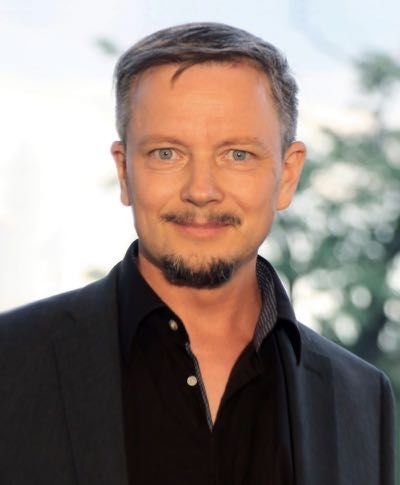
09:15 – 10:00       Keynote Presentation by Professor Haluk Demirkan

10:00 – 10:30       Break

10:30 – 12:30       Participant Presentations (Parallel Sessions 2 & 3)

12:30 – 13:00       Break and Forum Photos

13:15 – 15:00       Lunch at Trattoria Storica

15:00 –17:00        Concurrent Workshops
                    Workshop 2: Student Experience and Teaching
                    Workshop 3: Data-Driven Business Models

19:30               Dinner at Ogio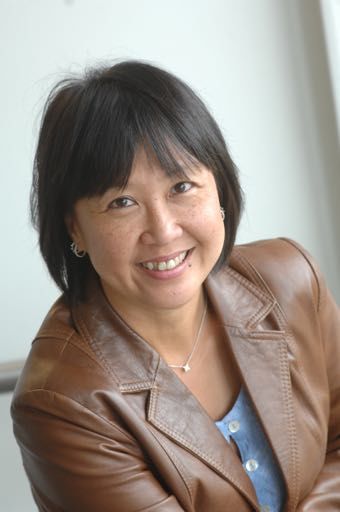
Wednesday, 20th June

09:00 – 09:15    Arrival

09:15 – 10:00    Keynote Presentation by Professor Ola Henfridsson

10:00 – 10:30    Break

10:30 – 12:00    Participant Presentations (Parallel Sessions 4 & 5)

12:00 – 12:30    Presentation of Awards and Closing Remarks
Participant Presentations
Monday, 18th June

Session 1 (11:00 – 13:00)

11.00am     The Value of Personal Data Carsten Maple (University of Warwick), Sinong
            Ma (University of Warwick), Anya Skatova (University of Bristol) & Rebecca
            McDonald (University of Birmingham)

11.30am     Trust in the (Sharing) Economy: A Review of Trends and
            Directions for Future Research Ana Babic-Rosario & Rosanna Garcia
            (University of Denver)

12.00pm     Participatory Design Fiction and the Wearable HAT: The Story So
            Far Helen Oliver (The Alan Turing Institute/University of Cambridge)

12.30pm     Mobilizing Information Resources Dominik Kalb (Schaeffler Technologies
            AG & Co.KG)

Tuesday, 19th June

Parallel Session 2 (10:30 – 12:30)

10.30am     The Impact of Digital Technology Affordances on Visitor
            Experience: A Pilot Study P A Smart (University of Exeter), L A Phillips
            (University of Exeter), I E Smart (University of Bristol), L Blyth (Exeter Cathedral)
            & Jean-Baptiste Suquet (NEOMA Business School)

11.00am     Improving Customer Experience in Retail Banking: Modeling
            Contemporary Marketing with Ubiquitous Technology Anna
            Margulis (Université du Québec en Outaouais) & Harold Boeck (ESG UQAM)

11.30am     The Impact of Same-Side Network Structure on Customers’
            Choice of Digital Service Platform Kristina Maiksteniene (ISM University
            of Management and Economics)

12.00pm     Non-fungible Token as a New Type of Business Model in the Field
            of Tokenomics Damian Zieba (University of Warsaw)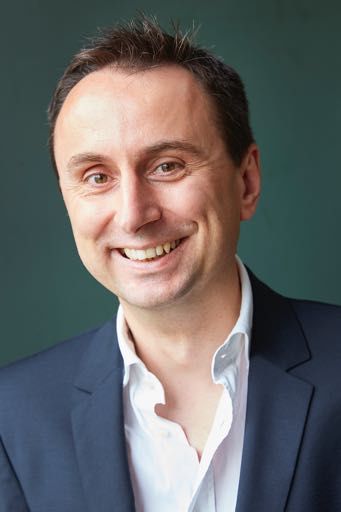
Parallel Session 3 (10:30 – 12:30)

10.30am     Digital Literacy and Datalockers: A Research Agenda Beth Kewell &
            Phil Godsiff (University of Surrey)

11.00am     The Impact of Assessment on Student ICT Literacy Mel Hudson Smith
            (University of the West of England)

11.30am     Leveraging The Land Grab: Threshold Concepts For Teaching
            The Digital Economy Steve Pearce (University of Bristol)

12.00pm     The Use of Real Time Information to Allow Mass Bespoke
            Manufacturing Zena Wood (University of Greenwich), M Koschate-Reis
            (University of Exeter), J Cinnamon (University of Exeter) & P Godsiff (University of
            Surrey)

Wednesday, 20th June

Parallel Session 4 (10:30 – 12:00)

10.30am     Using digital to understand the Physical Environment in the
            Digital Economy Zena Wood (University of Greenwich)

11.00am     Virtual Managers’ Perspective on Virtual Work – Challenges and
            New Practices in Service Organisations Gerda Mihhailova (University of
            Tartu)

11.30am     Service Systems and the Topology of Digital Innovation Albrecht
            Fritzsche (Friedrich-Alexander University Erlangen-Nürnberg)

Parallel Session 5 (10:30 – 12:00)

10.30am     An Empirical Analysis of the Number of Unique Browsers of the
            websites of UK Regional Newspapers Michael Brightman (University of
            Central Lancashire)

11.00am     A Boardroom Perspective on Digital Transformation Niko
            Karjalainen (TECOM Group)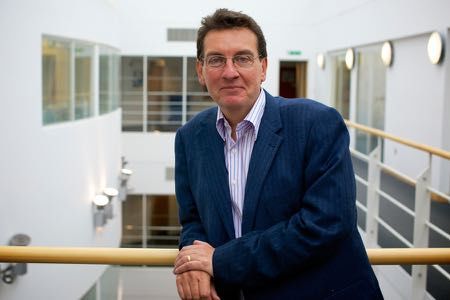
Keynote Speakers

                   Haluk Demirkan
                   Milgard Endowed Professor of Service Innovation
                   & Business Analytics
                   Founder & Director of Master of Science & Center
                   for Business Analytics

                   An innovation and analytics evangelist, recognised
                   leader, experienced practitioner, awarded consultant,
                   active applied researcher and cross-disciplinary teacher,
                   effective mentor, invited speaker, productive author
                   and professional student. Haluk’s achievements
                   brought him a global leadership and reputation in
                   analytics, service innovation and digital transformation
                   with cognitive computing, and service-oriented
                   technology and management. He has advised more than
                   40 Fortune 500 companies like IBM, GE, Cisco, HP,
                   Intel, American Express and others in maximising the
                   return on companies’ resources by effectively
                   implementing strategic data, analytics, cognitive and
                   service transformation solutions. In 2014, Haluk was
                   ranked 5th in Top-100 World-wide Researchers by the
                   Association for Information Systems-sanctioned
                   rankings.

                   Ola Henfridsson
                   Professor of Information Systems and
                   Management
                   Ola's research interests relate to the transformative
                   potential of digital technology as it pervades modern
                   business and entrepreneurship. He is a visiting
                   professor at the Swedish Center for Digital Innovation
                   at University of Gothenburg, and is also an external
                   expert for the Information Systems and Innovation
                   Group, Department of Management at the London
                   School of Economics. He was a runner-up for the
                   Warwick University 2015 Outstanding Contribution to
                   Research Excellence award, and received a Warwick
                   Business School award for Outstanding Contribution to
                   Research in 2016-2017. Ola's research has been
                   published in world-elite journals such as Information
                   Systems Research, MIS Quarterly, and Organization
                   Science. He has worked and consulted with leading
                   companies such as General Motors, Mecel, Volvo Cars
                   and Volvo Trucks.
Irene Ng Professor of Marketing and Service Systems, WMG, University of Warwick A business (IO) economist through her doctoral training, Irene’s research lies in the transdisciplinary understanding of value and new business models. She has received global recognition for her work including several ESRC fellowship appointments, and is currently an ESRC/InnovateUK Innovation Caucus Thought Leader. Irene is currently Private Investigator (PI) on the £1m EPSRC-funded Dynamic, Real time, On-demand Personalisation for Scaling (DROPS) project and the HAT Living Labs (HALL)/CONTRIVE project. She was PI of the RCUK-funded HAT project, and a Co- Investigator (Co-I) on the RCUK NEMODE Network+ project. Irene has published numerous articles in the domain of management, marketing, engineering, economics, education and sociology and is the author of the highly-acclaimed Value and Worth: Creating New Markets in the Digital Economy, published by Cambridge University Press. An entrepreneur and academic, Irene is passionate about the link between practice and research, and advises digital business startups.
Workshop Leads

                 Andrius Aucinas

                 Dr Andrius Aucinas is a Co-founder and Chief Executive
                 of HAT Data Exchange (HATDeX), where he has led the
                 building of the HAT Person-owned Personal Data (PPD)
                 exchange platform, creating new opportunities in the
                 Personal Data Economy. His focus with HATDeX is on
                 “making data move” – creating value for individuals and
                 organisations by making rich personal data available in
                 real-time and on-demand. Andrius previously co-founded
                 the Cambridge Coding Academy for teaching young people
                 digital skills through hands-on learning and outcome-
                 driven projects. He holds a PhD in Computer Science from
                 the University of Cambridge and has extensively
                 collaborated with some of Europe’s largest telcos’ research
                 labs including Deutsche Telekom Laboratories and
                 Telefonica I&D.

                 Albrecht Fritzsche

                 Albrecht holds a doctoral degree in philosophy from TU
                 Darmstadt and another in industrial management from
                 Hohenheim University, Stuttgart. Albrecht can look back at
                 15 years of experience in the manufacturing industry as a
                 systems designer and strategy consultant. Albrecht is
                 currently affiliated with the Institute of Information
                 Systems at Friedrich-Alexander University Erlangen-
                 Nürnberg, where he teaches innovation strategy and various
                 other topics concerning the organisational and technical
                 conditions of socio-economic change. He is also involved
                 in various industrial research projects concerning digital
                 innovation, including the Service Manufactory
                 JOSEPHS® project of the Fraunhofer Institute for
                 Integrated Circuits.
Roger Maull Roger is Professor of Management Systems, University of Surrey Business School and founder member of Surrey’s Centre for the Digital Economy (CoDE). His current research is in the impact of digital technologies on future economic activity, including IoT, personal data, wearables and digital currencies. He has published widely in leading journals including the Journal of Operations Management and International Journal of Operations & Production Management. Roger is currently a Co-I on the DROPS and HALL/CONTRIVE projects, both funded by the EPSRC, and was PI on the £1.5m NEMODE project which is an RCUK DE-funded Network+, and PI on the CREDIT Cryptocurrency Effects in Digital Transformations project. He was also a Co-I on the RCUK-funded Hub-of-all- Things (HAT) project. Roger has a track record of working with industry and has been principal investigator on commercially funded projects with Vodafone, Microsoft, DSTL and the South- West Strategic Health Authority. Glenn Parry Glenn is Professor of Strategy and Operations Management at The University of the West of England. His work is characterised by an approach of partnering with organisations to develop creative solutions to challenges. He is interested in understanding what makes 'good' business. He undertakes both qualitative and quantitative studies with organisations, often with a focus upon process mapping and visualisation of data, to help them with business models, value capture, servitization, and supply chains. Glenn is a Co-I on the £1m EPSRC Dynamic, Real time, On-demand Personalisation for Scaling (DROPS) and the HALL/CONTRIVE project as well as the £1.47M EPSRC Platform grant “Resilient Trans-disciplinary Design Engineers and the £1.5M EPSRC “OMMS Optimising Me: Manufacturing System” project. He is also working on a British Academy project examining Blockchain for Good and has published and edited numerous international journals.
Organising Committee
                 Phil Davies
                 PhD Candidate, Service Systems Group, WMG,
                 University of Warwick

                 Prior to joining Warwick, Phil was an industrial designer
                 for a number of small and medium enterprises, most
                 recently a 3D printing and 3D scanning company working
                 with clients such as Jaguar Land Rover, SSE, Aston
                 Martin and Pinewood Studios. Since joining WMG as a
                 doctoral student, he has developed a keen interest in 3D
                 printing, the Internet of Things and the digital economy.
                 Phil is the recipient of an EPSRC iCase award with BAE
                 Systems Land (UK). The focus of his research is 3D
                 printing and modularity, investigating two main areas: the
                 impact of designing for use and the impact
                 reconfiguration for context has on product architecture;
                 and how 3D printing can be used to provide an incomplete
                 product platform for customers to tailor platforms to
                 context. This is the third year Phil is organising the CADE
                 Forum. As of September, Phil will be taking up the
                 position of Lecturer in Operations Management at Henley
                 Business School, University of Reading.

                  Max Green
                  PhD Candidate, Service Systems Group, WMG,
                  University of Warwick

                  Originally trained as a chemical engineer, Max joined
                  WMG in 2011 to pursue an MSc in Process Business
                  Management. During this time he developed a keen interest
                  in the future of energy markets and following a break to
                  complete his Yachtmasters, re-joined WMG as a PhD
                  candidate under the Warwick Chancellor's Scholarship.
                  Having worked with Intelligent Energy on business model
                  optimisation (for the application of hydrogen fuel cells to
                  the Indian telecoms industry) and more recently with
                  InnovateUK to develop a business model innovation tool,
                  Max’s research now focuses on the transformative impact
                  of digitalisation on business models. Complementary to his
                  studies, Max has organised various events including an
                  ESRC-sponsored seminar on servitization – publishing on
                  the same topic in the International Journal of Production
                  Economics – as well as the 2016 Service System Forum in
                  Venice and CADE2017.
Service Systems Group, WMG The transdisciplinary research conducted by the Service Systems research group at WMG lies in the understanding and design of complex service systems, which come in many forms. Its work has ranged from multi-party outcome-based contracts for Rolls-Royce engines to the Ministry of Defence, complex service and logistics contracts to deliver a bank of flying hours for the Tornado or Typhoon jets, to designing multi-sided platforms and markets like the HAT for personal data, and knowledge-based collaborative networks of partners such as hospitals and universities. Led by Professor Irene Ng, the Service Systems group cover a wide range of specialisms, including decision theory, ontology engineering, consumer culture theories, modularity & architectural innovation, information systems, economics, supply chain, monetization of digital services, consumer experience and loyalty. Its research has been funded by the UK government through the Research Councils UK. The group also works closely with industry and the public sector, with partners ranging from manufacturing organisations in the defence and aerospace sectors transitioning into outcome-based service environments, to public sector organisations. The Service Systems group, building on its expertise in the digital economy, has now organised the CADE Forum for the fifth year running. Website: https://go.warwick.ac.uk/sswmg Contact: sswmg@warwick.ac.uk Centre of the Digital Economy, Surrey The University of Surrey’s Centre for the Digital Economy (CoDE) investigates the emerging patterns of the digital economy through a process of Collaborative Discovery that blends research, education, problem-solving and brokering. CoDE engages in this process with enterprises large and small, and researchers and students in its Business Insights Lab. CoDE explores topics such as digital platforms, emerging business models, distributed ledger technologies, and Agile innovation by combining cutting-edge business experimentation with classic methods of research. CoDE believes that Collaborative Discovery will help us navigate – together – a world that is uncertain, unpredictable and unrecognisable to traditional business models. Website: https://surreycode.org Contact: SurreyCoDE@surrey.ac.uk Institute of Advanced Studies, Warwick Established in 2007, the Warwick Institute of Advanced Study (IAS) is dedicated to enriching Warwick University’s research environment by supporting its academics, hosting a number of international visitors and enhancing the experience of postgraduate students and early career scholars. Over the past nine years, the IAS has become an important part of the university, representing all faculties and departments, supporting collaboration across disciplines and representing Warwick both nationally and internationally. IAS has supported innovative research at Warwick and interdisciplinary collaborations across all its faculties. In the past few years, the IAS has expanded its postdoctoral community and widened engagement with a number of Warwick’s strategically important projects. Contact: ias@warwick.ac.uk
Hub-of-all-Things (HAT)
The HAT (Hub-of-All-Things) is a personal data micro server – a cloud-based evolution of the
smartphone, the laptop before it, and the desktop PC. HATs give the average Internet user legal
ownership over their personal data, and a micro server that gives them the benefit of a new generation of
apps; apps draw from all of their personal information, no matter where it’s created. They effectively
decentralise personal data storage, allowing for data exchange and private AI, so that the use data by
people, by companies, and by governments can be improved across the economy.

Organisations and governments need a better technological, legal and economic model for the
combination and use of personal data if they want to take advantage of the opportunities in machine
learning, preventative medicine and personalisation. As the business models of the Internet change in
response to the ongoing evolutions in our societal and regulatory attitudes to personal data, HATDeX
technology will take the lead in its decentralisation. So much of the Internet is today built by companies,
which means that over 99% of the personal data that we create online is at least co-owned and co-
produced by a corporation of some kind. De-centralising all of that data will massively increase its value.
Current transactors will exchange data more easily, new transactors will start to exchange data now that
it’s decentralised, and a new category of data – made possible only by decentralisation – will emerge.

HATDeX, the technology startup charged with managing the HAT technology platform, is proud to be
raising an £850,000 equity crowdfunding campaign. Learn more by visiting www.hubofallthings.com.

Getting in touch
    Ø    http://go.warwick.ac.uk/sswmg
    Ø    sswmg@warwick.ac.uk
    Ø    Twitter @SSWMG
    Ø    p.davies@warwick.ac.uk; m.h.green@warwick.ac.uk

WMG
International Institute for Product and Service Innovation
University of Warwick
Coventry
CV4 7AL
You can also read


