Corby and Nene CCGs Commissioning Intentions 2018/19 - Final Version
←
→
Page content transcription
If your browser does not render page correctly, please read the page content below
NHS CORBY CCG AND NHS NENE CCG

    Corby and Nene CCGs
        Commissioning
      Intentions 2018/19
                              Final Version
                                        ALL
                                     9/29/2017

Commissioning Intentions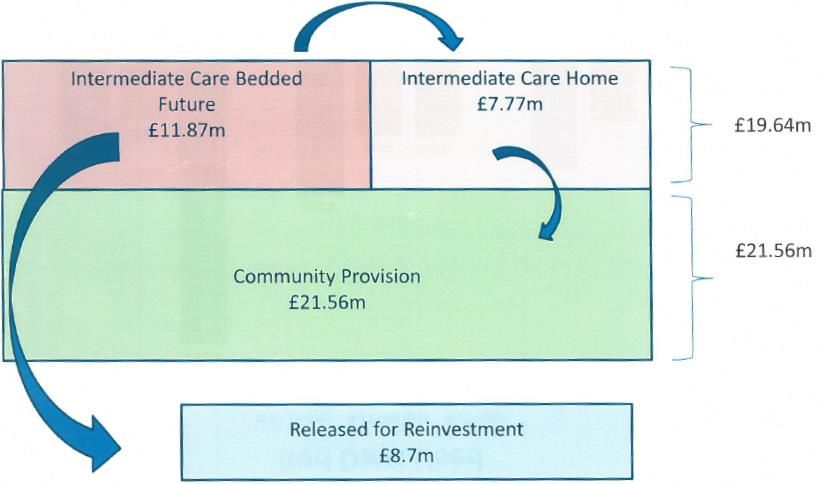
Contents
1.    Introduction .................................................................................................................. 1
2.    Approach ...................................................................................................................... 1
3.    Process ......................................................................................................................... 2
4.    Planning........................................................................................................................ 3
5.    Prioritisation ................................................................................................................. 4
6.    Pathway Changes ........................................................................................................ 4
7.    Finance ......................................................................................................................... 5
8.    Contracting Approach ................................................................................................. 6
9.    Quality at the Heart of Commissioning ...................................................................... 7
10. A Focus on Variation ................................................................................................... 7
11. Settings of Care ........................................................................................................... 8
12. Complex Needs .......................................................................................................... 12
13. Next Steps .................................................................................................................. 13
APPENDIX 1 ...................................................................................................................... 14
1. Introduction
1.1. NHS Corby Clinical Commissioning Group (CCG) and NHS Nene CCG are clinically led
commissioning organisations authorised by the Government to plan, buy and monitor
healthcare services for approximately 754,000 people living in the county of
Northamptonshire. We have statutory accountability for defined geographical areas within
the county, and we are supported in our actions by our membership (local GP surgeries).
1.2. Each year as part of the planning cycle we are required to issue commissioning intentions to
each of our providers. This document forms that deliverable.
2. Approach
2.1. This year we have changed our approach to joint planning and integrated commissioning
delivery. As separate statutory bodies we are speaking with one voice to all providers
through a single document. We have worked with our governing body clinical
representatives, membership and clinical colleagues responsible for oversight of the
Northamptonshire Sustainability and Transformation Plan (STP) to develop this document.
To support us in this joint approach we are using a methodology the system is familiar
with; the ‘settings of care’ approach that we have used to develop the Urgent and
Emergency Care strategy in 2017/18.
2.2. In order to support this approach, and to draw on the wealth of local knowledge and public
health evaluation of variation in population outcomes, the Commissioning Intentions have
started with the patient pathway at their centre. These pathways have been tracked across
the settings of care this allows the CCGs to clearly set out the expected activities by setting
and for us all to start to match those to the resources and activities we actually have. By
this approach we will demonstrate the changes and improvements required in each setting
of care to improve the overall management of health conditions, including:
Prevention and Self-management
Primary Care
Enhanced Primary and Community Care
Intermediate Care
Acute Care.
2.3. As part of developing this approach, the views of our patient participations groups (Patient
Congress- NHS Nene and PPEA – NHS Corby) have been sought in some detail. They are
aware that we need to signal some changes to the system and its current configuration.
Through these discussions we have debated the approach (settings of care, clinical drivers
1and patient pathways driving required change) and they wholehearted endorse that
approach. We have also indicated that to get the system back into some form of financial
as well as clinical balance there are some things that we need to do faster, some things we
need to do slower and some things we need to stop entirely. Our patient representatives
have asked that we use clinical quality drivers and patient experience and include them in
those conversations, but again have entirely endorsed that approach.
2.4. The Commissioning Intentions 2018/19 are issued during a time of significant change in the
health and care system. The development of the STP for Northamptonshire is intended to
provide a framework for enhanced partnership working that ensures that value is driven
across the local health and care economy. This approach, putting clinical and quality
drivers, patients pathways and transparency about activity in each setting, at the heart of
what we do should ensure that organisational barriers do not prevent the best possible
outcomes for the population delivered within the resources available within the county
(and beyond). The Commissioning Intentions are both drawn from and should shape the
STP going forward. The current Commissioning Intentions should form a basis for the
System Intentions for Northamptonshire.
3. Process
3.1. The same document will be received by each provider we commission from and is framed
as follows:
a) A simple narrative is provided that describes the context and landscape we are working
in
b) Individual health interventions and patients journeys by pathway are mapped across
settings in which our population access their care in
c) We have introduced self-care and prevention into the interventions we are describing
to start to improve strategic visibility to all providers of non-medical services available
to our population
d) An individual contract coding and counting letter that is unique to each provider will
accompany the document.
3.2. This approach has been evidenced in other systems to deliver the following benefits:
Clarity between providers on interventions in other settings to support STP and system
developments
Clarity between clinicians on handover points on patient journeys to reduce professional
duplication of support
Clarity on gaps in the provision of support services - although we have duplication of
delivery for people in some areas causing complexity and confusion, gaps in service
needs remain in other areas
2 ‘Left shift’ in activity to lower cost settings closer to patients own homes
Reduction in duplication in clinical pathways which leads to clearer QIPP and CIP
opportunity for the health system as a whole.
4. Planning
4.1. The drivers and documents we have used to develop the Commissioning Intentions,
include:
4.1.1. The CCGs issued a joint Operating Plan in 2016/17 which set out the commissioning
intentions for a two year period between 2017-19. Therefore this year’s
Commissioning Intentions set out an updated position set against current contracted
services and plans.
4.1.2. The Northamptonshire STP is moving into its third year of operation and is refining
proposals to move towards enhanced partnership working that delivers improved
outcomes as well as excellence in service provision. This requires co-ordinated
development of commissioned services across a range of care settings, to ensure the
greatest opportunity to impact on health and wellbeing.
4.1.3. The NHS Operating Plan, developed nationally by NHS England (NHSE) and NHS
Improvement (NHSI), provides the mandate under which NHS commissioning bodies
must function with a focus on safety, quality and cost efficient care across services
and within a range of priority areas.
4.1.4. The RightCare map of opportunities for Corby and Nene and the Menu of
Opportunities developed to support planning and delivery across pathways.
4.1.5. The NHSE Five Year Forward View and Next Steps documents including the recent
Integrated Urgent Care specification.
4.1.6. The GPFV – in addition to the commissioner responsibilities identified through this
planning document, primary care improvements have become a mandated delivery
within the STP
4.1.7. The quality challenge as set out in the shared commitment to quality from the
National Quality Board published in December 2016.
4.2. The engagement of our public and patients in the design of commissioned solutions is
essential and creates the real momentum in service and system redesign. The individual
and their family must be placed at the heart of redesign processes, and this will be
maintained and in many areas enhanced.
35. Prioritisation
5.1. The Commissioning Intentions reflect a journey that our system, including our patients and
populations, has embarked on over recent years. Many of the intentions included in the
document will be familiar to us all. However, it should be noted that some things described
document outline interventions that reflect success in other systems and include aspects of
best practice we have not yet been able to address. We do not expect that all intentions will
be delivered in a single year, but will impact beyond 2018/19.
5.2. We will follow a prioritisation process with our clinical stakeholders including the STP
clinical group, in October 2017. This will ensure that as we move our commissioning
intentions into our operating plan refresh and this year’s quality and finance plans, clinical
priorities and drivers for change remain at the heart of what we do.
6. Pathway Changes
6.1. This document pulls together the key themes across our care pathways and sets out key
changes proposed to:
How services are commissioned and provided
Where services are commissioned and provided to ensure we modernise our system
How providers can work together to deliver complete pathways that match
programme budget drivers and opportunities identified through clinical evidence and
Right care
How we access our care
Support to our clinical staff and health and care professionals
Our commitment to improving the overall health of the population
6.2. Our commissioning intentions are set within the context of unprecedented sustained and
significant financial challenge across health and social care requiring new models of care,
greater collaboration and joint working, and a focus on prevention and self-care.
6.3. The move away from a traditional commissioner/provider split will reduce transactional
costs, and the move to an enhanced partnership across health and care providers must
ensure that best value opportunities are realised. This cannot reduce a focus on safety and
quality across services and organisations and the necessity to drive continuous
improvement across care pathways.
47. Finance
7.1. Commissioners and Providers in Northamptonshire face a significant and collective
challenge to achieving financial balance across the health system. In 2017/18, Corby CCG is
delivering a QIPP programme of £3.6m and Nene CCG a QIPP programme of £36.6m.
Financial planning for 2018/19 is in progress. The CCGs will begin 2018/19 with a total
saving (QIPP) requirement which is greater than in recent years, due to financial pressures
and non-recurrent savings needing to be made recurrent. Current plans show a
requirement for Nene CCG of £39m (4.6%). Corby’s requirement is currently being
assessed.
We are aware that our providers and partners also continue to face significant financial
challenges, and there will therefore need to be a focus on the health and social care system
as a whole delivering the right quality of care at a lower cost to ensure the continued
financial viability and long-term sustainability of all the organisations in the
Northamptonshire system.
7.2. The STP will be a key vehicle for addressing the challenge and developing the range of
initiatives we can share with providers to meet respective but linked QIPP and CIP targets,
whilst taking account of the need to deliver the improvements and developments set out in
this document.
7.3. Activity levels for Urgent Care, Elective care and GP referrals have risen markedly in recent
years, and the growth in 2017/18 is following that trend. Increasing activity levels places
increasing demand on the limited resources available. The Northamptonshire Health system
needs to return to, and remain within, a sustainable service and financial framework. The
commissioning intentions will drive the operating plan that must meet sustainability
requirements in order to move towards that goal.
7.4. Delivering the QIPP programme means the CCG will want to ensure that commissioned
services deliver best value, and are affordable within available resources. The planning and
contracting timetable will be agreed in order to implement a pragmatic means of achieving
contract sign off by the due date, whilst dealing with all the relevant technicalities.
7.5. We will identify the resource implications of meeting all national and locally agreed
planning requirements relating to the key priorities within an overall cost envelope agreed
with our providers through the contracting process.
57.6. This process will be informed by the latest available tools and guidance including:-
• RightCare
• Demand Management Good Practice Guide
• NICE Guidance on delayed transfers of care.
8. Contracting Approach
As two-year contracts were signed for 2017-19, we will be looking this year to agree contract
variations, as there a number of key developments and updates which are required and which we
will need to work with the providers to deliver. Activity and financial assumptions will require
updating and will be varied into the contract through the usual variation process, following the
terms set down within the national contract. In addition, commissioning changes will need to be
reflected and contracts updated for the new ways of working required for delivery.
More importantly, the local NHS needs to continue its journey to deliver an operational STP, and the
contract remains a key lever of this.
Contracting priorities for 2018-19 are:
i) Constitutional Standards
The Northamptonshire system needs to deliver in full the standards as set down within the
NHS Constitution, achieving both recovery and sustainability in areas of pressure, these
include (but are not restricted to):
A&E
62 day cancer waits
RTT
ii) Financial Sustainability
The NHS continues to face its most significant challenge for a generation, and the reduction
of cost and improvements in efficiency are critical to delivery of the services required.
Services need to be provided on a right time, right place basis, and movements between
contracts and/or new contracting models which assist this will be required. Through the
use of risk/gain shares, incentives for outcomes and prime provider/whole system working
models, a reduction in cost and a gain in efficiency will be driven through.
iii) System Transformation
Hand in hand with financial sustainability, the need for system transformation is
paramount. The contracting approach and the commissioning that underpins it should
encourage the process and behavioural changes required to deliver transformation.
69. Quality at the Heart of Commissioning
9.1. The people of Northamptonshire deserve to enjoy the best possible health and wellbeing,
and receive quality care when they need it. We believe in everyone getting the right care, in
the right place, at the right time. Quality should be central to everything we do, from
planning and commissioning care; to the way we work with services to drive improvement
and innovation.
9.2. The local challenges include:
Lifestyle and wellbeing issues, which drive people into the health system particularly
due to respiratory conditions, circulation issues, cancer and mental health as identified
through RightCare
The need to ensure that people are enabled to access the right health services in the
most appropriate way
Pressure and lack of resource deployed in and services delivered in out-of-hospital
settings means that people end up in hospital based services by default (right shift)
The need to ensure sustainability of General Practice and primary care services
The need to ensure that acute hospitals services are supported, transformed and
optimised to best serve the needs of our population
Workforce shortages across the sectors which drive cost and hamper the ability to
provide high quality services
The need to improve integration of services across the system to improve efficiency and
reduce duplication
The need to ensure the system meets national quality standard including Cancer, and
NICE guidelines and addresses CQC issues raised locally.
10. A Focus on Variation
10.1. Benchmarking variation is complex and, as the RightCare programme sets out, is the start
and not the end of the design process. A variation in costs in one part of the system, may in
fact be delivering a better set of outcomes for patients or reduced costs elsewhere.
However, Northamptonshire have placed the RightCare methodology at the heart of
planning and therefore the key areas for focus are as set out below. These care pathways
are critical for the county as we drive towards improvements in outcomes for our
population and sustainability for the system:
7Nene & Corby CCG's
£'000 Electives Non Elective Prescribing Grand Total
Cancer - 1,133 296 1,429
Circulation 2,654 3,796 777 7,227
Endocrine 736 1,299 2,164 4,199
Gastrointestinal 978 2,264 781 4,023
Genitourinary 663 3,544 106 4,313
Mental Health - - 1,219 1,219
Muskuloskeletal 4,472 364 454 5,290
Neurological 2,253 3,752 1,237 7,242
Respiratory 568 5,553 1,223 7,344
Trauma & Injuries - 2,332 41 2,373
Grand Total 12,324 24,037 8,298 44,659
11. Settings of Care
Although we are offering our commissioning intentions in respect to settings of care, there are some
themes that have such a profound impact on our system that they need to be explained in more
detail. We have seen significant activity growth in the Urgent and Emergency Care sector and have
increased our investments in this area. However, it remains a challenge for us all to see sustained
improvements in the Urgent Care experience for our population.
There are some aspects that we have ambitions to improve this year. These include clarifying the
balance between Emergency care, Non Elective spells and what Elective options we need to offer to
better plan for our population. We need to make progress on moving toward the ambulatory and
emergency medicine delivery our population deserve in both pathway terms but also how we record
the information to support commissioning developments. We currently do not use the best practice
codes encompassed in the directory of ambulatory and emergency medicine, using zero day Length
of Stay to count all activity. We will work through the detail of how this may be having a detrimental
impact on activity, costs and total trust incomes through the contracting process this year.
A focus on Urgent Care:
11.1 Investments in this area have grown over a time of sustained pressure in the Urgent Care
System and have been applied in response to tactical issues that the system has faced.
Services have been layered over other services, and a wholesale consideration of the
urgent pathways and their relative balance with elective services has not occurred.
11.2 This has delivered some improvements in 4 hour transit time in the Urgent system, but has
not delivered a sustained improvement as new beds or a new service has been rolled out,
rapidly followed by a deterioration in performance that has seemed inexplicable. This has
occurred as the system has adjusted to its new baseline and without a fundamental change
in approach.
811.3 This is a multi-factorial issue, which has been compounded by multiple escalation
processes. National programmes of improvement have been followed, but they have been
potentially layered over a system that has needed a more fundamental reset of resources.
11.4 Closer analysis of that resource has shown that we spend more in the Urgent Care system
and have lost some focus on the elective or fast scheduled interventions that would
prevent the use of urgent care systems for all but emergencies. Our current acute contract
activity split is approximately 67% non-elective to 33% elective. We now need to be clear
about what we can deliver in elective or scheduled care to support improved outcomes
and the role this plays in supporting urgent care needs
How we will deliver across care settings?
11.5 Prevention/Self Care:
This area of work is central to how we will change the way the people are supported and
support themselves it includes:
Pharmacy and minor ailment support to people who become ill on the day
Rehabilitation support for cardiac and respiratory issues
More active management will take place in respect of:
o Breathing Space Community COPD clinic
o Acute care – KGH, NGH
o Federations and super-practice
o Rocket/Restart
o Pulmonary rehabilitation
11.6 Primary Care:
Primary care will be a major contributor to the delivery of the ambition set out in these
commissioning intentions:
We will continue to facilitate extended opening; 8-8 and slots throughout the day for on-
the-day booking, as people and particularly children become ill throughout the day. This
will reduce the challenge in getting appointments at that point in time leading to
inappropriate use of Urgent services when people have primary care needs.:
We will complete the review of near patient testing we have already started and look at
services that are related to this like anticoagulation and phlebotomy to ensure adequate
community capacity for these services is commissioned in accordance with the evidence
base
We will continue to utilise the GP Forward View Transformation investment to work
with primary care homes to support local practices to work together to provide primary
care services
911.7 Extended Primary care (Primary Care Home):
We will manage our non-elective demand through effective Multi-Disciplinary-Team
management for people with Long Term Conditions, and minor injury service support. This
will be transacted through primary care homes and will include the following:
Support for further development and reconfiguration of priority community services
around primary care homes (specifically physiotherapy, community nursing and mental
health support)
Identifying and promoting elective services within primary care homes that are either
underutilised currently or need additional capacity to support primary care home needs.
Continuing to support practice clusters and their extended family to innovate in the use
of technology to share information and process across services
Working with all providers to actively support the coming together and development of
multidisciplinary extended primary care family teams in our primary care homes
Extending work done in 17/18 on in hours access at scale to establish a sustainable
approach to provision of extended hours in primary care as part of the GP Forward View
that utilises the extended primary care team
Continuing engagement with the public about where the gaps are today and what their
priorities might be for joined up services in primary care
Delivering the demand management plan developed as part of delivering sustainable
elective care
Ensuring training and enhanced support is available to care homes – both nursing and
residential – alongside Local Authority partners, so that people can be supported safely
in their place of residence.
11.8 Intermediate services:
This transformation programme represents a central part of both the CCGs’ Commissioning
Intentions and the STP for Northamptonshire.
11.8.1 This element of the commissioning plan represents a new period of engagement
for the CCG and the local health and care system into new models of supporting
people to stay well and to maximise independence within the home and
community.
11.8.2 Intermediate Care services have been under review for a number of years and have
provided a significant focus for programmes such as Healthier Northamptonshire
and the Better Care Fund. The system has assumed a lack of capacity in
intermediate care services which has been a significant driver of urgent care
challenges and hospital discharge performance. Initiated through the Better Care
Fund and developed as part of the STP, it is now possible to demonstrate that
Northamptonshire has an imbalance in interventions that means that resources
respond post crisis, rather than having the capacity to prevent or respond swiftly to
that crisis.
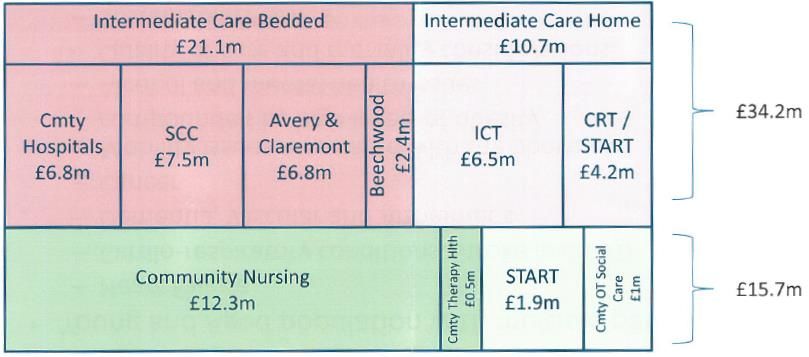
1011.9 The current profile of investment in community services is shown below, with a high level
of investment in bedded and post hospital rehabilitation:
11.10 The model varies significantly from other health and care communities where community
nursing and social care community services have a greater proportion of the investment to
manage crisis without hospital intervention and to support people home after brief
hospital interventions.
Therefore in 2018/19 the CCGs will:
Engage with public and clinicians to design new opportunities to deliver care close to
home, maximising the use of resources to ensure that re-ablement and rehabilitation
meets people’s needs and minimises unnecessary time in an acute hospital bed
Develop a single point of referral for non-elective care that can ensure that clinical
time is used productively to maximise patient safety and drive effective use of
resources
11 Support the delivery of integrated provision across health and social care to support
the right interventions without having to transfer people between multiple care
settings
Work with acute providers to ensure that new GP streaming opportunities at the front
door of A&E to maximise the use of new pathways and to not admit patients who can
be supported within their home or usual place of residence
Drive for a sustainable solution that ensures that investment benefits outcomes for
patients without causing risks to organisations responsible for a wider range of care
provision. We will use all contract options to incentivise value outcomes
Retain our focus on Delayed transfers of care for our population throughout this
process of change.
11.11 Acute Services
The enhanced management of people requiring complex care can deliver a sustainable system
position that allows variation in activity levels – such as that experienced in 2017/18 – to be
managed well without regular escalation. Not only does this benefit the local population and
their health, but also staff and organisations:
Acute Care
GP streaming
Frailty Unit
23 hour non admitted pathways
Full ambulatory pathways coded as non-admissions
Increase in short stay beds for frailty support (local tariff to increase nursing and
discharge support resources for frail patients)
Approach to ICD10 diagnostic codes identified in the coding and counting letters.
12. Complex Needs
The transformation of services for people with mental health needs and those with learning
disabilities has been a central focus for the system in 2017/18. The work has been characterised by
a new level of integration between health and social care to ensure a strategic approach to
outcomes and a determination to eliminate the barriers that prevent service users and their families
from stepping up at times of need and flexing their care arrangements.
In 2018/19 the CCGs will:
Review all historic pooled arrangements and ensure that resources are aligned to maximise
outcomes across care pathways
Ensure that outcome based contracts are used to address the support required to:
o Provide access to primary and usual health care services
o Mitigate and manage crisis presentation and pathways
12o Focus on sustainable recovery
o Maximise independence and self-determination with access to personal budgets and
other solutions
Commission a new set of arrangements to ensure that:
o The local population is known and understood
o People receive an integrated assessment approach
o The market can operate within a single outcomes framework that reflects the needs
of the population and the system approach
o The market can work with a single integrated approach to secure appropriate care
and support arrangements
o Early intervention and rapid de-escalation of crisis can be supported, with resource
following the patient rather than being dispersed
Considering the work undertaken in 2017/18, these programme areas, across all settings, are
considered to be a significant opportunity to demonstrate how to drive improved outcomes, in line
with national transformation plans and local knowledge, with a mind to an Accountable Care model
and an Outcomes Based Commissioning Framework.
The CCG will therefore:
Work alongside procurement requirements
Work to agree the necessary legal framework to support the pooling of resources
Look for innovation in outcomes based contracting through a new dialogue with the local
population
Support innovation across the market in response to commissioning plans
This approach supports consideration of pooled resources including complex budgets such as
Continuing Health Care/Children’s Continuing Care.
13. Next Steps
This document is supported by two key appendices:
1. Our clinical pathways and interventions across care settings
2. Our Local Maternity Services Plan with associated specific intentions
The CCGs will work with the system and public to develop the more detailed plans for delivery in
2018/19 and issue the Operating Plan and Contracts in line with national requirements.
13APPENDIX 1
Pathway Prevention/Self Primary Care Enhanced Primary Care/ Intermediate Services Secondary Care
management Primary Care Home
Stroke Smoking cessation Management and Stroke Prevention Increasing resource Reconfiguration plan
Weight management register maintenance to through AF into Community Stroke that aims for one
Alcohol expected prevalence optimisation Warfarin Team and Early single hyper acute and
Exercise (social levels of Hypertension clinics Supported Discharge acute service for
prescribing) NHS HealthCheck Specialised mental Teams and work with Northamptonshire and
Health Apps Identification of high health support NCC, social and vision for single site
(Telehealth) risk of stroke patients voluntary care as part acute stroke provision
Opportunistic screening and detection of of Stroke Programme
for Hypertension undiagnosed AF Board in designing new
Risk Factors patients model and
management NOAC initiation understanding impact
Carer support e.g. demand on
domiciliary care
Carer support
MSK Self-Management Supporting primary Clinical Review of GP Integrated specialist Hospital-based
Programmes - access care in management of referrals through MSK MSK triage, specialist MSK
to information, MSK conditions Triage assessment, intervention and
education and advice through clear clinical Joint injection investigation and immediate
including and pathways management rehabilitation
appropriate Ensuring referrals are Physiotherapy and
signposting to obesity routed correctly for orthotics
management and onward triage
14Pathway Prevention/Self Primary Care Enhanced Primary Care/ Intermediate Services Secondary Care
management Primary Care Home
exercise programmes including diagnostics
Maintain
Independence –
equipment
Diabetes- Adult Self-Management Identification of Optimal management Integrated delivery of Hospital-based
Programmes - access patients at high risk of of patients with community MDT specialist diabetes
to information, diabetes and referral diabetes through eight across intervention and
education and advice to diabetes prevention care process/NICE federation/primary immediate
including and programme DAFNE treatment targets care homes rehabilitation for
appropriate and DESMOND, Insulin initiations Insulin Pumps complex chronic
signposting to obesity through Diabetic high risk foot patients
management and proactive/opportunisti management Acute Management of
exercise programmes c screening and NHS life threatening
Health Apps HealthCheck complications e.g.
(Telehealth) Diabetic register and AKI/DKA
Diabetic eye screening optimising control Diabetic eye treatment
(NHSE commissioned) Referral to Pre-diabetic
management
programmes
Cancer National Cancer ‘Be Review Referral rates Training e.g. PLT Community Cancer Optimal Lung pathway
Aware’ Campaigns; through peer-to-peer; Physiological support support services (incl. (subject to Alliance
Link in with ‘First for Support for Cancer Care planning complex End of Life bid)
Wellbeing’ Work; Survivors Hormone Therapy care provision- late Screening/early
Work with patients Use of diagnostics pre- MDT- proactive care diagnosis) detection
with symptoms where referral including FIT Teachable moments Counselling
15Pathway Prevention/Self Primary Care Enhanced Primary Care/ Intermediate Services Secondary Care
management Primary Care Home
‘no abnormality Screening (PH) for near miss events Survivorship support
detected’ but with risk Optimal detection with patients Day Hospice
factors. 2WW note Nice Data review Hospice at Home
Screening/early guidance Reflections on Lymphedema support
detection Cancer care review diagnosis and referrals Expand Chemotherapy
Palliative Care Screening/Early at home options
End of Life Care detection Palliative Care in-reach
FIT colorectal to acute trusts to
screening introduction expedite discharge
(subject to Alliance Screening/early
bid) detection
Screening/Early
detection
CVD- Not Stroke Smoking cessation Health coaching Echo reading HF nurses including RV Prior approval for PCI
Weight management AF management LTC support and MDT Stroke rehab (day op?) Outreach support to
Alcohol Drug optimisations management Cardio respiratory Integrated Community
Exercise (social AAA screening Increased HF nursing rehab Heart Failure
prescribing) NHS Health checks support including RV Stroke outreach
Health Apps capability IV diuretics
(Telehealth) End of Life Care Repeat Potassium
provision checks
Peer Support
Palpitations
Palpitations pathway
Ambulatory BP checks
16Pathway Prevention/Self Primary Care Enhanced Primary Care/ Intermediate Services Secondary Care
management Primary Care Home
Vision Screening for disease- Routing Management Clinical review of Extend community Acute referral service
specific eye conditions of acute presentations referrals provision of eye care to cover accidents and
such as diabetic Urgent Eye through enhanced emergency issues
retinopathy. appointment at hub optometrists
Enhanced working level- Review and New community
with NHSE to support triage of referrals to pathways to treat non-
Optometry support onward complex interventions
improvements treatment decision close to home
CYP Emotional Schools Screening/ Crisis planning and Psychology Family work/support Psychology
Wellbeing/CAMHS Early Prevention management DBTCBT Psychotherapy Inpatient wards
Social Marketing Brief interventions Psychoeducation re Psychology Crisis Home
CYP Counselling solution focused. symptom management Crisis Cafes Treatment Teams
Health Apps etc. Group Therapy
(Telehealth) CYP Counselling Self- harm pathway
Online Advice Portal
(e.g. AskNormen)
Depression Third sector Brief interventions IAPT, Enhanced IAPT- ( CMHT, crisis services Psychology
counselling solution focused IAPT +Social Crisis cafes Inpatient wards
Peer support Drugs and prescribing Prescribing) Drugs /alcohol (dual Crisis Home
Debt counselling Psycho-education Peer Support diagnosis support) Treatment Teams
housing programmes
Smoking cessation
Weight management
Training /Employment
Support
17Pathway Prevention/Self Primary Care Enhanced Primary Care/ Intermediate Services Secondary Care
management Primary Care Home
Online Advice Portal
(e.g. AskNormen)
Psychosis Third Sector Crisis planning and Psychology CMHT Psychology
counselling management Psycho-education re. Drugs /alcohol (dual Inpatient wards
Peer support Drugs management symptom management diagnosis support) CMHT's
Finance training and Brief interventions etc. Talking Voices ( Peer Early Intervention in
debt counselling, solution focused Support Groups) Psychosis (EIP)
Housing and tenancy Acute Liaison Teams
support, (in reach)
Smoking cessation Crisis Home
Weight management Treatment Teams
Training /Employment
Support
Carer support
Dementia and Mild Alcohol Harm Early screening and Shared Care (step Admiral Nurses Integrated OPCMHT's
Cognitive reduction case finding down from Memory Integrated OPCMHT's OPMH Inpatient
Impairment Smoking cessation Health Coaching Services for pts with Psychology Wards
Weight management AF management Cognitive Enhancers) Care Homes Frailty Units /Complex
Exercise (social Drug optimisations Shared care for low Care Home Psychiatric Ageing Unit
prescribing) LTC disease register /moderate need pts Liaison Short stay wards
Reducing social Frailty DES Admiral Nurses in Pro-active Care Ambulatory care
isolation Risk stratification tools Primary Care Planning including Speciality in reach to
Supported Housing Carer Support Carer support escalation A&E
Housing( extra care) management plan 23 hour non-admitted
Falls Prevention Carer support area
Assistive Community in reach
Technology(Telehealth Geriatrician outreach
18Pathway Prevention/Self Primary Care Enhanced Primary Care/ Intermediate Services Secondary Care
management Primary Care Home
and Telecare) to Primary Care/Care
Carer Support Homes
Online Advice
/Support Sporting
Memories (targeted
social prescribing)
Carer support
Anxiety Exercise (social Crisis planning and Peer Support CMHT, crisis services Specialist Psychology
prescribing) management Psychology Crisis cafes Specialist Inpatients
Third sector Brief interventions DBT Psychology Unit
counselling solution focused. IAPT
Peer support Drugs and prescribing Psychoéducation to
Debt counselling Weight management support symptom
Housing Psycho-education management etc.
Smoking cessation programmes
Weight management Peer Support Groups
Employment Support
Online Advice Portal
(e.g. AskNormen)
Eating Disorders Schools Screening/ Crisis planning and Psychology Family work/support Specialist Psychology
Early Prevention management Psycho-education re Group Therapy Inpatient wards
Social Marketing Brief interventions symptom Psychotherapy Crisis Home
CYP Counselling solution focused. management etc. Psychology Treatment Teams
Health Apps CYP Counselling
(Telehealth)
Learning Disabilities PBS training for Annual Health Checks Community Team for Intensive Support Inpatient wards for
families and carers and Action Plans People with LD Team behaviour people with acute
Employment support Weight management Maternity support therapy adults and mental health needs
Active support Smoking cessation services children Buddying systems
19Pathway Prevention/Self Primary Care Enhanced Primary Care/ Intermediate Services Secondary Care
management Primary Care Home
Buddying systems for Trained pharmacies Strategic Health Community Team for Assistive technology
people and their Facilitators People with LD Short term emergency
families Counselling services Respite services for stay units
Drop in centres or Sexual health PMLD
wellbeing café programmes Autism and Asperger’s
Health apps assisted Trauma counselling Service
technology Specialist skilled CCG Complex case
Family support groups dentists managers
Specialist teams and Dysphagia Peer support groups
portage assessments Psychotherapy
Job coaching and Health navigators Specialist nursing
mentoring Enhances personal homes for people with
Easy read website assistants dementia/ physical
local information poor health and end of
Keeping safe life
Community Transition counselling
connectors and buddying and
navigator
CAMHS support for
families - family
therapy
Specialist forensic
support
Autism PBS training for Referral of suspected Life coaching Intensive Support
families and carers cases Enhances personal Team behaviour
Employment support Management of assistance therapy adults and
Active support physical and mental
children
Buddying systems for Respite services for
health comorbidities people in transition
people and their
20Pathway Prevention/Self Primary Care Enhanced Primary Care/ Intermediate Services Secondary Care
management Primary Care Home
families Autism and Asperger’s
Drop in centres or Service
wellbeing café Peer support groups
Health apps assisted Sheltered short term
technology support
Family support groups Wrap around crisis
Specialist teams and support
portage
Job coaching and
mentoring
Complex care Smoking cessation LTC disease register End of Life Care Acute outreach Frailty units
Weight management Frailty DES provision Increased wrap Short stay wards
Alcohol Risk stratification tools NEL MDT around- CCT and ICT Ambulatory care
Exercise (social Pro-active Care home based. Specialty in reach to
prescribing Planning Make core service A&E
Reducing social Specialist nursing dementia and 23 hour non admitted
isolation support cognitive confusion area
DESMOND/DAFNE etc. 2-20% risk capable. Community in reach
Housing stratification Day rehab outcomes
Mental health support Therapy Outcome
Physiological support Measure ( combined
for pain management Health and Social
and End of Life Care Care)
CHC –
Nursing home and Res
home support.
Minor Procedures Self-management and New Community New Community Minor injuries Prior Approval for
care Surgery contract Surgery contract to inguinal hernias
Referral management include scoping other
21Pathway Prevention/Self Primary Care Enhanced Primary Care/ Intermediate Services Secondary Care
management Primary Care Home
system to support community services
clear signposting to such as the current
services community continence
service for adults in
relation to urology
Minor injuries
Carpal Tunnel Self-management and Treatment in primary Movement of CTS Prior Approval for
Syndrome care care to be aligned to service into the diagnosis and
NICE guidelines community including management of CTS
diagnostics
Lower Urinary Tract Self-management and Review of primary care
Symptoms care service provision
Respiratory Smoking cessation QOF indicator Secondary prevention Breathlessness pilot: Re-purposing
commissioned via monitoring for Asthma care packages for psychosocial opportunities for
(Breathlessness) COPD and asthma community drop-in
Public Health & COPD integrating services
None Elective MDT- clinics
Making Every Contact Flu immunisation across pathway
proactive care Re-procurement of
Count (MECC) Standby meds Consultant Connect home oxygen service
including
Self-management and Disease register in 2018/19 ROCKET/RESTART and
care improvements against Advice to the consultant outreach/
Anxiety management expected prevalence collaborative care primary care education
support team from the Rocket
team
rehabilitation
MDT working with
other specialities e.g.
Cardiology
22Children with Advice to parents & C Development of Development of GP Front Door Inpatient Wards
Complex & & YP in collaboration Integrated Locality Locality Hubs to cover Assessment; Urgent OP Clinic Slots
continuing care with universal services Hubs to cover all all immediate on the Up to 4 hour Speciality outreach
day demand, with ambulatory
health needs at every health and immediate on the day support to community
rapid response assessment - &
social care contact. demand & compliance children’s community specialist paediatric paediatrics model
Imms and Vacs with SEND statutory nursing service discharge support to SPA.
HV & School Nursing requirements for Extended options children with common
working with partners when parent return and complex &
to develop and deliver home to access care palliative care needs.
robust EHCPs & CC Child protection issues MDT community
clinics (routine
packages.
appointments suitable
LTC monitoring for up to 4 week wait)
Hot Kids options Catch Team
Safeguarding
2324
You can also read


