Crane Care Training - 2021 Customer Catalog - Shady Grove, PA & Manitowoc, WI : United States - Manitowoc ...
←
→
Page content transcription
If your browser does not render page correctly, please read the page content below
Crane Care Training – 2021 Customer Catalog
Shady Grove, PA & Manitowoc, WI : United States

                                                  V6. 1/2021
Contacts
    Overviewand Trainers

    Darious Wenger                  Keith Opperman                  Jeremy Wagaman
Manager, Technical Training     Manager, Technical Training       Manager, Technical Service
    (Shady Grove, PA)               (Manitowoc, WI)             jeremy.wagaman@manitowoc.com
darious.wenger@manitowoc.com   keith.opperman@manitowoc.com

                                     Robert DeWalt                    Donald Wagner
     Charlie Reeder                  Training Instructor
     Training Instructor                                              Training Instructor
                                 robert.dewalt@manitowoc.com     donald.wagner@manitowoc.com
charles.reeder@manitowoc.com

      Ryan Kraemer                     Jorge Pinto                    Pat Heckman
     Training Instructor            Training Instructor              Training Instructor
 ryan.kraemer@manitowoc.com    jorge.campanico@manitowoc.com    Patrick.Heckman@manitowoc.com

     Jayson Garland                   Frank Clifford
     Training Instructor             Training Instructor
jayson.garland@manitowoc.com     frank.clifford@manitowoc.com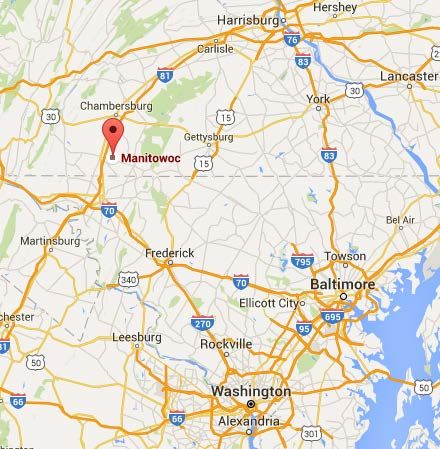
Overview
    Training Center Objectives

Our Capabilities:
Our factory-certified instructors offer operating systems, components, maintenance
and repair training on all of our products: Grove, GMK, Manitowoc, National Crane,
and Potain.

Manitowoc Crane Care is an innovative leader in advanced crane industry training.
Our onsite and online training curriculum is designed with your profits and your
safety in mind. With professional and experienced instructors, our training helps
you develop the product knowledge you need to be as productive as possible.

* New: Several of our classes are now being taught virtually in response to
the COVID pandemic and many technicians’ inability to travel. Please see
our Course Catalog listing to see which courses have this option.

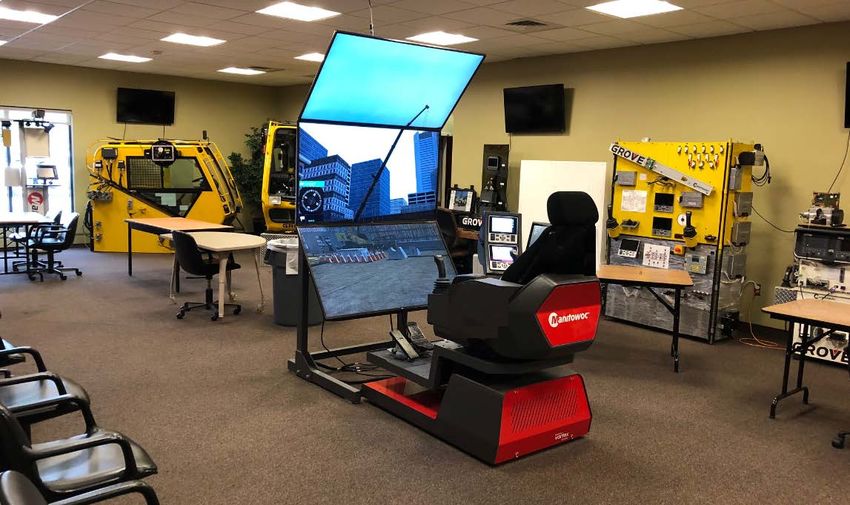
Our Facilities:
Shady Grove, PA: This site offers multiple    Manitowoc, WI: This site offers
state of the art classrooms. A large hands-   multiple state of the art classrooms. 2
on simulator lab to include simulators of     large hands-on simulators labs to
multiple generations of Grove domestic,       include simulators of multiple
GMK All Terrain and National Boom Truck       generations of Manitowoc EPIC, Canbus
operating systems. A multiple bay training    and Crane Control Systems.
building is also used to accommodate
multiple products for troubleshooting and     Available lab workstations:
is currently equipped with a GMK4100L-1
dedicated solely for training purposes. A     •   4 generations of Lattice Crane
current CCS Potain tower crane is onsite          simulators, from conventional
dedicated solely for training purposes.           cranes to CCS generation;
                                              •   8 hydraulic benches with pumps and
Available lab workstations:                       motors that can simulate the function
                                                  of the machines.
•   Three generations of GMK simulators       •   Small Crawler simulator for the small
    to include RCL’s                              Crawler range.
•   Four generations of Grove domestic        •   A CCS cabin simulator with wireless
    RCL simulators                                remote
•   Four generations of Grove domestic        •   Also available in Portugal, Dubai and
    simulators                                    Brazil:
•   GHC simulator to include the RCL                 •    Epic Simulators
•   Multiple National Boom Truck                     •    Canbus Version 1 and version
    simulators to include RCL’s                           2 Simulator;
•   EPIC Hydraulic/Electrical Simulators             •    Crane in the box Simulator
•   Hydraulic and Electrical workstations            •    CCS Simulator
•   Tower crane erection / dismantling /
    troubleshooting
•   Mobile crane operation
•   CCS equipped immersive operator
    simulator
Overview via Manitowoc Direct
  Registration

Request an Account:
To register to attend a training class, students
must have a Manitowoc Direct account with
access to the Technical Learning Center
application. Please visit this website and
complete the required fields:

http://www.manitowoccranes.com/en/manitowoc
-direct/manitowoc-direct-request-access

Once registered, users should login to
Manitowoc Direct, click to expand My
Applications, then select Technical Learning
Center to enter our website.

Technical Learning Center:
Once logged in, you will see a Course Catalog section (click on Technical link) where
you will find our available courses, with upcoming dates listed.

All instructor-led training courses must be paid by credit card.

Any registration/payment questions should be directed to Toni Pagliaro, at 717-593-
5918, or by email: toni.pagliaro@manitowoc.com.

Contents
Course Summary

Product Line       Course Name                               Page

Grove, GMK,
National &         Crane System Theory*                       6
Manitowoc

Grove              Crane Technology & Operation – Mobile*     7
                   Customer Grove HED & PAT                   8
                   Customer Grove CCS Level 1                 9
                   Customer Grove CCS Level 2                10
                   Customer Grove CCS Level 3                11

GMK                Customer GMK ECOS                         12
                   Customer GMK CCS Level 1                  13
                   Customer GMK CCS Level 2                  14
                   Customer GMK CCS Level 3                  15

Manitowoc          Lattice Terminology*                      16
                   Crane Technology & Operation – Lattice*   17
                   MLC100-1 Customer Level 1                 18
                   MLC165 Customer Level 1                   19
                   MLC300 Customer Level 1                   20
                   MLC650 Customer Level 1                   21
                   Intro to EPIC Customer*                   22
                   EPIC 1 Customer                           23
                   EPIC 2 Customer                           24
                   Intro to CANBUS Customer*                 25
                   CANBUS 1 Customer                         26
                   CANBUS 2 Customer                         27
                   CCS Lattice Overview*                     28
                   CCS Lattice Level 1.1                     29
                   CCS Lattice Level 2.1                     30

 *This class is offered both in-person and virtually.

                                                                    5
Grove
Crane System Theory

Content:
This 4 ½ day course requires no service knowledge of Grove, GMK, National
or Manitowoc crane systems and will be used as a prerequisite for all
introductory level courses.

The course is designed to provide a basic understanding of hydraulics,
electrical and pneumatic principles and how they are applied on the
different mobile and lattice crane product lines.

The course will consist of classroom time utilizing programs covering the
basics of hydraulics, electrical and pneumatics along with their components
and how these components operate and interact with each other.
Schematics are used to help the students gain a basic understanding of
schematic layouts and component symbols used on the different mobile
product lines.

Hydraulic and Electrical test benches are incorporated into the course to
help give the student a better understanding of the hydraulic and electrical
theories learned in the classroom portion of the training.

Course Benefits:
• Have the basic understanding of hydraulic, electrical and pneumatic
  principles.
• Have a basic understanding of how hydraulic, electrical and pneumatic
  principles relate to the different mobile and lattice crane systems.
• Have a basic understanding of schematic design and layout for the
  different mobile and lattice crane product lines.
• Have a basic understanding of hydraulic, electrical and pneumatic symbols
  used on mobile and lattice crane schematics.

Prerequisites
None

Capacity
8 students                                                                     6

Grove
Crane Technology & Operation

Content:
This 4 ½ day course assumes no basic service and operational knowledge of
Grove Rough Terrain, Truck Mounted and All Terrain crane systems.

The course begins with an in-depth overview of domestic RT & TMS crane
terminology and technologies in relationship to crane systems. Grove
domestic load charts are explained along with exercises to expose the
students to how load charts are constructed and how to properly read and
interpret them.

The GMK product line is next with an in-depth overview of GMK terminology
and technologies. Students will then be taught GMK style load charts to
include exercises to assure a full grasp of both the Grove domestic and GMK
product types.

Rated Capacity Limiting systems programming and operation is covered to
include exercises using RCL simulators. This allows the student to apply load
chart theory learned earlier in class to how the RCL works.

Machine hands-on session will allow the students to experience how to
properly set up and operate a Grove domestic crane. This will give students a
working knowledge of a Grove crane and the foundation to continue their
studies in Grove Hydraulics and Electrical systems.

Course Benefits:
• Have the basic understanding of how to read and interpret load charts and
  explain them to operators during machine deliveries.
• Conduct start-up and programming of RCL systems
• Have basic understanding of how to setup and function a Grove crane
  functions and operates.

Prerequisites
None

Capacity
8 students                                                                      7

Grove
Customer Grove HED & PAT

Content:
This 4 ½ day course assumes basic operational knowledge of Grove
domestic cranes and covers domestic Rough Terrain and Truck Mount units
to include non CANBus and early version CANBus cranes and does not
cover the TMS9000E or RT9150E models. This class also covers the LMI
systems for this era of machines.

Classroom programs covering Grove crane hydraulic systems, electrical
systems and schematics will give the students a working knowledge of a
Grove crane and the foundation to learn proper troubleshooting techniques
and hydraulic test procedures.

Customer version HED service software will be covered using HED
simulators to allow the student to connect with the service software and
understand how it is used for basic troubleshooting and diagnostics.

Hands-on sessions are conducted to reinforce classroom studies.

Course Benefits:
• Identify superstructure and carrier hydraulic & electrical components and
  also explain their basic functions
• Identification of hydraulic & electrical symbols
• Read and understand hydraulic and electrical schematics
• Troubleshoot possible system problems utilizing hydraulic & electrical
  schematics
• Conduct basic system hydraulic & electrical test and troubleshooting
  procedures.
• Receive necessary hardware and basic understanding of using customer
  version HED software

Prerequisites                                  Capacity
Crane System Theory                           8 students

Hardware / Software Provided
HED communication cable for Generation 1 & 2 HED cranes
                                                                              8
HED Service Tool & HED CAN Link software
Grove
Customer Grove CCS Level 1

Content:
This 4 ½ day course is designed for individuals who are new to Grove CCS cranes
but would also be an excellent refresher course for more experienced technicians.
The course covers the setup and operation focused toward current production
Grove cranes equipped with CCS.

The course features a Grove GRT and TMS that begins with an in-depth review of
CCS crane terminology and technologies so the students can relate to a crane’s
individual CCS components and systems.

Day 2 programs covering Grove CCS GRT domestic load charts are used to
expose the students to how the load charts are constructed and how to properly
read and interpret them. Superstructure cab controls will be covered including
the proper setup of the Operation & RCL systems.

Day 3 will consist of machine hands-on sessions allowing the students to
experience how Grove CCS GRT cranes function, proper set up and operation.
This will give students a working knowledge of a fully functioning Grove CCS GRT
crane and the foundation to continue their studies in Grove Hydraulics and
Electrical systems.

Day 4 will primarily be a combination of days 1, 2 and 3 however it will focus on
Grove CCS TMS cranes to include setup, operation, load charts and RCL system.

Exercises will be conducted to assure a full grasp of both product types when it
comes to the RCL system, Operation system and Load Charts.

Course Benefits:
• Have a basic understanding of how to read and interpret load charts for a Grove
  GRT and TMS CCS crane
• Have a basic understanding of proper set up of Grove GRT and TMS CCS crane
  for highway travel or lifting operations.
• Be able to operate the boom telescope control systems for both the GRT and
  TMS cranes.

Prerequisites                                       Capacity
Crane System Theory                                8 students

Hardware / Software Provided
None
                                                                                    9
Grove
Customer Grove CCS Level 2
Content:
This 4 ½ day course assumes the student has completed all prerequisites and has
basic crane knowledge. The program begins with a review of crane terminology
and technology used on Grove Domestic CCS models. The program will also
include an explanation of schematic symbols used on Grove system drawings,
with emphasis on electrical and hydraulic schematics. Models covered will be the
RT 530,540, GRT 880 8100 GRT655.
Day #1 will include an overview of the Schematic symbols and terminology
Hydraulically. An understanding of the hydraulic circuits on the machine will be
explained utilizing the specific machines schematics. Day #2 will include an in
depth Look at the actual CCS components and what makes the system unique
electrically. From there we will venture into the electrical symbols and schematics
of the specific machines.
Day #3 will begin with a study of the CCS operating system to include basic
theory of operation of the CCS CAN Bus system and how the different bus devices
communicate. Additionally, the carrier and superstructures electrical systems will
be covered with emphasis on navigation of schematics to include an explanation
of CCS module supplies, inputs and outputs. Day 3 will tie the entire system
together for the technician showing how the CCS control system electrically and
hydraulically is truly controlling the crane.
Day #4 the students will practice hands on a crane what they learned during the
week about basic theory of operation of the carrier and superstructure. Hands on
will include component locations, display operations and basic crane functions
and operation.
Course Benefits:
• Interpret and navigate hydraulic and electric schematics
• Have a basic understanding of carrier systems used on CCS cranes
• Have a basic understanding of superstructure systems used on CCS cranes
• Have a basic understanding of CAN Bus and the operating system used on CCS
cranes
• Navigate and Understand Setup and operation of a CCS machine
Prerequisites Capacity
Grove CCS Level 1 8 students
Hardware / Software Provided
None
10Grove
Customer Grove CCS Level 3
Content:
This 3 day course will cover the new operating system that will be across
all Manitowoc products in the future. Only Grove domestic products will be
covered.
The purpose of the class is to cover the new CST Lite service software, and
the new OBD, which will be used to diagnose elect./hyd. issues, ID and
calibrate sensors. The Peak Can Dongle, and CCS switchbox will be
supplied for attending and PASSING the class.
All calibration, and troubleshooting with the tool, as well as OBD will be
covered.
Course Benefits:
• Have the basic understanding of how to read and interpret the displays and
error codes and explain them to operators during machine deliveries.
• Have a full understanding of CCS hydraulic and electrical systems, components
and schematics.
• Have the foundation to troubleshoot system problems by utilizing the
schematics and service software procedures on current production CCS cranes.
Prerequisites Capacity
Grove CCS Level 2 8 students
Hardware / Software Provided
CST Customer Level Service Software, Peak USB Dongle,
11
Switchbox and 9 Pin Communication CableGMK
Customer GMK ECOS
Content:
This 4 ½ day course assumes the student has completed all prerequisites
and has basic crane knowledge. The program begins with a review of GMK
terminology and technology used on Generation # 1 & # 2 ECOS models.
The program will contain explanations of the ECOS control systems to
include reading electrical, air and hydraulic schematics. Customer version
service software with be covered including troubleshooting & diagnostics.
Day #1 will include a systems tour of the typical GEN-1 and GEN-2 carrier
systems using pneumatic, hydraulic, and ELAN electrical schematics.
Day #2 will include a systems tour of the typical GEN-1 and GEN-2
superstructure using hydraulic and ELAN electrical schematics.
Day #3 will begin with an overview of the CANBus structures used on
GEN-1 and GEN-2 systems to include module specifics. Next emphasis will
be placed on the boom telescope Twin Lock system and ECOS error codes.
Day #4 will continue with and overview of EKS4 and EKS5 and finishing off
the day will be Customer version service software for both GEN-1 and
GEN-2 ECOS systems.
Course Benefits:
• Interpret and navigate GMK hydraulic and pneumatic schematics.
• Have a basic understanding of carrier systems on standard GMK GEN-1 and
GEN-2 machines.
• Have basic knowledge of superstructure systems on standard GMK GEN-1
and GEN-2 machines.
• Navigate and interpret “E-lan” and “SEE” electrical schematic.
• Have a basic understanding of GEN-1 and GEN-2 error codes.
• Have a basic understanding of Customer version software and hardware.
Prerequisites Capacity
Crane System Theory 8 students
Hardware / Software Provided
Gen-2 ECOS Customer cables for Carrier & Superstructure
12
Customer ECOS Service Software for all Gen-2 ECOS cranesGMK
Customer GMK CCS Level 1
Content:
This 4 ½ day course is designed for individuals who are new to GMK CCS cranes
but would also be an excellent refresher course for more experienced technicians.
The course covers the setup and operation focused toward current production
GMK cranes equipped with CCS.
The course features a GMK4100L-1 and will begin with an overview of the carrier
controls and continue through the proper use of transmission and driving
controls, outriggers, suspension and rear steering systems.
During day two, fundamental safety for crane operators’ overview will be covered
followed by load chart and outrigger pad load table explanations. Superstructure
cab controls will be covered including the proper setup of the Operation & RCL
systems.
Day three will began with an overview of the Operation display and the Twin-lock
boom control system. This will be reinforced with actual operation of the boom by
each student.
Day four will primarily be used for hands-on operation of the boom in semi-
automatic and automatic modes. Each student will be expected to demonstrate
proficiency in all aspects of crane setup and operation. Each student will also be
given tasks to complete during the week to include load charts and outrigger pad
loads.
Course Benefits:
• Have a basic understanding of how to read and interpret load charts and
outrigger pad load tables for a CCS crane
• Conducted properly set up of GMK CCS for highway travel or lifting
operations.
• Be able to operate the boom telescope in semi automatic and automatic
modes
• Have knowledge of basic error codes for Operation and RCL systems.
Prerequisites Capacity
Crane System Theory 8 students
Hardware / Software Provided
None
13GMK
Customer GMK CCS Level 2
Content:
This 4 ½ day course assumes the student has completed all prerequisites
and has basic crane knowledge. The program begins with a review of GMK
terminology and technology used on GMK CCS models. The program will
also include an explanation of schematic symbols used on GMK system
drawings, with emphasis on SEE electrical schematics. Models covered will
be the GMK3060, GMK4100L, GMK5150 and GMK5250’s.
Day #1 will consist of terminology of components and overview of carrier
and superstructure functions. GMK schematic symbols and schematic
layouts used on GMK CCS schematics are covered next to include
pneumatic, hydraulic and electrical “See” version.
Day #2 will include a tour of the GMK3060 carrier to include pneumatic
and hydraulic schematics. Next, we’ll move to the superstructure covering
crane functions hydraulically.
Day #3 will begin with a study of the GMK3060 electrical on the carrier
and superstructure. Next will be the GMK4100L-1 covering the carrier
pneumatics and hydraulics via schematics. The day finishes up with the
GMK4100L-1 superstructure be explained hydraulically and electrical.
Day #4 the students will be exposed to the GMK5150 and GMK5250
pneumatically and hydraulically on the carrier and then in the afternoon
move on to the superstructure of the GMK5150 and GMK5250.
Course Benefits:
• Interpret and navigate GMK CCS hydraulic and pneumatic schematics
• Have a basic understanding of carrier systems used on GMK CCS cranes
• Have a basic understanding of superstructure systems used on GMK CCS
cranes
• Navigate and interpret GMK CCS “SEE” electrical schematics
Prerequisites Capacity
Customer GMK CCS Level 1 8 students
Hardware / Software Provided
None
14GMK
Customer GMK CCS Level 3
Content:
This 3 ½ day course covers technology and diagnostics pertaining to the
new CCS control system used on the GMK 3060, GMK5150, 5200, 5250L
and GMK4100L-1 models. Mode of instruction is primarily classroom theory
and practical hands on utilizing a GMK CCS simulator or crane.
Day #1 begins with an overview of the CCS operating system and its
components to include CANBus and module specifics.
Day #2 will consist of Twinlock boom explanations to include pinning
adjustments proximity switch logic and control logic. Next will be and
explanation of the service software tool (CST) to include troubleshooting.
Day #3 will cover adjustments and calibrations of the superstructure and
carrier with an explanation of the RCL system. Next will be hands on task
for the students to practice navigation and calibration procedures using
CST.
Course Benefits:
• Understand operation of the CCS control system
• Troubleshoot the electrical and hydraulic systems utilized in the CCS
control system.
• Perform calibration procedures necessary for proper operation of the CCS
control system.
• Receive, upon successful completion of the final test, the CST customer
level service software, switchbox and cabling.
Prerequisites Capacity
Customer GMK CCS Level 2 8 students
Hardware / Software Provided
CST Customer Level Service Software, Peak USB Dongle,
15
Switchbox and 9 Pin Communication CableManitowoc
Lattice Terminology
Content:
This two-day course will present the terminologies used at Manitowoc
relating to the current Epic and Canbus product lines as well as previous
product technology as used in the Conventional products. Class size is
limited to ten (10) students.
Attendees will be given the opportunity to visually locate various parts and
components as they are located on an existing machine (varies by
availability). Students will also be allowed to get a sense of operating the
2250 model crane by taking the operator seat in the Manitowoc Cranes
Simulator. They will get to operate in the standard boom configuration as
well as the with a luffing jib configuration. Upon successful completion of
this course the student will receive a certificate of completion.
Course Benefits:
• Understand various terms used at Manitowoc regarding crane functions
and components.
• Physically locate major components and supporting items on
Manitowoc Lattice Boom Cranes.
• Have improved communications between the student and other crane
industry personnel.
Prerequisites Capacity
None 8 students
Hardware / Software Provided
None
16Manitowoc
Crane Technology & Operation -
Lattice
Content:
This 4.5 day course assumes no basic service and operational knowledge
of Manitowoc lattice crane systems.
The course begins with a brief history of the product with an overview of
lattice crane terminology and technologies in relationship to crane and
electrical systems. A review of past and current crane models. Manitowoc
load charts are explained along with exercises to expose the students to
how load charts are constructed, how to properly read and interpret them,
and how to determine load deductions using the load chart.
The class will review the crane systems for conventional, EPIC, CAN Bus,
and the current CCS system offered on the latest crane models. Crane
maintenance and lubrication will also be covered in the course material.
Rated Capacity Limiting systems programming and operation is covered to
include exercises using RCL simulators for the EPIC, Canbus Version 1 and
2 and CCS operating systems. This allows the student to apply load chart
theory learned earlier in class to how the RCL works and interprets the
load chart data.
Course Benefits:
• Have a basic understanding of the terminology used to identify the
different parts of the crane.
• Have basic understanding of how to read and interpret load charts and
explain them to operators during machine deliveries.
• Conduct set-up and programming of EPIC, CAN Bus, and CCS RCL
systems
• Have basic understanding of different cab layouts and the operating
systems of the Manitowoc lattice cranes.
• Have a basic understanding of the Crane Wind Charts.
• Have a basic understanding of Travel Charts as they pertain to pick and
carry.
Prerequisites Capacity
None 8 students
Hardware / Software Provided
None
17Manitowoc
MLC100-1 Customer Level 1
Content:
This 4-day course will feature the MLC100-1 model crane. The following subjects
will be covered during daily classroom lecture time:
• Canbus structure of the MLC100-1
• Crane Diagnostics
• Crane Swing system
• Crane Travel system
• Load & Boom Drum operation systems
• Rated Capacity System
Hands-on lab exercises will include:
• Building the crane canbus electrical systems
• Use diagnostics for canbus communication errors
• Construct crane systems Swing, Travel, Load Drums and Boom Hoist Systems
In addition, there will be daily quizzes and homework followed by a final written
test on the last day.
Course Benefits:
• Have an understanding of the operating system as used on the MLC100 crane.
• Identify the cab controls.
• Use the proper crane assembly procedures.
• Use the on-board diagnostics to diagnose problems and adjust drum speeds.
• Navigate the crane maintenance manual.
• Set up the Rated Capacity Indicator for operation and calibration.
• Understand the electrical schematic from the battery to the boom top.
• Understand the hydraulic schematic from the tank to the crane functions.
• Perform pressure calibrations, controls calibrations, charge pressure tests and
pump pressure tests.
Prerequisites Capacity
None 8 students
Hardware / Software Provided
CCS CAN Breakout Cable and Peak CAN Canbus Adaptor
18
Customer Level Crane Service Tool for CCS Lattice CranesManitowoc
MLC165 Customer Level 1
Content:
This 4-day course will feature the MLC165 model crane. The following subjects
will be covered during daily classroom lecture time:
• Canbus structure of the MLC165
• Customer Level software and applicable cables
• Crane Diagnostics
• Crane Swing system
• Crane Travel system
• Drum operation system
• Rated Capacity System
• Boom Remote input node system
Hands-on lab exercises will include:
• Building the crane canbus electrical system
• Use diagnostics for canbus communication errors
• Construct crane systems Swing, Travel, Drums and boom system
In addition, there will be daily quizzes and homework followed by a final written
test on the last day.
Course Benefits:
• Have an understanding of the operating system as used on the MLC 165 crane.
• Identify the cab controls.
• Use the proper crane assembly procedures.
• Use the on-board diagnostics to diagnose problems and adjust drum speeds.
• Navigate the crane maintenance manual.
• Set up the Rated Capacity Indicator for operation and calibration.
• Understand the boom up limit adjustment.
• Understand the block up limits adjustments.
• Understand the electrical schematic from the battery to the boom top.
• Understand the hydraulic schematic from the tank to the crane functions.
• Check Canbus communication by information covered in this class.
• Perform pressure calibrations, controls calibrations, charge pressure tests and
pump pressure tests.
Prerequisites Capacity
None 8 students
Hardware / Software Provided
Canbus Breakout Cable and Peak CAN Canbus Adaptor
19
Customer Level Crane Service Tool for Manitowoc Lattice CranesManitowoc
MLC300 Customer Level 1
Content:
This 4-day course will feature the MLC300 model crane. The following subjects
will be covered during daily classroom lecture time:
• Canbus structure of the MLC300
• Customer Level software and applicable cables
• Crane Swing system
• Crane Travel system
• Drum operation system
• Rated Capacity System
• Variable Position Control Counterweight
Hands-on lab exercises will include:
• Building the crane canbus electrical systems
• Use diagnostics for canbus communication errors
• Construct crane systems Swing, Drums and VPC System.
In addition, there will be daily quizzes and homework followed by a final written
test on the last day.
Course Benefits:
• Have an understanding of the operating system as used on the MLC300 crane.
• Identify the cab controls.
• Use the proper crane assembly procedures.
• Use the on-board diagnostics to diagnose problems and adjust drum speeds.
• Navigate the crane maintenance manual.
• Set up the Rated Capacity Indicator for operation and calibration.
• Understand the electrical schematic from the battery to the boom top.
• Understand the hydraulic schematic from the tank to the crane functions.
• Check Canbus communication by information covered in this class.
• Perform pressure calibrations, controls calibrations, charge pressure tests and
pump pressure tests.
Prerequisites Capacity
None 8 students
Hardware / Software Provided
CCS CAN Breakout Cable and Peak CAN Canbus Adaptor
20
Customer Level Crane Service Tool for CCS Lattice CranesManitowoc
MLC650 Customer Level 1
Content:
This 4-day course will feature the MLC650 model crane. The following subjects
will be covered during daily classroom lecture time:
• Canbus structure of the MLC650
• Customer Level software and applicable cables
• Crane Swing system
• Crane Travel system
• Drum operation system
• Rated Capacity System
• Variable Position Control Counterweight
Hands-on lab exercises will include:
• Building the crane canbus electrical systems
• Use diagnostics for canbus communication errors
• Construct crane systems Swing, Drums and VPC System
In addition, there will be daily quizzes and homework followed by a final written
test on the last day.
Course Benefits:
• Have an understanding of the operating system as used on the MLC650 crane.
• Identify the cab controls.
• Use the proper crane assembly procedures.
• Use the on-board diagnostics to diagnose problems and adjust drum speeds.
• Navigate the crane maintenance manual.
• Set up the Rated Capacity Indicator for operation and calibration.
• Understand the electrical schematic from the battery to the boom top.
• Understand the hydraulic schematic from the tank to the crane functions.
• Check Canbus communication by information covered in this class.
• Perform pressure calibrations, controls calibrations, charge pressure tests and
pump pressure tests.
Prerequisites Capacity
None 8 students
Hardware / Software Provided
CCS CAN Breakout Cable and Peak CAN Canbus Adaptor
21
Customer Level Crane Service Tool for CCS Lattice CranesManitowoc
Intro to EPIC Customer
Content:
This 4.5 day course will showcase the operational systems of the 999 crane. The class
size will be limited to eight (8) students. All classroom presentations will be reinforced
with practical hands-on electrical systems. The course will be approximately 60%
classroom and 40% practical.
The service technicians will be guided through the electrical and hydraulic systems by
studying the systems’ schematics, manuals; and by participating in actual hands-on
sessions. The Load Indicator Systems will be covered to allow technicians to build the
system knowledge and confidence to troubleshoot system problems. Specific Lab Units
cover the 90 Series pump and 90 Series motor, Central Processing Unit (CPU) and
breaking down the swing circuit. Additional units include understanding pressure vs.
voltage, electrical and hydraulic systems for fixed and variable displacement pumps and
motors.
The swing and calibration of the EPIC system will be used for the hands-on final
testing. Quizzes and tasks will be assigned on material covered.
Course Benefits:
• Understand the operating system as used on the Lattice crane Model 999.
• Interpret ISO and ANSI electrical, hydraulic symbols.
• Use hydraulic and electrical schematics for troubleshooting.
• Use pressure gauges and flow meters for troubleshooting.
• Use the Manitowoc Service Manual.
• Understand the operating system as used on the 999 Lattice cranes.
• Be guided through the Manitowoc Hydraulic system used on the Epic 999 crane.
• Set the hydraulic system pressure
• Check and test transducers, multi-function valves, and hydraulic pump controls.
• Understand the electrical schematic from the battery to the boom top.
• Check Epic computer diagnostics.
• Perform pressure calibrations.
• Perform controls calibrations.
• Perform charge pressure tests.
• Perform pump pressure test on Epic hydraulic system.
• Set up the Manitowoc rated capacity indicator on the 999 cranes.
• Understand the basic operation, troubleshooting, and maintenance on the 999 crane.
Prerequisites Capacity
Crane System Theory 8 students
Hardware / Software Provided
None
22Manitowoc
EPIC 1 Customer
Content:
This 4.5 day course will showcase the operational systems of 777 and 888 cranes. The
service technicians will be guided through the 777 electrical and hydraulic systems by
studying the systems’ schematics, manuals; and by participating in actual hands-on
sessions for travel, boom hoist and hoist. We will review faults, limits, troubleshooting
and the 777 boom hoist leakage test. The class size will be limited to eight (8)
students. All classroom presentations will be reinforced with practical hands-on
electrical systems. The course will be approximately 60% classroom and 40%
practical.
Covering the Rated Capacity Indicator (RCI) will allow technicians to build the system
knowledge and confidence to troubleshoot system problems. Appropriate diagnostic
cables and adapters will be provided for each student to keep. Quizzes and tasks will
be assigned to give technicians another opportunity to gain and retain the daily
information covered in these sessions. Specific Lab Units covered will be 90 Series
pump and 51 Series motor, Central Processing Unit (CPU) and breaking down the
travel, boom hoist and hoist circuits plus changing data in the RCI. Specific classroom
units include understanding the electrical and hydraulic systems for 777 pumps and
motors.
Course Benefits:
• Understand the operating system as used on the Lattice Crane Model 777/888.
• Interpret ISO and ANSI electrical and hydraulic symbols.
• Use hydraulic and electrical schematics for troubleshooting.
• Use pressure gauges and flow meters for troubleshooting.
• Navigate the Manitowoc Service Manual.
• Understand the Manitowoc Hydraulic system used on the Epic 777 crane.
• Set the hydraulic system pressure.
• Check and test transducers, multi-function valves and hydraulic pump controls.
• Understand the electrical schematic from the battery to the boom top.
• Check Epic computer diagnostics.
• Perform pressure calibrations.
• Perform controls calibrations.
• Perform charge pressure tests.
• Perform pump pressure test on Epic hydraulic system.
• Set up the Manitowoc LMI on the 777/888 cranes.
Prerequisites Capacity
Intro to EPIC 8 students
Hardware / Software Provided
Canbus Breakout Cable and Peak CAN Canbus Adaptor
23
Customer Level Crane Service Tool for Manitowoc Lattice CranesManitowoc
EPIC 2 Customer
Content:
This 4.5 day course will showcase the operational systems of 2250, M250 and the
Maxer 2000. The class size will be limited to eight (8) students. All classroom
presentations will be reinforced with practical hands-on electrical systems. The course
will be approximately 60% classroom and 40% practical.
The service technicians will be guided through the 2250 and Maxer 2000 electrical and
hydraulic systems, by studying the systems’ schematics and manuals, participate in
actual hands-on sessions for boom hoist and hoist and Maxer 2000, and review faults,
limits, troubleshooting and the 2250. The Rated Capacity Indicator and Cranestar will
be reviewed, which will allow technicians to build the system knowledge and confidence
in setting and troubleshoot system problems. In addition, the Central Processing Unit
(CPU) and breaking down the boom hoist and hoist circuits plus building the dual CPU’s
for the Maxer 2000. Specific classroom units include understanding the electrical and
hydraulic systems for 2250, Maxer 2000 pumps and motors. Quizzes and tasks will be
assigned on material covered.
Course Benefits:
• Understand the operating system as used on the Lattice Crane Model 2250.
• Interpret ISO and ANSI electrical, hydraulic symbols.
• Use hydraulic and electrical schematics for troubleshooting.
• Use pressure gauges and flow meters for troubleshooting.
• Use the Manitowoc Service Manual.
• Understand the Manitowoc Hydraulic system used on the Epic 2250 and Maxer 2000.
• Set the hydraulic system pressure.
• Check and test transducers, multi-function valves and hydraulic pump controls.
• Understand the electrical schematic from the battery to the boom top.
• Check Epic computer diagnostics.
• Perform pressure calibrations, controls calibrations & charge pressure tests.
• Perform pump pressure test on Epic hydraulic system.
• Input data in the Manitowoc LMI on the 2250 cranes.
• Understand the operation, troubleshooting and maintenance on the 2250, M 250 and
the Maxer 2000.
Prerequisites Capacity
EPIC 1 8 students
Hardware / Software Provided
None
24Manitowoc
Intro to CANBUS Customer
Content:
This 4.5 day course will showcase the operational systems of the version 1 Canbus
system. The service technicians will be guided through the electrical and hydraulic
systems. This will be done by studying the crane schematics. Extensive in-depth
sessions of the machine’s Rated Capacity Indicator (RCI) system will allow technicians
to build the necessary system knowledge and confidence to troubleshoot system
problems.
The class size will be limited to eight (8) students. Quizzes and tasks will be assigned
to give technicians another opportunity to gain and retain the daily information covered
in these sessions. Specific Lab Units covered will be 90 Series pump, Master Node,
Universal Node, Boom Node and breaking down the swing, and RCI circuits. Specific
classroom units include understanding pressure vs. voltage, electrical and hydraulic
systems for fixed and variable displacement pumps and motors. The course will be
approximately 60% classroom and 40% practical.
Course Benefits:
• Interpret ISO and ANSI electrical, hydraulic symbols.
• Use hydraulic and electrical schematics for troubleshooting.
• Use pressure gauges and flow meters for troubleshooting.
• Use the Manitowoc Service Manual.
• Have an understanding of the operating system as used on the Lattice cranes Version
1 Canbus software as used on the Model MLC165.
• Tell the difference in a version 1 and version 2 Canbus machine.
• Understand the Manitowoc Hydraulic system used on the Canbus machines.
• Set the hydraulic system pressure.
• Check and test transducers, multi-function valves, and hydraulic pump controls.
• Understand the electrical schematic from the battery to the boom top.
• Check the master, side console, and universal nodes with ohm meters.
• Test harnesses, bin nodes, and Canbus shorting plugs.
• Perform pressure calibrations on version 1 Canbus cranes.
• Perform controls calibrations on version 1 cranes.
• Perform charge pressure tests on version 1 cranes.
• Perform pump pressure test on version 1 cranes.
• Set up the Manitowoc Rated Capacity Indicator on version 1 cranes.
• Be prepared for advancing to the Level 1 class.
Prerequisites Capacity
Crane System Theory 8 students
Hardware / Software Provided
None
25Manitowoc
CANBUS 1 Customer
Content:
This 4.5 day course will cover the theory of operation for the travel, drum 4,
crane wireless systems and rate capacity indicator. It will consist of the version
1-style Canbus machines. The 555, 1015 and 18000 will be covered during this
class. The 18000 crane will be used for the hands-on and classroom. The class
size will be limited to eight (8) students. All classroom presentations will be
reinforced with practical hands-on operation of the car body and upper works
systems. Appropriate diagnostic cables and adapters will be provided for each
student to keep. The course will be approximately 40% classroom and 60%
practical.
Course Benefits:
• Have an understanding of the operating system as used on the Model 555,
1015 and 18000 cranes. (Version 1 Lattice Cranes)
• Enhance their troubleshooting skills.
• Understand the 18000 cranes with and without a supercharge pump system.
• Identify the cab differences on version 1 cranes.
• Understand the electrical schematic from the battery to the boom top.
• Check Canbus communication by information covered in this class.
• Build 18000 travel complete electrical and hydraulic system.
• Set the travel threshold and pressure compensation over-ride adjustment in
the lab.
• Build the 18000 Drum 4 complete electrical and hydraulic system in the lab.
• Set the drum 4 threshold and pressure compensation over-ride adjustment in
the lab.
• Understand the 555 and 1015 freefall operation.
• Perform pressure calibrations on version 1 Canbus cranes.
• Perform controls calibrations on version 1 cranes.
• Perform charge pressure tests on version 1 cranes.
• Perform pump pressure test on version 1 cranes.
• Set up the Manitowoc rated capacity indicator.
• Be prepared for advancing to the Level 2 class.
• Set up a complete boom system and wired and wireless load links.
Prerequisites Capacity
Intro to CANBUS 8 students
Hardware / Software Provided
CAN Breakout Cable and Peak CAN Canbus Adaptor
26
Customer Level Crane Service Tool for CCS Lattice CranesManitowoc
CANBUS 2 Customer
Content:
This 4.5 day course will cover the theory of operation of the Travel, Drum 4, and
Rate Capacity Indicator. It will consist of the version 2 style Canbus machines.
The European 15000, 14000, and 16000 will be covered during this class. The
14000 and 16000 crane will be used for the hands-on program and classroom
lecture. The class size will be limited to eight (8) students. All classroom
presentations will be reinforced with practical hands-on operation of the car
body and upper works systems. The course will be approximately 40%
classroom and 60% practical.
Course Benefits:
• Have an understanding of the operating system as used on the Version 2
Canbus Lattice cranes software as used on the Model 15000, 16000, and 14000.
• Set the hydraulic pressure for the travel and drum 4 system.
• Understand the electrical schematic from the battery to the boom top 14000 and
16000.
• Check Canbus communication by information covered in this class.
• Build 16000 travel complete electrical and hydraulic system.
• Set the travel threshold and pressure compensation over-ride adjustment in the
lab.
• Build the 16000 Drum 4 complete electrical and hydraulic system in the lab.
• Set the drum 4 threshold and pressure compensation over-ride adjustment in
the lab.
• Build the 14000 Drum 1 complete electrical and hydraulic system in the lab.
• Set the 14000 drum 1 threshold and electronic compensation over-ride
adjustment in the lab.
• Use the complete 14000 cab test bench for troubleshooting experience.
• Understand the 14000 freefall operation.
• Set up the Manitowoc Rated Capacity Indicator on version 2 cranes both
generation 1 and generation 2.
• Perform pressure calibrations, controls calibrations, charge pressure tests &
pump pressure tests on version 2 Canbus cranes.
• Build on their troubleshooting skills on Canbus system cranes.
Prerequisites Capacity
CANBUS 1 8 students
Hardware / Software Provided
None
27Manitowoc
CCS Lattice Overview
Content:
This 4 day course includes the analysis of information contained in the several
crane manuals, for the Crane Control System that is now implemented in the
cranes built by Manitowoc. During the course, the Crane Assembly Procedure will
be explained, as well the fundamentals of the CCS; how the different components
are distributed throughout the crane; the steps to configure the RCI/RCL system,
and set it up. Class size is limited to eight (8) students. This class will feature the
Manitowoc Lattice Crane models MLC-300 & MLC-650. (Physical Crane will not be
used. Training simulators will substitute for actual crane.) The following subjects
will be covered during daily classroom lecture time:
• A safe assembly procedure, of the crane components, as shown in the
Operator’s Manual, from offloading from trailers, to boom rigging and assembly
to RCI/ RCL configuration based on load charts specs.
• Layout and functional properties of all cab controls.
• Specific Lab Units covered will be IOL, IOS, CCM and SCM modules and
breaking down the swing circuit.
• Quizzes and tasks will be assigned to give technicians additional opportunities
to gain and retain the daily information covered in these sessions. The course
will be approximately 60% classroom and 40% practical.
Course Benefits:
• Establish and perform safe assembly of crane components, as shown in the
Operator’s Manual.
• Identify the new operators Cab Controls.
• Proper configuration of RCI/RCL based on load chart specifications, and
navigation through the CCS menus.
• Know the components, and layout of the Canbus structure of the CCS.
• How to make onboard calibrations of hydraulic system.
• Hands-on lab exercises will include:
• Identifying and connecting the modules for each crane network
• Build the MLC-650 swing circuit electronically and hydraulically
• There will be a limited amount of hands on during this class.
Prerequisites Capacity
Crane System Theory 8 students
Hardware / Software Provided
None
28Manitowoc
CCS Lattice Level 1.1
Content:
This 4.5 day course will cover the theory of operation for the travel, drum 4 and
rate capacity indicator. The MLC150-1 and MLC100-1 with related models will be
covered during this class.
The MLC150-1 crane will be used for the hands-on and classroom. The class size
will be limited to eight (8) students. All classroom presentations will be reinforced
with practical hands-on operation of the car body and upper works systems.
Appropriate diagnostic cables and adapters will be provided for each student to
keep. The course will be approximately 40% classroom and 60% practical.
Course Benefits:
• Understand the operating system as used on the Model MLC150-1 and MLC100-
1 and related crane models.
• Enhance their troubleshooting skills.
• Understand the electrical schematic from the battery to the boom top.
• Check Canbus communication by information covered in this class.
• Build MLC150-1 travel complete electrical and hydraulic system.
• Set the travel threshold and pressure compensation over-ride adjustment in the
lab.
• Build both the MLC150-1 Drum 4, and Drum 1 complete electrical and hydraulic
system in the lab.
• Set the drum motor threshold adjustment in the lab.
• Perform pressure calibrations on CCS Canbus cranes.
• Perform controls calibrations on CCS Canbus cranes.
• Perform charge pressure tests on CCS Canbus cranes.
• Perform pump pressure test on CCS Canbus cranes.
• Set up the Manitowoc rated capacity indicator.
• Be prepared for advancing to the Level 2 class.
• Set up a complete boom system.
Prerequisites Capacity
CCS Lattice Overview 8 students
Hardware / Software Provided
CCS CAN Breakout Cable and Peak CAN Canbus Adaptor
29
Customer Level Crane Service Tool for CCS Lattice CranesManitowoc
CCS Lattice Level 2.1
Content:
This 4.5 day course will cover the theory of operation for the travel, drum 4,
crane wireless systems and rate capacity indicator. The MLC300 and MLC650 will
be covered during this class.
The MLC650 crane will be used for the hands-on and classroom. The class size
will be limited to eight (8) students. All classroom presentations will be reinforced
with practical hands-on operation of the car body and upper works systems.
Appropriate diagnostic cables and adapters will be provided for each student to
keep. The course will be approximately 40% classroom and 60% practical.
Course Benefits:
• Have an understanding of the operating system as used on the Model
MLC300 and MLC650 cranes.
• Enhance their troubleshooting skills.
• Use the crane service tool with customer level access.
• Understand the electrical schematic from the battery to the boom top.
• Check Canbus communication by information covered in this class.
• Build MLC650 travel complete electrical and hydraulic system.
• Build the MLC650 Drum 4 complete electrical and hydraulic system in the
lab.
• Set the drum 4 threshold and pressure compensation over-ride adjustment
in the lab.
• Build and troubleshoot the Variable Position Counterweight
• Cover the in-cab ground bearing pressure
• Explain and work with the Locked Counterweight feature
• Perform pressure calibrations on CCS Canbus cranes.
• Perform controls calibrations on CCS Canbus cranes.
• Perform charge pressure tests on CCS Canbus cranes.
• Perform pump pressure test on CCS Canbus cranes.
• Set up the Manitowoc rated capacity indicator.
Prerequisites Capacity
CCS Lattice Level 1.1 8 students
Hardware / Software Provided
None
30Overview
Training Arrangements for PA:
Our Address:
1565 Buchanan Trail East
Shady Grove, PA 17256
Local Airports:
Baltimore/Washington (BWI) International Airport
Washington Dulles (IAD) International Airport
Harrisburg, PA (MDT) International Airport
Hagerstown Regional Airport (HGR)
Rental Car: A rental car will be required for transportation to and from the airport. A
rental car will also be required for daily transportation to and from the Manitowoc
Training Facility.
If transportation service is required; arrangements must be made prior to the start of
class by contacting Toni Pagliaro at Toni.Pagliaro@manitowoc.com. **Please note**
all transportation fees incurred will be billed in addition to the cost of the training
course you are attending.
Recommended Hotels:
1. Homewood Suites, 1650 Pullman Lane, Hagerstown, MD 21740
Phone: (301) 665-3816
2. Springhill Suites by Marriott, 17280 Valley Mall, Hagerstown, MD 21740
Phone: (301) 582-0011
4. Holiday Inn Express, 241 Railway Lane, Hagerstown, MD 21740
Phone: (301) 745-5644
4. Courtyard by Marriott, 17270 Valley Mall Road, Hagerstown, MD 21740
Phone: (301) 582-0043
Hotel arrangements, hotel expenses, transportation, breakfast and evening meals
are the student’s responsibilities.
Manitowoc does provide a catered lunch Monday-Thursday at 12:00 PM and ends
at 12:30 PM. No lunches are served on Friday’s. Coffee, sodas, and bottled water
are available daily in the training cafeteria at no cost to the students. Snacks are
available anytime in the Training Cafeteria vending machine.Overview Training Arrangements for WI: Our Address: 3733 Dewey Street Manitowoc, WI 54220 Local Airports: Green Bay Austin Straubel Airport - If you are flying into this airport, directions are as follows. As you leave the airport, make a right turn onto Airport Drive. Follow this to the 41/172 interchange where you will get on 172 going east. Watch for the signs for I-43 south. Continue on I-43 south for about 40 miles to Exit 149 at Manitowoc. After exiting I-43, turn left (east) onto Hwy. 151. The Holiday Inn will be just a short distance ahead and to your right. Milwaukee’s Mitchell Field Airport - If you are flying into this airport, directions are as follows. As you leave the airport, make a right turn onto I-94 north. As you near the downtown Milwaukee interchange, follow the signs for I- 43 north. Continue on I-43 north for about 80 miles to Exit 149 at Manitowoc. After exiting I-43, turn right (east) onto Hwy. 151. The Holiday Inn will be just a short distance ahead and to your right. Recommended Hotels: 1. Holiday Inn Address: 4601 Calumet Avenue, Manitowoc, Wisconsin 54220 Phone: (920) 682-6000 2. Baymont Inn & Suites Address: 101 Maritime Drive, Manitowoc, Wisconsin, 54220-6804 Phone: (920-682-7000) Hotel arrangements, hotel expenses, transportation, breakfast and evening meals are the student’s responsibilities. Manitowoc does provide a catered lunch Monday-Thursday at 12:00 PM and ends at 12:30 PM. No lunches are served on Friday’s. Coffee, sodas, and bottled water are available daily in the training cafeteria at no cost to the students. Snacks are available anytime in the Training Cafeteria vending machine.
Overview
Address/Map

  Manitowoc Crane Care
  1565 Buchanan Trail East
  Shady Grove, PA 17256
  www.manitowoccranes.com

  Manitowoc Crane Care
  3733 Dewey Street
  Manitowoc, WI 54220
  www.manitowoccranes.com
Regional headquarters
Americas                                                   Europe, Middle East, Africa   China                   Greater Asia-Pacific
Shady Grove, Pennsylvania,                                 Dardilly, France              Shanghai, China         Singapore
USA                                                        Tel: +33 (0)4 72 18 20 20     Tel: +86 21 6457 0066   Tel: +65 6264 1188
Tel: +1 717 597 8121                                       Fax: +33 (0)4 72 18 20 00     Fax: +86 21 6457 4955   Fax: +65 6862 4040
Fax: +1 717 597 4062

  Manitowoc Crane Care when                                                      Manitowoc Finance helps you get
  you need it.                                                                   right to work generating profits
  The assurance of the world’s most                                              for your business.
  advanced crane service and support                                             Financial tools that help you capitalize
  to get you back to work fast.                                                  on opportunity with solutions that fit
                                                                                 your needs.

   This document is non-contractual. Constant improvement and
   engineering progress make it necessary that we reserve the right
   to make specification, equipment, and price changes without
   notice. Illustrations shown may include optional equipment
   and accessories and may not include all standard equipment.

   ©2019 Manitowoc                                                                       www.manitowoccranes.com
You can also read


