CROSS-BORDER E-COMMERCE AND DIGITAL INNOVATION - FOR SUSTAINABLE DEVEL PMENT 14 August - 4 December 2020
←
→
Page content transcription
If your browser does not render page correctly, please read the page content below
WEBINARSERIES
SOUTH-SOUTHANDTRIANGULAR
COOPERATIONAMONGCITIESON
CROSS-BORDER
E-COMMERCE ANDDIGITAL
INNOVATION
FOR SUSTAINABLE
DEVEL PMENT
14 August – 4 December 2020

UNOSSCCities Project
China Association of Trade in Services   1
EXECUTIVE
SUMMARY
E-commerce is an effective instrument with         SDGs; and for partnership brokering among
which developing countries can unlock the          cities towards the establishment of a community
opportunities offered by digital innovation in     or cluster of cities focusing on SSC in e-commerce
creating jobs, accelerating economic growth,       and digital innovation. The 15 webinars under
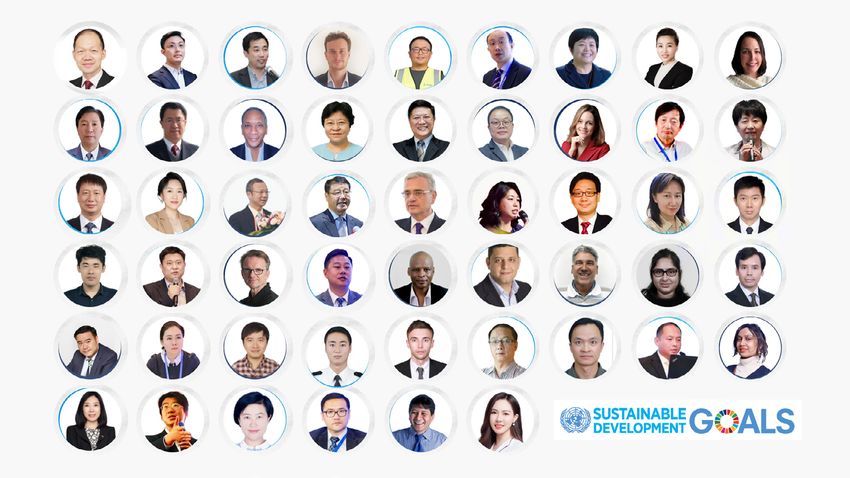
reducing poverty, and improving gender equality.   this series engaged 53 high-calibre speakers from
South-South and triangular cooperation (SSTC)      various sectors, including UN agencies, municipal
accelerates the development of e-commerce in       governments, provincial governments, national
developing countries where many have made          governments, NGOs, the private sector, and
extraordinary progress in harnessing e-commerce    research institutes. The webinars also showcased
for socioeconomic growth. Southern countries       innovative experiences from a number of cities,
and cities are ready to cooperate among            including Chongqing City, Guangzhou City,
themselves to generate innovative and effective    Hangzhou City, Henan Province, Nanjing City,
solutions in this field. However, in developing    Ningbo City, Qingdao City, and several countries,
countries the development of e-commerce,           including Belarus, Benin, Brazil, Canada, India,
including cross-border e-commerce, still faces     New Zealand, South Africa and the USA. By the
many challenges, such as the digital gap. To       end of 2020, these webinars had been viewed
address these challenges, Southern countries       approx. 1.7 million times by people from 56
need to, among other things, enhance policy        countries and territories and 213 cities.
coordination and capacity building.
                                                   As a follow up to the webinar series, the
Between 14 August and 4 December 2020,             UNOSSC Cities Project commissioned CATIS
the UNOSSC Cities Project and the China            to create a webinar report, to coordinate the
Association of Trade in Services (CATIS) jointly   identification of the innovative experiences
organized a series of webinars focusing on         of cities in cross-border e-commerce, and to
South-South and triangular cooperation among       support the implementation of these experiences
cities on cross-border e-commerce and digital      in countries requesting assistance. Another
innovation for sustainable development, for        follow-up action will be the launch of a thematic
South-South mutual learning and knowledge          SSTC city cluster focusing on knowledge sharing
exchange on cities and development partners’       and partnership brokering among cities and
innovative experiences of development partners     city-related institutions. The cluster will be
in developing cross-border e-commerce and          operationalized via an online Community of
harnessing digital innovation for achieving the    Practice hosted by South-South Galaxy.

2
TABLE
OF CONTENTS
                                          P04
                                          ABOUT UNOSSC AND CITIES PROJECT

                                          P05
                                          INTRODUCTION

                                          P08
                                          HIGHLIGHTS

DISCLAIMER                                P25
The views expressed in this               SNAPSHOT
publication are those of the author(s)
and do not necessarily represent

                                          P28
those of the United Nations,
including UNDP, UNOSSC, UNECA,
ITC, WCO, or the UN Member States.
The designations employed and the
presentation of materials on maps         CONCLUDING REMARKS
do not imply the expression of any
opinion whatsoever on the part of
the Secretariat of the United Nations
or UNDP concerning the legal status
of any country, territory, city or area
or its authorities, or concerning
the delimitation of its frontiers or
boundaries.

                                                                       3
ABOUT UNOSSCAND
CITIES PROJECT
                                                                  and innovative South-South
                                                                  Cooperation projects, to facilitate
                                                                  the partnership building and
                                                                  resource mobilization for the
                                                                  South-South and triangular
                                                                  cooperation for sustainable
                                                                  development. UNDP has been
                                                                  entrusted by the United Nations
                                                                  General Assembly to provide
                                                                  budgetary and operational
                                                                  support to the UNOSSC since its
                                                                  inception.

                                                                    In 2017, the UNOSSC initiated
                                                                    the South-South Triangular
The Cities Project. Source: UNOSSC                                  Cooperation (SSTC) among
                                                                    Maritime-Continental Silk Road
In 1974, the United Nations General Assembly       Cities for Sustainable Development Project (Cities
established the United Nations Office for South-   Project) with the support of the Government of
South Cooperation (hereafter as “UNOSSC”,          the People’s Republic of China. The Cities Project
named as “Special Unit for Technical               aims to promote SSTC at the city level, leveraging
Cooperation between Developing Countries” at       the comparative advantages of UN specialized
that time), an independent entity mandated to      agencies and the strategic opportunities
promote, coordinate and support South-South        offered by the Belt and Road Initiative (BRI) in
and triangular cooperation globally and within     advancing the Sustainable Development Goals
the United Nations system. Guided by the High-     (SDGs). The Cities Project aligns its support
level Committee on South-South Cooperation,        with the engagement and ownership of local
and under the direct leadership of Envoy of        authorities and stakeholders. It is designed to
Secretary General on South-South Cooperation,      provide streamlined services such as demand-
UNOSSC provides support to the Member States,      driven needs assessment, capacity development,
intergovernmental organizations, and United        advisory and advocacy, knowledge, expertise,
Nations agencies in the areas of policy advocacy   and technology transfer, and implementation
and coordination, strategy research, knowledge     and co-financing support for pilot projects for
sharing, technology exchange, capacity building,   demonstration purposes.

4
INTRODUCTION

  1        BACKGROUND

E-commerce, driven by digital technologies, is growing exponentially
in many countries today, with global online retail sales projected to
exceed USD 4 trillion in 2020.1 E-commerce is considered to be an
effective instrument with which developing countries can unlock
the opportunities offered by digital innovation in creating jobs,
accelerating economic growth, reducing poverty, and improving
gender equality. For example, the reduction in trade costs is
especially favourable for small and medium enterprises (SMEs) and
companies from developing countries.2 E-commerce provides instant
market access for women, enabling them to sell goods and services
to the world, offering them entrepreneurship opportunities that
would not have been possible without the existence of the platform
economy or access to the Internet.3                                        1 United Nations Office for South-South
                                                                              Cooperation and Finance Center for South-
South-South and triangular cooperation can accelerate the                     South Cooperation, South-South Coopera-
                                                                              tion in a Digital World: 2018 Annual Report
development of e-commerce in developing countries. Firstly, the               in South-South Cooperation (2018) at p 53.
development of e-commerce requires sufficient information and                 Available at https://drive.google.com/file/
                                                                              d/1ZyD-3qsUI22M09z-S2LROluesR9RGw6J/
communication technology (ICT) infrastructure, an enabling policy
                                                                              view.
and regulatory environment, and adequate human capital. It is              2 World Trade Organization, The Future of
therefore challenging for a country to undertake the entire process           World Trade: How Digital Technologies Are
                                                                              Transforming Global Commerce (2018) p5.
itself, especially given the limited digital capacities of many Southern      Available at https://www.wto.org/english/
countries.4 Secondly, the many developing countries that have                 res_e/publications_e/wtr18_e.htm
                                                                           3 Supra note 1, at p 27.
already made extraordinary progress in harnessing e-commerce
                                                                           4 United Nation Conference on Trade and
for socioeconomic growth are now ready to cooperate among                     Development, South-South Digital Coop-
themselves to generate innovative and effective solutions in this             eration for Industrialization: A Regional
                                                                              Integration Agenda (2018) at pp 14-5.
field. For instance, African local e-commerce platforms, including            Available at https://unctad.org/en/Pages/
Jumia, Konga, Mall for Africa, Takealot, and Bidorbuy, have                   MeetingDetails.aspx?meetingid=1940
                                                                           5 Supra note 1, at p 80.
reportedly achieved higher market shares than Amazon,5 while
                                                                           6 Supra note 1, at p 79.

                                                                                                                      5
India’s e-commerce market is projected to reach USD 200 billion by
2026.6 Furthermore, China, one of the largest e-commerce markets,
has announced the establishment of 46 new city-based, cross-
border, e-commerce pilot zones, in addition to the 59 already in
existence, to fully realize the foreign trade potential.7

However, the development of e-commerce, including cross-
border e-commerce, in developing countries still faces barriers; the
inadequate ICT infrastructure and insufficient human resources
mentioned above, but also low logistics capacities, knowledge
gaps, limited cross-border data flow, a lack of uniform, international
technical standards, and insufficient national and international rules
and regulations. Moreover, as a result of the COVID-19 pandemic,
global supply chains are expected to experience significant
disruptions, including reduced trade volumes, decreased foreign
direct investment, lower consumer goods demand, a reduction in
commodity prices, and a general economic decline for vulnerable,
developing countries.8 To address these challenges, Southern             7 According to the authorities, exported
countries will need to, among other things, enhance their policy           retail goods from the pilot zones will enjoy
                                                                           exemption from value-added tax (VAT)
coordination and capacity building strategies.                             and consumption tax. Taxpayers’ enter-
                                                                           prise income taxes in these zones will be
The Cities Project was initiated in 2017 by the UNOSSC, in                 collected according to the fixed amount
partnership with the Chinese Government, to promote SSTC at the            upon assessment or by verifying the taxable
                                                                           income rate. E-commerce companies are
city level, leveraging the comparative advantages of UN specialized        encouraged to develop and share overseas
agencies and the strategic opportunities offered by the Belt and           warehouses and global marketing network,
                                                                           cultivate their own brands and diversify
Road Initiative (BRI) to advance the Sustainable Development Goals         export markets to upgrade foreign trade
(SDGs).                                                                    and enhance economic competitiveness.
                                                                           For more, please see “China to extend
The China Association of Trade in Services (CATIS) is a national           cross-border e-commerce scheme amid
                                                                           COVID-19”, CGTN, 7 April 2020. Available
service trade industry association supported by more than 2,000            from https://news.cgtn.com/news/2020-
company members in China. CATIS has a wide network of                      04-07/China-to-extend-cross-border-
e-commerce organizations and practitioners and broad-based                 e-commerce-scheme-amid-COVID-19-
                                                                           PvadhcQHte/index.html. See also “New
experience in organizing e-commerce-related events and training            Cross-Border E-Commerce Zones, Extended
programmes. CATIS signed a Memorandum of Understanding on                  Tax Incentives for Small Businesses in Chi-
                                                                           na”, China Briefing, 13 April 2002. Avail-
National Capacity Building Action Plan for Belt and Road Countries         able from https://www.china-briefing.com/
and the Cooperation Agreement on National Capacity Building for            news/new-cross-border-e-commerce-zones-
the Belt and Road Countries with the United Nations Conference             extended-tax-incentives-small-businesses-
                                                                           china-secure-china-europe-supply-chain/
for Trade and Development (UNCTAD) in May 2018 and May 2019,             8 United Nations Conference on Trade and
respectively. Since July 2018, CATIS and its partners (including           Development, Adapting the use of Asycuda
                                                                           World to the Covid-19 Situation: Guidelines
UNCTAD and the UNOSSC Cities Project), have organized four                 to Customs Administrations , 09 Apr 2020,
advanced training sessions on cross-border e-commerce for about            p1, available from https://unctad.org/en/
580 participants from more than 80 countries. Since March 2020,            PublicationsLibrary/dtlasycudainf2020d1_
                                                                           en.pdf
CATIS has organized six online forums on cross-border, e-commerce        9 CATIS official website, available from
development and four online forums on international trade for              http://www.catis.org.cn/toArticleMore-
                                                                           DetailPage?classify=2&id=459&parentPa-
private sector companies, in partnership with local governments and        geUrl=toArticleListMoreDetailPage. Last
the private sector in China.9                                              retrieved on 26 May 2020.

6
2 OBJECTIVES
Given the above, CATIS and the UNOSSC Cities Project jointly organized a series of webinars focusing on South-
South and triangular cooperation among cities on cross-border e-commerce and digital innovation for sustainable
development, for South-South mutual learning and knowledge exchange on cities and development partners’
innovative experiences in developing cross-border e-commerce and harnessing digital innovation for achieving
the SDGs, and for partnership brokering among cities towards the establishment of a community or cluster of
cities focusing on SSC in e-commerce and digital innovation.

  3 WEBINAR AND SURVEY SCHEDULE
     NO.                                                          TOPICS

  Webinar 1   Towards a Sustainable Financial Ecosystem of Cross-border E-commerce

  Webinar 2   The Construction of “Two Platforms and Six Systems” in China’s Integrated Cross-border E-commerce Pilot Zones

  Webinar 3   E-commerce for Poverty Alleviation

  Webinar 4   Alternative Dispute Resolution and E-commerce Negotiation Rules

  Webinar 5   Reforming Cross-border E-commerce Training Models

  Webinar 6   Product Selection and Brand Marketing in Cross-border E-commerce

  Webinar 7   Sustainable Logistic Solutions in Cross-border E-commerce: Spotlighting Good Practices of City-to-City Cooperation

              Sustainable Payment Solutions in Cross-border E-commerce: Spotlighting Good Practices of City-to-City
  Webinar 8
              Cooperation

              Sustainable Operational Solutions in Cross-border E-commerce: Spotlighting Good Practices of City-to-City
  Webinar 9
              Cooperation

              Sustainable Solutions in Cross-border E-commerce Supply Chains: Spotlighting Good Practices of City-to-City
Webinar 10
              Cooperation

Webinar 11    South-South Cooperation and Cross-border E-commerce Governance in the Digital Era

              The Role of the Belt and Road Initiative in Advancing Fintech in the Cross-border E-commerce Sector in Developing
Webinar 12
              Countries

Webinar 13    Interpretation of the World Customs Organization’s Framework of Standards on Cross-border E-commerce

Webinar 14    South-South Cooperation and COVID-19 Responses of Cross-border E-commerce SMEs in Developing Countries

Webinar 15    Innovative Practices of E-commerce in China and Good Practices of Regional Cooperation

                                                                                                                              7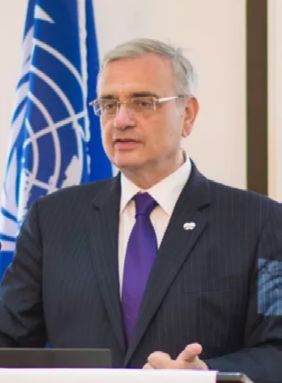
HIGHLIGHTS
    WEBINAR 1
    Towards A Sustainable Financial Ecosystem
    of Cross-border E-commerce

OPENING SPEECH
                         “E-commerce as a critical form of digitalized trade helps us understand how South-
                         South cooperation can leapfrog opportunities to the development of cross border
                         e-commerce in the global South. Developing countries are relative latecomers in
                         the journey to successfully harnessing e-commerce. At the same time, Southern
                         platforms such as Alibaba, JD.com, Jumia, Flipkart, and Mercadolibre show that
                         the South can catch up and really take advantage of this mechanism for the
                         development of markets. There are several areas in which South-South cooperation
                         has the potential to make contributions. These include capital corporations, platform
                         technology corporations, and cooperation also in the best practices and regulatory
                         framework for e-commerce.

Mr. Jorge Chediek        E-commerce, as we said, is a critical element for job creation. E-commerce has been
                         associated with the expansion of employment opportunities, particularly for small
former UNOSSC Director
                         and medium enterprises, as in a way, e-commerce can break barriers to access to
                         marketplaces for these companies breaking the barriers to entry imposed by larger
                         actors. Also, women and youth can be part of this process. Economic growth and
                         welfare improvement can be expanded to broader sectors of society. The common
                         development is also linked with economic growth and household welfare through
                         several channels, including the reduction of construction costs, the improvement of
                         efficiency and productivity, the creation of more trade, and therefore more surpluses
                         to stimulate growth.

                         The potential of e-commerce in generating jobs largely in regions of the global
                         South is extremely significant. A 2019 report on how online marketplaces can power
                         employment in Africa concludes that online marketplaces have the potential to

8
generate net 3 million new jobs, ranging from delivery drivers to retail hospitality workers
across the continent by 2025. And this potential can be even higher. This sort of activity can
increase African economic growth by expanding the supply of goods and services, making
assets more productive and reaching new demand in rural locations, and ultimately boosting
consumer spending and consumers’ access to markets.
E-commerce also can be critical in poverty reduction. And the case of China is that simple.
We want to hear more examples of the great contribution that China has made. But across
China, e-commerce growth has shown great strides at all levels, national, provincial and
county levels. E-commerce has reflected market potential in linking poverty-stricken
countries to the growing national markets, national, provincial, and county-level. E-commerce
has reflected much potential in linking poverty-stricken countries to the growing national
markets. Currently, China holds more than 40% of the total value of e-commerce
transactions worldwide with more than 5% of the total employment in the companies being
supported by e-commerce. In 2020, China announced to start the establishment of 46 new
city-based cross-border e-commerce pilot zones, in addition to the existing 59 zones, to
bring a full play to accelerate foreign trade and the engagement of local areas in the global
economy.
There is a series of elements, despite the very promising elements that e-commerce brings,
that we need to address to ensure that e-commerce can unleash its full potential. Although
some Southern countries have advanced direction supporting e-commerce transactions,
many other certain countries are struggling with bridging the digital inequality. And that
continues to persist. So, the idea of improving globally and at the local level in developing
countries the digital infrastructure is critical for e-commerce to continue advancing.
The digital divide, however, remains a real concern to many developing countries,
particularly among the least developed countries where half of the population have not
touched a computer in their life. So, we have to consider the importance of expanding these
services for everybody and everywhere.
Developing countries face many challenges in providing adequate and equitable access
to in terms of services, let alone harnessing the powers of digital equipment. Therefore,
the increase of accessibility and framework that can increase digital capacity across these
vulnerable regions is critical.
In this context, our office the United Nations Office for South-South Cooperation
launches this webinar series, under the Cities Project framework, to promote international
collaboration and partnership building on e-commerce, to develop the capacities of
local authorities, city-related practitioners, non-governmental organizations, civil society
                                                                                                 9
organizations, and the private sector, harness the digital innovation for achieving the Sustainable
Development Goals, and to facilitate as much as possible a quick recovery from the COVID pandemic.

It’s noted here the development of digital technology in the global South, provides a massive number
of opportunities for the growth of the global South and improving the living conditions of the poorest
of the poor.”

                    SPEAKERS                                                      HIGHLIGHTS

                      Ms. Zhang Yanling                    “South-South and triangular cooperation promotes policy
                                                           coordination among countries and plays a greater role in
                      Former Vice President of the Bank    the field of trade. Cross-border e-commerce has become
                      of China, Senior Researcher of the   the new form of international trade; it is simple and
                      Chongyang Institute of Finance,      efficient and facilitates the easy participation of small and
                      Renmin University of China           medium-sized enterprises.”

                                                           “Although small- and micro-business and cross-border
                      Mr. Tang Min                         e-commerce are still small in China, with financial support,
                                                           loan support, and equity investment support in the future,
                      Counsellor of the State Council,
                                                           cross-border e-commerce will develop faster. In the
                      Founder of the China Cross-border
                                                           same way, cross-border e-commerce companies in other
                      E-commerce 50-person Forum
                                                           developing countries can also use this method.”

                                                           “We hope that with the further development of cross-
                      Mr. Liu Ran                          border e-commerce in the future, we can provide more
                                                           solutions to cross-border e-commerce. In this way, we will
                      Vice President of Public Affairs,    support the development of e-commerce companies in
                      MasterCard, China                    more countries, including SMEs in developing countries,
                                                           through South-South cooperation.”

10
WEBINAR 2
The Construction of
“ Two Platforms and Six systems” in China’s
Integrated Cross-border E-commerce Pilot Zones
SPEAKERS HIGHLIGHTS
Prof. Wang Jian
Professor of the College of “For many developing and developed countries, changing
International Economics and the way people think will probably be difficult, since the
Trade, University of International Internet and e-commerce provide many vulnerable people
Business and Economics, Director in society the chance to participate in global trade.”
of International Business Research
Center
Ms. Xu Ping
“Cross-border e-commerce promotes better and faster
President of Henan Bonded Group, development of “global buy and sell”. The ultimate goal of
the 3rd Co-Chairman of the the cross-border, e-commerce pilot zone is to serve the
China Cross-border E-commerce global consumer.”
50-person Forum
Ms. Wu Changhong
Director of Public Relations and “We have always believed that cities are strong when
Promotion Department, Office people are strong and that cities are dynamic when people
of the Leading Group for the
are dynamic.”
Construction of China (Hangzhou)
Cross-border E-commerce Pilot
Zone
11WEBINAR 3
E-commerce for Poverty Alleviation
SPEAKERS HIGHLIGHTS
Ms. Zhang Jing “E-Commerce poverty alleviation (in China) is gradually
evolving from Government-led to marketization,
Deputy Secretary-General of China
which is good for long-term planning and sustainable
YouCheng Social Entrepreneur
development.”
Foundation
Ms. Wu Xiuyuan
“Summarizing China’s theories, experiences, and models
Former Deputy Director of the on poverty reduction through Internet+ and sharing them
Information Center of the Ministry with other developing countries is a win-win collaboration
of Agriculture and Rural Affairs
that generates mutual benefits and aligns with China’s
of the People’s Republic of China,
Vice President of China Agri-
development vision – the Belt and Road Initiative.”
Products Marketing Association
“Digitalization is an effective instrument with which
Dr. Hany Besada developing countries could unlock the endless
opportunities offered by digitalization. By framing
Senior Research and Programme e-commerce as a critical form of digitalized trade, it
Advisor, United Nations Office for becomes more accessible to understand how SSTC
South-South Cooperation can be imperative to the development of cross-border
e-commerce in the global South.”
“What is the way out for our poverty-stricken region? How
does the industry develop? How can the countryside
be revitalized? We need to learn from international
Mr. Sun Yuanzhong experience, but we also need to explore on our own ….
Fan Zhongfu’s e-commerce experience is an innovative
Director of Comprehensive one. His success stemmed from his smart combination of
Division, Chongqing Poverty
rural tourism and agricultural sales. He identified business
Alleviation and Development
Office
operations that matched agricultural products. Instead of
changing consumers’ habits or suggesting local authorities
apply special policies, he cultivated new shopping habits
among his clients.”
12WEBINAR 4
Interpretation of New Policies, Laws and
Regulations of Cross-border E-commerce
SPEAKERS HIGHLIGHTS
Mr. Ma Shuzhong “The digital divide is a global problem, finding a solution
concerns all countries and the whole world. Developed
President of China Digital Trade countries should utilize their resources to help developing
Research Institute of Zhejiang
countries accelerate the integration of local markets into
University, Distinguished Professor
of QSTHEORY.CN
the global market through digitalization.”
Ms. Ning Xia “We look forward to exchanging and cooperating with
more countries and regions in the field of cross-border
Director of E-commerce Division, e-commerce, and in jointly promoting cross-border
Guangzhou Municipal Commission e-commerce as the new engine of global economic
of Commerce growth.”
Mr. Li Mingtao
“We are hoping that, in terms of cooperation in cross-
President of Research Institute border e-commerce, we can actively advocate for the
of China International Electronic building of a common market between different countries
Commerce Center, Chief Expert
in cross-border e-commerce. We can also use point-to-
of China International Electronic
point cooperation to create facilitated pathways from city
Commerce Center, Ministry of
Commerce of the People’s Republic to city.”
of China
13WEBINAR 5
Reforming Cross-border E-commerce Training Models
SPEAKERS HIGHLIGHTS
Prof. Zhang Xuezheng “Professor Zhang discussed the cross-border e-commerce
courses available in universities in China. He highlighted
Professor of E-Commerce, that it has been eight years since the Chinese Government
Shanghai University of
began promoting and regulating cross-border e-commerce
International Business and
Economics
and establishing pilot cities.”
Mr. Xiao Feng “From the global value chain perspective, globalization
cannot be sustained and develop healthily until it allows
Senior expert of government more people, in addition to large capital investment and
affairs of Alibaba, Vice Present of business operations, to benefit from it. This idea is also in
OneTouch, Expert group leader of line with the United Nations vision of achieving sustainable
“Customs and Trade Facilitation development, including in less developed regions and
Committee” of ICC (China) through supporting SME development.”
Ms. Zheng Yanxue “Integrating the training of cross-border, e-commerce
talents with the development of industry and academia
Head of eBay E-Youth Cross- is an important way to nurture young professionals,
border E-commerce Talent Training providing them with the comprehensive skillsets needed in
Project international cooperation and development.”
14WEBINAR 6
Product Selection and Brand
Marketing in Cross-border E-commerce
SPEAKERS HIGHLIGHTS
“Together with CATIS, with a desire to serve company
Mr. Zhao Hua members of CATIS, and small and medium-sized
enterprises in all other developing countries, we would like
Deputy Secretary General of China
to build bridges and projects to allow these SMEs to come
Advertising Association
to China to expand their market and do business.”
“Ms. Liu detailed the development history and operational
modality of JD Worldwide. She pointed out that JD
Ms. Liu Ying maintains a friendly link with China Advertising Association
and CATIS. She hopes they can work together to help
BD Manager, JD Worldwide
more overseas small and medium-sized brands realize the
opportunities for entering the Chinese market.”
“We found that commodities imported from Central and
Mr. Gao Wenbo Eastern European countries and BRI countries have been
gaining popularity among China’s domestic customers.
Deputy Section Chief of Free Trade
E-commerce business owners should seize this chance to
Department of Ningbo Customs
expand their businesses.”
15WEBINAR 7
Sustainable Logistics Solutions in
Cross-border E-commerce: Spotlighting
Good Practices of City-to-City Cooperation
SPEAKERS HIGHLIGHTS
“Cross-border e-commerce represents the future
Mr. Sun Qi development direction of international trade. We are willing
to adopt more open concepts, more pragmatic measures,
Director of E-commerce Division, and more active actions to innovate cooperation methods
Department of Commerce of with countries around the world, expand cooperation
Henan Province areas, share development opportunities, and create a
better future.”
“The uniqueness and diversity of products imported from
Mr. Zhong Hongxing other developing countries provide opportunities for cross-
border e-commerce business and cross-border logistics
Chairman of the Chamber of cooperation in China. South-South cooperation among
Hong Kong Logistic Industry developing countries is spearheading a new focus in the
global distribution of cross-border logistics.”
“Mr. Lv described the development of the Hongyuan
Mr. Lv Chao Group. In particular, he noted that undertaking market
research is indispensable for Chinese logistic companies
Deputy General Manager of
before they start collaborating with other developing
Beijing Hongyuan Group
countries.”
16WEBINAR 8
Sustainable Payment Solutions in
Cross-border E-commerce: Spotlighting
Good Practices of City-to-City Cooperation
SPEAKERS HIGHLIGHTS
Prof. Yang Dong “Turning data into wealth and using blockchain technology
to solve development issues is very useful for promoting
Professor of Renmin University
the development of developing countries, and for
of China, Director of Fintech and
strengthening talent cooperation.”
Internet Security Research Center
Ms. Sun Yiming “We predict that the focus of cross-border e-commerce
in the next few years will be exports, instead of imports.
Director of Qingdao Cross-border
This is in line with China’s focus on the BRI, COVID-19
E-commerce Comprehensive Pilot
responses, and digitalization of international trade.”
Zone Service Center
Mr. Deng Fuhua
“While COVID-19 has had a serious negative impact
PhD in Economics, Researcher, on cross-border e-commerce, it has also presented
Comprehensive Research Institute opportunities, prompting countries around the world
of Southwestern University of to rethink their industry chains and international trade
Finance and Economics China methods.”
(Sichuan) Pilot Zone
17WEBINAR 9
Sustainable Operational Solutions in
Cross-border E-commerce: Spotlighting
Good Practices of City-to-City Cooperation
SPEAKERS HIGHLIGHTS
Prof. Chen Jin
“The e-commerce platform presents a new opportunity
Professor, University of for realizing the development of international cooperation
International Business and and trade. The digital economy offers tremendous
Economics, Consultant Expert opportunities for achieving economic growth in both
on the Establishment of National developing and developed countries.”
E-commerce Demonstration City
Mr. Wang Chonglun “We can share useful experiences and initiatives in
building platforms for cross-border e-commerce, based on
Director, Public Affairs Department
our former projects, to promote South-South cooperation.”
of DHGate.com
Mr. Liu Yujian
Secretary General of Nanjing “The development of a company not only needs resources
Cross-border E-commerce and platforms but also cooperation with its counterparts
Association, China (Nanjing) from the widest possible range of cities and countries.”
Cross-border E-commerce
Comprehensive Pilot Zone
18WEBINAR 10
Sustainable Solutions in Cross-border
E-commerce Supply Chains: Spotlighting
Good Practices of City-to-City Cooperation
SPEAKERS HIGHLIGHTS
Ms. Zheng Yuhong
Member of the Expert Committee “In fact, the internationalization of local products and the
of APEC Cross-border E-commerce development of global trade will rely on both online and
Innovation and Development
offline business solutions. China is a crucial online and off-
Research Center, International
line partner for BRI developing countries.”
Strategy Director of the National
Engineering Laboratory for
E-commerce Technologies
“Mr. Wang gave a detailed briefing on the optimization
of the business environment of Tianjin port and
Mr. Wang Zhidong highlighted the measures being taken to promote cross-
border e-commerce trade. He gave a comprehensive
Director of Industrial Investment
interpretation of Tianjin’s policies regarding the supply
and Promotion, Tianjin Municipal
chain of cross-border e-commerce, including import,
Bureau of Commerce
logistics, and tax regulations, and suggested that these
could be a good reference for other developing countries.”
“Mr. Chen summarized the current structure of China’s
cross-border e-commerce supply chain ecosystem,
Mr. Chen Bohua from the existing logistic system, distribution platform,
optimization of the supply chain, and other aspects. He
President of PANEX Limited described how to promote the realization of buying and
selling globally, especially the need for linkages through
production, incubation, and enterprise.”
19WEBINAR 11
South-South Cooperation and Cross-border
E-commerce Governance in the Digital Era
SPEAKERS HIGHLIGHTS
“E-commerce is evolving rapidly and engulfing many
Dr. Denis Nkala countries. However, there is a danger that many countries
in the South could be left behind unless some crucial
UNOSSC Regional Coordinator
steps are undertaken by national governments and the
(Asia-Pacific)
private sector.”
Prof. Ravishankar “Blockchain has the potential to bring clarity to something
Sharma that is currently very close to the public eye. Through
integrating blockchain into the fair-trade supply chain,
Associate Professor, College of there will be increased opportunities for South-South
Business & Law, University of
cooperation and equitable market access.”
Canterbury, New Zealand
Ms. Mousumi Das “Cities, the cultural economy, and urban studies are very
closely related. Now e-commerce can actually exploit
Associate Fellow at the National
this cultural-economic space, bringing tremendous
Council of Applied Economic
opportunities for urban development.”
Research in New Delhi, India
Ms. Zhang Yanling “Cross-border e-commerce can help underdeveloped
regions obtain more resources. South-South cooperation
Former Vice President of the Bank and triangular cooperation promote policy coordination
of China, Senior Researcher of
between countries, which can then play a bigger role in
Chongyang Institute of Finance,
Renmin University of China
the field of trade.”
20WEBINAR 12
The Role of the Belt and Road Initiative in Advancing Fintech in the Cross-
border E-commerce Sector in Developing Countries
SPEAKERS HIGHLIGHTS
Dr. Hany Besada “The fintech developed in China can expand financial
inclusion across the developing countries of the BRI.
Senior Research and Programme Compared to other BRI countries, China’s top-level fintech
Advisor, UNOSSC has secured a niche in E-commerce services.”
Prof. Gregory Thomas “We are seeing a convergence of three major Chinese
Chin Government initiatives, namely the BRI, RMB
internationalization, and digital Yuan, which will benefit
Associate Professor, York University both China and all the BRI partners.”
Mr. Jamie Macleod “Digital cooperation between developing countries
needs to be further strengthened, while simultaneously
Trade Policy Expert, UN Economic
integrating traditional industries into it.”
Commission for Africa
Mr. Tan Tian “China’s consumer finance has been contributing to the
public good and is being profoundly shaped by the swiftly
Director of Financial Research developing Internet. We hope that our experience and
Center at Lexin Inc. practice can help the BRI countries.”
“The Internet promotes the gradual formation of online
Ms. Sun Yiming shopping habits in emerging markets. Asia Pacific, Africa,
and Latin America will be fast-growing regions for cross-
Director of Qingdao Cross-border
border e-commerce. There is huge space for cross-
E-commerce Comprehensive Pilot
border e-commerce development in the BRICS and BRI
Zone Service Center
countries.”
21WEBINAR 13
Interpretation of the World Customs Organization’s
Framework of Standards on Cross-border E-commerce
SPEAKERS HIGHLIGHTS
Mr. Sun Xiangyang “Mr. Sun introduced why and how the international
regulations for cross-border e-commerce are made
Co-chair of the World Customs
and how those regulations affect international trade,
Organization Working Group on
consumers, and governance.”
Cross-border E-commerce
Mr. Dzmitry
Kavalionak
“E-commerce has become one of the drivers of economic
Official Representative of the growth and supports real trade. Our countries (Eurasian
State Customs Committee, the Economic Union) have been doing very well by being part
Embassy of the Republic of Belarus of this and are growing rapidly.”
to the People’s Republic of China,
Counsellor of Customs Service
(Second Rank)
“Africa is more suited than ever to take over labour-
intensive manufacturing from China and is ready to kick
Dr. Chen Wen start the process of initializing and drawing on China’s
experiences from the perspective of new structural
Centre for New Structural
economics. A facilitating and able government has an
Economics, Peking University
important role to play in turning a trilemma into triple-win
cooperation.”
22WEBINAR 14
South-South Cooperation and
COVID-19 Responses of Cross-border
E-commerce SMEs in Developing Countries
SPEAKERS HIGHLIGHTS
Dr. Karin Vazquez
“Cross border E-commerce, in the context of SMEs,
Associate Professor and Assistant must be crafted into long-term strategies towards a more
Dean for Global Engagements,
and Executive Director, Center sustainable and inclusive post-pandemic recovery. We
for Africa, Latin America and need to move beyond short-term emergency relief and
Caribbean Studies, O.P Jindal pioneer different activities towards long-term solutions for
University, India and a Fudan sustainable development.”
Scholar at the Center for BRICS
Studies, Fudan University
Mr. James Howe “For cross-border e-commerce development, South-South
is definitely the way to go. There are many experiences
Senior Advisor, International to learn from. We would love to be doing more with China
Marketing, Branding and
and in important and well-known marketplaces. We would
E-commerce at the International
Trade Centre in Geneva
love to be doing more to link up South and South.”
“COVID-19 is not solely related to threats, it is also related
Mr. Frejus Thoto to creating opportunities. One of the opportunities that I
would like to highlight here is the establishment of new
Executive Director, Actions for partnerships. South-South cooperation is very welcome
Environmental and Sustainable and important in this time of COVID-19, especially
Development (ACED) because of the different impact the crisis has on countries
and regions.”
Mr. Liu Yujian “Mr. Liu spoke about how Nanjing was constructed as
an open area for cross-border e-commerce. The Nanjing
Secretary General of Nanjing Government has been publishing policies, building
Cross-border E-commerce infrastructure, and introducing digital technologies to
Association, China (Nanjing) support e-commerce development, aiming to attract
Cross-border E-commerce more international and domestic cooperation and trade
Comprehensive Pilot Zone opportunities.”
23WEBINAR 15:
Innovative Experience of E-commerce in
China and Good Practices of Regional Cooperation
SPEAKERS HIGHLIGHTS
“The African Continental Free Trade Area provides
Mr. Tunde Fafunwa significant opportunities since it has a continent-
wide mandate from the African Union, and from
Lead Advisor, Digital Centre for Excellence-
the Treaty that created an E-commerce protocol to
Identity, Trade & Economy, UN Economic
harmonize and reduce tariffs and non-tariff barriers
Commission for Africa
for cross-border trade and e-commerce.”
“Under the Silk Road E-commerce Initiative, China
Mr. Zhao Quan has signed MOUs on e-commerce cooperation with
22 countries. Under this Initiative, working group
Trade Policy Advisor Division for Market meetings are held regularly to discuss cooperation,
Development International Trade Centre while initiatives have also been launched to facilitate
business transactions at the regional level.”
“Digital currency technology will be significant for
Prof. Nir Kshetri South-South cooperation, as people do not need
Internet access to transfer central bank digital
Professor, University of North Carolina- currency. As Internet coverage in many developing
Greensboro, Research fellow at Kobe countries is still very low, this technology can
University provide them with access to the international
market.”
“Dr. Chen spoke about the development of
Dr. Chen Qiulin e-commerce in rural China, especially in
underdeveloped areas. He pointed out that there
Deputy Director, Health Sector
are two major problems: how to increase farmers’
Development Research Center, Chinese
income and how to encourage young people to
Academy of Social Sciences (CASS)
remain in rural areas.”
Dr. Renata Thiebaut
“E-commerce grows hand in hand with Internet
Head of Business Intelligence at Web2Asia penetration. In the least developed countries,
in Shanghai; Alibaba GET Network and Internet coverage can be as low as 19%, which
Advisory Board Member at the Alibaba means telecommunications should be developed in
Business School; andCOO at Green these countries to boost E-commerce activities.”
Proposition
Dr. Pooja Jain-Gregoire “The twinning of cities has always been the
traditional way to connect cities in different regions
Research Associate with the Institute for and different parts of the world. It could be an
Global Dialogue, Pretoria Adjunct Lecturer
effective conduit for furthering accountability across
of International Development at Sciences
Po.
regional trade.”
24SNAPSHOT
BASIC INFORMATION
Duration: 14 August – 4 December 2020
No. of webinars: 15
No. of speakers: 53
SECTORS UN AGENCIES
UN agencies, International Trade Center,
municipal governments, United Nations Economic
provincial governments, Commission of Africa, United
national governments, NGOs, Nations Office for South-South
private sector, Cooperation, World Customs
research institutes Organization
COUNTRIES CITIES AND LOCAL AUTHORITIES
China, Belarus, Benin, Chongqing City,
Brazil, Canada, India, Guangzhou City,
New Zealand, South Africa, Hangzhou City,
the USA Henan Province, Nanjing City,
Ningbo City, Qingdao City
25KEY RESULTS
W15 91,863 27,827 17,204 sum 137k
Webinar Playback Views
Advocacy and Outreach Views W14 200,629 91,068 161,832 sum 454k
Live Webinar Views
W13 154,760 86,686 114,287 sum 356k
W12 95,506 88,436 45,892 sum 230k
W11 177,273 78,514 134,432 sum 390k
W10 165,668 105,590 134,622 sum 406k
W09 217,753 105,328 178,655 sum 502k
W08 200,629 91,068 161,832 sum 454k
W07 53,306 86,591 184,503 sum 324k
W06 66,141 110,744 42,815 sum 220k
W05 51,227 80,656 152,882 sum 285k
W04 59,287 142,687 141,177 sum 343k
W03 54,919 111,049 10,173 sum 176k
W02 69,066 89,120 100,000 sum 258k
approx . 5 million W01 57,604 166,911 200,141 sum 425k
261.7 Approx.
million
No. of live webinar views
1. 8 Approx.
million
No. of webinar playback views
1. 5 Approx.
million
15
No. of views reached
through comms
No. of video knowledge products
2783
No. of partnerships brokered / facilitated
85 %
% of viewers satisfied with webinars
e
764
No. of people interested
in collaboration
281352
No. of people with
increased knowledge
213 About
No. of cities reached
56
No. of countries reached
29CONCLUDING
REMARKS
Mr. Zhang stated that CATIS had held many online conferences, online training
sessions, and other online activities since the beginning of 2020, and noted
that the e-commerce series in partnership with the UNOSSC is among the best.
Mr. Zhang complemented the well-designed event concepts, which cover the
most important topics and present a balanced representation of China and the
international experience. He also spoke about the smooth event organization,
the active participation by webinar viewers, and the high-calibre speakers,
which included representatives of cities and local authorities and experts from
Mr. Zhang Wei
UN agencies, think tanks, NGOs, and the private sector.
Chief Expert,China
Association of Trade in He further suggested that the UNOSSC Cities Project, CATIS, BRI countries,
Services; Former Vice and other developing countries should strengthen collaboration in capital
President of China investment, training, and governance. Lastly, he noted his appreciation for the
Council for the Promotion UNOSSC and their partnership and anticipated closer collaboration with the
of International Trade UNOSSC in the advancement of the SDGs through South-South cooperation.
“On behalf of the United Nations Office for South-South Cooperation, I
would like to thank all panelists and participants for actively sharing the most
powerful, the most valuable knowledge today and during the past 14 webinars
altogether. We know that we have reached a lot of viewers and participants
around the world. I hope we don’t stop at talking. We should use all the
knowledge that we have shared to nurture real partnerships among us.
At the United Nations Office for South-South Cooperation, we also focus a lot
Dr. Xiaojun Grace Wang on solution-oriented knowledge. We have a global knowledge and partnership
UNOSSC Deputy Director platform facilitated by AI that is called South-South Galaxy. I hope we can utilize
all the innovative solutions shared during this series of webinars to promote
the people and institutions behind those solutions, to connect and advance
partnerships together, and at the same time through our programmes, including
the Cities Project and the Global South-South Development Center Project,
and our conceptualization of a longer-term framework, help South-South
Cooperation in supporting poverty reduction.
We hope to engage you all to work with us and together we can leverage the
best digital technology our time offers us and the people-centric approach, as
highlighted by many during the discussions, to connect and work together for a
better world.”
30As a follow up to the webinar series, to generate further knowledge and better
understand potential challenges, the UNOSSC Cities Project commissioned CATIS
to create a webinar report, to coordinate the identification of the innovative
experiences of cities in cross-border e-commerce, and to support the implementation
of these experiences in countries requesting assistance. In addition to the expertise
and experience captured through the 15 webinars, the development and policy
recommendations made in the report will encompass the broader coverage of countries
and institutions. Another follow-up action will be the launch of a thematic SSTC city
cluster focusing on knowledge sharing and partnership brokering among cities and
city-related institutions. The cluster will be operationalized via an online Community of
Practice hosted by South-South Galaxy.
31For inquiries, please email southsouth.cities@unossc.org
or visit https://www.southsouth-galaxy.org/maritime-continentalsilk-
road-cities-for-sustainable-development-project-cities-project/
Office Address: QB7-3-073, Qijiayuan Diplomatic Residence Compound,
Chaoyang District, Beijing 100600, P.R. China
32You can also read


