Developing harvesting systems for oil crops: the case of cardoon - Panacea
←
→
Page content transcription
If your browser does not render page correctly, please read the page content below
Value Chain Event on Oilseed Crops
       Inperial College London, 27/03/19

Developing harvesting systems for oil
     crops: the case of cardoon

                           Luigi Pari P.h.D

CREA IT Consiglio per la Ricerca in Agricoltura e l'Analisi dell'Economia Agraria,
         Centro di ricerca Ingegneria e Trasformazioni agroalimentari
                     Via delle Pascolare, 16 - 00016 Monterotondo (Roma)
                     Tel. 0039 06 90675 250 – email: luigi.pari@crea.gov.it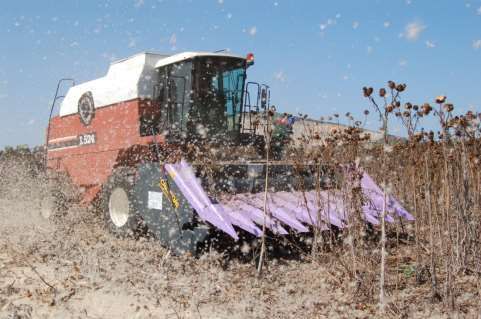
Plant description (1/2)

                              Cynara cardunculus L.
                              • Asteraceae (Compositae)
                              • Mediterranean origin
                              • Perennial herb
                              • Annual growth cycle
                              • Very deep root system
                              • Floral stem 2-3 m high
                              • Gross heads (capitula)
                              • Lilac-violet florets
                              • Oil fruits (achenes)
J. Fernández U.P.M.                                       2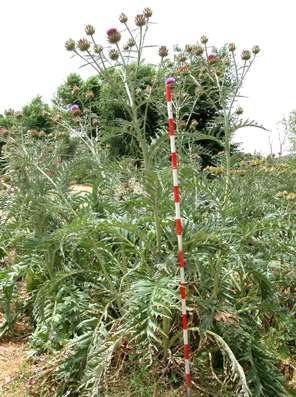
Plant description (2/2)

                                                        ROSETTE (winter)

 PLANTLETS (autumn)      SPROUTING (September)

                                                                           ELONGATION (spring)

   FRUITS (‘seeds’)      DRYING (August)         BLOSSOM (June)
J. Fernández U.P.M.                                                                         3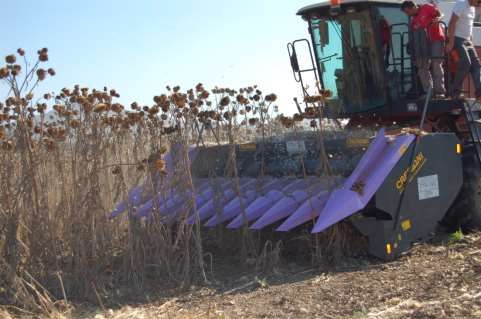
Use of Cynara cardunculus

                            4
Mechanization Solution

                         5
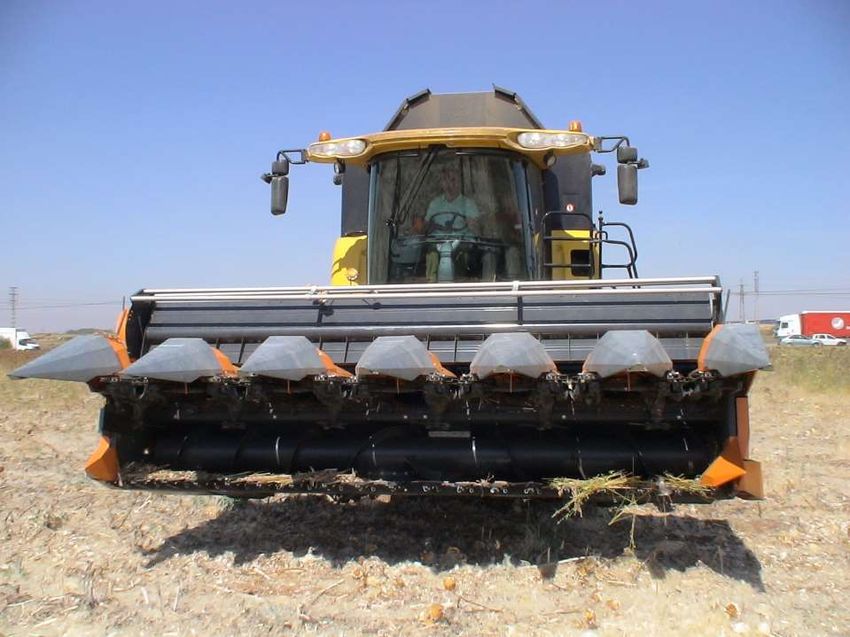
CREA-IT First Head prototype (1/4)

       BIOCARD PROJECT
       Global Process to improve Cynara
       cardunculus exploitation for energy
       applications, FP6-Energy-3, E.U.
       2005/ 2008

                                             Built by Cressoni Firm
                                                                  6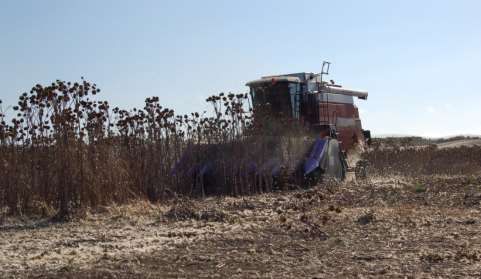
CREA-IT First Head prototype (2/4)

                                     7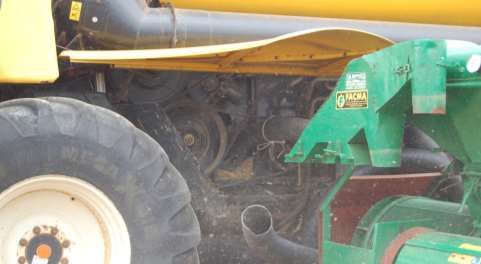
CREA-IT First Head prototype (3/4)

                                     8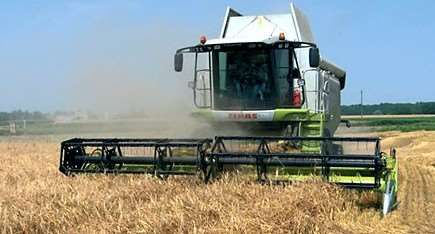
CREA-IT First Head prototype (4/4)

                                     9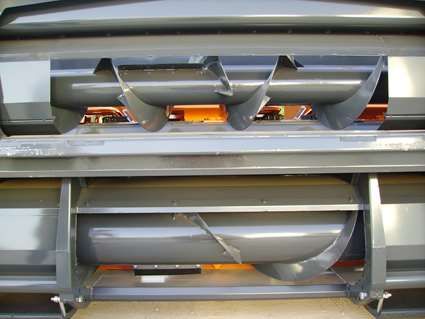
Developing of a second
            head for Cynara c.
ProJect BIT3G: Bioraffineria di terza generazione – founded by Italian
Ministry of Research 2014/2016
                                                   Dimension:
                                                   width: 4,94 m
                                                   hight: 1,731 m
                                                   long: 2,77 m
                                                   weight: 3000 Kg
Main Progettazione
differences with the
e costruzione
first
di una testata one
per la raccolta del cardo
a. 9 rows instead of 6 rows
To increase the performance
c. Blade in armonic iron
Flexible blade to follow the soil
profile
d. Boots
to avoid stones
e. Authomatic lifting of the head
To overcome huge stonesDeveloping of a second head for cyara c.
Testing      and comparison
        Verifica dell’efficienza                  of
                                 della nuova testata
         e confronto
                 thecon  2 ilheads
                             precedente prototipo

          Thesi 1                            Thesi 2
      Head BIOCARD                        Head BIT3G
      Attached to an                     Attached to an
NEW HOLLAND CS 540 combine           LAVERDA L524 combine
Evaluation of work efficency
Morphological pharameters Thesi 1 Tesi 2
Tesi 1 Area(ha) 0,78 0,85
Distance on the row (m) 0,50 0,50
Distance among the rows(m) 0,75 0,75
Plant density(n. ha-1) 19.400 17.400
Plantation age (years) 2 2
height (m) 2,20 2,00
Plant diamater at 10 mm from
33,10 28,80
ground (mm)
Tesi 2 Stalks for plant (n.) 1,20 1,30
Stalksfor Hecatare (n. ha-1) 22.800 22.400
Capitula for plant (n.) 6,00 4,70
Capitula for hecatare(n. ha-1) 125.000 106.000
Biomass humidity(%) 38,54 23,94
Biomass production f.m (ton. ha-1) 20,30 13,03
Plant production (ton. ha-1) 16,10 9,60
Capitula production(ton. ha-1) 4,16 3,42Comparison of work efficency
TesiTimes
1 Unit Thesi 1 Thesi 2
Effective time % 83,56 94,96
Accessory time:
Time for turns % 16,44 5,04
Maintenance % 0,00 0,00
Total accessory time % 16,44 5,04
Standard time % 100,00 100,00
Machineperformance
Operating performance % 83,56 94,96
Effective speed m s-1 0,60 1,03
Operative speed m s-1 0,50 0,98
Effective working capacity ha h-1 1,10 1,67
Operative working capacity ha h-1 0,92 1,59Hairs collection activity
Hairs collection activity
Conclusions
1. The prototypes now is in the commercial phase
2. The machine could be adapted to different crops, such as sunflower
   and maize for collecting their by-products. Such adaptation will
   reduce costs utilisation of the head.
3. Taken into account the features of marginal lands where the crop
   was cultivated as well as the limited annual rains, the crop
   productivity seems to be very interesting compare with other oil
   crops in south of Europe.
4. The possibility of using the lingo-cellulosic fraction for energy
   production and to avoid annual tillage and planting costs, let the
   crop economic balance attractive.

                                                                   18
19
You can also read


