DOWNTOWN NIAGARA FALLS COMMUNITY IMPROVEMENT PLAN - November 2004
←
→
Page content transcription
If your browser does not render page correctly, please read the page content below
DOWNTOWN NIAGARA FALLS
COMMUNITY IMPROVEMENT
PLAN

           November 2004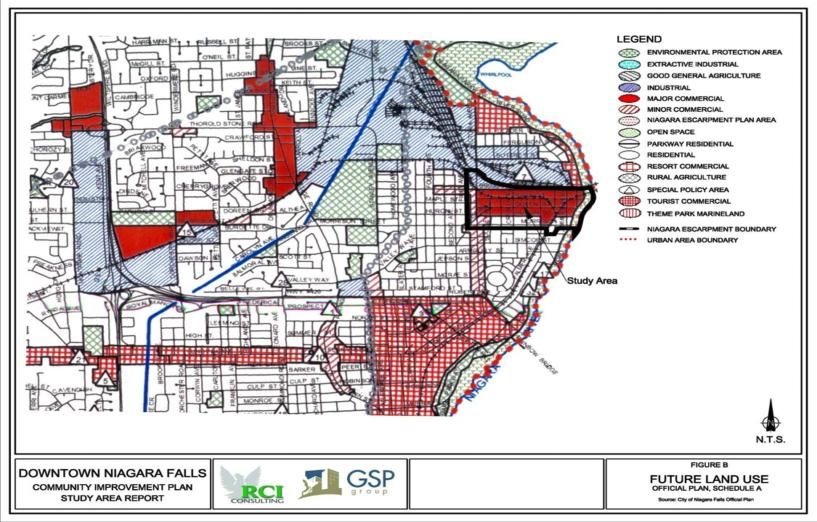
DOWNTOWN NIAGARA FALLS COMMUNITY IMPROVEMENT PLAN | NOVEMBER 2004

                                                     TABLE OF CONTENTS
                                                                                   Page

A     BACKGROUND

      1.0       INTRODUCTION                                                        1
                1.1      Downtown Revitalization                                   1
                1.2      Purpose of the Community Improvement Plan                 1
                1.3      Plan Content                                              2

      2.0       CRITICAL NEEDS ANALYSIS                                             3
                2.1      Methodology                                                3
                2.2      Physical and Land Use Characteristics                      3
                         2.2.1 Western Gateway                                      7
                         2.2.2 Traditional Retail District                          8
                                2.2.2.1 West Queen Street                           8
                                2.2.2.2 East Queen Street                           9
                                2.2.2.3 Parking/Services                           10
                         2.2.3 Civic Square Block                                  11
                         2.2.4 Transportation District                             12
                         2.2.5 Heritage Commercial District                        13
                         2.2.6 Eastern Gateway                                     14
                         2.2.7 Southern Residential                                15
                         2.2.8 Mixed Residential/Commercial                        16
                         2.2.9 Light Industrial/Service                            16
                2.3      Economic Characteristics                                  16
                         2.3.1 Economic Role of the Downtown                       16
                         2.3.2 Current Business Activity                           16
                         2.3.3 Building Rehabilitation and Construction Activity   18
                         2.3.4 Economic Development and Tourism                    18

RCI CONSULTING | GSP GROUP INC.                                                           i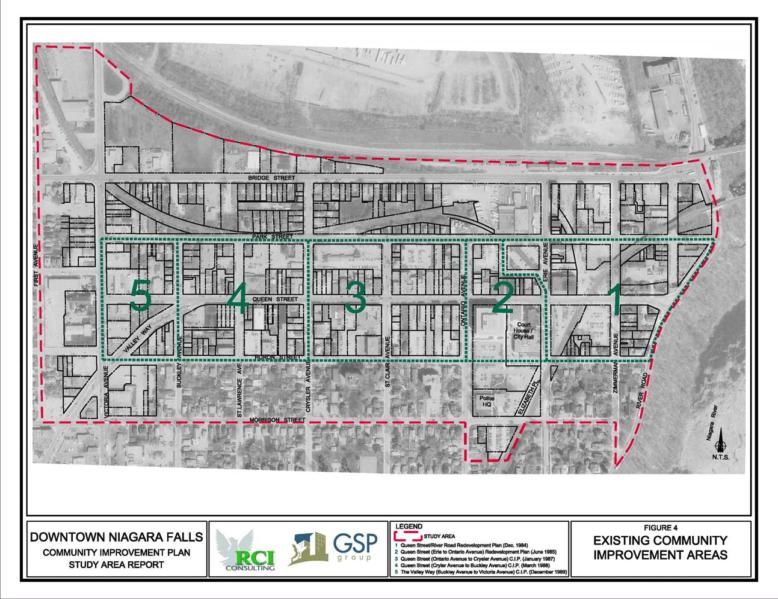
DOWNTOWN NIAGARA FALLS COMMUNITY IMPROVEMENT PLAN | NOVEMBER 2004

                                                                                  Page

                2.4      Parking and Transportation                               19
                         2.4.1 Parking                                            19
                         2.4.2 Transportation                                     20
                                2.4.2.1 Huron Street                              20
                                2.4.2.2 Whirlpool Bridge                          20
                                2.4.2.3 Public Transit                            21
                                2.4.2.4 Proximity to Tourist Area                 21
                2.5      Summary                                                  22

      3.0       LEGISLATIVE AUTHORITY AND PLANNING POLICIES                       23
                3.1      Legislative Authority                                    23
                3.2      Section 28 of the Planning Act – Community Improvement   23
                3.3      City of Niagara Falls Official Plan                      23
                         3.3.1 Residential Policies                               24
                         3.3.2 Commercial Policies                                24
                         3.3.3 Minor Commercial                                   25
                         3.3.4 Special Policy Area No. 7                          25
                         3.3.5 Community Improvement                              25
                         3.3.6 Amenity and Design Strategy                        26
                         3.3.7 Existing Community Improvement Plans               26

      4.0       COMMUNITY IMPROVEMENT PROJECT AREA                                30
                4.1      Methodology                                              30
                4.2      Downtown Community Improvement Project Area              30

      5.0       COMMUNITY PARTICIPATION                                           33
                5.1      Downtown Strengths                                       33
                5.2      Downtown Weaknesses                                      33
                5.3      Downtown Vision                                          34

RCI CONSULTING | GSP GROUP INC.                                                          ii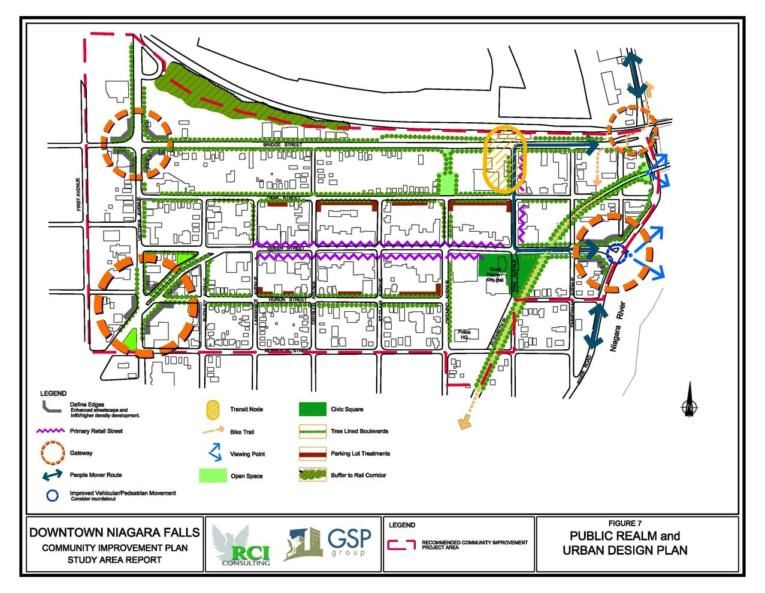
DOWNTOWN NIAGARA FALLS COMMUNITY IMPROVEMENT PLAN | NOVEMBER 2004

                                                                    Page

B     DOWNTOWN COMMUNITY IMPROVEMENT PLAN

      6.0       LAND USE AND URBAN DESIGN PLAN                      35
                6.1      Introduction                               35
                6.2      Conceptual Land Use Plan                   35
                         6.2.1 Western Gateway                      37
                         6.2.2 Queen Street                         37
                         6.2.3 Civic Square Block                   37
                         6.2.4 Transportation District              38
                         6.2.5 Open Space Corridor                  38
                         6.2.6 Heritage Commercial District         39
                         6.2.7 Eastern Gateway                      39
                         6.2.8 Southern Residential Neighbourhood   40
                         6.2.9 Park/Bridge Neighbourhood            40
                         6.2.10 Direction                           41
                6.3      Public Realm and Urban Design Plan         41
                         6.3.1 Streetscape and Gateways             41
                         6.3.2 Public Spaces                        43
                         6.3.3 Urban Design Guidelines              44
                6.4      Official Plan Policies for Downtown        45
                6.5      Targeted Improvement Projects              46
                6.6      Summary                                    46

      7.0       COMMUNITY IMPROVEMENT PROGRAMS                      48
                7.1      Introduction                               48
                7.2      Residential Loan Program (RLP)             50
                         7.2.1 Purpose                              50
                         7.2.2 Program Description                  50
                         7.2.3 Eligibility Criteria                 51
                         7.2.4 Administration                       52

RCI CONSULTING | GSP GROUP INC.                                            iii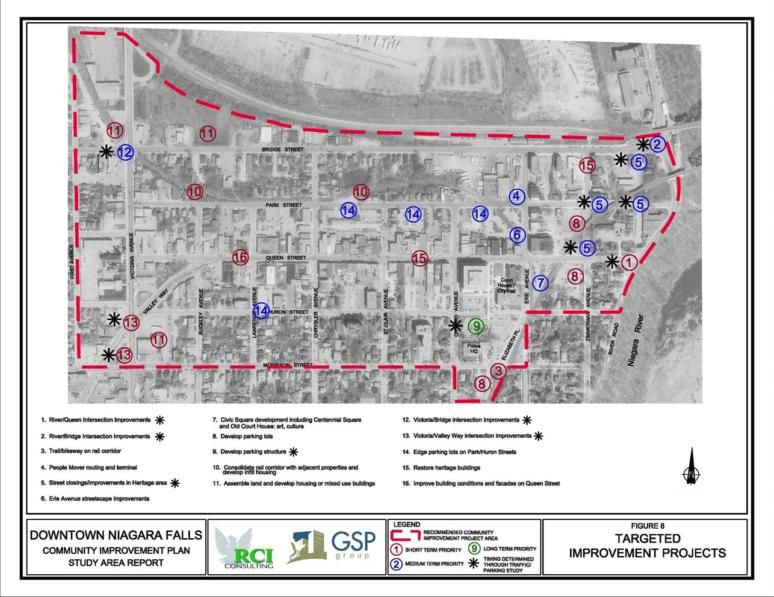
DOWNTOWN NIAGARA FALLS COMMUNITY IMPROVEMENT PLAN | NOVEMBER 2004

                                                                                     Page

                7.3      Commercial Building Loan and Facade Grant (CBLFG) Program   55
                         7.3.1 Purpose                                               55
                         7.3.2 Program Description                                   55
                         7.3.3 Eligibility Criteria                                  56
                         7.3.4 Administration                                        59
                7.4      Revitalization Grant Program (RGP)                          61
                         7.4.1 Purpose                                               61
                         7.4.2 Program Description                                   61
                         7.4.3 Eligibility Criteria                                  62
                         7.4.4 Administration                                        63
                7.5      Summary of Financial Incentive Programs                     65

      8.0       DEVELOPMENT CHARGE EXEMPTION (DCE) PROGRAM                           66
                8.1      Purpose                                                     66
                8.2      Program Description                                         66
                8.3      Eligibility Criteria                                        67
                8.4      Administration                                              67

      9.0       MUNICIPAL LEADERSHIP STRATEGY (MLS)                                  68
                9.1      Purpose                                                     68
                9.2      Program Description                                         68
                9.3      Administration                                              69

      10.0      ACTION SUMMARY                                                       70

      11.0      PROGRAM MONITORING AND ADJUSTMENT                                    78

      12.0      CONCLUSION                                                           80

RCI CONSULTING | GSP GROUP INC.                                                             iv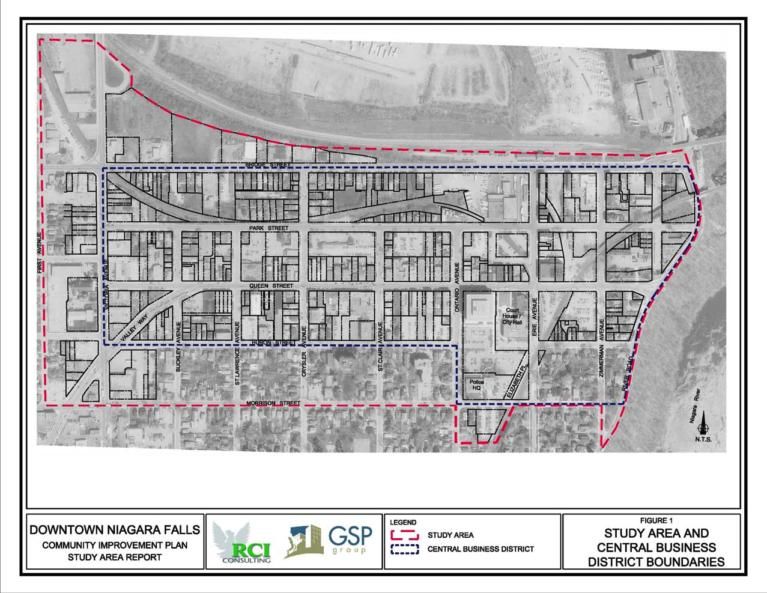
DOWNTOWN NIAGARA FALLS COMMUNITY IMPROVEMENT PLAN | NOVEMBER 2004

                                                                            Page

C       APPENDICES

        A       Community Improvement Areas – Official Plan, Schedule E     81

        B       Future Land Use – Official Plan, Schedule A                 83

        C       Glossary of Terms                                           85

        LIST OF FIGURES
        1       Study Area                                                   4
        2       Existing Downtown Districts                                  5
        3       Land Use                                                     6
        4       Existing Community Improvement Project Areas                27
        5       Downtown Community Improvement Project Area                 31
        6       Land Use Plan                                               36
        7       Public Realm and Urban Design Plan                          42
        8       Targeted Improvement Projects                               47
        9       Rationale for Incentive Programs                            49
        10      Residential Loan Program (RLP) Administration               54
        11      Commercial Building Loan and Facade Grant (CBLFG) Program   60
        12      Revitalization Grant Program (RGP)                          64
        13      Summary of Financial Incentive Programs                     65
        14      Action Summary                                              71
        15      Variables to be Monitored                                   79

RCI CONSULTING | GSP GROUP INC.                                                    v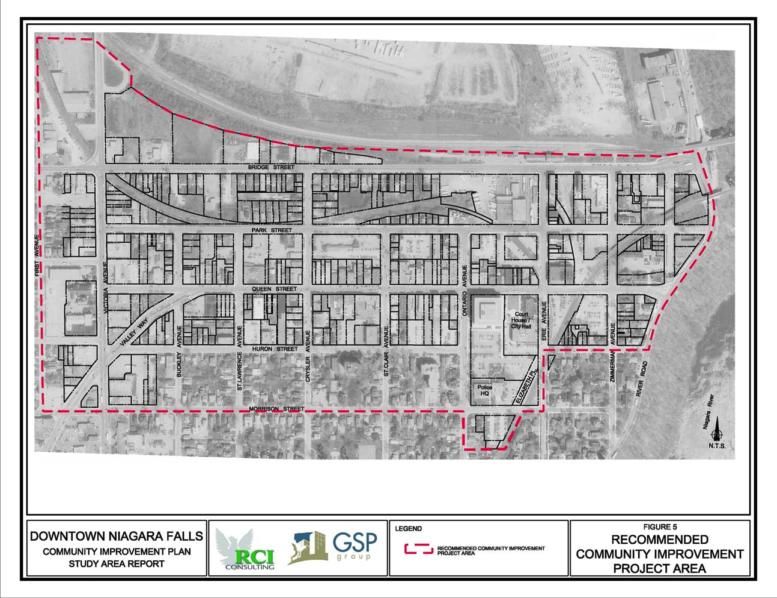
DOWNTOWN NIAGARA FALLS COMMUNITY IMPROVEMENT PLAN | NOVEMBER 2004

1.0 INTRODUCTION                                                          physical and economic decline for a number of years. Therefore, the
                                                                          need to revitalize Downtown Niagara Falls is clear and desirable. This
                                                                          need had been recognized by the City through preparation of this
1.1   Downtown Revitalization                                             community improvement plan.
Downtowns are the functional and symbolic heart of a community.           1.2   Purpose of the Community Improvement Plan
Downtowns are also very complex and dynamic social and economic
systems with many integrated pieces. Just as cities are dynamic and
                                                                          The purpose of this CIP is to provide a framework to guide public
evolve over time, so to do their downtowns.
                                                                          sector investment and stimulate private sector investment in
                                                                          Downtown Niagara Falls. Specifically, the purpose of the CIP is to:
A healthy, viable downtown is important to the economic health, civic
pride and history of a community. A strong downtown increases the
                                                                          a)    define an appropriate community improvement project area;
options and opportunities for residents to obtain goods and services.
                                                                          b)    plan further physical improvements within the project area that
A strong and vibrant downtown is also a symbol of a city which is
                                                                                are designed to lead and stimulate private sector investment and
caring and concerned about its health and its desire to create a high
                                                                                redevelopment;
quality of life. The health of the downtown is in some ways a
                                                                          c)    develop a marketable land use strategy that integrates and
reflection on the community and can serve to influence business
                                                                                promotes redevelopment opportunities; and,
decisions in a community.
                                                                          d)    develop a customized package of financial incentives to
                                                                                promote private sector investment and redevelopment.
The City of Niagara Falls has previously undertaken a number of
initiatives to stimulate revitalization within its Downtown area.
                                                                          The Downtown Niagara Falls CIP is the final report of the consulting
Utilizing the community improvement provisions of the Planning Act,
                                                                          team (RCI Consulting and GSP Group Inc.). This CIP contains a
the City has adopted community improvement plans for areas within
                                                                          synthesis of three previous reports:
the Downtown, taking advantage of previous Provincial programs
such as PRIDE to implement sidewalk, streetscaping and entrance
                                                                          1)    Background and Visioning Report (November 2003);
gateway improvements. Additional initiatives have included a Facade
                                                                          2)    Land Use and Urban Design Framework (April 2004); and,
Improvement Plan and Revitalization Strategy (1988) and an Urban
                                                                          3)    Financial Incentive Programs (April 2004).
Renewal Study known as Niagara Falls Cause (1984). Certain
elements of these studies are still relevant and where appropriate, the
                                                                          The preparation of this CIP included two public consultation sessions
recommendations from these studies that have yet to be implemented
                                                                          in the form of:
have been included in this CIP.
                                                                          a)    a Public Presentation and Visioning Workshop conducted in
Despite the physical improvements that have been made by the City,
                                                                                September of 2003; and,
private sector investment has not followed at the desired levels. Based
                                                                          b)    a review of the proposed land use plan and incentive programs
on the analysis of physical and economic conditions in the Downtown
                                                                                conducted at a Public Presentation held in March of 2004.
and public consultation conducted for this community improvement
plan, it is clear that Downtown Niagara Falls has been in a state of

RCI CONSULTING | GSP GROUP INC.                                                                                                                 1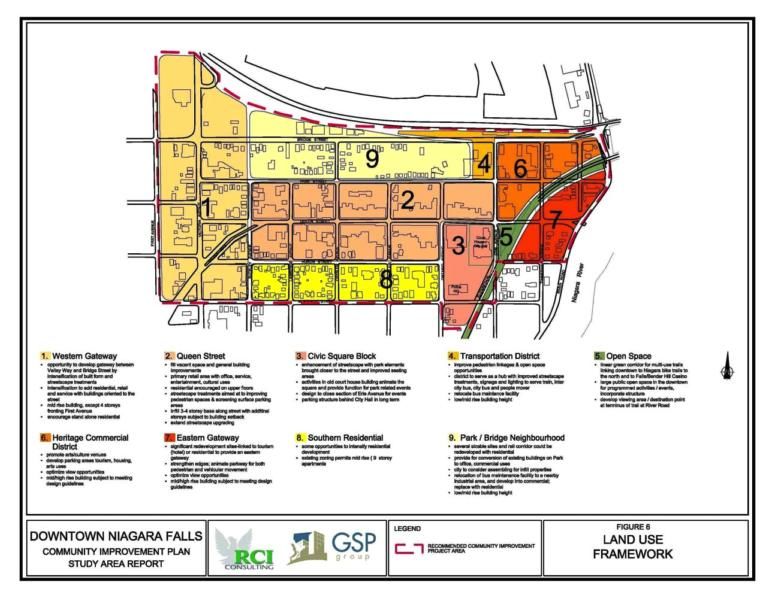
DOWNTOWN NIAGARA FALLS COMMUNITY IMPROVEMENT PLAN | NOVEMBER 2004

The study process also included numerous meetings and consultation
with the City’s Study Review Team and other staff. As part of the
adoption of this CIP, previous community improvement plans in the
Downtown area will be repealed and replaced by this single CIP.

1.3   Plan Content
This CIP is divided into three parts. Part A (Background) provides the
rationale and basis for the CIP in the form of:

a)    a critical needs analysis of the physical and economic
      characteristics of the downtown;
b)    relevant planning policies and legislative authority;
c)    description of the community improvement project area; and,
d)    description of the public participation process.

Part B (Community Improvement Plan) contains the vision, policies
and actions which will direct, coordinate and promote revitalization in
the Downtown. This includes:

a)    the Vision for the Downtown;
b)    Land Use Plan and Urban Design Framework;
c)    Community Improvement Programs;
d)    Development Charge Exemption Program;
e)    Municipal Downtown Leadership Strategy;
f)    Summary of Actions;
g)    Program Monitoring and Adjustment; and,
h)    Conclusion.

Part C (Appendices) contains relevant supporting documents.

RCI CONSULTING | GSP GROUP INC.                                           2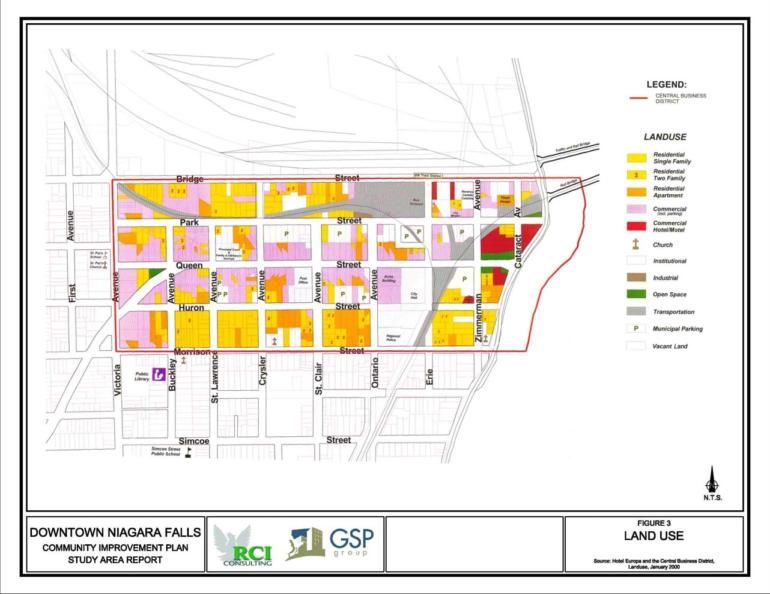
DOWNTOWN NIAGARA FALLS COMMUNITY IMPROVEMENT PLAN | NOVEMBER 2004

2.0     CRITICAL NEEDS ANALYSIS
                                                                       In addition, several walking tours of the Downtown Study Area were
                                                                       conducted during which notes and observations were made with
2.1     Methodology                                                    respect to land uses and land use compatibility, general building
                                                                       condition and appearance, retail business operations and vacancies,
The Downtown Study Area shown in Figure 1 was chosen to cover an       and key redevelopment opportunities. Photos of the Queen Street
area slightly larger than the Central Business District Community      retail area between Victoria Avenue and River Road, as well as other
Improvement Area shown in Schedule E to the Official Plan (see         parts of the Downtown Study Area were also taken.
Appendix A). The following information was comprehensively
reviewed and analyzed in order to identify the strengths, weaknesses
and opportunities for redevelopment in the Downtown:                   2.2     Physical and Land Use Characteristics

•     Aerial photographs;                                              The Facade Improvement Plan and Revitalization Strategy prepared
•     Official Plan;                                                   for Downtown Niagara Falls in 1988 describes existing conditions in
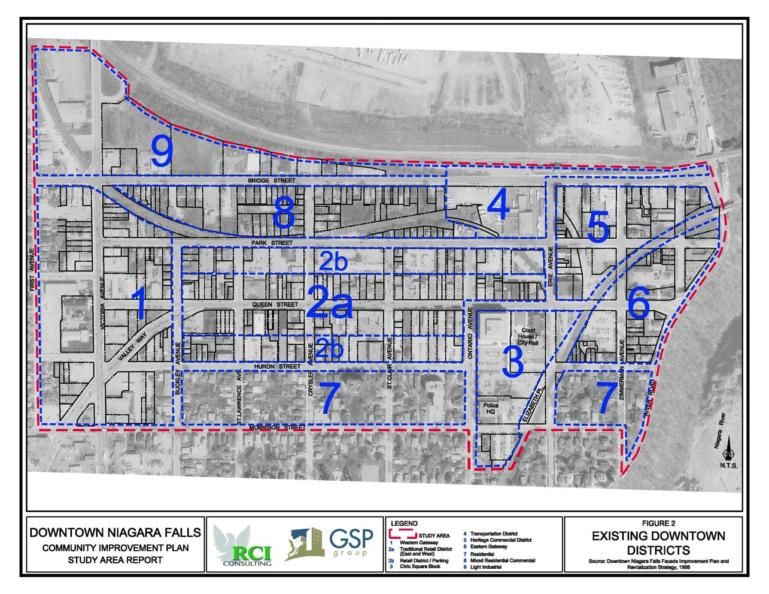
•     Zoning By-law                                                    the Downtown. Six Downtown districts were delineated in this study
•     Existing Community Improvement and Redevelopment Plans           based on physical characteristics and function. This CIP includes an
      covering various parts of the Downtown;                          additional four districts to help describe the physical characteristics
                                                                       and activities predominant in each part of the Downtown. These
•     Downtown Niagara Falls Facade Improvement Plan and
                                                                       various districts are shown in Figure 2.
      Revitalization Strategy;
•     Retail Market Demand Studies;
                                                                       As well, previous community improvement and redevelopment plans
•     Niagara Falls CAUSE Study;                                       prepared for Downtown Niagara Falls in the 1980’s contain relevant
•     Transportation Master Plan;                                      information describing the physical characteristics and land uses
•     Reports on the Niagara Falls People Mover;                       within the downtown. Some of these characteristics have not changed
•     Reports on the CN/CP Railway Corridor;                           significantly. The general land uses in the study area are shown in
•     Tourism Area Development Strategy;                               Figure 3.
•     Land Use schedules and mapping;
•     Servicing maps and information;
•     Information on parking;
•     Business Inventory and Occupancy Data;
•     Downtown Information Profile;
•     Mapping of Potential Sources of Environmental
      Contamination; and,
•     Development charges, planning application and building permit
      fees.

RCI CONSULTING | GSP GROUP INC.                                                                                                             3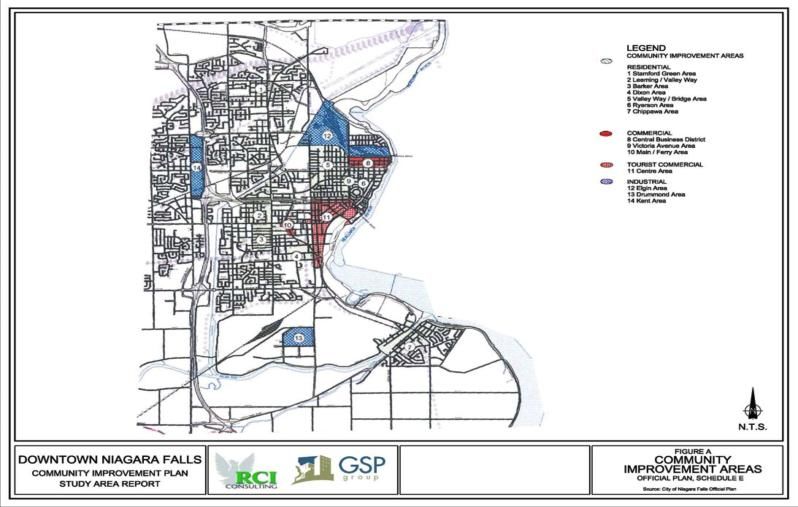
DOWNTOWN NIAGARA FALLS COMMUNITY IMPROVEMENT PLAN | NOVEMBER 2004

RCI CONSULTING | GSP GROUP INC.                                     4
DOWNTOWN NIAGARA FALLS COMMUNITY IMPROVEMENT PLAN | NOVEMBER 2004

RCI CONSULTING | GSP GROUP INC.                                     5
DOWNTOWN NIAGARA FALLS COMMUNITY IMPROVEMENT PLAN | NOVEMBER 2004

RCI CONSULTING | GSP GROUP INC.                                     6
DOWNTOWN NIAGARA FALLS COMMUNITY IMPROVEMENT PLAN | NOVEMBER 2004

2.2.1   Western Gateway                                                    Significant streetscape treatments have been installed on Valley Way
                                                                           between Victoria Avenue and Queen Street, including a formal
The western gateway is a principal entrance to the Downtown with           median gateway with pier, planting and lighting. This gateway feature
Victoria Avenue providing connection to the Falls Tourist Area and         is attractive, but given the built form, weak street edges, and
the majority of the City which lies to the west. A variety of service      streetscape treatment, this gateway feature is not enough to provide a
commercial and retail businesses, offices and a few low rise               strong entrance to Downtown.
residential buildings are located in this area. Generally buildings are
one or two stories with variable building conditions ranging from poor
to good.

The streetscape in the area is predominantly auto-oriented and lacks
the consistent street wall, street level retail activity and streetscape
details/furnishings found along a more pedestrian-oriented street.
Parking areas abut the sidewalk in many locations.

A vacant former Canadian Tire Store occupies a key gateway corner
at Victoria Street and Valley Way. This vacant building and large
vacant parking area provide a poor image at this key entrance to
Downtown. This site also represents a significant redevelopment
                                                                           Median Gateway at Valley Way, Victoria Avenue and
opportunity.
                                                                           Queen Street

                                                                           The pavilion at Victoria Park at Valley Way and Queen Street is one
                                                                           of Downtown’s few open spaces and is popular with neighbours,
                                                                           providing a focal point along Queen Street.

                                                                           Victoria Park Pavilion
Vacant former Canadian Tire store at Western Gateway

RCI CONSULTING | GSP GROUP INC.                                                                                                                7
DOWNTOWN NIAGARA FALLS COMMUNITY IMPROVEMENT PLAN | NOVEMBER 2004
The approach to the Western Gateway from the east is highlighted by 2.2.2.1 West Queen Street
the magnificent view of St. Patrick’s Church, which forms a strong
visual anchor on the west side of Victoria Avenue. The western section of the retail core between Buckley Avenue and
Crysler Avenue is characterized by an irregular, low density and
generally unattractive building fabric. The vacancy rate for ground
floor space in these blocks is very high. The interior and exterior of
some buildings have been allowed to deteriorate creating unsightly
pockets of derelict buildings.
Other buildings have non-retail uses on the ground floor such as
office and car lots/showroom. This combination has significantly
diminished the continuity of this sub-district as a retail area. The
remaining uses include restaurants, night clubs, music stores, and
a proliferation of used furniture stores and second hand stores.
St. Patrick’s Church
Generally, the Western Gateway can benefit from intensification to
add residential, retail and service activity with buildings oriented to
the street. Streetscape enhancements can be made to improve
pedestrian spaces and screen surface parking areas.
Vacant furniture store on Queen Street
2.2.2 Traditional Retail District
Queen Street is Downtown’s traditional pedestrian-oriented main
street containing the majority of the retail activity of the core. It can
be divided into several subsections, including West Queen Street, East
Queen Street, and the blocks behind Queen Street along Park and
Huron Streets.
Vacant stores on Queen Street
RCI CONSULTING | GSP GROUP INC. 8DOWNTOWN NIAGARA FALLS COMMUNITY IMPROVEMENT PLAN | NOVEMBER 2004
On the northwest corner of Crysler Avenue and Queen Street is the In summary, the West Queen Street area would greatly benefit from
Daily Planet restaurant and bar which animates the street with its the filling of vacant space with new activities and general building
colour and outdoor patio. improvements, including physical repairs and aesthetic
improvements, especially to facades and storefronts.
2.2.2.2 East Queen Street
This district includes the three central retail blocks between Crysler
Avenue and Erie Avenue. This district includes a number of historical
buildings, the Niagara Falls Post Office (1930), McClive/Rosber
Block (1904), the Locan Block (1907) and the Bank of Hamilton
(1894). These buildings add positively to the character of the area.
Daily Planet Restaurant
Streetscape improvements have been installed on Queen Street,
including new lighting, decorative planters, sidewalk pavers and site
furnishings. This work is several years old and is of good quality.
Two historically significant properties in this district are the former
Seneca Theatre on Queen Street and the Drew Stone Cottage on
Huron Street. The theatre has been converted to a nightclub.
Niagara Falls Post Office Building
Recent streetscape improvements together with the existing building
fabric provide a pleasant pedestrian environment. The majority of the
buildings are two and three storeys with some single storey buildings
interspersed. The characteristics of these three blocks include a
continuous street wall, continuity of building scale and details and
uniformity of architectural styles.
Former Seneca Theatre – now Seneca Night Club
RCI CONSULTING | GSP GROUP INC. 9DOWNTOWN NIAGARA FALLS COMMUNITY IMPROVEMENT PLAN | NOVEMBER 2004
There are still a number of business vacancies in this district, but the
vacancy rate is not as high as in the West Queen Street District. The
East Queen Street District would benefit from the filling of vacant
space with new activities and general improvements to restore the
buildings to their original and authentic design, materials and colours.
Bank of Hamilton Building
The district, though not as strong from a retail perspective as it was in
the past, does contain the majority of the retail and business activity in
the Downtown. The major banks, post office and recently established
health services and medical offices all serve to attract people to the
core. Several long-standing independent retailers are located here
selling men’s clothing, bicycles and photography equipment.
Vacant stores on Queen Street
2.2.2.3 Parking/Services
This district provides parking to support Queen Street businesses with
some commercial and residential activity interspersed. This creates a
poor streetscape condition with wide open paved areas, no edging
along the street and little vertical definition. The blocks fronting Park
Street are predominantly occupied by parking lots. These parking lots
are not well edged and screened and do not provide clear and safe
pedestrian routes.
North side of Queen Street between Crysler Avenue
and St. Clair Avenue
RCI CONSULTING | GSP GROUP INC. 10DOWNTOWN NIAGARA FALLS COMMUNITY IMPROVEMENT PLAN | NOVEMBER 2004
The blocks fronting Huron Street contain a mix of parking lots,
offices and some residences. The parking lots are not as extensive as
the Park Street lots though several are heavily used. Again, these
parking lots are not well edged and screened and do not provide clear
and safe pedestrian routes.
In the long term, it may be possible to develop some of the parking
lots both north and south of Queen Street for new employment or
residential activity which will, in turn, support Queen Street
businesses. Where parking lots remain, they should be edged and
screened with clear and safe pedestrian routes created.
2.2.3 Civic Square Block
Parking lot entrance with poor streetscaping The block between Ontario Avenue and Erie Avenue, south of Queen
and entrance area Street to Morrison Street is known as the Civic Square Block. This
block contains City Hall, the old Court House, Centennial Square and
The parking lot between Crysler and St. Clair Avenues contains an the Acres building. The Acres building is a six storey office complex,
outdoor market structure, however the market is no longer held there which was constructed more recently and is an example of new
as it has moved out of the Downtown. building design that complements the existing building fabric. The
police headquarters are located in the south of this block with the
adjoining area designated for parking.
Former Farmer’s Market Building in parking lot
Between Crysler Avenue and St. Clair Avenue
Acres Office Building
RCI CONSULTING | GSP GROUP INC. 11DOWNTOWN NIAGARA FALLS COMMUNITY IMPROVEMENT PLAN | NOVEMBER 2004
This block is the largest employment node in Downtown with over
550 employees working in its buildings. These employees provide a
significant support base for local businesses.
Centennial Square in front of City Hall serves as an important urban
public space in the downtown. Centennial Square is framed by
buildings on three sides and fronts Queen Street, all desirable
characteristics. Although the square has limited streetscape frontage,
it provides one of the few passive amenity spaces in the Downtown.
Improvements to the square could be made to broaden and improve
its use and update its 1970’s design style. These improvements could
include enhancement of the streetscape treatment with park elements
brought closer to the street and improved seating areas.
The former court house building frames the square on the east but has
City Transit Terminal at Erie Avenue and Bridge Street
no public use at this time and adds little to the square in terms of
pedestrian traffic or usable space. New activities such as a restaurant,
civic or cultural facilities in the area of the former Court House
building could serve to bring people to the Square and provide
functional space for events in the area.
2.2.4 Transportation District
The Via Rail Station, inter-city bus terminal and local transit terminal
are clustered at the intersection of Bridge Street and Erie Avenue to
form a key transportation node which serves the region. The Via Rail
Station at the terminus of Erie Avenue at Bridge Street dates back to
1879 and is a significant heritage property. The bus station and bus
maintenance yard are located across the street, with the bus
maintenance facility consuming a large block of land. The bus
maintenance facility does not support the traditional downtown
activities and urban form. Parts of this area are also not well lit and do Via Rail Station and Hotel Europa on Bridge Street
not provide a friendly pedestrian environment.
RCI CONSULTING | GSP GROUP INC. 12DOWNTOWN NIAGARA FALLS COMMUNITY IMPROVEMENT PLAN | NOVEMBER 2004
2.2.5 Heritage Commercial District The visual appearance of Bridge Street has been enhanced by the
streetscape treatments which include lighting and sidewalk treatments.
The Heritage Commercial District is the oldest part of the Downtown The building conditions in this area vary from poor to good depending
and contains several significant heritage buildings, including the on the amount of reinvestment.
Woodruff block, the Old Imperial Bank now converted to offices and
the old post office/customs house/jail on Zimmerman Street now
being converted to an art gallery. Some of the heritage buildings in
this area remain vacant and deteriorating, but with great potential for
restoration.
The area has mixed land use and building fabric between Bridge
Street and the former Rail line, east of Erie Street. This four block
area contains restaurants, offices, government departments, hotels and
antique stores. One of the old hotels has recently closed and the
former Rosbergs Department Store at Queen Street and Erie Avenue
has been sitting vacant for many years. The abandoned rail overpasses
occur in three locations in this district. These structures are part of the
unique heritage of this district and of a by-gone railway era.
Vacant storefronts along Erie Avenue
Former Rosberg’s Department Store at Queen Street
and Erie Avenue Former Post Office/Customs House Building
RCI CONSULTING | GSP GROUP INC. 13DOWNTOWN NIAGARA FALLS COMMUNITY IMPROVEMENT PLAN | NOVEMBER 2004
Between many of the buildings in this district there are large open 2.2.6 Eastern Gateway
areas utilized for parking and storage. The result is a low density,
underutilized district that is visually unattractive and not pedestrian This area east of the former rail corridor both north and south of
friendly. These vacant and underutilized areas could be redeveloped. Queen Street forms the eastern entrance way to Downtown from
River Road (Niagara Parkway). This area overlooks the Niagara
Parkway and Niagara River gorge.
Large open lot off of Bridge Street
The Queen/Erie/Park block has a large vacant area now used for
parking. This area is a significant redevelopment opportunity, with or Planting feature at entrance to Eastern Gateway
without the adjacent Rosbergs building.
Low density residential and motel uses are the predominant activities.
In summary, this district has many significant buildings which could Buildings in this area are generally 1 to 2 storeys and are mostly in
be rehabilitated for new activities while preserving the historical good condition. This area also contains several vacant lots and
character of this district. parking lots. As in the Heritage Commercial district, the density of
land use is low and this underutilization provides a poor visual image.
Improvements to the streetscape have included an attractive
Downtown entrance sign, planted median and boulevards, similar to
the western gateway. However, as with the Western Gateway, this
treatment does not provide an easily recognizable entrance gateway to
the Downtown.
RCI CONSULTING | GSP GROUP INC. 14DOWNTOWN NIAGARA FALLS COMMUNITY IMPROVEMENT PLAN | NOVEMBER 2004
2.2.7 Southern Residential
The southern residential district is situated between Huron and
Morrison Streets for the length of Downtown. This district is
predominantly single detached housing with a few apartment
buildings and churches. The housing stock is old with building
conditions ranging from poor to good.
Downtown sign feature at Eastern Gateway
A large City parking lot east of the rail line and the two motel sites are
significant redevelopment sites which could bring new activity to the
area and a more urban/downtown built form.
Aerial view of residential area south of Huron Street
The houses are typically two-storey and located close to the sidewalk.
The streetscape is typical of a traditional Downtown neighbourhood.
There are some limited opportunities to intensify residential uses in
this area, either through infill development on vacant lots or
conversion to residential within existing buildings.
City parking lot off of Queen Street, east of former rail line
RCI CONSULTING | GSP GROUP INC. 15DOWNTOWN NIAGARA FALLS COMMUNITY IMPROVEMENT PLAN | NOVEMBER 2004
2.2.8 Mixed Residential/Commercial
Until 1977 when the 375,000 sq.ft. Niagara Square Shopping Centre
The district between Bridge and Park Street contains a mix of uses. was constructed, the CBD at 256,400 sq.ft. functioned as the
While residential is the predominant use, there is a mix of non- commercial focus for the City. Between 1978 and 1982, the CBD
residential activity including automotive commercial (repair facilities) declined to third in size behind Niagara Square and the Clifton Hill
and the City bus maintenance facility. The streetscape is generally Tourist Area. The amount of retail space in the CBD declined from
weak, lacking in mature trees and other streetscape treatments. 256,400 sq.ft. in 1978 to 202,600 sq.ft. in 1982, a decrease of 21% in
The residential uses are in fair to poor condition. The former CN Rail just over four years. Over the same time period, the amount of retail
corridor serpentines through the block, and could be developed for a space in all other retail areas stayed roughly the same.
trail or consolidated with existing lots to provide opportunities for
residential intensification. The decline in the CBD’s share of total retail sales, increased vacancy
rates, and concomitant physical deterioration reflects a common trend
2.2.9 Light Industrial/Service in many urban markets in Canada and the U.S. over the last 30 years.
Lifestyles and demographic changes, increases in car ownership, retail
The land north of Bridge Street to the main railway line is a mix of industry changes and shopping centre development in the growing
service commercial/light industrial activities on large lots. The suburban areas were all factors that influenced downtown retailing
building conditions in this block are fair. However, the streetscape is and had a negative impact on the CBD. Downtown Niagara Falls is no
unattractive given the parking along the front yards and the lack of different. Some downtown areas have been successful in redefining
street trees. As well, there are several sizable vacant sites in this their role while maintaining a viable and vital commercial purpose.
district which could be redeveloped for new activities. “Redefining” of its role will be the key to revitalization for Downtown
Niagara Falls.
2.3 Economic Characteristics
2.3.2 Current Business Activity
2.3.1 Economic Role of the Downtown
There is a very high vacancy rate in the Downtown with
To understand the origin and nature of the physical deterioration in approximately 27 of the 125 business addresses along Queen Street
Downtown Niagara Falls, it is important to understand the economic vacant or underutilized, e.g., store has display and signage, but is not
history and role played by the Central Business District (CBD) in the open. This represents about a 22% vacancy rate when 6% to 7% is
City of Niagara Falls. The CBD, shown in Figure 1, originated in the considered a healthy commercial vacancy rate due to normal business
1850’s as the commercial centre of Niagara Falls with the spanning of turnover. Clearly, the Niagara Falls CBD has a serious vacancy
the Niagara Gorge by an international suspension bridge in 1853. problem and based on the economic history of this area as discussed
Most early downtown businesses were located on Bridge Street above, the roots of this problem were already evident 25 years ago.
between Erie Avenue and River Road. After the turn of the century,
retail activity gradually shifted to Queen Street. Some of the present
building stock in the Queen Street core dates from the early 1900’s
and virtually all of the buildings along Queen Street pre-date 1940.
RCI CONSULTING | GSP GROUP INC. 16DOWNTOWN NIAGARA FALLS COMMUNITY IMPROVEMENT PLAN | NOVEMBER 2004
The occupied businesses in the CBD represent a broad range of Unfortunately, Queen Street has a large percentage of stores
business types, including: specializing in used and second hand furniture and merchandise, pawn
shops, thrift shops, dollar stores, and other economically “marginal”
• services to business (lawyers, accountants and insurance uses. There are also a number of automotive uses, including Complete
professionals); Car Care Sales and Service at the corner of Buckley and Queen
• financial institutions and services; Streets. These types of automotive uses would not normally be found
• government services; in a downtown main street area.
• household furniture, appliances and antiques;
• apparel and accessories; There are approximately eight restaurants/cafes in the Downtown,
• specialty stores however, only about half of them are actually still in operation. None
• medical offices; of the restaurants/cafes on Queen Street offer a higher end “fine-
dining” experience or an appropriate “business lunch” atmosphere.
• personal services; and,
• restaurants and night clubs.
There are also several night clubs in some of the larger buildings on
Queen Street that have caused and continue to cause significant safety
On the positive side, while many banks have pulled out of smaller
and security issues in the Downtown. The negative externalities
centres and towns in Ontario, several major banks still have branches caused by some patrons of these night clubs, including vandalism,
in Downtown Niagara Falls, including the Bank of Montreal, TD
garbage, noise and disorderly conduct act as a deterrent to people
Canada Trust, Royal Bank and the Canadian Imperial Bank of
living in the Downtown and to people coming Downtown in the
Commerce. There are also over two dozen professional offices located evenings.
in the Downtown, from lawyers and accountants to insurance and
medical professionals, including the Niagara Health Services and the As an example of rents in the CBD, two retail units at 4634 Queen
Queen Street Medical Group. There is also the large Acres office Street were recently listed for rent at $400 and $500 per month,
building, and a number of government and public services in the
respectively. While these units are small and in poor condition, this
Downtown, including City Hall, Police Station, Provincial Court, and represents a rent of only between $4.00 and $5.00 per sq.ft. This is a
a Canada Post office.
very low rental rate for downtown retail commercial space, yet these
units have remained vacant for many months.
There only a few retailers on Queen Street offering higher end retail
items, such as Sam Stevens Men’s Clothing and Robert’s Jewellers.
The physical deterioration of Downtown Niagara Falls is a direct
These few high end retail stores are long-standing businesses in the
result of the economic decline of the downtown retail component and
Downtown that do not rely on street traffic, but rather on a loyal the inability of the downtown to establish new retail, service,
clientele built up over many years of operation from their current
entertainment or other niche uses. As downtown retail sales declined,
location. There are also a few interesting specialty stores in the
the viability and profitability of downtown retail activity also
Downtown, such as the Pedlar Bicycle Shop and Foto Source Camera declined. As a consequence, economic rents and land values declined,
Shop.
RCI CONSULTING | GSP GROUP INC. 17DOWNTOWN NIAGARA FALLS COMMUNITY IMPROVEMENT PLAN | NOVEMBER 2004
attracting more marginal retail and service uses to the Downtown. As 2.3.3 Building Rehabilitation and Construction Activity
marginal retail uses became more common in Downtown, and
business turnover increased, owners of downtown buildings were not Other than the Acres office building, there has been very little major
able to continue to meet their financial commitments and maintain building rehabilitation or new construction in the Downtown over the
their buildings, many of them built in the early to mid-1900’s. Thus, last 20 years. A few buildings such as the building occupied by the
many of the buildings fell into a state of disrepair, further eroding the Queen Street Medical Group, Broderick Law Offices, and the
ability of owners to attract viable retail uses. The result of this vicious Provincial Courthouse have been rehabilitated, including facade
downward spiral is what we see in Downtown Niagara Falls today, improvement.
i.e., a high vacancy rate and a high percentage of marginal retail uses
operating out of physically deteriorated buildings. A contributing factor to the economic deterioration of the Downtown
has been the lack of residential building construction in the form of
condominiums and rental apartment units. New residential units are
being constructed in other mid-sized downtown areas in southern
Ontario such as Kitchener, Waterloo, Cambridge, London and
Hamilton where the downtown revitalization process has begun. The
construction of new residential units in the downtowns of these cities
is in part due to the availability of financial incentives designed to
promote the conversion of excess commercial space into residential
use and the construction of new residential units on vacant land.
These cities are promoting an increase in downtown population as one
of the strategies to re-establishing a viable economic function, albeit a
different one, for their downtowns. An increase in population in close
proximity to Downtown Niagara Falls is key to supporting existing
and future retailers, service providers, and restaurants.
2.3.4 Economic Development and Tourism
Vacant stores for rent on Queen Street The City of Niagara Falls Economic Development Strategy was
prepared in 1996. While this Strategy does not directly address
economic development in the Downtown, it does stress economic
This downward economic cycle in Downtown Niagara Falls must be diversification as a way to deal with the economic decline in Niagara
broken if the downtown is to be revitalized. It is also clear that this Falls that may have been masked by the City’s booming tourist sector.
cycle will not be broken by a return to the Downtown’s traditional The Economic Strategy also recommends the fostering of a close
role as a retail area selling predominantly department store type working relationship between the City and the Chamber of
merchandise. The Downtown must establish a new economic role and Commerce. Presumably, in the context of the Downtown, this
find new activities to attract people to the district. recommendation could be extended to include the Downtown Board
of Management.
RCI CONSULTING | GSP GROUP INC. 18DOWNTOWN NIAGARA FALLS COMMUNITY IMPROVEMENT PLAN | NOVEMBER 2004
The Economic Strategy also recommended that the City encourage 2.4 Parking and Transportation
banks and financial institutions to develop a venture capital pool or
community economic growth fund for Niagara Falls businesses. With 2.4.1 Parking
the number of banks in the Downtown, there may be an opportunity
for the City to approach these banks and gauge interest in a venture In general, it is important in downtowns to maximize on-street
capital pool for Downtown businesses. parking supply for retail and commercial customers. It is also
important to manage employment parking to ensure that employees
The Tourist Area Development Strategy, prepared in 1998, may also are not using prime on-street spaces or preferred locations in off-street
have some implications for the Downtown area. This Strategy parking lots. It appears that there is an adequate supply of parking at
identifies Victoria Avenue as an entry corridor to the main tourist this time based on the vacant spaces on-street and in the off-street lots.
area. The Strategy identifies an area along River Road stretching to
the southerly limits of the Downtown Area as the River Road Satellite However, several City and private surface parking areas are also key
District and the area north of the Whirlpool Bridge along River Road redevelopment sites. Development of some of these parking lots will
as the Whirlpool Satellite Tourism District. The Whirlpool Bridge is reduce parking supply while redevelopment Downtown will increase
also identified as an entrance gateway. demand for parking. The two lots in the block bounded by
Erie/Queen/Zimmerman/Huron, for example, could be developed for
The Tourist Area Development Strategy notes that “the sightseeing a downtown park and new housing. The small lot on Morrison Street
and recreational opportunities around the Niagara Gorge create a need south of the police station is also a good infill housing site. As the
for ancillary commercial uses in the Whirlpool District”, while “ bed development of these sites proceeds, there will be a need to provide
and breakfast accommodations are appropriate in the River Road additional off-street parking to accommodate these changes.
area”. Keeping in mind that these two tourist districts are in very close
proximity to the Downtown area, there may be an opportunity for the The provision of downtown parking is one way that many
Downtown to capitalize on the gateway function of Victoria Avenue, municipalities are participating in downtown redevelopment and
the Whirlpool Bridge and the two nearby tourist districts by offering stimulating private sector investment. As Downtown Niagara Falls
tourist related commercial uses. In addition, the Tourism Strategy begins to develop, we suggest that the City consider the following:
identifies residential uses as complementary to tourism functions.
• Maintain and expand, if necessary, the lots along Park and
Based on the location of Downtown close to two satellite tourist Huron Streets;
districts and between Victoria Avenue and the Whirlpool Bridge • Provide a new surface parking lot in conjunction with the
Gateway, there may be an opportunity for the Downtown to create a removal and redevelopment of the bus maintenance facility
“bundling” or “clustering” of some tourism related economic between Park and Bridge Street;
activities. These activities could include new and enhanced festivals • Partner to erect a parking structure behind the Acres and City
and events, food and beverage opportunities, expanded and enhanced Hall buildings to accommodate day long office parking
retail opportunities and fully interpreted heritage opportunities. The demands as well as short duration retail or event parking on
bundling of these types of uses into a “tourist experience” in an weekends and evenings.
authentic downtown setting could have broad market appeal.
RCI CONSULTING | GSP GROUP INC. 19DOWNTOWN NIAGARA FALLS COMMUNITY IMPROVEMENT PLAN | NOVEMBER 2004
Given the size of the current parking lots behind Acres and City Hall, a indoor waterpark and resort on Victoria Avenue is only 0.5 kilometre
parking structure could in the future accommodate a significant amount north of Downtown and could generate significant traffic along
of parking in a relatively central location, thereby allowing other surface Victoria Avenue from the Falls, Clifton Hill and the casinos a short
parking lots to be developed. The non-coincident peaks of week day distance to the south. Therefore, it is recommended that the
office use and evening and weekend retail/restaurant/entertainment use transportation system be monitored and a Transportation Master Plan
means that this structure could meet a large part of the Downtown’s for the City be prepared.
parking needs.
2.4.2.1 Huron Street
The matter of paid parking downtown was raised during the public
workshops. The comments were that paid parking discourages people Huron Street is currently one-way east bound and was part of a one-
from coming downtown, especially with the City’s aggressive way couplet around the main street in conjunction with Park Street.
ticketing of illegally parked cars. The matter of paid parking should Park Street has since been converted to a two-way street. Most
be considered by the City and the Downtown Board of Management municipalities have deleted their one-way couplet as they were found
in the context of a downtown parking strategy which addresses supply to be unnecessary when projected traffic volumes never materialized.
issues and employee parking arrangements. As well, one-way streets generally have traffic moving at faster rates
than two-way streets. One-way streets are not as pedestrian-friendly
Comments were also made about bus parking Downtown, specifically as a two-way street and restrict downtown accessibility. Therefore,
in the vicinity of the bus maintenance facility between Park and subject to a traffic study, it is recommended that Huron Street be
Bridge Street. In the long term, it is suggested that the bus converted to two way traffic.
maintenance facility (including the bus parking area) is better located
elsewhere in the City. 2.4.2.2 Whirlpool Bridge
It is recommended that a Downtown Parking Strategy be prepared The Whirlpool Bridge connects Niagara Falls, Ontario to Niagara
once the CIP has been adopted and approved. This Strategy would Falls, New York. The Whirlpool Bridge was converted from a full
examine: access bridge to limited access available only to NEXUS holders, a
program initiated to expedite border crossing. Downtown business
a) future parking needs; representatives were unanimous in indicating that they have seen a
b) municipal parking lots to be retained and those that could be significant drop in traffic in the downtown area since the NEXUS
declared surplus and made available for development; and, program was initiated. It is their view that this decision has had a
c) opportunities to site and develop a public parking structure. significant negative impact on the number of people passing through
and stopping in Downtown which, in turn, has hurt business.
2.4.2 Transportation It is recommended that the Canadian and U.S. federal governments be
lobbied to restore the Whirlpool Bridge to full access status. Any
The downtown road network appears to function adequately based on redevelopment of the Whirlpool Bridge and the adjacent unused
the current levels of activity and traffic. However, the municipality Whirlpool railway bridge should be done in a manner that is sensitive
will have to monitor its transportation system as redevelopment to and consistent with the Downtown CIP.
occurs Downtown. Also, the recently proposed Ripley’s aquarium,
RCI CONSULTING | GSP GROUP INC. 20DOWNTOWN NIAGARA FALLS COMMUNITY IMPROVEMENT PLAN | NOVEMBER 2004
2.4.2.4 Proximity to Tourist Area
The Downtown is physically and functionally separated from the Falls
tourist area by approximately eight or nine city blocks, a distance of
nearly one kilometre. Victoria Street and River Road (the Niagara
Parkway), provide reasonable access between the two areas, yet the
two areas have limited interaction as traffic on River Road and
Victoria Avenue skirts the downtown.
One challenge and opportunity for the Downtown is to find ways to
capitalize on the significant number of tourists that visit the City but
Whirlpool Bridge and adjacent unused rail bridge do not venture Downtown. This potential will be further enhanced
with construction of the recently announced Ripley’s aquarium, indoor
2.4.2.3 Public Transit waterpark and resort just north of the Downtown. The potential tourist
traffic along Victoria Avenue that will be generated by this
The City of Niagara Falls operates a municipal bus system serving the development could provide much needed support for Downtown
majority of the City’s urban area. The main bus terminal is located in businesses. But, there must be attractions and activities to draw
the Downtown area at the intersection of Bridge Street and Erie tourists to Downtown Niagara Falls. This could include specialty
Avenue. Of the ten routes operated throughout the City, six of these shopping, cultural and recreational events and restaurants.
originate at the downtown terminal. The downtown bus terminal also
provides for connections to intercity bus services, Trentway-Wager There must also be an efficient means to bring tourist traffic into the
and Greyhound Bus Lines, which provide scheduled service to Downtown. In this regard, the Niagara Parks Commission operates a
Hamilton and Toronto. Immediately opposite the terminal, on the rubber tired People-Mover which travels River Road and links the
north side of Bridge Street, is the VIA passenger station. VIA various destination points along the Niagara River corridor. The
presently offers daily trips to Toronto and Amtrak offers trip to New terminus of the People Mover is at Queenston Heights Park which is
York, originating in Toronto. north of the Downtown. If feasible, and subject to an appropriate
arrangement between the Niagara Parks Commission and Niagara
The existing transit system provides good accessibility to the Transit, the people-mover should be routed into Downtown via Queen
Downtown from all areas of the City. The bus terminal, while located Street, Erie Avenue and Bridge Street. This change would not add
on the periphery of the Downtown, brings significant numbers of much time to the bus route while bringing tourists into the Downtown,
people Downtown and provides connections to other modes of dropping them at the transit terminal on Erie Avenue and/or the Civic
transportation. Therefore, the Downtown bus terminal represents an Square on Queen Street. Alternatively, a People-Mover stop could be
opportunity. However, the adjacent bus maintenance yard consumes a installed at Bridge Street and River Road, which is just a few blocks
large block of land and does not support traditional downtown from the transit terminal and the Civic Square. Erie Avenue itself
activities and urban form. It is recommended that the bus maintenance should be improved as it is a major pedestrian route linking Queen
yard could be relocated outside of the downtown to free up a large Street, the Civic Square, and its various activities with the transit
block of land for residential or mixed use. terminal and Via Rail station.
RCI CONSULTING | GSP GROUP INC.
21DOWNTOWN NIAGARA FALLS COMMUNITY IMPROVEMENT PLAN | NOVEMBER 2004 2.5 Summary In summary, there are a number of districts within the Downtown characterized by their land use, built form and streetscape. Queen Street is the traditional pedestrian-oriented main shopping area with two and three storey buildings located at the street edge. Unfortunately, the physical condition of many buildings on this main street has declined with increasing vacancies. There is a need to fill vacant space and improve building facades along Queen Street. The Downtown streetscape treatments are fairly extensive and in good condition. The gateways to Downtown exhibit a mix of activities but do not provide a significant visual gateway. These gateways could benefit from redevelopment of existing parking and motel areas. The heritage commercial area near Bridge Street and the former rail line has significant character. It also contains significant development opportunities in both parking lot infill projects and rehabilitation of the older building stock. There are several opportunities for revitalization and new investment in Downtown Niagara Falls. The results of this analysis demonstrates the physical and economic deterioration of Downtown Niagara Falls that has taken place over the last 30 years and provide clear support for the preparation and adoption of a community improvement plan to promote the community improvement, rehabilitation and redevelopment of Downtown Niagara Falls. RCI CONSULTING | GSP GROUP INC. 22
DOWNTOWN NIAGARA FALLS COMMUNITY IMPROVEMENT PLAN | NOVEMBER 2004

3.0 LEGISLATIVE AUTHORITY AND                                              community improvement plan has been adopted by the municipality
                                                                           and approved by the Minister of Municipal Affairs and Housing, the
    PLANNING POLICIES                                                      municipality may then:

3.1     Legislative Authority                                              a)      acquire, hold, clear, grade or otherwise prepare land for
                                                                                   community improvement;
Normally, Section 106 of the Municipal Act, 2001 prohibits                 b)      construct, repair, rehabilitate or improve buildings on land
“bonusing” which is the provision by a municipality of any assistance              acquired or held by it in conformity with the community
directly or indirectly to any manufacturing business or other industrial           improvement plan;
or commercial enterprise. However, an exception is made in Section         c)      sell, lease, or otherwise dispose of any land and buildings
106(3) of the Municipal Act, 2001 for municipalities exercising                    acquired or held by it in conformity with the community
powers under Section 28 (6) or (7) of the Planning Act or under                    improvement plan; and,
Section 365.1 of the Municipal Act, 2001. The City of Niagara Falls        d)      make grants or loans to the registered owners, assessed
will utilize the exception for municipalities exercising powers under              owners, and tenants of land and buildings within the
Section 28 (6) or (7) of the Planning Act as the legislative basis for             community improvement project area (and their assignees) to
the financial assistance programs contained in Section 7.0 of this Plan.           pay for the whole or any part of the cost of rehabilitating such
                                                                                   lands and buildings in conformity with the community
3.2     Section 28 of the Planning Act – Community                                 improvement plan.
        Improvement
                                                                           Section 28 (7.1) specifies that the total of all grants and loans made
According to Section 28(1) of the Planning Act, a “community               under Section 28 (7) of the Planning Act and tax assistance provided
improvement project area” is defined as a municipality or an area          under Section 365.1 of the Municipal Act, 2001 in respect of land and
within a municipality, the community improvement of which in the           buildings shall not exceed the cost of rehabilitating the land and
opinion of the municipal council is desirable because of:                  buildings. Section 7.0 of this Plan presents the programs which the
                                                                           City of Niagara Falls, through adoption and Provincial approval of
•       age;                                                               this Plan, will implement within the Community Improvement Project
•       dilapidation;                                                      Area. These programs contain eligibility criteria that ensure
                                                                           conformity to Section 28 (7.1) of the Planning Act.
•       overcrowding;
•       faulty arrangement;
•       unsuitability of buildings; or,                                    3.3     City Of Niagara Falls Official Plan
•       for any other environmental, social or community economic
                                                                           The City of Niagara Falls Official Plan (OP) was approved by the
        development reason.
                                                                           Minister of Municipal Affairs in October 1993. The Official Plan
                                                                           provides guidance on land use matters and community development.
Once a community improvement project area has been designated by
                                                                           The Official Plan Schedule “A”, Future Land Use, designates the
by-law, a municipality may then prepare a “community improvement
                                                                           majority of the land within the downtown as Major Commercial (see
plan” for the community improvement project area. Once the

RCI CONSULTING | GSP GROUP INC.                                                                                                                 23
DOWNTOWN NIAGARA FALLS COMMUNITY IMPROVEMENT PLAN | NOVEMBER 2004
Appendix B). The lands to the south are designated Residential and The predominant land use designation within the Downtown is Major
the lands to the west along Victoria Avenue are predominantly Commercial, applicable to the area bounded by Bridge Street, Huron
designated as Minor Commercial. The area to the north is Industrial Street, Victoria Avenue and River Road. The permitted uses for this
and subject to the policies of Special Policy Area No. 7, which state designation include a full range of retail outlets, personal service
that the future of this area is uncertain and further study will be shops and office space to serve the needs of the entire market
required. population. Additional permitted uses include mixed use
developments, recreational, community and cultural facilities as
3.3.1 Residential Policies secondary uses. Residential projects may be permitted subject to
appropriate provisions in a Zoning By-law amendment and other
The Residential land use polices encourage a broad range of housing relevant sections of the Official Plan.
forms including single and semi-detached dwellings, townhouses and
apartments. The Policies acknowledge that single detached housing The Major Commercial policies include specific policies for the
will continue to dominate the character and identity of residential Central Business District (CBD) which promote:
neighbourhoods although an increasing demand for various types of
multiple residential accommodation is recognized. The largest a) the CBD as the primary business and administrative centre of
building heights and densities are encouraged to locate in close the City to reinforce the existing government and banking
proximity to the Central Business District (CBD). High rise services;
apartments above 6 storeys in height can be developed up to a
maximum density of 125 units per hectare. b) Centennial Square as the focal point for public activities where,
as far as possible, government departments and agencies shall
This policy provides an opportunity to consider new housing at higher be grouped into complexes to form a civic centre and the civic
densities in the established residential neighbourhood to the south of centre concept will be expanded to include cultural, recreation,
the CBD. This includes Huron and Morrison Streets where there are entertainment facilities and other complementary uses;
some opportunities for infill development. Development in this area
must have regard for the residential development and infilling policy c) Queen Street as a pedestrian oriented retail shopping area;
for the Residential land use designation which encourages
compatibility and sensitivity with the surrounding area in terms of d) the concentration of major office development at the western
density, height gradation, building mass, and arrangement, setbacks end of the CBD with ready access to Victoria Avenue and
and appearance. lands along Bridge Street shall provide for the expansion of
automobile-oriented commercial uses; and
3.3.2 Commercial Policies
e) the redevelopment on a large scale of the lands between the
Part 2, Section 3 of the Official Plan, the Commercial Land Use former rail line and River Road with development standards
Policies, contains three designations which comprise the hierarchy of established through an implementing zoning By-law without
commercial districts, including Major Commercial, Minor further amendment to this Plan. To this end the City may
Commercial and Neighbourhood Commercial. participate in the acquisition of land to help facilitate
redevelopment.
RCI CONSULTING | GSP GROUP INC. 24You can also read


