DRINKING WATER QUALITY MAPPING PROJECT - TETON COUNTY, WYOMING
←
→
Page content transcription
If your browser does not render page correctly, please read the page content below
TETON COUNTY, WYOMING
DRINKING WATER QUALITY   2
                         0
MAPPING PROJECT

                         2
                         1
Teton County, Wyoming

         Drinking Water Quality Mapping Project
                                      January 20, 2021

 Authors: Carlin Girard, Emily Smith, Phoebe Coburn, and Morgan Graham
 Organization: Teton Conservation District, Jackson, Wyoming
 Point of Contact: Carlin Girard, carlin@tetonconservation.org, 307-733-2110

For more information regarding this report or the Teton Conservation District—a political subdivision of
the State of Wyoming—please contact 307-733-2110 or visit www.tetonconservation.org.

Although this report is in the public domain, permission must be secured from the authors to reproduce
the materials within this report.

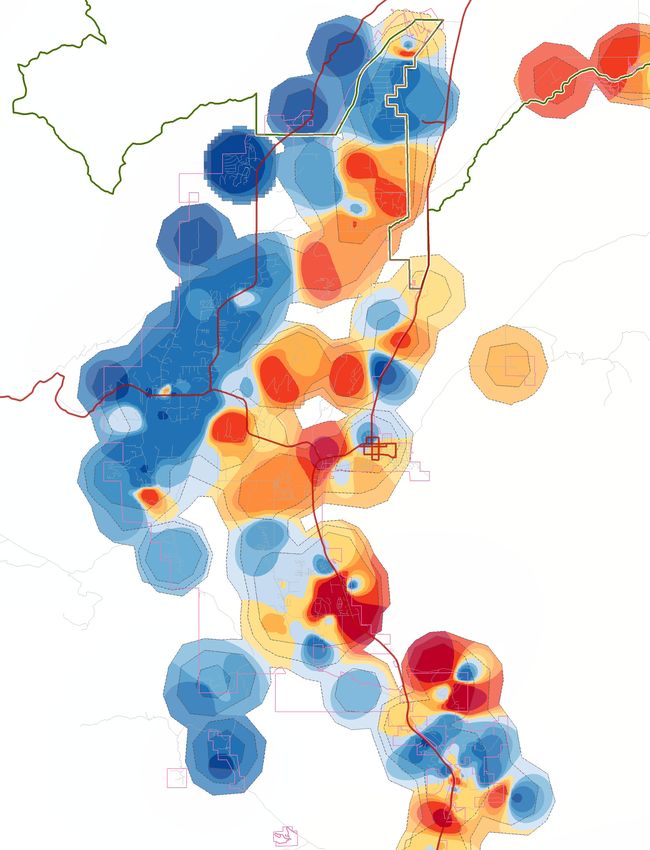
Cover Image: Depiction of the Maximum Sulfate Values Map. See full map under Maps section.

Suggested Citation:
Girard, C.E., Smith, E.P., Coburn, P.T., and Graham, M.W. 2021. Teton County, Wyoming Drinking Water
Quality Mapping Project. Teton Conservation District, Jackson, WY. URL
https://www.tetonconservation.org/drinking-water-quality-mapping
i

                                                    ABSTRACT
  Teton Conservation District assembled data for eight water quality parameters from 360 groundwater locations in
  Teton County, Wyoming, which included samples from both public water system and private drinking water wells. The
  parameters sampled were chloride, fluoride, nitrate, pH, sodium, sulfate, total dissolved solids, and total hardness.
  Some sites had repeated sampling events, which were summarized so that one value per parameter was created for each
  site. The summary statistic for each parameter was chosen based upon the primary reason it is analyzed in drinking
  water. For each water quality parameter, an Inverse Distance Weighting model was used to create an individual spatial
  interpolation layer. Models were assessed and individual maps were created for each model. A density overlay was
  created based on the number of samples collected within a one-mile radius of modeled cell values to spatially depict the
  relative confidence of the model result in space. Eight individual maps present the modeled groundwater concentration
  of each parameter, and this narrative provides an overview of the process, project outcomes, and intended uses.

                                                  DEFINITIONS
Inverse Distance Weighing Tool: A spatial interpolation tool that calculates values for unsampled location values using
    values from nearby weighted locations. Sampled locations are weighted according a power coefficient, which controls
    the relative importance of points that are closer or farther away.
Kernel Density: Calculates a magnitude-per-unit area from point or polyline features using a kernel function to fit a
   smoothly tapered surface to each point or polyline.
Pearson Correlation: A statistical analysis to assess the relationship between two datasets, which produces a coefficient
    value between -1 and 1. A value of 1 implies a linear relationship between the datasets, where the y value increases
    equally to the x value.
Polygon Feature Class: A spatially attributed dataset that holds polygon data within an ArcGIS datatype format.
Public Water System: A drinking water conveyance system that provides water for human consumption to at least 15
   service locations, and is thus overseen by the Environmental Protection Agency in the State of Wyoming.
R-squared value: Also known as the coefficient of determination and often denoted as R2, this is the proportion of
    variance for the dependent variable that is predictable from the independent variable. This is a standardized metric
    used to assess a model’s predictive capability.
Raster: A matrix of cells (or pixels) organized into rows and columns (or a grid) where each cell contains a value
   representing information.
Spatial Interpolation: A mathematical modeling technique that uses sampled data values from known locations to estimate
   values for unsampled locations.
ii              Teton County, Wyoming Drinking Water Quality Mapping Project, 2021

                                                                                CONTENTS

Abstract ................................................................................................................................................................... i
Definitions............................................................................................................................................................... i
Contents ................................................................................................................................................................. ii
1 - Introduction ..................................................................................................................................................... 1
2 - Methods............................................................................................................................................................ 2
  Study Area ........................................................................................................................................................................... 2
  Drinking Water Data Sources .............................................................................................................................................. 2
  Data Summary..................................................................................................................................................................... 3
  Spatial Analysis .................................................................................................................................................................... 3
  Map Visualization ................................................................................................................................................................ 3
3 - Results............................................................................................................................................................... 5
  Chloride ............................................................................................................................................................................... 6
  Fluoride ............................................................................................................................................................................... 6
  Nitrate ................................................................................................................................................................................. 6
  pH ........................................................................................................................................................................................ 6
  Sodium ................................................................................................................................................................................ 6
  Sulfate ................................................................................................................................................................................. 7
  Total Dissolved Solids .......................................................................................................................................................... 7
  Total Hardness .................................................................................................................................................................... 7
4 - Discussion ......................................................................................................................................................... 8
  Overview ............................................................................................................................................................................. 8
  Challenges and Constraints ................................................................................................................................................. 9
  Study Applications and Further Information Needs ........................................................................................................... 9
5 - Conclusion ...................................................................................................................................................... 10
6 - Acknowledgements ....................................................................................................................................... 10
7 - Disclaimer ....................................................................................................................................................... 10
8 - Maps................................................................................................................................................................ 11
9 - References ...................................................................................................................................................... 20
10 - Appendix 1: Detailed Methods Section ......................... ........................................................................... 21
  Study Area ......................................................................................................................................................................... 21
  Drinking Water Data Sources ............................................................................................................................................ 21
  Data Summary................................................................................................................................................................... 21
  Spatial Analysis .................................................................................................................................................................. 22
  Map Visualization .............................................................................................................................................................. 22
1
1 - INTRODUCTION
This project seeks to display interpolation models built characterize groundwater water quality and shed light on
using empirical chemical concentration data from drinking the scope and scale of potential issues. TCD hopes to
water sources in Teton County, Wyoming. Prior to this begin creating a common understanding among property
project, there were few accessible sources of information owners, health practitioners, and resource managers of
that summarize the significant body of drinking water well where and to what extent drinking water quality issues
data that is available for this region. This project assembles occur.
these data and seeks to present them in a format suitable
This document serves as the narrative portion of an
for public use.
analytical exercise to model and display groundwater
Teton Conservation District (TCD) works with private quality parameters using numerical and spatial analyses.
well owners, public water systems (PWS), and managing The overarching goal of this mapping project is to display
agencies to address groundwater problems. TCD provides existing data. We used spatial interpolation techniques to
assistance and a cost-share program for private drinking expand the spatial extent of the study area and honed
water well testing and drinking water treatment; this has model inputs to help create products that reflect the
made TCD aware of regional water issues in Teton primary reason for interest in each water quality
County, WY. There is enough empirical data to parameter.2 Teton County, Wyoming Drinking Water Quality Mapping Project, 2021
2 - METHODS
Study Area Drinking Water Data Sources
The study area for the Teton County, WY Drinking Water Drinking water data is required to be collected by PWS at
Quality Mapping Project encompasses all portions of regular intervals. The Environmental Protection Agency
Teton County, WY where drinking water wells are present. (EPA) retains drinking water records for all of the PWS
Teton County, WY is unique in that 97% of the 4,216 mi2 that it oversees in the State of Wyoming. Using a Freedom
total area is federal land. This analysis is focused on the of Information Act Request, we obtained all PWS data
roughly 1,051 mi2 of land that occurs within a one-mile within Teton County, WY for the parameters listed in
radius of water systems that have available data. Higher Table 1. The data table consisted of 8,208 rows of data for
concentrations of drinking water wells are found on private the eight parameters analyzed, attributed to 143 PWS
lands. locations. In some cases, PWS data dated back to 1993,
and for PWS still in operation, data ends in mid-2019,
The Town of Jackson is the only municipality within
which is when the EPA provided the data included in this
Teton County, WY and operates the largest drinking water
analysis.
system within the study area. There are numerous other
smaller water systems that vary in size. Drinking water in
PWS point locations were mapped individually by hand in
Teton County, WY is almost exclusively sourced from
ArcGIS. Of the 143 PWS locations with drinking water
groundwater. The valley floor, also known as Jackson
data, we excluded four because we were not able to
Hole, contains a relatively shallow alluvial aquifer that is
identify their locations. Most of the public water systems
highly productive and generally of adequate drinking
are found on private land, however, we also included water
water quality. The private lands that are positioned on the
systems on public land.
periphery of the valley—along the foothills and bedrock
formations of the mountains—access different aquifers,
which can be influenced by limestone or metamorphic
geology depending on location.
Table 1: County-wide summary statistics for the water quality parameters included in the Drinking Water Quality
Mapping Project. Data originates from EPA regulated PWS locations and private wells that used well test kits
provided by TCD. Sampling dates ranges from 1991 to 2019, in Teton County, WY.
Number Site Modeled
Parameter Minimum Maximum Average Median Units
of Tests Count Statistic
Chloride 0 310 15 5.6 275 mg/L 233 Maximum
Fluoride 0 23.1 0.59 0.3 784 mg/L 305 Average
Nitrate 0 59.4 0.58 0.13 4827 mg/L 360 Maximum
pH 5.5 9.7 7.71 7.7 339 s.u. 247 Average
Sodium 0 620 18.67 7 762 mg/L 303 Average
Sulfate 0 257 31.1 11.4 668 mg/L 298 Maximum
Total
Dissolved 11 1000 295 264 282 mg/L 234 Average
Solids
Total
0 860 179.0 150 271 mg/L 234 Average
Hardness3
Private drinking water wells do not have monitoring was run individually for each of the eight water quality
requirements. TCD has collected water quality data for parameters at all spatial locations with available data.
eight chemical parameters through a drinking water well
Once final IDW models were created, model assessment
test kit cost-share program since 2013.
was completed for each individual IDW model output by
Private drinking water data was spatially attributed using comparing empirically-collected water quality data at a
the Teton County, WY ownership shapefile given location to the modeled cell value extracted at that
(https://www.greenwoodmap.com/tetonwy/mapserver/dow same location. For each parameter, empirical and modeled
nload/download.html, accessed 02/18/2020). Using values were brought into Program R, plotted, assessed
ArcGIS, a point location was assigned for each property visually, assessed using a Pearson’s correlation, and fitted
with water quality data by creating a centroid of each with a linear model to establish a slope, y-intercept, and
parcel polygon. In total, 268 of the 326 Teton County, WY R-squared value (Table 2).
well test kit data sets (that had not opted out of the study)
were complete and able to have spatial coordinates Map Visualization
applied. This resulted in 230 well test kit locations, with 38 In all cases, symbology was chosen to help emphasize the
of the well test kits locations having one or more sampling innate water quality considerations of each chemical. For
events. instance, if established human health thresholds existed for
a chemical, such as nitrate and fluoride, color spectrums
Data Summary were used to help depict relevant breaks in the data (i.e.,
To establish a dataset suitable for spatial analyses, data red was used when a drinking water standard was
were manipulated and summarized in Program R (Version exceeded; Table 3).
4.0.2) using RStudio (Version 1.3.959). Data was
summarized for each parameter and site so that the spatial Spatial interpolation can easily produce erroneous
analyses for each parameter could be fed a point dataset of predictions in areas without data. To address this potential
well locations, with each location containing one record issue, we created a density overlay for each water quality
per parameter. Each water quality parameter was parameter map, which displays the relative spatial density
summarized and evaluated, based on the primary reason Table 2: Analyses of ArcMap 10.3.1 Inverse Distance
for interest in that water quality parameter (Table 1). For Weighting interpolation model for each chemical parameter,
example, the human health concerns posed by nitrate assessing the accuracy of each model against the data collected
increase as nitrate concentrations in drinking water at each survey location in Teton County, WY.
increase; therefore, the maximum recorded nitrate value
from each sample location was used. In contrast, we used R- Pearson
Parameter Slope Intercept
average values as the summary statistic to model squared Correlation
groundwater pH and hardness because these parameters
Chloride 0.96 0.42 0.96 0.98
are foundational characteristics of the groundwater and
less associated with health risks. For these parameters, we Fluoride 1.06 0.00012 0.97 0.98
assumed users of this product are most interested in what Nitrate 1.14 -0.14 0.74 0.86
they are likely to encounter at a given location and not the
maximum. pH 1.02 -0.14 0.92 0.96
Sodium 1.03 1.06 0.86 0.93
Spatial Analysis Sulfate 0.95 0.98 0.94 0.97
Drinking water data was analyzed in ArcMap (10.3.1)
using a spatial model selected for the type of data being Total
Dissolved 1.01 -1.07 0.94 0.97
used. In all cases, chemical data was numerical and
Solids
continuous, and the output was an interpolated raster file.
Total
0.98 2.08 0.81 0.90
Each chemical parameter was analyzed individually using Hardness
the Inverse Distance Weighting (IDW) tool. The IDW tool4 Teton County, Wyoming Drinking Water Quality Mapping Project, 2021
Table 3. Relevant and recommended concentrations for the water quality parameters and potential human health effects if above or
below the recommendation. The recommendations are derived from EPA water quality standards, maximum containment levels,
secondary maximum containment levels, and USGS designations.
Parameter Relevant Concentrations and Potential Effects
Chloride Salty taste above: 250 mg/L†
Dental recommendation, to help protect against tooth decay: 0.7 mg/L‡
Fluoride Tooth Discoloration above: 2.0 mg/L⸹
Health issues including bone disease & mottled teeth in children above: 4.0 mg/L†
Health issues including causing severe illness and possibly death in infants above:
Nitrate
10mg/L†
Bitter taste & corrosion if below, while slippery feel, soda taste and deposits if
pH
above acceptable range: 6.5-8.5 mg/L.⸹
Sodium Salty taste above: 60 mg/L⸙
Odor and bacteria increase above: 30 mg/L
Sulfate
Salty taste and stomach issues above: 250 mg/L⸹
Water quality decreases with the possibility of hardness, deposits, colored water,
Total Dissolved Solids
staining & salty taste above: 500 mg/L⸹
Soft: 0-60 mg/L; Moderately hard: 61-120 mg/L; Hard: 121-180 mg/L; Very hard:
Total Hardness
Above 180 mg/L⸾
Sources (URLs, full references at end):
†
www.epa.gov/ground-water-and-drinking-water/national-primary-drinking-water-regulations
‡
www.ncbi.nlm.nih.gov/pmc/articles/PMC4547570/ (journal article)
⸹
www.epa.gov/sdwa/secondary-drinking-water-standards-guidance-nuisance-chemicals
⸙
www.epa.gov/sites/production/files/2014-09/documents/support_cc1_sodium_dwreport.pdf, page 3
⸾
www.usgs.gov/special-topic/water-science-school/science/hardness-water?qt-science_center_objects=0#qt-
science_center_objects
of data points that were available for that water quality three bins of roughly equal size. The kernel density surface
interpolation model. The final map product for each water was converted into a polygon datatype to facilitate our
quality parameter includes its own unique density overlay desired visual and symbolization goals.
because each water quality parameter is associated with a
unique dataset (number of samples collected and location Visualization of the polygon feature class that was created
of water sources where samples were collected). from the kernel density estimate was identical for each
water quality parameter. The output polygon feature class
For each water quality parameter, point locations were for each water quality parameter had four polygon types
input into the Kernel Density tool only for drinking water that matched the raster classification of its kernel density
wells where data for that parameter existed (link). We ran surface. Polygons with a ‘0’ density value were depicted
the Kernel Density Tool on a count field (column), which with 0% transparency of a white background, obscuring
tallied the number of samples per site available for that underlaying data and intended to indicate no confidence in
given parameter. the underlaying interpolated map. The three remaining
classes were differential using stippling and polygon
Once the kernel density surface was created for each
boundary differences to depict areas of low, medium, and
parameter, the raster symbology was classified into four
high levels of confidence in the underlying interpolation
classes of equal size. This symbology decision produced
map.
the following result: all cell values that were ‘0’, which
equates to no points within a one-mile radius, were one For additional details regarding the methods used in the
class; and then all cells with a density value were split into project, see Appendix 1.5
3 - RESULTS
We created eight separate IDW raster outputs, one for each parameter concentrations and the IDW modeled values at
water quality parameter. These maps were symbolized to survey locations. Chloride and fluoride had the strongest
display relevant health thresholds and provide more detail correlations with Pearson values of 0.98, and while nitrate
in the portion of the data range where most values was least, it was still strongly correlated with a Pearson
occurred. Spatial extents of the maps are somewhat value of 0.86 (Table 2). While there was some deviation
dependent on whether PWS and well test kits included the between the sampled and modeled values, the slopes, y-
modeled water quality parameter of that given map, or if intercepts, and R-squared values of the linear models all
the data predominantly originated from well test kits. indicate that there was no overarching bias (Figure 1;
Table 2). The slopes ranged from 0.95 for sulfate to 1.14
Overall, the model’s ability to accurately convey chemical
for nitrate, while Total Dissolved Solids (TDS) had the
concentrations in areas with empirical data was confirmed
best slope alignment with 1.01. Linear model R-squared
by the strong Pearson correlations between known
Figure 1. Scatter plots and linear models of extracted ArcMap 10.3.1 Inverse Distance Weighting (IDW) modeled values for each
of the chemical parameters in Teton County, WY regressed against the collected drinking water parameter concentrations at the
same location (red line). The blue line has been added for comparison, and has a slope of 1 and a y-intercept of 0, which would
indicate a perfect model fit.6 Teton County, Wyoming Drinking Water Quality Mapping Project, 2021
values ranged from 0.74 for nitrate to 0.97 for fluoride. No mg/L recommended limit for potable water, and 34
outliers were removed in these analyses because these locations exceeded 3 mg/L, which is above typical
models were only used as an assessment of IDW accuracy, background concentrations and can indicate human
not in a predictive capacity. Retaining outliers likely led to influence.
weaker model fits and correlation strengths.
Nitrate appears to be elevated above background
Chloride concentrations in isolated locations, with exceedances of
drinking water criteria of 10 mg/L found only in the
Chloride concentrations were available for 233 locations,
vicinity of Hoback. Of note, EPA sampling and reporting
the majority of which were well test kits provided by TCD,
requirements for nitrate on systems that have nitrate
with only five being PWS locations. The concentrations
reduction treatment in place do not include raw water, and
ranged from 0 to 310 mg/L, but average chloride
therefore, PWS data does not necessarily depict
concentration was relatively low (14.95 mg/L). The
groundwater concentrations of nitrate once treatment is in
majority of the sample concentrations were below 20
place. Similarly, if treatment was installed prior to
mg/L, with 35 locations having concentrations exceeding
exceeding the 10 mg/L drinking water threshold, this data
this concentration. Only eight had concentrations over 100
would not necessarily reveal whether groundwater
mg/L, indicating a low background concentration of
concentrations continued to rise beyond this value.
chloride in Teton County, WY. Only two locations (both
Sufficient data availability in the locations where nitrate is
located in southern Teton County, WY) had maximum
above background levels allows users of this product to
values over the limit for potable water recommended by
have confidence in the visual representation of these areas.
the EPA (Table 3).
Fluoride pH
Most of the 247 sampling locations containing pH data
Fluoride concentrations were available at 305 sampling
originated from well test kits, with 19 PWS locations
locations and ranged from 0 to 20.2 mg/L, with the
sampled. The EPA recommends a range of 6.5 to 8.5 for
average of all values being 1.19 mg/L. The majority of the
the pH of drinking water (Table 3). pH was sampled at
locations, however, had internal site average
247 locations with values ranging from 6.23 to 9.70 and an
concentrations ranging from 0 to 0.6 mg/L, which is below
average value of 7.76. Only two locations registered pH
0.7 mg/L, the recommended concentration established to
levels below 6.5, while eight had values above 8.5. These
help protect against tooth decay. Eighteen sampling
ten survey locations were located in Red Top Meadows
locations recorded higher than the 2 mg/L secondary
(south of Wilson) and Hoback areas. The majority of
recommended limit (nuisance standard), while nine
Teton County, WY recorded pH values between 7.75 and
recorded higher than the 4 mg/L EPA recommended
8.0, well within the recommended range.
maximum containment limit (health standard; Table 3).
The majority of these locations were located in the
southern portion of the county, in the vicinity of Red Top
Sodium
At the 303 locations where sodium was sampled, the
Meadows (south of Wilson) and Hoback, but some
concentrations ranged from 0 to 485 mg/L, with an
locations in and around Yellowstone also show elevated
average value of 24.9 mg/L. The EPA recommends
fluoride.
sodium concentrations below 30 to 60 mg/L due to salty
Nitrate taste (Table 3). This was determined to be the threshold for
taste-sensitive segments of the population, although many
Nitrate provided the most spatially complete dataset
won’t be able to taste it at those levels. The majority of
available for this analysis, with 360 locations having
sampling locations registered average concentrations
available data (including Yellowstone National Park) and
below 30 mg/L, but 54 locations had concentrations over
many of these sites containing duplicate records. The
30 mg/L, while 34 recorded over 60 mg/L. A large number
median value for the 4,827 sampling events for nitrate was
of these locations are in southern Teton County, WY while
0.13 mg/L and is a testament to the low background
the rest are spread throughout the county with locations in
concentrations typically found in the region. Eight
Alta, Moran, and the north-end of the Gros Ventre Buttes.
locations have nitrate concentrations that exceeded the 10
This indicates that while the typical background levels for7
sodium are below the 30 mg/L recommendation for as determined by the EPA (Table 3). These samples were
potable water, there is a distinct probability of having all found from Melody Ranch (south of Jackson) to the
higher concentrations throughout the county, especially in southern extent of the county. The majority of the
the southern portion. sampling locations where TDS data was recorded were
well test kits, with only five being PWS locations.
Sulfate
At the 303 sampling locations where sulfate data was Total Hardness
collected, the concentrations ranged from 0 to 257 mg/L Total hardness ranged from 0 to 860 mg/L across the 234
with an average value of 31.12 mg/L. The majority of the locations sampled, the vast majority of which were from
sulfate concentrations recorded were below 50 mg/L, well test kits. The U.S. Geological Survey (USGS)
which is below the threshold for adverse health effects, but classifies water hardness into four categories: soft,
above the concentration where sulfur bacteria can become moderately hard, hard, and very hard (Table 3). In Teton
problematic locally. Only one location (located in the County, WY, 30 locations had total hardness
South Park area, south of Jackson) recorded a maximum concentrations that register as soft, 50 with moderately
sulfate concentration above the 250 mg/L recommended hard, 54 with hard, and 100 with very hard water,
limit. indicating a trend towards hard water in the county. There
were 26 locations with total harness concentrations over
Total Dissolved Solids 300 mg/L and seven locations with concentrations over
TDS concentrations ranged from 11 to 1,000 mg/L across 400 mg/L. There are sampling locations with water
the 234 sampling locations, which predominantly categorized as very hard throughout the county, with
originated from well test kits. Average TDS was 284.38 values over 300 mg/L recorded in the Kelly, Jackson,
mg/L. The majority of the locations had concentrations Wilson, and Hoback areas, as well as areas south of
between 150 and 350 mg/L, while 20 locations recorded Jackson. The locations with 400 to 600 mg/L were all
concentrations greater than the 500 mg/L secondary limit located in the southern portion of the county.8 Teton County, Wyoming Drinking Water Quality Mapping Project, 2021
4 - DISCUSSION
Overview nitrate contamination, which are separated by areas of
normal background concentrations.
Between private well owner well test kits and PWS
reporting, available drinking water quality data in Teton Beyond nitrate, sulfate is of interest because it is one of the
County, WY is extensive. However, reviewing this data is most common problems that well owners need to address,
challenging, due to the complexity of the datasets and the due to the development of sulfur reducing bacteria, which
different places and condition in which the data is stored. produce odiferous hydrogen sulfide. While treatment
We assembled available data, summarized it by unique systems exist, they are often costly and problematic, with
location, and used spatial interpolation to extend the point increasing challenges as sulfate concentrations increase.
data into a continuous surface for visual display. Our mapping efforts help define the areas of concern for
sulfate, which appear to be focused in the eastern and
The water quality parameters that were used in this
southern portions of the county. With little exception,
analysis were chosen, quite simply, because they were
sulfate is at much lower concentrations and below the
available, being some of the most common parameters
thresholds that tend to generate adverse drinking water
collected in drinking water systems. These basic
impacts in areas west of the Snake River, which runs north
parameters are also relevant to characterizing the
to south, roughly dividing the county on an east-west
groundwater chemistry from both a potability and
basis.
palatability standpoint. Furthermore, there is potential for
spatial autocorrelation of groundwater characteristics, due Hardness, which is comprised primarily of calcium
to the large degree of geologic influence. When possible, carbonate, is unquestionably one of the largest dissolved
there is also a logical priority to highlight areas where components of drinking water in Teton County, WY.
drinking water parameters are outside of the preferred Geologically, the limestone bedrock found extensively
range, or exceed established human health water quality throughout the region is readily dissolved by water, and
standards. produces the ‘hard’ water found almost everywhere in the
region. Small pockets of soft water do exist, but more
Nitrate is of particular interest, as it is a known human
commonly, pockets of hard to extremely hard water are
health hazard, and in Teton County, WY occurs above
encountered. Water softeners are installed often on
naturally occurring concentrations. While there are
residential water systems and in some cases may be
multiple known sources of nitrate contamination locally,
required for the preservation of household appliances.
there has been an increasing focus on wastewater sources.
Anecdotally, the IDW map for nitrate appears to show that While TDS (a measure of all dissolved material) is largely
the areas where nitrate exceeds background concentrations driven by hardness, it is also associated with sodium and
have some degree of overlap with areas of development chloride. Southern Teton County, WY appears to have
that use septic systems. Nitrate concentrations that occur particularly high TDS, as well as both sodium and
above background levels are found in smaller, outlying chloride. Not surprisingly, areas with very high TDS also
communities such as Hoback, Kelly, Wilson, Buffalo tend to have challenges with abundant hardness, sulfate,
Valley (near Moran), and Alta. However, Hoback is the chloride, and sodium, and thus, poor tasting water.
only region where nitrate occurs above the drinking water Southern Teton County, WY and Buffalo Valley are two
human health limit, even though areas around South Park regions where TCD and local commercial treatment
(south of Jackson) are not far below the 10 mg/L drinking companies have regularly worked with homeowners
water human health threshold established by the EPA. seeking resolution to challenging water issues.
Of note, the nitrate map clearly depicts the spatial isolation Low concentrations of fluoride are found throughout Teton
of areas with elevated nitrate concentrations. This supports County, WY with a small portion meeting the dental
the assumption that the occurrence of multiple areas with recommendation of 0.7 mg/L. But, in some cases, such as
high nitrate are not linked by an underground nitrate in Red Top Meadows (south of Wilson) and Hog Island
plume, and instead, are likely due to isolated instances of (north of Hoback), we see concentrations well above
recommended levels.9
Looking at the collection of available data, the area west of treatment system, this study would not reflect the source
the Snake River in Teton County, WY appears to have water quality.
some of the best drinking water in the county. While
This assessment only includes a handful of water quality
hardness may be above some individual’s preference, the
parameters, which were available at a level possible for
somewhat contiguous area west of the Snake River appears
spatial analysis. There are known water quality issues that
to have relatively low TDS. This is not surprising, given
result from parameters not included in this assessment, and
the fact that one of the area’s PWS (the Aspen/Pines Water
that are not associated with these parameters. Examples of
System) has won several national drinking water taste
toxic chemicals that have been found in local groundwater
competitions. This good water quality is coupled with a
but were not presented here include: arsenic, benzene, and
generally productive water supply.
per- and poly-fluorinated alkyl substances (PFAS).
Challenges and Constraints If you have questions about how this product was created
The constraints of this final product are very important to or is best used, please contact the authors.
consider, depending on its use. Primarily, this tool is
intended to provide a spatial assessment of existing data, Study Applications and Further
so that well owners, water managers, planners, public
Information Needs
works departments, and decision-makers have a broader
This study does not seek to empirically assess the
context than just the data available for an individual well
underlaying causes of the water quality gradients it
or tabulated records. However, direct testing of the water
presents. TCD intends to use these spatial datasets to
source of interest is by far the best way to assess
directly compare water quality characteristics to
conditions of drinking water.
hydrological, geological, and human development
We used a direct comparison of existing data with parameters. Using existing geological data would likely
modeled data to assess model accuracy. However, this produce strong correlation for parameters like hardness,
assessment method does not account for error in model TDS, sulfate, sodium, and chloride. It could also be useful
interpolation where no data exists. This could have been to analyze Wyoming State Engineer’s Office well
addressed by withholding a portion of the data from each completion logs and develop a spatial interpolation of
model (validation dataset), and comparing the withheld pump tests, thereby inferring aquifer productivity and flow
data to modeled values. This was not done, because our rates. This could be very useful in assessing human caused
priority was incorporating as much data and sampling issues, like increasing nitrate concentrations, and allow for
locations as possible into each model. further refinement of ‘sensitive areas’ for wastewater
discharges to groundwater in Teton County, WY.
There was a wide date range for the data collected, and
therefore, this project does not present a snapshot in time. It is the authors’ hope that this tool is used to help identify
It is important to acknowledge that map values might areas where human health concerns are present, or could
relate to samples or specific events dating back years or be developing. The nitrate map could be easily
even decades. incorporated into wastewater planning, drinking water
protection planning, and development planning.
There is no way to discern whether results were produced
following some type of water treatment. In PWS that Further refinement of the presentation of this data is
require water treatment (nitrate reduction for instance), intended. Ideally, we hope to produce a web mapping
they publish the treated result, not raw water results. application, hard copy maps for handout to medical and
Similarly, if a well test owner has chosen to test the dental professionals and their clients, and full-size prints
resulting water from a reverse osmosis or water softener for those who would like them.10 Teton County, Wyoming Drinking Water Quality Mapping Project, 2021
5 - CONCLUSION
Drinking water quality is an underlying factor in study portray existing data so that residents and water
development planning, and when mismanaged can result in managers in Teton County, WY have more information in
human health problems or constrain future community hand as they use, manage, and try to protect drinking water
development. The products that have resulted from this resources.
6 - ACKNOWLEDGEMENTS
TCD wants to acknowledge the hard work of numerous to thank Ronna Simon, Michael MacDonald, Ted Van
people who supported the completion of this project, Holland, and Justin Scott for reviewing the spatial
who were not cited as authors. This includes assistance modeling approach. Finally, we want to thank all of the
with data acquisition and development from Elyce participants in the TCD Well Water Test Kit Program
Gosselin, Abigail Karrin, and Alex Clark. We also want who volunteered their data for this study.
7 - DISCLAIMER
The Teton County, WY Drinking Water Quality its employees, REPRESENT or ENDORSE the
Mapping Project maps and the associated narrative ACCURACY or RELIABILITY OF ANY
report are available for public use. Please cite Teton INFORMATION contained in the maps or the
Conservation District (TCD) as the author. End user associated narrative. Teton Conservation District, and its
assumes all responsibility for interpretation or employees RESERVE THE RIGHT, at their sole
misinterpretation of these products. discretion, WITHOUT OBLIGATION, to MODIFY,
ADD OR REMOVE all or portions of the data, at any
The accuracy or reliability of these maps and the time, WITH OR WITHOUT NOTICE. This includes the
narrative report IS NOT GUARANTEED or correction of errors or omissions within the underlying
WARRANTED in any way and Teton Conservation database. All data, maps, or information provided by
District, EXPRESSLY DISCLAIMS LIABILITY, Teton Conservation District shall be used and relied
whether expressed or implied, or of any kind upon only at the USER’S SOLE RISK, and the user
whatsoever, including, without limitation, liability for agrees to indemnify and hold harmless Teton
QUALITY, PERFORMANCE, MERCHANTABILITY Conservation District, officials, officers, and employees,
AND FITNESS FOR THE PARTICULAR PURPOSE from any liability arising out of the use or distribution of
arising from the use of these maps and the associated these data, and their resulting products.
narrative. NEITHER Teton Conservation District, NOR11
8 - MAPS
The following Teton County, WY Drinking Water Quality Mapping Project final maps were produced by inputting
available water quality data from eight parameters sourced from private drinking water well data from the Teton
Conservation District (TCD) well water test kit cost-share program and public water system (PWS) monitoring. All maps
were created using the ArcMap 10.3.1 Inverse Distance Weighting (IDW) tool. All maps include their own density
overlay, which depicts areas with more or less underlying data, and therefore the level of confidence users can have in the
model results at any given location.
List of maps:
1) Chloride
2) Fluoride
3) Nitrate
4) pH
5) Sodium
6) Sulfate
7) Total dissolved solids
8) Total hardnessTeton County Water Quality, Maximum Chloride Values
Ü
US HW Y
89
Colter Bay
Village
Moran
Wyoming
Idaho
RD
RK
NPA
TO
TE
Alta
STATE HW Y 33
Beaver
Creek
Major Roads
Teton County Private Land
State Boundary
Moose
National Park Boundary
RD
ON
W
ILS
Chloride Maximum Values
SE
Kelly 2-5
O
O
M
5-6
6-7
7-8
Teton 8 - 10
Village
10 - 15
15 - 20
20 & Up
Confidence
in Data
High Confidence
Medium Confidence
ST Low Confidence
AT
E
No Data
HW
Y
22
Wilson
Jackson
US HWY 26
Jack
Pine
Hoback
US
HW
Y
18
9
Bondurant
Alpine
Alpine
Junction
US HWY 89
Etna
0 5 10 MilesTeton County Water Quality, Average Fluoride Values
US HW Y 212
Ü
Montana
Wyoming Mammoth
G
RA
ND
LOO
PR
D
Tower
Junction
US HW Y 191
NE
EN
TR
A
NC
RD
US HW Y 89
E
US HWY 287
Canyon
Village
NO
RR N RD
IS
CA NY O
US
HW Y
20
Mo
n
Id tana
ah
o
Yellowstone
National
Park Lake
14
Y
HW
US
West
Thumb
Major Roads
Teton County Private Land
State Boundary
National Park Boundary
Fluoride Average Values
0 - 0.2
0.2 - 0.4
0.4 - 0.6
0.6 - 0.8
0.8 - 1
1.0 - 1.5
ST
AT
E
1.5 - 2.0
HW Y
47
US HW Y 89
2.0 - 4.0
4.0 - 10.0
10.0 & Up
Confidence
in Data
High Confidence
Medium Confidence
Low Confidence
No Data
STATE HW Y 32
Colter Bay
Village
Moran
Wyoming
Idaho
Grand Teton
National Park
RD
RK
PA
N
STATE HWY 33
TO
TE
Alta
26
Y
HW
US
Beaver
Creek
Moose
RD
N
Kelly
SO
IL
W
E
OS
MO
Teton
Village
Y 31
HW
E
AT
ST
ST
AT
E
HW
Y
22
Wilson
Jackson
US
HW
Y
26
Jack
Pine
Hoback
US
HW
Y
18
9
0 5 10 Miles BondurantTeton County Water Quality, Maximum Nitrate Values
US HW Y 212
Ü
Montana
Wyoming Mammoth
GR
AN
D
LOO
PR
D
Tower
Junction
US HW Y 191
NE
EN
TR
A
NC
RD
US HWY 89
E
US HWY 287
Canyon
Village
NO
RR N RD
IS CANY O
Mo
n
Id tana
ah
o
US
Lake
US 14
HW
HW Y
Y20
West
Yellowstone Thumb
National
Park
Major Roads
Teton County Private Land
State Boundary
National Park Boundary
Nitrate Maximum Value
0 - 0.25
0.25 - 0.5
0.5 - 0.75
0.75 - 1
1-2
47
Y
W
2-3
H
Y 89
E
AT
ST
US HW
3-5
5 - 10
10 & Up
Confidence
in Data
High Confidence
Medium Confidence
Low Confidence
No Data
S TATE
HW Y 32
Colter Bay
Village
Moran
Wyoming
Idaho
Grand Teton
National Park
RD
RK
PA
N
STATE HWY 33
TO
TE
26
Alta
Y
HW
US
Beaver
Creek
Moose
RD
Kelly
N
SO
IL
W
E
OS
MO
Teton
Village
HWY 31
TE
STA
ST
AT
E
HW
Y
22
Wilson
Jackson
US
HW
Y
26
Hoback Jack
Pine
US
HW
Y
18
9
0 5 10 Miles
BondurantTeton County Water Quality, Average pH Values
US HW Y 212
Ü
Montana
Wyoming Mammoth
GR
AN
D
LOO
P RD
Tower
Junction
US HW Y 191
NE
EN
TR
AN
RD
CE
US HW Y 89
US
HW
Y
287
Canyon
Village
NO
RR N RD
IS CA NY O
US H
WY
20
Mo
n
Id tana
ah
o
Yellowstone
National
Park Lake
US
HW Y 14
West
Thumb
Major Roads
Teton County Private Land
State Boundary
National Park Boundary
pH Average Value
6.0 - 7.0
7.0 - 7.25
7.25 - 7.5
7.5 - 7.75
7.75 - 8.0
8.0 - 8.5
Y 89
8.5 - 9.0
US HW
9.0 - 9.5
9.5 - 10
Confidence
in Data
High Confidence
Medium Confidence
Low Confidence
No Data
S TATE
Colter Bay
HW Y 32
Village
Moran
Wyoming
Idaho
Grand Teton
National Park
RD
RK
PA
N
TO
TE
Alta
STATE HWY 33
26
Y
HW
US
Beaver
Creek
Moose
RD
Kelly
N
SO
IL
W
E
OS
MO
Teton
HWY 31 Village
TE
S TA
ST
AT
E
HW
Y
22
Wilson
Jackson
US
HW
Y
26
Jack
Pine
Hoback
US
HW
Y
18
9
0 5 10 Miles BondurantTeton County Water Quality, Maximum Sulfate Values
US HW Y 212
Ü
Montana
Wyoming Mammoth
GR
AN
D
LOO
PR
D
Tower
Junction
US HW Y 191
NE
EN
TR
A
NC
RD
US HW Y 89
E
US HWY 287
Canyon
Village
NO
RR N RD
IS CANY O
US H
WY
20
Mo
n
Id tana
ah
o
Lake
14
Y
HW
US
West
Thumb
Major Roads
Teton County Private Land
State Boundary
National Park Boundary
Sulfate Maximum Values
0-5
5 - 10
10 - 15
15 - 20
ST
AT
E 20 - 30
HW
30 - 40
47 Y
Y 89
40 - 50
US HW
50 - 60
60 - 100
100 & Up
Confidence
in Data
High Confidence
Medium Confidence
Low Confidence
No Data
STATE HW Y 32
Colter Bay
Village
Moran
Wyoming
Idaho
RD
RK
PA
N
STATE HWY 33
TO
TE
Alta
26
Y
HW
US
Beaver
Creek
Moose
RD
Kelly
N
SO
IL
W
E
OS
MO
Teton
Village
Y 31
HW
E
AT
ST
ST
AT
E
HW
Y
22
Wilson
Jackson
US
HW
Y
26
Jack
Pine
Hoback
US
HW
Y
18
9
0 5 10 Miles
BondurantTeton County Water Quality, Average Sodium Values
US HW Y 212
Ü
Montana
Wyoming Mammoth
G
RA
ND
LOO
PR
D
Tower
Junction
US HW Y 191
NE
EN
TR
A
NC
RD
US HW Y 89
E
US HWY 287
Canyon
Village
NO
RR N RD
IS
CA NY O
US
HW Y
20
Mo
n
Id tana
ah
o
Lake
14
Y
HW
US
West
Thumb
Major Roads
Teton County Private Land
State Boundary
National Park Boundary
Sodium Average Values
0-5
5 - 10
10 - 15
15 - 20
20 - 25
25 - 30
ST 30 - 35
AT
E
HW Y
35 - 40
47
US HW Y 89
40 - 50
50 - 60
60 & Up
Confidence
in Data
High Confidence
Medium Confidence
Low Confidence
No Data
STATE HW Y 32
Colter Bay
Village
Moran
Wyoming
Idaho
RD
RK
PA
N
STATE HWY 33
TO
TE
Alta
26
Y
HW
US
Beaver
Creek
Moose
RD
N
Kelly
SO
IL
W
E
OS
MO
Teton
Village
Y 31
HW
E
AT
ST
ST
AT
E
HW
Y
22
Wilson
Jackson
US
HW
Y
26
Jack
Pine
Hoback
US
HW
Y
18
9
0 5 10 Miles BondurantTeton County Water Quality, Average Total Dissolved Solids Values
Yellowstone
Ü
National Park
US HW Y
89
Colter Bay
Village
Grand Teton
National Moran
Park
Wyoming
Idaho
RD
RK
NPA
TO
TE
Alta
STATE HW Y 33
Beaver
Creek Major Roads
Teton County Private Land
State Boundary
Moose National Park Boundary
RD TDS Average Values
S ON
IL
W
0 - 150
Kelly
SE
O
O
150 - 200
M
200 - 250
250 - 300
300 - 325
Teton
325 - 350
Village
350 - 400
400 - 500
500 & Up
Confidence
in Data
High Confidence
Medium Confidence
ST
AT Low Confidence
E
HW No Data
Y
Wilson
22
Jackson
US HWY 26
Jack
Pine
Hoback
US
HW
Y
18
9
Bondurant
Alpine
Alpine
Junction
US HWY 89
Etna
0 5 10 MilesTeton County Water Quality, Average Total Hardness Values
Yellowstone
Ü
National Park
US HW Y
89
Colter Bay
Village
Grand Teton
National Moran
Park
Wyoming
Idaho
RD
RK
NPA
TO
TE
Alta
Major Roads
Teton County Private Land
STATE HW Y 33
State Boundary
Beaver National Park Boundary
Creek
Total Hardness Average Values
0 - 60
60 - 100
Moose 100 - 120
RD
S ON
IL 120 - 140
W
SE
Kelly 140 - 160
O
MO
160 - 180
180 - 200
200 - 250
250 - 300
Teton
Village 300 - 350
350 - 400
400 & Up
Confidence
in Data
High Confidence
Medium Confidence
ST Low Confidence
AT
E No Data
HW
Y
22
Wilson
Jackson
US HWY 26
Jack
Pine
Hoback
US
HW
Y
18
9
Bondurant
Alpine
Alpine
Junction
US HWY 89
Etna
0 5 10 Miles20 Teton County, Wyoming Drinking Water Quality Mapping Project, 2021
9 - REFERENCES
Teton County, WY- GIS Archives, 2020. Parcel Ownership Shapefile. Teton County, WY. URL
https://www.greenwoodmap.com/tetonwy/mapserver/download/download.html (accessed 02.18.2020).
U.S. Department of Health and Human Services Federal Panel on Community Water Fluoridation, 2015.
U.S. Public Health Service Recommendation for Fluoride Concentration in Drinking Water for the Prevention of
Dental Caries. Public Health Reports 130(4), 318–331. doi:10.1177/003335491513000408
U.S. Environmental Protection Agency, 2020. National Primary Drinking Water Regulations [WWW
Document]. URL https://www.epa.gov/ground-water-and-drinking-water/national-primary-drinking-water-
regulations (accessed 12.17.20).
U.S. Environmental Protection Agency, 2020. Secondary Drinking Water Standards: Guidance for
Nuisance Chemicals [WWW Document]. URL https://www.epa.gov/sdwa/secondary-drinking-water-standards-
guidance-nuisance-chemicals (accessed 12.17.20).
U.S. Environmental Protection Agency, 2003. Drinking Water Advisory: Consumer Acceptability Advice
and Health Effects Analysis on Sodium. (EPA 822-R-03-006). Office of Water, Health and Ecological Criteria
Division, Washington, D.C. Pg. 3 URL https://www.epa.gov/sites/production/files/2014-
09/documents/support_cc1_sodium_dwreport.pdf (accessed 01.04.21).
U.S. Geological Survey. Water Science School: Hardness of Water. [WWW Document]. URL
https://www.usgs.gov/special-topic/water-science-school/science/hardness-water?qt-
science_center_objects=0#qt-science_center_objects (accessed 12.17.20).21
10 - APPENDIX 1: DETAILED METHODS SECTION
Study Area included water systems on public land, including
Yellowstone and Grand Teton National Parks and the
The study area for the Teton County, WY Drinking Water
Bridger-Teton and Caribou-Targhee National Forests.
Quality Mapping Project encompasses all portions of
Teton County, WY where drinking water wells are present. Private drinking water wells do not have monitoring
Teton County, WY is unique in that 97% of the 4,216 mi2 requirements. TCD has collected data through a drinking
total area is federal land. This analysis is focused on the water well test kit cost-share program since 2013. This
roughly 1,051 mi2 of land that occurs within a one-mile program has amassed a significant body of drinking water
radius of water systems that have available data. Higher data with a standard set of water quality parameters, which
concentrations of drinking water wells are found on private were analyzed by a professional water quality laboratory in
lands. Riverton, WY. All participants in the drinking water well
test kit program were contacted and allowed the
The Town of Jackson is the only municipality within
opportunity to request that their data be excluded from this
Teton County, WY and operates the largest drinking water
analysis, with seven participants opting to be excluded.
system within the study area. There are numerous other
smaller water systems that vary in size. Drinking water in Private drinking water data was spatially attributed using
Teton County, WY is almost exclusively sourced from the Teton County, WY ownership shapefile
groundwater. The valley floor, also known as Jackson (https://www.greenwoodmap.com/tetonwy/mapserver/dow
Hole, contains a relatively shallow alluvial aquifer that is nload/download.html, accessed 02/18/2020), which is a
highly productive and generally of adequate drinking parcel polygon dataset. Where we were able to do so with
water quality. The private lands that are positioned on the a high level of confidence, water quality data was joined to
periphery of the valley—along the foothills and bedrock the parcel ownership layer using property owner
formations of the mountains—access different aquifers, information (PIDN) and physical address. Using ArcGIS, a
which can be influenced by limestone or metamorphic point location was assigned for each property with water
geology depending on location. quality data by creating a centroid of each parcel polygon.
In total, 268 of the 326 Teton County, WY well test kit
Drinking Water Data Sources data sets (that had not opted out of the study) were
Drinking water data is required to be collected by PWS at complete and able to have spatial coordinates applied. This
regular intervals. The Environmental Protection Agency resulted in 230 well test kit locations, with 38 of the well
(EPA) retains drinking water records for all of the PWS test kits locations having one or more sampling events.
that it oversees in the State of Wyoming. Using a Freedom
of Information Act Request, we obtained all PWS data Data Summary
within Teton County, WY for the parameters listed in To establish a dataset suitable for spatial analyses, data
Table 1. The data table consisted of 8,208 rows of data for were manipulated and summarized in Program R (Version
the eight parameters analyzed, attributed to 143 PWS 4.0.2) using RStudio (Version 1.3.959). Data was
locations. In some cases, PWS data dated back to 1993, summarized for each parameter and site so that the spatial
and for PWS still in operation, data ends in mid-2019, analyses for each parameter could be fed a point dataset of
which is when the EPA provided the data included in this well locations, with each location containing one record
analysis. per parameter. Each water quality parameter was
summarized and evaluated, based on the primary reason
Based on local knowledge of the water systems and their for interest in that water quality parameter (Table 1). For
names, PWS point locations were mapped individually by example, the human health concerns posed by nitrate
hand in ArcGIS. Of the 143 PWS locations with drinking increase as nitrate concentrations in drinking water
water data, we excluded four because we were not able to increase; therefore, the maximum recorded nitrate value
identify their locations, due to their age, naming from each sample location was used. In contrast, we used
convention, and/or obscurity. Most of the public water average values as the summary statistic to model
systems are found on private land, however, we also groundwater pH and hardness because these parametersYou can also read


