DSCSA Update: End to End Serialization & Traceability - The Risks and Go Forward NACDS Regional Conference West Palm Beach, FL February 3-5, 2019
←
→
Page content transcription
If your browser does not render page correctly, please read the page content below
DSCSA Update:
End to End Serialization & Traceability
The Risks and Go Forward
NACDS Regional Conference
West Palm Beach, FL
February 3-5, 2019

                            BBF Consulting, LLC. 2019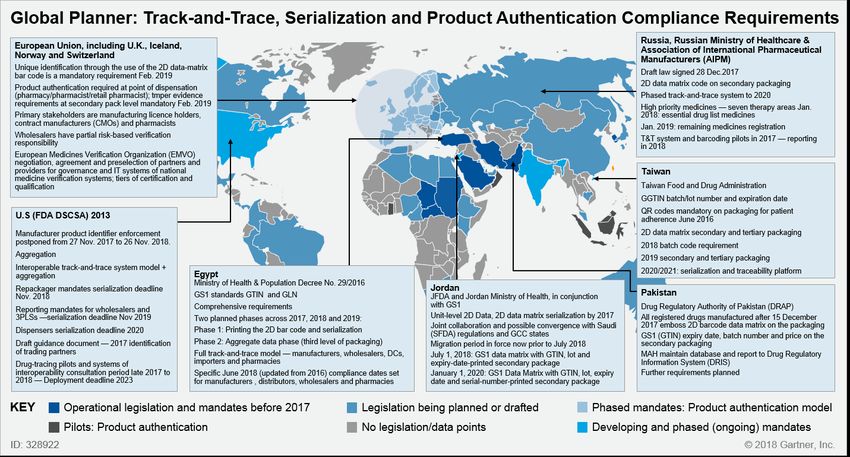
Pharmacy :
                              Former Director of Global Pharmacy Management Regulatory, Policy and Compliance CVS Health
                              Former Director of Public Policy and Government Affairs for CVS Health

                          Pharmaceutical/Medical Device :
                              International Government Affairs
Brian Files                   US Federal and State Government Affairs

BBF Consulting,           Expertise:
LLC.                          Supply Chain Policy and Compliance
                              Large retail public policy issues
                              Statutory and Regulatory Analysis
                              Strategic Business Development
Industry Experience and       Risk Assessment and Mitigation
Expertise                     Advocacy/KOL Management
                              Results Orientation - Market Access
                              International Experience
                              Diversity and Talent Acquisition

                          Education:
                              MBA, Corporate Strategy - Marketing, University of Michigan
                              BA, History - Political Science, Cornell University

                             BBF Consulting, LLC. 2019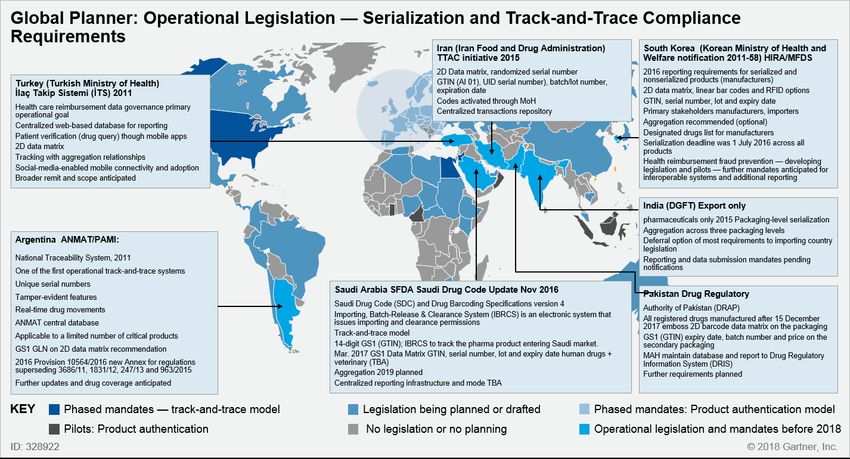
DSCSA Background
                    NACDS
                    • Diane Darvey – Chris Smith – Steve Perlowski
                    • Supply Chain Work Group
                    • DSCSA Regulatory –
                    • FDA Messaging and Communication
                    • Policy and Government Affairs – Federal and State
Brian Files
                    Pharmaceutical Distribution Security Alliance (PDSA)
BBF                 • DSCSA “Commercial Trade Association”
Consulting,         • Pharmacy Representation
                    • RxGPS – Global
LLC.                • Migration and Operational Subcommittee
                    • Stakeholder Dynamics

                    Healthcare Distribution Alliance
                    • Pharmacy Representation
                    • FDA Messaging and Communication
                    • State Wholesale Legislation and Regulatory Frameworks

                    Florida Drug Distribution Wholesale Advisory Board

                       BBF Consulting, LLC. 2019                           3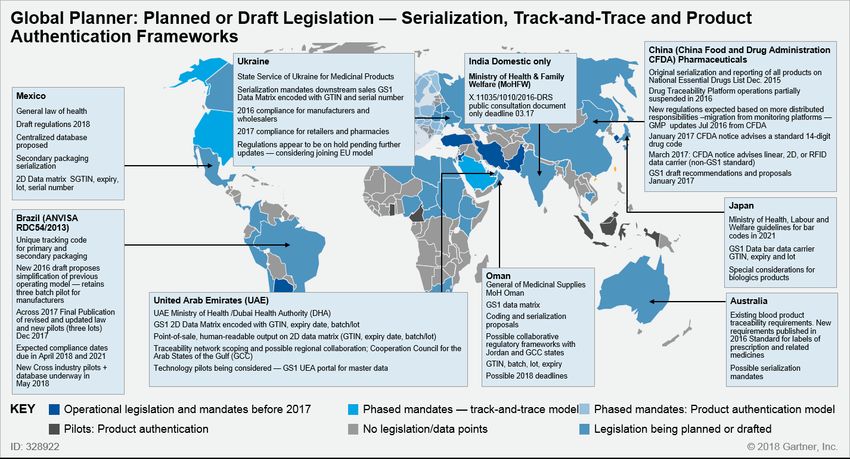
Overview of the Drug Supply Chain and Security Act:
  •   Current Status
  •   Serialization
  •   Risk
  •   Global to Local Readiness
  •   Downstream Readiness
  •   The Go Forward: Opportunities and Value

                       BBF Consulting, LLC. 2019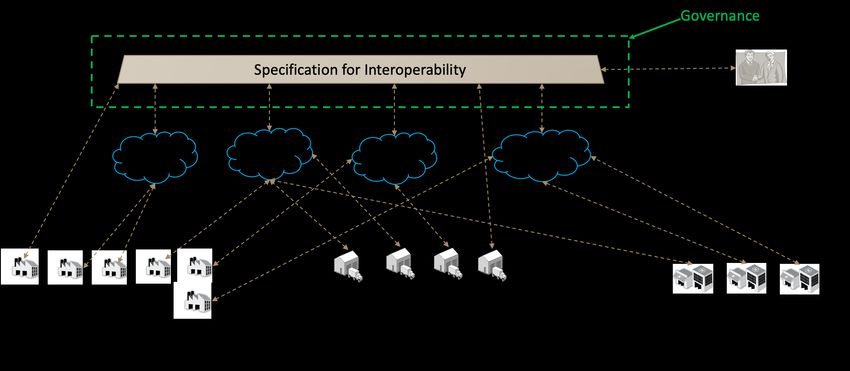
DSCSA Background

                    What is the Drug Supply Chain Security Act (DSCSA) and what is its purpose?
                    Federal law designed to build an electronic, interoperable system to identify and trace
                    prescription drugs as they are distributed in the United States.

                    The system will facilitate the exchange of information at the individual package level about
                    where a drug has been in the supply chain.
                         • enables verification of the legitimacy of the drug product identifier down to the
Drug Supply                 package level
                         • enhances detection and notification of illegitimate products in the drug supply chain
Chain Security           • Facilitates more efficient recalls of drug products.

Act                 Requires drug manufacturers, wholesale drug distributors, repackagers, and dispensers (to
                    work in cooperation with FDA to develop the new system over the next 10 years.

                                            COMMERCIAL DRIVEN SOLUTION!

                       BBF Consulting, LLC. 2019                                   5
DSCSA Timeline – Traceability Implementation                                                           Staggered
•   11/27/2017: Manufacturers affix product identifier to each individual package and homogenous
    case                                                                                               Implementation
•   11/27/2018: Repackagers affix product identifier to each individual package and homogenous case
•   11/27/2019: Wholesale distributors must only accept products that contain the required product
                                                                                                       Regulatory Guidance and
    identifier; and verify product identifier before redistributing returned products
                                                                                                       Compliance Requirements
•   11/27/2020: Dispensers must only accept products that contain the required product identifier
                                                                                                       for Manufacturers,
•   2023: Unit level traceability
                                                                                                       Wholesalers, and
          2017     I        2018       I         2019           I        2020   I…I     2023           Dispensers

                                       WE ARE HERE
                                           WDs only accept
      Mfrs affix       Repackagers          products with
                                                                          Dispensers     Unit level
      Product          affix product       identifier; verify
     identifiers
                        identifiers        identifier before              only accept   traceability
                                             redistributing
                                                returns
                                                                         product with
                                                                           identifier

BBF Consulting, LLC. 2019 Product identification
Product tracing
Product verification
Detection and response – suspect and illegitimate
DCSCA: Key
Notification
Provisions and
Wholesaler licensing
Compliance
Third-party logistics provider licensing.
Requirements
T3
Transaction Information
Transaction Statement
Transaction History
BBF Consulting, LLC. 2019Dispenser Data Compliance
Track & Receive Lot Level Compliance Data
Stakeholders must be able to receive the lot-level Transaction History (TH), Transaction Information (TI), and Transaction
Statement (TS) compliance documentation for every product they purchase. “T3”
Verify "T3“ Compliance Data
DCSCA: Key Stakeholders verify the "T3" Compliance Data against the product that was shipped to them by their suppliers, and must
quarantine any product they determine to be suspect or questionable.
Provisions and
Compliance
Store "T3“ Compliance Data
Requirements Stakeholders must store the compliance information associated with every shipment they receive for a period of at least
6 years from the date of shipment receipt.
Retrieve & Respond to Request for Information
If the FDA or similar regulatory body issues a Request for Information (RFI), the stakeholder in question must retrieve
specific compliance data within 2 business days.
©2016 CVS Health and/or one of its affiliates: Confidential & Proprietary BBF Consulting, LLC. 2019 8 60% of key components of the law is statutorily
ambiguous*
General requirements – FDA role, Congressional
oversight, global influences
Operational Impacts – “aggregation and inference”,
DCSCA: Key error exceptions, communication, bad actors
Complexities Delay in key FDA guidance's
Interoperability
Uniformity, pre-emption laws and state regulations
Stakeholder and partner practices and business
resolutions
* Assessment from Pharmaceutical Distribution Alliance January 2015
BBF Consulting, LLC. 2019• Serialization is one of the first steps toward making every
capsule, vial, tablet or strip traceable through the
pharmaceutical supply chain
• Manufacturers required to affix 2D Bar Codes – downstream
partner prepare to receive 2D bar coded products
What is • Printing each saleable unit—think carton, tray and individual
bottles—and homogeneous shipper (case) with a unique identifier
Serialization? (2 Dimensional Bar Code), starting Nov. 27, 2017 – delayed until
June 2018.
BBF Consulting, LLC. 2019 Product Identifier: A GS-1-compliant standardized graphic that includes, in
both human-readable form and on a machine-readable data carrier:
The standardized numerical identifier,
Lot number, and
Expiration date of the product. (21 U.S.C. § 360eee(14))
Standardized Numerical Identifier (SNI): A set of numbers or characters
2D Bar Code used to uniquely identify each package or homogenous case that is
composed of the National Drug Code that corresponds to the specific
and product (including the particular package configuration) combined with a
unique alphanumeric serial number of up to 20 characters. (21 U.S.C. §
Requirements 360eee(20))
Package: The smallest individual saleable unit of product for distribution by
a Manufacturer or Repackager that is intended by the Manufacturer for
ultimate sale to the Dispenser of such product. (21 U.S.C. § 360eee(11))
BBF Consulting, LLC. 2019Manufacturers are already applying 2D barcodes on Product
• Manufacturers are not communicating product changes
• Unexpected barcodes can stop automated processes
• Not all stakeholders have 2D technology deployed
• New barcodes are being introduced (GS1 RSS Stacked) where there is
not enough room
• Linear NDC’s are being left off in favor of 2D
Serialization - Electronic Format - Compliance
• Some suppliers are now providing 3T information through online portals
Challenges instead of packing slips. There is concern that this may increase.
• Verification by DCs and Pharmacies of 3T information via vendor portals
and Risk for all incoming product is not operationally feasible
• Poor and inconsistent supplier packing slip data accuracy is also being
encountered.
Supply chain organizations and 2023
How and what structure to build
FDA Enforcement Discretion
BBF Consulting, LLC. 2019From Paper to Digits and Significant Issues:
Packing slips
Barcodes
Drop Ships/340B
Retail Level– Systems
Downstream Stakeholders
Serialization:
Granular Risks:
Delays – Manual fixes and quarantine turnarounds.
Business 1D and human readable formats still functional
Impacts Outsourcing data storage to third parties
Potential delays to dispensing.
What if 90, 95, or even 99% of manufactured product is
serialized?
Serialization issues and risk: arithmetic vs. exponential
BBF Consulting, LLC. 2019Colors are a problem
• Some manufacturers are attempting to make the DSCSA Product Identifier barcode blend in with the marketing
information on their packages by printing it in the same color.
Placement problems
GS1 Paper:
• Found barcodes that were printed too close together, which makes it hard for workers to read whichever barcode they need
to read.
• Found smudging, which I have observed can result from the ablated waste material being redeposited onto the package in
Assessing Current the laser ablation process.
• Found some packages where the prescribing information outsert attached to the package was blocking the DSCSA 2D
Implementation of DSCSA barcode so it was unreadable or difficult to read.
Serialization Requirements
2D Bar Code Data content problems
• McKesson found that an additional 8% of the products they analyzed did have an attempt at the DSCSA 2D barcode on
Issues
them, but these barcodes either did not have all of the mandated data elements present, or the information was encoded
incorrectly so it wasn’t usable.
• Think of it. Only 6.6% of the products McKesson scanned contained usable 2D barcodes, but 8% more
contained unusable 2D barcodes. That implies that the majority of attempts at compliant 2D barcodes are not actually
usable for compliance.
• If that percentage is maintained as the number of serialized products rises—and there is little reason to believe it won’t—
this is an indication that we have a serious problem in the industry.
BBF Consulting, LLC. 2019Error Handling with Aggregation and Inference
Error Handling with Aggregation and Inference
• Aggregation is not required by the DSCSA, but the statute contemplates its
use once serialization occurs beginning in 2023
o Trading partners will need to know which unit-level serial numbers are contained in their shipments
so they can include in their TIs and to assist with their receiving verification process.
• It is essential to making the DSCSA work
DSCA:
o Pharmacies cannot scan or read each individual saleable unit to match the physical supply chain
with the virtual supply chain
• Errors will occur particularly with manual packing
Aggregation o PI in the physical supply chain is not in the virtual supply chain and vice versa
─
and Inference -
Operational errors, such as unreadable bar codes
• Estimates of 4.5 billion units per year, so even high rates of accuracy will
Risks result in a lot of errors
• Industry is proposing that TS is not a statement of the accuracy of aggregation
by manufacturers/wholesalers
o The commissioned unit-level data from the manufacturer is the source of truth
• Industry proposes that authorized trading partners (ATPs) have controls in
place to identify and resolve errors as early as possible, but leave the details up
to the individual business
o Request for FDA guidance to clarify how industry handles errors in inference/aggregation; call to
permit stakeholders to resolve errors among themselves and only treat product with such errors as
suspect/illegitimate where errors cannot be resolved.
BBF Consulting, LLC. 2019Error Handling with Aggregation and Inference
Guidance: NDC Operational Issues
• Human-readable portion of the product identifier, we understand that some
stakeholders object to using the NDC instead of the GTIN.
• NDC appears somewhere on the package in a human readable format, we can
be supportive of the product identifier format recommended in the Draft
Guidance.
DSCA: • FDA’s recommendation 2D data matrix barcode be near the human-readable
Guidance and portion of the product identifier on the package..
NDC Issues • Manufacturers and repackagers may want to apply the product identifier to the
package level, which corresponds with the package level at which dispensers
will ultimately dispense the product.
• Manufacturers and repackagers should not be removing or transacting in drug
product without linear barcodes
BBF Consulting, LLC. 2019Error Handling with Aggregation and Inference
Draft Guidance - Verification
• FDA suggests that suspect product may be physically quarantined or
electronically quarantined.
• However, FDA never defines the term “electronically quarantined.”
PDSA/FDA: • Wholesalers and manufacturers may already have their own understanding of
Guidance and what that term means and believe that they have systems to comply with
“electronic quarantining,” this term is unfamiliar to pharmacies.
Pharmacy
Risks Since pharmacies do not have any experience with electronic quarantine,
they are reticent to build a system for what they believe is electronic
quarantining, only to find out later that that system is not what FDA
envisions.
Adding new electronic quarantining functionality will likely require significant
resources and time
BBF Consulting, LLC. 2019Global track and trace regulations incorporating the serialization, traceability,
and verification of drugs will impact over 75% of the global drug supply by 2019.
Key issues risks:
security
liability
Global and privacy
technology standards and solutions
Individual legal standards and SOPs
Company penalties
Risks efficiency – “aggregation and inference”
centralized versus distributed models
reporting
third party utilization
global compliance
inventory efficiencies
Source: Pharmaceutical Distribution Alliance, TraceLink, Contract Pharma
BBF Consulting, LLC. 2019 40 popular brand-name drugs sold in the U.S., 70% are imported.
The FDA reports that 40% of finished prescription drugs sold in the U.S.
are foreign-made.
Global Serialization Readiness and Delays
Global Track Structural Legislative and Regulatory Differences
and Trace: Hard for governments to create pharma serialization and tracing regulations that are
workable
Compliance U.S. Enforcement Discretion 2017-2018
and Updates Brazil - withdrew their entire regulation, changed their law, and published a more
reasonable timeline that would result in full serialization by the end of 2021.
China - withdrew their pharma serialization regulation – delayed
Egypt, India and Pakistan have each pushed back one or more of their pharma
barcoding or serialization deadlines.
Delays in deadlines and enforcement are not uncommon. But until they are officially
announced by a given government, companies should not assume they will be
pushed out and should continue
RISKS: GLOBAL AFFECTS LOCAL
Source: Pharmacychecker.com 2018
BBF Consulting, LLC. 2019Big 3 - The Wholesaler Portal
Nexus of the supply chain; doing yeoman's work, yeoman's responsibility
Contrary to popular belief, pharmacies are NOT fully compliant with the
DSCSA if they are only relying on their primary wholesaler’s portal for
DSCSA.
Portal access may feel like a cost-effective compliance approach, but it may
introduce staff inefficiencies plus business risk.
Downstream
Compliance: Pharmacy Issues/Risks- Portals:
Guaranteed storage of your data for the required 6 years?
Wholesaler Guarantees around portal real-time reporting?
Confidence to access T3 quickly in the event of a suspect product
investigation or government inquiry?
If you resell, borrow or loan drug products to another dispenser, will the
wholesale portal provide compliance?
What happens to T3 if you change wholesalers?
Drop shipments? How will manufacturers deliver T3 directly to you?
BBF Consulting, LLC. 2019Wholesalers Accepting Product Returns:
Until Nov. 27, 2019: wholesalers may:
• Accept saleable returns from dispensers per terms and conditions of
agreement
• Redistribute such returns without providing prior TH. TH then begins with
wholesaler that accepted return
Wholesaler: Starting Nov. 27, 2019: wholesalers may accept returns: only if
wholesaler can associate the returned product with the TI and TS
Product
Returns
BBF Consulting, LLC. 2019The Office of the Inspector General Report on DSCSA Readiness
Key Takeaway/Risks:
OIG found that selected dispensers are moving toward full implementation of the
DSCSA’s requirements for the tracing of drug products. However, some concerns
OIG Report: exist about missing information and a lack of awareness of DSCSA
requirements.
Pharmacy Between December 2016 and February 2017 the Health and Human Services OIG
Readiness and interviewed 40 dispensers about their DSCSA readiness:
• OIG requested that dispensers submit examples of drug product tracing
Compliance information provided by their trading partners
Issues • Only 26 of the dispensers received all required elements of the DSCSA
• Remaining 14 dispensers were missing a few of the required elements
• Two of these dispensers were unaware of the DSCSA and requirements for drug
product tracing
• 40 dispensers in this study received drug product tracing information in a variety
of transmission modes and formats
source: OIG Report March 2018 https://oig.hhs.gov/oei/reports/oei-05-16-00550.asp2017 | Confidential & Proprietary 11
BBF Consulting, LLC. 2019Interoperability and Unit Level Electronic Traceability Mandate
Real-Time Trust Information Build
No one structured and standardized approach
Multiple stakeholders applications and serialization architecture
Interoperability Governance – Distributed and/or Centralized Model:
Cybersecurity
and Risk: Liability/reliability
Data privacy
What is the go
forward to 2023? Can current technology manage the goal of DSCSA 2023?
BBF Consulting, LLC. 2019Urgent Need for DSCSA Governance
DSCSA implementation in 2023 may occur in one of three ways:
a. The implementation vision and building blocks may develop unsystematically over the
next few years. This is the current process, and it is largely set by the single supply chain
sector that happens to be best-organized.
Governance & b. A representative group of stakeholders from multiple sectors may organize to define a
comprehensive blueprint for the end-state, and this will provide direction for development
of the building blocks.
PDSA c. The government, suspecting a lack of private-sector will, or desiring to exert its influence,
organizes a public-private-sector initiative under its control and direction.
BBF Consulting, LLC. 2019PDSA
Public Private Partnership
Dynamics
Committees – Visioning, Governance
White Paper
PDSA
Governance Steps to Governance:
1. Commitment among sector representatives to develop and establish a governance body
Board to undertake the objectives on slide 3, including clear definition of the role of trade
associations.
2. Consensus among sector representatives to a governance body structure (e.g., Board
structure and membership, rights and responsibilities, voting structure), including a
transition plan that allows maximum input from all companies members under a flexible
structure until a more formal (i.e., 501(c) with definitive voting rights, etc.) is necessary.
3. Addition of technical advisory expertise (LP commitment to add technical expertise, such
as a subcontractor).
4. Execution of objectives, beginning with blueprint development.
Pharmacy Need to Engage in Scope and Scale
BBF Consulting, LLC. 2019“The reason blockchain technology could be a DSCSA game changer is that each
validated transaction creates a block that attaches to the chain of blocks
before it, thereby creating an easy-to-follow trail.”
Blockchain is not a central repository and works with any format of information
it would not allow drugs into the system that did not come from the originating
manufacturer.
DSCA 2023: it is this data integrity that generates trust—an important element in the chain of
custody.”
Is Blockchain a
Solution? There are many issues slowing blockchain momentum:
Stakeholder ecosystem
Individual versus collective compliance
Government role
Investment requirements
Time to transition
Learnings from start-ups, think tanks, consulting groups, and studies
Multiple groups (at least 9 identified) trying to create standards
SAP has launched a supply chain tracking service based on blockchain
BBF Consulting, LLC. 2019Supply Chain Expectations
Need the ability to respond more quickly than ever while
maintaining accuracy and integrity.
Expected to be data driven and demand aware
Must have access to and the ability to analyze disparate data
Digitized sources in the time frames required
World: IT and Profound implications for business-to-business (B2B) processes
and their underpinning technology
Reality Resilient in the face of external forces such as weather, war,
workers, and regulation.
BBF Consulting, LLC. 2019“The reality is that leading companies are moving quickly and
laggards may soon find themselves uncompetitive”
Digitized Compliance vs. ROI and Value:
World: IT and How do you ensure DSCSA compliance AND maximize the
Reality value of your serialization investment?
BBF Consulting, LLC. 2019What are We trying to Solve?
Create DSCSA Compliance Value
Potential value-based and revenue-generating benefits of track and trace:
• Enable target recall to reduce cost, lost sales, and time
Digitized • Eliminate duplicate return reimbursement
• Prevent counterfeit and fraudulent product returns
World: Use • Eliminate duplicate chargebacks
• Reduce cost related to investigating discrepancies in chargeback requests
Case for • Improve inventory accuracy
• Improve inventory visibility, thus positioning and control of channel inventory
Inventory • More accurate order fulfillment and shipping
• Improve expiry management
Management • Prevent waste to revert to supply chain
• Improve warehouse performance analysis
• Improve production failure analysis
• Improve procurement and invoicing automation
• Enable patient-centric engagements (e.g. e-leaflets and target information)
• Improve demand forecast
• Enable track-and-trace as value-added service for customers
• Ability to conduct inventory at the bottle level for internal shrink issues
BBF Consulting, LLC. 2019Q&A Thank you!
BBF Consulting, LLC. 2019Addendum BBF Consulting, LLC. 2019
Transaction Information (TI):
the proprietary or established name or names of the product;
the strength and dosage form of the product;
the National Drug Code number of the product;
the container size;
the number of containers;
Transaction the lot number of the product;
the date of the transaction;
Information
the date of the shipment, if more than 24 hours after the date of the
transaction;
the business name and address of the person from whom ownership is
being transferred; and
the business name and address of the person to whom ownership is
being transferred.
BBF Consulting, LLC. 2019BBF Consulting, LLC. 2019
BBF Consulting, LLC. 2019
BBF Consulting, LLC. 2019
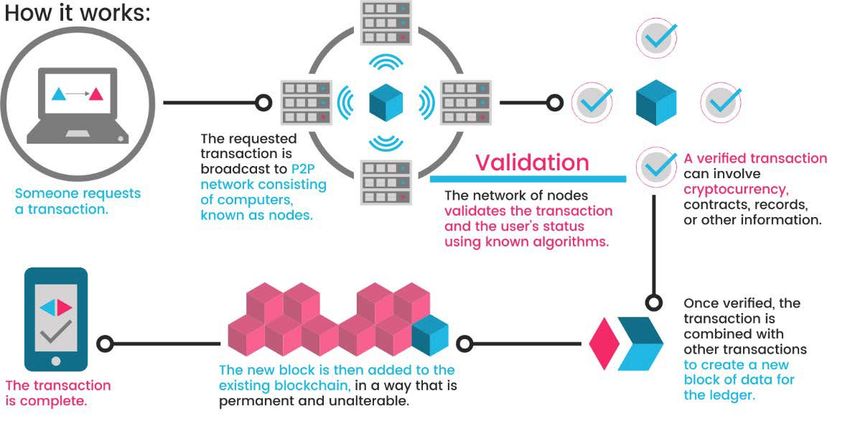
A blockchain is a distributed ledger that does the following:
Records any transaction or information chronologically,
permanently and unalterably
Uses cryptography that is computationally impractical to break Is
visible to all permissioned users
Is Blockchain a
Solution? Uses Peer-to-Peer transmission, with each node forwarding new
transactional information to all others
Can trigger transactions automatically, based on business logic
and custom algorithms
Verifies transactions through node consensus with no reliance on
third-party intermediaries (e.g., clearinghouses)
BBF Consulting, LLC. 2019Is Blockchain a
Solution?:
The
Ecosystem
BBF Consulting, LLC. 2019Data: Driver of Change:
Supply chains have over 50 times more data available to them than just five
years
Less than a quarter of that data being analyzed in near real time for value
Within the next three years, half of all applications will have embedded
cognitive capabilities —
Digitized We will be able to do things better and faster - but also to do things that
simply couldn't have been done
World: IT and
Reality Rose Colored Glasses – CEO’s
55% of supply chain organizations believe themselves to be past the midpoint
of digital maturity
Almost 8% say they are at the most advanced stage
57% of survey respondents felt that their business would be disrupted by
either an existing competitor or a new market entry within the next year.
Source: IDC Research 2018 BBF Consulting, LLC. 2019You can also read


