Engaging Students in Online Distance Learning - June 2018 - Sparqs
←
→
Page content transcription
If your browser does not render page correctly, please read the page content below
Engaging Students in
Online Distance Learning

                       June 2018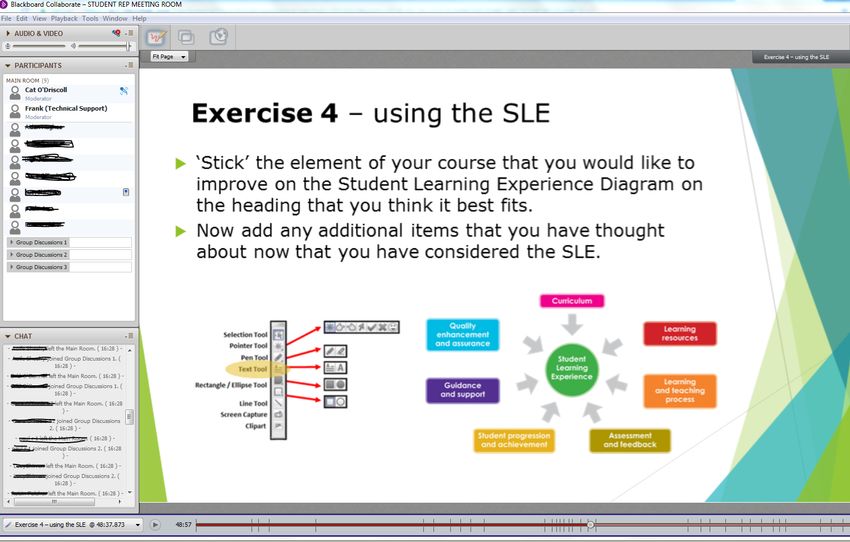
AUTHOR:
Simon Varwell
Development Consultant
sparqs

                         2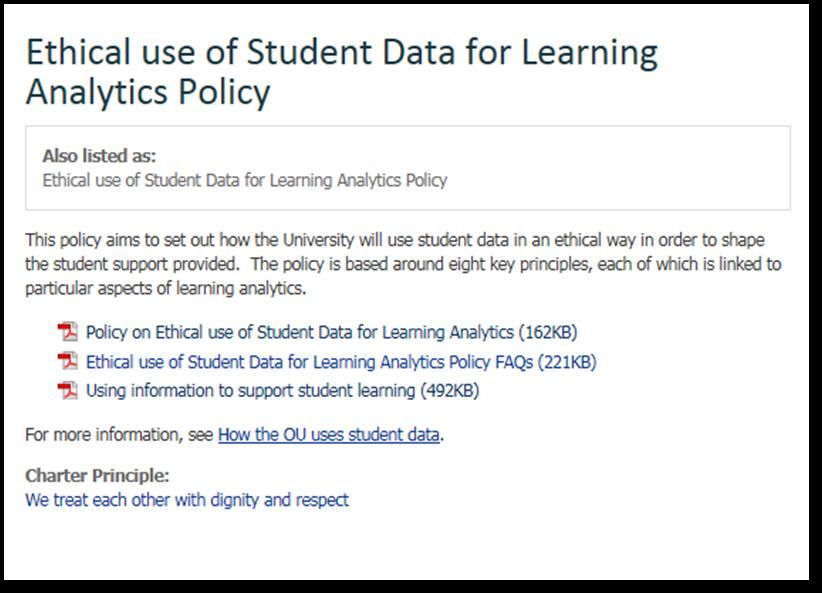
CONTENTS

1.   Introduction                                          4
1.1 Overview                                               4
1.2 Background                                             4
1.3 Format                                                 5
1.4 Definitions of ODL delivery                            5

2.   Structures of engagement                              7
2.1 A strategic approach to hearing the ODL voice          7
2.2 Representative structures                             10
2.3 Training of online course reps                        12
2.4 Effective tools of communication                      16

3.   Engagement in learning and teaching                  19
3.1 Strategic management of the ODL learning experience   19
3.2 Partnership and policy                                22
3.3 Student data and learning analytics                   28

Acknowledgements                                          30

References and further reading                            30

                                       3
1. Introduction

                    1.1 Overview

                    This resource is a guide for institutions and students’ associations on
                    engaging online distance learning (ODL) students in shaping the quality
                    of their learning experience. It provides tools, case studies and
                    guidance and is based on work with a number of institutions.

                    It is aimed at those who have responsibility for engaging ODL students
                    in quality, such as student officers and students’ association staff, staff
                    with quality, management or learning and teaching roles, and those
                    directly involved in ODL delivery.

                    The objective of the resource is to enable those in related roles to
                    reflect on and enhance their engagement of ODL students, with a view
                    to those students better shaping their learning experience and feeling
                    as full a part of the partnership approach to quality as any other
The                 students.
engagement of
ODL students        The engagement of ODL students should see them being regarded fully
should see          and equally as students of the institution, just as on-campus students
them being          are. It is important for them to be individually and collectively heard by
regarded fully      institutions and students’ associations in a way that is not a limited
and equally as      issue where solutions lie within one locus of responsibility. Rather, they
students of the     should be engaged through the multiple dimensions of practice and
institution, just   levels of decision-making within the quality system, where ODL
as on-campus        students and those who represent them should be fully involved at all
students are.
                    levels.

                    It is therefore recommended that those working together to use this
                    guidance include a range of institutional roles relating to quality,
                    learning and teaching (especially of course in ODL provision) and
                    student engagement, plus academic- and ODL-related officer and staff
                    roles in students’ associations.

                    1.2 Background

                    As with all of sparqs’ work, sector input is a key ingredient of this
                    resource. A number of universities have asked sparqs about the
                    engagement of ODL students, and these universities have gone on to
                    work with sparqs to develop their ODL engagement and contribute to
                    sparqs’ thinking, culminating in this resource.

                    Work has consisted of combined workshops, work within institutions and
                    students’ associations, and desk research; all of which has explored the
                    nature of ODL delivery, the challenges and opportunities it presents for
                    student engagement, examples of effective practice, and the aims and
                    impact a resulting resource should have.

                    Joining the Scottish institutions in contributing to the project has been
                    Hibernia College in Ireland, which joined the project as a result of its
                    involvement in the National Student Learning Programme (NStEP)1 in
                    Ireland, to which sparqs has acted as a consulting agency between
                    2016 and 2019. Hibernia College is a private college, offering blended

                                                4
learning accredited professional programmes. It is the leading provider
of initial teacher education in Ireland. It has offices in Dublin and
Westport, with students across Ireland.
Collectively, these participants represent diverse types of institutions, a
range of experience and history in ODL delivery, and various models
and practices of student engagement. They have therefore contributed
tremendous expertise and valuable perspectives to this project and this
guidance. A full list of contributors can be found at the end of this
All students document.
have an
element of
1.3 Format
online delivery This resource is split into two main chapters, which deal in turn with
as part of their institutional and individual/course levels of decision-making.
learning
experience (it The content of each section includes a range of toolkits, questions and
would be hard case studies, drawing on practice from across the sector. The content is
to envisage a written to be predominantly relevant to universities, given the level of
single student ODL practice within universities and the fact that demand for this
in Scottish resource has come from them.
higher Reference will also be made throughout this guidance to the Student
education who Engagement Framework for Scotland2, which outlines a number of
does not at elements and features of student engagement activity and presents a
least from time basis for planning and benchmarking within institutions.
to time use a
virtual learning
environment Elements of student engagement Features of student engagement
(VLE) or other
web-based 1. Students feeling part of a supportive Focus on enhancement and
resources). institution. change.
2. Students engaging in their own Appropriate resources and
learning. support.
3. Students working with their Responding to diversity.
institution in shaping the
direction of learning. Valuing the student contribution.
4. Formal mechanisms for quality A culture of engagement.
and governance.
Students as partners.
5. Influencing the student
experience at a national level
1.4 Definitions of ODL delivery
Defining online distance learning – and thus this resource’s scope – has
been a crucial but complex task throughout the lifecycle of this project.
Clearly, all students have an element of online delivery as part of their
learning experience (it would be hard to envisage a single student in
Scottish higher education who does not at least from time to time use a
virtual learning environment (VLE) or other web-based resources). So
there is a continuum ranging from those who are purely distance
learners, for instance those studying at home; through those who have
5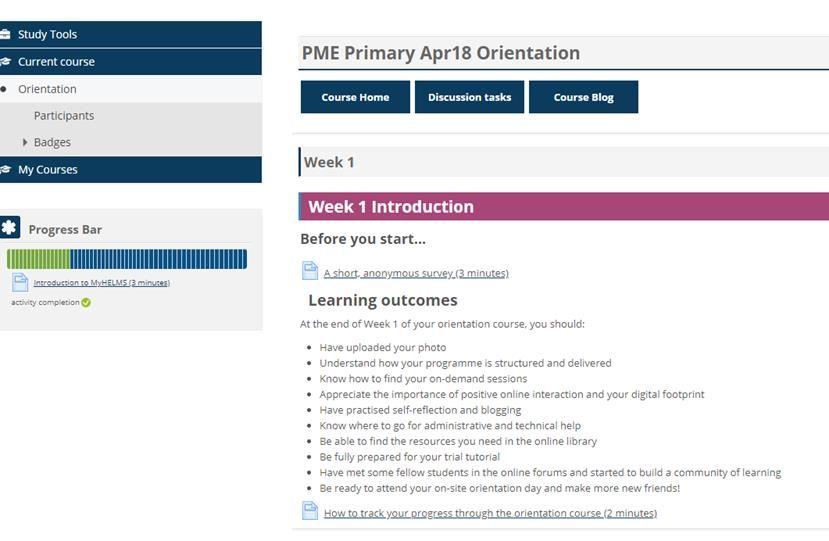
some form of face-to-face delivery, such as an on-campus induction or
                   occasional tutorials; to those who have a large amount of face-to-face
                   interaction but who still primarily study through online tools (such as
                   students on blended learning courses).

                   However, the challenges identified when talking about ODL arise when
                   students are not usually studying in a face-to-face environment at the
                   same campus as their fellow students or their teaching staff – and so
                   are studying both online and at a distance.
Online distance
learning is a      Thus, the definition this resource will take as its starting point is
course or          that online distance learning is a course or programme where
programme          students study through online tools, significantly or entirely at a
where students
                   distance from their fellow students and teaching staff, or from
                   their institution’s campuses.
study through
online tools,
                   There are three clarifications required when considering this definition.
significantly or
entirely at a
                   Some complications arise with blended learning, where students may
distance from
                   experience a mix of face-to-face and online delivery and may be
their fellow
                   studying alongside some – but not all – of those learning and teaching
students and
                   on their course. There may also be programmes that contain elements
teaching staff,    of work placements. But in these cases, the dynamics of online learning
or from their      – and the inherent challenges and opportunities for student
institution’s      engagement – still present themselves, albeit sometimes in different
campuses.          ways.

                   Secondly, many of the issues presented by participating institutions as
                   affecting ODL students’ learning experiences are not exclusively
                   pertaining to their online and distance dimensions, but to other factors.
                   For instance, ODL students are often also international, part-time,
                   mature or postgraduate students. As such, ODL cohorts might rarely be
                   described as homogenous or even
                   primarily distinguished by the ODL
                   aspect above others.

                   Finally, another consideration is that
                   there will be many students in an
                   online environment who are studying
                   abroad, who might access facilities
                   local to them but who will never visit
                   their delivering campus, even for
                   induction or graduation.

                   One aspect of such delivery is
                   transnational education (TNE), a
                   similarly complex method of learning
                   and teaching which is growing steadily in
                   Scotland. This is not included within the
                   scope of this document and is the topic of
                   a related set of guidance from sparqs –
                   Engaging Students in Transnational
                   Education3, which will be published in
                   Autumn 2018.

                                               6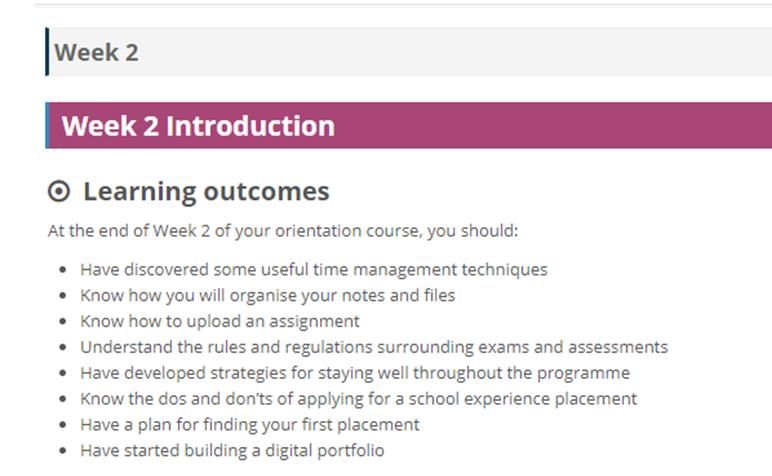
2. Structures of engagement
                   This chapter looks at the strategic approaches to hearing the ODL voice,
                   and how structures of quality enhancement and student representation
                   can best collect, understand and advocate for ODL students’
                   experiences of learning.

                   Much of the ODL experience, and the way students are engaged, is
                   shaped by partnership activity where the university and students’
                   association work together to agree strategic approaches.

                   Key questions here are around how ODL students are represented by
                   themselves or the wider representative system and how they impact on
                   the students’ association’s policy and activities, and how they can
                   impact on institutional strategy and course level activity. Successful
A challenge        development here should result in an institution that has ODL students
often arises for   fully at the core of everything it does.
ODL student
engagement         2.1 A strategic approach to hearing the ODL voice
when it is not
                   A challenge often arises for ODL student engagement when it is not
included as a
                   included as a core activity within the strategic direction of either the
core activity
                   institution or students’ association and is seen as an “afterthought” or
within the         extra piece of work for a non-traditional group.
strategic
direction of       It is argued here that engagement at an institutional level will be more
either the         appropriately enabled by regarding ODL students fully and equally as a
institution or     part of the institution alongside on-campus students.
students’
association and    Therefore, successful engagement can also require some deep reflection
is seen as an      on, and enhancement of, activities that are aimed to put the ODL
“afterthought”     student voice at the heart of institutional thinking.
or extra piece
of work for a      In representing ODL students’ views, it is important to note that reps
non-traditional    could be online themselves, for example course reps or more senior
group.             officers who are elected from, and by, online students; or alternatively
                   ODL students may be represented by other student reps who may be
                   on-campus but who are supported to engage those who they may not
                   meet face-to-face.

                   Where a number of online-based reps exist, for instance in an entirely
                   online or blended learning course, department or institution, it is worth
                   institutional staff and reps themselves exploring more widely how that
                   system of representation can be developed to work most effectively.

                                               7
Case study – Strategic developments at Hibernia College

                  Hibernia College offers Professional Masters in Education programmes
                  (in primary and post-primary education). There are two cohorts per
                  year (Spring and Autumn) for each of its programmes, and it elects
                  one student representative from each programme cohort. They serve
                  for the two years of their programme’s lifecycle and represent all
                  students in that cohort, and often co-reps are elected too.

                  In Summer 2017, sparqs undertook two days’ consultancy at Hibernia
                  College in Dublin to help staff and students to develop a strategy for
                  representation for a student profile that is entirely blended learning
                  and flexible with no central campus. The onsite elements take place in
                  regional venues around Ireland.

Outcomes and      The consultancy was a chance for staff in a variety of teaching, quality
impacts of the    and support roles to get together with student reps from across the
work included     country.
improved
communication     Work included reflecting on the nature of the student rep role,
between           mapping its activities over a programme lifecycle, and creating a draft
student reps,     job description.
an agreed map
of how            There was also a workshop on creating a student rep forum for the
students          college. This involved using a series of headings with opposing pairs of
should engage
                  statements, and asking participants to create new statements under
                  each heading to reflect how they felt the student rep forum should
with
                  work. These opposing pairs of statements can be found in the Tool for
commenting on
                  Developing a Forum for Students on Online Courses4 developed by
their course,
                  sparqs and accessible in the sparqs Resource Library.
and a
commitment to     Outcomes and impacts of the work included improved communication
providing         between student reps, an agreed map of how students should engage
customised        with commenting on their course, and a commitment to providing
online training   customised online training to course reps. This training was delivered
to course reps.   as part of the college’s participation in Ireland’s National Student
                  Engagement Programme (NStEP) (see case study on page 12).

                  It was agreed that the student representative forum should be entirely
                  student led and flexible. The College agreed to provide resources to
                  facilitate this and an online meeting room via Blackboard Collaborate
                  was set up. The reps themselves set up a WhatsApp group.

                  The development of a noticeboard and area on the VLE for the Student
                  Representative forum is in progress.

                  Another discussion point was the election and nomination process and
                  promotion of the role. To give students a better understanding of the
                  role in a blended learning, non-campus based environment, a student
                  rep was invited to present at the onsite orientation a video was created
                  with a student rep, which was made available to new students via the
                  online orientation programme on their VLE.

                                              8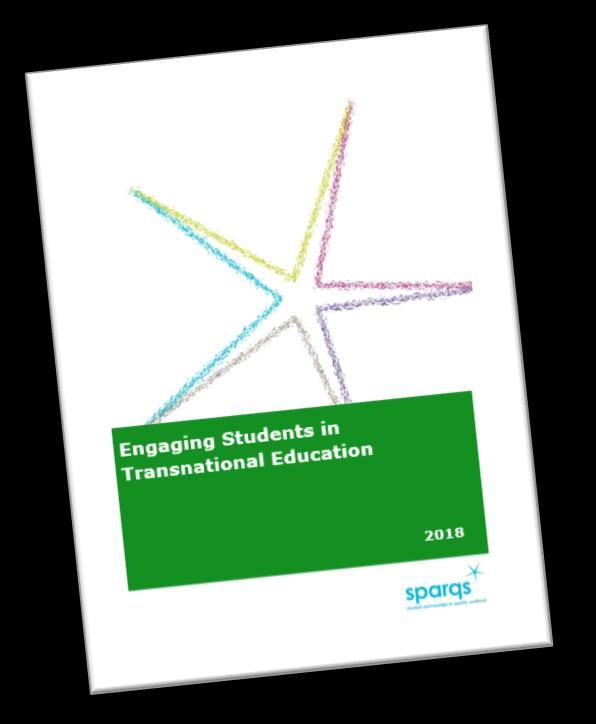
In learning environments or institutions that also feature campus-based
                  provision, reflection is required on how ODL students can be fully heard
                  and considered in decision-making. This may arise from periodic review
                  activity or other institutional planning, and can be informed by
                  comprehensive research into the student view.
In learning
environments
or institutions    Case study – Student representation for Online Learners at
that also          The University of Edinburgh
feature
campus-based       A Student Representation for Distance Learners Task Group was
provision,
                   created in 2014-15 by The University of Edinburgh’s Senate Quality
reflection is
                   Assurance Committee. It aimed to look at whether, in the light of
                   increasing online learner student numbers across the institution,
required on
                   existing policies and regulations were meeting the needs of distance
how ODL
                   learners, in line with the scope of the Quality Assurance Agency’s
students can
                   Quality Code for Higher Education.
be fully heard
and considered     The Task Group included staff from across the university, student
in decision-       officers and online learning students. Video-conference was used for
making.            meetings to allow full participation by those not based on the
                   university’s campuses. It produced guidance on how representation
                   of online learner students should work, including in internal periodic
                   review, Student-Staff Liaison Committees, and how to engage
                   students through technology.

                   One challenge the Task Group learned about was the difficulties
                   Student Representatives had in contacting the online learning
                   students they represented. As a result of this, one of the outcomes
                   recommended that Schools facilitate communication between Student
                   Representatives and the students they represent, either through the
                   sharing of email addresses or using mailing lists. This
                   recommendation not only benefited the online learner students but all
                   students across the institution.

                   Case study - Surveying distance learning students at the
                   University of Dundee

                   Student representation was highlighted as an area for enhancement
                   in a 2017 audit of distance learner experiences at the University of
                   Dundee.

                   To respond to this, the university and Dundee University Students’
                   Association (DUSA) formed a Distance Learning Working Group
                   which, among other activities, commissioned a survey of distance
                   learning students. The survey was carried out during December 2017
                   and January 2018, and explored ODL students’ perceptions of
                   feedback and representation opportunities.

                   The survey generated over 140 responses from across a range of
                   ODL provision, with around a quarter of respondents residing outside
                   the UK.

                                             9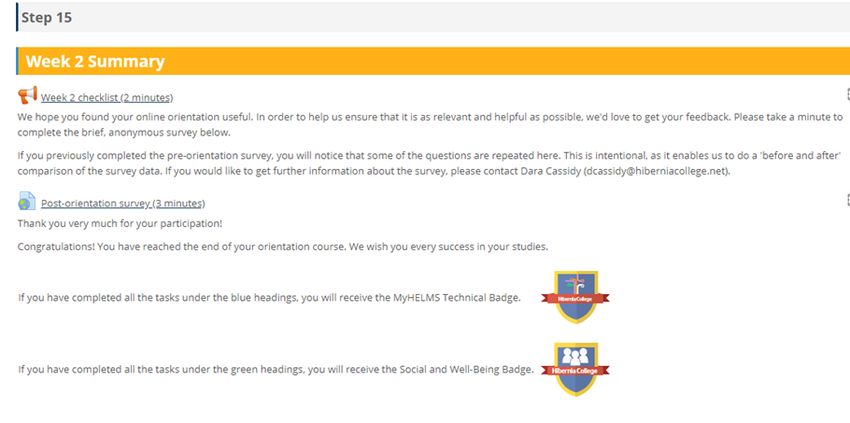
Useful data was generated about the various ways students give
                   feedback on their learning experiences, how the loop is closed on this
                   feedback, and their perceptions of the course rep system and DUSA.

                   From those respondents who stated they were course reps, a lot of
                   valuable information was gained about their motivations for taking up
                   the role, and how those reps engaged with their fellow students and
                   with staff.

                   Although the survey highlighted many positive areas of practice,
                   areas for further development, particularly around awareness and
                   communication, were identified for the Distance Learning Working
                   Group to take forward.

                  2.2 Representative structures

                  It is important for students to be successfully engaged by students’
                  associations’ representative structures in decisions about their learning
                  experiences and the wider work of the association and university.

                  ODL students are, like campus students, members of their students’
                  association, though traditionally have been less successfully engaged.
                  This is despite the growth of ODL delivery, the importance of ODL
                  students’ views to the association, and the considerable capability they
                  might have (they are also often mature and PGT) in generating and
                  articulating clear views about the learning experience.

                  There is always scope for a group of students to have a representative
                  elected from amongst their number to develop students’ views on their
                  learning and work with staff on the issues raised. However, ODL
ODL               environments may present specific challenges, and alternative but
environments      equivalent models of representation may be required.
may present
specific          In some cases, blended courses can involve so many distributed
challenges, and   students that it is hard for reps to engage with them all and to be sure
alternative but   that they have reached all of their fellow students. Conversely, some
equivalent        modules, especially at the postgraduate level, may contain such small
modes of          numbers that electing a rep is not felt necessary. Indeed, one institution
representation    contributing to this guidance reports that its ODL student numbers
may be            range from 15 per course to 170.
required.
                  This presents a major question about what the constituency of a course
                  rep is – the programme, module, cohort, or something else. It could be
                  that the answer to this varies between courses. But significant variation
                  requires that representative structures are flexible enough to
                  accommodate this, while being rigorous enough to allow a consistent
                  quality of student input to reach higher representative levels.

                  Therefore, it is important to explore your institution’s course rep job
                  description and look at how each element does (or does not) apply
                  effectively to an ODL course.

                                             10
Questions to consider include:
The constituency of a course rep – Should representatives be
supported to represent all students on their course or module,
regardless of where they are based? Or, for example in blended
learning contexts, should there be one rep per site?
Job description – Does the standard definition of the role
highlight the existence of ODL students and emphasise the
responsibility reps might have for engaging students who they
might not see face to face?
Promoting the role of course rep – Conventional benefits of
the course rep role may not be relevant to distance learners. For
instance, getting involved in shaping the campus experience and
being part of a wider rep team may not be relevant to those
studying at a distance, and the many part-time or postgraduate
students among distance learners may not be interested in the
CV enhancement the role might present. So what is in it for an
ODL student to consider taking up the role?
Flexibility of system – Should the course rep system work in a
uniform and consistent manner across the institution? Or, given
that in many institutions ODL delivery can be concentrated in
certain subject areas, should there be variation according to
department, or even programme, allowing appropriate systems
to be introduced where there are high numbers of ODL students?
Part of the answer may depend on the autonomy over shaping
Course reps do the ODL experience that schools or departments might have.
not only need The international dimension – Where an ODL cohort includes
to engage with students in other countries, some of those students may have
their fellow legal or cultural obstacles to undertaking or contributing to
students and representative activity. How can institutions and SAs respond to
teaching staff, this issue in a sensitive but principled manner?
but with more School or department level – Course reps are generally best
senior reps. It supported by a system that includes a more senior level of rep at
is important for the school or department level. How should those roles be
students’ supported to ensure a strong link between the perspectives of
associations ODL students and the executive level of decision-making in the
generally to students’ association?
engage with It is important for those representing the views of ODL students to link
their ODL firmly into wider students’ association structures.
students
directly and to Besides communicating with students, the key aspect of the course rep
communicate
role is engagement with staff, including in formal course committees.
This might create barriers to full and effective engagement (except for
matters which
students who happen to live close to the campus where meetings might
are specifically
take place). Therefore, online or video-conference meetings are the
relevant to
best way of ensuring course reps can properly engage.
their
experiences. Course reps do not only need to engage with their fellow students and
teaching staff, but with more senior representatives. It is important for
students’ associations generally to engage with their ODL students
directly and to communicate matters which are specifically relevant to
their experiences. Also, School-level officers and executive-level
sabbatical officers need to have ODL representation within their remit,
or be trained to include and support the voices of ODL students.
11Case study – School Vice-President at the University of Dundee
A School President system exists at the University of Dundee, and in one school
there are School Vice-Presidents for two principal campuses of delivery in that
subject area. However, there are now plans to introduce a further School Vice-
President specifically for distance learning students from September 2018. This
means that the School President, who has a wide remit and a dispersed student
community, can be assured that the needs of off-campus distance learners are
being represented, and their views passed on to higher levels.
How reps can engage with distance learning students depends on the training
provided to them, which is covered in the next section, and the tools available to
them to communicate with students, which is the focus of section 2.4.
2.3 Training of online course reps
For course reps to be effective, they require training. With around 4,000 course reps
per year trained through sparqs’ programmes, this is a major part of student
engagement activity nationally. The need to train course reps on ODL courses is
equally high. Indeed, given the challenges of ODL engagement, it may be argued as
more important.
There are, essentially, two options here – face-to-face training and online training.
The former offers a significant benefit in terms of interaction, but of course this will
not always be feasible.
Case study - Hibernia College course rep training
Ireland’s National Student Engagement Programme (NStEP) provides course rep
training in face-to-face environments around the country. In spring 2018, NStEP
worked with Hibernia College to develop training that was customised to its
entirely blended learning, flexible and regionally-spread student population, who
are studying Masters courses in primary and post-primary teaching that involve
twenty-four weeks of professional placement. By producing content that took
account of this environment, training was delivered through Blackboard
Collaborate to reps who wouldn’t otherwise have been able to access a face-to-
face session.
The training was based on the materials NStEP uses in its campus-based delivery
(which in turn was based on sparqs’ course rep training). Two sessions, lasting an
hour and a half, were delivered by NStEP and involved a mix of presentation,
interactive discussion and breakout groups.
Feedback from the reps was very positive. The evaluation beforehand found that,
on a scale of 1 to 5, participants’ understanding of the rep role and the
mechanisms for student engagement within the college were an average of 2, but
this rose to 5 at the end of the session. One participant said: “I liked the
interactive nature of the training and the opportunity to get together with the
other class reps.”
The college now intends to continue the training in subsequent years, and to
record sessions to make them available to all reps. There are also plans to
develop further online content to accompany the “live” sessions and to reflect on
the measurement of success of the training in terms of wider student
engagement.
1213
Elsewhere, even in institutions with face-to-face campus delivery, online
                   course rep training is often employed, although it is important to
                   consider the advantages and disadvantages of such an approach.

In a number of     In a number of universities in Scotland, course rep training has moved
universities in    online, not only to benefit ODL course reps, but also to be a benefit to
Scotland,          on-campus students. Such reps are, it is found, able to do the training
course rep         in their own time, and on-campus opportunities for those that can
training has       access them can then be more about development, ongoing support
moved online,      and troubleshooting. This is an example of the institutional approach
not only to        being built around an ODL environment (rather than them being a
benefit ODL        “special case” outside the norm) but to the significant benefit of all
course reps,       others too.
but also to be a
benefit to on-     sparqs is producing a resource on developing online Course Rep
campus             Training, which covers the various aspects of developing the content in
students.          partnership between staff and students.5

                   Still others have a blended model, where face-to-face training is
                   provided, but online opportunities are also in place for those who cannot
                   participate on-campus.

                                              14
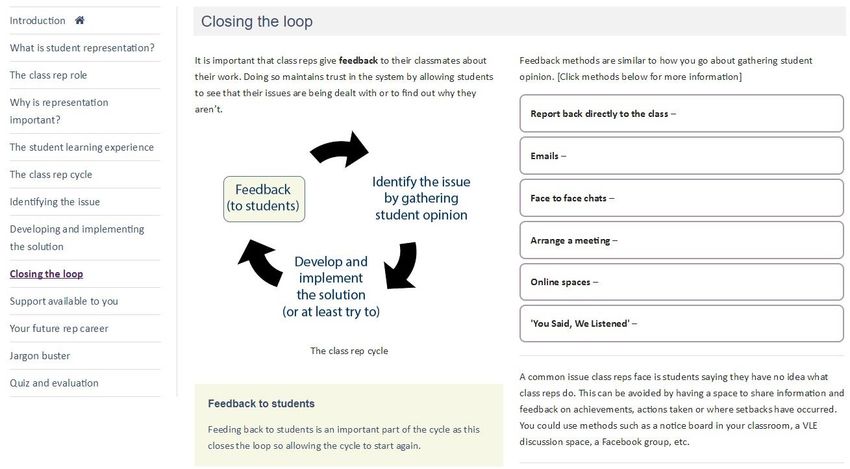
Case study – University of the Highlands and Islands’ online class rep training
The University of the Highlands and Islands launched their new online Class Rep
training resource in September 2017. Through the university’s Class Rep Group, which
brings together staff from across the university partnership along with staff and
student officers from the Highlands and Islands Students’ Association (HISA), a need
for an additional method of delivering training to Class Reps was identified, which
would be in addition to face-to-face Class Rep training, with the aim of ensuring that
more students are trained to carry out their role.
The online resource is available to students who are studying at a distance, or wholly
online, or students who have not been able to attend allocated face-to-face training
sessions due to other commitments or circumstances. The online resource is also
being used as a reference resource by Class Reps who received face-to-face training,
providing them with access to the resource throughout the year to refer to and
support them in their role.
Staff, too, have been engaging with the materials, so they can better understand what
their class reps are being trained in and work with them accordingly.
The online resource was developed in partnership with the university’s Educational
Development Unit, who led the technical design process. The Class Rep Group and
particularly HISA played an important role as consultees throughout the development
process. In addition, sparqs provided helpful feedback throughout to ensure that the
resource achieved all the intended outcomes.
HISA online Class Rep Training image
152.4 Effective tools of communication
This section looks at how ODL students are engaged as individuals in
conversations about the quality of their learning experience,
predominantly at a course level. This engagement can be undertaken
both by staff and by course reps. Inherent in this are issues of identity
and students’ ability to create a meaningful learning community across
a disparate group who engage with each other, wholly or
Inherent in this
predominantly, through online means, and their inclusion in quality
are issues of monitoring and enhancement activities in ways that are equivalent to
identity and campus-based students.
students’
ability to To this end, this area of work relates most strongly to elements 1 and 3
create a of the Student Engagement Framework for Scotland and is an example
meaningful of the link between the learning and wider student experiences.
learning
community For online courses, VLEs are a key tool for learning. However, they are
across a also an important platform for commenting on and shaping learning, in
disparate that they can be used to generate and articulate students’ views on
group who learning.
engage with
each other, However, in many instances, conversations with, and between, students
wholly or about their views of their learning also take place outside the VLE and in
predominantly, other online tools such as social media platforms.
through online
means, and Institutions report that it is quite common for cohorts within a course or
their inclusion module to create private groups on sites like Facebook, or create group
in quality chats in mobile tools such as WhatsApp. These will sit aside from staff-
monitoring and led groups within VLEs.
enhancement
activities in
It is important to consider the relative merits of different tools
of communication. How can students be encouraged to reflect
ways that are
on this and develop an appropriate balance of ways in which
equivalent to
they talk to each other, to their reps and to teaching staff, about
campus-based
the quality of the learning experience?
students.
16Case study – VLE and social media spaces at RGU
RGU:Union runs a Facebook group specifically for its distance learning
students. Students must individually choose to join it, so there is
always a risk that students will not participate, but the advantage of
this is that there is a certain vibrancy that comes from it being self-
selecting.
The group has generated useful feedback on a variety of topics that
would otherwise be unheard. For instance, the union learned much
from students through a large discussion on coursework deadlines
The group has where the unique perspectives of ODL students were brought to the
generated attention of officers.
useful feedback
on a variety of Meanwhile, RGU:Union and Robert Gordon University have also
topics that developed an open VLE area; ‘Partnership at RGU’. The area
would highlights that all students, and staff, are active and valued
otherwise be participants in university life, and that the university aims to
unheard. For engender an ethos of partnership working at all levels of decision
instance, the making. Particular care has been taken to ensure that both the tone
union learned and content is applicable to all students, including those studying at a
much from distance. In addition, the ongoing evolution of the specific Student
students Representative VLE area ensures resources and support are inclusive
through a large to the range of modes of delivery offered by RGU, and specifically,
discussion on forum areas stimulate collaboration amongst ODL representatives.
coursework
deadlines
where the Areas that staff and students could consider when exploring the range
unique of tools of communication at the course level might include:
perspectives of
ODL students Staff-led or student-led discussions – Partnership should be
were brought the goal for all learning experiences, and staff and students
to the attention should be able to develop a professional and respectful
of officers. conversation about potential improvements in learning.
Nonetheless, there is a case for using social media to develop
conversations in student-only environments, in exactly the same
way on-campus students will do so in social spaces. This is a key
opportunity for a course rep to be an effective collator, analyst
and presenter of student views.
Legal issues – With ODL cohorts spread across multiple
locations, some students may not, either through legal
restrictions in some countries or technical limits in some
workplaces, be able to access certain sites such as social media
pages.
Synchronicity – Is there a value to students having
synchronous chats to explore particular aspects of the learning
experience? Or is there a value in ODL being able to generate
discussion over multiple days – for example through threaded
discussions, or blogs by reps on which students can comment?
17 Diversity – Is there merit in students communicating across a
range of tools and platforms, to exploit the advantages of each,
or instead should engagement happen in as few locations as
possible to keep things simple and trackable?
Structured discussions – How might online tools be used to
enable conversations around different areas of the learning
experience? sparqs’ Student Learning Experience (SLE) diagram,
which is at the heart of its course rep training, and its
customised Postgraduate Student Learning Experience diagram,
may be useful foundations for conversations led by staff or
course reps.
183. Engagement in learning and teaching
The previous chapter looked at the structures of engagement at the
institutional and course level, and how staff and students can shape
those structures to work in partnership on the ODL experience. This
chapter moves on to look at the nature of engagement for ODL students
and how they can contribute to strategies that are relevant to their
experience.
Particularly important here is how the students’ association is able to
represent ODL students and work with the institution to put them at the
heart of all strategic activity relating to the learning experience.
3.1 Strategic management of the ODL learning experience
It is important that ODL students are engaged not as an afterthought,
but as students alongside any other. On a basic level, this means
ensuring a culture and approach that does not assume that experiences
It is merely the
and access to services are done on-campus. But that in turn depends on
ODL students being engaged directly by institutions and students’
language of
associations in strategic conversations about the learning experience.
learning and
teaching
This needn’t be an insurmountable challenge. Participants in this project
strategy or
have suggested that often it is merely the language of learning and
policy that
teaching strategy or policy that appears not to accommodate ODL
appears not to
students, but in fact practice can often be very strong. The difference
accommodate sometimes lies simply in whether or not ODL-inclusive language is used
ODL students, to describe the learning experience.
but in fact
practice can Those involved in developing strategies for the learning experience
often be very should, when initially exploring the enhancement of ODL student
strong. engagement, reflect on this through:
The areas of strategy that impact on ODL students (the what).
The role that ODL students play (the how).
How ODL students shape a strategy might be in one of four roles, each
of which will have its own specific requirements in terms of training and
support.
19Examples of tasks undertaken by ODL students in each role might be:
Information provider Completing module evaluation surveys.
– a completer of
Completing institution-wide surveys.
surveys
Completing the National Student Survey.
Giving feedback in focus groups.
Answering questions posed in VLE discussions.
Actor – collector and Shaping the content and tools of feedback.
analyst of feedback
Responding to and adding to others’ comments.
Identifying common themes in feedback.
Identifying priorities for decision-making.
Expert – recognised as Providing detailed case studies and anecdotal
experts in learning evidence about their learning experiences.
Expressing perspectives that can demonstrate
the experiences of a particular type of student,
such as an under-represented group.
Meeting with internal or external review teams.
Partner – authentic Being full members of committees, working
and constructive groups or review bodies.
dialogue
Being representatives who are a full part of
students’ association structures.
Proposing ideas, rather than simply commenting
on those of others.
Learning together with management.
Sometimes leading on areas of work, in
agreement with staff, such as communicating
with and engaging other students, or chairing
meetings.
20Using these four roles, what evidence is there for how ODL students shape key
strategies within the institution and students’ association? The strategies listed below
are purely suggestions and should be expanded upon.
The how
No real Information
Actor Expert Partner
role provider
University strategic
plan
University learning &
teaching strategy
University strategy
on assessment and
feedback
University strategy
on support services
The what
Quality
enhancement plan
University strategy
on online distance
delivery
University student
engagement
strategy
Student Partnership
Agreement
Students’ association
strategic plan
Course rep strategy
By identifying areas in the above table where there could be enhancement, institutions
and students’ associations can begin to agree the sorts of activities that could
strengthen ODL students’ engagement in strategy.
213.2 Partnership and policy
There are many ways in which students generally should be influencing
the policies that shape their learning experiences, and these tools
should be equally accessible for ODL students. This section looks at
SPAs present examples of those tools, including institutional activities such as
challenges for Student Partnership Agreements (SPAs) or review activity, and
how ODL elements of the course lifecycle, including induction and the use of
students are learning analytics.
engaged in
developing the The table on the previous page mentions SPAs as one possible strategic
tools and document. SPAs are a key process for developing partnership at an
projects of institutional level. They are short agreements between institutions and
engagement students’ associations that allow for the shared ownership of the tools of
outlined in the student engagement and a small number of major projects that can be
SPA and undertaken together. Guidance from sparqs on developing SPAs is
whether they
available on the sparqs website.6
reflect the
SPAs present challenges for how ODL students are engaged in
experiences developing the tools and projects of engagement outlined in the SPA
and needs of and whether they reflect the experiences and needs of ODL students.
ODL students. Indeed, enhancing the ODL experience may even be a project
Indeed, undertaken as part of an SPA.
enhancing the
ODL experience
may even be a Case study – University of the Highlands and Islands SPA
project
undertaken as The University of the Highlands and Islands’ Student Partnership
part of an SPA. Agreement, developed in conjunction with the Highlands and Islands
Students’ Association (HISA), included learning resources as one of
its 2017-18 projects.
Part of this has been a review of the virtual learning environment
(VLE), drawing on students’ experiences of the current VLE, including
those students studying online and at a distance, for whom the VLE is
of critical importance.
The previous year’s SPA included video-conferencing as one of its
project focuses, identifying ways in which the use of video-
conferencing, critical to students studying online or through blended
means, could be enhanced. Open and distance learning students
were consulted on this and demonstrations of the various alternative
software options were provided. The results are currently being used
to inform decision making on a replacement VLE for the university.
The involvement of ODL students in this is of particular importance as
it is their primary method of teaching.
A further way in which ODL students can be at the heart of shaping
institutional practice is through regular, informal interaction with staff
about the nature and experiences of online distance learning. Of course
these conversations can, and should, happen at the course level, but by
happening at the institutional level they allow for a bigger picture to
emerge of the strengths and opportunities for student engagement in
ODL activity.
22Case study – University of Dundee Distance Learning Forum
The University of Dundee has a Distance Learning Forum, which enables staff and
students, in partnership, to learn and share experiences, developments and good
practice in distance learning across the university. A long-standing forum for the
distance learning community at the university, there are eight meetings annually: four
face-to-face and four online using Blackboard Collaborate Ultra, which enables distance
learning students and staff working remotely to take part in discussions.
Students have been among the presenters, covering topics such as experiences of online
learning, and the forum is an excellent way for academics, professional services staff
and students to share experiences and best practice. The forum has been successful in
raising awareness of aspects of distance learning that can often be overlooked, such as
disability services, chaplaincy services and equality and diversity.
The forum developed a manifesto for distance learning in 2016 as a way of affirming
support for distance learning and advocating for distance learners. The forum has
increasingly been involved in influencing decision-making related to distance learning in
the University, such as contributing to the institutional review of the VLE and having
representation on the University’s Distance Learning Business Development Group.
Senior leaders in the University often attend and present to the forum meetings, as a
way of ensuring that the distance learning voice is heard across senior levels in the
institution.
23Sometimes the gathering of staff and students in partnership to explore
the ODL experience can be for a particular purpose of reflecting on and
reforming ODL engagement.
Activities that shape the learning experience can also be undertaken
through periodic quality processes such as Enhancement-led
Institutional Review or Institution-led Review, or more specific reviews
that examine aspects of online and distance learning engagement.
Case study – engaging ODL students in periodic review at The
University of Edinburgh
During a pilot review of Online Distance Learning of Postgraduate
Taught Programmes in the College of Medicine and Veterinary
Medicine in 2014-15, a set of questionnaires was developed for online
learning students participating in the review. Although guidance was
produced on engaging online learner students in review meetings by
using online tools, this may not always be possible where, for
instance, students were also studying or working part-time. As a
result, questionnaires would be used to generate anonymised data
that could then inform student feedback. Again, this ended up
benefitting a wider part of the student population – for example, for
those internal periodic reviews where students are studying abroad
Therefore, it is temporarily, the questionnaire can be used to engage these students
worth reflecting in the review process.
on how ODL
students can
be engaged in The lifecycle of a course, and how students can shape it, is a crucial
shaping the
question in student engagement. For ODL courses, this can be
especially important and challenging because of the high prevalence of
different
part-time study. This means that students may only do one module at a
aspects of their
time, or at all, potentially compressing into just a few weeks, not only
learning
students’ induction into their module of study and their entire learning
experience,
experience, but their introduction to the entire university structure and
much or all of
culture too.
which will
happen entirely Therefore, it is worth reflecting on how ODL students can be engaged in
online, from shaping the different aspects of their learning experience, much or all of
induction which will happen entirely online, from induction through to completion.
through to
completion.
24Case study – Shaping orientation at Hibernia College
Students shape orientation (induction) at Hibernia College by surveys both before and
at the end of the orientation programme. These feed forward into the subsequent
orientation. Current and past students are also involved in the orientation programme.
The orientation at Hibernia College is a combination of a two-week online programme
and one day onsite (at a central venue organised by the College as Hibernia College
does not have a campus).
The online orientation is delivered through the VLE using interactive content, quizzes,
videos and webinars. Learning outcomes for week one and week two are included
below. Students are awarded two digital badges once they have completed the
orientation programme and the associated tasks – the Technical Badge and the Social
and Well-Being badge. The College noted an increased engagement on the orientation
programme after the introduction of the badges.
Students are surveyed before they start the orientation programme to establish a
baseline measure of how students feel at the start, allowing the College to learn about
students’ perceptions (for instance of blended learning). A survey afterwards generates
feedback on what could be improved in the orientation as well as giving a chance to
measure students’ development since the pre-orientation survey.
In the lead up to every new orientation, a small team of staff from Student Support
and Learning Design meet to discuss and act upon outcomes from the student
feedback and ongoing quality assurance, to continually improve and enhance the
programme.
Future plans for the programme, influenced by student feedback, include more creative
games and quizzes using a Moodle gaming plugin; a reflective task at the end to be
followed up with other reflective tasks at interval throughout the two-year programme;
and a follow-on programme at the start of year two. There has also been discussion
about including student representation on the orientation working group.
25An important aspect of induction in all courses is explaining and promoting the role of
the course rep. This is particularly important in ODL courses where it may not be
immediately clear as to the relevance of the course rep role in an off-campus learning
experience, or how to engage with and inform one’s course rep.
To that end, it is recommended that the course rep role features heavily in induction,
and indeed that there should be considerable synergy between induction and course
rep training, so that all students are aware of the reasons for, and nature of, effective
student engagement and partnership in quality.
26Case study – Shaping the ODL lifecycle at the University of
Aberdeen
In a workshop in March 2018, the University of Aberdeen explored
how students were involved in shaping the lifecycle of distance
learning modules (or courses, as the university calls them).
Participants in the workshop included staff and students from four
subject areas, students’ association staff and officers, and staff from
the university’s student engagement and distance learning
development offices.
In subject groups, maps were created of certain courses, to identify
the different stages of the course lifecycle, the actual and potential
opportunities for students to engage, and the skills required for
students to do so in an ODL environment.
The activity features discussion around induction, representation and
student feedback. Actions were identified relating to the university’s
overall strategy for distance learning course design, influencing and
complementing university-wide student feedback mechanisms,
mutually agreed staff and student expectations for the online
learning experience, and impacts on the university’s Student
Partnership Agreement.
As a result of the workshop, the university has been exploring two
third-party solutions to provide immediate anonymised student
feedback through the VLE. The online education team at the
university has been looking at these solutions to address the class
representation issue in the online environment in particular.
In addition, the online education team is employing a summer intern
to deliver a discreet project around a three-tiered onboarding and
induction pathway for online students. The hope is that this project
In courses with will deliver a tailored induction plan that will impact the September
short lifecycles, 2018 intake of online
such as students. The
standalone university will
modules or continue to have
one-year monthly forums for
postgraduate staff engaged with
courses, the online education
turnaround of delivery, and induction
feedback is a needs are often
particular discussed in these
challenge in an interactive sessions.
online
environment.
In courses with short lifecycles, such as standalone modules or one-
year postgraduate courses, the turnaround of feedback is a particular
challenge in an online environment.
27Key to this will be:
Clear expectations, shared by staff and students, about what can
and can’t be changed or resolved within the lifecycle of the
course.
The role of the course rep in expediting communication in a
constructive and meaningful way.
The ability to use additional survey tools beyond standard
university processes, if timescales do not enable early
identification of issues.
The ability for feedback on assessment to enable learning and
development before the end of the module. There is scope for
students to give their views on the range of synchronous and
asynchronous tools of assessment feedback and to work with
staff to identify the most effective mechanisms.
3.3 Student data and learning analytics
The importance of understanding how students engage with their
learning (element 2 of the Student Engagement Framework for
The concept of Scotland) has been a growing area of conversation and research in
learning
higher education. The concept of learning analytics – how digital
evidence of students’ activities illustrates their successful learning or
analytics… is
otherwise – is central to this, and is arguably even more relevant to
arguably even
ODL environments where there are not face-to-face interactions with
more relevant
staff that can highlight potential problems.
to ODL
environments
However, at the heart of learning analytics, are questions of what data
where there
should be gathered, for what benefit and with what required consent.
are not face-to- Institutions and students’ associations should therefore work together
face to explore and agree the indicators that should be tracked, what counts
interactions as reasonable triggers for support intervention, and the value that the
with staff that resultant data might have, not only for universities, but students’
can highlight associations too. By allowing student reps at a course level to have a
potential stake in their data, they will be equipped to play a proactive role in
problems. commenting on, and shaping, the learning experience, from a position
of detailed knowledge.
28Case study – Shaping learning analytics at the Open University
The need to consider the ethical implications of the increased use of student data for
learning analytics purposes has resulted in the University creating a Policy on the
Ethical use of Data for learning analytics. The policy is the first of its kind in higher
education worldwide and is available for use/adaption under a Creative Commons
Licence.7
The policy was developed by a working group that included student representatives
and experts across the university. Development of the policy involved reviewing
research on learning analytics and consulting with students through a student forum.
The policy itself is primarily aimed at staff, but there’s also an associated set of FAQs
written from a student perspective.
29Acknowledgements
sparqs is grateful to a wide range of staff and students who have contributed to the
production of this resource, through submitting case studies, working with sparqs to
develop enhancement activities, supporting sparqs’ research through institutional
practice, and commenting on this draft.
They include:
Aimee Harvey, Student Development Officer, University of the Highlands and Islands
Helen Doyle, Students’ Association Coordinator, Highlands and Islands Students’
Association
Brenda Dunn, Senior Lecturer and Programme Director, School of Education and
Social Work, University of Dundee
Linda Martindale, Senior Lecturer & Head of Post-registration and Postgraduate
Studies School of Nursing and Health Sciences, University of Dundee
Natalie Lafferty, Head of the Centre for Technology & Innovation in Learning (CTIL),
University of Dundee
Stewart Squire, Democratic Support & Policy Co-ordinator, Dundee University
Students' Association
Lauren Duncan, School President of the School of Education and Social Work,
University of Dundee
Bríd O’Connell, Student Support Officer, Hibernia College
Ciara O’Toole, Director Student Support and Services, Hibernia College
Megan Brown, Academic Engagement Coordinator, Edinburgh University Students’
Association
Gillian Mackintosh, Academic Policy Officer, University of Edinburgh
Grainne Ferrigan, Development Officer (Online Education), University of Aberdeen
Gillian Mackintosh, Director of Online Education and Academic Development,
University of Aberdeen
Heather Gibson, Learning Enhancement Manager, Open University
Patricia Gray, Area Representative for Scotland, Open University Students’
Association
Kerry Harrison, President (Education and Welfare), RGU:Union
Kirsty Campbell, Learning Analytics & Partnership Lead, Robert Gordon University
Lesley Robertson, Distance Learning Co-ordinator, The Scott Sutherland School of
Architecture and Built Environment, Robert Gordon University
References and further reading
1 See more about NStEP’s work at http://studentengagement.ie/
2 A Student Engagement Framework for Scotland (sparqs, Education Scotland, The Higher Education Academy
Scotland, NUS Scotland, Quality Assurance Agency Scotland, Scotland’s Colleges, Scottish Funding Council,
Universities Scotland, December 2012). www.sparqs.ac.uk/SEFScotland
3 Engaging Students in Transnational Education (sparqs, forthcoming September 2018)
4 Tool for Developing a Forum for Students on Online Courses (sparqs, 2017)
https://www.sparqs.ac.uk/resource-item.php?item=249
5 sparqs is developing an online Course Rep Training resource (forthcoming 2018)
6 sparqs guidance documents on developing a Student Partnership Agreement:
https://www.sparqs.ac.uk/institute.php?page=128
7 < http://www.open.ac.uk/students/charter/essential-documents/ethical-use-student-data-learning-
analytics-policy >
30You can also read


