ESG Report Environmental, Social and Governance Report ESG - English Version - 日本コカ コーラ
←
→
Page content transcription
If your browser does not render page correctly, please read the page content below
ESG Report
Environmental, Social and
Governance Report
日本コカ・コーラ ESGレポート

English Version
ESG Report

INDEX
01      Index / About This Report                                               About This Report
02      Message from the President
                                                                                Editorial Policy The Coca-Cola (Japan) Company ESG Report conveys the approaches, activities and
03      Purpose and Vision
                                                                                                 achievements of the Coca-Cola system in Japan (Coca-Cola (Japan) Co., Ltd. and five bottling
04      Profile of the Coca-Cola System in Japan                                                  partners) looking toward attainment of the global sustainability goals of the Coca-Cola system
05      At a Glance: The Coca-Cola System in Japan                                               and targets specific to Japan.
06      Products in Japan
                                                                                          Scope Coca-Cola (Japan) Co., Ltd., five bottling partners and one affiliate
07      Sustainability Framework of the Coca-Cola System in Japan
                                                                                                       Period: January 1–December 31, 2020 (The period differs from the above for some data)
08      Inclusion
                                                                                                       Publication: July 1, 2021
09       Gender
10       Age/Generation
                                                                                 Terminology           “The Coca-Cola Company” refers to the U.S. headquarters.
11       Disabilities
                                                                                                       “Coca-Cola (Japan) Co., Ltd.” and “Coca-Cola Japan” refer to Coca-Cola (Japan) Company, Limited.
12       LGBTQ
                                                                                                       “Bottling partners” refers to the five bottling companies across Japan.
13      Communities                                                                                    (Hokkaido Coca-Cola Bottling Co., Ltd., Michinoku Coca-Cola Bottling Co., Ltd., Coca-Cola Bottlers
14       Initiatives Through Business                                                                  Japan Inc., Hokuriku Coca-Cola Bottling Co., Ltd., Okinawa Coca-Cola Bottling Co., Ltd.)
                                                                                                       “The Coca-Cola system” refers to The Coca-Cola Company and business entities involved in its
15-16    Bottling Partner Initiatives
                                                                                                       global operations.
17       Initiatives with Partners
                                                                                                       “The Coca-Cola system in Japan” refers to Coca-Cola (Japan) Co., Ltd., the five bottling partners
18      Resources                                                                                      across Japan and one affiliate.
19       2030 Packaging Vision                                                                         “Consumers” refers not only to those who purchase Coca-Cola system products but also to the
                                                                                                       general public.
20-22    ① Design
23       ② Collect
24       ③ Partner                                                              COCA-COLA, GEORGIA, CRAFTSMAN, SOKENBICHA, KARADA SUKOYAKA-CHA, AYATAKA, KOCHAKADEN, CRAFTEA, AQUARIUS, FANTA, SPRITE, REAL
                                                                                GOLD, QOO, MINUTE MAID, I LOHAS, YOGUR STAND, HAJIME, LEMONDOU and 1,2,CUBE are registered trademarks of The Coca-Cola Company.
25       Recognition for Packaging/PET Initiatives                              CANADA DRY is a registered trademark of Atlantic Industries.
26-27    Water                                                                  ©The Coca-Cola Company

28       Reducing Greenhouse Gas Emissions / Renewable Energy
29      Our Response to COVID-19
30-31 Sustainability Measures for the Olympic and Paralympic Games Tokyo 2020   For inquiries concerning this report:
                                                                                                                                                         Consumer Service Center: 0120-308509 (Toll free)
32      Support for Sustainability Through Our Foundations
                                                                                Coca-Cola (Japan) Company, Limited                                       https://cocacola.co.jp (Japanese website)
33      Coca-Cola System Business Platform | KORE Management System
34-36 Coca-Cola System Business Platform | Supply Chain
37      Coca-Cola System Business Platform | Corporate Governance
                                                                                                 This report is also available on the Coca-Cola Japan corporate website.
38      Coca-Cola System Business Platform | Compliance
39-41 Coca-Cola System Business Platform | Risk Management
                                                                                                 https://www.cocacola.co.jp/sustainability
42      Third-Party Opinion of the ESG Report
43-46 Data

                                                                                                                                                                                                             ESG Report   01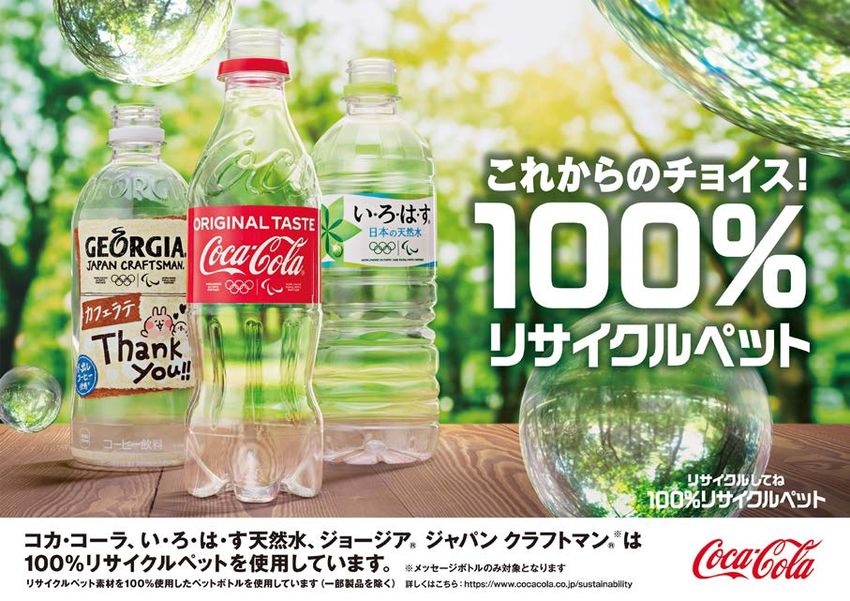
Message from the President
    Continuing Our Transformation to Emerge Stronger
More than a year has passed since COVID-19 brought about major changes in our daily lives.

It was a tough year like no other for everyone and during that time we decided one thing: to further accelerate our strategic
transformation. While the pandemic has certainly served as a catalyst for change, the seeds of transformation were planted well
before it arrived. For example, in 2019, the Coca-Cola system in Japan established a set of environmental targets under our 2030
Packaging Vision that were far higher than worldwide targets. We have been constantly challenging existing ways of doing
business and changes in society and the market over the past year have shown we were right to pursue that path. Over its
135-year history—65 years in Japan—the Coca-Cola system has faced many difficulties and each time we have emerged even
stronger by listening to our stakeholders and proactively transforming our business.

Here is a progress report on sustainability measures we advanced over the past year.

Inclusion, it is safe to say, is embedded in Coca-Cola’s DNA. The Coca-Cola Company is acknowledged as the first major U.S.
corporation to appoint a woman to its board of directors, in 1934. The reason we value diversity is entirely because it pervades the
markets and consumers we serve. Over the past year, we have stepped up moves to enhance the diversity of our organization. In
most recent figures, women fill 32.7% of management positions at Coca-Cola Japan1. Worldwide, the Coca-Cola system has
committed to being 50% led by women by 2030 and I am convinced we can achieve that goal in Japan by 2025. The Coca-Cola
system in Japan also declared its support for the legalization of same-sex marriage in May 2021 and amended company rules
accordingly.

In strengthening ties with Communities, 2020 was a significant year. Activities and events run throughout Japan in normal times
inevitably had to be canceled. As part of our Refresh Japan program, we donated around 1.3 million products to medical and other
facilities to show our support for healthcare workers assigned to the COVID-19 response. At one point, we took the unusual step of
manufacturing ethanol preparations at Coca-Cola Japan’s Moriyama Plant to help alleviate a shortage of alcohol for use in hand
sanitizers. They were distributed free of charge to the relevant facilities. I am proud of the additional trust we established through
these efforts, building on our existing relationships with people in the community.

In the area of Resources, our sustainable packaging initiatives have picked up pace. As an industry leader in this sphere, we
started using 100% recycled PET bottles for I LOHAS Natural Mineral Water from March 2020 and introduced I LOHAS Natural
Mineral Water Label-Less the following month. In May 2021, we switched to 100% recycled PET bottles for flagship brands                                     Jorge Garduño
Coca-Cola and Georgia and we have realized weight reductions for some packaging sizes2. By expanding the lineup of label-less            Representative Director and President
packaging, too, we anticipate progress on reducing the amount of plastic we use. At the same time, we will include the “Recycle                  Coca-Cola (Japan) Co., Ltd.
Me Again” logo on all recyclable packaging to enhance awareness about cyclical reuse of resources. These steps are part of
plans to increase recycled plastic use to 50% in 2022 and reduce use of petroleum-based virgin plastic in packaging to zero by
2030.

“Refresh the World. Make a Difference.” That is the Coca-Cola business purpose. We will strengthen our efforts to ensure that we
can provide moments of refreshment to everyone in Japan.

1 Coca-Cola (Japan) Co., Ltd. (parent only) as of December 2020
2 See page 43 for details.

                                                                                                                                                                     ESG Report   02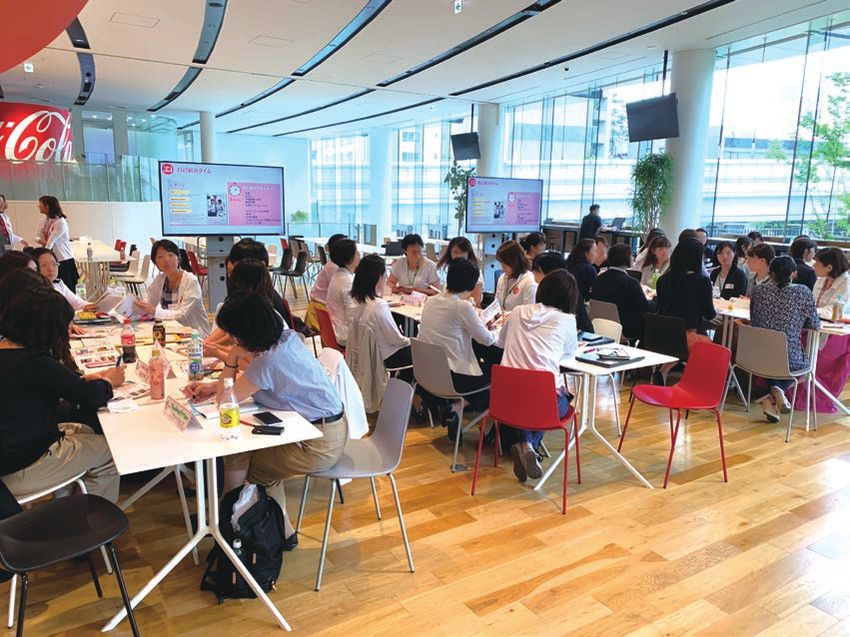
PURPOSE AND VISION

OUR PURPOSE

              Our vision is to craft the brands and choice of drinks that people love, to refresh
OUR VISION
              them in body and spirit.
              And done in ways that create a more sustainable business and better shared future
              that makes a difference in people’s lives, communities and our planet.

                                      Products sold in

                                      200+                           4,700+
                                     countries and                   products
                                       territories                   worldwide

                 Refreshing people
                    everywhere
                                                         500+                      700,000+
                    135                                   brands                      employed
                     years                               worldwide                    worldwide

                                                                                                    ESG Report   03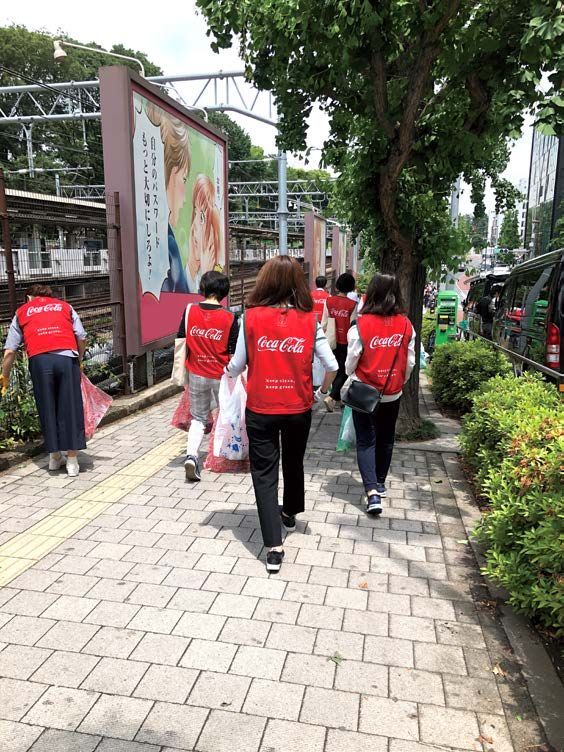
Profile of the                                                                             The Coca-Cola System in Japan
Coca-Cola System in Japan
                                                                                        Coca-Cola (Japan) Co., Ltd.                                                                   Bottling Partners and Affiliate

  Overview of Coca-Cola Japan

                                                                                                                                                                                 Transportation
                                                                                                                        Manufacturing
                                                                                                         Research and
                                                                                                         Development

                                                                                                                                                                                  Distribution/
                                                                                                                         Concentrate

                                                                                                                                                          Production

                                                                                                                                                                                                                                  Collection

                                                                                                                                                                                                                                                             Recycling
                                                                                              Planning

                                                                                                                                                                                                            Sales
Name                    Coca-Cola (Japan) Company, Limited
Established             June 25, 1957, as Nihon Inryo Kogyo K.K.
                        Changed name to Coca‑Cola (Japan) Co., Ltd.
                        on March 15, 1958
                                                                                         Coca-Cola Tokyo Research
Head office             4-6-3 Shibuya, Shibuya-ku, Tokyo 150-0002, Japan                 and Development Co., Ltd.
                        Tel: +81-3-5466-8000
                        URL: https://www.cocacola.co.jp                                 The Coca-Cola system in Japan comprises Coca-Cola (Japan) Co., Ltd., which supplies concentrate
Representative          Jorge Garduño                                                   and undertakes product planning, development and marketing, and five bottling partners and one
                        (Representative Director and President)                         affiliate that engage in such activities as product manufacturing and sales.
Capital                 3.6 billion yen
Shareholder             The Coca‑Cola Export Corporation
                        (100%; a subsidiary of The Coca‑Cola Company)
                                                                                          Bottling Partners in Japan
Employees               538 (as of December 31, 2020)
Plant                   Moriyama Plant (49 Amura-cho, Moriyama, Shiga Prefecture)
Business                Manufacture and sales of soft drinks (concentrate)
History       1957      Nihon Inryo Kogyo K.K. established                                  Hokkaido Coca-Cola                          Michinoku Coca-Cola                Coca-Cola Bottlers               Hokuriku Coca-Cola                 Okinawa Coca-Cola

              1958      Changed name to Coca‑Cola (Japan) Co., Ltd.                          Bottling Co., Ltd.                           Bottling Co., Ltd.                  Japan Inc.                     Bottling Co., Ltd.                 Bottling Co., Ltd.

                        Concentrate plant completed in Yukigaya, Ota-ku,
                        Tokyo—company relocates from Yokohama
              1970      Head office (Shibuya-ku, Tokyo) completed
                                                                                                                                                               1
              1974      Moriyama Plant completed
              1986      Coca-Cola centennial celebrated
              1993      Beverage Development Co., Ltd.
                        (now Coca-Cola Tokyo Research and Development Co., Ltd.)                                                                     2
                        established                                                                                                                                                               1   Hokkaido Coca-Cola Bottling Co., Ltd.
                                                                                                                                                                                                  2   Michinoku Coca-Cola Bottling Co., Ltd.
                                                                                                                                4
                                                                                                                                                                                                  3   Coca-Cola Bottlers Japan Inc.
                                                                                                                                                3
                                                                                                                                                                                                  4   Hokuriku Coca-Cola Bottling Co., Ltd.
                                                                                                                                                                                                  5   Okinawa Coca-Cola Bottling Co., Ltd.
                                                                                                                                                                       5
                     Head office            Moriyama Plant   Coca-Cola Tokyo Research
                                                                     and Development
                                                                                                                                                                                                                                                           ESG Report    04
At a Glance: The Coca-Cola System in Japan

                                                            Overview of the Coca-Cola System in Japan

                                                                             Stores selling
 Bottling partners:                         Employees:                    Coca-Cola products:                           Plants:                      Vending machines:

        5                           20,000 480,000                                                                     22                     880,000
                                    Approx.                              Approx.                                                                  Approx.

                                                                                                             (Including concentrate plants)

 Inclusion                                                      Communities                                                Resources

                                                                                                                            28
 7,645                                                                   1,409
                          Participants in the                                                                                                       Bottle-to-bottle rate
                          5by20 project, which
                                                                                                Disaster relief
                                                                                                                            Approx.           %     2020 results

                          supports the
                                                                                                agreements

                                                                                                                         80.59
                          empowerment of
                          women                                                                 As of December
                                                                                                31, 2020                                            Percentage of
                          Cumulative total as of December
                                                                                                                                                    packaging that is
                                                                                                                                              %
                          31, 2020
                                                                                                                                                    recyclable material

     32.7                                                                6,500
                                                                                                                                                    As of December 31, 2019
                                                                                                “Community-

                                                                                                                           317
                          Percentage of                                                         Assisting
                          management positions                                                  Vending                                             Water replenishment
                      %   filled by women                       Approx.                          Machines”                                           rate1
                                                                                                deployed
                                                                                                                                              %
                          As of March 2021                                                                                                          2020 results
                          Coca-Cola Japan only                                                                                                      1 Water replenishment entails
                                                                                                As of December
                                                                                                                                                      returning to nature the same
                                                                                                31, 2019
                                                                                                                                                      amount of water used in products.

                                                                                                                                                                              ESG Report   05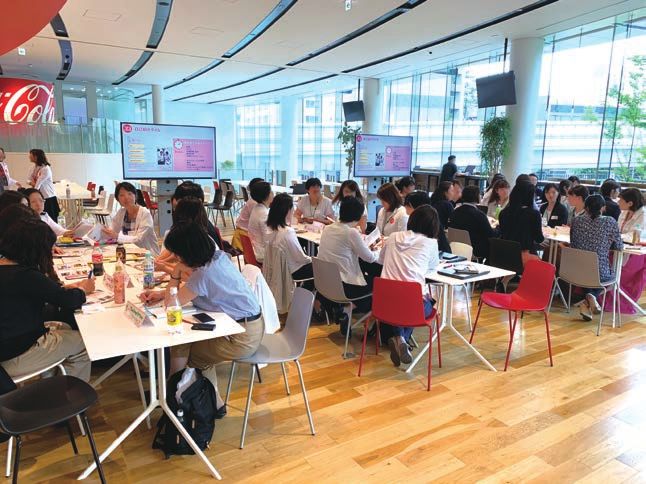
Products in Japan
Today, the Coca-Cola system operates all over the world with the same desire to deliver great tasting beverages to all people, anywhere, anytime—a desire that persists
even now, 135 years on from the birth of Coca-Cola.
In Japan, we deploy products reflecting the diverse lifestyles and preferences of consumers from a portfolio spanning a wide range of categories, including sparkling soft
drinks, tea, sports drinks and water.

  Sparkling soft drinks    28.0%                                         Tea   26.4%                                                      Sports drinks        11.1%          Water      11.3%

  Coffee   16.2%                                          Juice   3.1%                  Energy drinks         1.5%                 Others,
                                                                                                                                   including alcoholic drinks

                                                                       Product portfolio of the Coca-Cola system in Japan. Percentages based on November 2020 volumes according to Coca-Cola Japan research.

                                                                                                                                                                                                ESG Report     06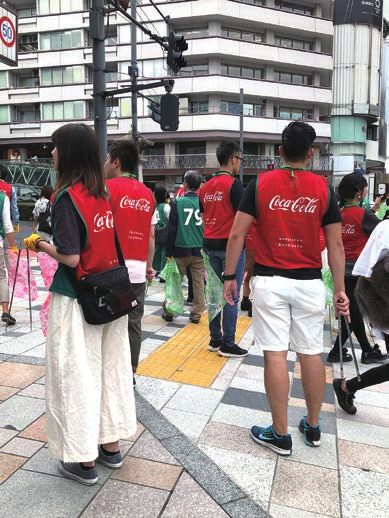
Sustainability Framework of the Coca-Cola System in Japan
In 2019, Coca-Cola Japan and Coca-Cola Bottlers Japan jointly conducted a large-scale study to identify sustainability issues and specify an order of priorities. This was to
enable the formulation of a strategy reflecting the unique issues of Japan in addition to global sustainability targets. The strategy would be incorporated into a common
action plan for implementation by the Coca-Cola system.
The companies agreed to focus on three platforms—Inclusion, Communities and Resources—and nine priority issues to be addressed right away.

                                                                                     We are committed to creating a sustainable business and shared future that makes a difference surrounding important
                                     Purpose
                                                                                     challenges facing Japan, including the environment, people’s lives and our communities.

Sustainability Framework of the Coca-Cola System in Japan                                                                                  (Three Platforms and Nine Priority Issues)

                                                                                                                                                                The nine priority issues are further subdivided into five priority topics
                                       Inclusion                             Communities                                       Resources                        specified as urgent and four focus topics that are considered
                                                                                                                                                                important but relatively less “top-of-mind” at this time. For each of
                                          Gender                            Drive impact through                             Packaging/PET
 Priority                                                                   two national platform
                                                                                                                                                                the three platforms, we will examine the relevance of our activities
                                                                                                                                                                to the Sustainable Development Goals (SDGs) and work toward the
 Topics                                                                     (Inclusion, Resources)
                                   Age/generation                                                                                    Water                      achievement of those goals. The Coca-Cola system in Japan has
                                                                                                                                                                reconfigured a concrete action plan based on the priority issues.
                                                                            Initiatives that are                            Greenhouse gas                      We will continue to report regularly on the progress and results of
                                       Disabilities                                                                                                             activities by the Coca-Cola system in Japan via our website and
   Focus                                                                    sustainable and                                    emissions
                                                                                                                                                                other methods and seek to engage in activities aligned with the
   Topics                                                                   additionally have local
                                                                                                                                                                times, referring to the opinions of NPOs, outside specialist
                                          LGBTQ                             relevance                                     Renewable energy
                                                                                                                                                                organizations, experts and other third parties.

Process for Specifying the Nine Priority Issues (Materiality)
       Issue      Identified social issues in          Issue                                           Issue      Plotted a materiality              Conducted interviews within the                Specified three platforms and nine
                                                                 Narrowed down the list
1 identification   Japan based on outside       2 identification                                 3 identification   matrix of 33 issues and        4   Coca-Cola system and adjusted              5   priority issues (see above graphic)
                                                                 from 189 to 33 issues
       (1)        studies                             (2)                                             (3)        specified 15 priority issues        priority issues

                                                                                                                                                                                                                             ESG Report     07
Inclusion

Diversity and Inclusion

Achieving diversity and inclusion is a strategic business priority for
the Coca-Cola system and we will make further advances in this
area toward the creation of workplaces where each individual of a
diverse workforce can fully demonstrate their potential.
The Coca-Cola system in Japan addresses gender and
age/generation as priority topics, and disabilities and LGBTQ as
focus topics.
Regarding gender, in particular, Coca-Cola Japan is working to
achieve the global goal to be 50% led by women five years early, by
2025. Women currently make up 42.2% of the workforce (December
2020) and fill 32.7% of management positions (March 2021).

                                                                         ● Issues (Priority/Focus Topics) and Medium- to
                                                                           Long-Term Targets and Direction
                                                                              Issues                        Medium- to Long-Term Targets and Direction

                                                                                                             Women fill 50% of leadership positions1

                                                                         Priority Topics
                                                                                              Gender
                                                                                                             Men utilize 100% of parental leave1

                                                                                                             Thirty-somethings fill 15% of management
                                                                                           Age/Generation    positions1
                                                                                                             80% of annual paid leave is utilized1

                                                                                             Disabilities   Strengthen support for people with disabilities
                                                                         Focus Topics
                                                                                                             Promote LGBTQ awareness
                                                                                              LGBTQ          Create working environments that
                                                                                                             support marriage equality
                                                                                                                                    1 Coca-Cola Japan only

                                                                                                                                                              ESG Report   08
Inclusion                            Communities                               Resources

Gender

  Support for Women’s Empowerment Within the Coca-Cola System

  Leadership Program for Women                                                                      Unconscious Bias Training

Coca-Cola Japan and Coca-Cola Bottlers Japan run a joint training program for women in           Coca-Cola Japan conducts unconscious bias training with a view to cultivating an inclusive
management positions to support their career development. Participants undergo two days of       organizational culture. Unconscious bias stems in part from lack of insight into diversity, such
leadership training to acquire the mindset and skills required of a leader before embarking on   as differences in culture, ways of thinking and family backgrounds. We look to remove all such
action to develop their careers based on individual strengths and shortcomings. One day of       bias, improve the transparency of assessments and decision-making, and further promote
training is also provided to supervisors to help foster an inclusive culture encouraging the     globalization and the participation and advancement of women. By promoting self-awareness
advancement of women. Additionally, we have in place a platform allowing women who have          of unconscious bias among all employees and creating a work environment where everyone
completed their training to discuss the challenges of leadership.                                has mutual respect and feels free to speak their mind, we will work to create an inclusive
                                                                                                 organization that makes the most of its diversity.

  Coke in Circle                                                                                    Support for #Here We Go 203030 Challenge

Coca-Cola Japan and Coca-Cola Bottlers Japan have set up Coke in                                 In pursuing diversity and inclusion, Coca-Cola Japan supports the #Here
Circle, a community for women across the Coca-Cola system. The                                   We Go 203030 challenge1 promoted by KEIDANREN (Japan Business
purpose is to support an environment where women can build a career                              Federation).
and aim to become a leader. It also aims to improve engagement and
                                                                                                 1 A challenge with specific initiatives aimed at accomplishing a target of 30% of executives being women by
motivation among women in the workforce, for example by encouraging                                2030, driven by policies of diversity and inclusion—identified as the keys to the realization of sustainable
them to share their concerns and experiences.                                                      capitalism following recovery from the COVID-19 pandemic within “. The NEW Growth Strategy” announced
                                                                                                   by KEIDANREN in November 2020.

  Support for Women’s Empowerment Outside the Coca-Cola System

  5by20                                                                                             Donation to Grameen Nippon to Support Single Mothers

Coca-Cola Japan ran the local project to empower women under The Coca-Cola Company’s             The Coca-Cola Foundation has donated approximately $150,000 (¥15.4 million) to Grameen
5by20 initiative, which set out to support 5 million women worldwide by 2020 by enabling their   Nippon2 in support of single mothers. The donation will help finance a new project aiming to
economic empowerment throughout the Coca-Cola value chain and addressing local and               promote the financial independence of single mothers by broadening employment
community needs.                                                                                 opportunities, for example through digital skills development that began in February 2021. The
In Japan, we enabled the empowerment of 7,645 women through the promotion of occupations         funds will be used over a period of 18 months (to the end of July 2022).
in dairy farming for 1,491 women and tea cultivation for 959 women, as well as support for       2 Grameen Nippon is Japan’s first microfinance institution, providing small loans at low interest without collateral to support the financial
5,195 women entrepreneurs.                                                                         independence and employment or entrepreneurial aspirations of people in poverty or economic hardship. It is the Japanese version of
                                                                                                   the Grameen Bank, which has been fighting poverty worldwide and won the 2006 Nobel Peace Prize.

                                                                                                                                                                                                                               ESG Report        09
Inclusion Communities Resources
Age/Generation
Coca-Cola University Japan
Millennial Voices Japan Next-Generation Leader Training Program
Millennial Voices Japan is Coca-Cola Japan’s project to have its millennial generation gather on The Coca-Cola University Japan next-generation leader training program was set up in July
a voluntary basis to propose initiatives for improving the company to senior management. In 2020 with aims to nurture a new generation of leaders who will drive transformation of the
2020, Coca-Cola Japan teamed up with The Pokémon Company and IBM Japan, Ltd. to tackle Coca-Cola system while guiding it into the future and to generate new value for the beverage
the problem of plastic waste, together developing an AI-equipped recycling bin for market. The online launch was attended by 80 representatives of Coca-Cola Japan and
post-consumer bottles and cans known as the “Greedy Grimer.” The bins featured at an event Coca-Cola Bottlers Japan.
to promote recycling at Sunshine City in Ikebukuro, Tokyo, in November. The initial focus will be to train up young leaders. This will be followed by a human resources
development program for managers. Making use of global leadership and overseas training
programs in coordination with The Coca-Cola Company, we will nurture human resources
whose knowledge and expertise can be applied both at home and abroad.
Calin Dragan, Coca-Cola Bottlers Japan
Representative Director and President, kicks off the
launch with words of encouragement
©2020 Pokémon. ©1995-2020
Nintendo/Creatures Inc. /GAME FREAK inc.
ESG Report 10Inclusion Communities Resources
Disabilities
Sponsorship of the Paralympic Movement Sponsorship of ZENSHIREN
Coca-Cola Japan is collaborating with the Japanese Paralympic The Coca-Cola system has been supporting the National
Committee (JPC) of the Japanese Para-Sports Association on a Federation of the Physically Disabled and their Parents
training support program for Paralympic athletes. Launched in Associations (ZENSHIREN) for over four decades since
January 2021, the program aims to support top athletes as they vie 1980. Some 1,147 vending machines with ZENSHIREN
to compete in the Paralympic Games and to propel the Paralympic stickers have been installed in schools and community halls
Movement. across the country. Each year, a portion of proceeds from
In conjunction with these activities, the Coca-Cola system decided to the vending machines, which are administered by
deploy special vending machines supporting JPC and Paralympic ZENSHIREN, is put toward funding for activities of
Games. Coca-Cola Bottlers Japan installed the first ones at Makuhari ZENSHIREN and prefectural federations. Companies within
Messe, Chiba Prefecture, venue of four events for the Tokyo 2020 the Coca-Cola system also provide ongoing support for
Paralympic Games. The Coca-Cola system will donate a portion of stimulation of prefectural parents’ association activities,
sales to the JPC to be used to support the training of Japan’s recruitment of new members and recreational programs for
Paralympic athletes for Tokyo 2020 and to promote the Paralympic enhancing ties with communities.
Movement.
Sponsorship of the Special Olympics Membership of The Valuable 500
The Coca-Cola Company is a founding The Coca-Cola Company supports the activities and
partner and global sponsor of the Special approach of The Valuable 500, a global initiative committed
Olympics, the world’s largest health and to promoting disability inclusion, and became a member in
sports organization dedicated to people February 2021. Launched at the World Economic Forum
with intellectual disabilities. Coca-Cola Annual Meeting in Davos in January 2019, The Valuable
Japan has been an active supporter of 500 initiative aims to unlock the business, social and
Special Olympics Nippon since 1998. economic value of people with disabilities by engaging
business leaders to bring about necessary change. So far,
425 companies from 35 countries have joined (as of
February 2021).
Employees make friendship bracelets and attach messages
of support for presentation as key holders
ESG Report 11Inclusion Communities Resources
LGBTQ
Support for Marriage Equality and Same-Sex Partnerships Sponsorship of Pride House Tokyo
All companies of the Coca-Cola system in Japan have declared their support for Business for As part of its support for LGBTQ people, Coca-Cola Japan has been a Pride House Tokyo2
Marriage Equality1, a campaign launched in November 2020 to visualize which companies are partner since November 2020. Pride House Tokyo is working to ensure that LGBTQ athletes,
in favor of legislating to recognize same-sex marriage. their friends and families, spectators and local participants are free to be themselves as they
Coca-Cola Japan already embraces diversity and equality in the workplace with employment enjoy diversity-themed Olympic and Paralympic Games. It also aims to create a permanent
regulations treating same-sex partners of employees as if they are legally recognized spouses, safe space for the next generation of LGBTQ youth as an enduring legacy of Tokyo 2020.
meaning those employees can access relevant systems, such as special leave for celebrations
2 Pride House Tokyo, a project that transcends sector boundaries to link various groups, individuals and corporations in solidarity, is
or bereavement. Similar provisions were introduced across the Coca-Cola system in Japan in taking the opportunity of the Olympic and Paralympic Games Tokyo 2020 to establish a pop-up information center and spread
May 2021 as all six companies made progress in this area. information related to LGBTQ people and other sexual minorities, as well as provide various events and programs related to diversity.
1 Business for Marriage Equality is a campaign to visualize corporate supporters of legislation to recognize same-sex marriage in Japan.
It is run by three nonprofit organizations—Marriage for All Japan, Lawyers for LGBT & Allies Network, and Nijiiro Diversity.
ESG Report 12Communities
Helping to Build Sustainable
Communities
Ever since we started doing business in Japan, the Coca-Cola
system has been growing alongside the community. In each locality,
we will continue to value ties we maintain with the community
through nonprofits, companies and organizations outside the
Coca-Cola system, and bottling partners, while actively pursuing
initiatives nationwide relating to Inclusion and Resources platforms.
● Issues (Priority/Focus Topics) and Medium- to Long-Term Targets
and Direction
Issues Medium- to Long-Term Targets and Direction
Strengthen collection efforts with nonprofit
green bird
Priority Topics
Contribution through two nationwide
Collaborate with the Nippon Paper Group on
platforms (Inclusion and Resources)
sustainable activities
Initiatives that are sustainable and
Enhance sustainability education within the
additionally have local relevance
Coca-Cola system
Develop International Coastal Cleanup activities
ESG Report 13Inclusion Communities Resources
Initiatives Through Business
Community-Assisting Vending Machines Localized Products
As a way of contributing to society through its business, Some products supplied by the Coca-Cola system in Japan are available only in a limited area
the Coca-Cola system actively installs and have been adapted to match regional characteristics and needs. Products representative of
community-assisting vending machines based on a region contribute in a number of ways, for example by stimulating the economy through local
agreements with local governments relating, for example, production for local consumption, upholding local food culture and nature’s plentiful gifts, and
to the provision of disaster relief in the form of access to supporting sporting pursuits strongly associated with that community.
beverages. By December 31, 2019, we had installed
around 6,500 such vending machines nationwide, primarily I LOHAS Natural Mineral Water Georgia Milk Coffee
in school gymnasiums, public facilities, hospitals and other (Hokkaido Natural Mineral Water) This product available only in Hokkaido
For the people of Hokkaido, we supply supports local production for local
designated evacuation centers. consumption by using 100% Hokkai-
fine-tasting locally sourced water that is
In the event of an earthquake or other disaster, relevant obtained and manufactured at our plant in do-sourced milk. The taste evokes
Kiyota-ku, Sapporo. We donate a portion nostalgic memories for many Hokkaido
information can be remotely relayed to a display fitted into of proceeds to the Hokkaido e-Mizu residents.
each machine using communication network technology, Project. The funds go to groups working to
protect waterside environments across
and remaining beverages can be accessed free of charge. Hokkaido.
Vending machines are ideal for this kind of support.
Meanwhile, individual bottling partners support Aquarius Sparkling Coca-Cola Slim Bottle Kyoto Design
environmental protection and local development activities Northern Tohoku B.League (In Gift Box)
of nonprofits and communities through fundraising vending Support Bottle Can
Inheriting the profile of the contour bottle,
This product’s package features the
machines. logos of the professional basketball
the packaging evolves further by using
aluminum material. The product is supplied
teams based in the three prefectures in under a partnership agreement reached
northern Tohoku—Aomori Wat’s, Iwate with Kyoto Prefecture. To help promote
Comprehensive Pacts with Local Government Big Bulls, and Akita Northern Happinets.
A 1% portion of the sales of products
tourism in the city of Kyoto, a portion of
sales earned during 2017 (¥1,779,800)
sold in each prefecture is donated to the was donated to the city in March 2018.
teams to fund activities.
The Coca-Cola system in Japan has entered into comprehensive partnership agreements to
strengthen cooperation with communities and local government. As of December 31, 2020, we Kochakaden Garden Lemon Tea
I LOHAS Natural Mineral Water
had concluded 1,409 pacts across Japan. Through these agreements, we seek to coordinate (Tonami Natural Mineral Water) Kochakaden Garden Shikuwasa Tea
closely with local government through dialog as a partner in the community and we aim to Kochakaden Garden Lemon Tea has
Water obtained and manufactured in Tonami, enjoyed much popularity over the years in
stimulate regions through initiatives that improve the lives of citizens in diverse areas, including Toyama Prefecture is available in Toyama, Okinawa, where there is a distinct food
education and human resources development, disaster and crime prevention, and health Ishikawa, Fukui and Nagano prefectures as I and, more specifically, tea culture. Then in
LOHAS Tonami Natural Mineral Water. 2020, we launched Kochakaden Garden
promotion. Comprehensive partnership agreements also play a role in activities responding to Sourced from Mt. Eboshi in the Hida Shikuwasa Tea, a product supporting
Highlands, the water filters down through the local production for local consumption by
the constantly changing social landscape. hills to help sustain Toyama’s grain belt and using the juice of Okinawa-grown
people’s lives. shikuwasa (Citrus depressa).
ESG Report 14Inclusion Communities Resources
Bottling Partner Initiatives
Michinoku Coca-Cola Bottling Hokkaido Coca-Cola Bottling
Teaming Up with Local University Community-Oriented Cleanup Donation of Products to Food Banks
Students to Develop Original Mocktails1 Activities The COVID-19 pandemic has affected people’s
Using Sanriku Regional Specialties Mutsu Bay Cleanup Project Hokkaido Coca-Cola Bottling undertakes lives in many ways. In October 2020, Hokkaido
In February 2021, Michinoku Coca-Cola started In November 2020, Michinoku Coca-Cola co-hosted cleanup activities right across Hokkaido, Coca-Cola Bottling donated products to the
developing a selection of original mocktails using the Mutsu Bay Cleanup Project in the city of Aomori, including through participation in community via eight food banks in Hokkaido.
specialty ingredients of the Sanriku region alongside Aomori Prefecture, with local nonprofit and volunteer beachcombing events hosted by a Those organizations coordinated the distribution
Iwate Prefectural University student group Fukko girls & groups. Around 30 local residents participated in the Hokkaido-based coastal beautification of around 300 cases (equivalent to 7,200
boys*. The aims are to keep memories of the 2011 Great coastal cleanup as well as a lecture on plastic waste, nonprofit. Employees and their families took bottles) of Coca-Cola system products to local
East Japan Earthquake alive and to raise the profile and raising awareness of the problem of marine litter. part in events in Shakotan in August and groups such as
increase consumption of Sanriku specialties. The Through such activities, the company’s aim is to Hamamasu in October 2020. It is an “children’s cafeteria”
company and the students will develop an original lineup team up with the community to address social issues. opportunity to broaden employees’ food kitchens and
for release to the market around summer 2021. knowledge and build greater awareness of organizations
problems associated with marine and coastal providing support to
1 Mocktails (i.e. cocktail imitations) are non-alcoholic cocktails. litter. people in need.
Deployment of Child-Rearing Support
Vending Machines
Hokkaido Coca-Cola Bottling has been installing
Family Summer Holiday Environmental child-rearing support vending
Learning Workshop machines since May 2019 in
Sponsorship of Autumn UMIGOMI2 Zero WEEK partnership with the Hokkaido
In July 2020, an environmental learning workshop
In September 2020, Michinoku Coca-Cola sponsored took place at the Iwate Prefectural Information Regional Development Bureau.
the launch of Autumn UMIGOMI Zero WEEK 2020 in Exchange Center. As instructors, employees of The vending machines support
Iwate at Jodogahama beach in Miyako, Iwate Michinoku Coca-Cola Bottling set about explaining to young families through the sale
Prefecture. Employees took part in the cleanup and the 15 participants (children and parents) about the of items such as disposable
provided drinks at each of the venues. Held in Iwate for importance of the circulation of the planet’s diapers, liquid baby formula and
the first time, the event was part of a nationwide cleanup resources, touching on the topics of water and PET baby wipes.
campaign to help combat marine litter run by the Ministry bottles. The event coincided with a month-long
of the Environment and The Nippon Foundation. exhibition at the center from June outlining the
company’s sustainability initiatives.
2 Umigomi = marine litter
Employee Takes the Stage at Marine Litter Forum
In October 2020, an employee took the stage as a panelist at a forum hosted by
Iwate Prefecture to discuss the challenge of protecting our oceans. He explained
that PET bottles are not disposable items, but a recyclable resource. The purpose of
the forum is to help pave the way into the future by protecting the sea off the
Sanriku coast from marine litter.
ESG Report 15Hokuriku Coca-Cola Bottling
Education on Product Development
Deployment of SDGs Vending and Manufacturing for Toyama
Machine Junior High School Students
In February 2021, Hokuriku Coca-Cola This project giving junior high school students
Bottling installed an “SDGs vending in Toyama Prefecture the opportunity to
machine” at a civic hall together with the experience the joys of learning and challenge
city of Toyama. The purpose of the vending themselves to learn aims to nurture human
machine—a Japan first—is to reduce food resources who will one day engage in product
waste. Products sold from the vending development and manufacturing in the
machine include surplus items resulting prefecture. Against the backdrop of a nation
from overstocking. In addition, a portion of grappling with a low birthrate and dwindling
proceeds are donated to the city for interest in the sciences, Hokuriku Coca-Cola
allocation to Bottling also took part, thereby contributing to Okinawa Coca-Cola Bottling
initiatives SDGs efforts. As instructors, they referenced
relating to the their own experiences to communicate the
SDGs. joys of making things and what it means to do Deployment of Vending Machines Supporting Children and
work to
Child-Rearing Fund
children who
are just starting In January 2020, Okinawa Coca-Cola Bottling
to consider commenced deployment in Motobu, Okinawa
their career Prefecture, of four vending machines
paths. supporting a fund for children and child-rearing.
An unveiling ceremony was held at the town
office in July. These are the first
assistance-providing vending machines to be
deployed that tie in with a local government
Coca-Cola Bottlers Japan child-rearing support fund ordinance. Three
yen is donated to the fund for every beverage
sold. The money goes toward support for
Deployment of Shimanami Kaido Cycling Road children and child-rearing, such as for
Support Vending Machine Donation of Products via Food Banks purchasing picture books for kindergarten
children.
In November 2020, Coca-Cola Bottlers Japan installed a Since 2016, Coca-Cola Bottlers Japan has been
Shimanami Kaido cycling road support vending machine collaborating with Second Harvest Japan, a nationwide food Coastal Cleanup by New Employees
inside the precinct of Japan’s only shrine to bicycles—Oyama bank promotion council, and others to donate products to
In April 2020, seven new employees of Okinawa Coca-Cola Bottling carried out a
Shrine on the island of Innoshima (Onomichi, Hiroshima entities including “children’s cafeteria” food kitchens and
cleanup of Nerome Beach in Ogimi. PET bottles, detergent containers, polystyrene
Prefecture). A portion of sales will be donated to the welfare facilities. In 2020, the company expanded the
foam, fishing equipment, fluorescent
Hiroshima program, donating
lights and oversized waste were
headquarters of the 20,477 cases
among the items collected. The litter
Shimanami Kaido (425,616 bottles) of
filled 22 bags and weighed 70
cycling road Coca-Cola system
kilograms. Okinawa is surrounded by
promotion council to products to groups in
sea, making this a great opportunity to
help keep the route 14 of the 38
experience first-hand the problem of
open to cyclists free prefectures making
marine litter.
of charge. up the sales area.
ESG Report 16Inclusion Communities Resources
Initiatives with Partners
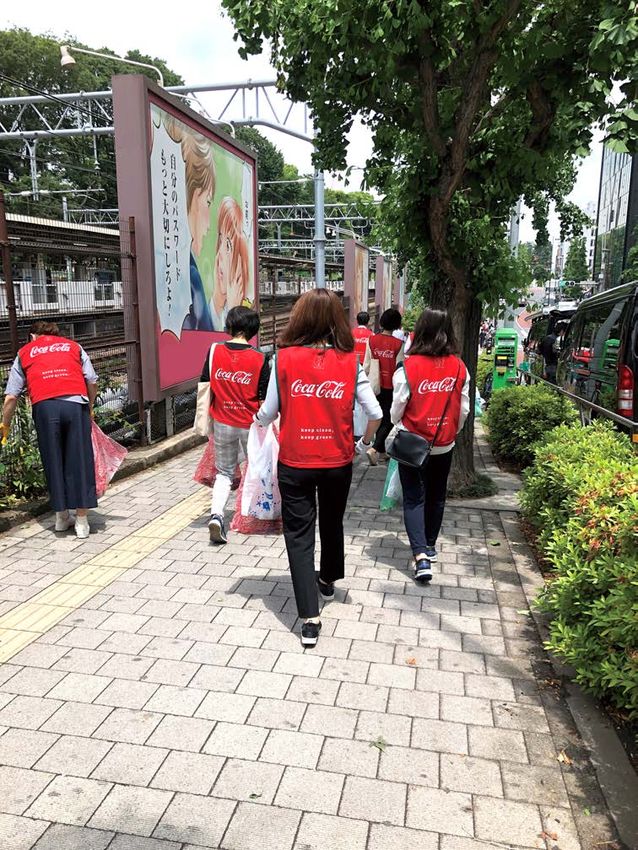
International Coastal Cleanup Support for green bird
Employees of Coca-Cola Japan and companies affiliated with the Coca-Cola system take part Coca-Cola Japan has been building up a relationship with green bird, a nonprofit involved in
in cleanup campaigns across Japan in conjunction with the International Coastal Cleanup cleaning campaigns and town development, since 2008 and continues to engage in cleanup
(ICC). Hosted by Ocean Conservancy, the United States’ leading marine nature conservation activities across Japan. An annual cleanup event hosted by green bird, “gomizero week,”
group founded as a center for environmental education relating to marine life, the ICC is the involves around 30 teams undertaking cleanup activities nationwide. We are currently
world’s biggest coastal cleanup campaign. considering ways to strengthen collection efforts under the Resources platform.
The Coca-Cola Company has undertaken activities across the globe as a sponsor of the ICC
since 1995. ICC campaigns first came to Japan in 2007. Coca-Cola system employees
throughout Japan have so far volunteered for campaigns in places like Lake Biwa; Yakushima
island; Miyagi Prefecture’s Shichigahama coast; the area around Tone River in Joso, Ibaraki
Prefecture; Okinawa Prefecture; and the Tsurigasaki coast of Chiba Prefecture. We plan to
come together as a united Coca-Cola system and strengthen activities.
The coastal cleanup of the Tsurigasaki coast, Chiba Prefecture. Coca-Cola Japan President Jorge Garduño took Cleanup activity during gomizero week 2019
part, as did Coca-Cola Bottlers Japan President Calin Dragan.
ESG Report 17Resources
Using Resources Sustainably
Resources are limited and we must use them effectively if we are to
realize sustainable growth.
The Coca-Cola system in Japan has identified four resource-related
issues with particularly strong relevance to our business:
packaging/PET, water, greenhouse gas emissions, and renewable
energy.
Packaging/PET is a priority topic and we have set out to achieve
cyclical reuse of plastic resources under our 2030 Packaging Vision.
● Issues (Priority/Focus Topics) and Medium- to Long-Term
Targets and Direction
Issues Medium- to Long-Term Targets and Direction
Use rPET or bio-based PET plastic in PET bottles of all products
by 2025
Priority Topics
Packaging/PET Complete switch to use of rPET or bio-based PET plastic in all PET
bottles by 2030
Achieve 100% collection and recycling by 20301
Improve the water replenishment rate
Water
Improve water resource efficiency
Focus Topics
Greenhouse gas emissions Promote CO2 emissions reduction across the entire Coca-Cola system
Renewable energy Adopt and expand use of renewable energy
1 Collect one PET bottle for every Coca-Cola product sold in Japan
ESG Report 18Inclusion Communities Resources
2030 Packaging Vision
In January 2018, the Coca-Cola system in Japan established its 2030 Packaging Vision in line with the global vision of a World Without Waste. We pursue three
pillars of activity—Design, Collect and Partner. New environmental targets were revealed in July 2019 and also brought forward attainment of the initial goals. We
added a set of numerical targets specific to the Coca-Cola system in Japan, and more ambitious than global targets, including a switch to 100% sustainable
materials for all PET bottles by 2030. Targets will be achieved through activities such as bottle-to-bottle recycling1.
1 The process of collecting and recycling post-consumer PET bottles and turning them into new PET bottles for beverages
2030 Packaging Vision of the Coca-Cola System in Japan—Roadmap and Results
(Updated May 2021)
2018 Results 2019 Results 2020 Results 2021 Results 2022 目標
Targets 2025 目標
Targets 2030 Targets
DESIGN Bio-based
PET plastic 100
28
Bottle to Use rPET or bio-based Zero new fossil fuels
bottle PET plastic in PET
Switch to rPET or
Approx. Approx. Approx. At least
bottles of all products
bio-based PET plastic
Sustainable bottle-to-bottle rate bottle-to-bottle rate bottle-to-bottle rate 100% rPET bottles introduced
for all PET bottles
bottle-to-bottle rate
materials for Coca-Cola and Georgia bottle-to-bottle rate
Japan Craftsman
reduction
I LOHAS Natural Mineral Water
100% Recycled PET Bottle
launched
Amount of
PET plastic
I LOHAS Natural
used Mineral Water
Label-Less launched of PET plastic used per product
(compared with 2004)
COLLECT
Amount sold Amount collected
Collection Consortium established by PET bottle collection
Tokyo Metropolitan campaign implemented “Recycle Me Again” Fully recycled PET bottle
Appropriate collection logo introduced (2021)
Government and Japan Soft with Higashiyamato, recycling realized for Hajime
of packaging Drink Association (2020) Tokyo (2020) Ryokucha Ichinichi Ippon (2019)
PARTNER
Fully recycled PET bottle
recycling realized for Hajime
Ryokucha Ichinichi Ippon
(2019)
Collaborate with a range of
Initiatives Expanded to a Hajime
partners to build and maintain
Ryokucha series (2020) Joint survey conducted with Recycling awareness event held
more reliable packaging
The Nippon Foundation with Universal Studios Japan
(2019) (2020) collection and recycling schemes
* For more on “Collect” initiatives, see page 23. For more on “Partner” initiatives, see page 24.
ESG Report 19Inclusion Communities Resources
2030 Packaging Vision
1 Design
Full introduction of packaging that does not use any petroleum-based virgin plastic with a complete switch to 100%
sustainable materials by 2030
Under its 2030 Packaging Vision, the Coca-Cola system in Japan aims to fully introduce packaging that does not use any petroleum-based virgin plastic by making use of
recycled PET and bio-based PET plastic. We have also been innovating with packaging technology continually since the 1970s to achieve effective use of resources,
reduce the environmental impact during production and transportation, and improve convenience for consumers.
1 Through promotion of bottle-to-bottle recycling, increase utilization of rPET plastic to at least 50% by 2022 and 90%
by 2030. The aim is full introduction of packaging that does not use any petroleum-based virgin plastic.
2030 Packaging Vision 2 Switch to use of recyclable materials in packaging of all products sold in Japan by 2025.
Targets for Design By the same year, PET bottles of all products will be made using sustainable materials (rPET or bio-based PET plastic).
3 Switch to 100% sustainable materials for all PET bottles by 2030, realizing zero use of petroleum-based virgin plastic.
4 Reduce PET plastic use per bottle by 35% by 2030 (compared to 2004).
1 Promotion of 2 Greater Use of Recyclable 3 Use of Bio-Based PET Plastic 4 Reduction of Plastic Use
Bottle-to-Bottle Recycling Packaging with Lighter Packaging
22.4%
12 g
Other
Plant-based PET
bioplastic
25,000
5,600 tons
32 g
reduction
Weight
tons 1996 2009
Other
PET bioplastic
* 2020 figures according to Coca-Cola Japan research
The Coca-Cola system in Japan is striving for The Coca-Cola system in Japan continues In 2009, the Coca-Cola system in Japan led the In 1996, a small PET bottle (500 mL) used for
cyclical reuse of plastic resources through research and development relating to pouches industry with the introduction of the PlantBottle, water products of the Coca-Cola system in Japan
bottle-to-bottle recycling, whereby that are currently not recyclable, looking to clear partially made from bio-based PET plastic, for weighed 32 g. I LOHAS was launched in 2009 in
post-consumer PET bottles are collected, technical hurdles in areas such as quality products including Sokenbicha and I LOHAS. a bottle 20 g (63%) lighter. At around 12 g, it was
recycled and turned back into PET bottles for maintenance to enable a switch to recyclable Around 22% of bio-based PET plastic currently the lightest in Japan at the time1. PET plastic use
use as beverage packaging. materials for packaging of all products sold in consumed in Japan is used in packaging for had been reduced while characteristics required
Japan by 2025. Coca-Cola system products. of beverage packaging were retained.
1 Among 500 mL PET bottles made in Japan as of March
2009, according to Coca-Cola Japan research
ESG Report 20Inclusion Communities Resources
2030 Packaging Vision
1 Design
Use of 100% recycled PET bottles extended to core Coca-Cola and Georgia products
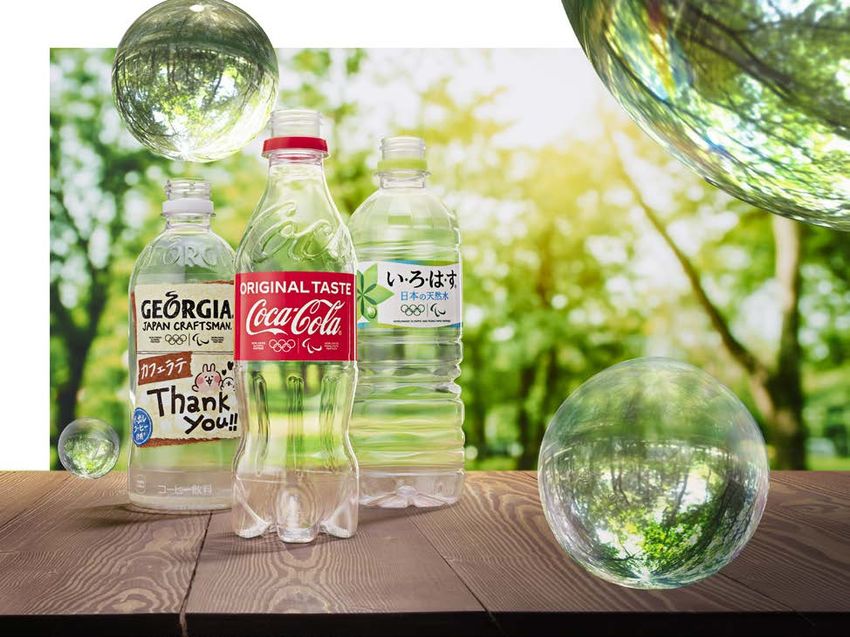
Following on from I LOHAS Natural Mineral Water in March 2020, we introduced 100% recycled PET bottles for core products of flagship brands Coca-Cola and Georgia in May
2021. As a result, we expect CO2 emissions to fall by around 60% per bottle, or roughly 35,000 tons annually across the entire Coca-Cola system. Use of petroleum-based virgin
plastic will drop by around 30,000 tons1. Not only that, we managed to reduce the weight of packaging for Coca-Cola 700 mL PET and Georgia Japan Craftsman 500 mL PET, also
contributing to reduced plastic use and CO2 emissions. Communication with consumers will be strengthened through the display of a “Recycle Me Again” logo on product packaging.
The aim of these initiatives is to achieve a 50% bottle-to-bottle recycling rate for the Coca-Cola system in Japan by 2022.
1 Assuming a switch from ordinary PET bottles to 100% recycled PET materials. Total for all affected products, estimated by Coca-Cola Japan based on the previous year’s shipments.
Introduction of “Recycle Me Again” Logo
As part of efforts to raise awareness about realizing cyclic use of
plastics, the Coca-Cola system started rolling out a common “Recycle
Me Again” logo for display on all recyclable product packaging from late
February 2021, strengthening communication with consumers. On
labels for packaging made using only recycled PET plastic, we use the
logo in combination with the Japanese for “100% Recycled PET,”
making it easier for consumers to choose a product with a low
environmental impact.
Besides product packaging, the “Recycle Me Again” logo is also due to
appear on advertisements, POP displays, recycling bins and elsewhere.
ESG Report 21Inclusion Communities Resources
2030 Packaging Vision
1 Design
Progress on plastic waste reduction with deployment of label-less products and 1,2,CUBE
In addition to bottle-to-bottle initiatives, the Coca-Cola system in Japan introduced label-less products in April 2020 and launched 1,2,CUBE in May 2021.
Label-Less Packaging 1,2,CUBE
Label-less products make packaging easier to sort and recycle because there is no more hassle of 1,2,CUBE is a new genre of freeze-dried
removing labels. In April 2020, partial revisions to ministerial ordinances concerning the Act on the beverages—cubes of ingredients with their flavor
Promotion of Effective Utilization of Resources1 made it possible to realize completely label-less condensed through freeze concentration, to be simply
products with the omission of tack stickers or other identifiers. The Coca-Cola system in Japan dissolved in hot or cold water for an authentic taste. Sold
responded with the introduction of I LOHAS Natural Mineral Water Label-Less. in pouches made from paper materials, the products
A lot of positive feedback was received from consumers, especially with regard to hassle-free sorting employ sustainable packaging that would reduce plastic
and reduction of plastic waste. resin use by around 13% and CO2 emissions by around
The label-less range was extended to Ayataka, Sokenbicha and CANADA DRY THE TANSAN STRONG 18%2. The products also help to reduce household waste
in August 2020, Aquarius in February 2021, and I LOHAS Natural Mineral Water 2 L PET in March 2021. since cubes do not need to be individually wrapped.
1 The purpose of the ministerial ordinance revisions was to promote waste reduction and to eliminate the need for consumers to remove 2 Compared to plastic pouches with the same shape and capacity
and sort tack stickers or other identifiers. This has made it simpler and easier to put post-consumer PET bottles out for collection in
optimal condition for recycling.
Cubes are not
individually wrapped,
helping to reduce
household waste.
April 2020: Label-less lineup expansion Ingredients and other Launch of 1,2,CUBE freeze-dried beverages
Introduction of I LOHAS Natural August 2020: Ayataka, Sokenbicha, CANADA DRY THE TANSAN STRONG statutory information May 2021: 1,2,CUBE Ryokucha, 1,2,CUBE Mugicha
Mineral Water Label-Less with a February 2021: Aquarius normally required on labels June 2021: 1,2,CUBE Coffee
stylish design featuring an March 2021: I LOHAS Natural Mineral Water Label-Less 2 L are instead shown on outer
embossed I LOHAS logo cartons (the product is sold
only by the case).
ESG Report 22Inclusion Communities Resources
2030 Packaging Vision
2 Collect
Japan’s PET bottle collection rate is 93.0%. The recycling rate is 85.8%1. '
Thanks to the joint efforts of government, businesses and communities, some outstanding plastic recycling schemes are already well established. Post-consumer PET bottles, when
recovered properly, are suitable as a reusable resource. The Coca-Cola system engages with local government, groups and suppliers across the country to raise awareness about
PET bottle collection and recycling and promote bottle-to-bottle recycling.
1 Both rates are sourced from The Council for PET Bottle Recycling data for 2019. (Bottles collected as combustible waste are not included.)
2030 Packaging Vision Targets for Collect By 2030, we will be collecting one PET bottle for every Coca-Cola product sold in Japan.
Project with Welcia Recycling and Resource PET Bottle Recycling Project Launched
Holdings Collection Activity Corner with The Foundation for Ainu Culture
As part of efforts to build a model for In March 2020, Hokkaido The Foundation for Ainu Culture
bottle-to-bottle recycling, Welcia Coca-Cola Bottling and Hokkaido Coca-Cola Bottling
Holdings Co., Ltd. and Coca-Cola Bottlers installed a 2030 launched a collaborative project
Japan installed recycling bins for PET Packaging Vision activity for PET bottle recycling in
bottle collection at Welcia corner at its head office September 2020. A reverse
stores in Tochigi Prefecture giving consumers an vending machine has been
for the period from opportunity to see, touch and learn first-hand installed at the Upopoy National Ainu Museum and
September to December about the cyclical reuse of plastic resources. Park, which is managed and operated by the
2020. The plan is to Visitors even get to try out a reverse vending foundation. Collected post-consumer PET bottles
expand the project to machine used for collection of post-consumer undergo bottle-to-bottle recycling and ¥1 is donated
other regions and stores PET bottles. to the foundation for every bottle.
after examining the
factors, including volume,
quality and cost.
PET Bottle Collection Project with
Initiative with Shikoku Aquarium Higashiyamato, Tokyo
The city of Higashiyamato and Coca-Cola Bottlers
After learning of Shikoku Aquarium’s wish to Japan concluded a comprehensive partnership
reduce harm to marine life caused by agreement for community revitalization in October
plastic, Coca-Cola Bottlers Japan installed 2020. The two parties are collaborating on PET bottle
vending machines with an original design collection activities, installing collection machines
promoting PET bottle recycling in the across the city to help raise awareness about recycling
aquarium’s car park in among
June 2020. city
residents.
ESG Report 23Inclusion Communities Resources
2030 Packaging Vision
3 Partner
The Coca-Cola system in Japan actively pursues activities together with partners who share the same sense of purpose in realizing a society where plastic resources are recycled.
Through collaboration with governments, the beverage industry and communities, we will make
2030 Packaging Vision Targets for Partner
efforts to build and maintain more reliable packaging collection and recycling schemes.
Hajime Ryokucha Survey of Land-to-River Waste Flow Recycling Awareness Event
(Seven & i Holdings) Mechanisms (The Nippon Foundation) (Universal Studios Japan)
Hajime Ryokucha Ichinichi Ippon, jointly developed by The Nippon Foundation and Coca-Cola Japan have In September 2020, Universal Studios Japan, Coca-Cola
Seven & i Holdings Co., Ltd. and Coca-Cola Japan, was undertaken a joint survey of the mechanisms of waste flows Japan and Coca-Cola Bottlers Japan held a “Study
given a revamp in June 2019, making use of 100% recycled from land into rivers. The purpose has been to shed light on Together” recycling awareness event dealing with the best
PET bottles. Use of recycled PET bottles was expanded to the mechanisms leading to the generation of marine litter in ways to use PET bottles in this day and age. Original
other products in the Hajime Ryokucha series in April 2020. a way that will help corporations and local governments eco-bags, made from Coca-Cola system PET bottles
These world-first1 fully recycled PET bottles are made devise effective strategies and promote cyclical reuse of actually collected inside the park, were used as a core prop
entirely from PET plastic recycled from post-consumer PET PET bottles and other plastic resources. Based on the for the event to demonstrate the potential for cyclical reuse
bottles collected at Seven & i Group retail stores. findings, Coca-Cola Japan and its bottling partners are of plastic resources and to get across the importance of
working to identify recycling bins whose contents regularly proper sorting and collecting bottles in a clean state.
spill out and to develop countermeasures, such as
1 As of June 5, 2019, according to Coca-Cola Japan and Seven i Holdings research installation of more recycling bins and more frequent
collection, with priority placed on locations close to rivers.
ESG Report 24Inclusion Communities Resources
Recognition for Packaging/PET Initiatives
The Coca-Cola system in Japan wants to contribute to the realization of a recycling-oriented society through new packaging proposals, including bottle-to-bottle recycling
and label-less products. Our initiatives have received a great deal of recognition from a wide range of organizations.
21st Green Purchasing Award
for Plastic Resource Recycling
Two Coca-Cola system products—I LOHAS Natural Mineral Water 100% Recycled PET 21st Green Purchasing
Bottle and I LOHAS Natural Mineral Water Label-Less—received a 21st Green Purchasing Award Grand Prize
Award Grand Prize in the plastic resource recycling special category. Run by environmental
nonprofit Green Purchasing Network, the awards program recognizes sustainable
procurement activities that have contributed to green market expansion or are playing a role
in attainment of SDGs.
The accolade recognizes the 100% recycled PET bottle—realized through bottle-to-bottle
recycling—and the label-less packaging as industry-leading initiatives that entail proactive
use of recycled materials and contribute to social implementation of horizontal recycling.
2020 Good Design Best 100 Japan Packaging Contest 2020
Japan Graphic Designers Association Award
I LOHAS Natural Mineral Water Label-Less was selected for inclusion in the 2020 Good Hosted by the Japan Packaging Institute, the Japan Packaging Contest commends
Design Best 100 for the Good Design Award, renowned as one of the world’s leading award packaging that has performed the best in design through to logistics stages during the year.
programs in terms of scale and performance, hosted by the Japan Institute of Design In the 2020 contest (the 42nd), I LOHAS Natural Mineral Water Label-Less won the Japan
Promotion. As well as being symbolic of the I LOHAS series developed with rigorous Graphic Designers Association Award—one of the highest accolades, a Japan Star award. As
attention to environmental friendliness, the product was recognized not merely for doing a 100% recycled PET bottle notable for its design feature doing away with the hassle of label
away with the label, but also for its development from scratch with a beautifully sculpted removal, it was recognized as both environmentally and user friendly.
design corresponding to its function, possible precisely because it is label-less.
ESG Report 25You can also read


