Eurydice Brief Tackling Early Leaving from Education and Training - Indire
←
→
Page content transcription
If your browser does not render page correctly, please read the page content below
Eurydice Brief – Tackling Early Leaving from Education and Training in Europe

Eurydice Brief
Tackling Early Leaving from Education and Training

                     Education and
                     Training
Eurydice Brief
Tackling Early Leaving from Education and
Training in Europe

This Eurydice Brief provides a summary of the joint Eurydice/Cedefop report Tackling Early Leaving from Education and
Training in Europe: Strategies, Policies and Measures, which has a focus on general education at school level. The
original report, published in November 2014, was prepared at a time of growing policy attention at both national and
European levels. It is based on the key policy messages laid down in the final report of the Thematic Working Group on
Early School Leaving under the auspices of the European Commission, entitled Reducing Early School Leaving: Key
Messages and Policy support (European Commission, 2013). This Brief focuses on the areas within general education
on which policy-makers can have the most direct influence. Short case studies provide examples of comprehensive,
evidence-based policies to combat early leaving and support student learning.

Authors EACEA:
Sogol Noorani (Coordinator),
with the contribution of Marie-Pascale Balcon, Olga Borodankova and Sylwia Czort

Layout and graphics:
Patrice Brel

Contacts:
Wim Vansteenkiste,
Communication and Publications:
Tel. +32 2 299 50 58

ISBN 978-92-9201-770-5 (printed version)
ISBN 978-92-9201-771-2 (PDF)

doi:10.2797/732615 (printed version)
doi:10.2797/259399 (PDF)

© Education, Audiovisual and Culture Executive Agency, 2015

Eurydice Brief – Tackling Early Leaving from Education and Training in Europe

                                The importance of tackling ELET
        Tackling ELET has       Early leaving from education and training (ELET) is a serious issue in
   positive outcomes for the    many EU countries and has attracted the attention of many researchers,
individual as well as society
                                policy-makers and educators. Although the situation varies between
    in terms of employment
prospects, better health and
                                countries and the underlying reasons for leaving early differ from student
     lower public and social    to student, the process leading up to it has a number of common
                       costs.   elements.

                                Research shows that leaving education early leads to reduced
                                opportunities in the labour market and an increased likelihood of
                                unemployment, socio-economic disadvantage, health problems, as well
                                as reduced participation in political, social and cultural activities.
                                Furthermore, these negative consequences have an impact on the
                                offspring of early leavers and thus the problem may be perpetuated.

                                On the other hand, abundant research indicates that a higher level of
                                education can lead to a series of positive outcomes for the individual as
                                well as for society. The benefits of young people staying longer in school
                                are: improved employment prospects, higher salaries, better health, less
                                crime, improved social cohesion, lower public and social costs, and
                                higher productivity and growth.

                                Dealing with the underlying causes of early leaving and developing ways
                                to overcome them has become a central issue in Europe. One of the
                                twofold headline targets for education in the Europe 2020 strategy is to
                                reduce the rates of ELET below 10 % by 2020. In June 2011, education
                                ministers agreed on a 'framework for coherent, comprehensive, and
                                evidence-based policies' to tackle early leaving. Since then a working
                                group bringing together policy-makers and practitioners from across
                                Europe has looked at examples of good practice across Europe and has
                                promoted an exchange of experiences on this issue. Education authorities
                                are striving to address not only student related factors such as the diverse
                                needs of today's student population but also long-standing system related
                                factors such as access and quality of early childhood education and care,
                                grade retention, school segregation, flexibility and permeability of
                                education systems.

                                                                                                                           3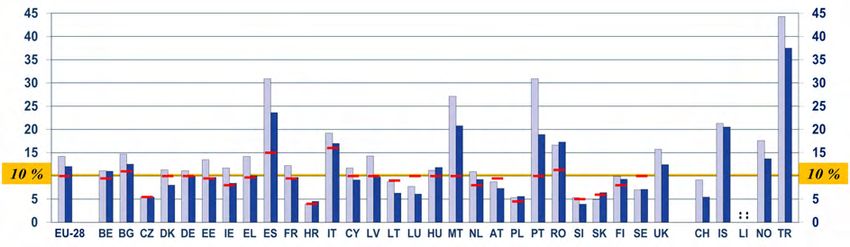
Definition of early leavers from education and training
                              For the purpose of data collection and monitoring at EU level, the EU-
                              Labour Force Survey (Eurostat, 2013) defines early leavers as young
                              people aged 18 to 24 who have completed lower secondary education
                              at most, and are not currently involved in further education or training.
                              In this Eurydice Brief, the term ‘early leaving from education and
                              training’ refers to all young people who cease attending any type of
                              education or training institution before completing the upper secondary
                              level (ISCED 3).

                              The report presents recent developments in the design and
                              implementation of evidence-based and comprehensive policies to combat
                              early leaving and support student learning. It covers all EU Member
                              States, plus Switzerland, Iceland, Norway and Turkey. The reference
                              year for all national policy data is 2013/14. Some of the most recent
                              strategies for early leaving, adopted by the end of 2014, are also
                              mentioned here.

                              What are the main factors leading to tackling
                              early leaving?
   Socio-economic factors     Leaving education and training early is a complex issue and the causes
 exert a stronger influence   vary from student to student. Family and/or migrant background, person-
  on students’ decisions to
                              al, gender and socio-economic circumstances as well as factors related to
leave early than gender or
having a migrant/minority
                              the education and training system are but a few of the elements implicated
               background.    in the process leading students to leave education and training early.
                              As far as gender is concerned, recent statistics from Eurostat (EU-LFS,
                              2014) show that there is a higher proportion of boys (13.6 %) amongst
                              early leavers from general education than girls (10.2 %). However,
                              evidence shows that the higher the socio-economic status of students, the
                              less apparent is the difference in the rates of early leaving between the
                              genders.
                              Similarly, statistics also show that foreign-born students are more likely
                              to leave education and training early (22.6 % vs. 11 % of native born
                              students). Indeed, students with a migrant background generally face
                              greater challenges in accessing and participating in education than those
                              born in the country of residence. This is due largely to language and/or
                              cultural barriers, socio-economic segregation and limited access to
                              adequate learner support. However, as with gender, students’ socio-
                              economic situation appears to exert a stronger influence on the likelihood
                              of them leaving education and training early than having a migrant
                              background.

4
Eurydice Brief – Tackling Early Leaving from Education and Training in Europe

       Participation in high   There are also a number of factors relating to the education system that
        quality ECEC, well-    influence early leaving rates. The negative aspects include grade
          managed, flexible
                               retention, the socio-economic segregation of schools and early tracking
  transitions between levels
and types of education, and
                               based on academic selection. However, there are also positive factors that
   from school to work, can    can lower the risk of early leaving, such as participation in high quality
  all have a positive impact   early childhood education and care (ECEC) and well-managed transition
        on reducing ELET.      processes from primary to secondary level, from lower to upper
                               secondary level, and from school to work. Flexible pathways in upper
                               secondary education can also have a positive effect in preventing or
                               reducing early leaving.

                               What can policy-makers do to reduce the
                               number of early leavers?
      The starting point for   One of the main areas that can be addressed by policy-makers to prevent
tackling ELET should be a      or reduce the occurrence of early leaving from education and training is
      regular and extensive
                               to implement effective data collection and monitoring (see Figure 1).
 collection of data on early
                    leavers.
                               There is general agreement that valid and up-to-date data on early leavers
                               can help to develop focused policies. Different tools can be used to
                               gather this data, for example, national student registers or student
                               databases, which can be used by different levels of public authority to
                               assess the scope of the problem. Quantitative and qualitative studies or
                               surveys are tools that can contribute to a better understanding of the
                               reasons for early leaving and how they may be linked.

 Figure 1: Main policy areas related to tackling ELET

                                   Data collection and monitoring

                               Comprehensive strategies against ELET

                   Prevention                   Intervention                    Compensation
                     policies                      policies                       policies

                                    Governance and cooperation

                                                                                                                         5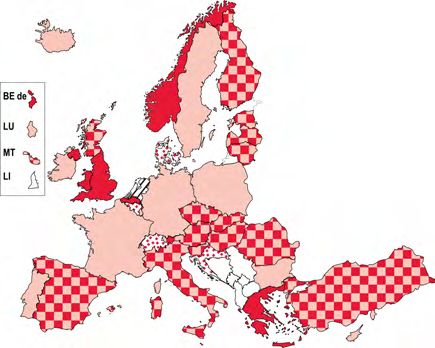
Efforts to tackle early Combating ELET can only be effective as a coordinated strategy across
leaving should be based on authority levels and policy areas. The importance of developing a
a comprehensive strategy
comprehensive strategy was recognised in June 2011 by the Education
incorporating a balanced
approach towards
Council in its Recommendation on policies to reduce early school
prevention, intervention leaving. The Council highlighted the need for targeted and effective
and compensation. evidence-based policies based on national circumstances.
Definition of a comprehensive strategy (Council Recommendation,
28 June 2011)
'Comprehensive strategies on early school leaving comprise a mix of
policies, coordination across different policy sectors and the
integration of measures supporting the reduction of early school
leaving into all relevant policies aimed at children and young people.
In addition to education policies that promote high-quality school
systems, these are principally social policy and support services,
employment, youth, family, and integration policies. Horizontal
coordination between different actors and vertical coordination
through different levels of government are equally important.
Strategies on early school leaving should comprise prevention,
intervention and compensation elements. Member States should
select the detailed components of their strategies according to their
own circumstances and contexts.'
In order to be effective, the Council Recommendation thus suggests that
comprehensive strategies to combat early leaving should include three
types of policies:
Prevention policies, which aim to tackle the root problems that
may eventually result in early leaving.
Intervention policies, which aim to combat any emerging
difficulties experienced by students, by improving the quality of
education and training and providing targeted support.
Compensation policies, which create new opportunities for those
who have left education and training prematurely to gain
qualifications.
Education and career guidance, which encompasses all three areas,
prevention, intervention and compensation, is a measure that receives
special attention here as it is identified by a large majority of European
countries as being crucial for addressing early leaving.
6Eurydice Brief – Tackling Early Leaving from Education and Training in Europe
Reducing early leaving Finally, reducing early leaving requires a long-term policy approach with
requires horizontal sustained political and financial commitment from all key stakeholders.
cooperation between the
Strong governance arrangements are needed to manage the relationships
relevant policy areas, as
well as vertical cooperation
across the relevant policy areas and agencies ('horizontal cooperation') as
between stakeholders at well as between the various levels of government – national, regional,
national, regional, local local and school level ('vertical cooperation'). The ability to work with
and school levels. private and non-governmental bodies such as employers and trade unions
(cross-sector cooperation) is also essential.
Data collection and monitoring
A lot of progress has been The most recent Eurostat data shows that in the majority of European
achieved in recent years in countries the rate of early leavers has decreased over recent years; and
European countries in
with a current EU-average of 12 %, countries are collectively heading
reducing the rate of early
leavers.
towards the 10 % benchmark goal by 2020 if the current trend continues
(see Figure 2). More than half of the countries examined have reached
the EU headline target, and around a third of all countries have reached
their own national targets, often set at a more ambitious level than the
headline target. Some countries such as Spain, Malta and Portugal,
despite having rates above 10 %, have made significant improvements
over the last few years.
Figure 2: Percentage of early leavers from education and training, 2009-2013, and national targets
as compared with the EU headline target
% %
2009 2013 National targets EU 2020 headline target
Source: Eurostat, EU-LFS [edat_lfse_14], (data extracted October 2014).
Country specific notes: See full report (European Commission/EACEA/Eurydice/Cedefop, 2014, p. 24).
7Most countries have Most countries have taken up the policy debate on early leaving at
established national national level and have their own definitions and data collections, in
definitions of ELET and
addition to the data gathered for the EU-Labour Force Survey (see
developed corresponding
data collections.
Figure 3). The exceptions are Belgium (German-speaking Community),
the Czech Republic, Croatia, Cyprus, Hungary, Romania, Slovakia and
the United Kingdom (Northern Ireland).
In compiling their national data collections on early leavers, countries are
mainly using student registers or databases. Although these may not have
been developed with the specific objective of measuring early leaving,
they may be used to monitor absenteeism and thereby provide an early
warning system to alert schools and authorities when to intervene and
help individuals at risk of early leaving. They can also be used to
evaluate the effectiveness of policies in addressing the causes of early
leaving.
Figure 3: Sources used for producing national data on early leaving (other than Eurostat LFS),
2013/14
ELET data collection based
on student register/database
Surveys/statistics on ELET
No data collection other than the LFS
Source: Eurydice.
Country specific notes: See full report (European Commission/EACEA/Eurydice/Cedefop, 2014, p. 28).
8Eurydice Brief – Tackling Early Leaving from Education and Training in Europe
Case study: National data collection on ELET in
the Netherlands
All students at publicly funded (general)
secondary or secondary vocational schools are
registered in BRON (the Basic Records Database
for Education) with unique number and other personal and school-
related information – including age, gender, the locality of the student,
ethnic origin, education/school type and school history –, which can be
linked to socio-economic data for each region, city and neighbourhood.
Young people who are registered on the BRON system as being of
compulsory school age but not attending education or training and not
holding a basic qualification are classified as early school leavers.
Aggregate data is available at national, regional and local levels and for
each individual school and training institution on a monthly basis. Since
2009, all schools are obliged by law to register school absenteeism via the
Digital Absence Portal (Digitaal verzuimloket).
Combining quantitative Finally, although many countries produce statistical data on early leavers,
and qualitative data on relatively few gather qualitative information that can help in
ELET can ensure that
understanding the reasons why students leave education and training
policy development is better
informed.
early and what they do afterwards. France, Malta and the United
Kingdom (Scotland) are amongst the few countries that routinely conduct
surveys of students after they have left education and training
prematurely. Collecting feedback from the students affected, or from the
other stakeholders involved, can provide an important source of
information for current and future policies related to early leaving.
Strategies to combat ELET
A third of European Across Europe, eight countries/regions have comprehensive national
countries have put in place strategies in place that aim to reduce early leaving from education or
a national strategy for
training. This is the case in Belgium (Flemish Community), Bulgaria,
reducing ELET.
Spain, Malta, the Netherlands and Austria, as well as in France and
Hungary where the strategies were recently adopted. A national strategy
is still being adopted in Romania.
Policies have also been developed in other countries which all contain
some of the key characteristics included in the European definition, such
as a focus on monitoring early leaving; prevention, intervention and
compensation measures; as well as cross-sector cooperation.
9Case study: Maltese Strategic Plan for the
Prevention of Early School Leaving
The 'Strategic Plan for the Prevention of Early
School Leaving' adopted in 2014 aims to facilitate
focused actions that will support students in
making the best of their school years, from early
childhood to the end of compulsory school and beyond. Actions of this
comprehensive strategy include providing free childcare, making community
schools possible, developing e-Learning content to better respond to student
learning needs, funding a school-based approach to reducing early leaving,
strengthening the transition process across educational pathways, reviewing
and consolidating career guidance across levels, harnessing and strengthening
parental support to combat early leaving, and supporting teachers in dealing
with the challenges associated with the prevention of early leaving.
Some countries report facing challenges in implementing effectively
strategies. They report difficulties in ensuring collaboration between
different policy areas and stakeholders and, in particular, encouraging
schools to link with outside bodies or agencies. In addition, adapting
strategies to the different socio-economic circumstances or to the
disparities in early leaving rates between regions or localities within the
country has been problematic. Furthermore, creating sustainable
structures that can guarantee the continuity of actions when the term of
the strategy comes to an end has been demanding.
All European countries While not all European countries have a national strategy, they all have
have developed policies and policies and measures to combat early leaving, which, in many cases,
measures to combat early
give equal weight to the three types of measure mentioned in the
leaving, especially in the
areas of ECEC, flexibility
Recommendation i.e. prevention, intervention and compensation.
and permeability of
The areas where most countries have adopted policies/measures that
educational pathways and
education and career contribute to preventing early leaving are improving access to and the
guidance. quality of ECEC, and increasing the flexibility and permeability of
educational pathways. As mentioned above, actions in both areas are
essential if countries are to be successful in reducing the numbers of
early leavers. Education and career guidance is another area that has been
reported by the majority of countries as an essential measure to combat
early leaving.
10Eurydice Brief – Tackling Early Leaving from Education and Training in Europe
In contrast, only a few countries/regions have policies in place that aim to
Raising teachers' tackle early leaving by reducing grade retention (Belgium (Flemish and
awareness of the problem French Communities), the Czech Republic, France, Latvia, Austria,
of early leaving and
Portugal, Romania and Slovenia), or policies to counteract segregation in
encouraging the
development of the skills
schools (Belgium (French Community), Bulgaria, the Czech Republic,
needed to prevent it is one Hungary, Malta and Romania). Not all European countries are equally
of the crucial policy areas concerned by these issues. Regarding grade retention, for example, PISA
that needs further 2012 data reveal significant variations between countries in the rates of
development throughout
students who have repeated at least one school year. However, both grade
Europe.
retention and school segregation represent two of the main obstacles to
progress in preventing early leaving and should therefore receive
appropriate attention in all countries where they could be problematic.
Similarly, less than a third of all countries/regions (Belgium (Flemish and
French Communities), Spain, Luxembourg, Hungary, Portugal, Romania,
Switzerland and Norway) mention that the subject of early leaving is part
of initial teacher education or continuing professional development
policies. However, one of the determining factors in reducing early
leaving is improving teachers’ skills, particularly their ability to identify
individual students' learning needs, create a positive learning
environment and promote inclusion. Likewise, the awareness of school
heads and their commitment to addressing the problem of early leaving is
essential if improvements are to be made in this area.
Case study: Reducing grade retention in Austria
Since 2013 (full implementation by 2017)
teaching and exams in upper secondary schools
are modularised on a semester basis. Students
have to pass all modules, but they are allowed
to move on to the next grade even if they fail two – under special
circumstances three – of the modules. They then receive additional
teaching support to help them pass the outstanding modules. Since
under the new module system pupils are not forced to repeat a whole
year, this also benefits pupils with learning difficulties in particular subjects,
as they can stay with their class and are therefore not separated from
their friendship groups.
11Case study: Training of teachers on issues
related to early leaving in Luxembourg
During the 2013/14 school year, the Institute of
Continuing Education of the MENFP's (Ministry of
National Education and Vocational Training)
offered three different continuing professional development courses
dealing explicitly with demotivation and student dropout. These courses
were available to all teachers in the country.
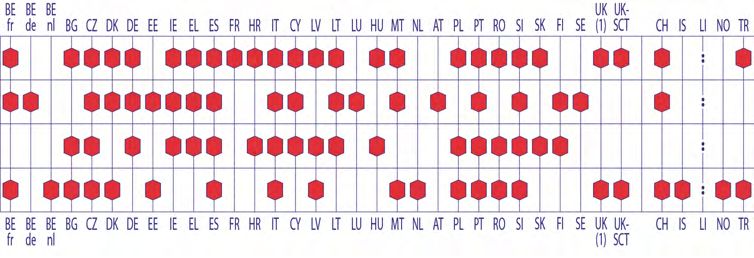
All countries also have policies/measures targeting groups at high risk of
early leaving, including disadvantaged students, those from a migrant or
minority (especially Roma) background and students with special
educational needs (see Figure 4). Even though some of these policies
were intended to improve attainment levels generally rather than being
specifically developed to tackle early leaving, they are in line with the
Recommendations of the Education Council on early leaving.
Figure 4: Targeting groups at high risk of leaving education and training early, 2013/14
Students from socially
disadvantaged background
Students from a
migrant background
Students with
minority/Roma background
Others
Source: Eurydice. UK (1) = UK-ENG/WLS/NIR
Country specific notes: See full report (European Commission/EACEA/Eurydice/Cedefop, 2014, p. 64).
Case study: Targeted support to combat early
leaving amongst students from disadvantaged
backgrounds in Poland
In order to support young people from socially
disadvantaged backgrounds and reduce their
risk of early leaving, financial support is available through a school
allowance. This is provided on an ad hoc basis and may be granted to
students in temporary difficulty (e.g. as a result of family emergencies
such as the death of a parent or a fire in the home). The allowance may
take the form of money to cover education including school-related
materials.
12Eurydice Brief – Tackling Early Leaving from Education and Training in Europe
Case study: Targeted support to combat early
leaving amongst Roma students in Spain
The Fundación Secretariado Gitano is
implementing a national programme called
‘When I grow up I would like to be’. It aims to
raise awareness of the value of education among Roma students and
families and involves public authorities in the fight against inequality in
education. For the campaign, a photo-van travelled across Spain taking
pictures of the ‘dreams’ of Roma girls and boys (e.g. being a doctor or a
teacher) and their parents. The key messages of the campaign were:
‘whatever your dream might be, finish secondary education’ and
‘Roma with Education is Roma with a future’.
Education and career guidance –
a key measure to combat early leaving?
The main focuses of Education and career guidance – considered here as the practice of
education and career supporting students in their choice of education and career path – has
guidance in tackling early
been identified by the large majority of European countries as one of the
leaving are providing
support for students,
key measures in addressing early leaving. In most countries, guidance is
supplying information an important element in prevention, intervention and compensation.
about their education and
career opportunities, and The main objective of education and career guidance is to provide
helping them develop their students with support, inform them about the possibilities open to them,
decision-making skills. and develop the skills they need to make decisions about their future
education and work.
Education and career guidance is traditionally delivered through school-
based guidance services, which often deal with individuals who are in
need of support or who may already be at risk of leaving education and
training early. However, a great number of countries are now including
guidance in the broader curriculum (see Figure 5) making it accessible to
all students and enabling it to be used as a prevention measure. Together
these forms of provision make guidance a more effective tool for
addressing the causes of early leaving.
13Figure 5: Provision of education and career guidance in primary and general secondary education
(ISCED 1, 2 and 3), 2013/14
Primary education (ISCED 1) Lower secondary general education (ISCED 2)
Upper secondary general education (ISCED 3)
Guidance provided by
the school guidance service
Guidance is a compulsory part of the curriculum and
provided in the classroom
Guidance provided only by
external guidance services
No guidance provided
Source: Eurydice.
Country specific notes: See full report (European Commission/EACEA/Eurydice/Cedefop, 2014, p. 86).
Where education and career guidance is included in the curriculum, three
main approaches are used in the classroom: it may be taught as a separate
subject; integrated within one or more subjects (e.g. social sciences,
entrepreneurship or citizenship education); or distributed throughout the
curriculum as a cross-curricular topic. European countries report that
they promote a broad approach to education and career guidance
combining different forms of provision and using a wide range of
individual and group methods.
Finally, schools in most countries provide guidance through extra-
curricular activities, in cooperation with local partners such as external
guidance services and employers.
14Eurydice Brief – Tackling Early Leaving from Education and Training in Europe
Case study: Guidance as both a separate and
integrated topic in Germany
At lower secondary level, an introduction to
the world of work is a compulsory component
of each course of education and is provided
either as a separate subject such as Arbeitslehre (in pre-vocational
studies) or as part of other subjects or subject areas. If Arbeitslehre is a
separate subject, it can be either compulsory or optional, depending on
the Land.
Case study: Guidance as a cross-curricular topic
in Estonia
The National Curricula for primary and
secondary (general) education include the
cross-curricular topic ‘Lifelong Learning and
Career Planning’ which seeks to ensure that students are better prepared
for their entry into the labour market, to make decisions independently, to
fill different roles in life and to take part in lifelong learning. Students are
encouraged to value learning as a lifelong activity and as a means to
develop their career; they are also encouraged to learn how to assess
their skills, interests and knowledge in relation to work and study
opportunities and to apply these skills in their decision-making process.
Case study: Guidance programmes involving
extra-curricular activities in Finland
Students in basic education undertake work
experience that is intended to help them in their
choice of further education or profession as well
as to recognise the value of and appreciate the opportunities working life
brings. Students should also have an opportunity to evaluate their
learning and work experiences. Periods of work experience may be
implemented as follows: 1-2 days of familiarisation with the work of school
staff (year 7); 1-3 days outside school, for example, at a parent's
workplace (year 8); 10 days outside school, maximum 6 hours per day
(year 9).
15The type of staff responsible for guidance provision is directly related to
the way guidance is organised in schools. Where guidance is an integral
part of the curriculum, it is mainly delivered by teachers. Where it is
provided by school-based services, guidance specialists such as guidance
counsellors, psychologists or social workers are usually in charge. The
great majority of European countries report that it is non-specialised
teachers who play the most significant role in the provision of guidance,
irrespective of how it is delivered.
Teachers providing Accordingly, a number of countries/regions report a lack of high quality
education and career guidance provision (1). This is confirmed by findings from the OECD's
guidance report a need for
TALIS survey showing that around 42 % of European teachers need
professional development
in this area, in particular in
professional development in student career guidance and counselling.
dealing with students at Moreover, only a third of countries report that the staff responsible for
high risk of early leaving. guidance receive training during their initial education in the skills
needed to deal with the groups at risk of early leaving (2). In order to
guarantee high quality guidance services for this particular at-risk group,
schools could further investigate the need for appropriate professional
training opportunities.
Finally, in most European countries, education and career guidance also
plays an important role for those who have already left education and
wish to re-enter the system. As a compensation measure, guidance is
delivered mainly through second-chance education programmes or at the
point when students re-enter mainstream education. It is also offered by
specialist guidance services, through youth guarantees, and in some cases
it is embedded in projects.
( 1) Bulgaria, Latvia, Portugal, Romania, the United Kingdom (England) and Turkey
( 2) Bulgaria, the Czech Republic, Germany, Spain, Italy, Cyprus, Malta, Romania, Slovakia, Sweden, Finland,
Switzerland and Iceland
16Eurydice Brief – Tackling Early Leaving from Education and Training in Europe
Governance and cross-sector
cooperation
Cross-government and Enhanced cooperation at all levels is a fundamental condition for
cross-sector cooperation effective national strategies, policies and measures to combat early
are a prerequisite for
leaving. As the 2011 Council Recommendation indicates, comprehensive
tackling ELET effectively.
strategies on early school leaving must comprise a mix of prevention,
intervention and compensation initiatives, which need to straddle
different policy areas. These measures should be integrated into all
relevant policies aimed at children and young people; therefore cross-
government cooperation is essential.
Cooperation on policies and measures related to early leaving between
the various ministries/departments or between the different policy areas
is already part of the institutional set-up in many countries (see Figure 6).
In some others, cooperation is less systematic. The level and extent of
this kind of cooperation depends a lot on countries' political and
institutional structures.
Figure 6: Cross-government cooperation on ELET: policy areas working with education at central/top-
level, 2013/14
Employment
Youth
Social Affairs
Family
Justice
Health
Housing
Other
There is a tradition of cross-government Cooperation mechanisms
cooperation at central/top-level are being tested within projects No comprehensive strategy/
no specific ELET
Cooperation mechanisms exist/are being Other policy areas are involved but cooperation policies/measures
developed mechanisms are not yet established
Source: Eurydice. UK (1) = UK-ENG/WLS/NIR
Country specific notes: See full report (European Commission/EACEA/Eurydice/Cedefop, 2014, p. 68).
17Formalising cooperation, for example, by means of a coordinating body,
is a way to enhance synergies across government departments and
between different levels of authority, schools and other stakeholders.
Coordinating bodies could strengthen the commitment to reducing early
leaving, improve the process of monitoring and evaluation as well as
identify areas for further work. Although only four countries/regions
have established a formal coordinating body as part of their
comprehensive strategy for tackling early leaving (Belgium (Flemish
Community), Spain, Malta and the Netherlands), the initial positive
outcomes of their work could serve as an example for other countries.
Case study: Coordinating body for tackling
early leaving in Belgium (Flemish Community)
A thematic working group was established for
the development of the 'Action Plan on Early
School Leaving', in which many stakeholders
such as policy-makers, social partners, educational umbrella
organisations, labour market organisations, etc. were involved.
Moreover, a cross-sector steering group meets at least once a year to
implement the action plan.
At the local level, multi- Multi-agency partnerships can facilitate effective coordination among
agency partnerships can local stakeholders who work together to address the individual needs of
ensure that students receive
students at risk of early leaving; they can therefore provide holistic
the holistic support they
need.
support to these young people. In many countries various professionals
are involved at school and community level. The question that remains to
be answered is to what extent these agencies work together: do they
provide a joined-up service or do they have a fragmented approach, with
professionals only responding to students’ if their needs fall within their
own area of expertise. Experiences from Belgium (German-speaking
Community), Ireland, Malta and the Netherlands, for example, show that
the constitution of multi-disciplinary teams committed to joint case
management can be effective for meeting students' full range of needs.
18Eurydice Brief – Tackling Early Leaving from Education and Training in Europe
Case study: Institutionalised partnership
practice against early leaving in Ireland
The whole-school guidance plan provides an
overarching framework for student support,
including special educational needs and
mental health. The student support team is the core element of the
student support system in schools and meets on a weekly or fortnightly
basis to discuss individual cases and decide the best way forward. This
may involve providing in-school support for the young person or
deciding that external help is needed.
Effective cross-government and cross-sector cooperation requires clearly
defined roles and responsibilities for the various stakeholders. Although
monitoring and evaluating the effectiveness of cooperation can help to
clarify these issues and support collaboration, this currently only happens
in a systematic way in the Netherlands, Finland, the United Kingdom
(Scotland) and Switzerland. The findings in these countries/regions show
that a lot of time and effort needs to go into developing knowledge and
understanding of the partners (e.g. of their institutional culture and
language, their practices, etc.) as well as into building trust to overcome
barriers to cooperation. This process is a prerequisite if a sense of shared
ownership is to be developed.
Concluding remarks
This Eurydice Brief confirms that early leaving represents a complex
challenge at individual, national and European levels. Young people who
leave education and training early are often both socially and
economically disadvantaged compared to those who stay on and gain the
necessary qualifications to help them succeed in life.
To address this situation, it is vital to recognise that while early leaving
is, on the surface, an issue for education and training systems, its
underlying causes are embedded in wider social and political contexts.
Early leaving is fundamentally shaped by countries' broader policies for
the economy, employment, social affairs, integration of migrants,
housing, health, and so on. Improvements in educational attainment and
employment levels of young people therefore also rely on improvements
19in the socio-economic climate – on higher economic growth, measures to
combat poverty and improve health, and the effective integration of
immigrants and minorities into society. Only a comprehensive approach
to tackling early leaving can therefore be effective and sustainable.
Positive developments – with significant variations across countries – can
be noted in the progress made across all European countries in reducing
the proportion of early leavers. In several countries, reducing ELET has
become and remains a prominent priority in the policy agenda, leading to
the development of more targeted policies. All countries have in place a
wide range of policies and measures for tackling early leaving, even the
ones with very low early leaving rates. It is obvious, however, that some
things can be further improved. In some countries, large disparities still
exist between the early leaving rates of migrant and non-migrant
students, as well as between male and female students. While neither of
these are determining factors for early leaving they are still important and
must be seen in the light of students’ socio-economic status which has a
much stronger impact. Moreover, high levels of grade retention and low
participation rates in ECEC coincide with high proportions of early
leavers in a few countries (Spain, Portugal and Turkey), and this is one
reason why these issues remain a general concern.
In addition to the issues identified and analysed here, countries have
reported several others that may have had an impact on their rates of
early leavers, such as the implementation and generalisation of VET
programmes in secondary education; the identification of schools
needing priority intervention; the extension of compulsory schooling; and
the creation of a national expectation that young people should finish
school. These issues, which could not all be analysed in detail in this
Brief, deserve further investigation.
Last but not least, the funding of policies and measures for tackling early
leaving plays a crucial role. The availability of additional funding is not a
prerequisite for strategic action to address early leaving. However, it can
act as a lever, for instance to provide adequate support for schools with a
high concentration of people at risk of ELET, and targeted support for
specific groups at risk. In the Netherlands, schools receive performance-
related funding for contributing to the reduction of early leaving. This
issue should also be further explored in future debates on strategies,
policies and measures to tackle early leaving in Europe.
20Eurydice Brief – Tackling Early Leaving from Education and Training in Europe
References
Council Recommendation of 28 June 2011 on policies to reduce early school leaving, OJ C 191, 1.7.2011.
[pdf] Available at:
http://eur-lex.europa.eu/LexUriServ/LexUriServ.do?uri=OJ:C:2011:191:0001:0006:en:PDF
[Accessed on 12 May 2015].
European Commission/EACEA/Eurydice/Cedefop, 2014. Tackling Early Leaving from Education and Training
in Europe: Strategies, Policies and Measures. Eurydice and Cedefop Report. Luxembourg: Publications
Office of the European Union. Also available at:
https://webgate.ec.europa.eu/fpfis/mwikis/eurydice/index.php/Publications:Tackling_Early_Leaving_from_
Education_and_Training_in_Europe:_Strategies,_Policies_and_Measures [Accessed on 12 May 2015].
European Commission, 2013. Reducing early school leaving: Key messages and policy support. Final Report
of the Thematic Working Group on Early School Leaving. Brussels: European Commission. [pdf] Available at:
http://ec.europa.eu/education/policy/strategic-framework/doc/ELET-group-report_en.pdf
[Accessed on 12 May 2015].
Eurostat, 2013. Educational attainment and outcomes of education.
http://ec.europa.eu/eurostat/cache/metadata/en/edat_esms.htm [Accessed on 12 May 2015].
2124
You can also read


