Expedition Kit Guide For participants and parents 2021/2022 - The Duke of Edinburgh's Award
←
→
Page content transcription
If your browser does not render page correctly, please read the page content below
2021/2022

Expedition
Kit Guide
For participants and parents
Contents
      4    How to use this guide

      5    Ten questions you should ask

      6    Your DofE Card

      7    DofE expeditions – an overview

      8    The DofE Kit List

      9    How to save money on expedition kit

      12   Walking boots

      14   Walking socks

      15   Head/neckwear

      16   Waterproof clothing

      18   Rucksacks

      20   Sleeping bags

      21   Sleeping mats

      22   Technical clothing and layers

      24   Expedition food

      25   Campcraft and cooking

      26   First aid

      27   Waterproofing

      30   Tents

      32   Buying tents for DofE expeditions

      34   Burners and fuel

      35   Navigation

      36   Rucksack packing tips and advice

      37   Looking after your feet

      38   Making your kit last
Ten questions a DofE
participant should ask…
Answer these ten questions to help you get the kit you really need for your expedition.
Have I got my How long am I
How to use this guide DofE Kit List?
From day one, the Expedition Kit List is the one
thing that will be invaluable. Download at
DofE.org/shopping/kitlist, or access our
going for?
Making do with basic/alternative kit for two days
is very different to three or four days.
Interactive Kit List for when you are out and about
– it’s a great checklist for shopping and packing. What else would I
use the kit for?
The Expedition Kit Guide is aimed What does DofE
at helping participants and parents Would you use the boots every day walking the
to choose and then find the right kit Recommended Kit mean? What’s already in dog or take the rucksack on your gap year? It
for their expeditions. Each category The DofE has great relationships with my wardrobe? might be worth spending more if you’ll get that
includes key information, expert tips expert expedition kit suppliers and Check what kit you already have that you could value back over time.
and money saving ideas, as well as manufacturers. We test and recommend use (but avoid denim and cotton items).
directions towards online resources their kit based on their design and
packed with additional advice. suitability for the kinds of expeditions What’s my
This guide is aimed at those doing usually completed by DofE participants. What can budget?
UK expeditions on foot, but some We don’t look for the most high end or I borrow? Think about what you can afford and what kit
information will still be useful across all expensive kit, but kit that is fit for purpose you have to get. Also, remember to use your
methods of transportation. and good value for money. Remember, Look out for Ask around and see what people have and would
DofE Card or Digital DofE Card to save at least
be happy to lend, particularly small items like
Whether you are doing a Bronze, Silver these are recommendations only and this logo hats, sun cream and water bottles.
10% at GO Outdoors, Blacks, Millets, Ultimate
or Gold DofE programme, this guide is not kit that you must use. The DofE All DofE Recommended Kit Outdoors and Tiso (Scotland only).
just a summary; the best place you can charity receives a royalty from all sales of will feature this logo, so you
get advice is from your DofE Expedition Recommended Kit items, which helps to can easily see if something is Am I still
Supervisor who will check your kit. For support our work with young people. recommended by the DofE.
growing? Where can I get a
more expert advice, find your nearest All equipment must be checked by
If you are, you may want to spend less as you will
professional boot fitting?
DofE Recommended Retailer. GO the Expedition Supervisor (who is
quickly grow out of your clothing, boots and some kit. The range of expedition boots is vast because
Outdoors, Blacks, Millets, Ultimate
responsible for the safety and welfare people’s feet are so different. If you want a boot to
Outdoors and Tiso are all outdoors
of participants) before being used for last, make sure you get a professional fitting to find
specialists and their staff can answer all
your expedition kit questions.
any DofE activities. What’s the a pair that really fits you. The five Recommended
For more information about what climate like? Retailers of Expedition Kit are GO Outdoors,
DofE Recommended Kit means, visit Find out what the normal temperatures are, Blacks, Millets, Ultimate Outdoors and Tiso and
DofE.org/shopping/reckit particularly at night, for the time of year. they all provide a free boot fitting service.
Having good kit can make the difference between a successful and enjoyable What’s the weather
expedition and one that is remembered for all the wrong reasons. This guide will likely to be like?
help participants and parents choose kit that is right for them." You must have waterproofs but check the
ALASDAIR OFFIN, forecast. Will you need dry-bags and extra
ASSESSOR NETWORK CO-ORDINATOR, LOWTHER HILLS waterproofing? Or sun cream and sunglasses?
4 Expedition Kit Guide | DofE.org/shopping Expedition Kit Guide | DofE.org/shopping 5
Your DofE Card                                                                                                                   DofE expeditions
Save at least 10% on your expedition kit and more.

                                                                                                                                 – an overview
Every young person involved with the DofE is able to save money on expedition purchases at five leading outdoor retailers.
Claim your discount in over 200 stores and online with these five DofE Recommended Retailers of Expedition Kit.

                                                                                                                                 Bronze, Silver and Gold DofE expeditions are very different
                                                                                                                                 to each other.

                                                                                                                                           Bronze                                    Silver                                 Gold
                                                                                                                                         2 days, 1 night                         3 days, 2 nights                      4 days, 3 nights
                                                                                                                                     Bronze expeditions, two days/          Silver expeditions are a step above      Gold expeditions, four days/
                                                                                                                                     one night, are all about young          Bronze. Participants may already     three nights, are a comprehensive
                                                                                                                                     people enjoying the outdoors.          have had an introduction at Bronze       challenge of teamwork, self-
                                                                                                                                     Many Bronze expeditions are              level, and now carry out a three         reliance, isolation and risk
                                                                                                                                      undertaken with kit which is           days/two nights expedition. Your         management. Lightweight,
                                                                                                                                     older or borrowed and can be           need to keep dry and comfortable         modern and durable kit will
                                                                                                                                     a lower cost than for Silver or           becomes more important, and         have much more value on these
                                                                                                                                           Gold expeditions.                 durable kit could help you have a    adventures. At Gold, always think
There are three ways you can claim your DofE participant discount at these retailers:                                                                                           more enjoyable experience.           lightweight and waterproof.
         Use your personalised
          DofE Card in store               Download your Digital Card from eDofE          Use the online discount code

                                                                                            Online discount code:
                                                                                              JDO-DOFE-PAR

                                                                                            Enter the above code on
                                                                                                these websites:
                                                                                               GOOutdoors.co.uk                  Expeditions whatever the weather
      When you log into eDofE for the
     first time, enter your address and                                                           Blacks.co.uk
                                                                                                                                 Waterproofs need to work whatever level your expedition.
     a personalised DofE Card will be                                                             Millets.co.uk
    sent directly to you directly to you                                                                                         However, at Silver and Gold, keeping dry becomes more
                                                                                             Ultimateoutdoors.com
          with your Welcome Pack.                                                                                                important due to longer days and (usually) distance. Even in the
                                                                                                    Tiso.com
      This will have your name and                                                                                               summer, dew in the mornings on long grass can drench socks and
                 eDofE ID.                                                                                                       trousers. Pack according to the weather. Do you need thermal
                                                                                                                                 gloves and a winter hat or sun cream, a sun hat and sunglasses?
                               Find your nearest store at DofE.org/shopping/storefinder
     Visit DofE.org/shopping/T&Cs for details. Always show your DofE Card or Digital Card. You'll get the best savings
     and your purchases, whether it is expedition kit or else, will generate a donation to the DofE charity. Make sure you
                                       use yours to save money and support the DofE.

6                                                                                     Expedition Kit Guide | DofE.org/shopping   Expedition Kit Guide | DofE.org/shopping                                                                             7
The DofE
Expedition Kit List
                                                                                                                How to
The DofE Expedition Kit List is your essential checklist
when preparing the kit needed for your DofE expedition.
All DofE Recommended Kit is tried and tested, so you know
it’s fit for expeditions.

                                                                                                                save money on
Participants can use it to be sure they haven’t forgotten
anything. It also tells you what kit the DofE recommends to
help when shopping for items. Remember, the kit list is a
guide – you should always check with the DofE Leader that

                                                                                                                expedition kit
your kit is suitable for your particular expedition.

You can download the kit list or use the Interactive Kit List
online to plan and personalise your expedition kit list on the go.

Get your DofE Kit List at
DofE.org/shopping/kitlist

                                                                                                                          What’s in                                   Get the                            Hand
                                                                                                                          your wardrobe?                              full value                         it down
                                                                                                                The best way to save money on              Remember to shop wisely and        If you have a large family, you might
                                                                                                                expedition kit is to use what you          buy items you’ll use again for     want to buy kit in neutral colours
                                                                                                                already have or borrow kit from            other activities.                  so that younger siblings can use it
                                                                                                                other people.                                                                 when they are old enough.
                                                                                                                                                           Walk the dog every day? Then
                                                                                                                Most people will have some clothes         get some good boots!               A rucksack with an adjustable back
                                                                                                                they need, a torch, plastic plate                                             system will also help with this.
                                                                                                                                                           If you are going travelling, get
                                                                                                                and so on and it’s amazing what
                                                                                                                                                           a rucksack suitable for both
                                                                                                                kit people have if you ask around.
                                                                                                                                                           activities.
                                                                                                                Some kit, like boots and socks, you
                                                                                                                often cannot borrow.                       Buy a waterproof jacket which
                                                                                                                                                           can also be used as a coat too.

8                                                                    Expedition Kit Guide | DofE.org/shopping   Expedition Kit Guide | DofE.org/shopping                                                                              9
DofE Expedition Kit

Rucksack
                                                                                                              Find out more at hi-tec.co.uk

                                                       All DofE participants are different,
                                                       and expedition needs vary by Award level, time

& Boot
                                                       of year, mode of travel and it’s location. As two
                                                       essential kit purchases, it is important to get your
                                                       walking boots and rucksack fitted to you. Speak
                                                       with the staff in our DofE Recommended Retailers

Fitting
                                                       who can offer advice and a free fitting service.

                                                       They offer a wide range of outdoor clothing
                                                       and equipment for expeditions in over 200 stores
                                                       nationwide and online.

Exclusively available at

                                                                                                              Save on your expedition kit with our DofE Recommended Retailers   GO Outdoors | Blacks | Millets | Ultimate Outdoors | Tiso

The Perfect Rucksack                                   The Best Boots
Making sure your rucksack fits properly                Finding the right pair of boots is an essential part
is really important to avoid getting aches             of preparing for your expedition. Buy your walking
in your back and shoulders.                            boots early so you have time to break them in and
                                                       for best comfort on your expedition.
Their expert staff can help you find the right
rucksack for your height and build, and adjust         Go in store to try out and test your new
it to the correct size so it is fitted correctly and   boots on the in-store slopes and dips.
comfortably on you.

Find your nearest store at                                                              RECOMMENDED

DofE.org/shopping/storefinder                                                            RETAILER OF
                                                                                        EXPEDITION KIT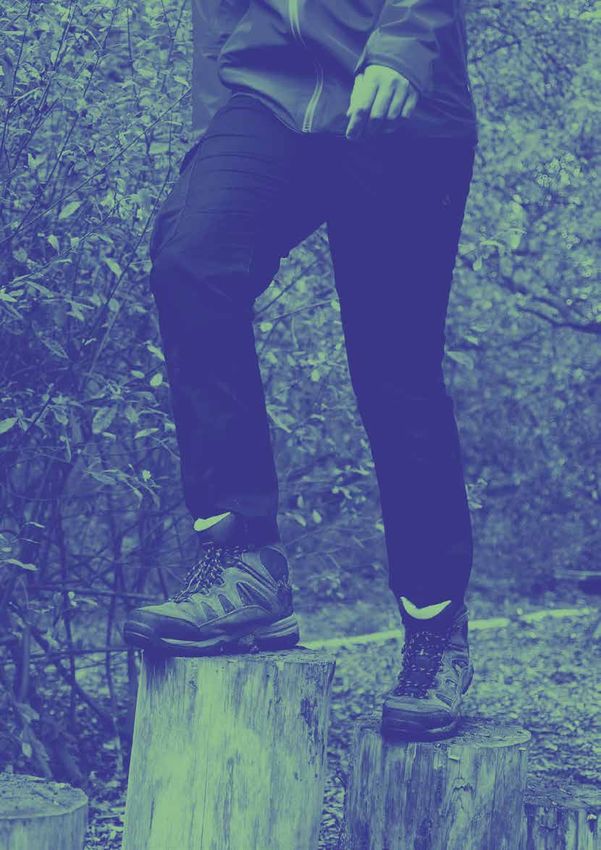
Personal Kit
Every member of the expedition team will need to
  carry their own personal camping equipment.
Walking boots
What to look for                                                                                         Before you buy
Most DofE expeditions are on foot, so getting the right walking boots and having                         1. Try on boots while wearing expedition socks and walk around in them.
them fitted for you will make a big difference to your journey. Feet come in                             2. The boots must have ankle support to protect you while walking with a heavy rucksack,
all shapes and sizes, so different boots may suit different kinds of feet. When                             and check there is a deep tread for grip.
choosing your walking boots, you’ll find a huge range of different fabrics, styles
                                                                                                         3. Think about how often you’ll use your boots and spend money appropriate to that use.
and sole units.
                                                                                                         4. You need to get your boots well before your expedition as you will need to wear them
Leather boots are soft, durable and waterproof and highly abrasion resistant,
                                                                                                            in to reduce rubbing and improve comfort.
making them long lasting. Fabric boots are lighter, cheaper and a good option if
your feet are still growing.

                                                                                                                                                                                  Expert advice
                                                                                                                                                                                  1. Use additional padding like
                                                                                                                                                                                     a foot bed to help to get the
                                                                                                                                                                                     best possible fit.
                                                                                                                                                                                  2. There are several ways to
                                                                                                                                                                                     lace boots, with each giving
                                                                                                                                                                                     a slightly different fit, so get
                                                                                                                                                                                     yours fitted professionally.
                                                                                                                                                                                  3. Take lightweight trainers or
                                                                                                                                                                                     flip flops etc. to wear at the
                                                                                                                                                                                     campsite to rest your feet.
                                                                                                                                                                                  4. The DofE only recommend
                                                                                                                                                                                     walking boots, not walking
                                                                                                         Money saving tips                                                           shoes, as participants need
                                                                                                         1. Often you can get last season’s boots in the sales and still get a       ankle support when carrying
                                                                                                            professional fitting.                                                    a heavy rucksack.
                                                                                                         2. If you decide the boots don’t fit, some retailers will allow you to   5. Treat your boots properly –
                                                                                                            return boots if you have only worn them indoors.                         before and after expedition.
                                                                                                                                                                                     To ensure longevity of your
                                                                                                                                                                                     boots, make sure you clean
                                                                                                                                                                                     them regularly and dry them
                                                                                                         Find out more about walking boots at                                        away from direct heat.

                                                                                                         DofE.org/shopping/boots
14                                                            Expedition Kit Guide | DofE.org/shopping   Expedition Kit Guide | DofE.org/shopping                                                                       15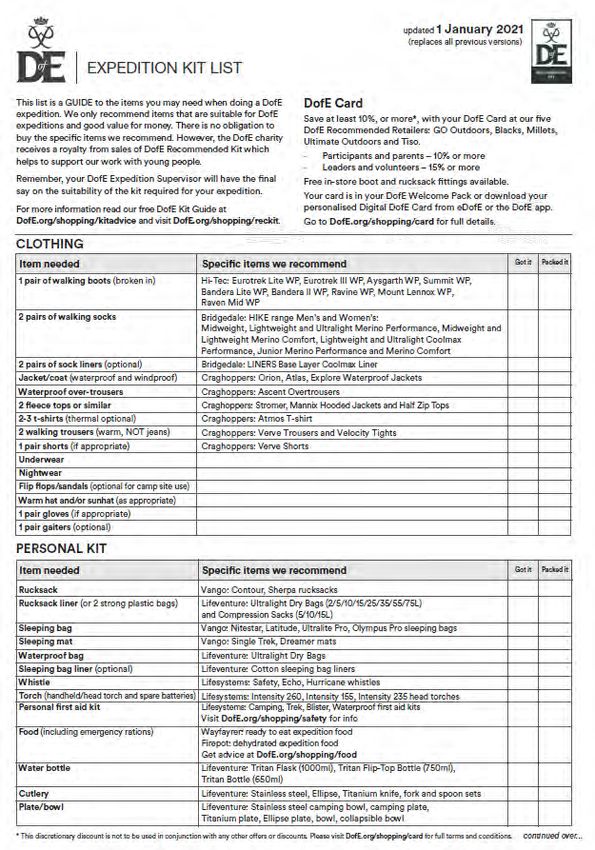
Walking socks                                                                                                               Head/neckwear
                                                      Before you buy                                                        Before you buy
                                                      1. Try on your socks with         4. Choose your socks before         1. Look for items that can serve   3. Every bit of space counts
                                                         your boots before you             you buy your boots. You             more than one purpose.             in your rucksack. Make
                                                         buy to ensure a perfect fit       can then wear them when          2. Try to avoid anything that         sure whatever you take is
                                                         combination.                      trying out walking boots to         holds moisture when wet.           lightweight and packs down
                                                      2. Look for moisture-wicking         get a realistic fit.                It will weigh you down and         small when not needed.
                                                         qualities in socks.                                                   won’t keep you warm.
                                                      3. Be sure your socks have
                                                         padding where your feet
                                                         need them.

What to look for
Good walking socks can be the key
to an enjoyable expedition and help
                                                      Money saving tips                                                     Money saving tips                                                                 What to look for
to avoid blisters. The best walking
sock for you depends on the type of                                                                                                                                                                           You never know what weather you’ll
                                                      1. If you need to, buy one        2. Wash your socks inside out       1. You may already own         2. Depending on the weather and
footwear you’ll be wearing.                                                                                                                                                                                   experience on expedition.
                                                         outer sock pair and two           as the water reinvigorates          or can borrow suitable         when and where your expedition
For thick leather boots, more                            liners. Liners can be             the underfoot cushioning.           head or neckwear.              is, think about what you should                 Warm hats, sunhats, scarves or multi-
protection around the toe of the sock                    easily washed and dried           Avoid wearing your                  Check your winter              bring. It’s unlikely you’ll need                functional headwear are all items that
offers warmth and padding. For a                         overnight, keeping fresh          socks on carpet; they act           wardrobe for items             a winter hat for July or August                 can provide comfort and protection
lighter weight boot, a lighter weight                    socks next to your skin.          like Velcro and create a            such as fleece hats            expeditions, but make sure to
                                                                                                                                                                                                              from the elements, whether its rain,
                                                                                           bobbling effect.                    and scarves.                   check the weather forecast.
walking sock may be an option.                                                                                                                                                                                wind or sunshine.
Look for walking socks that have                                                                                                                                                                              Look for kit that will wick away moisture
padded areas that act as a cushion on
key zones of your feet which are prone
                                                      Find out more about walking boots                                     Find out more about head/neckwear                                                 from the skin to keep you cool when it
                                                                                                                                                                                                              is hot and keep you warm in the cold.
to get tired or sore.                                 at DofE.org/shopping/socks                                            at DofE.org/shopping/headwear                                                     Fleece or microfibre materials are best.

                                   Expert advice                                                                                        Expert advice
1. Break in your boots whilst            3. As soon as you feel a hot            5. Always wash your walking                1. A sunhat can offer both face and        4. Use your headwear to cover             6. Protect your neck and face
   wearing your expedition socks            spot while walking, sort it out         socks inside out to reinvigorate           neck shade.                                your eyes to keep out light               from sunburn.
   before your expedition.                  immediately with blister plasters       the cushioning.                                                                       while sleeping.
                                            before a full blister develops.                                                 2. Fleece headbands can keep ears                                                    7. Use neckwear as a facemask to
2. Never wear standard or all cotton                                                                                           warm and can be used as a scarf.        5. They’re not just for the daytime.         protect against midges at camp
   socks on expedition as they can       4. Don’t wash your socks with                                                                                                    Wear at night to keep warm in             when cooking.
   cause blisters.                          fabric conditioner.                                                             3. Consider a multipurpose piece of           your tent.
                                                                                                                               head/neckwear.

16                                                                               Expedition Kit Guide | DofE.org/shopping   Expedition Kit Guide | DofE.org/shopping                                                                                   17
Waterproof clothing                                                                                     Before you buy
                                                                                                        1. Talk to store staff about what activity you are doing and get a jacket designed
                                                                                                           for expeditions.
                                                                                                        2. Look out for waterproof zips – down the centre and on pockets. This helps keep
                                                                                                           you and your essentials dry!
                                                                                                        3. Check that trousers are wide at the bottom or have zips/poppers to the knee to
                                                                                                           let them go over expedition boots.
                                                                                                        4. Knee darts in overtrousers are great for ease of movement, especially on an ascent.

                                                                                                                                                                                   Expert advice
                                                                                                                                                                                   1. Always choose “waterproof”
                                                                                                                                                                                      over “water resistant” for
                                                                                                                                                                                      better protection against
                                                                                                                                                                                      the elements.
                                                                                                                                                                                   2. Choose a bright colour

What to look for                                                                                                                                                                      for your jacket to help you
                                                                                                                                                                                      stand out.
Choose a decent waterproof jacket and waterproof trousers to ensure you are                                                                                                        3. One handed hood adjusters
comfortable on your expedition, in any weather. Key features to look out for are                                                                                                      are quick and easy to use –
                                                                                                        Money saving tips                                                             even under pressure!
waterproof and breathability, lightweight, adjustable hood and plenty of pockets. If
                                                                                                        1. Think “multi-use” when buying your jacket so that you get the best      4. Make sure your overtrousers
there is reflective trim that’s also a great safety feature.
                                                                                                           out of it. Choose a jacket that you’d wear for other outdoor activity      fit over your walking
                                                                                                           or every day use.
For waterproof overtrousers, look for zips at the ankle, for ease of getting on and                                                                                                   trousers and boots.
                                                                                                        2. A good proofer will help you get the most out of your waterproofs.
off – especially over muddy boots and ones that can pack down into a stuff sack to                                                                                                 5. Make your waterproofs last
then stow in your rucksack.                                                                                                                                                           much longer by using a
                                                                                                                                                                                      waterproofing cleaning
                                                                                                        Find out more at                                                              product after an expedition.

                                                                                                        DofE.org/shopping/waterproof-clothing
18                                                           Expedition Kit Guide | DofE.org/shopping   Expedition Kit Guide | DofE.org/shopping                                                                    19
Before you buy
1. Rucksacks are measured by their litre capacity
(internally and expansion), e.g. 60:70 means a total
capacity of 70 litres.
2. Don’t go too big. Get the right size rucksack for
your expedition. 60L should be fine for Bronze, but
Rucksacks
Gold will often need 70L.
3. Some rucksacks are designed for women and
smaller men with narrow shoulder straps and back.
4. Most rucksacks aren’t waterproof, so yours needs
to include a rain cover.
What to look for Money saving tip
Your rucksack will be carrying If you are borrowing a rucksack, it may not have a waterproof
everything you need throughout your cover. Put a dry bag or a new thick garden waste bag into your
whole expedition, and you’ll be carrying rucksack before you put in your kit.
it on your back for hours at a time.
Modern rucksacks are made from
lightweight fabric, with lots of padding
and pockets. For a DofE expedition
Find out more about rucksacks at
you’ll want at least 60 litres. DofE.org/shopping/rucksacks
Get a rucksack with a strong waist strap
and wide well-padded shoulder straps.
All DofE recommended rucksacks come
with an adjustable back system that Expert advice
tailor the fit to your back. This gives a
1. Look out for a load transferring, adjustable
better load transfer from the back and
back system and ensure your rucksack is
shoulders to the hip area.
fitted to you.
2. Make sure your pack transfers the weight of
your kit to your hips and not on your shoulders.
3. Line your rucksack with a rucksack liner or
strong rubble sack to keep everything dry.
4. Carry no more than 25% of your body weight
at all times on expedition.
5. Try out packing your rucksack before
your expedition. This allows you to check
you have everything and it will fit in the
rucksack properly.
20 Expedition Kit Guide | DofE.org/shopping Expedition Kit Guide | DofE.org/shopping 21Sleeping bags Sleeping mats
What to look for What to
What to look
look for
for
To get a good night’s sleep on your expedition, you need Synthetic sleeping bags are lower cost although bulkier Sleeping mats are a DofE essential, giving you extra insulation and comfort for a good night’s sleep.
to have a sleeping bag designed to give you comfort at and heavier than down but retain better heat insulation Traditional closed-cell foam mats are low cost, lightweight, durable and give enough insulation. However, they often
the lowest temperature it may get to. when wet. tend to be bulky and not very comfortable.
Sleeping bags come in seasons 1 or 2 = summer, Down offers the best insulation, is lightweight, easily Self-inflating air mats cost more but insulate better and are much more comfortable.
3 = spring/autumn and 4 = winter. Consider when and compressed and very warm but more expensive than
where your expedition is taking place when picking one. synthetic and must be kept dry.
Before you buy Before you buy
1. A mummy-shaped sleeping bag helps keep the warm air close to your body, especially your feet and head. 1. Think about how tall you are. 2. Use a sleeping mat designed for 3. If you know you need a good
2. Be sure what sure season bag you need. Having a four season for the summer is extra weight and uncomfortable A ¾ length mat might be all you outdoor use. Yoga/roll mats do night’s sleep to be motivated the
but using a two season in March or October may not keep you warm. Find temperature and season ratings on the need and saves on weight/bulk. not have the same durability next day, a good quality self-
inside of the zip on most sleeping bags. or insulation. inflating mat is a wise investment.
Expert advice Expert advice
1. Invest in a bag designed 1. Store self-inflating roll
for the outdoors with a matts rolled out with the
compression stuff sack to valve open.
reduce size. 2. Keep the elastic straps that
2. Always pack your sleeping came with the mat, or other
bag in your rucksack and in a elastic, to tie up. Don’t use
waterproof bag to keep it dry. string to tie it up.
3. It is often worth investing in a 3. If your mat is outside your
three season bag to see you bag, don’t risk keeping
through your Bronze, Silver tent poles in the middle. If
and Gold DofE programmes you choose to store spare
clothes in it, ensure they
and beyond. Money saving tip Money saving tip
cannot fall out or get wet.
You can use a sleeping bag liner if the temperature is colder than Foam roll mats last very well, so it’s usually easy to find one to borrow.
expected or you have borrowed a sleeping bag.
Find out more about sleeping bags at Find out more about sleeping mats at
DofE.org/shopping/sleeping-bags DofE.org/shopping/sleeping-mats
22 Expedition Kit Guide | DofE.org/shopping Expedition Kit Guide | DofE.org/shopping 23Before you buy
1. Use multiple layers not one expensive item. Layers allow flexibility to regulate body
temperature and stay dry.
2. Avoid cotton hoodies, tracksuit bottoms or jeans as they all retain moisture when wet
and will weigh you down.
3. Choose garments with zipped pockets so that you can stash valuables.
4. A full zip mid layer fleece instead of a zip neck is always a good choice as it is easier to
get on and off.
5. Think about what other clothes you’ll need for your expedition, such as gloves and
nightwear. You’ll probably own these already.
Technical clothing
Expert advice
1. Always choose wickable
What to look for fabrics over cotton. Cotton
holds moisture and takes a
Layering is key to feeling comfortable on your expedition. long time to dry. If moisture
A base layer made from moisture control fabric with mesh is held next to the skin,
it is unpleasant and can
panels will keep you comfortable, even under exertion. contribute to a drop in
A mid layer, such as a fleece, offers warmth and can be body temperature.
added or taken off as required. Money saving tip
2. Heel tape on trousers gives
Look at what you already have in your wardrobe before going shopping extra durability where they
For expeditions we recommended walking trousers in a for expedition kit. You can substitute technical clothing for loose-fitting rub against your boots.
comfortable fabric. Functional pockets are perfect to stash long sleeve tops or long lightweight trousers.
easy to reach essentials. 3. At Silver and Gold level, have
a separate set of clothing for
use at camp. You can then
Find out more about technical clothing at air or dry your day kit.
DofE.org/shopping/technical-clothing
24 Expedition Kit Guide | DofE.org/shopping Expedition Kit Guide | DofE.org/shopping 25Expedition Campcraft
food
What to look for
and cooking
What to look for
Getting the right food will help you enjoy your What makes a great expedition meal? Using specially designed camping utensils can really cut down on weight and space. It’s also more robust than
expedition. It’s a chance to be creative, and to Your DofE diet should be compact and easy to carry. It needs regular cookware, which is useful on longer Gold expeditions. Weight can quickly build up so using plastic or
understand more about rationing and outdoor survival. to be high in slow-release energy. To meet your expedition titanium camping gear will help reduce weight in your rucksack. Each participant should be able to carry at least
aim, you need to plan, prepare and cook a meal as a group two litres of water, so get large water bottles or a bladder. Choose items with handy integrated hanging loops for
Dried, cured, smoked or vegetarian foods usually
but ration packs are great for breakfast or when journeying. quick drying and easy transportation.
last well. Avoid tinned food or items that require
refrigeration or can be easily crushed in your rucksack. Get creative with cooking to have the most fun possible.
Before you buy Before you buy
1. Pack as many calories into the least 3. ‘Waterproof’ food bags (Ziploc 5. Mars bars, boiled sweets, jelly 1. Plan meals you can cook and eat 2. Don’t use the same utensils 3. To help you cook, mugs can be
weight/volume as possible while still bags work well) and ensure it can cubes or Kendal mint cakes are as a team. Save a treat as part of or containers for raw and converted into handy measures
having a balanced diet. You’ll need withstand being squished. just a few everyday foods ideal your emergency rations. cooked food. by scratching lines in the right
3,000 to 5,000 calories each day. 4. Think about keeping weight for that extra energy hit. places on the inside.
2. Choose food you like to eat, that will and litter down by removing
keep and is quick and easy to cook. packaging and cooking as a team.
Expert advice
Expert advice 1. Sip water little and often
and don’t wait until you are
1. Pack plenty of snacks to
thirsty to drink. By then it is
graze on.
too late.
2. Ready to eat meals are 2. ‘Tank up’ with fluid before
designed to be high energy, each morning and drink as
low weight, easy to cook and much as possible as soon as
easy to fit in your rucksack. you arrive at the campsite in
3. Save food from other trips the evening.
such as your practice 3. Buy a water bottle that is
expedition. It might come in leak-proof yet easy to open
handy again. and one that you can drink
easily from with one hand.
4. Choose food that is high
in sugars, carbohydrates
Money saving tip Money saving tip
and fats. Some meals you will need to cook from scratch. Try to plan meals Look for robust gear that will copy with the exertions of expeditions.
your whole team can share. Split the ingredients, cost, packing You won’t need to buy it again and avoiding cheap one-use plastic
5. Take food you like and
and effort between your team. helps to save the environment.
enjoy that everyone in your
team can eat. Pick food
that is quick and simple to
To download the DofE meal planner and For more information about campcraft and
cook and will keep for the find out more about expedition food, go to cooking, visit DofE.org/shopping/campcraft
duration of your expedition, DofE.org/shopping/food
even in hot weather.
26 Expedition Kit Guide | DofE.org/shopping Expedition Kit Guide | DofE.org/shopping 27First aid Waterproofing
What to look for What to look for
Every DofE participant needs to have some kind of first aid kit, a whistle, emergency rations and a survival bag. The Keeping your kit clean and in good condition helps you stay properly and will stop repelling water. When packing, it’s
DofE recommends all participants have their own personal first aid kit in case they get separated from their group. dry on expedition and makes your kit last longer, saving you worth taking precautions to waterproof your kit, so it doesn’t
Check that the first aid kit has plenty of plasters, blister plasters and disposable gloves; they are the most commonly money. With wear and tear over time, the waterproof barrier weigh you down when it’s wet. If the weather is going to
used items. It should also include bandages for sprains or fractures and treatment for bites and stings. Check the on expedition clothing and equipment can get clogged be very wet it’s a good idea to invest in dry bags for spare
weather forecast. Make sure you have sun cream and after-sun if it is needed. with dirt. This means your clothing and kit won’t perform clothes and your sleeping bag to ensure they stay dry.
Before you buy Before you buy
1. Take a blister kit. Prevention is 2. Include specific items for 3. Talk to your Leader and find out 1. Group and pack kit into separate solution. Some products are 4. You can renew the water
better than cure so put some conditions, allergies or medicinal how much first aid kit you need. dry bags to keep everything dry designed specifically for fabrics repellency to new and existing
plasters on where you have had needs you might have on your Gold expeditions will need more and organised. e.g. down wash. waterproofs yourself at home.
blisters before to protect your journey, e.g. hay fever, insect bites. than Bronze ones. 2. Check what fabric your clothing/ 3. Use a bin bag or garden waste bag
feet from the start. kit is before buying waterproofing as a cheap alternative to dry bags.
Expert advice Expert advice
1. Familiarise yourself with your 1. If you can see dark
first aid kit before you head patches appearing on
out on your expedition. Check your waterproof jacket or
all the contents are there and trousers, then it’s wetting
are clearly labelled. out. This is when you need
to re-proof your kit.
2. Before you go on your
expedition, practice applying 2. Practice putting up and
a bandage or simple dressing. taking down your tent so
you can do it very quickly if
3. For more serious injuries,
it’s raining.
always carry the contact
details of a hospital or rescue Money saving tip Money saving tips 3. You can improve the water
service for the area you are in. See if your school or centre kit store has safety gear you can borrow 1. Don’t wash your waterproofs with 2. If you borrow clothing or kit from resistance of your rucksack
like survival bags. normal washing powders. They a friend or kit store, treat it with and tent by treating them
4. Never take unnecessary risks
will damage your kit and won’t Nikwax to ensure it's waterproof with waterproofing products
that may results in injury to you
be as effective. Use as specialist before your expedition. and letting them dry
or others.
For more advice on first aid and safety, go to waterproofing solution such as naturally.
5. Blisters are common. Stop
DofE.org/shopping/first-aid Nikwax Tech Wash. 4. Nikwax products can be
them when you feel a heat
applied on wet or dry
spot by cleaning with a
hygiene wipe and cover with For more advice on cleaning and waterproofing material – no need to wait
until your gear is dry to
a blister plaster or dressing. go to DofE.org/shopping/waterproofing reproof it.
28 Expedition Kit Guide | DofE.org/shopping Expedition Kit Guide | DofE.org/shopping 29Don’t compromise
Specifically developed for DofE participants,
the Lifesystems Trek First Aid Kit contains
premium components and medications
within a compact weatherproof
case, including burn and
blister treatments.
Made in the UK
Proud to be
supporting DofE
Leaders and
participants
www.lifesystems.co.uk
NK_Ad_DofE_A5_2018_landscape.indd 1 27/03/2018 16:20Group Kit
Every team member should carry their share
of the team’s camping equipment.Tents Before you buy
1. Similar tents can have different prices. You pay for double stitching for strength,
covered stitching for waterproofing, lighter material, strong/pre-bent poles and
better tensioning.
2. Check the tent elements can be split so several people can carry it.
3. If the tent is only for backpacking, focus on it being lightweight. If it might also be
used for general camping, focus on the size/space. If you’re camping in exposed
areas, go for strength, water resistance and insulation.
What to look for
It’s best to use two to four person size tents for DofE expeditions. This allows for Money saving tip
two or three tents per expedition team and flexibility for mixed gender teams. Tents are usually supplied by your DofE Leader. Make sure you check in
advance to see what you can borrow.
Tents with porches to store rucksacks might allow an extra participant inside the
tent and save weight. Expert advice
1. If possible, dry your tent
Colour coded poles make the tent easier to put up, saving you time. before packing it away during
the expedition. This will save
Tent bags with oversized openings offer easy packing, and compression straps For more information about tents, weight and stop the tent from
control pack size. getting mouldy and smelly.
All DofE recommended tents are lightweight, strong and waterproof.
visit DofE.org/shopping/tents 2. On hot days, ventilate your tent
by opening the doors and vents
to prevent condensation building
up. Leave vents open at night.
34 Expedition Kit Guide | DofE.org/shopping Expedition Kit Guide | DofE.org/shopping 35Hydrostatic head:
Buying tents for
This is a standard measure of
Semi-geodesic: water resistance. It tells you
Uses a minimum of three how many mm of water can be
crossover poles which ensure applied before it permeates the
DofE expeditions
a free standing, rigid structure. material. DofE recommended
Good for exposed areas. tents have 5,000mm HH.
Tunnel tent:
Three similar height
arched poles to create
The amount of features and differences between tents can seem daunting. long and spacious tents,
great for lots of kit.
Geodesic:
Fully geodesic tents have a
minimum of five interlocking
poles. Very strong mountain
tent ideal for Gold
expeditions. The extra pole
and strength does add weight.
What size to choose
100, 200 or 300? Vango tents
come in different sizes. 100 means
it will fit one person, 200 means a
two person tent and 300 means a
three person tent. Snapped cords in the tent poles are easily replaced. Tie a knot in the new
cord, thread through all the poles and pull to add tension, but not so it is
tight, and then tie another knot.
Find spares for your tent at DofE.org/shopping/spares-repairs
36 Expedition Kit Guide | DofE.org/shopping Expedition Kit Guide | DofE.org/shopping 37Burners and fuel Navigation
What to look for What to look for
You’ll need to cook a hot meal during your expedition DofE groups use them as they last for many seasons and Learning to use an Ordnance Survey (OS) map is a Always try to use a map case, even if using laminated
and show you can use a cooking stove effectively in can be used by a whole team. Trangias can use both gas central part of your expedition. A compass is essential, maps and route cards. It keeps everything together
the open. Your stove will use gas or methylated spirits and methylated spirits. Whichever you have, you must and it’s important that you can trust it to guide you on and provides the best protection against rain.
(meths) as fuel. be trained before you use one on your own. unfamiliar ground.
If your expedition runs over two maps, you can
The Trangia is the classic DofE stove. Compact, Most teams travelling on foot use a 1:25000 scale map, but have a custom one made by Ordnance Survey
lightweight, easy to clean and cheap to run. cyclists may prefer a 1:50000 scale one. DofE.org/shopping/os-custom-maps
Before you buy Before you buy
1. Many DofE centres provide you use it, the more it might be 4. Check cheaper gas burners for 1. Many DofE centres provide maps, can get laminated water resistant 4. When buying compasses, look for
stoves and fuel, so remember to worth spending. infrequent use. A burner that sits map cases and compasses, so talk ‘active’ maps which are durable. reliability, accuracy and toughness.
check with your Leader first. 3. Make sure you get expert advice on on the ground next to its fuel is a to your Leader before buying. 3. Compass work is inevitable so,
2. Like all specialist kit, buy what how to transport and store fuel. You good option. 2. UK walking expeditions need to try to have one each, three per
you will use. The more regularly must have the right fuel container. use OS maps, usually 1:25000. You team is probably the minimum.
Expert advice Expert advice
1. Keep your Trangia burner in 1. Before setting out, check your
the yellow plastic bag provided compass has not become
to stop meths tarnishing and depolarised (points S not N).
corroding your stove. You can do this by comparing
it to which direction in your
2. Leave your stove to go
home is north.
completely cold before
packing it away. 2. Polarised compasses can
3. Remember to adjust your be fixed by running a strong
lower windshield to allow ‘south’ magnet along the
optimum flow of air to get to ‘north’ length of the needle.
the burner. Staying safe Money saving tip 3. Keep your compass in a soft
4. Always use a purpose made Always be familiar with the stove and fuel before setting out on case to protect it.
Tie your compass to your pack or jacket to
fuel bottle with a safety valve expedition. Be confident in how to use the stove and what dangers
to carry your methylated avoid losing it. This string can also be used to 4. Do not store compasses
are associated with it and the fuel.
spirits in. measure distances. near anything magnetic.
5. Take some time to pick the
cooking location. A firm For more information about stoves and For more information
level surface at ground level fuel, and to download the DofE stove safety about navigation, visit
where the stove will not be
knocked over is ideal. instructions, go to DofE.org/shopping/stoves DofE.org/shopping/navigation
38 Expedition Kit Guide | DofE.org/shopping Expedition Kit Guide | DofE.org/shopping 39Rucksack packing Look after your feet
tips and advice on expedition
Follow some basic tips and you’ll find your expedition easier and drier. Tips on foot care before, during and after your expedition.
Before your
Line your rucksack with a strong
rucksack liner or new rubble sack Group and pack kit together into expedition
to keep everything dry. separate dry bags, e.g. each day’s
food or spare clothes. Protect your ankles Invest in good walking socks Get the right boot for you Break in your boots
Look for high ankle support Wear the socks you will use Feet are different shapes and Buy your walking boots early so
and high grip soles to help on expedition when trying sizes. Go in store for a free you have lots of time to break
protect you whilst walking on boots to buy. boot fitting and to try out and them in and for best comfort on
with a heavy rucksack. test your new boots on the your expedition.
Keep heavy items close slopes and dips.
to your back to help keep
your centre of gravity.
Try to get all your kit inside
your rucksack. Attach anything During your
on the outside securely.
expedition After your
Pack everything the same way expedition
each time, then you’ll find and Campsite footwear
pack your kit quickly. Bring a pair of flip flips or Clean up
lightweight sandals/trainers. It will
let you air and dry your feet, socks Clean your boots well and let them
and boots once in camp. dry naturally ready for your next
Pack your rucksack in the walk or adventure.
order you’ll use things.
How many pairs of socks?
Remember: last in, first out. Storing your boots
Always take a least two pairs
of socks and ideally one set for Store your boots in a dry, well
each day. aired place. If your boots are still
damp, stuff them lightly with
newspaper to absorb moisture.
Dry anything before it Double up Walking boots
goes into your bag if you Wearing two pairs of socks (one pair
Leather boots are soft, durable and waterproof Wash your socks inside out
can to save weight. The total weight of your of liners, one pair of outer socks)
can significantly reduce friction in and highly abrasion resistant, making them
rucksack should not be more The water reinvigorates the
the boot and help prevent blisters. long lasting. Fabric boots are lighter, cheaper
than 25% of your body weight. underfoot cushioning.
and a good option if your feet are still growing.
Use any method to keep kit dry. Big bags with elastic bands, carrier bags and No other piece of kit affects the enjoyment of your expedition more than
freezer bags are all useful. Be thorough and plan ahead for rain. what you put on your feet.
To download the ‘how to pack your rucksack’ poster and more rucksack To download the 'how to look after your feet' poster and more foot
packing advice, visit DofE.org/shopping/how-to-pack care advice, visit DofE.org/shopping/boots
40 Expedition Kit Guide | DofE.org/shopping Expedition Kit Guide | DofE.org/shopping 41Having the right kit can make or break an expedition,
particularly in wild country. This guide should be used
for all participants preparing for their expedition to
ensure that being in the hills and mountains is a safe and
enjoyable experience."
HELEN BARNARD,
PLAS Y BRENIN COURSE DIRECTOR/INSTRUCTOR
Making your kit last This guide is a ‘must have’ for parents –
or indeed anyone purchasing expedition
equipment for the first time! A common
Follow some simple tips to look after your kit before and after your expedition.
sense approach and full of good advice."
Don’t store sleeping bags in their stuff sacks, Clean your boots (and rucksack) MARY HARPER,
it crushes the filling and reduces insulation. immediately after use to prevent acidic DofE MANAGER, DORSET
Store hanging up or in a bin bag. materials from damaging them.
Use a material enhancer (like Nikwax Tech, For ad-hoc DIY repairs use a product like
Tent or Direct washes) on boots, waterproofs, Tear Aid rather than duct tape as it won’t
tents and rucksacks to maintain water damage the tent if removed for a more The Expedition Kit Guide has been an outstanding
resistance and material integrity. permanent repair. success. The information and advice in it is
excellent for participants and parents. It has
Dry and air tents (and dry bags) completely Don’t machine wash tents. Store all parts proved to be an excellent resource when training
before storing. together. Count pegs after the expedition
participants and especially useful when training
and replace damaged ones.
new Leaders, Supervisors and Assessors."
Re-wash stoves and cooking equipment Fully clean and dry any drinking NORRY BARBER,
when you get home to make sure they are pouches and store in a freezer to stop DOFE MANAGER, KENT
completely clean. mould growing.
Keep small items together in a Ziploc bag in Keep your compass in a case to
the top of your rucksack so you know where
they are for next time.
prevent scratches and cracks.
Thank you
Most rips and tears can be professionally fixed Don’t use normal washing powders
for much less than buying a new product. on your waterproofs.
The Duke of Edinburgh’s Award is grateful to our partners below for their support of
the publication of this Expedition Kit Guide:
Take care of your kit. Clean and dry it after use and store it in a dry location. GOoutdoors.co.uk Blacks.co.uk Millets.co.uk Ultimateoutdoors.com Tiso.com
Thoroughly check your campsite before departing so that nothing is left behind
and have a checklist for valuables.
For kit spares and repairs, visit DofE.org/shopping/spares-repairs vango.co.uk nikwax.com hi-tec.co.uk vango.co.uk craghoppers.com lifesystems.co.uk
42 Expedition Kit Guide | DofE.org/shopping Expedition Kit Guide | DofE.org/shopping 43DofE.org/shopping
You can also read


