FASB's new lease standard: Insights for E&C companies - 2018 Engineering and Construction Conference June 20-22, 2018 - Deloitte
←
→
Page content transcription
If your browser does not render page correctly, please read the page content below

FASB’s new lease standard:
Insights for E&C companies
2018 Engineering and Construction Conference
June 20–22, 2018

Executive summary

The “big picture”
Key takeaways from this presentation

                                                 Most leases on balance sheet for lessees

                                                                  Classification will drive expense profile

                                                 Lessor model implications

                                                                  Most changes result from alignment with ASC 606

                                                 FASB tried to make things easy

                                                                  Classification, reassessment, transition

                                                 Effective 2019, but don’t wait to assess impact

                                                                  Process and systems changes may be required
                                                                  Potential impact on debt covenants

Copyright © 2018 Deloitte Development LLC. All rights reserved.                                                 2018 Engineering and Construction Conference June 20-22, 2018   3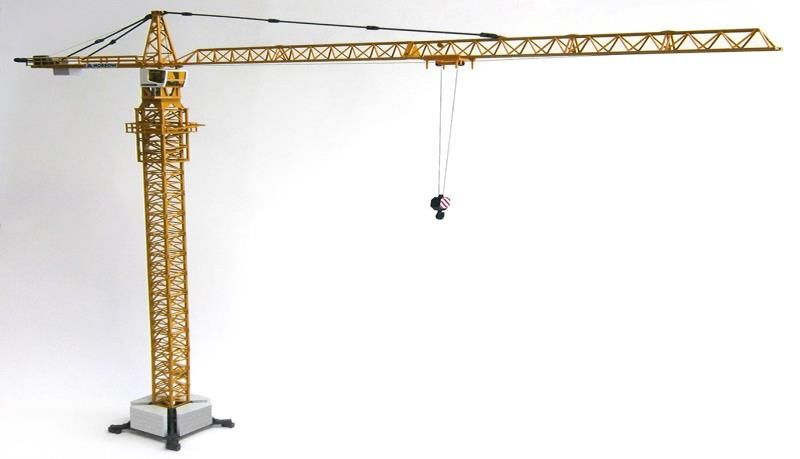
Understanding the implications

                      Individuals throughout an entire organization will need to
                      understand the new lease accounting rules under ASC 842
                      because it represents a wholesale change when compared to
                      the current guidance

                      Lease characterization for tax purposes has not changed as a
                      result of the new standard. However, since ASC 842 results
                      in the recognition of more assets and liabilities, entities may
                      be required to record new or adjust existing DTAs and DTLs

                      Identification of the lease population, data abstraction, and
                      developing a platform for ongoing reporting are all key steps
                      in implementing the new standard

Copyright © 2018 Deloitte Development LLC. All rights reserved.                         2018 Engineering and Construction Conference June 20-22, 2018   4
Effective date and transition

Effective date
                                                                                      Comparatives Under 840 Option
• Public business entities—effective for periods beginning after December 15, 2018   Board tentatively approved an
  and interim periods therein (calendar 2019)                                        alternative, but optional, transition
                                                                                     approach:
• All other entities—effective for periods beginning after December 15, 2019, and
  interim periods thereafter (calendar 2020)                                         • If elected, only contracts that exist
                                                                                       as of or that are entered into on or
• Early adoption is permitted                                                          after the effective date would be
                                                                                       transitioned, with a cumulative
Transition                                                                             effect adjustment as of that date
                                                                                     • All comparative periods prior to the
• Lessees and lessors are required to use a modified retrospective transition
                                                                                       effective date will retain the
  method for all existing leases
                                                                                       financial reporting and disclosure
• Application of method linked to current lease classification and new lease           requirements of ASC 840
  classification
                                                                                        FASB issued a proposed ASU on
• Guidance in ASU 2016-02 requires that the new model be applied and reflected                 January 5, 2018
  as of the earliest year presented in the financial statements                         Final ASU expected in Q3 2018

Copyright © 2018 Deloitte Development LLC. All rights reserved.                       2018 Engineering and Construction Conference June 20-22, 2018   5
Available transition practical expedients
ASC 842 includes certain practical expedients that may provide relief when transitioning to the new guidance:
Package of three
Not required to reassess the following upon transition:
✓ Whether any expired or existing contracts are leases or contain leases
✓ The lease classification for any expired or existing leases
✓ Initial direct costs for any existing leases
Use of hindsight
Entity is permitted to use hindsight when evaluating:
✓ Lease term (options to extend, terminate, or purchase asset)
✓ Impairment of the underlying ROU asset
Each practical expedient is an all or none proposition
Must be consistently applied to all leases
Copyright © 2018 Deloitte Development LLC. All rights reserved. 2018 Engineering and Construction Conference June 20-22, 2018 6Review of the core model
Definition of a lease
What is a lease under ASC 842?

A lease is a contract, or part of a contract, that conveys the right to control the use of identified property, plant, or equipment for a period of time
in exchange for consideration.

               Depend on the use of an identified asset

               • Asset may be explicitly or implicitly specified

               • Physically distinct part of larger asset may be an identified asset

               • Substitution rights are only considered if substantive [based on practical ability + economic benefit to substitute]

               • Warranty or upgrade considerations do not impact the determination of whether an identified asset exists

                Convey the right to control the use

               • Right to obtain substantially all of the economic benefits from asset use (directly or indirectly)

               • Right to direct the use of the asset throughout the period of use, which is based on:

                  – The customer having the ability to direct “how and for what purpose” the asset is used throughout the period of use

                  – The relevant decisions about how and for what purpose the asset is used are predetermined and either (1) the customer
                    operates the asset or (2) the customer designed the asset that predetermines how it will be used over the period of use.

Copyright © 2018 Deloitte Development LLC. All rights reserved.                                          2018 Engineering and Construction Conference June 20-22, 2018   8
Definition of a lease
Is there an identified asset?
Storage agreement—Facts
Company A enters into a three-year contract with Vendor B, a warehouse operator, to store up to 1,000
pallets of overflow inventory:
• Vendor B’s warehouse has capacity to store up to 10,000 pallets of inventory
• During the contract period, Vendor B can use the remaining space in its warehouse for other storage
needs
• Vendor B can relocate Company A’s pallets within the warehouse at any time without incurring significant
costs
• Vendor B only owns one warehouse
Copyright © 2018 Deloitte Development LLC. All rights reserved. 2018 Engineering and Construction Conference June 20-22, 2018 9Definition of a lease
Is there an identified asset? (cont.)
Storage agreement—Analysis
Arrangement does not contain an identified asset:
• Company A does not have exclusive use of a specified portion of the warehouse
• Portion being used is not substantially all of the warehouse capacity; there is no identified asset
• Although the contract specifies the number of pallets that will be held, Vendor B can change the
inventory’s location within its warehouse at any time
Would the answer
change if the
warehouse only has
a capacity to hold
1,100 pallets?
Copyright © 2018 Deloitte Development LLC. All rights reserved. 2018 Engineering and Construction Conference June 20-22, 2018 10Definition of a lease
Does the customer have the right to control the use?
Contract for the use of a crane—Facts
Customer A enters into a contract with Supplier B for the use of a specific crane for a two-year period:
• Supplier B is not permitted to substitute the crane during the contract term
• During the lease term, Customer A is required to provide a properly trained operator for the crane
• Customer A decides what and when the crane will lift during the contract period, subject to certain
limitations
• Customer A is prohibited from moving the crane or using it unsafely (e.g. lifting anything in excess of
20 tons)
• During the contract period, Supplier B is required to maintain the crane
Copyright © 2018 Deloitte Development LLC. All rights reserved. 2018 Engineering and Construction Conference June 20-22, 2018 11Definition of a lease
Does the customer have the right to control the use? (cont.)
Contract for the use of a crane—Analysis
In this scenario, Customer A has the right to control the use of the crane throughout the two-year
contract period:
• Customer A has the right to obtain substantially all of the economic benefits from the use of the crane
during the contract period through its exclusive use of the crane
• Customer A has the right to direct activities related to the use of the crane because it decides when,
where, and what the crane will lift
• While there are contractual restrictions about moving the crane or using
it unsafely, these are protective rights and do not prevent Customer A
from having the right to direct the use of the asset
Copyright © 2018 Deloitte Development LLC. All rights reserved. 2018 Engineering and Construction Conference June 20-22, 2018 12Contracts that contain multiple components
Identifying components in a contract
Lease component 1
• A contract may contain one lease component or many lease components.
• Only lease components must be accounted for in accordance with ASC 842. Lease
Component
Non-lease component
• A non-lease component includes items in a contract that convey another
2
good or service, such as a common area maintenance.
Non-lease
• Non-lease components should be accounted for in accordance with component
other Topics.
Not a component
• If an item does not provide a separate good or service—it does not represent a separate
3
component.
Not a
• For example, real estate taxes and insurance reimbursements do not convey a good or Component
service.
Copyright © 2018 Deloitte Development LLC. All rights reserved. 2018 Engineering and Construction Conference June 20-22, 2018 13Measurement considerations
Key ingredients
Lease term Lease payments Discount rate
• Noncancelable period plus • Fixed payments included • Rate the lessor charges the
renewal options for those within lease agreement lessee when available, which
period(s) in which the lessee would be the rate implicit in
is reasonably certain to • In-substance fixed payments the lease
exercise the options
• Variable payments based on • Incremental borrowing rate
• Lessees would reassess lease an index/rate when the rate the lessor
term upon occurrence of a charges the lessee is not
significant event or change in • Residual value guarantees available
circumstances under its based on amount expected to
control be paid • Reassessment required in
certain instances (change in
• Lessors would not be • Purchase or termination lease term, certain
required to reassess lease options if lessee is reasonably modifications, change in
term certain to exercise said purchase option
options considerations)
Copyright © 2018 Deloitte Development LLC. All rights reserved. 2018 Engineering and Construction Conference June 20-22, 2018 14Lease classification
Overview of the criteria
Lease would be classified as a finance lease (lessee) or a sales-type lease
(lessor) when . . .
• Lease transfers ownership of the underlying asset to lessee by the end of
the lease term
• Lease grants the lessee an option to purchase the underlying asset that
the lessee is reasonably certain to exercise
Classification
criteria • Lease term is for a major part of the remaining economic life of the
underlying asset
• Present value of the lease payments and any residual value guaranteed
by the lessee equals or exceeds substantially all of the fair value of the
underlying asset
• Leased asset is so specialized in nature that it is expected to have no
alternative use to the lessor at the end of the lease term
The standard states that the bright-line thresholds that exist under ASC 840 could be a
reasonable approach to evaluate whether a lease would be classified as a finance lease
Copyright © 2018 Deloitte Development LLC. All rights reserved. 2018 Engineering and Construction Conference June 20-22, 2018 15Lessee accounting model
What does the lessee model look like?
Most* leases are recorded on the balance sheet using a right-of-use asset approach:
Initial measurement
• Lease obligation—PV of lease payments not yet paid
• ROU asset—lease obligation + initial direct costs—lease incentives + prepaid lease payments
Subsequent measurement
• Lease obligation—amortized using the effective interest method
• ROU asset—depends upon lease classification
• Expense recognition pattern:
- Finance lease—front-loaded
- Operating lease—generally straight-line
* Short-term leases: A lessee can elect, by asset class, not to record on its balance sheet a lease with
a lease term of 12 months or less and which does not include a purchase option that the lessee is
reasonably certain to exercise.
Copyright © 2018 Deloitte Development LLC. All rights reserved. 2018 Engineering and Construction Conference June 20-22, 2018 16Lessee accounting model
Illustrative example
A lessee enters into a three-year lease and agrees to make the following annual payments at the end of each year: $10,000 in year 1, $15,000 in
year 2, and $20,000 in year 3. The initial measurement of the right-of-use (ROU) asset and liability to make lease payments is $38,000 at a
discount rate of 8%.
This table highlights the differences in accounting for the lease under the finance lease and operating lease models.
Both Operating lease
methods Finance lease (straight-line approach)
Interest Amortization Total lease Lease Reduction in
expense expense expense ROU expense ROU asset
Year Lease liability asset ROU asset
0 $38,000 $38,000 $38,000
1 31,038 $3,038 $12,666 $15,704 25,334 $15,000 $11,962 26,038
2 18,520 2,481 12,667 15,148 12,667 15,000 12,519 13,519
3 – 1,481 12,667 14,148 – 15,000 13,519 –
Total $7,000 $38,000 $45,000 $45,000 $38,000
Copyright © 2018 Deloitte Development LLC. All rights reserved. 2018 Engineering and Construction Conference June 20-22, 2018 17Lessor accounting model
What does the lessor model look like?
• Existing lessor accounting retained with minimal changes
• Classification depends on an assessment of control of the underlying asset (title transfer no longer required for real estate)
Sales-type Direct financing Operating
• Lessee gains control of the • Lessee does not obtain control of • Lessor retains control of the
underlying asset the asset, but the lessor underlying asset
relinquishes control
• Underlying asset is derecognized • Underlying asset is derecognized • Underlying asset remains on the
lessor’s balance sheet
• Net investment in a lease is • Net investment in a lease is
recognized recognized • Income recognized on a straight-
line basis unless another
• Selling profit or loss recognized at • Profit deferred and amortized into
systematic basis is more
lease commencement income over the lease term
appropriate
• Initial direct costs recognized at • Initial direct costs deferred and • Initial direct costs deferred and
lease commencement unless no amortized into income over the expensed over the lease term in a
selling profit or loss lease term manner consistent with income
Copyright © 2018 Deloitte Development LLC. All rights reserved. 2018 Engineering and Construction Conference June 20-22, 2018 18Presentation and disclosure requirements
Lessee model
Balance sheet Income statement Cash flow statement
Financing ROU asset Amortization expense Principal (Financing)
Lease Lease liability Interest expense Interest (Operating)
Operating ROU asset Lease expense
Lease payments
Lease (single line on
Lease liability (Operating)
straight-line basis)
Lessor model
Presentation consistent with current lessor model:
• Balance sheet—presentation depends on lease classification
• Income statement—profit or loss recognized in a manner consistent with business model
• Cash flow statement—recognized as cash inflows from operating activities
Disclosures should enable users of financial statements to understand the amount, timing and
uncertainty of cash flows arising from leases.
ASC 842 includes various qualitative and quantitative disclosures for lessees and lessors.
Copyright © 2018 Deloitte Development LLC. All rights reserved. 2018 Engineering and Construction Conference June 20-22, 2018 19Tax implications
Overview of income tax implications

                                   Lease characterization for federal income tax purposes has not changed (e.g., true lease vs. sale)
                                   as a result of ASC 842. For tax, the focus remains on which party bears the benefits and burdens of
                                   ownership

                                                              ASC 842 does not contain tax accounting guidance and only includes minor,
                                                              conforming amendments to ASC 740, Accounting for Income Taxes, that do not change
                                                              the basic requirements of current accounting

                                                                            ASC 842 will create book/tax differences consistent with current GAAP.
                                                                            However, since the new standard may result in the recognition of more
                                                                            assets and liabilities, ASC 842 may require entities to record new or
                                                                            adjust existing DTAs and DTLs

                                                                                          ASC 842 may also impact the computation of state and
                                                                                          local income-based taxes as a result of changes to the
                                                                                          apportionment formula

Copyright © 2018 Deloitte Development LLC. All rights reserved.                                                         2018 Engineering and Construction Conference June 20-22, 2018   21
Common book/tax differences
Tenant construction allowances
Book Tax
Lessee • Lessee records allowance as an • Lessee includes allowance into income
Lessee-owned incentive that reduces the ROU asset on receipt; depreciates property over
that is recorded applicable recovery period
• Resulting asset is generally amortized
over the lesser of the life of the asset
or the lease term
Lessor • Lessor depreciates property on a • Lessor depreciates property over
Lessor-owned straight-line basis over the useful life applicable recovery period
Copyright © 2018 Deloitte Development LLC. All rights reserved. 2018 Engineering and Construction Conference June 20-22, 2018 22Common book/tax differences
Operating lease (book)/true lease (tax)
Book Tax
Lessee • Lessee expenses rent on a straight-line • Lessee expenses rent as payments are
basis over lease term made (subject to section 467)
Lessor • Lessor depreciates property on a • Lessor depreciates property over
straight-line basis over the useful life applicable recovery period
Copyright © 2018 Deloitte Development LLC. All rights reserved. 2018 Engineering and Construction Conference June 20-22, 2018 23Common book/tax differences
Finance lease (book)/asset sale (tax)
Book Tax
Lessee only • Lessee expenses interest component of • Lessee expenses interest component of
payment as payments are made payment as payments are made
• Lessee uses lessor’s implicit rate, if • Interest imputed using AFR under OID
readily determinable, or incremental rules
borrowing rate
• Lessee depreciates ROU asset on a • Lessee depreciates property over
straight-line basis or using another applicable recovery period
systematic basis, if appropriate
Copyright © 2018 Deloitte Development LLC. All rights reserved. 2018 Engineering and Construction Conference June 20-22, 2018 24Implementing the guidance
How well do you know your lease portfolio?
ASC 842 will require a number of data points

                                              Timing of renewal notice        Lease commencement date

                                                  Lease modifications            Initial direct costs

                                                                          Allocated consideration to each
                                    Incentives to claim renewal options   separate lease component and
                                                                               nonlease component

                                         In-substance fixed payments      Fair market value of the lease

                                                  Options reasonably
                                                                              Useful life of the asset
                                                  certain to exercise

                                           Incremental borrowing rate           Purchase option(s)

                                                 Impairment charges         Landlord allowances and
                                                                                     timing

Copyright © 2018 Deloitte Development LLC. All rights reserved.             2018 Engineering and Construction Conference June 20-22, 2018   26
Operational challenges summary
Data challenges Interaction with ASC 606
High volume of lease agreements across multiple implementation
decentralized locations, in different business and Adoption of both standards will overlap
operating units significantly. New lease accounting rules were
aligned with the new revenue recognition
Spreadsheets
standard and implementation will be somewhat
dependent on revenue policies
ERP IWMS
Internal control considerations
Paper files
Most companies will require new systems, and
Technology challenges thus new internal control procedures. Increased
Need to store lease data and perform calculations. reporting requirements will also necessitate
Consider modifying existing system or moving to more internal controls than under the current
new system. Given the long lead times of system accounting requirements
initiatives, may need bridge system
Timeline to adoption Other operational challenges
It can be a challenge to anticipate the data gaps New rules will result in application of judgment
and overcome the data abstraction hurdle. A and estimation, data management
typical timeline from planning to operation may considerations, potential re-evaluation of debt
be in excess of a year and is dependent on covenants, and potential income tax implications
technology selection, as well as size and
complexity of lease portfolio
Copyright © 2018 Deloitte Development LLC. All rights reserved. 2018 Engineering and Construction Conference June 20-22, 2018 27Data challenges
The reporting and disclosure requirements of the new lease accounting standard may
result in an increase in electronic data needs and a long lead time to abstract and
validate data.
Different Judgment
arrangements requirements
High Information in different
volume isn’t all in one countries
of data agreement
fields
Multiple New inputs
Data currencies required to
housed in and calculations Internal
disparate languages not contained controls
systems in contracts
During the implementation period, clients’ operations don’t cease. New leases are entered
into and existing leases are modified or terminated.
Copyright © 2018 Deloitte Development LLC. All rights reserved. 2018 Engineering and Construction Conference June 20-22, 2018 28Technology challenges
As clients review their current lease technology capabilities the following functional
requirements should be considered:
Abstraction technology to Reporting capabilities
support efficient data gathering to perform necessary calculations
for large volumes of leases. and create required disclosures.
Operational considerations
Storage of electronic lease
including key event notifications,
documents and related data
“what if” analyses, workflow
fields.
management, and data analytics.
Technology changes may be a longer lead time activity which may necessitate a
temporary solution to facilitate data capture and pro forma reporting.
Copyright © 2018 Deloitte Development LLC. All rights reserved. 2018 Engineering and Construction Conference June 20-22, 2018 29Internal control considerations
Lease accounting is naturally an area of significant complexity both from an operational
and accounting perspective.
The new lease standard introduces additional considerations around a company's internal control structure:
• Increased focus around internal controls by regulators and other stakeholders
• New balances and disclosures subject to internal controls
• Complexity of requirements of the new lease accounting standard
Other internal control considerations
• Data and access management
− Workflow management with approvals/reviews
− Audit trails Lease
Cycle
− Segregation of duties
• Technology/processing
− Version control
− Reassessment for lease modifications Lease modification
(renew, cancel, modify)
• Service organization (e.g. SOC-1s)
Copyright © 2018 Deloitte Development LLC. All rights reserved. 2018 Engineering and Construction Conference June 20-22, 2018 30Other operational challenges
The following challenges should be considered by entities and their advisors in the
transition period:
Application of judgment and estimation
Apply judgment and make estimates under a number of the new lease requirements:
• Judgment is often required in the assessment of a lease’s term, which would affect whether the lease qualifies for the
short-term exemption and therefore for off-balance-sheet treatment
• Since almost all leases will be recognized on the balance sheet, an entity’s judgment in distinguishing between leases
and services becomes more critical under the new guidance
• Lease classification without bright line classification tests
• Determine whether the customer has the right or not to direct the use of the identified asset
Debt covenants
• Careful examination of the effects of increased leverage and potential debt covenant violations will be required
• This may depend in part on how various debt agreements define and limit indebtedness as well as on whether the debt
agreements use “frozen Generally Accepted Accounting Principals (GAAP)“ covenants.
• The ASC requires entities to present operating lease liabilities outside of traditional debt, which may provide relief to
some entities. Nevertheless, it will be critical for all entities to determine the ASC’s potential effects on debt covenants.
Income taxes
• Change to a lease’s classification for accounting purposes does not affect its classification for tax purposes
• Potential tax implications are situational requiring involvement of entities’ tax department
Copyright © 2018 Deloitte Development LLC. All rights reserved. 2018 Engineering and Construction Conference June 20-22, 2018 31Lease implementation life cycle
The following highlights a phased project plan approach to assess the impact of the new
lease standard on a lease portfolio and implement the new accounting requirements:
1 2 3 4 5
Assessment, Development of Lease Dual reporting On-going
visioning, and transition process abstraction and long accounting
strategy & solutions and migration term solution maintenance
• Create governance • Technology vendor • Blueprint technology • Deploy and refine long- • Review governance
and project selection solution term technology model including
management office • Design and develop • Data migration from solution ongoing business as
structure interim accounting existing systems • Integrate solution with usual activities
• Lease landscape and reporting under • Lease abstraction other technologies and • Ongoing refinement of
assessment current and future execution business processes technology solution and
Activities
• Embedded lease lease standards • Upload data into lease steady-state process
• Data sanitization and
identifications • Pro-forma scenario normalization accounting solution • Implement and refine
• Assess data quality analysis • Refine internal controls ASC 842 internal
• Ongoing data controls
and gaps • Process and internal maintenance design and development
• Consider system control development • Develop management • Refine technical
• Enhancements to data accounting policy
impacts related to the • Develop accounting capture process reports, reconciliation
new lease standards policies for US GAAP reports and documentation
and IFRS • Develop management reconciliation steps to • Develop additional
• Process and system judgment and
assessment monitor the dual statutory reports
estimates reporting results
• Perform a high level
tax assessment • Conduct user
acceptance testing and
• Roadmap/work plan train new technology
development users
Project Management
Copyright © 2018 Deloitte Development LLC. All rights reserved. 2018 Engineering and Construction Conference June 20-22, 2018 32Getting started
The following summarizes some important near-term actions companies will likely need to undertake:
Understand the accounting requirements
Understand the lease population
We recommend that companies
form cross-functional project
teams and begin to determine
Assess capabilities of existing technology
a method by which they will
inventory, organize, and gather
data from lease contracts
Perform a data gap analysis
Develop an implementation roadmap
Copyright © 2018 Deloitte Development LLC. All rights reserved. 2018 Engineering and Construction Conference June 20-22, 2018 33Questions?
This presentation contains general information only and Deloitte is not, by means of this presentation,
     rendering accounting, business, financial, investment, legal, tax, or other professional advice or services. This
     presentation is not a substitute for such professional advice or services, nor should it be used as a basis for
     any decision or action that may affect your business. Before making any decision or taking any action that
     may affect your business, you should consult a qualified professional advisor.

     Deloitte shall not be responsible for any loss sustained by any person who relies on this presentation.

       About Deloitte
       As used in this document, “Deloitte” means Deloitte & Touche LLP, a subsidiary of Deloitte LLP. Please see www.deloitte.com/us/about for a
       detailed description of our legal structure. Certain services may not be available to attest clients under the rules and regulations of public
       accounting.

       Copyright © 2018 Deloitte Development LLC. All rights reserved.
Copyright © 2018 Deloitte Development LLC. All rights reserved.                                                                2018 Engineering and Construction Conference June 20-22, 2018   35
Appendix -Frequently asked questions
Scope considerations
Capitalization policies

Companies can use a reasonable capitalization threshold when applying the recognition guidance
under ASC 842

Do not default to existing PP&E capitalization thresholds                                                                        Basis for conclusions
                                                                                                                                 Paragraph BC122:
• Existing threshold does not incorporate:                                                                                       “Entities will likely be
                                                                                                                                 able to adopt
   − Effect of additional asset base
                                                                                                                                 reasonable
   − Liability recognition                                                                                                       capitalization
                                                                                                                                 thresholds below
• Reasonable approaches include:                                                                                                 which lease assets
   − Capitalization threshold set as the lesser of:                                                                              and lease liabilities
                                                                                                                                 are not recognized…”
       ◦ Capitalization threshold for PP&E, inclusive of ROU assets

       ◦ Recognition threshold for liabilities, inclusive of lease liabilities

   − Recognize all lease liabilities, but, subject to threshold, expense amounts associated with the ROU asset

• Choose one approach, apply consistently, and consider disclosures

Copyright © 2018 Deloitte Development LLC. All rights reserved.                                   2018 Engineering and Construction Conference June 20-22, 2018   37
Scope considerations
Capitalization policies (cont.)
Illustrative example
Key facts Lessee considers the following to identify a threshold for its leases
• Lease of a machine • Gross balances of its ROU assets ($3,260) and lease liabilities ($3,260)
• Lease term: 5 years • Disclosures that would be omitted if certain leases were not recognized
• ROU asset = $3,260 • Internal controls needed to apply and monitor the threshold
• Lease liability = $3,260 • Materiality considerations in SAB Topic 1.M
“Lesser of” approach “Recognize all liabilities” approach
• Threshold for PP&E, including ROU • Threshold for PP&E, including ROU
assets = $3,500 assets = $3,500
• Threshold for liabilities, including • ROU asset ($3,260) < capitalization
lease liabilities = $3,000 threshold for PP&E ($3,500)
• ROU asset and lease liability ($3,260) • Lessee should expense amounts
> recognition threshold for liabilities associated with the ROU asset
($3,000, the lower of the two)
• Lessee should recognize the lease
• Lessee should recognize the ROU liability
asset and lease liability
Copyright © 2018 Deloitte Development LLC. All rights reserved. 2018 Engineering and Construction Conference June 20-22, 2018 38Identifying a lease
Assets with a significant service component
Principle: Why it matters: Services Operating leases Capital leases
If PP&E is identified, must determine whether ASC 842 ASC 840
customer controls right to use it
Examples of contracts to consider:
On-balance sheet
• Cable television services treatment
• Cloud-computing services
• Networking services Off-balance sheet
treatment
• Oil drilling services
• Contract manufacturing services
Identify your leases! Many arrangements that contain accounting leases will not say “lease” on the
cover. Expect increased scrutiny around lease identification under ASC 842.
Copyright © 2018 Deloitte Development LLC. All rights reserved. 2018 Engineering and Construction Conference June 20-22, 2018 39Lease classification
Use of bright-line thresholds
ASC 840 specifies certain quantitative thresholds for determining lease classification:
• 75% or more of the remaining economic life of the underlying asset
• 90% or more of the of the fair value of the underlying asset
ASC 842 specifies certain qualitative thresholds for determining lease classification:
• Major part of the economic life of the underlying asset
• Substantially all of the fair value of the underlying asset
We would not object to the application of the bright-line thresholds when
classifying a lease under ASC 842 insofar as the approach is consistently applied
Copyright © 2018 Deloitte Development LLC. All rights reserved. 2018 Engineering and Construction Conference June 20-22, 2018 40Contracts that contain multiple components
Allocating consideration in the contract
The basic process is similar for lessees and lessors
Step 3
Allocate consideration in the
contract to each component
Step 2
Determine consideration
in the contract
Step 1
Identify the components
in the contract
• Items that transfer a good or • Lessees: lease payments
service to the lessee are lease
and nonlease components • Lessors: lease payments, plus
• Administrative items or variable consideration under
reimbursements of lessor’s ASC 606 that does not relate to
costs are not components the lease component
• Lessee practical expedient to
not separate lease and
nonlease components
Copyright © 2018 Deloitte Development LLC. All rights reserved. 2018 Engineering and Construction Conference June 20-22, 2018 41Contracts that contain multiple components
Allocating consideration in the contract (cont.)
Illustrative example—Lessor model:
• Lessee X enters into a 5-year gross lease of a building from Lessor Y.
• Fixed annual lease payments are $35,000 and the contract outlines the following payments for rent, property taxes, common area maintenance
(“CAM”), and insurance that protects Lessor Y’s interest in the building:
Contractual Question 1:
Items How many components are there in the contract?
Payment
Question 2:
Rent $20,000
What is Lessor Y’s consideration in the contract?
CAM $7,000
Property taxes $5,000
Insurance $3,000
Total $35,000
Copyright © 2018 Deloitte Development LLC. All rights reserved. 2018 Engineering and Construction Conference June 20-22, 2018 42Contracts that contain multiple components
Allocating consideration in the contract (cont.)
Illustrative example—Lessor model: (cont.)
Answer 1: Two
1. Lease component, for the right to use the building
2. Nonlease component, for the maintenance services (i.e., CAM)
Property taxes and insurance are not components in the contract.
Answer 2: $35,000
Lessor Y allocates $35,000 on the basis of standalone selling price (“SASP”) for two components.
Assume that the SASP for rent, including an estimate of Lessor Y’s costs for taxes and insurance, is $29,500. Further, assume that the standalone
selling price for CAM is $7,650.
Component SASP % of Total SASP Allocation
Rent (including estimate of taxes/insurance) $29,500 79.4% 79.4%*$35,000 = $27,790
Maintenance service $7,650 20.6% 20.6%*$35,000 = $7,210
Total $37,150 100.0% $35,000
Copyright © 2018 Deloitte Development LLC. All rights reserved. 2018 Engineering and Construction Conference June 20-22, 2018 43Ingredients for measuring a lease
Variable payments based on an index or a rate
Initial measurement
• Only includes measurement of the variability based on the index or rate at the commencement date of the lease (i.e., spot rate at lease
commencement)
Subsequent measurement
• Lease liability and ROU asset are not adjusted by changes in index or rate, unless the liability is remeasured for other reasons
The ASC 842 guidance on remeasuring a
lease liability after the resolution of a
contingency does not apply to index-based Agreements that include variability in
escalators even when those escalators the form of a rent reset provision to
serve to establish a new floor. fair value rates at a specific point in
time are considered to be variable
Such resets would not result in the rents based on an index or rate.
remeasurement of the lease liability and
ROU asset
Copyright © 2018 Deloitte Development LLC. All rights reserved. 2018 Engineering and Construction Conference June 20-22, 2018 44Other key provisions and considerations
Sale-and-leaseback transactions
• Seller-lessee should evaluate the transfer of the underlying asset under the requirements of ASC 606
• Existence of leaseback would not prevent a conclusion that underlying asset was sold
• Arrangement in which leaseback is classified as a finance lease would preclude sale accounting
• Substantive repurchase options would preclude sale accounting
• Entire gain resulting from the sale recognized
immediately
Gain recognition • Special considerations for off-market terms
• Account for leaseback in a manner consistent with
other leases
Leaseback accounting • Seller-lessee applies lessee model; buyer-lessor
applies lessor model
“Failed” sale-leaseback • A “failed sale” will be accounted for as a financing
arrangement by both parties
Copyright © 2018 Deloitte Development LLC. All rights reserved. 2018 Engineering and Construction Conference June 20-22, 2018 45Other key provisions and considerations
Lessee involvement in asset construction
• Current “build-to-suit” guidance is not carried forward in the new standard
• New accounting depends on whether the lessee controls the underlying asset during the construction period
Lessee controls asset during Lessee does not control asset during
construction construction
• Asset is effectively owned by the lessee • Costs related to the construction or design of
during the construction period the underlying asset would be accounted for
under other U.S. GAAP topics
• Arrangement would be subject to
sale-and-leaseback accounting upon
completion of construction
Standard provides indicators both parties should consider when evaluating
whether the customer controls the asset being constructed
Copyright © 2018 Deloitte Development LLC. All rights reserved. 2018 Engineering and Construction Conference June 20-22, 2018 46Other key provisions and considerations Build-to-suit transition considerations ASU 2016-02 removed the risk principle and replaced it with a control principle for asset during construction Transition considerations • Entity not required to assess ASU’s principles of control during the comparative periods as long as construction is complete and the lease commenced before the ASU’s effective date • Lessee should derecognize the impact of any build-to-suit arrangements in which the lessee was the deemed owner in the comparative periods and recognize any differences in equity Copyright © 2018 Deloitte Development LLC. All rights reserved. 2018 Engineering and Construction Conference June 20-22, 2018 47
You can also read


