Feeling Good, Feeling Sad
←
→
Page content transcription
If your browser does not render page correctly, please read the page content below
Feeling Good,
                         Feeling Sad
                                The main focus of this unit is to help children explore feelings
                                and develop a core vocabulary to express their feelings.
                                Through participating in the activities, and exploring issues around
                                happiness, expressing anger and dealing with fear and loss the
                                children begin to realise that feelings are normal and a part of us.

Personal Development and Mutual Understanding: Key Stage 1, Year 3
Strand 1: Personal Understanding and Health
Unit 2: Feeling Good, Feeling Sad
Complementary Unit: Families!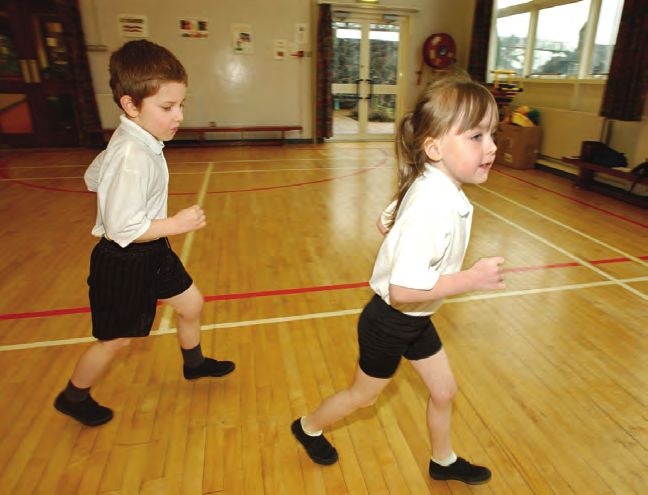
Teaching approaches

Freeze Frame                                                     Graffiti Board
Learning through play helps children become familiar with        Use visual cues to help the children recognise if their
and understand the language of emotions. It also helps them      behaviour or attitude is unacceptable. For example, use
develop social skills.                                           three circles, each increasing in size. Place the child’s name
                                                                 into the appropriate circle depending on their behaviour. For
Set up a stimulating and appropriate environment, for            example, if they have one strike against them place their name
example an airport kiosk. Provide practical, interactive and     into the first circle and if they have two strikes against them
enjoyable play experiences. For example role-play how to         place their name into the second largest circle and so on.
deal with:
- an angry customer;                                             Allow time for the child to reflect after having their name
- a happy flight attendant;                                      placed in a circle. If their name goes into the third and largest
- a passenger who is afraid of flying; and                       circle, the child must realise that they face consequences
- a sad person who is leaving their loved one behind.            (agreed by the class).

Work with the children to identify a ‘nice’ way of talking to    Similarly, issue ‘Well done for Keeping the Peace’ signs when
people compared to a ‘naughty’ way. Discuss their reasoning.     you recognise that a child has controlled their emotions when
                                                                 put to the test. Such signs of recognition will motivate them to
Face the Music                                                   stay on track.

Set the children timed tasks to complete while listening to      Emotional Barometer
music. For example, ask them to change for PE while listening
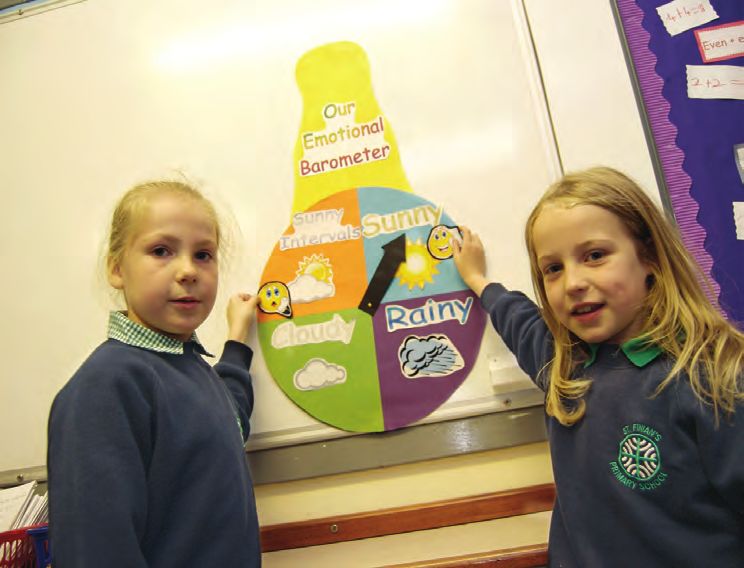
to a familiar theme tune. Invite the children to suggest their   As a class, design an emotional barometer. Use it to signify
own favourite pieces of music and set alternative tasks.         the mood of the class at different points during the day.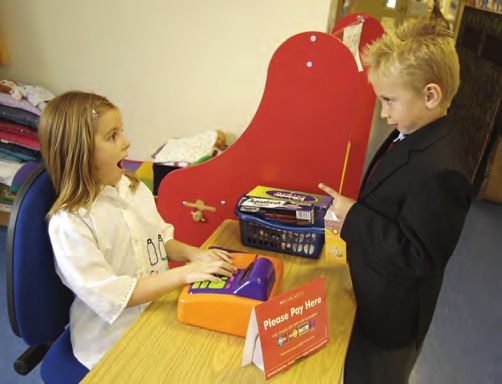
Key Experiences                                                                          Progress in learning
                                        in developing their own and others’ feelings
                                        and emotions and how actions can affect others

Building on Foundation Stage                                                               I can name more feelings than I could before.
Explore and discuss their own                                                              I can use a variety of words to express my feelings.
and others’ feelings and emotions:                                                         I can tell you if I am beginning to feel anxious
-   beginning to recognise how they feel;                                                  or scared.
-   developing ways of expressing how they feel;
-   knowing what to do if they feel sad, lonely, afraid or angry about                     I can tell you some of the things that make me
    something and when it is important to tell others about their feelings;
-   realising what makes their friends feel happy or sad; and                              feel anxious.
-   recognising how other people feel when they are happy, sad, angry or lonely.
                                                                                           I can help another person feel proud.
                                                                                           I know what it feels like to be relaxed.
    Working at Key Stage 1                                                                 I am beginning to realise that I can change my
    Their own and others’ feelings                                                         behaviour if I stop and think about what I am doing.
    and emotions and how their                                                             I feel safe and content within my class.
    actions affect others:                                                                 I feel I can do well in my class.
    -   beginning to recognise, name and manage their own feelings and                     I feel good about myself in this class.
        emotions and that they are a natural, important and healthy part of
        a human being; and                                                                 I know some ways to calm myself when I feel
    -   beginning to recognise and manage the effects of strong feelings
        such as anger, sadness or loss.
                                                                                           tense or angry.
                                                                                           I know some ways to solve a problem.
Moving towards Key Stage 2                                                                 I feel comfortable with anger and sadness.
Their management of a range of
feelings and emotions and the feelings
and emotions of others:
- examining and exploring their own and others’ feelings and emotions;
- knowing how to recognise, express and manage feelings in a positive
  and safe way; and
- recognising that feelings and emotions may change at times
  of change and loss.
2
Key Stage 1, Year 3 Strand 1: Personal Understanding and Health Feeling Good, Feeling Sad
Learning together
Learning intention: When children are regularly given done and how it can be improved;
Recognise a range of feelings the opportunity to evaluate their
work, and how they interact with
developing persistence; regularly
checking their work and seeking
and emotions and begin to others when working in groups, help when necessary. Their feelings
they will develop self confidence about learning will be determined
realise how their actions can and increasing awareness of how by what they enjoy and what they
sometimes affect others. their learning can be improved. find difficult which will lead them
to increasing awareness of their
With increasing experience they
strengths and limitations.
will become more confident in
talking about what they have
a n a g e m e n t
Se l f - mThinking Skills and Personal Capabilities by the end of Key Stage 1
Managing information Suggest possible solutions to problems; Decide what needs to be done in a group and
take responsibility for aspects of the work;
Be systematic and work through the
Ask more focused questions about the task, stages in a task; Show the ability to learn from shared and
clarify purpose and what needs to be done; modelled activities;
Explain their methods and opinions, and
Recognise where similar tasks have been done the reasons for choices and actions; and Adapt behaviour and language to suit
in the past; different situations;
Recognise the differences between why,
Use their own and others’ ideas to identify, locate what, where, when and how questions. Show fairness to others; and
and select various sources of information;
Recognise and respect other people’s feelings
Set goals for their work, break tasks into smaller Being creative and ideas.
parts and plan their next steps;
Record information in a variety of formats; and Show curiosity when approaching new tasks
and challenges; Self-management
Begin to identify audience and purpose when
communicating. Have experiences with all the senses;
Check that they are achieving their purpose by talking
Listen to and share ideas and experiences; about what they are learning, how the work was
Generate as many ideas as possible, building carried out and some aspect that might be improved;
Thinking, problem solving and combining ideas; Check work routinely for accuracy and precision;
and decision-making
Take time to use the imagination; Persist with tasks until an appropriate endpoint,
Show their ability to organise and summarise Enjoy the unexpected, unusual and surprising; and with teacher prompting;
to show understanding; Seek help from other people;
Experiment and investigate real life issues.
Sequence, order and rank information along Work towards personal targets identified by the
different dimensions; teacher; and
Working with others
Identify similarities and differences by making Develop an awareness of what they enjoy,
simple comparisons and connections; what they find difficult, their personal strengths
Develop further habits of collaborative learning;
Begin to test predictions and to look for evidence; and limitations.
Become more adept at turn-taking, sharing and
Make decisions and generate options; co-operating when working in a group or team; 34
Across the Curriculum: Connecting the learning
Communication Thinking Skills and Personal Capabilities Physical Education
Role-playing real life situations allows
children to practise their skills in
dealing with difficult situations.
Having cool downs as
Gauging the emotional an integral part of the PE
temperature in the room enables session allows the body
the teacher to be more responsive time to relax.
to incidents that arise.
Worri
Words and Relax s
ed
Nervou
phrases I will
Proud u s Calm
hear and use A n x i oTense
Comfortable
/ Sad
uncomforta
ble Problem-
solving Ha p p y
Learning activities
Activity 1 Activity 3 Activity 4
Feelings are ok It’s ok to cry when I am sad Letting off steam
Recognising that feelings and Managing change, coping with Being aware of anger and
emotions form an essential part sadness and dealing with stressful knowing how to express it
of our lives and our well-being. circumstances effectively. appropriately.
Activity 2 Activity 5
True feelings Ups and downs
Knowing how to express and Exploring the roller coaster of
regulate our emotions therefore emotions experienced in a day.
enabling us to empathise
with others.
5Learning activity 1: Feelings are ok
6
CORE CONCEPT POINTS TO NOTE WHAT YOU NEED
Feelings and emotions form an essential Be aware that some children with - Feeling Faces (Resource A)
Autistic Spectrum Disorder find - Feeling Words (Resource B)
part of our lives and our well-being. it more difficult to recognise and - Magazines, newspapers,
It is important that children develop interpret emotions that another scissors, glue, paint, four large
a vocabulary for feelings so that they: person may be feeling. sheets of paper, fabrics and
scrap materials
- can express themselves openly;
- are aware that feelings change; and WHAT TO DO
- understand that it is ok to feel different - Naming Feelings
- Cooperative Collage
ways at the same time. - Display and Discuss
Listen, reflect on and validate the feelings that
are expressed by the children without judgement.
This will show them that feelings are an
important part of their general well-being.
SUGGESTED SUCCESS CRITERIA
We will identify and name a range
of emotions.
We will realise the various ways feelings
can be expressed.Naming Feelings Cooperative Collage Display and Discuss
Seat the children in a circle. Show Use a fair grouping method to While the children are Ask each group to take it in turn
them one of the Feeling Faces form four groups. Give each group working on this task, circulate to present their collage to the rest
from Resource A and ask them the following resources: around the groups and make of the class. Encourage individual
to name the feeling that is being - one of the Feeling Faces observations about how they group members to talk about the
depicted. Repeat this step with from Resource A; are working together. Take note pictures, text and colours selected.
the three other Feeling Faces. - a large sheet of paper; of any significant incidents or Affirm each group for how well
Introduce the words for each of - scissors; conversations that take place they cooperated with each other
the feelings shown. Talk about the - glue; within each group. Ask each during the task. It is a good idea
variety of words that have a similar - a selection of magazines; and group the following questions: to use the word cooperation as
meaning, for example the word - some fabrics and scrap - How many of the children in your the children have hopefully just
sad is similar to miserable, upset, materials. group are working together? experienced it. Recall any notable
hurt, down and unhappy. Resource - How willing is everyone to join in? observations about how different
B: Feeling Words will help you with Ask each group to create a - How can you encourage groups worked together.
this part of the task. collage to represent the emotion someone to join in? Finally, ask the children the
shown on their Feeling Face. - Has anyone taken on a special following questions:
For one week, ask the children to Encourage them to search through job? (leader, searcher, reporter, - How did you know that the
concentrate on finding ‘feeling’ the magazines for pictures, text, sticker or tidier) people in your pictures were
words. Encourage them to identify images and situations that they - Is everyone happy with the way showing that emotion?
words associated with emotions in can use. Give each group a copy the group is working? - What sort of things are they
their story books, shared reading of Feelings Chart (completed in - How do you know that your doing? (eating, drinking, sharing,
the previous task) so they can cut playing, singing, dancing)
texts, the news or in newspapers. group is working together?
out and paste suitable words onto - Can you think of any occasions
Record the additional words onto (turn-taking, sharing, listening
their collage. Remind the children or events that bring about
a ‘Feelings Chart’ and display it or learning from each other)
to use colours and textures that particular emotions? (birthdays,
in the classroom. Encourage the
also reflect the emotion, for celebrations, weddings, birth of
children to use these words when Finally, invite each group to
example red and spiked textures a baby, funeral, holidays or
expressing themselves. tidy when they are happy with
for anger or green and smooth exam results)
their work.
textures for calm. Tell the children - Why do you think that?
a r d
that at the end of the allocated
F e Cheerful
Sh o c k e
time they will have to describe
their collage to the rest of the class
Ecstatic and give reasons for their choices.
7Learning activity 2: True feelings
8
CORE CONCEPT POINTS TO NOTE WHAT YOU NEED
Emotions are central to all human experiences. Initially, some children may - Feeling Faces (Resource A)
find it difficult to mime feelings. - Ben’s Story (Resource C)
Our well-being depends upon our ability to Demonstrate what they have
understand, express and regulate our emotions to do in this task. Reassure the WHAT TO DO
and our ability to empathise with others. children that it is normal to display - Feeling Faces
these feelings. - Story
Being able to empathise comes with experience. - Facing Your Fears
Young children can begin to develop the ability An alternative activity is Unit 1.4: - Developing Empathy
to look beyond what appears on the outside and Different Faces from Interactive
Sarah and the Whammi.
take on board the context in which the feelings This is available at
are being expressed. www.nicurriculum.org.uk
SUGGESTED SUCCESS CRITERIA
We will recognise, name and deal with
different feelings in a positive way.
We will begin to develop empathy by
considering the feelings of others.
Feeling Faces
Seat the children in a circle. Show them the Feeling Faces from
Resource A one at a time, or if Activity 1 has been completed,
show them the collages made by each group.Story
Ask the children: Read Resource C: Ben’s Story to the children. As a class, discuss how Encourage the children to
- How is the person in the Ben tried to mask his true feelings and why he might have done this. empathise with characters in books.
picture feeling? Talk about how Ben’s mum found out about his true feelings and how If you are reading a book with the
- How do you know? she helped him to ‘face his fear’ and realise that it was unfounded. text, ‘The puppy cried when its
- Can you always be sure that Invite the children to talk about a time when they felt afraid. Ask them if owner left for work’ ask the children
their facial expression shows they tried to put on a brave face. how the puppy was feeling.
how they are truly feeling?
- Can you think of a time when Encourage and praise correct
a person might try to hide their Facing Your Fears identification of emotions. Praise
true feelings? empathy for example, ‘I see you
Ask the children to sit in a circle. Invite a volunteer to curl up in the let her play with you because you
Give the children an example centre of the circle. Next, ask the children to imagine that the volunteer saw that she was lonely. That was
of a time when you tried to hide is Ben. Remind them that ‘Ben’ has a fear of dogs. Place a small blanket very kind of you.’ Affirm any positive
your true feelings. Explain that on top of ‘Ben’. Tell the children that ‘Ben’ is so afraid, he cannot see traits that the children display.
sometimes people put on a past his fears and he cannot see out. Invite them to suggest how ‘Ben’
‘brave face’ or put up a guard to might overcome his fear by seeing it differently. As each child makes a As a class, find out about the lives
disguise the fear or pain that they suggestion, ask ‘Ben’ to slowly come out from under the blanket. When of people who showed empathy
feel. For example, a person might ‘Ben’ is totally uncovered and can ‘see clearly’ thank the children for their for example, Mother Theresa or
want to hide their true feelings if very useful suggestions. Tell ‘Ben’ how brave he was for facing his fear. Ray Davey.
someone has hurt them, if they Repeat this activity but this time invite the children to confess to other
are frightened or if they don’t get fears they might have. Use role-play to get the children
picked to play a game. Tell the to imagine themselves as different
children that this is when they people in different situations
have to work really hard to try Developing Empathy (including those with physical
and find out what the person is disabilities). This will enable them
really feeling. Use ‘teaching moments’ throughout the school year to promote pro- to use their imagination and gain
social behaviour, for example sharing, helping, comforting and making an insight into another person’s
amends. This will encourage the children to practise and develop point of view. Invite them to talk
empathy. It will also help individual children to see themselves as a through issues or conflicts as if
responsible and caring person. they were the other person. Ask
them to imagine what the other
person would say or do. 9Learning activity 3: It’s ok to cry when I am sad
10
CORE CONCEPT POINTS TO NOTE WHAT YOU NEED
Loss, transition and bereavement are a natural Be sensitive to the experiences - Feeling Words (Resource B)
of individuals in the class. Adam’s - Adam’s Story (Resource D)
part of life. Children need emotional skills to Story is about a pet dying. If any - Sadness collage from Activity 1
effectively deal with change, sadness and stressful children in the class have recently - Crayons
circumstances. They also need to have the freedom lost a pet, consider reading Fred - Speaking object
by Posy Simmons (part of the - Container for cards
to express the emotions associated with loss. Primary Values resource) instead.
Children need to know that they are not bad WHAT TO DO
or weak if they seek support. In fact, seeking Make a copy of Resource B. Cut - The Feelings Game
out individual words and place - Introduction
support can be a sign of strength. them in a container. - Circle Work
SUGGESTED SUCCESS CRITERIA
We will reflect on loss as a part of life.
We will identify people with whom we can
discuss our feelings.
The Feelings Game
Ask two volunteers to stand outside the classroom way. Invite the two volunteers to return to the classroom
door. While they are outside, ask another volunteer and ask them to guess how the class is feeling. Repeat
to take a feeling word from the container and read it this game a number of times. This is an enjoyable way
aloud. Ask all the children to act as if they all feel that to help build the children’s vocabulary around feelings.Introduction
If you have completed Activity 1, show the Emphasize to the children that talking about how
class the sadness collage. Ask the children to you feel helps a lot. Inform them that it is a good
suggest why the people in the collage are sad. idea to tell a safe adult how they are feeling.
Read Resource D: Adam’s Story to the class. Remind the children that it also important for
Talk about the different feelings people in the them to be responsible for spreading happiness
story experienced. Invite the children to answer when they see someone sad, lonely or down.
the following questions: Ask the children for practical things that they
- What was Adam feeling? could do to spread a little happiness. Talk about
- How did he show he was feeling sad? ‘Random Acts of Kindness’. Ask the children to
- What did he do and not want to do? practise these in class and in the playground.
- What do you think Adam was thinking
to himself in the playground? (What might
he have been saying in his head?) Circle Work
- What do you think he was feeling in his body?
(sick tummy, headache, shaky knees.) Organise the children so they are sitting in a
- What happened when Adam cried? circle. Ask them to think about who they would
- Do you think crying helps and if so, how? go to if they needed to talk about something
- Which helps more – crying on your own sad. Have the children pass the speaking
or crying with someone you trust? object around and take it in turn to say, ‘I can
talk to...’ Finally, ask them to have a round of
Reassure the children that most of the sadness ‘When I am sad I like someone to...’
in our everyday lives is caused by little things,
for example someone saying hurtful words
or being left out of a group. Explain that some
sadness can take a long time to fade. Ask the
children to consider if Adam will be ‘right as
rain’ the day after his pet dies.
11Learning activity 4: Letting off steam
12
CORE CONCEPT POINTS TO NOTE WHAT YOU NEED
Anger is an essential part of being human. Anger can If children can talk about how they - Jenny’s Story (Resource E)
be either useful and positive or harmful and negative. feel and recognise the feeling as - A balloon
anger they are empowered to
If children are aware of and accept anger they can tackle the issue. They can suggest WHAT TO DO
make decisions about its appropriate expression. possible solutions rather than the - Story
By modelling anger and its behaviours positively, you will adult taking responsibility. - Letting It Go
enable the children to become more confident and more
self-managing in dealing with this strong emotion.
SUGGESTED SUCCESS CRITERIA
We will explore the way anger can
be expressed and dealt with.
We will choose which way of expressing anger
is most appropriate.
We will recognise that individual actions can
affect others’ feelings.Story Letting It Go
Read Resource E: Jenny’s Story aloud to the class. Ask them to answer Talk about the different ways of Write this coping strategy on a
the following questions: getting rid of anger and how series of balloons (each reducing
- How was Jenny feeling in the story? people can let the angry energy in size) and display them in the
- What happened to her when she felt angry? out in different ways. For example, classroom. Invite the children
- What happens in your body when you feel really angry? some people run, kick a ball or to suggest other ways to help
- When you are angry do you have a little energy or a lot of energy? bounce on the trampoline while manage anger. Return to Jenny’s
- What did Jenny do with all her energy? others wash windows, scrub Story and ask for suggestions
the floor or vacuum. People can about what Jenny could do to
Blow up a balloon. Ask the children what would eventually happen if think better when they let off a bit help her manage and control
you kept on blowing up the balloon. Next, ask them for ways of letting of excess energy and get rid of her feelings. As a class, write
the air out of the balloon (if no-one says bursting the balloon, mention their anger. At this point remind an ending for the story. Have
it). Then burst the balloon. Ask the children if they think this was a the children that they have a the children draw pictures to
good way to let the air out. Show the children the picture of Resource responsibility to react when they accompany the text in a balloon
E: Jenny’s Story. Discuss how the picture is like the blown up balloon. feel angry by: outline and make into a shared
Invite the children to talk about how Jenny is feeling and what they think (a) recognising (and accepting) big book.
might be happening inside her body. Explain that sometimes when how they are feeling;
people are very angry they have so much angry energy that it feels (b) trying to control the feeling; and
a bit like they are going to explode. (c) showing the feeling in an
appropriate way.
Describe some things that people do when they are angry. Explain Extension Work
that people sometimes say things they don’t mean when they are very Talk with the children about Ask the children to find words and
angry. They sometimes hurt other people or break things when they steps they can take to cope or phrases that show how people or
are angry (uncontrolled and hurtful anger). We all need to learn how to control their anger, for example: characters from story books react
recognise when we are angry and be more in control. Ask the children - Stop when they are feeling angry. Sort
how the air could be let out of Jenny and the balloon. - Take a deep breath the words and phrases into ‘Angry
- Move away from the situation doing words’ (verbs) and ‘Angry
- Say what is wrong naming words’ (nouns). Display
- Say what you would like to these using bright red letters and
happen. (Use ‘I’ statements - have the children decorate them.
‘I didn’t like it when you left me
to tidy up the mess. It would
help me if you help me tidy up.’)
13Learning activity 5: Ups and downs
14
CORE CONCEPT POINTS TO NOTE WHAT YOU NEED
If people take time to reflect on the ups and downs of Be aware of your role as teacher - Copies of My Up and
their daily lives they feel more in control of the variety and your limitations. In some Down Day (Resource F)
situations it may be more
of emotions that they feel and express. appropriate to seek support for an WHAT TO DO
It is important that children recognise that what we individual child or seek help from - All In A Day
do or how we act can influence how we feel. an organisation that can support - Review
you. This is not a reflection on your
SUGGESTED SUCCESS CRITERIA ability rather an indication that
you care enough to seek the best
We will recognise and reflect on the emotions possible support for the child and
felt in one day. his/her situation.
We will discuss the factors that may influence
personal decisions or choices.
All In A Day
Give a copy of Resource F: Graph to each child. Ask
the children to listen to each of the scenarios that you
will read to them. As you read each one aloud, ask
the children to plot a point on the graph to indicate
the emotion felt. Emphasise that this is about how
they feel about the situation.Review
Ask the children to join up As a class, explore what has
se. the points on their graph. happened in the class over the
e e n d e liv e re d to your hou Demonstrate how this is done last few activities. Organise the
has just b ay.
rce l w ith yo u r name on it e r is ta k in g your class tod from left to right. Next, ask the class into groups and ask them
A pa nt teach
iv e a t s c h o o l and a differe chool. children to form groups of four to reflect on some of the
You arr re a d ing book to s e.
u fo rg e t to brin g y o u r
d b la m in g someone els and to compare their graphs. following questions:
Yo ng lies an ll over it.
u h e a r a c lassmate telli o n e s pills water a
Invite them to talk about any - Did you enjoy talking about
Yo re. S o m e similarities and/or differences. Talk feelings?
bulous pictu
You paint a fa o a maths te
st. about the ups and downs of every - Were you always comfortable
to d school.
You are told
yo u h a v e
a t th e n e x t open day at day life and how important it is for talking about how you feel?
speak
en picked to our room is
tidy.
You have be p la y u n ti l y us to know and be aware of the - Which activities worked best?
llowed out to ehind.
You are not a p ro a c h in g you from b feelings we are experiencing and Can you say why that is?
eone a p the situations or contexts we are - Why do you think it is important
You hear som e scones toge
ther.
r g ra n b a k in. Emphasise that our emotions to talk about feelings?
You and you ilk a nd realise it
is off.
ped
You open a c
art o n o f m
. Yo u th in k s omeone trip and how we react to situations - Has completing these activities
yground can vary depending on what has
u tr ip a n d fall in the pla changed how we get on with
Yo happened before or the amount each other?
hool.
you on purp
ose.
is m o v in g to another sc of stress we are under.
/he
lls you that s towards you
.
Your friend te bullies is w a lk in g
o you know time.
A person wh w it h you at break re
u r fr ie n d d oes n ’t p la y
e s s a g e . Yo u forget whe
Yo liver a m
e te a c h e r a sks you to de
Th
liver the mes
sage. e and Extension Work
you h a v e to d e
e p u s h e s y ou off the sid Allow the children to create their own personal
eon
lessons som
At swimming graph of their day. Have them plot how they feel
but
into the wate
r.
m u n it y a n d see nothing in regular intervals from morning through to the
und your com
You look aro evening. Ask the children to talk to a partner about
bish. other.
litter and rub e g in to fight each the results and the different feelings that they
s two child re n b ts go out.
You watch a w h e n su d denly the ligh have experienced. Ask them to describe particular
room
e in your bed situations (contexts), how they felt and what
You are alon happened as a result.
.
It is pitch dark
156
Resource A
16
Personal Development and Mutual Understanding Orange Unit
Learning activity 1: Feelings are ok; Learning activity 2: True Feelings
Surprise
Feeling Faces e d
ca r
S
Happy D i s g u s t Sad
e d
Ecstatic
Cheerful
Sh ockHa p p y Sad 17
6

Resource A (continued)
                                                    18

                                         Surprise

Feeling Faces                              e d
                                      ca r
                                     S

Happy             D i s g u s t     Sad
                                             e d
             Ecstatic
                         Cheerful
                                     Sh  ock
An g r y Scared 19
6

Resource B
                                                                                          20

Personal Development and Mutual Understanding Orange Unit
Learning activity 1: Feelings are ok; Learning activity 3: It’s ok to cry when I am sad

Feeling Words
                                                                    Surprise
                   Sad
Fear                      p p y                        Disgust
                                                                                     r
                      H a                                                     An g e
Happy Sad Fear Anger Surprise Disgust
Pleased Miserable Anxious Frustrated Disbelieving Revolting
Loved Upset Scared Furious Shocked Gross
Ecstatic Hurt Cautious Envious Amazed Wretched
Glad Down Frightened Pressurised Taken aback Obnoxious
Accepted Unhappy Worried Outraged Fidgety Gruesome
Cheerful Invisible Uneasy Mad Excited Lousy
Nervous Bothered Astonished
Irritated
216
Resource C
22
Personal Development and Mutual Understanding Orange Unit
Learning activity 2: True feelings
Ben’s Story
Ben was six and lived around the corner from the shop. Ever
since he was four and a half he had been able to do messages
for his Mum. It was very safe because there were no roads to
cross and the shopkeeper knew him well. One day on the way
home from the shop he noticed men carrying chairs and boxes
into the empty house on the corner. ‘I hope children are moving
into that house,’ thought Ben, ‘and I hope there is a boy who is
six, who will play with me.’A few days later Ben was coming she heard the music at the end Remind the children of the fright so that they would not be near the
home from the shop with milk. It of the programme and then Ben got when the dog jumped dog. When they got to the corner,
was late in the afternoon and it said, ‘Ok off you go now and out and barked at him. Ask the the dog started barking but Ben
was getting dark. As Ben passed get those tea-bags for me.’ Ben children if they have ever had a held his mum’s hand tightly. She
the gate on the corner he jumped. had to think quickly of another bad fright! Allow the children to talked about the dog, his colour
Out of nowhere came a great excuse. ‘Can’t go Mum, I’m doing share. Then return to the story. and how he was trying to protect
black dog barking and running my homework,’ he said. ‘Why his property. ‘You know the dog
at the gate. He was bigger than won’t you go?’ said his mum. She Ben’s mum was really cross but could be afraid of you. Have you
Ben, and Ben was afraid he would thought for a moment and said she stopped to think for a minute. ever looked at it that way?’ she
jump over the gate and bite him. to herself, ‘How strange, it’s not ‘I’m surprised at you,’ she said. ‘I said to Ben.
Ben dropped the milk. Luckily it like him at all.’ She began to get thought you liked doing messages
didn’t burst. Quickly he picked it up a little cross with him. ‘You know I for me.’ Ben took a deep breath On the way home from the shop
and moved away. He was afraid can’t leave the house because the and spoke very quietly, ‘I used to, they stayed on the other side of
to run in case the dog chased after baby is fast asleep. Ben, go now but not anymore.’ the road. Over the next few days
him. He walked really quickly and and get the tea-bags before the Ben’s mum kept going with him
the barking stopped. Ben’s heart shop closes or no-one will have ‘I knew something was wrong. to the shops. After a time he
was pounding and his knees tea.’ ‘Oh Mum, why don’t you just What is it? Come on, tell your realised that although the dog
were shaking. When Ben got buy everything when you go to the mum,’ she said. ‘It’s those new was noisy he would not harm
home his Mum was upstairs supermarket?’ asked Ben. ‘Why do people who moved into the corner him. After about a week Ben was
putting his baby sister to sleep. I always have to go to the shops?’ house. They have a huge dog and able to stay on the same side of
He left the milk on the kitchen he really scared me. I’m not going the road if his mum was with him.
table and watched T.V. Ben said Stop here and ask the children past that corner anymore.’ Ben’s After about a month he was no
nothing about the dog. He didn’t what is happening in the story. mum listened carefully to what longer afraid, and could do the
want to say he was scared. He put - Why is Ben avoiding going to had happened. She thought for a messages again. ‘If anything ever
a brave face on because he didn’t the shops? while. ‘Let’s see what we can do frightens you,’ said his Mum, ‘tell
want his mum to laugh at him. - What is he doing with his about this big dog,’ she said. She me straight away. There is nothing
real emotions? texted a friend and asked her to so awful that I will not help you
The next day Ben’s mum asked - Why is he doing this? Why does come to the house for five minutes with. Everyone gets scared you
him to go to the shop for tea- he not tell his mum the truth? to sit with the baby. Ben’s mum know, but it’s always better to talk
bags. ‘Would love to Mum, but - What is he afraid of? took him by the hand and they to someone about it.’
my favourite programme is on,’ - What is happening between walked on the far side of the road
he said. Ben’s mum waited until his mother and himself?
236
Resource D
24
Personal Development and Mutual Understanding Orange Unit
Learning activity 3: It’s ok to cry when I am sad
Adam’s Story
When Adam was four he got a surprise
present of a puppy. Adam named him
Ginger and he was Adam’s best friend.
Every day, Adam brought him for a walk
after school. Adam fed him and made
sure he had water to drink. Whenever his
Dad took Ginger to the vet for an injection,
Adam went too. Sometimes Adam’s friend
Philip came over to play with Ginger.One day when Adam was seven he After a while, Adam’s friend Philip came over to him. ‘Can I come to your
house today to play with Ginger?’ he said. Adam burst into tears. Philip
came down for breakfast. His Mum and asked him what was wrong and Adam told him what had happened.
little sister were very quiet. Adam knew When they went back into class, Philip told the teacher what had happened.
She set the children a task to do and sat down beside Adam. ‘I’m really sorry
something was wrong. Then his dad told about Ginger,’ she said. ‘It’s very sad to lose a pet. Losing something is very
him the terrible news. Ginger had been hard to deal with. Now I understand better why you couldn’t do your maths
this morning. I’m sorry I wasn’t more understanding.’ The teacher asked
knocked down by a car the previous night. Philip to sit beside Adam for the rest of that day.
Adam’s dad had taken him to the vet, but it
After school Philip came to Adam’s house to check on how he was
was too late. Ginger was dead. Adam could feeling. He had asked his mum if he could stay longer because he
not speak. He could not believe it. He went thought Adam might need a friend. Later that evening when Adam
was ready his dad began to dig a hole at the back of the garden. His
out to the back garden to look for Ginger but mum wrapped Ginger in a sheet and his sister gathered some flowers
he wasn’t there. Adam wanted to be alone. in a jam jar. Together they buried Ginger beside the cherry tree in the
garden. Everyone shed a tear or two. Adam felt the lump in his throat
He didn’t want to talk to anyone. would never go away. He tried hard not to cry out loud but when he
looked up he saw that everyone’s eyes were red. His mum reassured
It was the worst day of Adam’s life. He could not eat. He begged his Mum
him that when the cherry tree blossomed in spring time it would act as
for a day off school. He wanted to be on his own and he didn’t want to
a reminder of all the happy times he had spent with Ginger. As they
face everyone at school, but his mum felt it would be better if he went. On
walked back to the kitchen, Philip began to recall how Ginger used to
the way to school his little sister tried to talk to him but he wouldn’t answer
run away with their things and how they would chase him around the
her. At school that morning the children were doing maths. Adam could
garden. When they thought about this their tears turned to laughter.
not keep his mind on the sums. He kept staring out the window thinking
After dinner, Adam and Philip went outside to visit Ginger’s grave. Philip
about Ginger. The teacher was cross when his work was not finished. At
put his arm around Adam’s shoulder and told him that he missed him
break time the boys wanted to play ball but Adam would not play. He just
too. Adam was glad that Philip was his friend.
walked around the playground on his own.
256
Resource E
26
Personal Development and Mutual Understanding Orange Unit
Learning activity 4: Letting off steam
Jenny’s Story
It was Saturday morning and it was
raining outside. Jenny sat staring out
the window. She wanted to play on her
new rollerblades but it was no weather
for skating. She got dressed, had her
breakfast and tidied her room. There
was a knock at the door. It was Louise
from next door.‘Can I come in?’ she asked. ‘I wanted to The girls played for hours. They had a lot of laughs. By the end of the
morning there were clothes and hangers all over the room, and bits of
play on the computer ‘cos it’s wet and we paper everywhere. The girls were getting tired of the game. Suddenly,
can’t go rollerblading, but my Dad is using from outside came the sound of a car. Louise rushed to the window. ‘It’s
my Dad,’ she said. ‘He’s going out. Now I can have the computer. I have
it and he’ll be on it for ages.’ ‘I know,’ said to go.’ ‘But what about my room?’ called Jenny as Louise ran down the
Jenny. ‘I hate that rain, but we can play stairs. ‘We were supposed to tidy it.’ ‘I can’t stay,’ said Louise ‘If I don’t hurry
Darren will get the computer first.’ She was gone. Jenny was cross.
in my room.’ Louise and Jenny started to
play shop. They opened Jenny’s wardrobe Jenny watched Louise racing into her house. Then she looked around
at her room. ‘It’s not fair,’ she thought. ‘Louise did the same thing last
and pinned price tags on all her clothes. week when we played office. I’m not tidying this up myself.’ She stormed
Then they modelled all the clothes. Jenny out and slammed the door. ‘What’s wrong with you?’ asked her brother
Karl. ‘I hate Louise,’ she said. ‘I’m never playing with her again. She’s not
modelled first and Louise described what my friend anymore.’ Jenny was angry.
she was wearing. Then it was Louise’s
Later that day the rain cleared up Louise called for Jenny to see if she
turn. Jenny’s Mum put her head around wanted to play on her rollerblades. ‘No,’ answered Jenny. ‘I’m busy,
the door. ‘What are you doing?’ she asked. and anyway I’m not your friend.’ Jenny closed the door with a loud
‘Just playing fashion shop,’ said Jenny. ‘Ok,’ bang. She peeped through the blinds and saw Louise call for Sharon
and soon they were out playing and having a great time together.
said Mum ‘but I want that room tidy when Jenny was furious. They were out there having the time of their lives
you are finished.’ ‘Don’t worry mum! We’ll and she was stuck inside in a boring house with nothing to do. Just
then she heard her Mum shout, ‘Jenny, come up here at once and tidy
tidy it,’ said Jenny. this room! You promised you were going to tidy it.’ Jenny stormed up
the stairs stamping on every step. She banged the door loudly. She
grabbed her pillows and smashed them onto the bed. Then she threw
herself on top of her bed and kicked her legs in the air. She screamed
loudly into her pillow.
276
Resource F
28
Personal Development and Mutual Understanding Orange Unit
Learning activity 5: Ups and downs
My Up and
Down Day
A graph byEcstatic
Excited
Happy
Calm and
at rest
Uneasy or
agitated
Worried/
scared/
afraid
Angry/sad
2930 Notes
31
Suggested stories                                                       Suggested                                 Suggested resources
                                                                        further reading
Burmingham, J.                      Nicholls, S.                        Day, C & Leitch, R.                       Montgomery, A and Birthwistle, U.
The Shopping Basket                 Ways to Live Forever                Teachers’ and Teacher Educators’          Primary Values
(1992 Red Fox) 00998999302          (2008 Scholastic) 1407104993        Lives: The Role of Emotion                (2001 CCEA) 1 85885337 0
                                                                        (Teaching and Teacher Education
Durant, A.                          Oram, H.                            17, 403-415)                              Richardson, N. People Who Need People
Always and Forever                  Badger’s Bad Mood                                                             (2005 Stranmillis University College and
(2004 Corgi) 0552548774             (1997 Scholastic) 0590216937        Sharp, P.                                 The Churches Peace Education Programme)
                                                                        Nurturing Emotional Literacy:
Gravett, E.                         Rosen, M.                           A Practical Guide for Teachers, Parents   Weir, L. Helping Nova
Little Mouse’s Big Book of Fears    Lovely Old Roly                     and Those in the Caring Professions       (2007 Wise Up and Th!nk, CCEA)
(2007 Macmillan Children’s Books)   (2002 Frances Lincoln) 0711214883   (2001 David Fulton Publishers Ltd)
1405089482                                                              1853466786                                Interactive Sarah and the Whammi
                                    Rosen, M.                                                                     (2008 CCEA)
Grindley, S and Terry M.            We’re Going on a Bear Hunt          Webster-Stratton, C.                      www.nicurriculum.org.uk
The Sulky Vulture                   (2002 Walker Books) 0744581907      How to Promote Children’s Social          (follow links from Personal Development
(2003 Bloomsbury) 0747555737                                            and Emotional Competence                  and Mutual Understanding section)
                                    Sendak, M.                          (1999 Paul Chapman Publishing)
Ironside, V.                        Where the Wild Things Are           9780761965015
The Huge Bag of Worries             (2000 Red Fox) 0099408392                                                     Useful websites
(2004 Hodder Wayland)
1860390862                          Varley, S.                                                                    The PSHE Subject Association
                                    Badger’s Parting Gifts                                                        www.pshe-association.org.uk
McKee, D. Tusk, Tusk                (1994 Picture Lions) 0006643175
(2006 Red Fox) 0099306506                                                                                         Cruse-Bereavement Care
                                                                                                                  (Provides support to people who have
                                                                                                                  bereaved by the death of someone close)
                                                                                                                  northernireland@cruse.org.uk

                                                                                                                  Winston’s Wish
                                                                                                                  www winstonswish.org.uk
You can also read


