Flexible Spending Accounts - What are they? How do they work? How can I enroll for 2020? - Office of Human Resources
←
→
Page content transcription
If your browser does not render page correctly, please read the page content below

Flexible Spending
                     Accounts

                  What are they?
                How do they work?
              How can I enroll for 2020?
BG 4-8-2020
Flexible Spending Account
What is it?
A Flexible Spending Account (FSA)
lets you set aside pre-tax dollars to pay for
eligible health and dependent care expenses
Sometimes called:
Section 125 plan (refers to section of IRS tax code)
Flex Plan
Reimbursement Accounts
Cafeteria plan
UAMS offers 2 FSA plans
 Health Care    Dependent Care
(medical) FSA    (daycare) FSA

Is the FSA for me?
In 2020, will you…
Have out-of-pocket healthcare expenses for you or
your dependents?
Note: You cannot be enrolled in the UA Health Savings
medical insurance/HSA plan (the high deductible plan) and
enroll in a health care FSA. Why? Federal regulations do
not allow you to have both an HSA and an FSA at the same
time.
Pay for childcare for your dependents while you
and your spouse work?
If the answer is “yes” to either of the above, then an FSA
may be a good benefit for you.
How do FSA’s work?
You estimate how much you’re going to spend for
health care and/or daycare in 2020. Be
conservative. Only include predictable expenses.
We deduct that from your paycheck PRE-TAX
throughout the year
Example: You elect to put $1500 into a Health Care FSA.
If you’re paid monthly, $125 deduction ($1500 divided by 12
paychecks).
If you’re paid biweekly, $57.70 deduction ($1500 divided by 26
paychecks).
We deposit that $ into your FSA (administered by UMR,
same company that administers our health plan, but a different team)
How do FSA’s work? (cont)
You then incur an eligible expense during the plan year.
You’re going to reimburse yourself from your FSA by filing
a claim, along with your receipts, to UMR. Or you can
swipe your FSA benefit card (more on that later) to pay for
eligible healthcare expenses up front.
What’s the benefit of an FSA? Tax avoidance! That’s
right. You avoid paying FICA, federal, and state taxes on
the money you have deducted from your paycheck that
goes into your FSA. It reduces your W-2 wages.
It’s still your money you’re using to pay for these items.
But it’s money you didn’t pay taxes on. The real benefit is
the tax savings.
FSA’s: How do they work? (cont)
If you’re in a 30% tax bracket, it’s like saving 30% on
eligible health care and daycare expenses.
If you’re going to have enough eligible expenses to make
it worth your while and you’re comfortable with the
process, then an FSA is for you!
Caution: You can’t do an FSA and also claim expenses
as a deduction on your income tax return, except for
$1000 in related child care towards tax credit (ask tax
advisor).
Do you itemize your deductions on your tax returns? If you do, will you be able to take the medical
deduction because your out of pocket expenses are at least 10% of your income? If the answer is
no, then consider an FSA.
Example of money saved
        (someone with $1500 of eligible FSA expenses)

                                                Without FSA                 With FSA               Savings with
                                                                                                       FSA
Annual Compensation                                      $ 30,000                  $ 30,000
Estimated Tax Free Expenses                                      $0                  $ 1,500
Taxable Income                                           $ 30,000                  $ 28,500
    FICA Tax (7.65%)                                       $ 2,295                   $ 2,180            $ 115
    Federal Tax (18%)                                      $ 5,400                 - $ 5,130            $ 270
    State Tax (5%)                                         $ 1,500                 - $ 1,425             $ 75
Net Paycheck                                             $ 20,805                  $ 19,765
After Tax Expenses                                       - $ 1,500                 $      0
Actual Take Home Pay                                     $ 19,305                  $ 19,765
                                                                                                        $ 460

Savings will vary for each participant depending on marital status, number of exemptions, and tax bracket. Consult
with a tax advisor to determine your actual potential savings. Because FSA expenses are deducted pre-tax, the
amount reported for Social Security is reduced. But tax savings are generally greater than the loss to Social
Security.
What would you do
with the extra $$$ ?

 Or put the money in your UA Retirement Plan !
How much can I put in an FSA?
           Subject to change based on IRS limits

             Health Care FSA
  $120 minimum to $2,700 maximum

      Dependent Daycare FSA
        Up to $5,000* maximum
    *If both spouses participate in a Dependent Daycare
    FSA and are filing jointly, the entire household cannot
    exceed the $5,000 cap. $2,500 is the maximum if
    married and filing single.
Health Care FSA
Eligible healthcare expenses must be:
incurred during the plan year, January 1
through December 31
for you or your eligible tax dependents
And be true out-of-pocket costs not reimbursed
by an insurance plan. (You don’t have to be on a UA
medical plan in order to do a Health Care FSA.)
Your annual election amount is available to
you to spend on January 1. You have the
rest of the year to pay it back via payroll
deduction. (Another FSA benefit you might not have known about.)Health Care FSA – Eligible Expenses
Co-Pays, Deductible, Co-insurance
(what you pay after insurance pays)
• Doctor Visits
• Dentist Visits
• Hospital/ER
• Chiropractic, PT, OT
• Vision ExamsHealth Care FSA – Eligible Expenses
Includes some things that our
insurance might not cover
• Orthodontia/Braces (our
dental insurance only covers part of the
costs)
• Laser Eye Surgery
• Bariatric Surgery (pre
approval required to be covered under
our medical insurance)
Caution. Just because our insurance doesn’t cover it doesn’t mean
it’s eligible for reimbursement through a Health Care FSA. For
example, cosmetic surgery is not eligible.Health Care FSA – Eligible Expenses
Medical Supplies
• Prescription eyeglasses
• Prescription sunglasses
• Contact lenses, solution
• Bandaids, rubbing alcohol
• Hearing aids & batteries
• Durable health equipment
• Insulin & supplies
If you have vision insurance, plan accordingly for your healthcare FSA.
You can only file your true out-of-pocket costs after vision insurance pays.Health Care FSA – Eligible Expenses
Prescribed drugs
• Copays under our medical
insurance
• OTC meds in 2020. This is a
change due to COVID-19, as
over the counter meds
normally can only be covered
with a doctor’s prescription.Health Care Expenses
What is NOT an FSA eligible expense?
cosmetic procedures
over the counter vitamins for general well being
deodorant, general hygiene items
nutritional supplements
teeth bleaching
marriage counseling
health insurance premiums
health or fitness club fees
expenses incurred after you no longer work for UAMS, or
outside the plan yearDependent Daycare FSA
Eligible Expenses
• Day Care Services
• Babysitters
• General Purpose
Day Camps
• Pre-Schools
Some ineligible expenses include private school tuition,
overnight camps, instructional camps and assisted living.Dependent Daycare FSA
Eligible expenses are for day care of
a child or adult dependent
Care of dependent child through age 12 (age 13 is the cut-off)
by a babysitter, child care center, or housekeeper whose job is
taking care of your child
Care of a disabled dependent who lives with you and you claim
on your taxes
Dependent care expenses must be work-related. Expenses
must relate to care that enables you to work.
If married, both spouses must be employed
TIP: If your child starts kindergarten, be sure to take your
reduced daycare costs into account. Remember, you’re
estimating how much you will spend for the entire plan year.More on Dependent Daycare
FSA
The IRS allows for reimbursement up to the
current year-to-date payroll deductions. Claims
submitted in excess of the YTD payroll
deductions will be held until future payroll
deductions are received.
If you make more than $30,000, a Dependent
Care FSA is generally better than taking the tax
credit.How do I get reimbursed?
How to get the money out of your FSA
# 1 File a claim form, attach receipts and
IRS required documentation
Pay yourself back
Claim forms on Human Resources and UMR
websites
# 2 Or if you have a Health Care FSA,
simply swipe your benefit cardHealth Care FSA Receipts
What information is needed?
Required Not Acceptable
Patient’s name Account balance
Date of service statements
Procedure description Balance forward
statements
Provider name Cancelled checks
Charge for the service Cash register receipt
EOB showing what insurance paid Credit card receipts
& your responsibility should
provide all of the above
For OTC meds, an itemized cash Remember, these are IRS
register receipt showing purchase date regs. You have to cross
& name of the item your T’s and dot your I’s.Daycare FSA Receipts
What information is needed?
Either the daycare provider signs your
claim form and provides their tax ID or
SSN
Or you attach itemized receipt showing:
Dates of service
Name and DOB of child
Itemization of charges (e.g. to show custodial
care, not tuition)
Provider’s name, address and tax ID #FSAs last a year
FSA plan year = January 1 to December 31. Your payroll
deduction automatically ends on December 31. Annual re-
enrollment required to keep participating.
Expenses must be incurred during the plan year
(January 1 – December 31). If you leave mid-year, you can
only file claims on expenses incurred before your last day to
work.
You have until March 31 after the plan year closes to get your
paperwork in to UMR. This is called the run-out period.
Any remaining balance as of April 1 is forfeited.
Only the Dependent Daycare FSA has a grace period
extension to the plan year. If you have a balance in this year’s
FSA, the grace period lets you continue to incur daycare
expenses through March 15, 2021 – an extra 75 days to spend
down.Important deadlines
November 30, 2019 is last day for current employees to
sign up for a 2020 FSA. Enroll online through UAMS
Employee Self Service (ESS) starting Nov 1.
[New employees can enroll online within their first 30 days via My Compass.]
2019 “old year” claims must be filed to UMR by March
31, 2020 or funds are forfeited.
Avoid “Use it or lose it.” Estimate your FSA amount
carefully.$500 FSA Carry-over
This only applies to your Health Care FSA balance
(does NOT apply to Dependent Daycare FSA)
Any balance over $50 and up to $500 will automatically
carry over into 2020. This will happen on 4-1-2020 (after
the run-out period ends). The $500 doesn’t count against the $2700
maximum.
With the carry-over you do not have to rush to spend all
of your FSA funds or worry about losing money when the
plan year ends. It gives you even more control over your healthcare dollars
from year to year.
Consider putting $500 into a Health Care FSA in 2020!Mid-year changes
What would happen if you decided to flex $1000
in a Health Care FSA and then found out that
wasn’t enough, that you needed to put more
money in your account? Can you change your
election mid-year?
• Only under limited circumstances:
Change in marital status
Change in number of tax dependents changes (birth or death)
• 30-day deadline to make changesHow do I check my
FSA balance?
24 hours a day via secure Internet access
to real-time account information allows you
to check your balance at any time at:
www.umr.com
(same as you log-in to view your medical insurance plan and claims)
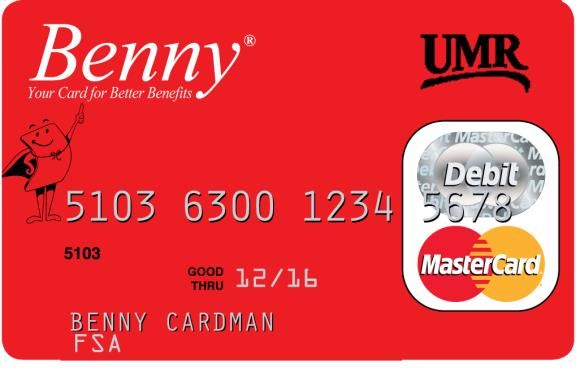
Or call UMR toll-free at 1-866-868-0145FSA Benefit Card How the card works if you’re enrolled in a Health Care FSA
FSA Benefit Card
Automatically sent to anyone who enrolls in a
Health Care FSA for the first time
The card is for your convenience. You’re not
required to use it. If you’d rather pay out of your
pocket and file a reimbursement claim with
required documentation, that’s ok. Keep in mind
that the IRS limits the places you can use your
card.What’s nice about the
benefit card?
cash flow. You don’t have to pay for
Better
your healthcare expenses up front and
then wait to be reimbursed.
Paymentcomes directly from your Health
Care FSABeware the
misconceptions
Using the card DOES NOT mean “paperless”
Using the benefit card DOES NOT mean you don’t need
to save your receipts. The IRS requires each FSA
reimbursement or card swipe to be “substantiated.”
You cannot use the card everywhere… only at certain
merchants… and then only to pay for eligible medical
expenses. Can’t use the card to pay for daycare; it’s
only for your Health Care FSA.Where can you use it?
Healthcare merchants: doctor, dentist, hospital,
optometrist, clinic, chiropractor
Pharmacy, grocery or retail box stores… only if
their computer “talks” to UMR’s computer (called an
“Inventory Information Approval System,” or IIAS, as approved by the IRS)
For example, can use the card at Wal-Mart, Sam’s Club,
Target, Kroger, WalgreensBenefit Card
Swipe your card only for your Health Care FSA
purchases. Pay for other personal items separately.
If you are asked “Is your card debit or credit?”... say
“credit.” While it actually debits your account, it has to
be processed as a MasterCard credit card.
Keep copies of ALL receipts.
Then wait. Do not file a claim. See if UMR asks you for
documentation.
If UMR does request documentation, send in your
receipts and other required documentation promptly.Why would UMR request
documentation?
Because the IRS requires substantiation
of ALL your benefit card purchases
4 ways for UMR to “auto” substantiate your FSA Debit
Card purchase, without you having to send in
documentation:
The merchant has an IIAS compatible computer that provides the
required data
Your expense exactly matches the copay structure of our medical
plan (for example, $17-$60-$95 rx copay)
You have a recurring monthly expense for which you already
provided documentation – same $, same merchant code, every
time
UMR has processed your health insurance claim and therefore
knows the copay, deductible or coinsurance amounts that are
your responsibilityFSA Benefit Card
If UMR is unable to auto substantiate
They will notify you by letter or email to send in
documentation
If no response, your card is suspended
If you don’t send in documentation, final action is for
UAMS to add it as taxable income on your paycheck or
W-2 and for you to pay the additional taxes.
Unsubstantiated reimbursements = ineligible
reimbursements in the IRS’ eyesHow do I sign up?
Employee Self Service online enrollment for
current employees is Nov 1-30, 2019
Log in as an employee/participant at
https://enterprise.uams.edu/irj/portal
For employees without access to computer, they can come by our
office and we’ll help them log in and enroll.
Link and instructions will be on our website
www.hr.uams.edu
Above does not pertain to new employees who start in 2020; they may enroll in an FSA during their
My Compass onboarding.But first…
Review educational material on UAMS Human
Resources and UMR websites
Use the FSA worksheet to calculate expenses
for 2020 plan year
November 30, 2019 is the deadline for current
employees to enroll online in a 2020 FSA17% of UAMS employees participate in FSA’s.
If most people can benefit,
why is participation in Flexible
Spending Accounts not higher?
Lack of understanding regarding how the programs work
and the savings that can be realized?
Scared of “use it or lose it?”
Don’t want to bother with claims?But with a little work on your part, the tax savings can make it worth your while!
Benefit Questions Later?
Call HR/Employee Services
at (501) 686-5650
Visit the Office of Human Resources,
Monday-Friday, 7:30 - 4:30 (4th floor of
Central Building, Wing C)
Visit our web site, www.hr.uams.eduYou can also read


