G2P 3.0 A Future For Government Payments - May 2018 Silvia Baur-Yazbeck and Gregory Chen - World Bank ...
←
→
Page content transcription
If your browser does not render page correctly, please read the page content below

G2P 3.0 A Future For
Government Payments

          May 2018   Silvia Baur-Yazbeck and Gregory Chen
Most focus and momentum is here;
yet significant limitations and risks.

                     G2P 3.0             delivery over multiple channels
                                         and choice

         G2P 2.0            digital delivery over a single channel

G2P 1.0           cash delivery

                                                                                   2
                                                                           © CGAP 2017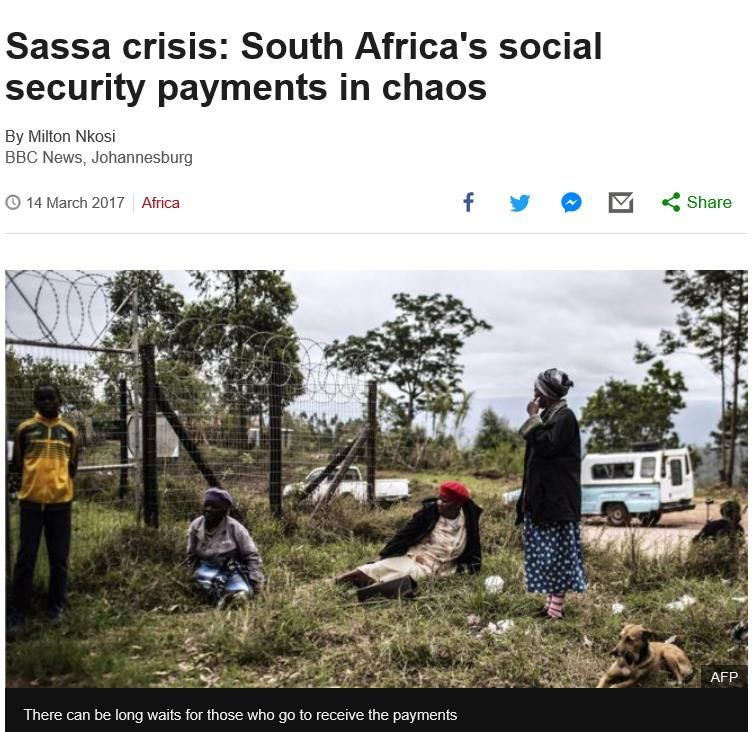
Why consider a more
advanced approach to G2P?

G2P includes a variety of (one-to-many) payments

  Social protection and social safety net programs

  Subsidies (e.g. in agriculture) or fee waivers
                                                      Focus of this concept
                                                      and case studies is
                                                      on social protection
                                                      programs; though other
  Salaries and wages to public officers and workers   G2P payments are
                                                      important flows, too,
                                                      adding to the volume
                                                      of digital transfers.

                                                                                  4
                                                                          © CGAP 2017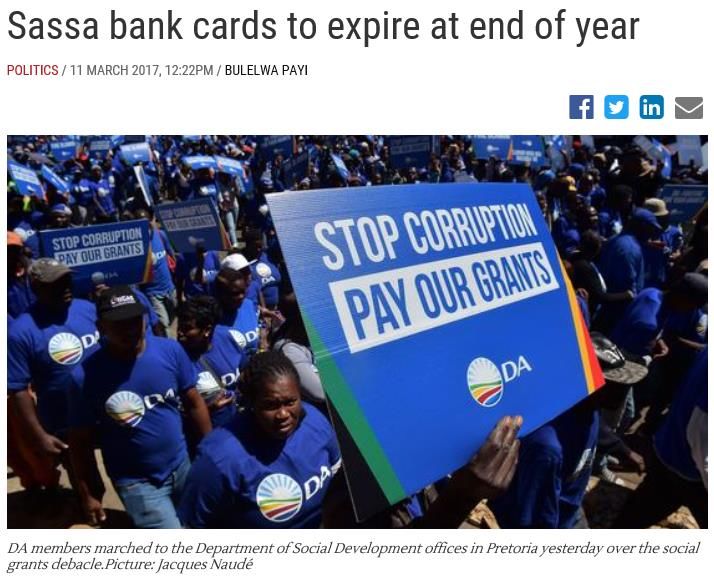
Social protection programs are moving from in-kind to cash
(G2P 1.0), and from cash to digital transfers (G2P 2.0)

Between 2010 and 2017,                     In 2014,                                   In 2015,
digital social transfers…          US$111 billion                               221 million
                                of government transfers                   social transfer recipients               Over 25% of low income
                                (64%) were transferred                   (51%) received payments                    countries transfer G2P
    increased                    digitally into accounts.                 digitally into an account.               payments electronically.
     by 300%
     to more than
    US$194 billion                          64%                                        51%                                 25%
        per year

                     Sources: WB State of SSN 2015, Global Findex 2014, MasterCard 2015, GSMA State of the Industry 2015                      5
                                                                                                                                      © CGAP 2017
G2P 2.0 comes with benefits
Reduced More value
delivery costs Transparency for citizens
0101100111001
The Mexican Government The Government of India Around the world, research
saves an estimated has saved US$7.6 billion shows that the digitization
US$1.3 billion per year, in two years, mostly of cash transfers saves
or 3.3% of it’s total through the removal of recipients time and money.
expenditure, on wages, duplicate beneficiaries. And reduced leakage
pensions and social increases the amount
protection transfers. received by end recipients.
Sources: BTCA 2013; CGAP research; Aker, J. et al. 2012; USAID & mSTAR 2016; Shulist, J. 2016 6
© CGAP 2017But G2P 2.0 has limitations: often there is only partial digitization
Government
Programs
PROGRAM
A
Getting money
0101100111001
from the provider
This aspect to the recipient is
is digitized not always
digitized.
PROVIDER X Recipient
7
© CGAP 2017But G2P 2.0 has limitations: limited choice and longer distances
Government
Programs PROGRAM PROGRAM PROGRAM
A B C
0101100111001
Electronic “I’ll be gone for a while.
Transfer I have no choice but to
travel many kilometers.”
Providers
PROVIDER X PROVIDER Y PROVIDER Z
Access Recipient
Points
8
© CGAP 2017But G2P 2.0 has limitations: individual provider contracts
Government
Programs PROGRAM PROGRAM PROGRAM
A B C Design negotiated
between programs
Multiple time- and providers; little
0101100111001
0101100111001
0101100111001
feedback from
bound dedicated
recipients, leads to
contracts, bespoke low impact or failed
technology, closed digitization.
loop systems,
lengthy and opaque
procurement.
Providers PROVIDER X PROVIDER Y PROVIDER Z
Recipient
Access Points
9
© CGAP 2017G2P 2.0: A case of vendor dependence from South Africa
South Africa’s largest social protection
scheme, managed by the South Africa
Social Security Agency (SASSA),
has relied on a contract with a single
provider (Net1) since 2012.
This contract was due to expire
by end of in 2017 and a suitable
arrangement between SASSA and
Net1 was hard to find. This left the
17m SASSA recipients unclear
and concerned whether they would
continue to receive their payments.
“Judging by what I have seen in
The Constitutional Court allowed Net1 townships and villages across
to continue paying grants until March the country, when beneficiaries
2018 so that SASSA could appoint a stand in long snaking queues
new service provider. Since April 2018, waiting to be paid, there could
SASSA pays grants both in cash and well be serious tensions if
through their Postbank account into people do not receive their
personal bank accounts. grants.” — Milton Nkosi, BBC,
03/14/2017
10
© CGAP 2017G2P 3.0: Move away from single channel delivery
Government
Programs PROGRAM PROGRAM PROGRAM
A B C
0101100111001
0101100111001
0101100111001
Providers PROVIDER X PROVIDER Y PROVIDER Z
Recipient
Access Points
11
© CGAP 2017G2P 3.0: Focus on systems design
Government PROGRAM
Programs
PROGRAM PROGRAM
Systems
Design!
Providers
PROVIDER X PROVIDER Y PROVIDER Z
Recipient
Access Points
12
© CGAP 2017G2P 3.0: Scope of systems design
Government Programs
Program management is separate from the systems design
PROGRAM and includes:
B • Enrollment
• Eligibility criteria
• Case management
Systems Design
Main task of systems design is to connect the payments leg
and includes:
• National payment systems (including clearing and settlement)
• A “plug and play” payments portal for government
• Mapping of recipient ID number with landing accounts
13
© CGAP 2017G2P 3.0: Recipient choice of providers
Government PROGRAM
Programs
PROGRAM PROGRAM
Choice of
provider for
account and
Systems
service.
Design
Providers
PROVIDER X PROVIDER Y PROVIDER Z
Recipient
Access Points
14
© CGAP 2017G2P 3.0: Enable recipient account portability
Government PROGRAM
Programs
PROGRAM PROGRAM
Portability
of account
Systems and service.
Design
Providers
PROVIDER X PROVIDER Y PROVIDER Z
Recipient
Access Points
15
© CGAP 2017G2P 3.0: Recipient level of choice (cash out)
Government PROGRAM
Programs
PROGRAM PROGRAM
Point of service
is not necessarily
Systems at same institution
Design as their account
Providers
PROVIDER X PROVIDER Y PROVIDER Z
Recipient
Access Points
16
© CGAP 2017G2P 3.0: No procurement or contracts with providers
Government
Programs PROGRAM PROGRAM PROGRAM
A B C
Procurement
or Contract
Providers PROVIDER X PROVIDER Y PROVIDER Z
Recipient
Access Points
17
© CGAP 2017G2P 3.0: Summarizing the potential
LIMITATIONS OF G2P 2.0 POTENTIAL OF G2P 3.0
Recipients
• No provider choice = poor service • Choose and switch providers = competition
• Little choice of access points = costly and • Choice of service points = lowers cost of
inconvenient access and adds convenience
• Multiple accounts/interfaces = duplication • Simplifies multiple payment flows from
and cost different payers
Governments
• Vendor dependence • Leverages multiple providers
• Heavy burden on procurement • No need for procuring providers
• Higher unit costs (closed loop; single • Larger transfer volume, integrated
use cases) in system = lower costs
Ecosystem
• Incentivizes government contract seeking • Shifts provider focus from government
• Locks in closed loop non-interoperable system to recipient
• Incentivizes interoperability
18
© CGAP 2017G2P 3.0: Not without challenges
THE CHALLENGES POTENTIAL OF G2P 3.0
Recipients
Requires a systems level view • Choose and switch providers = competition
to connect payments, ID • Choice of service points = lowers cost of
systems and government access and adds convenience
programs • Simplifies multiple payment flows from
different payers
Development of a clear design Governments
and promotion of cross-
government collaboration • Leverages multiple providers
• No need for procuring providers
Tailoring to the potential • Larger transfer volume, integrated
of each specific context in system = lower costs
Ecosystem
Incentives for private providers
to join a shared delivery • Shifts provider focus from government
ecosystem to recipient
• Incentivizes interoperability
19
© CGAP 2017G2P 3.0 Case Studies 20
© CGAP 2017G2P 3.0: Three early case studies
Zambia’s Ministry of Social Tanzania’s Social Action Fund Bangladesh’s Access to Information
Affairs launches pilot (TASAF) designs multi-channel (A2i), a cross government e-
delivering payments across payments delivery for social government initiative, designs a
multiple providers with safety net payments. “plug and play” system. The first test
customer choice. payments are planned in mid-2018.
21
© CGAP 2017G2P 3.0: The Zambia case so far
Recipients can
choose a provider but
Government Program
PROGRAM have to go to that
Girls Education and Womens’
provider's access
Empowerment and Livelihood
points. Portability is
Project (World Bank)
not yet enabled.
• Total of two cash transfers
The system is
per recipient PROGRAM
GEWEL operated and owned
• Use software for program PROGRAM
by the Ministry.
management (enrollment, etc)
Systems Design
Ministry of Community Development
and Social Services
• Use software to manage payments 75,000
• Two-staged payments process: Recipients
Prefund providers, then recipient PROVIDER X PROVIDER Y PROVIDER Z
Recipient in first pilot
accounts
Providers
5 participating providers
22
© CGAP 2017G2P 3.0: The Bangladesh case so far
Recipients can choose
their provider and can
Government Program access their funds at any
PROGRAM Ministry of Social Welfare financial access point.
• Piloting payments in one program They can change the
• Seed database with ID account and provider
(portability). Ministries
Systems Design
PROGRAM plug into national
Ministry of Finance PROGRAM
PROGRAM payments system, linked
• Treasury payments
to the national ID
Bangladesh Bank system.
• Payments switching
Election Commission
• National ID
• Biometric authentication
A2i @ Prime Ministers Office
• Building a mapper linking recipient PROVIDER X PROVIDER Y PROVIDER Z
Recipient
ID number and bank account
Providers
Any provider who participates in the
national payments system can ‘plug in’
23
© CGAP 2017G2P 3.0: Three Case Studies Early Learnings
Bangladesh, Tanzania and Zambia all shared the same goals
• Choice for recipient on where to get an account and portability
• Choice for recipient about where to cash-out
Design centered on 4 key pieces:
Scope Interoperability Identification Provider Incentives
Systems may include both Leveraging available Whether leveraging How to incentivize
payments leg and broader payments interoperability a digital ID is possible and engage providers
G2P program management. or building workarounds. and important for for participation in
This is driven heavily This design is driven by program design. the system.
by which institution is what is available.
championing the effort.
25
© CGAP 2017G2P 3.0: Three Case Studies Early Learnings
SCOPE
• Bangladesh: Effort focused solely on payments piece; recruits government
programs who can plug and play into system. Reflects A2i’s cross-cutting
function. Requires more government coordination, but comes with less near
term pressures.
• Tanzania and Zambia: Efforts focused on improving design of G2P program
enrollment and entitlements alongside payment delivery. Broader scope
reflected having the social protection programs themselves lead the design.
26
© CGAP 2017G2P 3.0: Three Case Studies Early Learnings
INTEROPERABILITY
• Bangladesh: Existing payments system included 50 banks (though no
DFS providers). Decided to focus on leveraging existing system to bring
in DFS players and promote interoperability. Longer play.
• Zambia: Very limited existing interoperability among banks and
non-existent for DFS players. Created a two-stage workaround
to pre-fund providers, then fund individual accounts. Short run expediency
but unclear if the approach promotes longer term interoperability.
27
© CGAP 2017G2P 3.0: Three Case Studies Early Learnings
IDENTIFICATION
• Bangladesh and Tanzania: Latent potential for digital IDs and initial
design seeks to leverage this capability by using national ID database
for customer verification (for account opening) and authentication.
• Zambia: Few prospects for a digital ID and thus became less important
within design.
28
© CGAP 2017G2P 3.0: Three Case Studies Early Learnings
PROVIDER INCENTIVES – three very different and unproven approaches
• Bangladesh: Require providers to join interoperable scheme to participate.
Decided against requiring recipients to pay cash-out as politically difficult.
Instead, will try to pay 5% to issuing banks on payment delivery whilst acquiring
banks will earn on interchange.
• Zambia: Avoided paying anything to providers directly and therefore avoided
procurement. Instead top up grant payments with cash-out fee that recipients pay
to providers. Engage providers in monthly payments meeting to ensure awareness.
Succeeded in getting 5 providers to participate and bilateral technical integrations
have been reasonably manageable. More providers may join.
• Tanzania: Intent is that programs procure multiple providers who each provide a
complex package of products/services that go beyond basic account and payment.
There may be some regional allocation of territories to different providers.
29
© CGAP 2017G2P 3.0 Design Sample Terms of Reference
G2P 3.0 Sample Terms of Reference

   As-Is Context     Systems Design   Implementation
   Assessment

                                                              31
                                                       © CGAP 2017
G2P 3.0 Sample Terms of Reference: Team Composition
Designing G2P 3.0 by necessity involves a cross section of skills that can include:
• Payment systems: experience assessing, building • Financial sector regulation: broad understanding of
and/or regulating country-level payment systems; banking regulations, AML/CFT and payments
specific skill sets that can see the big system picture regulations.
and have the technical depth to assess viability of
ideas. • (Local) financial sector knowledge: experience
working with a range of banks, microfinance
• Social protection operations: experience building institutions, payment providers and mobile money
and managing social safety net programs and how operators; critical is understanding of their
they work operationally; ideally experience in the distribution networks and agents.
local context.
• Recipients: deep understanding of social and
• Identification (optional): technical expertise in how economic behaviors and context of program
ID systems can link to payment systems and G2P recipients; strong feel for variety of financial literacy,
payments. This is critical in markets where biometric digital literacy, access to mobile phones, access to
and digital ID systems are being built or used; less banking system, including social barriers.
important in environments without new digital ID
systems in the near future. • Software: experience assessing and building
databases and government program management
software.
32
© CGAP 2017G2P 3.0 Sample Terms of Reference: As-is Assessment
The as-is assessment is a fact gathering and technical review phase.
The goal is to determine how things work today and what assets exist already. This
assessment would cover a wide range of critical areas:
• G2P programs: number, volume, payments delivery, ministries and departments,
operations, regions/geography.
• Payment systems: existing and planned payment switches, clearing and settlement
systems, ATM systems, Point of Sale merchants, significant bilateral agreements,
significant aggregators.
• Financial sector: summary of most significant providers in terms of reaching potential
G2P clientele covering banks, microfinance institutions, cooperatives
and non-bank mobile money schemes; requires deep attention to their cash-in and
cash-out networks of branches, ATMs and agents.
• Financial sector regulation: banking, microfinance, payment systems and AML/CFT.
• ID systems: coverage of population, quality, and if digital, the ability to link with
payment systems for account opening and payment authentication.
33
© CGAP 2017G2P 3.0 Sample Terms of Reference: Systems Design
The systems design stage brings all facts on the table to consider choices and to
optimize. It is critical that stakeholders identify their own priorities early on because
each design choice has consequences and possible tradeoffs.
Design choices need to be further vetted for technical viability. Ultimately, the design
choices involve carefully calibrated judgements about objectives and the viability of
key choices.
• Re-affirm key stakeholders’ objectives: Is the goal to digitize one G2P program or are
there aspirations to digitize many of them? How much time does the key champion or
stakeholder have – a few years or a decade ahead? Does the champion aim to influence
eGovernment and digital finance nationally; or are there imperatives to digitize something
more close at hand?
• Design: this is more art than science. Putting all the as-is facts on the table, the systems
design team might come up with 2-3 possible scenarios and debate key choices and
tradeoffs.
• Technical vetting: once a preferred design is identified, this will need a deeper technical
vetting to validate key assumptions and do a diligent technical viability assessment.
34
© CGAP 2017G2P 3.0 Sample Terms of Reference: Implementation
Once design is settled, implementation can begin. This can be a separate
stage of the work but is vitally critical. Inevitably, small (and sometimes
large) systems design changes happen along the way.
• Identify and task an implementation team: this can include members of more
than one institution, but a consistent and persistent team is needed to make
things happen. Under ideal circumstances progress can happen in 1–3 years,
but often it takes longer.
• Build a roadmap: there is a sequence of steps that need to happen, many in
parallel, but can be tackled by doing critical path steps first.
• Adjust: inevitably the design will meet with challenges; some big and many
small. The implementation team will need to be able to adjust implementation,
while recognizing that some changes may fall short of the original objectives set
out in the systems design.
35
© CGAP 2017Example G2P 3.0
Design in Bangladesh
© CGAP 2017A Direct-to-Citizen Payments System for Bangladesh
In 2016-2017, CGAP helped an initiative of the Government of Bangladesh to identify a
more effective and efficient system for delivering social safety net payments to their
citizens.
To do so, the initiative wanted to move beyond simply digitizing payments and overhaul the
whole payments architecture to achieve the following:
• Enable choice (in terms of provider, access point and payment modality) and convenience for
recipients;
• Put in place a single government payments system and payments portal;
• Leverage and build out existing infrastructure, e.g. link payments to national ID database;
• Promote a more open payments system and interoperability.
CGAP helped identify how this new architecture would look and how the existing infrastructure
could be leveraged and connected by following the three step process described above.
The following slides will show some key outputs and processes.
37
© CGAP 2017In the Bangladesh case study, we assessed the readiness for
digital payments of the underlying infrastructure, the
institutions and existing G2P payment recipients. The as-is
assessment found that there is basic infrastructure in place
that can be upgraded and build out.
38
Photo Credit: ZamanThe as-is context offered basic infrastructure to leverage
Financial Access Points Payment and ID Systems Institutions Citizens
• Low POS penetration • The National Payment • Bangladesh Bank needs • Limited mobile phone
(192 per million citizens) Switch (NPSB) is saleable more forward-looking ownership (40%), esp.
leads to inconsistent and robust but does not policy interventions to G2P recipients (18%)
acceptance of digital support real-time biometric facilitate digital payments • Low levels of financial
payments authentication • Government offices lack literacy
• Low ATM penetration • Only banks connect to the technology platform to • No clear incentive of
(92 per million citizens), NPSB, no mobile financial track digital payments digital over cash
coupled with geographic providers, limiting and receipts.
concentration interoperability • Citizens spend time,
• Government officers need effort and costs in
• Bank cards (60,000 per • National ID database more exposure to digital travelling to bank
million citizens) are not contains biometrics and payments technology branches
widely popular covers 95% of population, • Banks still depend on
• There are 5,000 Union but does not link to manual and proprietary
Digital Centers that payments system systems, very low levels
could serve as agents for fast and secure of digitization
and facilitate recipient customer verification
onboarding and authentication
39
© CGAP 2017Prioritize needs of stakeholder groups
The Bangladesh project team identified 9 key principles that the new G2P payments
delivery system should accomplish.
First, the team evaluated the specific needs and objectives of each stakeholder group,
and then prioritized the most important ones.
CITIZEN GOVERNMENT SERVICE PROVIDER
1. Citizen centricity through 1. Shared system across 1. Open system – every
reduced time, visits and government provider can plug and
cost leads to choice play
2. Leverage national ID
2. Reliability and security and other existing 2. Leveraging technological
infrastructure innovation
3. Future ready
3. Promote digital ecosystem 3. Incentivize participation
and interoperability
40
© CGAP 2017Systems Design: Existing payments infrastructure
NEW
NID# ACCOUNT
PROGRAM
BANK A
GOVERNMENT NATIONAL ID
PROGRAM MAPPER SYSTEM
0101
010110100101
BANK C
NATIONAL PAYMENTS
SWITCH
FINANCIAL ACCESS BANK B
POINTS
RECIPIENT
41
© CGAP 2017Systems Design: Account opening and seeding
NID# ACCOUNT
PROGRAM
BANK A
GOVERNMENT 3. Program links NATIONAL ID
PROGRAM MAPPER SYSTEM
enrollment database
with participants’
NID# in their 1. BANK B opens
management (biometrically)
system verified small
0101
value account
010110100101
BANK C
NATIONAL PAYMENTS 2. Recipient links
SWITCH her account with
FINANCIAL NID # in ‘mapper’ BANK B
ACCESS POINTS
RECIPIENT
42
© CGAP 2017Systems Design: Payment delivery
NID# ACCOUNT
PROGRAM
BANK A
GOVERNMENT NATIONAL ID
1. Program sends MAPPER 2. Mapper links NID #
PROGRAM SYSTEM
payment request to with account
mapper providing information and
payment amount sends payment
and NID # order to the switch
0101
010110100101
BANK C
NATIONAL PAYMENTS
SWITCH
FINANCIAL BANK B
3. Payment switch executes payment
ACCESS POINTS
transaction from schemes’ public
bank account to recipient account
43
© CGAP 2017Systems Design: Recipient cash-out
NID# ACCOUNT
PROGRAM
BANK A
GOVERNMENT NATIONAL ID
PROGRAM MAPPER SYSTEM
2. Identity is verified
0101
against national ID database
3. Funds are transferred 010110100101
to access point account
BANK C
NATIONAL PAYMENTS
SWITCH
FINANCIAL 1. Recipient requests withdrawal and authenticates herself BANK B
ACCESS POINTS
4. Recipient receives cash
44
© CGAP 2017Implementation
The Bangladesh roadmap towards a G2P 3.0 payment model is staged in three phases
that build on each other. The objective of these three stages is to sequentially build in
more choice and convenience for the recipients. The three stages also take into
account that some changes in the ecosystem will need more time to become
functional.
HIGH PHASE 2
• Add providers & service
points
• Add government programs PHASE 3
COMPLEXITY
PHASE 1
• Drive for larger scale • Link to financial products
• Demonstrate interoperability • Leverage economies of
• Rationalize fees
and biometrics scale & scope
• Connect existing
infrastructure
• Proof of Concept with 2-3
payment programs
• Subsidize fees to prime the
LOW pump
2017 - 2018 2019 - 2021 2022 - 2023
TIMELINE 45
© CGAP 2017You can also read


