GLOBAL SAGE Leaders in Executive Search - China Asset Management Update
←
→
Page content transcription
If your browser does not render page correctly, please read the page content below

GLOBAL SAGE
                                                                     Leaders in Executive
                                                                     Search

                   China Asset Management Update
                    The Door Opens for Foreign Managers
                                                                                 June 11, 2020

                               Global Sage January 2019
New York • London • Singapore • Kuala Lumpur • Jakarta • Hong Kong • Beijing • Shanghai • Tokyo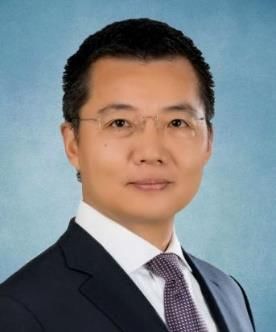
China Asset Management Update

A Message from our Team

                   "危中有机,我中有你"
                  “There is an opportunity that lies in every crisis…we’re in it together”
                                                                        – Chinese Proverb

Despite being overshadowed by the COVID-19 pandemic, April 1st marked the most significant milestone in
the liberalization of China’s financial markets in 20 years. China has finally removed the ownership limits
for foreign financial services firms. The move lowers a significant barrier for foreign asset managers to
participate in the domestic Chinese markets.

In this year’s China Asset Management update, our team interviews two prominent market players to
discuss the impact of this regulatory change and to provide insights into the competitive landscape in
China. We also provide updated facts and figures about the asset management industry in China.

As a global executive search firm founded and headquartered in Hong Kong, we are acutely aware that
Hong Kong is facing a critical juncture in its history, one in which the city’s future as a key financial hub is
being debated. Amidst the numerous head-spinning events in recent months, we find one development to
be very significant. Ashley Alder, the highly respected CEO of the Securities & Futures Commission of Hong
Kong, announced his intention to renew his three-year term, reversing his earlier plan to retire. Global
Sage was retained by the Hong Kong government to prepare for Mr. Adler’s possible replacement. From
our unique vantage point, having an experienced leader like Mr. Adler at the helm for another three years
is a very positive development. It underscores that safeguarding investor interests and maintaining the
integrity of Hong Kong’s financial markets will remain top priorities.

At Global Sage, we are passionate about providing exceptional talent to the global asset management
industry. We encourage you to get to know our team and to learn about our capabilities around the world.

Sincerely,

The Global Sage Leadership Team, Global Asset Management

                       Louisa Wong                    Simon Barzilay                   Douglas J. Brown
             Executive Chairperson, China/Asia   Managing Director, London             Partner, New York

   Volume 2                                          June 2020                                             1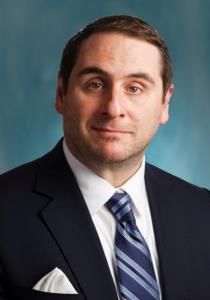
China Asset Management Update

Interview with James Sun, former CEO of Harvest
Global Investments
CEO’s Perspective:
Policy Changes Overlooked Amid Pandemic
What are the key aspects of the new regulations in China and what
should foreign asset managers be aware of?

Fundamental regulatory changes affecting global asset managers’ ability to operate in China were put in
place this April. Under the new regulations, offshore asset managers are allowed to establish fully-owned
fund management companies onshore enabling fundraising from China’s massive retail investor base as
well as certain institutions. This key regulatory change was enacted a year ahead of schedule and has
been well-received by global firms. So far, we have seen managers including Fidelity, BlackRock and
Neuberger Berman submit applications to set up these retail units. To put this market liberalization in
context, it is important to understand that Chinese policymakers are determined to increase market
efficiency. Stronger foreign participation will play a critical role here. That’s why China has been “opening-
up” across all the major domestic financial sectors; these new regulations also apply to banks, insurance
companies, securities brokers and pension managers.

                                                                Are domestic managers preparing
                         “Chinese policymakers                  for international competition?
                         are determined to
                         increase market                       The competitive landscape is certainly
                         efficiency. Stronger                  poised to change. China’s asset management
                         foreign participation will            industry has undergone exponential growth
                         play a critical role here.”           since its birth about 20 years ago. It’s still
                                                               very young. Nevertheless, local firms have
                                                               built solid foundations, brand names,
substantial assets under management and infrastructure, which can be used to compete effectively with
international players on China’s soil. The domestic firms also have proven investment track records with
sound knowledge of domestic investor demand. The incumbent players can expect strong challenges from
newcomers. However, it will take a considerable amount of time before international players can go head-
to-head with Chinese asset managers.

What advantages do foreign asset managers have in the China market?
Are there any clear opportunities for them?

Over the long history of investment management in the U.S. and Europe, each company has developed its
unique investment style and approach. Many of these are relevant to the China market. Chinese
                                                                                       (Continued on next page)

   Volume 2                                       June 2020                                               2
China Asset Management Update
companies have track records in investing in the domestic market, but in terms of diversity of investment
Interview with
styles, they are still James
in the early stageSun, former CEO of Harvest
of formation.
Global
Another areaInvestments
of strength for global firms is their understanding of the connectivity between asset
management and wealth management, which will allow them to bring their full capabilities to serve
clients in different segments of the market.
I think there are two particularly interesting areas of opportunity for offshore managers. The first lies in
the trillion-dollar retirement segment. China is moving to form the nation’s defined contribution system
and IRA schemes that cater to individual retirement. Notably in the U.S., AUM of the asset management
industry grew tremendously after the creation of 401k plans and IRAs. International players who have
accumulated experience in running retirement assets through economic cycles will find themselves
ahead of the game compared with local firms.
Another opportunity for international players is to use
technology to bypass established distribution channels in “Another opportunity
China. The link between asset management content and for international
wealth management distribution for individual investors is
players is to use
now becoming digital. All the major global asset managers
are recreating that link, bypassing the traditional
technology to bypass
banking/brokerage distribution channels. They are going established distribution
direct to wealth management through digital means. channels in China.”
This trend first emerged in the U.S., but I think China's
infrastructure and technology innovation will take it further.
China has a massive digital world with high mobile device penetration. Industry experts have said that
Chinese investors under the age of 30 will not buy a mutual fund if they cannot buy it on a cellphone.
For global managers who want to access China, how will they decide between an
acquisition, a joint venture or establishing a wholly-owned entity?
This decision will be driven by how global players seek to approach the Chinese market. There are three
major paths:
First is the “In China for China” strategy in which a manager establishes operations and capabilities in the
domestic market to serve the Chinese investor. This approach requires playing the long game, as it will
take time to build core capabilities, track record and brand name from scratch.
Second, global firms can build core onshore investment capabilities to serve their international clientele.
This may be a promising approach, as there is a significant under-allocation to China in global asset
allocation given the size of the Chinese economy. It is a relatively medium-term strategy as it will take
time for global managers to firm up their China-investing capability.
The third strategy is to meet the demand from domestic investors for global investment products. There
(Continued on next page)
Volume 2 June 2020 3China Asset Management Update
Is an equal under-allocation among Chinese institutional, retail and private banking investors to
Interview with James
international investments. Sun,
It is probably former
the most CEO
short-term Chinaof Harvest
play. However, asset managers will
have to navigate intense competition and capital control measures.
Global Investments
Global firms have the option to focus on one of these major paths, or to choose several of them which
will provide optionality over the longer term. This decision will drive how they structure their business.
A joint venture can give immediately-available distribution edge through a Chinese partner.
Alternatively, a wholly-owned entity may make sense for large players who are committed to play the
long game in this huge and growing market. Acquisitions can shorten the lead time for license approval
without the challenge of assembling a local team.
How will the effects of the pandemic and rising tensions between China and the
United States impact this decision?
No doubt the pandemic is reshaping the global economy. “The ‘de-coupling’ of the two
Political and trade tensions are further complicating the superpowers in the trade and
dynamics. Investors and asset managers are seeking clarity. technology arena may serve as
But companies committed to China as a market that’s “too a catalyst for China to further
big to ignore” are likely to cut through the noise and forge open its capital markets to
on with their plans to enter the market. foreign companies.”
But there is a reason for foreign asset managers to be
optimistic. The “de-coupling” of the two superpowers in the
trade and technology arena may serve as a catalyst for China to further open its capital markets to
foreign companies. China is seeking to ensure a stronger connectivity between its capital markets and
the rest of the world. Also, by welcoming the participation of U.S. and European asset and wealth
managers in its domestic financial ecosystem, China is seeking to improve market efficiency. These
represent strategic moves to mitigate the impact of the disconnect in the trade and technology space.
This critical decision by China should give international asset managers the confidence to look beyond
the current tensions.
James Sun is the former Chief Executive Officer of Harvest Global Investments Limited (HGI), the
overseas arm of Harvest Fund Management, a top fund manager in China with over $150 billion in
assets under management. James served as the Hong Kong-based CEO of HGI and its subsidiaries
based in the U.S. and U.K., as well as Harvest’s alternative investment platform. Prior to HGI, James
had an 18-year career with Charles Schwab, the largest publicly traded investment services firm in the
US; rising from investment specialist to Managing Director; responsible for the firm’s business in Asia.
He also served as senior VP at HSBC Private Bank in Hong Kong. James sits on several influential
boards, including the China Asset Management Association in Hong Kong, advises Government
agencies, counsels major think tanks and has carved out a reputation in the global investment sphere
as the go-to China specialist.
Volume 2 June 2020 4China Asset Management Hiring Update
Facts and Figures about Asset Management in China
Prominent People Moves in China Asset Management in 2019 - 2020
Name New Firm New Title Location Prior Firm Prior Title
Charles Lin CLSA Vice Chairman Hong Kong Vanguard CEO, Asia
Neil Harvey ADM Capital Executive Chairman, Hong Kong Credit Suisse Asset CEO, HK/Chairman,
APAC Private Credit Management Greater China
Tony Tang BlackRock CEO, China Shanghai GF Securities CEO, Hong Kong
Gina Huang Natixis, IM MD & Head of China Beijing JP Morgan China Head of China Govt.
Relations
Helen Zhu Nan Fung Trinity Managing Director Hong Kong BlackRock MD, Head of China
Equities
Sun Hao PGIM MD & Head of Shanghai Legg Mason General Manager,
Institutional for China Shanghai Operations
James Fullerton Head of China Shanghai China International Executive Vice
Zhang Jun Fund Management President
Compensation Analysis
Base salaries among WFOEs generally increased by only 5-10% last year. Chief Legal and Compliance Officers for WFOEs
are hired locally and in high demand hence their salary increase was higher at 10-15%. For domestic managers
performance bonus accounts for a larger proportion of the total compensation. Base salary in general increased 5-10%.
Base Salary (USD thousand) Bonus (month) Total Salary (USD thousand)
Position
(Min - Max) (Min - Max) (Min - Max)
Domestic WFOE Domestic WFOE Domestic WFOE
Firm Asset Mgr Firm Asset Mgr Firm Asset Mgr
General Manager 140 – 200 200 – 400 3 – 36 3 – 12 175 – 920 250 – 800
Chief Legal Officer 80 – 130 200 – 450 3–6 3–6 100 – 195 250 – 675
Head of Compliance 70 – 100 100 – 200 1–2 1–3 76 – 117 108 – 250
Portfolio Manager 100 – 230 180 – 320 6 – 24 3 – 12 150 – 690 225 – 640
Research Analyst 45 – 200 80 – 230 6 – 12 3–6 68 – 400 100 – 345
Sales/Marketing 35 – 140 40 – 170 12 – 48 6 – 12 70 – 560 60 – 340
This compensation analysis is intended for reference purpose only. All compensation information is gathered from primary and secondary sources
we believe to be dependable. Global Sage does not guarantee the accuracy or completeness of this compensation analysis, and nothing in this
table may be construed as a representation of such a guarantee. The accuracy of the information is also subject to changes in market conditions.
Volume 2 June 2020 5China Asset Management Update
Interview with Bonn Liu, Partner, Head of Asset Management
ASPAC, KPMG
Additional Rules Could Add Opportunities … and
Competition for Foreign Managers
What has been the reaction to China’s new rules regarding foreign ownership?
The new regulations are a key indicator of China’s decision to open the market. The Chinese policy makers
welcome foreign participation and view it as part of the evolution of the sector. They believe it will help
Chinese capital markets to mature. Following the passage of the new rule, we have started to get quite a
lot of inquiries from two groups. The first group already has some presence in China and has been waiting
for a further opening of the market. The second group is players who have been sitting on the sidelines
and see recent developments as a potential opportunity to enter the market.
While the headline has attracted a lot of attention, I always tell our global clients that they need to have
realistic expectations about the speed of the process and expected returns. Regulators in China tend to be
quite cautious. Global firms must demonstrate that they have the right people and processes in place.
Sometimes it requires a lot of education. Although your firm may be international and well-known,
regulators in China are not familiar with you. You still must win them over. I tell our global clients to be
prepared for the long haul. But clearly, the bigger picture is that China is welcoming foreign participation,
opening the market and the eventual rewards can be significant .
In addition to rules affecting “Chinese banks have
foreign ownership, have there been asked to create their
been any other regulatory own independent wealth
developments of importance to management subsidiaries
foreign asset managers recently? which will result in the
creation of many more
There are several. The first are new asset players in the market.”
management regulations relating to bank
wealth management plans. Chinese banks have been asked to create their own independent wealth
management subsidiaries which will result in the creation of many more players in the market. Already,
more than 20 banks have created such subsidiaries or announced their plan to do so.
What was the impetus for this new rule?
In recent years, Chinese banks have developed numerous investment products for individuals. There
have been concerns that some of these products may put potential risks on the banking system. There are
(Continued on next page)
Volume 2 June 2020 6China Asset Management Update
particular concerns with those that have implicit guarantees built in. Therefore, the new asset
management regulations require banks in China to set up separate wealth management subsidiaries if
theyInterview
want to carry onwith
in thisBonn
business. Liu,
For newPartner,
entrants intoHead of Asset
China’s wealth Management
management market, there
Practice, ASPAC, KPMG
could be over twenty new players, representing an influx of formidable new competitors.
Global
What Investments
other recent developments have there been?
There have been several announcements regarding opening the financial markets of the Greater Bay Area
(GBA), which is an economic zone consisting of Guangdong Province in Southern China, Macau and Hong
Kong. One measure under active consideration is the creation of a Wealth Management Connect
between Hong Kong and Southern China. This would allow Hong Kong-based managers to sell products
into Southern China. Guangdong Province has a population of 70 million and represents a vast new
market for Hong Kong players.
What are the challenges that new foreign asset
“…the creation of a Wealth
managers in China will face? Management Connect
between Hong Kong and
To be successful in China going forward, you must really define Southern China…would
where you want to compete. Domestic players are quite allow Hong Kong-based
formidable now. They are much more sophisticated than managers to sell products
when the first joint ventures were set up. They understand the into Southern China.”
market and, more importantly, they know clients. Competing
head-to-head with them is going to be tough. Global
players entering China need to find their niche – what is the expertise that they can offer and how can
they build a reputation for themselves?
Some of the very big firms may be able to go head-to-head with large domestic managers if they are in
it for the long haul. Others may want to offer expertise in areas which are less established by Chinese
managers. For example, Man Group and Winton have entered China as specialists in managed futures,
a strategy that is underdeveloped in China now. Others might want to find an untapped niche on the
wealth management side, or in the pension or in other investment styles or asset classes. Keep in mind,
China’s capital markets are developing. There is an aspiration for bigger and wider capital markets.
Bonds and other asset classes like REITs may become more prevalent. This opens opportunities for
players outside of China who already have a specialty in these asset classes and management styles.
Bonn Liu heads KPMG’s Asset Management practice in ASPAC and China and Financial Services
practice in Hong Kong. Bonn is actively involved in several regulatory and industry association
committees and panels such as the SFC Takeover and Mergers Panel and Product Advisory
Committee and the Hong Kong Securities and Investment institute Education and Development
Committee.
Volume 2 June 2020 7China Asset Management Hiring Update
Facts and Figures about Asset Management in China
Market Share Data
Invesco has become the largest foreign manager in China in 2020. However, the top 6 managers have not changed
significantly over the past two years. Separately, the market share of the top 10 domestic managers in China dropped
to 43.3% in Q1 2020 from 47.2% in 2018.
Top 10 Foreign Managers
Top 10 Domestic Fund Managers / JVs
For China On-Shore Business
April 2020 April 2018 Q1 2020 2018
Rank Firm Firm 2020 AUM USD Market AUM USD Market
Firm
Rank (Bn) share (Bn) share
1 Invesco UBS
1 Tianhong 204 8.8% 188 10.4%
2 JP Morgan Invesco
2 E Fund 117 5.0% 90 5.0%
3 UBS JP Morgan
3 Bosera 96.3 4.2% 78 4.3%
4 Schroder HSBC
4 China AMC 90.6 3.9% 61 3.4%
5 BlackRock BlackRock 5 Southern 90.1 3.9% 78 4.3%
6 HSBC Schroders 6 Guangfa 84.3 3.6% 65 3.6%
7 Eastspring Manulife 7 Harvest 82.6 3.6% 58 3.2%
8 China Universal 81.6 3.5% 66 3.6%
8 Fidelity Deutsche AM
9 CCB Principal 80.1 3.5% 89 4.9%
9 Morgan Stanley Fidelity
10 ICBC CS 77.9 3.4% 85 4.7%
10 Winton Franklin Templeton
Sum of Top 10 1,005 43.3% 854 47.2%
Source: Z-Ben Advisors 2020 and 2018 China Rankings Data from KPMG 2020 Q1
Where are WFOEs finding talent?
Foreign managers who have set up Wholly Owned Foreign Entities (WFOEs) in China have tapped three main sources for
talent: 1) internal transfers from Hong Kong/Singapore, 2) other WFOEs and 3) domestic managers. The talent pool at
domestic managers is very large but has few individuals with international experience. As a result, having a multi-
pronged talent sourcing strategy in China is crucial. The data below is derived from Global Sage proprietary research.
Hired from 68% 21% Investment professionals at domestic firms
Portfolio Investment
internal transfer
Managers Analysts
with international backgrounds
15% 63%
Portfolio Managers Investment Analysts
28% 40%
Hired from another
Portfolio Investment
WFOE in China Managers Analysts
Female portfolio managers in
4% 39% China
Hired from domestic
Portfolio Investment 21% 27%
firm in China Managers Analysts
WFOE Domestic Firms
Volume 2 June 2020 8China Asset Management Update
Global Sage in China
Our China Capabilities Global Asset Management
Team
Global Sage is an industry leader in helping global alternative and traditional
asset managers to hire the best talent in China and Asia. We offer our clients China (Hong Kong/Beijing/Shanghai)
a number of unique capabilities: Louisa Wong
+852 2802 4802
First Financial Services Search firm to establish a WFOE in China louisa.wong@globalsage.com
In 2005, our Hong Kong-based company successfully completed the process
that many of our global clients are undertaking today. Sera Li
+86 10 6506 8300
On-Shore and Off-Shore Capabilities Global Sage has offices in Shanghai, sera.li@globalsage.com
Beijing and Hong Kong. Unlike most of our competitors, our firm has both on-
Andrew An
shore and off-shore operating licenses.
+86 184 2045 8374
Cross-Border Search Expertise Our team in China works in unison with andrew.an@globalsage.com
our consultants in the U.S., Europe, Singapore and Japan to handle hiring
North America (New York)
needs of our global clients.
Douglas J. Brown
Asia search is in our DNA Global Sage is the only global executive search +1 (646) 557 3036
firm specializing in financial services that was founded in Asia. douglas.brown@globalsage.com
Europe (London)
Track Record in China (Representative Assignments) Simon Barzilay
• China CEO - major Singaporean asset manager +44 7973 655798
simon.barzilay@globalsage.com
• Head of China - one of the largest French asset managers
• Chief Operating Officer - one of the largest U.S. asset management firms Tokyo
Hirokazu Tamura
• Head of Legal China - one of the world’s largest global asset managers +81 3 4530 9747
• Portfolio Manager - top global asset management firm tamura@globalsage.com
• Portfolio Manager, Equities - HK based asset manager Singapore
David Webbe
• Investment Manager, Fixed Income - well-known Chinese asset manager
+65 9137 4559
• Institutional Sales - one of the largest US asset managers david.webbe@globalsage.com
• Client Service Manager - one of the largest French asset managers
Our Firm
Global Sage is a retained executive search firm specialized in global financial
services. The firm was founded in 1998 and is headquartered in Hong Kong
and operates from 10 offices globally. We pride ourselves on combining the
best of a boutique, high-touch executive search practice with the global
presence and research capabilities typical of much larger search firms.
Volume 2 June 2020 9You can also read


