Hampshire UDL Innovation Network - The New - Year 1 (2018) Report
←
→
Page content transcription
If your browser does not render page correctly, please read the page content below
New
The

Hampshire
UDL Innovation
Network
Year 1 (2018) Report
The New Hampshire UDL Innovation Network | Year One (2018) Report                                                    Page 1 of 9

                                                               Commissioner Frank Edelblut delivers the welcome speech at the 2018
                                                                                   NH UDL Innovation Network 2018 kickoff event.

Overview

The New Hampshire UDL Innovation Network is the                  In the summer of 2018, 30 UDL Innovation Network
result of a groundbreaking collaboration between the             educators took part in a hands-on Learning Design
New Hampshire Department of Education and CAST, a                Studio. Participants spent two full days designing
world-renowned non-profit whose mission is to transform          individual lessons, topic-oriented units, and professional
education design and practice until learning has no limits.      development opportunities for other educators in an
                                                                 interactive “playground” designed to inspire creativity
This multi-year opportunity is designed specifically             and risk-taking.
for school-based educators who are committed to
empowering all learners through Universal Design for             Year 2 (2018-2019) will add a new cohort to the UDL
Learning. Participants in the UDL Innovation Network             Innovation Network. This cohort will participate in
create innovative, inclusive lessons in Learning Design          interactive learning and designing using the UDL
Studios, dig into student variability by analyzing classroom     framework, Instructional Rounds, problem-solving
videos, build a collaborative school culture through             activities, and will receive individual support from the
Instructional Rounds, and become immersed in UDL                 CAST Implementation Specialists. The project continues
thinking, community, and practice.                               through Year 3 (2019-2020), adding new cohorts and
                                                                 building on existing work, spreading UDL best practices
Year 1 (2018) began in March with a full day of experiential     throughout New Hampshire, and creating potential
learning and and networking at the UDL Innovation                for further work and exploration through this creative
Network Kickoff in Concord. For the rest of the school           partnership.
year, teams participated in monthly face-to-face and virtual
learning events, school visits, classroom observations, and      New Hampshire’s pioneering work in designing more
full-staff trainings with CAST’s Implementation Specialists.     effective learning experiences for all students through
CAST also selected two Focal Schools to collect detailed         this incredibly robust and immersive partnership program
information on participation in the UDL Innovation               will lead the state forward. The UDL Innovation Network
Network, to explore participants’ experiences, and to            will create a supportive learning structure for New
inform further supports and program design.                      Hampshire educators, and, most importantly, better
                                                                 outcomes for all of New Hampshire’s learners.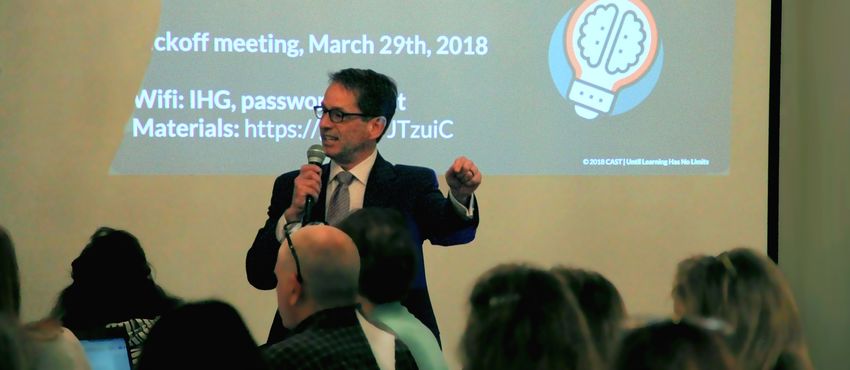
Page 2 of 9

PARTICIPATING SCHOOLS

In collaboration with 32 schools from 17 different School
Administrative Units, the New Hampshire UDL Innovation
Network built a diverse Year 1 cohort spanning the entire state.

 School Name                                             SAU #     School Name                                              SAU #
 Cooperative Middle School                               16        Monarch School of New England                            Private
 DJ Bakie Elementary School                              17        Newmarket Elementary School                              31
 Dr. George S. Emerson Elementary School                 93        Northwest Elementary School                              37
 East Kingston Elementary School                         16        Parker-Varney School                                     37
 Exeter High School                                      16        Paul Elementary School                                   101
 Florence Rideout Elementary School                      63        Pelham Elementary School                                 28
 Hampstead Middle School                                 55        Pittsfield Elementary School                             51
 Hudson Memorial School                                  81        Pittsfield Middle and High School                        51
 Kensington Elementary School                            16        Plainfield Elementary School                             32
 Lakeway Elementary School                               84        Sanborn Regional High School                             17
 Lempster Community School                               71        Sanborn Regional Middle School                           17
 Lincoln Street School                                   16        Somersworth Middle School                                56
 Littleton High School and Daisy Bronson Middle School   84        Stratham Memorial School                                 16
 Main Street School                                      16        Vilas Middle School                                      60
 Maple Wood Elementary School                            56        Wilton-Lyndeborough Cooperative Middle and High School   63
 Memorial Elementary School                              17

INDIVIDUAL PARTICIPANTS

A total of 215 participants brought varying roles, perspectives,
and years of experience to the UDL Innovation Network in Year 1.

Years of Experience                                                Primary Role of Participants
From Idea to Implementation

KICK-OFF EVENT

A packed house of 215 participants from 32 schools
across the state came together to kick off the New
Hampshire UDL Innovation Network with enthusiasm
and spirit. Participants learned about Universal Design
for Learning and the mindset shift required to design
learning experiences that are more effective, engaging, and
meaningful for all learners. They participated in a Design
Thinking challenge, worked through case studies with their
teams, learned the neuroscience behind UDL, and engaged
in planning activities for the roll-out of UDL in their schools.

VIRTUAL LEARNING

In three unique virtual learning experiences designed to
break the traditional webinar mold of “sit and receive,” each
participating team from across the state of New Hampshire
was invited to integrate strategies from each of the UDL
Guidelines into their own setting. Participant teams created
model lessons demonstrating their understanding of
each core UDL principle: multiple means of engagement,
representation, and action and expression.
Page 4 of 9

          “...With the new knowledge of these innovative
          practices, I will be able to better engage my students and
          personalize their learning even more than I do now.”

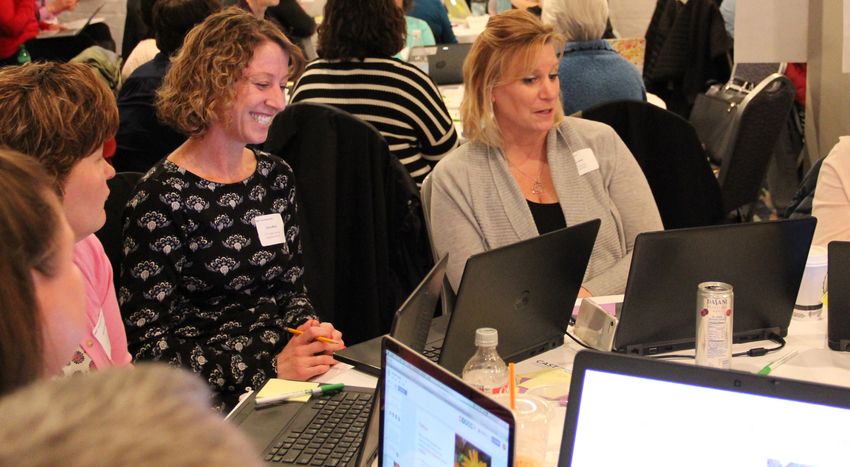
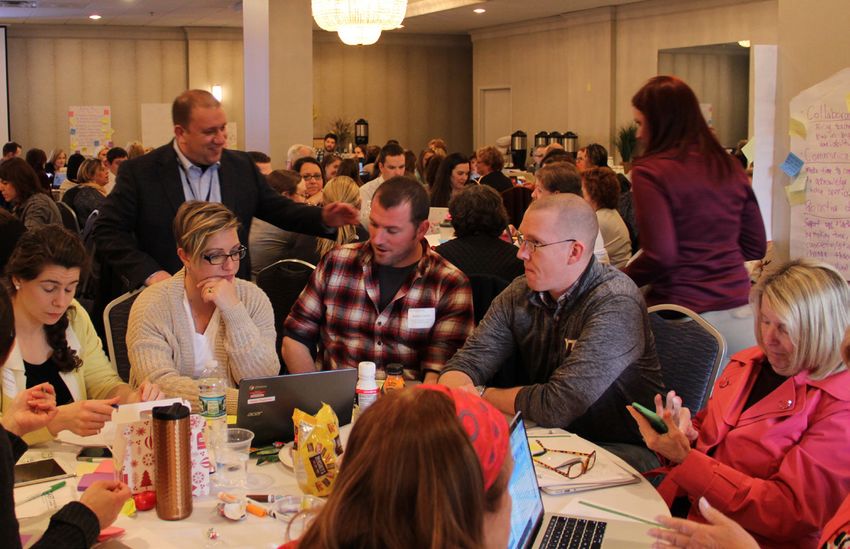
                                                                      A team of participants from the Memorial School work on a
                                                                                            case study at the 2018 kickoff event.
VISITS FROM CAST IMPLEMENTATION SPECIALISTS

Each school in the UDL Innovation Network was assigned          and one self-directed meeting in which participants
a CAST Implementation Specialist who visited one or more        reflect on their learning, plan implementation, and
times in Year 1. Implementation Specialists systematically      discuss questions.
observed both participating teachers and teachers not
involved in the program in order to record baseline data        FULL-SCHOOL TRAININGS
for comparison in Year 3. They then met with each team to
set goals, reflect on current learning, and create a learning   CAST’s research shows that when the language of
plan for the year.                                              UDL is used throughout a school, it speeds the scaling
                                                                of UDL from small teams to the full staff. As a way of
                                                                supporting the development and use of UDL language
UDL TEAM MEETINGS                                               schoolwide, Implementation Specialists visited each
                                                                school and provided a UDL implementation overview
One goal of the UDL Innovation Network is to set school-        to the full staff. Each training provided a basis for the
based teams on the path toward independence. To that            underlying concepts of UDL, modeled how UDL is used,
end, teams meet twice a month — one guided meeting to           and challenged participants to engage in discussions and
watch webinars and participate in structured activities,        activities to build understanding in the foundations and
                                                                language of UDL.

       “Having the UDL Implementation Specialist present to the
       whole staff was a powerful way to demonstrate why our school
       is in the Network and why we’ve created a UDL Team. It lends
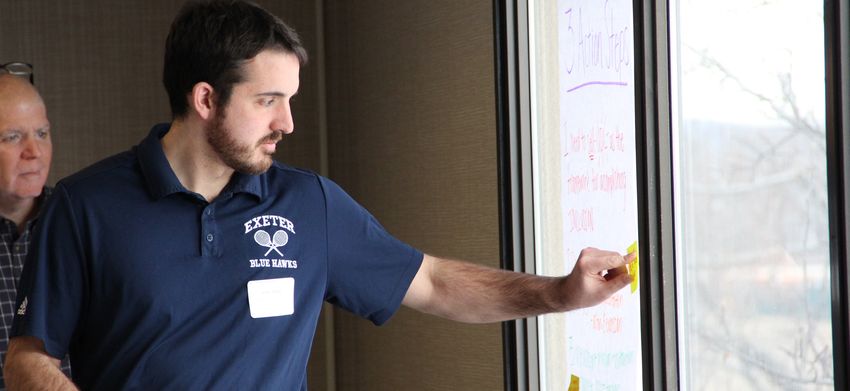
       to the transparency of what teachers are doing in school.”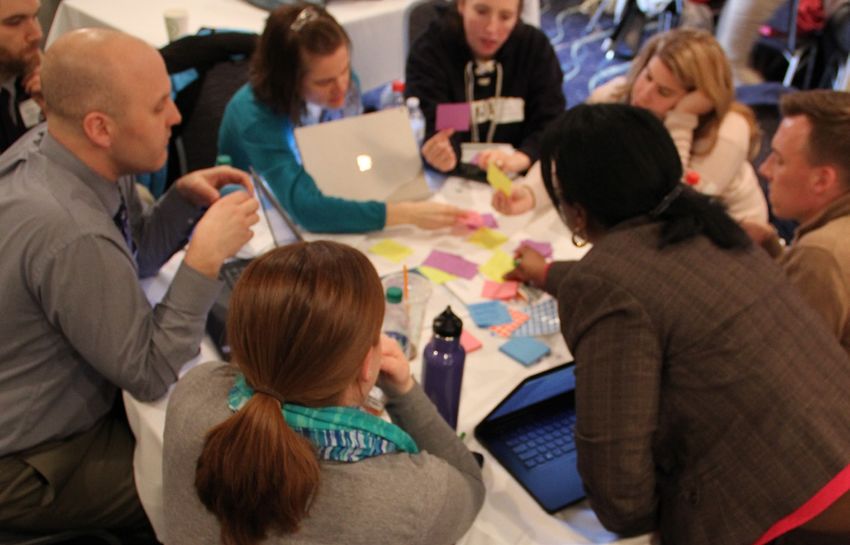
Page 5 of 9

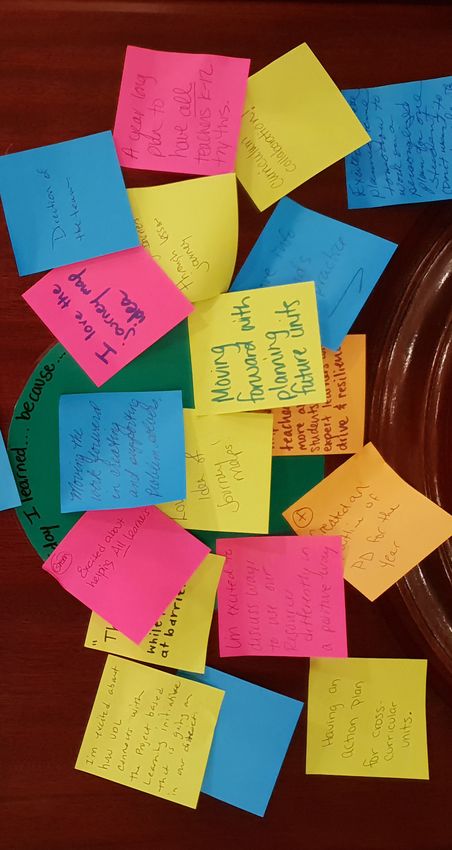
           “The learner variability sandbox was the most helpful. I
           was able to break down a full lesson and understand what
           barriers I or my learners might encounter.”

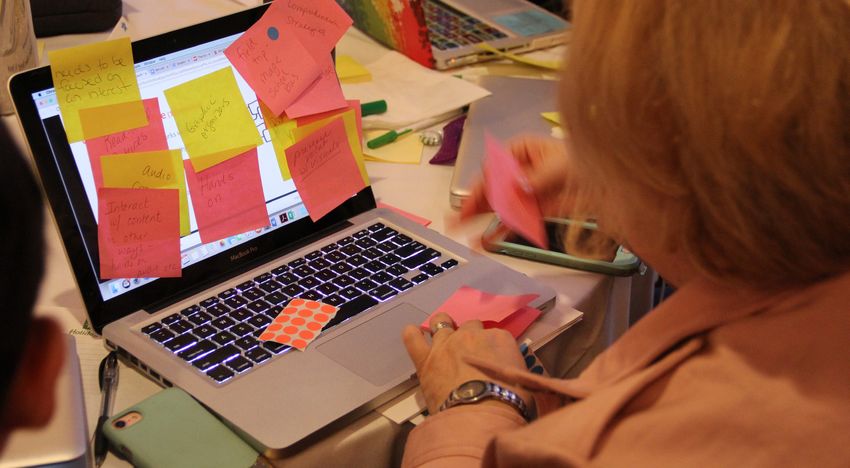
LEARNING DESIGN STUDIO                                             FOCAL SCHOOL STUDY

Individualized learning is at the heart of CAST’s work in          In an effort to gain a more fine-grained understanding of
Universal Design for Learning. Because so few educators            participants’ experiences in the UDL Innovation Network
have experienced what this might look, sound, or feel like         over the course of the 3-year project, two schools have
in practice, and even fewer are confident in planning this         been identified as Focal Schools. Working with the Focal
way, CAST created a Learning Design Studio to model                Schools enables CAST to collect detailed data and gain
both. During these two-day design challenges, educators            rich insight into each school’s UDL journey, allowing
experienced the joy of playing with new ideas, designing           iterative instructional adjustments as information is
collaboratively, and making use of the expertise of their          collected and analyzed. Data collected in Year 1 includes
peers and CAST staff in learning “playgrounds.”                    structured and recorded classroom observations of all
                                                                   UDL Team teachers within each Focal School, student
                                                                   work samples, and a focus group interview with each UDL
                                                                   Team. This data collection will continue in Year 2 and Year
                                                                   3 to document shifts in teacher learning.

        To what extent did the Learning Design Studio help                 To what extent did the Learning Design Studio help
              deepen your understanding of UDL?                                  you apply UDL to your own context?

  Not at All Helpful   Slightly or Somewhat   Quite or Extremely     Not at All Helpful   Slightly or Somewhat   Quite or Extremely

        0%                   13%                    87%                    0%                   13%                    87%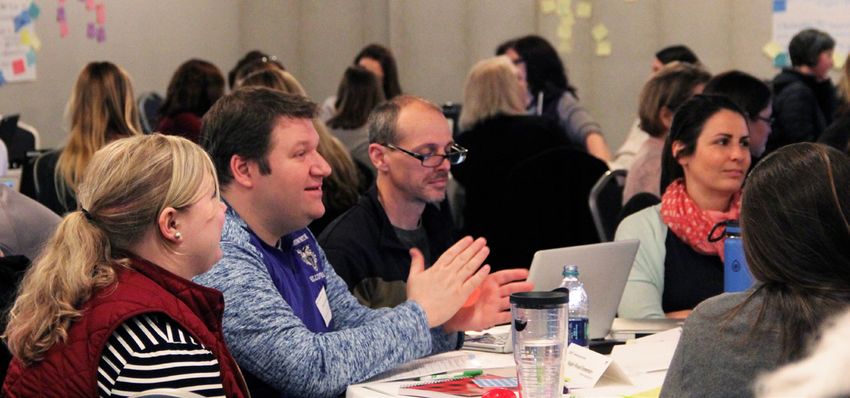
Page 6 of 9

        “Designing UDL goals helped me clarify that we need to really
        focus on one thing at a time so things don’t get watered down,
        or we make the intention confusing/overwhelming.”

Surfacing the Learning                                                    “I understand that UDL is not
                                                                          a program or initiative, but
One of the goals of the New Hampshire UDL Innovation
Network is to support teachers in developing their                        rather a way of thinking about
knowledge and applications of Universal Design for
Learning. In Year 1, this goal is already being realized in               instructional design to reach
significant ways throughout the UDL Teams and within
individual participants.                                                  more learners.”

SUPPORTING TEACHER KNOWLEDGE OF UDL

The graph measures participants’ responses to the question “How would you characterize your
knowledge about UDL?” before and after participating in Year 1 of the UDL Innovation Network.

   33%          0%             29%          13%             23%         55%             15%     30%   0%   3%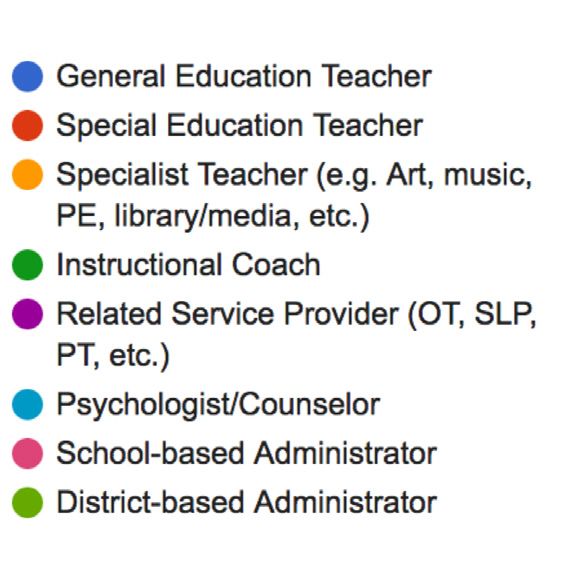
Page 7 of 9

       “I went from not knowing anything about UDL to starting to
       think about changes I can make in my lessons.”

SUPPORTING TEACHERS IN APPLYING UDL TO PRACTICE

The graph measures participants’ responses to the question “How confident do you feel in terms of applying
UDL to your practice?” before and after participating in Year 1 of the UDL Innovation Network.

   34%            1%            23%           17%            32%          53%              9%          21%   3%     7%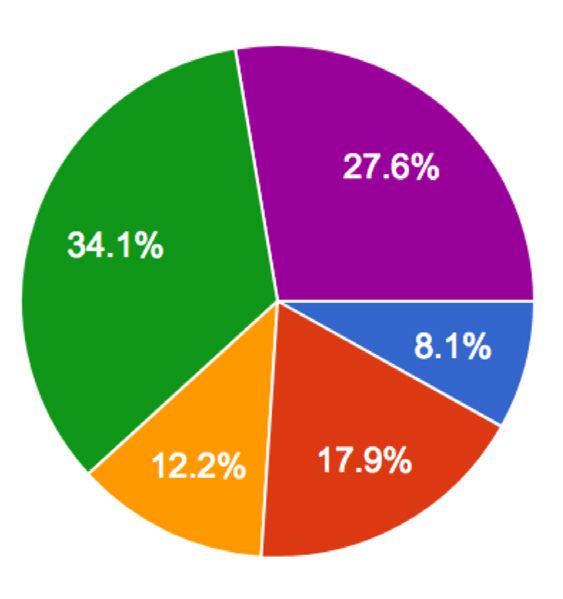
Page 8 of 9

      “As an administrator, I am modeling UDL whenever I
      can with the staff. For example, when planning staff
      meetings/professional development meetings, I am
      incorporating UDL language and/or techniques.”

Looking Ahead

Modeling Universal Design for Learning, the New Hampshire   “[CAST] provided the answers
UDL Innovation Network partners elicit feedback for
improvement over the course of the project. Plans for       to questions I had and
implementing takeaways from this feedback are part of
subsequent iterations in Years 2 and 3.                     questions I didn’t know I had.”
Page 9 of 9
Feedback: Participants want Plans to incorporate feedback:
more opportunities to see School teams participating in
UDL in action Instructional Rounds
“Opportunities to see UDL in action and discuss the Each school team will participate in Instructional
planning and decisions made for UDL with the team of Rounds three times over the course of the school year.
teachers involved in the UDL teaching observed. This Not only will they get to see UDL in action, but they
could be done through instructional rounds.” will learn a protocol for analyzing trends across the
school and creating professional learning plans based
on this information.
Feedback: Participants want Plans to incorporate feedback:
more opportunities for feedback New Video Club opportunity
on applying UDL to practice The design of this strand acknowledges that being
observed and receiving feedback can oftentimes
“It would be great to get some feedback on how we produce anxiety. Participants will start out observing
are doing with bringing UDL into our classrooms. Being classroom footage from other schools, then move on to
observed can feel scary and I know we often shy away observing footage from their own classrooms as they
from it but it could be really beneficial.” begin to develop a comfort with the process.
Feedback: Participants want Plans to incorporate feedback:
more proactive scheduling and Less-frequent and more self-
clearer communication serve communications
“Set a schedule of meetings, webinars, workshops, etc. CAST will consolidate all information about meetings,
in order to best plan out an effective schedule for UDL workshops, assignments, etc. on one accessible
implementation.” document. Once a month participants will receive an
email summarizing the upcoming events and offering
“...Sometimes there are a lot of emails coming. So I links to more details. We hope this will streamline the
don’t know if there’s a way to sift through what really previously large number of emails and will help to make
needs attention versus what can kind of wait.” all information easier and more convenient to access.Stay in touch!
We’d love to hear from you!
#NHUDL
CAST Website: cast.org
CAST Professional Learning Offerings: castpl.org
CAST Books & Publications: castpublishing.org
Email: professional_learning@cast.org
Phone: 781-245-2212You can also read


