HEALTH RESULTS 2020 PRIMARY HEALTH CARE - UNICEF
←
→
Page content transcription
If your browser does not render page correctly, please read the page content below
HEALTH RESULTS 2020
           PRIMARY HEALTH CARE

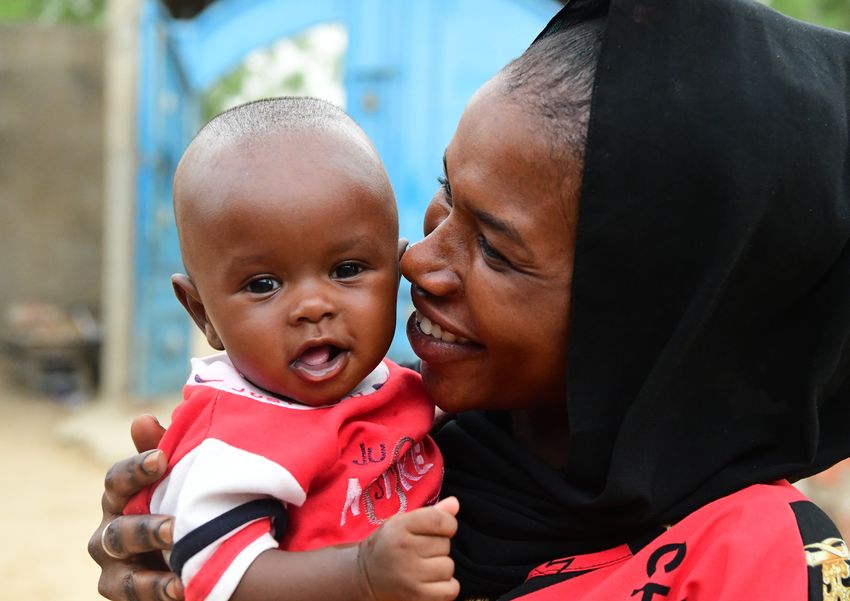
                                                                                                                 © UNICEF/UN0469284/Dejongh
Aicha Abdalahin, a 23-year-old mother is cuddling her 5-month-old baby Adam, in Ndjamena, the capital of Chad.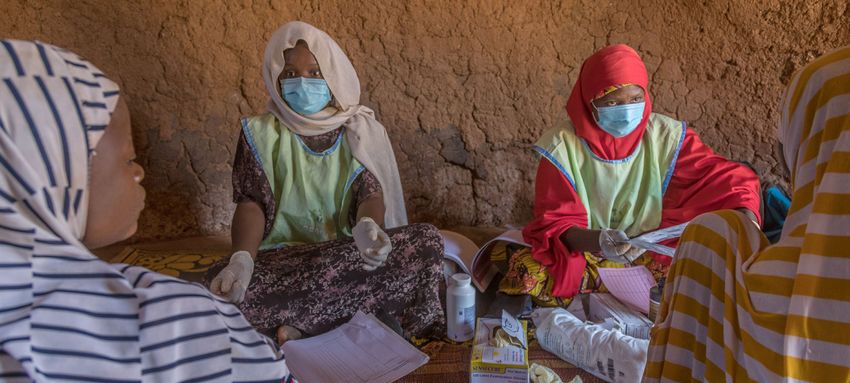
PRIMARY HEALTH CARE

CONTEXT                                                    UNICEF WORK AND RESULTS IN 2020
In September 2020, UNICEF and the World Health             The indirect effects of COVID-19 may lead to devastating increases in child deaths, which could erode decades
Organization (WHO) signed a new collaborative              of progress. The long-term negative impact of the COVID-19 pandemic on children’s health may not be clear
framework to accelerate joint public health efforts        for many years to come. Despite the overwhelming challenges faced during 2020 in the delivery and uptake of
that put the most marginalized and vulnerable              health services throughout the world, some important results were achieved.
populations first. In response to the COVID-19
pandemic, UNICEF contributed to the WHO guidance           UNICEF promotes and supports primary health care with a package of services for maternal, newborn, child and
‘Maintaining essential health services: Operational        adolescent health and nutrition; immunization; water, sanitation and hygiene (WASH); HIV; and early childhood
guidance for the COVID-19 context’. This guidance          development delivered through community, outreach and facility-based strategies and multisectoral approaches.
provides practical actions that countries can take to
reorganize and safely maintain access to high-quality,
essential health services in the pandemic context.

As part of the ‘Global Action Plan for Healthy Lives
and Well-being for All (SDG 3+GAP)’, UNICEF is
working with partners to leverage the SDG 3+GAP to
fill gaps and add value to existing global, regional and   Supported 25 countries to          Supported           Completed 40            Strengthened         UNICEF
national coordination mechanisms. Within the SDG           integrate community health         responses           implementation          routine health       invested
3+GAP framework, UNICEF increased collaboration            workers into their health          to 211 public       research projects       management           US$253
with WHO to co-lead the primary health care                systems, while 38 countries        health              in 28 high-burden       information          million for
accelerator with a focus on the country level.             were supported to strengthen       emergencies,        countries, most         systems and          health system
                                                           their supply chains, and           including the       of which focused        digital health       strengthening,
UNICEF and WHO also published the ‘Operational             38 priority countries were         Ebola virus,        on services and         solutions in         out of US$1.4
Framework for Primary Health Care: Transforming            supported to implement plans       cholera,            health system           20 countries.        billion health-
Vision into Action’, to bring the vision outlined in       to strengthen the quality          Zika, Polio         strengthening                                related
the Declaration of Astana into reality. Key results of     of maternal and newborn            and measles         at the primary                               expenses.
UNICEF’s support for this agenda include: A greater        primary health care.               outbreaks.          care level.
integration of the community health workforce into
formal health systems; progress in quality of care; the
strengthening of national health sector supply chains,     To enhance collaboration between disease control programmes, integration is critical – this normally occurs at
alongside the uptake of digital health approaches.         the primary care level. As measured by service coverage, all four programmes under Goal Area 1 show progress
                                                           towards the 2021 target. Among a set of eight indicators tracking progress on integration, four were met or
                                                           exceeded the 2021 Strategic Plan target. These include: The number of district hospitals with sick newborn care
                                                           units, nutrition counselling integrated into pregnancy care, HIV interventions as part of child health services, and
                                                           water, sanitation and hygiene (WASH) access at health-care facilities.

                                                           As a foundation for bolstering primary health care, health systems strengthening includes improving quality
                                                           of care, the integration of community health workers into the health system, and supply chain management.
                                                           Excellent progress is being made in all three areas, with 2021 targets being met or exceeded.

 2    Health results 2020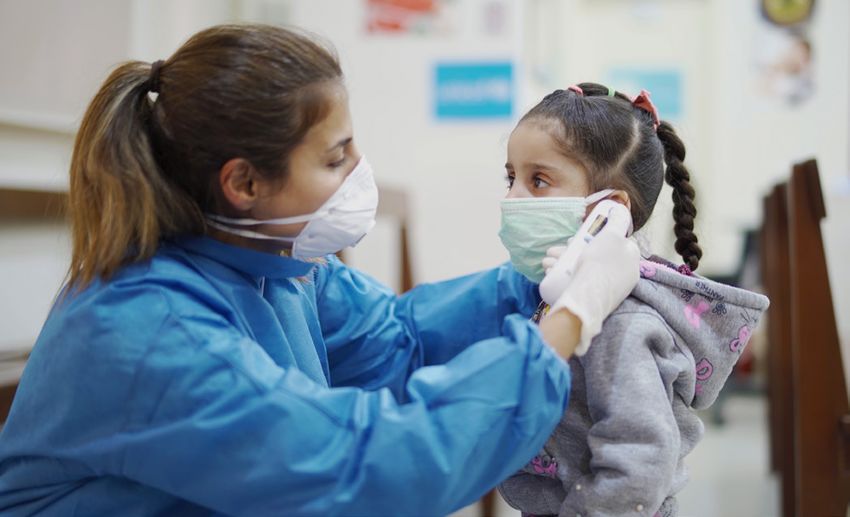
PRIMARY HEALTH CARE
FIGURE 100: Results on addressing inequities, promoting integrated health policies and
2020 results
programmes, on addressing
and health inequities,
systems strengthening, 2020promoting integrated health
policies and programmes as well as health systems strengthening
IMPROVING THE QUALITY OF CARE
To strengthen the quality of maternal and newborn primary health care, by the
COVERAGE OF SERVICES (per cent) Goal Area 1: Primary Health Care
1.2: SKILLED BIRTH ATTENDANCE 1.6.B.I: DTP3 COVERAGE 1.9: PNEUMONIA CARE SEEKING
end of 2020, some 38 of the 52 high-burden countries had a national quality
78 85
*2018 and 2019 data have been revised due
improvement programme with guidelines, standards and implementation plans
77 71
76 76 76 80 80 80
81 81 to change in definition in data source
in place. To strengthen the quality of care, UNICEF also improved access
60 61 61 to water, sanitation and hygiene (WASH) in 4,725 healthcare facilities in these
73 59
57
high-burden countries.
Baseline 2017 2018 2019 2020 2021 Baseline 2017 2018 2019 2020 2021 Baseline 2017 2018 2019 2020 2021
Target Target Target
1.13: EXCLUSIVE BREASTFEEDING 1.18: CHILDREN RECEIVING 1.20: CHILDREN RECEIVING
INTEGRATING COMMUNITY
ANTIRETROVIRAL THERAPY EARLY STIMULATION AND 74
81 RESPONSIVE CARE
44.6 45 64
44.5 61
HEALTH WORKERS
60
57
41.4 51 54
41 50 50
47
Baseline 2017 2018 2019 2020 2021
Target
Baseline 2017 2018 2019 2020 2021
Target
Baseline 2017 2018 2019 2020 2021
Target Integrating community health workers into formal health systems is critical if care
INTEGRATED INTERVENTIONS is to reach the ‘last mile’. For this to happen, policies defining roles, tasks based on
250 227
250 local needs and relationships to the health system must be in place at the country
200
154
190 level. By the end of 2020, all 25 countries carrying high burdens of childhood
150
100 94 illnesses had policies in place that met the required criteria. In addition, UNICEF
71 70
50 47 57 68
50 37
56
40
9 11 12 14 13 19
51
helped governments to establish a package of care, incentive and compensation
0
1.a.1: Number of district hospitals 1.b.3: Effective Vaccine 1.c.4: CHWs trained in 1.d.2: Nutrition couselling
structures, supervision and supply chain models.
with Sick Newsborn Care Units Management score above 80% integrated community case integration in pregnancy care
(Hundreds) (countries) management (thousands) (countries)
200
150 123
100 100
80 67
50 45 53
24 24 27 29 ≥30 25 29 35 35 35 35 28 33 16 16
34
8 9
0
1.e.2: Care for children with SAM in 1.f.3: Integration of HIV 1.h.1: ECD packages adopted 4.b.1c: Health centres
regular services (countries) interventions in Child Health at scale (countries) that have basic WASH facilities
services (countries) (hundreds)
© UNICEF/UN0388914/Panjwani
Baseline 2017 2018 2019 2020 2021 Target
HEALTH SYSTEMS STRENGTHENING
1.A.3: PLANS FOR QUALITY OF CARE 1.B.4: NATIONAL SUPPLY CHAIN 1.C.3: CHW INSTITUTIONALIZATION
(countries) STRATEGY (countries) (countries)
25 25 25
38 24
53
50
31 30 46
23 21
18 36
27
24
3 16 Home visit by Anganwadi workers (community health workers) Sunita and Asha to Jasu and her
Baseline 2017 2018 2019 2020 2021 Baseline 2017 2018 2019 2020 2021 Baseline 2017 2018 2019 2020 2021 6-month-old during the COVID-19 pandemic in Alaniyo ki Dhani, Barmer, Rajasthan, India.
Target Target Target
3 Health results 2020
Source: UNICEF New York, 2020.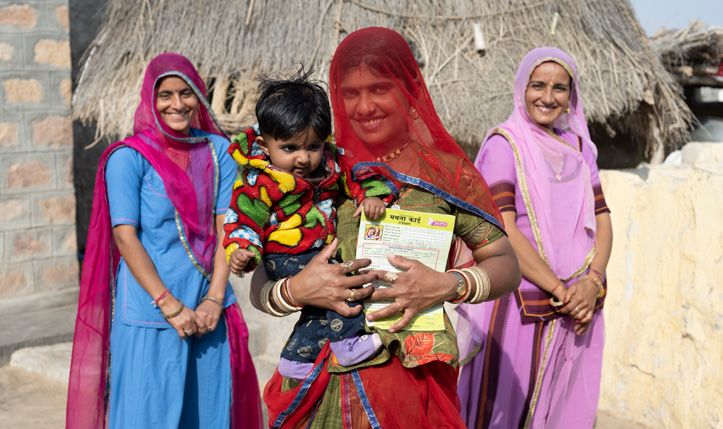
PRIMARY HEALTH CARE

PROCUREMENT                                                                       a comprehensive review of the performance of
                                                                                  13 critical operational and technical supply chain
AND SUPPLY CHAIN                                                                  functions. The evidence gathered was instrumental
                                                                                  in determining countries’ level of readiness and
MANAGEMENT                                                                        management capacity to achieve an equitable, fast
                                                                                  and efficient rollout of all health products, including
The COVID-19 pandemic tested global supply                                        COVID-19 vaccines. Twenty-nine countries have
chains. Initial interruption to global supply chains and                          used the UNICEF Supply Chain Model to identify
logistics systems resulted in a shortage of oxygen                                their investment needs across various public
concentrators, personal protective equipment                                      programmes since 2019.
(PPE) and other essential commodities. One of the

                                                                                                                                                                                                 © UNICEF
highlights of 2020 was the preparation of cold chains
to support the rollout of COVID-19 vaccines. By the
end of 2020, some 53 countries were implementing                                  ENHANCING THE
a national health sector supply chain strategy; and 38
UNICEF country offices were supporting interventions
                                                                                  QUALITY AND USE OF                                        Using digital health initiatives to improve the health

to strengthen supply chains. The deployment of
the UNICEF Supply Chain Maturity Model allowed
                                                                                  DATA: STRENGTHENING                                       and well-being of every child.

                                                                                  HEALTH MANAGEMENT
                                                                                  INFORMATION SYSTEMS
                                                                                  AND DIGITAL HEALTH
                                                                                  Strong information systems drive action for
                                                                                  children. UNICEF and partners leverage digital
                                                                                  health technologies, including data platforms and
                                                                                  geospatial solutions, to strengthen health systems
                                                                                  and enhance the reach and quality of care. This
                                                                                  simultaneously improves the quality, availability
                                                             © UNICEF/UN0326765

                                                                                  and use of data.

                                                                                  UNICEF is well positioned to address the scale of
                                                                                  needs related to the COVID-19 pandemic globally.
                                                                                  Digital health and data solutions have been integral
                                                                                  to this effort, including risk communication and
         How UNICEF and partners are strengthening health                         community engagement, as well as real time data
         supply chains in Central Asia to guarantee the timely                                                                               How youth are engaging in digital COVID-19
         delivery of medicines and health supplies.
                                                                                  reporting and information systems for the rollout of       solutions through a chatbot in Georgia.
                                                                                  the COVID-19 vaccine.

 4    Health results 2020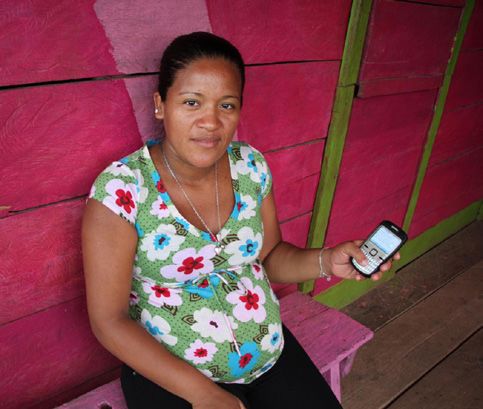
PRIMARY HEALTH CARE

To increase demand for health services and to
manage misinformation about the corona virus,
                                                                                       The equitable impact sensitive tool (known as
                                                                                       EQUIST) focuses on proposing cost-effective
                                                                                                                                                                  ENHANCING HEALTH
UNICEF deployed chatbots, SMS, interactive voice
response and other technologies through multiple
                                                                                       interventions and analysing key bottlenecks
                                                                                       that constrain their coverage. In 2020, UNICEF
                                                                                                                                                                  SYSTEM PREPAREDNESS TO
channels, including U-Report, RapidPro, Infolines,                                     supported the introduction and/or further                                  PREVENT AND RESPOND TO
HealthBuddy, VIAMO Services and Commcare,                                              deployment of EQUIST in Bangladesh,
to reach affected communities with life-saving                                         Kyrgyzstan, Pakistan, Suriname/Guyana and                                  EMERGENCIES
information. These engagements are promoting                                           Zambia. A total of 14 countries have now
facts over fear, bringing reliable guidance to                                         received UNICEF support to strengthen their                                In 2020, UNICEF responded to 211 health
communities, and providing frontline responders                                        capability on data for decision-making, bottleneck                         emergencies worldwide including Ebola virus,
with the information and resources they need.                                          analysis and the development of investment cases.                          cholera, Zika, Polio and measles outbreaks. UNICEF
                                                                                       Training sessions were conducted for government                            supported priority countries to integrate planning
During 2020, UNICEF supported in-country                                               and partners in Bangladesh, Kyrgyzstan, Pakistan                           for public health emergencies into the Emergency
District Health Information Software 2 (DHIS2)                                         and Zambia.                                                                Preparedness Platform.
in nine countries. Guidance was developed on
community health workers’ strategic information
and service monitoring, which aims to address
the fragmentation of community data systems.
The harmonization and alignment of national
reporting mechanisms will facilitate the integration
of community data into the broader health
management information system.

                                                                                                                                                                                                                                   © UNICEF/UNI317998/Choufany
                                                           © UNICEF/UN03301/Abdoulie

         How does UNICEF use new digital tools to bolster its                            On 3 April 2020, a nurse takes a girl’s temperature at a primary health care centre in Beirut, Lebanon. Since 21 February 2020, when the first
         COVID-19 response in Gambia?                                                    case of COVID-19 was confirmed in the country, UNICEF has procured and delivered medical supplies to 194 primary health care centres.

 5    Health results 2020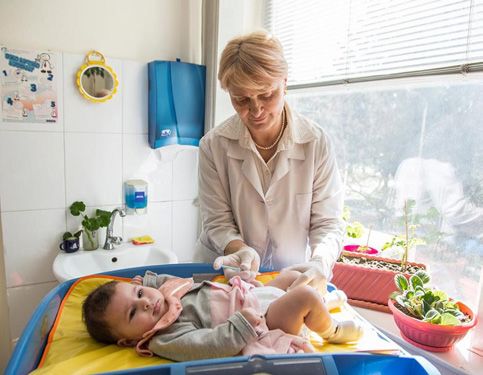
PRIMARY HEALTH CARE
During 2020, UNICEF responded quickly to the
RESILIENT PRIMARY
© UNICEF/Zambia/2021/Mulikita
challenges presented by the pandemic. Under
the leadership of national governments, and in
coordination with WHO and other partners, UNICEF
HEALTH CARE
advocated for child rights. UNICEF also supported In 2020, UNICEF and its partners launched
the public health response, the continuity of essential the revised Core Commitments for Children in
social services and the access to COVID-19 tools. Humanitarian Action to provide a more robust
UNICEF also accelerated partnerships to ensure accountability framework for a principled, timely,
equitable access to COVID-19 tests, treatments and predictable and efficient humanitarian response that
vaccines. Through its leadership in the COVAX facility, is in line with international norms and standards.
UNICEF is playing a key role in COVID-19 vaccine How UNICEF helped maintain essential health services Additionally, UNICEF advanced the agenda of
procurement, preparedness and delivery for countries for children during the COVID-19 pandemic in Zambia. newborn health in humanitarian settings through
otherwise at risk of being left behind. evidence-based advocacy and tracking progress and
barriers/enablers in seven countries.
The degree to which the world’s health systems were
unprepared for and quickly overwhelmed by COVID-19
underscores the importance of working to strengthen
systems, including to build their resilience against
shocks. Investing in primary health care is therefore
critical and UNICEF is committed to moving the agenda
UNICEF supports the Government of the Philippines in
infection prevention and control in COVID-19 facilities.
forward where possible. For example, in Yemen, a
community health worker network was expanded in the
most vulnerable districts with a focus on establishing
UNICEF helps protect against Ebola in Guinea. preventive services and referral mechanisms, but
UNICEF provided personal protective equipment to
also, with capacities to support responses during
nearly 2.6 million health workers in healthcare facilities
emergencies including disease outbreaks.
and communities in 103 countries. Around 4 million
healthcare workers, including community health
© UNICEF Uganda/2020/Taremwa
workers, in 75 countries were trained in infection
prevention and control. Another important part of
UNICEF’s COVID-19 response was the delivery of
16,795 oxygen concentrators to 94 countries.
Through the set-up of WASH facilities and services
in health centres, and with the implementation of
alternative modalities (mobile and virtual health),
many health services were able to continue
throughout 2020. In 2020, UNICEF supported the Frontline community health workers bring life-
Using digital health initiatives to improve the health saving health and nutrition services to the most
and well-being of every child. delivery of life-saving interventions to 92.2 million marginalized children in Yemen.
children and women in UNICEF-supported facilities.
6 Health results 2020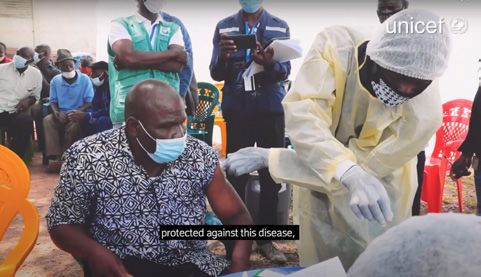
PRIMARY HEALTH CARE

STRENGTHENING                                          ENHANCING CAPACITY                                       UNICEF continues to focus on equity – to reach zero-
                                                                                                                dose children and communities that are often found in
IMPLEMENTATION                                         FOR HEALTH SYSTEM                                        remote rural, urban poor and conflict or fragile areas
                                                                                                                and humanitarian settings. UNICEF will continue to
RESEARCH                                               STRENGTHENING                                            leverage global and domestic resources to enable
                                                                                                                further investment in health systems, infrastructure
Implementation research is primarily designed to       UNICEF further expanded the capacity of its staff        and human resources for primary health care. In
improve application of health policies, programmes     on health systems strengthening through the              strengthening health systems, UNICEF will prioritize
and practice, based on evidence from field research.   University of Melbourne’s online course for 85           building the capacity of frontline workers, supply
Implementation research draws on identified            staff in 2020, bringing the total to 432 since 2017.     chains, the quality of care and digital health information
barriers, addresses priority questions of local        The online Massive Open Online Course (MOOC)             and data. The urgent need for flexible funding to
relevance, generates feasible recommendations          for partners was accessed and completed by over          support these efforts is more imperative now than ever.
in 'real-time' and underwrites policy and system       28,000 individuals including from government health
strengthening. This makes research integral to         departments, other UN agencies and NGOs.                 Whilst ensuring that children survive, in countries with
decision-making and strengthening primary health                                                                lower child mortality burdens, UNICEF will continue
care and health systems.                                                                                        to develop and scale up thrive programmes, including
                                                                                                                child development, disability, injury, non-communicable
From 2015 to 2020, UNICEF completed 40 projects
                                                       LOOKING AHEAD                                            disease, environmental pollution and climate change.
in over 25 high-burden countries, of which 24
projects in 11 countries have been evaluated for       Primary health care is fundamental to universal          UNICEF remains firmly committed to the realization of
impact to date. Supported programmes included          health care. The COVID-19 pandemic has highlighted       every child’s right to survive and thrive. Thematic funds
immunization (24), birth registration (4), nutrition   the importance of primary health care in the             remain essential, to enable UNICEF to deliver results
(2), enhanced child health days (3) HIV/AIDS (5) and   provision of affordable universal health care for all.   in this extraordinary context, and work towards the
maternal, newborn and child health in emergencies      As health services are restored, UNICEF is               2030 SDG targets and universal health coverage for all.
(2). Of the completed projects, approximately 67 per   committed to building back better. Amongst the
cent have been used to improve local policies and/     stark challenges lie opportunities to develop
or programmes for children, whereas in 50 per cent,    solutions that respond to the COVID-19 pandemic,
changes in health outcomes were observed.              whilst strengthening health systems for increased
                                                       resilience to future shocks, including those arising
                                                       from a changing climate.
The measures of implementation research success
used by UNICEF are: 1) use of implementation
research results for policy, programme and/or          Over recent years, UNICEF and partners have

                                                                                                                                                                           © UNICEF Serbia
practice change; 2) demonstrated impact on health      increased commitment and effort in supporting
outcomes such as coverage; 3) embedding of             primary health care systems and programme
implementation research into routine primary           integration. Resilient primary health care and
health care programmes.                                preparedness are critical components for the
                                                       continuation of life-saving health services.
                                                       UNICEF will continue to respond to emergencies                    Strengtheing the implementation of health policies in
                                                                                                                         five European countries to meet the complex health
                                                       in a way that both strengthens capacities and                     needs of refugee and migrant children and adolescents.
                                                       existing systems.

 7    Health results 2020
© UNICEF/UN0376887/Esiebo
At a settlement in Toro, Bauchi State, Nigeria, the Hard-to-reach (HRT) mobile medical team is consulting with clients. In Adamawa, Bauchi and Kebbi, the European Union and UNICEF have been supporting
the HRT mobile medical team providing expectant mothers and children healthcare services in communities that are located five kilometres from a primary health care facility and lack social amenities like
roads, clean water, schools, and electricity. This HRT strategy has brought a significant reduction in maternal and child morbidity in the 1,344 communities in Adamawa, Bauchi and Kebbi states.

                                                                                                                       UNICEF expresses its deep appreciation to its resource
                                                                                                                       partners for their support to health results in 2020, particularly
                                                                                                                       to those that were able to provide thematic funding. Thematic
                                                                                                                       funds are critical to ensuring holistic health programmes that
                                                                                                                       deliver sustainable results. UNICEF wishes to thank its many
                                                                                                                       partners at global, regional and country levels – including
                                                                         Published by UNICEF                           national and local governments, Gavi, other United Nations
                                                                         3 United Nations Plaza                        agencies, the private sector, civil society organizations and
                                                                         New York, NY 10017, USA                       academia – that have made these results possible.
                                                                         www.unicef.org/health
                                                                         © 2021                                        Link to the full report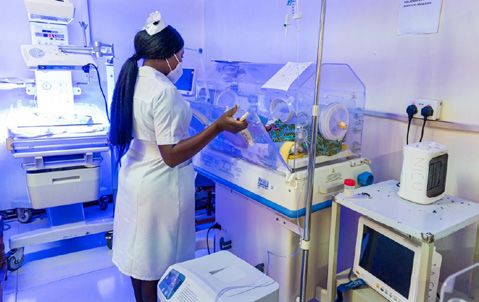
You can also read


