Health risk behaviors among university students: the role of outdoor sports and electronic sports - Emerald ...
←
→
Page content transcription
If your browser does not render page correctly, please read the page content below
The current issue and full text archive of this journal is available on Emerald Insight at:
                         https://www.emerald.com/insight/2632-279X.htm

       Health risk behaviors among                                                                                              Health risk
                                                                                                                                 behaviors
      university students: the role of                                                                                              among
                                                                                                                                  students
            outdoor sports and
             electronic sports
         Saima Anwar, Sadaf Noor and Muhammad Asrar-ul-Haq                                                                    Received 3 June 2021
                                                                                                                              Revised 17 July 2021
         COMSATS University Islamabad-Sahiwal Campus, Sahiwal, Pakistan                                                    Accepted 1 August 2021

Abstract
Purpose – Involvement of youth in electronic sports is increasing and outdoor sports are decreasing day by
day. It not only affects their health but also leads them towards noncommunicable diseases. Risk of
noncommunicable diseases is associated with physical inactivity and affects physical and mental health. It
results in different personal and social implications. Therefore, the purpose of this paper is to highlight the
importance of outdoor sports and risks of electronic sports for health.
Design/methodology/approach – The data for study is collected from 450 university students using
purposive sampling technique. In order to measure outdoor sports, a four items instrument developed by Simon
and Smoll (1974) is used. For electronic sports, instrument is adopted from Lemmens et al. (2009) and for health
of youth, instrument by Bailis et al. (2003) is used. After reliability and validity check, structural equation
modeling is used to analyze data.
Findings – The results reveal that perceived outdoor sports have significant positive impact on health,
whereas electronic sports have negative impact on youth health that lead them to certain noncommunicable
diseases. There is need to emphasize and encourage youth for outdoor sports and avoid indulging in esports
that may lead to addiction.
Practical implications – Electronic games have various risks for the development of syndromes among
younger generation. Awareness should be provided that physical activities are essential for healthy life and
how risky be the esports for their health. This study may be helpful for government as well to reduce
dependency of youth on technological devices and provide necessary recreation facilities to engage in. This
research study validates that outdoor sports have significantly positive impact on health of youth and it
reduces health related problems and destructive behaviors among youth.
Originality/value – Involvement of youth in electronic sports is increasing and outdoor sports are decreasing
day by day. It not only affects their health, but also leads them toward non-communicable diseases. The present
study examines the impact of esports and physical sports on youth health.
Keywords Outdoor sports, Electronic sports, Health, Youth, Pakistan
Paper type Research paper

1. Introduction
The progress, prosperity and future of any nation significantly depend on their youth
(Morgan and Parker, 2017). According to Asrar-ul-Haq (2015), 60% of population in Pakistan
lies under the age of 25 which shows its significance in the economic and social development
of the country. Health is necessary element for enhancing the performance and personality of
youth (Griffith et al., 2017). Sports activities are closely associated to physical and mental
health (Tsunoda et al., 2015; Vedøy, 2020; Wang et al., 2020). It is considered as foundation of

© Saima Anwar, Sadaf Noor and Muhammad Asrar-ul-Haq. Published in Journal of Humanities and
Applied Social Sciences. Published by Emerald Publishing Limited. This article is published under the
Creative Commons Attribution (CC BY 4.0) licence. Anyone may reproduce, distribute, translate and
                                                                                                                       Journal of Humanities and Applied
create derivative works of this article (for both commercial and non-commercial purposes), subject to full                                Social Sciences
attribution to the original publication and authors. The full terms of this licence may be seen at http://                   Emerald Publishing Limited
                                                                                                                                               2632-279X
creativecommons.org/licences/by/4.0/legalcode.                                                                           DOI 10.1108/JHASS-06-2021-0104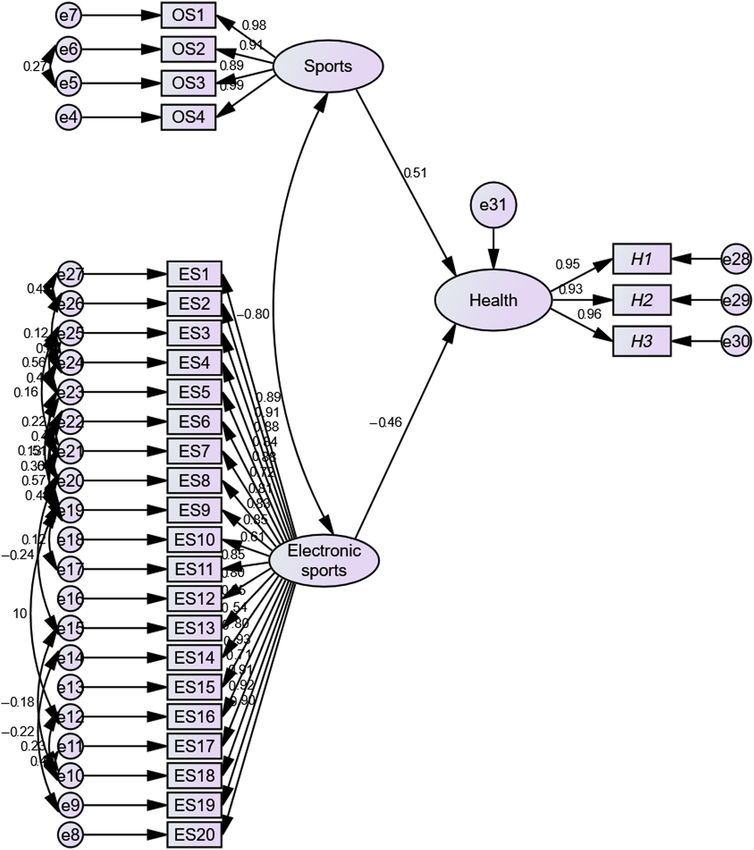
JHASS   learning that generate a healthy lifestyle, enhance life skills and inject positive character
        among youth (Abu Samah et al., 2017; Castagna et al., 2018). The involvement of young
        generation in sports improves their mental and cognitive abilities, enhances their academic
        performance, develops leadership skills, boosts their self-confidence and builds connection
        with nation (Haitao et al., 2021; Bean and Forneris, 2016; Santana et al., 2017). Lear et al. (2017)
        reported that outdoor sports activities are independently related to decrease the risk of
        mortality. Further, it overcomes the burden of non-communicable diseases i.e. depression,
        hypertension, sleep deprivation, mental illness, diabetes mellitus, chronic disorder, obesity
        and cancer.
            Technology is an important facet of modern life that has reduced physical activity of
        youth and influenced them towards activities with less physical efforts (Witt et al., 2011;
        Woessner et al., 2021). In particular, young generation has become addicted to technological
        devices. The popularity of electronic games is increasing among young generation and has
        changed the concept of sports (Jonasson and Thiborg, 2010; Chandrashekhar and Ravindra,
        2020). Excessive amount of screen time (ST) is the main cause of certain noncommunicable
        diseases (Hoare et al., 2016; Lee et al., 2015; Paudel et al., 2014; Ravikiran et al., 2014).
        It weakens physical social attraction (Curvers et al., 2018), and increases chances of premature
        death (Jenny et al., 2017). In past, the habit of playing games on electronic devices among
        youth has been favorite activity in Western society (Maras et al., 2015), but developing
        countries has no exception in this era (Khan and Burton, 2017). According to Pengpid et al.
        (2015), 80.6% risk of noncommunicable diseases among Pakistani youth is due to inactivity.
        In Pakistan, physically active adult population is only 22% (Anjum et al., 2013). According to
        Khan and Burton (2017), 84% of youth in Pakistan is suffering from depression due to higher
        level of dependency on screen time. Many studies have been conducted on poor mental health
        and physical inactivity among youth in developed countries (Asare and Danquah, 2015;
        Biddle and Asare, 2011; Hoare et al., 2016) with few exception in developing countries like
        Bangladesh (Khan and Burton, 2017; Pengpid et al., 2015). As the sixth populous country in
        the world (Asrar-ul-Haq, 2015), there is need to study physical inactivity, leisure screen times,
        and how it affects youth health in Pakistan (Khan and Burton, 2017).

        2. Literature review
        2.1 Outdoor sports
        Outdoor sports refer to involvement in outdoor activities which overcome health problems
        and enhance the individual performance (Hunt et al., 2010). Outdoor sports are essential for
        everyone to attain health benefits and reduce 50% health diseases among youth (Tenforde
        and Fredericson, 2011). According to Lundy and Trawick-Smith (2021), outdoor sports have
        positive impact on youth cognitive abilities and enhanced in an efficient way. Rothon et al.
        (2010) conducted study on adolescent of London and found that outdoor sports overcome the
        symptoms of depression. They were of the view that participation in sports activities should
        be deemed as important source of treating depression, anxiety and many other health
        problems. Furthermore, they also elucidated that outdoor sports activity of minimum
        30 minutes bring multiple benefits for mental and physical well-being of an individuals.

        2.2 Relationship between outdoor sports and health of youth
        Mark and Janssen (2008) suggested reducing screen base activities and involving in outdoor
        sports to overcome the risk of metabolic syndromes among youth. Also, Sugiyama et al.
        (2008) found that esports are significant predictor of obesity. Their findings revealed that
        chances of obesity are low among those who are actively involved in outdoor sports. Armour
        et al. (2013) stated that outdoor sports are internally associated with health and improved
performance. Marques et al. (2016) also demonstrated that involvements in outdoor sports Health risk
activities are helpful for continuous self-assessment and personality enhancement. It is behaviors
evident in literature that outdoor sports enhanced mental and cognitive abilities of youth and
helped them against non-communicable diseases (Reed et al., 2013). Sports activities
among
strengthen the muscular activity and enhance motor skills that influence young people to students
increase their efficiency in an efficient way (Stodden et al., 2014). Physical activities are
helpful to reduce the risk of lung cancer and chronic obstructive pulmonary diseases (Garcia-
Aymerich et al., 2007). Eime et al. (2013) studied the relationship between outdoor sports and
psychological and social health benefits. They suggest that outdoor sports activities are
equally important for youngsters and children. They are of the view that at least sports
activity of 60–75 minutes per day is necessary to overcome the stress of obesities (Ekelund
et al., 2016). According to Breslin et al. (2017), outdoor sports provide helpful guidelines for
youngsters to overcome their mental problems by indulging in healthy outdoor activities.
This is validated in many other studies that outdoor sports have numerous benefits for health
(Doull et al., 2018; Hardie Murphy et al., 2017; Mitra et al., 2017). However, there is still need to
examine this relationship in Pakistani context. Therefore, this is hypothesized that:
H1. Outdoor sports activities have significantly positive impact on youth health.
2.3 Electronic sports
Electronic sports defined as “a form of sports where the primary aspects of the sports are
facilitated by electronic system, the input of players and teams as well as the output of the
e-sports system are mediated by human-computer interfaces” (Hamari and Sjoblem, 2017).
Sedentary behaviors are strongly influence youth to connect electronic sports that highly
generate depression and increased other problems of health among them (Sund et al., 2011).
Wang et al. (2008) elucidated that those who playing electronic sports are become less
satisfied with their life. However, screens based activities (playing electronic games on
computers, laptops and smartphones) increased health problems among young generation
(Nuutinen et al., 2013).
2.4 Relationship between electronic sports and health of youth
Electronic sports increases violent behavior toward others and influence them to indulge with
unhealthy behavior that have severe effect on youth health (Wattanapisit et al., 2020).
The dependencies on electronic sports were strongly associated to poor physical health
(Carson and Janssen, 2011). Furthermore, electronic sports reduce self-confidence among
youngsters and minimized physical connection with others which increase loneliness among
them (Colwell and Kato, 2003). Scott (1995) explained that 85% of video games have hostile
effect on youth health and persuade them to misbehave with others. The electronic games
increases negative thoughts and unfriendly feeling toward their peers which leads them to
suffer with various psychological problems (Anderson and Dill, 2000) or non-communicable
diseases (Mistry and Puthussery, 2015). Moreover, addiction of electronic sports strongly
associated to sedentary behaviors that increased cardiovascular disease (Dooley, 2021) blood
pressure, depression (Goldfield et al., 2011) and risk of cancer among youngsters (Rehbein
et al., 2010). According to (Mathers et al., 2009), their study results indicated that 84% of youth
are addicted to playing electronic games in which 90% of boys and 75% of girls have poor
physical and mental health. Also, video games are related to increase cardiovascular disease
and metabolic syndrome such as high blood pressure, high fasting glucose, and high
triglycerides which have severe effect on youth health (Mark and Janssen, 2008). However, in
electronic sports a huge amount of literature available but hardly any literature is obtained
about electronic sports in developing countries like Pakistan. Based on the above literature,JHASS the existing research is trying to examine the impact of electronic sports on youth health in
division of Sahiwal, Punjab, Pakistan. Hence we proposed that:
H2. Electronic sports activities have significantly negative impact on youth health.
2.5 Theoretical framework
Theoretical framework is represented in Figure 1.
3. Method
The purpose of this section is to deliver complete explanation of the particular procedures
which were taken to discourse the research dilemma.
3.1 Participant and procedure
The data of this study collected from youngsters between the ages of 21–30 who were
interested to participate in games. In order to highlight the youth interest in outdoor sports
and electronic sports, we specifically target graduate and postgraduate students of public
and private universities in Sahiwal, Pakistan, through self-administered questionnaire. Total
550 questionnaires were distributed through purposeful sampling technique and 500
responses were collected in total. After excluding, missing values questionnaire, the valid
responses were 450 with response rate 85%. For the distribution of questionnaires, personal
visits were conducted with the permission of head of institute at private and public
universities of Sahiwal.
3.2 Measures
There were two independent variables (outdoor sports and electronic sports) and one
independent variable (health). A five-point Likert scale was used to measure respondents’
interest, addiction and perceived changes in their health or social relations. In order to
measure outdoor sports, a four items instrument developed by Simon and Smoll (1974) is
used. For measurement of electronic sports, instrument is adopted from Lemmens et al. (2009).
This is further classified into seven subfactors with twenty items. Subfactors include
salience, conflicts, mood modification, tolerance, withdrawal, relapse and problems. For
health of youth, instrument by Bailis et al. (2003) is used.
3.3 Statistical analysis
The analysis is conducted by using SPSS 22.0 to analyze the relationship of outdoor and
electronic sports with youth health. For verification of data the reliability and validity tests
were done which reflect that data is reliable. The Pearson correlation coefficient has used to
measure the association between variables. Through skewness and kurtosis, the data
Outdoor Sports
Health of Youth
Figure 1.
Theoretical framework
Electronic Sportsnormality has been checked and values are within the range of ±2. Confirmatory factor Health risk
analysis and structural model are fit through AMOS 22.0. behaviors
among
4. Results students
4.1 Demographic information
The sample consist of 450 Graduate and postgraduate students. The demographics results
(Table 1) show that the percentage of male who participates in this survey is 55% (246) while
there are 204 females who show their interest to participate in games. It represent that the
male participation were more than female. The results showed that 58% respondents are
from of 21–26 and remaining 42% are from 26 to 30 age groups.
Thirdly if we discuss the education level 252 are graduated students and 152 are post-
graduate students and their Educational Institute are also discussed that 36.4% are private
institute who participate in this survey and 63.6% are government institute. In fact their cities
also mention that 70% data collected in Sahiwal and 29.3% data were collect from Pakpattan
city. Through bar chart it were confirmed that participation of youth in outdoor sports are
only 30% and 60% of youth are interested to participate in electronic games. These 60% of
youth show no interest to participate in any outdoor sports.
4.2 Confirmatory factor analysis measurement model
Factor analysis has two types, exploratory and confirmatory factor analysis. We carried
confirmatory factor analysis because in this study the adapted questionnaire were used. CFA
also useful for knowing about the reliability and validity of the measurement model.
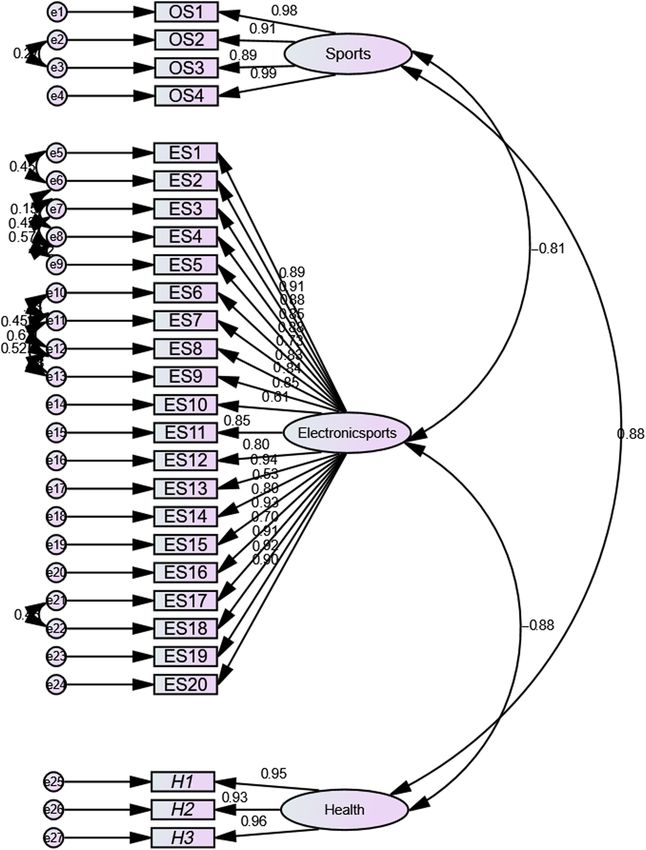
Measurement model is shown in Figure 2 and model fit indices (RMSEA 5 0.07, RMR 5 0.04,
CFI 5 0.96, TLI 5 0.96 and CMIN/DF 5 2.2) indicated that model is best fit. The factor
loading of each item ranged from 0.52 to 0.98 which is above the threshold value. Table 2
indicates the factor loading score, composite reliability (CR) and average variance
extracted (AVE).
4.3 Reliability and validity
Reliability of variables is checked through composite reliability (CR) and Cronbach’s (α).
The value of Cronbach’s alpha (Table 2) for outdoor sports, electronic sports and health are
Frequency Percent
Gender Male 246 54.7
Female 204 45.3
Total 450 100.0
Age(in year) 21–26 261 58.0
26–30 189 42.0
Total 450 100.0
Education Graduated student 252 56.0
Postgraduated 198 44.0
Total 450 100.0
Educational Institute Private 164 36.4
Government 286 63.6
Total 450 100.0
City Sahiwal 318 70.7
Pakpattan 132 29.3 Table 1.
Total 450 100.0 Demographic profileJHASS
Figure 2.
Measurement model
0.89, 0.97 and 0.96 respectively. The value of CR is greater than 0.7 for each variable as shown
in Table 2. The validity can also be proved with the help of convergent and discriminant
validity. The value of average variance extracted (AVE) score higher than 0.5 which clearly
demonstrate that convergent validity is achieved for each variable (Fornell and Larcker,
1981). Hence, discriminant validity is determined through square root of AVE. The square
root of the AVE is greater than the square of the inner scale correlation and discriminant
validity is also achieved.Items Estimate AVE CR A
Health risk
behaviors
HI 0.951 among
H2 0.962
H3 0.962 0.895774 0.962654 0.961 students
OS1 0.985
0S2 0.913
0S3 0.885
0S4 0.988 0.890791 0.970197 0.891
ES1 0.887
ES2 0.909
ES3 0.878
ES4 0.846
ES5 0.883
ES6 0.729
ES7 0.828
ES8 0.838
ES9 0.846
ES10 0.615
ES11 0.852
ES12 0.802
ES13 0.941
ES14 0.529
ES15 0.798
ES16 0.93
ES17 0.703
ES18 0.91 Table 2.
ES19 0.916 Factor loadings and
ES20 0.899 0.694912 0.97818 0.972 AVE values
4.4 Correlation analysis
Correlation analysis was observed with the support of discriminant validity of each measure
that verified its uni-dimensionality through confirmatory analysis. Table 3 represents the
results of Pearson correlation. Outdoor sports positively correlated with health (r 5 0.854,
p 5 0.000) while electronic sports negatively associated with health (r 5 0.8.53, p 5 0.000).
Multicollinearity is analyzed through variance inflation factor (VIF) and the value of VIF is
less than threshold value.
4.5 SEM results for the structural model and hypotheses testing
The hypothesized theoretical model was analyzed through structure equation modeling
(SEM). SEM measures the degree and strength of association between the observed variables
more correctly than other statistics (Byrne, 2016). The value of fit indices (CMIN/DF 5 2.3,
RMR 5 0.056, CFI 5 0.97, RMSEA 5 0.054 and NFI 5 0.96) show that model is best fit, as all
values are within the recommended range.
0S ES H
OS (outdoor sports) 1
ES 0.791*** 1
H 0.854*** 0.853*** 1 Table 3.
Note(s): *** correlation is significant at the 0.001 level (2 tailed) Correlation analysisJHASS Table 4 provides the results of structural model given below. It shows that outdoor sports
has positive significant effect on youth health (Estimates 5 0.51, SE 5 0.022, CR 5 14.119,
P-value 5 0.001). Hence, H1 is accepted. On the other hand, the result also reveal that
electronic sports has significantly negative impact on youth health (Estimate 5 0.46,
SE 5 0.032, CR 5 12.336, P-value 5 0.001). So, H2 is also accepted. The diagram of the
structural model is presented in Figure 3.
5. Discussion
The risk of noncommunicable diseases is prevalent among younger generation due to screen
devices and physical inactivity. From this perspective, the education about health is very
important for youth that they should take their life seriously and survive happily. Hence, this
paper has focused the impact of outdoor and electronic sports on youth health. This study
finding demonstrates a clear picture about the health status of youth from participation in
outdoor sports and electronic sports. The results of present study suggest that youth who
participate in outdoors sports have positive health status, which is in accordance with the
findings of past studies (Dodge and Lambert, 2009; Hall et al., 2016; Torstveit et al., 2018;
Belanger et al., 2019; Moral-Garcıa et al., 2020; Bjørnar a et al., 2021; Miguet et al., 2021).
The present results elucidate that the participation of youth in electronic games had negative
impact on their health. It is evident that electronic sports causes sleep deprivation, depression
and complex social relations (Mentzoni et al., 2011; Witt et al., 2011; Paulus et al., 2018; Chang
and Lin, 2019; Wong et al., 2020; Stavropoulos et al., 2021; Wang et al., 2021; Koban et al., 2021;
Seton and Fitzgerald, 2021). Outdoor sports in Sahiwal are not only traditional and cultural
reflections in Sahiwal, but are healthy for life. It is believed that traditional games have its
own beauty that lead all people together and create good atmosphere within surroundings.
Hence, this study findings provide an insight to the practitioners in sports sector of Pakistan
to understand their consumer preferences because sport industry has also face a challenge of
market environment in the form of most demanding consumer that attracted by electronic
sports in Pakistan. This study helps them to create marketing policies and advertise their
products with such attractive messages that are relevant to healthy and happy life. Outdoor
sports activities protect young generation from non-communicable diseases and unhealthy
behavior and persuade them to become physically fit and healthy. There are certain
implications for health care sector in Pakistan also because youth involvement in outdoor
sports brings positive change in their health. The health systems must be careful for people
because sedentary lifestyle represents serious public issue that spoiled youth health directly
and indirectly. Through these electronic games, various potential problems occur for the
development syndromes among younger generation. The health system of Pakistan must
provide awareness from younger generation that physical activities are essential for healthy
life. Hence, this study is particularly important and helpful for Pakistani youth as huge
dependency of youth on technological devices is not only increasing the rate of depression but
also lead them toward mortality. Electronic games also influence loneliness among them and
limit face to face interaction between their families and friends when they spend much of their
time to playing these video games. The existing study provides an opportunity for youth to
Coefficient path Estimate SE CR P
HealthHealth risk
behaviors
among
students
Figure 3.
Structure model
recognize that importance of outdoor sports for their health. This study may be helpful for
Government also to reduce dependency of youth on technological devices and provide
necessary recreation facilities to engage in. They should also promote healthy activities
among their younger generation that they utilize their functional capabilities and ultimately
enhance their mental competences. This research study validates that outdoor sports have
significantly positive impact on health of youth and it reduces health related problems and
destructive behaviors among youth.
6. Conclusion
To conclude, this paper extended the discussion in specific context about the impact of
outdoor and electronic sports on youth health. Health is considered as key driver forJHASS development and capacity building of youth. Pakistan is a developing country with more
than fifty percent young population. If particular attention is given to young generation,
many socio economic challenges of the country will be automatically addressed.
References
Abu Samah, I.H., Abd Rashid, I.M., Abashah, A. and Hassan Basri, H. (2017), “Youth’s sport
participation and social character in Malaysia”, International Journal of Information, Business
and Management, Vol. 9 No. 2, pp. 161-169.
Anderson, C.A. and Dill, K.E. (2000), “Video games and aggressive thoughts, feelings, and behavior in
the laboratory and in life”, Journal of Personality and Social Psychology, Vol. 78 No. 4,
pp. 772-790, doi: 10.1037//O022-3514.78.4.772.
Anjum, H., Soomro, J.A. and Khalid, S. (2013), “Food behaviors and youth obesity in Pakistan”, Acta
Scientiarum - Health Science, Vol. 35 No. 2, pp. 223-229, doi: 10.4025/actascihealthsci.
v35i2.11885.
Armour, K., Sandford, R. and Duncombe, R. (2013), “Positive youth development and physical
activity/sport interventions: mechanisms leading to sustained impact”, Physical Education and
Sport Pedagogy, Vol. 18 No. 3, pp. 256-281, doi: 10.1080/17408989.2012.666791.
Asare, M. and Danquah, S.A. (2015), “The relationship between physical activity, sedentary behaviour
and mental health in Ghanaian adolescents”, Child and Adolescent Psychiatry and Mental
Health, Vol. 9 No. 1, pp. 1-8, doi: 10.1186/s13034-015-0043-x.
Asrar-ul-Haq, M. (2015), “Human resource development in Pakistan: evolution, trends and challenges”,
Human Resource Development International, Vol. 18 No. 1, pp. 97-104.
Bailis, D.S., Segall, A. and Chipperfield, J.G. (2003), “Two views of self-rated general health status”,
Social Science and Medicine, Vol. 56 No. 2, pp. 203-217, doi: 10.1016/S0277-9536(02)00020-5.
Belanger, M., Gallant, F., Dore, I., O’Loughlin, J.L., Sylvestre, M.P., Abi Nader, P., Larouche, R.,
Gunnell, K. and Sabiston, C.M. (2019), “Physical activity mediates the relationship between
outdoor time and mental health”, Preventive Medicine Reports, Vol. 16, p. 101006.
Bean, C. and Forneris, T. (2016), “Examining the importance of intentionally structuring the youth
sport context to facilitate positive youth development”, Journal of Applied Sport Psychology,
Vol. 28 No. 4, pp. 410-425, doi: 10.1080/10413200.2016.1164764.
Biddle, S.J.H. and Asare, M. (2011), “Physical activity and mental health in children and adolescents: a
review of reviews”, British Journal of Sports Medicine, Vol. 45 No. 11, pp. 886-895, doi: 10.1136/
bjsports-2011-090185.
Bjørnar
a, H.B., Westergren, T., Sejersted, E., Torstveit, M.K., Hansen, B.H., Berntsen, S. and Bere, E.
(2021), “Does organized sports participation in childhood and adolescence positively influence
health? A review of reviews”, Preventive Medicine Reports, Vol. 23, pp. 1-9.
Breslin, G., Haughey, T.J., Donnelly, P., Kearney, C. and Prentice, G. (2017), “Promoting mental health
awareness in sport clubs”, Journal of Public Mental Health, Vol. 16 No. 2, pp. 55-62, doi: 10.1108/
JPMH-08-2016-0040.
Byrne, B.M. (2016), Structural Equation Modeling with AMOS: Basic Concepts, Applications, and
Programming, Routledge, New York.
Carson, V. and Janssen, I. (2011), “Volume, patterns, and types of sedentary behavior and cardio-
metabolic health in children and adolescents: a cross-sectional study”, BMC Public Health,
Vol. 11, doi: 10.1186/1471-2458-11-274.
Castagna, C., de Sousa, M., Krustrup, P. and Kirkendall, D.T. (2018), “Recreational team sports: the
motivational medicine”, Journal of Sport and Health Science, Vol. 7 No. 2, pp. 129-131, doi: 10.
1016/j.jshs.2017.12.001.
Chandrashekhar, D.M. and Ravindra, P.N. (2020), “Impact of video-games on social intuition among
teenagers”, International Journal of Physiology, Vol. 8 No. 2, pp. 24-28.Chang, S.M. and Lin, S.S. (2019), “Online gaming motive profiles in late adolescence and the related Health risk
longitudinal development of stress, depression, and problematic internet use”, Computers and
Education, Vol. 135, pp. 123-137. behaviors
Colwell, J. and Kato, M. (2003), “Short Note Investigation of the relationship between social isolation ,
among
self-esteem , aggression and computer game play in Japanese adolescents”, Asian Journal of students
Social Psychology, Vol. 6, pp. 149-158, doi: 10.1111/1467-839X.t01-1-00017.
Curvers, N., Pavlova, M., Hajema, K.J., Groot, W. and Angeli, F. (2018), “Social participation among
older adults (55þ): results of a survey in the region of South Limburg in The Netherlands”,
Health and Social Care in the Community, Vol. 26 No. 1, pp. e85-e93, doi: 10.1111/hsc.12480.
Dodge, T. and Lambert, S.F. (2009), “Positive self-beliefs as a mediator of the relationship between
adolescents’ sports participation and health in young adulthood”, Journal of Youth and
Adolescence, Vol. 38 No. 6, pp. 813-825, doi: 10.1007/s10964-008-9371-y.
Dooley, B.D. (2021), College eSports: Challenges in Regulating a New League, SAGE Publications, SAGE
Business Cases Originals, doi: 10.4135/9781529759594.
Doull, M., Watson, R.J., Smith, A., Homma, Y. and Saewyc, E. (2018), “Are we leveling the playing
field? Trends and disparities in sports participation among sexual minority youth in
Canada”, Journal of Sport and Health Science, Vol. 7 No. 2, pp. 218-226, doi: 10.1016/j.jshs.
2016.10.006.
Eime, R.M., Young, J.A., Harvey, J.T., Charity, M.J. and Payne, W.R. (2013), “A systematic review of the
psychological and social benefits of participation in sport for children and adolescents:
informing development of a conceptual model of health through sport”, The International
Journal of Behavioral Nutrition and Physical Activity, Vol. 10 No. 1, p. 98, doi: 10.1186/1479-5868-
10-98.
Ekelund, U., Steene-Johannessen, J., Brown, W.J., Fagerland, M.W., Owen, N., Powell, K.E., Bauman, A.
and Lee, I.M. (2016), “Does physical activity attenuate, or even eliminate, the detrimental
association of sitting time with mortality? A harmonised meta-analysis of data from more than
1 million men and women”, The Lancet, Vol. 388 No. 10051, pp. 1302-1310, doi: 10.1016/S0140-
6736(16)30370-1.
Fornell, C. and Larcker, D.F. (1981), “Evaluating structural equation models with unobservable
variables and measurement error”, Journal of Marketing Research, Vol. 18 No. 1, p. 39, doi: 10.
2307/3151312.
Garcia-Aymerich, J., Lange, P., Benet, M., Schnohr, P. and Anto, J.M. (2007), “Regular physical activity
modifies smoking-related lung function decline and reduces risk of chronic obstructive
pulmonary disease: a population-based cohort study”, American Journal of Respiratory and
Critical Care Medicine, Vol. 175 No. 5, pp. 458-463, doi: 10.1164/rccm.200607-896OC.
Goldfield, G.S., Kenny, G.P., Hadjiyannakis, S., Phillips, P., Alberga, A.S., Saunders, T.J. and Sigal, R.J.
(2011), “Video game playing is independently associated with blood pressure and lipids in
overweight and obese adolescents”, PLoS ONE, Vol. 6 No. 11, pp. 8-13, doi: 10.1371/journal.
pone.0026643.
Griffith, D.M., Cornish, E.K., Bergner, E.M., Bruce, M.A. and Beech, B.M. (2017), “Health is the ability
to manage yourself without help: how older African American men define health and successful
aging”, The Journals of Gerontology: Series B, Vol. 20 No. 0, pp. 185-196, doi: 10.1093/geronb/
gbx075.
Haitao, H.A.O., Sbeih, A. and Shibly, F.H.A. (2021), “Physical education and its role in improving the
health of college students by active participation and optimization by DEEP learning”,
Aggression and Violent Behavior. doi: 10.1016/j.avb.2021.101628.
Hall, S., McKinstry, C. and Hyett, N. (2016), “Youth perceptions of positive mental health”, British
Journal of Occupational Therapy, Vol. 79 No. 8, pp. 475-483, doi: 10.1177/0308022616632775.
Hamari, J. and Sjoblem, M. (2017), “What is eSports and why do people watch it?”, Internet Research,
Vol. 27 No. 2, pp. 233-255, doi: 10.1108/IntR-04-2016-0085.JHASS Hardie Murphy, M., Rowe, D.A. and Woods, C.B. (2017), “Impact of physical activity domains on
subsequent physical activity in youth: a 5-year longitudinal study”, Journal of Sports Sciences,
Vol. 35 No. 3, pp. 262-268, doi: 10.1080/02640414.2016.1161219.
Hoare, E., Milton, K., Foster, C. and Allender, S. (2016), “The associations between sedentary
behaviour and mental health among adolescents: a systematic review”, International Journal of
Behavioral Nutrition and Physical Activity, Vol. 13 No. 1, p. 108, doi: 10.1186/s12966-016-0432-4.
Hunt, K., Ford, G. and Mutrie, N. (2010), “Is sport for all? Exercise and physical activity patterns in
early and late middle age in the West of Scotland”, Health Education, Vol. 101 No. 4,
pp. 151-158, doi: 10.1108/09654280110398725.
Jenny, S.E., Manning, R.D., Keiper, M.C. and Olrich, T.W. (2017), “Virtual(ly) athletes: where eSports fit
within the definition of sport”, Quest, Vol. 69 No. 1, pp. 1-18, doi: 10.1080/00336297.2016.
1144517.
Jonasson, K. and Thiborg, J. (2010), “Electronic sport and its impact on future sport”, Sport in Society,
Vol. 13 No. 2, pp. 287-299, doi: 10.1080/17430430903522996.
Khan, A. and Burton, N.W. (2017), “Is physical inactivity associated with depressive symptoms among
adolescents with high screen time? Evidence from a developing country”, Mental Health and
Physical Activity, Vol. 12, pp. 94-99, doi: 10.1016/j.mhpa.2017.03.001.
Koban, K., Biehl, J., Bornemeier, J. and Ohler, P. (2021), “Compensatory video gaming. Gaming
behaviours and adverse outcomes and the moderating role of stress, social interaction
anxiety, and loneliness”, Behaviour and Information Technology. doi: 10.1080/0144929X.2021.
1946154.
Lear, S.A., Hu, W., Rangarajan, S., Gasevic, D., Leong, D., Iqbal, R. and Yusuf, S. (2017), “The effect of
physical activity on mortality and cardiovascular disease in 130 000 people from 17 high-
income, middle-income, and low-income countries: the PURE study”, The Lancet, Vol. 6736
No. 17, pp. 1-12, doi: 10.1016/S0140-6736(17)31634-3.
Lee, S.T., Wong, J.E., Shanita, S.N., Ismail, M.N., Deurenberg, P. and Poh, B.K. (2015), “Daily physical
activity and screen time, but not other sedentary activities, are associated with measures of
obesity during childhood”, International Journal of Environmental Research and Public Health,
Vol. 12 No. 1, pp. 146-161, doi: 10.3390/ijerph120100146.
Lemmens, J.S., Valkenburg, P.M. and Peter, J. (2009), “Development and validation of a game addiction
scale for adolescents development and validation of a game”, Media Psychology ISSN, Vol. 3269,
pp. 77-95, doi: 10.1080/15213260802669458.
Lundy, A. and Trawick-Smith, J. (2021), “Effects of active outdoor play on preschool children’s on-task
classroom behavior”, Early Childhood Education Journal, Vol. 49 No. 3, pp. 463-471.
Maras, D., Flament, M.F., Murray, M., Buchholz, A., Henderson, K.A., Obeid, N. and Goldfield, G.S.
(2015), “Screeen time is associated with depression and anxiety in Canadian youth”, Preventive
Medicine, Vol. 73, pp. 133-138, doi: 10.1016/j.ypmed.2015.01.029.
Mark, A.E. and Janssen, I. (2008), “Relationship between screen time and metabolic syndrome in
adolescents”, Journal of Public Health, Vol. 30 No. 2, pp. 153-160, doi: 10.1093/pubmed/fdn022.
Marques, A., Ekelund, U. and Sardinha, L.B. (2016), “Associations between organized sports
participation and objectively measured physical activity, sedentary time and weight status in
youth”, Journal of Science and Medicine in Sport, Vol. 19 No. 2, pp. 154-157, doi: 10.1016/j.jsams.
2015.02.007.
Mathers, M., Canterford, L., Olds, T., Hesketh, K., Ridley, K. and Wake, M. (2009), “Electronic media
use and adolescent health and well-being: cross-sectional community study”, Academic
Pediatrics, Vol. 9 No. 5, pp. 307-314, doi: 10.1016/j.acap.2009.04.003.
Mentzoni, R.A., Brunborg, G.S., Molde, H., Myrseth, H., Skouverøe, K.J.M., Hetland, J. and Pallesen, S.
(2011), “Problematic video game use: estimated prevalence and associations with mental and
physical health”, Cyberpsychology, Behavior, and Social Networking, Vol. 14 No. 10, pp. 591-596,
doi: 10.1089/cyber.2010.0260.Miguet, M., Venetis, S., Rukh, G., Lind, L. and Schi€oth, H.B. (2021), “Time spent outdoors and risk of Health risk
myocardial infarction and stroke in middle and old aged adults: results from the UK Biobank
prospective cohort”, Environmental Research, Vol. 199, pp. 1-7. behaviors
Mistry, S.K. and Puthussery, S. (2015), “Risk factors of overweight and obesity in childhood and
among
adolescence in South Asian countries: a systematic review of the evidence”, Public Health, students
Vol. 129 No. 3, pp. 200-209, doi: 10.1016/j.puhe.2014.12.004.
Mitra, R., Cantello, I.D., Buliung, R.N. and Faulkner, G.E.J. (2017), “‘Children ^aVTM s activity-
transportation lifestyles, physical activity levels and social-ecological correlates in Toronto,
Canada”, Journal of Transport and Health, Vol. 6, pp. 289-298, doi: 10.1016/j.jth.2017.03.010.
Moral-Garcıa, J.E., Agraso-Lopez, A.D., Ramos-Morcillo, A.J., Jimenez, A. and Jimenez-Eguizabal, A.
(2020), “The influence of physical activity, diet, weight status and substance abuse on students’
self-perceived health”, International Journal of Environmental Research and Public Health,
Vol. 17 No. 4, pp. 1-14.
Morgan, H. and Parker, A. (2017), “Generating recognition, acceptance and social inclusion in
marginalised youth populations: the potential of sports-based interventions”, Journal of Youth
Studies, Vol. 20 No. 8, pp. 1028-1043, doi: 10.1080/13676261.2017.1305100.
Nuutinen, T., Ray, C. and Roos, E. (2013), “Do computer use, TV viewing, and the presence of the
media in the bedroom predict school-aged children’s sleep habits in a longitudinal study?”,
BMC Public Health, Vol. 13, pp. 1-8, doi: 10.1186/1471-2458-13-684.
Paudel, S., Subedi, N., Bhandari, R., Bastola, R., Niroula, R. and Poudyal, A.K. (2014), “Estimation of
leisure time physical activity and sedentary behaviour among school adolescents in Nepal”,
BMC Public Health, Vol. 14, p. 637, doi: 10.1186/1471-2458-14-637.
Paulus, F.W., Ohmann, S., Von Gontard, A. and Popow, C. (2018), “Internet gaming disorder in
children and adolescents: a systematic review”, Developmental Medicine and Child Neurology,
Vol. 60 No. 7, pp. 645-659.
Pengpid, S., Peltzer, K., Kassean, H.K., Tsala Tsala, J.P., Sychareun, V. and M€
uller-Riemenschneider, F.
(2015), “Physical inactivity and associated factors among university students in 23 low-, middle-
and high-income countries”, International Journal of Public Health, Vol. 60 No. 5, pp. 539-549,
doi: 10.1007/s00038-015-0680-0.
Ravikiran, S.R., Baliga, B.S., Jain, A. and Kotian, M.S. (2014), “Factors influencing the television
viewing practices of Indian children”, Indian Journal of Pediatrics, Vol. 81 No. 2, pp. 114-119,
doi: 10.1007/s12098-013-1164-y.
Reed, J.A., Maslow, A.L., Long, S. and Hughey, M. (2013), “Examining the impact of 45 minutes of
daily physical education on cognitive ability, fitness performance, and body composition
of African American youth”, Journal of Physical Activity and Health, Vol. 10 No. 2, pp. 185-197,
doi: 10.1123/jpah.10.2.185.
Rehbein, F., Psych, G., Kleimann, M., Mediasci, G. and Mo, T. (2010), “Prevalence and risk factors of
video game dependency in adolescence: results of a German nationwide survey”,
Cyberpsychology, Behavior, and Social Networking, Vol. 13, doi: 10.1089/cyber.2009.0227.
Rothon, C., Edwards, P., Bhui, K., Viner, R.M., Taylor, S. and Stansfeld, S.A. (2010), “Physical activity
and depressive symptoms in adolescents: a prospective study”, BMC Medicine, Vol. 8, pp. 1-9,
doi: 10.1186/1741-7015-8-32.
Santana, C.C.A., Azevedo, L.B., Cattuzzo, M.T., Hill, J.O., Andrade, L.P. and Prado, W.L. (2017),
“Physical fitness and academic performance in youth: a systematic review”, Scandinavian
Journal of Medicine and Science in Sports, Vol. 27 No. 6, pp. 579-603, doi: 10.1111/
sms.12773.
Scott, D. (1995), “The effect of video games on feelings of aggression”, The Journal of Psychology,
Vol. 129 No. 2, pp. 121-132.
Seton, C. and Fitzgerald, D.A. (2021), “Chronic sleep deprivation in teenagers: practical ways to help”,
Paediatric Respiratory Reviews. doi: 10.1016/j.prrv.2021.05.001.JHASS Simon, J. and Smoll, F. (1974), “An instrument for assessing children’s attitudes toward physical
activity”, Research Quarterly, Vol. 43 No. 4, pp. 407-415, doi: 10.1080/10671315.1974.
10615288.
Stavropoulos, V., Vassallo, J., Burleigh, T.L., Gomez, R. and Carras, M.C. (2021), “The role of internet
gaming in the association between anxiety and depression: a preliminary cross-sectional
study”, Asia-Pacific Psychiatry. doi: 10.1111/appy.12474.
Stodden, D.F., Gao, Z., Goodway, J.D. and Langendorfer, S.J. (2014), “Dynamic relationships between
motor skill competence and health-related fitness in youth”, Pediatric Exercise Science, Vol. 26
No. 3, pp. 231-241, doi: 10.1123/pes.2013-0027.
Sugiyama, T., Healy, G.N., Dunstan, D.W., Salmon, J. and Owen, N. (2008), “Joint associations of
multiple leisure-time sedentary behaviours and physical activity with obesity in Australian
adults”, International Journal of Behavioral Nutrition and Physical Activity, Vol. 6, pp. 1-6,
doi: 10.1186/1479-Received.
Sund, A.M., Larsson, B. and Wichstrøm, L. (2011), “Role of physical and sedentary activities in the
development of depressive symptoms in early adolescence”, Social Psychiatry and Psychiatric
Epidemiology, Vol. 46 No. 5, pp. 431-441, doi: 10.1007/s00127-010-0208-0.
Tenforde, A.S. and Fredericson, M. (2011), “Influence of sports participation on bone health in the
young athlete: a review of the literature”, PM&R, Vol. 3 No. 9, pp. 861-867, doi: 10.1016/j.pmrj.
2011.05.019.
Torstveit, M.K., Johansen, B.T., Haugland, S.H. and Stea, T.H. (2018), “Participation in organized
sports is associated with decreased likelihood of unhealthy lifestyle habits in adolescents”,
Scandinavian Journal of Medicine and Science in Sports, Vol. 28 No. 11, pp. 2384-2396.
Tsunoda, K., Kitano, N., Kai, Y., Tsuji, T., Soma, Y., Jindo, T. and Okura, T. (2015), “Transportation
mode usage and physical, mental and social functions in older Japanese adults”, Journal of
Transport and Health, Vol. 2 No. 1, pp. 44-49, doi: 10.1016/j.jth.2014.10.003.
Vedøy, I.B., Anderssen, S.A., Tjomsland, H.E., Skulberg, K.R. and Thurston, M. (2020), “Physical
activity, mental health and academic achievement: a cross-sectional study of Norwegian
adolescents”, Mental Health and Physical Activity, Vol. 18, pp. 1-7, doi: 10.1016/j.mhpa.2020.
100322.
Wang, S.T.E., Chen, S.L.L., Lin, Y.C.J. and Wang, M.C.H. (2008), “The relationship between leisure
satisfaction and life satisfaction of adolescents concerning online games”, Adolesence, Vol. 169,
pp. 177-184, available at: https://www.researchgate.net/publication/5405551.
Wang, S., Mak, H.W. and Fancourt, D. (2020), “Arts, mental distress, mental health functioning and
life satisfaction: fixed-effects analyses of a nationally-representative panel study”, BMC Public
Health, Vol. 20 No. 1, pp. 1-9.
Wang, Q., Mati, K. and Cai, Y. (2021), “The link between problematic internet use, problematic gaming,
and psychological distress: does sleep quality matter?”, BMC Psychiatry, Vol. 21 No. 1, pp. 1-11.
Wattanapisit, A., Wattanapisit, S. and Wongsiri, S. (2020), “Public health perspectives on eSports”,
Public Health Reports, Vol. 135 No. 3, pp. 295-298.
Witt, E.A., Massman, A.J. and Jackson, L.A. (2011), “Computers in human behavior trends in youth’s
videogame playing , overall computer use , and communication technology use: the impact of
self-esteem and the big five personality factors”, Computers in Human Behavior, Vol. 27 No. 2,
pp. 763-769, doi: 10.1016/j.chb.2010.10.025.
Woessner, M.N., Tacey, A., Levinger-Limor, A., Parker, A.G., Levinger, P. and Levinger, I. (2021), “The
evolution of technology and physical inactivity: the good, the bad, and the way forward”,
Frontiers in Public Health, Vol. 9, pp. 1-7.
Wong, H.Y., Mo, H.Y., Potenza, M.N., Chan, M.N.M., Lau, W.M., Chui, T.K., Pakpour, A.H. and Lin, C.Y.
(2020), “Relationships between severity of internet gaming disorder, severity of problematic
social media use, sleep quality and psychological distress”, International Journal of
Environmental Research and Public Health, Vol. 17 No. 6, pp. 1-13.Further reading Health risk
Schutte, N.S., Malouff, J.M., Post-Gorden, J.C. and Rodasta, A.L. (1988), “Effects of playing video games behaviors
on children’s and other behaviors”, Journal of Applied Social Psychology, Vol. 18, pp. 454-460,
doi: 10.1111/j.1559-1816.1988.tb00028.x.
among
students
Corresponding author
Muhammad Asrar-ul-Haq can be contacted at: asrar.uiuc@gmail.com
For instructions on how to order reprints of this article, please visit our website:
www.emeraldgrouppublishing.com/licensing/reprints.htm
Or contact us for further details: permissions@emeraldinsight.comYou can also read


