How demand for meat and dairy is driving violence against communities in Brazil
←
→
Page content transcription
If your browser does not render page correctly, please read the page content below
UNDER
 FIRE
How demand for meat and dairy
  is driving violence against
     communities in Brazil
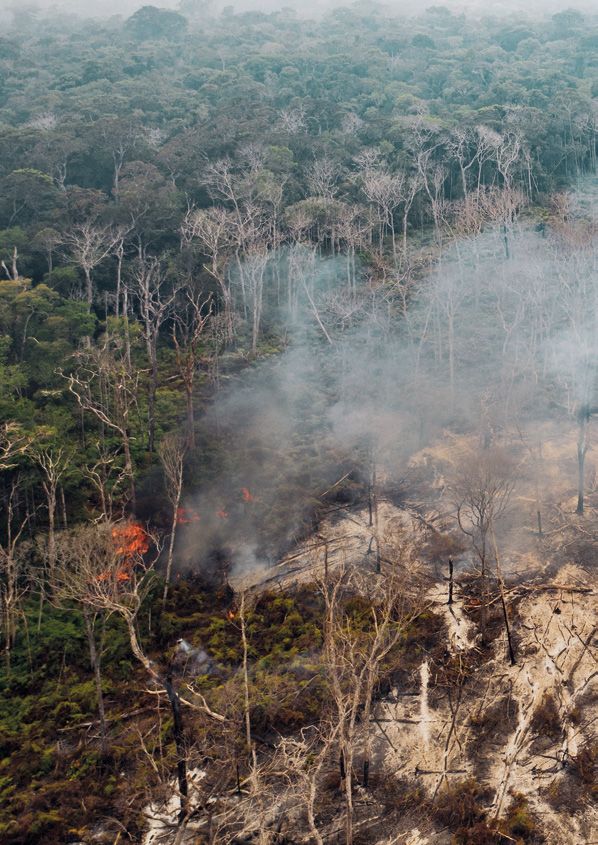
24 August 2019, Rondônia, 8°32’15.359” S 63°12’35.34” W:
Fires burning amongst the trees in the haze near
Candeiras do Jamari in the state of Rondônia, Brazil.
©Moriyama/Greenpeace

b                                                          UNDER FIRE
UNDER FIRE c
‘Globally, we have not made progress
  toward ending the loss of natural
  forests. Particularly concerning is the
  increasing rate of loss of irreplaceable
  primary forests. … Since the [New York
  Declaration on Forests] was endorsed
  [in September 2014], average annual
  humid tropical primary forest loss
  has accelerated by 44%. … Serious
  corrective action is needed. Efforts to
  date have been inadequate to achieve
  systemic change. The private sector is
  not on track to eliminate deforestation
  from agricultural production.’
                                                  1

New York Declaration on Forests Five-Year Assessment Report (2019)

‘We are the flour in your bread, the wheat
 in your noodles, the salt on your fries.
 We are the corn in your tortillas, the
 chocolate in your dessert, the sweetener
 in your soft drink. We are the oil in your
 salad dressing and the beef, pork or
 chicken you eat for dinner. We are the
 cotton in your clothing, the backing on
 your carpet and the fertilizer in your field.’
                                                                 2

Cargill, 2001 corporate brochure

‘[O]ur industry will fall short of a 2020
 goal to eliminate deforestation.’
                                                         3

Ruth Kimmelshue, Chief Sustainability Officer, Cargill

d                                                                    UNDER FIRE
CONTENTS

EXECUTIVE SUMMARY                                                                 2
THE CERRADO: NATURE AND
PEOPLE IN THE FIRING LINE                                                         6
UNDER THE GUN: HOW THE COMMODITIES
TRADE FUELS CONFLICT IN THE CERRADO                                               8
COLLATERAL DAMAGE: COMMUNITIES IN THE SOYA INDUSTRY’S CROSSHAIRS                 12
THE ESTRONDO ESTATE: A CYCLE OF VIOLENCE AND CONFLICT                            14
LAND GRABBING                                                                    14
RONALD LEVINSOHN AND THE DELFIN GROUP                                            15
ILLEGAL LAND CLEARANCE, IRREGULAR PERMITS AND THE THREAT OF MORE DEFORESTATION   16
SLAVE LABOUR                                                                     18
VIOLENCE AND INTIMIDATION AGAINST LOCAL COMMUNITIES                              18
ESTRELA GUÍA: GUNS FOR HIRE                                                      19
WAR FOR TERRITORY: LIFE ON THE SOYA FRONTLINE                                    20

BOLSONARO’S WAR ON THE AMAZON AND BEYOND                                         27
RIDING SHOTGUN: RICARDO SALLES IS BOLSONARO’S RIGHT-HAND MAN                     31
BURNING ISSUE: BRAZIL’S SELF-INFLICTED FOREST FIRE CRISIS                        35

FUELING THE FIRES: THE EU’S
OVERCONSUMPTION OF MEAT AND DAIRY                                                36
DEADLY TRADE-OFF: HOW SOYA FROM
ESTRONDO REACHES GLOBAL MARKETS                                                  38
SCORCHED EARTH: THE COMMODITY
TRADE’S LEGACY OF DESTRUCTION                                                    40
TIME FOR ACTION                                                                  45
ANNEX: MEET THE MEGA-TRADERS                                                     48
ENDNOTES                                                                         52
REFERENCES                                                                       58
            UNDER FIRE                                                            1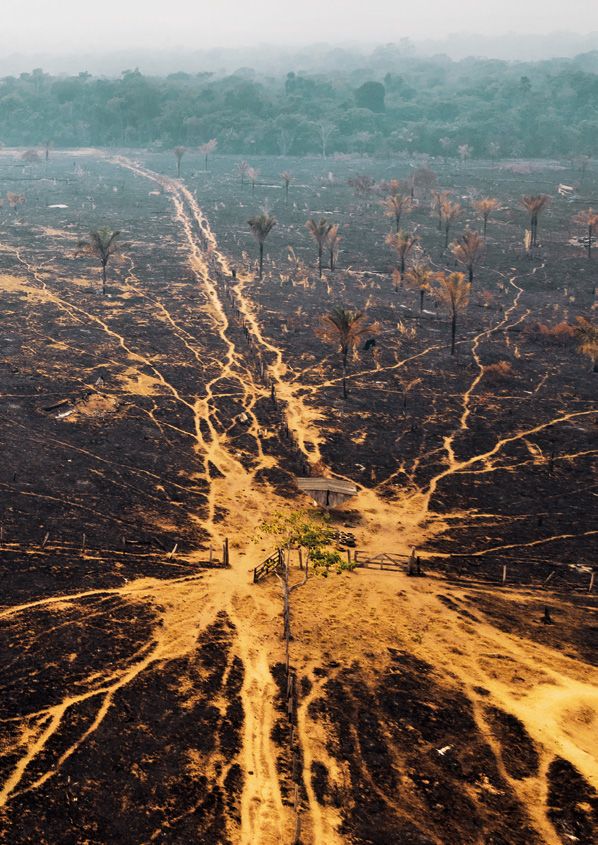
EXECUTIVE
                                                               Brazil’s forests are on fire. Land across the country is being cleared
                                                               and burned to plant crops and graze cattle – feeding the ever-

SUMMARY
                                                               growing demand for agricultural commodities from the world’s
                                                               biggest food companies.
                                                                   Over the past decade there have been numerous commitments
                                                               from industry to source forest/ecosystem risk commodities
                                                               ‘responsibly’. Five years ago, more than 150 companies came together
                                                               with governments, indigenous peoples and civil society organisations
                                                               to sign the New York Declaration on Forests (NYDF), promising to
                                                               eliminate deforestation for commodities like soya, cattle and palm
                                                               oil by 2020.4 In September 2019, the NYDF’s official assessment
                                                               concluded that achieving this goal is now ‘likely impossible’ because
                                                               ‘efforts to date have been inadequate to achieve systemic change’.5
                                                                   Brazil’s forests and savannahs remain at the frontline of
                                                               industrial agriculture’s war on the world’s climate, the environment
                                                               and traditional communities.6 The situation in Brazil has worsened
‘They are known as geraizeiros. ... Their way of              under President Bolsonaro, whose government appears to have
 life is completely aligned with the characteristics           adopted an attack on the Amazon and indigenous peoples as the
 of the Cerrado biome, from which they obtain                  pillar of its economic policy. Bolsonaro’s government has given tacit
 everything they need to survive. They base                    endorsement to land grabbing and incursions by illegal loggers,
 their way of life on a diverse range of activities            miners and farmers into indigenous lands.7 His Environment Minister
 including small-scale farming and livestock                   has responded to the deforestation crisis with calls for the Amazon
 production and gathering of wild products.’                   to be ‘monetised’,8 the head of the government agency tasked with
P ortal Ypadê website (CNPCT [National Council for the        monitoring deforestation has been sacked9 and the resources and
 Sustainable Development of Traditional Peoples and            budget of Brazil’s environmental protection agency, IBAMA, have
 Communities, Brazil]) ‘Geraizeiros’                           been slashed.10 Unsurprisingly, Brazil has suffered a sharp increase in

    ‘We’ve been through
     this many times
     before. But at least
     now you are here to
     tell our story.’
     Jossone Lopes Leite, geraizeiro

    24 March 2019, Cachoeira community, Estrondo Estate,
    Formosa do Rio Preto: Jossone Lopes Leite, a member of
    the traditional geraizeira community of Cachoeira, whose
    way of life is affected by the activities of Agronegócio
    Estrondo. ©Moriyama/Greenpeace

2                                                                                     UNDER FIRE
fires and deforestation in 2019, compared to recent years: the annual           Agronegócio Condomínio Cachoeira do Estrondo also replied, denying
deforestation rate has reached nearly 1 million hectares (ha) for the           any wrongdoing, disputing the area of the estate and its ownership and
first time in a decade, with the increase detected even before the              claiming self defence as justification for the presence of security within
incidence of forest fires peaked.11                                             the estate.21
     While cattle remains the primary driver of deforestation and                    We are living through a climate emergency. Governments and
conversion, both globally and in Brazil, soya – primarily used as
                          12              13
                                                                                companies have failed us. The global food and agriculture system is
animal feed for intensive meat and dairy production – continues
                                                        14
                                                                                broken. The absence of laws to ensure that supply chains and financial
to expand rapidly throughout South America. In Brazil, soya                     activities are not contributing to the destruction of ecosystems
production has more than quadrupled over the past two decades         15
                                                                                or to social conflict, and current international trade negotiations –
and is projected to increase by another third over the next 10 years,           including the EU-Mercosur trade deal – look set to further accelerate
with exports growing by 42%. By the end of the next decade, a
                                16
                                                                                deforestation, putting profit before people and planet.
further 9.5 million ha 17 – an area three times the size of Belgium18 –              The commodities trade has proven itself unwilling to reform
is forecast to be planted with soya within Brazil alone, putting even           in time to stem the violence and prevent climate and ecological
greater pressure on its forests and natural ecosystems.                         breakdown. Bolsonaro’s agenda has raised the stakes even further
     The failure of the private sector to drive the systemic changes            for companies that source soya, beef or other forest/ecosystem risk
necessary to cut its links to deforestation and human rights abuses             commodities from Brazil: increased demand for those commodities is
– and the harsh reality of this failure for local communities – is              the justification for further deforestation and violations of the rights
exemplified by the case of Agronegócio Estrondo, which is located in            of the country’s indigenous peoples and communities. Alongside
the soya frontier of the Brazilian Cerrado.                                     consumer goods companies, brands like McDonald’s, Burger King
     Estrondo operates on lands to which the land-use rights of                 and KFC must take a stand and publicly reject commodities and
traditional geraizeira communities have been legally recognised.                companies linked to environmental destruction and human rights
Nevertheless, the communities are subject to frequent violence and              abuses in the Amazon and other threatened regions.
harassment. Documentary footage captured during an investigation                     Specifically in the case of Estrondo, this means that government
by Greenpeace Brazil shows an armed raid on one such community                  and companies must ensure the following:
by a group claiming to be Bahia state police, the shooting of a cattle          •    Protect people: guarantee the safety of the traditional
herder by a member of a private security force, harassment of a                      geraizeira communities and official recognition of their
community member at a security checkpoint, armed patrols and                         land, ensuring an end to the violence against them and the
security fences cutting across community lands.                                      removal of Estrondo’s infrastructure so that they are able to
     The deforestation, human rights and legality issues with this estate            exercise their land-use rights unimpeded and without further
are well known, having been covered many times by the Brazilian                      degradation of the lands
media and Greenpeace. As this report documents, even the Brazilian              •    No deforestation: ensure any plans for further clearance
authorities recognise that the estate was founded on a land grab, was                of natural vegetation within the estate are immediately and
established using slave labour and has engaged in illegal land clearance.            permanently abandoned
Despite this, in May 2019 officials renewed a deforestation permit to           •    Stop buying destruction and violence: suspend all purchases
clear an additional 25,000 ha within the estate. 19
                                                                                     from companies linked to Estrondo until the criteria above are
     Despite political and private sector commitments, mega-traders                  met and credible plans to address past violations, abuses and
Bunge and Cargill have silos within the Estrondo estate, behind the                  illegalities are in place
checkpoints, and export soya from the estate globally. Bunge exported           Ultimately, those using forest/ecosystem risk commodities must limit
Estrondo’s soya to the European Union (EU) as recently as August 2019.     20
                                                                                their sourcing to what they can publicly demonstrate does not come
     Presented with the evidence in this report, Bunge and Cargill failed       from forest or other ecosystem destroyers or abusers of human rights
to provide any meaningful response or to demonstrate action to tackle           – but simply cleaning up supply chains will not be enough. Companies
the issues linked to the Estrondo estate where they have facilities and         need to fundamentally change their business models to prevent
from which they export – though Cargill says it is now investigating.           climate and biodiversity catastrophe and to uphold human rights.

‘In all contracts of purchase and sale of grain, the                           ‘Cargill is firmly committed to eliminating deforestation from
 producer declares the regularity and respect for                                our global supply chains and protecting the rights of indigenous
 the environment and social protection rules in                                  peoples and communities. Our commitment to human rights
 the cultivation of the product, as well as [their]                              is unwavering – treating people with dignity and respect in the
 knowledge of the possibility of contractual                                     workplace, in our supply chains and in the communities where
 termination in case of non-compliance.’                                         we do business. And we expect the same of our suppliers.’
Raúl Padilla, President of Global Operations, Bunge,                            Nick Martell-Bundock, Senior Direction, Cargill,
letter to Greenpeace Brazil, 24 September 2019                                   communication to Greenpeace, 27 September 2019

                                           UNDER FIRE                                                                                                        3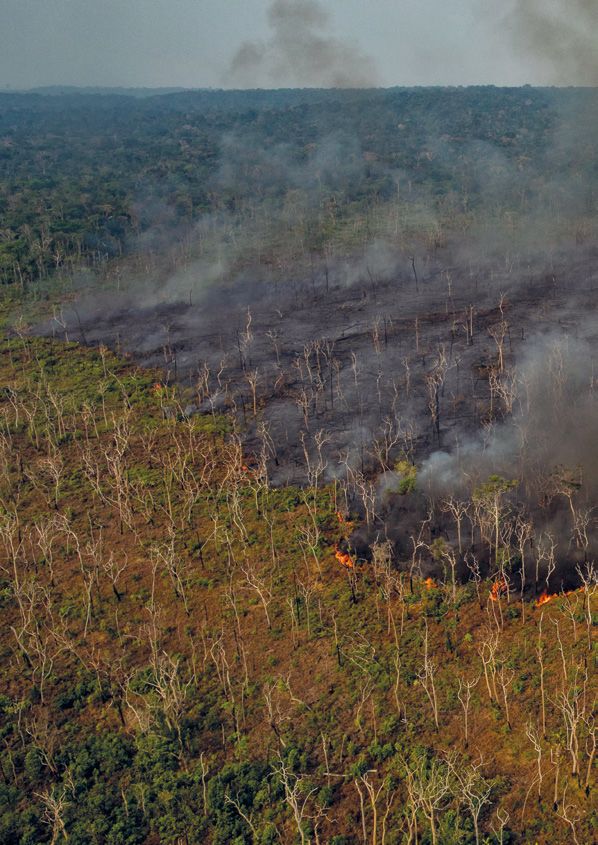
‘[The Amazon] is not
                                                                                   being devastated
                                                                                   or consumed by fire
                                                                                   – these are lies by
                           21 August 2019, Brasília: President Jair Bolsonaro.
                                                                                   the media.’
                                                         ©Marcos Corrêa/PR       Jair Bolsonaro, United Nations General Assembly,
                                                                                   New York, 24 September 2019

    23 August 2019, Altamira, Pará, 8°37’33.36” S
    54°37’17.579” W: Smoke rises along a road through                                                          8 August 2008, Agua Boa: Cattle yard.
    forest. ©Moriyama/Greenpeace                                                                               ©Beltrá/Greenpeace

    1 January 2004, Itacoatiara:
    Soya production in Brazil.
    ©Rudhart/Greenpeace

                                                                                    9 September 2014, Germany: Factory farm.
                                                                                    ©Dott/Greenpeace

4                                                                                                        UNDER FIRE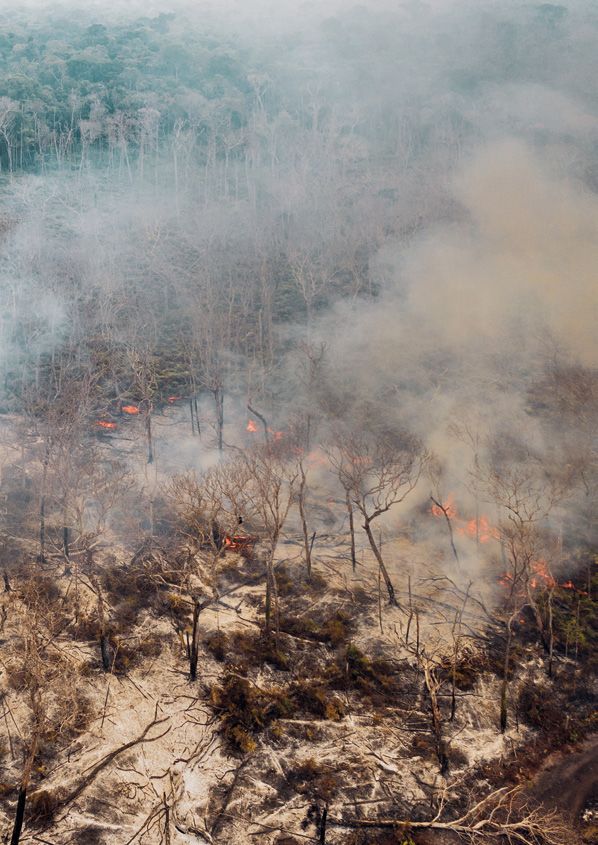
28 May 2019, Cachoeira community, Estrondo Estate, Formosa do Rio Preto:
Footage captured by German television crew documents an armed raid on
the traditional geraizeira community of Cachoeira. The men claimed to be
local police but were unable to present a warrant and had no clear motive.
©ARD Weltspiegel

                                                                                  26 April 2018, Brasília: 3,000 indigenous
                                                                                  people protest in the capital. ©Braga/MNI

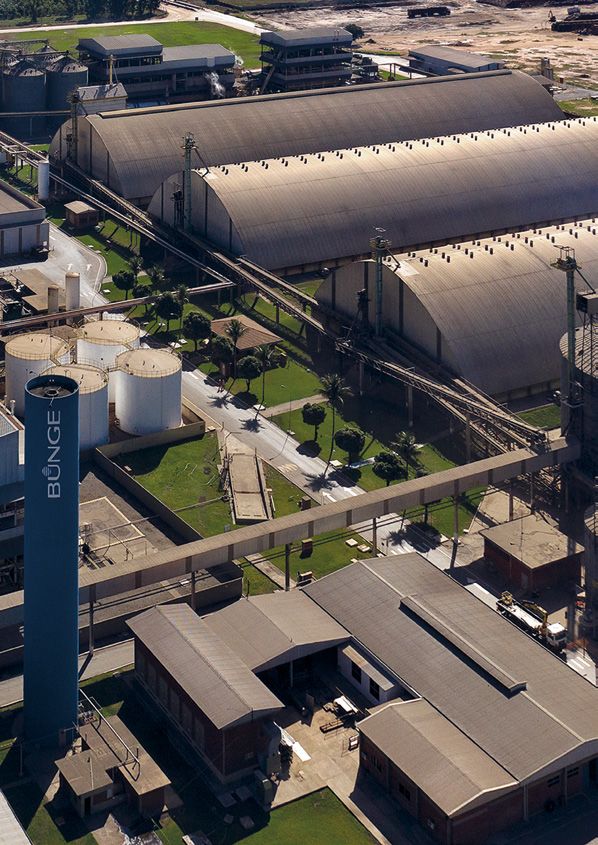
                                                        23 May 2019, Riachão das Neves: Bunge silo near the
                                                        border of Formosa do Rio Preto. ©Cruppe/Greenpeace

             ‘The consumer goods industry, through its
          growing use of soya, palm oil, beef, paper and
                  board, creates many of the economic
                incentives which drive deforestation.’                       22

                                      Consumer Goods Forum, 2010

                            ‘[O]ver the last nine years we
                  have… learned that the forces driving
                   deforestation are more complex than
                                                                                  22 May 2019, London, United Kingdom: Food companies
               almost any stakeholder realised in 2010.’                     23
                                                                                  are pushing meat-rich diets that are bad for the planet
                                                                                  and our health. ©Ratcliffe/Greenpeace
                                      Consumer Goods Forum, 2019

                                           UNDER FIRE                                                                                       5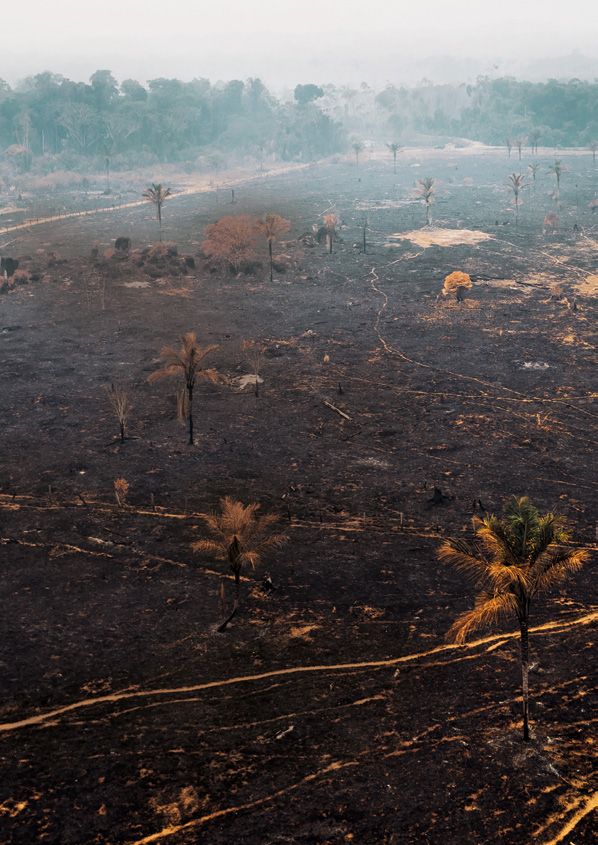
THE CERRADO:                                                                                DEFORESTATION IN THE CERRADO

NATURE AND PEOPLE
IN THE FIRING LINE
                                                                                                         Brazil
                                          Venezuela       Guyana

                                                                                                                                                          Source data: Cerrado biome boundary IBGE (2004); MapBiomas
                                                                            French
                                                                   Suriname Guiana
                         Colombia

                                                           AMAZON                              Bolivia

                                                             Brazil
                          Peru

                                                                                 CERRADO
                                              Bolivia
                                                                                                   Cerrado
                                                                                                    Paraguay
                                                                                                   Deforestation 2010–2017
                                 Chile                    Paraguay                                 Deforestation 2001–2010
                                              Argentina

The Brazilian Cerrado is the most biodiverse savannah in                                   direct driver of conversion: just under a quarter of the
the world. Spanning 200 million ha, the Cerrado is home to                                 Cerrado – approximately 48.5 million ha, almost twice
5% of the planet’s plant and animal species, over 4,800     24
                                                                                           the size of the UK35 – was pasture as of 2017.36 A further
of which are found nowhere else.25 The region is known as                                  24 million ha have been converted to cropland, often
a ‘cradle of waters’, because it is critical to eight of the 12                            after previously being used for pasture.37
Brazilian river basins; it contains the headwaters of nearly                                   The area of the Cerrado known as ‘Matopiba’ is
all of the southern tributaries of the Amazon River as well                                currently at the heart of agribusiness expansion, and is
as several rivers in the states of Maranhão and Piauí.                          26
                                                                                           particularly threatened. Matopiba, which covers nearly 74
    Yet despite its ecological value, the Cerrado is being                                 million ha in the Brazilian states of Maranhão, Tocantins,
rapidly cleared: it lost 2.8 million ha of natural forest and                              Piauí and Bahia,38 is being hailed as the ‘new frontier’ for
1.8 million ha of natural grassland between 2010 and                                       soya and other agricultural commodities.39 Between 2007
2017, 27 with the main threats coming from soya farms                                      and 2014, nearly two-thirds of agricultural expansion in
and cattle ranches. Between August 2017 and July
                    28
                                                                                           Matopiba came at the expense of the Cerrado’s savannah,
2018, some 665,000 ha of the Cerrado (an area more                                         forests and other native vegetation.40
than four times the size of the city of São Paulo) were                                        Brazil’s most recent official projections indicate
cleared of natural vegetation. In 2018, almost 100,000
                                    29
                                                                                           that in 2028/29 Matopiba is expected to be producing
ha were cleared in the state of Mato Grosso; a recent                                      29 million tonnes of soybeans, an increase of 6.5
study conducted in this state concluded that 95% of that                                   million tonnes over current production (+22%), on a
deforestation was done illegally.        30
                                                                                           planted area of 8.8 million ha (up from 7.6 million ha
    It is estimated that nearly half of the Cerrado’s natural                              in 2018/19).41 Matopiba is singled out as an ‘area of
vegetation (about 95 million ha,31 an area larger than                                     great productive potential’ ripe for expansion, with
Venezuela32) has already been destroyed. The remaining area                                land there being half the price as in the state of Mato
holds an estimated carbon store equivalent to 13.7 GtCO2.                            33
                                                                                           Grosso 42 – as agribusiness in this region expands, the
    As in the Amazon biome,34 cattle has been the leading                                  price of land is a decisive factor.

6                                                                                                                  UNDER FIRE
23 March 2019,
Estrondo Estate, Formosa do Rio Preto,
11°16’46.32”S 46°24’52.68”W.
©Moriyama/Greenpeace
Accumulated deforestation 2004-2019
15 July 2019, Formosa do Rio Preto:
Recent land clearance. ©Greenpeace
20
Accumulated deforested area (million ha)
15
CERRADO
10 AMAZON
Instituto Nacional de Pesquisas Espaciais (INPE)
5
0
2005
2006
2009
2004
2008
2007
2011
2012
2013
2014
2017
2019
2010
2016
2018
2015
The Brazilian National Institute of Space Research (INPE) issues annual deforestation reports for the Brazilian Legal Amazon43 and the Cerrado via its PRODES satellite
monitoring system.44 The data show a loss of 33.8 million ha of forest and savannah over the two biomes between 2004 and 2018.
UNDER FIRE 7UNDER THE GUN:
HOW THE
COMMODITIES TOP EXPORTERS OF SOYA
FROM THE CERRADO IN 2017 55
TRADE FUELS (by volume in tonnes)
BUNGE
CONFLICT 14.96%
IN THE CERRADO OTHER
33%
4,5
4 4,79
0
CARGILL
14.25%
4,327,8
51
0,790
5
10,0
1
4,29 ,595
,28
61
3,07
86
4,09
1,971,9
COFCO 1,8 ADM
6
14.14%
7
6.21%
LOUIS
DREYFUS AMAGGI
6.49% 10.13%
The ravaging of regions like the Cerrado is driven by the Between 2010 and 2015 just five traders – including ADM, Bunge
global hunger for agricultural commodities such as soya, and Cargill, all signatories of the 2006 Amazon Soy Moratorium56 (see
maize and cotton.45 In Brazil alone, some 35.8 million ‘Bolsonaro’s war on the Amazon’ below) – were responsible for more
ha, an area the size of Germany, are dedicated to soya
46
than three-quarters of total soya exports from Matopiba.57 These three
production.47 The trade is dominated by a handful of mega- traders were also the biggest soya exporters from the Cerrado in 2017,
traders: analysis by Trase, a nongovernmental organisation with combined exports of 13 million tonnes.58
(NGO) focused on increasing the transparency of agricultural In 2018 IBAMA fined five traders, including both Bunge and
commodity supply chains, shows that by 2017 just six Cargill, for trading soya from illegally deforested areas in Matopiba.59
companies – Bunge, Cargill, ADM, Louis Dreyfus, COFCO The six exporters responsible for the majority of Brazil’s
International and Amaggi (order by volume) – accounted soya exports have acknowledged the ‘sustainability risks’
for 58% of Brazilian soya exports.48 In turn, multinational of operating in such a vulnerable region. All but Amaggi are
brands including the fast food companies Burger King, KFC members of the Soft Commodities Forum (SCF), which pledged
and McDonald’s, as well as numerous retailers and consumer in February 2019 to monitor supply chains in 25 ‘high-risk’
goods manufacturers, are supplied directly or indirectly by municipalities in the Cerrado in order to address deforestation
one or more of these traders, with soya or meat and dairy and associated impacts.60 Of the 25 ‘priority’ municipalities
products fed on soya-based animal feed.49 identified by the SCF, 23 are located in Matopiba.61
Trase analysis indicates that between 2006 and 2016, In June 2019, the SCF’s members published ‘progress reports’
the supply chains of these six mega-traders were associated which detail their exposure to the Cerrado and the 25 high-risk
with two-thirds of the total deforestation risk50 directly municipalities.62 These reports indicate that the mega-traders
linked to soya expansion in Brazil.51 This risk is concentrated are heavily dependent on soya from the Cerrado, despite their
in the Cerrado – where at least 40% of Brazilian soya was
52
recognition of the enormous social and environmental threat: almost
produced in 2017, of which 60% was exported.53 Together, 40% of ADM,63 Bunge64 and Cargill’s65 Brazilian soya comes from
these six traders accounted for two-thirds of all soya the Cerrado, with varying but considerable proportions originating
exported from the Cerrado. 54
in these 25 municipalities. Indeed, the extensive infrastructure
8 UNDER FIRE15 July 2019, Formosa
do Rio Preto: Recent land
clearance. ©Greenpeace
25 March 2019,
Luís Eduardo Magalhães:
Trucks passing Cargill
facilities. ©Moriyama/
Greenpeace
25 March 2019,
Luís Eduardo Magalhães:
Bunge silo. ©Moriyama/
Greenpeace enabled
these traders have established arguably encourages expansion and
conversion by facilitating farmers’ access to global markets.66
In September 2017, over 60 Brazilian NGOs, including
Greenpeace Brazil, published the Cerrado Manifesto, a call for
‘immediate action in defense of the Cerrado by companies
that purchase soy and meat from within the biome, as well as
by investors active in these sectors’.67 The following month, 23
global brands, including McDonald’s, members of the Consumer
Goods Forum and several retailers, signed a ‘statement of
support’ that signalled their intention of ‘working with local
and international stakeholders to halt deforestation and native
vegetation loss in the Cerrado’; as of September 2019, more
than 125 brands and investors had signed the statement.68
However, despite being aware of the risks, global companies
that depend on soya and other commodities have completely
failed to introduce the controls needed to eliminate deforestation
and exploitation from their supply chains.69 Soya is primarily used
as animal feed,70 yet analysis by Greenpeace of over 50 brands
revealed that companies were totally unaware of how much soya was
consumed as animal feed in their meat and dairy supply chains.71
In other words, brands were taking little or no action to ensure
the soya consumed within their supply chains came from traders
and producer groups that were not destroying forests or exploiting
workers and local communities.
UNDER FIRE 924 May 2019, Estrondo Estate, Formosa do Rio Preto: Checkpoint and watchtower manned by the Estrela Guía private security company. ©Cruppe/Greenpeace 10 UNDER FIRE
‘Brazil’s Federal Police have launched an investigation,              ‘Judge Sérgio Sampaio
  dubbed “Operation Far West,” to crack down on an alleged
  massive land grab by an agribusiness collective in western
                                                                         has made absolutely
  Bahia, one of Brazil’s largest soy producing regions.                  illegal decisions aimed at
T he case centers on alleged corruption involving                       protecting the economic
judges, lawyers and farmers, who stand accused                           groups that make up the
of conspiring to secure favorable court rulings to                       condominium. We expect
legitimize the grabbing of some 800,000 hectares
(2 million acres) ….                                                     those responsible, both the
                                                                         corrupt and the corrupted,
S érgio Humberto Sampaio, one of the judges involved, was
responsible for a ruling that benefitted the Estrondo megafarm           to be held responsible.’
collective over traditional communities, by reducing the area
                                                                       A ssociation of Lawyers for Rural
claimed by the communities from 43,000 to 9,000 hectares               Workers (AATR), quoted in Mongabay
(106,000 to 22,000 acres) in 2018.

A gribusiness mogul Walter Horita, one of Estrondo’s main
tenants, is also cited in the investigation for allegedly paying
millions in bribes and overseeing the movement of 22 billion
reais ($5.2 billion) between 2013 and 2019, with 7.5 billion
reais ($1.8 billion) unaccounted for.’
 aurício Angelo, ‘Brazil investigates agribusiness bribes to judges
M
for favorable land rulings’, Mongabay, 27 November 2019

                                     UNDER FIRE                                                             11
COLLATERAL 28 May 2019, Cachoeira community, Estrondo Estate,
Formosa do Rio Preto: An armed raid on the traditional
DAMAGE:
geraizeira community. ©ARD Weltspiegel.
COMMUNITIES
IN THE SOYA
INDUSTRY’S
CROSSHAIRS
‘If anyone gets sick here at ‘I believe this was only an excuse ‘The violent actions by Estrondo
night he is bound to die because to incriminate me, as they are commonly tied to the court
they will not let us get through [Estrondo] are being defeated calendar. If they lose a legal
[their roadblocks].’72 in court. I know I’m targeted, action, they tend to act more
Guilherme Ferreira de Sousa, but this won’t intimidate me.’ 73 violently against the people.’ 74
geraizeiro Adão Batista Gomes, Mauricio Correa, member
geraizeiro of the Association of Lawyers
for Rural Workers
15 December 2017, Estrondo Estate, Formosa
do Rio Preto: Electric fences patrolled by
Estrela Guía private security cut across
traditional geraizeira community lands.
©Repórter Brasil
12 UNDER FIREGreenpeace Brazil recently investigated one soya-producing estate – the estate itself thus also has strong links to the global market.
in Matopiba, Agronegócio Estrondo, located in the municipality of The Estrondo estate’s soya is also traded through other
Formosa do Rio Preto in Western Bahia. Formosa do Rio Preto is at silos in Formosa do Rio Preto and in the nearby municipality Luís
the heart of the soya deforestation frontier in the Cerrado and is Eduardo Magalhães. Mega-traders ADM, Bunge, Cargill and
recognised as a ‘high-risk’ municipality by traders in the SCF. INPE
75
Louis Dreyfus – through the Amaggi Louis Dreyfus Zen-Noh joint
data show it to be the municipality where the most deforestation venture – have silos in those municipalities and export to the global
has occurred in the Cerrado, with almost 450,000 ha of natural market. Although it has no silos in these two municipalities, COFCO
vegetation converted between 2001 and 2018.76 International also exports from the area.84
Between January and August 2019, INPE’s Real-Time The Estrondo estate has a notorious record that includes
Deforestation Detection System (DETER) issued alerts covering a history of land grabbing, use of slave labour and illegal land
a total of 404,910 ha in the Brazilian Cerrado. The municipality in clearance.85 Footage collected during Greenpeace Brazil’s
which the most deforestation occurred was Formosa do Rio Preto: it investigation in late May 2019 documents an armed raid on a
accounted for almost 5% of the total, with alerts being issued about traditional geraizeira community whose lands lie within the estate.
clearance of a total of 17,458 ha within the municipality. 77
The raid, the purpose of which remains unclear, was led by individuals
Nevertheless, Formosa do Rio Preto has strong links to the global claiming to be police – though failing to present warrants – and
market – it is the fourth-largest soya-producing municipality in Brazil using what was later confirmed by a confidential source to be a Bahia
(the first three are also located in the Cerrado), and four of the six
78
state police vehicle (see ‘Violence and intimidation against local
SCF members purchase soya grown here. In 2017, according to
79
communities’ below).86
Trase, Bunge sourced 350,000 tonnes of soya from this municipality Adding to existing tensions over land-use rights and control is
– its third most important sourcing region in Brazil.80 According to the recent renewal of a deforestation permit 87 that grants Delfin Rio
official projections the municipality will increase its soya production S/A – Crédito Imobiliário, the main holding company for the Estrondo
by 30% over the next decade. 81
estate, four years to clear an additional 25,000 ha – an area that
Bunge and Cargill both operate silos within the estate’s covers much of the remaining lowland natural vegetation within the
boundaries82 and source soya directly from its plantations83 estate’s boundaries.
Brazil
CERRADO FORMOSA DO
RIO PRETO
Brazil FORMOSA DO
RIO PRETO
BAHIA
Source data: Cerrado biome boundary IBGE (2004); MapBiomas
Bolivia
ESTRONDO
ESTATE
Cerrado
Paraguay
Deforestation 2010–2017
Deforestation 2001–2010
UNDER FIRE 13THE ESTRONDO ESTATE:
A CYCLE OF VIOLENCE
AND CONFLICT
LAND GRABBING
Until recently, the Estrondo estate website claimed it in the British Virgin Islands.96 União de Construtoras
covered 305,000 ha,88 an area larger than the cities S/A – whose ultimate owner, Giacometti Investments
of Rio de Janeiro and São Paulo combined.89 Land S/A, is based in Panama97 – allegedly transferred its
registry documents show that in 1978 the Delfin share to Delfin in 198198 and later changed its name.99
group, owned by Ronald Guimarães Levinsohn,90 Thus, it appears that the estate is now held by just
acquired the land where this estate is situated – an three companies. These three companies are named in
area covering some 444,000 ha.91 The National a lawsuit for recognition of local communities’ right to
Institute of Colonisation and Agrarian Reform 43,000 ha of land within the Estrondo estate.100
(INCRA) has called into question the legality of this The Bahia state prosecutor has indicated that all
purchase, suggesting that the Estrondo estate was four of the original holding companies are interlinked
founded on a land grab.92 and associated with Levinsohn’s Delfin. The case
2018 Bahia state court documents assert that the documents note ‘the number of spin-offs, mergers
Estrondo estate was established under the ownership and re-mergers, and transfers of areas between
of four holding companies: Delfin Rio S/A Crédito the legal entities União de Construtoras S/A; Delfin
Imobiliário, Cia Melhoramentos do Oeste da Bahia, Rio S/A – Crédito Imobiliário; Colina Paulitsta [sic]
Colina Paulista S/A and União de Construtoras S/A. 93
S/A; and Cia Melhoramentos do Oeste da Bahia’ and
Of those, only Delfin Rio S/A Crédito Imobiliário that ‘any land registry entries that have different
and Cia Melhoramentos do Oeste da Bahia are rights holders are owned by Delfin Rio S/A – Crédito
currently acknowledged on the Agronegócio Estrondo Imobiliário’; they also state the prosecutor’s
website as owners within estate; public registry
94
conclusion based on his analysis of various documents
profiles show that these are controlled by Levinsohn that ‘Colina Paulista S/A and Cia Melhoramentos do
or his family. The other two companies are ultimately
95
Oeste da Bahia are the result of a partial spin-off of
held offshore. Colina Paulista S/A, registered in the Delfin Rio S/A – Crédito Imobiliário … [designed to
Australia farm within the Estrondo estate, is owned facilitate] the concealment of irregularities behind an
by Tamzim Trading Ltd, a holding company registered enormous amount of bureaucracy.’101
14 UNDER FIRERONALD LEVINSOHN
AND THE DELFIN
GROUP
The Delfin group and Levinsohn are notorious in Brazil In 2011, Levinsohn told the media that he
Ronald Guimarães as the result of a huge financial banking scandal in the had entered into a definitive partnership with
Levinsohn, head of the early 1980s involving allegations of fraud and collusion the Horita brothers – listed as tenants on the
Delfin group. Source:
of various ministers within the then dictatorship. When Estrondo website – with the aim of increasing
Agência O Globo
Levinsohn’s Delfin group collapsed in 1983, its debt productivity, reducing costs and collaborating
had reached 77 billion old cruzeiros (US$203 million). on social entreprises, while maintaining a focus
Levinsohn had secured this debt with state banks on the environment. According to Levinsohn, his
using as collateral two undeveloped tracts of land family had sold 80,000 ha of the estate’s land to
whose value on paper was a mere 6.3 billion cruzeiros the Horita brothers and they were running another
(US$16.6 million). In order to maintain control of what 25,000 ha as a partnership.104
was left of the debt-ridden company, in 1991 Levisohn According to TV Globo and Bahia News, following
agreed to pay the remainder of the debt over 13 years. a decision by Pará’s Superior Court of Justice, on 19
Following extensive legal battles, in 2006 the Superior November 2019 the Federal Police acted on search and
Court of Justice ruled that the property represented seizure warrants against 21 people – including Walter
fair and appropriate compensation to the state against Yukio Horita, one of Levinsohn’s partners – as part of
losses – effectively writing off the equivalent of
102
an investigation into land grabbing in JJF Holding de
millions of dollars in debt. Investimentos e Participações, a 366,000 ha estate
Reports of money laundering scandals involving also located in Formosa do Rio Preto. Mongabay reports
A Oeste Semenal Levinsohn have continued: for example, in 2016, the that Sérgio Humberto Sampaio, one of the judges under
newspaper article
from June 2011 gives Federal Public Ministry in Rio de Janeiro (MPF/RJ) accused investigation, was responsible for a ruling that benefitted
an extensive profile of Levinsohn and 15 others of criminal association and crimes the Estrondo estate at the expense of the geraizeira
Levinsohn and his ties to against the financial system for the sale of securities communities, by reducing the area of land to which their
the Agronegócio
Estrondo business, to Brazil’s Postales and Petros (Petrobrás) funds. The rights were recognised from 43,000 ha to 9,000 ha. Chain
including the Horita ‘Operation Fresh Start’ investigation uncovered that some Reaction Research reports that mega-traders ALZ Grãos,
brothers, owners of
90 million Brazilian reais (US$27 million) had been diverted Bunge and Cargill all have warehouses inside the area
one of the companies
on the estate. from these funds. 103
claimed by JJF Holding.105
UNDER FIRE 15ILLEGAL LAND CLEARANCE,
IRREGULAR PERMITS AND
THE THREAT OF MORE
23 May 2019, Estrondo Estate,
Formosa do Rio Preto, 11°09’24.52”S 45°44’24.66”W:
DEFORESTATION
Road cutting through 25,000 ha of natural
vegetation licensed for deforestation.
©Cruppe/Greenpeace
Sources: Communities Greenpeace mapping, Community land
AATR, Estrondo estate boundaries SICAR (Sistema Nacional de
Cadastro Ambiental Rural) 2017, Legal Reserve & Permanent
Preservation Areas CAR, Clearance permit INEMA
Communities
Community land
Estrondo estate
Legal Reserve
0 5 KM
Permanent Preservation Areas
Clearance permit
16 UNDER FIRE‘The issuing of those [2002 ‘[W]hile enforcement of ‘Condomínio Cachoeira do Estrondo denies any
deforestation permits covering environmental legislation, accusation of illegal clearing and reaffirms
49,000 ha] was contrary to including the Forest Code, is that it maintains its legal reserve in 22%, above
the federal environmental important, it is not enough to legal requirements. Regarding the renewal of
legislation… The whole area ensure conservation of the the licence obtained in May 2019, the enterprise
was cleared irregularly.’ 106 biome, since it allows legal does not have a definitive plan for its execution,
Zenildo Soares, Executive Manager conversion of up to 80% of however it guarantees that if and when this
of IBAMA in Barreiras (BA), 2009 rural properties.’ would happen, the process will be done within
interview with Repórter Brasil Cerrado Manifesto, legal requirements and following procedures
September 2017 established by the relevant bodies/institutions.’
A gronegócio Condomínio Cachoeira do Estrondo,
Statement to Greenpeace in response to letter
to Delfin, 29 November 2019
Well over a third of the land claimed by the Estrondo prevents its natural regeneration’. INEMA ultimately
estate has been deforested since 2000 to grow soya, fined the company 201,000 reais (US$60,000) for this
cotton and maize, with the vast majority cleared infraction in November 2016.112
between 2001 and 2009.107 In the 2000s IBAMA Yet despite its knowledge of the violation, on
repeatedly investigated Agronegócio Estrondo for 12 January 2015, INEMA granted Delfin Rio S/A
illegal land clearance, including allegations that
108
– Crédito Imobiliário a deforestation permit for
deforestation permits covering 49,000 ha in the nearly 25,000 ha within the Estrondo estate.113 The
estate were fraudulently obtained.109 In April 2019, area licensed for clearance covers virtually all the
Greenpeace Brazil documented the harvesting of soya remaining lowland natural vegetation within the
illegally cultivated in an area that IBAMA had excluded estate’s boundaries.
from commercial activity. 110
In September 2018, in its application to renew
Legal Reserves (LRs) are areas within rural the deforestation permit, Delfin Rio S/A – Crédito
properties that ‘must be conserved with a native Imobiliário stated that the Legal Reserve and Permanent
vegetation cover by the rural estate property’s owner, Preservation Areas within the estate were under its
landholder, or occupant’, as mandated by Brazil’s full ‘responsibility and ownership’, as the regulations
Forest Code (Law 12,651/2012, Article 17). Article require.114 This statement appears disingenuous.
12 stipulates that in the Cerrado, outside the Legal Greenpeace mapping analysis shows that vast
Amazon, 20% of the property must be set aside as a areas of the claimed Legal Reserve fall within the
Legal Reserve. Article 17 also mandates ‘the immediate 43,000 ha of land within the Estrondo estate that a
suspension of activities in Legal Reserve areas court ruling of 3 May 2017, later confirmed by the
irregularly deforested after 22 July 2008’. 111
Bahia Court of Justice, recognised as land on which
On 14 August 2014, a technical inspection by Bahia’s the geraizeira communities have traditional land-use
Institute of Environment and Water Resources (INEMA) rights.115 As such, Delfin cannot legitimately use this
found that the Estrondo estate’s owner, the company area to show compliance with the Forest Code’s Legal
Delfin Rio S/A – Crédito Imobiliário, had given ‘false Reserve requirements or secure permission to clear
information … by declaring that its Legal Reserve area additional land within the estate.
was preserved and by declaring a different sized area for Despite these known land-management issues, on
the reserve than that endorsed in the property register’ 22 May 2019 INEMA approved a renewal of the original
and that ‘the effective environmental degradation of permit, allowing the land to be cleared within the next
its Legal Reserve area following the use of that land … four years.116
UNDER FIRE 17SLAVE LABOUR
Agronegócio Estrondo has a history of human rights abuses.
In 2005, an inspection by the Brazilian Ministry of Labour and
Employment (MTE), Public Ministry of Labour (MPT) and Federal
Police (PF) identified the use of forced labour in two separate
parts of the estate. A total of 91 people linked to soya or cotton
production were freed.117
VIOLENCE AND
INTIMIDATION AGAINST
LOCAL COMMUNITIES
Multiple incidents of intimidation and violence against the
local traditional communities, known as the geraizeiras do
Alto Rio Preto – the traditional peoples of the Upper Preto
River – have been documented.
On 28 May 2019, a Greenpeace Brazil investigative team
and several accompanying journalists witnessed an armed raid
on one of these communities. An unmarked Mitsubishi SUV –
whose registration was later confirmed by a confidential source as
belonging to a Bahia state police vehicle – arrived at the village.
When four men approached claiming to be state police,
wearing unmarked flak jackets and carrying automatic weapons,
a woman from the community (whose brother-in-law had been
detained illegally by the Estrondo estate’s private security force,
Estrela Guía, several days earlier118) fled with a number of female
Greenpeace Brazil staff into one of the houses for shelter. One
of the men forced entry after shouting to the women, ‘Come
out with your hands up, this is the police.’ He searched the house
and ordered the women to lift their shirts ‘to check for guns’.
Other community members were threatened as the men sought
to gain entry to their homes, claiming ‘We have come here
because we received an anonymous complaint and we need to
go inside to check it out.’
Greenpeace Brazil staff questioned the men’s actions on
the grounds that no warrant had been produced. The armed
men continued to press the community members: ‘We will go
in, and I know you will be shocked by what we find, because
we will find stuff.’ While the intent of the raid remains unclear,
afterward members of the community told Greenpeace Brazil
they had feared that the men planned to plant evidence – drugs
or guns – to incriminate them.119
In total, Greenpeace Brazil team members and members
of the community were kept together under armed guard for
about two hours. The armed men finally left at sundown without
having searched further houses – perhaps because of the
28 May 2019, Cachoeira community, Estrondo Estate, Formosa do Rio Preto:
presence of international journalists and film crew. Their parting Greenpeace Brazil staff and accompanying journalists witness first-hand an
words were a threat: ‘This isn’t over.’120 armed raid on the traditional geraizeira community. ©ARD Weltspiegel
18 UNDER FIREGUNS FOR HIRE
29 September 2019, Estrondo Estate, Formosa do Rio Preto: Estrela Guía guards block the passage of Termosires
Neto, mayor of Formosa do Rio Preto, and his team following their participation in a cavalcade from the traditional
geraizeira community of Cacimbinha. The community were protesting the violence against them. The husband of the
deputy mayor, the lawyer Bira Lisboa, stated ‘I believe that their actions are in retaliation for the support we have
given to the geraizeiros, who are being massacred and humiliated by these people.’ ©ZDA
Estrela Guía – Guiding Star in English – is a private actions of Estrela Guía against them,125 community
company founded in 2006 that provides security and members say their complaints have never been
armed escort to both the public and private sector. 121
followed up.126
In its November 2019 letter to Greenpeace, The Association of Lawyers for Rural Workers
Agronegócio Condomínio Cachoeira do Estrondo of the State of Bahia has described how this
states that the guards are employed in self defence. armed private security force has engaged in a
According to company documents, the company series of intimidatory acts against the geraizeira
employs about 300 people. Its public sector
121
communities ‘with illegal support from [local] police
contracts include one from the Mayor of Barreiras for officers’.127 Injustices they identify include breaking
security services for 1.8 million reais (US$468,000) into people’s homes, illegally detaining or abducting
in 2018, renewed in February for 2019. 123
community members, planting weapons and making
Statements by Delfin representatives in a false accusations of illegal possession and/or
2014 court case indicate that the Estrondo estate discharging of firearms, seizing community cattle,
provides its partners an integrated administrative restricting movement on the roads and engaging in
management service including road maintenance, various intrusive surveillance operations.128
security and checkpoints. Estrela Guía, in its role as In April 2019, Brazil’s Federal Police extended
security provider, is mentioned several times in the Estrela Guía’s licence to operate for another
court documents.124 Thus, companies operating within year.129 In June 2019 – several months after
the estate, including Cargill and Bunge, are recipients video emerged of a uniformed Estrela Guía
of its services and therefore interested parties in any guard shooting a community member (see ‘War
review of its actions. for territory: life on the soya frontline’) – the
Although numerous official complaints Federal Police granted Estrela Guía authorisation
have been made by individuals from traditional to acquire a further six rifles, six shotguns, six
communities about the intimidation and violent handguns and over 600 bullets.130
UNDER FIRE 19WAR FOR TERRITORY:
LIFE ON THE SOYA
FRONTLINE
Away from the cameras, such acts of violence and communities from one another and impeding their 15 December 2017,
Cachoeira community,
intimidation are reportedly a regular feature of the local grazing rights.
Estrondo Estate,
communities’ daily life, interfering with their ability to In 2017, a collective action was brought by Formosa do Rio Preto:
pursue their traditional livelihoods on the land of their the Cachoeira, Cacimbinha/Arroz, Gatos, Aldeia/ Estrela Guía guard
questions members of the
forefathers. Community members told Greenpeace Mutamba and Marinheiro geraizeira communities
traditional geraizeira
Brazil staff how they have been spuriously accused of for recognition of their right to 43,000 ha of land community at one of
crimes such as bank robbery and possession of firearms within the Estrondo estate. However, despite various several checkpoints.
©Repórter Brasil
and that their cattle regularly are stolen and corralled; in court rulings in their favour133 – and the finding of
addition, equipment that enables them to connect to the the Bahia state prosecutor that the evidence ‘points
internet has reportedly been stolen and paths through to irregularities that clearly render the [Estrondo]
their lands fenced off.131 register null and void’134 – the estate continues to
Supporting community claims and the findings prevent them from exercising their traditional land-
of others, investigations by Greenpeace Brazil in
132
use rights, and violence against the communities has
2019 have documented security perimeter fences continued. Agronegócio Condomínio Cachoeira do
along with armed manned watchtowers and trenches Estrondo continues to claim in a November 2019
some 3 metres deep obstructing free passage over letter to Greenpeace that the ruling only recognises
communities’ traditional land, effectively isolating the 9,000 ha for the communities (despite other more
20 ARMED TRADE17 August 2019, Cachoeira community, Estrondo Estate, Formosa do Rio Preto: The
Association of Lawyers for Rural Workers in Bahia report that armed men acting as
Estrela Guía security guards approached traditional geraizeira community members
herding cattle. They threatened and then shot at the community members, injuring one
of them, Fernando Ferreira Lima. Video footage shows community members arriving to
help carry him out and take him to the nearest hospital. ©Private archive
senior decisions recognising the legitimacy of the shotgun. At the station, the duty officer reportedly
43,000 ha claim). produced a shotgun.137 The geraizeira community
On 31 January 2019, according to the leader was released on bail five days later when
Association of Lawyers for Rural Workers, members the judge failed to find any ‘decisive motive for the
of the Estrela Guía security force shot a geraizeiro enactment of preventive prison’.138
in the leg while he was attempting to recover In a similar case, the Association of Lawyers for
cattle that had been seized by the estate.135 A video Rural Workers reports that on 24 May 2019 members
filmed by a member of the geraizeira community of Estrela Guía pursued and intercepted the vehicle
and passed to the Pastoral Land Commission (CPT) of a geraizeiro from the Cachoeira community on a
documents the events. In it, community members public road as he was returning home after locating his
on horseback are shown approaching the corralled cattle. They detained him on allegations of possessing
cattle. When asked if they will release the cattle, a shotgun, and the weapon he was allegedly carrying
one guard refuses, saying he is acting on the farm’s was reportedly produced by the duty police officer
order. Shots are fired and one of the community when he was transferred to the local police station.139
members shouts: ‘The way you’re pointing the gun The prison release paperwork order shows that the
at me, you’re aiming to kill!’ The video footage then
136
detainee was held on accusations of possession of
documents the moment he is shot. a firearm and discharge of a firearm.140 Geraizeira
On 7 April 2019, according to the Association community members told Greenpeace Brazil that the
of Lawyers for Rural Workers, the president of the detainee’s defence lawyers requested forensic testing
Cachoeira geraizeira community was illegally detained of the weapon, but the local police station claimed it did
by armed members of Estrela Guía while he was not have the capacity to do this.141 Although no official
looking for stray cattle. Claiming they had an arrest charges were brought, the detainee was released under
warrant, the guards held him at one of the estate’s conditions that included not leaving the state of Bahia
security outposts. He was then transferred to the local and adhering to a 6pm to 6am curfew – undermining
police station and accused of illegal possession of a his ability to herd his cattle.142
UNDER FIRE 21CONFLICT MAPPING:
AGRONEGÓCIO ESTRONDO OPERATIONS,
TRADER SILOS AND COMMUNITIES
22 March 2019, Estrondo
Estate, Formosa do Rio Preto:
Soya cultivation on an area
under embargo.
©Moriyama/Greenpeace
Community
Cacimbinha
IBAMA embargo Community
Gatos
Soya grain silos
Centúria farm
Watchtowers
Clearance permit
Communities
Greenpeace photo
0 3 6 9 KM
0 3 6 9M
Sources: Property boundaries SICAR 2017, embargoes
IBAMA April 2019, silos Conab June 2019, farm location
Horita Group (http://www.horita.com.br/pag.contatos.
html), watchtowers Greenpeace mapping, clearance permit
INEMA, communities Greenpeace mapping. Background
image Sentinel 2 dated 10 May 2019.
Deforestation data (to 2017) from INPE (http://
terrabrasilis.dpi.inpe.br/app/map/deforestation?
hl=pt-br).
©Cruppe/Greenpeace
©Cruppe/Greenpeace
22 UNDER FIREDEFORESTATION:
2001–2009, 2010–2017
Community
Cachoeira
©Cruppe/Greenpeace
©Cruppe/Greenpeace
31 January 2019, Estrondo Estate, Formosa do Rio Preto:
Still from a video made available by the Pastoral Land
Commission which documents the moment a geraizeiro was
shot by the Estrela Guía private security force while trying
to retrieve his cows from estate corrals. ©Private archive
UNDER FIRE 23‘We have in Brazil one of the most complete and
stringent environmental laws in the world and we
understand that sustainable production is a complex
issue, which depends on the involvement and effort
of multiple players, such as governments, industry,
farmers, local communities and civil society. Bunge
actively participates in these efforts.’
Raúl Padilla, President of Global Operations, Bunge,
letter to Greenpeace Brazil, 24 September 2019
‘The recent increase in deforestation is directly and
indirectly encouraged by the current Brazilian federal
government. The new administration began weakening
environmental regulations, enforcement, and institutions
immediately after the transition in power in January 2019.
… In its first months, the new administration dissolved
climate and forest departments, transferred the Brazilian
Forest Services (previously housed under the Ministry of
Environment) to the Ministry of Agriculture, and forcibly
sought to transfer demarcation of indigenous lands to the
Ministry of Agriculture. The President has also engaged in
a dispute with the head of Brazil’s National Space Research
Institute (INPE), Ricardo Galvão, over INPE deforestation
data, resulting in Galvão’s dismissal.’
143
New York Declaration on Forests Five-Year Assessment Report (2019)
24 UNDER FIRE25 August 2019, Amazon,
9°17’11.124” S 64°14’9.516” W:
Haze and burnt land crossed
by lines from cattle herds.
©Ligabue/Greenpeace
UNDER FIRE 2525 January 2019, Brasília: Brazil’s President Jair
Bolsonaro gives a statement at the Planalto Palace.
Image courtesy Presidency Brazil/Handout via Reuters
26 UNDER FIREBOLSONARO’S ‘It’s a shame that the
Brazilian cavalry hasn’t
WAR ON THE been as efficient as
AMAZON AND the Americans, who
exterminated the Indians.’
BEYOND J air Bolsonaro, Correio Braziliense,
12 April 1998
‘In 2019 we’re going to rip
up Raposa Serra do Sol
[indigenous territory in
Roraima, northern Brazil].
We’re going to give all the
ranchers guns.’
Jair Bolsonaro, in Congress,
21 January 2016
The Amazon rainforest is the largest and most iconic During his 2018 election campaign, Brazil’s President
forest in the world. Fifteen years ago, the Brazilian Jair Bolsonaro repeatedly promised to weaken the
Amazon was in a full-blown deforestation crisis. Then, in Brazilian government’s environmental agencies and
2006, a group of soya traders, civil society organisations to open up protected areas and indigenous lands to
led by Greenpeace Brazil, and the Brazilian government farming and mining. He also repeatedly threatened
agreed to implement the Soy Moratorium:144 a voluntary to withdraw from the Paris Agreement should
commitment not to purchase soya from farms within international efforts be made to restrict agricultural
the Brazilian Amazon that had cleared forests after expansion in the Brazilian Amazon.150
July 2006 (revised to July 2008 in 2014).145 Following Since taking office, Bolsonaro has carried out many
multiple temporary extensions, the moratorium was of these threats. His Environment Minister, Ricardo
renewed indefinitely in 2016.146 Salles, has called climate change a ‘secondary’ issue151
The Soy Moratorium has largely been successful in and appears keen to dismantle the Amazon Fund,152
limiting soya as a direct driver of deforestation in the through which governments can make donations to
Brazilian Amazon. The average annual deforestation Brazil to help it reduce deforestation within its share of
rate in the affected municipalities has fallen to less than the Amazon rainforest.153 Norway – by far the largest
one-fifth of what it was prior to the implementation contributor – and Germany have now suspended
of the moratorium. Nonetheless, the area planted
147
donations, following the dissolution of the fund’s
with soya in the Brazilian Amazon has increased by steering committee.154 In April, Bolsonaro dissolved the
3.5 million ha since 2006, with new plantings mainly Inter-Ministerial Committee on Climate Change and its
on land previously used to graze cattle. Not only has
148
Executive Group, together with the National REDD+
its expansion seemingly displaced cattle ranchers into Commission, which acts as a guarantor for resources
new, often forested land in the Brazilian Amazon,149 but coming from the Green Climate Fund awarded to Brazil
the soya industry has carried on expanding in other last year. Consequently, funds have not been invested.
ecologically important areas across South America, 155
The mandate of the Brazilian Forest Service has also
including the nearby Cerrado. been shifted from the Ministry of the Environment to
After several years of stability, during which the Ministry of Agriculture.156
deforestation rates were falling (albeit not quickly Putting the Amazon at further risk, the lands
enough), the Amazon is once again in the firing line. and rights of indigenous peoples who have been the
UNDER FIRE 27You can also read


