CARE IS MISCONCEPTIONS IN PALLIATIVE CARE - PLUS - Singapore Hospice Council
←
→
Page content transcription
If your browser does not render page correctly, please read the page content below
MARCH – MAY 2018 • MCI (P) 072/01/2018

I THINK I
KNOW WHAT
PALLIATIVE
CARE IS

MISCONCEPTIONS IN
PALLIATIVE CARE
                                                             PLUS
                                                           Views from
                                                            the pros

                                                                                              1

                                         T H E H O S P I C E L I N K • M A R C H - M AY 2 0 1 8
EDITOR’S NOTE
Members’ Contact Contents Busting myths
on palliative care
Assisi Hospice
832 Thomson Road, S(574627) T: 6832 2650 F: 6253 5312
www.assisihospice.org.sg assisi@assisihospice.org.sg
Bright Vision Hospital
5 Lorong Napiri, S(547530) T: 6248 5755 F: 6881 3872
www.bvh.org.sg enquiries@bvh.org.sg
Dover Park Hospice
10 Jalan Tan Tock Seng, S(308436) T: 6500 7272 F: 6254 7650
www.doverpark.org.sg info@doverpark.org.sg
S
ingapore Hospice Council’s
HCA Hospice Care 17th member, St Luke’s
12 Jalan Tan Tock Seng, S(308437) T: 6251 2561 F: 6352 2030 Hospital, will officially open
www.hca.org.sg info@hcahospicecare.org.sg its new palliative care ward in
March 2018. Its services are starting to meet
Metta Hospice Care
10
32 Simei Street 1, Metta Building, S(529950) the growing needs for palliative care in an
T: 6580 4695 F: 6787 7542 aging population.
www.metta.org.sg hhospice@metta.org.sg While the wealth of knowledge of
palliative care has advanced over the
MWS Home Hospice
2 Kallang Avenue, CT Hub #08-14, S(339407) decades with research and studies,
T: 6435 0270 F: 6435 0274 www.mws.sg MWShh@mws.sg ignorance and old beliefs die hard, and
continue to plague the general public. In
Singapore Cancer Society
fact, a 2014 survey showed that the as much
15 Enggor Street, #04-01, Realty Centre, S(079716)
T: 6221 9578 F: 6221 9575 as half the population may not have heard
www.singaporecancersociety.org.sg of palliative care.
hospice@singaporecancersociety.org.sg In this issue of Hospice Link, healthcare
St Andrew’s Community Hospital 2 Members’ Contact professionals, social workers, volunteers
“
8 Simei Street 3, S(529895) T: 6586 1000 F: 6586 1100 and patients’ families share their hearts
www.sach.org.sg general@sach.org.sg
3 Editor’s Note and thoughts on some of these common
misperceptions and misconceptions of
St Joseph’s Home
36 Jurong West St 24, S(648141) T: 6268 0482 F: 6268 4787 4 Common misconceptions palliative care.
www.stjh.org.sg general@stjh.org.sg We need to get the word out. You can
of palliative care help us. As explained by one of the medical
St Luke’s Hospital social workers, Ms Dawn Khoo: “Good
2 Bukit Batok Street 11, S(659674) T: 6563 2281 F: 6561 8205 6 H = Hospice. H = Hope palliative care is not just about effective
www.slh.org.sg/wp/ general@slh.org.sg
pain management and symptom relief, but
Changi General Hospital
2 Simei Street 3, S(529889)
7 Before-I-Die SG
Palliative care also offers emotional, spiritual and practical
support to improve the well-being of
T: 6788 8833 F: 6788 0933 www.cgh.com.sg 8 To cry or not to cry?
is about quality
patients and their families”.
Khoo Teck Puat Hospital Palliative care is about quality of life. It
90 Yishun Central, S(768828) 10 Of coffee, snacks and chit-chats is not abandonment or giving up. We hope
of life. It is not
T: 6555 8000 F: 6602 3700 www.ktph.com.sg
that these stories will help refresh our
11 A recipe for love and legacy perspectives.
KK Women’s and Children’s Hospital
100 Bukit Timah Road, S(229899)
T: 6394 8008 F: 6291 7923 www.kkh.com.sg 12 Living the last lap well
abandonment or Ms Yeo Tan Tan
Ng Teng Fong General Hospital 14 From healing to helping patients Chief Executive
1 Jurong East Street 21, S(609606)
T: 6716 2000 F: 6716 5500 www.ntfgh.com.sg
enquiries@juronghealth.com.sg
say farewell with dignity giving up. We hope Singapore Hospice Council
16 The journey, yours sincerely
National Cancer Centre Singapore
11 Hospital Drive, S(169610)
17 Caring for patients in their
that these stories
T: 6436 8183 F: 6220 7490 www.nccs.com.sg
Tan Tock Seng Hospital
11 Jalan Tan Tock Seng, S(308433)
last days
will help refresh our
18 Views from the Pros
perspectives.
T: 6359 6477 F: 6359 6294 www.ttsh.com.sg
Lien Centre for Palliative Care 19 Tips for Caregivers
Duke-NUS graduate Medical School Singapore
8 College Road Level 4, S(169857)
T: 6516 4233 www.duke-nus.edu.sg/lcpc 20 Upcoming events
2 3
T H E H O S P I C E L I N K • M A R C H - M AY 2 0 1 8 T H E H O S P I C E L I N K • M A R C H - M AY 2 0 1 8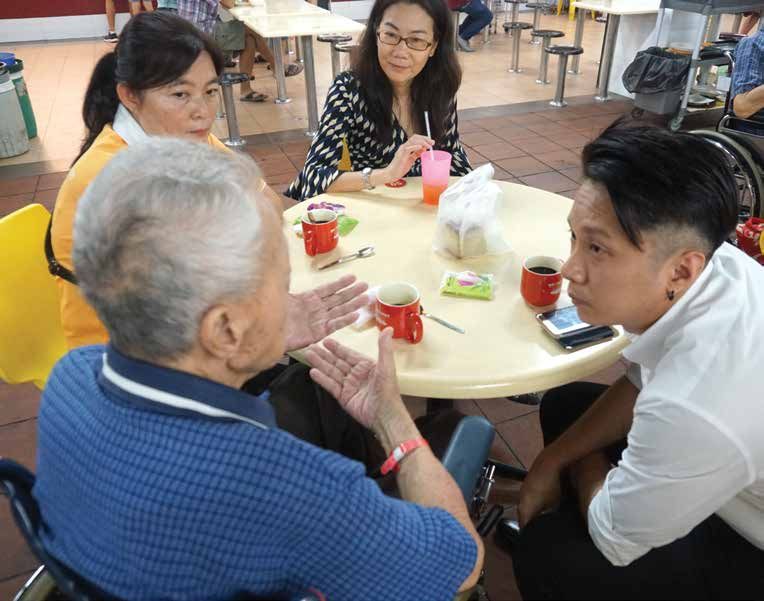
BUSTING MYTHS
Common
misconceptions
of palliative care
Dr Andy Lee (right)
Methodist Welfare Services’ Dr Andy Lee debunks the taboos believes in engaging with
and educating his patients
surrounding death and palliative care. and their families.
W
ith death being a taboo subject in 2. Palliative care only starts when the patient is our patients actually look forward to the visits even appetite and do not experience hunger pangs. In
Singapore, conversations about palliative dying, or when all other curative treatments when they are well because of the companionship and fact, force feeding fluids or food when the patient
care for the terminally ill tend to remain have been exhausted. camaraderie. is unconscious may cause unwanted side effects,
off-limits until they are absolutely Palliative care is appropriate at any stage of a serious such as choking and accumulation of fluid in the
necessary. This makes discussing home-based care even medical condition. A patient can still receive curative 5. The administering of morphine should only be peripheries or even lungs.
more sensitive and challenging. treatment while undergoing palliative care. The aim started when the patient is about to pass on and
Getting around deep misconceptions and myths about of palliative care is to provide a better quality of life the drug will make the patient drowsy. If you are keen to volunteer with MWS Home Hospice, please
palliative care involves addressing a patient and his for patients by helping them with their physical, Morphine belongs to the opioid class of medications find out more at www.mws.sg or email ce@mws.sg.
family’s concerns individually and tactfully, instead of psychological and spiritual needs. In fact, starting and is very effective in the management of severe
bombarding them with medical facts and figures, says palliative care as early as possible after diagnosis pain and breathlessness. But because of the bad
MWS Home Hospice acting head Dr Andy Lee. has proven to be beneficial to patients in offering a press related to diamorphine (heroin), many patients
“It is important to always explore the underlying ideas higher quality of life. and their family members are very hesitant about REAL-LIFE CASE:
and previous experiences that may have given shape to morphine. Morphine, when used at the correct dose, The family of a female patient diagnosed with
their current concerns. It is often a knee-jerk response 3. Palliative home care is not useful because can help to relieve pain and breathlessness effectively terminal cancer was initially unreceptive towards
to react to the families’ concerns by giving them nothing much can be done at home. without causing undue drowsiness and side effects. the services of MWS Home Hospice after being
scientific facts and numbers,” Dr Lee says. Although there are limitations to the investigative referred by the hospital.
“But, this approach may not work because there may work that can be done at home, palliative home 6. A patient may get addicted to pain medications, Her son was upset that the hospital had
be deep-seated beliefs that have been built up over care is still beneficial for patients, especially those which will lose effectiveness after a while. prematurely referred her to palliative care when
many years based on what they have seen or heard who are home-bound and are unable to travel Controlling symptoms as a condition progresses often management plans in terms of curative treatment
from trusted friends or family members. Unless we to the hospital for their regular follow-ups. With involves increasing doses of pain medications. For were still unclear. In fact, the family felt that the
WORDS DR ANDY LEE PHOTO METHODIST WELFARE SERVICES
address these erroneous beliefs and misconceptions, good clinicians tending to patients, diagnosis and example, a growing tumour may cause increasing hospital was shirking its responsibility by giving up
it may well be a one-sided provision of medical jargon medication can still be administered effectively. pain and require much higher doses of medications as on the patient.
that does little to engage and educate our patients.” the condition worsens. This does not mean the patient After a few visits and much involvement from
the MWS Home Hospice team and the hospital’s
Dr Lee debunks seven common misconceptions his 4. The end is near because the doctor and nurses is addicted to the medication, or that the medication is
palliative care team, the family’s hard-line attitude
team encounters: are coming to my home. no longer working.
started to change. They realised the importance
Many patients and their families lose all hope and
of having some guidance as they tread along this
1. A hospice is a medical facility to care for fighting spirit at the sight of doctors and nurses 7. An unconscious patient may feel hungry
difficult path, and appreciated our help in alleviating
patients at the end of their lives. visiting them at their homes. They assume this because he cannot eat.
her symptoms, which needed extensive reviews
Contrary to popular belief, hospice is not just a means that the patients can no longer receive This misconception is especially important in the
even as she began receiving curative treatment.
medical facility for patients to receive care at the treatment and are merely waiting out their days. local context, as our cultures view feeding our loved
Eventually, the patient passed on peacefully at
final stage of their lives. The term “hospice” actually Sadly, this has resulted in the rejection of home ones and having meals together as acts of love. There
home, surrounded by all her loved ones. Her family
refers to a concept of care that focuses on improving care services for some patients. In fact, on many is often a lot of guilt within the family as they watch
was so grateful for the services of MWS Home
the quality of life for terminally-ill patients and their occasions, the support from home care doctors and their loved ones deteriorate with decreasing oral
Hospice that the entire extended family attended
loved ones. This care can be delivered at home or in nurses help to allay a lot of anxieties of home-bound intake. As the patient gets sicker, the organs start
the memorial service to thank the team.
long-term care facilities such as nursing homes, or patients, especially if they are no longer able to to shut down and are no longer able to process and
inpatient hospices. visit the hospital for their usual follow-ups. Many of regulate food and fluids. As such, patient loses his
4 5
T H E H O S P I C E L I N K • M A R C H - M AY 2 0 1 8 T H E H O S P I C E L I N K • M A R C H - M AY 2 0 1 8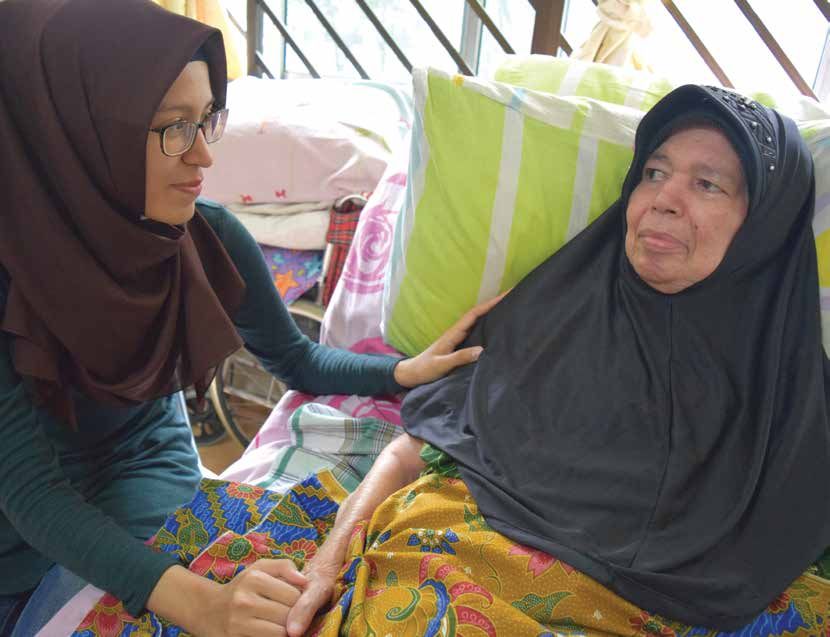
BUSTING MYTHS GET TALKING
H = Hospice. H = Hope Before-I-Die SG
Hospice can provide hope, comfort and care to those in need. The project that aims to get people talking about
end-of-life returns for a third time.
D
As a patient’s illness progresses, eath is inevitable. We it only encompasses specific improving the quality of life for
HCA’s home hospice care it can take a toll on their ability all have to come to therapeutic procedures, such as patients. This is why we hope to raise
allows patients to retain to even conduct daily life, the act terms with it, some cancer treatment. Others believed more awareness on the issue.
dignity and peace of mind in
a familiar environment. of simple chores can now seem day, and contemplate it is expensive and did not include We are privileged to have
insurmountable. By providing about everything that has been and family support services such as embarked on this meaningful project
them a safe environment for them will be. Yet, it is difficult to think bereavement service. and learned more about palliative
to cope with the illness allows about and discuss crucial end-of-life We gained valuable and refreshing care. Granted, it is still a heavy topic,
them to live as independently options until we are faced with a life- insights, especially through the Life but we believe the importance of
and ‘normally’ as possible. This, threatening situation. Stories’ Exhibition (LSE). having these conversations with our
in turn, is a way to affirm the Before-I-Die is directed to An uncle who saw our LSE said closed ones so that we are assured
patients’ personal dignity, to assure encourage people to discuss death he believed in living each day as that we can help them live out their
them that their individuality and with their family, as well as to it came rather than planning for days meaningfully.
freedom are intact. improve their awareness about the future as there were already It is our wish that Singaporeans will
Home hospice care also involves palliative care options. Through our so much uncertainty. Although he be more comfortable in discussing
bringing cheer to the homes from efforts to reduce taboo about death, remained ardent in his belief, he said end-of-life issues with their loved
people other than the medical help people better understand and he was glad to have broadened his ones and be part of the decision-
teams. With the family’s consent, utilise the options when needed. perspectives on end-of-life issues. making process eventually.
volunteers bring food and fun 2017 marked the third instalment More importantly, it prompted him
during their visits to the patients’ of Project Before-I-Die Sg. During to reflect on his life and to live every
homes. Festive activities are a our month-long exhibition in moment fully.
distraction away from the daily October, we installed large wooden The uncle’s perspective on end-
THANK YOU!
grind of caregiving, providing chalkboards in public areas and of-life care is not uncommon
We would like to express our
D
eath. The end. Terminal. they will somehow go on to live respite for patient, family members invited people to write their answers among Singaporeans. Yet, it is this
gratitude towards a special
These are the stigmas out their supposed terminal illness and caregivers. All these little to some questions, or simply pen unpredictability about life that
group of people without whom
that often surround the for much longer. Some may even sparks not only warms the heart, their thoughts on end-of-life care and shaped the focus of our project. We
our exhibitions would not have
term “hospice”. outlive their prognosis for years. but lights the embers of hope. reflections on life. believe it is never too early to talk
been possible. We would like
At HCA Hospice Care (HCA), we find Not all outcomes in the medical We also rolled out new initiatives about end-of-life issues because it is
to thank our project sponsor,
inspiration in our approach to caring AFFIRMING HOPE field are measured by quantifiable such as posters and postcards to more reassuring to know that we are
Singapore Hospice Council,
for those with life-limiting illnesses. For some of these ‘miracle’ cases, data. Death is real, but so is hope. dispel myths people have about fulfilling our loved ones’ wishes.
for being such an ardent
Our multidisciplinary teams see an we noticed that home hospice When a patient struggles with palliative care. Some people thought We believe palliative care is about
supporter, without whom we
average of 800 patients at any one care does make a contribution constant pain from a progressive
will not have the means to
time, with over 3,700 admissions per to their mental well-being. For disease, this can only take a toll
carry out our exhibitions.
year. Typically, our service to our the patient, being in a familiar, on the will to live on. With medical
We are also very thankful to
patients lasts about only three months. loving environment, surrounded support and care at hand, this will
Ultra Supplies for sponsoring
Yet, within this bleak landscape by their nearest and dearest can to strive on can be strengthened.
the printing of our postcards.
there are pockets of hope and underpin their sense of security Our staff are there to pace with the
We are very grateful to our
inspiration – miracles of life seem to and safety. The routine of home is family at every step of the journey.
project mentor, Dr Noreen
defy the odds. Of the 3,700 admissions, also welcome, as the patient can go Mindful outreach to start an open
Chan, for her guidance as well
about 2,000 of our patients eventually about their daily activities to which conversation can lead to embracing
as our project seniors for their
pass on. But some 700 do relatively they have been accustomed. change, and eventually overcoming
WORDS AND PHOTO HCA HOSPICE CARE
valuable advice.
WORDS BEFORE I DIE COMMITTEE 2017
well enough to be cleared for being Home care offers patients who fears. Compassionate care, coupled
We would also like to thank
cared for at home. That means out are already struggling with a with a patient-centred approach
our friends from Project Happy
PHOTO PROJECT HAPPY APPLES
of five patients we do treat at home, devastating prognosis peace of will serve to uphold dignity in the
Apples for allowing us to
at least one patient’s condition will mind and dignity in coping with process.
showcase our boards at LSE.
stabilise enough to be discharged to debilitating illnesses by letting The perception of hospice need
Lastly, we would definitely
their own primary care physician. them be cared for in the privacy of not be foreboding – it can be one
want to thank our volunteers
There is no exact determination as their own homes instead of being of hope, courage and comfort. Our volunteer presenting for their dedication and
to what contributes to this astonishing surrounded by strangers and the We should train our sights not on our project to a member
of the public. hard work.
outcome. Many come to us with an unfamiliar setting of an external the final destination, but on every
initial prognosis of a few months, but facility. optimistic step that we take.
6 7
T H E H O S P I C E L I N K • M A R C H - M AY 2 0 1 8 T H E H O S P I C E L I N K • M A R C H - M AY 2 0 1 8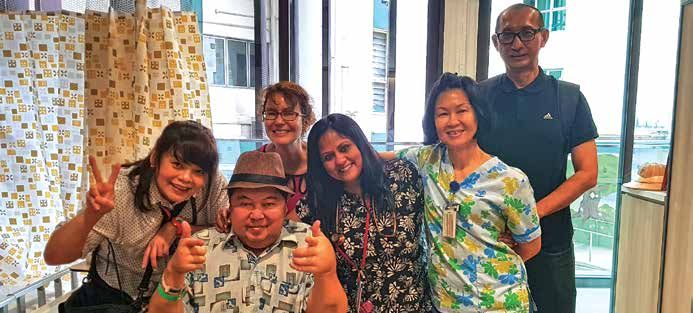
EXPRESSIONS
“
The palliative care journey should
be a meaningful and humanising
experience for the medical team,
patients and caregivers.
To cry or Should medical staff cry with the patients?
not to cry? The simplest answer is that if crying fits for you
and for the situation, it can be positive in its
A reflection on expressing grief
and tears in palliative care. ability to strengthen existing bonds.”
I
n palliative care, the expression of communication skills or ability to make emotional if crying fits for you and for the situation, it can be
grief, of which crying is the most connections with our clients. positive in its ability to strengthen existing bonds. If
overt, is often a challenging aspect Local medical schools in recent years have tearing up in public is not your thing, don’t go there.”
to deal with amongst patients, devoted more teaching resources to the teaching of I have teared on many occasions. I do not suppress
caregivers, and healthcare workers (HCWs). It is communication skills (to the benefit of future doctors my emotions but remind myself that I am there for my
invariably caused by the possibility of, or the reality and their patients). patients and their families, to feel for them, but not to
of death, itself a major taboo in modern societies. One paper wrote on the need to reverse the indulge in my own personal emotionality.
depersonalisation of the patient-doctor relationship, Do I make mistakes on either side of being too
FEARS OF CRYING CRYING AS THERAPY and to offer patients a sound blend of rationality emotional or being too insensitive? Yes. Do I have a set
There are socially and culturally acceptable ways In clinical palliative care, the expression of strong and compassion with an attitude of humility. The recipe for getting it right all the time? Unfortunately,
of expressing one’s grief during the bereavement emotions such as anger and grief, including crying, pervasive “manly attitude” that keeps us from no. Would I encourage fellow palliative care colleagues
period. This could involve certain rituals and are common. The act of crying can be cathartic and expressing our grief, as it is seen as a sign of to express their empathy through tears if they want
overt expressions like crying, in order to facilitate therapeutic. The HCW is often encouraged to react weakness or vulnerability, may also need to be to? Certainly yes.
the processing and eventual release of grief. But, appropriately when such emotions are expressed, deconstructed. And it is my sincere hope that the palliative care
expressing grief and crying due to the possibility using them as a bridge to a deeper rapport with their Palliative physician Christian T Sinclair believes journey becomes a deeply humanising meaningful
of death before it has even happened, often brings clients, and a route to their healing by being present, in emotional sincerity. On whether to cry with the experience for all of us, the HCW, client, and
WORDS DR TEOH REN SHANG, SINGAPORE CANCER SOCIETY PHOTOS SINGAPORE CANCER SOCIETY
about conflicting reactions and fear among many. showing empathy, affirming, offering a chance to patient or not, he wrote: “The simplest answer is that caregivers.
Patients and caregivers may fear that the tears talk, and showing respect for their clients’ individual
could burden each other emotionally, diminish each needs and the different ways they may cry.
other’s positivity, open a floodgate of emotions both The greater challenge is deciding when we as HCWs
sides are unable to control and deal with, expose can and should express our grief together with our
each other’s emotional vulnerability, and have clients. Psychotherapists have reported having better
them face imminent death when neither side are rapport with their patients through therapist crying
prepared to do so. in therapy (TCIT). This could mean that crying with
HCWs may have concerns over their own the client helps create empathy and normalises the
tears. They fear that expressing grief and tears act of crying in facing anticipated death and loss,
in front of their clients would make them appear thus building meaningful connections and rapport
unprofessional and incompetent, thus losing the between the HCW and their clients.
trust of and rapport with their clients. They also But Professor Amy Chow from Hong Kong
fear losing control of their emotions such that University, in a seminar on grief and bereavement
they would be unable to steer the clinical consult held by Hospis Malaysia in December 2017 cautioned
effectively. They may also fear exposing their own against the HCW having an excessive emotional
emotional vulnerability in front of their clients. response. For example crying louder and longer than
If patients and their caregivers cry, HCWs may the client could mean the HCW was reacting to his/
worry about being unable to navigate the clinical her own internal personal grief rather than being
consult if the emotions are out of control. They present with their client’s grief, thus potentially
worry about whether they have “over-dosed” eroding the trust and rapport with the client.
on the “bad news” or clinical information given,
overwhelming the patients and caregivers to tears. EMOTIONAL SINCERITY
Sometimes, HCWs may also be uncomfortable Our clinical training in healthcare, in particular
with handling the emotional vulnerabilities of that of doctors, has molded us into technically
their clients. capable professionals, but somewhat lacking in
8 9
T H E H O S P I C E L I N K • M A R C H - M AY 2 0 1 8 T H E H O S P I C E L I N K • M A R C H - M AY 2 0 1 8
CREATIVITY LEGACY
Of coffee, snacks A recipe for love
and chit-chats and legacy
At Yishun Community Hospital, patient assessments and Dover Park Hospice MSWs help families grieve by creating special
rehabilitation are no longer confined to the wards. projects that become the patients’ legacies.
I I
t is 2pm and almost redesigned by the MDT in an effort rubbed off both the MDT and the n 2013, Dover Park his family. After spending time with helped to facilitate the process and
time for tea and to create a more engaging and fun patients, making it enjoyable yet Hospice launched him, Dawn learned that he was a put the book together. “To be humble,
snacks. Packets of way of assessing patients and to productive. the Make It Happen good cook and was very creative in to be thrifty, to do good deeds” was
cookies are opened, improve the quality of patient-care “The key mindset here is that we project which aims making up recipes. The day before just a few of the many words of
the coffee is made, and music starts in the palliative ward. are working in a palliative ward, to help support patients and loved he was admitted to inpatient care, wisdom Mr Yeo included in the book.
playing in the background. Patients With this initiative, check-ups so we want to debunk the mindset ones through the grieving process. Mr Yeo made his unique orange skin Mr Yeo passed away in January
are wheeled to a communal table, are no longer confined at the that in palliation, everybody is Through this project, the Medical jam for his family, from scratch. 2016 in the company of his family
where they get to meet others from patient’s beds, but have evolved into confined to the bed. This is not Social Workers (MSWs) endeavour Dawn also learned that Mr Yeo liked members. He was survived by his
the ward. Everyone wams up to weaved-in table-top activities and essentially true,” says Clement Liew, to honour the wishes, talents and to share words of wisdom with his wife, two daughters and five sons.
one another and chat away softly conversations over a meal. Instead a physiotherapist in the MDT. “In values of the Hospice’s patients. family whenever he could. Benjamin is extremely grateful
as the palliative multidisciplinary of working in silos, the MDT come palliative care, where the prognosis As an MSW focusing on providing “My dad was a handy man, a for Dawn’s involvement. “She did an
team (MDT) feeds, talks and assess together to check on their patients. can look a little bleaker, engaging psychosocial support for end-of- homely man and a very supportive excellent job out of passion, going
them. Occasionally, family members This strengthens the team as they the patients in a meaningful way life care, Dawn Khoo’s role include husband. He would cook when my beyond her core duty. She has done
join in too, and this simple hour get to learn from one other. Such can still happen.” observing and understanding the mum was not free and when the so much for my dad, and up until
becomes a little gathering. instances include dietitians assisting To ensure that the entire patient and their relationship with children needed help, he was always today, we are still friends.”
This meal-time intervention is the physiotherapists in wheeling assessment is holistic, the MDT also their family members. She also there to do things for us,” recounts He says the book is deeply
an initiative, known as HOPE and patients out of their beds, and holds meetings at the end of each explores avenues to help the family Benjamin, Mr Yeo’s youngest son. treasured by the family as a means
CARE (Holistic Patient Evaluation medical social workers supporting HOPE & CARE session to highlight in their journey through death and The Yeo family loved Dawn’s of remembrance, a connection and
through Communal Activities and the speech therapists observe issues relating to the patients or grief as part of what she calls “Life idea. They began to work on the continuing bond with Mr Yeo, and
Rehabilitative Engagement). It was swallowing patterns. This synergy how the team can better work and Legacy work” and the Make It book together while Mr Yeo was something to be passed on to future
together. Happen project. still able to tell them his thoughts generations.
This initiative may be a simple “Good palliative care is not just and experiences. It was Mr Yeo’s For Benjamin, his father’s jam
idea, but its results have proved about effective pain management willingness to talk about end-of-life has become a symbol of how to
otherwise. The majority of patients and symptom relief, but also offers matters that fuelled his desire to love and care for his family. “The
have requested for more of such emotional, spiritual and practical create this book for his family. recipe book reminds me that even
gatherings as they shared how support to improve the well-being Mr Yeo narrated the instructions though my dad isn’t here anymore,
much this small change has of patients and their families,” on how to make the jam, his eldest his passing wasn’t the end of our
added some light into their life. Dawn explains. The project aims to daughter, Alice, provided photos to relationship – it helps us know that
Positive feedback was validated provide life-affirming opportunities be included in the book, while Dawn we are loved.”
WORDS KAITLYN NG, DOVER PARK HOSPICE PHOTO DOVER PARK HOSPICE
by quantitative tools that track WORDS HANNAH WONG, EXECUTIVE, CORPORATE COMMUNICATIONS,
for patients and families to nurture
improvements in trust within the KHOO TECK PUAT HOSPITAL PHOTO KHOO TECK PUAT HOSPITAL their relationships and enhance their
palliative MDT and satisfaction inner lives despite the deterioration
levels of patients. of the physical body.
Clement adds: “We want patients One such recent project was a
to benefit from this, so when we see recipe book for a patient’s family.
them chatting and interacting with The book also included pictures of
one another, it encourages us to the patient, Mr Yeo Yam Huat, his
continue our efforts in serving our favourite words of widsom and his
patients. Productivity of the MDT cherished Orange Skin Jam recipe.
also improved as patients received In July 2015, the 78-year-old was
more interventions from the MDT admitted into Dover Park Hospice’s
with Hope & Care.” Home Care. He was suffering from
Stage 4 colon cancer. A few months
later, in December, he was admitted
to the Hospice’s inpatient care when Medical Social Worker
Left: Patients like Dawn Khoo (left)
Mary take turns his condition worsened. and the late Mr Yeo’s
to do simple son, Benjamin.
exercises at the Dawn came up with the book
communal table. idea as part of Mr Yeo’s legacy for
10 11
T H E H O S P I C E L I N K • M A R C H - M AY 2 0 1 8 T H E H O S P I C E L I N K • M A R C H - M AY 2 0 1 8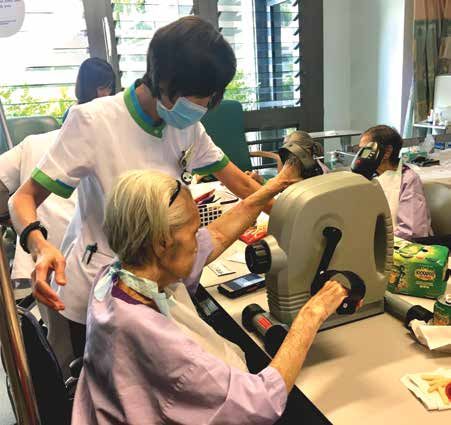
LIVING WELL
Living the last lap well
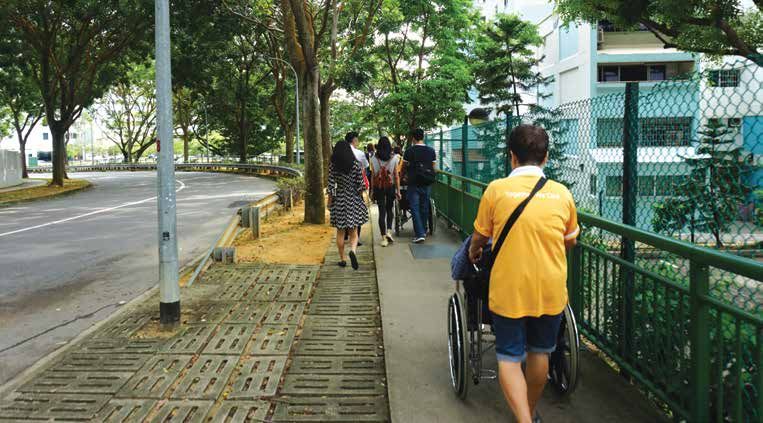
A day out grocery shopping or lunch may be a mundane daily affair for
most, but it was a precious experience for four palliative care patients.
S
“
eated at the may be a mundane daily affair “End-of-life patients often
neighbourhood for most was in fact a precious have the feeling of ‘losing it
coffeeshop, four experience for those who spend their all’, including the loss of self,
wheelchair-bound days in the hospital wards. which is a fundamental form
seniors tucked into their plates of Contrary to common belief, of suffering. Bringing them out
common hawker fare. Between slow palliative care is not only about of a hospital setting and letting
End-of-life patients often
BRIGHT VISION HOSPITAL PHOTOS BRIGHT VISION HOSPITAL
bites, they watched passers-by and relieving pain and physical them do some social activities
have the feeling of ‘losing
chit-chatted. symptoms. Instead, this specialised helps them regain the sense of
WORDS DANIEL YANG, CORPORATE COMMUNICATIONS,
Most people would not have given care aims to holistically address self,” says Yumi Watanabe, our
the group a second look, except for patients’ psychosocial, emotional Occupational Therapist who
the accompanying portable oxygen
tank and a uniform-clad entourage.
and spiritual needs.
Outings like this are an example
joined the outing.
The outing not only brought it all’... Bringing them out
of a hospital setting and
The seniors – Uncle Fong, Uncle of recreation therapy, an effective cheer to our palliative patients,
Yam, Madam Jegapai and Madam intervention that involves the search it was also a good day for our
Zainab – are our palliative patients. for life’s meaning, confronting fears, volunteers. Volunteer Caral Goh,
With them were seven Bright Vision
Hospital (BVH) staff and volunteers.
and dealing with the loss of control
among others. Bringing patients From top left: BVH staff
who helped to push the patients’
wheelchairs, says: “It is a simple letting them do some social
activities helps them regain
The lunch and subsequent short out of the hospital and into the and volunteers brought four act of kindness, but it brings me
palliative patients on a short
grocery run on 5 December 2017 community can help to build their grocery run and lunch at great joy to see them enjoy their
was one of the monthly community self-esteem. Meeting fellow patients the coffee shop; Providing favourite food and the outing.
the sense of self.”
a listening ear is a form
outings BVH organises for patients also allow them to socialise and draw of emotional support to Their smiles (have) brightened
with life-limiting illnesses. What support from each other. palliative patients. my day.”
12 13
T H E H O S P I C E L I N K • M A R C H - M AY 2 0 1 8 T H E H O S P I C E L I N K • M A R C H - M AY 2 0 1 8
REFLECTIONS
From healing to
helping patients say
farewell with dignity
A nurse’s transition from bedside nurse to palliative care nurse.
M
y interest in palliative As a home palliative nurse, my that we have to work closely with
care started after role is to provide palliative care our patients’ family. There are
watching a feature for patients in the comfort of times when I found myself unable
about palliative their homes. My colleagues and I to handle complicated family
nurses. It gave me a peek into the have to constantly anticipate and issues. This is where we have to
daily working life of a palliative work closely with our doctors. For acknowledge that nurses are not
care nurse. instance, we have to be aware of miracle workers and we cannot
I was deeply touched by how the symptoms that patients may work alone. We have to understand
the nurses were able to make a potentially develop and to prepare our own strengths and limitations.
difference in the last phase of their caregivers on how best to deal That is also when I will call for
patients’ lives. In particular, the with them. my social worker to iron out any
part where the nurse spoke about We also try to address their serious psychosocial issues my
how she was the focal point for psychosocial issues by working patients may be having.
her patients in terms of medical, closely with our social worker. When I first joined Metta Hospice,
psychosocial, caregiving or even Patients should be allowed to my seniors told me that the goal
financial issues, opened my eyes reconcile any broken relationships for palliative nurses was to ensure
Metta home hospice
to an area which I was previously and to say a proper farewell to their our patients pass on with dignity. nurse Batrisyia with
unaware of. loved ones. It is important for our Initially, it was a difficult concept her patient.
Having been a palliative nurse patients to maintain their sense of for me to grasp as my previous role
for the past two years, I have dignity by giving them a say in how as a bedside nurse in the hospital
had my fair share of sadness and they would want their end-of-life was to heal patients. Having to
happiness. It can be heart-breaking care treatment to be. watch my patients pass on was
when a patient passes away. But Perhaps, the biggest transition especially difficult in the beginning. death advocates early end-of-life of months at work, I met a cancer patients on a deeper and more
being able to help my patients for me from the hospital to “Good Death” is a term that have (COMMUNITY ENGAGEMENT OFFICER) PHOTO METTA HOSPICE CARE planning, and abolishing the taboo patient with a prognosis of less personal level.
WORDS BATRISYIA BINTE ABDUL WAHED (STAFF NURSE), ALICIA LUM
“
pass on peacefully is a source of palliative home care was the fact become close to my heart. Good of death. This is something that I than four months. Despite her Being a palliative nurse has
comfort for me and for their family have learned over the course of condition, she was full of positivity helped me grow as an individual.
members. my two years with Metta Hospice. and zest for life. She inspired me We should not shy away from
Each patient’s medical condition While my job may be emotionally to stay strong in times of adversity palliative care just because of
and social background is unique draining at times, I have since and appreciate the little things in our preconceived notions that
and poses a different challenge for learnt to embrace it as a part of life. These are the things that keeps we may have about death. While
me each time. my personal growth as a nurse. me interested and passionate about it is true that staring death in
While it is true that staring
I was not trained specifically in Prior to joining Metta Hospice, palliative care. At the end of the day, the face is not a job for everyone,
palliative care but I was able to the preconceived notion I had was palliative care can be a meaningful we should never be afraid to
learn on the job with the help of my that palliative nursing will not career option for nurses. embrace this challenge. It may
seniors and doctors. I found that
I was able to transfer my nursing death in the face is not a job for be as fulfilling as regular bedside
nurses in the wards since nurses
My advice to non-palliative nurses
is really to embrace the challenges
require much compassion and
courage but I think it is worth
knowledge to serve my palliative will not be able to see patients that comes with palliative care. My the while.
patients. I also attended a basic
palliative course at Dover Park
everyone, we should never be leave the hospital healthier.
Through my work, I got to meet
passion for nursing and to serve
patients keeps me going, even on
Ultimately, death is part and
parcel of life’s journey. I would
afraid to embrace this challenge.”
Hospice to prepare myself for the many patients from different the hardest of days. Through my definitely encourage more
work. walks of life. In my first couple home visits, I have got to know my nurses to join palliative care.
14 15
T H E H O S P I C E L I N K • M A R C H - M AY 2 0 1 8 T H E H O S P I C E L I N K • M A R C H - M AY 2 0 1 8
THE FINAL LAP
The journey,
was mindful to remember and remind Mr Tay had never splurged on Mr Tay and his loved ones with
others that Mr Tay was the best expert “branded” durians such as Mao enough knowledge of what they can
yours sincerely
on himself, despite our team’s vast Shan Wang, due to his social and generally expect during the process.
and varied knowledge and experience. economic circumstances. It was She shared with them the resources
Samantha also empowered him with a his desire to taste some. Samantha available and encouraged Mr Tay to
voice to actively pursue his yet-to-be- organised a durian feast featuring embrace his emotions without guilt
fulfilled wishes. The power of decision- the famed durians, together with by normalising and validating his
making was shifted back into him in staff, volunteers and other hospice specific feelings about situations at
Through its knowlegde and expertise, Assisi Hospice strives to provide personalised the whole process. patients. It was a once-in-a-lifetime different points in time. The same
During his stay with us, our team experience for Mr Tay to taste the support was provided to his loved
hospice care which ensures that invidividuals are at the centre of their care. organised outings for Mr Tay, including famous durians and the love and ones.
a durian feast to taste the legendary support from the hospice family. Through these interventions, Mr
“Mao Shan Wang” durians, a nostalgic The cable car ride was packed with Tay remained active in planning his
cable car ride and a seafood meal reminiscence and new found peace. care at every stage of his final days.
in Chinatown, complete with Baron And, he did not forget to celebrate Opportunities were opened up for
beers. All these were organised his life with Baron beer in the last him and his loved ones to talk about
with Mr Tay’s inputs, including a days of his life. dying and bereavement and make
surprise birthday party that staff and One of the scariest things about choices. Through this, he managed
volunteers planned for him and for the dying process can be fear of to express what was important to
themselves. the unknown. Samantha prepared him and his family.
Caring for patients
Mr Tay enjoys
spending time
with staff and
volunteers. in their last days
At St Luke’s Hospital, a dedicated team of doctors, nurses, therapists, social
M
r Tay Cheng Tian was Through these conversations, we as final day care arrangements,
workers and pastoral care staff work together in a dedicated palliative care
a 54-year-old bachelor learnt what brought him comfort dying, making peace with one’s life,
who led a carefree life, and dignity. and grieving, among many others. ward to bring care, comfort and dignity to patients in their last days.
finding meaning in his One of Mr Tay’s most immediate In Mr Tay’s case, our MSWs had
work doing odd jobs including cargo concerns was the practical aspect of to navigate through these issues
M
driving, and celebrating the end of his care arrangement as he became delicately as he was a quiet and adam Wong (not It was not only patients who
each work day with a few beers. more dependent. The thought of stubborn who never opened up his her real name) received support. Caregivers are not
His family included his late parents, becoming a burden to his loved heart to his loved ones. managed to cook a forgotten. In one case, a patient’s
siblings and their nuclear families. ones weighed him down, but he Together at different points of the plate of fried rice for daughter was grief-stricken after
In 2017, Mr Tay’s life changed found himself unable to articulate journey, Ivee and Samantha ensured her husband at St Luke’s Hospital her father died. She still visited the
when he was diagnosed with it to his family without having a he had the information he needed, kitchenette before she passed hospital as her mother was also
oesophageal cancer. Our journey solution in place. dealt with practical issues, provided on. She had been cooking for her a patient. The daughter told the
with him began when he was first He was unsure of where to access emotional, social, cultural and husband all these years, and she pastoral care staff who had cared
referred to our home care service, information and the support that spiritual support. Very importantly, wanted to cook for him one last for her father that she did not dare
and subsequently, admitted into our he was seeking. Ivee sensitively they focused on what quality of life time. She did. to enter the ward her late father
inpatient hospice unit where he had initiated discussions about his meant to him, and ensured that he Another patient also wanted to had been in because of painful
WORDS & PHOTO ST LUKE’S HOSPITAL
wanted to spend his final days. current state and also the future. was not alone, because he did not cook, so her therapists organised memories.
WORDS AND PHOTO ASSISI HOSPICE
Our Medical Social Workers She ensured Mr Tay’s loved ones want to be. He was immediately cooking sessions for her. It brought The staff encouraged and
(MSW) from Psychosocial Support were involved in the discussions, enrolled into our hospice No-One- her joy. Her recipes are being accompanied her to the ward. She
Services (PSS) team, Ms Ivee Tee and gathered support from other Dies Alone Programme (NODA) compiled into a book as part of her saw that there were new patients
and Ms Samantha Soh, came on resources, including community where he was accompanied by legacy. there. The staff affirmed her
board the case. They ensured agencies and other hospice team volunteers even as he took his last When a patient’s family was observation and assured her she
that the important but difficult members. breath. absent in his last moments, nurses could close that chapter in her life The 16-bed palliative ward has a single
conversations about Mr Tay’s care Our MSWs often discuss the most As a hospice MSW, Samantha took turns with his helper to hold and look forward to new things. room that gives privacy and respect
during patients’ final moments.
took place between him, his loved challenging and intimate of topics supported Mr Tay in articulating his his hand, assuring him he would The daughter cried and found the
ones and the hospice care team. with our patients and families such final needs, desires and fears. She not die alone. closure she needed to move on.
16 17
T H E H O S P I C E L I N K • M A R C H - M AY 2 0 1 8 T H E H O S P I C E L I N K • M A R C H - M AY 2 0 1 8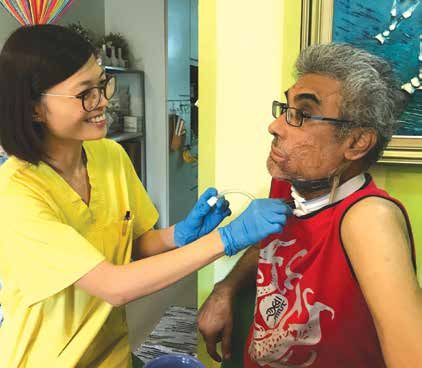
VIEWS
CARING
FROMHANDS
THE PROS
Non-cancer
uncomfortable and painful, his answer care providers faced with a patient Hospice care focuses on
caught me by surprise: “If there is a whose condition suddenly takes a improving the quality of life of
chance of getting better, why would I turn for the worse: how sure is one the terminally-ill, not hastening
palliative care
A/PROF WU HUEI YAW
Senior Consultant, want to refuse treatment?” that this is going to be a terminal or prolonging the dying process.
Palliative Medicine Mr X has consistently opted for event? Should the advice be to But decision-making during crises
Tan Tock Seng Hospital
trial of treatment in the event of return to the hospital for a trial as illustrated above is not always
deterioration and he managed to pull of acute treatment which could straightforward.
We are pleased to introduce the latest column in Hospice Link, “Views from the Pros”. In each issue, we will through each time. His decision on potentially be futile and compound Ultimately, we still have to rely
feature articles from the medical professionals on various issues relating to palliative care. We kick off our the extent of care has not changed in the patient’s suffering? on the patient’s preferred choices
inaugural column with Associate Professor Wu Huei Yaw’s discussion on palliative care for non-cancer patients. the last two years. It is such difficult decisions that and deliver care that is in their
Mr X’s case highlights one of the make non-cancer palliative care so best interests and most consistent
greatest struggles among hospice challenging. with their values.
of the outcome of each acute
exacerbation, making it difficult
to advise the patients on the most
appropriate care options.
It is therefore essential to introduce
advance care planning early in the
disease trajectory so that patients can
be guided to make decisions on their
Tips for Caregivers
preferred treatment choices in the DR JAMIE ZHOU
event of future deterioration. Resident Consultant (Palliative Care), St Joseph’s Home
A recent encounter with a patient
brings to mind these challenges. There is no single definition for caregiving, but for the
Mr X has been suffering from end- purpose of this article, a caregiver is any relative or
stage chronic obstructive pulmonary friend, who provides a wide range of (unpaid) care to a
person with a chronic or serious illness.
disease (COPD) for about four
years. Estranged from his family, the
56-year-old lives in a 1-room rental “I wish the palliative care team was referred earlier” time for quality of life?”. Quality of life should
flat with an acquaintance. He was is a common comment I hear from caregivers once not be determined by treatment failure or disease
hospitalised multiple times, and on they experience what palliative care teams do. progression, and neither should palliative care.
three occasions, he was mechanically Many, including medical practitioners, believe Basic palliative care can be provided by the
Most people associate palliative care unpredictability of the disease ventilated in the intensive care unit that palliative care teams can only get involved treating doctor. Specialised palliative care teams
with care of advanced cancer patients. trajectory. Unlike cancer patients, (ICU) because of respiratory failure. when there are no further treatment options. can be referred to when there are more complex
But there are many terminally-ill whose decline in function usually He once mentioned he wished he Delays in palliative care referrals may also occur needs.
patients who suffer from non-cancer occurs in the last three to six months could just pass away in his sleep to due to refusal from patients or family members. Tip #1: If the medical team talks to you about
conditions such as end-organ failure and before death, the non-cancer end his suffering. He said terminal The misconception that palliative care means palliative care, be open. Find out more about how
neurodegenerative diseases. trajectory is often a gradual decline cancer would have been more giving up is, unfortunately, very common. it might help with your loved one’s care.
Like cancer patients, these patients punctuated by several episodes of tolerable than COPD. His mother On the contrary, the philosophy and spirit of Tip #2: If you have concerns about your loved
struggle with symptoms such as pain acute deterioration. This makes died of cancer, and he felt she did palliative care is a proactive one. The focus is on one’s quality of life, ask the medical team
and breathlessness in their terminal accurate prognostication very difficult. not suffer much as she died relatively personhood, dignity and quality of life in the final about palliative care and if they think it will be
stages. In fact, the symptoms are often It is not unusual for these patients to soon after prognosis. journey. In fact, good palliative care makes you appropriate.
prolonged as these patients can remain bounce back from episodes of acute Mr X still had flashbacks of those want to live more fully and enables you to do so Tip #3: Here are some online resources that
unwell for several years. This long-drawn deterioration, which may reinforce the difficult moments in the ICU and through good symptom management, psychosocial provide more information about palliative care:
battle with the diseases may result in wrong perception that the condition found it hard to imagine going and spiritual support. http://singaporehospice.org.sg/
significant phychosocial and spiritual is not too serious. As a result, they through such treatments again. Whenever I am asked “When is the right time https://www.duke-nus.edu.sg/lcpc/content/about-
distress for both patients and caregivers. often postpone talking about death Yet, when asked if he would for palliative care?”, I reply, “When is the right palliative-care
The most unique feature of non- and dying. consider comfort care instead of life-
cancer terminal conditions is the Very often, clinicians are unsure prolonging measures which would be
18 19
T H E H O S P I C E L I N K • M A R C H - M AY 2 0 1 8 T H E H O S P I C E L I N K • M A R C H - M AY 2 0 1 8CALENDAR
Upcoming Events
10 MAR 2018 24 APR 2018 registration from 14th February to
BVH Flag Day 2018 SHC-LCPC Multidisciplinary 13th March 2018.
“Give With Passion, Spark Your Palliative Care Forum Cost: S$ 800 (inclusive of GST)
Compassion” aims to raise funds Topic: “Don’t tell me I’m dying!” -
for our needy patients through Maintaining hope in the face MAY 2018
Flag Day street collections. This of death Dover Park Hospice Charity Concert
community event targets to ignite Venue: St Andrew’s Community A charity concert to raise funds for
the public’s compassion by giving Hospital Auditorium Dover Park Hospice which will help
with passion through the generosity Time: 1.00 pm – 2.00 pm more disadvantaged patients and
of individuals and organisations. Contact: secretariat@ their families.
Venue: Island-wide singaporehospice.org.sg Venue: Lee Kong Chian School
Time: 9.00am - 6.00pm, island-wide of Medicine
Contact: community@bvh.org.sg 25 - 27 APR 2018 Contact: info@doverpark.sg
34th LCPC-SHC Postgraduate
18 MAR 2018 Course in Palliative Medicine 22 MAY 2018
Metta Charity Carnival 2018 This is a foundational course in SHC-LCPC Multidisciplinary
A healthy annual family-bonding the principles and practice of Palliative Care Forum
charity carnival for the young palliative medicine applicable Topic: Can We Teach Compassion?
and old. to all fields of medicine. Course Venue: TTSH Theatrette
Venue: Metta Welfare Association participants have opportunities Time: 1.00 pm – 2.00 pm
Time: 9.00am-4.00pm to assess patients and discuss the Contact: secretariat@
Contact: Andy Chua 6580 4614 most appropriate management singaporehospice.org.sg
strategies with palliative care
20 MAR 2018 physicians and other specialists. 9 – 10 JUN 2018
SHC-LCPC Multidisciplinary Any doctor (medical officer/ SHC Community Engagement Event
Palliative Care Forum resident, family physician or Join the Singapore Hospice Council
Topic: Communications in End-of- specialist) who is interested to and our member organisations in
life Care learn about palliative care is the second run of our Community
Venue: HCA Hospice Care welcome to attend this course. Event on end-of-life conversations.
Auditorium Venue: HCA Hospice Care, Level 3, Venue: Bedok Town Square
Time: 1.00 pm – 2.00 pm Auditorium Time: 10.00 am to 4.00 pm
Contact: secretariat@ Registration: www.duke-nus.edu. Contact: secretariat@
singaporehospice.org.sg sg/lcpc/course-catalogue for online singaporehospice.org.sg
EDITORIAL COMMITTEE
Editor Ms Yeo Tan Tan
Associate Editor Jaime Koh
Assisi Hospice Veronica Lee
Bright Vision Hospital Daniel Yang
Changi General Hospital Rasidah Bte Alias
Dover Park Hospice Sabrina Chew
HCA Hospice Care Wendy Poon 1 Lorong 2 Toa Payoh Level 7
Khoo Teck Puat Hospital Ong Min Li Yellow Pages Building
Lien Centre for Palliative Care Madhurima Bagchi Singapore 319637
Metta Hospice Care Alicia Lum
T: 6538 2231
MWS Home Hospice Yanni Tan
Singapore Cancer Society Kumudha Panneerchelvam E: secretariat@singaporehospice.org.sg
St Andrew’s Community Hospital Jaslyn Tan www.singaporehospice.org.sg
St Joseph’s Home Geraldine Soh
St Luke’s Hospital Howard Wong
Tan Tock Seng Hospital Dr Ho Si Yin Contents are not to be quoted or reproduced without the prior
Singapore Hospice Council Koh Shu Mei written permission of the Singapore Hospice Council.
Designer Christian Subrata
Printer Yung Shung Printrade Pte Ltd
20
T H E H O S P I C E L I N K • M A R C H - M AY 2 0 1 8You can also read


