IGCSE Options 2021 - A guide to IGCSE - Po Leung ...
←
→
Page content transcription
If your browser does not render page correctly, please read the page content below
IGCSE Options 2021

          A guide to
              IGCSE
             choices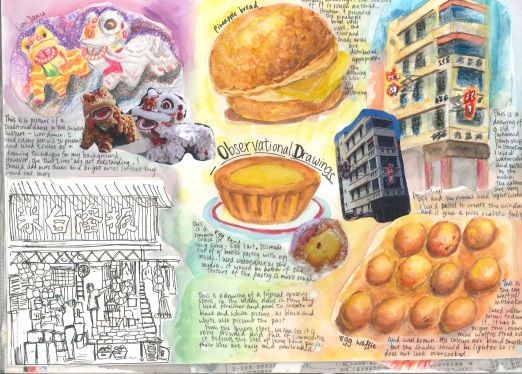
2

IGCSE Options 2021
3

CONTENTS

Foreword                                               4

Introduction                                           5

IGCSE & IBDP                                           7

Subjects
       First Language English (0500)                    9
       English Literature (0475)                       10
       First Language Chinese (0509)                   11
       International Mathematics (0607)                12
       Global Perspectives (0457)                      13
       Additional Mathematics (0606)                   14
       Biology (0610)                                  15
       Chemistry (0620)                                16
       Physics (0625)                                  17
       Business Studies (0450)                         18
       Design & Technology (0445)                      19
       Drama (0411)                                    20
       Economics (0455)                                21
       Food & Nutrition (0648)                         22
       Geography (0460)                                23
       History (0470)                                  24
       Information & Communication Technology (0417)   25
       Music (0410)                                    26
       Physical Education (0413)                       27
       Art & Design (0400)                             28
       Art & Design (Textiles) (0400)                  29
       Computer Science (0478)                         30

Frequently Asked Questions                             31

Contact Information                                    32

IGCSE Options 2021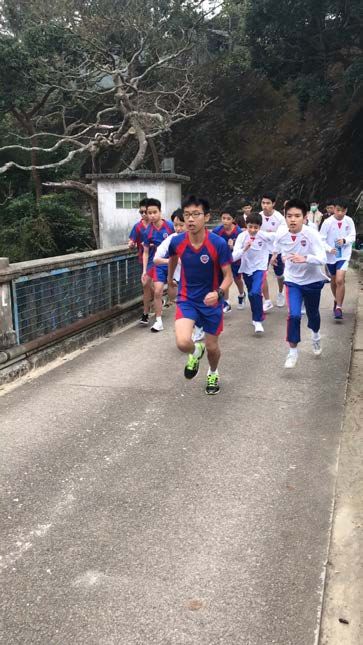
4

FOREWORD
Dear Parents and Students,

While it has always been the aim of the school to provide students with an environment in which they
can learn effectively and enthusiastically, we also encourage them to challenge themselves so that they
can cope with a suitable amount of pressure and competitiveness.

Our Year 8 students are now approaching the end of their Key Stage 3 education. To prepare for their
Key stage 4, students have to embark on a two-year course known as the International General
Certificate of Secondary Education (IGCSE), at the end of which they will sit a series of examinations.
Throughout the next two years, they also have to complete a number of coursework components. To be
successful in this course, they have to work consistently hard throughout.

We adopt Cambridge Assessment International Education as our examination board, which is the largest
and the most established IGCSE provider in the world. In addition, the IGCSE is a subject-specific
curriculum. This means that students have to choose a number of subjects to study in depth for the
next two years. The types and number of subjects offered are based on the rationale that students
should follow a fairly wide and balanced curriculum. This philosophy also ties in with the Diploma
Programme of the International Baccalaureate, which students will follow after the completion of their
IGCSE course.

This booklet serves to outline the subjects offered by the school and provide an overview of the
examination requirements. We hope that you will find this booklet informative and, if you have any
queries, please contact our subject teachers or the school administrators.

Dr LAU Siu-Ling
Head Principal
Po Leung Kuk Choi Kai Yau School

IGCSE Options 2021
5

INTRODUCTION
Each student’s IGCSE selection will comprise a number of compulsory subjects, and a range of electives
(Optional subjects). There is also an “Extra Option” available in English Literature, however, this will only
be offered to those pupils who have shown outstanding ability in the subject and a passion for reading.

Chinese, English, International Mathematics and Global Perspectives will be offered as part of a core
programme and are not optional. However, pupils will be entered for either First Language or Second
Language English and Chinese based on their level of language proficiency. In addition, pupils must
choose a minimum of at least one Science subject and one from the Individuals & Societies faculty.

Optional Subjects
In addition to English, Chinese, Maths and Global Perspectives, which must be taken by all pupils,
students must indicate their preferred optional subjects in each block of subject choices. When
choosing options students are reminded to observe the following rules:
    1. Where possible, students will be entered for the 6 subjects they choose on the reply slip. If a
        subject proves to be unavailable then the student will automatically be entered for their back-
        up option.
    2. Students must choose at least one Science from Biology, Chemistry and Physics.
    3. Students must choose at least one subject from Business Studies, Economics, Geography and
        History.
    4. For linguistically able students, they may be offered English Literature. Students cannot choose
        to take this options; however, they should indicate whether they would accept it if it were
        offered.
    5. Parents and students should note that the final choice of the subjects has to meet with the
        approval of the school. Where possible, students should achieve at least an M grade in their
        overall academic achievement in each subject they have chosen. When making the final
        decision, the school will take into consideration the student’s ability and attitude.
    6. Subjects may not run if they only attract a small number of students, in which case we will take
        the students’ back-up choice.

    Compulsory Subjects:
                                  Chinese                             English
                                  Global Perspectives                 Mathematics
    Optional Subjects:
    At least one from:            Biology                             Chemistry
                                  Physics
    At least one from:            Business Studies                    Economics
                                  Geography                           History
                                  Art Design                          Additional Mathematics
                                  Art Textile                         Physical Education
                                  Design & Technology                 Drama
                                  Food & Nutrition                    ICT
                                  Music                               Computer Science
    Extra Option:
                                  English Literature

IGCSE Options 2021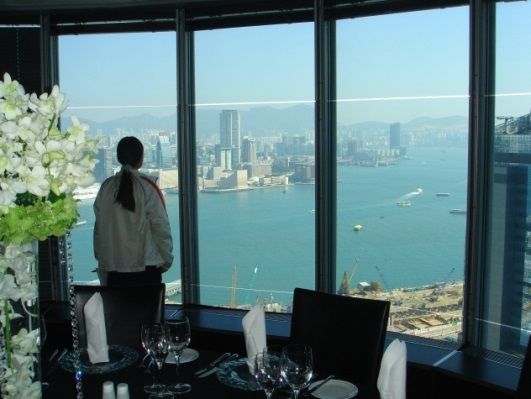
6

Changing Subjects
It is normal for students to be unsure about some subjects, particularly those they have not studied
before. As such, it is possible to request a change to your subject choices after the form has been
submitted. Any request must take the form of a letter outlining the reasons for the proposed change
signed by the parent/guardian. This should be handed to the IGCSE Coordinator as soon as possible.
However, please bear in mind that some subjects may become full, and changing into a class may not be
possible. After the end of September students will no longer be able to change into a subject, however,
if a student is really struggling with a subject there will be opportunities to drop subjects later in the
course.

Examination Fees
The total cost of a student’s IGCSE examinations will vary depending on the number of subjects they
take and the exchange rate at the time of payment.

IGCSE Options 2021
7

IGCSE & IBDP
After completing their IGCSEs students will complete the final stage of their education with CKY; the
International Baccalaureate Diploma Program (IBDP). For those wishing to go on to tertiary education in
Hong Kong or abroad, it is important they make the right choices for their IBDP.

At IBDP students are asked to take six subjects: three at Higher Level (HL) and three at Standard Level
(SL). For progression to IB Diploma, students are expected to attain a minimum of 3Bs and 3Cs in their
IGCSEs with additional requirements stated below:

          i.    a minimum of grade B in Cambridge IGCSE for all Higher Level subjects, except
                Mathematics;
          ii.   a minimum of Grade A in Cambridge IGCSE Mathematics for Higher Level Mathematics.
         iii.   a minimum of grade C in Cambridge IGCSE for all Standard Level subjects, except ab
                initio;

Students who do not meet the above course selection requirement but achieved a minimum of 6Cs for
their chosen IBDP subjects in their respective Cambridge IGCSE grades are advised to opt to for the IB
Certificates.

Students must choose one subject from each of the following groups, except for Group 6, which may be
replaced with an additional course from groups 1 to 4. Students may also choose two languages from
group 1 instead of choosing one language from group 1 and one language from group 2. The subjects
we expect to offer are listed below, however, please note that our IB program is constantly growing,
and by the time our current Y8 students reach Y11 we hope to be able to offer an even greater range of
subjects.

(1) Studies in Language & Literature              English A Literature
                                                  English A Language & Literature
                                                  Chinese A Literature
                                                  Chinese A Language & Literature
(2) Language Acquisition                          English B (HL only)
                                                  Chinese B (HL only)
                                                  French ab initio (SL only)
                                                  Spanish ab initio (SL only)
                                                  Or another Group 1 language
(3) Individuals and Societies                     Business Management
                                                  Economics
                                                  Geography
                                                  History
(4) Experimental Sciences                         Biology
                                                  Chemistry
                                                  Design Technology
                                                  Physics

IGCSE Options 2021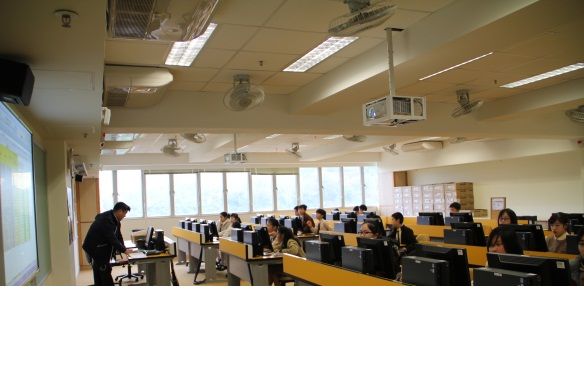
8

(5) Mathematics                                     Mathematics: Analysis and Approaches
                                                    Mathematics: Application and Interpretation
(6) The Arts                                        Music
                                                    Visual Arts
                                                    Or another Group 1, 2, 3, or 4 subject
CORE (taken by all students)                        Theory of Knowledge
                                                    Extended Essay
                                                    Creativity, Activity and Service (CAS)
Note that students are not allowed to take the same language for literature, language and literature,
language B and/or language ab initio. Only one language ab initio should be taken.

For further information on the IBDP please feel free to consult our IB Diploma Coordinators or subject
teachers. Detailed information is also available on the IB website (http://www.ibo.org/).

IGCSE Options 2021
9

FIRST LANGUAGE ENGLISH (0500)
Although English is a compulsory subject at CKY, there are differences in the courses offered, depending
on each pupil’s competency in English. Students will be entered into either Cambridge First Language
English IGCSE (Syllabus code 0500) or Cambridge English As A Second Language IGCSE (0510), based on
their progress in the subject throughout years 6-8. Those students who are confident in their use of the
English language will be entered for First Language and may also be offered the option to enter for
English Literature IGCSE (see page 11). All other pupils will be entered for the Second Language exam.
Both First and Second Language students will also complete a Speaking and Listening component, which
is separately endorsed.

If you would like to know which IGCSE you are likely to be entered for, please consult your English
teacher.

First Language English IGCSE (0500)
The First Language Syllabus is assessed on three components:
     • Reading
     • Writing
     • Speaking and Listening
Students selected for the English First Language IGCSE are expected to show consistent competency in
their use of English in each of the three main components.

The Syllabus will develop students’ ability to communicate accurately, appropriately and effectively in
speech and writing. Students will be encouraged to use relevant vocabulary, to employ correct
grammar, spelling and punctuation, and to display a sense of style and audience.

In addition, it will complement their other studies by developing general skills such as the ability to
analyse, synthesise, make inferences, order facts and present opinions.

Assessment: First Language English is assessed through both examination and coursework.

 Examination                                          Length of Exam                     Weighting
 Reading and Writing (unseen)                         2 hours                            50%
 Coursework – three essays of between 500 and 800 words each                             50%

Students will also take an oral examination but these marks will not contribute to the overall grade.
Instead, the achievement of grades 1 (high) to 5 (low) will be recorded separately.

IGCSE Options 2021
10

ENGLISH LITERATURE (0475)
At CKY English Literature is a non-optional course offered to Year 8 students who achieve an S grade in
both reading and writing in their final English report. The chosen pupils will then have the opportunity
to study both English Literature and English First Language simultaneously. Students are free to accept
or pass on the opportunity to take part in English Literature, but it is strongly encouraged that students
take this chance to work with high attainment pupils and a multitude of texts.

Assessment: The English Literature course culminates in three examinations, one that focuses on prose
and poetry studied in class (50%), one that focuses on a play covered in class (25%) and finally an
unseen passage paper (25%). Students will be provided with the prose elements of the course before
the summer holidays but it is important to note that staying familiar with each new text is vital.

                        Exam                          Length of exam Weighting

                        Paper 1 (Prose and poetry)               1h30             50%

                        Paper 3 (Play)                           45m              25%

                        Paper 4 (Unseen paper)                   1h15             25%

How difficult is it? The usual concern about the English Literature class is that there is more work,
harder tasks or that it is taught at a quicker pace. None of these things are true. Almost without
exception, students who are chosen for the English Literature class score an A or A* for their English
Literature grade and at least a B grade for their English First Language, with the vast majority scoring an
A or above. More importantly, Literature students are consistently more prepared for the challenge of
English A at IB Level, whereas those who elect to only take First Language face a longer period of time to
adapt.

Ways to prepare: As previously stated, the short stories will be made available to all students before the
summer and they are encouraged to read these before their course gets under way. In addition, the
overall ability to comprehend a wide variety of literature is made far easier if students have a habit of
reading for pleasure during their time away from class. There thousands of novels available inside the
library as well as their form room that will no doubt capture their interest and help enhance their
vocabulary and reading level.

If you have been selected but are not sure about whether you should take the Literature course find
someone from the English Department and we will do our best to answer your questions.

                            “If you love reading you will love Literature!!!!!”

IGCSE Options 2021
11
FIRST LANGUAGE CHINESE (0509)
Aims: The Cambridge First Language Chinese IGCSE Syllabus (0509) is designed for candidates whose
mother tongue is Chinese. Cambridge IGCSE First Language qualifications are accepted by universities
and employers as proof of knowledge and understanding of a language.
The aims are to enable students to:
• read a wide range of texts, fluently and with good understanding, enjoying and appreciating a variety
of language
• read critically and use knowledge gained from wide reading to inform and improve their own writing
• write accurately and effectively using appropriate standard language
• work with information and ideas in Chinese by developing skills of critical evaluation, analysis,
synthesis and inference
• acquire and apply a wide vocabulary, alongside a knowledge and understanding of grammatical
terminology and linguistic conventions
• deepen understanding and appreciation of Chinese culture and classical texts.
Students are also encouraged to read widely, both for their own enjoyment and to further their
awareness of the ways in which the language can be used. Cambridge IGCSE First Language
qualifications also develop more general analysis and communication skills such as synthesis, inference,
and the ability to order facts and present opinions effectively.
Assessment: The course comprises two papers. All candidates take Papers 1 and 2 and are eligible for
the award of grades A* to G.
Paper Duration Marks Weighting
Paper 1: Reading
Candidates answer all the questions in three compulsory
sections.
50%
Section 1 – Comprehension and Use of Language (23 marks)
2 hour 15 60
Section 2 – Directed Writing (25 marks)
minutes
Section 3 – Classical Chinese (12marks)
Paper 2: Writing
Candidates answer two questions, one from each section.
Section 1 – Argumentative/Discursive Writing (25 marks) 2 hours 50 50%
Section 2 – Descriptive/Narrative Writing (25 marks)
Candidates are advised to write about 400-600 characters.
IGCSE Options 202112
INTERNATIONAL MATHEMATICS (0607)
This year we follow the Cambridge IGCSE International Mathematics Syllabus (0607).
The introduction of Cambridge IGCSE International Mathematics offers schools even
more choice when it comes to selecting a mathematics course that is right for their
students. Cambridge IGCSE International Mathematics has been designed for
international schools that want their mathematics teaching to focus more on
investigations and modeling, and which better utilizes the powerful technology of
graphical calculators. The course integrates well with the approach to teaching of
mathematics in IB schools. The course is divided into a core tier, and an extended
tier. The syllabus also introduces students to the history of mathematics and its
cultural significance.
Assessment: The majority of CKY candidates will take Papers 2, 4 and 6 (the Extended Curriculum),
which is eligible for the award of grades A* to G, however a Core Curriculum (Papers 1,3 and 5) is
available in which a reduced curriculum is covered in the exams. If the class teacher believes a student
would benefit from completing the Core Curriculum the student and their parents will be informed as
soon as possible.
The assessment objectives include mathematical techniques and applying mathematical techniques to
solve problems.
CORE CURRICULUM EXTENDED CURRICULUM
Paper Duration Marks Paper Duration Marks
Paper 1 45 minutes 40 marks Paper 2 45 minutes 40 marks
Paper 3 1 h and 45 min 96 marks Paper 4 2 h and 15 min 120 marks
Paper 5 1 hour 24 marks Paper 6 1 h and 30 min 40 marks
Contents: The topics included in International Mathematics are Number, Algebra, Functions, Geometry,
Transformations in Two Dimensions, Mensuration, Coordinate Geometry, Trigonometry, Sets and
Probability
IGCSE Options 202113
GLOBAL PERSPECTIVES (0457)
The Global Perspectives course aims to enable students to develop an analytical and evaluative grasp of
global issues and their causes by considering the consequences from different perspectives and the
possible courses of actions. Students will be encouraged to enquire and reflect on issues in our
interconnected world from a personal, national and international perspective in order to critically assess
the information available to them in their ever-changing world.
As the IGCSE Global Perspectives course paves a solid foundation for IB Diploma programme students in
their study of Theory of Knowledge, this course will be a core subject at CKY. This means that all
students will study this course across the two years.
Assessment
The assessment components for the course are as follows:
Component Component 1 Component 2 Component 3
Nature of Written Examination Individual Report Team Project
Assessment
Students answer four Students carry out Students collaborate with
compulsory questions research on a global their peers to explore a
based on source material question to explore the topic within a cultural
to test their evaluation of causes and impact on a context and investigate
claims, arguments and local, national and global on the different
evidence from different scale. perspectives.
perspectives on global
issues.
Assessed Externally Assessed Internally Set; Externally Internally Assessed;
Format Assessed Externally Moderated
Duration 1 hour 15 minutes Across the academic year Across the academic year
Marks Allotted 70 marks 60 marks 70 marks
Weighting 35% 30% 35%
Syllabus Content
Some of the topics that students will explore over the two years include:
Component 1 Component 2 Component 3
• Demographic Change • Biodiversity and • Disease and Health
• Education for All Ecosystem Loss • Language and
• Employment • Changing Communities Communication
• Fuel and Energy • Digital World • Poverty and Inequality
• Globalisation • Family • Tradition, Culture and
• Law and Criminality • Sustainable Living Identity
• Migration • Trade and Aid • Water, Food and
• Transport Systems Agriculture
IGCSE Options 202114
ADDITIONAL MATHEMATICS (0606)
“A-Maths” is now offered as an option subject at CKY, as it is recommended for those pupils who intend
to take Higher Level Mathematics at IBDP.
Aims: Cambridge IGCSE Additional Mathematics (0606) is accepted by universities and employers as
proof of essential mathematical knowledge and ability. Successful IGCSE Additional Mathematics
candidates gain lifelong skills, including:
• the further development of mathematical concepts and principles
• the extension of mathematical skills and their use in more advanced techniques
• an ability to solve problems, present solutions logically and interpret results
• a solid foundation for further study.
Assessment: All CKY Additional Mathematics candidates will take Papers 1 and 2, which is eligible for
the award of grades A* to E.
Paper Duration Marks
Paper 1
10–12 questions of various lengths
No choice of question except that the last question will
consist of two alternatives, only one of which must be 2 hours 80
answered.
The mark allocations for the last question will be in the
range of 10–12 marks.
Paper 2
10–12 questions of various lengths
No choice of question except that the last question will
consist of two alternatives, only one of which must be 2 hours 80
answered.
The mark allocations for the last question will be in the
range of 10–12 marks.
Content: The topics included in Additional Mathematics are: set language and notation, functions and
quadratic functions, indices and surds, factors of polynomials, simultaneous equations, logarithmic and
exponential functions, straight line graphs, circular measure, trigonometry, permutations and
combinations, binomial expansions, vectors and calculus.
IGCSE Options 202115
BIOLOGY (0610)
Content: At CKY we offer our students a choice of Science curricula from Biology (0610), Chemistry
(0620) and Physics (0625).
Science has long been viewed as an integral part of the curriculum in education, so every student must
take at least one Science subject at IGCSE. In addition, they will be able to select from any combination
of two of the three subjects, or all three. For pupils that are not sure which Science they prefer, we
would encourage them to take all three.
Those students considering continuing their study of Biology at IB Diploma level are strongly
recommended to take IGCSE Biology and Chemistry to ensure that they have sufficient background
knowledge for the advanced study of Molecular Biology.
Cambridge IGCSE Biology is accepted by universities and employers as proof of real ability and
knowledge. As well as a subject focus, the biology syllabus enables students to:
• better understand the technological world, with an informed interest in scientific matters
• recognise the usefulness (and limitations) of scientific method, and how to apply this to other
disciplines and in everyday life
• develop relevant attitudes, such as a concern for accuracy and precision, objectivity, integrity,
enquiry, initiative and inventiveness
• further interest in, and care for, the environment
• better understand the influence and limitations placed on scientific study by society, economy,
technology, ethics, the community and the environment
• develop an understanding of the scientific skills essential for further study at IBDP
Assessment: All candidates must enter for three papers. The majority of CKY candidates will take Papers
2 & 4 (the Extended Curriculum) plus Paper 6 (Alternative to Practical), which is eligible for the award of
grades A* to G. However a Core Curriculum (Papers 1, 3 & 6) is available in which reduced content is
tested in the Paper 1 and 3 exams, with only grades C to G available. If the class teacher believes a
student would benefit from completing the Core Curriculum the student and their parents will be
informed as soon as possible.
All candidates take either:
Core Curriculum Extended Curriculum
Paper 1 45 minutes Paper 2 45 minutes
Multiple choice question paper Multiple choice question paper
Weighted at 30% of total available mark or Weighted at 30% of total available mark
Paper 3 1 hour 15 minutes Paper 4 1 hour 15 minutes
Core theory paper Extended theory paper
Weighted at 50% of total available marks Weighted at 50% of total available marks
and
Paper 6 1 hour
Alternative to Practical
Weighted at 20% of total available marks
IGCSE Options 202116
CHEMISTRY (0620)
Content: Cambridge IGCSE Chemistry is accepted by universities and employers as proof of essential
chemistry knowledge and ability. As well as a subject focus, the chemistry syllabus enables students to:
• Better understand the technological world in which they live, and take an informed interest in
science and scientific developments
• Learn about the basic principles of Chemistry through a mix of theoretical and practical studies
• Develop an understanding of the scientific skills essential for further study at IBDP, skills which
are useful in everyday life
• Learn how science is studied and practised, and become aware that the results of scientific
research can have both good and bad effects on individuals, communities and the environment.
Assessment: All candidates must enter for three papers. The majority of CKY candidates will take Paper
2 and 4 (the Extended Curriculum), which is eligible for the award of grades A* to G, however a Core
Curriculum (Paper 1 and 3) is available in which a reduced curriculum is covered in the exams with only
grades C to G available. If the class teacher believes a student would benefit from completing the Core
Curriculum the student and their parents will be informed as soon as possible.
All candidates take either:
Core Curriculum Extended Curriculum
Paper 1 45 minutes Paper 2 45 minutes
Multiple choice question paper Multiple choice question paper
Weighted at 30% of total available mark or Weighted at 30% of total available mark
Paper 3 1 hour 15 minutes Paper 4 1 hour 15 minutes
Core theory paper Extended theory paper
Weighted at 50% of total available marks Weighted at 50% of total available marks
and
Paper 6 1 hour
Alternative to Practical
Weighted at 20% of total available marks
IGCSE Options 202117
PHYSICS (0625)
Content: Cambridge IGCSE Physics is accepted by universities and employers as proof of knowledge and
understanding of physics. Successful candidates gain lifelong skills, including:
• confidence in a technological world, with an informed interest in scientific matters
• an understanding of how scientific theories and methods have developed, and continue to
develop, as a result of groups and individuals working together
• an understanding that the study and practice of science are affected and limited by social,
economic, technological, ethical and cultural factors
• an awareness that the application of science in everyday life may be both helpful and harmful to
the individual, the community and the environment
• knowledge that science overcomes national boundaries and that the language of science, used
correctly and thoroughly, is universal
• an understanding of the usefulness (and limitations) of scientific method, and its application in
other subjects and in everyday life
• a concern for accuracy and precision
• an understanding of the importance of safe practice
• improved awareness of the importance of objectivity, integrity, enquiry, initiative and
inventiveness
• an interest in, and care for, the environment
Assessment: All candidates must enter for three papers. The majority of CKY candidates will take Paper
2 and 4 (the Extended Curriculum), which is eligible for the award of grades A* to G, however a Core
Curriculum (Paper 1 and 3) is available in which a reduced curriculum is covered in the exams with only
grades C to G available. If the class teacher believes a student would benefit from completing the Core
Curriculum the student and their parents will be informed as soon as possible.
All candidates take either:
Core Curriculum Extended Curriculum
Paper 1 45 minutes Paper 2 45 minutes
Multiple choice question paper Multiple choice question paper
Weighted at 30% of total available mark or Weighted at 30% of total available mark
Paper 3 1 hour 15 minutes Paper 4 1 hour 15 minutes
Core theory paper Extended theory paper
Weighted at 50% of total available marks Weighted at 50% of total available marks
and
Paper 6 1 hour
Alternative to Practical
Weighted at 20% of total available marks
IGCSE Options 202118
BUSINESS STUDIES (0450)
Aims:
The Cambridge IGCSE in Business Studies (0450) develops students’ understanding of a range of
business organisations and functions as well as the wider environment in which firms operate. Students
will learn how to use concepts and tools that enable them to analyse business problems, evaluate and
recommend solutions. The course aims to develop students’ practical skills in areas such as
communication, presentations and team working, in addition to igniting their entrepreneurial spark.
Content:
IGCSE Business Studies is accepted by universities and employers as proof of an understanding of
business concepts and techniques across a range of different types of businesses. Successful IGCSE
Business Studies students gain lifelong skills and knowledge, including:
• Understanding different forms of business organisations, the environments in which businesses
operate and business functions such as marketing, operations and finance
• An appreciation of the critical role of people in business success
• Confidence to calculate and interpret business data
• Communication skills including the need to support arguments with reasons
• Ability to analyse business situations and reach decisions or judgements.
Educational visits:
Business students will have regular opportunities to
undertake field trips to organisations, which enable them
to apply their learning to real-world companies and
settings. Learning outside the school environment will
extend students' awareness of the world of work and
their understanding of how firms operate in practice.
Assessment: Candidates will take 2 exam papers (each
worth 50% of total marks).
View from HSBC's Asia Headquarters
Paper Weighting
Paper 1 (1 hour 30 minutes) Short-answer questions and
50%
structured/data response questions.
Paper 2 (1 hour 30 minutes) Questions arising from a given
50%
case-study (not pre-released).
Progression:
The course provides students with an ideal foundation for further learning, preparing students for
business education courses at IB Diploma level, as well as gainful future employment.
IGCSE Options 202119
DESIGN & TECHNOLOGY (D.T.) (0445)
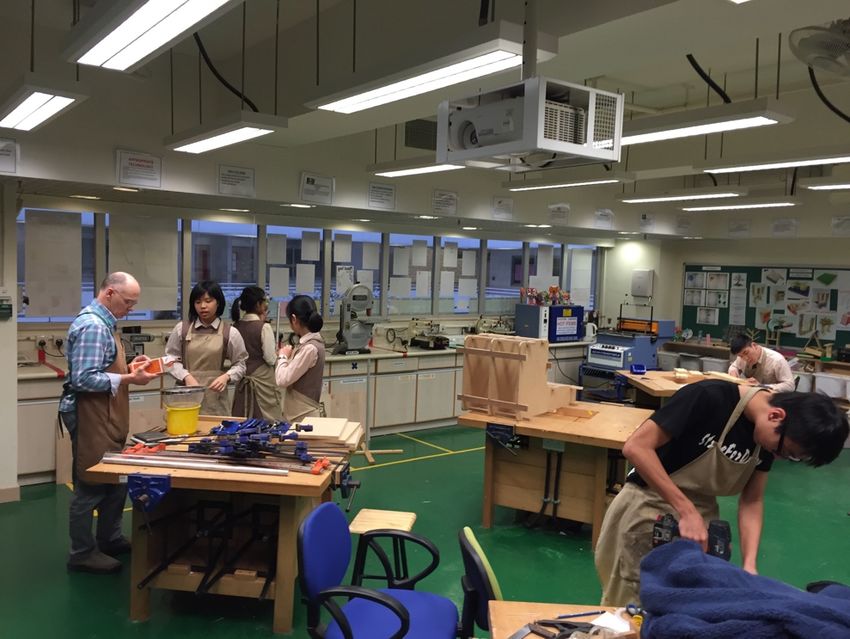
For most pupils the Cambridge IGCSE in Design & Technology (0445) provides a safe, exciting and
challenging environment to apply knowledge and skills often different from their other subjects. D.T.
has academic content and requires considerable time commitment. Computer Aided Design (CAD) and
Computer Aided Manufacturing (CAM) are key elements of the course.
Following from Y8, the subject further develops creativity, practical skills, independence and specialist
language usage, in a multi-discipline problem-solving environment, within a broad curriculum. The
subject is not gender biased, so is equally suitable for girls and boys.
Unfortunately, this year we have to restrict the number of classes
to two, with 20 pupils in each.
Background: D.T. is not as familiar to many parents as some
subjects. Others may have an out-dated perception based on their
experiences of woodwork, metalwork, engineering drawing and
home economics. D.T. is not a vocational subject and is certainly
not an easy option.
Content: The full content of the course can be accesses at
www.cambridgeinternational.org together with all other relevant
information, including past papers. Through the subject content
pupils experience:
• Knowledge with Understanding
• Problem Solving
• Communication, and
• Realisation
These are also the Assessment Objectives.
Assessment: Candidates sit two examinations and submit a school-assessed project.
Paper Style of Paper Duration Weighting Marks
1 Design Design drawing 75 minutes 25% 50
3 Resistant Materials Written 60 minutes 25% 50
5 School Assessed Project Design and Manufacture 2 terms 50% 100
Progression: Students who select this subject at higher levels (Y11-12) may be looking to work in a
related creative profession: architect, designer, etc. However, the broad range of skills in various
categories strongly supports applications to most tertiary education courses.
IGCSE Options 202120
DRAMA (0411)
Content: The Cambridge Drama IGCSE (0411) seeks to provide students with in-depth subject
knowledge enabling them to both create and respond to meaningful theatre. In order to become an
effective actor or director, students will learn about technical theatre as well as performance and
communication skills. Drama students work closely together in groups with a common goal and
deadline in mind, and thus learn valuable social skills, which translate well into all career areas.
Aims: The aims of the Cambridge IGCSE in Drama (0411) are to:
• Develop candidates’ understanding of Drama through practical and theoretical study.
• Enable candidates to realise the performance possibilities of text and other stimuli.
• Encourage the use of dramatic forms and structures to communicate feelings and ideas to an
audience.
• Help candidates acquire and develop skills in Drama, both individually and in groups.
• Develop understanding of the processes leading to performance and the elements involved in
creating a performance; to be able to evaluate the various stages of performance work.
• Encourage enjoyment of drama.
Assessment: All candidates take Paper 1 (Written Examination) and Paper 2 (Coursework) and are
eligible for the award of grades A* to G.
Paper 1 Written examination Paper 2 Coursework
2 hours 30 minutes
Candidates answer questions relating to a pre- Candidates answer questions relating to a pre-
released text and three stimuli. released text and on a devised piece that
candidates have developed and performed to
an audience throughout the course.
Section A (30 marks) One individual piece (max 5 mins):
Up to 8 short-answer questions on the pre- either original devised work
release material. And two extended questions. or a performance of an extract from a piece of
Answer all questions repertoire.
Section B (25 marks) Based on a different Two group pieces (max 15 minutes each):
extract from the pre-release material one original devised piece
One compulsory question (10 marks) and one performance of an extract from a
One question from a choice of two (15 marks) piece of repertoire.
Section C (25 marks) Two extended-response
questions based on a devised piece
developed and performed to an audience
during the 2 years course. Candidates answer
both questions
Weighting: 40% Weighting 60%
IGCSE Options 202121
ECONOMICS (0455)
Aims:
IGCSE Economics is regarded by universities and employers as evidence of knowledge and
understanding of economics. Economics aims to develop students’ knowledge and a range of
quantitative and analytical skills, including:
• An understanding of economic theory, terminology and principles
• The ability to apply the tools of economic analysis
• The ability to distinguish between facts and value judgements in economic issues
• An understanding of, and an ability to use, basic economic numeracy and literacy
• The ability to take a greater part in decision-making processes in everyday life
• An understanding of the economies of developed and developing nations.
Content:
IGCSE Economics develops students’ ability to: show knowledge and understanding of economics;
analyse economic data in various forms; and critically evaluate information and draw conclusions.
Students will follow units covering subject content which includes:
• Basic economic problem: choice and the allocation of resources
• The allocation of resources: how the market
works and market failure
• The individual as producer, consumer and
borrower
• The private firm as producer and employer
• Role of government in an economy
• Economic indicators
• Developed and developing economies: trends in
production, population and living standards
• International aspects of economics.
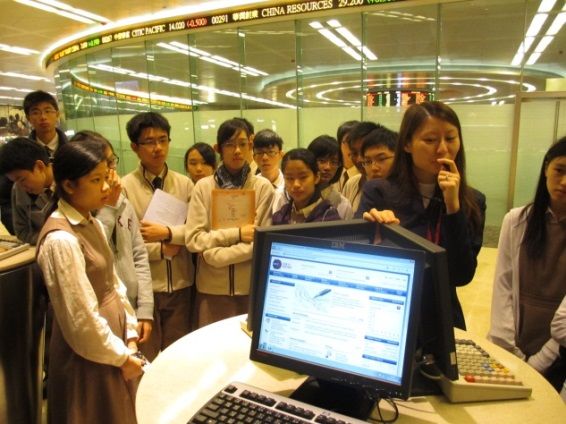
Students learn about trading while
Educational visits: visiting HK Exchanges and Clearing
Students of Economics will have regular opportunities to visit a variety of organisations; these visits will
often be run jointly with IGCSE Business Studies. Learning outside the school environment will enable
students to understand how economic concepts are used and applied in real-world situations.
Assessment:
Paper 1 Multiple choice 45 minutes
Candidates answer 30 multiple choice questions.
Weighted at 30% of total available marks.
Paper 2 Structured questions 2hours 15 minutes
Candidates answer one compulsory question, which requires them to interpret and analyse
previously unseen data relevant to a real economic situation, and three optional questions from
a choice of six.
Weighted at 70% of total available marks
Progression:
The course provides students with an excellent foundation for advanced studies in economics.
Candidates who are awarded grade C to A* in IGCSE Economics, and grade B to A* in Mathematics, are
well prepared to follow IB Diploma courses in Economics, or the equivalent.
IGCSE Options 202122
FOOD & NUTRITION (0648)
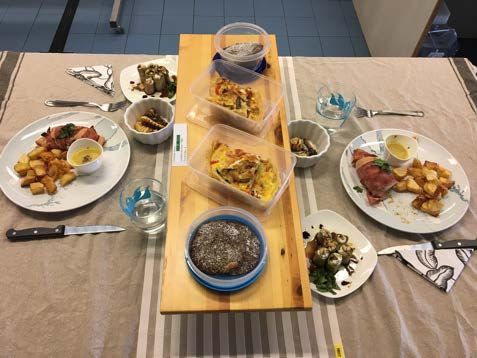
Background: The Cambridge IGCSE Food and Nutrition (0648) syllabus develop students’ knowledge and
understanding in food science and nutrition science. Students gain knowledge, understanding and skills
in both theory and practical through investigations, group discussions, field trips and lectures. Students
can apply the knowledge to their daily lives to build a healthy lifestyle and gain lifelong skills. The
subject enables students to develop high order thinking, solve multiple problems, creativity, good time
management and organisation skills.
Content:
The IGCSE Food and Nutrition syllabus
focuses on:
• An understanding of nutrition and of
health problems related to diet
• An understanding of how socio-
economic factors affect diet
• An awareness of how eating
patterns and dietary needs depend on
age and social group
• An awareness of how the position of the
consumer differs in developed and
less-developed economies
• The ability to assess the effectiveness and validity of claims made by advertisers
• Aesthetic and social sensitivity and enjoyment of food
• Skills necessary for food preparation and food preservation
Assessment: All candidates must attend all papers.
Paper Weighting
Paper 1 Theory (2 hours) 50%
Candidates answer short-answer questions, structured questions and
open-ended essay questions for a total of 100 marks.
Paper 2 Practical (4 hours) 50%
Planning session (1 hour 30 minutes) – Candidates complete a planning
paper one week before the practical assessment. Candidates are given a
allocated test question and plan the dishes to meet the needs of target
market from the question.
Practical assessment (2 hour 30minutes) – Candidates prepare and make
the planned dishes individually. The practical process, texture, flavour and
appearance of products are assessed.
IGCSE Options 202123
GEOGRAPHY (0460)
Content: The Cambridge Geography IGCSE (0460) course aims to develop students’ understanding,
geographical skills and attitudes towards global problems, with an emphasis on engaging students’ by
making topics relevant and interesting. The syllabus includes
three broad themes:
1. Population and Settlement;
2. The Natural Environment;
3. Economic Development.
Geography helps you to be more aware, to be more
understanding of the problems of people who live around
you, in Hong Kong and across the world. When you see
newspaper or TV reports about new shopping centres and
factories, unemployment, arguments about new
developments or increasing landfill size, exciting changes or
disasters from Asia or Africa, your Geography course will
help you make sense of what is going on.
Assessment: All candidates must enter for three papers.
Paper Weighting
Paper 1 (1 hour 45 minutes) Candidates answer three questions (25
marks for each) and must answer one question from each theme. It will 45%
involve data-response questions.
Paper 2 (1 hour 30 minutes) candidates must answer all the questions.
The paper will be mainly skills-based and will test a candidate’s ability to 27.5%
handle various ways of depicting geographical information.
Paper 3 Coursework (School-based assessment). One school-based
27.5%
assignment should consist of an average 2000 words.
Progression: Students may go on to study Geography at a higher level. In addition to specific future job
opportunities (Volcanologist anyone?), Geography will provide students with a broad range of skills that
will enable them to work effectively in a variety of future careers.
IGCSE Options 202124
HISTORY (0470)
Aims: The aims of Cambridge History IGCSE (0470) are multi-faceted; these include:
• Stimulating interest and enthusiasm about the past.
• Promoting the acquisition of knowledge and understanding of human activity.
• Developing the ability to evaluate pieces of information and evidence.
• Developing an understanding of key concepts like cause and consequence, continuity and
change and similarities and differences.
• Encouraging international understanding.
• Encouraging the development of advanced linguistic and
communication skills.
• Developing the ability to debate and form arguments with support
Assessment: The IGCSE consists of two exam papers and coursework on a
variety of 20th Century topics. These include charting the causes of World
War 2 from its very early beginnings of the Treaty of Versailles, through to
the development of the Cold War and its impact on the world – namely
specific incidents like the Cuban Missile Crisis and the Vietnam War. We will also study an in-depth core
unit on Hitler's Germany, allowing the students to assess his impact on Germany between 1933 and
1939.
The coursework element will encourage students to research and conduct independent study of an
element within the in-depth unit. The responsibility will be on the students to develop their
interpretation skills and their written skills to answer an historical question on significance. This is
perfect preparation for the skills required at IB, A level and for future university study.
Examination Length of Exam Weighting
Paper 1 2 hours 40%
Students will be required to answer three questions, two on the core 20th Century content and
one on the depth study. They will choose the questions they want to answer from a selection.
Paper 2 2 hours 33%
Students answer a series of questions on one prescribed core topic. They will use historical
sources to answer these questions.
Coursework (maximum 2000 words) 27%
Students will produce one piece of coursework based on the depth study they have looked at.
This requires a large amount of personal study and self-motivation. The depth study is based
on Hitler's Germany 1933-1939.
Does History matter to me?
Not only is History a well-respected subject when it comes to IB, A-Level or Pre-University
Cambridge preparation but it will help you in the wider world as well. It teaches you how to argue a
point, how to arrange evidence in a convincing way and how to present your own point of view
backed up with information. History develops independent study, thinking skills and offers a myriad
of transferable skills. These are skills that can be used in the world of work – from lawyers to
journalists; from managing directors of huge multi-conglomerates to humble teachers! The skills
you learn in History will serve you well for the rest of your life, as well as developing a better idea of
the journey humankind has taken and the reasons why we are the way we are today.
IGCSE Options 202125
I.C.T. (0417)
The Cambridge IGCSE Information and Communication Technology (0417) syllabus encourages students
to develop lifelong skills including:
• The ability to understand and implement new and emerging technologies within a business
environment
• How to analyse, design, implement, test and evaluate Information and Communication
Technology (ICT) systems
• Considering the impact which new technologies will have on ways of working and the social,
economic and ethical issues associated with them; and
• An awareness of the ways ICT can help in practical and work-related scenarios.
Aims: The aims of the Cambridge International ICT syllabus are wide ranging, which include:
1. For students to develop and consolidate their knowledge, skills and understanding in ICT and be
aware of new and emerging technologies;
2. Students to develop further as autonomous users of ICT;
3. Students to continue to develop their ICT skills in order to enhance their work in a variety of
subject areas;
4. Provide opportunities for candidates to analyse, design, implement, test and evaluate ICT
systems;
5. Encourage candidates to consider the impact of new technologies on methods of working in the
outside world and on social, economic, ethical and moral issues; and
6. Help candidates to improve their skills and increase their awareness of the ways in which ICT is
used in practical and work-related situations.
The practical skills contained in the syllabus are directly applicable to the study of other subjects; at CKY
we encourage pupils to apply their ICT skills to a range of contexts.
Assessment: The Cambridge International ICT course is assessed through one theory-based exam and
two practical tests.
Paper Weighting
Paper 1 (2 hours)
Written paper testing sections 1–10 of the curriculum content and
assessing the skills in Assessment objective AO2 40%
All questions compulsory: mostly multiple choice or short answer
questions, but also some requiring longer responses
Paper 2 (2 ½ hours)
Practical test assessing knowledge, skills and understanding of sections 30%
11–21 of the curriculum content
Paper 3 (2 ½ hours)
Practical test assessing knowledge, skills and understanding of sections 30%
11–21 of the curriculum content
IGCSE Options 202126
MUSIC (0410)
Aims: The aims of the Cambridge Music IGCSE (0410) are to:
• Enable candidates to acquire and consolidate a range of basic musical skills, knowledge and
understanding, through the activities of listening, performing and composing
• Help candidates develop a perceptive, sensitive and critical response to the main historical
periods and styles of Western music
• Help candidates to recognise and understand the music of various non-Western traditions, and
thus to form an appreciation of cultural similarities and differences
• Provide a foundation for the development of an informed appreciation of music
• Provide a foundation for further study in music at a higher level
With a good pass candidates are well prepared to follow courses leading to IB or A Level Music.
Assessment: The examination rewards candidates for positive achievement in the following areas:
A Listening
• Aural awareness, perception and discrimination in relation to Western music of the baroque,
classical, romantic and 20th-century periods.
• Identifying and commenting on a range of music from cultures in different countries.
• Knowledge and understanding of one Western Prescribed Work and one Prescribed Focus from
a non-Western culture.
B Performing
• Technical competence on one or more instruments.
• Interpretative understanding of the music performed.
C Composing
• Discrimination and imagination in free composition.
• Notation, using staff notation and, if appropriate, other suitable systems.
Components and titles Type Weighting
A – Listening
Questions test understanding and perception of music Exam (1h15m) 40%
from a wide range of styles and traditions
B – Performing
Component 3 Coursework Assessment 30%
Individual – One piece or two short contrasting pieces
&
Ensemble – One piece or two short contrasting pieces
C – Composing
Component 4 Coursework Assessment 30%
(Two compositions)
IGCSE Options 202127
PHYSICAL EDUCATION (P.E.) (0413)
Why take PE IGCSE?
Universities and employers accept Cambridge IGCSE Physical Education as proof that candidates have
knowledge, skills and an understanding of a range of relevant physical activities. Candidates’ knowledge,
skills and understanding come from studying both practical and theoretical aspects of Physical
Education. Successful Cambridge IGCSE Physical Education students gain lifelong skills, including:
• an ability to plan, perform, analyze and improve, and evaluate physical activities
• knowledge, skills and understanding of a range of relevant physical activities
• an understanding of effective and safe performance
• an understanding of the role of sport and physical activity in society and in the wider world
• an excellent foundation for advanced study
• an enjoyment of physical activity
It is recommended that students who wish to take IGCSE PE should be in sports team, although this is
not essential.
Assessment: To pass Cambridge IGCSE Physical Education, candidates are assessed under the following
objectives:
AO1: Demonstrate knowledge and understanding of the theoretical principles that underpin
performance in physical activity/ sport.
AO2: Apply knowledge and understanding of the theoretical principles to analyze, evaluate and improve
their own and others’ performance
AO3: Demonstrate the ability to select and perform appropriate skills to produce effective performance
in practical activities
Component 1 Component 2
Paper 1 1 hour 45 minutes Coursework (centre-based assessed/
externally moderated)
Candidates are required to demonstrate skills of Candidates choose to undertake four
description, interpretation and evaluation in practical activities from at least two of
related to the syllabus content. The questions are the seven categories listed.
mix of short answer questions and structured
questions.
50% of total marks 50% of total marks
IGCSE Options 202128
ART & DESIGN (0400)
Content: Students studying for a Cambridge IGCSE in
Art & Design (0400) will learn to use painting, drawing
and photography to express themselves, with some
textiles, sculpture, printmaking and digital media. We
run a range of trips to interesting parts of Hong Kong
and also visit exciting art galleries to inspire pupils in
their own artwork.
Students who put in the time make fast progress in
their technical skill, so those concerned about their
current ability should not worry too much. More
important is a strong work ethic and a commitment to
spend at least 2 hours per week on their artwork Belle Lai (10E) coursework page, 2012
outside of class.
Art & Design is not an ‘easy’ subject, but those with a positive attitude can always do well, and it is
extremely rewarding. Students learn to explore, analyse and create their own artwork and to work
independently. They learn to keep an art journal that shows their developing ideas.
Equipment: Students are generously supplied with materials in well-equipped and modern art studios.
However, all students should have a selection of art equipment such as pencils, brushes, acrylic paints,
oil pastels, coloured pencils etc. to help them complete their homework to a high standard. They should
also have access to the Internet and a printer at home for research purposes.
Assessment: IGCSE is assessed through coursework (50%) and a final exam (50%). Work is assessed
both in school and externally.
Component Weighting
Observational/Interpretive Assignment
Exam: An 8 hour practical assignment creating an examination piece plus 50%
supporting studies
Coursework Assignment
50%
One final outcome plus supporting material
Progression: Students who have taken IGCSE Art may go on to study Art at the IB and tertiary level. The
IGCSE is an excellent foundation for students wishing to eventually progress into the following career
routes: product design, digital media, advertising, fashion, textiles, illustration, interior design, graphics,
architecture, photography, and fine art, just to name a few! Art IGCSE is well-looked upon by
universities and colleges as a subject that builds independent study skills, personal development and
creative thinking.
IGCSE Options 202129
ART & DESIGN TEXTILES (0400)
Qualifications gained in this course will be the same as that of IGCSE Art and Design (0400), however the
focus is more specific and students will work on developing textile-specific skills. The lessons will take
place in a textiles studio with students able to use a vast array of resources/equipment to support them
in building knowledge and skill successfully.
Students should not be concerned about their current capabilities, as the course will begin with skill-
based lessons to ensure students have the necessary abilities to develop and succeed. Students with a
positive attitude will always do well.
Content: Pupils learn to explore, analyze, and create their own
artwork and work independently on individual ideas. Students
will experience some of the following disciplines:
Printed and/or Dyed Fabric: Students will become aware of a
variety of printing techniques using a range of media in
execution. These include Image transfer through Heat Pressing,
Batik, Tie Dye, Block printing, mono printing, screen printing,
stencil printing.
Constructed: Students will learn to manipulate fabric through An example of recent Y9 work
techniques such as Cutting, Appliqué, Smocking, Embroidery, Weaving, and Hand and Machine stitching.
Along with traditional fabrics students may also wish to experiment with a variety of mediums including
smart materials, plastic, wires and paper to develop such outcomes and push boundaries.
Fashion: Students will learn to construct fabrics into fashion outcomes gaining knowledge of fashion and
its inclusion within textiles. Students will be encouraged to include techniques from both constructed
and printing/dying techniques to create outcomes that are both interesting but also push the students
in their creative abilities and skill with precision.
Assessment: Art & Design: Textiles is assessed through a portfolio selection of their best work (50%)
and a final exam (50%). Work is assessed both in school and externally.
Component Weighting
Design Assignment
Exam: An 8 hour practical assignment creating an examination piece plus 50%
supporting studies
Coursework Assignment
50%
One final outcome plus supporting material
Progression: Students may go onto study art at higher level. It is an excellent foundation for students
wishing to go on and eventually progress into one of the following career routes: Fashion (Design,
Marketing, Buying, Communication, Fashion Journalism, and Styling), Textiles, Interior Design, and
Illustration to name just a few. Art IGCSE is well looked upon by universities and colleges as a subject
that builds independent study skills and personal development.
IGCSE Options 202130
COMPUTER SCIENCE (0478)
Aim: The aims of the Computer Science syllabus are to develop:
1 Computational thinking, that is thinking about what can be computed and how, and includes
consideration of the data required
2 Understanding of the main principles of solving problems by using computers
3 Understanding that every computer system is made up of sub-systems, which in turn consist of
further sub-systems
4 Understanding of the component parts of computer systems and how they interrelate, including
software, data, hardware, communications and people
Skills necessary to apply understanding to solve computer-based problems using a high-level
programming language
Content:
Section 1: Section 2:
Theory of computer science Practical problem-solving and programming
1.1 Data representation 2.1 Algorithm design and problem-solving
1.2 Communication and Internet technologies 2.2 Programing
1.3 Hardware and software 2.3 Databases
1.4 Security
1.5 Ethics
Assessment: The Computer Science course is assessed via two written exams taken at the end of the 2
years course.
Paper Weighting
Paper 1 Theory of computer science (1 hour 45 minutes) 75 Marks (60%)
Paper 2 Problem-solving and Programming (1 hour 45 minutes) 50 Marks (40%)1
1
Includes 20 marks on questions based on pre-released material
IGCSE Options 202131 FREQUENTLY ASKED QUESTIONS How many optional subjects should I take? Every student is different and there is no guideline number set by Cambridge International. Our timetable currently permits a maximum of 10 IGCSEs, which may rise to 11 including English Literature. However, those students who enjoy only a few subjects but find some other subjects challenging, can consider taking fewer optional subjects. If this is the case, please talk to the IGCSE Coordinator. Those students selected to take English Literature are able to decline it, if they feel that the workload will be too great. However, we urge these students not to reduce their number of optional subjects as this may hinder their future choices. How do I find out more about what the courses consist of? Read this booklet carefully, as even familiar subjects can be very different at IGCSE. Your subject teachers will be able to tell you about the subject they teach and further information is available on the Cambridge IGCSE website (www.cambridgeinternational.org). Should I choose the subjects I like? You are more likely to do well at IGCSE if you enjoy the subjects you are studying. So, as a general rule, choose the subjects you enjoy. Do not choose a subject because you like the teacher or simply because your best friend has chosen it. You should choose because of the subject itself. Do my options affect future career choices? Like most students you are probably unsure what you want to do in the future and even if you have some ideas, they are likely to change in the next few years. You need to keep as many doors open as possible. Try to aim for a broad spread of subjects. Choose according to your own individual interests, abilities and career plans. If you want to know about specific entry requirements for particular Universities then talk to the school University Guidance Director, or your teachers. What if I already know what I want to do in my future career? If you are more definite in your career ideas do some research to find out what subjects you need to study and to what level you need to study them. Will I be able to get the grades I want? Usually you can judge this for yourself, but ask your teachers if you are uncertain of your IGCSE prospects. The subject teachers should be able to give you an indication as to how well you will fare on the course, although result predictions are rarely 100% accurate. Will I be able to take the courses of my choice? We will do all we can to timetable so that you can, but sometimes timetabling difficulties may prevent it. We are also restricted on the number of pupils who are able to complete certain subjects, such as Food & Nutrition and DT. For a minority of students a teacher may be reluctant to allow you on the course for your own benefit. If it is suggested that you should not choose a particular subject then the school will inform you. The school will make the final decision as to whether or not to enter you for each exam. IGCSE Options 2021
You can also read


