Information Pack Closes Wednesday 13 February 2019 - BALMORAL INTERMEDIATE BALMORAL PRIMARY SCHOOL - Balmoral School
←
→
Page content transcription
If your browser does not render page correctly, please read the page content below
BALMORAL INTERMEDIATE
           &
BALMORAL PRIMARY SCHOOL

     Information Pack
           Year 2 and Year 8
   Closes Wednesday 13 February 2019

            19 Brixton Road, Mt Eden
                    AUCKLAND
               Telephone 638 7960
                  Fax 630 1944

        E-mail: office@balmoral.school.nz
            Website: www.balmoral.school
Balmoral School
                                       19 Brixton Road, Mt Eden, Auckland 1024
                                                www.balmoral.school.nz
                                               office@balmoral.school.nz
                                                     Phone 638 7960

December 2019
                 To value diversity and to develop curious, confident and connected learners.

                            Tena koutou e te whänau, he mihi nui kia koutou katoa.

Tena koe Colleague,

Thank you for your interest in the Fulltime Permanent Classroom position in our school. We have two positions
one in Year 2 and the other in Year 8.

Our school is a large urban primary and intermediate school situated in Mt Eden, close to Dominion Road. We
have two campuses but a combined curriculum.

The school caters successfully for diversity, and in addition to the promotion of strong academic programmes,
has a reputation for curriculum innovation through the development of a broad integrated curriculum based on
an inquiry approach. This curriculum has the child at its heart and follows what they want to find out about their
world.

We are looking for passionate teachers for our school with the willingness and ability to plan, then implement
engaging class programmes. The successful applicant will be an integral member of their whanau and will
continue to promote those aspects of Balmoral School that are seen by both educators and the community as
providing a challenging, innovative and rewarding environment for students and staff. The ability to further
enhance the integrated curriculum model we have developed and actively participate in our extensive
professional development programme is desired.

This information pack contains the following for your information:
         -      Background information on the school (Prospectus Intermediate and Primary)

It also contains the following documents that need to be completed:
         -        Application Form including Declaration Form

Return your CV, application covering letter and application forms to The Principal, Balmoral School, 19 Brixton
Street, Mt Eden, Auckland 1024. Alternately, email an electronic copy to office@balmoral.school.nz.

A shortlist of candidates will be selected once applications for these positions close at 3.00pm on Wednesday 13
February 2019. These people will then be contacted and will be provided with more information on the
requirements of, and time for, an interview.

Applicants are welcome to make an appointment to visit the school after 29th January 2019. If you would like
further information about the school, or the appointment process, please feel free to contact Trish Cullen or
Katy Sparkes, Deputy Principals, via the school office, phone 09 638 7960 or email office@balmoral.school.nz

Nāku noa

Malcolm Milner
Te Tumuaki (Principal)
BALMORAL''
    INTERMEDIATE'
!
!
!
!
!
!
!
!
!
!
!
!
!
!
!
!
!
!
!
!
!
!
!
!

     Prospectus''
!
!
!
!
!
!
!

               2018''
!
!
!
!
!

          www.balmoral.school.nz'
      !
Welcome'to'Balmoral'Intermediate'School'
             Tēnā%koutou%e%te%whānau%he%mihi%nui%kia%koutou%katoa%
    We' are' a' thriving' intermediate,' catering'        participants' in' their' learning.' C.I.B.' is'
    specifically' for' the' needs' of' the' emerging'     authentic,' challenging' and' exciting' for'
    adolescent.'Your'child'will'spend'two'years'at'       children.'
    our' school' in' a' safe' and' supportive'            Our' curriculum' develops' the' potential' of' all'
    environment' where' their' learning' will' be'        children' to' inquire' about' their' world' and'
    broad,'in'depth,'and'expectations'high.'              make'reasoned'decisions.'
    Valuing'all'children'as'individuals,'we'cater'for'    Intermediate' school' is' a' place' where' there'
    their' strengths' and' learning' needs.' Balmoral'    are'many' opportunities'for'children'to'try' a'
    Intermediate' is' a' school' where' children' feel'   wide' variety' of' new' activities,' make' friends'
    that' they' are' known' and' supported' by' staff'    and'develop'their'independence.'Our'aim'is'
    and'each'other.'                                      to' prepare' all' children' to' have' the' skills,'
    Innovation'underpins'the'essence'of'our'              attitudes'and'confidence'to'be'successful'and'
    curriculum,'developed'with'the'future'in'             happy'at'secondary'school'and'beyond.'
    mind.'Our'most'recent'ERO'review'                     We'will'be'honest'with'you'about'your'child’s'
    highlighted'the'quality'of'achievement'               achievement,' behaviour' and' successes.' We'
    information'we'gather'to'improve'learning.'           very'much'look'forward'to'meeting'you'and'
    Furthermore,'ERO'noted'that'through'our'              your'child'in'the'near'future.'
    quality'integrated'learning'approach,'
                                                                                  !
    Curriculum'Inquiry'at'Balmoral,'C.I.B.,'                                          !
    children'are'interested,'motivated'and'active!
                                                             Malcolm!Milner!              !          Kate!Watson!
!                                                            !!!!(Principal)! !           !!!!!!!!!(Assoc.!Principal)!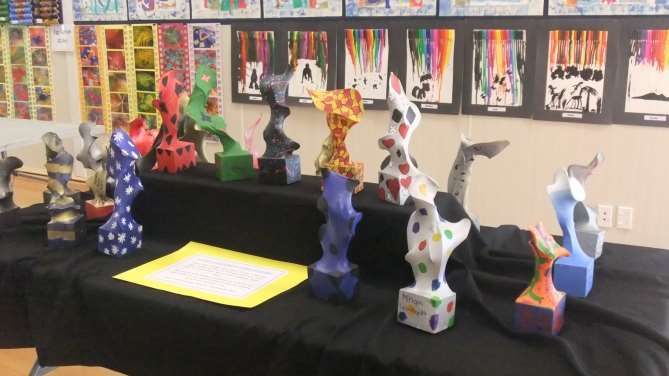
Our$Vision$
                          !
    “To$value$diversity$and$to$develop$curious,$confident$
    and$connected$learners.”$

                                 Our$Vision$Story$
                      !
    Our$school$will$be$a$place$where$children$can$          It$ will$ be$ a$ place$ where$ children$ and$
    obtain$the$highest$quality$education.$It$will$be$       teachers$ can$ gain$ a$ greater$ understanding$
    a$ place$ where$ students$ and$ teachers$ feel$         of$the$world$around$them.$
    challenged$ and$ safe,$ can$ innovate,$ make$           It$ will$ be$ a$ place$ where$ we$ discover$ our$
    mistakes$ and$ achieve$ great$ things.$ Staff$ will$    nation’s$heritage$and$celebrate$who$we$are.$
    love$their$work$because$children$will$want$to$          And$it$will$be$a$place$where$parents$will$play$
    learn.$ It$ will$ be$ a$ place$ where$ good$ friends$   an$active$role$in$supporting$the$learning$of$
    are$made$and$great$stories$will$be$told.!               all$our$children.!

                      Balmoral$Learning$Model$
         !
    Balmoral$Habits$                                        Literacy$and$Numeracy$
    Children$at$Balmoral$School$are$encouraged$to$          Literacy$ and$ numeracy$ form$ the$ foundation$
    ask,$“What$is$the$most$intelligent$thing$I$can$do$      of$all$learning$at$Balmoral$School.$
    right$now?”$                                            Literacy$
    To$ support$ them$ in$ answering$ this$ question,$      The$literacy$programme$is$structured$around$
    the$“Balmoral$Habits”$are$taught$explicitly:$           making$meaning$of$ideas$and$information,$
        • Thinking$                                         (Listening,$Reading,$Viewing)$and$creating$
        • Persisting$                                       meaning$for$self$and$others,$(Speaking,$
        • Creativity$                                       Writing$and$Presenting).$
        • Managing$Self$                                    Numeracy$
        • Communicating$                                    Our$Mathematics$programme$develops$
    The$ Balmoral$ Habits$ serve$ as$ mental$               existing$numeracy$skills$while$further$
    disciplines$that$equip$children$when$they$are$          enhancing$the$other$areas$of$mathematics$
    confronted$ with$ problematic$ or$ challenging$         children$need$for$success$at$secondary$
    situations,$now$and$in$the$future.$                     school.$Problem$solving$underpins$our$
    !                                                       Mathematics$programme.$
!                                                           $
!                                                           Skills$and$strategies$in$both$literacy$and$
!                                                           numeracy$are$taught$explicitly$by$classroom$
                                                            teachers.$There$is$ample$opportunity$for$
                                                            children$to$develop$and$demonstrate$these$in$
                                                            all$areas$of$their$inquiry$learning.!
!
Curriculum$Inquiry$@$Balmoral$(C.I.B.)$                                   !
                                                                          !
Curriculum$Inquiry$provides$children$with$a$learning$context$that$        !
is$authentic.$Contexts$are$designed$to$be$highly$motivating$and$
very$challenging.$In$C.I.B.$children$increase$their$knowledge,$
acquire$new$skills$and$practise$a$range$of$previously$learned$
skills.$Learning$tasks$focus$on$the$skills$and$attitudes$needed$to$
                            Our$Vision$Story$
develop$a$person$to$be$an$active$contributor$in$a$modern$society.$
!
                 !
Philosophy$for$Children$                                Learning$about$Learning$
                                                        All$members$of$the$learning$community$
(P4C)$                                                  (children,$parents,$and$teachers)$are$
Creative,$critical,$caring$thinkers.$$A$child$who$is$
                                                        encouraged$to$experience$different$
capable$of$thinking$critically,$stating$and$
                                                        challenges,$be$innovative,$make$mistakes,$
explaining$their$opinion,$listening$to$alternative$
                                                        identify$weaknesses$and$strive$for$
points$of$view,$is$open$to$changing$their$mind$
                                                        continued$achievement.$We$encourage$
and$draws$conclusions,$is$ready$for$the$‘real’$
                                                        children$to$reflect$on$and$discuss$how$and$
world.$P4C$challenges$children$to$inquire$about$
their$world,$make$personal$decisions$about$             what$they$are$learning.$This$enables$the$
their$attitudes$and$values$and$enables$them$to$         learner$to$identify$next$learning$steps$and$
make$reasoned$judgments.$                               further$develop$learning$capabilities.!
!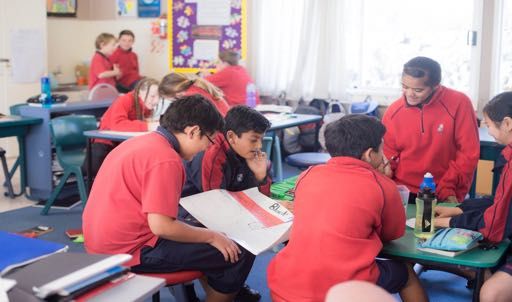
Professional Inspiring Staff
We have dedicated, highly professional staff
who are trained in teaching children aged 11-13
on a separate campus.
Our teachers have in-depth knowledge of
curriculum and they are consistently involved in
high quality professional development. They
have ongoing professional development in the
teaching of reading and writing and during 2017
all intermediate teachers were able to work with
Dr Murray Gadd on literacy. Further work is also
being done in Mathematics with Auckland
University. Continued professional development
in Inquiry Learning is our current focus.
Our teachers care deeply about our children              “The teachers at Balmoral Intermediate let
and are aware of the specific social, emotional            us learn in a positive way in a relaxing
                                                          environment. If you make a mistake, they
and physical issues that they have to deal with                encourage you to learn from it!”
as they develop their independence at this age.                         - Year 7 children

         Your Child – a Unique Individual and
                         an Emerging Adolescent
Every child is unique and we look forward to         5. Engagement: meeting developmental
developing their talents in a variety of areas as    needs by providing tasks that are
well as building on the strengths that they have.    motivating and challenging. Engagement
Research informs us that this is a critical period   needs to be behavioural, emotional and
when the emerging adolescent experiences             cognitive.
substantial physical and emotional change. Our       6. Competence: supporting children,
curriculum recognises this and is built around       through the curriculum to develop personal
these aims:                                          expertise and competencies, knowledge
1. Relevance: ensuring the curriculum gives          and skills.
children personal meaning which engages them         7. Ethics and Morality: facilitating ethical
with ‘real world’ authentic contexts.                awareness and developing personal values.
2. Responsibility: designing a curriculum which
gives students appropriate self-control over
learning and accountability.
3. Belonging: creating a supportive and safe         We expect our intermediate students to
environment that gives children a sense of           leave our school curious and confident
acceptance and affirmation.                          to take on any challenges in the future.
4. Awareness: supporting self and social
awareness through the curriculum and learning
opportunities provided.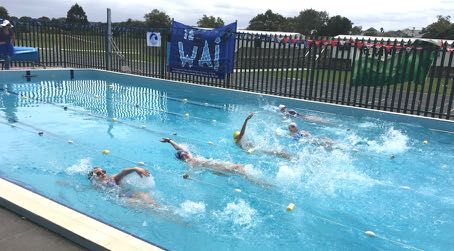
Specialist*Programmes*
          Engage!–!Excite!–!Enrich!–!Extend!/!Enjoy!
Your*child*will*be*provided*with*opportunities*           In*specialist*classes,*children*could*find*
to*engage*in*a*variety*of*specialist*learning*            themselves*designing*a*rocket*or*some*
programmes,*including:**                                  jewellery,*creating*musical*instruments,*
Hard*Materials*Technology,*Textiles*                      exploring*electronics*or*impressionist*art,*
Technology,*Food*Technology,*Science,*Art,*               planning*a*gift*basket,*or*making*their*own*
Music,*Special*Needs*and*ESOL*support.*                   sports*bag.!
!
                                                      !           “I#love#the#specialist#programmes#
                                                                   because#of#the#new#knowledge#it#
                                                                    brought#me#and#the#hands9on#
                                                                             experiences.”#
                                                                             9#Year#7#child#
                                                                 !

                                                                        Specialist*

                    Arts*&*Cultural*Experiences*
                                Ignite*L*Identify*L*Inspire
The*Arts*and*Culture*are*an*important*part*of*life*
at* Balmoral* Intermediate,* children* have* the*
                                                                        “There#are#so#many#groups#and#
opportunity*to*find*new*passions,*explore*their*                          clubs#to#get#involved#with.#
creative*tendencies,*express*themselves,*and*set*                       Teachers#even#help#you#to#start#
themselves*fresh*new*challenges.**                                       your#own#club#if#you#have#an#
In*addition*to*schoolLorganised*activities,*                                interest#in#something!”#
private*music*tuition*opportunities*are*available*                               9#Year#8#child#
in*our*purposeLbuilt*music*suites.*                                 !
*
Some*of*the*activities*on*offer*are:*
!
                                                                          Specialist*
Band! !          Guitar!&!Ukulele!   Kapa!Haka!
Choir! !         Drama!Club! !       Culture!Group!
Chess!Club!      Mathex!        !    Music!Lessons!
Orchestra!       ICT!Club!      !    Running!
Book!Club!       Gardening!     !    Robotics!
Arts!Festival!   Writers!Festival!   lLit!Quiz!
Dance!Club!      Eco!Warriors! !     Acro!Club!
!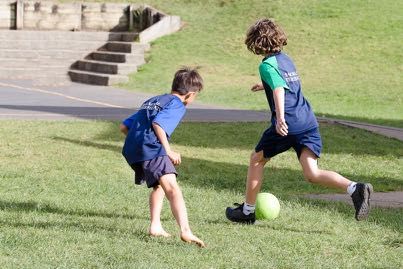
Sports'Programmes'
                      Develop'skills'–'Compete'4'Support!
    Sport'plays'a'key'role'in'the'development'of'       National%Sports%Tournament%(AIMS)%
    children.'Sporting'activities'teach'them'to'be'     Our'school'has'been'involved'in'AIMS,'the'
    competitive' and' supportive.' They' make'          national'intermediate'sports'tournament'in'
    friends' and' feel' a' sense' of' belonging.'       Tauranga'since'its'inauguration.'
    Through'sport,'they'also'learn'to'accept'a'loss'    Students'have'represented'us'in'the'following'
    and'develop'resilience.'                            sports:'
    '                                                   Swimming,%Football,%Water%Polo,%Tennis,%
    Class%PE%and%Sport%                                 Hockey,%Netball,%Cross%Country,%Gymnastics%
    Physical'Education'and'Fitness'are'built'into'      and%Sailing.!
    the' weekly' timetable,' along' with' a' regular'
    intermediate'sports'afternoon.''
    %
    School1wide%Sport%
    We'organise'inter4house'sports'competitions'
    at'school.'We'also'hold'these'major'events:''
    Swimming'Sports'(Term'1),'Dance'(Term'2)''
    Cross'Country'(Term'3),'Athletics'(Term'4)'
    '
    Interschool%Sports%
    Students'have'the'chance'to'compete'
    against'other'intermediate'schools'in'a'
    range'of'sports:'
    ' League!Tag! Cricket!!       Cross!Country!
       Hockey!!       Waterpolo! Netball!
       Volleyball!    Touch!Rugby! Basketball!
       Badminton!     Football!    Athletics!
       !
!
!
!
!
!
!
!
!
                              !

             “Every%week%we%play%House%Sports%on%a%
        Wednesday%afternoon.%Everyone%is%mixed%up%
           into%different%house%teams%and%we%get%to%
                    play%fun%games%like%dodgeball!”%
        %%%%%%%%%%%%%%%%%%%%%%%%%%%1%Year%7%child%%
        !
EOTC%
Education%Outside%and%Beyond%the%Classroom%
! Over% their% two% years% at% Balmoral% School,% your% Waterwise%
child% will% have% the% opportunity% to% take% part% in% In% Term% 4% Year% 7% students% participate% in% the%
several%EOTC%opportunities:% Youthtown% Waterwise% programme,% which%
Piha%Mill%Camp% introduces% them% to% sailing,% canoeing,%
This%valuable%experience%includes%planning%and% windsurfing%and%other%water%sports.%
cooking%camp%meals,%teambuilding,%navigation% Motutapu%Outdoor%Education%Centre%(Camp)%
skills,% outdoor% and% water@based% activities.% As% In%Year%8%your%child%has%the%opportunity%to%
the%camp%occurs%in%the%first%term,%it%is%a% great% attend%a%camp%at%a%Motutapu%Island%in%the%
way%for%children%to%get%to%know%one%another.% Hauraki%Gulf.%Here%they%build%upon%the%skills%
Pinnacles%Tramp% they%learned%in%Year%7.!
Year% 7% students% can% complete% a% leadership% !
tramp%to%the%Pinnacles%Hutt%in%the%Coromandel.% !
%
Pastoral%Care%
!
It%is%important%that%your%child%feels%safe%at%
school,%that%they%are%able%to%be%who%they%are%
and%be%free%from%intimidation.%Our%staff%ensure%
that%issues%are%followed%up%and%that%children%
are%aware%of%the%consequences%of%their%
behaviour.%
We%have%well%established%procedures%to%keep%
children%safe%and%you%can%feel%this%caring%
atmosphere%as%soon%as%you%enter%our%gates.%
Kate%Watson,%our%Associate%Principal,%has%wide%
experience%in%dealing%with%the%needs%of%the%
emerging%adolescent%and%keeping%them%safe.%
Students%are%regularly%surveyed%and%action%is% “The%teachers%at%Balmoral%Intermediate%let%
taken%to%address%any%concerns%that%may%arise.% us%learn%in%a%positive%way%in%a%relaxing%
Children% make% lifelong% friends% here% and% feel% a% environment.%If%you%make%a%mistake,%they%
encourage%you%to%learn%from%it!”%
part%of%our%community.% %%%%%%%%%%%%%%%%%%%%%%%%%%%H%Year%7%children%%
% !High#Academic#Standards#
High#Expectations#O#Outstanding#Results#
! We#have#very#high#achievement#expectations.# The#next#five#highest#scoring#children#receive#
To#encourage#a#growth#mindset#and#to#develop# a#High#Achievers#Award,#which#includes#a#
the# concept# of# working# hard,# the# “Balmoral# prize#of#$100.#These#awards#are#our#most#
Cup”# was# introduced# in# 2001.# Recognising# prestigious.#
outstanding# achievement# and# involvement# !
over# two# years,# the# cup# reinforces# our# belief# !
that# at# middle# school,# children# should# be#
encouraged# to# try# as# many# different# activities#
as# possible,# to# give# everything# a# go# and# to# do#
their#best.#
The#cup#also#acknowledges#and#rewards#those#
children#who#work#hard#and#participate#across#
the#board.#
Children# are# awarded# points# in# the# following#
areas:#
• high# academic# achievement# across# all#
learning#areas,#
• participation# and# achievement# in# sports#
teams#and#cultural/art#groups,#
• taking# on# civic# roles# e.g.,# librarian,#
councillor,#sports#monitor.# Previous)winners)and)finalists)have)
The# Cup# carries# with# it# a# $200# scholarship# to# been)awarded)major)scholarships)at)
help#with#secondary#education.#Each#year,#the# their)secondary)schools,)been)
student#with#the#most#points#at#the#end#of#Year# prefects,)played)sports)for)New)
8#is#the#winner#of#the#Balmoral#Cup.# Zealand)and)excelled)in)their)chosen)
# careers.)
!
Term#Dates#2018#
!
2018#
Term#One:##
Tuesday#30#January#O#Friday#13#April#
Term#Two:##
Monday#30#April#O#Friday#6#July#
Term#Three:##
Monday#23#July#O#Friday#28#September#
Term#Four:##
Monday#15#October#O#Friday#14#December#Enrolment Process
Monday 24 July
2017 applications and prospectus available from Balmoral office or website
(www.balmoral.school.nz)
Wednesday 2 August
Open Morning 9.15 am - 12.15pm Open Evening 6.00pm - 7.30pm
Parents and Year 6 children are invited to see Balmoral Intermediate School at work.
IN OUT OF
ZONE ZONE
Wednesday 30 August By Wednesday 30 August
Complete Out-of-Zone Enrolment Form and forward to
Complete Enrolment Form and
school office.
forward to school office. Forms available on our school website and from school office.
Forms available on our school website
and from school office. Wednesday 6 September
Out of Zone Ballot
Once your form and any Parents notified by email by Friday 8 September of
necessary paperwork is received acceptance (or post if no email)
at the school office, an email will
be sent confirming enrolment By Friday 15 September
and inviting your child to our
Return acceptance letter
orientation day.
Parents return letter to school office confirming
child’s place for 2018.
Wednesday 29 November
Orientation Day: 9.15 am - 12.30pm
Enrolled children are invited to an orientation morning and to join in our programme.
December 2017
Parents will receive a consumables list including stationery and uniform requirements.
Tuesday 30 January 2018
First Day of School!
All Year 7 children meet in the hall at 9:15am to be called by their new classroom teacher,
beginning their journey at Balmoral Intermediate School.Balmoral Primary School
Te Kura o Te Roto a Rangi
Information Booklet
2018
19 Brixton Road Mount Eden 1024
Auckland Tāmaki Makaurau
Phone 638 7960 Fax 630 1944
email office@balmoral.school.nz
website www.balmoral.school.nzThe History of Balmoral School
Te Kura o Te Roto a Rangi
Early Tamaki Makaurau (Auckland) was a very fertile place where different groups of
people came together. At some stage in the late 1600s to 1750 Ngati Whatua from their
base on the Kaipara Harbour began to have frequent excursions into the Auckland
isthmus. The local Maori Te Wai O Hua, who had settled near Maungawhau (Mount Eden)
and later at Maungakiekie (One Tree Hill), were involved in some skirmishes with Ngati
Whatua.
Stories tell us that Rangi, a high ranking Te Wai O Hua wahine (female), was captured or
kidnapped by a group of Ngati Whatua at a lake when she came down to collect some
freshwater kai (food such as fresh water crayfish) with her entourage. Stories also tell us
that the lake was on our school field and became known in Pre European times as Te Roto
a Rangi or Rangi's Lake in memory of this event.
Today you can still find a damp gully to the south and west of the church running down
towards the low ground on our school field by the intermediate playground. Flowing
water can still be heard in the culvert on the north western boundary of our school
grounds. The lake was situated at the rear of St. Alban's Church and is now dried up.
In the early 1900’s the suburbs of Mt. Eden, Mt Albert and Mt Roskill were experiencing
rapid population growth. The tram from Queen Street ran as far as Wiremu Street (Williams
Street) and many of the side roads were just shingle lanes. In 1920 two sections of land
were purchased from Mr J. Chapman at a cost of 9,600 pounds to establish a school.
Balmoral School was opened as Brixton School in 1926. Records show that some parents
in the area disapproved the requirement that they had to leave their established schools
to attend Brixton School.
The first lessons were held on April 6 1926 with a roll of 158 children. In 1927 the roll had
grown to 500 pupils with more than 60 students in each class. In 1934 heating was installed
and there was a noticeable improvement in the attendance. By 1937 an infant block
had been built and the school became a full primary. Early the next year extra land was
bought and an entrance established from St. Albans Road.
By 1945 the school had become an intermediate school under the leadership of Mr. T
Pemberton. The infant school, which was located in the administration block, came
under the jurisdiction of Maungawhau School. The next year Charles Beeby visited the
school to check on its progress and the manual (technology) block was developed. The
infant school was finally moved to Maungawhau School in 1965.
In 1994 after a review of schooling in Mt Eden it was decided to re-establish a primary
school on the Balmoral School site. The first primary classes were opened in 1996. Over
the next few years a number of new classrooms were built. By 2017 the end of year roll of
the school had grown to about 940 students.
The school is currently operating as both a primary and intermediate School with an
Associate Principal responsible for each school.Welcome to
Balmoral Primary School
Te Kura o Te Roto a Rangi
Tena Koutou Malo e Lelei Talofa Lava Bula Vinaka Kia Orana
Fakaalofa Lahi Atu Ciao Namaste Al Salaam a' alaykum Ni hao Hola
Annyong ha shimnikka Greetings
Tena koutou he mihi nui he mihi aroha hoki ki a koutou
Dear Parents and Caregivers
We are a thriving school in your community, catering for the needs of primary aged
students (5-10 years old).
Our school is innovative and forward thinking. Our most recent Education Review
Office report highlighted the teaching in our classrooms and our integrated learning
approach through our development of our Curriculum Inquiry at Balmoral (C.I.B). We
are constantly looking for ways to improve in order to make classroom programmes as
challenging and exciting as we can.
We value your children as individuals, and cater for their strengths and learning needs.
We are not a huge impersonal school and children feel that they are known and
supported by staff and each other. Students at Balmoral feel safe and enjoy the
friendly nature of our school.
Our aim is to get all of our students having the skills, attitudes and confidence to be
really successful and happy at intermediate school and beyond. In the early years at
school we focus on the development of literacy and numeracy skills. As your child
progresses through the year levels the complexity of their learning tasks will widen and
deepen.
We value open, honest and clear communication with our students and their families
and welcome your involvement in our school community. Likewise we will be honest
with you about your child’s achievement and behaviour.
We look forward to meeting you and your child in the near future.
Malcolm Milner Katy Sparkes
Principal Associate PrincipalSCHOOL ORGANISATION
Year 0 – 1 5 years New Entrants and first year at school
Year 2 6 years Second year
Year 3 7 years Third year
Year 4 8 years Fourth year
Year 5 9 years Fifth year
Year 6 10 years Sixth year
We are running composite classes in our Years 5 and 6 area of the school. This
facilitates the meeting of individual needs and covers the fact that we have variable
numbers in some year groups.
Children will spend at least two years at school before entering Year 3. The Student
Year Level will be decided by our school to ensure each student is in the year level
appropriate to their individual social and learning needs. Currently our Y0/Y1
classification 'cut-off' is the end of Term 1. This movement will be determined by their
social, emotional and educational levels and made in consultation with parents /
caregivers. Within each class, children work at their own levels, with extension
programmes and opportunities to spend more time working on core subjects if
necessary.
TERM DATES 2018
Term One: Tuesday 30 January – Friday 13 April
Term Two: Monday 30 April – Friday 6 July
Term Three: Monday 23 July – Friday 28 September
Term Four: Monday 15th October – Friday 14th December
SCHOOL HOURS
8.55am First bell
9.00am School starts
10.40am Morning break
11.00am Recommence school
12.30pm Lunch time
12.40pm Break
1.30pm Recommence school
3.00pm School finishesBefore School
Please ensure that children arrive at school early enough to organise lunch and their
book bags and be ready to begin on time. The classrooms are open from 8:40am and
this is an ideal opportunity for you to spend some time reading or talking with your
child about their learning. This also gives them plenty of time to get themselves
organised and settled before the day begins. We would suggest that being at school
by 8.50am would be benefit.
After School
Please collect your children promptly. The Year 1 children will be kept in their
classrooms until collected. Children should not be on school property unsupervised
before 8.30am or after 3.15pm as teachers are not on duty, and staff meetings begin
at 3.10pm.
Please note that there is a child care centre operating on the premises. Please
contact SKIDS on 630 6691.SCHOOL ADMINISTRATION and FACILITIES
ATTENDANCE:
Regular attendance is very important
and we ask all parents/caregivers to Years 1 to 3 can take out one book for
support us in our efforts to attain this. If one week. Years 4 to 6 are allowed two
your child is away, please phone or books for up to two weeks. If you wish
email the school, on each day of to use the library after school with your
absence, by 9.00am to let us know. If child, please ask.
this is not possible please send a note
addressed to the class teacher on the
SCHOOL TRIPS:
day the child returns to school. The
School trips are also part of the
email address for absences is
curriculum to enhance and diversify
absences@balmoral.school.nz
children’s learning. Parental help with
supervision and transport is appreciated
SWIMMING: when needed. All children must have
We have a heated junior pool adjacent written consent to participate.
to the larger intermediate pool.
Swimming is part of the curriculum and
ASSEMBLIES:
all children should participate. Should
The Primary School has an assembly
your child not be able to swim on a
every second Friday at 9:15 which all
particular day a note must be written to
parents and whānau are welcome to
the teacher.
attend. If your child is involved in a
performance you will be notified and
encouraged to attend.
STATIONERY:
At the start of each school year (and
when children start during the year)
LUNCHES:
children will be issued with a list of
All children eat their morning tea and
requirements. Stationery can be
lunch outside, weather permitting,
purchased via the school portal at the
under supervision.
start of the year.
A school canteen is in operation on
Additional stationery is available Wednesdays, Thursdays and Fridays.
throughout the year from the office. More information and a copy of the
menu is available on the school website
under the Parent Information Section.
PLAYTIME SUPERVISION:
Staff members are on duty at all breaks. SCHOOL GARDEN:
The junior children have clearly defined There are a group of children called the
play areas which are for them alone Eco Warriors who drive this initiative.
and they must not play in other parts of There are a number of worm farms
the school grounds. established and the produce from the
garden is distributed amongst the
LIBRARY: community. The garden is in its initial
All classes visit the library once a week. stages and we endeavour to
Bronwyn is a trained librarian who works incorporate the concept of
part time. Please ask her for suitable sustainability into our Inquiry learning
books for your child/ren. throughout the school.ambulance, as appropriate, and
contact you as soon as possible.
SERVICES OFFERED:
The Dental Nurse is now based back at
Balmoral School (19 Brixton Rd HEALTH/MEDICATION:
entrance). You can contact our school Please be sure to
Dental Nurse on 623 4537. (1) Give very accurate details
regarding any health problems,
A Public Health Nurse visits the school (2) A phone contact other than yourself
on a regular basis as do Hearing and for emergencies,
Vision Tests. (3) Permission for your child to be given
pain relief if necessary.
If you have any queries regarding these
or any other agency involvement,
please contact us. MONEY:
Children should not have money at
school except to pay for trips and
PARKING: lunches. Please send money in sealed
In the interest of safety, parents’ cars envelopes labelled with student’s
are not permitted on to the school name.
grounds. Please park safely on the road
and walk to the classroom if you wish to BEHAVIOUR:
accompany your children. This applies The school has a strict code of
to the rear car park even on wet days! behaviour. The happiness and safety of
all our students as outlined in our School
HOME LEARNING: Rules (attached) is of paramount
The school policy is to set regular home importance, and conduct which
learning for all classes. The amount and precludes that from happening will not
type varies with the age of the child. be ignored. If you have concerns in this
The focus for Years 0 - 3 will be on daily area please talk, in the first instance, to
reading, while Years 4 - 6 may have a the class teacher.
broader range of activities. Class
teachers will also post home learning SUN HAT POLICY:
details on the school website from time All primary school children are required
to time. This may take the form of a to wear a Balmoral sun hat during Terms
Blog post in the Middle School Years 3 1 and 4. The hats are to remain at
to 4 and the Senior School areas of school and children who do not have
Years 5 to 6. them on must stay in a shaded area.
Sun-hats with the ‘Balmoral’ logo are
ILLNESS AND ACCIDENTS AT SCHOOL: available from the school office.
We will notify you or your emergency
contact if your child becomes too ill to SPORTS:
continue their school day. If they are School sports are part of the curriculum
involved in an accident requiring and involve children participating in a
immediate attention we will take them range of competitive and
to the nearest medical centre or call an non-competitive activities. All sports
include both girls and boys.SCHOOL VISITORS:
All visitors must report to the main office
LOST PROPERTY:
and sign the visitors’ register, regardless
It is important that all clothing and
of the purpose of the visit.
possessions are clearly named. Lost
property is kept wheelie bins just off the
middle courts (at the bottom of the
steps by the mural)
At the end of each term any
unclaimed items are donated to
charity. Please encourage your
children to be
responsible for their own possessions.
Toys are best kept at home.COMMUNICATION WITH PARENTS
NEWSLETTERS: Malcolm are also available to discuss
A Primary School Newsletter is sent progress.
home every fortnight. The newsletters
are uploaded to our school website
WEBSITE:
each week.
The school website is another way we
communicate with the school
MEET THE TEACHERS BBQ: community. Newsletters and important
A school BBQ is held every February dates and information relating to your
when you will have the opportunity to child’s class are accessible online. The
bring your family and meet the school website address is
teachers on an informal basis. www.balmoral.school.nz
PARENT INTERVIEWS: PTA:
We encourage you to make an The PTA is primarily a fund-raising and
appointment with your child’s teacher school support organisation. Being part
any time you have something you wish of the PTA is a good way to become
to discuss. All concerns go in the first involved in the school and to meet
instance to the classroom teacher. other parents, and new members are
always welcome.
Formal 15 minute interviews between
parents and their child’s teacher are
arranged in February and June each NEW PARENTS MORNING TEA:
year to discuss students’ progress, Once a term, new parents to the school
achievement and behaviour. The are invited to an informal morning tea
February interview is to review the start to meet other parents and caregivers.
to the year and set some goals for your This is usually held in the staff room and
child. we look forward to seeing you there.
WRITTEN REPORTS / LEARNING
JOURNALS:
Each five year old will receive a written
report after their first six weeks at school.
All students in the primary school have
a Learning Journal which shows thinking
and learning across the curriculum. It
will also contain reflections from your
child on their learning.
If at any time you have any queries or
concerns about your child’s progress at
school, it is important that you contact
us. Please make an appointment with
your child’s teacher, so they can make
a specific time to talk through issues
without any interruptions. Katy andEXTRA PROGRAMMES
S.K.I.D.S. - AFTER SCHOOL CARE PROGRAMME:
This is run independently of the school by the above
organisation. S.K.I.D.S. offers a structured, fun programme at
reasonable rates in comparison with other after school
programmes.
Activities offered include Art, Music or Drama, Sport, Technology, fun activities and
additional time is allowed for child to complete homework if required. Start time is
3.00pm and your child must be picked up by 6.00pm every week day. Afternoon tea
is provided and included in the fee structure.
You can enrol your child in this programme on a full time, part time or casual basis.
Special short stay rates (3.00 - 4.00pm) are also available.
If you are interested in this programme please pick up the information brochure from
the school office.
NEW ENROLMENTS
WHAT WE NEED TO SEE ON ENROLMENT:
Information that we need to see when you return your child’s application for
enrolment are:
1. Completed school enrolment forms
2. Birth Certificate or Passport
3. Immunisation Certificate
4. Proof of residency
i. Current Auckland City Rate invoice or tenancy agreement
ii. Two current power invoices
iii. Statutory Declaration signed by J.P. or lawyer
If you have a sibling of a child who is currently enrolled and will be attending Balmoral
in the future it is essential that you are in our school zone on the first day of enrolment.
Currently we are only accepting children who are living within the zone. Having a
sibling currently attending Balmoral is no longer an automatic right of entry. The only
criterion for enrolment is to permanently reside within our school zone. Please contact
the school if you have any questions about this.SCHOOL TOURS
Tours will be held the first Thursday of every month from 9.30am. These tours are an
opportunity to learn more about the school and to ask questions. Please contact the
school office to book for one of the tours.
PRE-SCHOOL VISITS:
Once your child is enrolled we recommend that children have 3 classroom visits
before they start their time with us. These visits happen on a Tuesday morning from
9.00am – 11.00am. This is a very important part of the transition process for your child
and helps ease the anxiety of the unknown that some children feel. These visits can be
arranged with the school office when you enrol your child and it is suggested they
take place the three Tuesdays directly preceding your child’s school start date.
You are also welcome to join us for Taakaro (developmental play) which happens
every Thursday morning in the New Entrant area from 9:15 to 10:15am.
WHAT TO BRING TO SCHOOL:
Lunch and a smile, a bag and a change of clothing. Please ensure all clothing is
labelled. No toys or treasures at school please - we cannot ensure their safe return.LEARNING AT BALMORAL
VISION
To value diversity and to develop curious, confident and connected
learners.
VISION STORY
The vision for our school is simple. It will be a place where children can obtain the
highest quality education. It will be a place where teachers and students feel
challenged and safe, can innovate, make mistakes and achieve great things. Staff will
love their work because the children will want to learn. It will be a place where good
friends are made and great stories will be told. It will be a place where teachers and
children can gain a greater understanding of the world around them. It will be a
place where we discover our nation’s heritage and celebrate who we are. And it will
be a place where parents will play an active role in supporting all our childrens’
learning.THE EARLY YEARS IN LITERACY AND NUMERACY At Balmoral we believe that children learn to read and write by reading and writing and that reading for meaning is essential. Our emphasis is on providing a balanced English programme and teaching strategies. The foundations for both literacy and numeracy are laid in the home and your support as parents is highly valued. Children are guided by their teachers to select books for daily reading and in their early years will bring these home to share with you. We encourage you to listen to them and question their understanding of the text. Teachers will share information on how you can enjoy and respond to language, communicate effectively in a range of contexts and use language purposefully. In English you will see children reading big books, wall charts, poems, song charts, library books, commercially produced graded readers, the writing of other students, in fact almost any sort of text. We aim to immerse children in a literate environment. Language based games and activities can be seen in operation at any time of our school day. Children practise writing daily, writing lists, letters, cards, poems, diaries, daily journals, and reports across all areas of the curriculum. In today’s changing world, children must be flexible, adaptable and above all be problem solvers and life-long learners. Mathematics is an essential part of everyday life; we believe that students need to experience an appropriate selection of learning experiences throughout their schooling so that they develop positive attitudes and a confident approach to the learning and application of mathematical ideas. The teaching and learning of Mathematics has changed markedly over the last 5 - 8 years and it has been amazing to see our students develop a deeper understanding of numbers and how they can be manipulated. There is now an emphasis on knowledge of numbers and also the different strategies that can be used to arrive at the answer. In our classes at you will see our youngest children building sets, counting the members of those sets and talking about why one set is bigger and how much bigger for example. Children will be sorting and categorising items and explaining how many different ways they can sort those items. Throughout the day as counting opportunities arise learners count in 1s, 2s, 5s and 10s forwards and backwards. Children use counters to create (addition and subtraction) number stories and record these stories. They may search in our environment for familiar shapes and identify these, specifically explaining why they think the roof shape is a triangle. Because “it has three sides and three corners” may be an appropriate response. Children learn through play, through handling equipment and modelling their ideas. We aim to make the learning fun and meaningful.
THE BALMORAL LEARNING MODEL
The Balmoral Learning Model forms the basis for all curriculum programmes at
Balmoral School. We believe that a curriculum which includes all these components
will provide our students with a rich, motivational and challenging learning
environment. In doing so we are catering for the needs of the emerging adolescent
while also preparing them for the skills they will need at secondary school and beyond.

                                    Balmoral Habits
      Thinking Together? Persisting Together? Creating Together? Manage Self?
                             Communicating Together?

These habits may serve as mental disciplines. When confronted with problematic
situations, students, parents and teachers might habitually employ one or more of
these by asking themselves,

           “What is the most intelligent course of action I can do right now?”

These are the Balmoral Habits and examples of them are on the following page. They
derived from the Key Competencies of the New Zealand Curriculum and are central
to our learning at Balmoral.

                                  Numeracy and Literacy
Literacy and Numeracy are important skills that children need to acquire. With so
much information, whether it is print, number or multimedia available to children, we
want them to be able to read, comprehend, analyse, critique, synthesise and utilise
this information at speed.
Children now need to present their knowledge using writing and multimedia in ways
that are original and informative. They need to be able to use a wide range of genre
to express their ideas. This could include web pages, pamphlets, power point, drama,
art and more traditional forms. We are living in a world where technology enables
other to‘re-present’ the world to our students. With advanced literacy skills students
can fully participate in tomorrow.

                   Philosophy for Children (P4C) 'Whakaaro Tamariki'
Philosophy for Children was developed by Matthew Lipman in the l950s for
underprivileged students in New Jersey. By using stories laced with big ideas and
questions he was able to open up the minds of these students. This approach proved
to be very successful because it allowed students to express their ideas, listen to and
critique other peoples’ views and to accept challenges to their own thinking.
P4C enables critical thinking and encourages children to make reasonable
judgements. Critical thinking is involving ‘thinking through problematic situations about
what to believe or how to act where the thinker makes reasoned judgements that
embody the qualities of a competent thinker. What makes a situation problematic is
when there is some doubt as to the most appropriate action.’

These are skills that we all aspire to and ones that don’t occur by osmosis; they need
to be taught.
In the modern education systems around the western world, thinking skills have
become an important part of the classroom programme. Philosophy for Children
(P4C) allows children to practise these skills in a meaningful context which is one of the
cornerstones of learning at Balmoral. It must be real for children for good learning to
occur.
Skills covered in P4Cwill include:
• asking relevant questions
• showing sensitivity to context in discussion
• demonstrating an ability to find relevant examples
• showing openness to new ideas
• identifying and clarifying ideas
• consistency when developing points of views
• an ability to express ideas coherently
• an ability to paraphrase another’s ideas
• an ability to build on another’s ideas
• an ability to discuss issues with objectivity
• an ability to accept corrections by peers willingly
• showing respect for members of the community of inquiry
C.I.B. (Curriculum Inquiry at Balmoral)
“….a hundred worlds to discover
a hundred worlds to invent
a hundred worlds to dream.”
Loris Malaguzzi, founder of the Reggio Emilia approach
C.I.B. has at its heart, thoughtful responses to the ideas/conceptual thinking and
interests of a pupil as they try to find the meaning of what they do and what they
experience. In this model, pupils are seen as being full of curiosity and creativity. They
are also seen as being able to initiate the learning that may develop in a classroom.
The goal of the curriculum is to cultivate within the child a lifelong passion for learning
and creativity that is ‘to value diversity and develop curious, confident and
connected learners.”
The teacher's task is to create a context in which children’s curiosity, theories and
research are legitimised and listened to.The New Zealand Curriculum and the essential
knowledge and skills a child may need for their age will guide the Inquiry and as such,
will vary depending on the cognitive abilities of the child. From time to time the
teacher may influence the direction and synthesis of the learning by ensuring all
curriculum strands are covered.
The curriculum is an inquiry which will involve the students asking questions and
seeking answers to these questions. As a result the context may be different in each
whanau and class. For example Matariki, Whales, Electricity, Diwali.C.I.B. will follow the model outlined below with Provoking, Empathising, Defining, Brainstorming, Prototyping, Testing and Sharing and Reflecting. This is not a linear or circular process, it is one where children will move backwards and forwards through these stages. A Provocation can come from an environmental stimulus, an interest or even a conversation between two children which has been heard by a teacher. The teacher can also embrace the 100 languages to facilitate and develop this process - Mana Whenua. The response to a provocation could last anything from one week to a year at our school. To Empathise the pupils try to understand the view of others. They observe, they engage and seek an awareness. We Define the problem when we have all the evidence and we can develop a focus. Brainstorm. We generate ideas and experiment with a wide variety of possible solutions. We ask how might we through generating a large number of possible solutions Prototype. Designs are made into a physical object. It can be a dance, write a letter, organise a fundraiser make a model. Testing and Sharing: We observe and push and probe, get feedback, refine prototypes then share what we have done Reflect: “I see, I think, I wonder” may be used as a stimulus for discussion. Teachers may also use, I learnt (I know) to help deepen this reflective thinking. At times, the students will also reflect using the Balmoral Habits. (communicating, thinking, creativity, persisting and managing self). When carefully questioning and reflecting through the lens of the Balmoral Habits, students may be able to identify themselves and others as capable active citizens that reflect our shared vision statement. These reflections enable the student to think creatively and critically, participate and contribute to provocations within their learning communities and the wider world.
A teacher example of mapping the C.I.B. journey
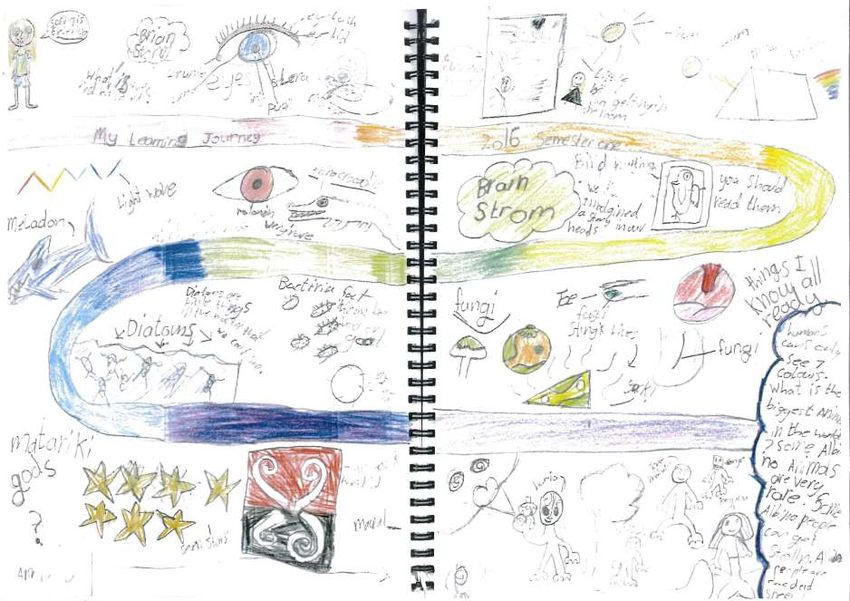
An example of a student showing their C.I.B. learning journey
Learning Journals and Assessment
Keeping a record of your child’s learning is very important to us. Each child is an
individual and learns at different rates and in different ways.
Student reflection forms an integral part of our curriculum. Students contribute to
Learning Journals in which provocations and learning across the curriculum are
reflected upon. The Learning Journals are an important element of our commitment to
reporting to parents. They are a catalyst for dialogue between the learner, teacher
and parents during our student-led conferences.
The Learning Journal is a record of your child’s achievement. It contains snapshots of
learning from key curriculum learning areas.
Balmoral Habits
These habits may serve as mental disciplines. When confronted with problematic situations,
students, parents and teachers might habitually employ one or more of these by asking
themselves,
“What is the most intelligent course of action I can take right now?
Key Our Habit Features
Competencies
Making connections and reflecting on our learning
Organising thoughts to propel new ones
Applying our learning and thinking to different contexts
Building on our own and others thinking
Considering, respecting and empathising with others’
Thinking
perspectives
Together
Asking questions with curiosity and wonder
Whakaro
Identifying problems and defining solutions
whakakotahi Seeking clarification around misconceptions or
misunderstandings
Having an open mind to new ideas and ways of doing
things
Forming and justifying ideas and opinions
Trying hard and keeping on going to achieve goals
2. Using language, symbols, and texts
Having belief in our own and others’ strengths
5. Participating and contributing.
Accepting setbacks and repetition as part of the learning
Persisting
journey
Together
Relishing a challenge
Tautoho
4. Relating to others
Being open to the notion of working with others’ to solve
3. Managing self
whakakotahi problems
1. Thinking
Living the power of ‘yet’
Helping each other get through the hard stuff
Building from what's gone before and creating with a new
Creating perspectives
Together Taking risks, making mistakes and learning from them
Toi-hangaia Curious about the world and making connections
whakakotahi Generating, innovating, evaluating and respecting ideas
Valuing the individual's input
Being an honest and trustworthy person
Making and reflecting on choices
Making thoughtful decisions
Managing Self Managing time and being organised.
Ngā Hononga Being aware of actions, taking responsibility for these and
whakakotahi their impact on others
Working collaborative
Recognise, learn and use self regulation strategies.
Knowing your role in the community and play your part
Organising your thoughts coherently
Actively listening, seeking clarification and adding to others
Communicating
ideas
Together
Agreeing and disagreeing with evidence
Mana Reo
Being able to give and receive feedback
whakakotahi Interpreting and using 100 languages to communicate
Forms of communication are appropriate for the context
Thoughts – Think
Who we are
Emotions – Feel
How we grow
Behaviours – Act
How we communicate
Capabilities – LearnBEHAVIOUR PLAN
We aim for students to leave us as independent, confident learners. Our Behaviour
Plan encourages pupils to take responsibility for their behaviour and to develop
positive attitudes about themselves and their learning. Our Life Skills programme is an
integral part of the Behaviour Plan and vice-versa.
Our school’s basic beliefs are based on the School Values: Learning Together
• Respect
• Integrity
• Inclusiveness
• Positivity/Being Positive
Rules What does this look like?
Hands and Feet
We do not pinch, poke, pull hair, kick, strangle, punch,
tackle, push, pull.
We keep hands, feet, Mouth
mouths and objects to We don’t swear, put down, name call, answer back,
ourselves ridicule or laugh at others or bite.
Objects
We do not bring or make at school weapons or objects
that may hurt others.
Body Language
We don’t give the evils, whisper behind backs, eye roll,
stand over or give rude gestures.
We move promptly and quietly around the school.
We are in class on time after breaks.
We stay outside a classroom unless a teacher is present.
We stay within the boundaries, including away from the
We are in the right place car parks at all times.
at the right time We sit down when we eat.
Only Monitors are allowed in the sports shed.
We use the toilets as a place to go to the toilet.
We play fairly in games and sports, and include all
We tell the truth and participants.
display honesty We tell the truth.
If we find something we take it to the office or give it to
the owner.We put school equipment away.
We put rubbish in the bin.
We take care of the school We try to recycle.
environment We put toilet paper in the toilet and hand wipes in the
bins provided.
We look after our desk and chair and make sure it stays
clean all year.
During the day we do not climb trees at school.
We do not climb on or touch art works around the
school.
We follow the staff
instructions first time We do what a staff member asks us straight away.
We do not bring fizzy drinks, chewing gum, sweets and
We bring the appropriate glass bottles to school.
items from home that we If we ride a bike we wear a helmet.
need for school. This includes We walk bikes in the school grounds or on Brixton Road
wearing the correct uniform when the road and footpath are busy.
and appropriate clothing. We wear the intermediate uniform correctly.
We wear clothing appropriate to the weather
conditions and for classroom wear.
Only jewellery worn other than stud earrings is a watch.
We have all the equipment we need so we do not
need to borrow from other students.
We do not steal or vandalise We do not go into someone else’s bag, desk or
classroom without asking first
We do not graffiti (tag) or disfigure propertySTAFF AT BALMORAL PRIMARY SCHOOL 2018
Principal: Malcolm Milner
Associate Principal (Primary) Katy Sparkes
Associate Principal (Intermediate) Trish Cullen
Associate Principal (Student Support) Mary Rea
Teaching Staff:
Whänau Koru (New Beginnings) Deborah Gray/Lyndsey Spence
(New Entrant Team) Emily Pauling
Judith Knight
Adrienne Browne
Suzanne Preece
Leah Fox Nielsen
Whänau Mahira (Inquisitive) Alice Sievewright
(Year 2 Team) Charlotte Eglinton
John Hazel
Storm Desmond
Whänau Whetu (Stars) Catherine Loney
(Year 3 and 4 Team) Louise Burke
Adrianna Yang
Saffron Paddy
Carla Mardell/Olivia Papa
Maureen O’Meara
Joanna Douglas
Whänau Hiringa ( Determination) Andrew Te Aotonga
(Year 5 and 6 Team) Rosie Kellie
Lesley Payne
Molly Henderson
Alyshia Jacobsen
Madeline Henty
Special Needs Co-ordinator: Mary Rea
Reading Recovery: Lyndsey Spence and Deborah Gray
ESOL: Kirsty MacDiarmid
Music: Alex Ulrich and Sarah Dunn
School Office: Andrea BurnsYou can also read


