IVERMECTIN: COULD THIS BE AN EFFECTIVE ANTI-VIRAL AGAINST SARS- COV-2? - TEXT2MD
←
→
Page content transcription
If your browser does not render page correctly, please read the page content below

COVID-19 BLOG

Ivermectin: Could This Be An
Effective Anti-viral Against SARS-
CoV-2?
JANUARY 13, 2021 – BY Miguel Antonatos, MD

A         re you looking for a fool-proof treatment of COVID-19? If yes, here is where you
          can read about the drug Ivermectin, which is currently under heavy research and
          has promising potential.

Ivermectin is an FDA-approved parasitic drug. It is prescribed to patients diagnosed with
infections, namely, Onchocerciasis or 'river blindness,' filariasis, and intestinal worms.
Besides, topical applications are given for body louse, severe rosacea, and skin-related
parasitic infections.

Recently, with the emergence of SARS-CoV-2, the novel coronavirus, and its substantial
impact worldwide, researchers are actively conducting clinical trials to determine appropriate
therapeutic interventions.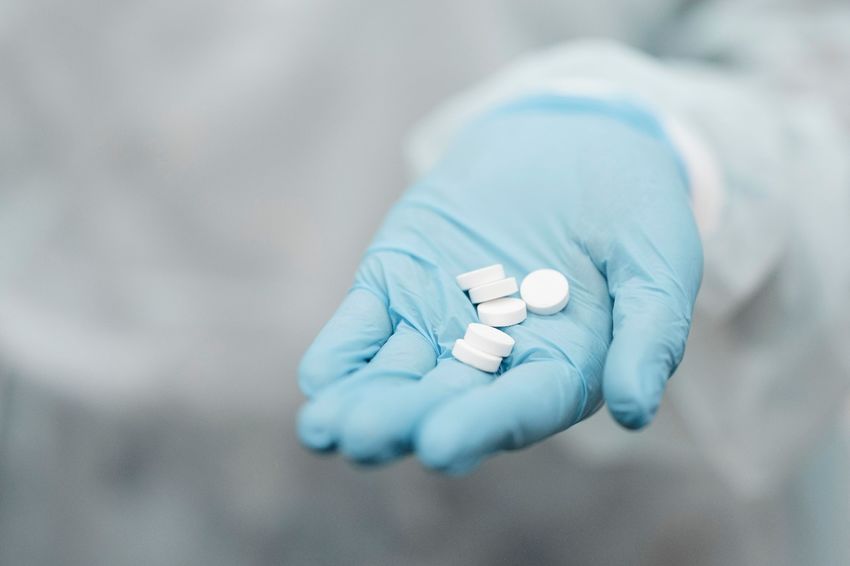
Regardless of the government's preventative measures— such as face-masks, maintaining
social distance, and self-isolation— drug therapy is still the primary goal to overcome
pandemic. It is for this reason, the Frontline COVID-19 critical care (FLCC) Alliance
adopted a new protocol that introduced a unique parasitic drug- Ivermectin- as the potential
covid-19 prophylaxis.

This article will discuss its implications in detail.

FLCC Alliance And The I-MASK Protocol
The FLCC Alliance was established in the early months of the COVID-19 pandemic to adopt
an appropriate treatment intervention for such patients. Initially, a MATH+ protocol was
introduced by the founders of this alliance. Later, Pierre Kory, MD, introduced an improvised
protocol, including the administration of ivermectin prophylaxis in outpatient treatment. This
was known as the I-MASK+ protocol, which according to the FLCC, includes;

1. The Prophylaxis Protocol:
According to their website, COVID-19 prophylaxis is recommended for high-risk
individuals, including the immunocompromised or elderly population. Additionally, it's also
recommended for individuals exposed to a COVID-19 positive patient, without wearing a
mask.

The combination therapy includes;

    •   Ivermectin: 0.2mg/kg course with dosages updated on their website.
    •   Vitamin C: 1000 mg twice a day.
    •   Vitamin D3: 1000-3000 IU/day.
    •   Zinc: 50 mg/day.
    •   Melatonin: unless contraindicated, 6 mg before bed.

2. The Outpatient Protocol
Outpatient protocol caters to patients recently diagnosed with COVID-19 infection. Infection
severity must range from mild to asymptomatic clinical presentation. The FLCC protocols
further state that individuals with complications like shortness of breath, persistent high fever,
etc., should be treated with a different protocol (MASK+ in those cases). Combination
therapy includes;

    •   Ivermectin: 0.2 mg/kg dose for a maximum of 5 days.
    •   Vitamin D3: 4000 IU/day
    •   Vitamin C: 2000mg/ twice a day.
    •   Zinc: 100 mg/day.
    •   Aspirin: unless contraindicated.
The I-Mask protocol was adopted based on cohort studies and randomized controlled trials conducted in Bangladesh, northern India, and parts of Brazil. These observational studies were compiled as evidence-based outcomes and published as a literature review in the Journal of Intensive Care Medicine. One of the founders talked about Ivermectin, referring to it as food for thought for physicians treating covid-19, as it gives them some options. The pioneers further reiterated Ivermectin's efficacy as a potential inhibitor of viral replication and its minimal side-effects as reported from the drug's past trial data. How Ivermectin For COVID-19 Treatment Came About? It was observed that SARS-CoV-2 utilizes importin α/β1 protein, which carries viral agents from the host cell's cytoplasm into the nucleus. This allows it to incorporate into the cell's DNA strand, subsequently affecting host cell replication. What Ivermectin does is that it inhibits importin α/β1, which is hypothesized to decrease COVID-19 disease severity. The next course of action for researchers would be to test this theory. An in vitro study was conducted where an Australian strain of covid-19 was infected with Vero/hSLAM; a genetically engineered cell line incorporating monkey cells with human-derived signaling molecules. The mixture was isolated and reacted with Ivermectin, which showed a 5000-fold reduced viral activity within 48 hours. Next, observational studies and clinical trials were conducted to determine its efficacy and safety for human consumption. A randomized, double-blind placebo trial in Bangladesh
tested the clinical outcome in 68 hospitalized patients. The ivermectin-only group showed
significant viral clearance compared to the placebo and ivermectin + doxycycline assigned
groups. Toxicity and side-effects were minimal, so the authors supported this drug as an
appropriate treatment for mild to moderate covid-19. Another retrospective study in the US
showed a decreased number of deaths in severe covid-19 patients, compared with the placebo
group.

Undoubtedly, the pandemic has wreaked havoc on the healthcare infrastructure. By observing
the statistics for disease mortality in this figure, prompt action is needed more than ever.
Keeping this in mind, the implications of Ivermectin could be enormous. According to the
FLCC founders, Ivermectin has a minimal toxicity profile and optimal therapeutic benefit,
which is the way to revolutionize COVID-19 treatment.

Currently, more ongoing clinical trials are happening to test its efficacy
further. ClinicalTrials.gov can direct you to 34 related clinical trials, spanning from the US to
Israel, Spain, and northern India. As of now, the potential implications of Ivermectin have
become a topic of interest for many researchers. However, its efficacy has yet to be
confirmed. Currently, only Brazil and some parts of south-east Asia are prescribing
Ivermectin to covid-19 patients.

Worldwide Reaction To Ivermectin As COVID-19
Treatment
It is noteworthy that Ivermectin is not part of the FDA-approved COVID-19 treatment
protocol. Neither has it been appointed under the Emergency Use Authorization (EUA),
where medication or inventory is only utilized during supply shortage. However, considering
the large number of randomized trials being conducted in several countries, we can conclude
that health experts are waiting for this 'miracle' drug to be as beneficial as they say.

Before considering any drug for the public, the product must go through robust trials and
detailed studies to determine its clinical efficacy and safety. In the context of Ivermectin
related studies, several limitations must be considered before advocating for its use.
Limitations can be found in the in vitro study mentioned above that used a high-level drug
concentration whose toxicity profile has yet to be determined.

Furthermore, a more significant number of trials, preferably the gold-standard randomized
controlled, double-blind trials, must be carried out (since it removes most of the biases)
before it meets the approval of healthcare experts.

According to a Medscape article, ivermectin protocol must go a long way before proving its
benefits for covid-19. While the foundation has been laid, and several ongoing studies are
waiting for the results, it is premature to reach a conclusion. They further stated, "without
robust trials, we are left with too many options on the table and no way to know what helps,
leading to this 'throw-the-book-at-them' approach.”
Bottomline
Currently, FDA warns against the consumption of Ivermectin or using its animal-substitute.
However, the founders of FLCC Alliance as well as Text2MD we are optimistic about the
future of this drug. Thus, when authorities finally give the green light, there is a high chance
that Ivermectin will transform the course of the pandemic.

References:
   1.   Frontline COVID-19 Critical Care Alliance, “I-MASK+ Prophylaxis & early outpatient treatment
        protocol, 2020. https://covid19criticalcare.com/wp-content/uploads/2020/11/FLCCC-I-MASK-
        Protocol-v7-2020-12-27-ENGLISH.pdf
   2.   Rajter J, Sherman M, et al. ‘Use of Ivermectin is associated with lower mortality in hospitalized
        patients with coronavirus disease 2019’, January 2021. https://journal.chestnet.org/article/
        S0012-3692(20)34898-4/fulltext
   3.   Panday S, Pathak S, et al. “Ivermectin in COVID-19: What do we know?”. December 2020. https://
        www.ncbi.nlm.nih.gov/pmc/articles/PMC7521351/
   4.   Sakib SM & Kamruzzaman, “Bangladesh: Ivermectin shows promise intreating virus”, December
        2020. https://www.aa.com.tr/en/asia-pacific/bangladesh-ivermectin-shows-promise-in-treating-virus/
        2068885
   5.   Mock J. “Doctors Publish Paper on COVID-19 Protocol; Experts Unconvinced”, December 2020.
        https://www.medscape.com/viewarticle/942995#vp_1
You can also read


