JOINT DEMENTIA STRATEGY - 2016-2021 London Borough of Richmond upon Thames - Preventing Well - London Borough of ...
←
→
Page content transcription
If your browser does not render page correctly, please read the page content below

London Borough of Richmond upon Thames

JOINT DEMENTIA STRATEGY
        2016-2021

             Preventing Well

             Diagnosing Well

             Living Well

             Supporting Well

             Dying Well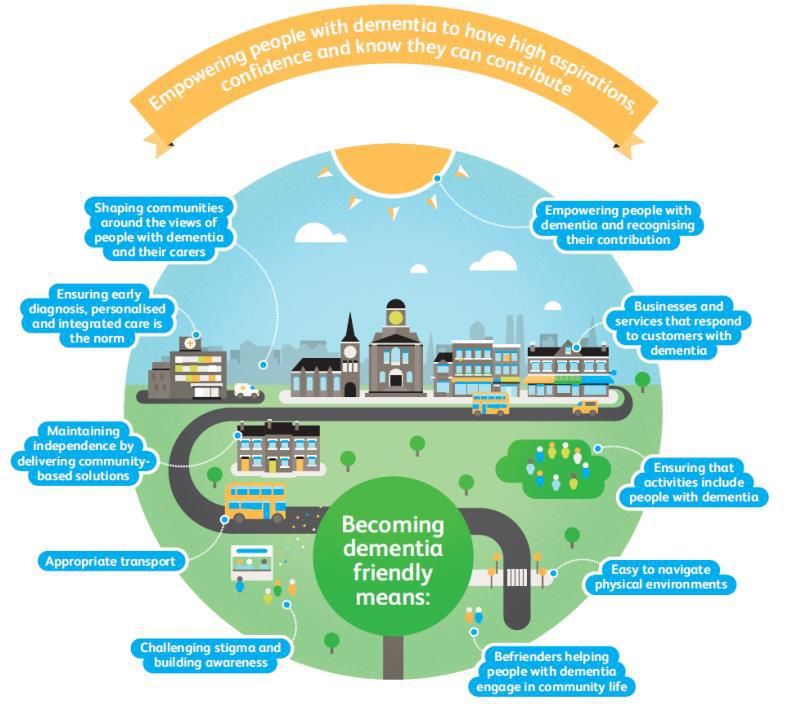
Contents
INTRODUCTION ....................................................................................................................................... 4
   What is dementia? .............................................................................................................................. 4
   Why do we need a Joint Strategy? ..................................................................................................... 5
       National context.............................................................................................................................. 5
       Local strategic and commissioning context .................................................................................... 6
       Dementia in Richmond over the next five years............................................................................. 9
   Scope and purpose............................................................................................................................ 10
   Austerity ............................................................................................................................................ 11
   Engagement and Consultation .......................................................................................................... 11
PREVENTING WELL- The risk of people developing dementia is minimised.......................................... 12
   What is happening in Richmond to prevent dementia? ................................................................... 12
   What do we want to achieve in the next five years for the prevention of dementia? .................... 14
DIAGNOSING WELL - People with dementia receive timely diagnosis, integrated care plan and review
within first year ..................................................................................................................................... 15
   What is happening in Richmond to diagnose dementia? ................................................................. 15
       Diagnosis, memory assessment and investigation ....................................................................... 15
       Provide information ...................................................................................................................... 16
       Care plan ....................................................................................................................................... 17
   What do we want to achieve in the next five years for the diagnosis of dementia? ....................... 19
       Diagnosis, memory assessment and investigation ....................................................................... 19
       Provide information ...................................................................................................................... 20
       Care plan ....................................................................................................................................... 20
LIVING WELL - People with dementia can live normally in safe and accepting communities .............. 21
   What is happening in Richmond to enable those with dementia to live well? ................................ 21
       Supporting carers and respite ....................................................................................................... 21
       Relationships ................................................................................................................................. 23
       Arts, Culture, Leisure..................................................................................................................... 24
       Promote independence and safe communities ............................................................................ 24
   What do we want to achieve in the next five years to enable those with dementia to live well? .. 28
       Supporting carers, respite ............................................................................................................. 28
       Relationships ................................................................................................................................. 28
       Arts, Culture, Leisure..................................................................................................................... 28
       Promote independence and safe communities ............................................................................ 29
SUPPORTING WELL - Access to safe, high quality health and social care for people with dementia and
their carers ............................................................................................................................................ 30
What is happening in Richmond to enable those with dementia to be supported well? ................ 30
Health and social care services ..................................................................................................... 30
Choice............................................................................................................................................ 31
Hospital treatments ...................................................................................................................... 32
Liaison ........................................................................................................................................... 33
Behavioural and psychological symptoms of dementia ............................................................... 33
Advocates ...................................................................................................................................... 34
Housing ......................................................................................................................................... 34
Technology .................................................................................................................................... 36
What do we want to achieve in the next five years to enable those with dementia to be supported
well? .................................................................................................................................................. 37
Health and social care services ..................................................................................................... 37
Hospital treatments ...................................................................................................................... 38
Technology .................................................................................................................................... 38
Housing ......................................................................................................................................... 38
DYING WELL - People living with dementia die with dignity in the place of their choosing ................. 39
What is happening in Richmond to enable those with dementia to die well? ................................. 39
What do we want to achieve in the next five years to enable those with dementia to die well? ... 41
CONSIDERATION OF PARTICULAR GROUPS .......................................................................................... 42
Black, Asian and minority ethnic communities................................................................................. 42
Learning disabilities .......................................................................................................................... 44
Young-onset dementia...................................................................................................................... 45
IMPLEMENTATION PLAN ...................................................................................................................... 46
APPENDIX 1- Membership of the Dementia Strategy Steering Group ................................................. 48INTRODUCTION
What is dementia?
Dementia is an umbrella term for a range of progressive disorders affecting the brain, the most
common of which are Alzheimer’s disease and vascular dementia. It is more common in those over
65 years of age, but can occur in younger people. Dementia results in a progressive decline in
multiple areas of function, including memory, reasoning, communication skills and the skills needed
to carry out daily activities. Some people may also develop behavioural and psychological symptoms
such as depression, psychosis, aggression, and eating problems, which can challenge the skills and
capacity of carers and services. The impact of dementia on an individual and their family may be
compounded by personal circumstances such as changes in financial status and accommodation, or
bereavement. There is no cure for dementia, but people can live with it for many years after
diagnosis. Recent evidence is emerging that healthy lifestyles such as avoidance of tobacco, alcohol,
poor diet and physical inactivity can reduce the risk of dementia.
Nationally, there are currently estimated to be 622,000 cases of dementia in those over 65 years of
age1. Prevalence of dementia increases with increasing age (Figure 1). More women than men are
diagnosed with dementia each year and it has become the leading cause of death among women in
the UK2.
Figure 1: Estimated dementia prevalence in the UK (per cent) by age band
40%
Dementia prevalence (%)
35%
30%
25%
20%
15%
10%
5%
%
65 - 69 70 - 74 75 -79 80 - 84 85 - 89 90+
Age band
Male Female
1
NHS England, Letter from Dr Dan Harwood - London Dementia SCN Clinical Director 2015
2
Alzheimer’s society report March 2015Why do we need a Joint Strategy?
National context
Action on dementia has been building nationally for the last five years. In 2009 the Department of
Health published an ambitious national dementia strategy3 which detailed 17 objectives that, when
implemented locally, would result in significant improvements in the quality of services and the
understanding of dementia in the UK. In 2010, the Dementia Action Alliance was set up “to bring
about radical changes in the way society responds to dementia”4. A National Dementia Declaration
was developed, containing “I statements” that set out what is important to people with dementia5:
I have personal choice and control over the decisions that affect me.
I know that services are designed around me, my needs, and my carer’s needs.
I have support that helps me live my life.
I have the knowledge to get what I need.
I live in an enabling and supportive environment where I feel valued and understood.
I have a sense of belonging and of being a valued part of family, community and civic
life.
I am confident my end of life wishes will be respected. I can expect a good death.
I know that there is research going on which will deliver a better life for people with
dementia, and I know how I can contribute to it.
To drive quality improvements in dementia services, the National Institute for Health and Care
Excellence (NICE) issued quality standards for dementia (2010) and for living well with dementia
(2013), which give statements on best practice for service provision. The NICE guidelines on
dementia, first published in 2006, will be updated for publication in September 2017 due to a
number of new research findings.
In March 2012 the Prime Minister launched a national challenge to fight dementia, which has led to
unprecedented action across the country. More people have now received a diagnosis of dementia
than ever before, over 1 million people have been trained to be dementia friends to raise awareness
3
Living well with dementia
https://www.gov.uk/government/uploads/system/uploads/attachment_data/file/168220/dh_094051.pdf
4
http://www.dementiaaction.org.uk/
5
http://www.dementiaaction.org.uk/nationaldementiadeclarationin local communities, over 400,000 NHS staff and over 100,000 social care staff have been trained in better supporting people with dementia, and there has been a significant increase in research spending6. Building on this, a new Prime Minister’s challenge was launched with the aspiration that, by 2020, England will be the best country in the world for dementia care and support, and for people with dementia, their carers and families to live, and the best place in the world to undertake research into dementia and other neurodegenerative diseases4. The Implementation Plan for the 2020 Challenge has recently been published and sets out the actions that will be taken nationally to address eighteen specific commitments that will improve dementia care, facilitate research, raise awareness and improve risk reduction measures by 20187. Crucial to improving dementia care for each individual is ensuring that post-diagnostic care and support is in place to enable the person with dementia and their family to develop an understanding of dementia and what services and support are available locally, and to allow them to prepare for the future including planning for end of life. A Joint Declaration on post diagnostic dementia care and support was published in January 2016, and outlined that that support after diagnosis should be personalised, flexible, culturally relevant and have proper regard to equality8. This declaration is reflected in the new NHS Improvement and Assessment Framework for CCGs, which includes a metric on post-diagnostic care and support. Local strategic and commissioning context Richmond has invested significantly over the last few years in health and social care services in both the statutory and voluntary sectors for people with dementia and their carers. This Joint Strategy will capture this existing framework of comprehensive service provision in one place, and demonstrate the choice and range of services available to those with dementia and their carers in Richmond. This consolidation will also highlight where there is more to do to enable those with dementia in Richmond to live well and be supported appropriately. 6 Prime Ministers Challenge on Dementia https://www.gov.uk/government/publications/prime-ministers-challenge-on-dementia-2020/prime-ministers- challenge-on-dementia-2020 7 2020 Implementation Plan https://www.gov.uk/government/uploads/system/uploads/attachment_data/file/507981/PM_Dementia- main_acc.pdf 8 Joint Declaration on post diagnostic support and care https://www.gov.uk/government/publications/dementia-post-diagnostic-care-and-support/dementia-post- diagnostic-care-and-support
A number of strategies have been developed in Richmond in recent years that focus on issues
relevant to dementia (Figure 2). However, delivery of services for people with dementia and their
carers is dependent on an integrated approach to commissioning health and social care services
across the care pathway. This Joint Strategy will bring relevant elements from these strategies
together to set out how health and social care services for people with dementia and their carers
will develop over the next five years.

Figure 2: Current and recent Richmond health and social care strategies relevant to
dementia

                                             Carers Strategy
                                              2013-2015*

                                                                   Better Care Closer to
                  Housing Strategy                                  Home Strategy and
                      2013-2017                                      Better Care Fund
                                                                           Plan

      Promoting wellbeing

                                      DEMENTIA
      and independence –                                                       Out of Hospital Care
        a Framework for                                                              Strategy
           Prevention
                                                                                    2013-2017
          2015-2018

                Learning Disability
                 Commissioning                                       Health and Wellbeing
                     Strategy                                              Strategy
                    2010-2013                                             2013-2016
                    2015-2020              Joint Mental Health            2016-2019
                                                Strategy –
                                         Implementation Plan for
                                         Adults and Older People
                                               2014-2016

*The Carers Strategy will be refreshed and published in 2016
Local views on dementia services
Views on dementia services from local residents and carers have been collected through a number
of engagement events by the CCG for ongoing work streams9. The main themes from this local
engagement in relation to dementia are set out below and have informed the development of the
Strategy.
The need for high quality, The voluntary sector
accurate, accessible and Better coordination of should be an active
extensive information/service care between health and partner in health and
directories for professionals, social care services – social care, and in keeping
patients and carers, in both often services feel people well in the
hard copy and online fragmented community
Keeping people out
of hospital increases
the stress on carers How can we engage Those with long term
patients who start finding conditions should have
interaction difficult and services built around the
therefore withdraw from individual, using personal
services? health budgets
Individuals want a
peaceful and
dignified end to
their life
Support available to For older people, it helps
those with dementia is to see the same GP, not
Those without a carer should very variable and carers someone different every
be as well supported as those can feel isolated and time
that have a carer and access helpless
to services should be equal
9
Engagement events reviewed were:
Better Care Closer to Home: Richmond Out of Hospital Care Strategy - Engagement Report 2013
Inpatient mental health services in south west London consultation Event, hosted by Friend of Barnes
Hospital – December 2014
SWL CCGs: Inpatient Mental Health Services in South West London, Consultation Report – February
2015
Outcomes That Matter: Community Mental Health in Richmond - April 2015
Help us build a new NHS in south west London: Public and local stakeholder deliberative engagement
events - September 2015Dementia in Richmond over the next five years
In Richmond, as of May 2016, 1986 people over 65 years of age were estimated to be living with
dementia10. This estimate excludes people with young-onset dementia. 1279 people of all ages had
received a confirmed diagnosis of dementia and it is estimated that a further 778 have not been
formally diagnosed or have not yet presented to services.
The prevalence of dementia is increasing nationally. In Richmond, the number of people aged over
65 living with dementia is expected to rise to 2235 by 2021 – a 15% increase over the next 5 years –
and to 2561 by 2025 – a 32% increase over the next 10 years. Table 1 gives a breakdown of the
increase over the next five years for men and women in Richmond.
Table 1: Estimated number of people living with dementia in Richmond, aged 65+, 2016-
2021
Year Men Women
2016 668 1,337
2017 682 1,358
2018 687 1,394
2019 725 1,434
2020 746 1,435
2021 767 1,468
Given this estimated rise in the prevalence of dementia over the next five years, this Joint Strategy
provides an opportunity to analyse how current services in Richmond will meet this future demand.
10
NHS England, Letter to CCG Clinical Leaders, Dementia Diagnosis Rates (unpublished)Scope and purpose
This Joint Dementia Strategy sets out our five year vision for people with dementia and their carers
in the London Borough of Richmond upon Thames. It will look at all aspects of dementia care and
services, from prevention to end of life care, to ensure that:
opportunities to prevent certain forms of dementia are maximised;
community understanding of dementia is improved;
the Local Authority and Clinical Commissioning Group (CCG) are prepared for the future
needs of people with dementia;
Richmond becomes a dementia friendly community that enables people with dementia to
stay living independently in the community for longer;
carers of people with dementia are given the support they need;
people with dementia are able to live well in Richmond.
The framework for this Joint Strategy has been taken from the NHS England Dementia Pathway
Transformation Framework. There are five elements to the Framework:
Preventing well – the risk of people developing dementia is minimised;
Diagnosing well – people with dementia receive timely diagnosis, integrated
care plan and review within the first year;
Living well – people with dementia can live normally in safe and accepting
communities;
Supporting well – access to safe high quality health and social care for people
with dementia and carers;
Dying well – people living with dementia die with dignity in the place of their
choosing.
The primary audience for this Joint Strategy is the commissioners of health and social care services in
Richmond, but it will also be of interest to people with dementia and their carers, and to service
providers.Austerity
The Local Authority and CCG are operating within the context of significant budget pressures due to
central government reductions or restrictions, combined with increased demand for local services.
Central government funding restrictions are expected to continue for the foreseeable future, as part
of the Government’s strategy to reduce the national deficit.
No additional financial resources have been identified to implement this strategy. We will be seeking
to implement the strategy within, and through the redistribution of, existing resources.
Engagement and Consultation
A Joint Dementia Strategy Steering Group was formed to guide development of the strategy and
oversee delivery. The membership of the group11 comprised representatives from Health Watch,
Richmond Council for Voluntary Service, the Local Authority, Richmond Clinical Commissioning
Group, and a number of dementia carers. The Steering Group met monthly during the first half of
2016.
The Strategy team carried out extensive stakeholder engagement with the statutory and voluntary
sectors in Richmond to discuss the current services for those with dementia and their carers, and to
investigate what the future could and should look like. Awareness of the Strategy was raised at a
number of groups and events including the Richmond Dementia Action Alliance, the Community
Involvement Group and the Older People’s Mental Health Steering Group. Members were invited to
contact the team with any input they felt was useful, or if they had any questions or comments. As a
result of this engagement, a number of meetings were set up with interested stakeholders to hear
their views.
The formal consultation on the draft Joint Strategy was hosted on the Council’s consultation
webpages for 6 weeks from Monday 11th April – Friday 20th May 2016. Information about the
consultation was distributed widely to stakeholders and partners and a number of engagement
events were held with specific groups. Twenty two responses were received in response to the
consultation questionnaire and further feedback was received by email or at engagement events.
Full details of the consultation process and results are included in the Consultation and Engagement
Report which is published on the Richmond Council consultation website12.
11
See Appendix 1
12
https://consultation.richmond.gov.uk/PREVENTING WELL
The risk of people developing dementia is minimised
What is happening in Richmond to prevent dementia?
Richmond Local Authority (LA) and CCG are committed to prevention of long term conditions as set
out in the Care Act (2014), which emphasises the importance of a shift in service provision towards
preventative services, with the aim of preventing, reducing and delaying the need for care. The LA
and CCG recently published “Promoting wellbeing and independence – a Framework for Prevention
2015-2018”13 and are committed to working in partnership to deliver this strategic framework to
improve the health and well-being of Richmond’s population and to support people to remain
independent. The four priorities for this strategic framework were identified as:
Priority 1: Making health and wellbeing everyone’s business
Priority 2: Creating healthy communities – harnessing local community assets to support
people and their carers
Priority 3: Re-shaping healthy lifestyles services and embedding self-care
Priority 4: Reducing and delaying demand for care – promoting a recovery focussed model
across health and social care pathways
More information on this Strategic Framework and its implementation can be found here.
Research on dementia has indicated that some types of dementia have the same risk factors as
cardiovascular disease and stroke, for example smoking, lack of regular physical exercise and
excessive alcohol consumption14. In Richmond, a new service model for lifestyle prevention services,
Live Well Stay Well, has been commissioned since September 2015. Live Well Stay Well is a health
hub with five key prevention services – NHS Health Checks, weight management, exercise referral,
walking away from diabetes, and healthy walks.
13
http://www.richmond.gov.uk/framework_for_prevention_2015-18.pdf
14
PHE: Health matters: midlife approaches to reduce dementia risk
https://www.gov.uk/government/publications/health-matters-midlife-approaches-to-reduce-dementia-
risk/health-matters-midlife-approaches-to-reduce-dementia-riskFigure 4 – Live Well Stay Well service model
Promoting and
Bookings out sign posting
Health
walks Mental
Health
Stop Services
Smoking
Other
Services e.g.
Weight alcohol and
Management wellbeing
Lifestyle Hub
Outreach
Exercise - Manage Referrals work
Referral - Book Services
-Follow up
Walking Health
Away from Checks
Diabetes
Health & Social GP Practices
Care
Practitioners
Public
Referrals in
This service model has increased the capacity of frontline lifestyle services and additionally targets
outreach delivery to identify high risk populations. The focus of these services is to reduce long term
conditions, including dementia.
The NHS Health Checks programme is aimed at everyone between 40 and 74 years of age who has
not been previously diagnosed with heart disease, hypertension, stroke, diabetes or kidney disease.
As well as testing for these conditions, the programme includes a dementia element for those over
65 years, with information provided and referral to the memory clinic if needed. In Richmond, the
programme is being delivered by 27 general practices, 2 pharmacies and via a community outreach
provider, and reached its invitation target last year. More than 6000 health checks were completed,
with an uptake rate of 53%. The programme has been successful in detecting more than 500 cases of
cardiovascular disease and referring a similar number to lifestyle services. Richmond’s success story
has been published on the NHS Health Checks website and in an international journal.What do we want to achieve in the next five years for
the prevention of dementia?
1. We will ensure that the objectives in the Framework for Prevention are implemented
and monitored, and that prevention is embedded in all our services
2. We will improve awareness of “What’s good for your heart is good for your head”
through all our public health prevention services
3. We will support national dementia prevention initiatives as set out in the Prime
Minister’s Challenge on Dementia 2020 and the NHS 5 year Forward Plan, for example
a national healthy ageing campaign
4. We will work to achieve the national uptake target of 65% for invitations to NHS
Health Checks; this will be achieved via better targeting of invitations, community
outreach, opportunistic checks within our services and engaging GP practices
5. We will work towards the implementation of the recommendations in the 2015 NICE
guidance on “Dementia, disability and frailty in later life – mid-life approaches to delay
or prevent onset”DIAGNOSING WELL
People with dementia receive timely diagnosis, an
integrated care plan and review within first year
What is happening in Richmond to diagnose dementia?
Diagnosis, memory assessment and investigation
In 2012, 46% of those estimated to have dementia had been diagnosed in Richmond. Since then,
there has been a huge drive to improve diagnosis rates. Educational events have been held with GPs
and other frontline healthcare staff to raise awareness, and significant work has been done in
partnership with GP practices to improve the coding of dementia cases. As of May 2016, the
diagnosis rate for Richmond was 64.4% - a substantial improvement and close to achieving the
national ambition of two thirds diagnosed15. Timely diagnosis of dementia is important as this allows
the person with dementia to be actively involved in decisions about their future life and care, and
facilitates access to medical and social interventions that may improve their condition or situation.
There is a clear diagnostic pathway for dementia in Richmond. All Richmond residents and those
registered with a Richmond GP have good access to memory clinic services provided by South West
London St George’s that specialise in the diagnosis and initial management of dementia. The
memory clinic accepts referrals from Richmond GPs, the Hounslow and Richmond Community
Healthcare dementia clinical specialists and hospitals. Those referred into the service are seen within
2 weeks for an initial assessment16, and most will have a CT scan as part of the investigations to
confirm diagnosis and type of dementia. A confirmed diagnosis is given within 8-10 weeks11. Carers
are encouraged to attend the memory clinic and to be a part of the diagnosis.
Some referrals are made to the memory clinic services provided by the West London Mental Health
NHS Trust, usually due to geographical proximity. In addition, GPs are able to make a diagnosis
themselves where appropriate, without referral to the memory clinic, in cases of advanced
dementia.
15
NHS England, Letter to CCG Clinical Leaders, Dementia Diagnosis Rates (unpublished)
16
Information provided by SWL St Georges NHS Trust by email, March 2013A small proportion of diagnoses occur in secondary care, for example while an individual is an
inpatient in hospital, and in most cases the patient’s GP is informed of the diagnosis when the
individual goes home. There is scope to coordinate and formalise this diagnostic pathway to ensure
that those who are diagnosed in hospital are followed up appropriately when discharged.
A new tool for diagnosing dementia in care home residents was recently piloted in two care homes
in Richmond. The Dementia Assessment Referral, or DeAR-GP, tool is used by care workers to
identify care home residents with suspected dementia and refer them to their GP for further
assessment17. The tool was found to be effective and efficient, and over 87% (20 out of 23) of the
care home residents reviewed using the tool were either diagnosed with dementia or referred for
further assessment. The Alzheimer’s Society estimates that up to 80% of residents in care homes
have dementia or severe memory problems18.
Provide information
When individuals receive their diagnosis at the memory clinic, they and their carer are provided with
both verbal and written information about their condition and any possible treatment. All newly
diagnosed individuals are referred to the Dementia Care Advisor, provided by the Alzheimer’s
Society, who sits within the memory clinic and acts as an information navigator following diagnosis.
Those diagnosed at the memory clinic and their carers have access to the Dementia Care Advisor on
an ongoing basis to aid them in accessing services in the area, and local GPs can also refer individuals
diagnosed elsewhere to that service. The memory clinic psychological services also provide support
group work following initial diagnosis.
A dementia services guide for Richmond is available for those who have been diagnosed, available in
both hard copy and online19. Richmond residents now also have access to two newly commissioned
websites that provide information on local services and give residents the opportunity to choose the
services most suited to their needs:
Careplace20 is a recently launched online care directory that captures information on all
health and social care services in a number of London boroughs, including Richmond. Users
17
DeAR GP research report: http://www.hin-southlondon.org/news/DeAR-GP%20tool%20report%20published
18
Alzheimer’s Society, 2013
19
Richmond’s dementia services guide:
http://www.richmond.gov.uk/your_guide_to_dementia_services_2014.pdf
20
Careplace https://www.careplace.org.uk/can access descriptions and contact details of all dementia-related services in Richmond via
a quick search for keywords such as ‘dementia’ or ‘carers’;
Quickheart21 is a new website for Richmond residents, provided by Richmond Local
Authority, which contains information and advice on general health and social care issues, as
well as specific diseases such as dementia.
A Carer Information and Support Programme (CrISP1), run by the Alzheimer’s Society, is also
available to Richmond residents via the Carers’ Hub22. These sessions are for the family and friends
of someone who has recently received a diagnosis of dementia and aim to improve quality of life for
both the person diagnosed and their carers. Topics covered include understanding dementia, legal
and money matters, providing support and care and coping day to day.
Care plan
In Richmond, initial management of newly diagnosed individuals is provided by the memory clinic.
Follow-up care is transferred back to the GP once the individual’s condition is stable and their
medication regime is well established. This leads to a more holistic service experience with the GP
responsible for their ongoing personalised care plan, which is reviewed at least annually. GPs have
recently received dementia education and training to keep their skills and knowledge up-to-date to
enable them to fulfil this role effectively. In Richmond in 2014/15, 75% of people with dementia had
had a face-to-face care review in the previous 12 months, a similar proportion to both the national
(77%) and London figures (78%)23.
New guidance from the London Strategic Clinical Network on post diagnostic care and support24
recommends a slightly different approach to care planning, with a key professional leading on the
ongoing process of the support plan and coordinating with the individual’s GP and other services
where necessary.
Richmond-specific information on the website is provided by the London Borough of Richmond upon Thames
21
Quickheart will launch in May 2016
22
Richmond Carers’ Hub http://www.richmondcarers.org/
23
HSCIC QOF 2014-15: http://www.hscic.gov.uk/article/2021/Website-
Search?productid=19196&q=quality+outcome+framework+2014%2f15&sort=Relevance&size=10&page=1&ar
ea=both#top
24
London Strategic Clinical Network guidance on post diagnostic support and care
http://www.londonscn.nhs.uk/wp-content/uploads/2016/05/dem-post-diag-support-planning-052016.pdfIndividuals have ongoing access to memory clinic services, for example the consultant psychiatrist, where appropriate, through their GP. Those with rarer forms of dementia may have regular access to a consultant neurologist who is managing their condition.
What do we want to achieve in the next five years for
the diagnosis of dementia?
Diagnosis, memory assessment and investigation
1. We will keep up the momentum in improving diagnosis rates and strive to achieve
and maintain the national ambition of two thirds diagnosed by:
ensuring that all GP practices are correctly coding dementia diagnoses through
use of the dementia toolkit;
investigating what role the dementia clinical advisers at Hounslow and Richmond
Community Healthcare can play in continuing to improve dementia diagnosis in
the borough;
working with our local care homes to explore implementation of the Dementia
Assessment Referral Tool (DeAR-GP) to identify dementia in care home residents,
subject to evaluation of the pilot; and
investigating ways to facilitate and coordinate inpatient diagnosis so that those
who are diagnosed in hospital are followed up appropriately when discharged
2. We will ensure that all those resident in Richmond or who are registered with a
Richmond GP have ongoing access to the memory clinic service of their choice by:
working with our memory clinic services to improve the efficiency of diagnosis;
and
continuing to monitor the capacity of our memory clinic services to deal with the
increasing number of dementia patients in the borough in the next 5 years and
feed this into our commissioning plans;
3. We will investigate what professional support is available to individuals following
their initial assessment at the memory clinic, prior to confirmed diagnosis
4. We will work with our GP practices towards the implementation of the
recommendations from NICE on the diagnosis and management of those with mild
cognitive impairment25
25
NICE guidance on dementia 2009Provide information
5. We will ensure that all those diagnosed with dementia who are resident in
Richmond or are registered with a Richmond GP have ongoing access to dementia
care advice, so that they can access up-to-date information on services for those
with dementia and their carers
6. We will update the dementia services guide for Richmond and ensure that it is
provided in hard copy or e-copy as preferred at the time of diagnosis
7. We will ensure that information on dementia on the Richmond Local Authority
website (www.richmond.gov.uk) is easy to navigate and up to date, with a link to
NHS Choices, Quickheart and Careplace
Care plan
8. We will ensure that all those diagnosed with dementia have access to a named GP
with overall responsibility and oversight for their care, as set out in the Prime
Minister’s Challenge on Dementia 202026
9. We will roll out best practice for post diagnostic care and support as set out in the
recent guidelines from the London Dementia Strategic Clinical Network
10. We will work with GP practices to ensure that all those diagnosed with dementia are
invited, along with their carer, to an annual review to discuss their care
26
https://www.gov.uk/government/publications/prime-ministers-challenge-on-dementia-2020/prime-
ministers-challenge-on-dementia-2020LIVING WELL People with dementia can live normally in safe and accepting communities What is happening in Richmond to enable those with dementia to live well? Supporting carers and respite Richmond recognises and values the role of carers and their central role in maintaining the health and wellbeing of the people for whom they care. The Richmond Carers Strategy 2013-15 set out the borough’s vision for carers to be able to achieve their full potential, live their lives with confidence and resilience and access quality services that promote independence and deliver value for money. Considerable progress has been made against the aims of the Strategy. Evaluation of this, and consultation with service users, is being carried out to inform the shape and direction of the refreshed strategy which will be published in 2016, and will reflect the commitment that Richmond has to supporting carers. We know that, in England, 39% of carers spend 100 or more hours each week looking after, or caring for, a person with dementia and over half have been in their caring role for more than five years27. This can put a considerable physical and mental strain on the carer. In addition, 1 in 4 carers have a long-standing illness, 1 in 5 have a physical impairment or disability28. Richmond provides a carers’ assessment service for all carers, including those who care for people with dementia29. The assessment builds a picture of the physical, emotional and practical impact on the life of a carer, and ensures that their needs are recognised. Information on the amount of support they are providing, their health and wellbeing, relationships, housing/accommodation, and work and learning is collected; this is used to work out what help and support they may need now and in the future. Richmond publishes a Carers Directory30 on the Council website that contains comprehensive information and contact details for organisations which provide support and services to carers. 27 Focus on dementia – HSCIC, 19 January 2016 28 Personal Social Services Survey of Adult Carers in England, 2014-15 29 Richmond Carers Assessments: http://www.richmond.gov.uk/carers_assessments 30 Richmond Carers Directory: http://www.richmond.gov.uk/carers_directory.pdf
Richmond commissions the Carers Hub Service31, a universal information and advice service
providing emotional support, financial and debt advice, peer support and leisure programmes, a
Young Carers’ service, training for carers, opportunities for carer engagement, carer awareness
training for professionals and strategic leadership, as well as linking to support for healthy lifestyles
and psychological wellbeing. The service is provided by Richmond Carers Centre in partnership with
8 other local organisations32. An example of a dementia-specific service provided by the Carers Hub
is The Caring Café where people with dementia, their families and friends, can meet twice a month
for a coffee or lunch to share experiences and spend time together. Support Workers from the
partnership organisations are on hand to provide guidance and information.
Richmond has a number of support services for people with dementia and their carers, which
provide a change of scene for the person with dementia, and allows their carer to have a break from
caring to carry out their normal activities, for example;
Homelink day respite care33 offers support and day care for people with dementia two days
each week via a nurse-led day respite centre;
The Woodville Centre is a specialist day centre in Richmond borough open 7 days a week
and designed to support individuals who need specialist care and offer respite to their
carers. The Centre provides a therapeutic, stimulating, safe and friendly environment for
people with dementia and others to spend the day. An innovative range of activities and
facilities are available, including arts and crafts, bingo, music, Singing for the Brain and
reminiscence. These activities, focussing on sensory stimulation, are delivered both
individually and in groups to encourage social interaction and relationship building.
In Richmond, short term respite is provided by Shared Lives Dementia34, a registered care service
which offers care placements to people experiencing dementia in a different setting from where
they usually live. Short-term respite placements are arranged in the homes of Shared Lives Carers
who have been assessed, trained and approved to look after someone experiencing dementia.
Feedback from residents suggests that accessing longer term respite care, and accessing respite care
at short notice, is a challenge in Richmond; we recognise this and will explore ways to improve this.
31
Richmond Carers Hub: www.richmondchs.org
32
Addiction Support and Care Agency (ASCA), Alzheimer’s Society, Crossroads Care, Ethnic Minorities Advocacy
Group (EMAG), Grace Debt Advice, Homelink, Integrated Neurological Services, Richmond Homes and Lifestyle
Trust
33
Homelink: http://www.homelinkdaycare.co.uk/
34
Shared Lives Dementia
http://www.richmond.gov.uk/home/services/adult_social_care/residential_care_options/shared_lives/shared
_lives_dementia.htmRichmond has a large number of self-funders of care compared to both London and nationally. Many services are open to self-funders, including Shared Lives Dementia and the Woodville Centre. However only 30% of all adult carers in 2014/15 had as much social contact as they would like; this fell from 39% in 2012/13 and is lower than London (36%) and England (39%)35. Although not dementia specific, this suggests that there may be dementia carers who are not being reached by our services. Relationships Forming and maintaining relationships is key to living well with dementia. Evidence from a national survey highlighted the impact of loneliness and social isolation on people living with dementia, particularly for those living alone. Nearly two-thirds of people with dementia surveyed said they felt anxious or depressed, and of those living alone, nearly two-thirds reported feeling lonely36. In Richmond, approximately 20% of people with dementia (around 400 individuals) currently live alone37. Peer support groups can provide an important opportunity to speak to other people in a similar situation and provide social interaction. Peer support groups have also been shown to return a social value greater than the investment made38. In Richmond, there are a number of formal and informal peer support groups for people with dementia. Other groups, for example the FiSH Retro Café in Mortlake, and the Alzheimer’s Society supper club, also provide events for those with dementia and their carers to enjoy themselves, while meeting others and forming relationships. Richmond commissions a tailored peer support service for those with young onset dementia from the Alzheimer’s Society. This service has supported 30 individuals with young onset dementia during 35 LBRuT Public Health Outcomes Framework update, February 2016 http://www.datarich.info/jsna/newsflashes20160217 36 Alzheimer’s Society (2013). Dementia: The hidden voice of loneliness. Alzheimer’s Society. www.alzheimers.org.uk/dementia2013 37 Based on England level estimates of the proportion of people with dementia who live alone 38 http://www.hin-southlondon.org/resources/sroidementiapeersupport
2015/16, providing a weekly space to meet and discuss their diagnosis and any issues they are
facing. This model has been used as an example of best practice in South London39.
Richmond is committed to combatting loneliness and isolation in the borough. Frontline service staff
are trained to recognise loneliness and isolation when they make contact with members of the
public and can refer individuals to the Richmond Community Independent Living Service (CILS).
CILS delivers services which help individuals to:
make a positive contribution to their local community;
reduce social isolation; and
improve their wellbeing either through delaying deterioration and dependency or aiding
recovery.
Services are designed to deliver a network of informal support services, including advice, befriending
and respite from a variety of statutory and voluntary organisations, including MIND, Age UK and the
Alzheimer’s Society.
Arts, Culture, Leisure
Many cultural and leisure organisations in Richmond provide dementia friendly activities for people
with dementia and their carers, most of which are free. Some examples include Talk and Draw at
Orleans House Gallery, dementia-friendly sensory sessions at Hampton Court Palace, Share a Book
Group held by the Alzheimer’s Society, Strawberry Hill House Gardening Club, and dementia health
walks at Kew Gardens. Richmond’s Cultural Partnership Strategy 2015-19 provides more information
on the borough’s cultural goals for the next few years40.
Promote independence and safe communities
Richmond is committed to creating a dementia-friendly community in the borough to enable those
with dementia, and their carers, to maintain and develop their involvement in, and contribution to,
their community.
39
http://www.hin-
southlondon.org/system/resources/resources/000/000/095/original/HIN_Interactive_Toolkit_September_15_
LIVE.pdf
40
Richmond Cultural Partnership Strategy:
http://www.richmond.gov.uk/cultural_partnership_strategy_2015_to_2019.pdfFigure 5 – Becoming Dementia friendly means… Richmond’s Dementia Action Alliance41 (RDAA) was launched in March 2014 to help local businesses and organisations to become dementia-friendly. As of March 2016, the Richmond DAA has grown to 68 members with a diverse membership including voluntary organisations and community centres, representation from the public sector, private companies and community interest groups, GP surgeries and hospitals, emergency services, and representation from the arts and heritage sector (Figure 6). Within the membership there are organisations specialising in areas such as cancer, learning disabilities, young onset dementia and BME communities. Meetings are held quarterly and are themed, with significant time for networking to enable sharing of information and partnerships to form. 41 Richmond Dementia Action Alliance: http://www.dementiaaction.org.uk/local_alliances/4742_london_borough_of_richmond_upon_thames_deme ntia_action_alliance
Figure 6 – Richmond Dementia Action Alliance organisations as at June 2016

Key:
1 = Out of borough organisations who provide outreach support, partnership working or support to
residents in their own homes in Richmond

2 = Richmond Council and Clinical Commissioning Group

The Alzheimer’s Society’s Dementia Friends programme aims to challenge people’s perceptions of
dementia and transform the way the nation thinks, acts and talks about the condition. Richmond has
a rapidly growing network of Dementia Friends – as of January 2016 there were 2,918 Dementia
Friends in Richmond, and 84 Dementia Champions – who are helping to create a safer community
for those with dementia.
The Richmond Village Planning initiative42 gives the opportunity for local residents to shape their
local area, particularly focusing on planning and maintaining local character. For this, the Council has
worked with residents to define 14 natural communities (“Villages”). Using the Village Planning
infrastructure, and working with the RDAA, the Council is developing and piloting the Dementia
Friendly Villages initiative. This aims to tap in to community networks to help localise the reach of
the RDAA and better target local businesses such as those situated along a high street, or those that
offer services to a local community and the places accessed by local residents. The Council’s
Community Links team is a key partner in delivery and accessing local knowledge. Barnes has been
identified as the first pilot and local groups, Barnes Community Association and FiSH Neighbourhood
Care Scheme are teaming-up with the Council and RDAA to identify and engage local organisations.
The Council is working to roll out a similar approach in Hampton Hill by linking in with the Village
Planning process as it takes place.
Richmond Parks Team is also working towards establishing Dementia Friendly Parks in the borough
and has undertaken work to define what it means for a park to be Dementia Friendly. Parks and
other public spaces can contain barriers to those with dementia who wish to use them, for example:
physical barriers (e.g. steps, slopes, lack of benches)
conceptual barriers (e.g. fear for personal safety)
organisational barriers (e.g. lack of information, lack of transport) barriers
As part of the Dementia Friendly Villages initiative, the team is working with Friends of Barnes
Village Green to pilot the borough’s first Dementia Friendly Park in Barnes. This has included changes
to signage, benches and destinations within the green area as well as increased understanding and
awareness of dementia through Dementia Friends sessions.
The Metropolitan Police in Richmond became members of the RDAA in 2014, demonstrating their
commitment to helping to create a dementia friendly borough. They have pledged to create
Dementia Champions within their organisation to provide Dementia Friends sessions to their
workforce. Improving awareness of dementia within the police force in Richmond will enable them
to communicate with, and support, those with dementia who come into contact with the police.
42
Richmond Village Planning: http://www.richmond.gov.uk/village_plansWhat do we want to achieve in the next five years to
enable those with dementia to live well?
Supporting carers, respite
1. We will continue to provide a comprehensive assessment service to the carers of
those with dementia, and will monitor the number of carers assessments being
carried out for carers of people with dementia
2. We will continue to provide support services, and short term respite services, for
those with dementia that enable their carers to have a break from caring
3. We will consider ways to improve access to longer term respite care and to respite
care at short notice
4. We will work to raise awareness of the range of services available to carers of
people with dementia in the borough
Relationships
5. We will continue to work with the voluntary sector to ensure that people with
dementia and their carers have access to the peer support networks that they need
Arts, Culture, Leisure
6. We will continue to work with institutions and businesses in Richmond to provide a
wide range of dementia-friendly arts, cultural and leisure activities to people with
dementia and their carers, which are accessible and sustainable
7. Where needed and where possible, we will work with voluntary and community
organisations to provide transportation to and from these activitiesPromote independence and safe communities
11. We will continue to work towards the creation of a dementia friendly community
where people with dementia feel safe, can maintain their independence for as long
as possible and can contribute to community life by:
continuing to increase the number of Dementia Friends and Dementia
Champions across the borough, particularly within our Dementia Friendly
Village areas; and
through the Richmond Dementia Action Alliance, engaging with high street
businesses, schools, churches and faith groups, community groups,
pharmacies and GP surgeries to increase dementia awarenessSUPPORTING WELL Access to safe, high quality health and social care for people with dementia and their carers What is happening in Richmond to enable those with dementia to be supported well? Health and social care services Richmond is committed to ensuring that people with dementia have access to high quality services that help maintain their physical and mental health and wellbeing. Most people with dementia will be living with another medical condition or disability as well as dementia – a recent national survey by the Alzheimer’s Society found this was the case for 72% of respondents43. Local analysis shows around 50% of people with dementia in Richmond have three or more other chronic conditions, including depression, diabetes, heart disease and respiratory conditions44. In addition, 45% of people living with dementia in Richmond will be in the moderate to severe stages of the disease45 where the need for services is higher than the earlier stages. Richmond provides a wide range of health and social care services to people with dementia. Integration of these services is key to providing a holistic package of care based on need and to enable people with dementia and their carers to navigate the system. Richmond LA, CCG and Health and Wellbeing Board are committed to the integration of services, and Richmond’s Health and Wellbeing Strategy 2013-1646 focussed on this issue. This led to the establishment of the Joint Collaborative Commissioning Team for Health and Social Care in Richmond and the joint commissioning of integrated services such as the Community Independent Living Service and the Carers’ Hub service. Most people with dementia in Richmond will be referred into health and social care services by their GP, based on their individual need. Individuals can also self-refer for social care services via the Adult 43 Dementia 2014: Opportunity for Change, Alzheimer’s Society, September 2014 44 Richmond HNA http://www.datarich.info/jsna/health-conditions/dementia# 45 NHS England and NHS South of England, 2012 46 Richmond Health and Wellbeing Strategy 2013-16: http://www.richmond.gov.uk/health_and_wellbeing_strategy_april_13.pdf
Access Team47. Hounslow and Richmond Community Healthcare has recently appointed two
Dementia Clinical Specialists who work across the borough with those with dementia and their
carers to help them access the services that they need, reduce unnecessary hospital admissions and
assist in care planning. They also work across the statutory and voluntary sectors to improve
diagnosis rates, case find and promote a person-centred care approach48 to dementia, namely:
Valuing people with dementia and those who care for them
Treating people as individuals; appreciating that all people have a unique history and
personality
Looking at the world from the perspective of the person and listening to their voice
Recognising that all human life is grounded in relationships and that people need to live in a
social environment, which supports their wellbeing
In Richmond we have worked hard to build a greater understanding of dementia amongst all health
and social care staff across the borough. A consolidated programme of dementia awareness training
was rolled out in 2014-15, with all staff receiving basic training and specialist providers, for example
managers of residential nursing or day centres, receiving enhanced training. Providers also
committed to working to NICE dementia quality standards and many individuals have signed up to
become Dementia Friends.
Choice
People with dementia in Richmond have access to a comprehensive range of health and social care
services that they can access depending on their needs. These services are set out in detail in the
comprehensive Dementia Care Guide for frontline practitioners49, an online resource that is updated
every 6 months and enables health and social care staff to offer a choice of services to people with
dementia.
Richmond is leading the way on the Self-Directed Support agenda with nearly all users of Adult
Services having Personal Budgets. The use of Personal Budgets for care facilitates choice as they
allow people to manage their care in a way that suits them.
47
Adult Access Team, Richmond: https://www.richmond.gov.uk/adult_access_team
48
Commitment to the care of people with dementia in hospital settings - Royal College of Nursing
https://www2.rcn.org.uk/__data/assets/pdf_file/0011/480269/004235.pdf
49
Richmond Frontline Practitioners Guide
http://www.richmond.gov.uk/dementia_care_guide_for_front_line_practitioners.pdfYou can also read


