LEADERSHIP DIRECTORY 2020 - NORTH CAROLINA DEPARTMENT OF PUBLIC SAFETY - OUR VISION - NC.gov
←
→
Page content transcription
If your browser does not render page correctly, please read the page content below
DPS EXECUTIVE TEAM
     NORTH CAROLINA
DEPARTMENT OF PUBLIC SAFETY

LEADERSHIP
DIRECTORY
   2020

          OUR VISION
   To provide premier public
        safety services
    for all North Carolinians

                                      1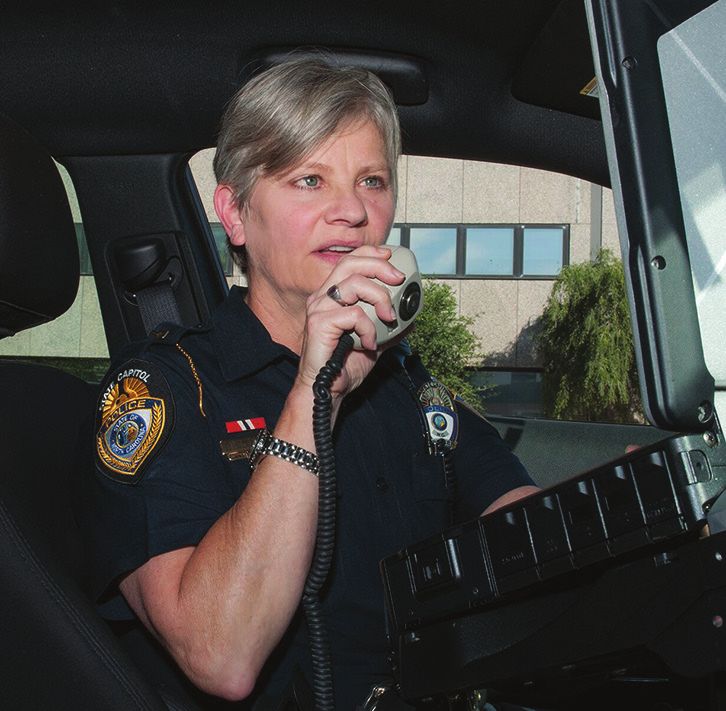
OVERVIEW
                             The state’s largest government agency, the North Carolina Department of Public Safety
PREVENT. PROTECT. PREPARE.

                             is comprised of approximately 26,000 employees, along with about 11,000 North Carolina
                             National Guard soldiers and airmen. Through effective law enforcement, corrections,
                             juvenile justice programs, emergency response and recovery and homeland security
                             preparedness, DPS employees help to ensure North Carolina is a safe place to live, work
                             and visit.

                             OFFICE OF THE SECRETARY
                             The secretary of the Department of Public Safety serves as the sole representative on
                             the governor’s cabinet for the state’s law enforcement, corrections and emergency
                             management responsibilities. The DPS secretary also oversees the state’s homeland
                             security coordination as the homeland security advisor.

                             ADMINISTRATION
                             The Administration Division is charged with operational oversight. This division provides
                             a variety of core support functions for the department’s numerous interrelated services.
                             These core support services include Information Technology, Budget and Analysis,
                             Controller’s Office, as well as Purchasing and Logistics. The Governor’s Crime Commission,
                             Victim Services and Government Affairs Office also fall under Administration.

                             ADULT CORRECTION AND JUVENILE JUSTICE
                             The Division of Adult Correction and Juvenile Justice is tasked with the care, custody and
                             supervision of all adults and juveniles sentenced after conviction for violating state laws.

                             For adults, sentences range from probation served in the community to active prison
                             sentences in one of the state’s prison facilities. After prison, there is a period of post-release
                                                                       supervision to help offenders more successfully
                                                                       transition back to the community. For those who
                                                                       commit technical violations of probation, there is
                                                                       Confinement in Response to Violation.

                                                                       For juveniles, the focus is on strengthening families,
                                                                       promoting delinquency prevention, supporting
                                                                       core social institutions, intervening immediately
                                                                       and effectively when delinquent behavior occurs
                                                                       and identifying and controlling the small group of
                                                                       serious, violent and chronic juvenile offenders in
                                                                       the local communities. Juvenile dispositions can
                                                                       include supervision by a juvenile court counselor
                                                                       in the community, short-term commitment at a
                             residential facility or longer-term commitment in a youth development center for serious
                             and/or violent or chronic offenders. Delinquent, non-adjudicated and at-risk juveniles may
                             all receive services from programs in their communities.

         2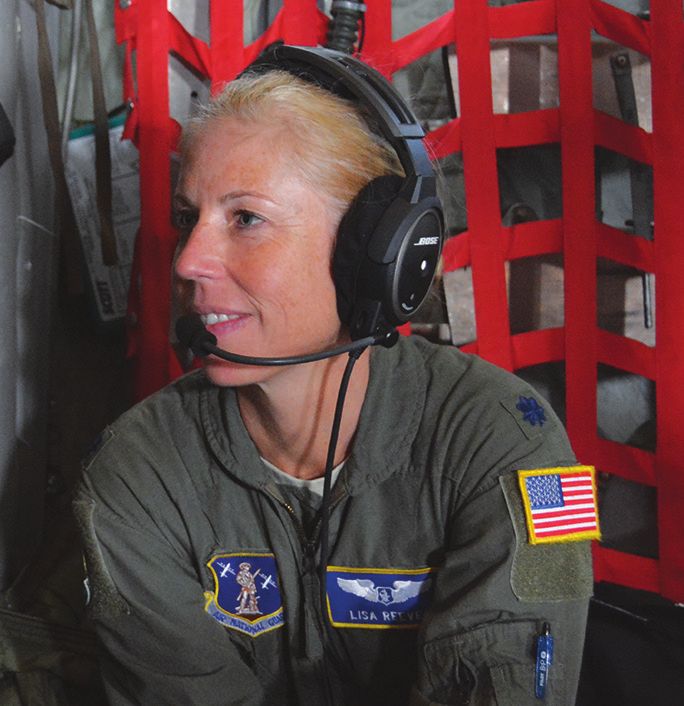
ALCOHOL LAW ENFORCEMENT
The Alcohol Law Enforcement division is the lead

                                                                                             PREVENT. PROTECT. PREPARE.
enforcement agency for the state’s alcoholic
beverage control, lottery and tobacco laws. As
such, the 109 ALE special agents target problem
ABC-licensed and illegal establishments that
serve as havens for violence, drugs, gang activity,
organized crime, money laundering and other
criminal activity. Their mission is to enforce state
laws related to alcohol sales and purchases,
gambling, tobacco, controlled substances and
nuisance abatement, as well as other criminal and
regulatory matters in the interest of health and
public safety.

COMMUNICATIONS OFFICE
The Communications Office ensures the people of North Carolina are informed and
knowledgeable about programs, events and conditions affecting their safety and well-
being. Staff works to provide timely and accurate information to news media and to share
essential life safety and property protection information during disasters. Members of the
Communications Office respond to media inquiries, write speeches and news releases,
produce educational materials and post information on various social media platforms.

EMERGENCY MANAGEMENT
North Carolina Emergency Management works to enhance the state’s resiliency by actively
collaborating, communicating and coordinating to prevent, mitigate, respond and recover
from disasters. The agency deploys state resources when needed, and coordinates with
neighboring states and the federal government to augment staffing and resources, as
appropriate. NCEM also administers state and federal grants, manages multi-agency
response to disasters, oversees all hazards and
threat risk management, coordinates regional
hazard mitigation plans, facilitates trainings
and exercises, and manages assets such as
the regional hazmat response and search-and-
rescue teams. In addition, the agency develops
and maintains flood maps for each county in
North Carolina and maintains the official survey
database for the state. Both tools support
mapping, boundary determination, infrastructure
development and floodplain mapping that are
critical to future safe development. NCEM also
manages the state’s Homeland Security program.

                                                                                                     3
HUMAN RESOURCES
                             The Human Resource Office provides professional guidance, advice and support to
PREVENT. PROTECT. PREPARE.

                             sections in a variety of functions such as staffing, job classification, training and
                             development, employee relations and benefits administration to make the employment
                             experience enriching and rewarding.

                             NORTH CAROLINA NATIONAL GUARD
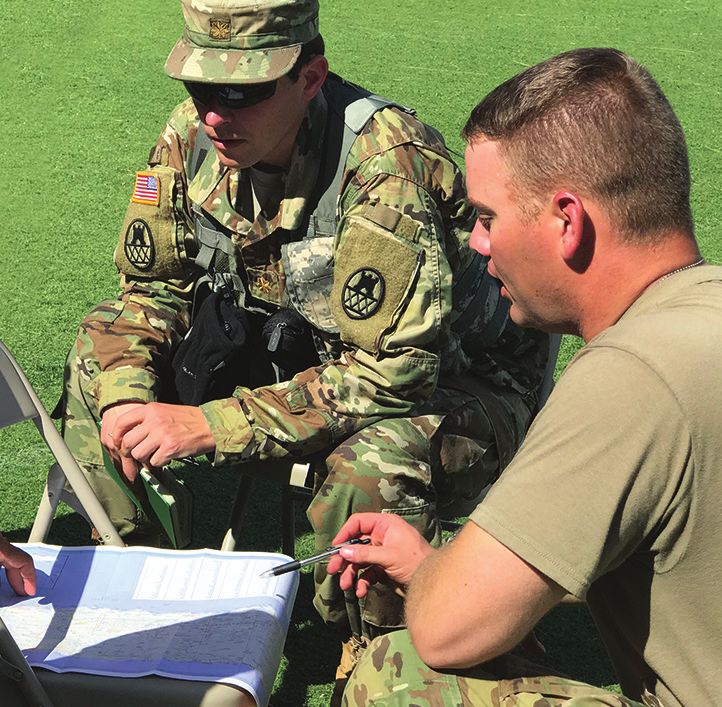
                             The North Carolina National Guard is an all-volunteer
                             force of about 11,000 soldiers and airmen who serve
                             in both federal and state capacities.

                             The Guard is first a federal reserve of the U.S. Army
                             and U.S. Air Force that, when called upon by the
                             United States president, provides units that are
                             manned, trained, equipped and available on short
                             notice for national defense missions. Because the
                             Guard maintains the same high training standards as
                             the Army and the Air Force, it can mesh seamlessly
                             with its active-duty counterparts during emergencies
                             both at home and abroad.

                                                                        The Guard is also on call at the governor’s request
                                                                        to protect life and property and to preserve peace,
                                                                        order and public safety within the state. As part of
                                                                        its peacetime mission, the Guard provides essential
                                                                        staffing and resources to respond to hurricanes,
                                                                        floods, tornadoes or other emergencies. Guard
                                                                        aviation units help local governments search for
                                                                        missing persons, assist law enforcement personnel
                                                                        with aerial searches for marijuana and fight forest
                                                                        fires. In addition, the Guard participates in local
                                                                        communities with programs that add value to
                                                                        families, employers and neighborhoods.

                             OFFICE OF RECOVERY AND RESILIENCY
                             Established in late 2018, the North Carolina Office of Recovery and Resiliency leads
                             the state’s efforts to improve long-term resiliency and deliver recovery assistance to
                             communities and households recovering from major disasters such as Hurricanes
                             Matthew and Florence. Their focus is to streamline the recovery process through
                             coordination of multiple state and federal grants and programs, and to work with local
                             communities to improve the administration of federal disaster-related block grants.

         4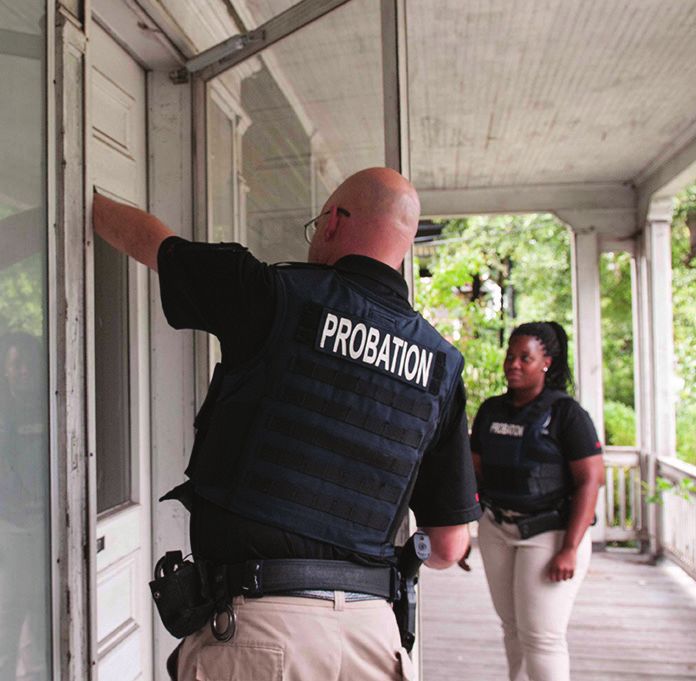
PROFESSIONAL STANDARDS, POLICY AND PLANNING
The Professional Standards, Policy and Planning Division’s primary role is to ensure that

                                                                                                    PREVENT. PROTECT. PREPARE.
employees comply with applicable departmental policies, adhere to state and federal
regulations and work using the highest ethical standards. This division also provides
direction, develops and analyzes policies, provides ethics guidance and focuses on creating
efficiencies. Additionally, the division oversees: the Office of Special Investigations, Internal
Audit, Policy and Strategic Planning as well as the Private Protective Services Board.

SAMARCAND TRAINING FACILITY
Samarcand Training Academy facilitates basic, in-service and advanced training events
for law enforcement and corrections personnel using state-of-the-art training equipment.
The 430-acre campus in Moore County includes a firearms and tactical training simulator
that uses over 250 scenarios to create fully immersive and interactive video/audio/sensory
engagements in a 300 degree environment. Originally opened in 1914 as an open-air school
for boys, the campus was mostly used as various training schools for youth until repurposed
in 2015 as a law enforcement training facility.

STATE CAPITOL POLICE
The primary mission of the North Carolina State Capitol Police is to provide a safe and
secure environment for public officials, state employees and visitors within the North
Carolina State Government Complex. Sworn State Capitol Police officers also provide
security at state-owned properties throughout Wake County.

STATE HIGHWAY PATROL
The North Carolina State Highway Patrol’s primary mission is to reduce collisions and
make the state’s highways as safe as possible. There are more than 1,600 state troopers
who patrol 78,000+ miles of state-maintained roadways, more miles than any other
state except Texas. In addition to enforcing the state’s traffic laws, state troopers also guide
traffic during hurricane evacuations, re-route
traffic around hazardous chemical spills and
stand ready should any act of terrorism occur.

Other State Highway Patrol staff include radio
engineers, telecommunicators, aviators and
civilian staff, each committed to helping keep the
traveling public safe. A Traffic Safety Information
officer is located in each of the eight troop
locations across the state to promote highway
safety and make presentations to schools, civic
groups or other interested parties.

                                                                                                            5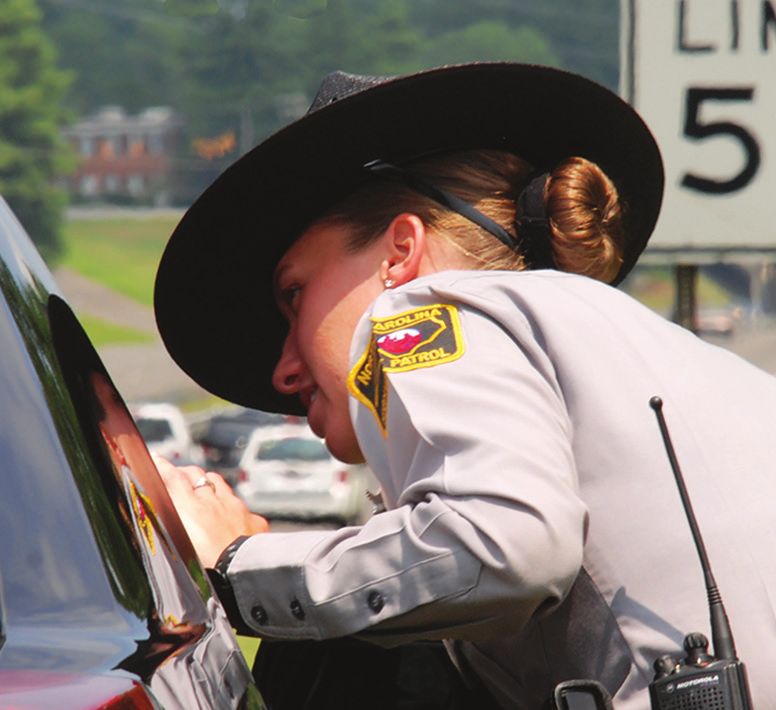
Gov. Roy Cooper appointed Erik A. Hooks in
                                                              January 2017 to serve as secretary of the North
                                                              Carolina Department of Public Safety. As secretary,
                                                              Hooks oversees a department of about 26,000
DPS EXECUTIVE TEAM

                                                              sworn law enforcement and civilian employees,
                                                              along with about 11,000 North Carolina National
                                                              Guard soldiers and airmen.

                                                              A dedicated public servant, Hooks has an extensive
                                                              law enforcement background. He joined the N.C.
                                                              State Bureau of Investigation in 1989 as a special
                                                              agent and has since served in various capacities.
                                                              Hooks served as a special agent, assistant special
                     agent in charge with the Special Investigations Division, as well as unit commander/
                     manager for Professional Standards. In 2005, Hooks rose to be the SBI assistant director
                     over the professional standards division. He also led the SBI’s efforts in threat assessment,
                     inspections and compliance.

                     Secretary Hooks serves as the state’s homeland security advisor and chairs the State
                     Emergency Response Commission. He also is a member of the International Association of
                     Chiefs of Police and N.C. Police Executive’s Association. A North Carolina State University
                     graduate, Hooks holds a master’s degree in liberal studies with a concentration in
                     Organizational Management and Research. He also is a graduate of the Administrative
                     Officers Graduate Program at NC State and successfully completed the FBI National Executive
                     Institute and the Commandant’s National Security Program at the U.S. Army War College.

                                                              Pamela Brewington Cashwell serves as the
                                                              chief deputy secretary of Professional Standards,
                                                              Policy and Planning and as the secretary’s senior
                                                              policy advisor. In this role, Cashwell oversees the
                                                              Office of Special Investigations, Internal Audit, the
                                                              Communications Office, Private Protective Services,
                                                              Policy and Strategic Planning and PREA.

                                                              Cashwell formerly served as assistant director
                                                              of the State Ethics Commission. Prior to that,
                                                              the North Carolina native held numerous legal
                                                              positions at the N.C. Institute for Constitutional
                     Law, the Civil Rights Division within the U.S. Department of Justice, and with the U.S.
                     Department of Agriculture.

                     Cashwell holds a Juries Doctor from the University of North Carolina at Chapel Hill School
                     of Law and a bachelor’s in economics also from UNC-Chapel Hill. A long-time advocate
                     for American Indian and women’s issues, Cashwell serves on the university’s Alumni
                     Committee on Racial and Ethnic Diversity, the Women’s Leadership Council and was
      6              appointed by Gov. Cooper to serve on the N.C. Human Trafficking Commission.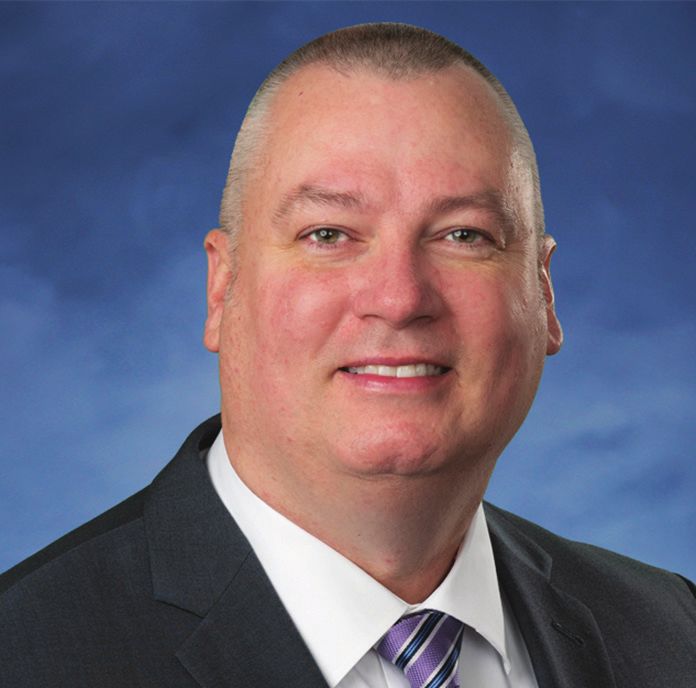
Michael Dail was named Human Resources
                                         director in October 2018. He joined NCDPS with
                                         more than 20 years of HR experience in state
                                         government and the private sector. Dail previously

                                                                                                DPS EXECUTIVE TEAM
                                         served as the Human Resources assistant director
                                         for the N.C. Department of Health and Human
                                         Services, where he developed and facilitated
                                         projects to address business operations,
                                         customer service, continuity of services, process
                                         improvements and operational needs of the
                                         assigned customer divisions.

                                         Dail began his career as a correctional officer at
Greene Correctional Institution and served in several Human Resources positions within
the then-Department of Correction, before joining the private sector. He also held several
Human Resources managerial positions with the N.C. Department of Transportation.

A graduate of East Carolina University, Dail holds a bachelor’s degree in economics.

                                         Jane Ammons Gilchrist serves as the general
                                         counsel for NCDPS overseeing the office that
                                         provides legal advice and support to each division
                                         within the department. Gilchrist also serves on
                                         behalf of the secretary on the N.C. Criminal Justice
                                         Education and Training Standards Commission
                                         and the UNC TV Board of Trustees.

                                         Gilchrist began her 28 years of public service
                                         in 1991 as an assistant district attorney in
                                         Cumberland County. In 1994, she joined the
                                         N.C. Department of Justice and for 17 years
                                         provided legal representation and advice in the
Labor and Law Enforcement Liaison sections to include the State Bureau of Investigation,
N.C. Criminal Justice Education and Training Standards Commission and the ABC
Commission. From 2011 to 2017, Gilchrist served as the general counsel for the N.C.
Department of Labor.

She holds an associate’s degree from Peace College, as well as a bachelor’s degree in
journalism and a Juris Doctor from the University of North Carolina at Chapel Hill.

                                                                                                      7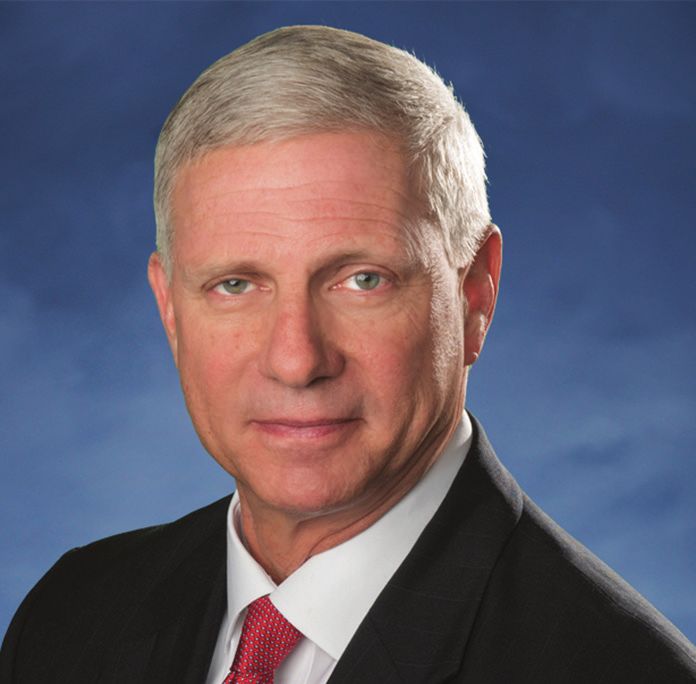
Roger “Chip” Hawley became the chief of State
                                                               Capitol Police in December 2018 nine months after
                                                               joining the force as deputy chief. Prior to joining
                                                               State Capitol Police, Hawley served 32 years with
DPS EXECUTIVE TEAM

                                                               the Wake County Sheriff’s Office, where he attained
                                                               the rank of major.

                                                               Hawley attended Campbell University and has
                                                               received a variety of specialized law enforcement
                                                               certifications including Law Enforcement
                                                               Motorcycle Operator and Instructor, specialized
                                                               knowledge in special events/mass gatherings
                                                               and law enforcement general instructor. He
                     also is a graduate of the Administrative Officers Management Program and was recognized
                     as the Wake County Sheriff’s Officer of the Year in 2001. Hawley is a native of Coats, N.C.

                                                               Casandra Skinner Hoekstra serves as chief
                                                               deputy secretary for Administration. As such,
                                                               Hoekstra oversees Human Resources, Budget and
                                                               Analysis, Controller’s Office, Central Engineering,
                                                               Governor’s Crime Commission, Purchasing and
                                                               Logistics, Information Technology, Victim Services
                                                               and Legislative Affairs. Hoekstra also serves on
                                                               the Domestic Violence and Victims Compensation
                                                               Commissions.

                                                               Hoekstra is a trusted advisor with more than 20
                                                               years of legal, policy development and government
                                                               relations experience. Prior to this appointment,
                     she served as the legislative counsel for the N.C. Association of County Commissioners.
                     Hoekstra also has worked with the former Department of Crime Control and Public Safety
                     as chief legal counsel and the N.C. Administrative Office of the Courts as legislative liaison
                     and associate legal counsel. Additionally, she served as the legislative counsel in Gov.
                     Michael Easley’s office.

                     Hoekstra holds a bachelor’s degree in psychology from the University of North Carolina at
                     Asheville and a Juris Doctor degree from North Carolina Central University School of Law.

      8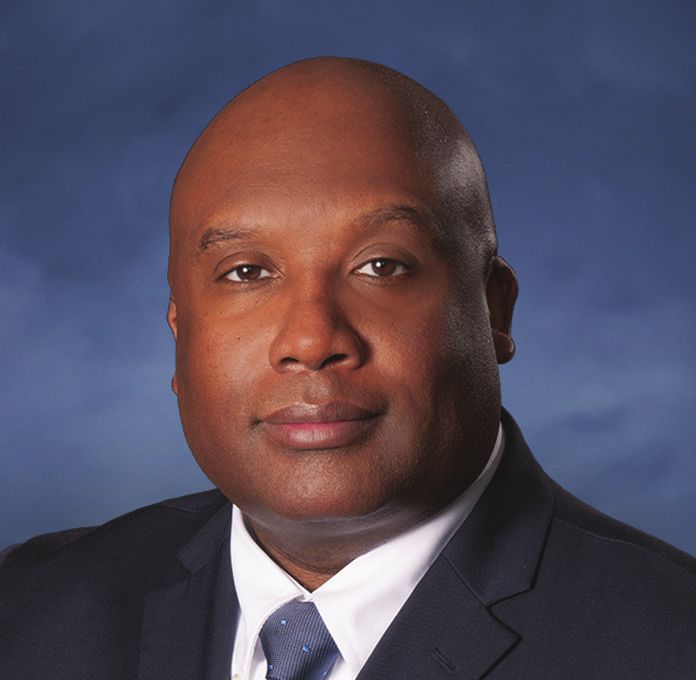
Bryan House was named director of the Alcohol
                                            Law Enforcement in December 2019 shortly after
                                            ALE was re-established as a division within NCDPS.

                                                                                                   DPS EXECUTIVE TEAM
                                            A Johnston County native, House became an
                                            ALE special agent in 1999 attending the 14th ALE
                                            Special Agent Academy and has since served as a
                                            task force agent with the FBI’s Joint Terrorism Task
                                            Force, commander of ALE’s special response team,
                                            special agent in charge of Professional Standards
                                            and senior special agent in charge overseeing
                                            ALE Operations.

                                            House holds a bachelor’s degree in criminal
justice from East Carolina University and attended the Virginia School of Polygraph and
the West Point Leadership Program at Methodist University.

                                            Brigadier General (P) M. Todd Hunt assumed
                                            his duties as the adjutant general of the North
                                            Carolina National Guard in December 2019. As
                                            adjutant general, Hunt commands about 11,000
                                            citizen soldiers and airmen of the N.C. Army and
                                            Air National Guard, and is the governor’s principal
                                            advisor on military affairs.

                                            Hunt received his commission in 1987 through
                                            the Reserve Officer Training Program at East
                                            Carolina University. His previous assignments
                                            include two mobilizations in support of Operation
                                            Enduring Freedom as detachment commander,
then executive officer of the 1 Battalion, 130 th Aviation Regiment. Most recently, Hunt has
                              st

served as the Land Component Commander of the N.C. National Guard since September
2017 and the Deputy Commanding General of the Army National Guard-U.S. Army Aviation
Center of Excellence in Fort Rucker, Ala.

Hunt received a bachelor’s degree in geology from ECU and master’s of strategic studies
from the U.S. Army War College.

                                                                                                         9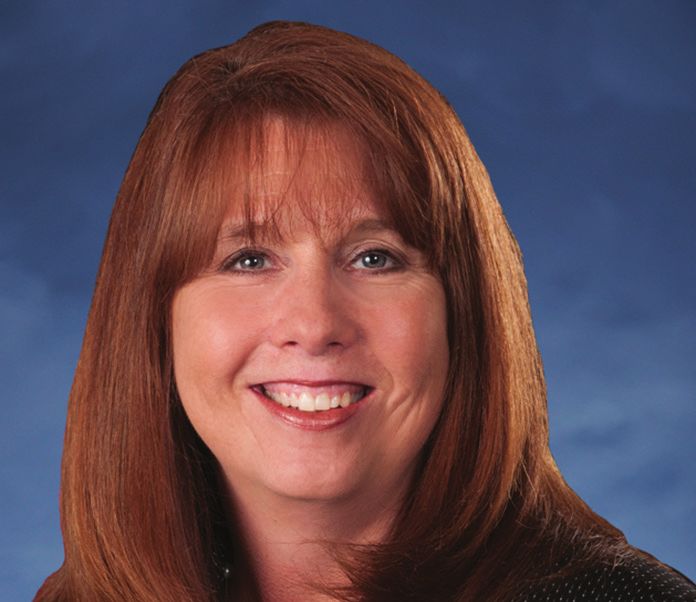
Rick Jordan was named director of the Samarcand
                                                               Training Academy in 2014. Before joining Public
                                                               Safety, Jordan worked as a sworn police officer in
                                                               Aberdeen and Hickory, then as a special agent with
DPS EXECUTIVE TEAM

                                                               the Navy Criminal Investigative Service. He then
                                                               spent more than two decades working as a special
                                                               agent with the U.S Department of Justice Bureau of
                                                               Alcohol, Tobacco, Firearms and Explosives during
                                                               which time he served as national program manager
                                                               where he oversaw the delivery of their in-service
                                                               training program and implemented the agency’s
                                                               Firearms Instructor Training Program.

                     Jordan holds a bachelor’s degree in criminal justice from Gardner Webb University and a
                     master’s degree in human resources training and development from Seton Hall University.

                                                               Gregory A. Lusk was named senior advisor to the
                                                               secretary in December 2019. As such, he advises
                                                               the secretary on national homeland security efforts
                                                               and responsibilities and provides operational and
                                                               policy guidance for state and national security
                                                               events. Lusk also spearheads the development of
                                                               leadership and succession planning programs that
                                                               ensure the department effectively meets current
                                                               and future leadership and diversity needs.

                                                               Previously, Lusk served in the N.C. National Guard
                                                               for 40 years, including the last nine as adjutant
                     general in which he commanded about 11,000 citizen soldiers and airmen and was the
                     governor’s principal advisor on military affairs.

                     Lusk received a bachelor’s degree in civil engineering from North Carolina State University
                     and master’s degree from the U.S. Army War College. During his tenure with the Guard,
                     he earned numerous medals and awards including: North Carolina Distinguished Service
                     Medal, Legion of Merit, Bronze Star Medal, National Defense Service Medal and Global War
                     on Terrorism Expeditionary and Service medals.

    10
Gov. Cooper appointed Col. Glenn M. McNeill, Jr.
as commander of the State Highway Patrol in
February 2017. A military veteran, McNeill began
his service as a state trooper in 1994. During his
DPS EXECUTIVE TEAM
law enforcement career he has served in various
positions, including the Special Operations
Section, as the troop commander and, upon
his promotion to major in 2014, as director of
training. With oversight of the State Highway Patrol
Training Academy, McNeill was responsible for all
aspects of training from basic law enforcement to
telecommunicator schools, in-service training, and
specialized training courses such as firearms, defensive tactics, driver’s training, radar and
training for civilian support personnel, as well as supervisors.
A native of Reidsville, McNeill holds an associate’s degree from Durham Technical
Community College, a bachelor’s degree from Mount Olive College, and graduate
certificate from the University of Virginia. He is also a graduate of the Administrative
Officers Management Program and the National Academy at the Federal Bureau of
Investigation, in Quantico, Va. McNeill is a member of the International Association
of Chiefs of Police and the N.C. Police Executives Association.
Tim Moose was appointed as chief deputy
secretary of Adult Correction and Juvenile Justice
in June 2019. In this role, Moose oversees the
agencies and personnel responsible for the care,
custody and supervision of all adults and juveniles
sentenced after conviction for violations of North
Carolina law.
A career corrections professional with 35 years of
experience, Moose served seven years as deputy
secretary overseeing several sections including
Community Corrections, Special Operations and
Intelligence, Reentry Programs and Services, Staff
Development and Training, Combined Records and
Critical Incidence Responses Administration. In this capacity, he also has worked with the
Post Release-Parole Commission on policy and offender supervision as well as with Prisons
on joint operational issues.
Moose is a graduate of North Carolina State University with degrees in criminal justice and
political science and the National Institute of Corrections Probation Executives Program. He
also serves on the N.C. Sentencing and Policy Advisory Commission.
11Mike Sprayberry was appointed director of
Emergency Management in 2013 and now also
serves as director of the Office of Recovery
and Resiliency. As such, he manages the state’s
DPS EXECUTIVE TEAM
preparation for, response to, recovery from and
mitigation of natural and man-made disasters.
He also serves as the state’s deputy homeland
security advisor and a member of the State
Emergency Response Commission.
Sprayberry began his emergency management
career in 2005 as the deputy director and
logistics chief and later assumed the duties of the deputy director and operations chief.
During his tenure with NCEM, he also has served as president of the National Emergency
Management Association and as a member of the FEMA National Advisory Council. Prior
to joining state government, he served in the U.S. Marine Corps and the N.C. Army
National Guard.
He holds bachelor’s and master’s degrees from the University of North Carolina at
Charlotte.
As Communications Director, Pamela Walker
oversees all public affairs, media relations, social
media and publications for the department.
Walker has nearly 30 years in communications,
media and public relations. She started her state
service in 2000 as a public information officer
at the former Department of Correction before
being promoted to director of Public Affairs. She
served as corporate communications director
for the North Carolina Education Lottery for four
years. She returned to the Department of Correction in 2010 as the department’s external
affairs director prior to the consolidation that created the Department of Public Safety.
Before joining state government, Walker worked for 10 years in broadcasting in a variety
of roles that included producer, reporter and back-up anchor.
A Charlotte native, Walker holds a bachelor’s degree in speech communication from the
University of North Carolina at Wilmington.
12ALCOHOLIC BEVERAGE CONTROL COMMISSION
North Carolina is one of 17 control states and a member of the National Alcohol
DPS AFFILIATED AGENCIES
Beverage Control Association. An agency associated with the Department of Public
Safety for administrative purposes, the Alcoholic Beverage Control Commission works
to provide uniform control over the sale, purchase, transportation, manufacture,
consumption and possession of alcoholic beverages in the state.
Zander Guy was appointed as chairman of the North Carolina
Alcoholic Beverage Control Commission in March 2017. He has
served on the ABC Commission since 2009 and was chair from
2012 to 2013. Guy is the former Surf City mayor and a member
of the Cape Fear Community College Board of Trustees. He also
served on the N.C. Banking Commission, the Neuse River Council
of Governments and the Local Government Advocacy Council
and was mayor and a councilman of Jacksonville. In 2011, he sold his real estate company
after 41 years in the business.
A native North Carolinian, Guy attended Campbell University and is a graduate of the
Realtors Institute.
STATE BUREAU OF INVESTIGATION
North Carolina’s State Bureau of Investigation conducts criminal investigations of
allegations in the areas of: narcotics, arson, election laws, environmental crimes, human
trafficking, computer crimes against children child sexual abuse in day care centers and
crimes involving state property.
The SBI includes more than 250 sworn special agents working in eight district offices to
provide expert criminal investigative assistance when requested by police, sheriffs, district
attorneys or judges. The Professional Standards division within the bureau conducts the
most sensitive investigations involving public corruption and government misconduct.
Bob Schurmeier was appointed director of the North Carolina
State Bureau of Investigation in 2016. Schurmeier spent 21 years in
leadership roles at the Charlotte-Mecklenburg Police Department
including 11 years as deputy chief of police and six months as
interim chief of police. Experienced in all four major commands of
the department, Schurmeier spent most of his time in the Patrol,
Investigations, and Vice and Narcotics divisions. During that time,
he was active in the N.C. Police Executives Association and the
N.C. Chapter of the FBI National Academy Associates, briefly serving as president for both
associations. After a full career with CMPD, Schurmeier co-founded U.S. ISS Agency LLC—
a security and investigative consulting business in Charlotte.
A Charlotte native, Bob Schurmeier holds a bachelor’s degree in political science from the
University of North Carolina at Chapel Hill. He also is a graduate of the Senior Management
Institute for Police, the FBI National Academy and the Secret Service Dignitary Protection
School.
13STAY CONNECTED!
WWW.NCDPS.GOV
WWW.NCDPS.GOV/CAREERS
SOCIAL MEDIA
@NCPublicSafety
@NCEmergency
@NCNationalGuard
@NorthCarolina
DepartmentofPublicSafety
@NCHighwayPatrol
@RebuildNC.gov
@NCSHP
@RebuildNC_gov
@NCDPS
@NCNGPAO
@NorthCarolinaGuard
SAFETY
SCOOP
DPS Safety Scoop
Podcast
Found on your podcast app
14CONTACT INFORMATION
Adult Correction and Juvenile Justice 984-948-7878
Alcoholic Beverage Control 919-779-0700
Alcohol Law Enforcement 919-733-4060
Civil Air Patrol 336-570-6894
Communications Office 919-733-5027
Community Corrections (Probation) 919-716-3100
Emergency Management 919-825-2500
Governor’s Crime Commission 919-733-4564
Juvenile Justice 919-733-3388
Human Resources 919-716-3800
N.C. National Guard 919-664-6000
N.C. Office of Recovery and Resiliency 984-833-5350
Office of the Secretary 919-733-2126
Prisons 919-838-4000
Post Release/Parole Commission 919-716-3010
State Bureau of Investigation 919-662-4500
State Capitol Police 919-733-4646
State Highway Patrol 919-733-7952
Victims Services 919-733-7974
15OUR MISSION
Safeguard and preserve the lives and property
of the people of North Carolina through prevention,
protection and preparation with integrity and honor
OUR GOALS
1. Strengthen the department’s unity of effort as a
consolidated and allied entity.
2. Create a true culture of prevention, protection
and preparedness.
3. Create and maintain an environment throughout
the department where employees are engaged,
accountable and recognized for the contributions
they make to enhance public safety in North Carolina.
500 copies of this document were printed at a cost of $1,165.52. 1/20You can also read


