Level 1 Course Information 2021 - Growing Good People for a Changing World - Tamatea High School
←
→
Page content transcription
If your browser does not render page correctly, please read the page content below
Growing Good People for a
    Changing World

  Level 1
  Course
Information

       2021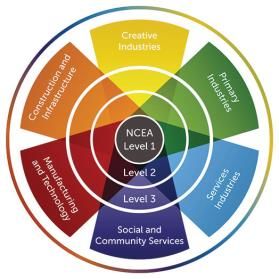
Tamatea High School Course Handbook 2021
This booklet contains essential information on NCEA (National Certificate of Educational
Achievement) courses offered at Tamatea High School in 2021. Choosing the correct subjects
for a student’s educational pathway is important so that their course of study suits their individual
abilities, interests and learning needs.

Students in Years 11, 12 and 13 work towards gaining their NCEA at Level 1, 2 and 3. NCEA is
primarily made up of Achievement Standards. Students may gain work/industry related Unit
Standards which also count towards NCEA Qualifications.

Key Contacts
Senior Management
Principal                                  Nigel Groom
Deputy Principal                           Nicky Anderson
Deputy Principal                           Josie Burdon

Deans/Careers/Guidance
Year 9 Dean                                Josie Burdon
Year 10 Dean                               Meredith Ellingham
Year 11 Dean                               Cheryl Pohlen
Year 12 Dean                               Kay Le Comte
Year 13 Dean                               Jan Miles
International Dean                         Cheryl Brownlee
Careers Advisor                            Cindy Morgan
Guidance Counsellor                        Wendy Isakson
NZQA Principal’s Nominee                   Cheryl Brownlee
SENCO                                      Nicky Anderson

Heads of Departments/Teachers in Charge
Careers                            Cindy Morgan
English                            Hugh Forlong-Ford
Health                             Annie Macfarlane
Languages                          Cheryl Brownlee
Mathematics                        Sanjesh Kumar
Physical Education                 Ken Bolland
Science                            David Murdoch
Social Sciences                    Dianne Martin
Technology and Arts                Kay Le Comte

                                                                                                   1
CONTENTS
1 Key Contacts
2 Contents
3 Principal’s Notes/Career Planning
4 Curriculum Structure - Subject Pathways 2021
5 Alternative Courses
6 NCEA Information
7/8 University Entrance Information
9 Vocational Pathways
10 What to Choose
11 Course Costs
Subjects
12 English – includes English for Speakers of Other Languages (ESOL)
13 101 English
14 102 English
15 102 English for Speakers of Other Languages (ESOL)
16 Mathematics
17 101 Mathematics
18 102 Mathematics
19 Science – includes Horticulture
20 101 Science
21 102 Science
22 102 Horticulture
23 The Arts - includes Visual Art (Design, Painting, Photography, Printmaking and Sculpture)
Music and Theatre Technology
24 101 Visual Art
25 101 Music
26 102 Theatre Technology
27 Health and Physical Education – includes Home Economics
28 101 Health
29 101 Physical Education
30 Languages
31 101 Japanese
32 Māori - includes Te Reo, Tikanga and Māori Performing Arts
33 101 Te Reo Māori
34 102 Tikanga
35 102 Māori Performing Arts
36 Social Sciences - includes Social Studies, Geography, History, Classics, Tourism and
Education for Sustainability
37 101 Social Studies
38 101 Geography
39 101 History
40 101 Classical Studies
41 Technology - includes Design Technology - Hard Materials, Digital Technology, Project
Based Learning and Food and Nutrition
42 102 Design Technology – Hard Materials
43 101 Digital Technology
44 101 Project Based Learning
45 102 Food and Nutrition
46 103 Core Foundation Skills
47 Final Advice
2Principal’s Notes
Career Planning for Students
As you begin to select your course of study for 2021 there are a number of factors you must
carefully consider when making your decision.
1. Ownership of your learning
This occurs when you take time to set goals for yourself in terms of your learning and how
it relates to your future. Career planning and building your life begins with taking
responsibility for your choices and developing a vision for your future.
2. Developing a vision
Time spent planning for your future is a challenging task but is the key to your success.
Here are a number of strategies to work through:
• Work with your Whānau Group teacher and/or Dean to write a well-considered plan
• Set goals for your learning and achievement for 2021 and beyond e.g. NCEA Goals
• Pursue excellence in all your tasks and activities
• Know the skills you have and the skills you need to develop, to be the very best
you can be
3. Practical issues to consider when choosing subjects
• Keep your options as broad as possible for as long as possible
• Know how subjects develop through the senior school, for example: Level 1
Science can become Physics, Chemistry and/or Biology at Levels 2 and 3
• Know what the entry requirements are for particular jobs and/or courses of study at
universities or polytechnics. Check www.careers.govt.nz
• Get good information and advice from your Careers Advisor (Mrs Morgan) and/or
employers, about what subjects you need and at what level
• Consider the subjects that you are interested in and have ability in, these classes
will help you achieve your best and may help you see future career options
• Future proof your learning, by gaining skills which will help you to continue learning
throughout your life. Work places will demand this as change in the work force
becomes constant. You will need to:
⬧ communicate well, orally and in writing
⬧ work co-operatively with others
⬧ use a range of information technologies
⬧ cope with and adapt to constant change
⬧ be punctual and reliable
⬧ be a good person
Choosing your programme of study for 2021 is an important task. Seek assistance and advice
from your parents, your Whānau Group teacher, class teachers, Heads of Departments,
Deans and Mrs Morgan. You will be most successful when these decisions are carefully
planned and fit with your own interests and needs. Please do not hesitate in seeking help with
this task.
Good planning.
Nigel Groom
Principal
3TAMATEA HIGH SCHOOL
SENIOR CURRICULUM STRUCTURE 2021
Level One Level Two Level Three
Departments
NCEA NCEA NCEA
101 English 201 English 301 English‡
ENGLISH
102 English 202 English 302 English
102 ESOL 202 ESOL 302 ESOL
101 Mathematics 201 Mathematics 301 Mathematics‡
MATHEMATICS 102 Mathematics 202 Mathematics
301 Calculus‡
101 Science 301 Science‡
102 Science
201 Biology 301 Biology‡
SCIENCE
201 Chemistry 301 Chemistry‡
201 Physics 301 Physics‡
102 Horticulture 202 Horticulture 302 Horticulture
101 Art – Visual Arts 201 Art – Visual Arts 301 Art – Visual Arts‡
201 Photography 301 Photography‡
ARTS
101 Music 201 Music 301 Music‡
102 Theatre Technology 202 Theatre Technology 302 Theatre Technology
HEALTH and
101 Health 201 Health 301 Health‡
PHYSICAL
101 Physical Education 201 Physical Education 301 Physical Education‡
EDUCATION
LANGUAGES 101 Japanese 201 Japanese 301 Japanese‡
101 Te Reo Māori 201 Te Reo Māori 301 Te Reo Māori‡
MĀORI 102 Tikanga 202 Tikanga
102 Māori Performing Arts 202 Māori Performing Arts 302 Māori Performing Arts
101 Social Studies 201 Social Studies 301 Social Studies ‡
101 Classics 201 Classics 301 Classics‡
101 Geography 201 Geography 301 Geography‡
SOCIAL
101 History 201 History 301 History‡
SCIENCES
201 Education for 301 Education for
Sustainability Sustainability‡
202 Tourism Studies 302 Tourism Studies
102 Design Technology – 202 Design Technology – 302 Design Technology –
Hard Materials Hard Materials Hard Materials‡
TECHNOLOGY 101 Digital Technologies 201 Digital Technologies 301 Digital Technologies‡
102 Food and Nutrition 202 Food and Nutrition 302 Food and Nutrition
101 Project Based Learning 201 Project Based Learning 301 Project Based Learning
OTHER 103 Core Foundation Skills
PROGRAMMES (SPEC)
(Special conditions 202 Gateway 302 Gateway
apply – see Mrs 202 Trades Academy @ EIT 202/302 Trades Academy @ EIT
Morgan) Virtual Learning Network Virtual Learning Network Virtual Learning Network
‡ Subjects from the University Entrance Approved List
If there is a subject you would really like to study that is not listed above ,
see Mrs Morgan to discuss it
There is a possibility of studying other subjects
▪ through distance learning
▪ by virtual learning
▪ by attending EIT
Subjects studied in the past have included Agriculture, Accounting, Business Studies, Calculus, Economics, Home
Economics, Law, Media Studies, Spanish, Health Disability and Age Support Certificate and University papers.
4Alternative courses
A range of programmes exist to meet the diverse needs of students:
Special Needs/ Gifted and Talented Education Programmes (GATE)
Students with Special Needs including GATE may be invited to enter alternative programmes that
better meet their learning needs. They may also apply for special assessment conditions – please see
the SENCO (Special Educational Needs Co-Ordinator), Ms Anderson for further details.
Gateway
This programme links school and the workplace – refer to Year 13 Course descriptions for detail.
Hawke’s Bay Schools’ Trades Academy @ EIT
Students will typically spend each Friday out at EIT following a programme of study for their area of
interest. For more information refer to 202/302 Trades Academy.
STAR Courses
A number of Secondary/Tertiary Alignment Resource (STAR) courses link students to Polytechnics or
other providers for short term courses. These courses are often in the holidays for levels 1-3 and
provide students with work related learning. Mrs Morgan (STAR Coordinator) will offer these courses
to meet individual student needs and interest.
Distance Learning
If there is a subject not offered by Tamatea High School or for which there is an unresolvable timetable
clash, there are other opportunities available for self-motivated learners. These are opportunities to
study through Te Kura Pounamu, (the Correspondence School) through the VLN via the Baylink cluster
of schools, or tertiary study through EIT or the Universities To find out more see Mrs Morgan.
Students who apply must:
• be self-motivated, well organised and committed to achieving
• have an excellent attendance record
• have the necessary pre-requisites for the course (e.g. a pass in externals
of a previous NCEA level)
• gain permission from their dean and parents
Project Based Learning (PBL)
In 2021 we are again offering Project Based Learning as full year courses for Year 11, 12 and
13. Project Based Learning is where students gain knowledge and skills by working for an extended
period of time to investigate and respond to an authentic, engaging and complex question, problem, or
challenge.
Students who are interested can opt in to PBL as a subject. These students will meet with the
appropriate staff member to discuss the content of the project.
NCEA Guide: Mobile App
To help parents and employers better understand NCEA, NZQA has developed an app designed for
mobile devices - phones and tablets.
Called NCEA Guide, the app is for parents, whānau and employers and provides quick and easy
access to key information about NCEA. NCEA Guide includes key content about the structure of
NCEA, how the qualification is used after studying, how credits work, and how endorsements are
earned. Users can also choose to view the content in English or Te Reo.
Importantly, parents and whānau can also get information about how they can support family members
studying towards gaining their secondary school qualification. For employers, content focusses on what
they can expect to see when job candidates show them documents detailing their qualifications and
what they have studied.
The NCEA Guide App is free to download from the Apple App Store and Google Play Store.
5NCEA - National Certificate of Educational Achievement
NCEA (National Certificate of Educational Achievement) has three levels: Levels 1, 2 and 3. These
are the first three levels of the National Qualification Framework’s eight levels, with higher levels
studied at polytechnics, universities and other tertiary providers.
Students gain credits through:
Excellence
Achievement standards with Merit
Achieved
Not Achieved
Unit Standards with Achieved
Not Achieved
For a student to be awarded NCEA Level 1 they must achieve:
• 80 credits.
• 10 credits in Literacy standards
• 10 credits in Numeracy standards.
For a student to be awarded NCEA Level 2 they must achieve:
• 60 credits at level 2 or above; plus
• 20 credits at any level, even if gained for any other National Qualification
• Level 1 Literacy and Numeracy
For a student to be awarded NCEA Level 3 they must achieve:
• 60 credits at level 3 or above; plus
• 20 credits at level 2 or above, even if gained for any other National Qualification
• Level 1 Literacy and Numeracy
Please note that for 2020 the NCEA requirements were changed because of COVID-19, see
https://www.nzqa.govt.nz/about-us/news/ncea-and-university-entrance-changes-for-2020/ for further details.
NCEA Certificate Endorsement
Students have the opportunity to earn NCEA with Merit or Excellence if they gain 50 credits at the
required level.
NCEA with Excellence requires 50 credits at Excellence
NCEA with Merit requires 50 credits at Merit (or a combination of Excellence and Merit)
NCEA Course Endorsement
Students can pass a particular subject with a Merit or Excellence endorsement
eg Science with Excellence, Music with Merit
To do this they must get:
14 or more credits at Merit or Excellence in their course in a single year with at least three credits
from externally assessed standards and three credits from internally assessed standards
The courses where this is available are marked at the bottom of the Course
relevant page with this box. Endorsement
available
(see page 6 for
explanation)
6Gaining University Entrance (UE)
UE Requirements
University Entrance (UE) is the minimum requirement for school leavers to go to a New Zealand
university or to study for a degree at a New Zealand polytechnic. To qualify a student will need:
• NCEA Level 3 – 60 credits at Level 3 or higher and 20 credits at Level 2 or higher
• Three subjects - at Level 3 or above, made up of:
▪ 14 credits each, in three approved subjects (see below)
• Literacy - 10 credits at Level 2 or above, made up of:
▪ 5 credits in specified reading credits
▪ 5 credits in specified writing credits
• Numeracy - 10 credits at Level 1 or above, made up of either:
▪ Achievement Standards – specified standards from a range of
subjects, or
▪ Unit Standards - three Unit Standards (26623, 26626, 26627- all
required)
Approved Subjects
Accounting Indonesian
Agriculture & Horticulture Japanese
Biology Korean
Business Studies Latin
Calculus Mathematics
Chemistry Media Studies
Chinese Music Studies
Classical Studies New Zealand Sign Language
Construction and Mechanical Technologies Painting (Practical Art)
Cook Islands Māori Photography (Practical Art)
Dance Physical Education
Design (Practical Art) Physics
Design and Visual Communication Printmaking (Practical Art)
Digital Technologies Processing Technologies
Drama Psychology
Earth and Space Science Religious Studies
Economics Samoan
Education for Sustainability Science
English Sculpture (Practical Art)
French Social Studies
Geography Spanish
German Statistics
Health Education Technology
History Te Reo Māori
History of Art Te Reo Rangatira
Home Economics Tongan
A student who wishes to study for a degree at a New Zealand Polytechnic or University
disadvantages themselves if they do not plan a course which gives them
at least four approved subjects at Level 3.
7Gaining Admission to a New Zealand University
Students who are applying for admission to a New Zealand University must gain both:
• University Entrance
• Selection into the specific university degree programme through their rank
score/points.
Rank score/Points are calculated from a student’s top 80 credits at Level 3 or higher with a
maximum of 24 credits per subject over five approved subjects.
• credits at Excellence = 4 points
• credits at Merit = 3 points
• credits at Achieved = 2 points
Examples for Entrance to an undergraduate degree in 2020:
Victoria University
• Guaranteed Entry Score 150 points
University Entrance: Information for Parents and Caregivers
Research recently undertaken at the University of Auckland found many school leavers were
missing out on University Entrance because of unsuitable NCEA choices. They recommended the
following
1. Understand NCEA.
2. Plan from Year 9 (as many subjects have pre-requisites).
3. Keep options open by choosing academic subjects such as English, Mathematics,
Sciences and Languages.
4. Find out about the university entry standards for your son/daughter’s choice of career and
then work backwards when choosing NCEA subjects.
5. Review their career goals each year to ensure they are enrolled in the correct subjects.
6. Go to Individual Development Plan (IDP) meetings and engage with the school.
7. Encourage high standards and celebrate your son/daughter’s successes.
A possible course outline for someone heading for degree study
Subject Level 1 Level 2 Level 3
English 101 English 201 English 301 English
Mathematics 101 Mathematics 201 Mathematics 301 Calculus
301 Physical
Physical Education 101 Physical Education 201 Physical Education
Education
Social Sciences 101 Social Sciences 201 Social Sciences 301 Classical Studies
Science 101 Science 201 Biology 301 Biology
102 Design Technology
Technology
Hard Materials
Scholarship
Entry for Scholarship is available for students who are top academics and who seek to challenge
themselves beyond the level of NCEA Level 3. Any student who may wish to prepare for
Scholarship needs to speak to the relevant HOD.
8Vocational Pathways
Vocational pathways were introduced by the Government to help a learner see the industry links to
their learning at schools developed
Six pathways were identified:
• Construction and Infrastructure
• Manufacturing and Technology
• Primary Industries
• Service Industries
• Social and Community Services
• Creative Industries
Industry leaders from those areas then sat down and examined almost 2000 standards taught in
schools and identified the standards containing the knowledge used in their industry.
Students can log in to NZQA and see which sector/s value the standards they have gained.
Alternatively they can plan a programme and use the profile builder to see where their plan will
take them. http://youthguarantee.net.nz/vocational-pathways/profile-builder/
Parents will see that we have identified the Vocational Pathways that relate to each standard.
Students will now be able to achieve NCEA Level 2 in Vocational Pathways. To achieve the
Vocational Pathways Award, the learner must achieve: NCEA Level 2 which includes
Literacy (10 credits) and
Numeracy (10 credits) at Level 1 or above, and
Achieve 60 Level 2 credits from the Recommended Assessment Standards for a
Vocational Pathways sector e.g Primary Industries,
The pathways enable students to see how their learning and achievement will be valued in the
workplace and the types of study options and jobs opportunities available.
Achieving a vocational pathway means a learner has developed the skills and knowledge in areas
that employers’ value. It lets an Employer see a learner’s strengths, abilities and interests are
relevant to a field of work.
Although we have indicated Vocational Pathways (where available) at Level 1, 2 and 3,
please note Vocational Pathways Awards are currently only available for Level 2.
Once a vocational pathway has been identified the information provided in Occupation Outlook
https://occupationoutlook.mbie.govt.nz/
will identify the probable income, fees and job prospects for that pathway.
The dials show the income, fees and job prospects for each occupation
This dial shows likely income This identifies the fees This dial shows the chance of
required to qualify for this job. a job in this area of work.
9What To Choose
Students should be aiming to achieve approximately 12 - 15 credits in every subject selected.
• Plan your course as though you are at school until the end of Year 13.
• Choose: the subjects you enjoy
the subjects you do well in
the subjects you need for your career areas of interest
A Guide to Course Choice
Select courses according to your ability and interest. Bear in mind it is wise to keep a broad range
of courses for as long as possible.
Mum, Dad and family:
Your Subject teacher: know you best – talk to
Has taught you and them!
knows your ability and
potential
Your Whānau Group
Teacher:
has followed your
progress through
The Careers Advisor:
school
Knows about careers
and the qualifications
you need.
Your Dean:
Knows you and
where you will do
www.careers.govt.nz and well
www.youthguarantee.net.nz/vocational
pathways/profilebuilder/
great sites for information
Career Quest
Computer programme accessible at
www.careers.govt.nz/– asks students
questions about themselves and then
creates a profile of them which is
matched to jobs that match the profile
Consult, discuss, consider
It’s YOUR future you are planning
10Course Costs
Course/Subject Contribution
Course/Subject contributions represent the ‘take home’ material that is used in the classroom. The
school purchases these materials (at a discount due to bulk purchasing), and this charge covers
part of the costs.
To meet these financial commitments Tamatea High School recommends parents or
caregivers establish an automatic payment of approximately $5-$10 per week. At the end of
your son/daughter’s schooling any unused payments are refunded to the parent or caregiver.
KEY TO ABBREVIATION USED ON COURSE TEMPLATES
AS Achievement Standard
US Unit Standard
01 For students with proven performance at their current level.
02 For students who have found aspects of their current level subject difficult or a course
that is mainly Unit Standard based
Internal Internally assessed
External Externally assessed (typically through examinations)
Sub Ref Subject Reference
HOD Head of Department
NCEA National Certificate of Educational Achievement
11English
English is the study of the English language and literature. You will read a range of literature and explore the
ideas within different texts. You will practise writing creatively and informatively and develop speaking, listening
and research skills.
For all levels of English, students will be placed in the most appropriate English course depending on their
previous year’s achievement.
Level 1 Level 2 Level 3
English English English
Media Studies
English via Virtual Learning
Network
ESOL ESOL ESOL
(English as a (English as a (English as a
Second Language) Second Language) Second Language)
Possible Careers
For example:
Actor, Advertising Specialist, Air Force Officer, Air Traffic Controller, Army Officer, Archivist, Auctioneer,
Author, Barrister, Clinical Coder, Communications Professional, Conservator, Copywriter,
Court/Legal Clerk, Court Registry Officer, Customs/Freight Broker, Data Entry, Diplomat, Director (Film,
Television, Radio, Stage), Dispensing Optician, Editor, Elected Government Representative, Film and Video
Editor, Foreign Policy Officer, Geospatial Specialist, Historian, Immigration Officer, Intelligence Officer, Human
Resources Generalist, Journalist, Judge, Kaiwhakaako Māori, Lawyer, Legal Executive, Lexicographer,
Library Assistant, Librarian, Management Consultant, Market Research Analyst, Marketing Specialist, Medical
Device Sales Representative, Navy Officer, Navy Sailor, Policy Analyst, Police Officer, Printer, Procurement
Manager, Public Relations Professional, Publicist, Radio Presenter, Recruiting Manager, Registered Nurse,
Solicitor, Speech-Language, Therapist, Sterilising Technician, Teacher, Teacher Aide, Teacher of English for
Speakers of Other Languages (ESOL), Technical Writer, Television Presenter, Tertiary Lecturer, Trainer,
Translator, Workplace Relations Adviser
12101 English 101ENG
Total Credits Available 18
University Entrance Numeracy Credits 0
• Achievement of Junior Diploma in English in Year 10
Entry Requirements
• HOD/Dean approval
• Credits towards NCEA Level 1
Qualification
• Credits towards NCEA Level 1 Literacy
Course Contribution • Nil
Next Step • 201 or 202 English
Requirement for Level 2 Entry: • Eligibility for entry into 201or 202 English will be by
HOD/Dean approval
Vocational Pathways
Construction Creative Primary Service Social and
Manufacturing
and Industries Industries Industries Community
Infrastructure
18 18 18 (15) 18 18 15 (12)
This course develops sound reading, writing, listening, speaking, viewing and presenting skills.
Standards to be assessed:
Standards marked with L or N meet the NCEA Level 1 requirements for Literacy (L) and Numeracy (N)
Standard
Sub L/ Ex/
And Level Cr Standard Title VP
Ref N Int
Version
AS
Eng Show understanding of specified aspect(s) of studied
90850 L 1 4 Ex
1.2 visual or oral text(s) using supporting evidence
v3
AS
Eng Show understanding of specified aspects of unfamiliar
90851 L 1 4 Ex
1.3 text(s) through close reading, using supporting evidence
v2
AS
Eng 90052
Produce creative writing
1.4 v5
L 1 3 or Int
or or
Produce formal writing
1.5 90053
v5
AS
Eng Explain significant connections across texts, using
90852 L 1 4 Int
1.8 supporting evidence
v2
AS Show understanding of visual and/or oral text(s) through
Eng
90856 L 1 3 close viewing and/or listening, using supporting Int
1.11
v2 evidence
Course
Endorsement
available
(see page 6 for
explanation)
13102 English 102ENG
Total Credits Available 17 (18)
University Entrance Numeracy Credits 0
• Achievement of Junior Diploma in English in Year 10
Entry Requirements
• HOD/Dean approval
• Credits towards NCEA Level 1
Qualification
• Credits towards NCEA Level 1 Literacy
Course Contribution • Nil
Next Step • 201, 202 or 203 English
Requirement for Level 2 Entry • Eligibility for entry into 201or 202 English will be by
HOD/Dean approval
Vocational Pathways
Construction Creative Primary Service Social and
Manufacturing
and Industries Industries Industries Community
Infrastructure
17 (18) 17 17 (18) 17 (18) 17 (18) 14
Note: Only students who sit AS90850 will be eligible for endorsement. However, Merit and Excellence grades
can be attained for all standards
This course develops sound reading, writing, listening, speaking, viewing and presenting skills
Standards to be assessed:
Standards marked with L or N meet the NCEA Level 1 requirements for Literacy (L) and Numeracy (N)
Standard
Sub L/ Ex/
and Level Cr Standard Title VP
Ref N Int
Version
AS
Eng Show understanding of specified aspect(s) of studied
90850 L 1 4 Ext
1.2 visual or oral text(s), using supporting evidence.
v3
AS
Eng
90855 L 1 3 Create a visual text Int
1.7
v2
AS
Eng Explain significant connection(s) across texts, using
90852 L 1 4 Int
1.8 supporting evidence
v2
AS Show understanding of visual and/or oral text(s)
Eng
90856 L 1 3 through close viewing and/or listening, using Int
1.11
v2 supporting evidence
Optional
AS
90857 3 Construct and deliver an oral text
Eng
v2
1.6 or
or L 1 Int
or
AS
1.9
90853 4 Use information literacy skills to form conclusion(s)
v2
Course
Endorsement
available
(see page 6 for
explanation)
14102 English for Speakers of Other
102ESL
Languages
Total Credits Available 20 (with an extra 20 available credits)
University Entrance Numeracy Credits 0
• A student for whom English is not their first language.
Entry Requirements • There may be an opportunity to sit some Level 2 ESOL
Unit Standards if your language ability warrants it
Qualification • Credits towards NCEA Level 1
Course Contribution • Nil
Next Step • 202ESL
Requirements for Level 2 Entry • 15 credits in 102ESL and/or be in 2nd year living in New
Zealand
Vocational Pathways
Construction Creative Primary Service Social and
Manufacturing
and Industries Industries Industries Community
Infrastructure
10 35 0 10 10 10
Standards to be assessed will be selected from:
Standards marked with L or N meet the NCEA Level 1 requirements for Literacy (L) and Numeracy (N)
Standard
Sub L/ Ex/
and Level Cr Standard Title VP
Ref N Int
Version
US
ESOL 27996 - 1 5 Write simple texts on everyday topics (EL) Int
v3
US
ESOL 27997 - 1 5 Write simple texts for practical everyday purposes (EL) Int
v3
US
ESOL 27998 - 1 5 Complete simple forms with personal information (EL) Int
v3
US
Read and understand simple texts in everyday contexts
ESOL 30994 - 1 5 Int
(EL)
v1
US
Read and understand simple texts for everyday
ESOL 31001 - 1 5 Int
practical purposes (EL)
v1
US
Read and understand a range of simple written texts
ESOL 31005 - 1 5 Int
independently (EL)
v1
US
ESOL 31013 - 1 10 Participate in simple everyday spoken interactions Int
v1
There may be an opportunity to sit some Level 2 ESOL Unit Standards if your language ability warrants it
15Mathematics
These courses will develop confidence and competence in Mathematics. Students will learn to solve problems
using different mathematical methods. Mathematicians and Statisticians use symbols, graphs and diagrams
to investigate, interpret and explain different situations.
For all levels of Mathematics, students will be placed in the most appropriate Mathematics course depending
on their previous years’ achievements.
Level 1 Level 2 Level 3
Mathematics Mathematics Mathematics
Calculus
Statistics
(via distance
learning)
Possible Careers
For example:
Accountant, Actuary, Aeronautical Engineer, Architect, Auditor, Bank Manager, Bank Worker, Carpenter,
Cashier, Chemical Engineer, Civil Engineer, Database Administrator, Debt Collector, Demographer, Doctor,
Draughtsperson, Economist, Electrical Engineer, Financial Planner, Financial Planner, Geographer, Industrial
Engineer, Insurance Claims Officer, Insurance Loss Adjuster, Interior Designer, Joiner, Lawyer, Lighting
Technician, Market Researcher, Mechanical Engineer, Mortgage Broker, Navigator, Nurse, Payroll Officer,
Pharmacist, Physicist, Pilot, Programmer, Property Valuer, Quantity Surveyor, Radiologist, Scientist, Share
Broker, Statistician, Survey Technician, Systems Analyst, Teacher, Tertiary Lecturer, Training Consultant,
Underwriter, Valuer, Weather Forecaster
16101 Mathematics 101MAT
Total Credits Available 17
University Entrance Numeracy Credits 17
• 15 credits in Year 10 Mathematics
Entry Requirements
• HOD/Dean approval
• Credits towards NCEA Level 1
Qualification
• Credits towards NCEA Level 1 Numeracy
Course Contribution • Nil
Next Step • 201 Mathematics
• 12 credits from 101 Mathematics which must include
Requirement for Level 2 Entry AS91026 and AS91027
• Or HOD/Dean Approval
Vocational Pathways
Construction Creative Primary Service Social and
Manufacturing
and Industries Industries Industries Community
Infrastructure
17 17 17 17 17 10
This course is aimed at students intending to continue their Mathematics study through the senior school and on to
tertiary learning levels
Standards to be assessed:
Standards marked with L or N meet the NCEA Level 1 requirements for Literacy (L) and Numeracy (N)
Standard
Sub L/ Ex/
and Level Cr Standard Title VP
Ref N Int
Version
Math & AS
Stats 91026 N 1 4 Apply numeric reasoning when solving problems Int
1.1 v3
Math & AS
Investigate relationships between tables, equations
Stats 91028 N 1 4 Ex
and graphs
1.3 v3
Math & AS
Stats 91029 N 1 3 Apply linear algebra in solving problems Int
1.4 v3
Math & AS
Stats 91030 N 1 3 Apply measurement in solving problems Int
1.5 V
Math & AS
Apply right-angled triangles in solving measurement
Stats 91032 N 1 3 Int
problems
1.7 v3
Course
Endorsement
available
(see page 6 for
explanation)
17102 Mathematics 102MAT
Total Credits Available 17
University Entrance Numeracy Credits 17
Entry Requirements • HOD/Dean approval
• Credits towards NCEA Level 1
Qualification
• Credits towards NCEA Level 1 Literacy and Numeracy
Course Contribution • Nil
Next Step • 202 Mathematics
Requirement for Level 2 Entry • NCEA Level 1 Numeracy
• Or HOD/Dean approval
Vocational Pathways
Construction Creative Primary Service Social and
Manufacturing
and Industries Industries Industries Community
Infrastructure
14 14 13 17 17 14
This course is for the student wishing to develop competence and confidence in using mathematics
Standards to be assessed will be selected from:
Standards marked with L or N meet the NCEA Level 1 requirements for Literacy (L) and Numeracy (N)
Standard
L/ Ex/
Unit and
N
Level Cr Standard Title Int
VP
Version
Math & AS
Stats 91026 N 1 4 Apply numeric reasoning in solving problems Int
1.1 v3
Math & AS
L/
Stats 91030 1 3 Apply measurement in solving problems Int
N
1.5 v3
Math & AS
Apply right-angled triangles in solving measurement
Stats 91032 N 1 3 Int
problems
1.7 v3
Math & AS
Investigate a multivariate data set using the statistical
Stats 91035 N 1 4 Int
inquiry cycle.
1.10 v3
Math & AS
L/ Investigate bivariate data using the statistical enquiry
Stats 91036 1 3 Int
N cycle
1.11 v3
18Science
(includes Horticulture)
In Science you will investigate, learn how to understand and explain the natural and physical world. You will
test ideas and gather evidence. You will use skills such as observation, investigating and communicating.
Science allows you to develop scientific knowledge, understanding and to explain your processes.
Horticulture is the science of growing plants. You will learn how to grow, nurture and cultivate plants.
Level 1 Level 2 Level 3
Science Science Science
Biology Biology
Science
Chemistry Chemistry
Physics Physics
Horticulture Horticulture Horticulture
Possible Careers
For example:
Agricultural/Horticultural Scientist, Agriculture/Horticulture Consultant, Anaesthetist, Audiologist, Aviation,
Beekeeper, Biomedical Engineer, Biomedical Technician, Biosecurity Officer, Cardiac Physiologist, Chemical
Engineer, Civil Engineer, Clinical Coder, Computer programming, Dental Assistant, Dental Technician,
Dentist, Diagnostic Radiologist, Dietitian, Engineering, Environmental Scientist, General Practitioner,
Gynaecologist/Obstetrician, Health Promoter, Health Studies, Horticulture, Landscaping, Mechanical
Engineer, Medical Laboratory Technician, Medical Radiation Technologist, Midwife, Mining Engineer,
Naturopath, Nursery worker, Nursing, Occupational Therapist, Optometrist, Orchard work, Paramedic,
Pathologist, Pest Control Technician, Pharmacy, Physician, Physiotherapist, Radiation Oncologist, Surgeon,
Veterinary Science, Water/Wastewater Treatment Operator, Zookeeper
19101 Science 101SCI
Total Credits Available 24
University Entrance Numeracy Credits 16
• 15 credits in Year 10 Science
Entry Requirements
• HOD/Dean approval
• Credits towards NCEA Level 1
Qualification
• Credits towards NCEA Level 1 Literacy and Numeracy
Course Contribution • Nil
• 201 Biology and/or
Next Step • 201 Chemistry and/or
• 201 Physics
Requirement for Level 2 Entry • 12 credits from Level 1 Science
• Level 1 Numeracy
• Or HOD/Dean approval
Vocational Pathways
Construction Creative Primary Service Social and
Manufacturing
and Industries Industries Industries Community
Infrastructure
24 16 12 24 12 16
This course is aimed at students intending to continue their science studies through the senior school and
beyond. It includes understanding knowledge and skills through relating their learning to everyday situations and
carrying out practical investigations
Standards to be assessed:
Standards marked with L or N meet the NCEA Level 1 requirements for Literacy (L) and Numeracy (N)
Standard
Sub L/ Ex/
and
N
Level Cr Standard Title Int
VP
Ref Version
AS
Sci
90940 N 1 4 Demonstrate understanding of aspects of mechanics Ex
1.1
v3
AS
Phys Carry out a practical physics investigation that leads to a
90935 N 1 4 Int
1.1 linear mathematical relationship, with direction
v3
AS
Chem Carry out a practical chemistry investigation, with
90930 N 1 4 Int
1.1 direction
v3
AS
Bio Carry out a practical investigation in a biological context,
90925 N 1 4 Int
1.1 with direction
v3
AS
Chem Demonstrate understanding of aspects of acids and
90944 - 1 4 Ex
1.5 bases
v4
AS
Sci Demonstrate understanding of biological ideas relating to
90948 L 1 4 Ex
1.9 genetic variation
v3
Course
Endorsement
available
(see page 6 for
explanation)
20102 Science 102SCI
Total Credits Available 20
University Entrance Numeracy Credits 12
• 15 credits in Year 10 Science
Entry Requirements
• HOD/Dean approval
• Credits towards NCEA Level 1
Qualification
• Credits towards NCEA Level 1 Literacy and Numeracy
Course Contribution • Nil
• 201 Biology and/or
Next Step • 201 Chemistry and/or
• 201 Physics
Requirement for Level 2 Entry • 12 credits from Level 1 Science
• Level 1 Numeracy
• HOD/Dean approval
Vocational Pathways
Construction Creative Primary Service Social and
Manufacturing
and Industries Industries Industries Community
Infrastructure
20 16 12 20 12 12
This course is tailored for those students not intending to pursue science beyond Year 12 or on to tertiary
education. (NB: Some apprenticeships require a higher level of science than is offered in this course.)
Standards to be assessed:
Standards marked with L or N meet the NCEA Level 1 requirements for Literacy (L) and Numeracy (N)
Standard
Sub L/ Ex/
and
N
Level Cr Standard Title Int
VP
Ref Version
AS
Bio Carry out a practical investigation in a biological context,
90925 N 1 4 Int
1.1 with direction
v3
AS
Chem Carry out a practical chemistry investigation, with
90930 N 1 4 Int
1.1 direction
v3
AS
Phys Carry out a practical investigation that leads to a linear
90935 N 1 4 Int
1.1 mathematical relationship, with direction
v3
AS
Sci Investigate the implications of the properties of metals for
90946 - 1 4 Int
1.7 their use in society
v3
AS
Sci Investigate biological ideas relating to interactions
90950 - 1 4 Int
1.11 between humans and micro-organisms
v3
21102 Horticulture 102HOR
Total Credits Available 17 (28)
University Entrance Numeracy Credits 4
Entry Requirements • Open entry
Qualification • Credits towards NCEA Level 1
• Credits towards NCEA Level 1 Numeracy
Course Contribution • Nil
Next Step • 202 Horticulture and/or Trades Academy Horticulture
Requirement for Level 2 Entry • HOD/Dean approval
Vocational Pathways
Construction Creative Primary Service Social and
Manufacturing
and Industries Industries Industries Community
Infrastructure
0 0 0 28 0 3
This course is tailored for those students who enjoy getting out and working with the land.
Standards to be assessed will be selected from:
Standards marked with L or N meet the NCEA Level 1 requirements for Literacy (L) and Numeracy (N)
Standard
Sub L/ Ex/
and Level Cr Standard Title VP
Ref N Int
Version
Ag & As
Carry out a practical agricultural or horticultural
Hort 90918 N 1 4 Int
investigation.
Sci v2
As
Ag & Demonstrate practical skills used in agricultural or
90157 - 1 4 Int
Hort horticultural production.
v4
Sci
AS
Ag & Design a landscape plan that reflects user
90922 - 1 3 Int
Hort requirements
v2
Sci
US
Hort 1 - 1 5 Prepare and sow outdoor seed beds manually Int
v5
US
Hort 23780 - 1 5 Undertake general garden maintenance Int
v1
US
Identify containers, materials, plants and tools used in
Hort 23782 - 1 2 Int
plant propagation
v1
US
Hort 23783 - 1 5 Grow and maintain plants in containers from seed. Int
v1
22The Arts
(includes Visual Art, Design, Photography, Music
and Theatre Technology)
The Arts includes all forms of expression or application of creativeness; these reflect the bicultural and
multicultural character of Aotearoa New Zealand. This can be drawing, painting, sculpture, photography,
design, printmaking, music and theatre. You will generate, develop and improve ideas in a body of work. The
skills used in The Arts transform people’s creative ideas through sound, image and movement into expressive
works that communicate layered meanings.
Level 1 Level 2 Level 3
Visual Art Visual Art Visual Art
Painting Painting Painting
Visual Art Visual Art Visual Art
Printmaking Printmaking Printmaking
Visual Art Visual Art Visual Art
Sculpture Sculpture Sculpture
The Arts
Design Design Design
Photography Photography Photography
Music Music Music
Theatre Technology Theatre Technology Theatre Technology
Possible Careers
For example:
Actor, Advertising Specialist, Animator, Antique Dealer, Architect, Archivist, Arts and Culture Administrator,
Art Director, Art Historian, Art Therapist, Artist, Auctioneer, Audio Engineering, Composition, Conservator,
Curator, Digital Artist, Director (Film, TV, Radio), Entertainer, Exhibition Curator, Exhibition and Collections
Technician, Exhibition/Events Organiser, Film/Video Editor, Film/Television Camera Operator, Florist, Graphic
Designer, Heritage Officer, Historian, Industrial Designer, Instrument Making and Repair, Interior Designer,
Jeweller, Journalist, Lighting Technician, Live Sound Work, Makeup Artist, Marketing Specialist, Media
Producer, Museum Curator, Museum Educator, Musician, Music Industry jobs, Music Production, Music
Publishing, Music Retail and Wholesale, Music Therapy, Performing, Photographer, Photographer’s
Assistant, Production Assistant (Film, Television, Radio, Stage), Producer, Radio and TV Presenter,
Set/Screen Production, Sign Maker, Sound Technician, Tattoo Artist, Teacher, Teacher, Television Presenter,
Tertiary Lecturer, Web Designer
23101 Visual Art 101ART
Total Credits Available 26
University Entrance Numeracy Credits 0
• The completion of Year 10 Art
Entry Requirements
• HOD/Dean approval
Qualification • Credits towards NCEA Level 1
• $30.00 towards the cost of materials for take home
Course Contribution
component - projects
• 201 Visual Art – one of the following disciplines:
• Painting
• OR Photography
Next Step • OR Printmaking
• OR Sculpture
• OR Design
• OR a combination with HOD/Dean approval
Requirement for Level 2 Entry • For photography, painting, printmaking, sculpture or
design: achievement of AS90914, AS90915 and/or
AS90916 from Level 1
Vocational Pathways
Construction Creative Primary Service Social and
Manufacturing
and Industries Industries Industries Community
Infrastructure
0 0 26 0 0 0
In Year 11 Visual Art, students build on both their Wet and Dry Media skills based on a set theme. The
programme is an integrated body of work produced over the school year.
Standards to be assessed:
Standards marked with L or N meet the NCEA Level 1 requirements for Literacy (L) and Numeracy (N)
Sub Standard L/ Ex/
and Version N
Level Cr Standard Title Int
VP
Ref
Vis AS
Use drawing methods and skills for recording
Arts 90914 - 1 4 Int
information using wet and dry media
1.2 v3
Vis AS
Use drawing conventions to develop work in more
Arts 90915 - 1 6 Int
than one field of practice
1.3 v2
Vis AS Produce a body of work informed by established
Arts 90916 - 1 12 practice, which develops ideas, using a range of Ex
1.4 v3 media
Vis AS
Produce a finished work that demonstrates skills
Arts 90917 - 1 4 Int
appropriate to cultural conventions
1.5 v3
Course
Endorsement
available
(see page 6 for
explanation)
24101 Music 101MUS
Total Credits Available 26
University Entrance Numeracy Credits 0
Entry Requirements • You need to be able to perform in front of people
• Credits towards NCEA Level 1
Qualification
• Credits towards Level 1 Literacy
• Students will require headphones for this course
Course Contribution • Students may have the option to attend concerts which
may incur a payment
Next Step • 201 Music
Requirement for Level 2 Entry • Achievement of 16 credits in 101 Music
• Or HOD/Dean approval
Vocational Pathways
Construction Creative Primary Service Social and
Manufacturing
and Industries Industries Industries Community
Infrastructure
0 0 26 0 0 0
This course develops skills in and knowledge of score reading, music theory, composition, performance and music
history
Standards to be assessed will be selected from:
Standards marked with L or N meet the NCEA Level 1 requirements for Literacy (L) and Numeracy (N)
Standard
Sub L/ Ex/
and
N
Level Cr Standard Title Int
VP
Ref Version
AS
Music
91090 - 1 6 Perform two pieces of music as a featured soloist Int
1.1
v3
AS
Music Demonstrate ensemble skills through performing a
91091 - 1 4 Int
1.2 piece of music as a member of a group
v3
AS
Music
91092 - 1 6 Compose two original pieces of music Int
1.3
v3
AS
Music Demonstrate knowledge of two music works from
91095 L 1 6 Int
1.6 contrasting contexts
v3
US
Music Demonstrate and apply introductory knowledge of
27656 - 1 4 Int
Tech music technology, equipment and techniques
v1
25102 Theatre Technology 102TTE
Total Credits Available 20
University Entrance Reading Credits 0
University Entrance Writing Credits 0
Entry Requirements • HOD/Dean approval
Qualification • Credits towards NCEA Level 1
Course Contribution • Nil
Next Step • 202 TTE
Requirement for Level 2 Entry • Achievement of 14 credits in 102 TTE and HOD/Dean
approval
Vocational Pathways
Construction Creative Primary Service Social and
Manufacturing
and Industries Industries Industries Community
Infrastructure
0 0 20 0 0 0
Standards to be assessed:
Standards marked with R (Reading) and/or W (Writing) meet the requirements for University Entrance
Literacy
Standard
Sub R/ Ex/
and
W
Level Cr Standard Title Int
VP
Ref Version
Ent. & US
Demonstrate and apply knowledge of sound
Event 26687 - 1 4 Int
technology for a performance context
Tech v4
Ent. & US
Demonstrate and apply knowledge of simple stage
Event 26686 - 1 4 Int
lighting for a performance context
Tech v4
Ent. & US
Construct item(s) to meet production needs for a
Event 26690 - 1 3 Int
performance context from a given brief
Tech v4
Ent. & US
Demonstrate knowledge of costuming for a
Event 26689 - 1 3 Int
performance context
Tech v3
Ent. & US
Demonstrate knowledge and techniques of make-up
Event 26688 - 1 4 Int
application for a performance context
Tech v4
Ent. & US
Assist in a performing arts production by undertaking
Event 26691 1 2 Int
a specified production role
Tech v4
26Health and Physical Education
Health and Physical Education gives you the opportunity to study aspects of personal and community-wide
wellbeing. You will be able to develop the knowledge, values and skills to live a healthy, active life.
In Health you will learn strategies to support wellbeing. Health related contexts will be used to consider
personal well-being and sustainable health-enhancing change in communities. Health also explores Hauora,
health promotion, attitudes and values and socio-ecological perspectives.
In Physical Education you will develop an understanding of the function of the body in physical activity. The
learning is based around teamwork, strategies and participation. Students can then reflect on the role and
significance of physical activity for self, others and society.
Level 1 Level 2 Level 3
Health Health Health
Health and
Physical Home Economics
Education
Physical Education Physical Education Physical Education
Possible Careers
For example:
Acupuncturist, Anaesthetic Technician, Anaesthetist, Chiropractor, Clinical Coder, Community Work,
Community Karitane, Counsellor, Defence Forces, Dentist, Dental Technician, Dietitian, Doctor,
Environmental/Public Health Officer, Fitness and Leisure related employment, Fitness Industry, General
Practitioner, Gynaecologist/Obstetrician, Health Promotion, Health Service Manager, Health and Safety
Adviser/Inspector, Massage Therapist, Medical Laboratory Technician, Medical Radiation Technologist,
Midwife, Naturopath, Nursing, Nursing Support and Care Worker, Occupational Therapist, Oral Health
Therapist, Osteopath, Outdoor Education, Paramedic, Pathologist, Personal Training, Pharmacist,
Physiotherapy, Podiatrist, Professional Sport Coaching, Professional Sportsperson, Psychiatrist,
Psychologist, Recreation Co-ordinator, Registered Nurse, Regional and National Sporting Bodies, Social
Worker, Speech-Language Therapist, Sport Development, Sport Studies, Sterilising Technician, Surgeon,
Teacher, Youth Worker
27101 Health 101HED
Total Credits Available 20 (24)
University Entrance Numeracy Credits 0
• Year 10 Junior Diploma
Entry Requirements
• HOD/Dean approval
• Credits towards NCEA Level 1
Qualification
• Credits towards NCEA Level 1 Literacy
Course Contribution • Nil
Next Step • 201 Health
Requirement for Level 2 Entry • 12 credits in 101 Health or HOD/Dean approval
Vocational Pathways
Construction Creative Primary Service Social and
Manufacturing
and Industries Industries Industries Community
Infrastructure
0 0 15 20 20 24
This course studies a range of relevant health issues including managing your hauora/wellbeing, understanding
sexuality issues, exploring issues related to drugs and alcohol use plus food and nutrition.
Standards to be assessed will be selected from the following:
Standards marked with L or N meet the NCEA Level 1 requirements for Literacy (L) and Numeracy (N)
Standard
Sub L/ Ex/
and Level Cr Standard Title VP
Ref N Int
Version
AS
Health Take action to enhance an aspect of personal
90971 L 1 3 Int
1.1 wellbeing
v3
AS Demonstrate understanding of influences on
Health
90972 L 1 4 adolescent eating patterns by making health- Ex
1.2
v3 enhancing recommendations
AS Demonstrate understanding of ways in which
Health
91097 L 1 4 wellbeing can change and strategies to support Int
1.3
v3 wellbeing
AS
Health Demonstrate understanding of interpersonal skills
90973 L 1 5 Int
1.4 used to enhance relationships
v3
AS
Health Demonstrate understanding of strategies for
90974 L 1 4 Int
1.5 promoting positive sexuality
v4
AS
Health Demonstrate understanding of strategies for making
90975 L 1 4 Ex
1.6 health-enhancing decisions in drug related situations
v3
Course
Endorsement
available
(see page 6 for
explanation)
28101 Physical Education 101PED
Total Credits Available (Physical Education) 20
University Entrance Numeracy Credits 0
• A minimum of at least 5 achieved assessments
in Year 10 Physical Education or HOD/Dean
Entry Requirements
approval
• Black Physical Education shorts and sports top
• Credits towards NCEA Level 1
Qualification
• Credits towards Level 1 Literacy
Course Contribution • Nil
Next Step • 201 PED
Requirement for Level 2 Entry • 14 credits from Level 1 Physical Education
• HOD/Dean approval
Vocational Pathways
Construction Creative Primary Service Social and
Manufacturing
and Industries Industries Industries Community
Infrastructure
0 0 22 4 25 25
This course provides a variety of physical activities, sporting knowledge and skill development.
Standards to be assessed will be selected from:
Standards marked with L or N meet the NCEA Level 1 requirements for Literacy (L) and Numeracy (N)
Standard
Sub L/ Ex/
and
N
Level Cr Standard Title Int
VP
Ref Version
Phys AS
Participate actively in a variety of physical activities
Ed 90962 - 1 5 Int
and explain factors that influence own participation
1.1 v3
AS Demonstrate understanding of the function of the
Phys
90963 L 1 5 body as it relates to the performance of physical Int
Ed
v3 activity
1.2
AS
Phys Demonstrate quality movement in the performance of
90964 - 1 3 Int
Ed a physical activity
v3
1.3
Phys AS
Demonstrate interpersonal skills in a group and
Ed 90966 L 1 4 Int
explain how these skills impact on others
1.5 v3
Phys AS Demonstrate, and show understanding of,
Ed 90968 L 1 3 responsible behaviour for safety during outdoor Int
1.7 v3 education activities
Course
Endorsement
available
(see page 6 for
explanation)
29Languages
Languages are a system of communication consisting of a set of sounds and written symbols used by different
cultures and communities. They are linked to the social and cultural contexts in which they are used.
Languages and cultures play a key role in developing our personal, group, national, and human identities.
Every language has its own way of expressing meanings; each has an essential value and a special
significance for its users. As you move through the levels there are opportunities to expand your knowledge
in written and spoken language. You will learn skills such as listening and comprehension, creative writing,
speeches, language structure and vocabulary.
Level 1 Level 2 Level 3
Japanese Japanese Japanese
Possible Careers
For example:
Accounting Manager, Business Manager, Caregiver, Communications Professional, Customer Service
Manager, ESOL Teacher, Events Manager, Export Analyst, Project Manager, Financial Aid Specialist,
Flight Attendant, Foreign Language Teacher, Foreign Policy Officer, Historian, Human Resource Manager,
Immigration or Customs Officer, Importer/Exporter, Interpreter, IT Systems Analyst, Media Analyst, Medical
Translations Project Manager, Nurse, Paralegal, Psychologist, Social Worker, Speech-Language Therapist,
Teacher, Technical Support Engineer, Tour Guide, Trainee Recruitment Consultant, Translator, Youth or
Community Worker
30101 Japanese 101JPN
Total Credits Available 19
University Entrance Numeracy Credits 0
• 15 credits in Year 10 Japanese
• HOD/Dean approval
Entry Requirements
• Students wishing to begin learning Japanese should see
the HOD of Languages
Qualification • Credits towards NCEA Level 1
Course Contribution • $15 Language Perfect registration (optional)
Next Step • 201 Japanese
• Achievement of 10 credits in 101 Japanese
Requirement for Level 2 Entry • Students wishing to begin learning Japanese should see
the HOD of Languages
Vocational Pathways
Construction Creative Primary Service Social and
Manufacturing
and Industries Industries Industries Community
Infrastructure
0 0 10 9 15 5
This course provides the skills of reading, writing, speaking and listening through the study of a wide range of
thematic units based on Japanese society
Standards to be assessed:
Standards marked with L or N meet the NCEA Level 1 requirements for Literacy (L) and Numeracy (N)
Standard
Sub L/ Ex/
and Level Cr Standard Title VP
Ref N Int
Version
AS
Jap Demonstrate understanding of a variety of spoken
90893 - 1 5 Ext
1.1 Japanese texts on areas of most immediate relevance
v2
AS
Jap Give a spoken presentation in Japanese that
90894 - 1 4 Int
1.2 communicates a personal response
v2
AS
Jap Demonstrate understanding of a variety of Japanese
90896 - 1 5 Ext
1.4 texts on areas of most immediate relevance
v2
AS
Jap Write a variety of text types in Japanese on areas of
90897 - 1 5 Int
1.5 most immediate relevance
v2
NOTE: Exchange opportunities may be available.
Course
Endorsement
available
(see page 6 for
explanation)
31Māori
(includes Te Reo, Tikanga and Māori Performing
Arts)
Languages are a system of communication which consists of a set of sounds and written symbols used by
different cultures and communities.
Tikanga has a wide range of meanings – culture, custom, ethic, etiquette, fashion, formality, lore, manner,
meaning, mechanism, method, protocol and style. It can be described as general behaviour guidelines for
daily life and interaction in Māori culture.
Māori Performing Arts offers a range of skills and knowledge of the disciplines. You are encouraged to join
our Kapa Haka group to perform.
Level 1 Level 2 Level 3
Te Reo Te Reo Te Reo
Māori Tikanga Tikanga
Māori Performing Māori Performing Māori Performing
Arts Arts Arts
Possible Careers
For example:
Actor, Air Force Officer, Air Traffic Controller, Army Officer, Archivist, Barrister, Clinical Coder,
Communications Professional, Conservator, Customs/Freight Broker, Dancer, Data Entry, Diplomat,
Director (Film, Television, Radio, Stage), Entertainer, Events Manager, Editor, Elected Government
Representative, Film and Video Editor, Foreign Policy Office, Historian, Hotel/Motel Manager, Human
Resources Generalist, Immigration Officer, Intelligence Officer, Journalist, Judge, Kaiwhakaako Māori,
Kaiwhakawhiti Reo ā-Tuhi (Translator), Kaiwhakawhiti ā-Waha (Interpreter), Lawyer, Legal Executive,
Lexicographer, Library Assistant, Librarian, Management Consultant, Market Research Analyst, Marketing
Specialist, Musician, Navy Officer, Navy Sailor, Policy Analyst, Police Officer, Public Relations Professional,
Publicist, Radio Presenter, Recruiting Manager, Television Presenter, Tertiary Lecturer, Tour Guide,
Trainer, Translator, Travel Agent/Adviser, Workplace Relations Adviser
32You can also read


