LISKEARD 2030 LISKEARD NEIGHBOURHOOD DEVELOPMENT PLAN - August 2018 - Cornwall Council
←
→
Page content transcription
If your browser does not render page correctly, please read the page content below

LISKEARD 2030
 LISKEARD NEIGHBOURHOOD
     DEVELOPMENT PLAN
        August 2018

FOREWORD
THIS IS OUR NEIGHBOURHOOD
DEVELOPMENT PLAN FOR LISKEARD
It sets out our ambition, the priorities for change and   Foreword from the Mayor of Liskeard:
the approach that will guide Planning decisions in        I would like to thank and congratulate all those who
Liskeard. It represents a shared agenda developed         have committed their time and expertise in bringing
by the public and private sectors.                        this plan forward. We are indebted to the volunteers,
                                                          who are all residents from within our community, for
The plan has been developed under the leadership          their hard work in delivering a workable document
of the Liskeard Neighbourhood Plan Steering Group,        that will provide a sound framework for the
a community-based group commissioned and                  continuing development of Liskeard.
supported by Liskeard Town Council, the formal
Qualifying Body for neighbourhood planning in             The public engagements have definitely got people
the area.                                                 talking together and have already indicated, and in
                                                          some cases instigated, ideas and projects that I
Right from the start, the Liskeard Neighbourhood          hope can be built on in the future for the good of our
Development Plan has been created in a way that           town and the next generation.
recognizes the fundamental principle that growth is
part of sustainable development and that it must          and from the Neighbourhood Plan Team Chair:
address the key concerns of:                              I would really like to thank everybody who has given
                                                          so much of their time as volunteers to help this plan
• Achieving a sustainable economy                         stay on track and reach a successful conclusion.
• Living within our environmental limits                  I hope all members of our community feel it will keep
• Ensuring a strong, healthy and just society             Liskeard heading in a positive direction up to 2030
                                                          and beyond.
The Liskeard Neighbourhood Development Plan
focuses on the key planning issues facing Liskeard,
setting out both the short term and longer term
priorities for action to enable sustainable growth
and increase prosperity. It aims to encourage and
develop inclusive local partnership working around
those priorities and to be a plan of action. It is also
aimed at attracting public and private sector
investment, and will form the land use policy basis
of comprehensive funding bids to grant
aiding bodies.

The priorities we have agreed focus around the
concept of Liskeard as a thriving, modern market
town acting as the sustainable social and
economic heart of the wider community of South
East Cornwall.

                                                                                                                   3
KEY INFORMATION
    Point of Contact
    Town Clerk, Liskeard Town Council,
    3-5 West Street, Liskeard, Cornwall, PL14 6BW
    Tel: 01579 345407
    Steering Group and Working Group Membership
    Name                        Status/Representing
    Steering Group
    Steve Besford-Foster        Community Volunteer
    Rachel Brooks               Liskeard Town Council
    Jeff Butel                  Community Volunteer
    Lynne Butel                 Community Volunteer
    Sally Hawken                Liskeard Town Council
    John Hesketh                Community Volunteer
    Roger Holmes                Liskeard Town Council
    David Orr                   Community Volunteer
    Jane Pascoe                 Liskeard Town Council
    Susan Pike                  Liskeard Town Council
    James Shrubsole             Liskeard Town Council
    Lorna Shrubsole             Liskeard Town Council
    Sue Shand                   Community Volunteer
    Stephen Vinson              Liskeard Town Clerk
    Working Group Volunteers
    Funmi Ahmed                 Community Volunteer
    Tristram Besterman          Community Volunteer
    Steve Clark                 Community Volunteer
    Jenny Foster                Community Volunteer
    Alan Groves                 Community Volunteer
    Julie Groves                Community Volunteer
    Malcolm Halloway            Community Volunteer
    Bruce Hawken                Community Volunteer
    Stuart Johnston             Community Volunteer
    Denise Larner               Community Volunteer
    Lizzie Lay                  Community Volunteer
    Wendy Lindesay              Community Volunteer
    Alison Livingstone          Community Volunteer
    David Lloyd                 Community Volunteer
    Ray Meadows                 Community Volunteer
    James Moon                  Community Volunteer
    Malcolm Mort                Community Volunteer
    Peter Murnaghan             Community Volunteer
    Mary Westlake               Community Volunteer
    Jasmine Williams            Community Volunteer

    Supporting Documentation
    All the supporting evidence and documentation backing this Neighbourhood Plan, including the Working Group
    Reports and many of the background studies referred to, are available via the Liskeard Neighbourhood Plan
    website at www.planliskeard.co.uk in the form of Portable Document Format (.pdf) files. These can be opened
    for reading and printing using standard pdf compatible applications such as Adobe Acrobat Reader DC and
    SumatraPDF, or the built-in readers in Chrome and Windows 10. Data used in this document are based on
    figures given in the adopted CLP November 2016.
4
CONTENTS
Foreword                                    3      A PLACE TO WORK AND LEARN                 26
Key Information                             4        Aims                                    27 X
Supporting Documentation                    4        Strategic Approach                      27 X
Introduction                                7        Detailed Objectives and Policies        27-35 X
   Sustainable Development                  8X     A PLACE TO LIVE                           36
   The Role of Neighbourhood Plans          7X       Aims                                    37 X
   Sustainable Development                  8X       Strategic Approach                      37 X
   A Community Led Plan                     8X       Detailed Objectives and Policies        37-47 X
   How this Plan is Organised               10 X   A PLACE TO MEET AND SHOP AND
The Plan Preparation Process                11     DO BUSINESS                               48
   The Stages Involved                      11 X     Aims                                    49 X
   The Designated Area                      9X       Strategic Approach                      49 X
   Preparing the Neighbourhood Plan         12 X     Detailed Objectives and Policies        49-61 X
   Independent check, Community X                  A PLACE TO RELAX AND ENJOY                62
   Referendum and Making the Plan           12 X     Aims                                    63 X
The Planning Framework                      13       Strategic Approach                      63 X
   The National Planning Policy X                    Detailed Objectives and Policies        63-79 X
   Framework                                13 X   A PLACE WITH A SUSTAINABLE
   Cornwall Local Plan                      15 X   FUTURE                                    80
   Liskeard Community Strategic Plan        15 X     Overview                                81 X
   The Town Framework 2012                  16 X     Strategic Approach                      81 X
   Caradon Local Plan                       16 X     Detailed Objectives and Policies        81-83 X
   Infrastructure: The physical ability X          DELIVERY PLAN                             84
   of the town to accept growth             16 X     Detailed Objectives and Policies        85-90 X
Setting the Scene: A Profile of                    Glossary
Liskeard and its Community                  17       What the jargon words mean              91 X
   Employment                               18 X   Maps
   Town Centre                              19 X     Connectivity Map                        92 X
   Housing                                  20 X     Housing and Employment Map              93
   Open Space and Leisure                   20 X     Green Spaces Map                        93 X
   Liskeard’s Advantages and Challenges     21 X     Landscape, Heritage, Biodiversity Map   94
An Overview of Community                             Town Centre Heritage Map                94 X
Engagement Feedback                         22
The Plan Vision                             23
   Aims                                     24 X
   Policies, Suggestions & Projects         24 X
   Development Boundary                     25 X

                                                                                                       5
6

LISKEARD 2030
LISKEARD NEIGHBOURHOOD
DEVELOPMENT PLAN
INTRODUCTION
The Liskeard Neighbourhood Plan is being prepared in accordance with the Neighbourhood Planning
Regulations 2012, the Localism Act 2011, the Planning & Compulsory Purchase Act 2004, the European
Directive 2001/42 on Strategic Environmental Assessment and the EU Directive 92/43 on Habitats
Regulations Assessment.

The National Planning Policy Guidance says that ‘Neighbourhood planning gives communities direct power
to develop a shared vision for their neighbourhood and shape the development and growth of their local
area. They are able to choose where they want new homes, shops and offices to be built, have their say
on what those new buildings should look like and what infrastructure should be provided, and grant
planning permission for the new buildings they want to see go ahead. Neighbourhood planning provides
a powerful set of tools for local people to ensure that they get the right types of development for their
community where the ambition of the neighbourhood is aligned with the strategic needs and priorities of
the wider local area.’

The Role of Neighbourhood Plans
The National Planning Policy Framework says that:
  • Neighbourhoods should develop plans that X
     support the strategic development needs set out X
     in Local Plans (NPPF para. 16) X
  • Policies in Neighbourhood plans can be used to X
     determine decisions on planning applications. X
     (NPPF para. 183) X
  • Neighbourhood plans must be in general X
     conformity with the strategic policies of the X
     Local Plan X
  • Neighbourhood plans... should not promote less X
     development than set out in the Local Plan or X
     undermine its strategic policies. (para. 184) X

     SUSTAINABILITY PRINCIPLES SET OUT IN NATIONAL PLANNING POLICY FRAMEWORK

     •   Building a strong, competitive economy
     •   Ensuring the vitality of town centres
     •   Supporting a prosperous rural economy
     •   Promoting sustainable transport
     •   Supporting high quality communications infrastructure
     •   Delivering a wide choice of high quality homes
     •   Requiring good design
     •   Promoting healthy communities
     •   Meeting the challenge of climate change, flooding and coastal change
     •   Conserving and enhancing the natural environment
     •   Conserving and enhancing the historic environment

                                                                                                            7
Sustainable Development                                         and future generations; and by creating a high
    The NPPF includes a ‘presumption in favour of                   quality built environment, with accessible local
    sustainable development’ which is often                         services that reflect the community’s needs and
    misunderstood and controversial. For our                        support its health, social and cultural well-being.
    Neighbourhood Development Plan it means that it
    must support the principles of sustainable                    • an environmental role – contributing to
    development and the strategic development needs set             protecting and enhancing our natural, built and
    out in the Cornwall Local Plan, including policies for          historic environment; and, as part of this, helping
    housing and economic development, but can also plan             to improve biodiversity, use natural resources
    positively to support local development, shaping and            prudently, minimise waste and pollution, and
    directing development in our area that is outside the           mitigate and adapt to climate change including
    strategic elements of the Local Plan (NPPF Para 16).            moving to a low carbon economy.
    This gives us the opportunity to give a local dimension
    to the presumption in favour, which may help to               The NPPF says that to achieve sustainable
    improve understanding and reduce controversy.                 development, economic, social and environmental
                                                                  gains should be sought jointly and simultaneously
    The National Planning Policy Framework notes that             through the planning system.
    there are three elements to sustainable development;
    economic, social and environmental, and as such               A Community Led Plan
    the planning system (of which this Neighbourhood              A fourth element of sustainable development not
    Plan will be part), needs to perform three roles:             explicitly identified in the NPPF is that of ‘promoting
                                                                  good governance’ which in our terms can be
    • an economic role – contributing to building a               achieved by ensuring that all our community’s
      strong, responsive and competitive economy, by              creativity, energy and diversity is involved in creating
      ensuring that sufficient land of the right type is          the Neighbourhood Plan. From the outset our
      available in the right places and at the right time to      Engagement and Consultation Strategy recognised
      support growth and innovation; and by identifying           that for the Neighbourhood Plan to reach its full
      and coordinating development requirements,                  potential as part of the statutory planning framework,
      including the provision of infrastructure;                  and have real local credibility, it must be prepared by
                                                                  the community that lives in, works in and uses the
    • a social role – supporting strong, vibrant and              Neighbourhood, i.e. the people of Liskeard. An
      healthy communities, by providing the supply of             engagement strategy was prepared in 2014 to help
      housing required to meet the needs of present               achieve this.

    WHERE DO NEIGHBOURHOOD PLANS FIT
    IN THE PLANNING SYSTEM?
    NATIONAL PLANNING POLICY FRAMEWORK
    The Government’s planning policy for England is set out
    in the National Planning Policy Framework (NPPF). The
    focus of this policy is to ensure that development is carried
    out in a way that makes a positive contribution to our lives
    but also leaves a lasting legacy for our children.

    CORNWALL LOCAL PLAN
    Cornwall Council holds responsibility for setting planning
    policy in the Cornwall Local Plan and determining most
    planning applications. A Neighbourhood Plan must be in
    compliance with both the strategic policies set out in the NPPF
    and the policies of the Cornwall Local Plan.

    NEIGHBOURHOOD PLAN
    Neighbourhood plans are led by local councils and will
    enable local residents and businesses to have a greater say
    in the planning and development in their Town.

8
The engagement strategy recognised the difference
between community engagement and participation
(involving people in writing the Plan), and simple
consultation (asking people for their views). The
intention was to encourage an active dialogue with the
community during the engagement stages, using a mix
of approaches to ensure that community understanding
of issues was promoted, opinions and ideas were
recorded effectively, and feedback to the community
was ensured.

Throughout the process effort was made to raise
community understanding of the role, value and
limitations of the Neighbourhood Plan. Key themes in
the strategy were:
• To raise awareness that some hard choices face the
    town, and that these are best made locally through a
    Neighbourhood Plan process that brings people
    together around a common set of aims and builds
    consensus.
• To dispel cynicism about planning and local
    government whilst maintaining a sensible level of
    expectation.
• To explain what can and can’t be achieved in a
    Neighbourhood Development Plan.

The key stages are:
• XAwareness raising of the purpose and value of the
   NDP process, how it works, what can or cannot be
   done through the process, and how to become
   involved.
• XLearning what were the most important issues for
   our community, and what solutions were thought
   to be most appropriate.
• XCommunity engagement in the detailed analysis of
   local issues, creating the vision, and scoping of the
   NDP objectives and themes.
• XCommunity engagement in the development of the
   policy and proposal options to be considered.
• XAwareness raising in advance of the formal
   consultation stages.
• XFormal consultation on the draft plan.
• XPromotion of the final plan and awareness raising
   for the local referendum.

This is being achieved through a mix of travelling
roadshows, drop in sessions, publications, media
attention, use of social media technology, and the
involvement of community volunteers in the Steering
group and Working Groups.

                                                           9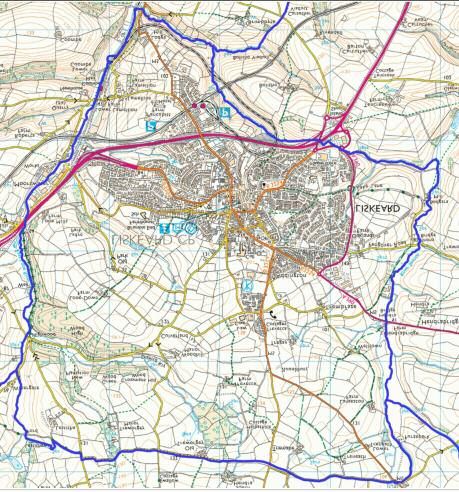
The key events have been:                                     Each group worked to a brief, and produced a
     • XDrop-in Session at the Public Hall                         report of findings, all of which can be found on the
     • XTravelling Roadshow visiting many community                Neighbourhood Plan website.
        events and venues in adjoining Parishes
     • XRoad-show at Liskeard Agricultural Show                    How this Plan is Organised
     • XRoad-show at Morrisons Supermarket                         The Plan first gives information as to what
     • XStakeholder engagement sessions                            neighbourhood plans are and how the Liskeard
     • XEngaging with people by visiting specialist groups         Neighbourhood Plan has been prepared. It then
        e.g. old peoples homes, mother & toddler groups,           briefly describes the town and country planning
        churches, rotary club, and others                          context within which the Plan must function,
                                                                   followed by a summary profile of Liskeard and its
     The community-based Working Groups were set up                community. The overarching vision and aims of the
     to investigate, analyse and report on various themes          Plan are stated and then it is divided into sections
     that emerged from the community engagement                    that are framed around the key themes set out
     carried out in 2014. They were:                               above. Each section identifies objectives defining the
     • X‘A place to work and learn’ -                              actions necessary to deliver the aims of the Plan,
         (Employment Group)                                        followed by policies which are intended to deliver the
     • X‘A place to live’ - (Housing Group)                        objectives, each with a reasoned justification and
     • X‘A place to meet, shop and do business’ -                  reference to evidence that supports it, followed by
         (Town Centre Group)                                       notes on how the policy may be interpreted. Each
     • X‘A place to relax and enjoy’ -                             section also includes Proposals and Projects, which
         (Open Spaces and Leisure Group)                           do not have the status of formal planning policies,
                                                                   but indicate other actions which will help the delivery
     A fifth theme ‘A Place with a Sustainable Future’ has         of the Plan’s vision.
     been treated as a cross-cutting issue for all Working
     groups to consider.

                       LISKEARD NEIGHBOURHOOD DEVELOPMENT PLAN STRUCTURE K

                          EVIDENCE BASE - See website and summary in this document
                NPPF - CORNWALL LOCAL PLAN - COMMUNITY ENGAGEMENT - SOCIAL, ECONOMIC & ENVIRONMENTAL DATA ETC

                                                          VISION

                     AIMS                    AIMS                         AIMS                     AIMS

        OBJECTIVES          OBJECTIVES        OBJECTIVES           OBJECTIVES         OBJECTIVES         OBJECTIVES

            POLICY           POLICY             POLICY               POLICY             POLICY             POLICY

            POLICY           POLICY             POLICY               POLICY             POLICY             POLICY

            POLICY           POLICY             POLICY               POLICY             POLICY             POLICY

                         PROPOSALS                                                  PROPOSALS

             PROJECTS                    PROJECTS K                     PROJECTS                   PROJECTS

10
THE PLAN PREPARATION PROCESS K
The Stages Involved The Designated Area
Neighbourhood Plan preparation involves a The Liskeard Neighbourhood Plan area was
procedure set by laws and regulations set up under designated in accordance with the Neighbourhood
the Localism Act 2011 designed to ensure that Planning (General) Regulations 2012 on the 25th
everyone gets the opportunity to have a say in what April 2014 and comprises the entire Liskeard Town
the finished plan contains. The key stages are: Council area, and is illustrated on the Plan below.
1. Designating the Neighbourhood Area
2. Preparing the Plan
3. Independent Check
4. Community Referendum
5. Making the Plan
© Crown copyright and database rights 2017 OS 100053848
Use of this data is subject to terms and conditions.
11Preparing the Neighbourhood Plan
At the time the Neighbourhood Plan area was
designated, a steering group of Town Councillors and
interested community volunteers was formed to
manage the process of creating the Plan. In 2014
hundreds of local people took part in a major
community engagement period, visiting our
‘roadshow’ out-and-about, the drop-in session for
face-to-face discussion, and taking part in a large
community survey. Various service providers and
adjoining Parish Councils were also consulted. During
2015 community-based Working Groups looked into
the community response, carried out research,
consulted stakeholders, and reviewed various Neighbourhood Development Plan. The full reports
options for the future of Liskeard, culminating in a are available on our website, www.planliskeard.co.uk.
major ‘visioning workshop’ attended by the Working
Groups, Councillors and community volunteers, to In October 2016 Liskeard Town Council’s Planning
bring the work of the Groups together and agree the Committee noted and commented on the first draft
strategy going forward. In 2016 we refined that work of the full Neighbourhood Plan prior to the
into a series of draft reports full of data, ideas and consultation period, which after agreed amendments
proposals, which were updated to take account of were approved by the Town Council (April 2017).
constantly changing issues, including several
alterations in the emerging Cornwall Local Plan. The plan was then formally submitted to Cornwall
Council in August 2017. Following their own
The Working Groups and Steering Group then carried Reg 16 consultation an independent examination
out sustainability checks and drafted the policy and was completed in April 2018, with the Referendum
project ideas into the first draft of the Liskeard to follow.
NEIGHBOURHOOD DEVELOPMENT PLAN PROCESS
1. DESIGNATION BY CORNWALL COUNCIL
including 6 week public consultation
2. PREPARING THE PLAN
2014 Extensive community engagement
2015-2016 Community-based Working Groups gather and analyse evidence, creating aims, objectives, policy and project ideas
2015 Community-based Working Groups visioning workshops
2016 Community-based Working Groups sustainability checklisting
2016 Prepare 1st Draft Neighbourhood Plan
Nov 2016 Community Engagement ‘YOU SAID/WE DID’
Dec 2016 - Jan 2017 FORMAL PUBLIC CONSULTATION (‘REG 14’)
SUBMIT PLAN TO CORNWALL COUNCIL
CORNWALL COUNCIL CONSULTATION (‘REG16’)
3. INDEPENDENT EXAMINATION
4. LOCAL REFERENDUM
5. LISKEARD NEIGHBOURHOOD PLAN IS ‘MADE IN LAW’
12THE PLANNING FRAMEWORK K
The National Planning Policy Framework
The NPPF requires that Neighbourhood
Development Plans deliver ‘sustainable
development’ and refers to 13 sustainable
development objectives, 11 of which are relevant to
Liskeard. Twelve principles are given which should
underpin plan-making (NPPF 17). These are that
planning should:
1 X‘…be genuinely plan-led, empowering local
people to shape their surroundings, …setting out
a positive vision for the future of the area…’
2 X‘be a creative exercise in finding ways to
enhance and improve the places in which people
live their lives;’
3 X‘proactively drive and support sustainable
economic development to deliver the homes,
business and industrial units, infrastructure and
thriving local places that the country needs…’
responding ‘…positively to wider opportunities
for growth’ and ‘…set out a clear strategy for
allocating sufficient land which is suitable for
development in their area, taking account of the
needs of the residential and business
communities’
8 X‘encourage the effective use of land by reusing
4 X‘always seek to secure high quality design and a land that has been previously developed
good standard of amenity’ (brownfield land)’
5 Xrecognise ‘…the intrinsic character and beauty of 9 X‘promote mixed use developments, and
the countryside and supporting thriving rural encourage multiple benefits from the use of land
communities within it’ in urban and rural areas’
6 X‘support the transition to a low carbon future in a 10 ‘conserve heritage assets in a manner
changing climate..and encourage the reuse of appropriate to their significance’
existing resources, including conversion of
existing buildings, and encourage the use of 11 ‘actively manage patterns of growth to make the
renewable resources...’ fullest possible use of public transport, walking
and cycling’
7 X‘contribute to conserving and enhancing the
natural environment and reducing pollution’. 12 ‘…support local strategies to improve health,
‘Allocations of land for development should social and cultural wellbeing for all, and deliver
prefer land of lesser environmental value’ sufficient community and cultural facilities and
services to meet local needs’
1314
Cornwall Local Plan                                        Objective 5 – Leisure Facilities
The Cornwall Local Plan interprets the NPPF at a           Improve and maintain the provision of recreational,
county-wide strategic level, and so is the most            cultural and leisure services and facilities in Liskeard
important part of the town and country planning            with particular focus on delivering sports pitches.
context for the Liskeard Neighbourhood Plan. As well
as a range of general strategic policies it includes       Liskeard Community Strategic Plan
specific reference to Liskeard. It says that ‘A classic    In 2005 to 2008 the Liskeard Town Forum produced
market town, Liskeard now needs to improve its viability   a Community Strategic Plan, a copy of which is
and make the most of redeveloping key town centre          retained in the evidence base on the Neighbourhood
sites to strengthen its role as a service centre’. It      Plan website. This set out a plan for the 25 years
requires that as the main settlement in the CNA with       from 2008, framed around a vision of the town being
good employment and transport provision, Liskeard will     ‘a flourishing, forward-looking employment and retail
be a focus for growth for the Community Network Area.      centre; that it will be a welcoming community
                                                           providing high-quality living and amenities for all, a
The Cornwall Local Plan notes that ‘there is a local       community in which people want to live and work
aspiration to support higher value business uses in        and which non-residents want to visit’. Numerous
Liskeard. A range of accommodation including open          proposals and ideas backed this vision, some of
market family housing and intermediate affordable          which have been achieved, whilst others were never
housing is required to balance the housing market in       taken forward.
the town. Other challenges include increasing access
to cultural and leisure services (including sports         The Community Strategic Plan suffered the
pitches). Taking these factors into account, the Plan      disadvantage of being a non-statutory plan,
sets objectives relevant to Liskeard, which the            standing outside of the planning system, and it
Neighbourhood Plan must deliver and concludes that         therefore had a low priority when planning decisions
a comprehensive and coordinated approach will be           were made and investment decisions taken. Also
pursued to the planning and development of Liskeard;       many of its proposals were of a nature that could
                                                           not be delivered by land use policy. Unfortunately, it
CORNWALL LOCAL PLAN OBJECTIVES                             could not be simply converted into a Neighbourhood
FOR LISKEARD                                               Plan under the Localism act 2011 as much of the
Objective 1 – Economy and Jobs                             evidential research and community engagement
Deliver economic growth / employment, providing            work would not be considered as meeting current
much needed jobs to counterbalance current and             Neighbourhood Planning standards. However,
future housing development in and on the edge              although 8-10 years have now passed there is still
of Liskeard.                                               relevant material contained within the report that has
                                                           provided very useful input into the preparation of the
Objective 2 – Sustainable Development                      Neighbourhood Plan.
Improve connectivity within and on the edge of
Liskeard to ensure the town functions effectively as
a major hub and service centre for the network area;
including enhanced public transport provision.

Objective 3 – Liskeard as a Service Centre
Strengthen Liskeard’s role as a service centre and
improve town centre viability through regeneration
schemes.

Objective 4 – Housing
Balance the housing stock to provide a range of
accommodation, particularly for open market family
homes and intermediate affordable housing in Liskeard.

                                                                                                                      15
The Town Framework 2012
Between 2010 and 2012, CC undertook work SETTING THE SCENE: K
to develop a Town Framework Plan (TFP) for
Liskeard. Whilst the TFP was never finalised
A PROFILE OF
(due to the development of this NDP), the work
that contributed to the draft stages of the TFP
LISKEARD AND ITS
formation have been a useful source of COMMUNITY
statistical and evidential information for the NDP
The following section gives a brief overview of the
Steering Group and is referred to within the
evidence base on which the Liskeard Neighbourhood
evidence base of the NDP.
Development Plan is based. The full evidence base is
contained on the website, www.planliskeard.co.uk.
Caradon Local Plan
The Caradon Local Plan is no longer the main
Liskeard’s Setting
source of local planning policy, as it has now
The town is situated on relatively high land between two
been superseded by the Cornwall Local Plan,
rivers, with both wooded valleys and sweeping
although some policies within it have been
landscapes. It is set in a rich patchwork of productive
carried forward (see CLP appendix 3). The
agricultural land, dating back to medieval enclosures,
Caradon Plan was reviewed during the
intersected by a network of Cornish hedgerows and
preparation of the NDP, and useful policies that
sunken lanes, leading to a designated Area of Great
have not been saved by the CLP, are reflected
Landscape Value and World Heritage railway trackbed
in Liskeard’s NDP policies.
site within its northern boundary, as well as a Ducal Deer
Park in the Ladye Valley. Further north is Bodmin Moor
Infrastructure – The Physical Ability Of The
and the Caradon Hill World Heritage Mining Site. This
Town To Accept Growth
was formerly linked to Liskeard by the Liskeard and
When growth is proposed it is often claimed
Caradon Railway, and now by a designated cycle and
that there are insufficient educational or health
walking route (the Caradon Trail).
services available, or road and drainage
capacity available to support the needs created
The Growth of Liskeard
by the new developments. Therefore, as part of
Liskeard is one of the oldest market towns in Cornwall,
preparing the Neighbourhood Plan the Steering
mentioned in the Domesday Book, and granted a Royal
Group have carried out an assessment of the
Charter in 1240 and has a long history as the commercial
adequacy of existing and proposed
and administrative Centre of south-east Cornwall. During
infrastructure in the Neighbourhood Plan period
the middle ages this importance was reinforced when
up to 2030. (see report in evidence base).
Liskeard became a Stannary, or ‘coinage’ town at the
The conclusion of this work is that adequate
centre of mining administration.
infrastructure to meet the needs of the
development proposed in the Cornwall Local
The town has experienced significant growth in phases
Plan and Liskeard Neighbourhood Development
from the mid 19th Century to today. In the 19th Century,
Plan either exists already or can be provided
when deep rock mining was at its peak on nearby
through developer contributions and reasonable
Bodmin Moor, and the agricultural revolution was
public/private sector funding. However, the
transforming farming, the town provided a wide range of
ability to generate developer contributions will
commercial and other services for an extensive
depend upon the distribution, size and format
agricultural and industrial hinterland. This was reflected in
of development.
the make-up of employment, with the main focus on
crafts and trade. The prosperity of this period brought
wealth to some, leading to the development of superior
housing in the form of the new middle class terraces and
villas that still contribute to Liskeard’s distinctiveness
today. The pressure to house the population influx also
led to the hasty building of seriously overcrowded, poorly
ventilated and badly maintained ‘miner’s courts’ off the
main streets, and over-stretched community services.
16Victorian Liskeard’s authorities responded by improving
the drainage and transport infrastructure, building new
facilities, and improving its governance, eventually
creating a prosperous and admired market town.
This central role continued right up to the middle of the
20th century, with Market Days and Fairs being major
social and business events that brought the community
of south east Cornwall together.
With the availability of mass transportation emerging in
the 1950’s, and the opening of the Tamar Road Bridge
in 1961, people were able to source goods, services
and jobs more widely, and the town’s central role began
to decline. Many local people were able to find work in
Plymouth, but equally Liskeard became far more
attractive as a place to live, leading to rapid population
growth (34% from 1961 to 1971, and a further 21%
during the 1980s). As with the 1840’s boom, this period
was associated with over-stretched services and
communications. More complications arose as a result
of the wider housing market driving up average house
prices, and lower local jobs growth. In response further
improvements were made to the towns infrastructure,
including new distributor roads, new hospital, expanded
GP surgery etc.
After a more settled period of lower growth in the early
2000’s we now face another growth phase, spurred on
by Central Government policy to achieve significantly
higher rates of housing provision, resulting in larger
targets set in the Cornwall Local Plan. Housing growth in
Liskeard between 2010 and 2030 will be at least 1,400
dwellings, leading to a population growth of up to 30%.
It is important that this growth should be met in ways
that minimizes the problems associated with such boom
periods in the past.
Liskeard Today
Liskeard is the main commercial and administrative
centre for South East Cornwall, formerly as the
headquarters of Caradon District Council, and now the
regional offices of Cornwall Council, who are still a major
employer in the town. The population of the town itself is
9,400 (2011 census) but the surrounding hinterland for
which it is the main service centre supports in the region
of 33,000 people (Cornwall Local Plan).
There are excellent links with the rest of the country, via
the A38 trunk road, and a busy railway station on the
Penzance to Paddington main line. Summer visitors make
good use of the picturesque branch line leading to Looe.
17Employment The Cornwall Local Plan sets out key targets for
Although unemployment in the Liskeard area is employment floor space for the Liskeard and Looe
slightly below the national average, for those who Community Network Area, to be met within the plan
are in employment and work locally, the average period to 2030.
income is considerably lower than both the Cornwall
and National figures.
Liskeard’s working age population is relatively less
well qualified than other areas. Proportionally more
have qualifications associated with service jobs
(GCSEs at A to C, NVQ2s) and proportionally less
have qualifications associated with managerial and
professional roles.
The main employment sectors in Liskeard are
agriculture, forestry & fishing, construction, and
retail, which between them provide nearly half the
local jobs. Cornwall Council, Liskeard Community
Hospital and the Community College are also
significant employers. There is no single large
employer based in Liskeard. Small to medium sized
employers are accommodated principally in
Liskeard’s main business estates, at Holman Road,
Heathlands, Miller Business Park and Moorswater.
There are several small, low quality and under-used
employment sites in town which would benefit from
regeneration, or possibly change of use.
There is a reasonably high level of commuting out, with
nearby Plymouth providing more professional level
occupations, to some extent counterbalanced by
commuting in from towns and villages in the
surrounding area. Travel to work is facilitated by the
major road network, including the A38, and regular
services East and West from the mainline railway station.
For many years prior to the start of this plan, there
has been a lack of new employment spaces other
than at a very small scale, and land historically
allocated for employment has not come forward. As
a result, some employers have moved away in
search of larger premises, whilst the mismatch
between employment growth and the substantial
population growth rates has led to many young
people struggling to find work, cyclical
unemployment problems have been more difficult,
and wage rates are persistently low. The continued
growth of housing without matching local jobs
growth and new enterprise can only exacerbate this
situation, and a strong strategy linking housing
provision to employment land provision to redress
the balance is needed.
18Town Centre
The town has a compact shopping area
characterized by a wide range of small independent
shops, cafes, food stores, and major national banks.
The commercial centre focuses on the Cattle
Market, which continues to hold regular livestock
auctions but now has a very uncertain future due to
new livestock movement rules and changes in
agricultural trading. Cornwall Council is at present
reviewing potential future uses, and supporting
planning policies are needed to encourage new
beneficial use of the site. Services to the agricultural
industry are still an important part of the local
economy, and there are nearby producers of award-
winning cheeses, cider, and the collection centre for
the region’s wool industry.
Liskeard town centre serves many more residents
than the 9,400 or so that live in the town, having a
catchment population of up to 36,000 people who
live within reasonable driving distance and are which in addition to the main store selling
potential customers for its shops and services. comparison goods, accommodates several
independent businesses selling convenience goods,
The town centre is highly accessible from most parts provides a considerable competitor for Liskeard
of the town, by foot, public transport or by car. town centre.
However, the topography of the town, with steady
inclines to north and south, tends to encourage car Liskeard’s town centre has distinctive architectural
use. Liskeard is also highly accessible to the and heritage character that makes it an attractive
neighbouring settlements by car and about 750 car place to visit, and underpins the potential to market
parking spaces are available. The town is less the centre as a shopping and tourism destination.
accessible by public transport: whilst the main bus
terminus on Barras Street is in the centre of the core Looking forward, the decline of the Cattle Market,
retail area, local bus services focus mainly on nearby shopping trends, centralization of local government
towns and the settlements along those routes, but and national services to other locations, improved
they are limited to neighbouring villages, and some accessibility to larger centres, the disconnection of
areas are completely devoid of bus services. the surrounding rural population from the town, and
the impact of internet communications, have
Town centre patronage has fallen in recent years: seriously eroded Liskeard town centre’s traditional
pedestrian counts in Liskeard were around 10,000 in role, to the extent that its future prosperity is
2001, the average has now dropped to 5,000 to perceived as being at serious risk.
6,000. This implies that the town has settled to what
is now its natural minimal level of footfall in present
conditions. Retail growth to 2030 is forecast to be
about 1,485sqm of convenience floorspace and
2,536 sqm of comparison floorspace in the Cornwall
Local Plan. The Cattle Market site, which may soon
be vacated, could provide an excellent location for
this growth.
Trago Mills shopping centre, five miles west of the
town just off the A38, with a gross floorspace
estimated at 23,250 Sqm (250,000 Sq.Ft) and
19Housing Open Space and Leisure
Liskeard has experienced significant growth in Currently Liskeard has around 37 ha. In total of open
phases from the mid 19th Century to today. space (excluding civic spaces i.e. hard paved squares).
However, around 16 ha of that has limited access to
After a more settled period of lower growth in the the public or can only be used through private hire
early 2000’s the town now faces another growth leaving only 22 ha of proper publicly accessible open
phase. Housing growth in Liskeard between 2010 space. The main shortfall in current open space
and 2030 is planned for 1400 dwellings in the provision is approximately 1 ha of park and amenity
Cornwall Local Plan, leading to a population growth space and in public use outdoor sport, but in the future
of up to 30%. The capacity for housing development when the new primary school site on land at Martins
within the town boundary and on brownfield land Park is taken up, a further 0.95 ha compensatory
can make a contribution, but is insufficient to meet accessible open space provision elsewhere will be
housing requirements: consequently, extensions needed.
beyond the town boundary are necessary.
Being a rural market town, Liskeard has plenty of
The 2011 census says there were 4,221 dwellings in natural green space nearby, but this largely has poor
Liskeard, and indicates that it is under-represented public access. The recently developed Caradon Trail
in Home Ownership but has a higher percentage of shows how this issue could be overcome. The
Social Rented and Private Rented accommodation. provision of allotments is poor, and there are no
community orchards.
Census data and analysis of data on council tax
banding shows that Liskeard’s dwelling stock is Liskeard’s open spaces score reasonably on
skewed towards band B properties compared to the maintenance and access (other than for disabled), but
rest of the county. Arguably the domination of the are poor in terms of cultural heritage, interpretation and
housing market with smaller dwellings has education, or adequate responsiveness to the needs of
implications for the mix and health of the town people in terms of signage, seating, interest, or other
centre, demands on services, the profile of skills elements that would make them attractive. The towns
available to inward investment, etc. This would play areas are not well distributed to serve the local
suggest that Liskeard dwelling stock needs to be neighbourhoods and are fairly basic in terms of
adjusted to provide a better mix of properties in the equipment. In an age of increasing obesity and mental
higher tax bands to attract and support a more health problems, this low quality indication suggests
diverse population. our open spaces are failing to provide basic levels of
service that might contribute to reducing pressure on
other services such as health and education.
20Indoor leisure (sports, arts, performance, cinema etc) is
mainly provided through Lux Park Leisure Centre,
Liskerrett Centre, and the Public Hall, although the
latter two cannot offer the latest standards of provision
for the performance arts.
Liskeard’s Advantages and Challenges
In the initial scoping for the neighbourhood plan,
local people identified features about Liskeard, and
similar points were made in the more detailed
consultation process as well as the analyses from
the community working groups (also echoed by
comments in the Community Strategic Plan of 2008)
as follows:
ADVANTAGES
Architectural heritage X
Strong identity X
Community spirit X
Community effort X
Independent shops X
Market town X
Attractive countryside X
Good road/rail links X
CHALLENGES
Empty sites & tired run-down buildings
Need a clean and repaint
Family entertainment
Need restaurant/cinema/bowling
Parking too expensive
Not enough employment
Too many houses
Job opportunities for young people are poor
21AN OVERVIEW OF
COMMUNITY
ENGAGEMENT
FEEDBACK
Strong support for the concept of creating a
Neighbourhood Plan was expressed by the people of
Liskeard in the 2014 community engagement activity.
Respondents consistently argued that the
Neighbourhood Plan should be an opportunity to
improve the town, building upon its current strengths
and making good any weaknesses.
very strong belief that Liskeard has a role to play
The analysis of the engagement results, prepared beyond being a dormitory town, and they still
by Professor Lynne Butel of the Plymouth University wanted Liskeard to be a social and leisure hub for
Graduate School of Management, found a the old market town and its hinterland. In fact, they
remarkable degree of agreement in the responses would like there to be more social and leisure
from the nearly six hundred people who completed opportunities locally. They were clear about what
the questionnaires and also a general was good (heritage, greenspaces, walks), what
acknowledgment that the issues are complex, inter- could be improved quickly (litter, baby swings, cycle
related and therefore difficult to consider in isolation. paths) and what they would really like (cinema, family
friendly restaurant). There was a strong feeling that
The top four themes which people considered to be the key strengths of the town should be identified
most important to include in Liskeard’s and secured for the future.
Neighbourhood Plan were:
• ‘A place to live’ People were also very clear that the requirement to
• ‘A place to meet, to shop and build more houses should not be done at the
do business’ expense of all the core strengths Liskeard currently
• ‘A place to work and learn’ has. The requirement to build more houses in the
• ‘A place to relax and enjoy’ town was seen by the overwhelming majority to be a
The three other themes, Transport, Energy and the threat to the town, a threat to the social and physical
Environment and Design and Heritage also all infrastructure provision; from schools and doctors to
received the support of over 90% of the respondents. drains and roads. Respondents to the questionnaire
are saying, quite consistently, housing if we must,
The theme people felt most strongly about was but not at the expense of all Liskeard currently
Employment and Training, with ideas on the subject offers. New buildings should be of a high quality,
coming through under Housing, Town Centre similar to the better properties in town, infrastructure
Regeneration as well as Employment and Training. and greens spaces should be included in the plans.
People said they would like there to be more work, Residential development should be in the urban area
for themselves and for their friends and relatives, but and on brownfield land before new releases of green
they were less sure how to create and maintain jobs. land on the edge of the town, whilst housing and
jobs growth must be linked in some way. People
The role of Liskeard as a market town serving a wanted to see a better mix of properties and
hinterland of farms and villages was seen to facilities to match existing community needs,
be changing. Whilst people may shop on-line and ensuring that Liskeard retains its character and is
work, for example, in Plymouth, there was also a not swamped by poor housing estates.
22THE PLAN VISION
LISKEARD - A MODERN CORNISH K
K
MARKET TOWN K
LISKEARD IS:
• X A Cornish market town with a distinct identity and character
• X A vibrant and friendly community built on a human scale
• X A place where people from the surrounding area come to use services,
shops, cultural and leisure facilities
• X Set in a valued rural, agricultural landscape between the sea and the moor
LISKEARD WILL BE:
• X A thriving modern market town at the heart of South East Cornwall
• X A place where people can work in rewarding jobs supporting a
vibrant economy
• X An attractive place to live with a range of housing to meet local needs
• X A caring community supporting residents of all age and social groups
through health, education, employment, and enjoyment of cultural and
leisure facilities
• X An attractive centre which retains its human scale, and where people
want to access services, meet and shop
• X A place that fosters mobility and healthy living with a sustainable transport
network for walkers, cyclists and those who depend on public transport
• X A place that attracts visitors and supports tourism in S E Cornwall
23AIMS POLICIES,
A Place To Work And Learn: To
• XAttract high quality employment, and training
SUGGESTIONS
facilities, to meet the needs of business and AND PROJECTS
the working age population
This section of the Liskeard Neighbourhood
• XEnsure the long-term sustainability of
Development Plan sets out the policies and
Liskeard as a thriving, prosperous place and
suggestions for development considered necessary
modern market town
to deliver the aspirations of local people as
• XProvide high quality services to local residents
expressed in the vision and aims set out in the
and the surrounding rural communities’
preceding section, within the guidelines set in the
NPPF and CLP.
A Place To Live: To
• XMeet the housing targets (as in the Local
‘Policies’ are statements covering land-use issues
Plan) up to 2030 in a way that enhances the
intended to guide the public, applicants and
role of Liskeard as the economic centre of a
decision-makers to ensure that planning decisions
wider rural hinterland
are consistent in setting out the requirements for
• XEnhance the environmental, social and
new development.
economic sustainability of Liskeard and its
neighbourhoods
‘Suggestions’ refer to land use issues that cannot be
• XProtect the interests of future generations
covered through the Liskeard NDP as the land
involved falls outside the Plan’s Designated Area.
A Place To Meet, Shop And Do Business: To
The Liskeard NDP Designated Area follows the
• XSustain and enhance Liskeard’s modern
administrative boundary of Liskeard Town Council,
market town centre as a vibrant, lively and
although the popularly recognised ‘town’ actually
friendly community service centre and
extends beyond that area into Menheniot Parish to
shopping facility for its residents and the
the east and Dobwalls Parish to the west. In these
surrounding communities
adjoining areas development suggestions may occur
• XPromote the town as a welcoming and friendly
or be desirable that directly impacts on the social,
destination for visitors with its strategic
environmental and economic interests of Liskeard. It
placement between sea and moor and
is therefore considered appropriate that the Liskeard
excellent road and public transport links to the
NDP should make ‘suggestions’ to the adjoining
rest of the country
parishes and the Local Planning authority as to how
• XSupport Liskeard as a Cornish town centre
these important areas of land might be dealt with in
which is proud of its history, and also forward
planning terms.
thinking and ready to meet the challenges of
the 21st century
‘Projects’ are non-land use initiatives that will assist
in the delivery of the policies of the NDP. They
A Place To Relax And Enjoy: To
typically include funding, organisational and
• XConserve and enhance existing open spaces
administrative management arrangements.
and leisure facilities
Policies, Suggestions and Projects are presented
• XEnhance connectivity to key facilities
together to aid understanding.
• XIntegrate with existing local walks, cycle trails
(e.g. Caradon Trail) and the World Heritage site
• XDevelop the multi-use park at Roundbury
• XProtect our rural hinterland.
The Liskeard Neighbourhood Development Plan also
seeks to build social, economic and environmental
resilience in anticipation of future changes and
challenges.
24DEVELOPMENT BOUNDARY K
• Vencouraging the re-use of previously-
developed sites; V
POLICY NP1
• Vmaking it clear which policies apply to which
Development Boundary particular areas of land.
The neighbourhood plan designates a Liskeard
Development Boundary, as shown on the proposals Comment The settlement boundary forms a
map within which development will be permitted boundary between the built-up area of the
according to the following policies. settlement and the open countryside. It is drawn to
include any new housing or employment land
allocations made by the Neighbourhood Plan, and
Reasoned Justification any recent planning permissions. Outside these lines
The development boundary is set for the purpose of new housing is not generally acceptable.
achieving sustainable development to support the
NPPF’s core planning principles (NPPF Para 17) by:
The built-up area of Liskeard now extends beyond
• Vdirecting future housing, economic and
the town’s administrative boundary, which is also the
community related development in the Parish
Designated Area for this NDP. Therefore, the
to the town of Liskeard to enhance its role as
proposed development boundary ceases at the
a market town, residential, service centre and
extent of the Designated Area. Menheniot Parish
shopping facility for its residents and the
Council, which is preparing its own NDP, has been
surrounding communities;
asked to similarly indicate the town development
• Vfacilitating the sequential approach to land V
boundary, wrapped around the site of the Tencreek
allocation; V
mixed-use development site (with planning
• Vcontaining the spread of the Town, by
permission), and the suggested employment site at
promoting well-balanced development up to its
Bolitho Farm.
natural physical boundaries;
Legend
Designated Area /
Parish Boundary
NP1 - Development
Boundary
25A PLACE TO
WORK AND
LEARN
26A PLACE TO WORK AND LEARN X
AIMS
To
• X Attract high quality employment, and training facilities, to meet the needs of
business and the working age population
• X Ensure the long-term sustainability of Liskeard as a thriving, prosperous X
place and modern market town X
• X Provide high quality services to local residents and the surrounding rural communities
Strategic Approach
The main elements of the strategy are to:
• X Promote quality employment growth
• X Build on existing viable businesses which provide local employment
opportunities and a range of services for both the people living in the town
and surrounding area
• X Improve skills and training
• X Establish an innovation/home business support hub
• X Encourage renewal of ‘tired’ employment sites
• X Ensure that employment opportunities are available in the rural part of the
Neighbourhood Plan area.
OBJECTIVE 1 - Promote quality employment growth and
OBJECTIVE 2 - Build on existing viable businesses which provide local employment
opportunities and a range of services for both the people living in the
town and surrounding area by:
a) Relating the rate at which employment land becomes available to the rate at
which additional housing is provided, so that the town is less reliant on
employment elsewhere
b) Provide a well located range of sizes and tenures of buildings and land,
avoiding reliance on one large site by having several options, so that new
businesses can set up, and existing businesses can expand and develop
without having to leave the area’
c) Supporting provision for agricultural businesses to ‘add value’ to
their produce
d) Safeguarding existing employment land in accordance with
Local Plan Policy 5
e) Building on our local strengths including superfast broadband, mainline
railway, close proximity to A 38 and attractive environment to promote local
business opportunities and attract inward investment
f) Supporting the growth of home based businesses
g) Linking with the housing strategy to encourage appropriate houses that
attract businesses/entrepreneurs to the area
h) Supporting developments that are compatible with a sustainable transport
strategy and maximise the use of “green” energy and sustainable building
methods/design
27POLICY EM1 EM2A
Employment and Housing Balance The development of the land north of Pengover
Road must:
In order to relate the delivery of employment land a) Be for use classes B1, B2, B8, A1 and
to the expansion of housing provision, all new A3 only;
larger housing schemes (30 or more dwellings) and
will be encouraged to contribute towards the b) Ensure that the main vehicular access to the
need (as defined in the Cornwall Local Plan) for site operates safely in conjunction with the
employment land, or servicing and development Clemo Road Industrial Estate Rd.
of such sites to facilitate the delivery of viable
workplaces, through a process of cross-subsidy.. Developers are encouraged to commence
development of this site in advance of/
concurrently with any development of adjoining
land for residential development.
EM2B
The development of the land east of
Charter Way must include:
a) B1, B2 and B8 uses
b) A 15 metre wide heavy planting strip on
the site’s perimeter and the retention of
important hedgerows which will link with it
The site may include:
a) Self-build residential development X
b) Live-work units X
and
c) Recreational facilities
Retail, other than as an integral part of a principal
use, is specifically excluded.
Where a developer of employment land can
demonstrate that cross-subsidy from a housing
project is necessary to ensure the viability of the
development, an element of housing will be
supported subject to policies elsewhere in this
document and the Cornwall Local Plan on
design standards.
POLICY EM2
Employment Land Allocation Note: 6.2 ha has already been permitted at
Tencreek and 0.83 ha at former Magistrates
Court. A further 12.72 ha is suggested in
Employment development will be supported
Menheniot Parish providing in total more
at the following locations:
developable floorspace than the CLP requirement
1. East of Charter Way (11.05 ha)
for the CNA in the plan period. This gives a
2. North of Pengover Road (0.93 ha)
flexible choice of sites in sustainable locations and
3. Rapsons Lorry Park/Mortuary Site (0.25 ha)
allows viable options to come forward.
4. Undeveloped part of Heathlands Trading
Estate (0.44ha)
28Reasoned Justification
Policy EM1 – Employment and Housing Balance
POLICY EM3 A concern strongly expressed in community
Safeguarding Existing engagement was that the rate at which additional
housing is provided creates a demand for jobs that
Employment Land
outstrips the rate at which employment land
becomes available. With the number of houses
The following existing employment sites are
planned and associated population increase, this
safeguarded in accordance with CLP Policy 5
could lead to future unemployment issues, and the
1. Liskeard Business Park, Charter Way
community also did not wish Liskeard to just develop
2. Miller Business Park, Station Road
as a dormitory town. Therefore, a mechanism to
3. Trevecca, Culverwood Road
relate the two factors and unlock the provision of
4. Clemo Road Industrial Estate
employment land is required. This may be achieved
5. East Of Charter Way by applying a similar approach to that used to bring
6. Heathlands Industrial Estate forward affordable housing. As a corollary to this,
(existing developed area) there may be employment sites where the viability for
7. Moorswater Industrial Estate development is marginal, and allowing an element of
(within the NDP area) cross-subsidy from housing may assist in bringing
8. Former Magistrates Courts Site, them forward.
Culverwood Road
Where any of these sites is no longer Cornwall Local Plan says in Policy 2 para 3
required, the mechanism for release in Policy “supporting economic development in South East
5 of the Cornwall Local Plan will apply. Cornwall that meets the area’s own needs and
benefits from its relationship with Plymouth;” and
p35/36 "2.10 Where there is a clear need for
employment facilities but building them is not viable,
we will consider proposals that include mixed use
schemes where the ‘other’ uses can provide cross-
subsidy. Such proposals should expect to be bound
to phasing conditions and obligations so that the
viable uses are broadly phased to coincide with the
delivery of the employment opportunities”.
POLICY EM4
Home Based Enterprise During the making of the plan it was recognised that
not all housing developments would be appropriate
Home based enterprise proposals will be as mixed use sites – the criteria for a good
encouraged where it can be shown that sustainable employment site may be different from
there will be no unreasonable adverse those for a housing community – so there is a
impact affecting nearby residents and proposal in EM1 that funding for the release of
countryside, or the character and employment land should be sought as a “cross-
appearance of the locality by reason of subsidy”.
visual impact, vehicle movements, noise
vibration, special lighting, advertising and
activity at unusual hours. Planning
permission will be required if there are
alterations to buildings, or the scale of
business materially changes the use of the
premises.
29You can also read


