MENHENIOT PARISH NEIGHBOURHOOD DEVELOPMENT PLAN - 2021 to 2030 SUBMISSION DRAFT PLAN JANUARY 2021
←
→
Page content transcription
If your browser does not render page correctly, please read the page content below

MENHENIOT PARISH
NEIGHBOURHOOD
DEVELOPMENT PLAN
2021 to 2030
SUBMISSION DRAFT PLAN
JANUARY 2021

Menheniot Parish Neighbourhood Development Plan
Steering Group

Front Cover photo: Menheniot, with the Parish Church spire marking where the village lies, hidden
behind the large trees and hedgerows that surround the ‘Churchtown’.

This is the ‘submission draft’ of the Menheniot Parish Neighbourhood Development
Plan.

The Menheniot Parish Neighbourhood Development Plan has been prepared in
accordance with the Neighbourhood Planning Regulations 2012, the Localism Act
2011, the Planning & Compulsory Purchase Act 2004, the European Directive
2001/42 on Strategic Environmental Assessment and the EU Directive 92/43 on
Habitats Regulations Assessment. It is required to take into account the National
Planning Policy Framework (NPPF) and the adopted Cornwall Local Plan 2016. It
should also take into account the advice given in the National Planning Policy
Guidance (NPPG).

Menheniot Neighbourhood Development Plan - Submission Draft – January 2021                          1
MENHENIOT PARISH NEIGHBOURHOOD DEVELOPMENT PLAN
2021 – 2030

              T ABLE OF C ONTENTS

              Foreword .................................................................................................................................................. 4
              PART ONE: THE BACKGROUND................................................................................................................. 5
              1.           Introduction ............................................................................................................................... 5
              2.           Menheniot Parish NDP – The Preparation Process .................................................................... 6
                           Getting this far. .......................................................................................................................... 6
              3.           NDP Sustainability Appraisal ...................................................................................................... 7
              PART TWO: OVERVIEW OF ISSUES AND THEIR IMPLICATIONS FOR THE NDP .......................................... 9
              4.           Evidence Base ............................................................................................................................ 9
                           National Planning Policy Framework and Cornwall Local Plan. ................................................. 9
                           Physical, Factual and Statistical Background............................................................................ 11
                           Community Engagement.......................................................................................................... 12
                           Key Issues and Implications ..................................................................................................... 12
              PART THREE: VISION AND OBJECTIVES................................................................................................... 15
              5.           Menheniot Parish NDP: The Vision .......................................................................................... 15
              6.           Menheniot Parish NDP: Objectives .......................................................................................... 16
              PART FOUR: MENHENIOT NDP PLANNING POLICIES .............................................................................. 18
              7. Policies and Proposals ........................................................................................................................ 18
              Housing Needs........................................................................................................................................ 18
                           Policy 1 - Settlement Development Boundaries ...................................................................... 21
                           Policy 2 - Residential Infill and brownfield Development ........................................................ 25
                           Policy 3A - New housing sites to meet the needs of Menheniot Parish .................................. 26
                           Policy 3B - Meeting the Needs of Older Residents................................................................... 29
                           Policy 4 - New Mixed-Use Urban Extension to Meet the Needs of the Looe Liskeard
                           Community Network Area. ...................................................................................................... 32
                           Policy 5 - Exception Sites for affordable housing ..................................................................... 35
              Environment, Landscape and Heritage .................................................................................................. 36
                           Heritage Assets ........................................................................................................................ 36
                           Project 1-The Public Realm ...................................................................................................... 37
                           Policy 6 - Reconstruction or Conversion of Abandoned/Neglected buildings ......................... 40
                           Policy 7 - Landscape and Heritage Views and Vistas ................................................................ 40
                           Policy 8 - Local Landscape Value Area...................................................................................... 42
                           Policy 9 - Design in Historic Core of Villages ............................................................................ 44
                           Policy 10 - Dark Skies................................................................................................................ 46
              Menheniot Neighbourhood Development Plan - Submission Draft – January 2021                                                                                 2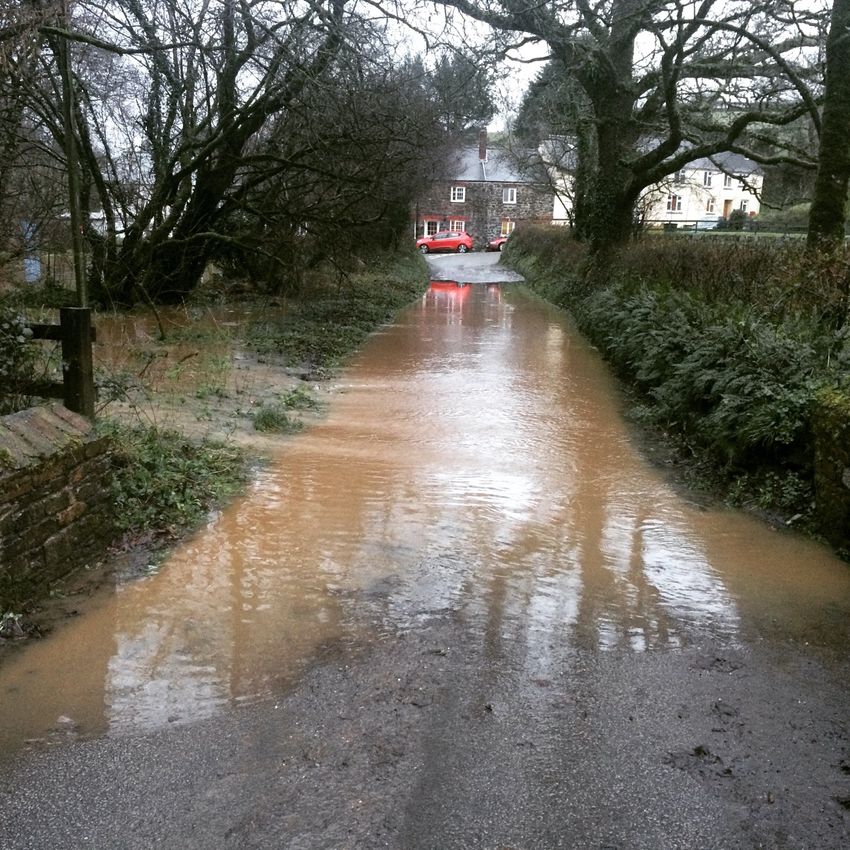
Policy 11 - Trees, Cornish hedges and hedgerows ................................................................... 47
             Policy 12 - Habitat and Biodiversity ......................................................................................... 47
             Policy 13 - Design of New Development .................................................................................. 49
Community Facilities, Leisure and Lifestyle............................................................................................ 50
             Policy 14 - Community Facilities and Social Infrastructure ...................................................... 50
             Policy 15 - Facilities for Young People ...................................................................................... 50
             Policy 16 - Local Green Spaces ................................................................................................. 51
Open Space ............................................................................................................................................ 52
Roads, Access and Transport .................................................................................................................. 53
             Policy 17 - Transport and Communications ............................................................................. 53
             Policy 18 - Footpaths and Bridleways ...................................................................................... 54
Business & Jobs ...................................................................................................................................... 54
             Policy 19 - Sustainable Tourism ............................................................................................... 54
             Policy 20 - Employment in Residential Areas ........................................................................... 55
             Policy 21 - Small Workshop Development ............................................................................... 55
             Policy 22 - Rural Workspace Centre Proposal .......................................................................... 57
Climate Change ...................................................................................................................................... 57
             Policy 23 - Renewable energy production ............................................................................... 59
             Community Benefits from Renewable Energy Development .................................................. 61
             Project 2 - Community Sustainable Energy .............................................................................. 62
             Policy 24 - Energy Efficient and Small Carbon Footprint Design .............................................. 62
PART FIVE: VILLAGE MAPS...................................................................................................................... 64
PART SIX: GLOSSARY AND ABBREVIATIONS ........................................................................................... 68

Menheniot Neighbourhood Development Plan - Submission Draft – January 2021                                                                              3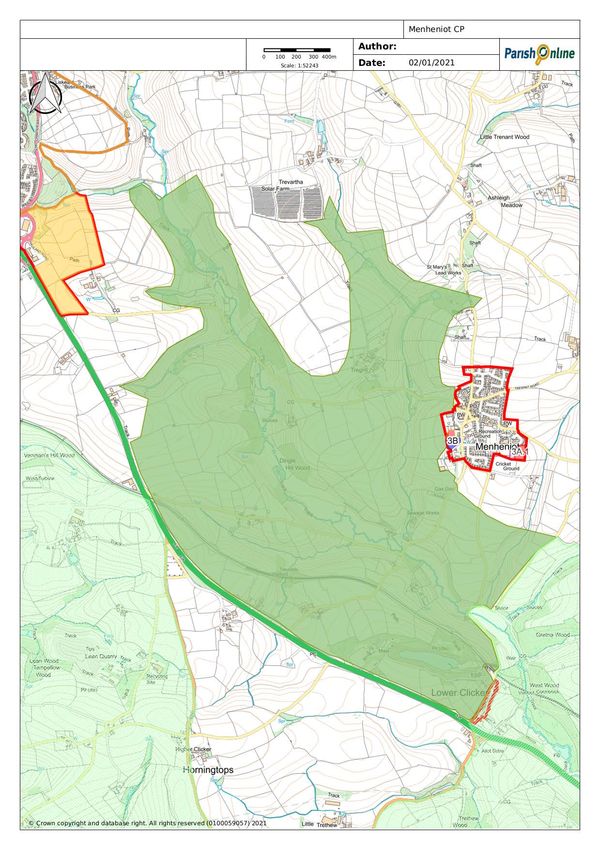
F OREWORD
An introduction by the Chair of Steering Group.

I am pleased to welcome you to the Consultation Draft of the Menheniot Parish Neighbourhood
Development Plan, or NDP as we call it throughout this document.

The Menheniot NDP has been developed to establish a vision for the Menheniot Parish area to help
us plan for the future up to 2030. Unlike the Menheniot Parish Plan 2003, upon which it builds, our
NDP is a statutory document that will be incorporated into the County-wide planning framework and
must be used by Cornwall Council to determine planning applications.

Our NDP has been produced by a Steering Group of local residents and local Parish Councillors
working together, using the community engagement work done from 2016 to 2018 to shape the
strategy and policies put forward. Residents told us that the most import things for the future were
to protect the peace and tranquillity of the area and enhance the environment, tackle traffic and
parking conflict, meet essential housing needs and support our local economy. That is what the NDP
aims to do.

We also have to do ‘our bit’ to help prevent global warming and deal with the impacts of climate
change, as well as taking into account national priorities for other issues.

Following the formal community consultations carried out earlier this year, we have reviewed the
Plan and made some amendments to it. It is now ready for submission to Cornwall Council.

Cornwall Council will check that the Plan is legally compliant and then formally consult residents and
other interested stakeholders on the Plan. Following the 6 week consultation any representations
made will collated and the Plan will be sent for independent examination. That process is taking place
ow. If the Examiner believes that the Neighbourhood Plan meets all of its requirements a referendum
will take place which will allow residents to decide whether the Neighbourhood Plan should be used
by the Council to determine planning applications in the Menheniot area. NOTE: Due to the Covid-19
emergency, the referendum will not take place until May 2021 at the earliest. in the meantime, if
after the independent examination Cornwall Council indicate that the Plan should proceed to
referendum, it will be given significant weight in planning application decision making until the
referendum result.

We want our plan to best for our community so please do make sure you have a look at the NDP
and tell Cornwall Council what you think!

Councillor Jeremy Tucker.

Menheniot Neighbourhood Development Plan - Submission Draft – January 2021                             4

PART ONE: THE BACKGROUND
     1.        I NTRODUCTION
     1.1. This document presents the Vision and Objectives for the Menheniot Parish over the NDP period
     to 2030 and the planning policies intended to deliver this Vision and these Objectives.

     1.2. Neighbourhood Planning builds on the National Planning Policy Framework (NPPF) and the
     Cornwall Local Plan: Strategic Policies Development Plan Document (Local Plan), to give an extra level
     of detail at the local level. The Menheniot Parish NDP has been developed to ensure that future
     growth and development throughout the Parish is guided by the local community.

     1.3. Menheniot Parish NDP runs in tandem with the Local Plan, up to 2030. It is appropriate that it
     should have the same end period and therefore it will be reviewed and updated in 2030. The Parish
     Council may however decide it necessary to update the NDP at an earlier date if circumstances
     warrant any earlier review.

     1.4. This document is supported by a number of other documents and background information which
     are referred to throughout. These supporting documents can be accessed at
     http://menheniotparishcouncil.co.uk/ . A glossary and abbreviations section is included at the back of
     this document for reference (Section 10)

     1.5. Menheniot Parish NDP applies to the area is that covered by the Menheniot Parish Council and
     as shown in Figure 1 below.
     1.6. Menheniot Parish is situated in the south east of Cornwall and is part of the Liskeard Looe
     Community Network Area (CNA).
     1.7. The community of Menheniot Parish have decided to develop an NDP in order to ensure that the
     environmental quality, tranquillity and identity of the area is maintained whilst local housing,
     employment and service needs are met in a way that is sustainable and balanced.
     1.8. The planning policies and other proposals presented in this NDP seek to positively plan for the
     future of Menheniot Parish and will be used and acted upon by CC planning officers, landowners and
     developers through the development process, providing clarity on the community’s needs and
     aspirations.

      Neighbourhood Planning in a Nutshell
      The Neighbourhood Development Plan process was introduced through the Localism Act 2011.
      NDPs can only be prepared by local communities, supported by their Parish Councils. NDPs add a
      locally-prepared lower tier to the suite of planning policy documents that guide planning decision
      making.
      NDPs therefore allow local people to influence the type, quality, location and amount of that
      development that takes place in their Parish.
      NDPs must be based on extensive research and robust engagement with the local community.
      Every NDP must go through a local referendum. If the community approves the NDP, it becomes a
      ‘material consideration’ that Cornwall Council must by law take into account.
      NDPs must be in general conformity with the National Planning Policy Framework and the Cornwall
      Local Plan. They cannot require less development than set out in the Local Plan or undermine its
      strategic policies
      Menheniot Parish Council is the ‘qualifying body’ in law for producing the NDP for its area and is
      the body ultimately responsible for consulting on the plan and submitting it for independent
      examination.

     Menheniot Neighbourhood Development Plan - Submission Draft – January 2021                             5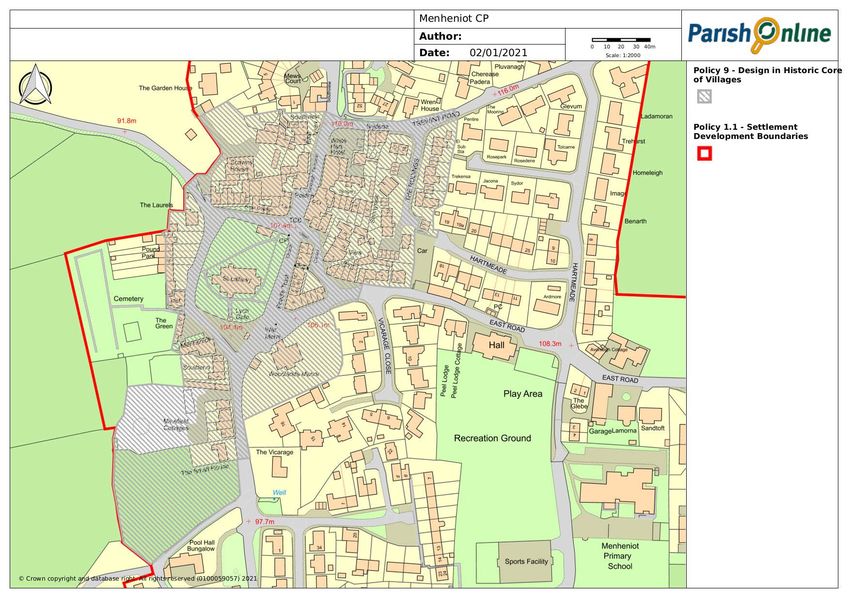
Map 1: The Menheniot NDP Designated Area

2.        M ENHENIOT P ARISH NDP – T HE P REPARATION P ROCESS
GETTING    THIS FAR.

2.1. The preparation of the NDP has been led by the Menheniot Parish NDP Steering Group. This
group comprises Parish Council representatives and members of our community. For details see the
table at Appendix 1.
2.2. The preparation of this NDP has been informed throughout by a comprehensive programme of
consultation and engagement over the last three years. These have included:
    • Two surveys delivered to every household in the Parish
    • A series of ‘drop-in’ sessions when people could talk to members of the Steering group
    • A dedicated website, and posts on the Parish Council Facebook Page and Twitter.
2.3 The NDP has been prepared with the priorities suggested by the local community uppermost.
2.4 Residents were invited to submit their views on the draft NDP During the 6-week period when
the Plan was open for comments in early 2020,
2.5 The feedback received on the Consultation Draft Neighbourhood Development Plan will be
carefully considered. Changes have been incorporated to take account of the feedback. It is now
being formally submitted to Cornwall Council, which is the local planning authority. The
Neighbourhood Plan will then begin to influence how future planning applications in the Plan area are
considered.
2.7 Further consultations will be held, and If Cornwall Council assess the Plan as being in compliance
with the laws and regulations governing Neighbourhood Development Plan making, it will arrange for
Menheniot Neighbourhood Development Plan - Submission Draft – January 2021                           6
the Plan to be assessed by an Independent Examiner. The Independent Examiner will then
                       recommend whether the Plan can go to a community referendum. At the referendum, all registered
                       electors in Menheniot will be entitled to vote for or against the Plan.
                       2.8 If the Neighbourhood Development Plan is supported in the referendum, Cornwall Council will
                       formally adopt the Plan after which it must be considered when planning decision are made by
                       Cornwall Council, Planning Inspectors, and the Secretary of State.

      Creating the Plan                        Community Engagement                            Approving the Plan
       Designation of Menheniot                          Initial Community                        Menheniot NDP becomes
         Neighbourhood Area                                 Consultation                             part of statutory
                                                                                                    Development Plan

          Form Steering Group                         Community Membership
                                                        of Steering Group
                                                                                                     Plan is ‘Made’ in law

        Initial scoping of themes
                                                         Initial Community
                                                            Engagement
                                                                                                        Referendum
        Identify issues and aims

                                                                                                        Modifications
        Develop evidence base
                                                      Workshops & continuing
       Develop vision, objectives                     Community Engagement
         policies & proposals
                                                                                                  Independent Examination

        Publish Neighbourhood                         Statutory Consultation
                 Plan                                       (6 weeks)
                                                                                                    Statutory Consultation
                                                                                                          (6 weeks)

                                                                                                      We Are Here!
                                                     Revise Neighbourhood
                                                         Plan in light of                         Submit to Cornwall Council
                                                     consultation response

Figure 1: The NDP Process                                                                                                      1

                       3.           NDP S USTAINABILITY A PPRAISAL
                       3.1. In order to ensure that the plan considers environmental, social and economic issues, the
                       Menheniot Parish NDP Steering Group carried out a light touch ‘NDP Sustainability Appraisal (SA)
                       Checklist’. The NDP SA considered the Menheniot Parish NDP Vision, Objectives and Policies against a
                       SA Framework, in order to consider how these aspects, perform against 19 key sustainability
                       objectives, these being:

                       1. Climatic Factors                                     11. Design
                       2. Waste                                                12. Social Inclusion
                       3. Minerals and Geo-diversity                           13. Crime and Anti-social behaviour
                       4. Soil                                                 14. Housing
                       5. Air                                                  15. Health, Sport and Recreation
                       6. Water                                                16. Economic Development
                       7. Biodiversity                                         17. Education and Skills
                       8. Landscape                                            18. Transport and Accessibility
                       9. Maritime                                             19. Energy
                       10. Historic Environment

                       Menheniot Neighbourhood Development Plan - Submission Draft – January 2021                                  7
3.2. The Sustainability Appraisal Checklist presented a valuable opportunity to identify chances to
mitigate against any potential negative impacts and to enhance positive outcomes for Menheniot
Parish. The Sustainability Appraisal Checklist document can be found alongside other supporting
information at http://menheniotparishcouncil.co.uk/documents/

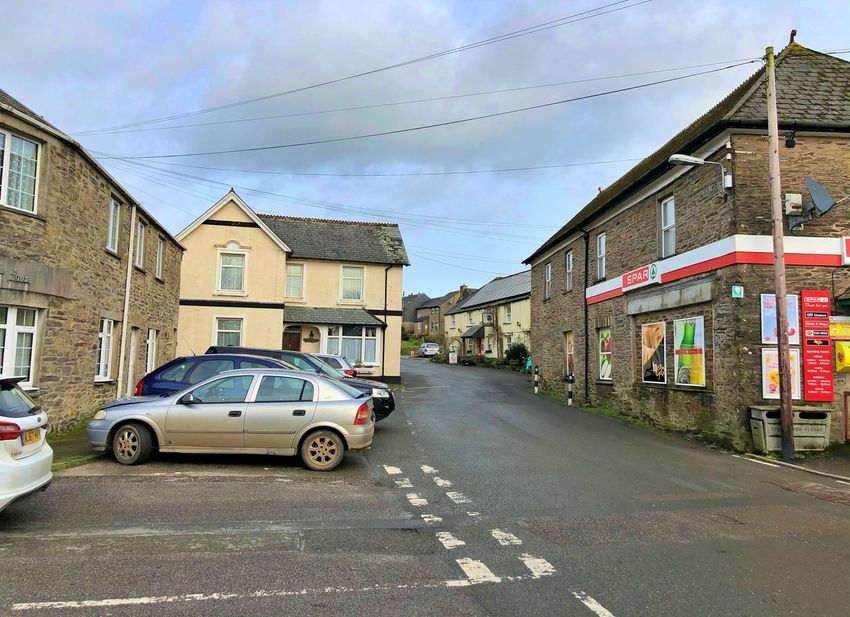
Photo 1: Menheniot Village Green, Church Approach and Bus Stop. An important community space
within the historic ‘Church Town’ of Menheniot.

Photo 2: Pengover Green.

Menheniot Neighbourhood Development Plan - Submission Draft – January 2021                            8
PART TWO: OVERVIEW OF ISSUES
AND THEIR IMPLICATIONS FOR THE
NDP
      4.        E VIDENCE B ASE
      4.1.     Menheniot Parish NDP is supported by an evidence base which justifies the proposals and
      policies within the Plan. The evidence base comprises the National Planning Policy Framework and
      other national or regional documents related to it, the Cornwall Local Plan, statistical data about the
      area and its community, and the aspirations expressed by the community though engagement in the
      preparation of the Neighbourhood Development Plan. This evidence has been analysed carefully and
      drawn upon behind the policies in the draft neighbourhood plan.

      4.2.  The evidence base comprises various documents which are available on the NDP website at
      www.menheniotparishcouncil.co.uk.

      4.3 The following paragraphs draws out the key issues, implications and conclusions arising from the
      evidence base, upon which the NDP is based.

      NATIONAL PLANNING POLICY FRAMEWORK                AND   CORNWALL LOCAL PLAN.
      4.5 As noted earlier, the Menheniot NDP must be in conformity with the National Planning policy
      Framework (NPPF) and the Cornwall Local Plan (CLP). These establish that the NDP must deliver
      ‘sustainable development’
      Sustainable Development
      The objective of sustainable development can be summarised as ‘meeting the needs of the present
      without compromising the ability of future generations to meet their own needs’ (Resolution 42/187
      of the United Nations General Assembly.
      4.6 National Planning Policy Framework 2019: At the heart of the NPPF is the ‘presumption in favour
      of sustainable development’ identifying three interdependent roles – economic, social and
      environmental – ‘which should be a golden thread running through both plan-making and decision-
      taking’. This means that planning strategies such as our Neighbourhood Development Plan must help
      to deliver sustainable development. This means taking a very careful approach so that we can meet
      our present day needs while not compromising the needs of future generations. The NPPF sets out
      sustainable development objectives to which all planning must respond (see Figure 2 below).

      Para 13 of the NPPF says that ‘…Neighbourhood plans should support the delivery of strategic policies
      contained in local plans or spatial development strategies; and should shape and direct development
      that is outside of these strategic policies’.

      Para 29 of the NPPF says that ‘Neighbourhood planning gives communities the power to develop a
      shared vision for their area’ and can ‘ can shape, direct and help to deliver sustainable development,
      by influencing local planning decisions as part of the statutory development plan.’ However it is very
      clear that ‘Neighbourhood plans should not promote less development than set out in the strategic
      policies for the area, or undermine those strategic policies’. Neighbourhood plans must be in general
      conformity with the strategic policies contained in any development plan that covers their area.

      4.7 Cornwall Local Plan. The strategic policies covering the Menheniot Parish are contained in the
      Cornwall Local Plan (CLP). Enabling sustainable development is also the main purpose of the Local

      Menheniot Neighbourhood Development Plan - Submission Draft – January 2021                                9
Plan which aims to ‘Achieve a leading position in sustainable living’…. through ‘a balance of decisions
around economic, social and environmental issues’. The Cornwall Local Plan Strategic Policies
document interprets the NPPF at a county-wide strategic level, and so is the most important part of
the town and country planning context for the Menheniot Neighbourhood Development Plan. As well
as a range of general strategic policies it includes specific objectives relating to the Liskeard & Looe
Community Network Area (see Figure 2 below).
FIGURE 2: SUSTAINABILITY PRINCIPLES SET OUT IN THE
NPPF (2019) AND CORNWALL LOCAL PLAN (2016)
NPPF 2019
Economic objective: to help build a strong, responsive and competitive economy
Social objective: to support strong, vibrant and healthy communities
Environmental objective: to contribute to protecting and enhancing our natural,
built and historic environment
• Delivering a sufficient supply of homes
• Building a strong competitive economy
• Ensuring the vitality of town centres
• Promoting healthy and safe communities
• Promoting sustainable transport
• Supporting high quality communications
• Making effective use of land
• Achieving well-designed places
• Meeting the challenge of climate change, flooding and
coastal change
• Conserving and enhancing the natural environment
• Conserving and enhancing the historic environment
Cornwall Local Plan 2016
Objective 1 – Economy and Jobs - Deliver economic growth / employment, providing much
needed jobs to counterbalance current and future housing development in and on the edge of
Liskeard.
Objective 2 – Sustainable Development - Improve connectivity within and on the edge of
Liskeard to ensure the town functions effectively as a major hub and service centre for the
network area; including enhanced public transport provision.
Objective 3 – Liskeard as a Service Centre - Strengthen Liskeard’s role as a service centre and
improve town centre viability through regeneration schemes.
Objective 4 – Housing - Balance the housing stock to provide a range of accommodation,
particularly for open market family homes and intermediate affordable housing in Liskeard.
Objective 5 – Leisure Facilities- Improve and maintain the provision of recreational, cultural and
leisure services and facilities in Liskeard with particular focus on delivering sports pitches.
The Local Plan goes on to say that ‘as the main settlement in the CNA, Liskeard will be a focus for
growth’ and as it can ‘support more growth than other smaller settlements in the remainder of
the CNA’ it will be ‘required to accommodate the majority of those (new) dwellings’. Co-
ordination will be needed amongst the remaining parishes within the CNA to ensure that housing
needs are met. The implication of this is that less growth will occur in Menheniot Parish in the
future than has been experienced in the past.
Menheniot Neighbourhood Development Plan - Submission Draft – January 2021 10PHYSICAL, FACTUAL AND STATISTICAL BACKGROUND 4.8 Menheniot Parish is located on the South East Cornwall plateau, just south of the higher land of Bodmin Moor. The plateau is split into two south-east running ridges by the Seaton River valley which are enclosed by the Tiddy valley to the east and the East Looe River valley to the west, giving the Parish its distinctive mix of high, open fields mostly in arable use, with a scattering of landmark trees dotted around the Cornish hedges and hedgerows, and deep river valleys hosting small patches of deciduous woodlands, some of which are Ancient. The remains of 19th century lead mining provide some distinctive landmarks, as does the classic GWR railway viaduct at Clicker. To the north and south are Areas of Great Landscape Value. Dotted across this landscape are many heritage features, including prehistoric and mediaeval settlement and field patterns, listed buildings of historic interest and the remains of mining and other earlier industries. There are also County Wildlife Sites and Sites of Special Scientific Interest which include important biodiversity and habitat. Photo 3: 3D OS Image showing the SE Cornwall Plateau and the river valleys crossing Menheniot Parish. 4.9 The main village, after which the Parish is named, lies atop the plateau. The four smaller settlements of Merrymeet, Pengover Green, Lower Clicker and Doddycross are similarly placed, each separated by wide tracts of arable land, linked by narrow roads with few passing places. Only Merrymeet is located on a main road, the A390 from Liskeard to Callington. Menheniot has a school, church, two community halls, a shop and sports club, play area, allotments and a public car park. Of the other settlements only Merrymeet has a church, and a playspace. 4.10 The population of the area in the mid 1800s peaked at 2420 at the height of the lead mining boom. When mining declined so did the population, reducing to 1191 by 1891, after which it declined slowly to 1095 in 1961. After the opening of the Tamar Road Bridge in that year, the population began to grow consistently year on year, reaching 1762 by 2017. This rapid expansion took place through the building of estates around the historic core of Menheniot village in the 1970s and 1980s. There are now currently around 736 households. 4.11 The resident population of Menheniot Parish is changing in its demographic make-up. Between 2001 and 2017 the proportion of pre-school children increased by 40.3%, but the proportion of school Menheniot Neighbourhood Development Plan - Submission Draft – January 2021 11
age children fell by 8%, along with a fall in the family and developing career age group (25 to 39) of
13.9%. However the proportion of residents in the established careers and early retiree category ( 50
to 65) grew by 15.6%, and the retired group (65+) by 58%. By 2017 some 57% of the Parish’s
population were over 50 years old.

4.12 Car & van ownership in the Parish is very high compared to elsewhere, implying that most
people living here drive to work, shops and services. Total travel-to-work mileage is nearly 8,000 miles
per day. There are bus services linking the villages with Liskeard, Plymouth and beyond, but they are
infrequent. Access roads are narrow and have poor geometry. Several parts of the villages have
restricted parking and turning areas.

4.13 The Census tells us that:
• about 770 people (61.9% of all residents 16 to 74) were in employment
• about 60% of these worked 2km or more from their homes
•    about 125, or 22% worked from home, which is an unusually high proportion.
•    about 6% worked outside the home but within 2km, suggesting only about 50 jobs in the Parish
•    373 people held managerial, professional and administrative posts (46.6% of residents in
     employment compared to 52.6% nationally).
•    152 (19.0%) held skilled trades, higher than the national proportion (11.4%),
•    135 (16.9%) in caring, and customer service employment (compared to 17.7% in England),
•    89 (11.1% compared to 11.1% in England) in elementary occupations.

4.14 In short, many of our community work outside the Parish, mainly in Liskeard, nearby towns and
Plymouth, and there are few local jobs available. Encouraging local business development might
provide local jobs, reduce the need to travel, and increase prosperity.

COMMUNITY ENGAGEMENT
4.15 The outcomes of the various consultations have highlighted the key priorities of:
• Protecting the peace and tranquillity of the area
• Protecting and enhancing the Environment, Landscape and Heritage
•    Supporting and developing Community Facilities, Leisure and Lifestyle
•    Tackling traffic and parking conflict
•    Meeting housing needs
•    Supporting the local economy
•    Supporting renewable energy that is environmentally sound

4.16 The key message distilled from the engagement process is that local people want the NDP to
focus on meeting local needs whilst preserving the essential tranquillity of the area, its character and
countryside.

KEY ISSUES   AND IMPLICATIONS

4.17 Drawing from the evidence base, Figure 3 describes the most important issue and the
implications of them for the NDP.

 Figure 3: Key Issues and Implications from the evidence base
 Theme                      Key Issues and what they mean for our Neighbourhood
                            Development Plan
 Our Community              Quickly ageing population but growing cohort of young people.
                            Implication for the Neighbourhood Development Plan
                            NDP should support for the provision of services, facilities and
                            amenities to meet the needs of an ageing population, whilst
                            ensuring that the housing, service, employment and open space
                            needs of families and young people continue to be supported.
 Community                   Good local facilities, but many services accessed from Liskeard
 Facilities, Leisure and     Growing cohort of young people. Small open areas of local
 Lifestyle                   significance are of particular importance to the local community.
Menheniot Neighbourhood Development Plan - Submission Draft – January 2021                            12
Implication for the Neighbourhood Development Plan
NDP should protect community facilities and social infrastructure,
protect local green spaces and support provision of new leisure
facilities.
Environment, Landscape Big open landscape with landmark trees, incised by deep and
and Heritage attractive river valleys. People are concerned that the peace and
tranquillity of Menheniot Parish is under threat, and that more
countryside will be lost to development. The character of the
villages is being eroded by designs which do not reflect local
character sufficiently. Abandoned or neglected buildings detract
from the character of the area. There is a need to protect and
improve biodiversity.
Implication for the Neighbourhood Development Plan
NDP should protect the locally valued landscape, establish
settlement development boundaries, protect heritage assets,
promote public realm improvements, give design guidance, address
biodiversity issues on new development, seeking a net gain in
biodiversity.
Roads, Access and Due to the limited public transport availability, most travel by car,
transport leading to parking congestion, road blockages, and safety issues.
Implication for the Neighbourhood Development Plan
NDP should include policy that ensures adequate and additional
private car parking, encourages a sustainable transport hierarchy in
new developments, encourage take up of Broadband connectivity
though new developments to support home working, and support
connectivity with footpaths and quiet lanes.
Meeting Housing Needs About 5 new dwellings are needed to be compliant with the
Cornwall Local Plan, and the Homechoice Housing Need is for 19
affordable dwellings. There is a need for special housing for the
ageing population and persons with a disability. Housing to meet
the needs of specialist staff needed to support local agricultural and
other businesses is required.
Implication for the Neighbourhood Development Plan
NDP should include policies including design criteria, allocate a site
or sites to meet the CLP requirement, address affordable housing
needs, and the needs of the ageing population and persons with a
disability, and those seeking self-build opportunities.
Business and Jobs Most people travel to work outside Parish, and few local jobs exist
which disadvantages some without transport, but there is much
home working and opportunities for tourism development.
Implication for the Neighbourhood Development Plan
NDP should encourage additional workshops to provide more local
employment, and promote working at home, providing the amenity
of residential areas is protected. Green or sustainable tourism
development may provide more jobs without significant
environmental issues.
Climate Change The climate crisis is a fundamental threat to global and local well-
being. Increased travel to services and employment due to rising
population and centralisation may increase local contribution to
‘green-house’ gasses. Heavy and prolonged rainfall is likely to lead
to higher levels of fluvial and run-off flooding and possible ground
instability. Increased temperatures may cause community heat
stress and harm wildlife and habitat. More commercial renewable
energy projects are likely, although community views are against
the provision of wind turbines (53.6%). However, community level
initiatives could help local prosperity were supported (79%).
Implication for the Neighbourhood Development Plan
NDP should include support for renewable energy, for management
of community benefits from renewable energy, support for
community owned renewable energy generation and encourage
new development to be designed to reduce energy use and adapt to
climate change.
Menheniot Neighbourhood Development Plan - Submission Draft – January 2021 13Photo 4: The infrequent bus service from Liskeard towards Plymouth, via villages, using vehicles that are often a problem for other local traffic on the narrow rural lanes. Photo 5: Coldrennick Viaduct, a strong landscape feature in the Seaton valley, and scene of infamous 1897 disaster. Menheniot Neighbourhood Development Plan - Submission Draft – January 2021 14
PART THREE: VISION AND
OBJECTIVES
      5.        M ENHENIOT P ARISH NDP: T HE V ISION
      5.1.     Every plan has an aim and for the Menheniot Parish NDP the aim is for the policies of the
      NDP to help achieve a ‘Vision’ for Menheniot Parish by 2030. The Vision for the Menheniot Parish is as
      follows:

       Our Vision for 2030 and beyond…

             ‘Our Vision for 2030 and beyond is that Menheniot Parish will be a well-designed, well-
             connected parish that:
              ü has a strong sense of local identity and is a pleasant and tranquil place to live, work
                  and visit;
              ü meets the needs and aspirations of local people, offering a choice of homes, jobs
                  and community facilities;
              ü tackles the causes of climate change and is resilient to them;
              ü supports a busy, active and dynamic community with a strong community spirit
                  that is valued by residents;
              ü celebrates, enhances and protects the special qualities of its environment, heritage
                  and landscape.

      5.2.     In order to achieve this Vision a number of ‘Objectives’ are set and then, in turn, in order to
      achieve these Objectives, a number of Policies are set out. It is these policies that will have to be
      taken into consideration when Planning Officers and Councillors determine future Planning
      Applications, thereby helping to turn the aspirations of the NDP into a reality. The way the Vision,
      Objectives and Policies link together is illustrated in Figure 4, with a detailed view given in Figure 5.

                                                         THE VISION FOR
                                                        MENHENIOT PARISH

                          OBJECTIVES                         OBJECTIVES                    OBJECTIVES

                 PLANNING               PLANNING              PLANNING             PLANNING      PLANNING
                  POLICIES               POLICIES              POLICIES             POLICIES      POLICIES

                       INFLUENCING LOCAL PLANNING DECISIONS AS PART OF THE STATUTORY
                                            DEVELOPMENT PLAN

      F IGURE 4: V ISION - O BJECTIVES - P OLICY G OLDEN T HREAD

      Menheniot Neighbourhood Development Plan - Submission Draft – January 2021                              15
6. M ENHENIOT P ARISH NDP: O BJECTIVES
6.1. The Objectives of the Menheniot Parish NDP are as follows:
1. Meeting Housing Needs
a. Provide for a limited amount of new housing to meet local needs and demand, in a
mix which includes good quality locally distinctive homes for elderly villagers, young
singles, couples and families needing their first home.
b. Contribute to the housing and employment needs of the Looe-Liskeard Community
Network Area.
c. Ensure that housing is available to meet the needs of specialist staff needed to
support local agricultural and other rural businesses.
2. Environment. Landscape and Heritage
a. Protect the peaceful and tranquil quality of the Parish and its special architectural
and historic character.
b. Secure high quality in the design of all development.
c. Reduce environmental impacts, increase biodiversity, and protect wildlife corridors.
d. Protect and enhance the landscape character and setting for the Parish.
3. Community Facilities, Leisure and Lifestyle
a. Support the provision of high quality and accessible community facilities to meet
the changing needs of all parts of the local community.
4. Roads, Access and Transport
a. Improve movement around Menheniot Parish, reduce traffic and parking conflict,
and enhance the pedestrian experience.
5. Business & Jobs
a. Support, strengthen and diversify the wider local economy and local businesses,
particularly in agriculture, tourism, leisure and light industry.
b. Support local enterprises to have access to up-to-date internet services.
6. Tackling Climate Change
a. Support renewable energy production at a scale that is environmentally sound
b. Encourage on site provision of renewable energy and use of low energy and low
carbon technologies in new development.
c. Support community owned renewable energy generation.
d. Support natural solutions to climate change.
e. Support low carbon design and reduce the need to travel.
Menheniot Neighbourhood Development Plan - Submission Draft – January 2021 16Evidence Base
NPFF – Cornwall Local Plan – Community Engagement – Social/Economic & Environmental Data etc.
Vision for 2030 and beyond
‘Menheniot Parish will be a well-designed, well-connected parish that: has a strong sense of local identity and is a pleasant and tranquil place to live, work and visit; meets the needs and
aspirations of local people, offering a choice of homes, jobs and community facilities; tackles the causes of climate change and is resilient to them; supports a busy, active and dynamic
community with a strong community spirit that is valued by residents; celebrates enhances and protects the special qualities its environment, heritage and landscape’
1. Meeting Housing Needs 2.Environment, Landscape & 3. Community Facilities, Leisure 4. Roads Access & Transport
Heritage and Lifestyle
Objective 1a Objective 4a
Meet local needs and demand Improve movement around Menheniot Parish,
Objective 2a Objective 3a
reduce traffic and parking conflict, and enhance
Protect the peaceful and tranquil quality of the Support the provision of high quality and
Objective 1b the pedestrian experience
Parish and its special architectural and historic accessible community facilities to meet the
Contribute to the needs of Looe-Liskeard CNA character changing needs of all parts of the local
community. Policy 17 – Transport & Communication
Objective C1c
Objective 2b
Ensure housing available to meet needs of Policy 18 – Footpaths & Bridleways
Secure high quality in the design of all Policy 14 – Community Facilities and ‘social
agriculture and rural businesses
development Infrastructure’
Policy 1 – Settlement Development Boundaries 6. Tackling Climate Change
Objective 2c Policy 15 – Facilities for Young people
Reduce environmental impacts, increase
Policy 2 – Infill Housing biodiversity, protect wildlife corridors, and tackle Objective 6a:
Policy 16 – Local Green Spaces Support renewable energy production whilst
the causes and effects of climate change;
Policy 3A – New housing to meet needs of ensuring it is environmentally sound
Menheniot Parish Objective 2d
Protect and enhance the landscape character 5. Business & Jobs Objective 6b
Policy 3B – Meeting the needs of older residents and setting for the Parish Encourage on site provision of renewable energy
Objective 5a and use of low energy and low carbon
Policy 4 – Mixed use development site to meet Project 1 - Public realm enhancements Support, strengthen and diversify the wider local technologies, in new development.
the needs of Looe-Liskeard CNA economy and local businesses, particularly in
Policy 6 – Demolition & reconstruction or agriculture, tourism, leisure and light industry Objective 6c
Policy 5 – Exception Sites for affordable housing conversion of abandoned/neglected buildings Support community owned renewable energy
Objective 5b generation
Policy 7 – Landscape & Heritage Views & Vistas Support local enterprises to have access to up-to-
Menheniot Neighbourhood Development Plan - Submission Draft – January 2021
date internet services;
Objective 6d
Policy 8 - Local Landscape Value Area
F IGURE 5: D ETAILED VIEW OF THE ‘ GOLDEN THREAD ’ FROM EVIDENCE TO POLICY .
Support natural solutions to climate change
Policy 19 – Sustainable Tourism
Policy 9 – Design in the Historic Core of villages
Objective 6e
Policy 20 – Emp in Residential Areas Support low carbon design and reduce the need
Policy 10 – Dark Skies to travel.
Policy 21 – Small Rural workshops
Policy 11 – Trees, Cornish Hedges and Policy 23 – Renewable Energy production
Hedgerows Policy 22 – Rural Workspace Centre
Project 2 – Community Sustainable Energy
Policy 12 – Habitat & Biodiversity
Policy 24 – Energy efficient & Small Carbon
Policy 13 – Design of New Development Footprint Design
Policies 11 -13, 17, 18 and 19.
17PART FOUR: MENHENIOT NDP
PLANNING POLICIES
7. P OLICIES AND P ROPOSALS
H OUSING N EEDS .
7.1. Cornwall’s Local Plan apportions 1500 dwellings to be delivered in the parishes that make up the
rural area of Liskeard-Looe CNA. Figures supplied by Cornwall Council are presented in Figure 4 below
and show that as a minimum Menheniot Parish needs to deliver around 5 new dwellings between
2018 and 2030, to be considered in general conformity with the Local Plan (see figure 6). The NDP
must also not frustrate CLP policies intended to address the full requirement for affordable homes
that is evidenced in the Cornwall Housing Register (HomeChoice), and also support an appropriate
level of market demand.
Figure 6: Minimum NDP housing target to be in conformity with Cornwall’s Local Plan.
(a) Local Plan Housing (b) CNA (c) CNA Completions (d) Remainder of
Baseline Target Commitments April April 2010 – Local Plan Housing
2010- March 2018 March 2018 Figure
1500 685 745 70
(e) Adjusted Pro Rata (f) Parish (g) Parish (h) Parish baseline
rate for Menheniot Commitments April Completions figure (pro rata
Parish area* 2010 – March 2018 April 2010 – of CNA remainder)
March 2018**
7% 14 47 5***
*This is the pro-rata proportion of houses in the CNA, derived from the 2011 Census
** Since March 2018 to October 2019 a total of 5 further completions was recorded on the CC mapping
system for local councils.
*** The recent grant of Planning Permission on land east of the Allotments at Menheniot has further
reduced the Parish Baseline figure
7.2 Working from this baseline Local Plan housing target, Cornwall Council have advised that it’s
necessary to consider if this is sufficient or if the Menheniot Parish community would benefit from
planning for a greater number of homes based on local circumstances. Factors to consider include:
a) Results of the NDP survey 2017/2018
b) Numbers on the current Home choice register
c) Feedback from local estate agents
d) Whether additional houses (and population) would help sustain local services and facilities
e) Whether developer investment could have benefits in terms of other infrastructure provision.
7.3 The NDP Survey 2017/2018 revealed that 102 persons in current households would like to live
independently in the Parish if suitable accommodation was available to them. [This is not an
expression of the need for affordable housing, but of the general need generated by the existing
population]. 64 residents said they would want to move within the Parish in the next few years.
Residents foresaw a need for special housing for the elderly, so they do not have to move away in old
age more family homes and affordable rented accommodation. Homes for single people and disability
adapted homes were also supported. In terms of home types sought, most preferred bungalows,
(61.5%), detached properties (51%), and houses (30%).
Menheniot Neighbourhood Development Plan - Submission Draft – January 2021 187.4 Numbers on the current Home choice register. The most recent HomeChoice Register data
(October 2019 at time of writing) indicates the following needs for Menheniot Parish (Figure 7). In
addition, Help to Buy SW had 1 household on its register.
FIGURE 7: HOMECHOICE HOUSING NEED OCTOBER 2019.
1 bed 2 bed 3 bed 4 bed 5 bed 6 bed TOTAL
A 2 0 0 0 0 0 2
B 0 0 1 0 0 0 1
C 2 0 1 0 0 0 3
D 0 1 0 0 0 0 1
E 10 2 0 0 0 0 12
TOTAL 14 3 2 0 0 0 19
7.5 This indicates a total need for 19 affordable homes, of which 74% should be 1 bed, 16% 2-bed
and 10% 3 bed properties. It should be noted however that this is a very volatile figure and may
change rapidly.
7.6 Feedback from local estate agents. This was very limited. However, it appears that main demand
is from families and couples, looking for 2 bed to 4 bed properties in the £200,000 to £300,000 price
range. Detached and semi-detached houses and bungalows are sought, with the main reasons for
wanting to buy in the Parish being first time buyers, downsizing, retirement, the quality of the local
school, and work relocation. People sought properties with gardens, off-street parking, close to public
transport, the village shop and school, and family members. This external demand has an impact on
local affordability, raising local market prices well above that achievable by local people with local
jobs.
7. 7 Private renters, comprising families and couples and single people, many from within the Parish,
sought 2 to 4-bedroom properties for £600 to £700 per month rental. Temporary accommodation,
relocation, downsizing and school quality were given as reasons for wanting to move.
7.8 Another indicator of market demand is the take up of permissions for new housing through infill,
barn conversions, etc, (excluding affordable housing the scheme at Park Keres which is for social
housing) which delivered 10 open market units between 2012 and 2019. This suggests a demand of
around 2 units per year, or 22 from 2019 to 2030.
7.9 We also know that the Menheniot Parish is affected by the housing market of nearby Liskeard,
where there is a housing stock of some 4,500 (compare to about 400 in Menheniot Parish) and a
further 1250 are in the pipeline (as at 4/16), so it can be anticipated that demand in the villages and
rural area of the Parish will be restricted to those seeking a quieter, more isolated and rural location.
7.10 Would additional houses (and population) help sustain local services and facilities? There is
no doubt that even a few additional homes, which are occupied by new residents (rather than
existing) will help support existing local services by generating more custom/demand within their
‘walk-in’ catchment. Additional housing in appropriate locations could meet the needs of local
agricultural and other industries for specialist staff.
7.11 Would developer investment have benefits in terms of other infrastructure provision? In
order to support the introduction of additional local services, a substantial ‘critical mass’ of new
development is required to provide the custom/demand necessary to support new facilities. Typically,
in SE Cornwall developments of 300 or more houses have been needed to justify inclusion of a shop
or community building, all where an existing larger catchment is already available support its income.
In the case of Menheniot the presence of Liskeard in close proximity will abstract most new custom,
particularly for weekly shopping and higher-level services (eg medical), many or which operate at a
very wide catchment.
Menheniot Neighbourhood Development Plan - Submission Draft – January 2021 197.12 However, there is always the possibility that a developer may be willing to assist directly with a
particular local social or leisure facility where it is possible that the new population occupying a
development could lead to extra demands. Examples elsewhere in Cornwall have included where land
has been made available for a multi-purpose Band Hall, and contributions made to a sports facility.
Similarly, a development could directly tackle a small local infrastructure issue, which may be
necessary to allow the development, or may be purely a ‘planning gain’.
7.13 Conversely, new development may bring negative impacts such as character change, pressure on
infrastructure, traffic generation etc, all aspects which if after mitigation are considered significant
enough to warrant refusal of planning permission, should take precedence over any perceived
planning benefits.
7.14 Conclusions. To sum up from Paras 7.3 to 7.13 above: the baseline housing requirement for the
NDP to deliver to be in compliance with the Cornwall Local Plan is below 5 homes. However, over 100
survey respondents indicated a wish to live independently in the Parish, and 65% foresaw a need for
special housing for the elderly, whilst the HomeChoice register indicated a need for 319 homes. There
is evidence of continuing market demand and inward migration pressure on the housing stock which
drives up local house prices. New development would support existing facilities, but the amount of
development needed to fund and support the income of new facilities would be excessive.
7.15 In considering policy options to address these housing needs the Steering group has taken into
account the strong community emphasis expressed in the scoping survey on preserving the peace and
tranquillity of the area and tackling traffic and parking conflict.
7.16 Menheniot is also the host for some of the needs of nearby Liskeard and the Liskeard – Looe
Community Network Area. This was originally expressed through a planning permission at Tencreek
for a mixed-use urban extension. That planning permission expired on 28 September 2019.
In view of these It is proposed that housing strategy of the NDP should be:
‘To provide for a limited amount of new housing to meet local needs and demand, in a mix which
includes good quality locally distinctive homes for elderly villagers, young singles, couples and
families needing their first home, located so as to maximise the benefit for our village and hamlet
communities and in harmony with the natural environment and the character of the built
environment’.
‘To contribute to meeting the housing requirement for the Liskeard – Looe Community Network.’
‘To ensure that housing is available to meet the needs of specialist staff needed to support local
agricultural and other businesses’.
7.16 In line with this, the housing planning policy in the Menheniot NDP should seek to:
1. Meet the outstanding housing target to comply with CLP requirements by specific small-
scale site allocations (subject to CLP Policy 8 so including 25% affordable to rent/buy).
2. Allow for a limited amount of market demand within the allocations.
3. Recognise that infill may continue and set criteria for planning applications that respond
to issues raised in community engagement (congestion, parking etc)
4. Identify a site for specific provision in Menheniot Village to meet the need for special
housing for the elderly, so they do not have to move away from the Parish in old age.
5. In order to contribute to the housing supply for Liskeard and the Liskeard-Looe the
Menheniot NDP consider a mixed use allocation in the area of the parish adjoining
Liskeard.
Menheniot Neighbourhood Development Plan - Submission Draft – January 2021 206. Other than through the specific allocations proposed above, rely on ‘exceptional
permissions’ through CLP Policy 9 to deliver most affordable housing, subject to criteria
regarding scale and mix.
7.18 In total therefore some 365 dwellings are proposed through the NDP (See Figure 8.)
Figure 8: Delivering the Housing Requirement
Policy Reference No of Homes
Policy 2: Residential Infill Development and Conversions About 10
Policy 3A: Housing Allocation to meet the needs of Menheniot Parish About 20
Policy 3B: Housing to meet the needs of older residents of Menheniot About 30
Parish
Policy 4: Housing to meet the needs of the Looe-Liskeard CNA About 275*
Policy 5: Exception Sites for Affordable Housing No more than 30
Total to meet Menheniot Parish needs About 90
Total to meet Liskeard and Looe CNA needs About 275
Overall Total About 365
*Plus extra care housing or other forms of accommodation for older persons.
P OLI CY 1 - S ETTLEMENT D EVELOPMENT B OUNDARI ES
7.19 The Issues/Justification. The Caradon Local Plan (December 1999) drew ‘village development
limits’ around the villages in the Parish, with the intention of delineating where various policies
applied, meeting local growth needs whilst preserving the valued green spaces between the
settlements and preventing ribbon development and coalescence. These worked effectively and were
well supported locally and in most planning decisions, being renewed in the August 2007 First
alteration of that Local Plan. However, they ceased to apply with the adoption of the Cornwall Local
Plan in 2016. On the basis of the community feedback calling for slow but steady growth, and the
need to facilitate the application of CLP Policy 9 (Rural Exception Sites), the intention is to reintroduce
the village development limits. To ensure that the precise placing of the boundary is still relevant, in
the light of developments which have occurred since their definition, and the requirements of CLP
Policy 3 and Para 2.32, they have been reviewed in the Settlement Edge and Site Assessment carried
out during the spring of 2017 and summer 2018, reviewed in 2020.
7.20 The proposed Development Boundary set adjoining Liskeard is to accommodate the allocation of
an urban extension of the town to meet the housing, employment and social needs of the Liskeard
Looe Community Network Area. The urban extension is allocated for mixed uses in NDP Policy 4
following, subject to a range of criteria to ensure that a well-designed new neighbourhood is provided
for Liskeard.
7.21 It is important to ensure that this extension does not, through rural exception site housing
development, encourage ribbon development and encroachment into the important landscape area
to the south and east of Liskeard. There is also a need to be consistent with the Liskeard NDP which
does not support rural exceptions on the edge of its development boundary. Therefore, rural
exception housing will not be supported alongside the urban extension boundary, in accordance with
CLP Policy 3.
7.22 Intention. The intention of this policy is to enable controlled growth to meet the needs of
Menheniot Parish and the Liskeard Looe Community Network Area, whilst preserving village life and
the character of the parish, protecting the landscape and the natural and historic environment, whilst
facilitating, where appropriate, the operation of CLP Policy 9 for rural exception housing.
7.23 In the ‘open countryside’ beyond the development boundaries, development will be strictly
controlled by CLP Policy 7 and will be limited to dwellings for rural workers, employment
development in rural areas, buildings for agriculture and forestry, replacement dwellings, house
extensions, replacement buildings and renewable energy projects and development specifically
permitted by other Menheniot NDP policies. Rural exception residential development under CLP
Policy 9 will be permitted on the edge of the village Development Boundaries, but not on the edge of
the Liskeard Development Boundary (see Para 8.3 above).
Menheniot Neighbourhood Development Plan - Submission Draft – January 2021 21You can also read


