MILLING MATTERS Autumn 2018 - Sugar Research Australia
←
→
Page content transcription
If your browser does not render page correctly, please read the page content below
OUR BI-ANNUAL
MILLING MAGAZINE

MILLING MATTERS
Autumn 2018
Contents
3      ersistence pays off for sugar
      P
      bursary graduates

4     Maximising industry value through
      optimised harvesting practices

6      arvesting demonstration trials:
      H
      what it means at the mill

9      ringing milling research from
      B
      the lab to the mill

10 R
    esearch looks to improve
   mill rolls

11 O
    verseas experience to help
   improve factory efficiency

12 B
    oiler simulator training to help
   avoid costly mistakes

13 R
    educing costs through improving
   boiler maintenance efficiency

14 F
    UTURES FORUM: Forging a bright
   future for Australian sugarcane

15 Milling research investment

ISSN 2203-1111 (Print) ISSN 2203-112X (Online) ©
Copyright 2018 by Sugar Research Australia Limited. All
rights reserved. No part of Milling Matters (this publication),
may be reproduced, stored in a retrieval system, or
transmitted in any form or by any means, electronic,
mechanical, photocopying, recording, or otherwise, without
the prior permission of Sugar Research Australia Limited.
Sugar Research Australia Limited acknowledges and thanks
its funding providers, including levy payers (sugarcane
growers and millers), the Commonwealth Government, and
the Queensland Government (Department of Agriculture
and Fisheries). Disclaimer: In this disclaimer a reference
to ‘SRA’, ‘we’, ‘us’ or ‘our’ means Sugar Research Australia
Limited and our directors, officers, agents and employees.
Although we do our very best to present information that is
correct and accurate, we make no warranties, guarantees or
representations about the suitability, reliability, currency or
accuracy of the information we present in this publication,
for any purposes. Subject to any terms implied by law and
which cannot be excluded, we accept no responsibility
for any loss, damage, cost or expense incurred by you as
a result of the use of, or reliance on, any materials and
information appearing in this publication. You, the user,
accept sole responsibility and risk associated with the use
and results of the information appearing in this publication,
and you agree that we will not be liable for any loss or
damage whatsoever (including through negligence) arising
out of, or in connection with the use of this publication.
We recommend that you contact our staff before acting
on any information provided in this publication. Warning:
Our tests, inspections and recommendations should not be
relied on without further, independent inquiries. They may
not be accurate, complete or applicable for your particular
needs for many reasons, including (for example) SRA being
unaware of other matters relevant to individual crops, the
analysis of unrepresentative samples or the influence of
environmental, managerial or other factors on production.

(Cover Page) MSF Sugar’s Allan Cross and
Wayne Reys are adopting the outcomes
of harvesting efficiency research.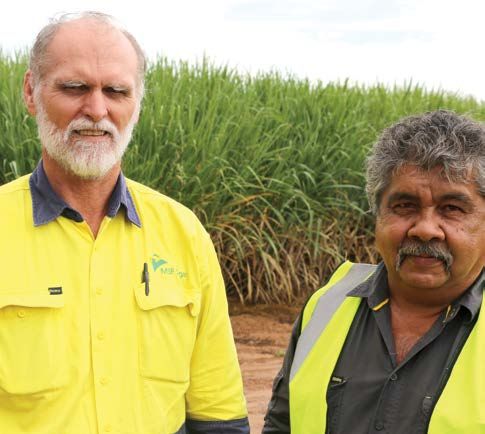
Persistence pays off
for sugar bursary
graduates

A special bursary award has led           projects across MSF Sugar mills and       “I did have that experience from
to two engineering graduates              worked in the laboratory to get a         working here previously, understood
scoring jobs at the MSF Sugar             good understanding of the chemical        the industry, and had been awarded
Maryborough Mill.                         analysis process and what results         the bursary as well, so they saw I was
                                          are required.                             capable at that next level rather than
Local CQUniversity Australia                                                        just on the tools.”
mechanical engineering graduate           “I went to South Johnstone and
Daniel Nicholson, and University of       developed a lot of piping and             Daniel said that engineers in the
Queensland chemical engineering           instrumentation diagrams of their         sugar processing industry use a
graduate Georgia Nilon received a         pan stage, boilers, juice clarification   whole range of skills on a variety
special bursary award in 2015 after       and heating stations for a potential      of projects.
applying for the Sugar Research           expansion project,” Georgia said.
                                                                                    “There’s no single project that’s the
Institute Scholarship program.                                                      same as any other. At the moment,
                                          “Recently I’ve completed a steam
Sugar Research Institute (SRI) receives   balance analysis of Maryborough           I have five projects on the go and no
such a large number of high-quality       Mill looking at our usage of steam        two are alike,” Daniel said.
applications for the SRI scholarship      everywhere, and where we can
                                                                                    Since the prestigious Sugar Research
each year that a special, unlisted        improve our efficiency.”
                                                                                    Institute Scholarship first began
bursary award funded by Sugar             Design engineer Daniel Nicholson          in 2015 it has been awarded to
Research Australia was introduced         never gave up on his goal to return       12 recipients.
to provide four weeks’ paid work          to the MSF Sugar Maryborough
placement for Daniel and Georgia at       Mill where he initially worked as a
MSF Sugar’s Maryborough Mill during       boilermaker apprentice to complete
the 2016 crushing season.                 his transformation as a mechanical
Chemical engineer Georgia Nilon           design engineer.
                                                                                       For more information, visit:
said the bursary allowed her              Daniel explained that, when he               www.sri.org.au/
to develop contacts within the            applied, he didn’t even expect to            sris-sugar-research-institute-
industry and, through persistence         be selected for interview let alone
                                                                                       scholarship/
and confidence, Georgia was               get the job; however, MSF Sugar
offered a job in early 2017 by MSF        valued Daniel’s four years of trade
Maryborough Mill’s general manager,       experience and offered him a new
Stewart Norton.                           role of design engineer.                  (Above) MSF Sugar General Manager
                                                                                    (Maryborough Region), Stewart Norton,
Since her employment Georgia              “MSF Sugar were after someone with        with engineering graduates Daniel Nicholson
has learned a lot from different          four years’ experience,” Daniel said.     and Georgia Nilon.

                                                                                                                                  3
Maximising industry
value through optimised
harvesting practices
BY BRAD PFEFFER

At MSF Sugar’s Tableland Mill, the       As part of that, the pair worked with      According to Operations Manager of
aim is that the trucks never stop.       SRA on demonstration trials in 2017        Tableland Farms, Rik Maatman, the
                                         to assess cane and juice loss, which       2m rows, for example, mean that
With 24 hour harvesting and 12
                                         was then followed with a workshop          the harvester already needs to slow
trucks hauling cane to the mill, but
                                         to drive positive practice change.         down by 1 to 1.5 km/hour compared
no storage of bins at the mill, a
                                                                                    to 1.8m or 1.6m row systems.
truck needs to be at the mill about      They have worked with SRA
every seven minutes to ensure they       to optimise the feedtrains in              “We are currently only cutting young
are pushing through 200 tonnes of        their harvesters, and harvesting            2m crops as we are developing that
cane per hour.                           parameters such as ground speed             system, so it is all good yielding
                                         and fan speed are now run according         cane, and that means that our guys
Any less than that, and milling costs
                                         to recommendations. They are fitting        would rarely ever go over 4km/
increase through inefficiency and
                                         chopper drums that reduce losses            hour,” Rik said.
they are burning valuable bagasse
                                         through an efficient cut. They have
that would otherwise be used for                                                    They also continue to make other
                                         also modified their machinery to
electricity cogeneration.                                                           improvements to the farming
                                         suit 2m row spacings that are being
                                                                                    system to improve harvesting
As with all regions, this means          adopted to improve farm productivity.
                                                                                    efficiency. This includes long and
that there is a huge logistics
                                         An analysis of the optimisation of         straight runs, wide headlands, and
operation in tracking the trucks
                                         the feedtrain alone showed that            having bin pads close to paddocks.
and harvesters with GPS, as well as
                                         optimised machines compared to
scheduling groups in different sub-                                                 “With our farming system, GPS
                                         unoptimised machines were 6.7TCH
districts to keep the cane flowing.                                                  guidance also ensures that we
                                         better under low loss harvester
                                                                                     aren’t damaging the stool and, over
It is a finely tuned operation that is   settings, and 4.6TCH better under
                                                                                     the long term, we hope that the
working well, and, now, MSF Sugar        nominal harvester settings.
                                                                                     gains aren’t just in reducing sugar
is keen to keep it moving forward
                                         “It is the research that continues to       loss, but also potentially growing an
through harvest optimisation.
                                          drive our decisions,” said Allan Cross.    extra ratoon crop,” Wayne Reys said.
Two of the men helping to
                                         “The research has to be done in            The MSF Sugar team said that
coordinate that balancing act are
                                          the field to prove it. Once it’s been     because they grow, harvest, and
Allan Cross (Operations Manager –
                                          proved, we are adopting                   mill the cane, they are in an ideal
South Johnstone Farms) and Wayne
                                          that research.”                           situation to make the most of any
Reys (Tableland Farms Harvesting
                                                                                    changes.
Supervisor). They are part of the        The improvements to the farming
team that oversees harvesting            system across MSF Sugar farms are          The trials showed the clear gains to
contracts that cut 213,000 tonne         also flowing through to positive           be made in reducing cane and sugar
of MSF Sugar’s own cane and about        impacts for harvesting.                    loss, but also showed that this also
132,000 from Tableland growers.                                                     came with increased harvesting and

4      MILLING MATTERS Autumn 2018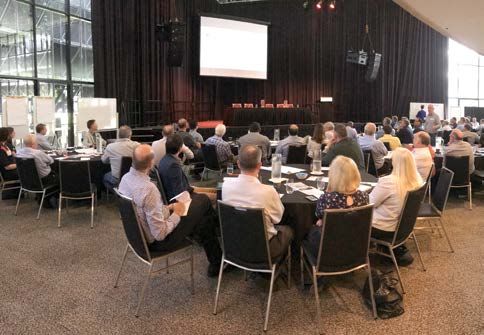
freight costs due to issues such as             “Our rule of thumb is that we were
bin weights and bins per hectare.                saving $3 in cane and it was costing          This work is one element of
                                                 us about $1 in freight, so obviously          a much larger project called
According to last year’s trial, the
                                                 that is a good investment ratio. As           Enhancing the sugar industry
grower revenue net of costs
                                                 we continue to implement harvest              value chain, which is funded by
was $4494 per hectare for the
                                                 optimisation, the next step will be           the Department of Agriculture
recommended treatment, which
                                                 looking at improving the freight,”            and Water Resources and SRA
compared to $4253/ha for the
                                                 Rik said.                                     as part of the Rural R&D for
nominal treatment and $3964/ha
for the aggressive treatment.                                                                  Profit Program. A new round
                                                                                               of demonstration trials across
                                                                                               the industry are about to get
The 2017 trial had four treatments:
                                                                                               underway for 2018.

                                                  GROUND SPEED          SECONDARY
 TREATMENTS                  FAN SPEED (RPM)      (KM/HR)               EXTRACTOR FAN
                                                                                               For more information, contact:
 Low                         600                  3                     Off                    SRA Harvesting Adoption
 Recommended                 750                  4                     On                     Officer, Phil Patane on
                                                                                               ppatane@sugarresearch.com.au
 Nominal
                             750                  6                     On                     or (07) 4776 8202
 (Conventional practice)

 Aggressive                  950                  6                     On

This table provides a snapshot of the results:

                                                                GROWER
                  CANE             SUGAR              BINS      REVENUE       CONTRACTOR
                  YIELD     CCS                       PER       PER           REVENUE
                  (TONNE/   (%)    PRODUCTION
                                   (TONNE/HA)         HECTARE   HECTARE       PER HECTARE
                  HA)                                           (AFTER MILL
                                                                DEDUCTIONS)

 Low              136.5     14.2   21.5               6.8       $6028         $1097
                                                                                            (Over page) The crop at one of MSF Sugar’s
 Recommended      129.5     14.7   20.7               5.8       $5813         $1023         Tableland farms pictured earlier this year
                                                                                            (February). (Top left) MSF Sugar’s Allan Cross
 Nominal                                                                                    and Wayne Reys are adopting the outcomes of
 (Conventional    122.3     14.6   19.7               6         $5513         $976          harvesting efficiency research. (Bottom left)
 practice)                                                                                  Wayne Reys, Rik Maatman, and Allan Cross
                                                                                            discuss harvesting plans for the 2018 season.
 Aggressive       118.1     14.7   18.2               4.9       $5125         $900
                                                                                            (Above) MSF Sugar’s Tableland Mill in operation.

                                                                                                                                           5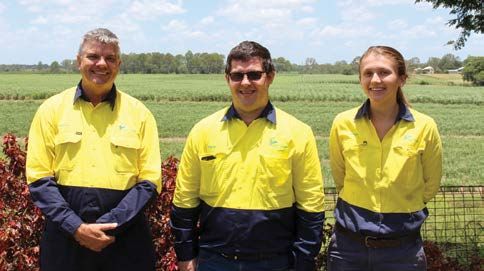
Harvesting demonstration trials:
what it means at the mill
In 2017, SRA worked with 43                          as outlining areas where investment
harvesting groups in green-cane                      and work is needed to achieve the
areas to assess the impact of                       ‘sweet spot’ for the industry.
adopted harvesting best practice.
                                                    In 2018, SRA will work across
Each trial involved four treatments
                                                    the industry on 60 more trials as
in commercial conditions: low loss,
                                                    well as strengthening collaboration
recommended practice, current
                                                    with millers. The impact to mill
practice, and aggressive practice.
                                                    logistical operations, in particular
These treatments relate to ground
                                                    bin supply, requires further
speed and fan speed and were
                                                    investigation. SRA will work in close
unique to each site.
                                                    consultation with the milling sector
Here, we show the overall results                   to appreciate milling logistics within
from the 2017 trials and examine the                the parameters of harvesting                    (Above) The adoption of harvesting best
                                                                                                    practice has issues for consideration in
implications for greater adoption of                best practice.
                                                                                                    relation to cane supply and logistics.
Harvest Best Practice particularly in                                                               (Over - page 8) SRA conducted 43 harvesting
relation to the milling sector, as well                                                             demonstration trials with the industry in 2017.

       Harvesting Rate

                                                                          The 2017 field demonstration trials indicated that across the
                                                                          Australian sugar industry, a 14% decline in overall harvesting rate
                           -14.0%                                         (tonnes per hour delivered to the bin) would occur as a consequence
                                                          77.4
                                             75.2
                                                                          of harvesting contractors migrating from nominal to recommended
                                                                          practice.
                          64.7

              53.3
T/Hr

            LOW LOSS   RECOMMENDED      NOMINAL        AGGRESSIVE

                                 Treatment

6        MILLING MATTERS Autumn 2018
Bin Fill Rate                                                                           Season Tonnage

                                                                                                              24,385,199

                                                                                                                               24,052,987
                                                            10.4           10.4
                                                                                                                                              4.4%

                                                                                        Tonnes/Annum
                                         -11.6%                                                                                                23,041,112
T/Hr

                                          9.2                                                                                                                      22,042,355

                          8.9

                      LOW LOSS      RECOMMENDED        NOMINAL         AGGRESSIVE                             LOW LOSS      RECOMMENDED         NOMINAL           AGGRESSIVE

                                                Treatment                                                                             Treatment

               Bin fill rates in the 2017 field demonstration trial indicate an 11.6%                  2017 Field Demonstration trials imply a 4.4% increase in tonnages
               decline from average industry contractor harvesting practice                            between average industry contractor harvesting practices (nominal)
               (nominal) to recommended harvesting practice with no statistical                        to recommended harvesting practice with no increase to cane land.
               difference in bin mass                                                                  A statistically significant difference was recorded between industry
                                                                                                       nominal and recommended harvested yields.

               Mill Fibre                                                                              Mill CCS

                                                                                                                                                                    13.8%
                        15.1%

                                                 -0.6%                                                                           13.7%
                                                                                        CCS (Units)
Fibre (%)

                                                          14.9%
                                                                                                                                              1%
                                         14.8%                           14.8%

                                                                                                                13.6%                              13.6%

                      LOW LOSS      RECOMMENDED        NOMINAL         AGGRESSIVE                             LOW LOSS      RECOMMENDED        NOMINAL            AGGRESSIVE

                                                Treatment                                                                            Treatment

 Mill fibre levels decreased 0.6% in the trials, with no statistically                                 The 2017 Field Demonstration trials saw a 1% increase in CCS
 significant difference between industry contractor practice (nominal)                                 between average industry contractor harvesting practices (nominal)
 and recommended harvesting practice.                                                                  to recommended harvesting practice

               Season Sugar Production                                                                 Extraneous Matter

                       3,381,362
                                        3,368,183
                                                                                                                 14.2%                      2.3%
                                                                                                                                 12.2%

                                                     5.5%                                                                                          12.0%
Tonnes/Annum

                                                                                                                                                                     11.1%
                                                                                         EM (%)

                                                         3,193,231

                                                                         3,107,714

                       LOW LOSS     RECOMMENDED        NOMINAL         AGGRESSIVE                             LOW LOSS       RECOMMENDED        NOMINAL           AGGRESSIVE

                                                Treatment                                                                             Treatment

               Sugar increased 5.5% between average industry contractor harvesting                     There was no statistically significant difference in the
               practices (nominal) to recommended harvesting practice                                  extraneous matter.

                                                                                                                                                                                7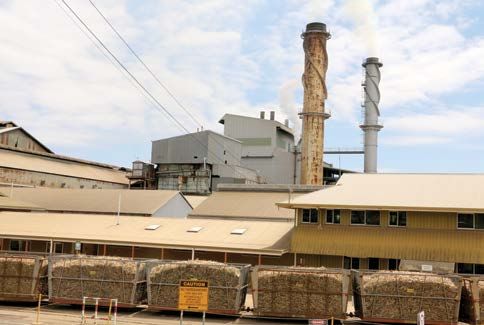
Change in Industry Value                                                                  Change in Mill Revenue

                                            Assuming Sugar price $435/T                                                              Assuming Sugar price $435/T
              $81,837,064
                              $76,104,229

                                                                                                        $30,226,401    $24,552,667

                                                                            Revenue ($/Annum)
T/Hr

                                                 $-         AGGRESSIVE                                                                     $-          AGGRESSIVE

              LOW LOSS      RECOMMENDED       NOMINAL                                                   LOW LOSS      RECOMMENDED      NOMINAL

                                                            $(37,200,053)                                                                              $(19,557,349)

                                     Treatment                                                                                Treatment

       Assuming a sugar price of $435/T, the increase to industry revenue                       The 2017 Field Demonstration suggest a $24M increase to industry
       is $76M if harvesting contractors were to change their nominal                           mill revenue if contractors change their harvesting practice (nominal)
       harvesting practice to recommendation.                                                   and adopt recommended harvesting practice.

                                                                                                However the increase to milling revenue does not account for cost
                                                                                                associated with milling cane harvested at harvesting best practice.

                                                                                                                      The SRA Harvesting Best Practice
                                                                                                                      Adoption Team are committed to
                                                                                                                      working with the Australian Sugar
                                                                                                                      Industry milling sector in 2018 to
                                                                                                                      enhance the industry value chain.
                                                                                                                      It is our mission to collaborate
                                                                                                                      with all mills across the regions
                                                                                                                      to identify the most practical
                                                                                                                      parameters to maximise harvesting
                                                                                                                      best practice while minimising the
                                                                                                                      impact to mill assets, operations
                                                                                                                      and logistics.
                                                                                                                      This project is funded by SRA
                                                                                                                      and the Australian Government
                                                                                                                      Department of Agriculture and
                                                                                                                      Water Resources as part of the
                                                                                                                      Rural R&D for Profit Program.

                                                                                                                      For more information contact:
                                                                                                                      Carol Norris (Milling Liaison Officer)
                                                                                                                      on cnorris@sugarresearch.com.au
                                                                                                                      or  0459 861 482
                                                                                                                      Phil Patane (Project Leader) on
                                                                                                                      ppatane@sugarresearch.com.au
                                                                                                                      or 0431 818 482
                                                                                                                      Garry Landers (Researcher)on
                                                                                                                      glanders@sugarresearch.com.au
                                                                                                                      or 0417 607 873

8         MILLING MATTERS Autumn 2018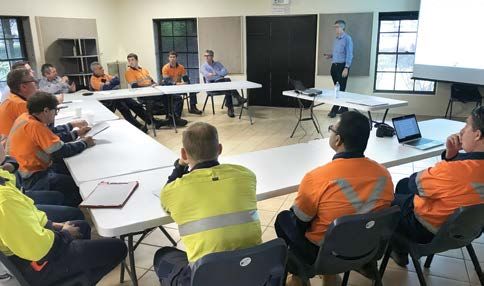
Bringing milling research
                                      from the lab to the mill
SRA and QUT joined together              (for example, through the Australian     On that topic, SRA Adoption Officers
earlier this year to present a series    Research Council).                       told the seminars that trials to date
of milling research seminars to the                                               suggest an increase to green cane
                                         SRA also took the opportunity to
Australian industry.                                                              industry revenue of up to $74 million
                                         present information from the large
                                                                                  ($24 million for millers), as a result
The five seminars were held in NSW,      Rural R&D for Profit project called
                                                                                  of a 5 percent increase in sugar
Bundaberg, Mackay, Townsville            Enhancing the Sugar Industry
                                                                                  production with no increase in area
and Gordonvale and were an               Value Chain, which contains several
                                                                                  under cane.
opportunity to provide an update on      sub-projects that will have a direct
a range of projects that are striving    impact on milling issues, particularly   In addition to these seminars,
for productivity, profitability, and     around issues such as extraneous         SRA also provides information to the
sustainability outcomes for the          matter and cane supply.                  milling sector via milling webinars,
milling sector.                                                                   and our fortnightly enewsletter.
                                         The Rural R&D for Profit project
                                                                                  You can subscribe to these by
A large volume of this work is part of   is funded by the Department of
                                                                                  visiting the SRA website
SRA’s investments in milling in with     Agriculture and Water Resources
                                                                                  www.sugarresearch.com.au.
its 2017/18 to 2021/22 Strategic         and SRA.
Plan and the Key Focus Areas of
                                         Presenters heard the results from
Milling Efficiency and Technology
                                         2017 demonstration trials, which
and Product Diversification and
                                         were conducted with 43 harvesting
Value Addition.
                                         groups in green-cane areas. Later
In addition, research was presented      this year, there will be 60 additional   (Above) QUT’s Dr Geoff Kent presenting at the
on projects funded by external           demonstration trials in all areas of     Gordonvale milling research update in March
agencies and delivered through QUT       the industry.                            this year.

"Later this year, there will be
 60 additional demonstration trials
 in all areas of the industry."

                                                                                                                                  9
Research looks to                                                                     For more information,

improve mill rolls
                                                                                      contact:  Dr Geoff Kent on
                                                                                      g.kent@sugarresearch.com.au
                                                                                      or (07) 3138 1185.

 A recent project has been                required for the process created          ALLOY POWDER           DESCRIPTION
 undertaken to investigate new            a lot of splatter and overheating of
                                                                                    Wear Pro 62            40% NiSiB + 60%
 ways to reduce the cost                  the nozzle.”
                                                                                                           spherical tungsten
 of maintaining mill rolls.                                                                                carbide
                                          With the PTAW ruled out, the
Sugarcane mill rolls are the              researchers also investigated MIG         Durmat 520             Steel with high Cr,
                                                                                                           Ni and Mn
principal components of the               welding and laser cladding. While
milling process where the cane is         these technologies showed more            Durmat 564             Steel with high C
crushed to separate the juice from                                                                         and Cr
                                          promise, there were challenges
the fibre. Because these are high-        applying a uniform coating to the         SAE 420                Martensitic
wear components that need to be                                                                            stainless steel
                                          surface of the iron, meaning the final
reshelled every few years and also        result was not satisfactory.
need to be regularly maintained                                                    Dr Kent explained that to achieve
during the season, this project has       “The grey cast iron used in sugar mill   the same groove profile after
looked at ways of prolonging their         rolls is not well-suited to welding,    cladding, more material needs to be
life. The research team looked at          because it was designed to form         applied to the bottom of the groove,
options for coating mill rolls to make     globules of weld material that are      and less to the side walls (flanks).
them more durable, to reduce the           rough to help grip the cane,” Dr Kent   They therefore investigated ways of
costs over their life.                     said. “Unfortunately, this also means   using lesser cost material in the root
                                           we couldn’t create a smooth surface     of the grooves, and the techniques
This SRA-funded project was                for cladding.”                          were successful in providing a
conducted by Dr Geoff Kent (QUT)                                                   smooth surface with no significant
and Dr Nazmul Alam from CSIRO.            The researchers persevered and
                                                                                   defects.
                                          investigated rolls that are made of
Dr Kent said a process using              SG iron, also known as ductile cast      A new project was submitted to SRA
tungsten carbide chips to provide         iron. This material had been the         for consideration in 2017 where the
a rough roll surface, without arcing,     subject of research in the past but      techniques would be tested in the
had been previously developed.            had not been adopted because it          2019 / 2020 seasons.
CSIRO had also developed a welding        was not readily available at the time.
                                                                                   The project was unsuccessful due to
material to coat and increase the                                                  concerns about adoption of the SG
                                          “However, there are now suppliers
durability of grey cast iron using                                                 iron roll shells and the options for
                                           willing to sell SG iron rollers and
plasma-transfer arc welding (PTAW).                                                sourcing the laser cladding. Dr Kent
                                           there are a few being used in the
Several techniques were                    Australian industry. With SRA’s         said that the research team would
investigated, but the researchers          approval of the project variation,      address these issues and re-submit
encountered a number of challenges         Nazmul looked at a series of nine       for funding.
during their project.                      different materials that could be
                                           applied to the SG iron rolls.”
“We determined that PTAW is not the
                                                                                   (Above left) The researchers investigated rolls
 right technology for the job,” Dr Kent   This was then narrowed down to four
                                                                                   that are made SG iron as part of the project.
 explained at recent research updates     promising candidates for further         (Above right) Cleaning mill rolls in preparation
 for the industry. “The long nozzles      testing:                                 for testing different materials for coating.

10     MILLING MATTERS Autumn 2018
The final report from this
project is available from the
SRA elibrary www.elibrary.
sugarresearch.com.au/.
There are also additional
appendices to the report that
Overseas are confidential to Australian
sugar mills and are available
via the login via the Sugar
experience to help Research Institute elibrary
via www.sri.org.au.
improve factory For more information
efficiency
contact Prof Ross Broadfoot
at r.broadfoot@qut.edu.au
or (07) 3138 1646.
Australian sugarcane factories • Assess the suitability of falling being used in these steam efficient
generally consider best practice for film tube evaporators for overseas factories can be introduced
process steam consumption to be Australian factories. into Australian factories to provide
about 40 percent on cane. capacity and operational benefits.
• Investigate the potential
The technologies that are not
On the world stage, however, there application of novel process
currently being used in Australian
are steam-efficient factories using steam efficiency technologies
factories include:
different technologies that put those for application into Australian
numbers in the shade, and they have sugar factories. • Falling film tube evaporators
brought their steam consumption and Kestner evaporators;
• Undertake modelling studies for
very low, to lower than 32 percent
four Australian sugar factories • In-line juice heaters on vapour
on cane.
to assess the suitability of using from the final evaporator;
Knowing this, a recent research the alternative evaporator
• Barriquand juice heaters;
project sought to learn from the designs and the novel process
overseas experience and discover steam efficiency technologies • Use of vapour from the 3rd
how some of these technologies to suit nominated objectives for evaporator for pan boiling;
could be adopted to the benefit each of the factories.
of the Australian industry. • Direct contact pan feed
• Investigate the effect on pan conditioning systems; and
Undertaken by Queensland stage productivity (production
University of Technology, the project rate and exhaustion) when using • Vapour recovery systems such
was overseen by Professor Ross low pressure vapour for boiling as in condensate cigars.
Broadfoot, Dr Darryn Rackemann, the pans.
and Mr David Moller, and was called
• Investigate the effects on
Develop a blueprint for the introduction
whole of factory operations
of new processing technologies for
(including electricity export,
Australian factories (2015/043).
surplus bagasse generation
It undertook the following phases and water balance) resulting
of work: from the adoption of the new
technologies into Australian
• Measure the sucrose losses that
sugar factories.
presently occur in Australian
evaporator stations which Researchers visited factories in
almost universally comprise several countries including South
Robert evaporators with tubes Africa, Reunion, Mauritius, India and
of 2m length and 44.45mm Germany to better understand the
outside diameter. technologies being employed in
steam efficient factories.
• Assess the suitability of Kestner
(Above) Darryn Rackemann with QUT in front
evaporators for Australian According to the researchers, of two falling film tube evaporators and a semi-
factories. in many cases the technologies Kestner evaporator at Le Gol factory, Reunion.
11Boiler simulator
training to help
avoid costly mistakes
Experience has taught Australian at other parts of sugar mills, and
mill owners just how costly this project is looking to implement The project is funded by SRA
mistakes are when things go wrong this technology at this critical and is called A boiler simulator
at the boiler station. component of the mill. for improved operator training
(project code 2016/001).
At the same time, experience has Led by Dr Anthony Mann, the project
also taught the Australian industry has consulted heavily with industry More detail on further
that mistakes are more likely and through surveys and workshops and development on this project
frequent early in the season, when has completed the development of a will be provided in the next
operators may be ‘rusty’ after having back-end system for the simulator. edition of Milling Matters,
just had about six months of doing a in the second half of 2018.
The front-end user interface is being
range of other tasks at the mill.
developed and a suitable training
Recent incidents, attributed in part program will be incorporated into this For more information,
to operator error, have cost factories front-end user interface. The industry contact: Dr Anthony Mann
several millions of dollars in boiler feedback will continue to be vital in on a.mann@qut.edu.au or
repair costs and lost production. ensuring the project delivers a useful
(07) 3138 1333
end-product for the industry.
All this has highlighted the
importance of ensuring that
operators are up to speed on the (Above) Work is underway to develop a training
problems that may arise and the simulator for boiler operation.
skills they need in operating boilers.
With this in mind, an SRA-funded
project has been underway working
with the milling sector to devise a
"...industry feedback will continue
suitable training simulator that could to be vital in ensuring the project
help alleviate some of these costly
mistakes. Simulators are already delivers a useful end-product..."
successfully employed
12 MILLING MATTERS Autumn 2018Reducing costs through
improving boiler
maintenance efficiency
The maintenance of sugarcane mill The research team consists of Dr materials, and two types of
boilers is a significant cost to the Nazmul Alam (CSIRO), Dr Floren mild steel.
Australian sugar industry. Plaza (QUT), and Dr Anthony Mann
A number of materials have shown
(QUT) and they are two years into a
It has been estimated that boiler tube promise in the lab testing.
three year project.
wear and corrosion costs the industry
The research will now progress to
about $5 million each year in repairs, As explained by QUT’s Dr Geoff
testing of the shortlisted materials
downtime, and inefficient operation. Kent at milling research seminars
at Mulgrave and Isis, although
The cost of one convection bank due recently, the project began with a
this will need to be delayed until
to wear is about $1 million. literature review to find materials
suitable for coating. These coating the 2019 crush because the
There is also a building challenge were discussed with the milling most promising coatings require
for the industry as boilers age. sector during 2017 to assess their procedure development and
Most boilers in the industry are practical application and whole-of- application equipment.
more than 30 years old, while a life economics. SRA will keep industry informed of
typical convection bank has a tube
The next step was corrosion and the progress of this work through
life of about 10-15 years using
erosion testing in the lab. Milling Matters, events for the
current protection technology.
milling sector, and our fortnightly
As the boilers age, the wear Dr Kent said this included 15 enewsletter.
and corrosion costs are expected new coatings, an uncoated boiler
to increase. tube, and two existing tube shield
materials for the external erosion For more information,
Thus a team of researchers at performance. For internal corrosion contact: Dr Floren Plaza
the Queensland University of testing, 12 materials were tested, on f.plaz@qut.edu.au or
Technology and CSIRO are working which included five materials that 07 3138 1239.
on a research project (project code are applied to the surface of an
2016/020) that is investigating existing tube, two materials that
new ways of coating boiler tubes to form the coating of as-supplied
(Above) Research is underway to investigate
extend their life and reducing these tubes, two corrosion resistant tube options for improving milling efficiency via
maintenance costs. materials, standard boiler tube better boiler maintenance.
13FUTURES FORUM:
Forging a bright future for
Australian sugarcane
The Australian sugar industry collective long-term future,” “This is an event focused on action.
is working towards a more Dr Swindells said. Following the forum, SRA is working
internationally competitive with stakeholders to address
“At the forum, we heard from people
industry, following an event priority issues, as guided by the
both within the industry and from
in Mackay recently. National Sugarcane RD&E Strategy.
outside it. The speakers shared
We will publish an action plan and
Called the Futures Forum, the their insights into future trends,
report via the SRA website and
event saw about 70 industry and helped generate new ideas for
will communicate the outcomes to
stakeholders gather together, our industry.
broader industry, government and
representing a cross-section of other stakeholders.”
“The industry is facing more
industry, agribusiness, research
than its share of challenges,
organisations, government, and
especially around productivity
influencers.
and profitability and the need for
The SRA website already
The Futures Forum looked beyond all sectors to lift our international
features a number of videos
the immediate challenges and competitiveness. The industry
and presentations from the
industry’s recent achievements to is also proactively addressing
day, which you can see at
examine what it wants the future environmental stewardship issues,
and working together to make big www.sugarresearch.com.
of the industry to look like in 5, 10,
gains in this area. au/sra-information/
and 20 years from now.
futures-forum/
SRA Chairman, Dr Ron Swindells, “The forum was an opportunity to
said the purpose of the forum plan and discuss how our industry
was be to be thought-provoking, can work together to capitalise on
inspirational, and interactive, existing opportunities, and also
how we can proactively create new
so that it can deliver possible
opportunities that lead to positive
pathways forward.
productivity, profitability, and
“This is the first time the industry sustainability outcomes for growers
gathered together to consider its and millers. (Above) Futures Forum.
14 MILLING MATTERS Autumn 2018Milling research investment
PROJECT PRINCIPAL CHIEF
PROJECT TITLE END DATE
NUMBER R&D PROVIDER INVESTIGATOR
Key Focus Area 5 (Milling efficiency and technology)
Real time harvest and transport system 2014/037 QUT Geoff Kent 01/09/2018
Improving mill efficiency through rapid analysis methodologies 2014/051 SRA Steve Staunton 01/09/2017
Managing aspects of raw sugar quality in the Australian
2014/052 SRA Steve Staunton 01/08/2017
sugar industry
Investigation into modifying pan boiling techniques to
2015/013 QUT David Moller 30/06/2018
improve sugar quality
Increasing capacity to undertake cane preparation research
2015/018 QUT Geoff Kent 01/04/2018
through modelling and experimentation
Online analysis systems to measure the available nutrients
2016/019 SRA Steve Staunton 01/03/2020
in mill mud
Reducing boiler maintenance costs and deferring capital
2016/020 QUT Floren Plaza
expenditure through improved technology
Evaporator liquor brix sensor 2017/003 Wilmar Robert Stobie 31/12/2018
Managing aspects of raw sugar quality in the Australian Griffith
2017/006 Chris Davis 30/06/2019
sugar industry – Part II University
Investigations to mitigate the effects of sucrose degradation
Darryn
and acid formation in factory evaporators on sugar recovery 2017/007 QUT 01/12/2020
Rackemann
and quality, corrosion and effluent loadings
Key Focus Area 6 (Product diversification and value addition)
Process for making bagasse paper pulp 2012/053 QUT Thomas Rainey 01/05/2018
A profitable future for Australian agriculture:
biorefineries for higher-value animal feeds, chemicals and fuels 2015/902 QUT Ian O’Hara 01/03/2019
(Rural R&D for Profit)
Key Focus Area 8 (Collaboration and capability development)
Integrated standardised competency based training for
2017/013 QUT David Moller 1/12/2019
sugar milling operations
A boiler simulator for improved operator training 2016/001 QUT Anthony Mann 1/7/2018
THE FOLLOWING PROJECTS HAVE THE FOLLOWING PROJECTS HAVE SUBMITTED MILESTONE REPORTS
SUBMITTED FINAL REPORTS SINCE
THE LAST EDITION OF MILLING • Reducing boiler maintenance • Integrated standardised
MATTERS: costs and deferring capital training for Sugar Milling
expenditure through Operations, QUT
• Determine the optimum
improved technology, QUT
tube dimensions for Robert • On line analysis systems to
evaporators through • Investigations to mitigate the measure available nutrients
experimental investigations and effects of juice degradation in mill mud, SRA
CFD modelling, QUT in factory evaporators on
• Reducing the maintenance
sugar recovery and quality,
• Develop a blueprint for the costs of mill rolls, QUT
corrosion and effluent organic
introduction of new processing
loading, QUT • I mproved modelling of wet
technologies for Australian
scrubbers, QUT
factories, QUT
15Sugar Research Australia Limited ABN 16 163 670 068 Head Office Postal Address T 07 3331 3333 50 Meiers Road PO Box 86 F 07 3871 0383 Indooroopilly QLD 4068 Indooroopilly QLD 4068 E sra@sugarresearch.com.au Australia Australia W sugarresearch.com.au
You can also read


