National COVID-19
Vaccination Programme:
Implementation Plan
←
→
Page content transcription
If your browser does not render page correctly, please read the page content below
National COVID-19 Vaccination Programme: Implementation Plan
National COVID-19 Vaccination Programme: Implementation Plan

Table of Contents
1.    Background and Context                                    4

      Overview of key components of the Vaccination Programme   6

      Known Variables and Assumptions                           7

      How the Vaccination Programme Will Work                   10

      Vaccine Administration Locations (VALs)                   11

      Initial Proposed Distribution Model (Hub and Spoke)       13

      Vaccination Pathway                                       16

2.    Programme Structure                                       17

      High Level Implementation Plan                            18

      Current Areas of Special Focus                            20

      Delivery Planning Approach                                26

      Critical Deliverables Pre-CMA                             27

      Critical Deliverables Post-CMA of Vaccine 1               28

3.    Oversight and Governance                                  29

      Introduction                                              30

      High-Level Task Force on COVID-19 Vaccination             30

      Implementation Programme Management                       30

      Objectives of the Programme Management Approach           31

      Programme Management Principles                           31

      Agile Decision-Making and Communications                  32

      Reporting                                                 32

      Unknown Variables and Assumptions                         33

      Risk Management Framework                                 34

                                                                     3
National COVID-19 Vaccination Programme: Implementation Plan 1. Background and Context 4
National COVID-19 Vaccination Programme: Implementation Plan

                                        High Level Task Force

      National COVID-19 Vaccination                                  National COVID-19 Vaccination
           Programme: Strategy                                      Programme: Implementation Plan

The Government established the High Level Task                 The overarching objective of this Vaccination
Force (HLTF) on COVID-19 Vaccination on November               Programme is:
10th, 2020 to ensure the requisite oversight, agility
and specialist input is available to support the HSE
and the Department of Health in the effective,
                                                                 ‘To build on the public health response
efficient and agile delivery of the COVID-19                      to COVID-19 to date through the
Vaccination Programme.                                            efficient provision of safe and effective
The overall objective of the HLTF is:
                                                                  vaccines to the population and, in doing
                                                                  so, to reduce serious illness and death
                                                                  as a consequence of COVID-19.’
   ‘To develop a Strategy and
     Implementation Plan and to monitor
                                                               At the time of writing, there remains a number of
     the roll-out of a safe, effective,                        unknowns about COVID-19 vaccines and their
     efficient and agile national COVID19                      availability, and, consequently, about the manner in
     Vaccination Programme that plays a                        which the overall programme will be implemented.
                                                               This Implementation Plan is, therefore, designed to
     central role in Ireland’s exit from the
                                                               be a ‘living document’ in that it needs to be agile,
     pandemic.’                                                flexible and to be capable of evolving over time, for
                                                               example to accommodate vaccines with differing
                                                               characteristics or to respond to lessons learned in our
                                                               local experience or internationally.

                                                               This plan describes the logistical, operational and
                                                               human resource requirements for Ireland to begin
                                                               vaccinations in line with Government guidance in
                                                               early 2021 assuming the approval of one or more safe
                                                               and effective COVID-19 vaccines for use.

                                                                                                                     5
National COVID-19 Vaccination Programme: Implementation Plan
Overview of key Vaccine Supply Chain
components of the Supply from manufacturer
Vaccination Programme
An integrated work programme, comprising seven
workstreams (each reflecting a core element of the Central Storage
end-to-end vaccination programme shown in the
figure opposite), has been established by the High
Level Task Force (HLTF). The programme is using
a structured programme and project management
Prepare for Distribution
approach to manage and deliver all the core elements
required in the vaccination process.
Distribution
Vaccine Administration
Locations* (VALs)
• Long Term Care Facilities
• Large scale healthcare sites
• Mass Vaccination Centres
• GP
• Community Pharmacy
Arrival and check-in
Scheduling of Appointment
Registration and informed consent
Sequencing Decision
Vaccine Recipient Journey
*There will be regular feedback of data from the VALs that will
6
inform the ongoing end-to-end processNational COVID-19 Vaccination Programme: Implementation Plan
National COVID-19 Vaccination Work Programme
Structure
National COVID-19 Vaccination High Level Task Force
National COVID-19 Vaccination
Working Group Programme Director Programme Office
Workstream Workstream Workstream Workstream Workstream Workstream Workstream
SRO SRO SRO SRO SRO SRO SRO
Governance Vaccine Policy, Vaccination Surveillance, Enabling Public
& Operating Supply Chain Regulatory Process & Monitoring & Technology & Engagement &
Model & Logistics Matters & Workforce Reporting Information Communication
Resourcing
Workstream Workstream Workstream Workstream Workstream Workstream Workstream
resources resources resources resources resources resources resources and
and and and and and and stakeholders
stakeholders stakeholders stakeholders stakeholders stakeholders stakeholders
The workstreams (shown above), each led by a Senior Known Variables: Candidate Vaccines
Responsible Officer (SRO), were established by the
HLTF to create an integrated programme of work that The EU has signed six Advance Purchase Agreements
addresses all of the core elements of the end-to-end (APAs) with pharmaceutical companies, which allow
vaccination process. access to a committed quantity of doses, in the event
that their respective vaccine is approved for use. At
Known Variables and
the time of writing, the Irish Government has signed
five of these APAs, and signalled its intention to
Assumptions sign up to the sixth when trial data emerges. The EU
allocates the APA quantities to Member States based
This Implementation Plan is a 'living document', which on their population pro-rata share. Based on this
will be updated on a continuous basis (with regular approach, Ireland is entitled to receive ca.1.11% of
updates submitted to Government, as appropriate). the total quantity, or ca. 14.4 million doses based on
This version of the Implementation Plan reflects APAs signed to date, and assuming that all products
the state of knowledge on December 11, 2020 and are approved for use.
provides specific planning details for the early weeks
of the Vaccination Programme following a potential
granting of Conditional Marketing Authorisation
(CMA) for the first vaccine(s). At the time of writing,
there are a number of variables, known and unknown,
which will impact the planning and rollout of this
vaccination programme.
7National COVID-19 Vaccination Programme: Implementation Plan
Doses Earliest
Vaccine Technology required Storage Approx Irish allocation1 Possible
per patient Delivery
Non-
Fridge: 2ºC 3,300,000 January
AstraZeneca replicating 2
to 8ºC 2021
viral vector
Protein Fridge: 2ºC 3,300,000 July
Sanofi / GSK 2
subunit to 8ºC 2021
Janssen Non-
Fridge: 2ºC 2,200,000
Pharmaceutical replicating 1 TBC
to 8ºC
(J&J) viral vector
Fridge: 2ºC 2,475,000 February
Curevac mRNA 2
to 8ºC 2021
Freezer: - 880,000
2
January
Moderna mRNA 2
20ºC 20212
Ultra-low temp
BioNTech/ 2,200,000 January
mRNA 2 freezer : -70ºC
Pfizer 2021
to - 80ºC
Total 14,355,000
1 Doses allocated are the agreed amounts under the EU APA, with the exception of Moderna which is under negotiation.
2 Will depend on EU Authorisation, currently under negotiation.
The table above shows that the vaccines use a range Known Variables: Vaccine Allocation
of different technologies to protect against the
Strategy
COVID-19 virus and, at this stage, all except one
require an individual to have two separate doses A COVID-19 Vaccine Allocation Strategy has been
of the vaccine, separated in time by a duration developed based on the recommendations of the
dependent on each particular vaccine. National Immunisation Advisory Committee (NIAC),
considered within an ethical framework developed
It is also known that these vaccines have different
by the DoH. On foot of NIAC advice, the National
storage and handling requirements. The vaccine
Public Health Emergency Team (NPHET) made
already authorised for emergency use in the UK
recommendations to Government, which were
COVID-19 Vaccination Programme is the Pfizer/
approved by Cabinet on 8 December. This allocation
BioNTech vaccine. There has been significant
strategy provides the provisional sequencing for
public interest in this vaccine, and in particular, the
groups to be vaccinated based on clinical priorities
requirement to store it at a very low temperature
and ethical values. Principally, it ensures that the most
(-70°C to -80°C). Following a controlled temperature
vulnerable people in our society and those at the
adjustment process, this vaccine can be moved and
highest risk of contracting COVID-19 are prioritised
stored at normal fridge temperature (+2 ºC to +8 ºC),
for vaccination.
while retaining its effectiveness for a period of 120
hours. This will facilitate it in being distributed around
Ireland in the same way as many other vaccines used
routinely in the State.
8National COVID-19 Vaccination Programme: Implementation Plan
The sequencing as set out in the table below is one of the key drivers of our planned approach to administering
vaccinations and the associated operating model.
Group Rationale
Adults aged ≥65 years who are residents of long-term care At greatest risk of severe illness and death.
facilities. Consider offering vaccination to all residents and In Ireland, in the first wave of COVID-19,
staff on site. 56% of deaths occurred in this setting.
Frontline healthcare workers (HCWs)* in direct patient At very high or high risk of exposure and/
contact roles (including vaccinators) or who risk exposure to or transmission. In the first wave over 30%
bodily fluids or aerosols. cases were in healthcare workers.
Aged 70 and older in the following order: 85 and older; 80- At higher risk of hospitalisation and death.
84; 75-79; 70-74.
Other HCWs not in direct patient contact. Provide essential health services, protect
patients.
Aged 65-69. Prioritise those with medical conditions** which At higher risk of hospitalisation and death.
put them at high risk of severe disease.
Key workers (to be further refined). Providing services essential to the
vaccination programme (e.g. logistical
support).
Aged 18-64 years with medical conditions** which put them At higher risk of hospitalisation.
at high risk of severe disease.
Residents of long-term care facilities aged 18-64. High risk of transmission.
Aged 18-64 years living / working in crowded Disadvantaged sociodemographic groups
accommodation where self-isolation and social distancing is more likely to experience a higher burden of
difficult to maintain. infection.
Key workers in essential jobs who cannot avoid a high risk of High risk of exposure as unable to work
exposure to COVID-19. They without physical distancing.
include workers in the food supply system, public and
commercial transport and other vital services.
Those who are essential to education and who face disease To maintain the opening of fulltime
exposure - primary and second level school staff, special education of all children who have been
needs assistants, childcare workers, maintenance workers, disproportionately impacted from the
school bus drivers etc. pandemic.
Aged 55-64 years. Based on risk of hospitalisation.
Those in occupations important to the functioning of society, Moderate risk of exposure.
e.g., third level institutions, entertainment and goods-
producing industries who work in settings where protective
measures can be followed without much difficulty.
Aged 18-54 years who did not have access to the vaccine in If evidence demonstrates the vaccine(s)
prior phases. prevent transmission, those aged 18-
34 should be prioritised due to their
increased level of social contact and role in
transmission.
Children, adolescents up to 18 years and pregnant women If evidence demonstrates safety and
(to be refined). efficacy.
*Includes health care workers who work in and out of all healthcare settings
**Chronic heart disease, including hypertension with cardiac involvement; chronic respiratory disease,
including asthma requiring continuous or repeated use of systemic steroids or with previous exacerbations
requiring hospital admission; Type 1 and 2 diabetes; chronic neurological disease; chronic kidney disease; body mass index >40; immunosup-
pression due to disease or treatment; chronic liver disease.
9National COVID-19 Vaccination Programme: Implementation Plan
The timing of the vaccination of these population groups will depend on a number of factors, including the rate
and scale of availability of vaccines. The figure below illustrates a notional profile of vaccine availability over
time, starting with limited availability and rising as potentially more candidate vaccines are authorised by the
EMA. The various phases shown below are useful in planning the deployment of resources.
Assumed vaccine availability for distribution over time (illustrative)
Towards the latter stages of
In early stages of the the vaccination programme
vaccination programme vaccine supply can begin to
vaccine supply will be wind-down slowly over time.
limited as only a small
number of vaccines are
approved.
Vaccine volume available
As time progresses, vaccine supply and
availability to the Irish public will increase
as additional vaccines are approved and
production capacity is expanded.
Time
How the Vaccination In the initial phase, vaccinations will be delivered
to prioritised groups in long term care settings and
Programme Will Work large scale healthcare sites. As the availability of
vaccines increases, additional groups from the vaccine
allocation framework will receive their vaccinations.
During this mass ramp-up (the second phase),
A phased approach to roll-out
we expect that Mass Vaccination Centres will be
The safe rollout of the vaccine programme will introduced for this purpose.
be delivered in a number of phases depending on
The learnings from the UK roll-out and other
the availability of vaccines. As vaccine availability
international experience will be taken into account.
increases and a greater number of cohorts become
In this context, constructive conversations with
eligible to access the vaccine, the delivery model (the
counterparts in Northern Ireland have already been
locations and the workforce) will transition to support
initiated.
a larger volume of vaccinations (as outlined in the
table overleaf).
10National COVID-19 Vaccination Programme: Implementation Plan
Plan Stage Initial Roll-Out Mass Ramp-Up Open Access
Vaccine Limited doses Large number of doses Large number of doses
Availability available available available
Vaccine
Distribution
Volume
Population to
As per Government-approved population sequencing
be vaccinated
Example > LTC facilities > Mass Vaccination > Mass Vaccination
Vaccination > Large scale healthcare Centres Centres
sites used sites > GPs and Pharmacies > GPs and Pharmacies
> First approved > Variety of vaccines > Small number of
Types of
vaccine(s) types as they are effective and easily
vaccine used
approved by the EMA stored vaccine types
> Early 2021 subject to > Depends on vaccine > Depends on vaccine
Potential
EMA approval delivery schedule - to delivery schedule - to
Start Date
be determined be determined
Vaccine Administration In developing plans for the roll-out of the Vaccination
Programme, five types of Vaccination Administration
Locations (VALs) Locations (VALs) have been considered. It is likely
that all delivery options will be used at various
The HSE is committed to the implementation of a stages across the implementation of the vaccination
safe, high quality COVID-19 vaccination programme programme, subject to necessary agreement. The five
that provides phased, but timely and efficient access types of VAL being considered are:
to vaccines to the public. The range of vaccines, their
1. Long-Term Residential Care Facilities
different handling and storage requirements, their
availability and the associated clinical guidance mean 2. Large Scale Healthcare Sites
a range of different delivery options will be employed 3. Mass Vaccination Centres (MVC)*
as part of the Vaccine Deployment Plan.
4. General Practice1
In the initial roll-out phase when vaccine supply is
5. Community Pharmacy
limited, the approach will be to focus on the highest
priority groups identified in the government approved *In common with many countries, Ireland will
allocation strategy. use Mass Vaccination Centres to administer the
vaccination programme. These centres will be
designed to cater for large numbers of recipients in
an efficient and timely manner.
11National COVID-19 Vaccination Programme: Implementation Plan Example of Vaccination Administration Locations (VALs) Acute Hospitals Tallaght University Hospital, Dublin St. James Hospital, Dublin Beaumont Hospital, Dublin Cavan General Hospital Letterkenny University Hospital, Donegal Mayo General Hospital University Hospital Limerick Cork University Hospital University Hospital Waterford University Hospital Galway Regional Hospital Mullingar, Westmeath Community Nursing Units Killarney Community Hospital Merlin Park University Hospital, Galway Maynooth Community Care Unit, Kildare Riada House Community Nursing Unit, Tullamore Regina House Community Nursing Unit, Clare Mount Carmel Hospital, Dublin Initially, COVID-19 community vaccination teams will These large scale health care sites will then also be deployed to administer vaccines to the residents support the vaccination of priority healthcare workers and staff of Long-Term Care Facilities. To date, we from across the acute hospital and community have identified a number of large scale healthcare healthcare settings in a given catchment area. sites that will be used as hubs for mobile vaccination teams to collect vaccines prior to vaccinating in Long- The model that will be employed to administer Term Care Facilities. There also has been positive vaccinations to the first groups prioritised will rely on engagement with Nursing Homes Ireland, to identify a hub-and-spoke model based on large scale health a number of private nursing homes to be among care sites (See Figure on next page). the locations for the early phase of the vaccination programme. 12
National COVID-19 Vaccination Programme: Implementation Plan

Initial Proposed Distribution Model (Hub and Spoke)
 Timeline                                  Early 2021
 Population Groups                         People aged 65+ in LTC facilities and Frontline HCWs
 Vaccine Type                              Pfizer / BioNtech (working assumption)
 Vaccine Administrators                    Members of community vaccination teams and peer vaccinators
 Distribution Model                        Hub-and-spoke model using large scale healthcare sites as hubs

                                                                                    Storage of Pfizer /
                                                                                    BioNTech vaccine
                                                                                    in ULTs

Delivery from manufacturers                              Central Storage

                Large scale                                                                      Transport to large
                                                                                                 scale healthcare sites
              healthcare sites
           Vaccination of frontline
           health care workers will
           take place at large scale
          healthcare sites following
            the vaccination of LTC
                   residents

                                   Transport of vaccine doses from
                                                                                    Long term care facilities
                                   community hubs to each LTC
                                                                                    Residents of LTCs will be
                                   facility using mobile units
                                                                                    vaccinated as an initial priority

                                                                                                                        13
National COVID-19 Vaccination Programme: Implementation Plan
Following this initial phase, learning from these As more vaccines are approved and become available
early sites will be used to stand up a number of for distribution, and a broader population is targeted
MVCs across the country. These centres will be for vaccination, General Practice and Community
located regionally (see examples below from the Pharmacy will play an increasing role in vaccine
Dublin region) and designed to cater for large administration, subject to regulatory approval,
numbers of recipients in an efficient and timely operational feasibility, and contractual agreement.
manner. Discussions are underway with the relevant
authorities to ensure that a geographical distribution
of such MVCs is provided. The supply chain and logistics to
distribute the vaccine
Example Mass Vaccination Centres
The supply chain process will begin with the receipt of
Citywest
vaccines in Ireland from a number of manufacturers.
National Exhibition Centre in Cloghran Ireland will receive the vaccine supply directly from
European manufacturing sites using the air/road
All Vaccination Administration Locations will operate
distribution channels.
to the highest quality standards. The HSE will build
on its extensive experience in delivering previous
vaccination programmes. In addition, the HSE will
Storage of vaccines and order
harness learning from more recent experience in
responding to the COVID-19 pandemic, including the management
establishment of large-scale COVID-19 Community
Given Ireland’s geographic size and population,
Testing Centres and the delivery of an end-to-end
storage of the vaccines will be centralised and
Test and Trace service for Ireland. Technology has
managed by a single logistics provider, with
enabled timely delivery and efficient COVID-19
substantial relevant experience. As the different
testing services for example from the point of GP
types of vaccine require varying temperature storage
referral, through to the laboratory and on to contact
requirements, (1) Ultra-cold (-70°C to -80°C) (2)
tracing.
Frozen (-15°C to -25°C) and (3) Refrigerated (2°C to
8°C), the logistics partner has prepared substantial
storage capacity for each temperature range. For
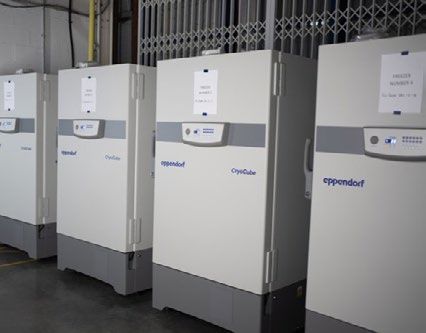
Workforce to administer the vaccine example, specialised Ultra Low Temperature (ULT)
All vaccinators will be qualified and registered freezers have already been installed to store the
healthcare professionals. In addition, they will Pfizer / BioNTech vaccines until they are ready
receive comprehensive and specialist training in the to be distributed to vaccination locations (Note:
COVID-19 vaccination programme relevant to the Qualification and validation remain to be completed
types of COVID-19 vaccines they will administer. at the time of writing).
For the roll-out of the vaccination programme in In order to ensure the correct volume of vaccines
Long-Term Care Facilities, the workforce will be are received by each vaccination location at the
drawn from the existing cohort of community-based right time, a robust, accurate, real-time inventory
specialist vaccinators. management system is in place to assure availability
and maintenance of adequate supplies, minimise
Additional workforce options are being developed potential wastage and accurately forecast demand
to support the scaling up of the programme (further which can be met.
details included in section 3).
14National COVID-19 Vaccination Programme: Implementation Plan
Ultra Low Temperature (ULT) Freezers installed in The vaccine recipient journey
Ireland’s central storage facility
The process of receiving the vaccine will vary slightly
depending on the population group and type of
vaccination location. However, for a large proportion
of the population, the process will be similar to that
outlined in the diagram on the following page. The
HSE is committed to supporting members of the
public through their vaccination journey, ensuring that
the process is accessible, safe and easily understood
by all. The COVID-19 Vaccination Programme will
utilise customised IT infrastructure to assist the
public through their vaccination journey. Members of
nominated groups for vaccination will be invited to
register for, and consent to, vaccination. People will
then be offered scheduled appointments to attend
a named location for vaccination. Where necessary,
support pathways will also be developed to ensure
Delivery Logistics that all groups are enabled to access their vaccination
pathway.
Within Ireland, our existing infrastructure and
established vaccination distribution channels will
mean vaccines can be delivered efficiently using road
distribution channels directly from the central storage
facility. Our logistics partner will also manage the
delivery fleet and outbound logistics / delivery to the
principal vaccination hubs. All deliveries for the initial
vaccine will be by chilled (+2 to +8 ºC) distribution
using the National Cold Chain fleet. One of the
vaccines is stored centrally at -70 ºC but is thawed
to +2 to +8 C for onward distribution and storage.
The fleet operates to a very high specification
with full GPS monitoring, remote temperature
monitoring and redundancy on the cooling systems
on the vehicle. The vaccine handling characteristics
for other vaccines will be more clearly defined by
manufacturers as the regulatory approvals process
emerges.
15National COVID-19 Vaccination Programme: Implementation Plan
Vaccination Pathway
Arrival and Check-out and Post-
Registration Check-In Vaccination discharge Vaccination
Procedure outside Procedure outside
Procedure inside the vaccination center
vaccination center vaccination center
Vaccination Placement for Return home,
Resting phase,
request and vaccination, observation and
Registration documentation
preliminary preparation and reminder for
and signout
information vaccination second dose
Pre-Vaccination Registration area Vaccination area Rest area Post-Vaccination
Registration: Arrival & Check In: Vaccination: Check out and Aftercare:
discharge:
Members of On arrival at The vaccination Follow up
nominated groups whichever site is process includes The recipient will reminders to
for vaccination chosen the pre- confirmation of be asked to wait ensure that the
will be invited registered details patient details, for fifteen minutes client returns for
to register for are confirmed completion of post vaccination their second dose.
and consent to and the client informed consent, to monitor for any
vaccination, and confirmed. recording of immediate adverse While the clinical
people will be the vaccinator reactions. Trained setting will vary the
offered scheduled details, batch clinical staff will goal is to provide
appointments to details and time / need to be on a consistent
attend a named date stamp. This hand to observe process with a
location for will also include the patients. common data
vaccination. The preparation by the and technology
goal is a standard vaccinator of the platform. This will
registration dose. ensure a consistent
process where all process, accurate
key identification data capture and
data, demographic timely reporting.
data, any The recipient will
required medical be able to report
information and any suspected
the informed side effects
consent is experienced post
commenced. the vaccine on
a portal on the
HPRA website.
Each stage of the recipients journey will be enabled and assisted by ICT systems
Greater detail about the IT infrastructure being developed for the Vaccination Programme is detailed in Section 3.
16National COVID-19 Vaccination Programme: Implementation Plan
2.
Programme
Structure
17National COVID-19 Vaccination Programme: Implementation Plan
A programme plan has been developed which incorporates all activities necessary to commence vaccine
distribution and administration in Ireland in early 2021. The programme plan is organised into seven
workstreams, each of which has an appointed Senior Responsible Officer (SRO):
Governance & Operating Model Workstream
Ensure appropriate governance for the implementation of the integrated COVID-19
Vaccination Programme.
Vaccine Supply Chain & Logistics Workstream
Ensure all necessary products and services are procured on time to facilitate the rollout
of the COVID-19 Vaccination Programme.
Policy, Regulatory Matters & Resourcing Workstream
Develop a population model to support the delivery of the sequencing strategy for the
COVID-19 Vaccination Programme. Ensure that the required policy, regulatory and
resourcing steps required to deliver the programme are implemented on a timely basis.
Vaccine Process & Workforce Workstream
Design the end-to-end COVID-19 vaccination process, identify the workforce required
to deliver it and the sites to be used for the vaccination clinics. Operationalise and deliver
the capacity to achieve a national vaccination programme.
Surveillance, Monitoring, & Reporting Workstream
Design and deliver the surveillance, monitoring, and reporting for the implementation of
the COVID-19 vaccination programme.
Technology & Information infrastructure Workstream
Select, deploy and maintain a vaccine information solution to deliver key functionality
and enable scheduling, registration, vaccine administration and reporting.
Public Engagement & Communication Workstream
Design, develop, and implement a communications strategy that encourages universal
vaccination. Public engagement on the vaccination programme should complement
existing public health education on the virus and the other tools in use to suppress the
virus e.g. face coverings, social distancing, etc.
High Level At the time of writing, due to the number of unknown
variables it is not possible to be exact about the
Implementation Plan date of commencement of COVID-19 vaccinations.
Key external factors that have specific impact on
A summary of the key deliverables in the planning include the likely dates for regulatory
Implementation Plan related to mobilising for the approvals of vaccines by EMA, and the delivery dates
commencement of vaccination delivery is set out in of vaccines in Ireland. The programme is making
the diagram overleaf. assumptions regarding these, and is progressing all
work it controls directly in advance to be ready for
the commencement of vaccine delivery as quickly as
possible.
18v3.0 as 10 December 2020
National COVID-19 Vaccination Implementation Delivery Plan
High level programme deliverable chart illustrating key activity to prepare for Day 1 Vaccinations Vaccine 1
Mobilisation Roll Out Phase 1
Quarter 1
Nov Dec Quarter 1
Key Work Packages
Mobilised
Governance & Vaccination Strategy & Implementation
High Level Task
Operating Model Plan Submitted to Government EU Conditional End-to-End Walk
Force Mobilised
Market Through
Integrated Programme End-to-End Vaccination Authorisation of Confirmation of Approval
Mobilised Process Defined Vaccine 1 to Commence Vaccinations
ULT Freezers ULT Freezers ULT Freezers
Delivered Commission Validated
Vaccine 1 Arrival
Vaccine 1 Delivery Schedule for Batch Vaccination Consumables in Ireland
Supply Chain &
Vaccine Order Form to 1 Confirmed Requirements Confirmed
Logistics EU Commission for Vaccine Consumables
“Last Mile” Operating Model / SOP “Last Mile” Operating Model /
Vaccine 1 Submitted SOP Mobilised Delivery Commences
Design
Demand Management Group
National COVID-19 Vaccination Programme: Implementation Plan
Demand Management Group Design Mobilised
Define Ethical Confirm Population Mobilise model to forecast NIAC completes post
Policy, Regulatory & Sequencing Framework sequencing approach population coverage licencing content
Resourcing
Day 1 Immunisation Day 1 Workforce Day 1 Vaccination Delivery Day 1 Workforce Trained Referrals and Scheduling Vaccine 1 Vaccinations
Sites Identified Requirements Defined Workforce Confirmed (Pre-CMA Content) for Cohort A Inititied Commenced
Vaccination Process Day 1 Operating Model Day 1 Operating Model Operational Oversight Day 1 Workforce Trained
& Workforce Requirements Defined Designed Group Mobilised (Post-CMA Content)
Day 1 Sites Mobilised
Clinical Oversight & Delivery Training Materials Delivery Model for Cohort B Referrals and
Model for Vaccinations Defined (Pre-CMA) Finalised Cohorts A & B Defined Scheduling Initiated
Reporting Processes Operational
Surveillance, Agree Minimum Define Reporting Reporting Req’mts Day 1 Reports
Agreed Designed Safety Issue Mgmt Plan
Monitoring & Dataset Metrics
Post CMA review of Enhanced ADR Reporting
Reporting
metrics & processes Uptake monitoring
Effectiveness monitoring
Vendor Presentations Vendor Day 1 Solution “Out of Box” Reporting Capability Vendor Contract Day 1 Tech Solution Configured,
Enabling Technology Completed Selected Configuration Commences Assessed Against day 1 Req’mts Signed Integrated, Tested, & Deployed
& Information Vendor MoU Day 1 integration Registert Day 1
requirements finalised DPIA Signed Off cohort on platform System Refresh 1 System Refresh 2
Signed
Public Engagement & Communications Strategy Complete Day 1 Leaflets and Issue Comms
Communicate Cohorts Launch Vaccination Awareness & Engagement Campaign Issue Comms for Cohort A
Communications Developed Consent Collateral Post CMA for Cohort B
Today 10/12/20
19National COVID-19 Vaccination Programme: Implementation Plan
Current Areas of Special 1. IT Infrastructure
Focus
Three key areas have been given particular emphasis For efficiency at scale, safety and accurate record
to date in the programme: keeping and reporting, it is critical that the end-to-
end process is systematically enabled and key data
elements are captured at the time of execution of
1. IT Infrastructure each phase within a comprehensive IT system.
A key challenge with the enablement of the process
is that Ireland does not have a national vaccination
2. Workforce
ICT system with the required level of functionality
to support the COVID-19 vaccine rollout. Therefore,
a functionally rich and proven solution for the
3. Communications
proposed vaccination programme must be sourced,
purchased, implemented and integrated into the
HSE ICT infrastructure before the end of the year.
To date, a detailed specification has been developed
(see below), comprehensive vendor presentations
have been held, a number of which demonstrated live
systems.
The table overleaf sets out the core functionality for
the IT system that will be required to support the
COVID-19 vaccination programme.
20National COVID-19 Vaccination Programme: Implementation Plan
Outline Workflow - Core Functionality
Digital & Physical Public Awareness Campaign
Public Provider
(HSE / GPs / Care
Facilities / Clinics)
Pre Vaccine
Integration with broader HSE ICT Infrastructure; Reporting & Analytics
Citizen Portal Contact Centre Provider Portal
ID
Citizen Schedule Schedule
& Validate / Amend Enrol Cohort / Amend
Registration
plus-circle plus-circle
Booking Booking
Information
Public can schedule a booking via an Cohorts of qualifying individuals can
online portal or by calling a support be enrolled in batch and bookings
contact centre scheduled
Arrow-circle-down Arrow-circle-down
(HSE / GPs / Care Facilities / Clinics / Hospitals)
Administration
Vaccine
Confirm &
Register Validate ID Record Vaccine
Communicate Arrow-circle-right
& Capture Arrow-circle-right & Clinical Arrow-circle-right Administration Arrow-circle-right Vaccine Cert
2nd Dose
Consent Workflow & Onsite ADR
Booking
Arrow-circle-down
Post Vaccine
Public Health
Vaccine ADR 2nd Booking
Arrow-circle-right Arrow-circle-right Arrow-circle-right Surveillance &
Certificate Tracking Reminder
Monitoring
Communication can be delivered via email, physical mail, SMS
21National COVID-19 Vaccination Programme: Implementation Plan
Pre-Vaccination Vaccine Administration
The solution must be able to support the key data The vaccine administration process must ensure that
requirements and workflows of the key clinical and the vaccine delivery to the public is efficient and that
operational stakeholders. The first step is to enable all the required information to record the vaccine
public registration and to facilitate the booking of an dosage is accurately recorded at the time of the
appointment to receive the vaccination. Utilisation of vaccination. The capture of an individual’s consent
the Individual Health Identifier is critically important to receive the vaccine is critical as is the validation
as it will ensure that each person is uniquely identified of the person’s identification and confirmation that
for full traceability of the individual. The appointment they are within the allocated cohort. Any adverse
booking element of the solution will allow the public reactions must be captured in a codified manner on
to pick an appointment time and location that best the solution.
suits their needs.
The solution must also potentially cater for the
The requirements for GP and Pharmacy solutions production of a vaccine certificate. The design of this
have yet to be fully defined and the national solution certificate and the scope of how it will be delivered
will have to facilitate the integration of these systems. (e.g. physically, digitally or both) is currently being
progressed with a number of stakeholders, including
the EU.
The core IT system will also need to be able to
integrate with a number of existing systems and
databases across the state infrastructure. The
schematic below sets out the potential complexity
of these requirements. The ICT solution is being
developed using a staged approach to ensure that
the priority needs of the vaccination process will be
supported as they develop.
22National COVID-19 Vaccination Programme: Implementation Plan
Outline Application & Integration Architecture
1 8
GP Systems
Healthlink Broker
Microsoft Outlook
HealthOne
Functionality to enable sending of booking /
confirmation / reminder email to citizen Complete GP
Helix Practice Mgr
3
Email Socrates
2
Messaging
HSE Data 4
Lake PCRS
GP / Pharmacy Vaccine Batch
Reimbursement Validation
Data Validation 5
API Callouts 14 API Callout
HPRA
Eircode
IHI
Mobile Phone 6
Registration, Booking CIDR
Create ID/Barcode/QR Code
1
Healthlink Broker & Consent
Authentication
Record Vaccine
Administration
Capture ADR &
Discharge Patient
Reporting
7
Inventory
11 / Stock DB
Record update
COVID Contact
10
Tracing
XDS 9
SMS Messaging
XDS Registry
Functionality to enable
> Document sharing registry sending of booking /
> Vaccine passport interoperability confirmation / reminder
> Shared care record SMS to citizen
> European CDC interoperability
23National COVID-19 Vaccination Programme: Implementation Plan
Data Processing As more doses of vaccines become available during
2021, there will be a need to expand the pool of
It is important that a Vaccine Information System can skilled workforce to administer vaccines and to deliver
guarantee the security and privacy of personal health the programme. General Practice and Pharmacists
information. The system will be hosted in accordance have successfully delivered very significant numbers
with the appropriate standards for protected personal of flu vaccines and can offer enhanced capacity for
health information, i.e. security/encryption, disaster this programme subject to agreement.
recovery, confidentiality and privacy practices, and
policies based on pertinent laws or regulations that Currently a number of options are being progressed
protect subjects whose data are recorded in the to support the scaling up of workforce for the
system. programme. This includes the following:
> Backfill of nurses in acute settings (agency or
The capturing and processing of personal health data
recruitment)
on the Vaccine Information System is required for
the purpose of rolling out the COVID-19 vaccine to > Rehiring of recently retired medical and nursing
protect the health of individual citizens. The impact staff
of the operation of administering the vaccine on the > Asking staff to work additional hours (either
protection of personal data and how the rights to overtime or bringing part time workers back
privacy and confidentiality of users are protected fulltime)
will be formally assessed as part of a Data Protection > Ambulance service paramedics
Impact Assessment (DPIA). As part of that process,
> Leveraging of other State and voluntary service
engagement with the Data Protection Commissioner
providers
is underway.
> Contracted private vaccination services
> Additional skilled ICT and support staff (agency or
2. Workforce recruitment)
> Authorising and training other appropriate
Under current regulations, medical, nursing and dental professions.
professionals are able to administer vaccinations.
In order to develop these options, consultations
Furthermore, the HSE has a pool of trained and skilled
with relevant parties will be advanced as a matter of
vaccinators in the health system, including specialist
priority.
vaccinators and peer vaccinators, available to deliver
vaccinations. This vaccination programme will also require
significant increases in the number of administrative
The trained vaccination workforce currently identified
and support staff, in this regard there may be
includes:
opportunities to leverage the broader public service
> Up to 180 dedicated community-based specialist to achieve this.
vaccinators, and
An important consideration will be to ensure that
> Approximately 1,500 healthcare workers who
the deployment of staff, particularly from within the
were trained as peer vaccinators, in the recent flu
Health sector, is planned and designed to ensure
vaccination campaign.
non-COVID health and social services can continue
to operate and that there is no major disruption to
services many of which have not returned to full
operations. This will be kept under close review.
24National COVID-19 Vaccination Programme: Implementation Plan
The vaccine communications and narrative has
3. Communications already begun. The first messages are already being
communicated and these include:
A comprehensive communications strategy and 1. The State will only use a vaccine if it meets the
plan has been developed to support the COVID-19 required standards of safety and effectiveness.
Vaccination Programme. All the recommended vaccines used in Ireland
are licensed by the EMA (European Medicines
Communication around the programme will be Agency) and will be subject to ongoing monitoring
informed by the following principles: in Ireland by the HPRA (Health Product Regulatory
1. Ongoing understanding of public sentiment Authority). They are licensed for use only when
regarding vaccine they have been shown to be both safe and
effective.
2. Open and transparent communication led by public
health and immunisation experts 2. Due to the urgency posed by the pandemic,
exceptional efforts are ongoing to develop
3. Clear and consistent communication to encourage
COVID-19 vaccines and make them available as
vaccine uptake
soon as possible. Unprecedented levels of scientific
4. Cross Government collaboration reinforcing the research and collaboration, investment and early
public health advice and proactive engagement between vaccine
developers and regulators has helped speed up
The communications and engagement strategy will development and ensured that quality, safety and
have two main phases. effectiveness are not compromised.
1. The first is preparing for the vaccine, talking 3. Vaccines are a proven, cost-effective intervention
to the safety and regulatory processes that are to protect public health; second only to the
taking place in Ireland, Europe and across the provision of clean water. Worldwide, they save at
world, engaging with people who have genuine least 2-3 million lives each year – and many more
hesitancies around the vaccine, communicating the from crippling and lifelong illnesses.
Government Plan from acquisition to prioritisation
to distribution and talking to the results of the 4. Certain priority groups will be vaccinated first.
clinical trials when they are available. For example, people aged 65 or older living in
long-term residential care, frontline healthcare
2. The second phase will focus on the execution of workers and older people living in the community.
the vaccine – national and local communication Once these priority groups have been vaccinated,
from medics encouraging the public to get the the vaccine will be available to the rest of the
vaccine, informing who will administer it and population.
where, identifying people of trust to act as
ambassadors for the vaccine. 5. The vaccines will be delivered in stages so it will
take time to vaccinate everyone. This means we
As part of the approach to building confidence, will need to continue to be careful about our
public health doctors will address misinformation individual actions to stop the spread of COVID-19.
which appears on social media and across the For example, social distancing, wearing a face
dark web, pointing people to trusted sources of covering and regular hand washing. We cannot
information including gov.ie and hse.ie. afford to drop our guard now.
25National COVID-19 Vaccination Programme: Implementation Plan
Key Communications Delivery Planning
Activities in December Approach
The programme, including all of its workstreams, must
What When
develop its plan across two periods which will be
COVID-19 Vaccine briefing to DOH
4 Dec implemented in parallel as follows:
Vaccine Alliance
Government announcement of vaccine 1. Identification and implementation of all necessary
8 Dec processes required to safely commence
prioritisation
vaccinations in early 2021;
COVID-19 Vaccine briefing to ICGP
9 Dec
Webinar 2. Preparation to scale the Vaccination Programme as
Launch of HSE COVID Vaccine webpage 10 Dec both the number and supply of vaccines increases.
Launch of national PR campaign to run Planning for these two phases needs to take
through Dec featuring senior vaccination 10 Dec into consideration the requirements for the safe
and public health experts commencement of the vaccination programme
Launch of gov.ie/COVID-19 Vaccine and in addition to the longer term requirements for a
11 Dec
explainer videos number of areas, including:
CMO letter to parents of schoolchildren 14 Dec
> The logistics and distribution models for all
Launch of The National COVID-19 vaccines; in particular the differing supply chain /
15 Dec
Vaccination Strategy cold chain requirements of each of the vaccines
COVID-19 Vaccine briefing to Vaccine > Mobilising a variety of vaccination sites across
16 Dec
Advocacy Group (200+ organisations) the country to best meet demographic needs and
COVID-19 Vaccine briefing to Medicines distribute the vaccines as safely and quickly as
Group (Wholesalers, community 17 Dec possible (based on the available delivery allocation
pharmacies. Hospital pharmacies, unions) to Ireland)
Launch of local PR campaign with HSE > Implementing a technology solution that will allow
18 Dec
public health doctors for consistent management of the process from
commencement of the Vaccination Programme
> Establishing comprehensive reporting that will
scale effectively as cohorts, vaccination site types,
and vaccines are added
> Identifying and mobilising the workforce required
to deliver the vaccination programme
> The definition and implementation of a
communication strategy that is consistent with a
national message to inspire public confidence in
both the vaccine and the integrated vaccination
programme but also is nuanced to the needs of
individual population cohorts; engaging with each
group in turn to encourage vaccine uptake, and
provide practical information on topics such as
scheduling and consent
26National COVID-19 Vaccination Programme: Implementation Plan
Ongoing detailed programme planning will continue
across the programme workstreams to further
Critical Deliverables
clarify requirements and drive implementation. Pre-CMA
Identification and mapping of dependencies and
planning assumptions at all levels will be essential to As we wait for the EMA to grant the first CMA,
understanding the risk carried by the programme and and the subsequent approvals from the HPRA, a
to clearly define the critical path. number of key activities are being advanced. Detailed
planning is currently underway with the workstreams
The plan focuses on the delivery requirements to define and validate the timescale, dependencies,
to safely start COVID-19 vaccinations as soon as and risks associated with this work. There is a
possible after EU Conditional Market Authorisation significant number of deliverables to be completed
(CMA) is granted. The majority of activities in the plan across the next four week period, with complex
between now and the forecast CMA are owned and dependencies and interdependencies including:
will be delivered by the HSE and DOH.
Population cohorts & sequencing - A COVID-19
Due to the scale of interdependent work, and current Vaccine(s) Allocation Strategy has been developed
planning assumptions, there are a number of parallel based on the recommendations of the National
work items on the critical path. To mitigate the risk Immunisation Advisory Committee (NIAC), considered
to the critical path, from now to the date of CMA within an ethical framework developed by the
approval, and beyond, the Programme Office will Department of Health. The strategy identifies a
continue to engage with the workstreams to drive sequencing of cohorts for groups to be vaccinated.
implementation of these activities and support the
resolution of any challenges. Last Mile Operating Model and Key SOPs - A
critical deliverable currently being progressed is
During this initial phase, a number of deliverables are the Operating Model and key Standard Operating
dependent on the activity outside of the control of Procedures (SOPs) for the management of the vaccine
the integrated programme, most notably the CMA from the cold chain environment to where it will be
approval and licensing, as well as the delivery of administered. This will be critical to enabling safe,
vaccines to Ireland from the pharmaceutical suppliers. effective, and efficient management of the vaccine in
These two deliverables drive a number of other various healthcare and vaccine delivery environments.
key activities that sit on the critical path. As more
information, in particular the expected timelines, Vaccination locations mobilised - Identification of
becomes clear, it will be possible to identify the locations, recruitment and deployment of workforce,
proposed date for vaccination commencement. and a clear operating model are all required to
establish and mobilise vaccination sites. Five
The focus of the Programme Working Group is to vaccination delivery locations are being developed
mobilise a safe and efficient delivery model (including leveraging our existing models for other vaccination
the required level of trained staff) to administer programmes. In the early phase of the programme we
vaccinations to the prioritised cohorts (in line with plan to focus on delivery through large scale health
the Vaccination Allocation Strategy approved by care sites and a hub and spoke model out to LTCF.
Government ), and manage the risk and complexity
of the vaccine requirements of supply chain and cold
chain, as well as delivering on the conditional market
authorisation.
27National COVID-19 Vaccination Programme: Implementation Plan
Workforce and training - A significant workforce
will need to be deployed to appropriately staff
Critical Deliverables
the vaccination programme; this will include Post-CMA of Vaccine 1
clinical staff, administration, and logistics staff. A
broad range of training, from the technicalities of Once conditional market authorisation is granted,
vaccine administration through to how to operate there are a number of critical deliverables that will
the supporting technology system, will need to need to be implemented in quick succession prior to
be developed and delivered to enable effective the commencement of vaccinations. These include:
management of the vaccination administration
Delivery of the Vaccine - The earliest delivery time
sites. This training is being developed and will build
from the vaccine production site to Ireland is within
on previous vaccination programme training and
days following approval from the CMA. The Vaccine
international best practice.
Supply Chain & Logistics workstream continues to
Surveillance enabled - Monitoring and reporting of engage with the manufacturer regarding the expected
vaccine uptake and additional metrics to monitor delivery schedule and timing of the first batch of
adverse reactions and other safety concerns will deliveries.
need to be enabled prior to the commencement of
NIAC creating key content post CMA - Within
the vaccination campaign. Key to delivering this will
Ireland, NIAC has responsibility to provide specific
be the definition of the minimum data set required,
recommendations and advice for the use of approved
the development of reporting requirements and the
vaccines in Ireland. Once the EMA has approved the
implementation of required processes and systems.
vaccine, NIAC will finalise a chapter of guidance on
Supporting technology solution selected and the use of the vaccine. This will be used to finalise the
implemented - In order to ensure consistent training for the vaccinators. This guidance will also
management of the vaccination programme, the be used to finalise the communications collateral for
technology solution will need to be identified population cohorts as well as key communications
and implemented prior to the first vaccinations; related to consent information. Work is currently
it will then continue to evolve and scale with the ongoing in this area to ensure that the above can be
programme over the coming months. finalised promptly once the CMA and HPRA approval
has been received.
Information leaflets and consent collateral for Day
1 - Once approval has been granted, final changes
specific to the content of the CMA can be made to
communications materials and consent collateral.
End-to-end walk through prior to the
commencement of vaccinations - A readiness
assessment will be undertaken, supported by the
end-to-end walk through for all site models prior to
operation. Specifically, the end-to-end will comprise
a detailed validation that all processes are ready; that
design is fit for purpose; all training on the relevant
protocols and processes has been appropriately
delivered; and to demonstrate that the infrastructure
is in place to enable a smooth start to vaccinations in
Ireland.
283. Oversight and Governance
National COVID-19 Vaccination Programme: Implementation Plan

Introduction                                                   Working with the DOH and the HSE, the Task Force
                                                               has developed a national COVID-19 Vaccination
The delivery of this Implementation Plan will                  Strategy as well as this Implementation Plan for the
rely on the governance structures and statutory                safe, effective and efficient procurement, distribution,
responsibilities of a range of existing bodies.                administration and recording of COVID-19 vaccines.
Notwithstanding these existing institutional
arrangements, good governance is a system
and process, not a single activity and therefore
                                                               Implementation:
successful implementation of a good governance                 Programme Management
requires a systematic approach that incorporates
strategic planning, risk management and                        Given the complexity involved and the flexibility
performance management across the integrated                   required in the rollout of our national COVID-19
programme. There is a need to augment and                      Vaccination Programme, a Programme and Project
support existing arrangements given the programme              Management (PPM) approach based on international
interdependencies between them as well as the level            standards and recent guidance developed for the
of responsiveness and decision making that will be             Irish civil and public service is being adopted and that
required as the programme rolls out.                           draws on principles, practices and activities that are
                                                               applicable to the effective management of vaccination
Notwithstanding the complexity and uncertainty                 programmes of this nature.
referenced in this document, the process to begin
to estimate the potential range of costs for the four          To turn our COVID-19 Strategy into action, this
HSE work streams is underway. Financial sanction for           programme has established an agreed, appropriate
these costs is a technical and formal matter primarily         and proportionate decision-making structure through
between the DOH and DPER, albeit one which the                 which the outcomes are set out, implementation
HSE will engage with and support to the greatest               approach is agreed and performance is monitored.
extent practical, as information around likely costs           This robust and flexible governance structure and
becomes available. However, it is essential that there         operational model is based on close collaboration
is coherence and full alignment between the pace at            between partners at all levels and also incorporates
which the HSE is requested / expected by the Task              the flexibility to detect and respond to emerging
Force to act in relation to this vaccination programme         issues.
and the pace or information / certainty threshold at
                                                               It supports but does not displace or replace
which DPER and DOH are mandated to act in relation
                                                               existing institutional responsibilities or governance
to provision of financial sanction (by DPER), or at least
                                                               arrangements.
formal approval to permit HSE to proceed (by DOH).
                                                               It also recognises the accountability and governance

High-Level Task Force on                                       requirements of the various entities involved that
                                                               have come together to deliver and roll-out this
COVID-19 Vaccination                                           Programme. Lines of communication are established
                                                               so that key stakeholders ranging from Government,
The High-Level Task Force on COVID-19 Vaccination              key Departments, HSE, the HLTF advisory and
was established to support the Department of                   regulatory partners can make or escalate decisions as
Health and the Health Service Executive to deliver a           appropriate and are briefed on progress.
COVID-19 Vaccination Programme that meets best
practice and good governance.                                  A programme management office (PMO) has been
                                                               established to support the Task Force in its ongoing
                                                               monitoring role.

30
You can also read


