NEA's Read Across America 2019 Classroom Activity Guide - Seussville.com
←
→
Page content transcription
If your browser does not render page correctly, please read the page content below

Celebrate

  NEA’s Read Across America
2019 Classroom Activity Guide
    Read, laugh, and celebrate Dr. Seuss’s Birthday!
This classroom activity guide includes resources for celebrating NEA’s Read Across America and
Dr. Seuss’s birthday that can help you create a fun, encouraging environment for your students!

            TM & © 1997 Dr. Seuss Enterprises, L.P., and NEA. Cat in the Hat image.
            TM & © 1957 Dr. Seuss Enterprises, L.P. All Rights Reserved.
Birthday Celebrations!
March 2 is Dr. Seuss’s birthday. This year, he would have been
115 years old. In honor of his birthday, explore how birthdays
  are celebrated around the globe and in Dr. Seuss’s books.

           Read Happy Birthday to You! aloud to your students, and ask them to
           point out the different ways birthdays are recognized and celebrated in
           Katroo. Then ask them to think about how they celebrate birthdays and
           whether it is different from celebrations in Katroo.

           Make three columns. In the first column, have the kids list ways to
           celebrate in Katroo. In the second, list ways kids in your class celebrate
           birthdays in their own families. Ask your students to research different
           birthday traditions around the world, and list their findings in the third
           column. Talk about how the celebrations are alike and different.

           Some of the ways people celebrate                                          birthdays, or the birthday when your age
           birthdays are:                                                             matches your date of birth. All around the
           • Sending cards or other greetings                                         world, Jewish people celebrate coming
           • Making wishes to foster good                                             of age at thirteen. Ask your students to
              luck in the coming year                                                 imagine what an especially important
           • Eating special foods                                                     birthday might be for Dr. Seuss’s
           • Throwing parties (sometimes with                                         characters. How would they celebrate?
              games; often with food and gifts)                                       Students should illustrate their special
           • Giving gifts                                                             birthday ideas with a poster, digital
           • Singing                                                                  presentation, or skit.

           Ask your students to create birthday                                       Sometimes people play games or do
           cards, songs, or other greetings to                                        other activities at birthday parties. Pin
           celebrate Dr. Seuss’s birthday. Read                                       the tail on the donkey and musical chairs
           Dr. Seuss’s ABC, and introduce the idea                                    are common birthday games. At some
           of acrostic poems as a form of birthday                                    parties, people whack a piñata until the
           card. Students can use “Happy birthday,”                                   candy falls out. Ask your students to come
           “Dr. Seuss,” “Theo LeSieg,” or other                                       up with games that might be played at
           words for their acrostics.                                                 Dr. Seuss’s birthday party. What kind of
                                                                                      scavenger hunt or relay race would he
           Different cultures emphasize different
                                                                                      have? Encourage your students to come
           birthdays. A quinceañera celebrates
                                                                                      up with games and make materials for
           coming of age at fifteen and is a big
                                                                                      them. Then play the games at your
           event for many Latinas. In the US, sixteen,
                                                                                      Dr. Seuss celebration. Students can make
           eighteen, and twenty-one are important
                                                                                      their own Dr. Seuss character piñatas and
           birthdays. Other cultures celebrate crown
                                                                                      use them for decorations at the party.

                                                                                                                        Subjec
                                                                                                                                ts:
                                                                                                                     Languag
                                                                                                                   Art, Soc e Arts,
                       TM & © 2019 Dr. Seuss Enterprises, L.P. All Rights Reserved.
                                                                                                                           ial Stud
                                                                                                                                    ies
Seusstastic Celebrations!
   Imagination
   Dr. Seuss is famous for his wild                                       them to make the experience as wild as
   imagination. He created all kinds of                                   Dr. Seuss would and to write about and
   new worlds, but he also reimagined                                     illustrate their creation. Give extra credit
   everyday experiences—like making                                       for rhyme, repetition, made-up words,
   scrambled eggs and going to sleep—                                     and colorful art!
   to make them extraordinary! A good
                                                                          All of Dr. Seuss’s books include
   birthday celebration calls for wild
                                                                          something unusual. Peculiar animals,
   adventures!
                                                                          plants, machines, places, and people
   Read Dr. Seuss’s Sleep Book or                                         are his trademark. Invite kids to draw,
   Scrambled Eggs Super! to your class,                                   sculpt, or build their own Seussian
   and then ask them to reimagine an                                      “thing.” Students should provide a
   everyday experience, like walking the                                  name, description, habitat or home,
   dog, going to soccer practice, or doing                                function, and other details about
   chores, just as Dr. Seuss did. Encourage                               their creation.

   Seussian Words and Tongue Twisters
   Read any of Dr. Seuss’s books and                                      Read Fox in Socks to your class and
   point out some of his silly words. Ask                                 then explain what a tongue twister is:
   your students why they think he made                                   a word, phrase, or sentence that is
   up words instead of using words that                                   difficult to say because of a succession
   already exist. What are the benefits                                   of similar consonant sounds. Ask your
   and drawbacks of doing that? Then                                      students to make up their own birthday-
   ask your students to make up their                                     inspired tongue twisters, and then have
   own words about birthdays and to                                       a tongue twister competition.
   share them and their meaning with
   the class.

   Favorite Characters
   Dr. Seuss created dozens of memorable                                  Create a Dr. Seuss Wall of Fame
   characters: the Cat in the Hat, Thing 1                                with favorite characters. Have the kids
   and Thing 2, Sam-I-am, Horton, and                                     create and complete a survey about
   the Lorax, to name a few.                                              their favorite character, or take a vote
                                                                          and tally who the favorite characters
   After reading several Dr. Seuss books
                                                                          are. Then ask kids to create a display
   to your class or making them available
                                                                          and chart with the results.
   for kids to read on their own, ask
   your students to identify their favorite                               Have a favorite character costume
   character or characters. Who would                                     party. Provide materials for students
   they want to invite to their own                                       to make their costumes, and then
   birthday party?                                                        have a party or a parade.
                                                                          Be sure to take photos!
                                                                                                            Subjec
                                                                                                                     ts:
                                                                                                          Languag
           TM & © 2019 Dr. Seuss Enterprises, L.P. All Rights Reserved.                                           e Arts,
                                                                                                            Art, Ma
                                                                                                                    th
How Old Are You?
Use this opportunity to get your students thinking about
  how we measure and keep track of time and age.

                                                  What Is a Year?
                                                  How Do You Measure It?
                                                  On Earth, a year is the time it takes for
                                                  our planet to go once around the sun: four
                                                  seasons, twelve months, fifty-two weeks,
                                                  365 days, 8,760 hours, or 525,600 minutes.

                                                  • Ask your students: If you had to come up with a
                                                    different way to measure a year, what would you
                                                    use? (Sports seasons? Number of trips to library?
                                                    Snowstorms? Rainbows?) Encourage them to
                                                    brainstorm ideas, think about how these kinds of
                                                    years would be different from the calendar year we
                                                    use, and then share their ideas with their classmates.

                                                  • To find out what was happening the year they were
                                                    born, have kids research online or interview their
                                                    older siblings, parents, grandparents, and other
                                                    relatives or family friends. Once they have some
                                                    information, ask them to compare it with what is
                                                    happening now. How have things changed and
                                                    how have they stayed the same?

                                                                                                   Subjec
                                                                                                            ts:
                                                                                                 Science
                TM & © 2019 Dr. Seuss Enterprises, L.P. All Rights Reserved.                             , Math,
                                                                                                 Social S
                                                                                                          tudies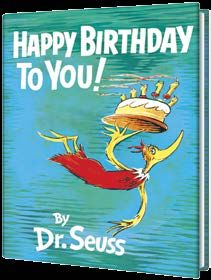
Calendars
How Do We Keep Track of Time?
Some calendars are based on the cycles of the moon (lunar calendars), some are based on the
sun by observing solstices and equinoxes (solar calendars), and some combine parts of both
lunar and solar calendars to balance out the cycles of the moon and the seasons of the year.
There is even a calendar based on rice-growing cycles!

Introduce some different calendars: Gregorian (the                                according to the Chinese zodiac. Some people think
most widely used civil calendar in the world), Chinese,                           the position of the planets and stars when you are
Hebrew, Islamic, Iranian, Ethiopian, and Balinese Saka                            born determines things about your personality. Do
and Pawukon calendars, among many others. Some                                    the students think their assigned animal matches their
cultures have more than one calendar: they may use                                personality? If they could pick different animals for
the Gregorian calendar for business and government                                the zodiac, what would they be? Invite students to
but another one to determine the dates of holidays or                             write stories or skits about their animals.
religious observances.
                                                                            • If Dr. Seuss had a zodiac, what creatures or
• Explain to your students that the zodiac is an                              characters would it include? Kids can choose
  imaginary belt in the sky that includes the paths                           favorites from his stories or create new ones. Ask
  of the planets and is divided into twelve constellations                    them to create profiles of their creatures, including
  or signs, each with a special name and symbol.                              traits, like the ones given for the animals in the
  The Chinese zodiac uses animals as its symbols.                             Chinese zodiac. Compile all the creatures and
  Ask your students to research what animal they are                          choose twelve for a classroom Seussian zodiac.

How Old Are You?
In many parts of Asia, babies are considered one the                        Get students’ imaginations going by asking how
day they are born. In Vietnam, everyone turns a year                        Dr. Seuss might measure age.
older on Tet, the Lunar New Year, not on their birthdate.
                                                                            • By the number of teeth you have lost?
In school, students advance a grade higher each fall
when school starts. In space—on a different planet—                         • By your shoe size?
days and years are different lengths from ours. For
                                                                            • By the number of books you have read?
example, a year on Mars is 687 days because that is
how long it takes Mars to make a full trip around the                       Their new unit of measurement should be a trait or
sun. Have students research: If you lived on another                        experience that all people have or have access to, or
planet, how many years old would you be?                                    a zany thing (like growing feathers or different-colored
                                                                            hair) that would be possible in Dr. Seuss’s world. When
                                                                            they have come up with their unit of measurement, ask
                                                                            each student to share their idea with the class. Then ask
                                                                            each student to calculate their age or draw a picture of
                                                                            themselves showing how old they are using one of the
                                                                            new units of measurement.

                                                                                                                                Subjec
                                                                                                                                         ts:
                                                                                                                              Science
                                          TM & © 2019 Dr. Seuss Enterprises, L.P. All Rights Reserved.                                , Math,
                                                                                                                              Social S
                                                                                                                                       tudies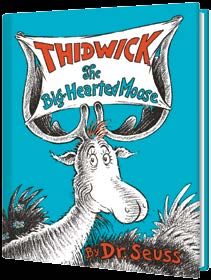
A Year of Reflection
             Birthdays are a great time to reflect on what you’ve done
       and what you’d like to do. We’ve created four different opportunities
        to reflect on Dr. Seuss’s stories and kids’ experiences growing up:
• Try New Things, Learn New Things                                   • Gratitude
• New Beginnings and Sometimes Setbacks                              • Make the World a Better Place

                         Try New Things, Learn New Things
                         Trying new things can be very exciting—                                   new things, have each student draw a
                         and sometimes a little scary, too. But if                                 picture or create a small advertisement
                         you are willing to try something new,                                     for one of their choices. Create a bulletin
                         you can have all kinds of adventures,                                     board titled “Oh, the Things We’ll Do!”
                         and you may find a new favorite thing                                     featuring their goals.
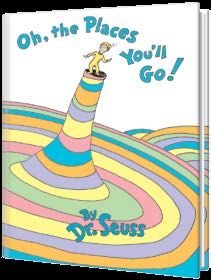
                         or experience. Read Oh, the Places
                                                                                                   Learning about new things is exciting,
                         You’ll Go! or Green Eggs and Ham to
                                                                                                   too. Read I Can Read with My Eyes
                         your students, and ask them how the
                                                                                                   Shut! with your class. Introduce a variety
                         characters in the book feel about trying
                                                                                                   of nonfiction titles, and encourage kids
                         new things or how they feel when things
                                                                                                   to read about something they’d like to
                         go wrong over the course of the story.
                                                                                                   learn about and then share what they’ve
                         Talk with your students about how new
                                                                                                   learned with the class. They can share
                         experiences can be challenging at first
                                                                                                   through oral presentation, drawings or
                         but often have positive outcomes.
                                                                                                   posters, or hands-on experiences.
                         Provide something new for the class to
                         try each day for a week—a food (being
                         mindful of allergies and intolerances), a
                         dance, a game or sport, a medium of art,
                         or anything else you can think of. Have
                         the kids keep a journal of what they like
                         and don’t like. You can even document
                         favorite new experiences in a class bar
                         graph.

                         Once they’ve had a chance to try new
                         things, ask each of your students to
                         brainstorm a list of new things they’d
                         like to try. Allow them time to research
                         how they could do those things. Next,
                         have your students choose a couple of
                         items from their list to share with the
                         group. Once everyone has shared their

                                    TM & © 2019 Dr. Seuss Enterprises, L.P. All Rights Reserved.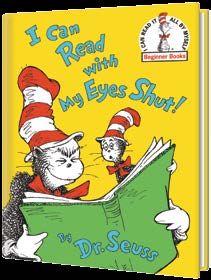
New Beginnings and Sometimes Setbacks
Life doesn’t always go as planned.                                         • What did he learn along the way?
Sometimes goals get sidetracked or
                                                                           Ask your students to think about a
you just have a bad day. And trying
                                                                           time in their own life when something
something new often involves lots of
                                                                           went wrong. How did they handle the
setbacks.
                                                                           situation? Did they try to tackle the
Read I Had Trouble in Getting to Solla                                     problem head-on, or did they decide to
Sollew aloud. Ask your students to think                                   avoid it? How could they have handled
about how the main character handled                                       the situation differently? Who could
his problems in the Valley of Vung.                                        they have asked for help? Did they do
                                                                           something different the next time they
• Was it reasonable for him to think he
                                                                           were in a similar situation?
  could find a place with no problems?
                                                                           Working individually or in groups,
• Would they have done the same thing
                                                                           have the kids think about goals and
  (left the Valley of Vung in search of
                                                                           setbacks. Ask them to create a poster,
  a better place) or tried a different
                                                                           digital presentation, or skit to share with
  strategy? What else could he have
                                                                           the class that shows the meandering
  done?
                                                                           path they took to reach a goal, real or
• Why did he decide to go back to the                                      imagined.
  Valley of Vung? Would they have gone
  back, or stayed in Solla Sollew?

Gratitude
Read Did I Ever Tell You How Lucky You                                     Ask your students to think about
Are? to your students. Ask them to think                                   Dr. Seuss stories in which the characters
about the circumstances of the characters                                  face—and then solve—problems. Ask
in the stories. Then ask your students to                                  them to think about any other stories or
think about things they are thankful for:                                  movies they know in which the same
people, opportunities, even setbacks, or                                   thing happens. Have the students share
things we see, do, or use every day.                                       the stories they’ve thought of, and
Give a few examples of things you are                                      compare and contrast them as a class.
thankful for.                                                              Then ask your students to recall a time
                                                                           when they thought something was bad,
As a group, brainstorm ways people
                                                                           but it turned out to be good. Give an
can express gratitude. Make a list on
                                                                           example from your life or the news. For
the board or on a poster for the kids to
                                                                           example, after ripping your best item
refer to. Create a gratitude jar or bulletin
                                                                           of clothing, you learned to sew, and
board. Ask your students to write down
                                                                           now it is one of your favorite hobbies.
or draw the things they are thankful for.
                                                                           Encourage them to write or draw a
Post their work on the bulletin board or
                                                                           picture about this experience, and then
put it in the gratitude jar. Then take a few
                                                                           share their work.
minutes to read or look at what the kids
are thankful for and discuss.

                                                                                                              Subjec
                                                                                                                        ts:
                                                                                                            Languag
            TM & © 2019 Dr. Seuss Enterprises, L.P. All Rights Reserved.                                              e Arts,
                                                                                                            Social S
                                                                                                                     tudies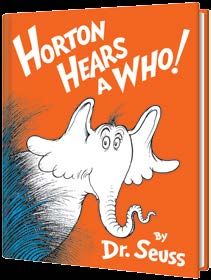
Make the World a Better Place
          Read aloud one or more of these stories                                         • a step-by-step action plan
          about helping to your class. Then talk                                          • an opportunity to reflect on the
          about how the characters handle their                                             experience
          problems. Some act with kindness and
                                                                                          To get your students excited about making
          courage. Others are selfish, elitist, or
                                                                                          the world a better place, create awards
          hostile. Focus on the characters that are
                                                                                          (you can give these out or have students
          trying to help or improve the situation:
                                                                                          nominate each other) that are given when
          for example, Horton, Mack, Thidwick,
                                                                                          a child behaves in a positive way. Read
          or, in the end, the Sneetches.
                                                                                          all four of the suggested titles and discuss
          Ask your students what they think the                                           them before introducing the awards.
          main message of the story is. They
                                                                                          • The Horton Award: for looking out
          may say:
                                                                                            and standing up for someone who
          •   Stand up for others                                                           needs help
          •   Embrace equality and inclusion                                              • The Thidwick Award: for being kind
          •   Resist injustice                                                              and welcoming
          •   Be kind                                                                     • The Mack Award: for speaking out
          Ask the class to think of other ways                                              about injustice
          the characters could have resolved                                              • The Bright-Bellied Sneetch Award:
          each situation in a positive way. Then                                            for being inclusive and finding ways
          brainstorm problems or issues they see in                                         to unify the group
          their classroom, school, and community.
          Once they’ve identified some issues,
          break into groups and ask them to
          come up with a plan of action to solve a
          problem—from small things each person
          can do to big changes they can all
          support. Ask each group to describe their
          issue and their ideas for solutions.

          As a class, choose one issue and work
          together to implement your solutions.

          The plan should include:

          • a description of the problem and an
            explanation of why it is a problem
          • a list of ideas to improve the situation
          • the resources they’ll need to implement
            their plan (including people who
            can help)
          • ways to let people know about the
            problem and how your class wants
            to work on it

                  Guide prepared by Eileen Hanning, Children’s Literacy Consultant
Random House Children’s Books • School and Library Marketing • 1745 Broadway • New York, NY 10019
                           TM & © 2019 Dr. Seuss Enterprises, L.P. All Rights Reserved.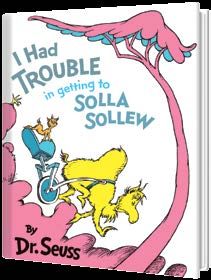
You can also read


