Neurology Webcast July 14, 2020 - Ionis Pharmaceuticals, Inc.
←
→
Page content transcription
If your browser does not render page correctly, please read the page content below

Neurology Webcast July 14, 2020
Forward Looking Language Statement
This presentation includes forward-looking statements regarding our business, financial guidance and the therapeutic and commercial potential
of SPINRAZA® (nusinersen) and Ionis' technologies and products in development, including Ionis’ neurology franchise. Any statement
describing Ionis’ goals, expectations, financial or other projections, intentions or beliefs is a forward-looking statement and should be
considered an at-risk statement. Such statements are subject to certain risks and uncertainties, including those related to the impact COVID-19
could have on our business, and including but not limited to those related to our commercial products and the medicines in our pipeline, and
particularly those inherent in the process of discovering, developing and commercializing medicines that are safe and effective for use as
human therapeutics, and in the endeavor of building a business around such medicines. Ionis’ forward-looking statements also involve
assumptions that, if they never materialize or prove correct, could cause its results to differ materially from those expressed or implied by such
forward-looking statements. Although Ionis’ forward-looking statements reflect the good faith judgment of its management, these statements
are based only on facts and factors currently known by Ionis. As a result, you are cautioned not to rely on these forward-looking statements.
These and other risks concerning Ionis' programs are described in additional detail in Ionis' annual report on Form 10-K for the year ended
December 31, 2019 and our most recent Form 10-Q quarterly filing, which are on file with the SEC. Copies of this and other documents are
available at www.ionispharma.com.
In this presentation, unless the context requires otherwise, “Ionis,” “Company,” “we,” “our,” and “us” refers to Ionis Pharmaceuticals and its
subsidiaries.
Ionis Pharmaceuticals™ is a trademark of Ionis Pharmaceuticals, Inc. Akcea Therapeutics® is a registered trademark of Akcea Therapeutics,
Inc. SPINRAZA® is a registered trademark of Biogen.

                                                                                                                                                     2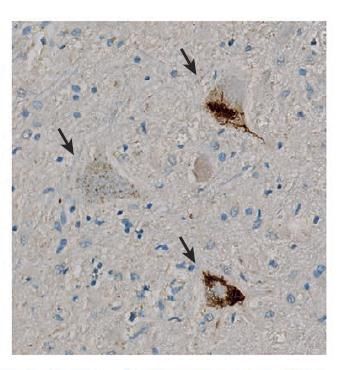
Today’s Presenters

          Brett Monia, Ph.D.          C. Frank Bennett, Ph.D.
          Chief Executive Officer     Chief Scientific Officer
          Ionis Pharmaceuticals       Ionis Pharmaceuticals

                                      Frank Rigo, Ph.D.
          Holly Kordasiewicz, Ph.D.   VP, Functional Genomics &
          VP, Neurology Research      Drug Discovery
          Ionis Pharmaceuticals       Ionis Pharmaceuticals

                                                                  3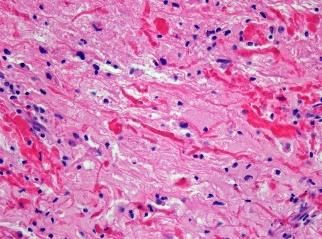
Today’s Agenda
 Welcome and Introductions                                           Wade Walke

 Ionis – The Leader in RNA-targeted Drug Discovery and Development   Brett Monia

 Ionis – The Leader in Targeting Neurological Diseases               Frank Bennett

 Amyotrophic Lateral Sclerosis                                       Frank Bennett & Frank Rigo

 Alzheimer’s Disease and Dementia                                    Holly Kordasiewicz

 Parkinson’s Disease and Multiple System Atrophy                     Holly Kordasiewicz

 Spinocerebellar Ataxias                                             Holly Kordasiewicz

 Ionis-owned Medicines – Prion, Lafora and Alexander’s Diseases      Holly Kordasiewicz

 Conclusion                                                          Brett Monia

 Q&A                                                                 All

                                                                                                  4
Ionis – The Leader
in RNA-targeted
Drug Discovery
and Development
Brett Monia
Where We Are Today
    Our leadership position in RNA-targeted therapeutics continues to grow as our technology
    advances

    We have a large, diverse, expanding, and mature pipeline that continues to
    perform exceptionally well

    The Ionis-owned pipeline is a key priority, will expand substantially, and investments are
    underway to enhance our commercial capabilities

    We have the financial strength to continue advancing our technology and deliver on our pipeline

                  To become the innovation leader in biotech providing hope and
      Vision      transformational benefit to millions of patients living with
                  severe diseases
                                                                                                      6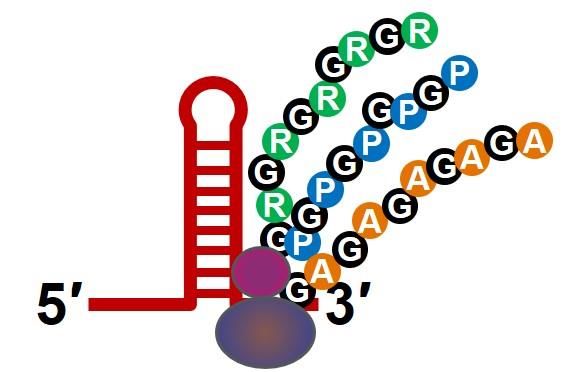
Ionis Delivering Medicines for
Most Major Severe Diseases
               NEUROLOGICAL
             NEUROMUSCULAR
             CARDIOVASCULAR
                   METABOLIC
                 Ultra-rare
                  PULMONARY to Common Diseases
                      CANCER
              HEMATOLOGICAL
                      KIDNEY
             OPHTHALMOLOGY
           INFECTIOUS DISEASE

                                                 7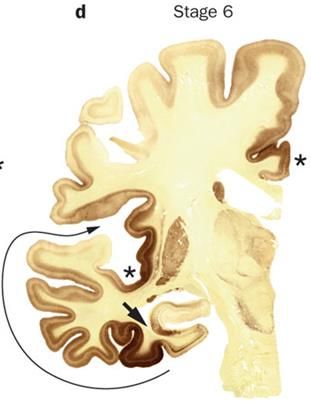
The Ionis
Neurological
Disease Pipeline

  Validated platform
  • Proof of mechanism • Proof of safety
  • Proof of efficacy  • Commercial success

  A rapidly expanding premier pipeline
  tackling the most severe diseases

  Continued technology advancement
  • Greater efficacy
  • Less frequent dosing
  • Systemic applications (e.g. neuromuscular)

                                                 8
Ionis is Cracking the Code in Neurological Diseases

 SPINRAZA                               Alexander disease
 Spinal muscular atrophy                ION373
                                                                   Myotonic dystrophy

 ATTR amyloidosis
 TEGSEDI for hATTR polyneuropathy
                                        Prion disease              Spinocerebellar ataxias
 AKCEA-TTR-LRx for all major forms      ION716

 Huntington’s disease                   Lafora disease             Spinal and Bulbar muscle
 Tominersen (IONIS-HTTRx)               ION283                     atrophy

 Alzheimer’s disease                    Multiple System Atrophy
 IONIS-MAPTRx                           ION464
                                                                   Charcot-Marie-Tooth

 Amyotrophic lateral sclerosis          Angelman syndrome
 Tofersen (IONIS-SOD1Rx), IONIS-C9Rx,
                                        ION581
                                                                   Multiple sclerosis
 ION541 (Sporadic), ION363 (FUS)

 Parkinson’s disease                    Severe epilepsies          Severe pain
 ION859                                 Multiple Programs

 Centronuclear myopathy                                           And many more in
                                        Leukodystrophies
 IONIS-DNM2-2.5Rx                                                 research stage

                                                                                              9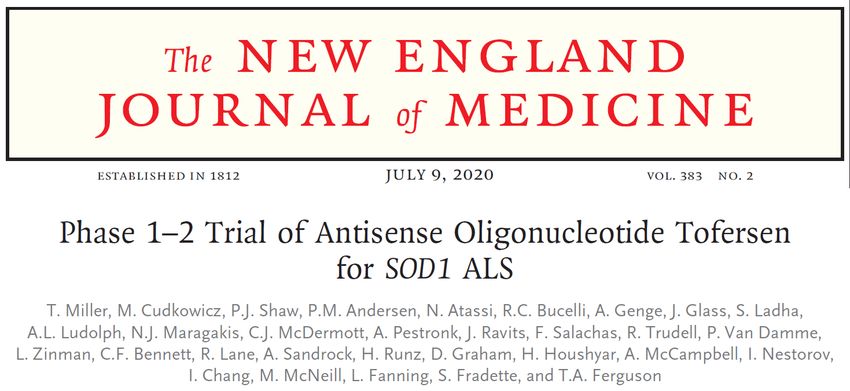
Ionis is Cracking the Code in Neurological Diseases
Ionis-owned Neurological Programs
  SPINRAZA                               Alexander disease
  Spinal muscular atrophy                ION373
                                                                    Myotonic dystrophy

  ATTR amyloidosis
  TEGSEDI for hATTR polyneuropathy
                                         Prion disease              Spinocerebellar ataxias
  AKCEA-TTR-LRx for all major forms      ION716

  Huntington’s disease                   Lafora disease             Spinal and Bulbar muscle
  Tominersen (IONIS-HTTRx)               ION283                     atrophy

  Alzheimer’s disease                    Multiple System Atrophy
  IONIS-MAPTRx                           ION464
                                                                    Charcot-Marie-Tooth

  Amyotrophic lateral sclerosis          Angelman syndrome
  Tofersen (IONIS-SOD1Rx), IONIS-C9Rx,
                                         ION581
                                                                    Multiple sclerosis
  ION541 (Sporadic), ION363 (FUS)

  Parkinson’s disease                    Severe epilepsies          Severe pain
  ION859                                 Multiple Programs

  Centronuclear myopathy                                           And many more in
                                         Leukodystrophies
  IONIS-DNM2-2.5Rx                                                 research stage

                                                                                               10
Ionis – The Leader in Targeting Neurological Diseases Frank Bennett
Advancing and Expanding Ionis’ Neurology Pipeline
                                                                                                                      Pre-clinical and Clinical
                                                                                                                      Development Programs*
                     40
                                                                                                                      • Tominersen (HD)
                     35
                                                                                                                      • Tofersen (ALS)
                     30                                                                                               • TTR-LRx (ATTR)
                                                                                                                      • IONIS-MAPTRx (AD)
                     25
                                                                                                                      • IONIS-C9Rx (ALS)
Neurology Projects

                     20                                                                                               • ION859 (PD)
                                                                                                                      • IONIS-DNM2-2.5Rx (Centronuclear
                     15
                                                                                                                        Myopathy)
                     10                                                                                               • ION373 (AxD)
                                                                                                                      • ION464 (MSA)
                     5
                                                                                                                      • ION541 (ALS)
                     0                                                                                                • ION363 (ALS)
                          2010     2011   2012    2013    2014   2015    2016      2017       2018   2019    2020 *

                                 Drug Discovery    Preclinical   Phase 1/2        Phase 3         Marketed

                                                                   * Projected by year-end 2020                                                           12
Many Neurodegenerative Diseases are Caused by Toxic
Proteins Expressed in Different Brain Regions
Frontotemporal dementia
Cerebral atrophy
Huntington’s disease Misfolded TAU
Whole brain atrophy
HTT protein aggregates Alzheimer’s disease
Cerebral and hippocampal atrophy
Aβ plaques, TAU tangles
Alexander’s disease
Loss of myelin predominantly in Parkinson’s disease
frontal lobe Loss of dopamine neurons in
Rosenthal fibers-GFAP deposits substantia nigra and cortical
atrophy
Lewy bodies: alpha-synuclein
Lewy body disease
Amyotrophic lateral sclerosis Cerebral atrophy
Atrophy of motor neurons and muscles Lewy bodies: alpha-synuclein
Sporadic: TDP43 inclusions
SOD1 Patients: Misfolded SOD1
C9 Patients: Dipeptide repeats and RNA foci
13Ionis’ Neurological Pipeline Targets All Major Brain
Regions
Tofersen
SOD1-Amyotrophic Lateral Sclerosis
Spinal muscular atrophy
14Ionis’ Neurological Pipeline Targets All Major Brain
Regions
Tominersen IONIS-MAPTRx
Huntington’s Disease
Alzheimer’s Disease and
ION373 Tauopathies
Alexander Disease
ION716 ION859
Parkinson’s Disease
Prion Disease
ION283
Lafora Disease ION464
Parkinson’s Disease and
synucleinopathies
Tofersen
SOD1-Amyotrophic Lateral Sclerosis
IONIS-C9Rx
C9-Amyotrophic Lateral Sclerosis
Spinal muscular atrophy
ION541
Sporadic-Amyotrophic Lateral Sclerosis Phase 3
ION363 Phase 1/2
Preclinical
FUS-Amyotrophic Lateral Sclerosis 15Antisense Targets All CNS Cell Types
Total cortex RNA Neurons
• Wild type (normal) mice 150
ED50 = 32 µg
150
E D 50 : 32 g
9 5 % C I: 2 6 -4 0 g ED50 = 206 µg E D 50 : 206 g
9 5 % C I: 1 1 5 -3 6 9 g
M a la t1 R N A E x p r e s s io n
•
M a la t1 R N A E x p r e s s io n
Intracerebroventricular (ICV) bolus injection 100
100
of Malat1 antisense drug at a single dose
(% P B S )
(% P B S )
• Analyzed at 2 weeks after the dose by cell 50
50
sorting with antibody and qPCR
0
0
10 100 1000
10 100 1000
A m o u n t in je c te d ( g )
A m o u n t in je c te d ( g )
Oligodendrocytes Astrocytes Microglia
150 150 150
ED50 = 34 µg E D 50 : 34 g
9 5 % C I: 2 1 -5 5 g
ED50 = 17 µg E D 50 : 17 g
9 5 % C I: 1 3 -2 3 g
ED50 = 71 µg E D 50 : 71 g
9 5 % C I: 5 5 -9 1 g
M a la t1 R N A E x p r e s s io n
M a la t1 R N A E x p r e s s io n
M a la t1 R N A E x p r e s s io n
100 100 100
(% P B S )
(% P B S )
(% P B S )
50 50 50
0 0 0
10 100 1000 10 100 1000 10 100 1000
A m o u n t in je c te d ( g ) A m o u n t in je c te d ( g ) A m o u n t in je c te d ( g )
The ED50 is the dose that produces a 50% reduction in the target RNA
16Ionis’ Neurological Pipeline Also Targets the Peripheral
Nervous System and Muscle
AKCEA-TTR-LRx
All major forms of TTR amyloidosis
Polyneuropathy caused by hereditary
transthyretin-mediated amyloidosis
IONIS-DNM2-2.5Rx
Centronuclear myopathy
17Ionis’ Neurological Disease Pipeline
M E D I CI N E S I N D I C AT I O N PAR T N E R P R E C L I N I C AL P H AS E 1 P H AS E 2 P H AS E 3
Tominersen (IONIS-HTTRx) Huntington’s disease Roche
Tofersen (IONIS-SOD1Rx) ALS Biogen
TTR-LRx TTR Amyloidosis Ionis
IONIS-MAPTRx Alzheimer’s disease Biogen
IONIS-C9Rx ALS Biogen
ION859 Parkinson’s disease Biogen
Centronuclear
IONIS-DNM2-2.5Rx Dynacure
myopathy
Multiple System
ION464 Biogen
Atrophy
ION541 ALS Biogen
ION581 Angelman syndrome Biogen
ION260 Undisclosed Biogen
ION363 ALS Ionis
ION716 Prion diseases Ionis
ION373 Alexander disease Ionis
ION283 Lafora disease Ionis
Numerous development candidates 18Ionis’ Neurological Disease Pipeline
M E D I CI N E S I N D I C AT I O N PAR T N E R P R E C L I N I C AL P H AS E 1 P H AS E 2 P H AS E 3
Tominersen (IONIS-HTTRx) Huntington’s disease Roche
Tofersen (IONIS-SOD1Rx) ALS Biogen
TTR-LRx TTR Amyloidosis Ionis
IONIS-MAPTRx Alzheimer’s disease Biogen
IONIS-C9Rx ALS Biogen
ION859 Parkinson’s disease Biogen
Centronuclear
IONIS-DNM2-2.5Rx Dynacure
myopathy
Multiple System
ION464 Biogen
Atrophy
ION541 ALS Biogen
ION581 Angelman syndrome Biogen
ION260 Undisclosed Biogen
ION363 ALS Ionis
ION716 Prion diseases Ionis
ION373 Alexander disease Ionis
ION283 Lafora disease Ionis
Numerous development candidates 19• Transformational therapy with over
SPINRAZA 10,000 patients on SPINRAZA therapy
worldwide and 2019 revenue of $2.1B*
• Continued opportunities for growth in
2020 and beyond
Creating new futures for SMA patients and • Committed to expanding our SMA
their families franchise with new innovative
technologies for SMA patients
* Commercialized by Biogen
20NURTURE Study
Infants treated presymptomatically enables survival and gains in motor function
consistent with normal development
Nusinersen continued to impact disease course in children who initiated treatment
in the presymptomatic stage of SMA
• All children were alive, and 84% have never required any ventilation support
• Children continued to make gains in motor function
• Children are developing in a manner more consistent with normal development than that expected for children with
2 and 3 SMN2 gene copies1,2
Many motor milestones Lower pNF-H levels on treatment No new
were achieved within significantly correlated with future safety
normal limits, and there HINE-2 total motor milestone score concerns
was no loss of major motor and earlier achievement of walking were
milestones alone identified
These data demonstrate the durability of effect over a median of 3.8 years of follow-up, with children
D A T A
T I M E
aged 2.8–4.8 years at last visit
NURTURE study interim analysis data cutoff date: 19 February 2020
1. Finkel RS, et al. Neurology. 2014;83(9):810-817. 2. Kolb SJ, et al; NeuroNEXT Clinical Trial Network on behalf of the NN101 SMA Biomarker Investigators. Ann Neurol.
2017;82(6):883-891.
21SPINRAZA Treatment Demonstrated Improved Motor
Function and Disease Stabilization in Adult SMA Patients
Spinraza demonstrated treatment effect, which had
never occurred in this patient population
Demonstrated meaningful improvements in motor
function in a real-world cohort
The oldest patient (71) treated with Spinraza
demonstrated marked improvement in motor functions
Disease stabilization or improvements in motor
function demonstrated in SMA adult patients 22SPINRAZA
The SMA foundation of care for SMA patients of all ages
• Transformational therapy with over
10,000 patients on SPINRAZA therapy*
• Unprecedented efficacy demonstrated
across all forms of SMA
• Favorable safety and tolerability profile
• Potential to achieve even greater
efficacy with a higher dose in the
DEVOTE Phase 2/3 study
• SPINRAZA next generation product –
potential improvement in convenience
and efficacy
Logan, living with SMA
* Patients on therapy across the pos-marketing setting the EAP and clinical trials 23Huntington’s Disease A rare, genetic, fatal neurological disease
Huntington’s
Disease
A rare, genetic, fatal neurological disease
Toxic mutant huntingtin
>35 repeats
HD Gene ….CCTTCCAGCAGCAGCAG…….CCGCC…
Caused by a toxic gain-of-function triplet repeat (CAG) expansion in the huntingtin gene,
HEREDITARY 100% of individuals who inherit mutation will develop the disease
Progressive loss of mental faculties and physical control. Families endure the catastrophic
DEVASTATING impact of the disease over generations
No effective treatments or cure; symptom onset occurs between ages of 30-50, characterized by
FATAL
progressive brain & muscle tissue atrophy, leading to death 15-20 years post symptom onset
WIDESPREAD Approximately 40,000 symptomatic patients in the U.S.*
*Yohrling, G. et al. (November 2019). Prevalence of Huntington’s disease in the U.S. Poster session, Huntington Society Group.
25• Phase 3 study for Huntington’s
disease
Tominersen
(IONIS-HTTRx) • First and only late-stage medicine
targeting the cause of Huntington’s
disease
• Fully enrolled, data expected in 2022
For patients with Huntington’s disease
• Granted Orphan designation by FDA
and EMA, and PRIME designation by
EMA
26Tominersen
A comprehensive program targeting the cause of Huntington’s disease
Phase I/IIa1 N=46 Open-Label Extension N=462
• First-in-human study • Long-term safety, tolerability, PK and PD
• Safety, tolerability, PK and PD ✓ • Early manifest HD patients ✓
• Early manifest HD patients • 15 months
HD Natural History Study N=953
✓ Complete
• Prospective, longitudinal study
• Early manifest HD patients
✓ Complete, data expected in 2021 • 15 months
Ongoing, recruitment complete
GEN-EXTEND5
GENERATION HD1 N=7914 (OLE)
Ongoing, recruiting • Pivotal, long-term efficacy and safety
• Manifest HD patients
• 25 months (plus follow-up)
Includes digital monitoring platform GEN-PEAK N=≤20†6
• PK/PD in CSF and plasma
• Manifest HD patients
• 7 months including follow-up
†An additional 8 patients may be included to allow investigation of additional dose levels and repeat doses if necessary. CSF, cerebrospinal fluid; HD, Huntington's disease; OLE, open-label
extension; PD, pharmacodynamics; PK, pharmacokinetics. 1. Tabrizi SJ, et al. N Engl J Med. 2019; 380:2307–2316; 2. Clinicaltrials.gov/show/NCT03342053 (Accessed February 2020); 3.
Clinicaltrials.gov/show/NCT03664804 (Accessed February 2020); 4. Clinicaltrials.gov/show/NCT03761849 (Accessed April 2020); 5. Clinicaltrials.gov/show/NCT03842969 (Accessed February 2020);
6. Clinicaltrials.gov/show/NCT04000594 (Accessed February 2020).
27Tominersen
Potential breakthrough medicine for Huntington’s disease
• First disease-modifying medicine targeting the cause of HD
• Robust and sustained reductions in mutant huntingtin protein (mHTT)* in
patients
• Favorable safety and tolerability profile*
• Granted Orphan designation by FDA and EMA, and PRIME designation by
EMA
• Long durability of action (bi-monthly and tri-annual dosing)
• GENERATION HD1 Phase 3 study enrollment complete, data expected in
2022
*Based on results from open-label extension (OLE) study
28Amyotrophic Lateral Sclerosis Frank Bennett and Frank Rigo
Amyotrophic Lateral Sclerosis
A fatal disease with a tremendous unmet medical need

•   Severe disease characterized by motor neuron degeneration resulting in
    paralysis and respiratory failure

•   Rapidly progressive, with average survival of 3-5 years from diagnosis
                                                                                                                        1
•   ~55,000 patients diagnosed in the G7 countries
    •   Sporadic ALS: ~90%
    •   Familial ALS (e.g. SOD1, C9, FUS): ~10%

•   Familial and sporadic ALS programs underway with Ionis and Biogen

           1. Biogen data on file, G7 countries include the U.S., Germany, the U.K., France, Italy, Spain, and Japan.
                                                                                                                            30
• VALOR Phase 3 study for SOD1-ALS
ongoing
Tofersen
(IONIS-SOD1Rx) • Results from the Phase 1/2 study of
tofersen* demonstrated a slowing of
decline of clinical function
• Data from the VALOR Phase 3 study
Targeting SOD1 for patients with SOD1-ALS expected in 2021
• Granted Orphan Drug Designation by
the FDA and EMA
* Licensed to Biogen
31The New England Journal of Medicine Publishes Positive
Final Results from Phase 1/2 Study of Tofersen
32Phase 1/2 Results: Treatment with Tofersen 100 mg Demonstrated a
Slowing of Decline of Clinical Function
Clinical Outcome Lung Function
ALSFRS-R % Predicted SVC
Overall Overall
LS Mean Change
(percentage points)
LS Mean Change
Tofersen 100 mg (n=10) Tofersen 100 mg (n=10)
Placebo (n=12) Placebo (n=12)
Fast-Progression Subgroup Fast-Progression Subgroup
(percentage points)
LS Mean Change
LS Mean Change
Fast Disease Fast Disease
Progressors Progressors
Tofersen 100 mg (n=4)
Tofersen 100 mg (n=4)
Placebo (n=4)
Placebo (n=4)
Study Day Study Day
ALSFRS-R = ALS Functional Rating Scale–Revised; SVC = slow vital capacity
33Phase 3 VALOR Study of Tofersen
Innovative study design with potential to support registration
• A global, randomized, double-blind, placebo-controlled study in ~ 99 patients with ALS and a confirmed
SOD1 mutation, randomized 2:1 to tofersen 100 mg by intrathecal injection or placebo
• Outcome measures:
▪ Primary: Change from baseline in ALSFRS-R total score
▪ Secondary: Clinical measures, change in SOD1 CSF levels, safety and tolerability
Loading period Maintenance period
Three doses Q2W 5 doses Q4W
Randomized
(4-8 weeks)
Tofersen 100 mg
Follow up
Open-label
2:1
Screening
extension
Placebo
≥4 weeks 24 weeks ~4 years
Achieved Orphan Drug Designation
Data expected in 2021
ALS = amyotrophic lateral sclerosis; ALSFRS-R = ALS Functional Rating Scale–Revised; CSF = cerebrospinal fluid; Clinicaltrials.gov, NCT02623699
34Tofersen
First investigational medicine to demonstrate clinical benefit in SOD1-ALS patients
• Treatment with tofersen in Phase 1/2 study demonstrated robust SOD1
reductions in the CSF
• Trends in slowing of disease progression demonstrated in Phase 1/2 study
• In rapidly progressing patients, tofersen (100 mg) demonstrated benefit in functional and
respiratory measures after only 3 months of treatment
• Generally well tolerated
• VALOR Phase 3 study in adult ALS patients with SOD1 mutations underway,
data expected in 2021
35• Ongoing Phase 1/2 for C9orf72-ALS,
data expected in 2021
IONIS-C9Rx
• The first medicine to specifically target
Frank Rigo
mutant C9orf72 mRNA
Targeting mutant C9orf72 for patients with
C9-ALS • Granted Fast Track Designation by the
FDA
IONIS-C9Rx (BIIB078): In collaboration with Biogen
36IONIS-C9Rx
For the treatment of familial Amyotrophic Lateral Sclerosis (ALS)
• A novel approach for the treatment of patients with ALS who have a mutation
in the chromosome 9 open reading frame 72 (C9orf72) gene, for whom there
is no effective treatment
• Highly potent and selective inhibitor of human mutant C9orf72 transcripts
• Proof of concept obtained in an animal model of C9-ALS
• Intrathecal administration allows for direct access to key affected regions of
the central nervous system
• Safety, tolerability and pharmacokinetic profile of IONIS-C9Rx in adults with
C9orf72-ALS is being evaluated in a Phase 1/2 clinical study conducted by our
partner Biogen
• Data from the Phase 1/2 clinical study expected in 2021
37C9orf72 Molecular Pathology
Mutant C9orf72 toxic gain of function
C9orf72 repeat expansion
causes a toxic gain of
function leading to rapid GGGGCC
progressive loss of motor
neurons
Decrease Repeat RNA-mediated Dipeptide protein
Transcription toxicity toxicity
R GR
G P
R G PG
G
C9orf72 RBP R
G
P A GA
protein RBP G
R GP A G
A G
GP G
A
5′ 3′ 5′ G
3′
RBP = RNA Binding Protein
38C9orf72 Molecular Pathology
Mutant C9orf72 toxic gain of function
In preclinical studies, we showed
that we can selectively reduce the
toxic C9orf72 RNA with a C9 GGGGCC
antisense oligonucleotide and
demonstrated reduced behavioral
deficits were sustained
Decrease Repeat RNA-mediated Dipeptide protein
Transcription toxicity toxicity
R GR
G P
R G PG
G
C9orf72 RBP R
G
P A GA
protein RBP G
R GP A G
A G
GP G
A
5′ 3′ 5′ G
3′
RBP = RNA Binding Protein
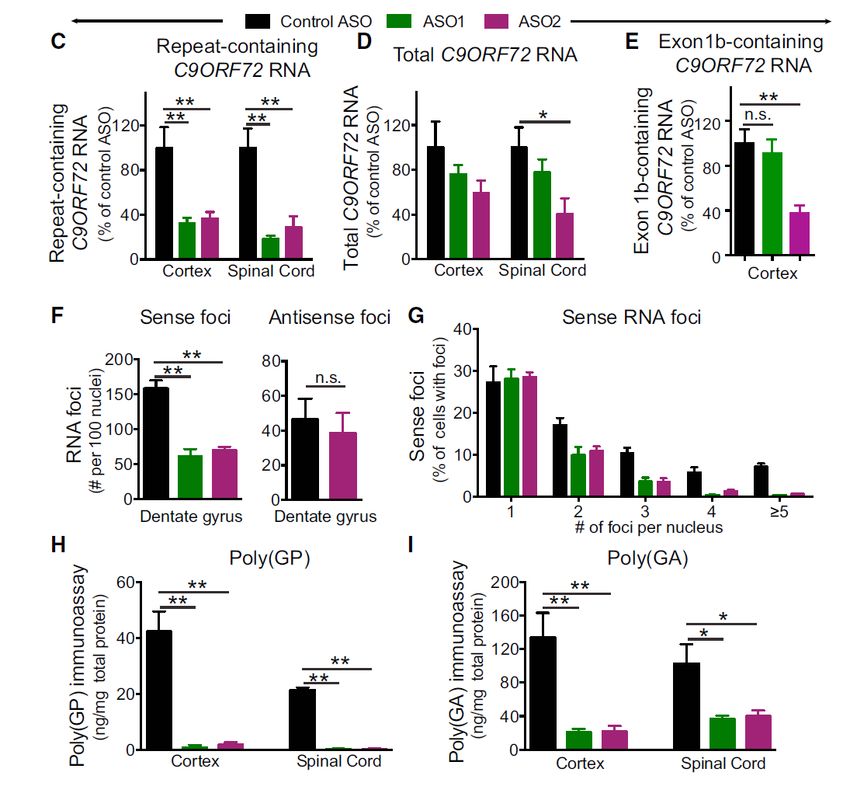
39Antisense Suppression of Mutant C9orf72 Transcripts
Reduces repeat RNA & dipeptide protein toxicity in a mouse model of C9orf72-ALS
Decreases mutant C9orf72 Decreases repeat Decreases dipeptide protein
transcripts w/out affecting total RNA-mediated toxicity toxicity
C9orf72 RNA/protein
C9orf72
protein
Jiang et al., Neuron 2016. 40IONIS-C9Rx Phase 1/2 Study
Study in patients with C9ORF72-ALS (ongoing)
• Design: A randomized, double-blind, placebo-controlled, multiple-ascending dose study in up to 90 patients
with C9ORF72-ALS
• Primary Endpoint: Safety and tolerability of intrathecally administered IONIS-C9Rx compared to placebo
• Key Secondary Endpoints:
▪ Change from baseline in Amyotrophic Lateral Sclerosis Functional Rating Scale – Revised (ALSFRS-R) scores
▪ Percent change from baseline in Predicted Slow Vital Capacity (SVC)
▪ Change in muscle strength from baseline as measured using hand-held dynamometry (HHD)
• Dosing Regimen: 3 loading doses followed by two maintenance doses for cohorts 1-3 and five maintenance
doses for cohorts 4-5
Dosing = Loading doses = Maintenance doses
Cohorts 1 – 3 3:1
13 weeks
R
22 weeks
Screening
Follow up Open-label
Cohorts 4 – 5 Dosing
Extension
3:1
26 weeks
R
22 weeks
Screening
Follow up
Granted Fast Track Designation
Data Expected in 2021 41ION363
• The first medicine to target FUS-ALS
• Initiation of Phase 1/2 clinical study on
track for the end of 2020/early 2021
Targeting FUS for patients with FUS-ALS
42FUS-ALS
Caused by mutations in the Fused in Sarcoma (FUS) gene – no effective treatment
• 3rd most common inherited form of ALS
• ~25% incidence of SOD1-ALS
• Caused by mutations in the Fused in Sarcoma (FUS) gene
• FUS-ALS is generally a predictably fast progressing disease
• Good genotype-phenotype correlation
• FUS mutations cause motor neuron degeneration through a
toxic gain of function mechanism
• FUS is an RNA binding protein
• Mutant FUS protein aggregates in the cytoplasm
MacKenzie et al., Lancet Neurology 2010.
43ION363
First medicine targeting FUS-ALS
• Antisense-mediated reduction of mutant FUS protein in a FUS-ALS mouse
model prevents motor neuron loss
• We have identified a clinical candidate, ION363, which is designed to
selectively reduce the expression of human FUS
• Our FUS medicine has been used by a clinical investigator to treat several ALS
patients with FUS mutations under a compassionate use IND
• Initiation of Phase 1/2 study in FUS-ALS patients on track for the end of
2020/early 2021
• Potential for a rapid path to the market
Fused in sarcoma background image by Ismaïl Jarmouni
- Own work, CC BY-SA 4.0, https://commons.wikimedia.org/wiki/User:AtikaAtikawa 44ION541
• Initiation of Phase 1/2 clinical study on
track for 2H20
• The first medicine to specifically
diminish TDP-43 aggregation, the
Targeting ATXN2 for patients with sporadic pathological hallmark of ALS
ALS
ION541 (BIIB105): In collaboration with Biogen
45Sporadic ALS: TDP-43 Aggregation
• ~90% of ALS is sporadic, with no apparent familial history
• A prominent pathological hallmark found in the neurons of people with sporadic
ALS is the aggregation of the RNA binding protein called TDP-43
• TDP-43 aggregation induces toxicity to motor neurons
Arrows show
cytoplasmic TDP-43 inclusions in
spinal cord motor neurons
Taylor et al., Nature 2016.
46ION541 Targeting Sporadic ALS
• ATXN2 has been shown to play a role in modulating TDP-43 toxicity, and human genetic data
validates it as a target for sporadic ALS
• ION541, a highly potent inhibitor of ATXN2 mRNA, is the first gene-targeted medicine designed
to diminish the toxicity of TDP-43
• ASO-mediated reduction of ATXN2 increases survival and motor function in mouse models of TDP-43
toxicity
Survival Motor Function
Becker et al., Nature 2017.
47We Are Committed to Treating All Forms of ALS
• Tofersen: Phase 3 VALOR study underway (data
expected 2021)
Multiple ALS Medicines in
Development
• IONIS-C9Rx: Phase 1/2 study ongoing in C9-
familial ALS (data expected 2021)
MEDICINE INDICATION PRECLINICAL PHASE 1 PHASE 2 PHASE 3
• ION363, Ionis-owned targeting FUS on track to
initiate a Phase 1/2 study in FUS-ALS in late Tofersen
(IONIS-SOD1Rx)
SOD1-ALS
2020/early 2021 IONIS-C9Rx C9-ALS
ION363
• ION541 targeting ATXN2 in sporadic ALS on track
FUS-ALS
(FUS)
ION541
to initiate a Phase 1/2 study in 2H20 (ATXN2)
Sporadic ALS
Numerous medicines advancing
into development
• Additional programs advancing focused on
treating all forms of ALS
48Alzheimer’s Disease and Dementia Holly Kordasiewicz
Tauopathies:
A spectrum of fatal, progressive and devastating diseases

•   Tauopathies are a group of neurodegenerative diseases characterized by accumulating
    intracellular fibrillar tau inclusions, or tangles1
    •   Tangles begin as soluble and monomeric tau protein and develop into hyper-phosphorylated, insoluble
        and filamentous tau in various disease states
    •   Tangled tau proteins result in a toxic-gain-of-function associated with synaptic and neuronal loss2

•   Tangles are the hallmark feature of tauopathies, including, but not limited to, Alzheimer’s
    disease, frontotemporal degeneration
•   An unmet need exists for a therapy with the ability to delay disease onset and progression in all
    types of tauopathies

           AD: Alzheimer’s disease, TD: Tangle-only dementia, AGD: Argyrophilic grain disease, PSP: Progressive supranuclear palsy, CBD: Corticobasal degeneration, PiD: Pick
           disease. 1. Alonso AC, Zaidi T, Grundke-Iqbal I, Iqbal K. PNAS 1994; 91: 5562-5566; 2. Spillantini MG and Goedert M. Lancet Neurol 2013; 12: 609-622.                50
Alzheimer’s Disease and Frontotemporal Degeneration
Severe and progressive neurodegenerative diseases
Alzheimer’s disease (AD) and frontotemporal degeneration (FTD) are forms of dementia
characterized by predominant memory impairment and behavioral changes, resulting in
progressive loss of independence and eventually death
Mutations in MAPT directly cause some forms of Accumulation of pathologic tau is an AD pathology
FTD and correlates with cognitive decline in AD1
Approximately Approximately
50,000 – 60,000 5.5 million
people are affected people are living
by FTD in the U.S.3 with AD in the U.S.2
1. Huang Y and Mucke L. Cell 2012; 148(6): 1204-1222; 2. Latest Alzheimer’s Facts and Figures. Alzheimer’s Association (2013). www.alz.org/facts/overview.asp.;
3. Knopman DS and Roberts RO. J Mol Neurosci 2011; 45: 330-335
51IONIS-MAPTRx • We designed IONIS-MAPTRx* to
selectively reduce production of the
tau protein in the brain
• A Phase 1/2 study in patients with
Alzheimer’s disease is ongoing with
For patients with Alzheimer’s disease and data expected in 2021
other tauopathies
* IONIS-MAPTRx (BIIB080) Licensed to Biogen
52IONIS-MAPTRx
Designed to selectively reduce the microtubule-associated protein tau (MAPT)
• IONIS-MAPTRx is an antisense medicine we designed to bind to MAPT pre-
mRNA, thereby promoting specific degradation of MAPT RNA
• Degradation of MAPT RNA prevents the translation of tau protein
• Decreasing production of all isoforms, post-translation modifications and conformations of
the tau protein is expected to target the primary mechanism in tauopathies
• In preclinical studies in transgenic rodents, treatment with MAPT-targeting
antisense medicines suppressed human tau and provided evidence for
prevention of, and reversal of existing, tau pathology
53Suppression of Human Tau with MAPT-targeting Antisense
Medicine Reversed Disease-state Pathology in Mice
Total AT8 Tau Staining in Hippocampus and
Brain of Transgenic Mice • MAPT-targeted antisense
treatment reversed
Tau Pathology (% AT8)
pathology in mice with a
progressed disease-state
• PS19 mice treated at 9
z Pathology at 12 mo. of age months with MAPT-
Pathology at 9 mo. of age targeting antisense
medicine had less severe
Pathology at 12 mo. of age after
treatment with Tau antisense drug
pathology at 12 months
Model: NT PS19 PS19 PS19 of age (red) than control
Control Control Control Tau
Treatment (Tx): ASO ASO ASO
PS19 mice at 9 months
ASO
Age Tx start: of age (light gray)
6 9 9
Age analysis: 9 12 12
*p < 0.05, ****p < 0.0001; AT8 = Common monoclonal antibody used for detecting tau, NT = Non-transgenic/Negative Control, Control Antisense Drug, PS19 = Transgenic mouse model
that expresses human tau carrying the P301S mutation; Note: PS19 mice at 9 months of age were treated with control or MAPT-targeting antisense drugs for one month at 30 μg/day
via Alzet osmotic pump for slow infusion; DeVos, S. L. et al. Sci. Transl. Med. 9, eaag0481 (2017).
54IONIS-MAPTRx Phase 1/2 Study (ongoing)
Enrollment completed January 2020, data expected 2021
• A double-blind, randomized, placebo-controlled, multiple-ascending dose study in up to 46 patients with
mild Alzheimer’s disease (AD) delivered by intrathecal bolus administration
• Objectives:
• Evaluate the safety and tolerability
• Evaluate CSF pharmacokinetics and pharmacodynamic effects (effects on CSF levels of total tau protein)
Monthly Dosing Post-Treatment f/u Period
Cohorts 1 – 3 3:1
Long-term
Up to 8 weeks 13 weeks 23 weeks
(Monthly) R Extension (LTE) Study
48 Weeks (Quarterly dosing)
Screening D1 D29 D57 D85
Cohort 4 Quarterly Dosing Post-Treatment f/u Period
(Quarterly) 3:1
Long-term
Up to 8 weeks 13 weeks 23 weeks Extension (LTE) Study
R 48 Weeks (Quarterly dosing)
Screening D1 D85
55Parkinson’s Disease and Multiple System Atrophy
Synucleinopathies:
A Spectrum of terminal, progressive and devastating diseases

• Synucleinopathies are a class of                                        Time
  diseases directly linked to accumulation
  of asyn1
• Synucleinopathies include:
 •   Parkinson’s disease (PD)
 •   Multiple system atrophy (MSA)
 •   Diffuse Lewy body disease (DLBD)
 •   Dementia with Lewy bodies (DLB)
 •   Gaucher disease
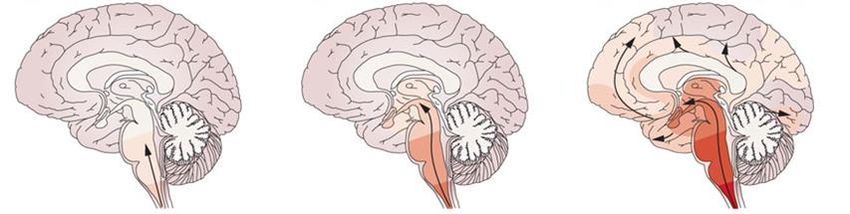
• No therapy exists to target the underlying
  disease pathology in synucelinopathies                                      aSyn accumulations increase in density
                                                                              (darker red) and spread throughout the PD
                                                                              brain2
                                        1. Savicaet al. 2013; 2. Goedert et al., 2013                                     57
Parkinson’s Disease and Multiple Systems Atrophy
• Parkinson’s disease (PD) is a progressive neurodegenerative disease characterized
by loss of neurons in the motor system
• Patients can experience tremors, loss of balance and coordination, stiffness, slowing of
movement, changes in speech and in some cases cognitive decline
• Parkinson’s disease is ultimately fatal, and effects 1% of the population over 60 (~10M WW)
• Multiple system atrophy (MSA) is a rare, fatal, rapidly progressing
neurodegenerative disease
• Patients with MSA typically experience progressive motor dysfunction, with death often
occurring within 5-10 years after symptom onset
• MSA effects ~15,000 people in the U.S.1
• There are currently no disease modifying therapies
• The exact cause is unknown, but it is believed to be a combination of genetics and
environmental factors
1. Fanciulli and Wenning. Multiple-Systems Atrophy. NEJM 2015. 58ION464
• ION464 targets SNCA mRNA, and
prevents the production of alpha-
synuclein
• Phase 1/2 study in patients with
For patients with Multiple System Atrophy Multiple System Atrophy initiated
(MSA) and Parkinson’s disease (PD)
ION464 (BIIB101): In collaboration with Biogen
59ION464 Phase 1/2 Study
Study in patients with Multiple Systems Atrophy
• Randomized, triple-blind, placebo-controlled, dose-escalation (MAD) study in up to 34 patients
with multiple systems atrophy
• 3 multiple-ascending dose cohorts
• Objectives:
• Safety and tolerability
• Evaluate pharmacokinetic profile
Multiple Ascending Dose (MAD) Multiple Intrathecal Post-Treatment
Doses Evaluation Period
12 weeks 12 weeks
6 weeks
R
Screening
60ION859
• ION859* targeting LRRK2
• Phase 1/2 study in patients with
Parkinson’s disease ongoing
For patients with Parkinson’s disease (PD)
* ION859 (BIIB094) In collaboration with Biogen
61ION859 Targets LRRK2
The most common genetic cause of Parkinson’s disease
• ION859 is an antisense medicine we designed to inhibit the production of
LRRK2 protein and is being developed as a potential therapy for Parkinson’s
disease
• The most common dominantly inherited mutations in PD cases are found in the
LRRK2 gene
• Increased LRRK2 protein activity may be one of the key drivers of PD pathogenesis
• Reduction of LRRK2 mRNA and, subsequently, reduced synthesis of LRRK2
protein, may ameliorate the toxic effects of gain-of-function mutations as well as
the primary pathology in PD patients without the LRRK2 mutation
First patient dosed 3Q19
Data Expected 2022
62ION859 Targeting Leucine Rich Repeat Kinase 2 (LRRK2)
for Patients with Parkinson’s Disease (PD)
Alpha-synuclein Pathology
• LRRK2 is a member of a family of LRRKs composed of
functional GTPase and kinase domains flanked by multiple
protein-protein interaction domains1 Decreased
Pathology
• Dominantly inherited gain-of-function mutations in the LRRK2
gene cause Parkinson’s disease3
Model:
• LRRK2 protein is increased in sporadic PD and in LRRK2 Treatment:
mutation carriers4 Motor function
• Suppression of LRRK2 in models of sporadic PD is
beneficial5
• There are advantages to centrally delivered LRRK2 ASOs Increased
over small molecule kinase inhibitors, as ASOs do not function
suppress lung LRRK25
Model:
Treatment:
1. MacLeod et al. Neuron 2006, Matta et al. Neuron 2012, Beilina et al. PNAS 2014, Gillardon et al J Neurochem 2009, for review see Rudenko et al
Neurotherapeutics 2014; 2. Berg et al. 2005, Healy et al. 2008, Paisan-Ruiz et al. 2004, Zimbrick et al. 2004; 3. Cho et al. 2013, Guerreiro et al. 2013,
Mabrouk et al.; 4. Zhao et al. 2017. 63ION859 Phase 1/2 REASON Study
Ongoing study in patients with Parkinson’s disease
• Randomized, double-blind, placebo-controlled, dose-escalation (SAD/MAD) study in up to 62 patients with
Parkinson’s disease (PD) caused by a LRRK2 mutation as well as patients with sporadic PD and no
verified PD-related genetic mutation
• 4 single-ascending dose cohorts (SAD) and 3 multiple-ascending dose cohorts (MAD)
• MAD dose cohorts include PD patients with verified LRRK2 mutation and sporadic PD patients
• Objectives: Evaluate the safety and tolerability and pharmacokinetic profile of multiple doses of ION859
Post-Treatment
Evaluation Period
Single Ascending Dose (SAD)
12 weeks
6 weeks
R
Screening Single
Intrathecal
Dose
Multiple Intrathecal Post-Treatment
Doses Evaluation Period
Multiple Ascending Dose (MAD)
12 weeks 24 weeks
11 weeks
R
First M1 M2 M3
Screening dose 64• Class of rare diseases
Spinocerebellar
Ataxias • Patients often experience loss of
balance and motor dysfunction
• No cure for spinocerebellar ataxias
65Spinocerebellar Ataxias are a Growing Class of More
Than 30 Diseases Affecting ~200,000* SCA Patients
repeat expanded in SCA
• Progressive neurodegenerative diseases with
predominant cerebellar dysfunction, but ATXN1
ATXN2
often accompanied by broader CNS ATXN3
involvement ATXN7
• Most prevalent diseases in the class are
dominantly inherited expansion (e.g. CAG) SCA1 6%
mutations, with a toxic gain of function SCA2 15%
~200,000
Unknown SCA Patients* SCA3 21%
RareOur Medicines Target the Primary Mechanism of Disease
Pathogenesis in Dominantly Inherited SCAs
ATXN2 SCA2 therapy ATXN3 SCA3 therapy
ATXN1 SCA1 therapy ATXN7 SCA7 therapy
67Advancing the Ionis-owned Neurological Disease Pipeline Holly Kordasiewicz
Ionis’ Neurological Disease Pipeline
    M E D I CI N E S        I N D I C AT I O N    PAR T N E R   P R E C L I N I C AL   P H AS E 1   P H AS E 2   P H AS E 3
Tominersen (IONIS-HTTRx)   Huntington’s disease   Roche

Tofersen (IONIS-SOD1Rx)    ALS                    Biogen

TTR-LRx                    TTR Amyloidosis        Ionis

IONIS-MAPTRx               Alzheimer’s disease    Biogen

IONIS-C9Rx                 ALS                    Biogen

ION859                     Parkinson’s disease    Biogen
                           Centronuclear
IONIS-DNM2-2.5Rx                                  Dynacure
                           myopathy
                           Multiple System
ION464                                            Biogen
                           Atrophy
ION541                     ALS                    Biogen

ION363                     ALS                    Ionis

ION581                     Angelman syndrome      Biogen

ION260                     Undisclosed            Biogen

ION716                     Prion diseases         Ionis

ION373                     Alexander disease      Ionis

ION283                     Lafora disease         Ionis

Numerous development candidates                                                                                               69
Ionis’ Neurological Disease Pipeline
M E D I CI N E S I N D I C AT I O N PAR T N E R P R E C L I N I C AL P H AS E 1 P H AS E 2 P H AS E 3
Tominersen (IONIS-HTTRx) Huntington’s disease Roche
Tofersen (IONIS-SOD1Rx) ALS Biogen
TTR-LRx TTR Amyloidosis Ionis
IONIS-MAPTRx Alzheimer’s disease Biogen
IONIS-C9Rx ALS Biogen
ION859 Parkinson’s disease Biogen
Centronuclear
IONIS-DNM2-2.5Rx Dynacure
myopathy
Multiple System
ION464 Biogen
Atrophy
ION541 ALS Biogen
ION363 ALS Ionis
ION581 Angelman syndrome Biogen
ION260 Undisclosed Biogen
ION716 Prion diseases Ionis
ION373 Alexander disease Ionis
ION283 Lafora disease Ionis
Numerous development candidates 70ION373 • Ultra rare disease that is severe,
rapidly progressing and often fatal
• Patients often experience seizures,
loss of body movements, development
delays
For patients with Alexander disease
• No cure for Alexander disease
71ION373 Targets GFAP for the Treatment of Alexander
Disease
• Alexander disease (AxD) is an often fatal primary
disorder of astrocytes, caused by autosomal
dominant gain-of-function mutations in GFAP, an Vehicle
Functional observational battery
astrocytic intermediate filament1 GFAP antisense (ASO) drug
• Mutations in GFAP cause spontaneous
overexpression of GFAP that accumulates in intra-
astrocytic inclusions called Rosenthal fibers, the Improved
pathological hallmark of the disease2 function
• GFAP antisense treatment in rodent models
reverses spontaneous GFAP overexpression, ASO injection
Rosenthal fibers, astro- and micro-gliosis, and
restores body weight and limb strength3
1. Brenner et al., Nat Genet, 2001; 2. Rosenthal, Beitr Pathol Anat, 1898; Messing et al., J Neurosci, 2012;
3.Hagemann et al., Ann Neurol. 2018 72• Rare, rapidly progressing and fatal
ION716
neurological diseases
• Symptoms include difficulty walking,
speaking and rapidly developing
dementia
For patients with Prion diseases • Death occurs within months to years
following symptom onset
• No cure or effective treatment
73Suppression of PRNP for the Treatment of Prion Diseases
(ION716)
Genetic
• Prion diseases are fatal (Mutations in
PRNP) 14%
neurodegenerative diseases
Acquired 1%
caused by misfolding of the cellular Sporadic
(Ingestion (kuru, BSE) &
prion protein (PrPC) into misfolded, iatrogenic) (unknown origin)
proteinaceous scrapie PrPSc 85%
• ION716 targets the PRNP RNA, and
is predicted to treat all forms of
prion disease1
• ASO-mediated suppression of
PRNP can dramatically delay
disease in rodent models of prion
disease
74
1. Raymond et al., JCII 2019ION283 • Ultra rare, fatal genetic disorder
resulting in severe epilepsy and
dementia
• Onset typically in childhood
For patients with Lafora disease
• No available treatments
75ION283 Targets Glycogen Synthase (GYS1) for the
Treatment of Lafora Disease
• Lafora disease (LD) is a rare and fatal autosomal recessive genetic disorder which results in severe and
progressive epilepsy and dementia
• No cure or treatment available
• Typical onset in childhood
• Caused by loss of function mutations in EPM2A (Laforin) and EPM2B (Malin), genes involved in glycogen
processing, resulting in glycogen accumulation and polyglucosan aggregates (Lafora bodies)
• Targeting glycogen synthase, results in a decrease in glycogen and prevention of Lafora bodies
glycogen
glycogen synthase (GS)
Adapted from Nitsche et al. Nat Rev Neurol 2018 76Ionis: The Leader in Targeting Neurological Diseases Brett Monia
Projected Ionis Neurological Disease Pipeline
                            Expected Neurological
                     60     Disease NDAs through 2025†

                             • Tofersen (SOD1-ALS)
                             • Tominersen (HD)
Neurology Programs

                     40
                             • AKCEA-TTR-LRx (ATTR PN)
                             • ION373 (Alexander disease)
                             • IONIS-C9Rx (C9-ALS)
                             • ION363 (FUS-ALS)
                     20      • ION541 (Sporadic ALS)
                             • ION716 (Prion disease)

                     0
                          2010    2011     2012      2013        2014        2015        2016        2017          2018   2019   2020 *   2025 †

                                         Drug Discovery        Preclinical          Phase 1/2        Phase 3          Marketed

                                                        *Projected by year-end 2020. †Projected by year-end 2025                                   78
Next Wave of Potential Commercial Products
ION363
Anticipated NDA filings for FUS-ALS
Neurological medicines through AKCEA-APOCIII-LRx ION541
Severe hypertriglyceridemia Sporadic ALS
2025
ION373 IONIS-TMPRSS6-LRx
Alexander disease β-thalassemia
IONIS-GHR-LRx IONIS-HBVRx
Acromegaly Hepatitis B virus infection
AKCEA-APOCIII-LRx IONIS-C9Rx Vupanorsen (AKCEA-ANGPTL3-LRx)
FCS C9-ALS CV/metabolic disease
Tominersen (IONIS-HTTRx) IONIS-PKK-LRx ION716
Huntington’s disease Hereditary angioedema Prion diseases
Tofersen (IONIS-SOD1Rx) AKCEA-TTR-LRx AKCEA-TTR-LRx AKCEA-APO(a)-LRx (TQJ230)
SOD1-ALS hATTR polyneuropathy ATTR cardiomyopathy Cardiovascular disease
2021 2025 and beyond
79Cardiometabolic Webcast Ionis to host an investor webcast focused on our Cardiometabolic franchise in 2H20
Q&A Session

              81
A commitment
to science,
to medicine
and to patients
82You can also read


